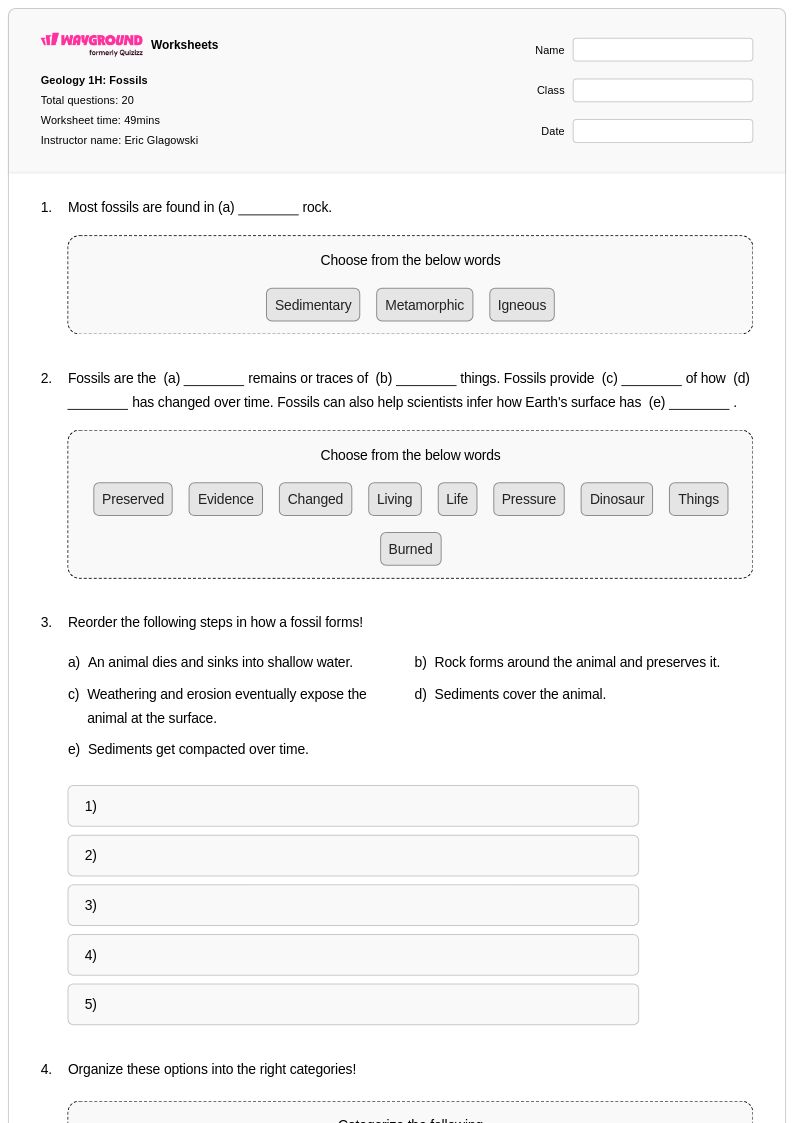
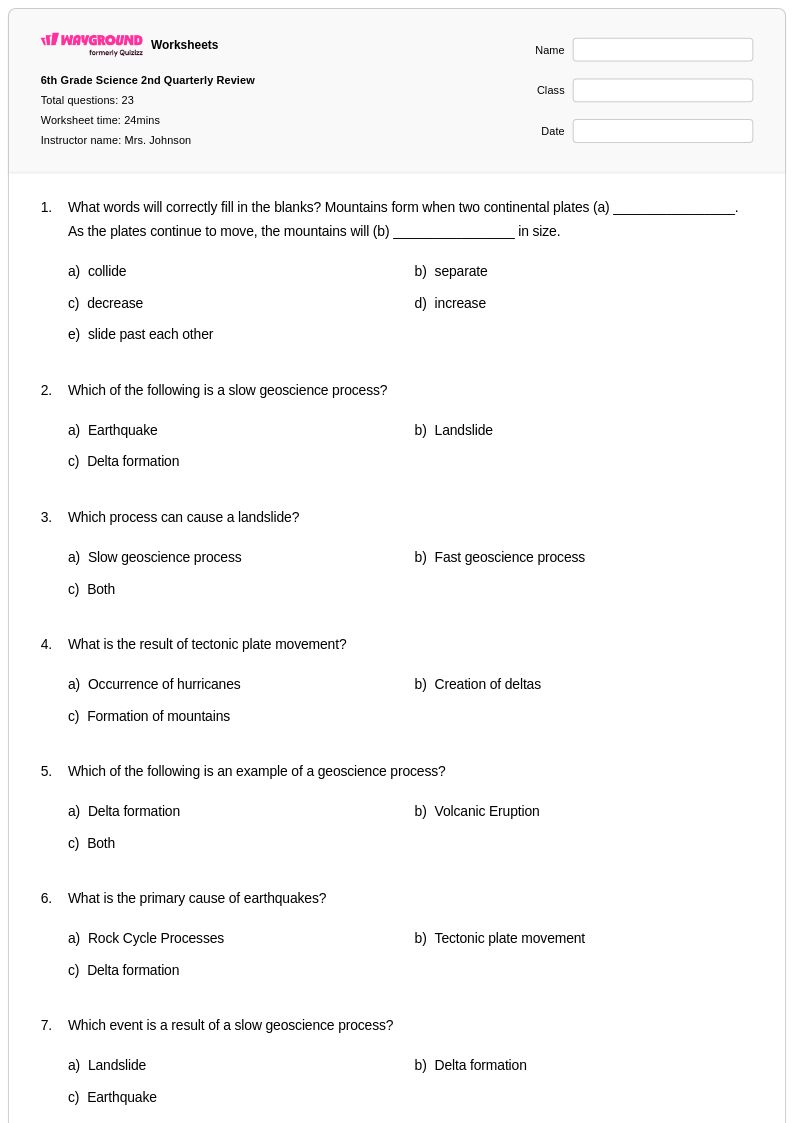
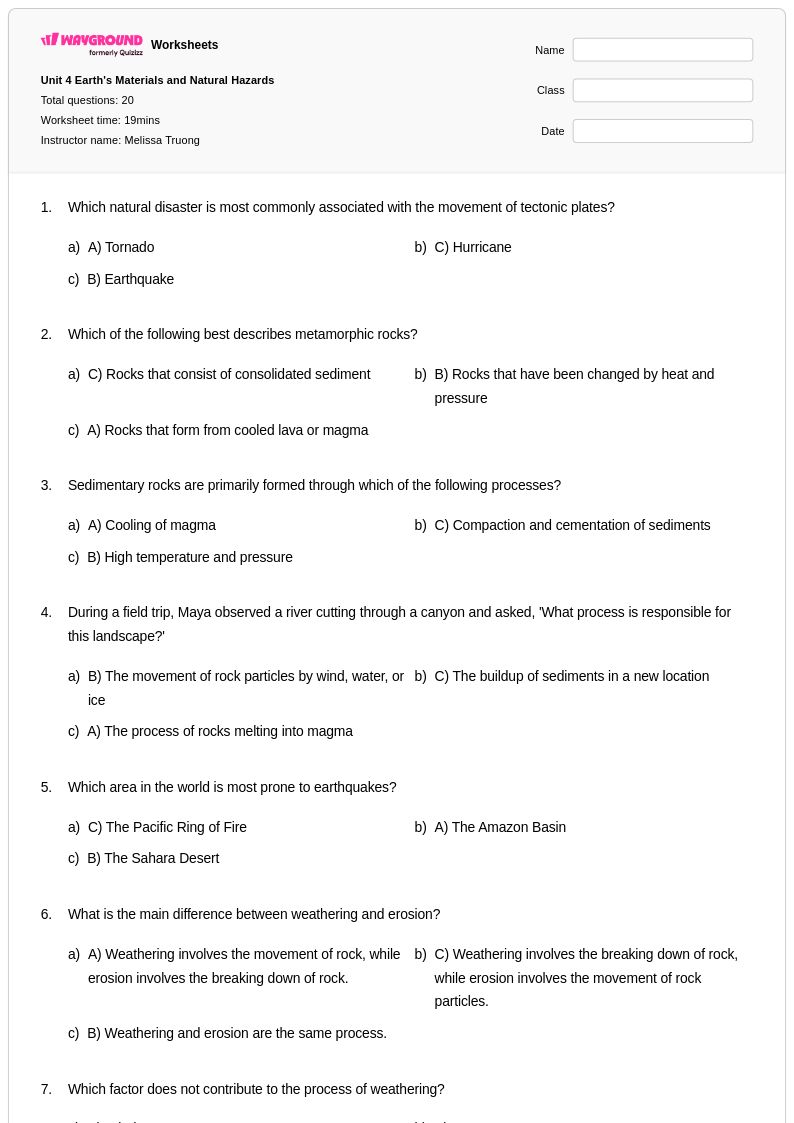
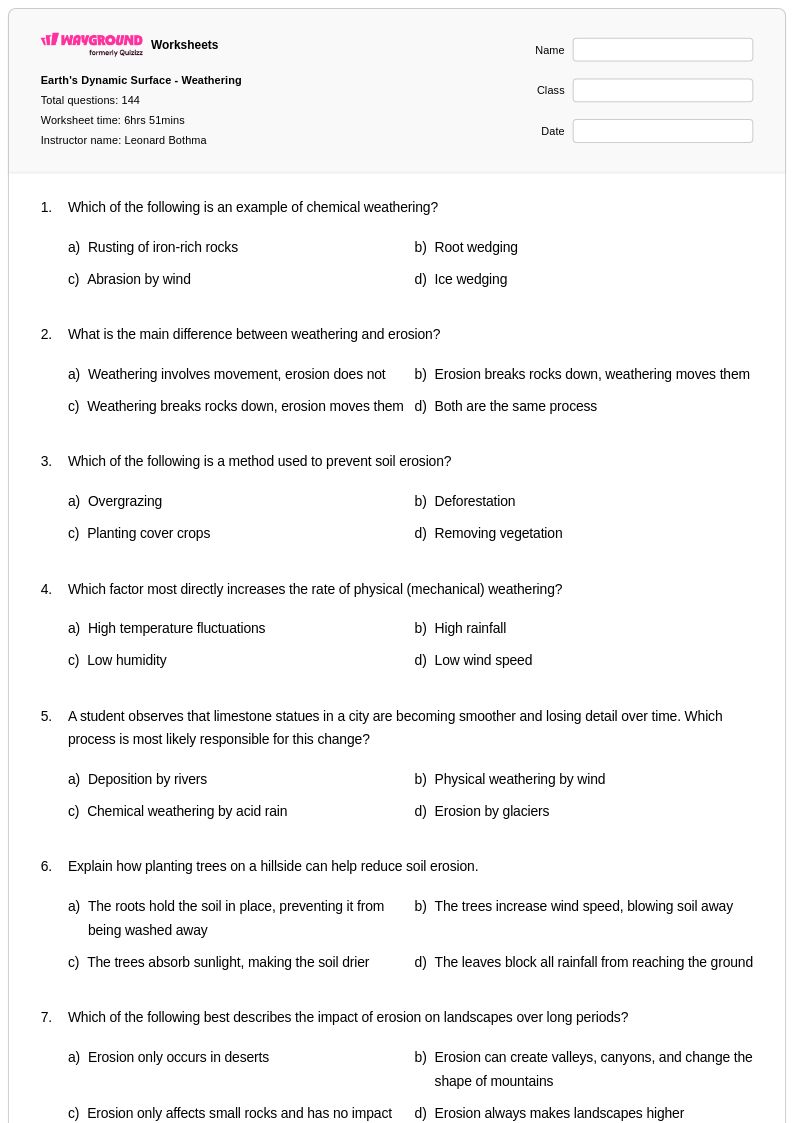
Year 6 rocks worksheets from Wayground help students explore igneous, sedimentary, and metamorphic rock formation through engaging printables, practice problems, and comprehensive answer keys for effective earth science learning.
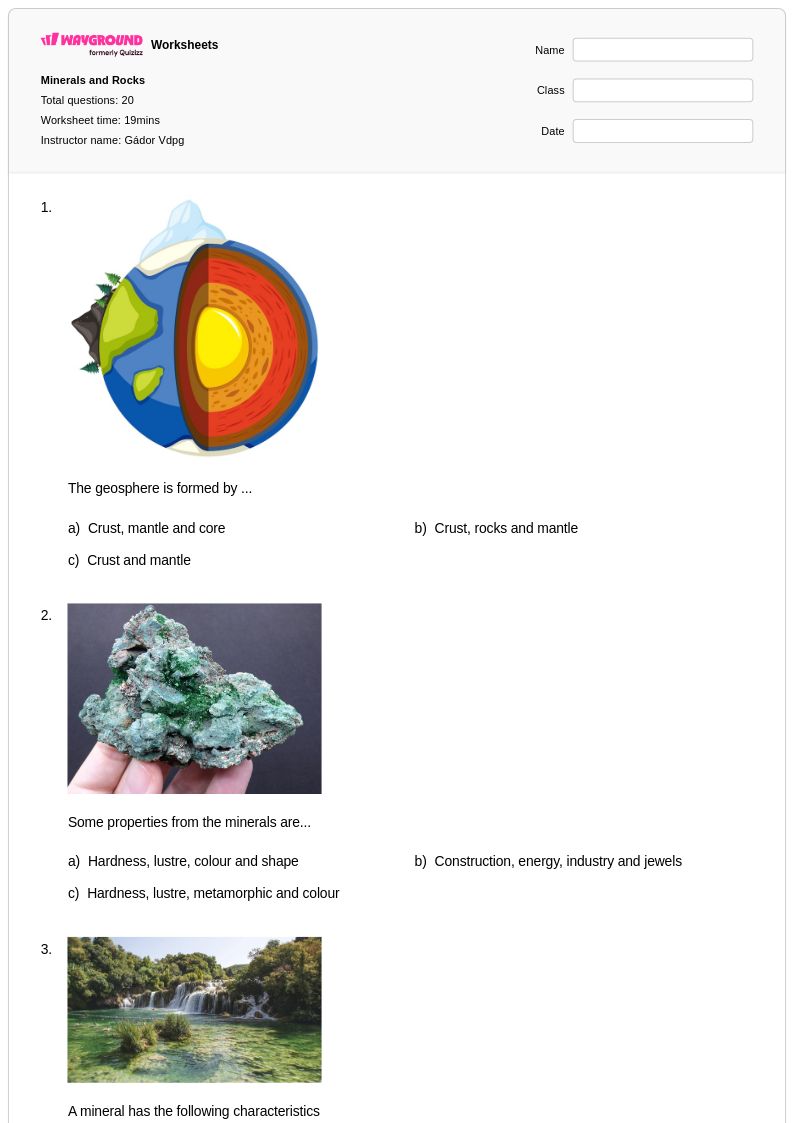
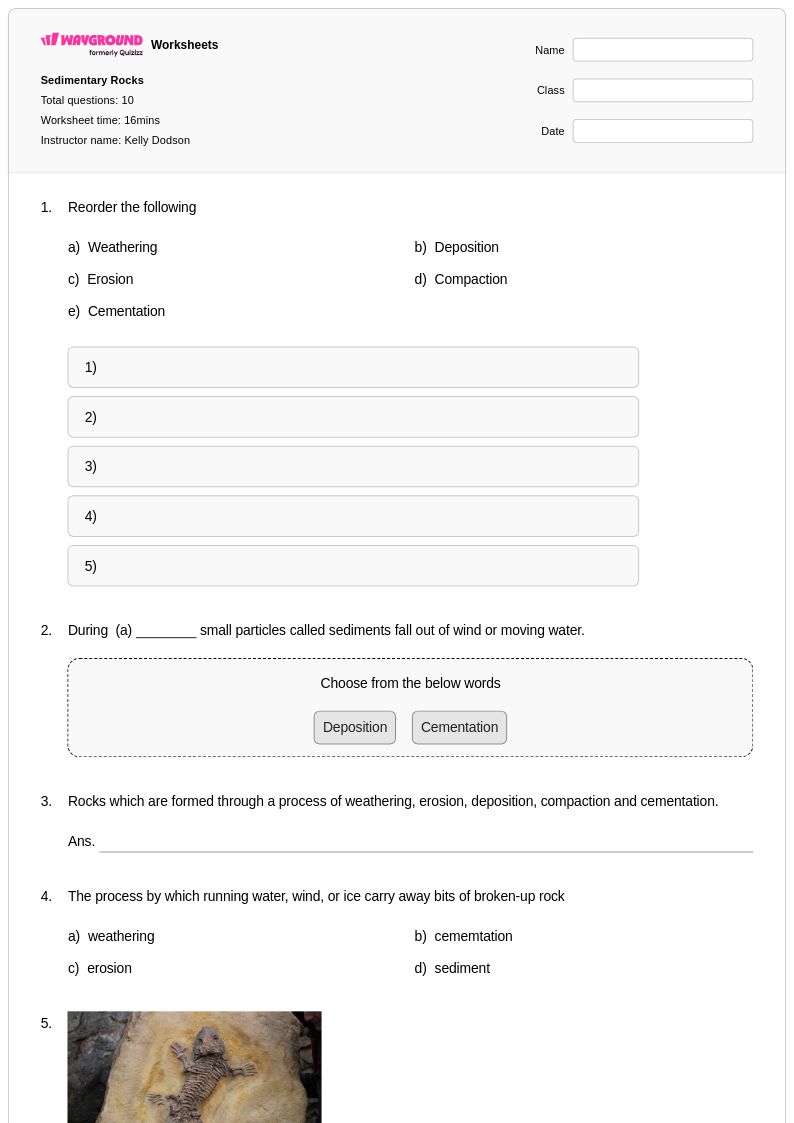
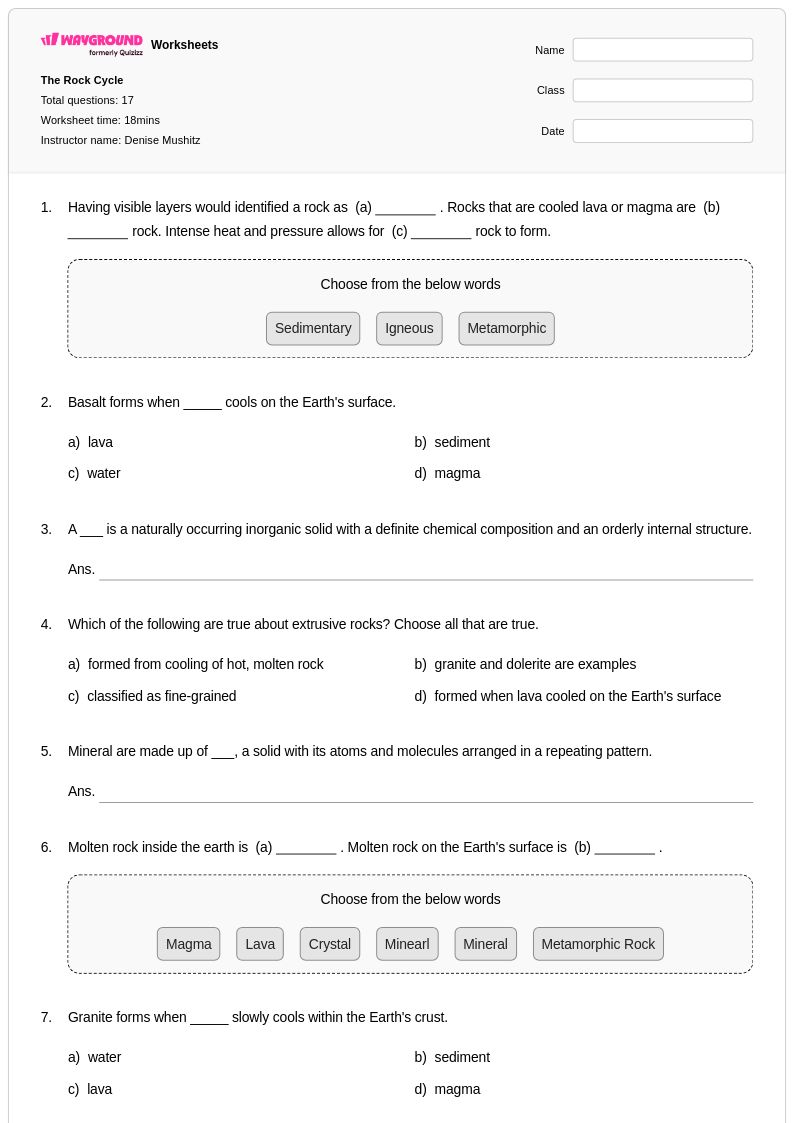
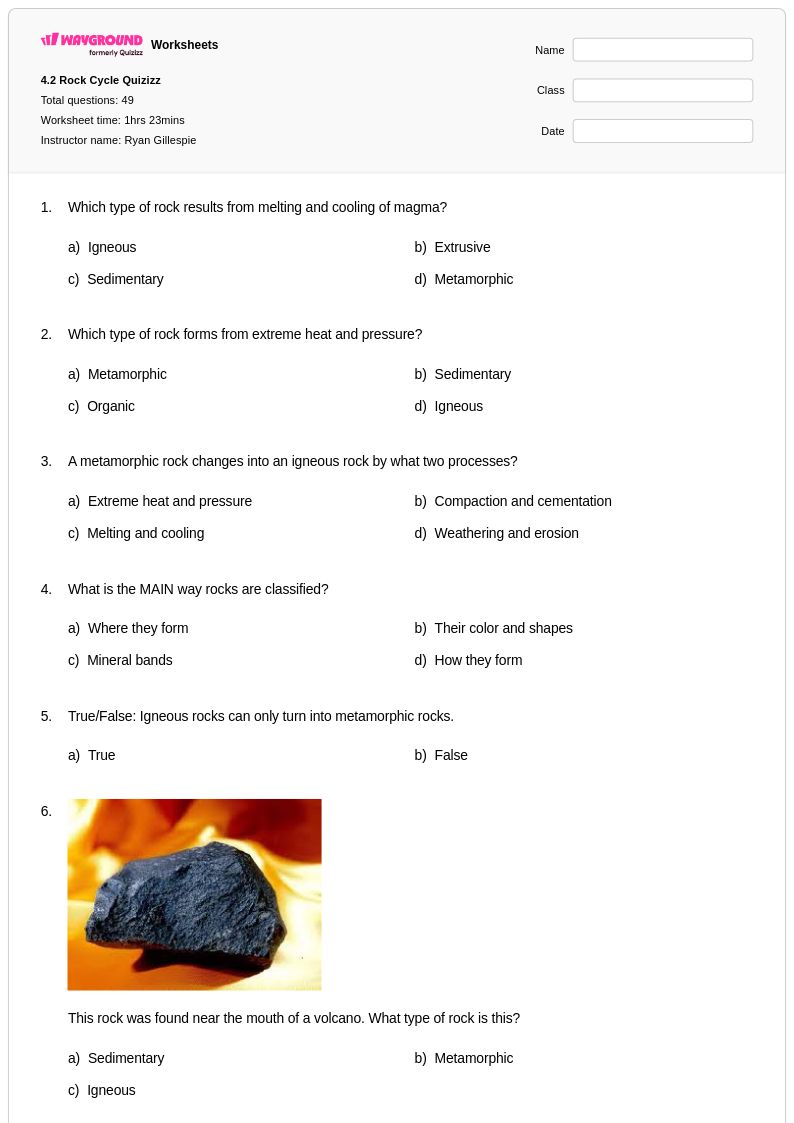
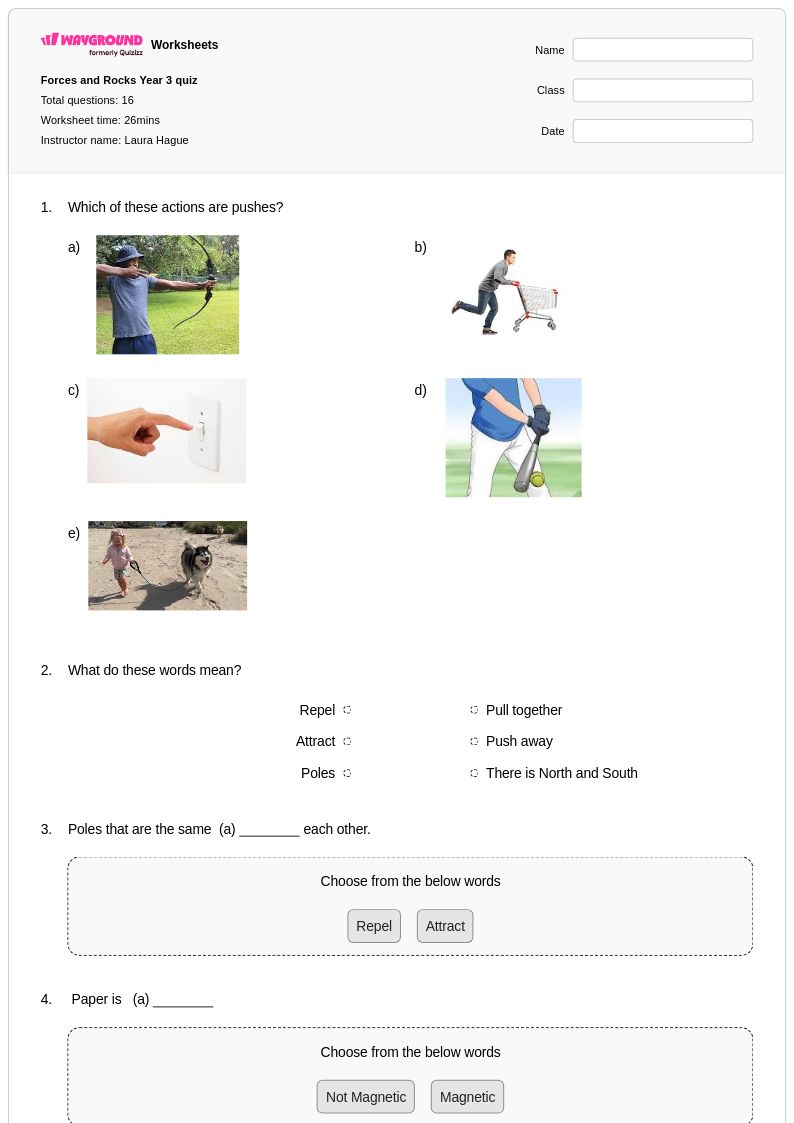
Year 6 rocks worksheets available through Wayground (formerly Quizizz) provide comprehensive coverage of fundamental geological concepts that sixth-grade students need to master in Earth and Space Science. These educational resources focus on the three main rock types—igneous, sedimentary, and metamorphic—while exploring the rock cycle, mineral identification, and geological processes that shape Earth's crust. The worksheets strengthen critical scientific skills including observation, classification, data analysis, and understanding of Earth's dynamic systems through engaging practice problems that challenge students to identify rock samples, trace formation processes, and analyze geological timelines. Each worksheet includes detailed answer keys to support both independent study and classroom instruction, with free printable pdf formats that make these valuable resources accessible for immediate use in diverse learning environments.
Wayground (formerly Quizizz) empowers educators with an extensive collection of teacher-created rocks worksheets, drawing from millions of high-quality resources that align with grade-level science standards and curriculum requirements. The platform's robust search and filtering capabilities allow teachers to quickly locate materials that match specific learning objectives, whether focusing on sedimentary rock formation, volcanic processes, or mineral properties and characteristics. Advanced differentiation tools enable instructors to customize worksheets for varying ability levels, supporting both remediation for struggling learners and enrichment opportunities for advanced students. Available in both printable and digital formats including downloadable pdfs, these versatile resources streamline lesson planning while providing flexible options for skill practice, formative assessment, and reinforcement of key geological concepts essential to sixth-grade Earth and Space Science mastery.
FAQs
How do I teach students to classify rocks in the classroom?
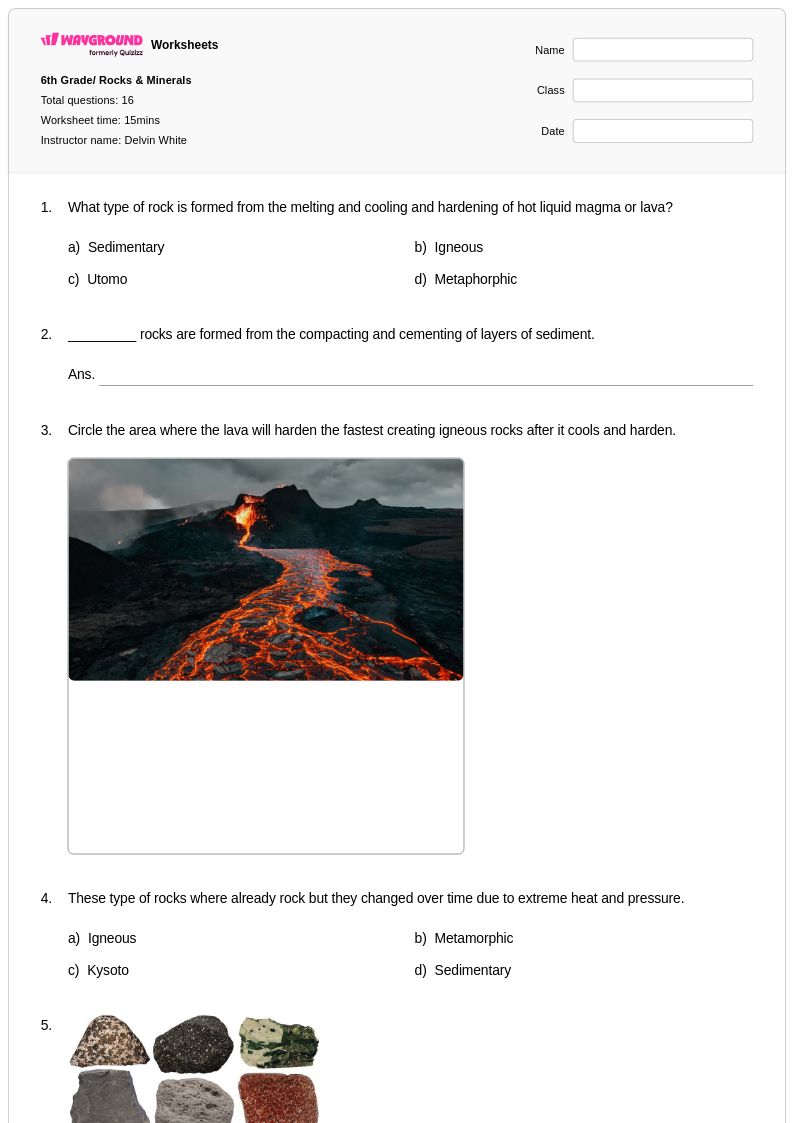
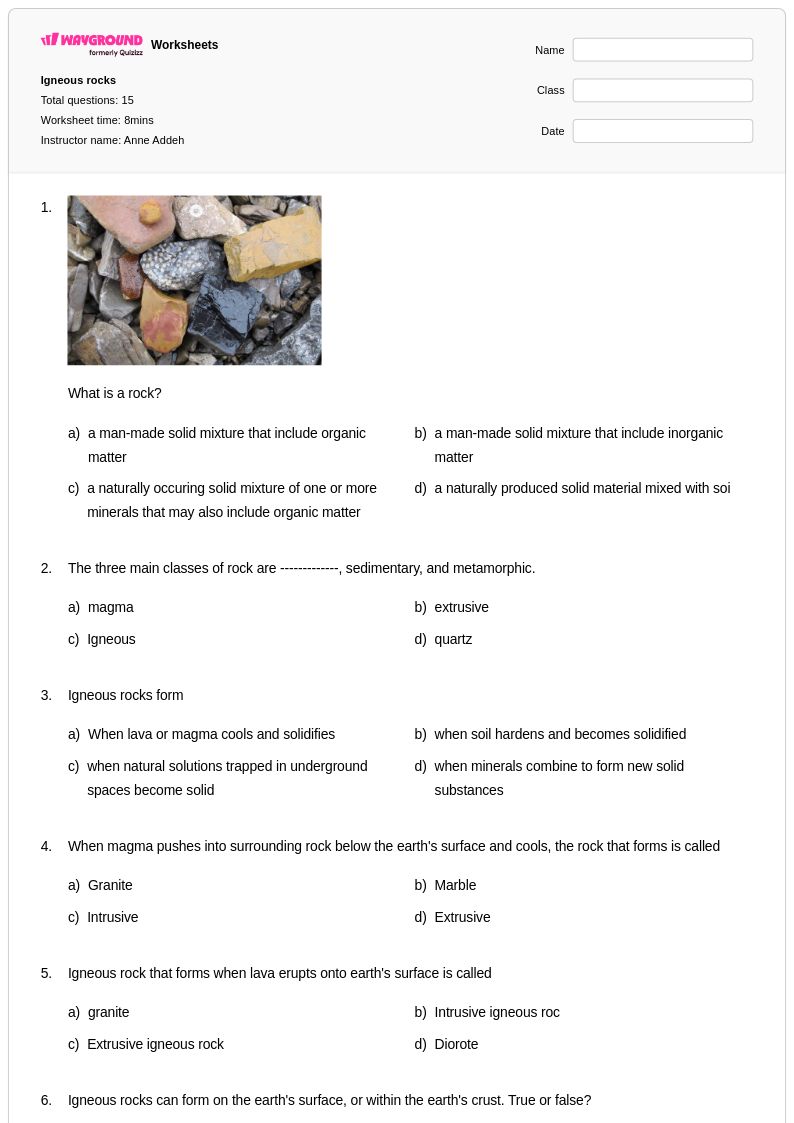
Start by introducing the three rock types — igneous, sedimentary, and metamorphic — using physical samples or visual identification charts so students can observe real differences in texture, grain size, and layering. Pair direct instruction with classification activities where students sort rocks by observable properties before connecting those properties to formation processes. Hands-on comparison exercises are especially effective because they build observational skills students will use throughout earth science.
What kinds of worksheets help students practice rock identification?
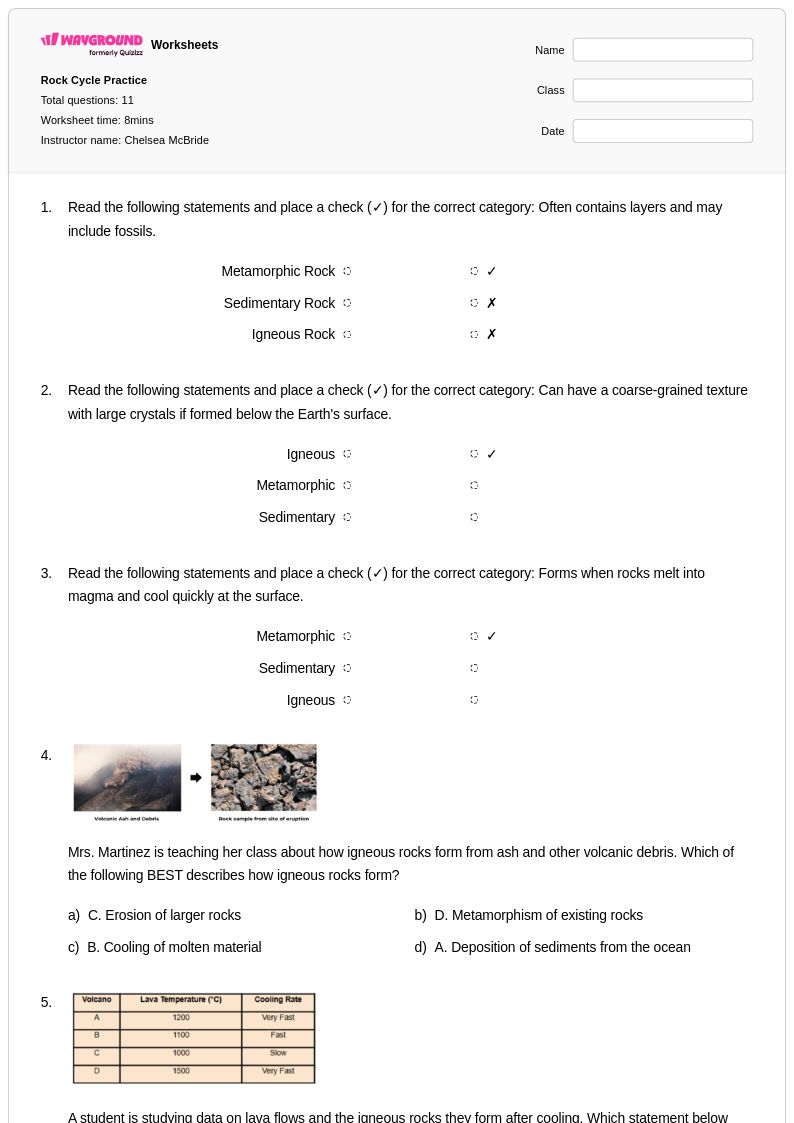
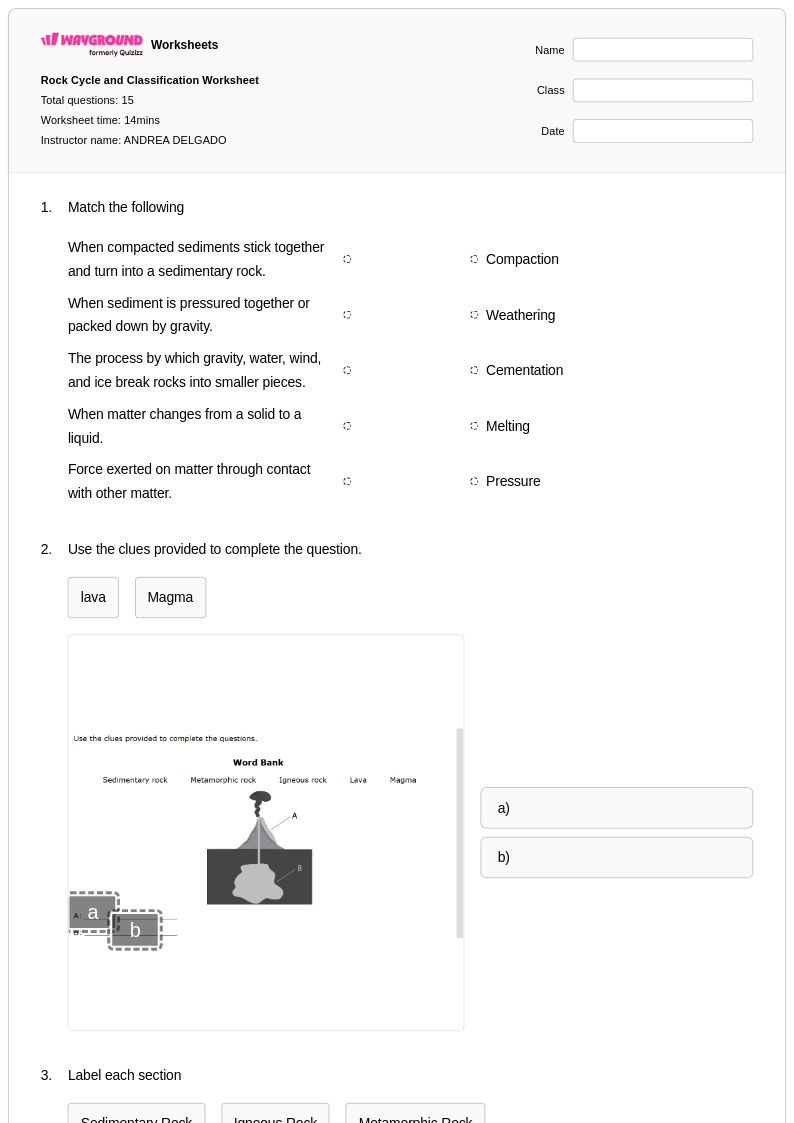
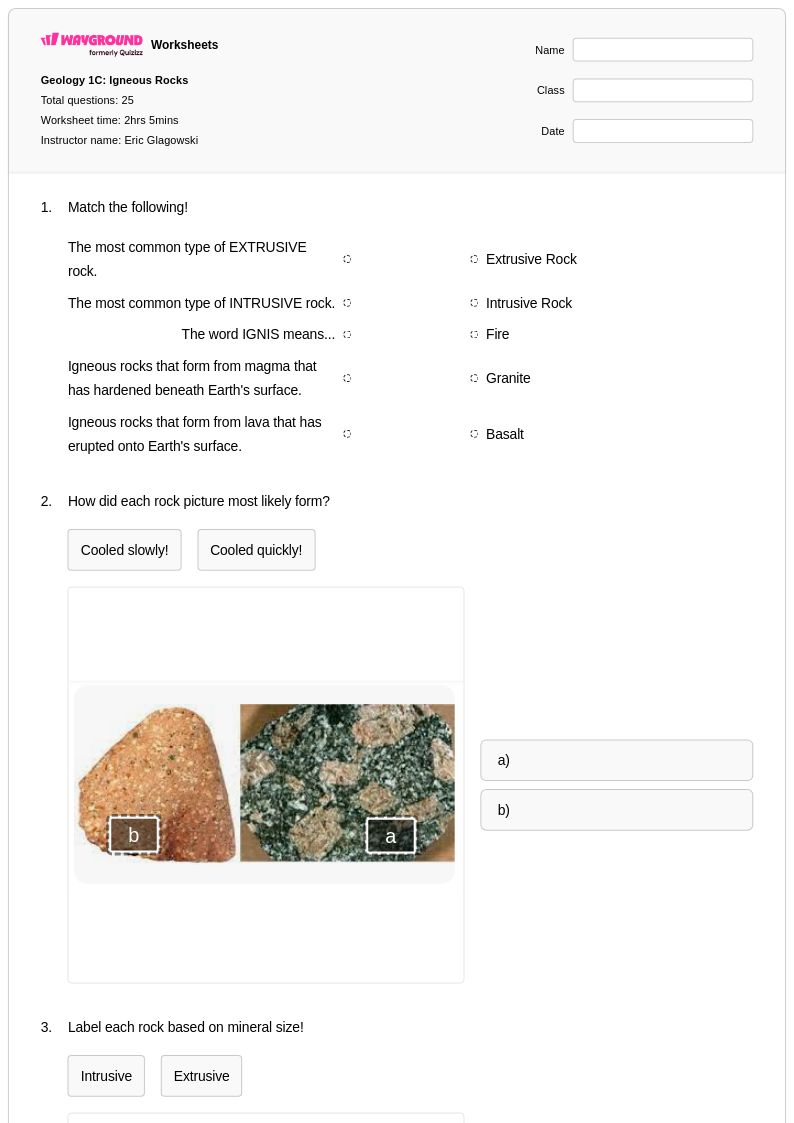
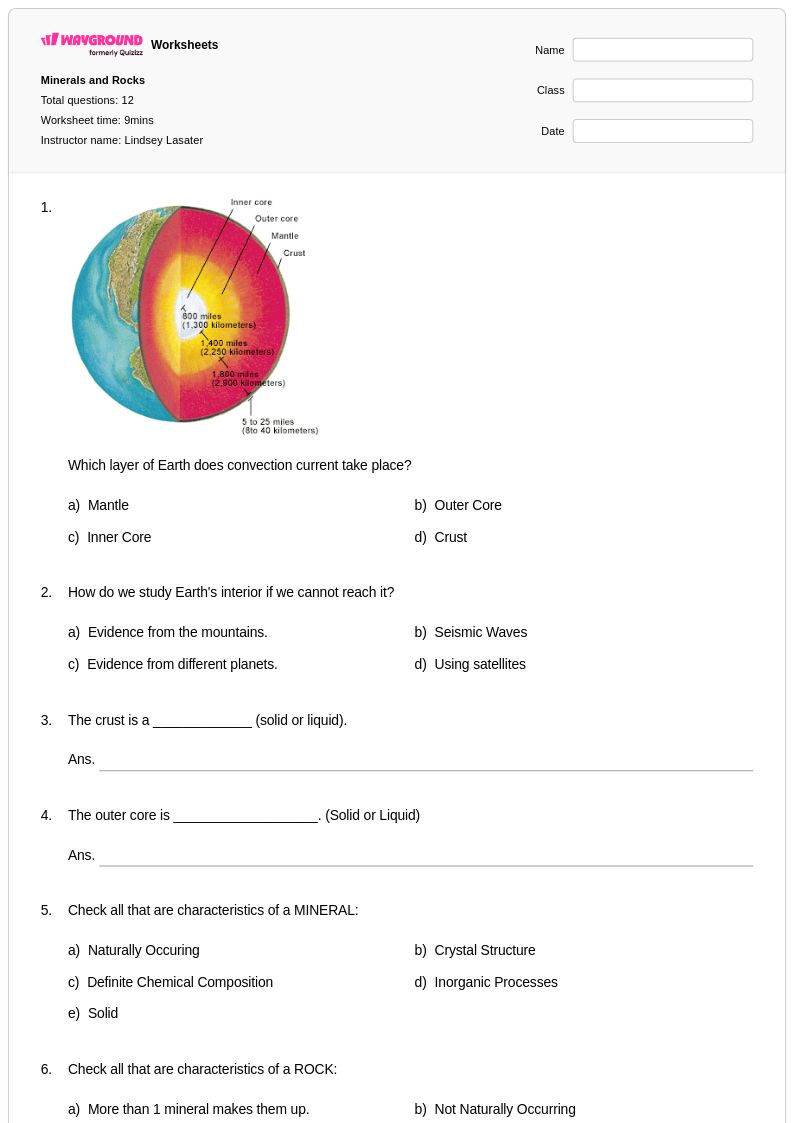
Effective rock identification practice includes visual identification charts, cross-sectional diagrams, and classification exercises that ask students to distinguish between igneous, sedimentary, and metamorphic rocks based on observable properties. Data analysis activities that mirror real geological investigations also reinforce key vocabulary and help students connect formation processes to physical characteristics. Practice problems that require students to explain their reasoning — not just select an answer — deepen conceptual understanding of rock types.
What mistakes do students commonly make when learning about the rock cycle?
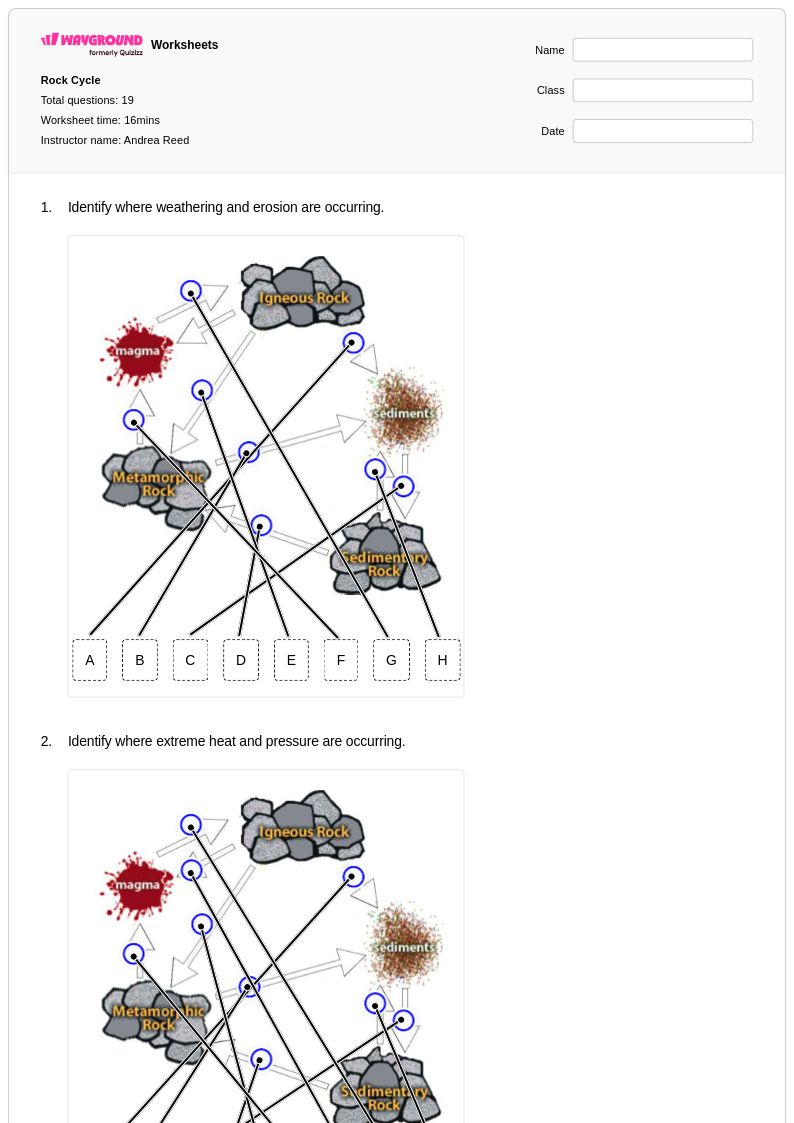
One of the most common misconceptions is that the rock cycle follows a single fixed sequence, when in reality rocks can transition between types through multiple pathways depending on environmental conditions. Students also frequently confuse weathering and erosion, treating them as the same process rather than understanding that weathering breaks rocks down while erosion moves the material. Targeted practice problems that distinguish these processes explicitly help students correct these errors before they become entrenched.
How can I use rocks worksheets to support students with different learning needs?
Rocks worksheets that include visual identification charts and diagrams naturally support visual learners and students who need additional scaffolding to access geological vocabulary. On Wayground, teachers can apply individual accommodations such as Read Aloud for students who benefit from audio support, reduced answer choices to lower cognitive load, and extended time for students who need it — all without signaling differences to the rest of the class. These settings are reusable across sessions, making differentiation sustainable across an entire earth science unit.
How do I use Wayground's rocks worksheets in my classroom?
Wayground's rocks worksheets are available as printable PDFs for traditional classroom use and in digital formats for technology-integrated environments, giving teachers flexibility to assign them for direct instruction, independent practice, or remediation. Teachers can also host the worksheets as a quiz on Wayground, which adds an interactive layer and allows for real-time tracking of student responses. Each worksheet includes a detailed answer key, supporting both teacher-led review and independent student self-assessment.
What rock cycle topics should I cover in an earth science unit?
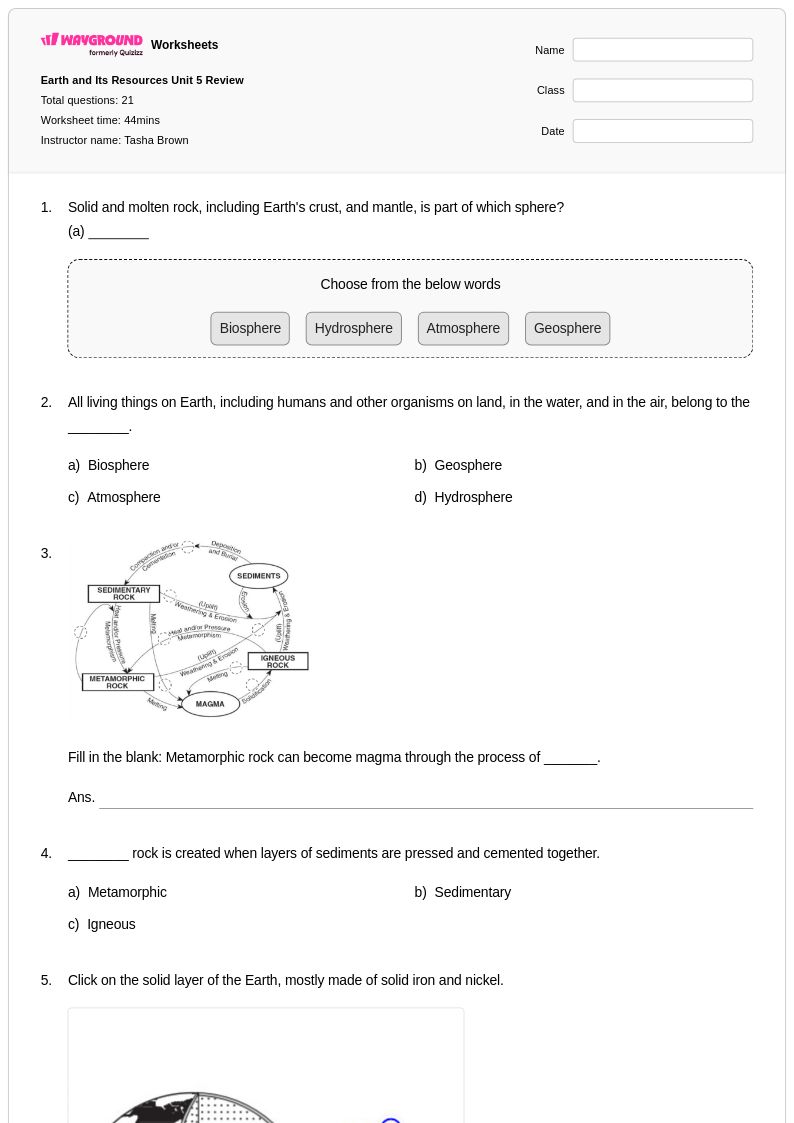
A thorough rock cycle unit should cover the formation of igneous, sedimentary, and metamorphic rocks, the role of heat and pressure in rock transformation, and the processes of weathering and erosion that break existing rocks down. Students should also practice reading cross-sectional diagrams and interpreting data about rock composition and layering, as these skills directly support scientific literacy in earth science. Connecting formation processes to observable rock properties gives students a framework for classification they can apply independently.