Free Printable Self Concept Worksheets for Year 12
Enhance Year 12 students' self-concept development with Wayground's comprehensive collection of free social studies worksheets, featuring printable PDFs, guided practice problems, and complete answer keys for classroom success.
Explore printable Self Concept worksheets for Year 12
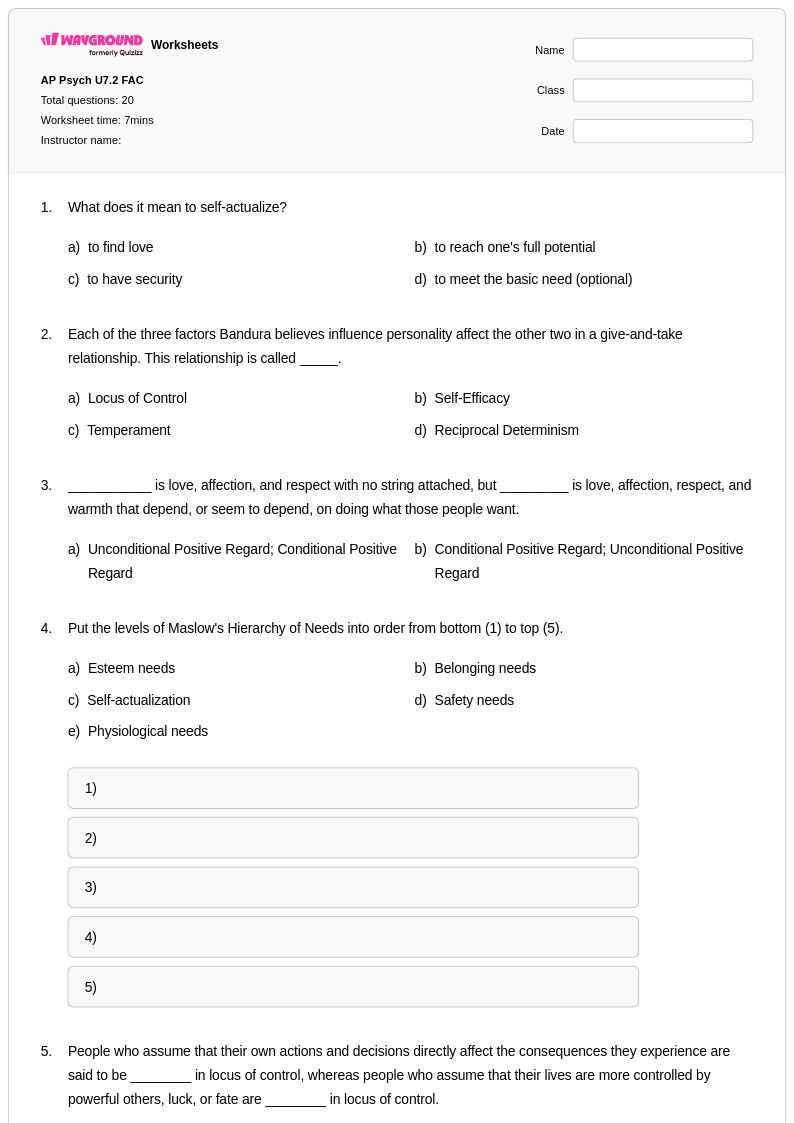
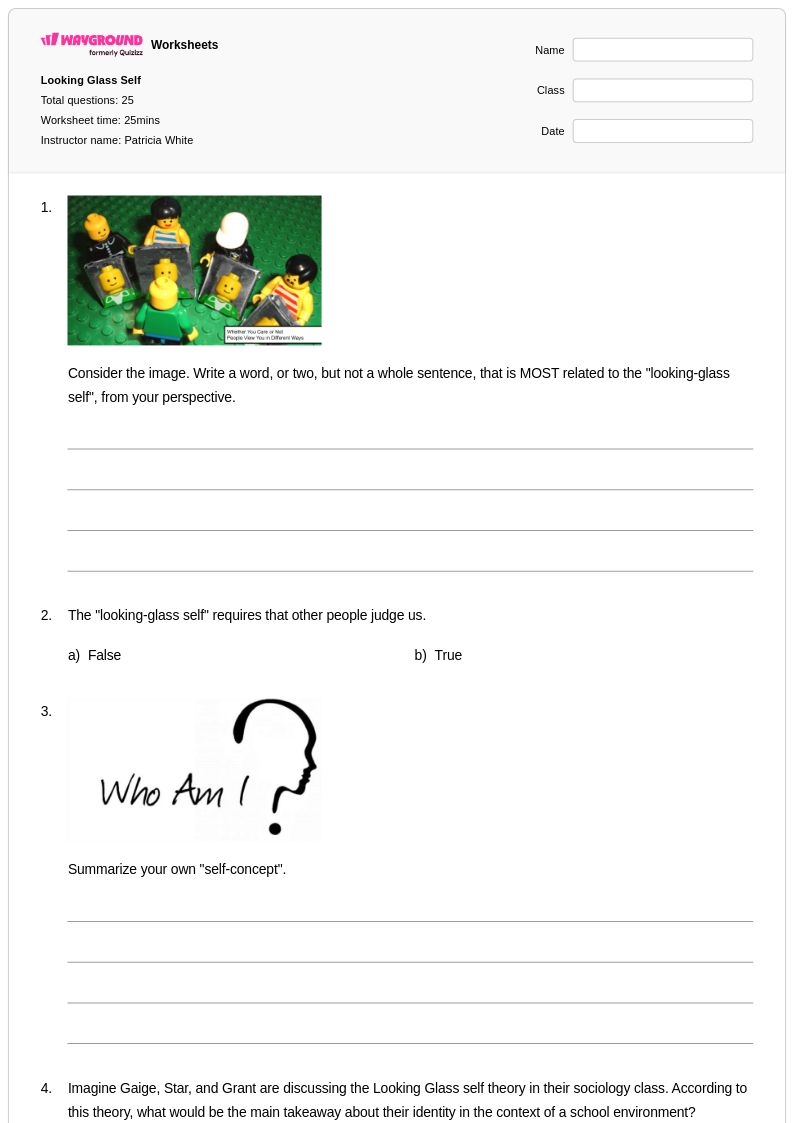
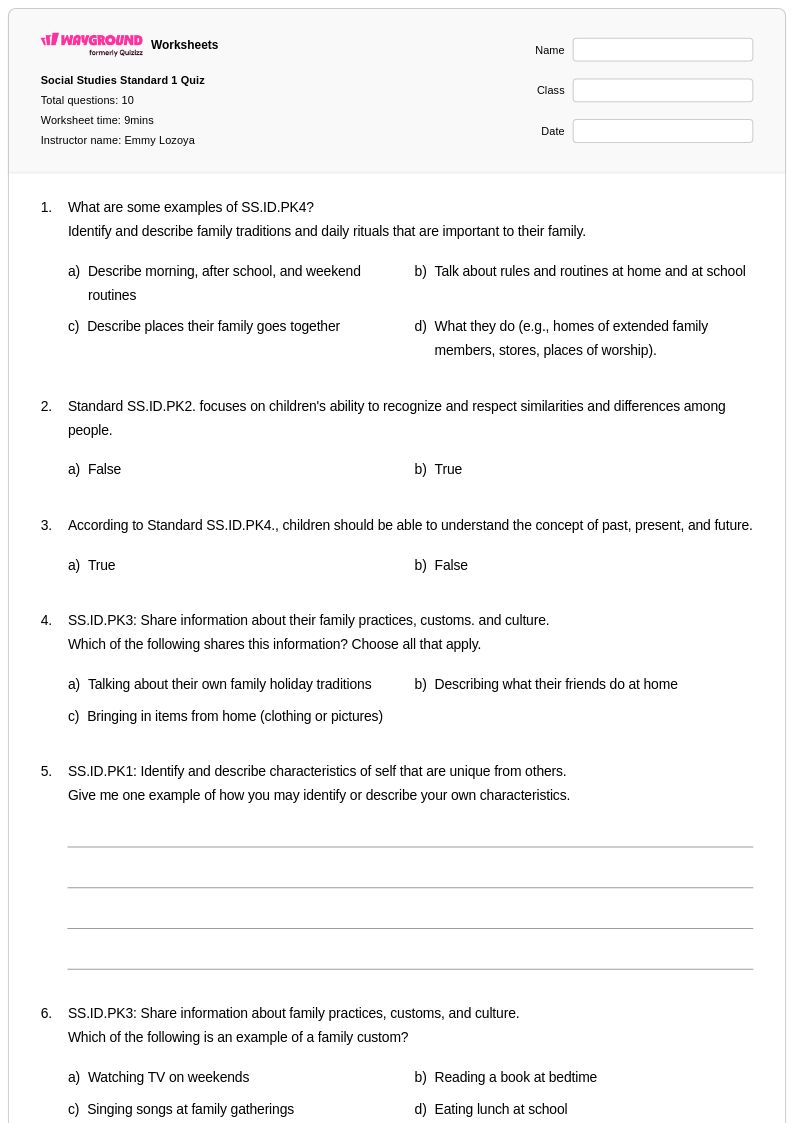
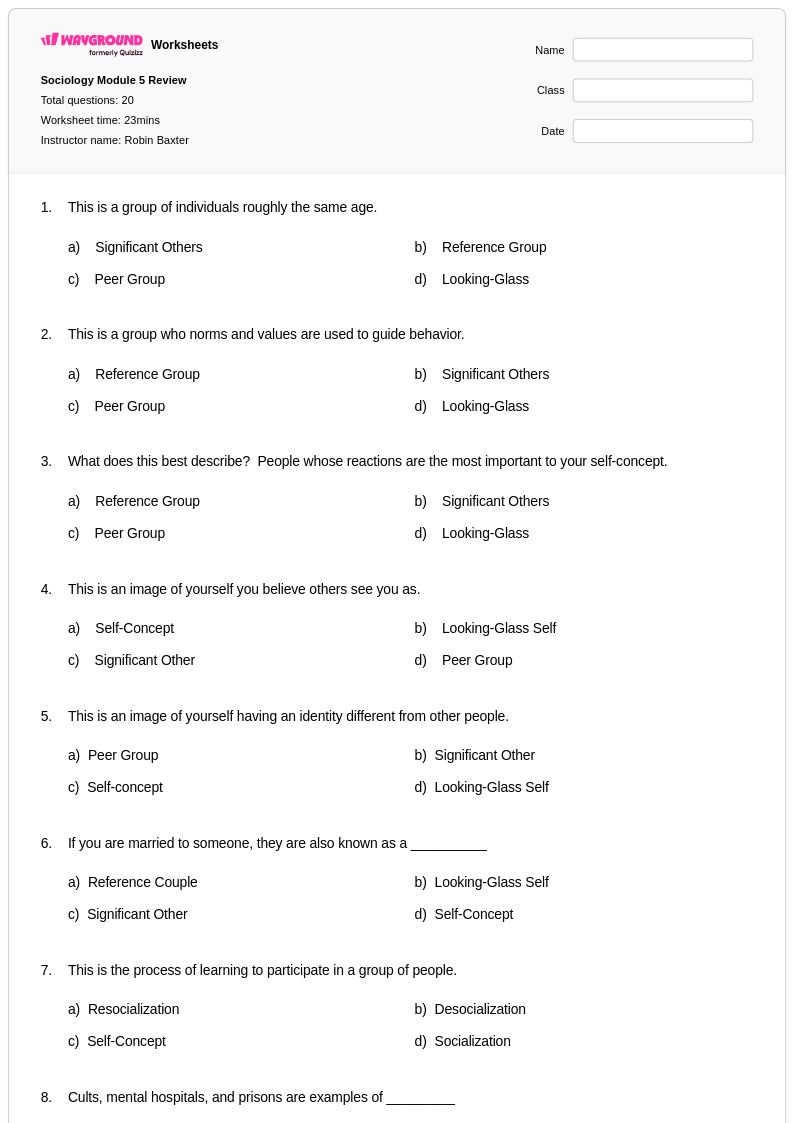
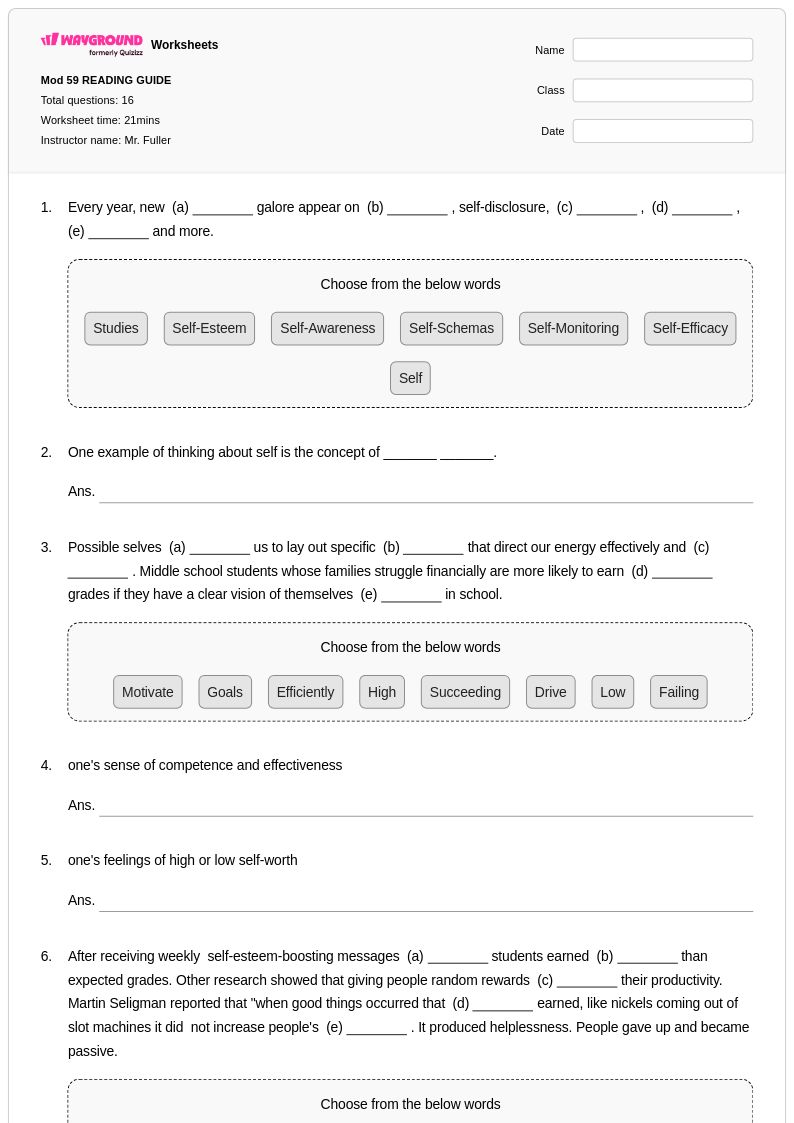
Self concept worksheets for Year 12 students available through Wayground (formerly Quizizz) provide comprehensive resources designed to help advanced high school students develop critical self-awareness and personal identity skills essential for their transition to adulthood. These carefully crafted materials focus on helping students examine their values, beliefs, strengths, and areas for growth while building the reflective thinking abilities necessary for post-secondary success. Each worksheet collection includes structured activities that guide students through self-assessment exercises, goal-setting frameworks, and personal reflection prompts, with comprehensive answer keys that support both independent learning and classroom discussion. The free printables offer practice problems that challenge students to analyze their personal characteristics, evaluate their decision-making processes, and articulate their future aspirations in meaningful ways that prepare them for college and career readiness.
Wayground (formerly Quizizz) empowers educators with millions of teacher-created resources specifically designed to support self concept development in Year 12 social studies curricula. The platform's robust search and filtering capabilities allow teachers to quickly locate materials that align with state standards for personal development and social-emotional learning, while differentiation tools enable customization for diverse learning needs and ability levels. These versatile worksheet collections are available in both printable pdf formats for traditional classroom use and digital formats that support interactive learning environments, making them ideal for planning comprehensive units on identity formation, skill practice during advisory periods, and targeted remediation for students who need additional support in developing self-awareness. The platform's flexible customization options allow educators to modify content for enrichment activities, create personalized learning pathways, and develop assessment tools that measure student growth in critical areas of personal development.
FAQs
How do I teach self-concept to students?
Teaching self-concept involves guiding students through structured reflection on their personal qualities, values, relationships, and areas for growth. Effective strategies include self-assessment activities, journaling prompts, goal-setting exercises, and identity exploration tasks that encourage students to examine both how they see themselves and how they relate to others. Building in regular opportunities for reflection helps students develop self-awareness progressively rather than treating it as a one-time lesson.
What activities help students practice and develop self-concept?
Worksheets and reflection exercises that ask students to identify personal strengths, articulate their values, and examine their relationships are among the most effective tools for developing self-concept. Goal-setting tasks that connect self-awareness to actionable steps further reinforce the skill by helping students see personal identity as dynamic rather than fixed. Repeated, low-stakes practice across multiple formats builds the confidence and vocabulary students need to articulate their sense of self.
What common misconceptions do students have about self-concept?
A frequent misconception is that self-concept is fixed — students often believe their traits and abilities are unchangeable rather than something that develops over time. Some students also conflate self-concept with self-esteem, not recognizing that self-concept is a descriptive understanding of who they are, while self-esteem relates to how they feel about that identity. Addressing these distinctions early helps students engage more honestly and productively with self-reflection activities.
How can I differentiate self-concept worksheets for diverse learners?
Differentiation for self-concept activities can include adjusting the complexity of reflection prompts, providing sentence starters for students who struggle to articulate their thoughts, or reducing the number of response options for students who need more scaffolding. On Wayground, teachers can apply individual accommodations such as read aloud support, reduced answer choices, and extended time to specific students, ensuring every learner can access the same core social-emotional content without singling anyone out.
How do I use Wayground's self-concept worksheets in my classroom?
Wayground's self-concept worksheets are available as printable PDFs for traditional classroom use and in digital formats for technology-integrated environments, including the option to host them as a quiz directly on Wayground. Each worksheet includes a complete answer key, supporting both independent student work and teacher-guided instruction. Teachers can use search and filtering tools to find materials aligned to specific instructional goals, whether for direct instruction, targeted remediation, or enrichment.
At what age or grade level should self-concept development be taught?
Self-concept development is relevant across all grade levels, but the way it is taught should reflect students' developmental stage. Younger students benefit from concrete activities focused on identifying personal qualities and preferences, while older students can engage with more nuanced reflection on values, identity, and social roles. Because self-concept is foundational to social-emotional learning, structured instruction is valuable from early elementary through high school.