Free Printable Sentence Correction Worksheets for Year 6
Year 6 sentence correction worksheets help students master grammar and mechanics through targeted practice problems, featuring free printables with answer keys to improve writing accuracy and editing skills.
Explore printable Sentence Correction worksheets for Year 6
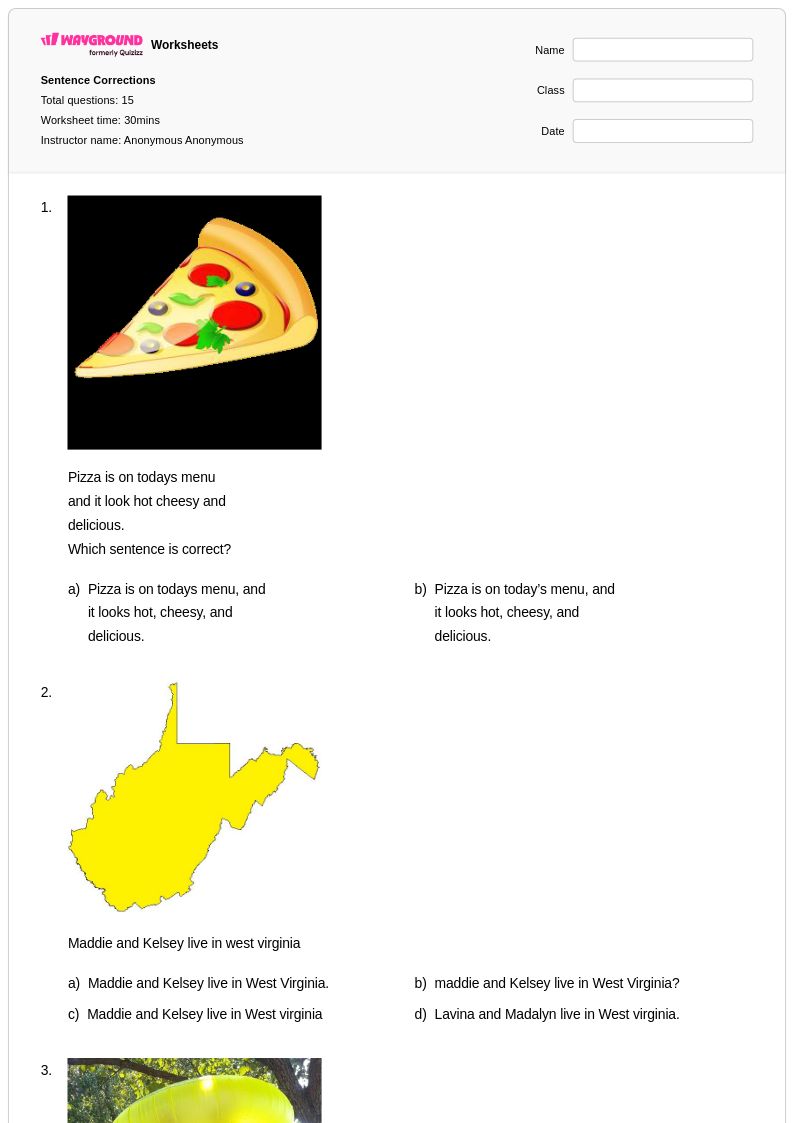
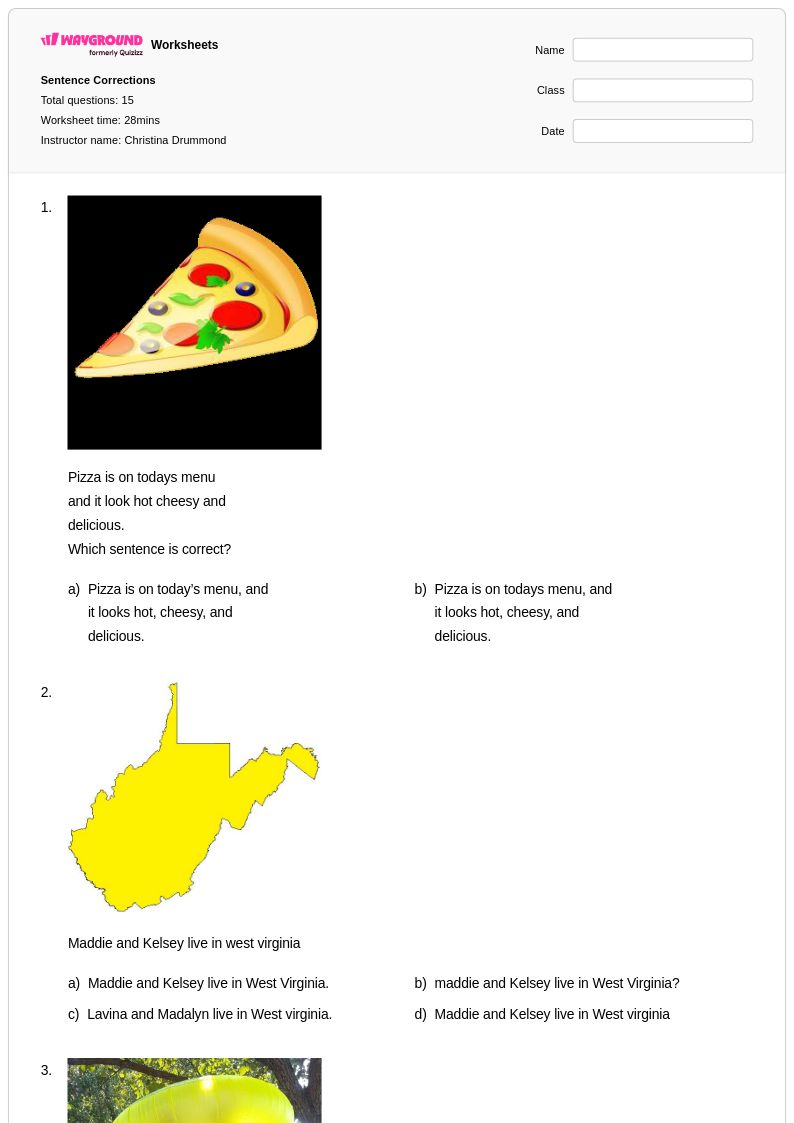
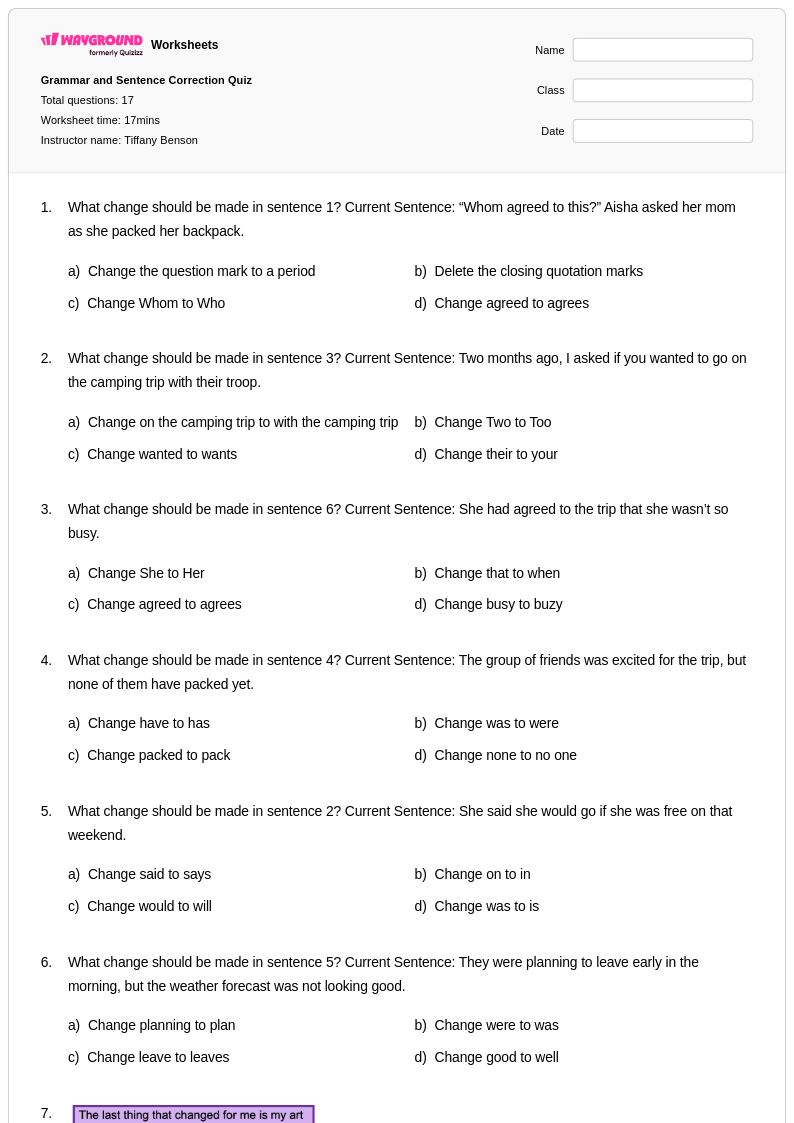
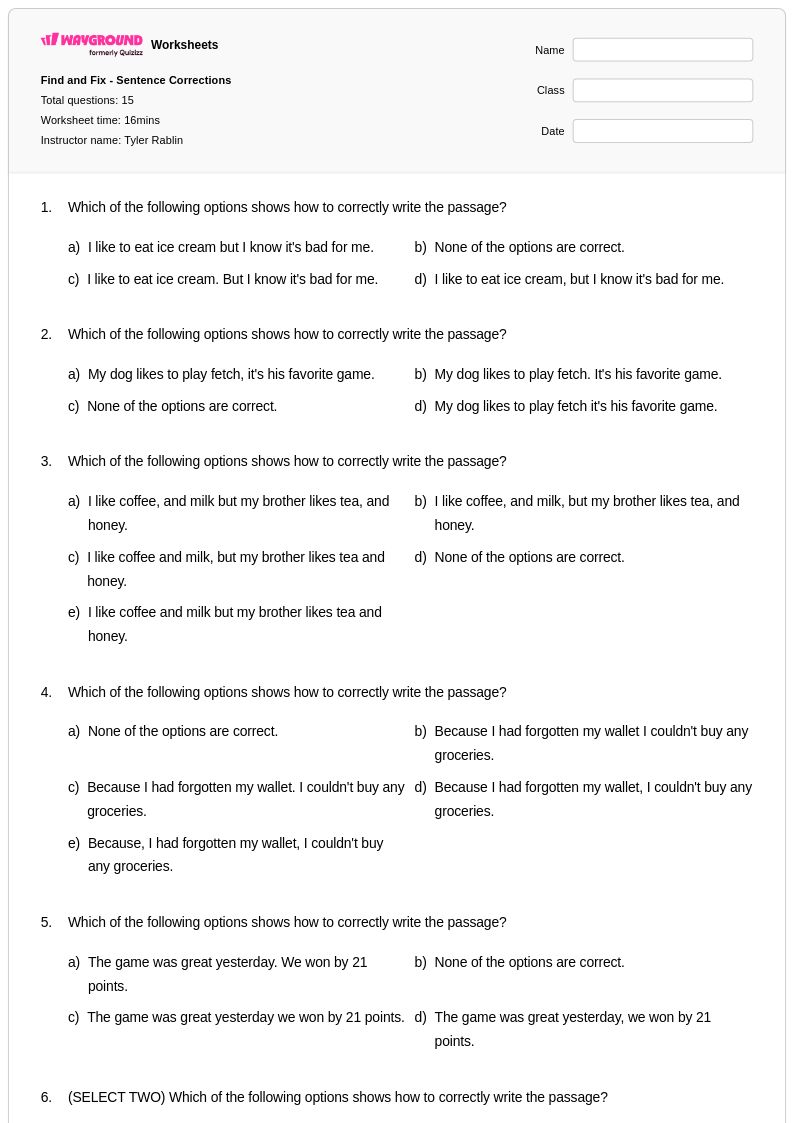
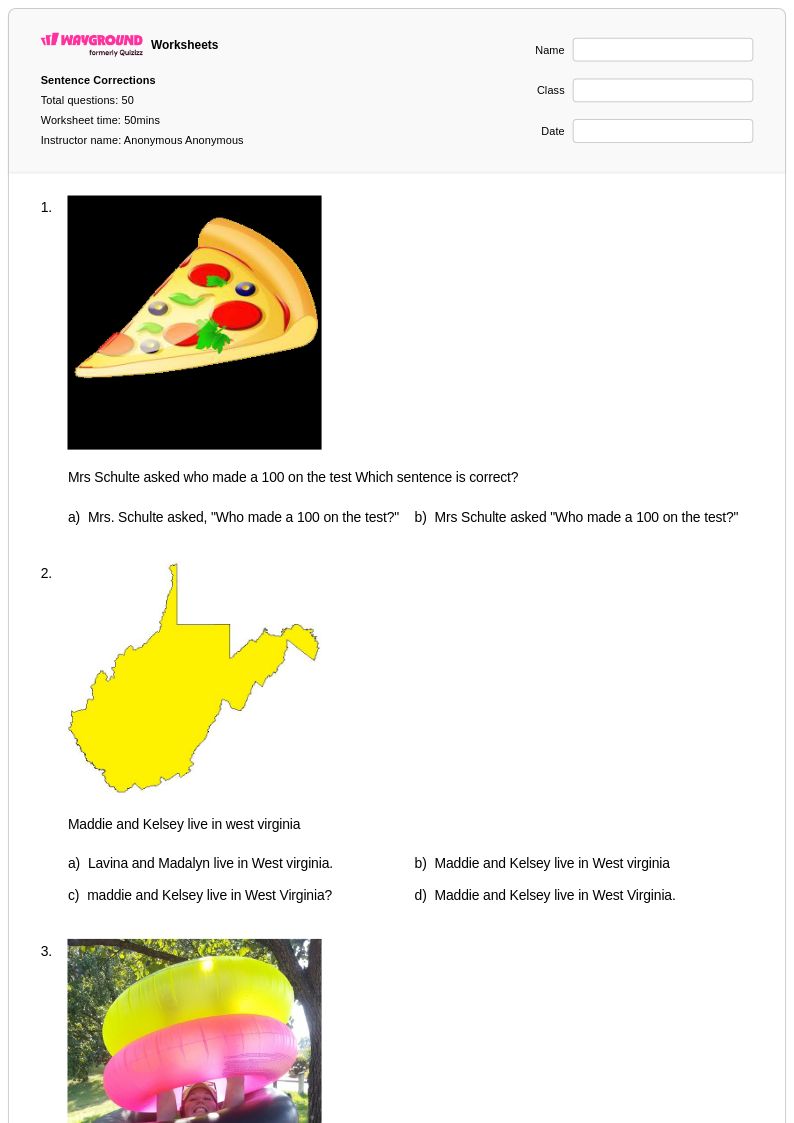
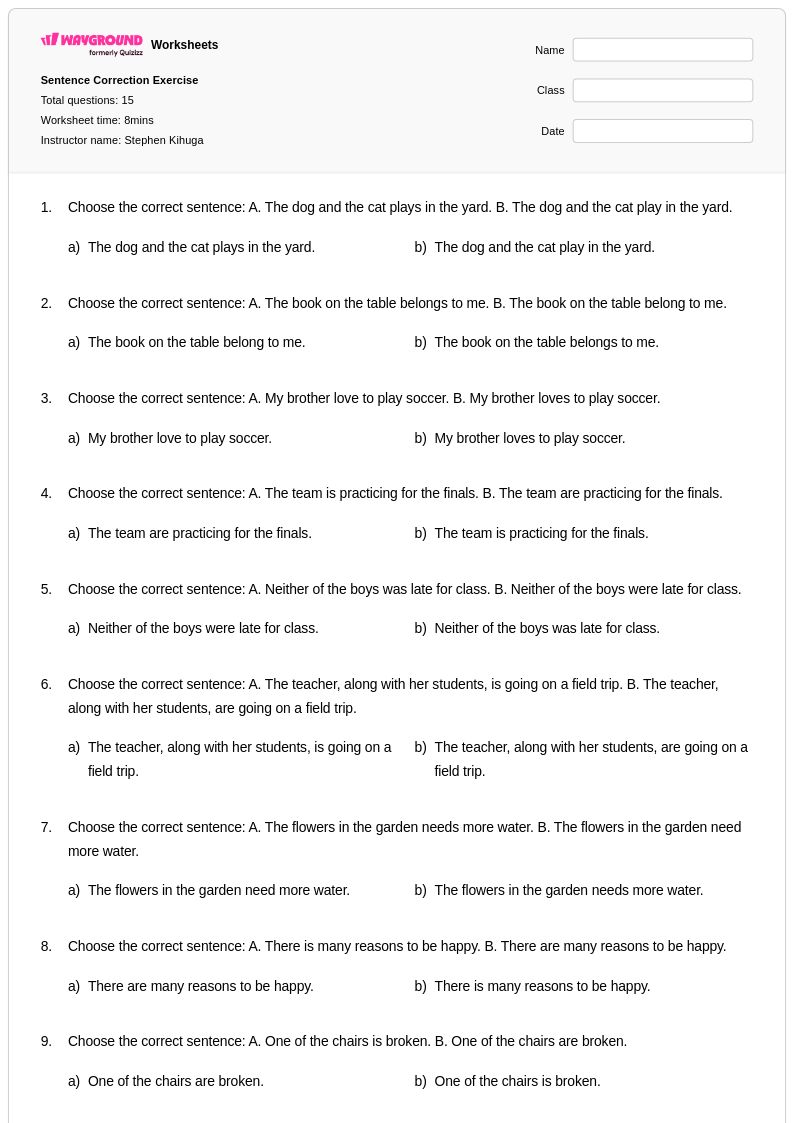
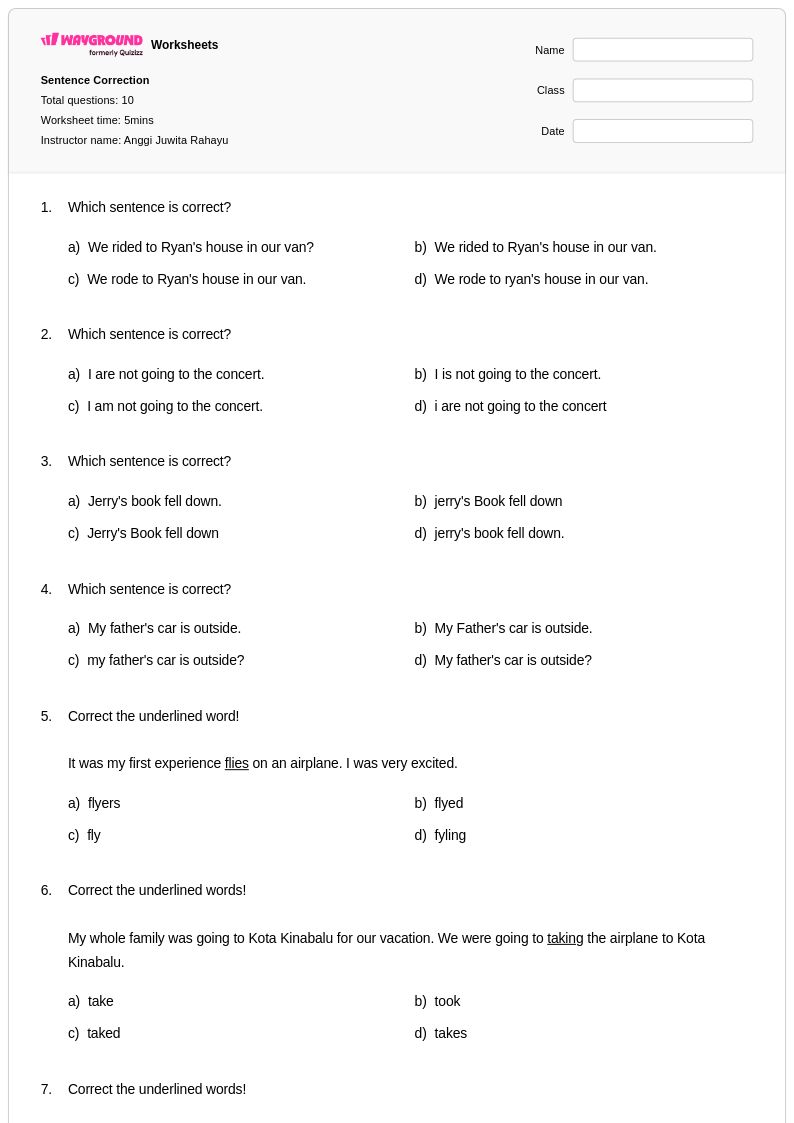
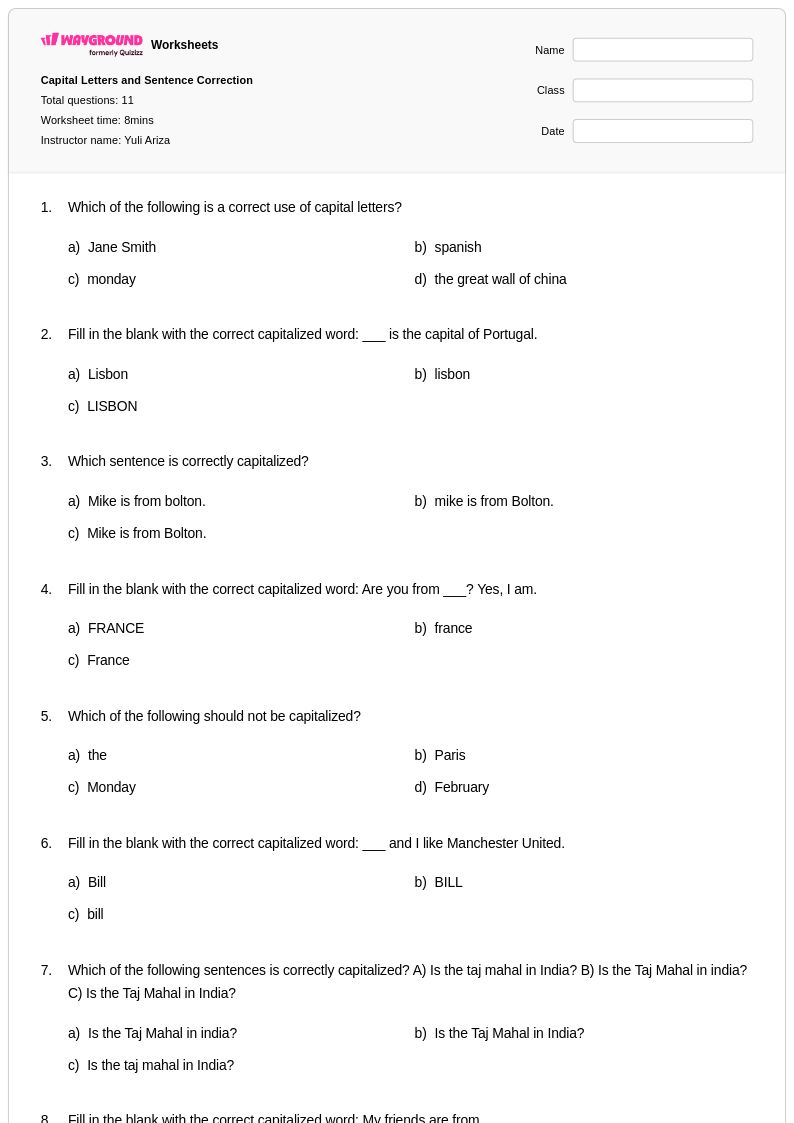
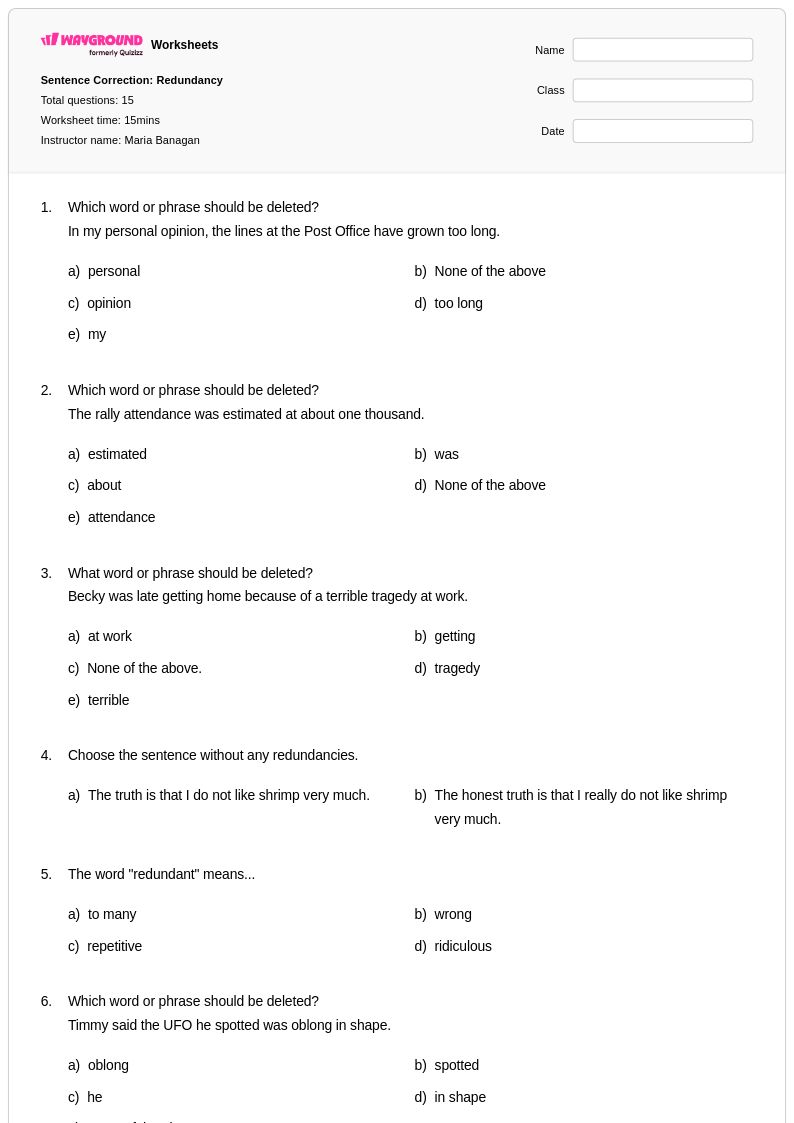
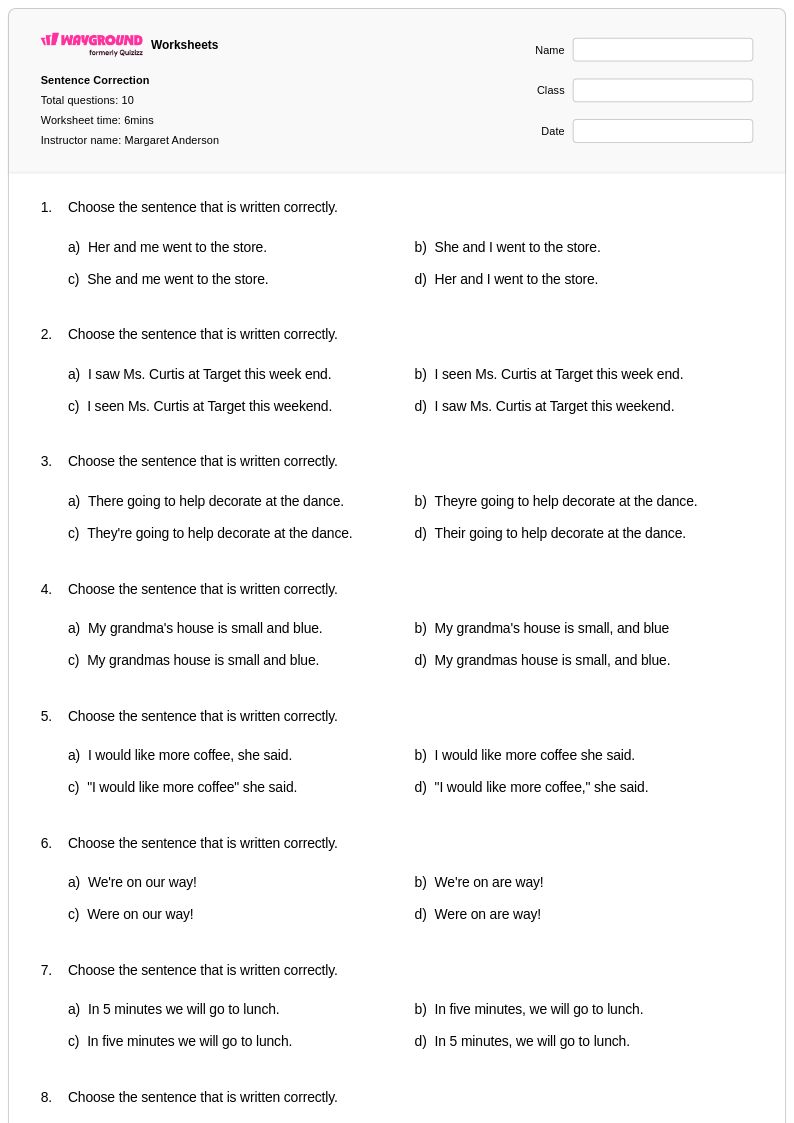
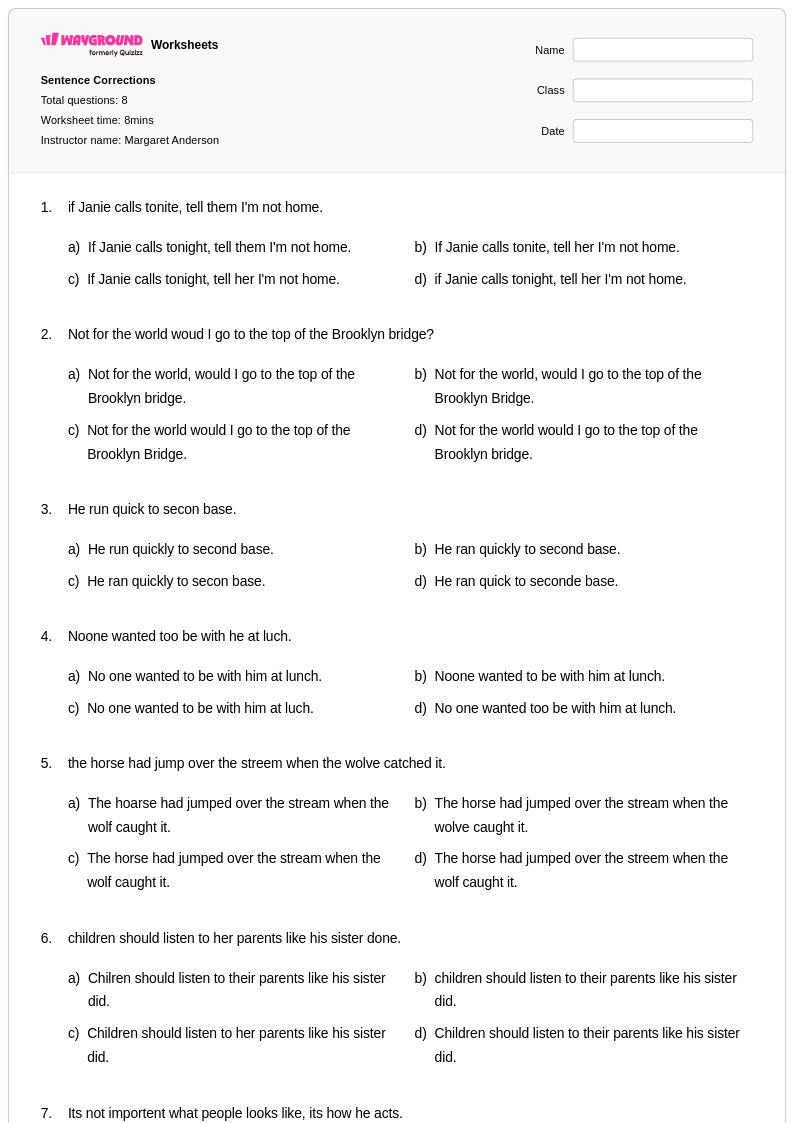
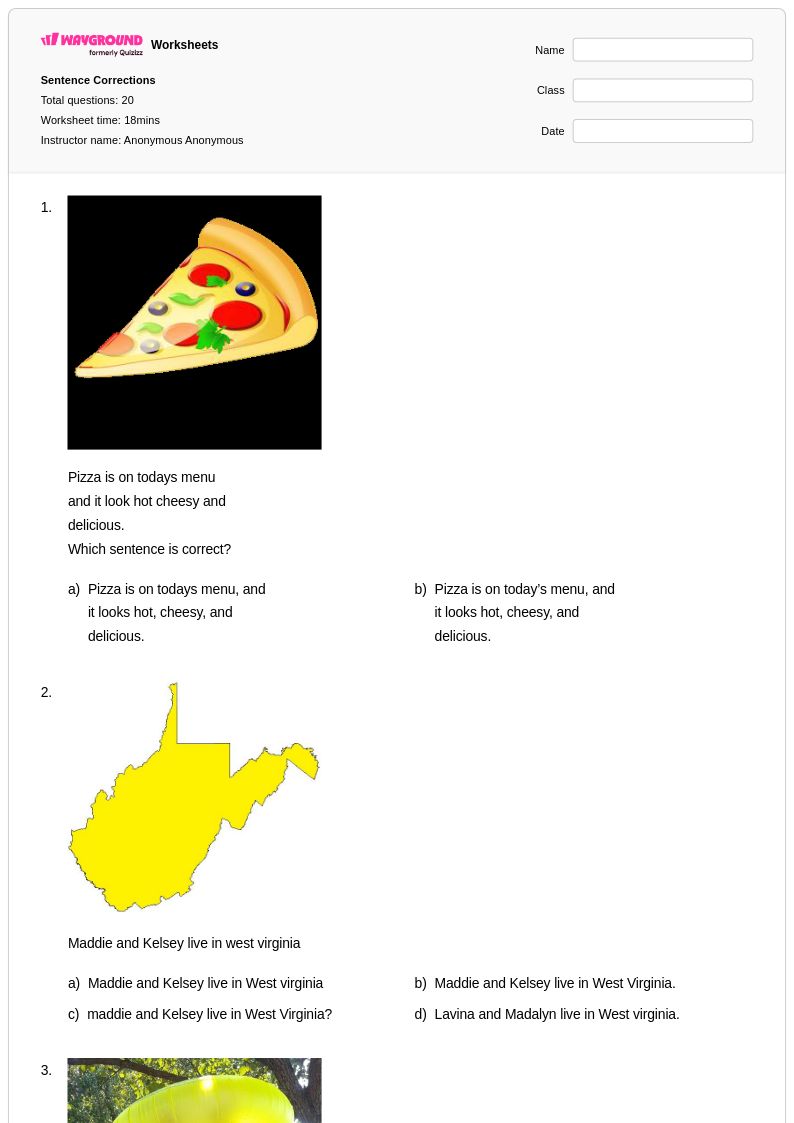
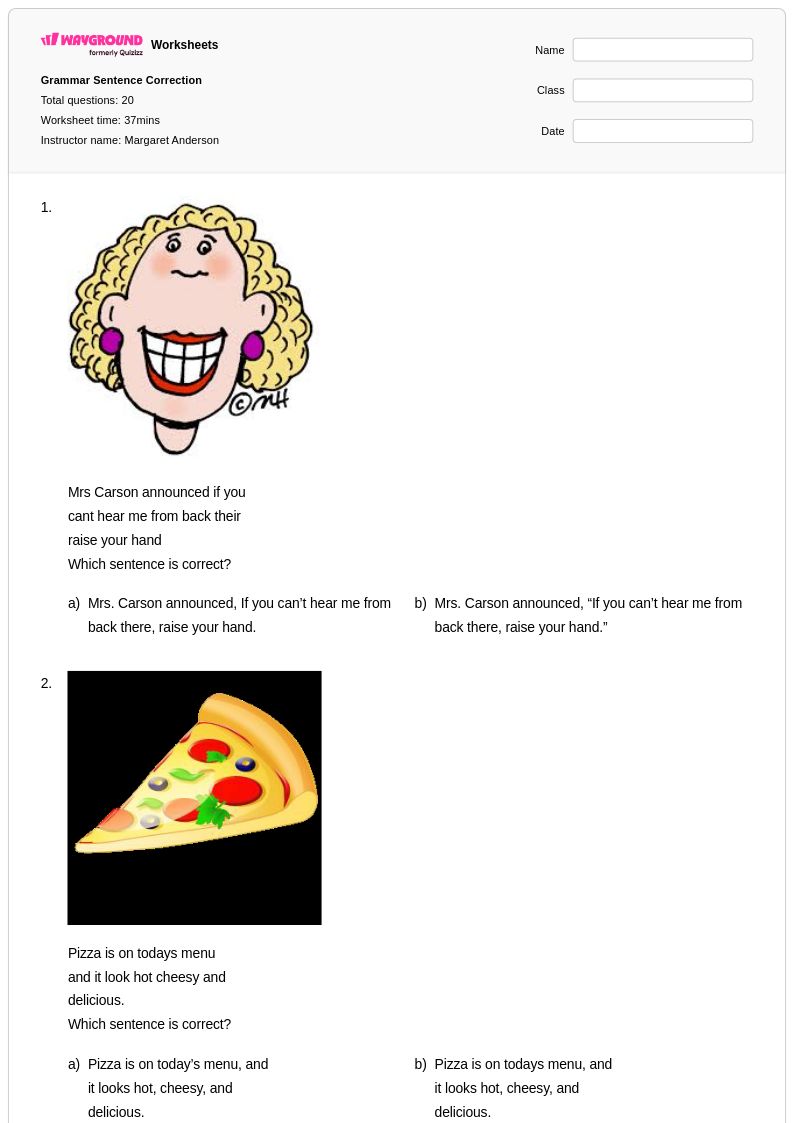
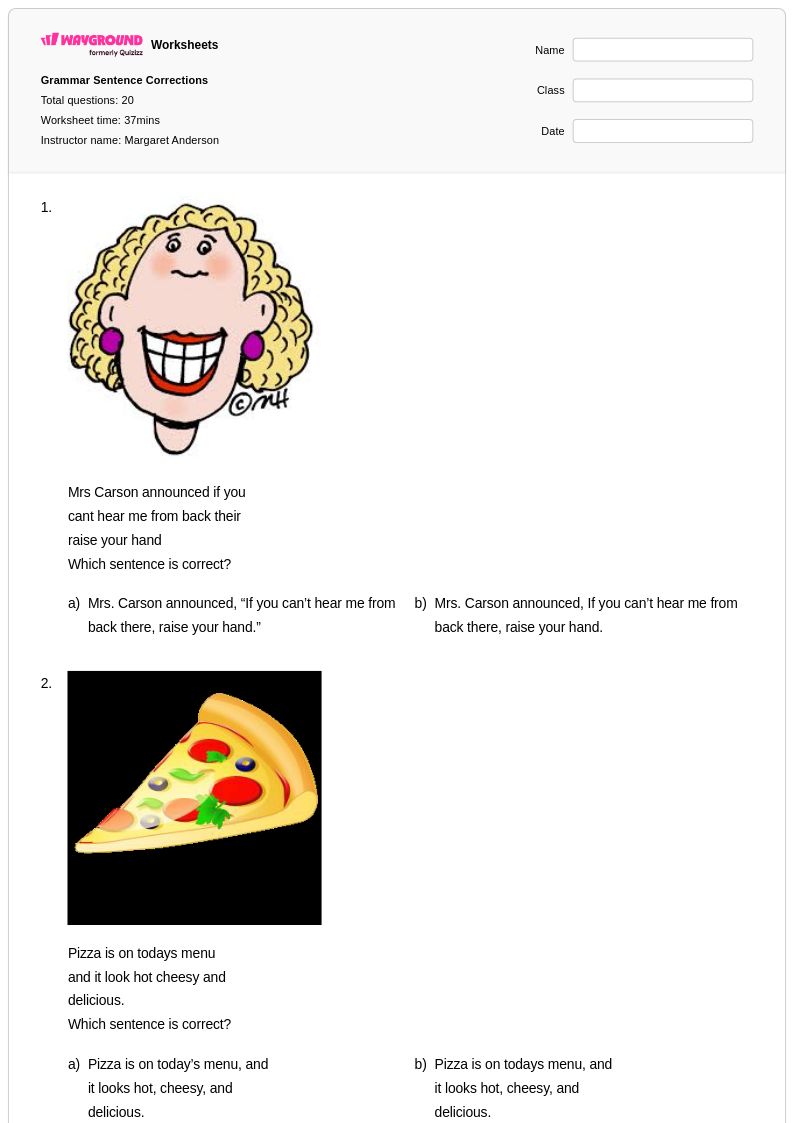
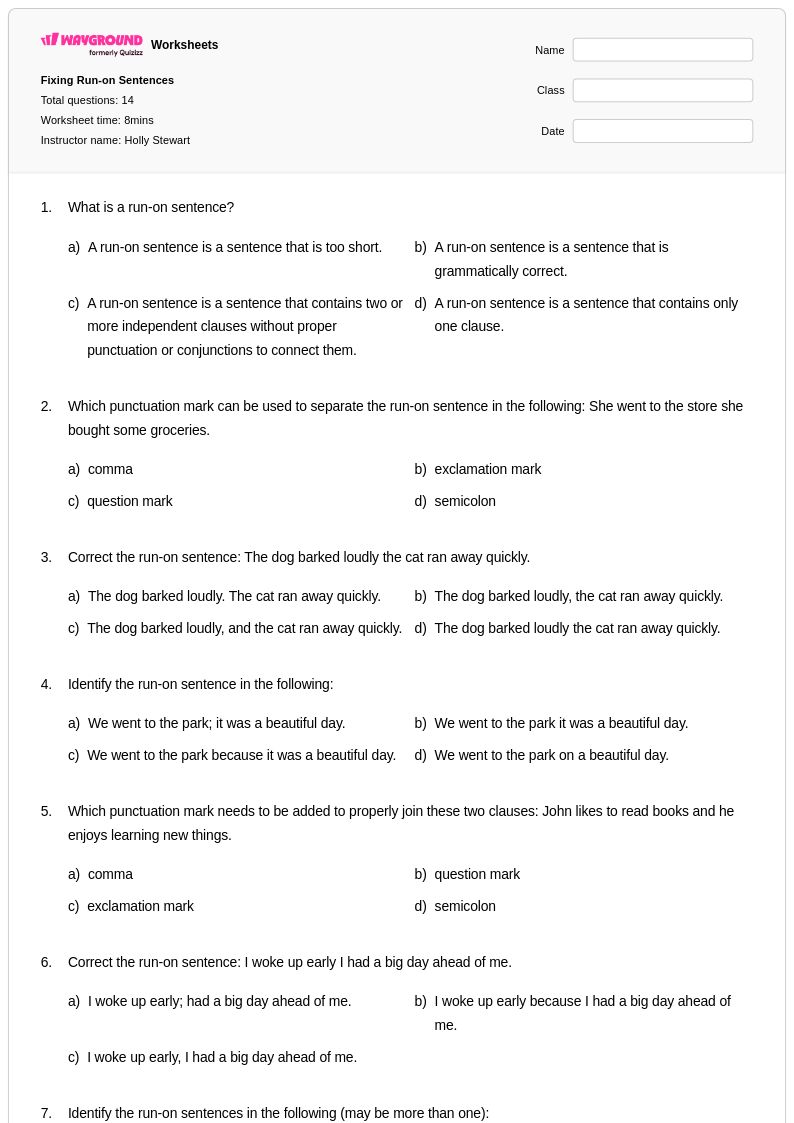
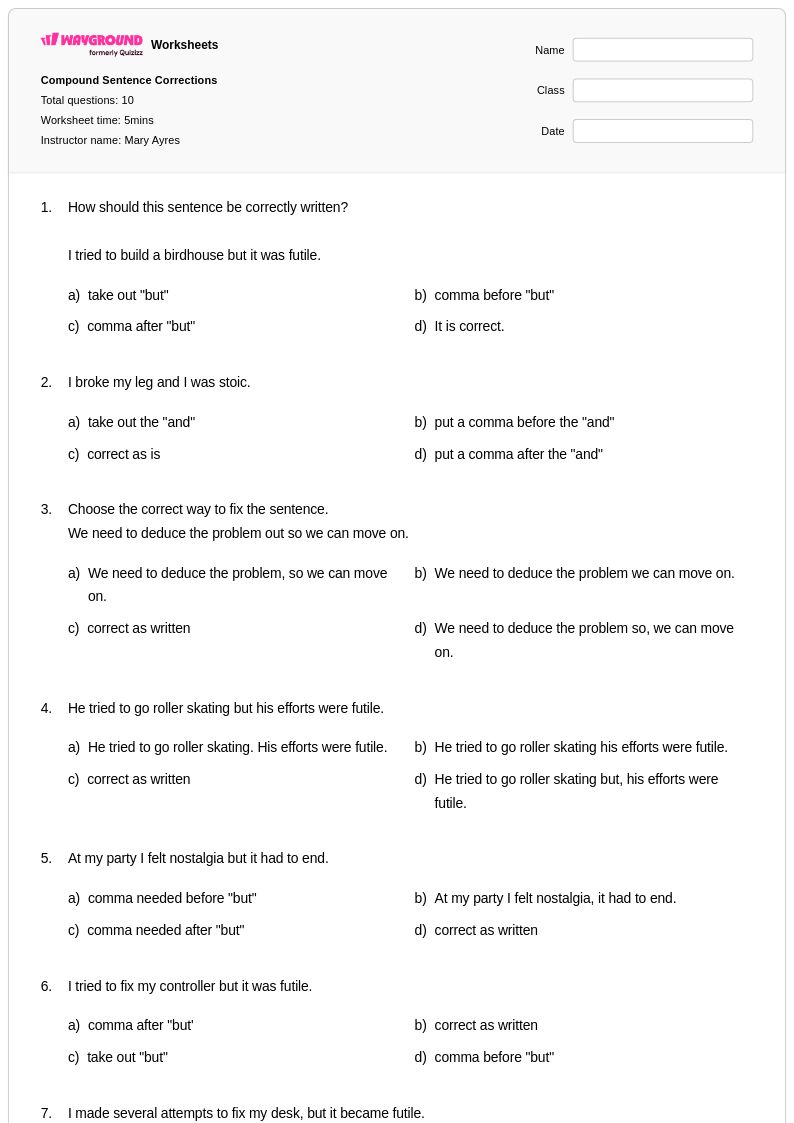
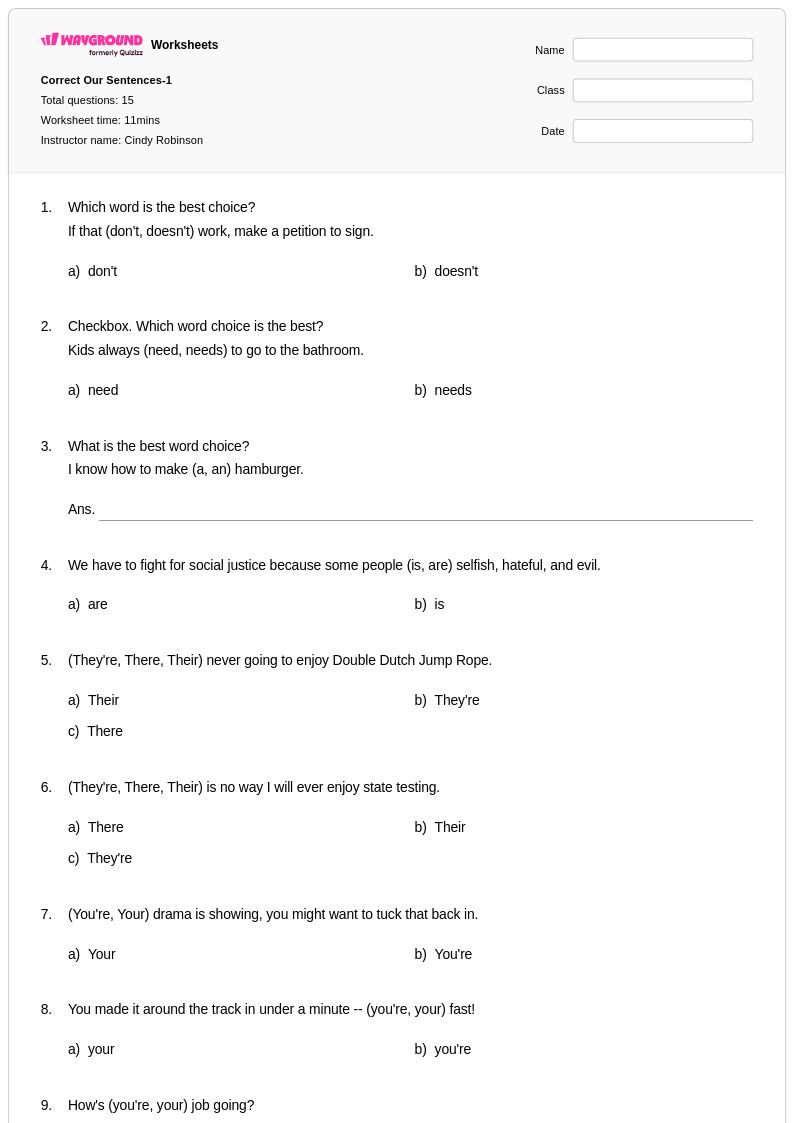
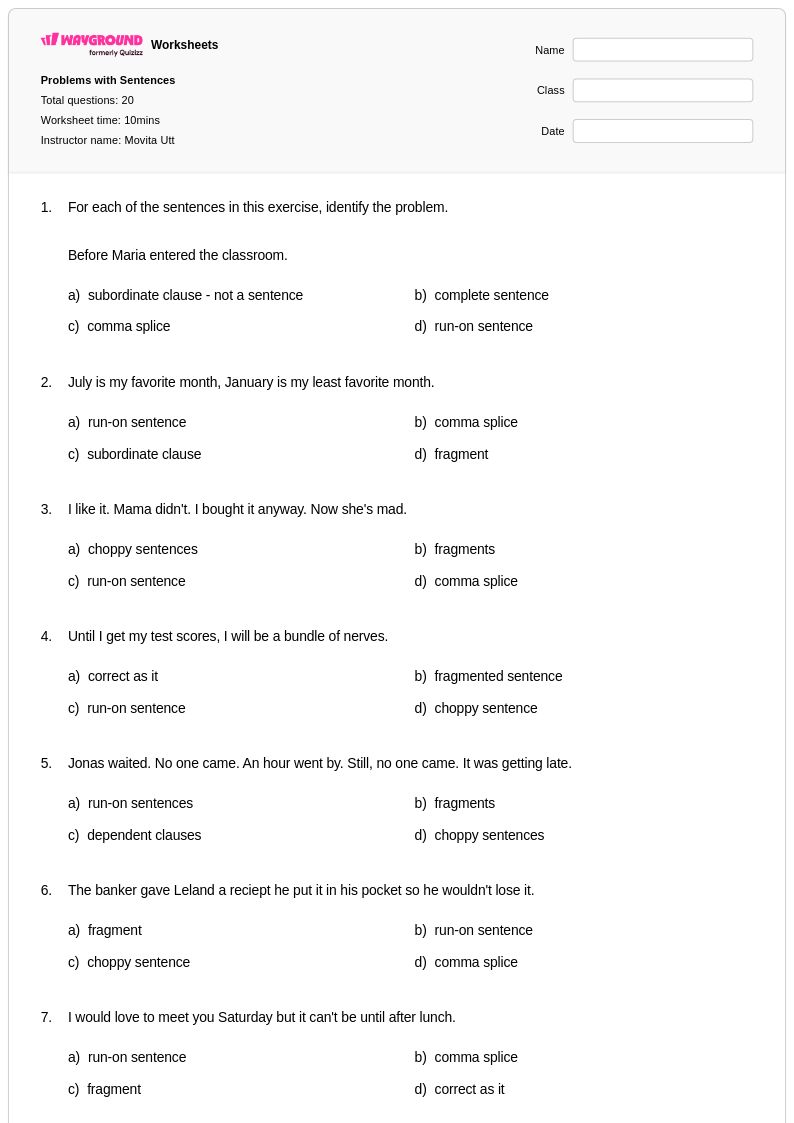
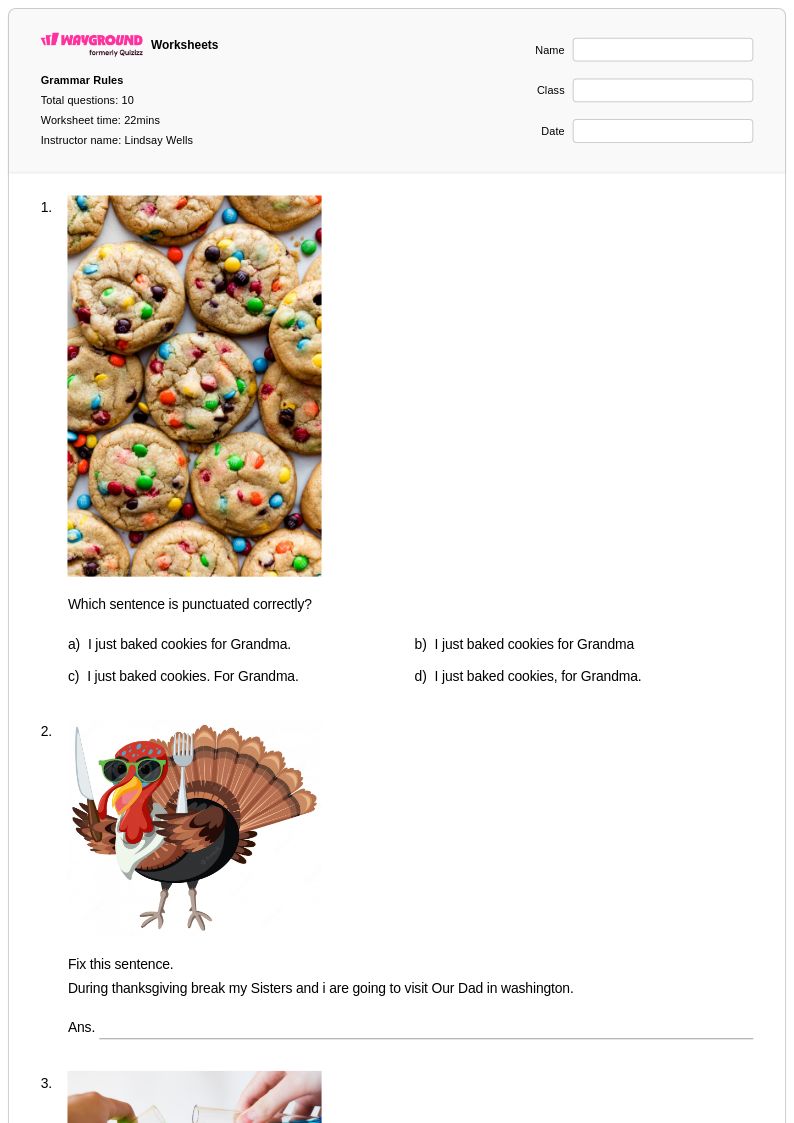
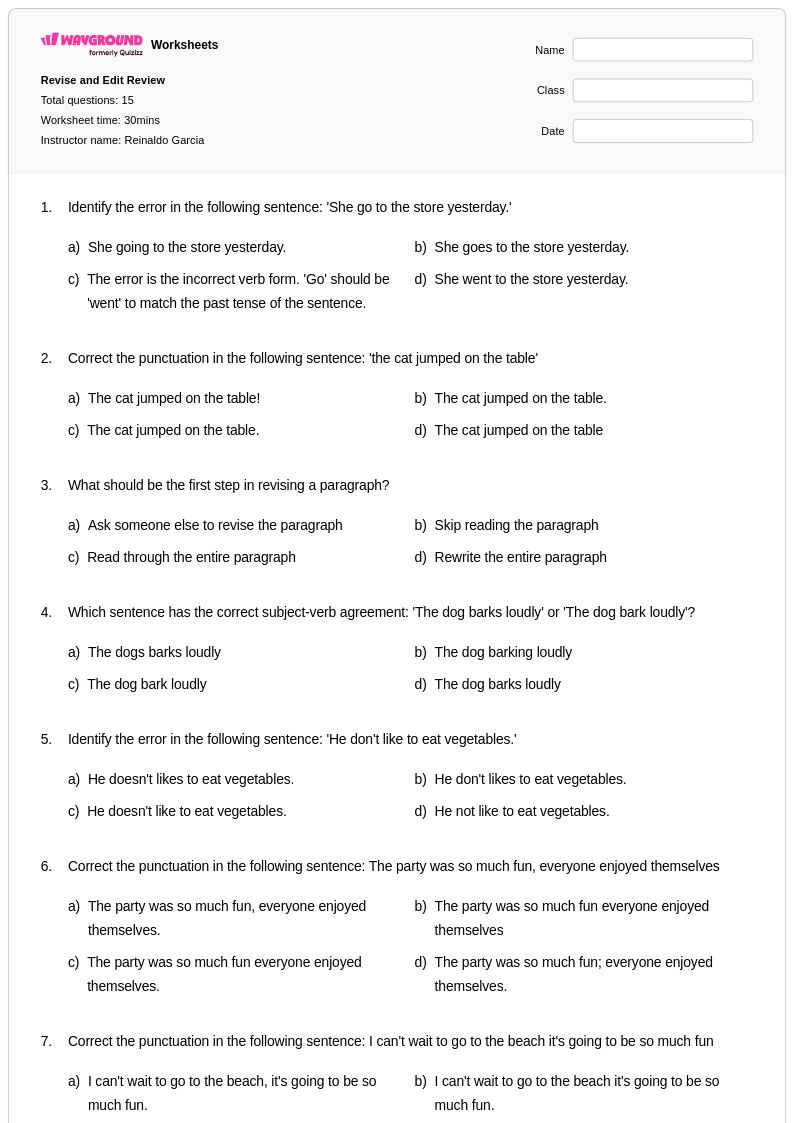
Year 6 sentence correction worksheets available through Wayground (formerly Quizizz) provide comprehensive practice for students developing essential writing mechanics and grammar skills. These carefully designed resources target common grammatical errors that sixth-grade students encounter, including subject-verb agreement mistakes, incorrect punctuation usage, improper capitalization, run-on sentences, and fragment identification. Each worksheet presents authentic sentence examples that require students to identify and correct multiple types of errors, strengthening their proofreading abilities and reinforcing proper grammar rules. The practice problems progress systematically from basic corrections to more complex sentence structures, with complete answer keys provided to support both independent study and classroom instruction. These free printables offer versatile pdf formats that accommodate various learning environments and teaching approaches.
Wayground (formerly Quizizz) empowers educators with an extensive collection of millions of teacher-created sentence correction resources specifically aligned with sixth-grade language arts standards. The platform's robust search and filtering capabilities allow teachers to quickly locate worksheets that target specific grammatical concepts or skill levels, while built-in differentiation tools enable customization for diverse learner needs. Teachers can seamlessly adapt these materials for whole-class instruction, small group remediation, or individual enrichment activities, with both printable pdf versions and interactive digital formats available to suit any classroom technology setup. The comprehensive nature of these worksheet collections supports systematic lesson planning, provides immediate remediation opportunities for struggling students, and offers extended practice for those ready to advance their grammar and mechanics proficiency beyond grade-level expectations.
FAQs
How do I teach sentence correction effectively in the classroom?
Effective sentence correction instruction begins with explicit modeling: show students how to read a sentence slowly, check for one error type at a time (subject-verb agreement, punctuation, capitalization), and apply the relevant rule before revising. Start with common, high-frequency errors and gradually introduce more complex issues like misplaced modifiers. Having students correct errors in pairs before working independently encourages discussion of grammar rules and builds metacognitive editing habits.
What kinds of exercises help students practice sentence correction skills?
Targeted practice sets that present sentences with a single embedded error per sentence are most effective for building accuracy, as they train students to isolate and identify specific mistake patterns. Exercises covering subject-verb disagreement, incorrect comma usage, misplaced modifiers, and capitalization errors give students broad exposure to the types of errors they will encounter in their own writing. Systematic repetition through worksheets reinforces both recognition of error patterns and consistent application of grammar rules.
What mistakes do students commonly make when correcting sentences?
One of the most frequent errors is over-correcting: students change wording that is already correct because it sounds unfamiliar, rather than focusing on the actual grammatical issue. Students also commonly miss subject-verb agreement errors when the subject and verb are separated by a prepositional phrase, causing them to match the verb to the nearest noun instead of the true subject. Misplaced modifiers are another persistent challenge because students often understand the intended meaning and overlook the structural ambiguity.
How can I use sentence correction worksheets to differentiate instruction for students at different skill levels?
Differentiation in sentence correction practice can be achieved by assigning simpler error types (capitalization, end punctuation) to developing writers while challenging advanced students with complex issues like dangling modifiers or comma splice correction. On Wayground, teachers can apply accommodations at the individual student level, including reduced answer choices to lower cognitive load for students who need scaffolding, and Read Aloud support so that auditory learners can hear the sentence read aloud before identifying the error. These settings are saved per student and apply automatically in future sessions without drawing attention to individual differences.
How do I use Wayground's sentence correction worksheets in my class?
Wayground's sentence correction worksheets are available as printable PDFs for traditional classroom and homework use, and in digital formats for technology-integrated instruction, including the option to host them as a quiz on Wayground. Teachers can use the platform's search and filtering tools to locate worksheets aligned to specific grammar standards or skill levels, and can customize existing materials to target particular error types relevant to their students' current needs. Each worksheet includes a complete answer key, making them practical for independent practice, self-assessment, and diagnostic review.
How do sentence correction worksheets support students' broader writing skills?
Sentence correction practice builds the proofreading habits students need to edit their own writing, because identifying errors in isolated sentences trains them to slow down and apply grammar rules analytically rather than reading for meaning alone. Regular exposure to error patterns such as subject-verb disagreement, misplaced modifiers, and punctuation mistakes makes students more likely to catch similar issues in their own drafts. Over time, this targeted practice develops both accuracy and confidence in the editing stage of the writing process.