Free Printable Setting Priorities Worksheets for Year 9
Year 9 setting priorities worksheets help students develop essential decision-making skills through engaging printables, practice problems, and free PDF resources with comprehensive answer keys for effective social studies learning.
Explore printable Setting Priorities worksheets for Year 9
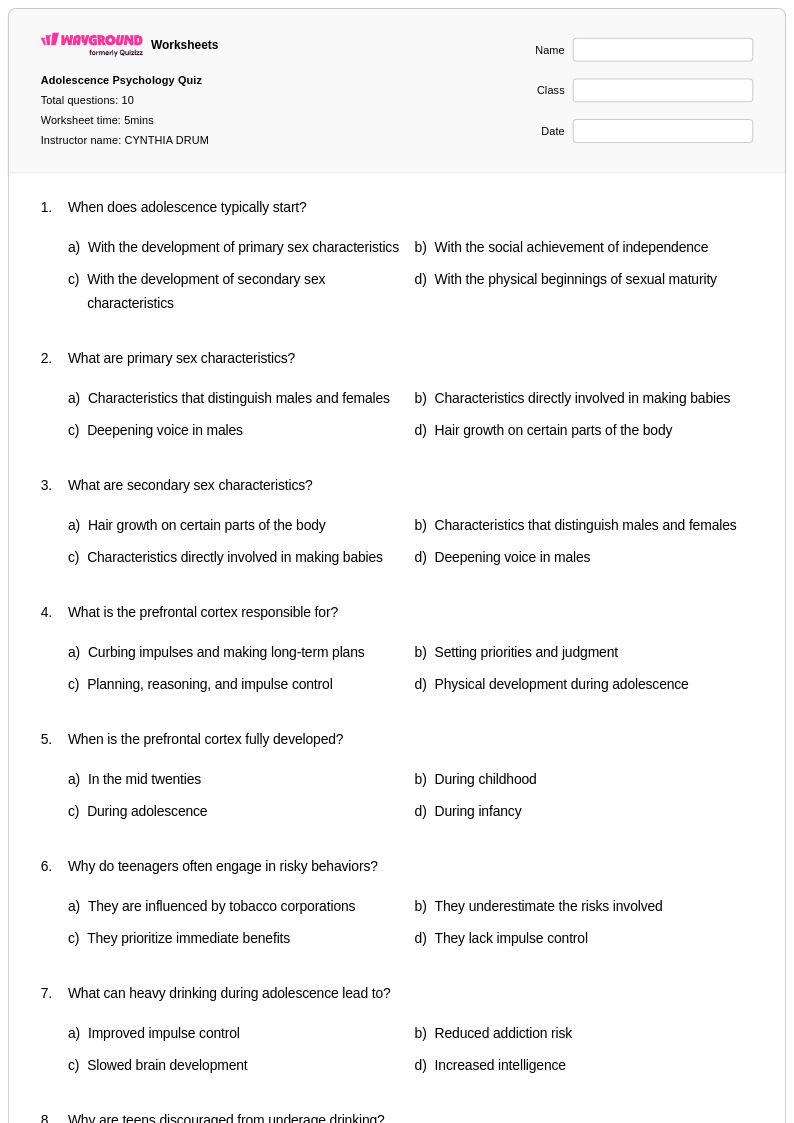
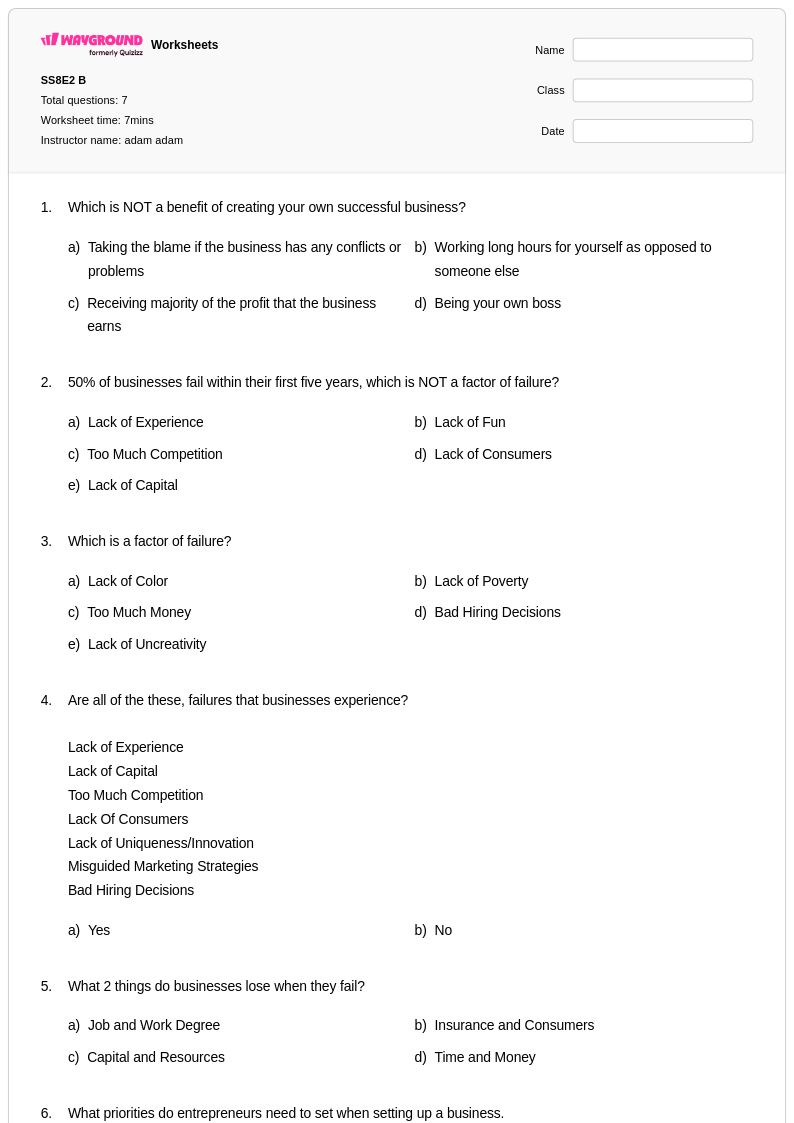
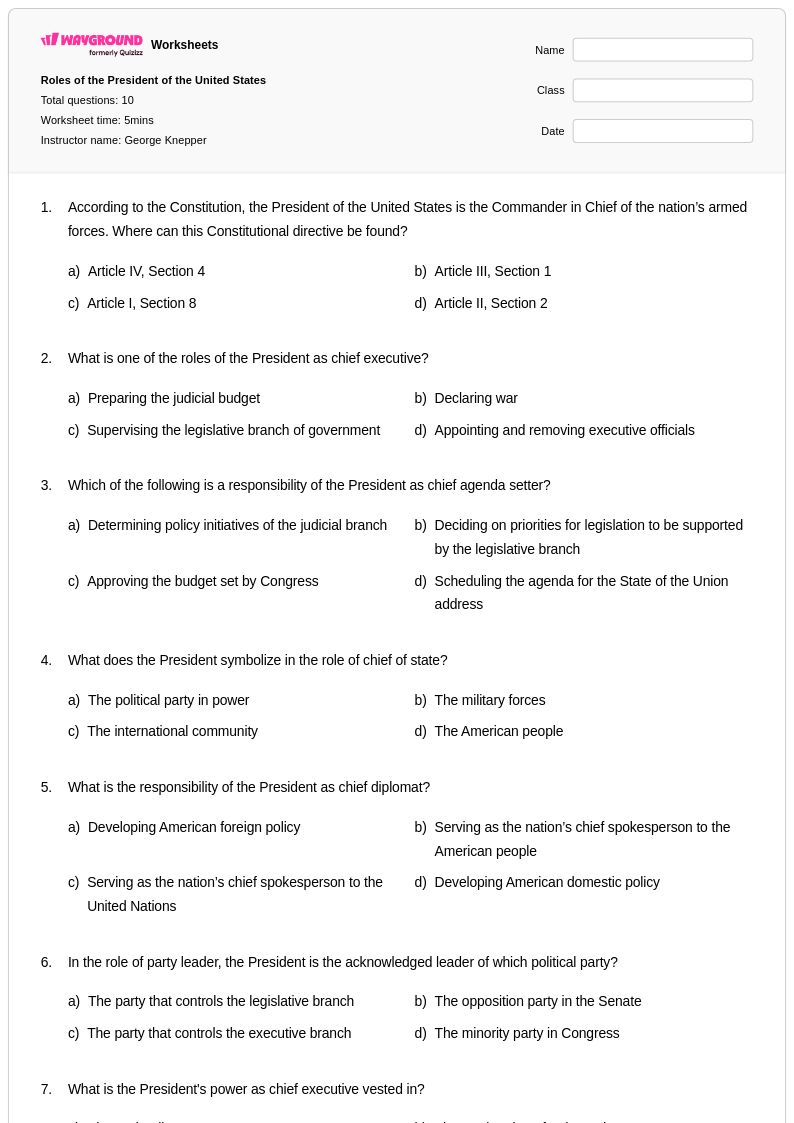
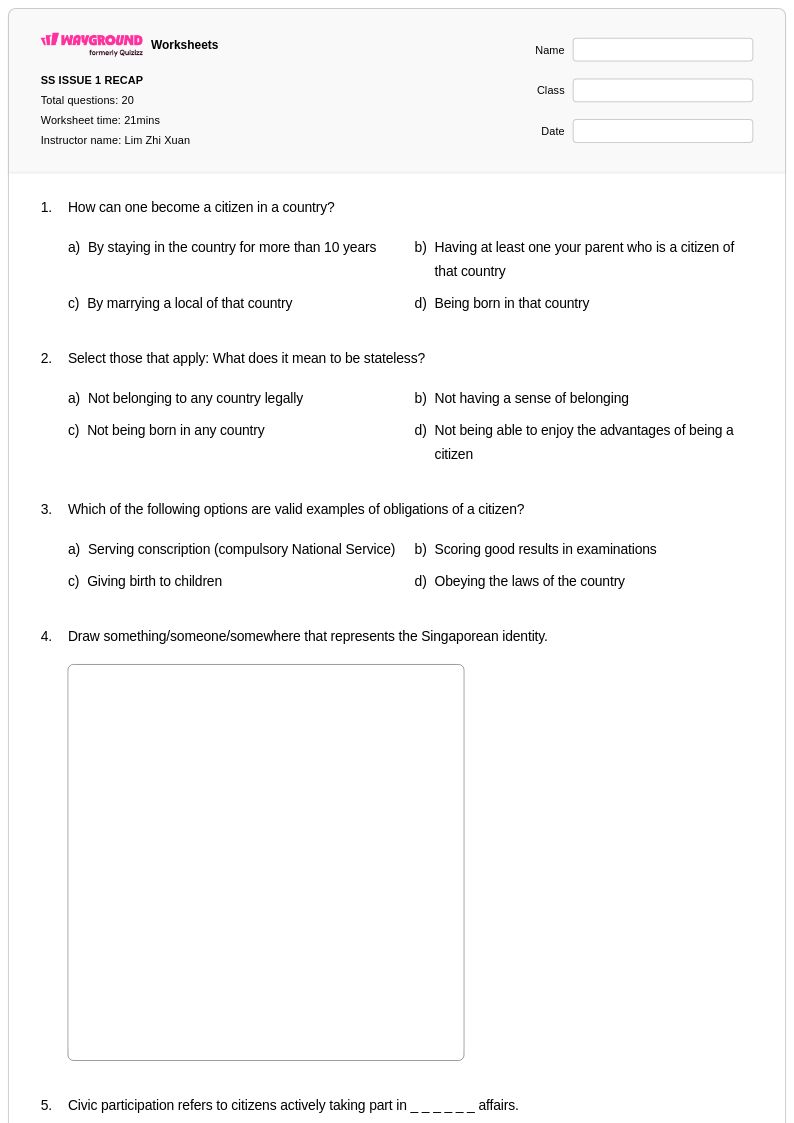
Setting priorities worksheets for Year 9 social studies provide students with essential practice in developing critical decision-making and time management skills that are fundamental to academic and personal success. These comprehensive worksheets guide ninth-grade students through structured exercises that teach them how to evaluate competing demands, rank tasks by importance and urgency, and make informed choices about how to allocate their time and energy. Through carefully designed practice problems, students learn to distinguish between immediate wants and long-term goals, analyze the consequences of different choices, and develop systematic approaches to managing multiple responsibilities. Each worksheet includes detailed answer keys that help students understand the reasoning behind effective priority-setting strategies, and the free printable format ensures easy access for classroom use and independent study.
Wayground, formerly Quizizz, supports educators with an extensive collection of teacher-created priority-setting worksheets specifically designed for Year 9 social studies instruction. The platform's millions of resources include materials that align with social studies standards while addressing the developmental needs of ninth-grade students who are navigating increased academic responsibilities and growing independence. Teachers can utilize advanced search and filtering tools to locate worksheets that match their specific curriculum requirements and differentiate instruction based on individual student needs. The flexible customization options allow educators to modify existing materials or combine multiple resources to create comprehensive lesson sequences, while both printable PDF formats and digital versions support diverse classroom environments. These priority-setting worksheets serve multiple instructional purposes, from introducing foundational concepts during initial lessons to providing targeted remediation for struggling students and enrichment opportunities for advanced learners who need additional skill practice.
FAQs
How do I teach students to set priorities effectively?
Effective priority-setting instruction begins with helping students distinguish between urgency and importance, two concepts students often conflate. Use real-world scenarios relevant to their lives, such as balancing homework, chores, and extracurriculars, to make the skill concrete. Teaching frameworks like ranking tasks by consequence and deadline gives students a systematic approach they can transfer to academic and personal decisions.
What activities help students practice setting priorities?
Structured practice problems using everyday decision-making scenarios are among the most effective tools for building priority-setting skills. Worksheets that ask students to rank competing tasks, weigh wants versus needs, and evaluate the consequences of different choices give learners repeated, low-stakes practice. Scenario-based exercises that mirror real student responsibilities, like managing after-school time or preparing for multiple deadlines, help students internalize the skill rather than just recognize it.
What mistakes do students commonly make when learning to prioritize?
The most common error is confusing what feels urgent with what is actually important, leading students to focus on low-stakes tasks while high-priority responsibilities are neglected. Students also tend to underestimate time requirements, which disrupts any prioritization plan they've made. Another frequent misconception is treating all tasks as equally weighted, when in reality consequence and deadline should drive the ranking process.
How does setting priorities connect to social-emotional learning and executive function?
Priority-setting is a core executive functioning skill that directly supports self-regulation, planning, and goal-directed behavior, all foundational to social-emotional learning. When students can evaluate competing demands and make intentional choices, they develop greater autonomy and reduced stress responses in high-demand situations. Embedding priority-setting instruction within social studies or SEL curricula gives students a practical framework they can apply across academic, personal, and eventually professional contexts.
How do I use setting priorities worksheets in my classroom?
Setting priorities worksheets on Wayground are available as printable PDFs for traditional classroom use and in digital formats for technology-integrated learning environments, including the option to host them as a quiz on Wayground. Printable versions work well as independent practice, warm-up activities, or take-home reflection tasks, while digital formats allow for real-time progress monitoring. Each worksheet includes a complete answer key, so teachers can use them for guided instruction, formative assessment, or self-paced student review with minimal preparation time.
How can I differentiate priority-setting instruction for students at different skill levels?
For students who struggle with abstract reasoning, start with concrete, binary choices before introducing multi-variable prioritization tasks. Scenario complexity can be adjusted so that advanced students weigh more competing factors while developing learners work with simpler, more familiar situations. On Wayground, teachers can apply accommodations such as reduced answer choices to lower cognitive load for students who need additional support, and read aloud settings for students who benefit from audio delivery of questions and scenarios.