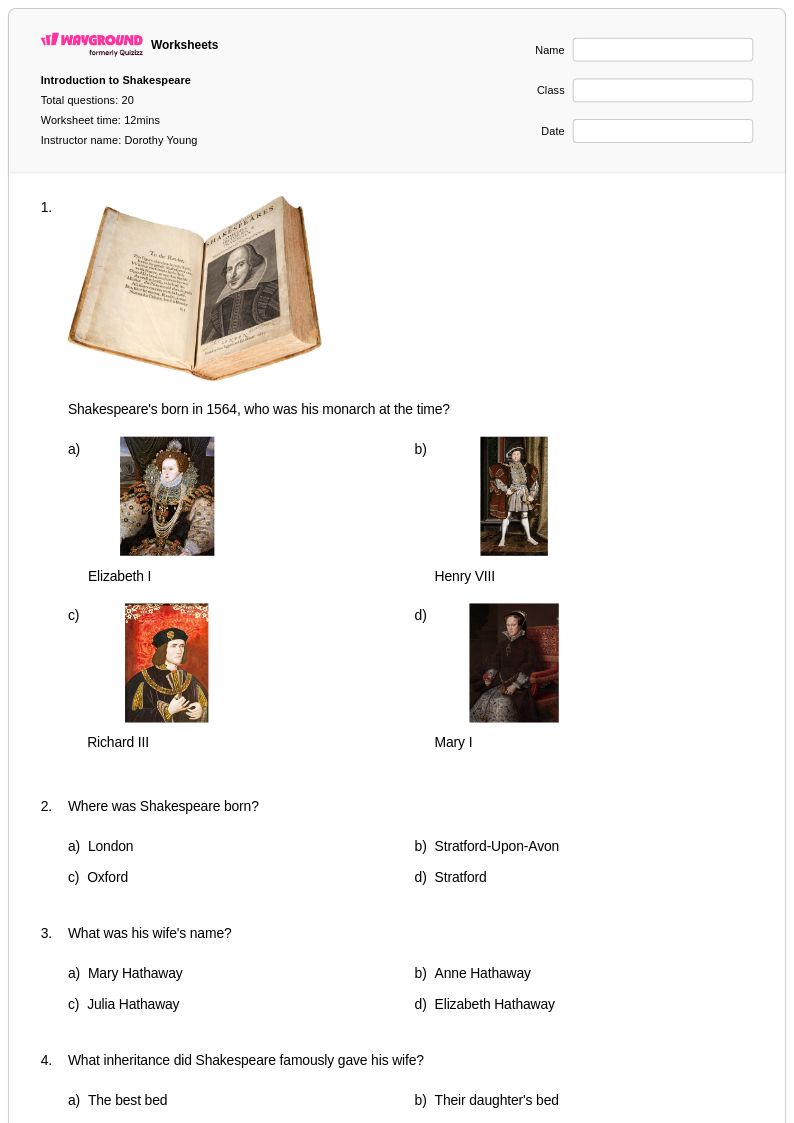
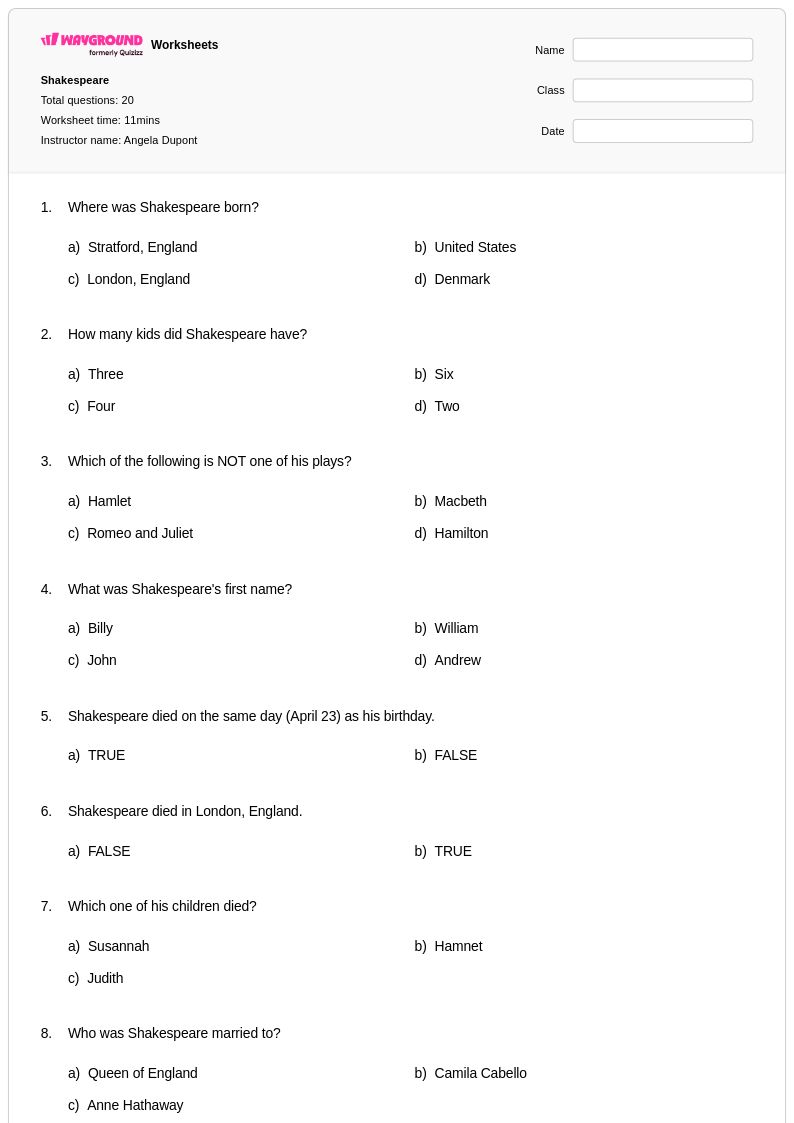
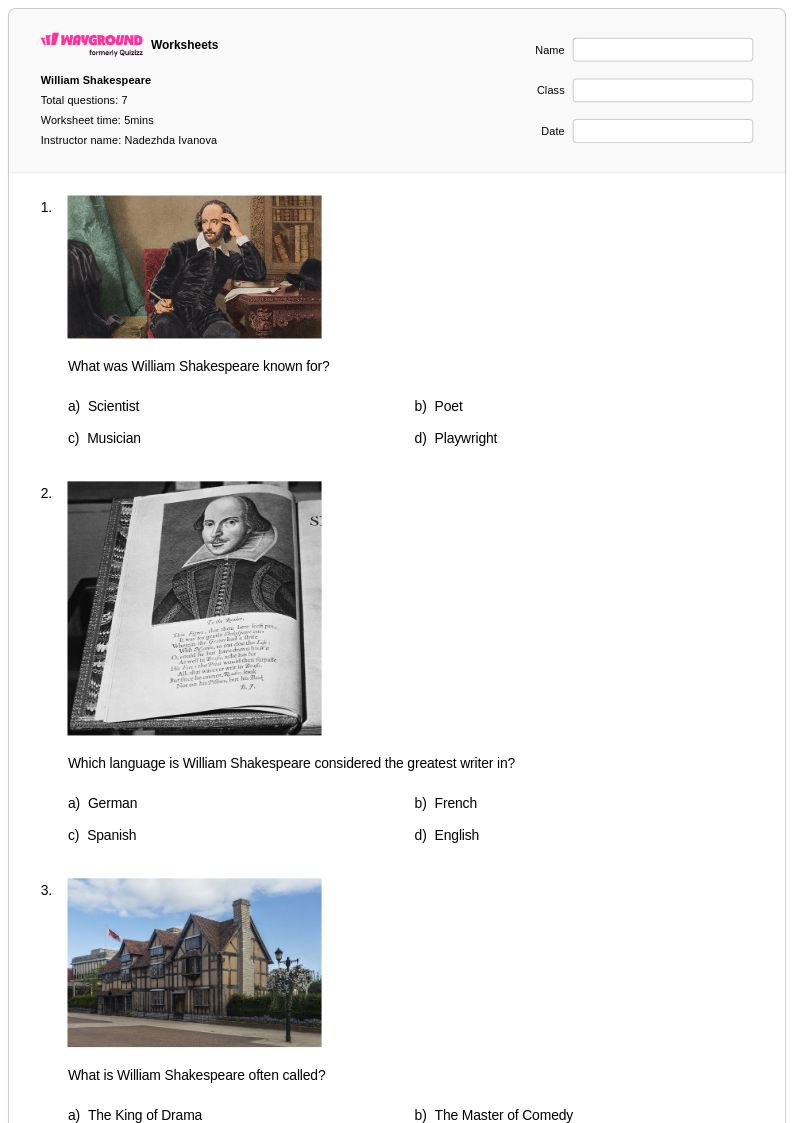
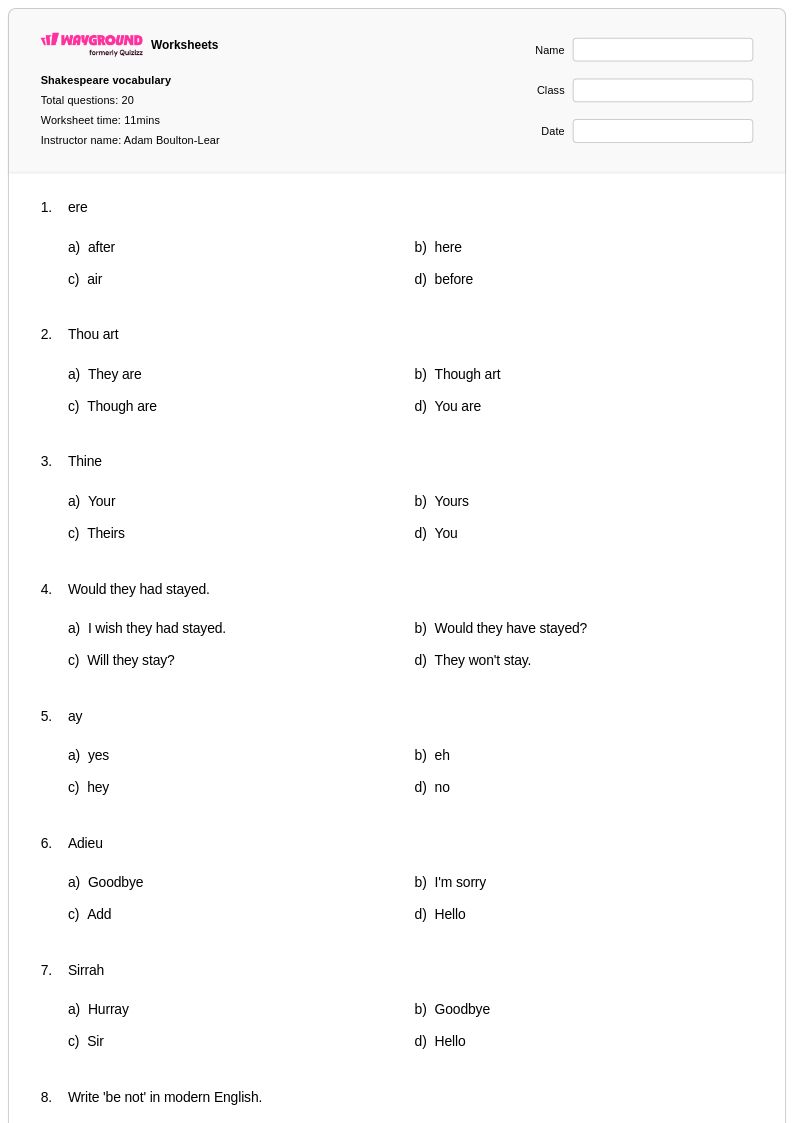
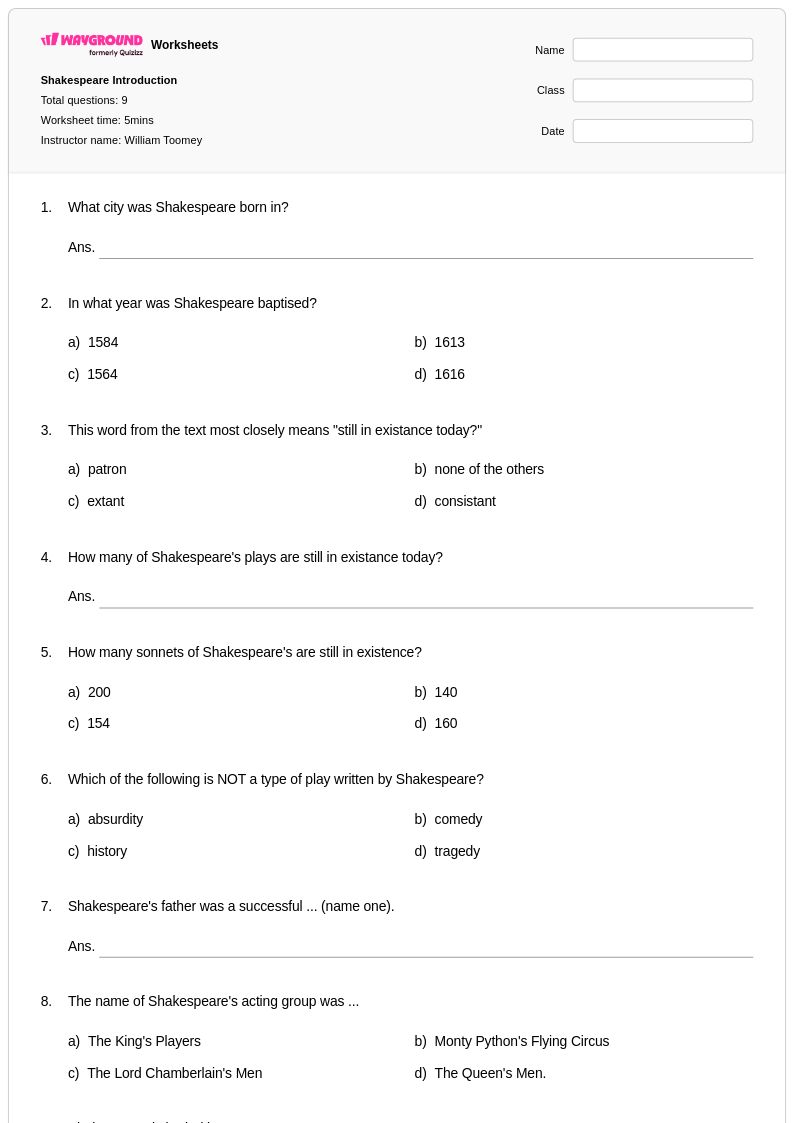
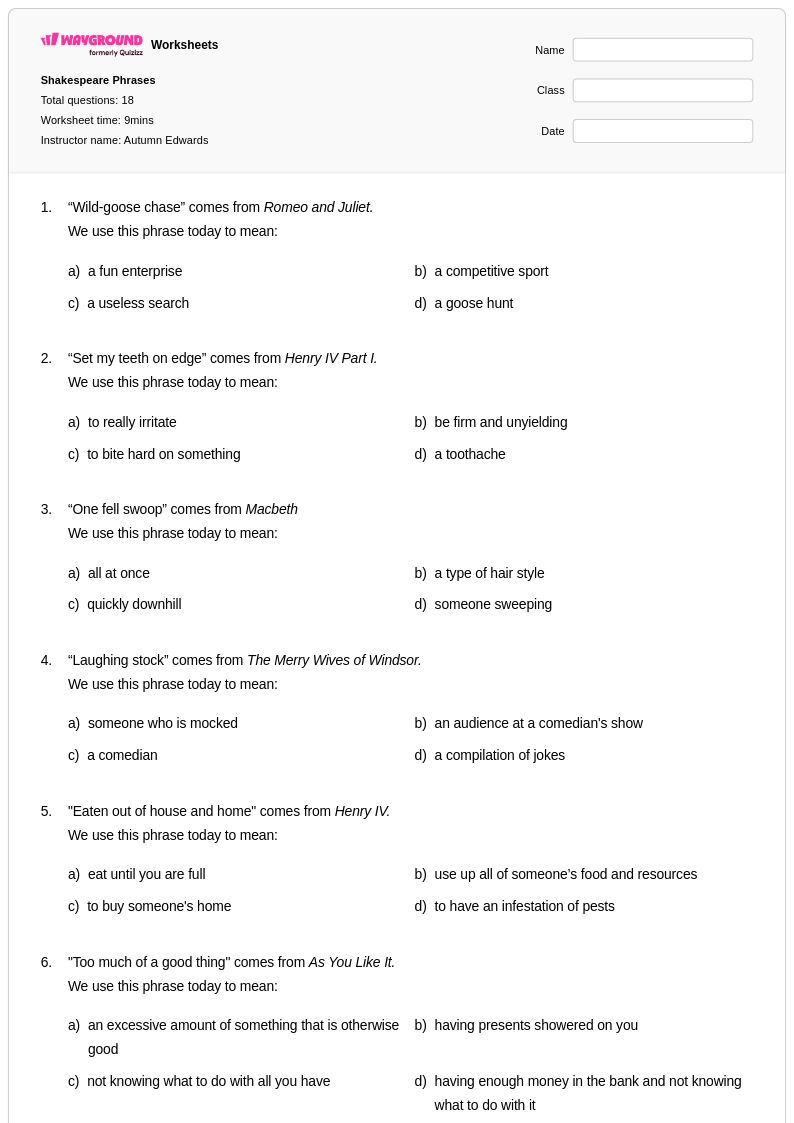
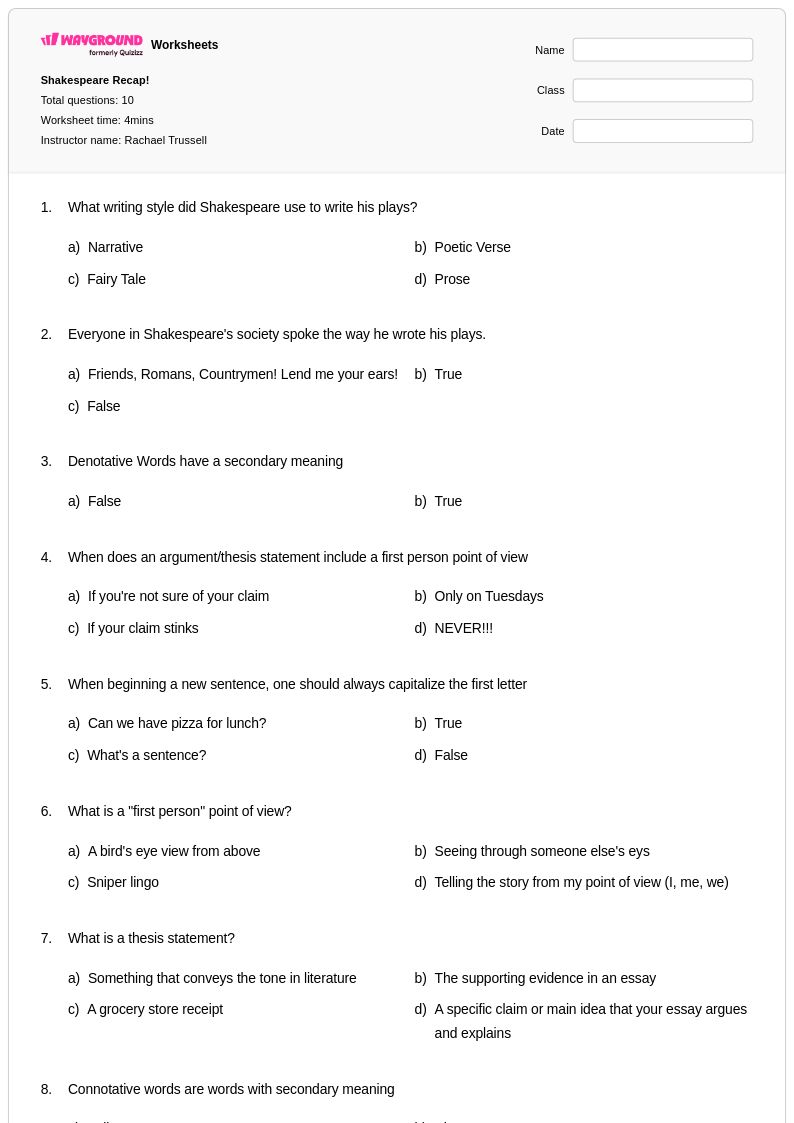
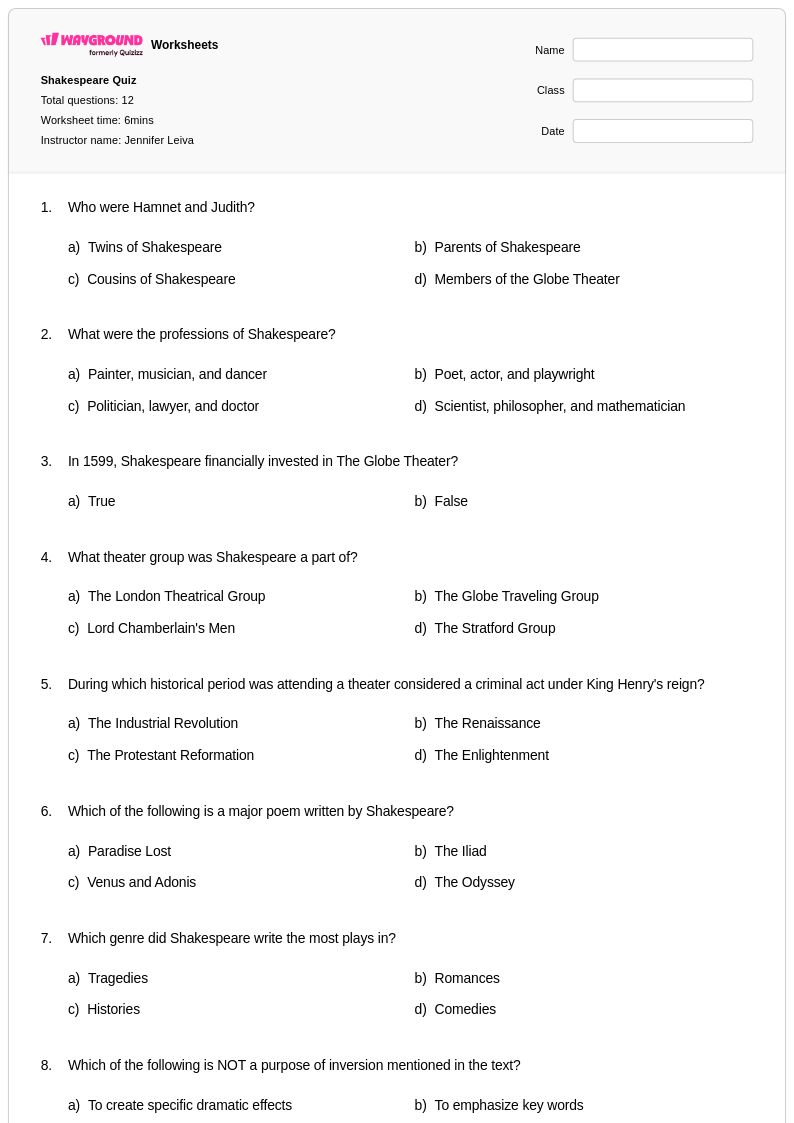
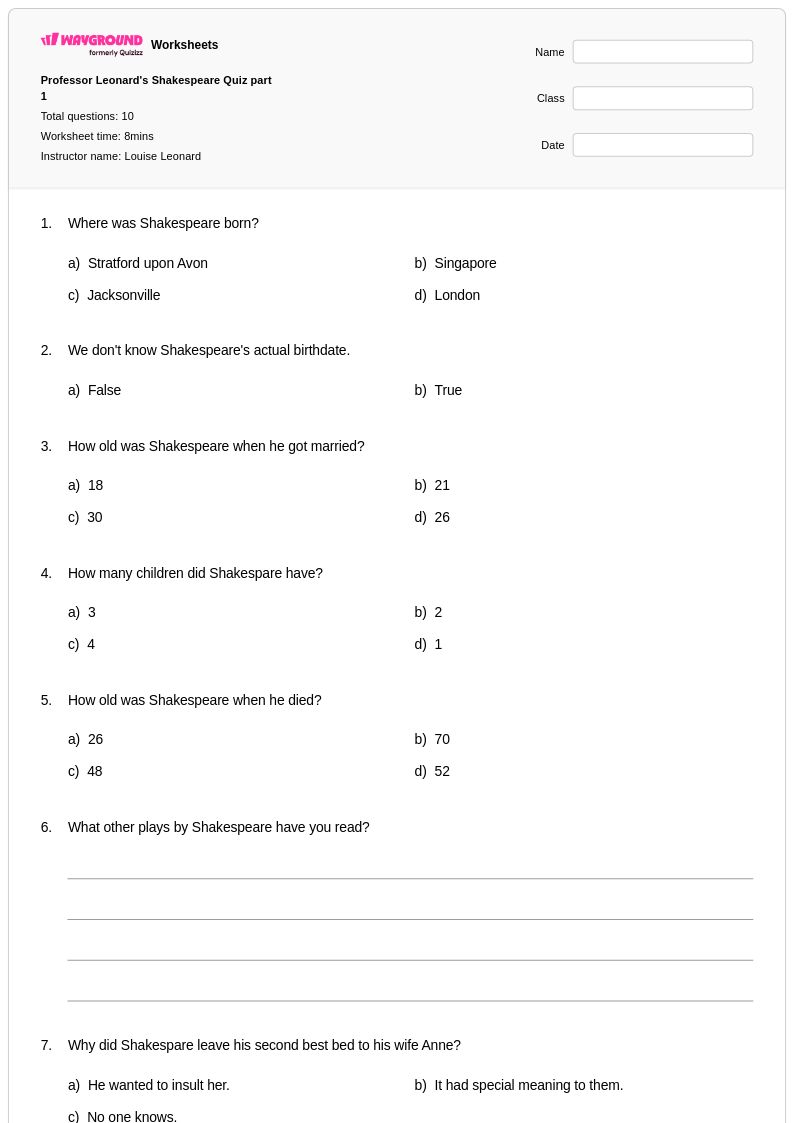
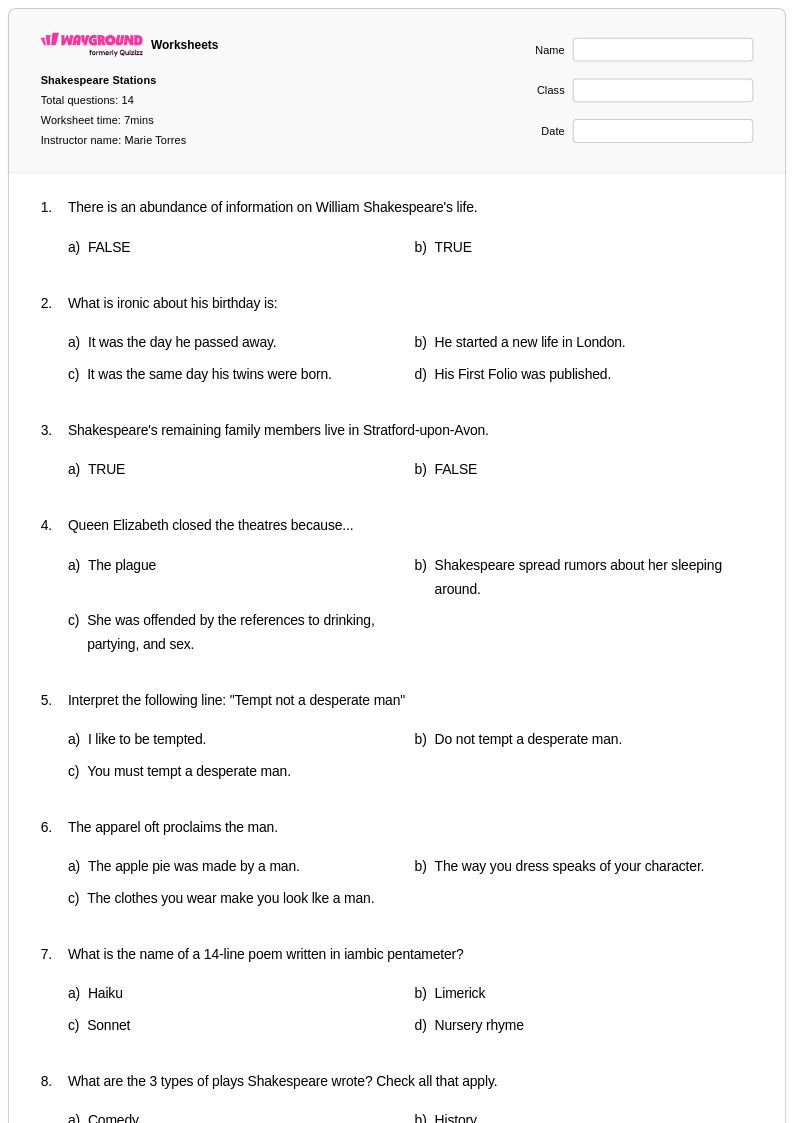
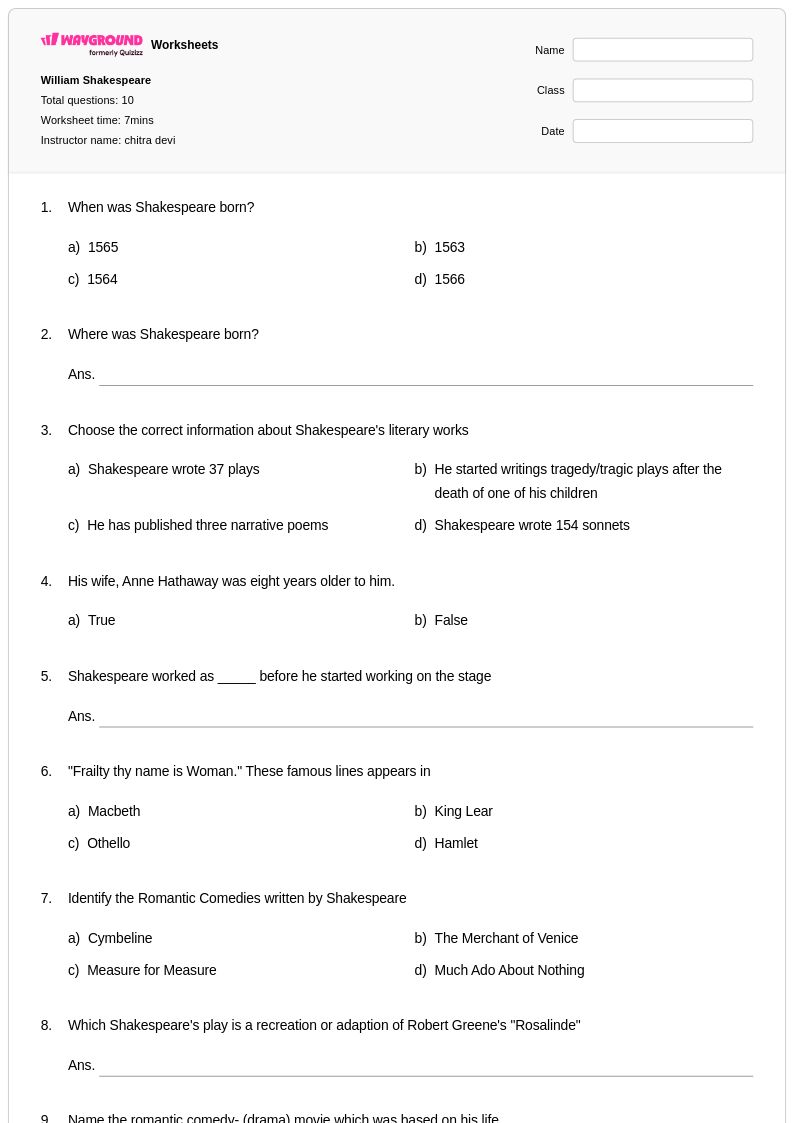
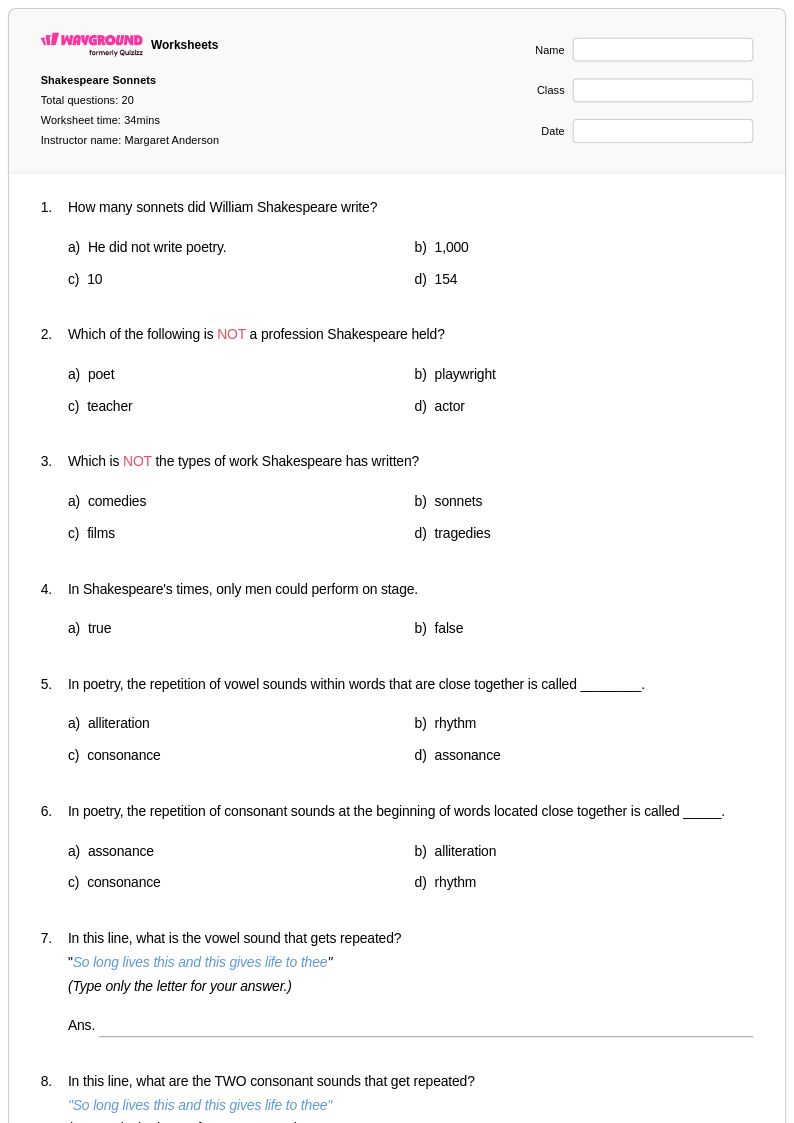
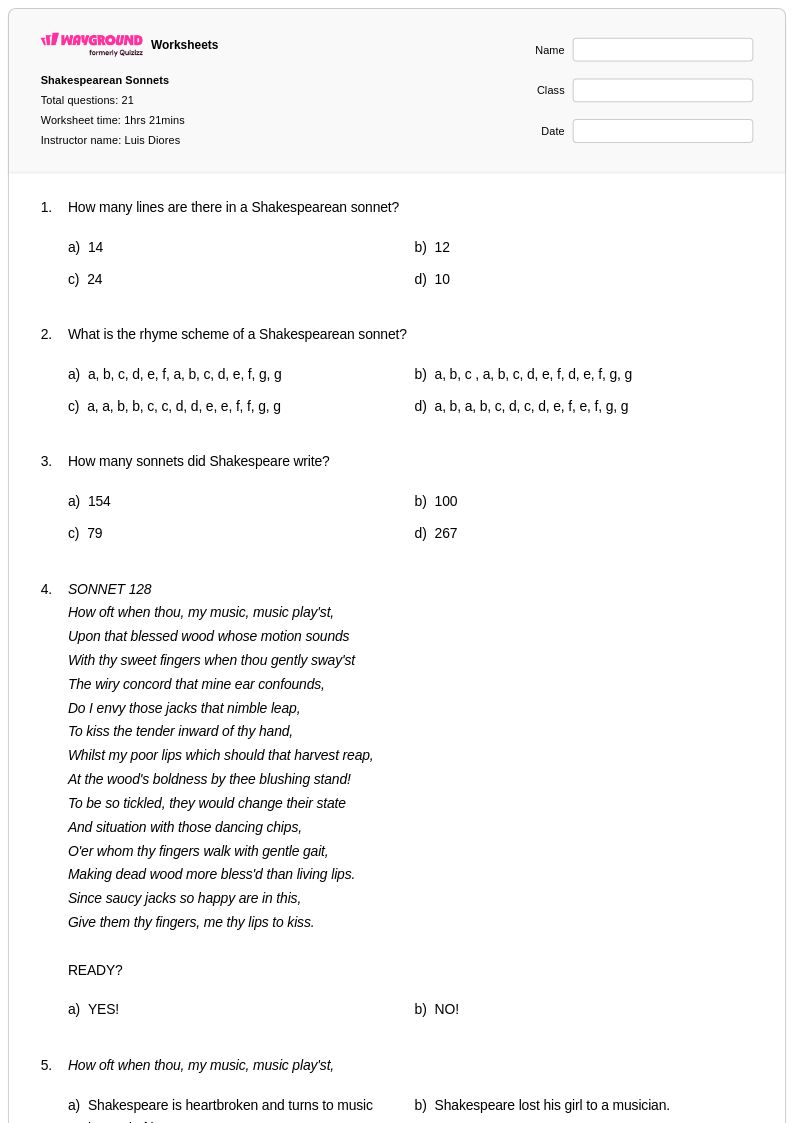
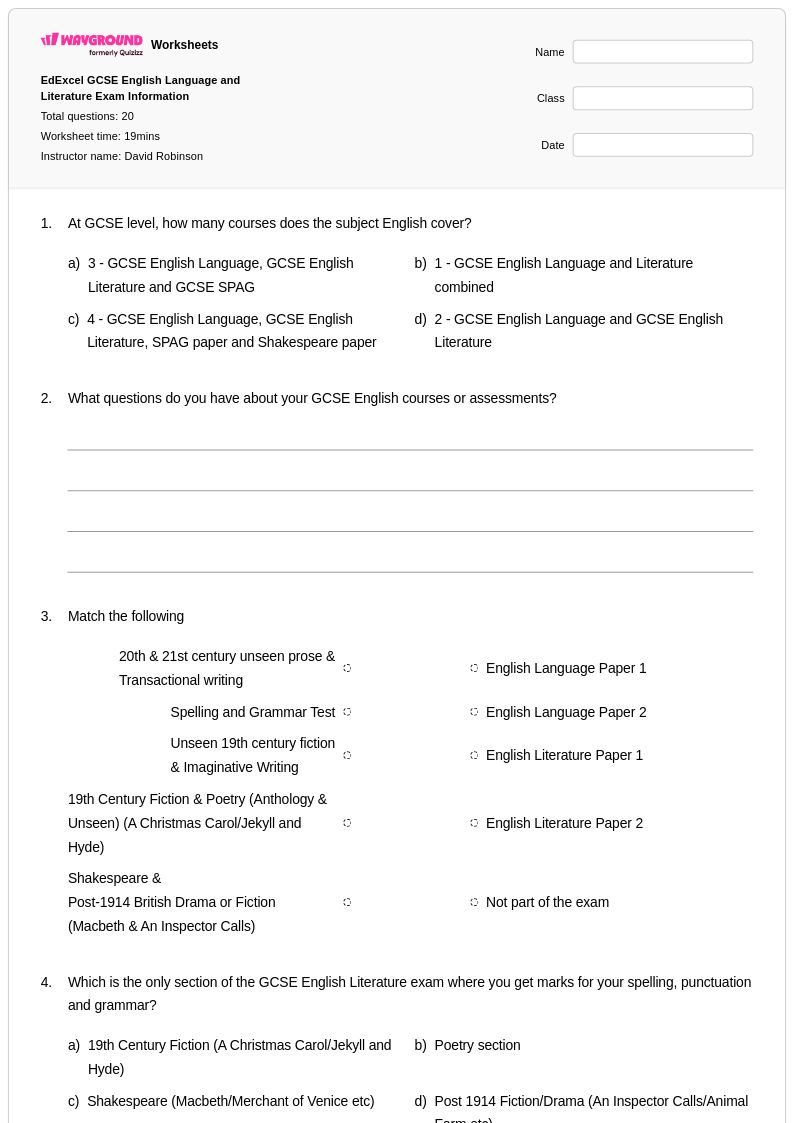
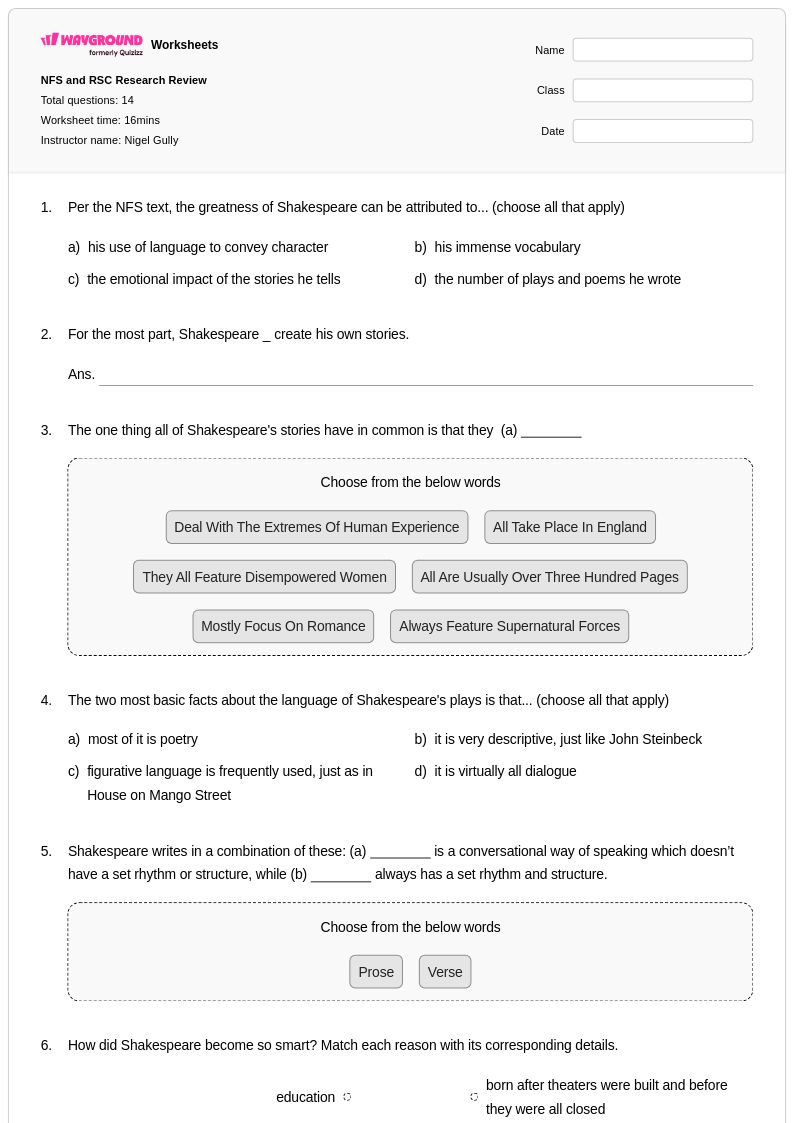
Explore Wayground's comprehensive Year 9 Shakespeare worksheets and printables that help students analyze literary devices, character development, and themes through engaging practice problems with complete answer keys.
Explore printable Shakespeare worksheets for Year 9
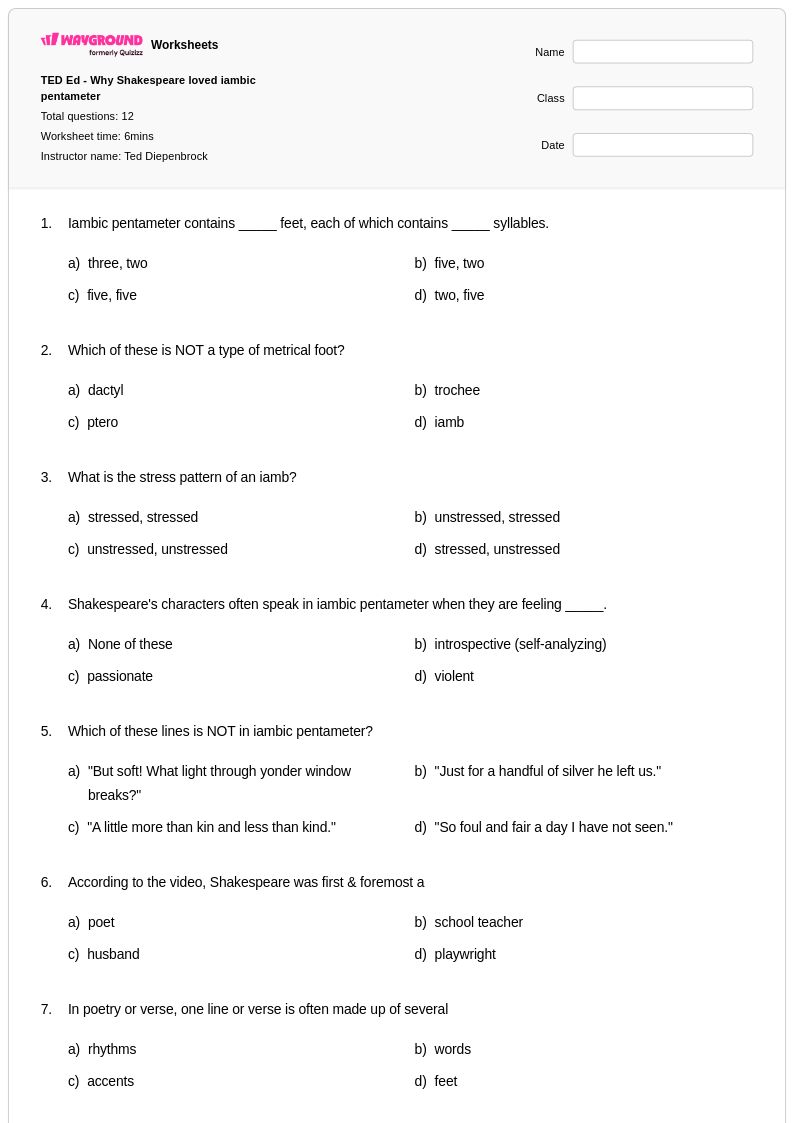
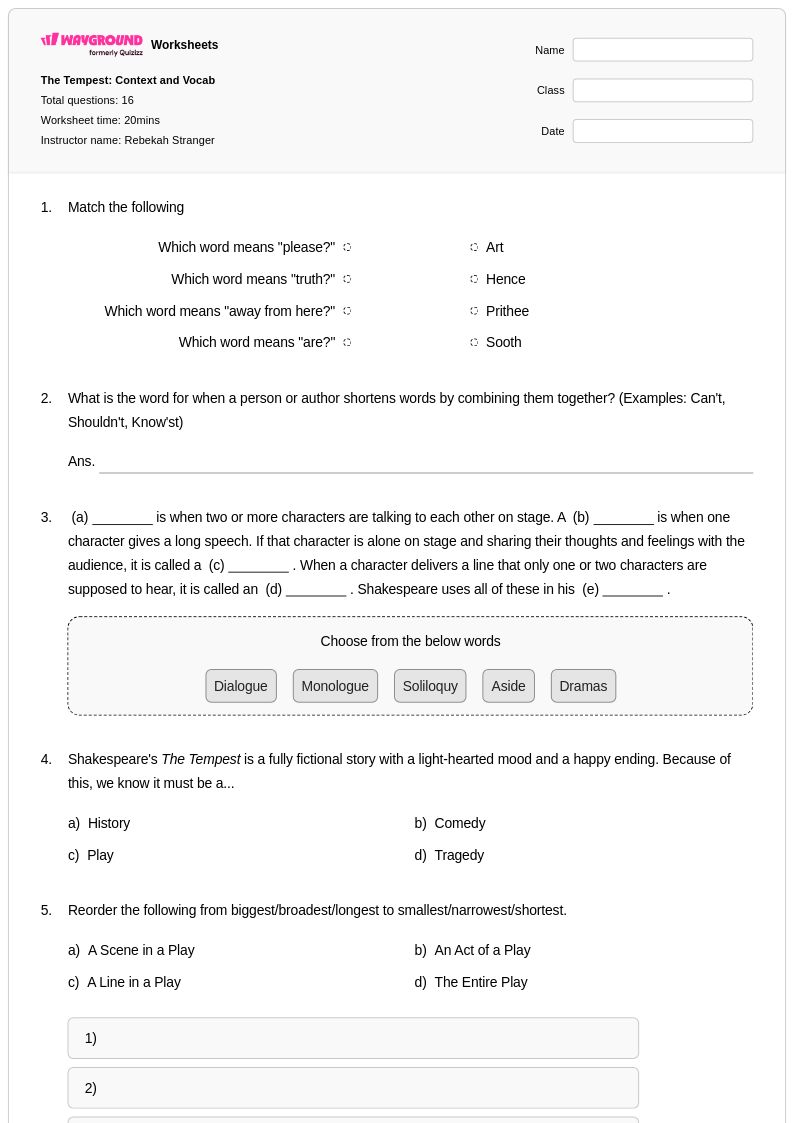
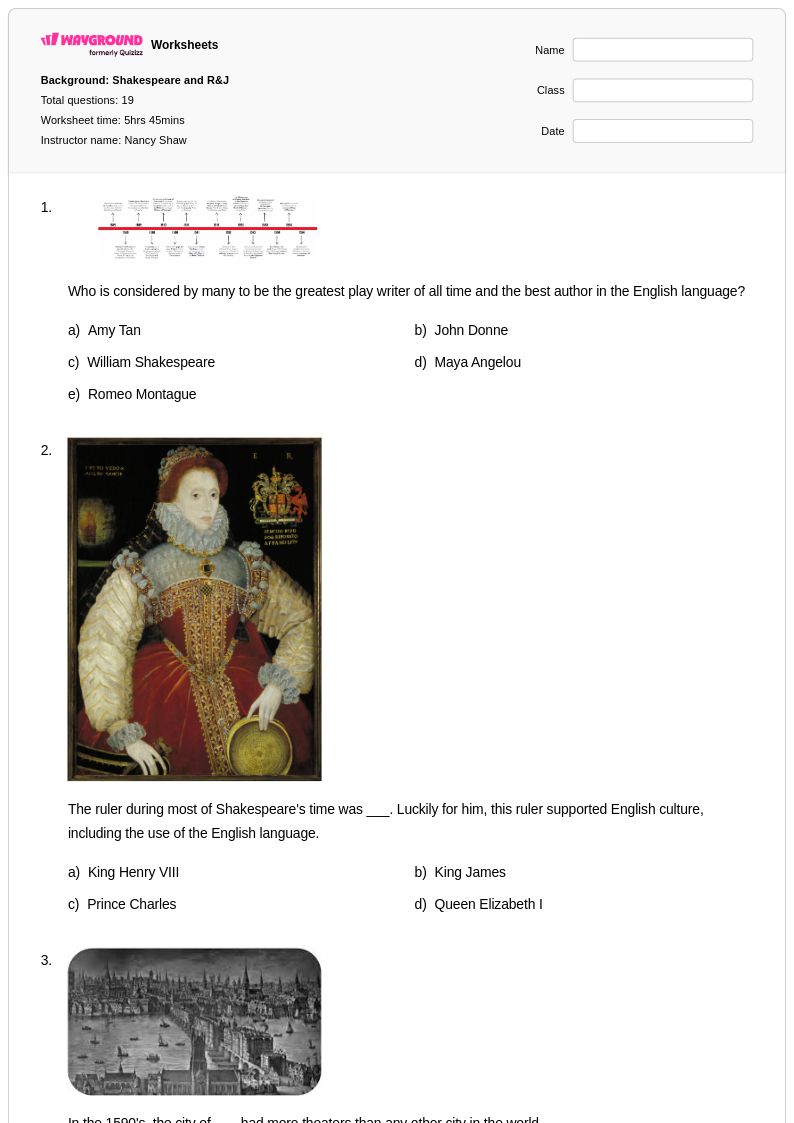
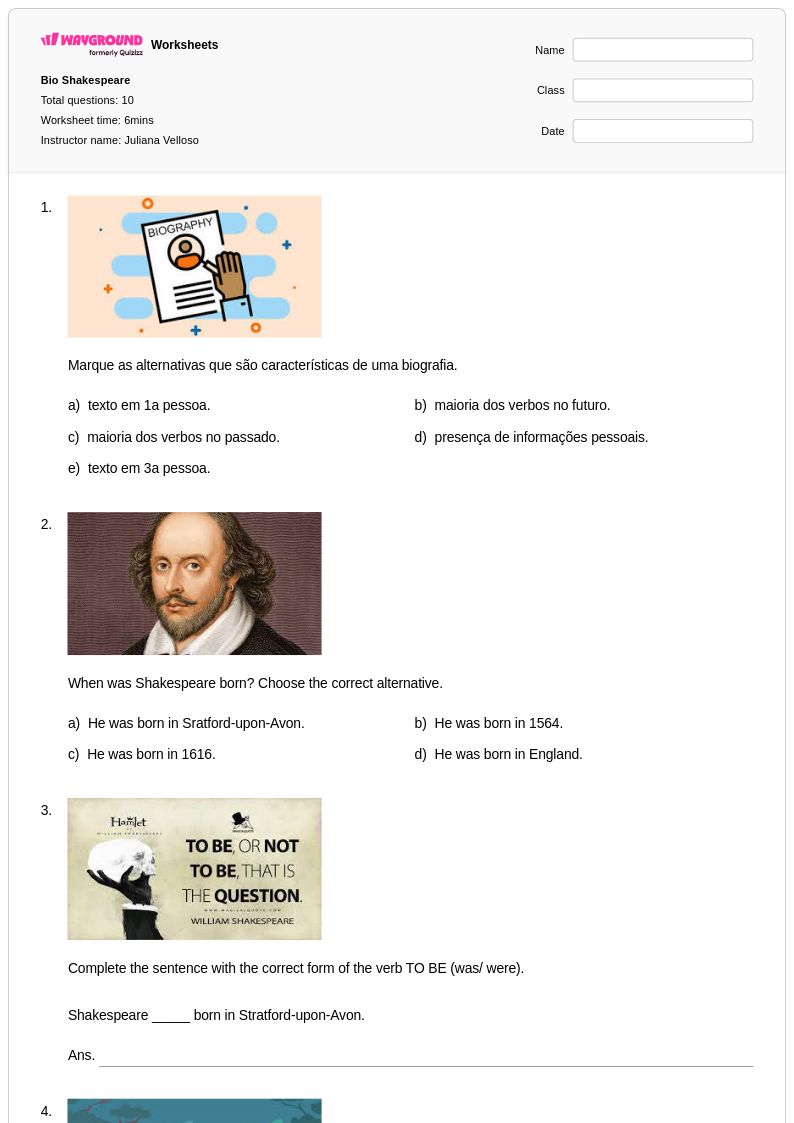
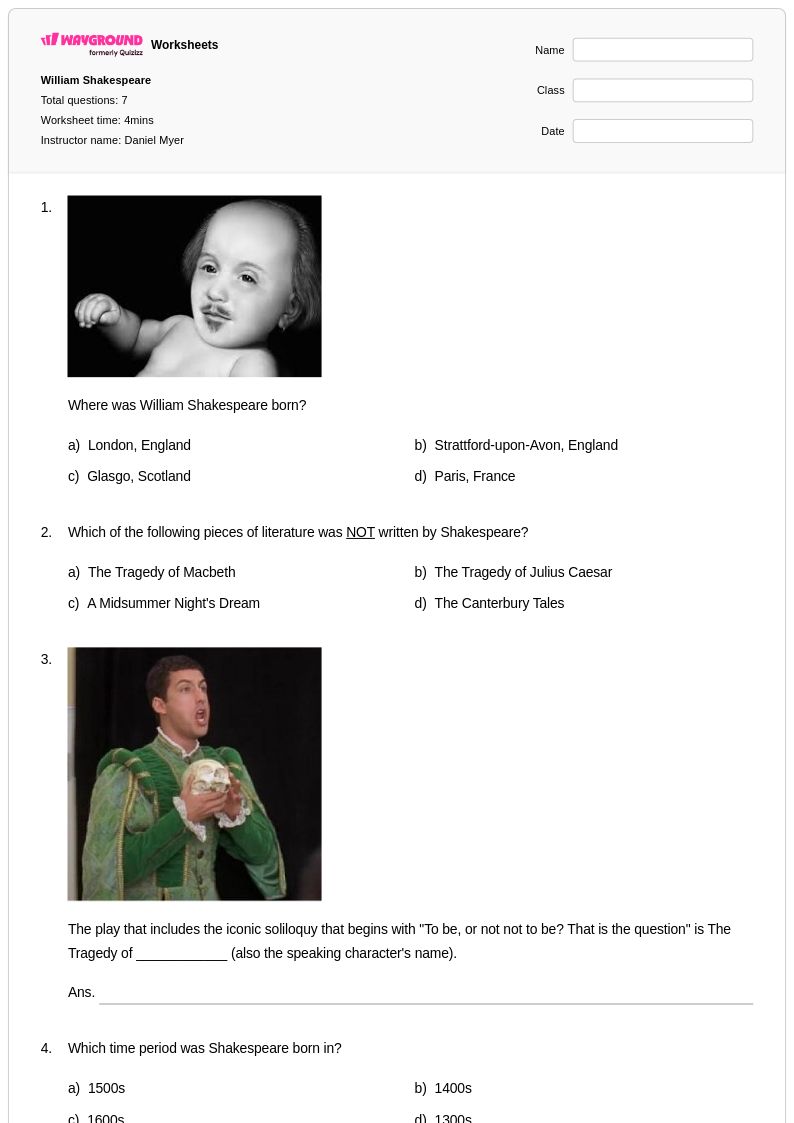
Shakespeare worksheets for Year 9 students available through Wayground (formerly Quizizz) provide comprehensive resources to deepen understanding of the Bard's works and literary techniques. These expertly designed materials focus on key Shakespearean plays commonly studied at the ninth-grade level, including Romeo and Juliet, Macbeth, and A Midsummer Night's Dream, while developing critical reading and analytical skills essential for high school literature study. Students engage with practice problems that examine character development, plot structure, themes, and Shakespeare's distinctive use of language, including his mastery of iambic pentameter, metaphors, and dramatic irony. Each worksheet collection includes detailed answer keys to support both independent study and classroom instruction, with free printables available in convenient pdf format to accommodate various learning environments and teaching preferences.
Wayground (formerly Quizizz) empowers educators with an extensive library of millions of teacher-created Shakespeare resources specifically curated for Year 9 literature instruction. The platform's robust search and filtering capabilities allow teachers to quickly locate materials aligned with curriculum standards and tailored to their students' specific needs, whether focusing on particular plays, literary devices, or comprehension levels. These differentiation tools enable seamless customization of worksheets to support remediation for struggling readers, enrichment activities for advanced students, and targeted skill practice for the entire class. Available in both printable and digital formats, including downloadable pdf options, these Shakespeare resources streamline lesson planning while providing flexible options for in-class activities, homework assignments, and assessment preparation that accommodate diverse learning styles and technological capabilities.
FAQs
How do I teach Shakespeare to students who struggle with Early Modern English?
Start by building vocabulary around high-frequency archaic terms before reading any text, then use side-by-side modern translations for initial exposure. Once students have a foothold in the language, move to close reading of key passages without the translation scaffold. Structured worksheets that ask students to paraphrase specific lines or explain a metaphor in their own words are especially effective because they force active engagement with the language rather than passive reading.
What exercises help students practice literary analysis of Shakespeare's plays?
Character analysis tasks, dramatic structure mapping, and close reading exercises focused on figurative language are the most productive practice formats for Shakespeare. Students benefit from repeated exposure to identifying soliloquy function, tracking character motivation across acts, and decoding extended metaphors. Worksheets that present specific passages and ask targeted analytical questions build the interpretive habits students need to approach any Shakespeare text independently.
What mistakes do students commonly make when analyzing Shakespeare?
The most common error is paraphrasing instead of analyzing — students summarize what happens rather than explaining how Shakespeare's language, structure, or dramatic choices create meaning. A related mistake is treating Shakespeare's themes as fixed facts rather than as arguments to be supported with textual evidence. Students also frequently misread dramatic irony, failing to distinguish between what a character believes and what the audience understands.
How can I differentiate Shakespeare instruction for students at different reading levels?
For students who struggle with the text, reduce cognitive load by isolating shorter passages and providing sentence stems for analytical responses. More advanced students can be pushed toward comparative analysis across plays or sonnets, or asked to evaluate how different productions interpret the same scene. On Wayground, teachers can apply accommodations such as Read Aloud support, reduced answer choices, and adjustable font sizes to individual students, ensuring every learner can access the material without disrupting the rest of the class.
How do I use Shakespeare worksheets from Wayground in my classroom?
Wayground's Shakespeare worksheets are available as printable PDFs for traditional classroom use and in digital formats for technology-integrated environments, including the option to host them as a quiz directly on the platform. Teachers can use them for in-class close reading practice, homework reinforcement, or formative assessment after completing a scene or act. Each worksheet includes a complete answer key, making it straightforward to provide targeted feedback on student responses.
How do I help students understand Shakespeare's use of dramatic structure?
Teach the five-act structure explicitly before students encounter it in the text, then have them map key plot events, turning points, and character decisions onto that framework as they read. Ask students to identify the inciting incident, the climax, and the moment of resolution in a specific play rather than working with the structure abstractly. Worksheets that require students to label and justify structural elements using textual evidence are more effective than those that simply ask them to recall plot points.