Free Printable Simple, Compound, and Complex Sentences Worksheets for Year 5
Discover free Year 5 English worksheets and printables focused on simple, compound, and complex sentences that help students master sentence structure through engaging practice problems and comprehensive answer keys.
Explore printable Simple, Compound, and Complex Sentences worksheets for Year 5
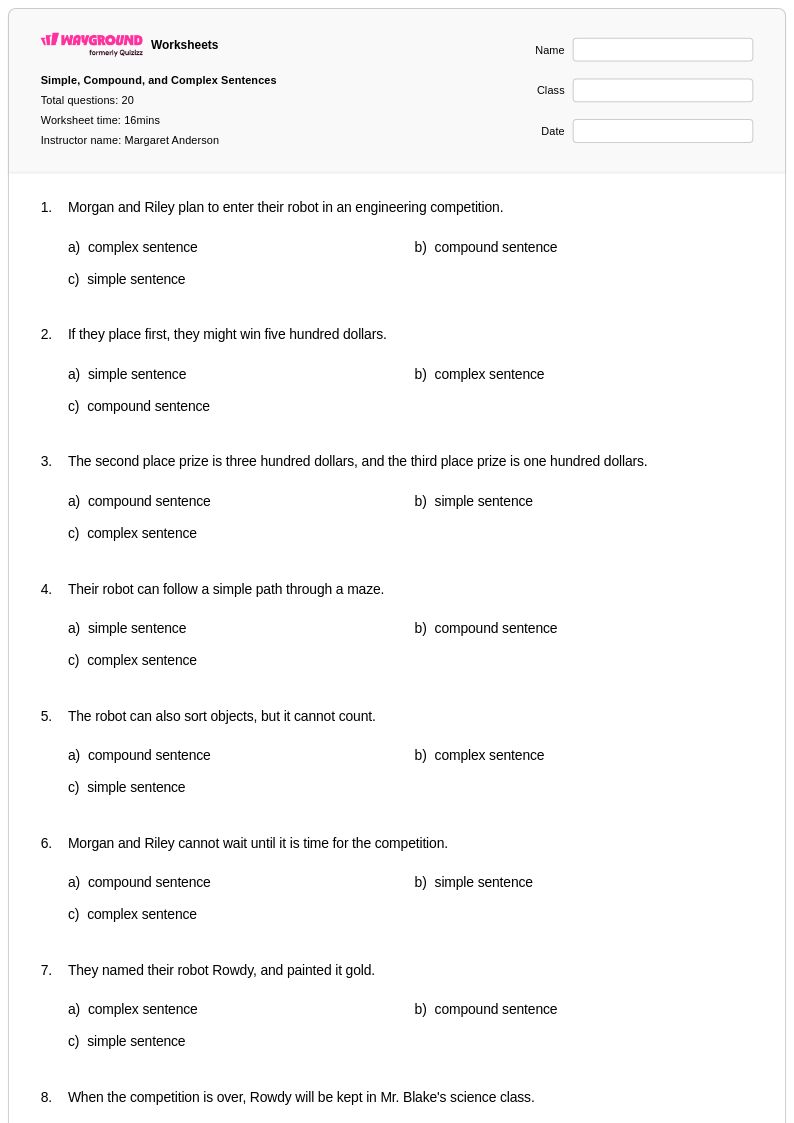
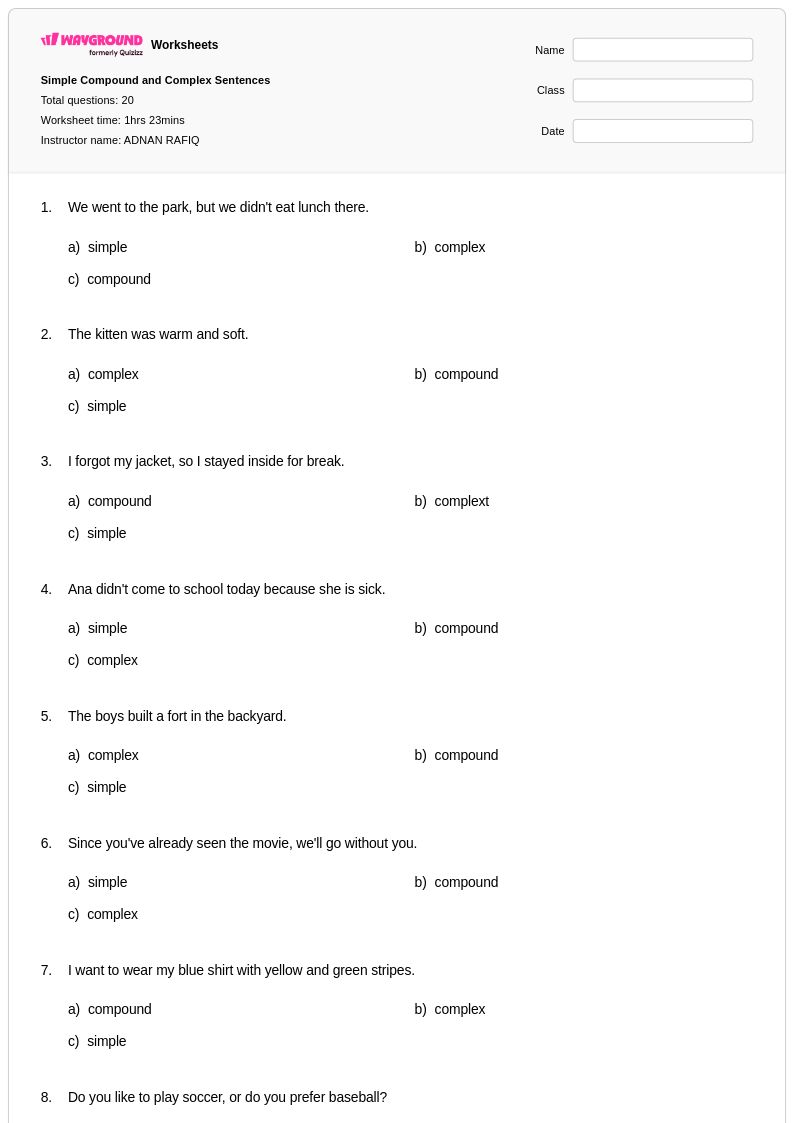
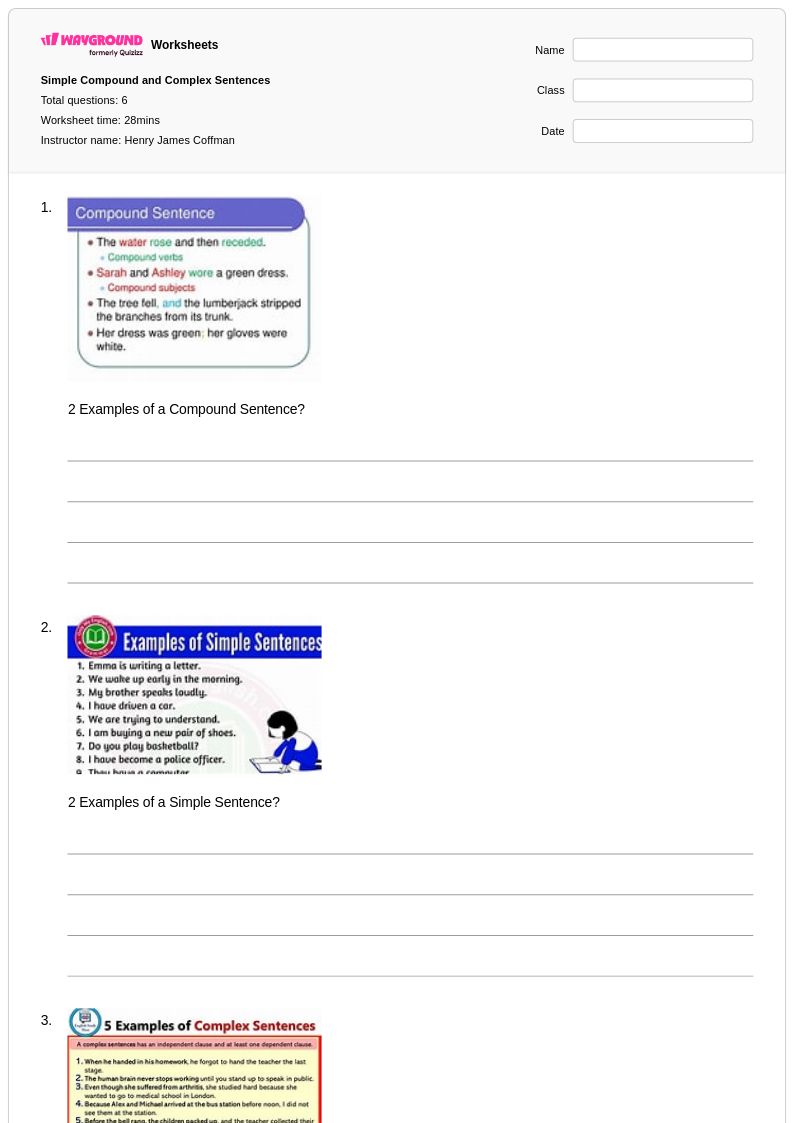
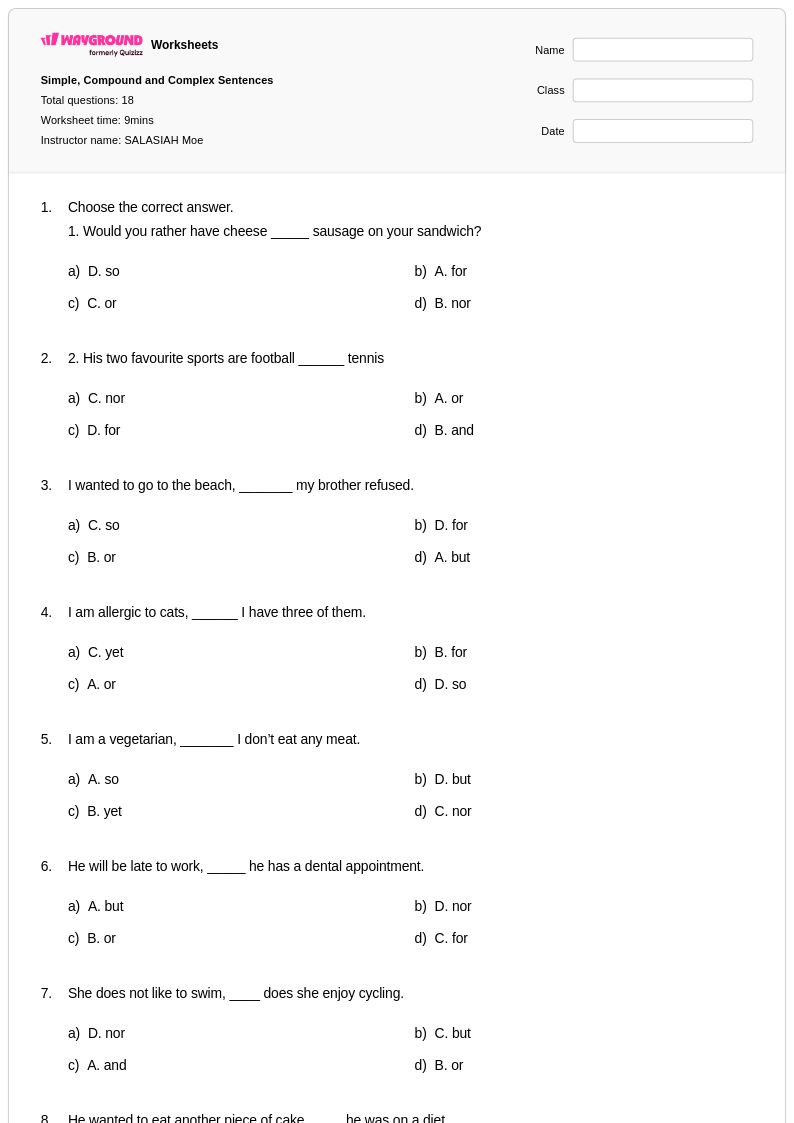
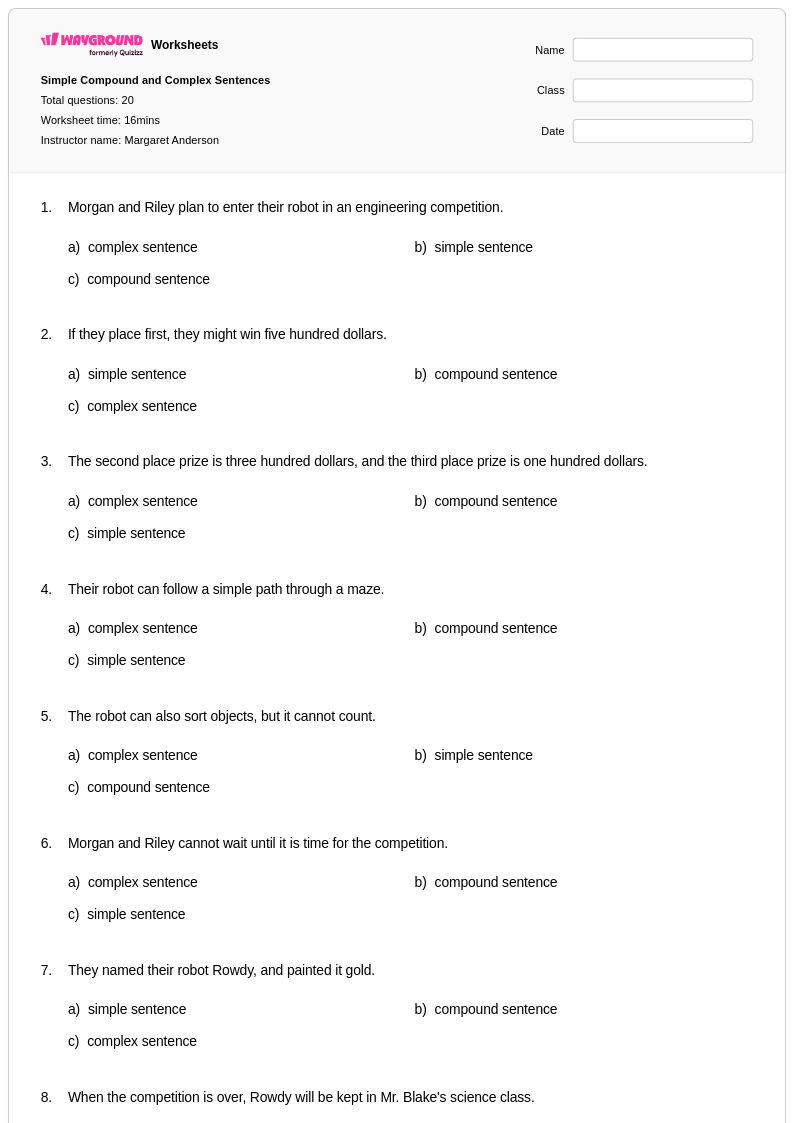
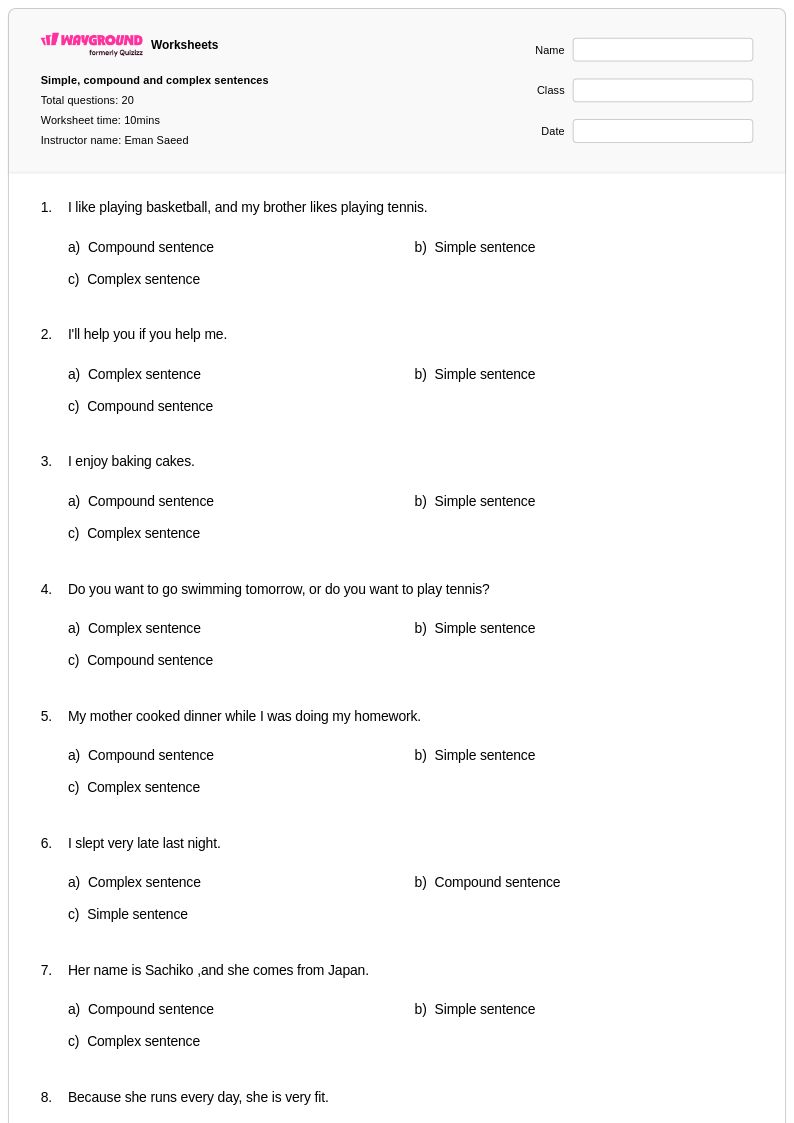
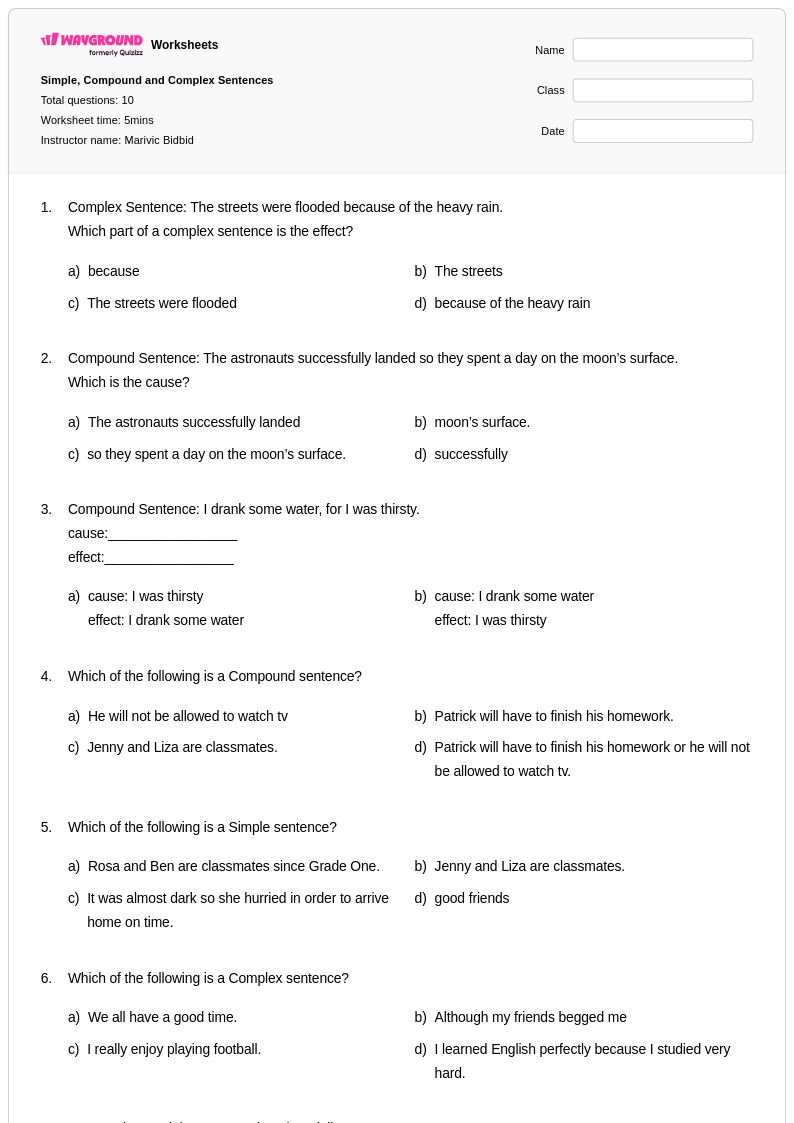
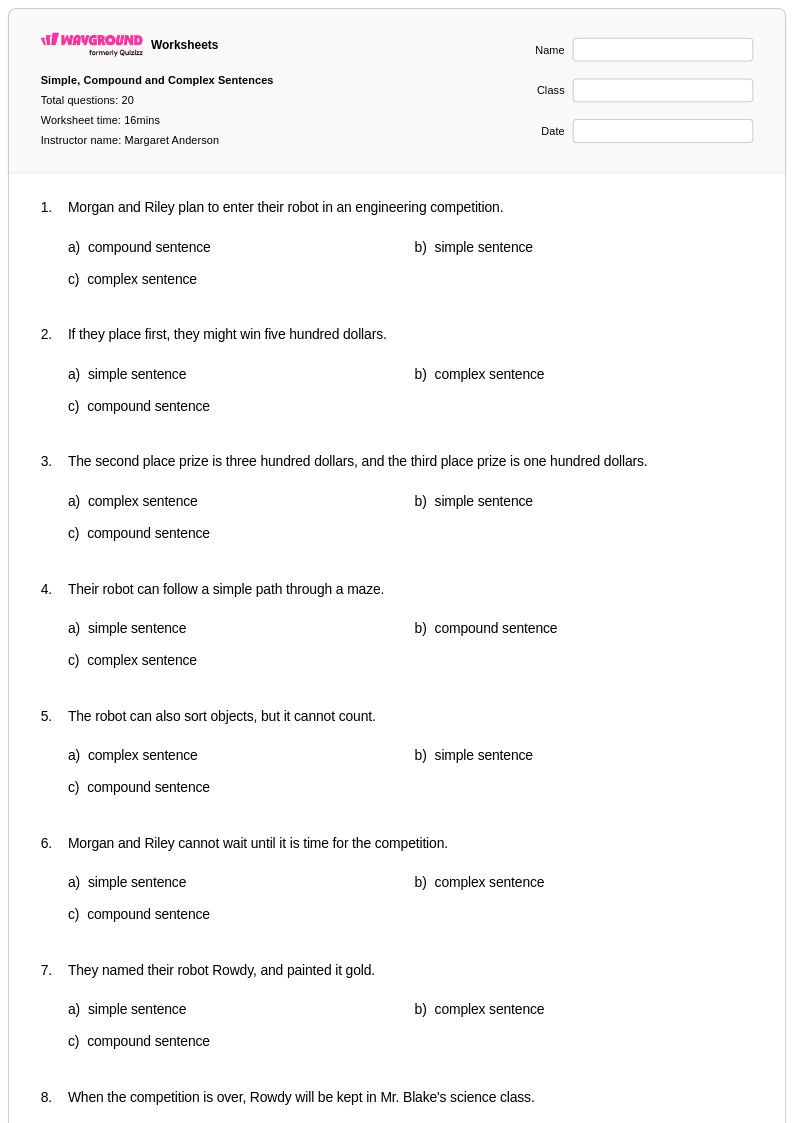
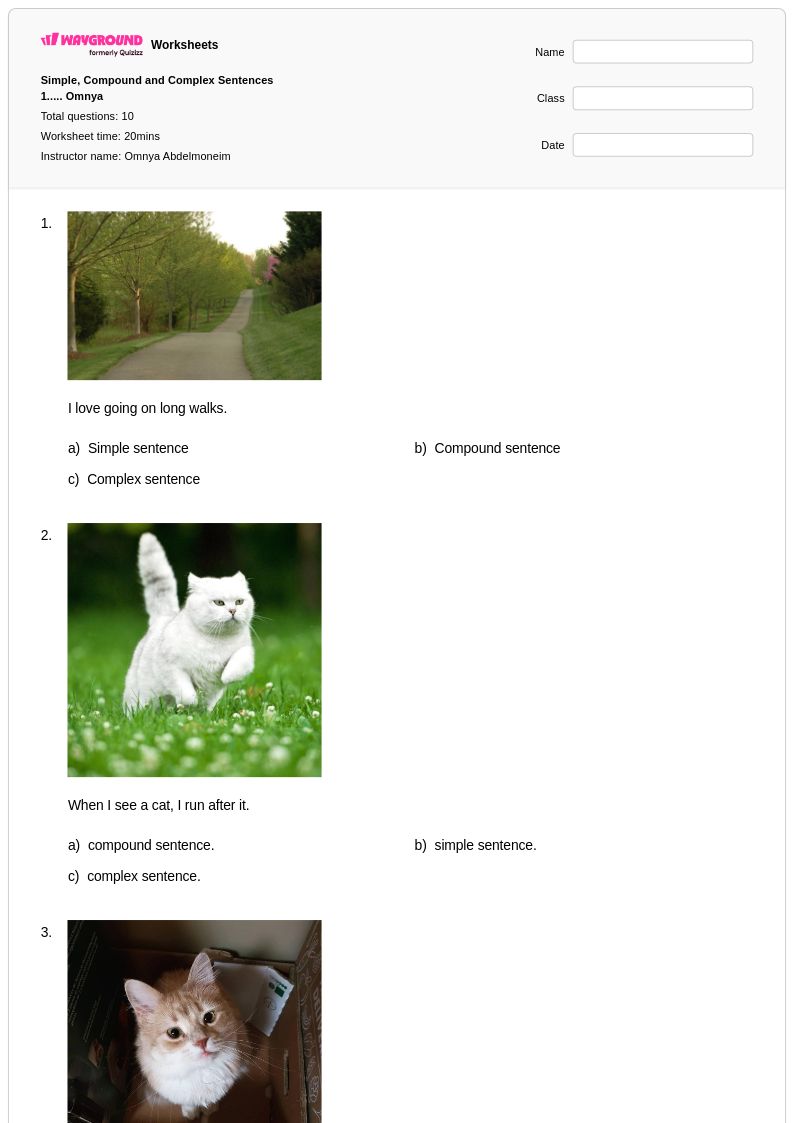
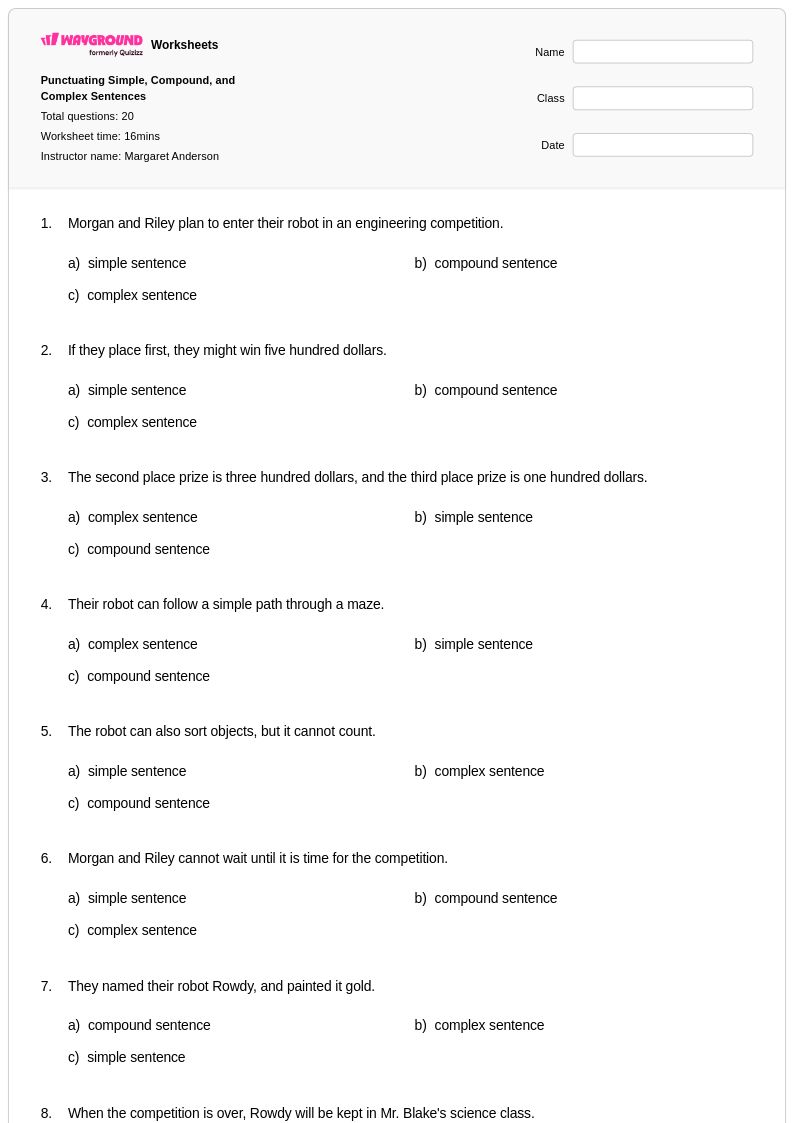
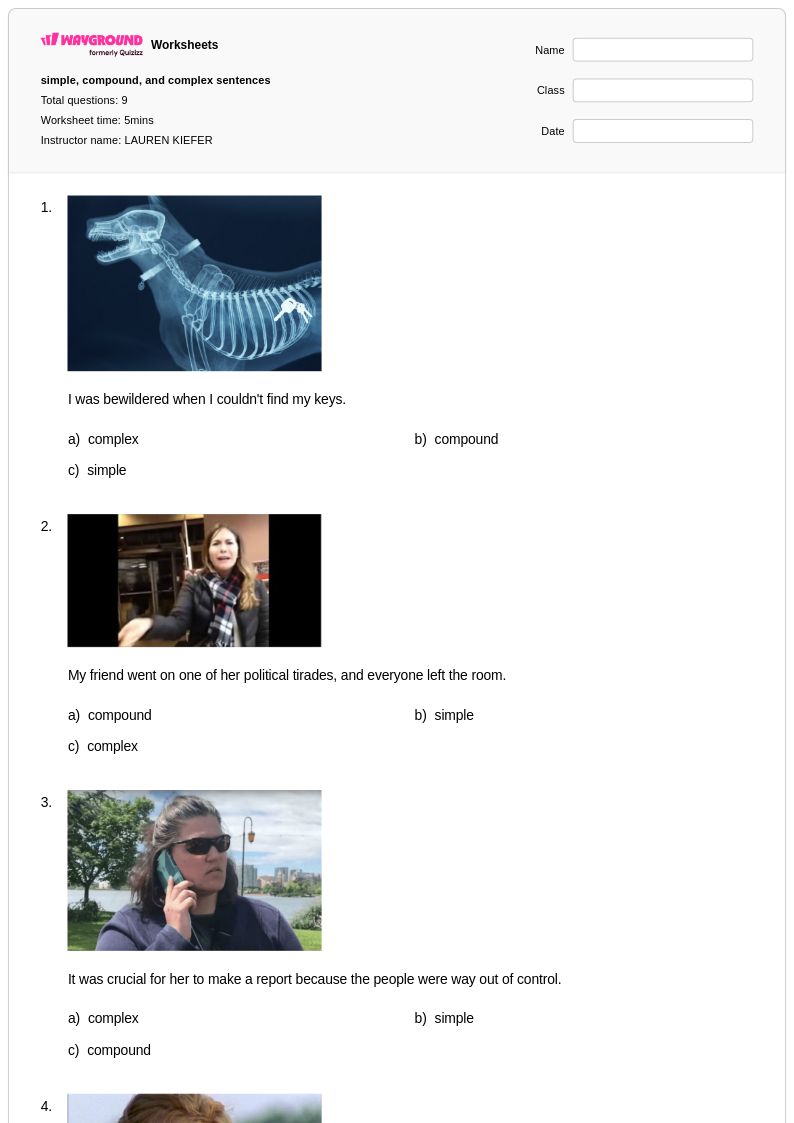
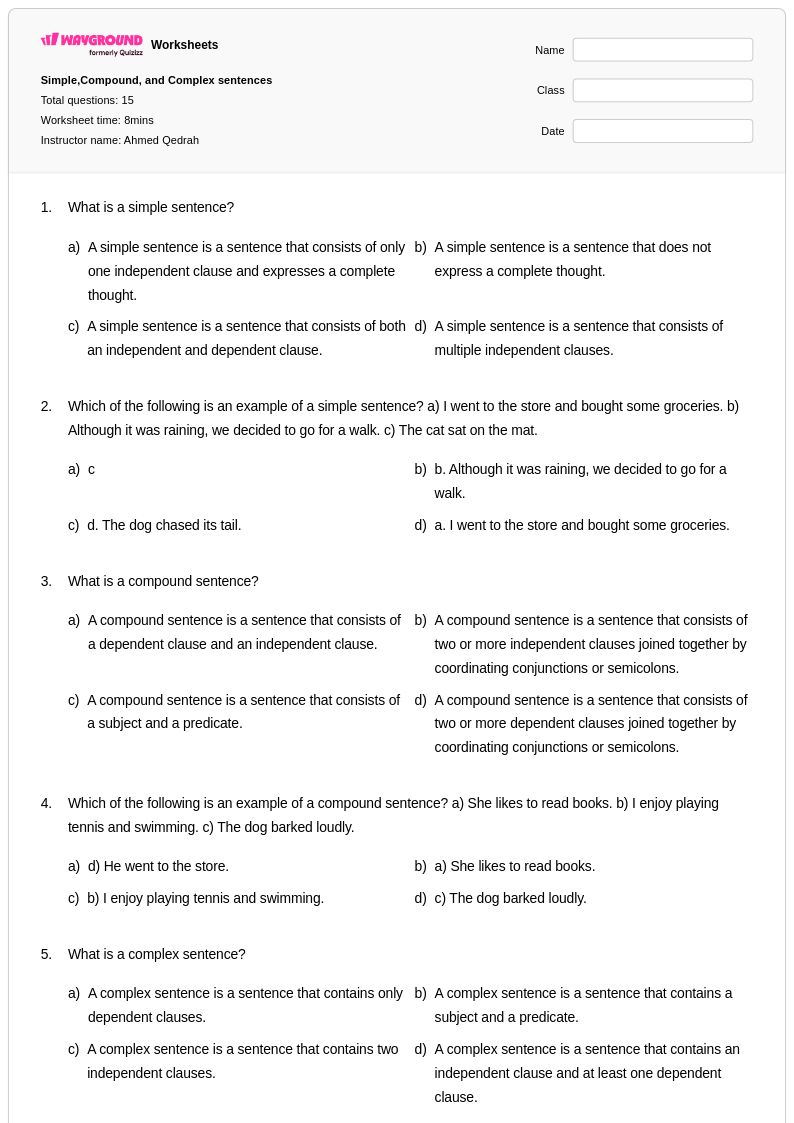
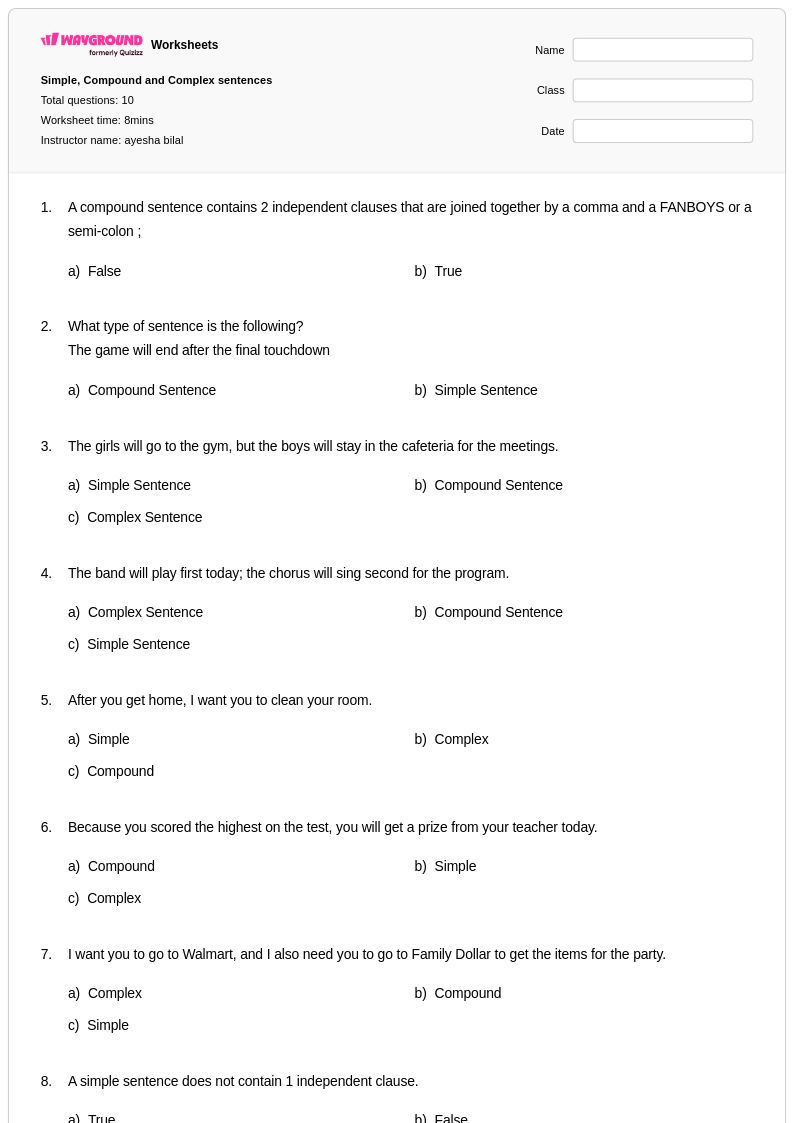
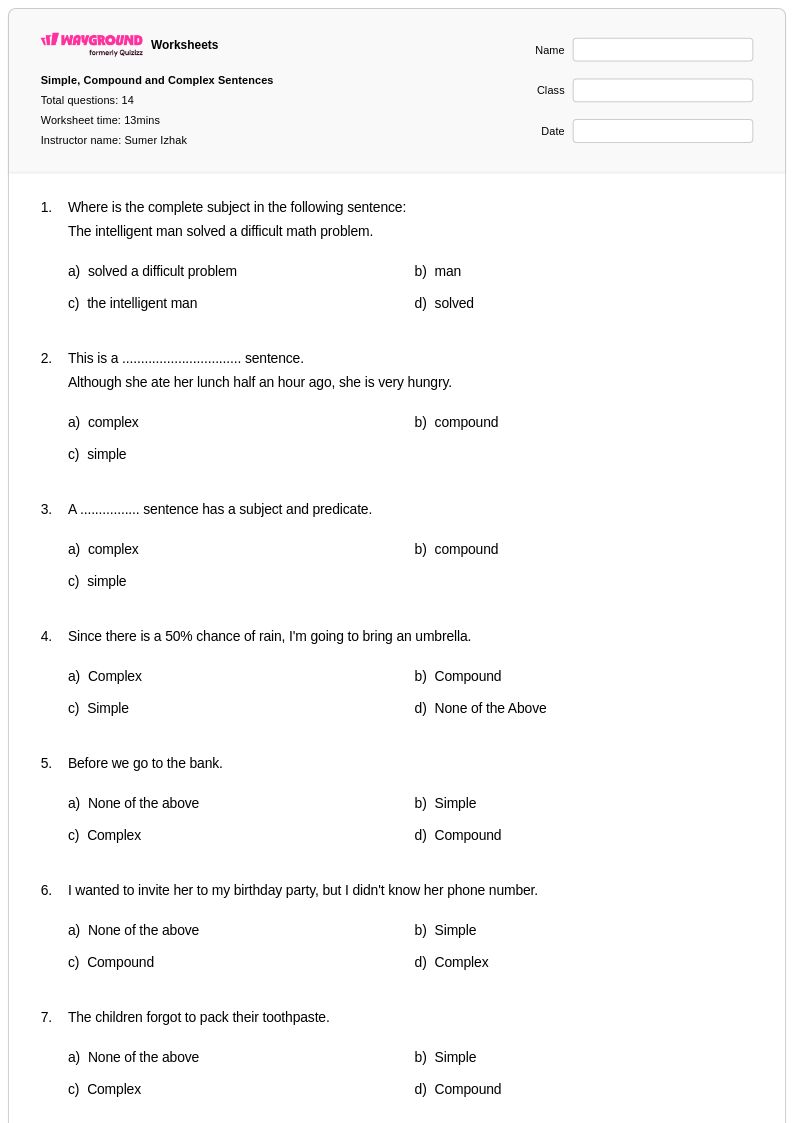
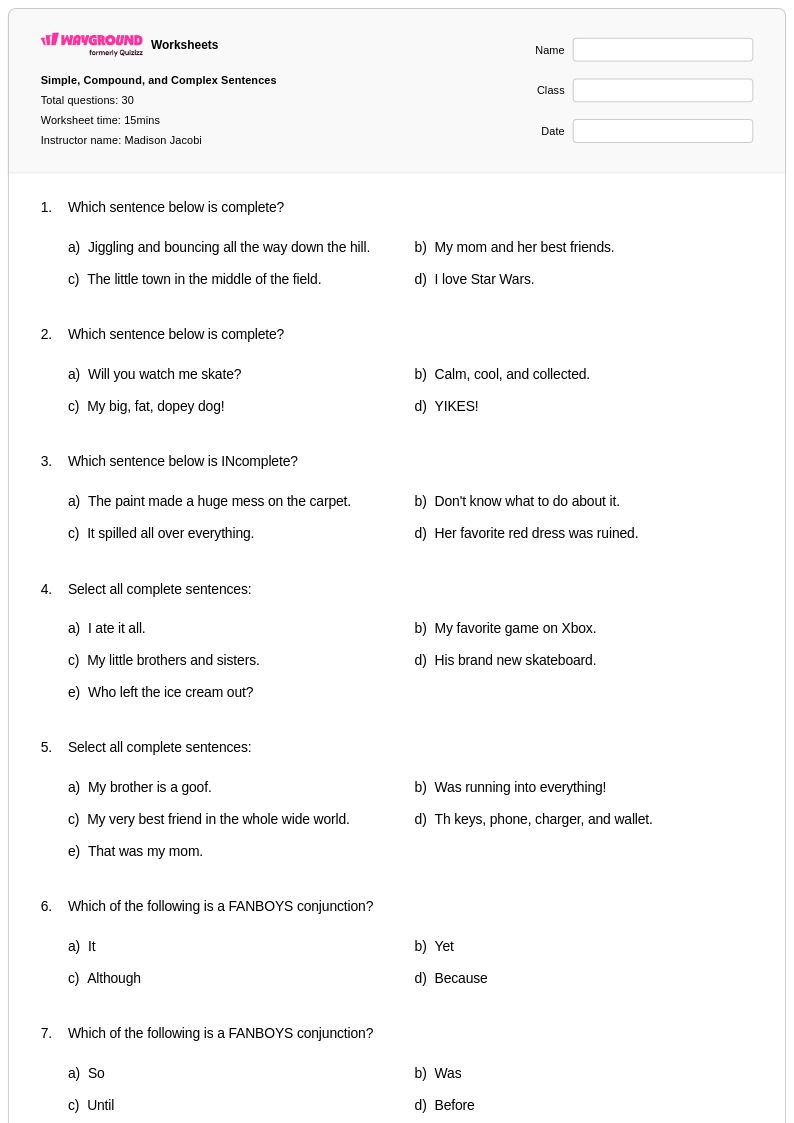
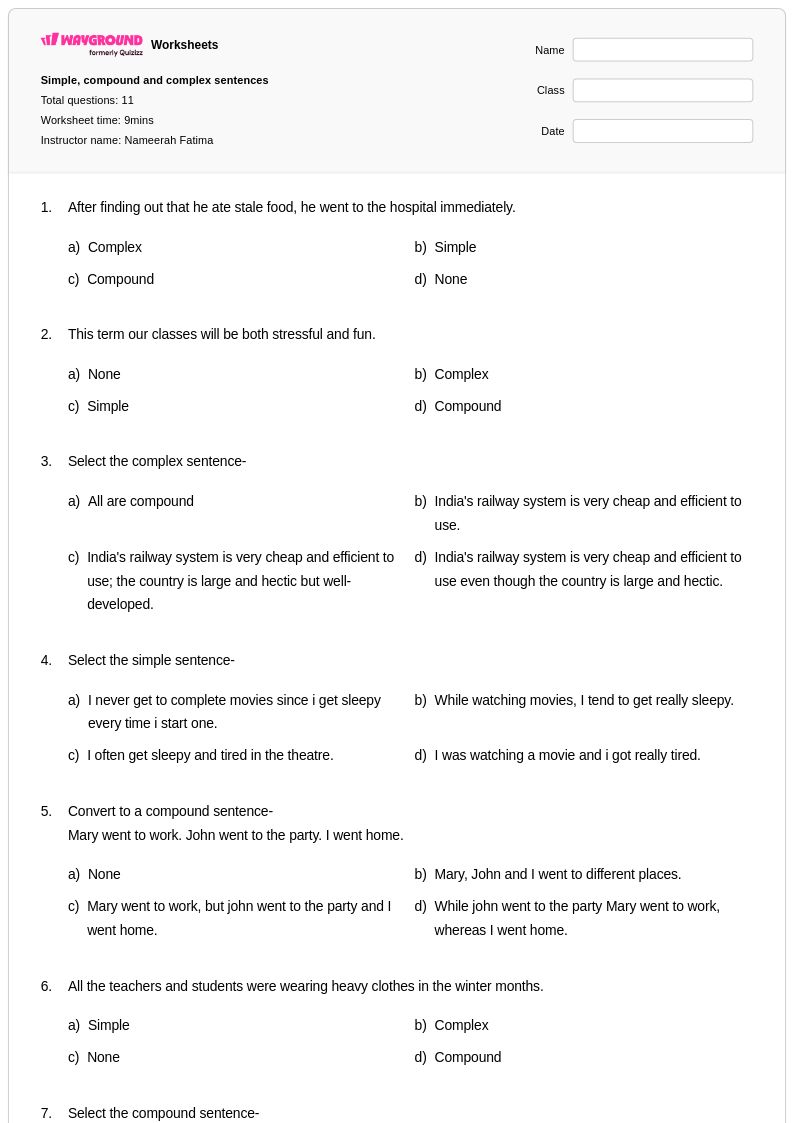
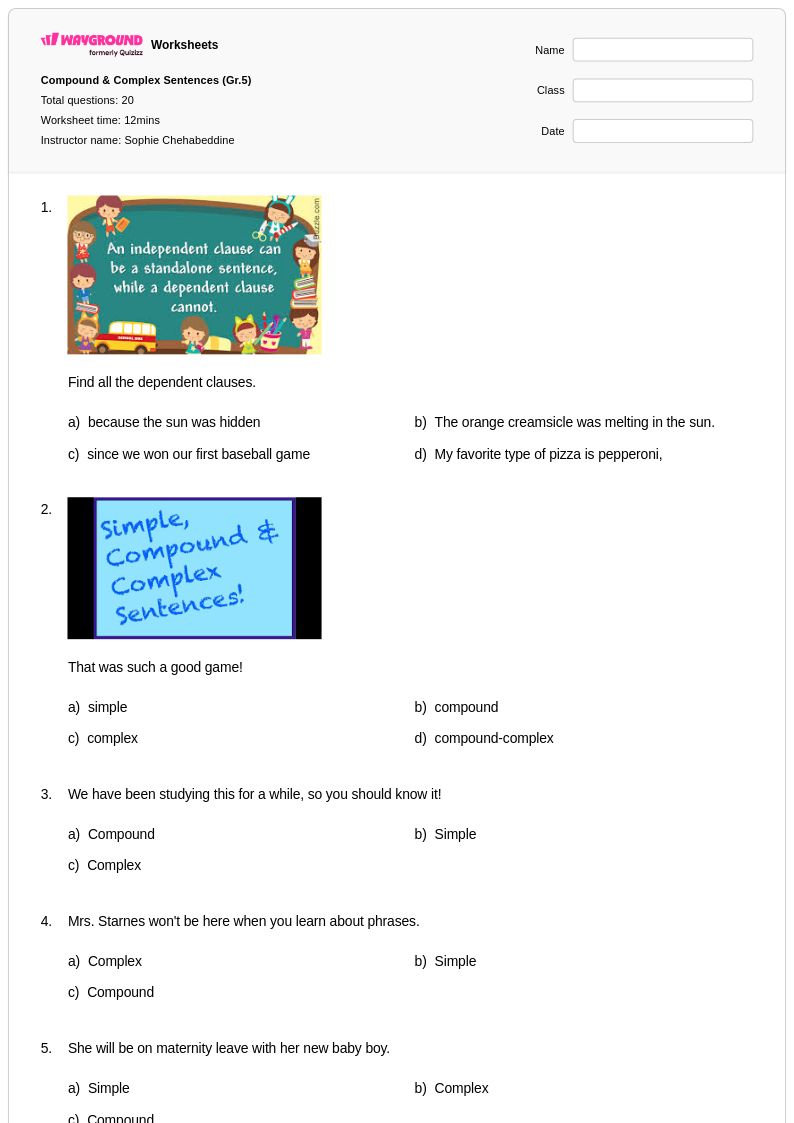
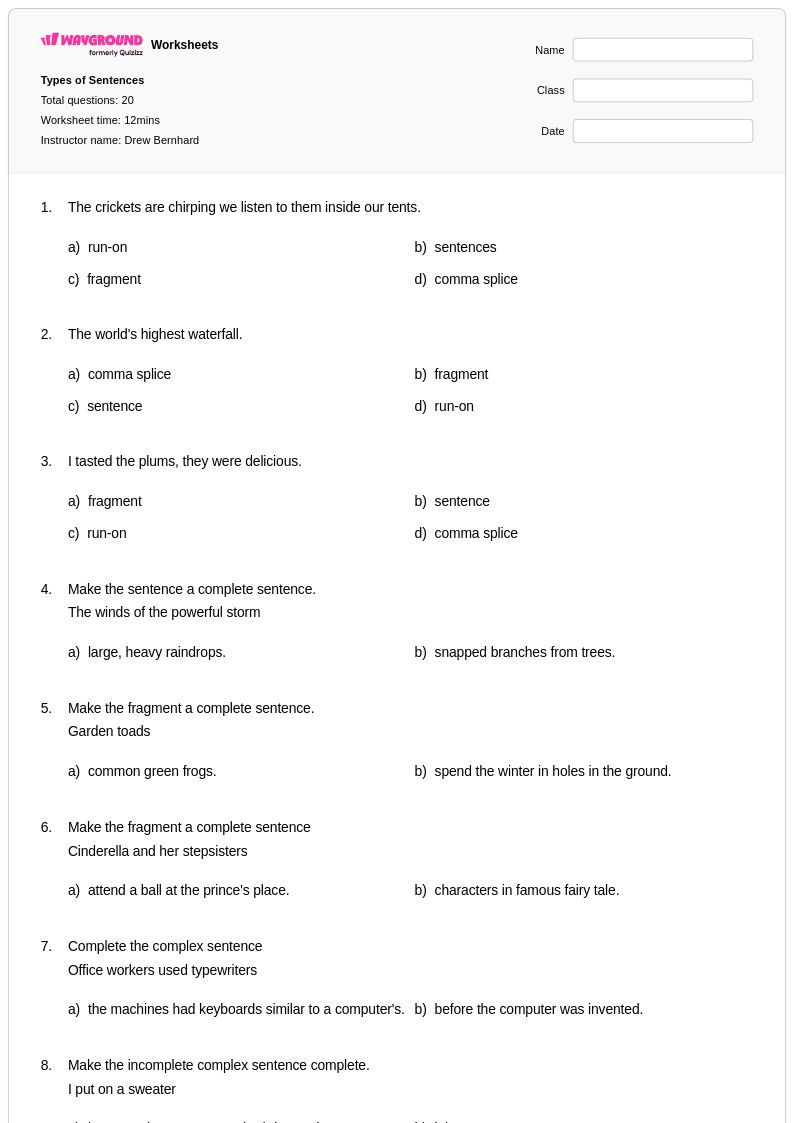
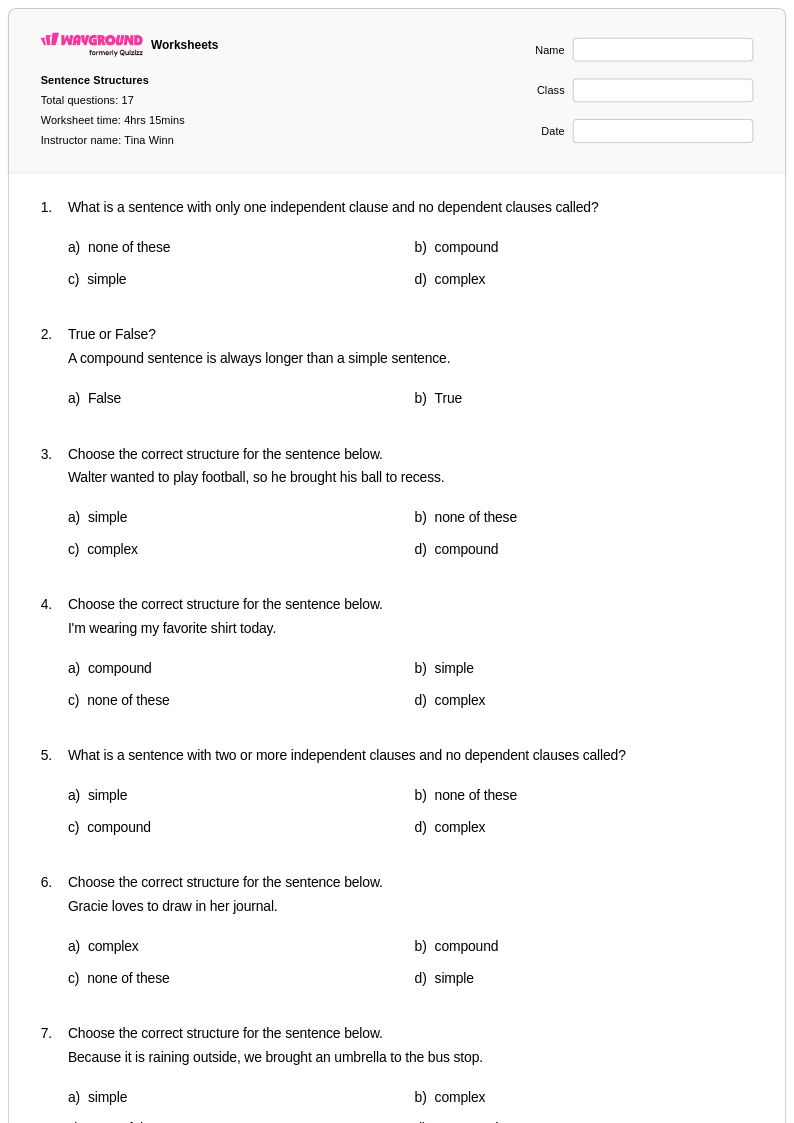
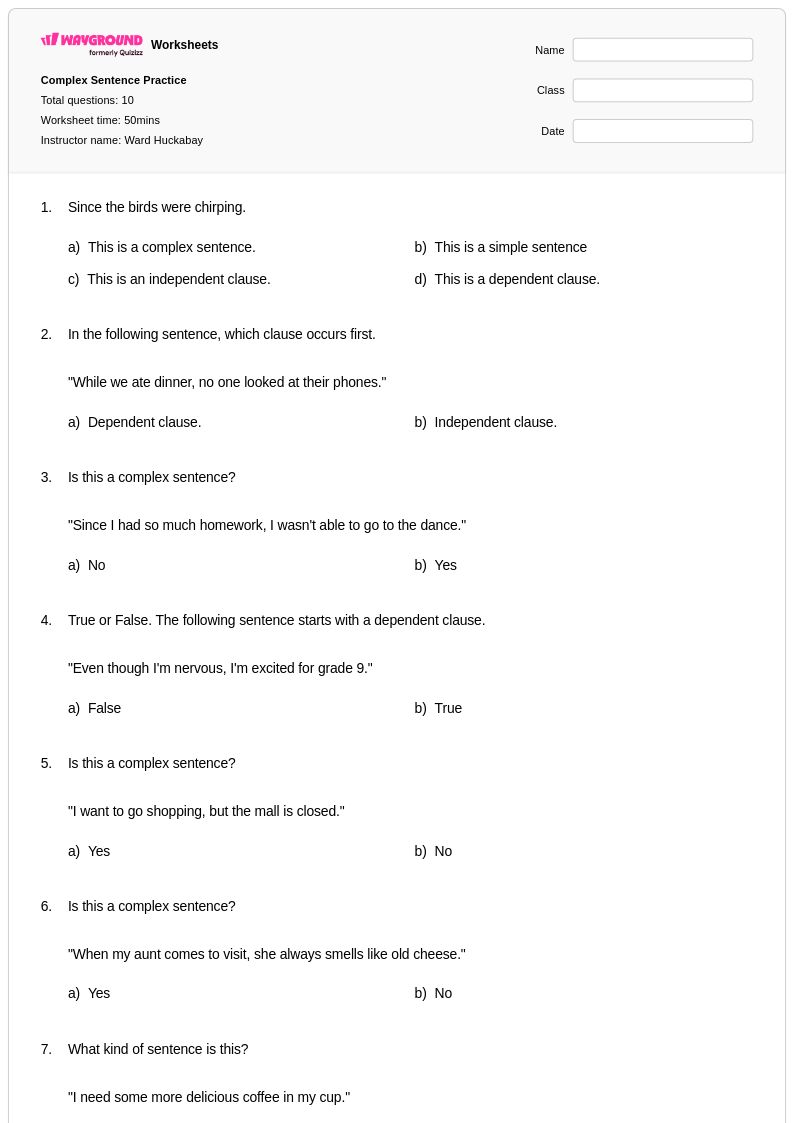
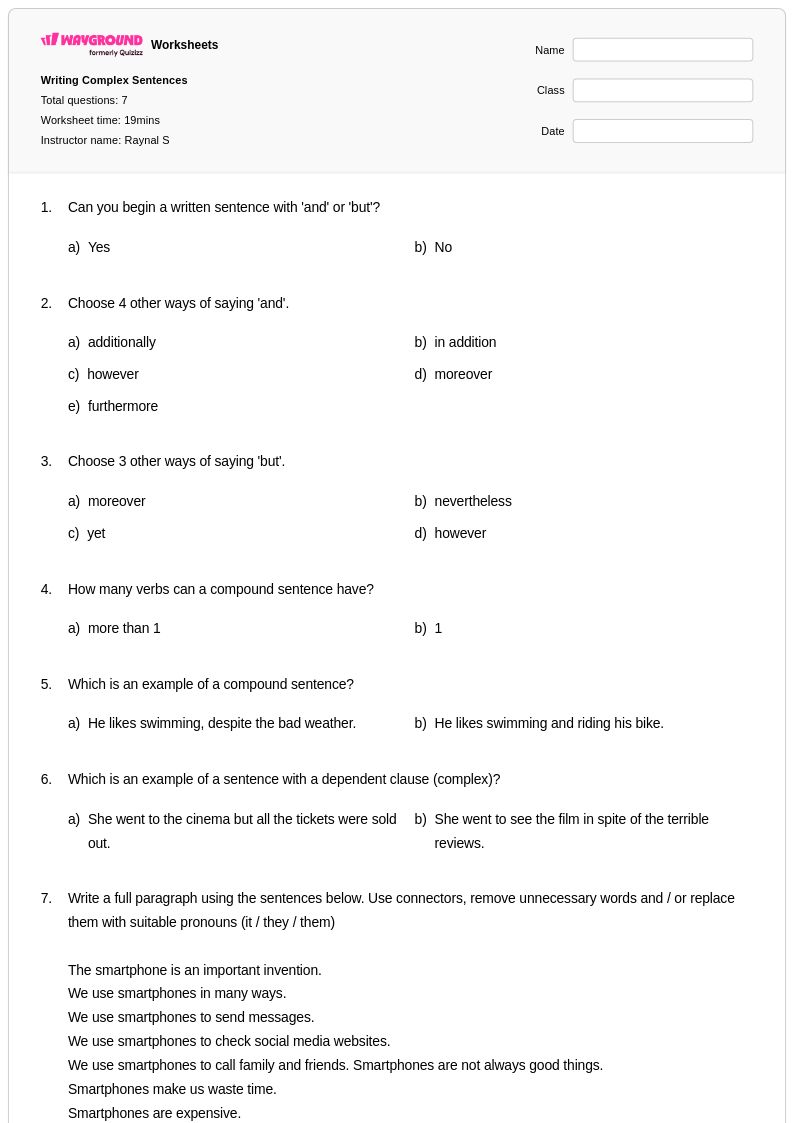
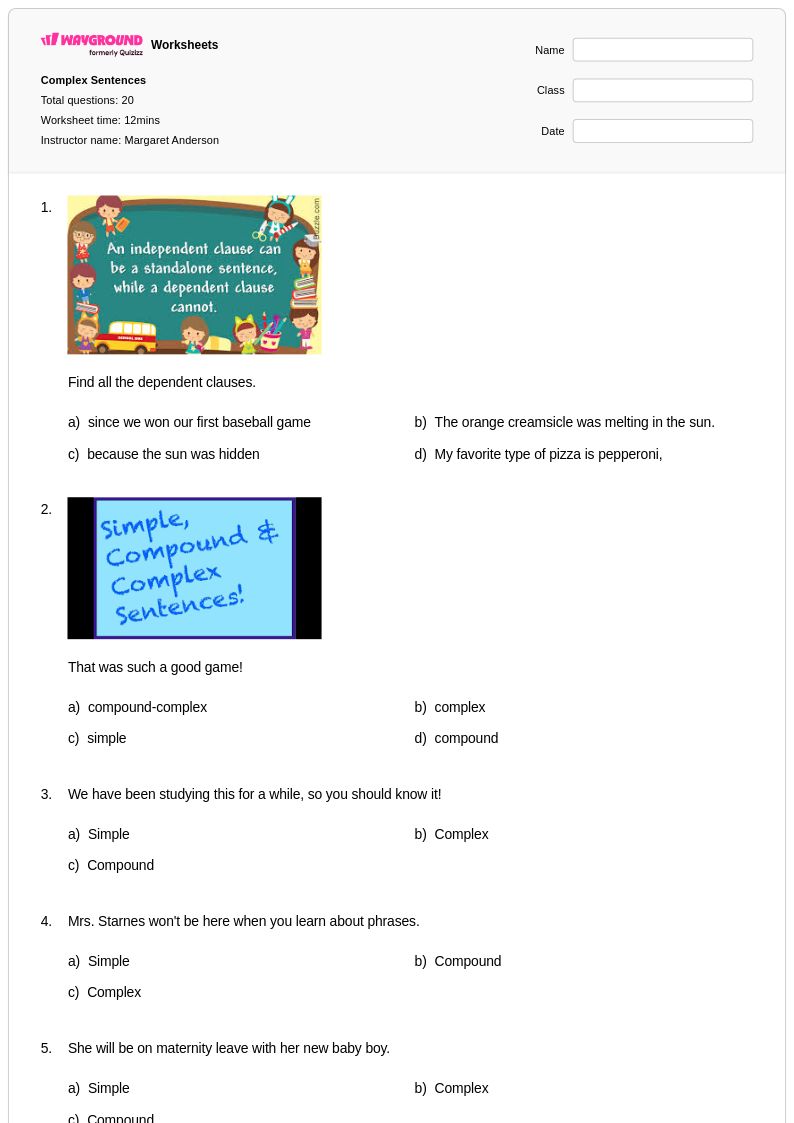
Simple, compound, and complex sentences form the foundation of sophisticated writing skills that Year 5 students must master to advance their communication abilities. Wayground's comprehensive collection of sentence structure worksheets provides targeted practice in identifying and constructing these three essential sentence types, helping students understand how independent and dependent clauses work together to create varied, engaging prose. These carefully designed printables offer systematic practice problems that guide learners through recognizing simple sentences with single independent clauses, compound sentences that join two independent clauses with coordinating conjunctions, and complex sentences that combine independent clauses with dependent clauses using subordinating conjunctions. Each worksheet includes a detailed answer key that supports both independent study and classroom instruction, while the free pdf format ensures easy access for teachers seeking to strengthen their students' grammatical foundations through structured practice.
Wayground's platform, formerly known as Quizizz, empowers educators with millions of teacher-created resources specifically designed to support sentence structure instruction at the Year 5 level. The robust search and filtering capabilities allow teachers to quickly locate worksheets that align with specific standards and learning objectives, while built-in differentiation tools enable customization to meet diverse student needs within the same classroom. These versatile materials are available in both printable and digital pdf formats, providing flexibility for various instructional settings and learning preferences. Teachers can seamlessly integrate these resources into lesson planning, use them for targeted remediation with struggling writers, or deploy them as enrichment activities for advanced students, ensuring that every learner receives appropriate skill practice in constructing and analyzing the sentence structures that will enhance their written expression throughout their academic journey.
FAQs
How do I teach simple, compound, and complex sentences to students?
Begin by teaching each sentence type in isolation before asking students to compare and contrast them. Introduce simple sentences as single independent clauses, then show how coordinating conjunctions (for, and, nor, but, or, yet, so) link two independent clauses to form compound sentences. Once students are confident with those, introduce subordinating conjunctions (because, although, when, if) to build complex sentences with dependent and independent clauses. Using mentor texts and having students categorize sentences from their own reading helps anchor the concepts in authentic writing contexts.
What exercises help students practice identifying sentence types?
Sorting exercises are especially effective — give students a mixed set of sentences and have them label each as simple, compound, or complex, then justify their reasoning by identifying the clauses and conjunctions present. Sentence-combining tasks, where students merge two simple sentences into a compound or complex sentence, reinforce both recognition and construction skills. Graduated practice problems that start with identification and move toward original composition help students internalize the structural differences between each sentence type.
What mistakes do students commonly make when working with compound and complex sentences?
A frequent error is confusing compound and complex sentences, particularly when students misidentify subordinating conjunctions as coordinating ones. Students also commonly produce comma splices in compound sentences or omit the comma before the coordinating conjunction entirely. With complex sentences, many students struggle to determine which clause is dependent and which is independent, leading to inverted or incomplete constructions. Targeted practice that explicitly focuses on clause identification and punctuation rules helps correct these patterns before they become habitual.
How can I use sentence structure worksheets to support struggling writers?
For struggling writers, focus first on solidifying the concept of an independent clause before introducing compound or complex structures, since most errors trace back to clause confusion. Worksheets that use sentence frames or partially completed examples provide scaffolding without removing the cognitive work entirely. On Wayground, teachers can enable the Read Aloud feature so that questions and directions are read to students who need additional language support, and the Reduced Answer Choices accommodation can lower cognitive load for students working on identification tasks.
How do I use Wayground's simple, compound, and complex sentences worksheets in my classroom?
Wayground's sentence structure worksheets are available as printable PDFs for traditional classroom use and in digital formats for technology-integrated environments, including the option to host them as a quiz directly on the Wayground platform. Each worksheet includes a complete answer key, making them practical for independent practice, homework, or in-class review. Teachers can filter materials to find worksheets aligned to specific learning objectives, then assign them to the whole class or individual students depending on where learners are in their understanding of sentence variety.
How do simple, compound, and complex sentences improve student writing?
Sentence variety is one of the clearest markers of writing maturity — over-reliance on simple sentences makes writing feel choppy, while poorly constructed compound or complex sentences can obscure meaning. Teaching students to intentionally vary sentence structure gives them a practical revision strategy they can apply across all writing tasks. When students can move fluidly between sentence types, they gain more control over pacing, emphasis, and the logical relationships between ideas in their writing.