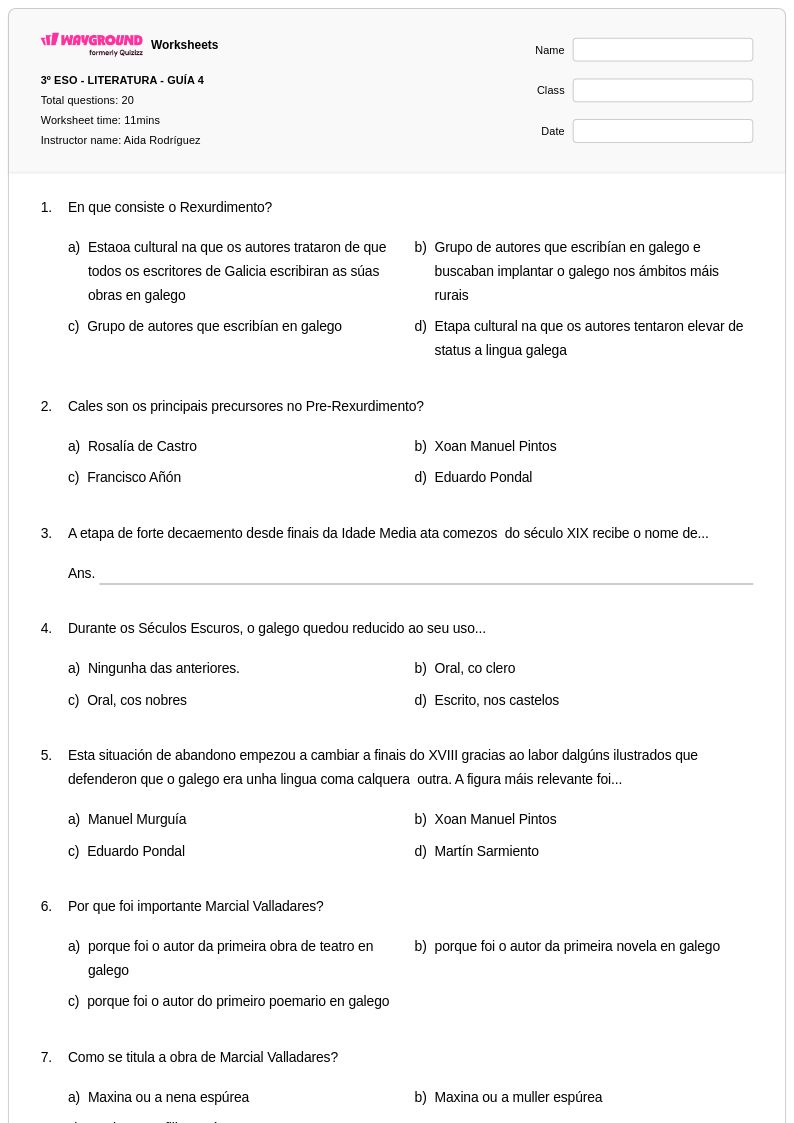
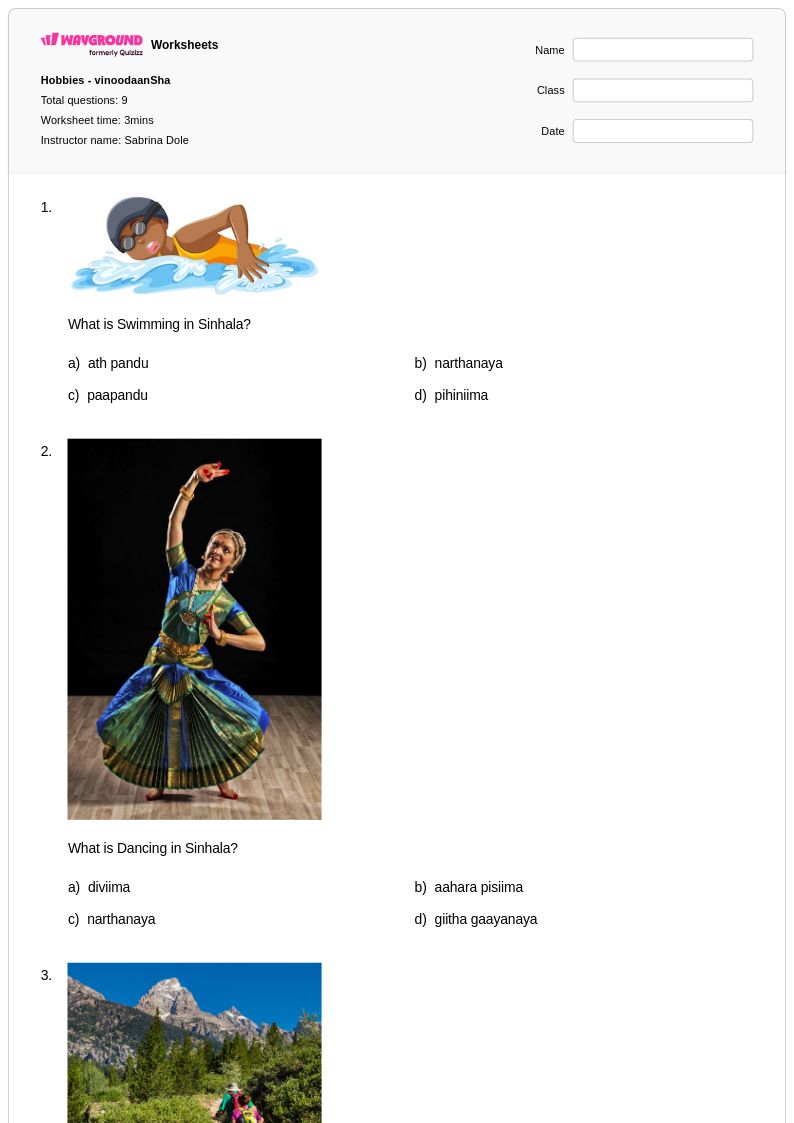
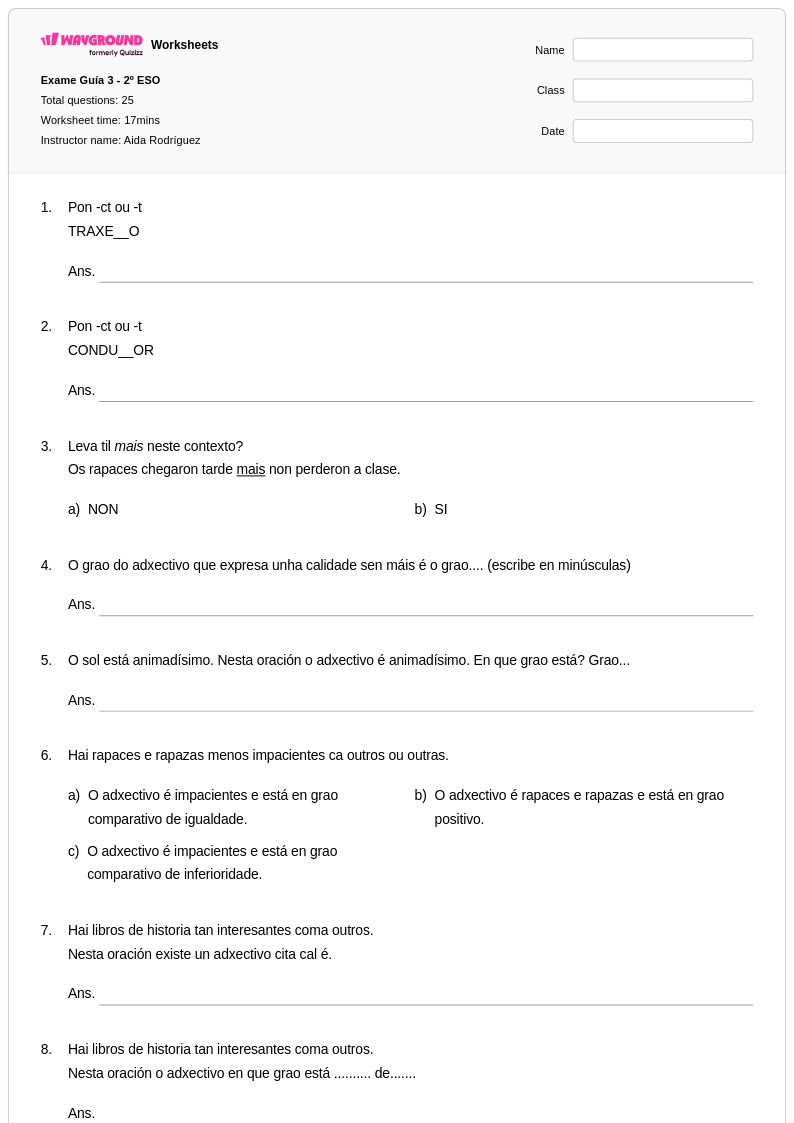
Explore Wayground's comprehensive collection of free Sinhala worksheets and printables featuring practice problems with answer keys to help students master this beautiful Sri Lankan language through engaging PDF exercises.
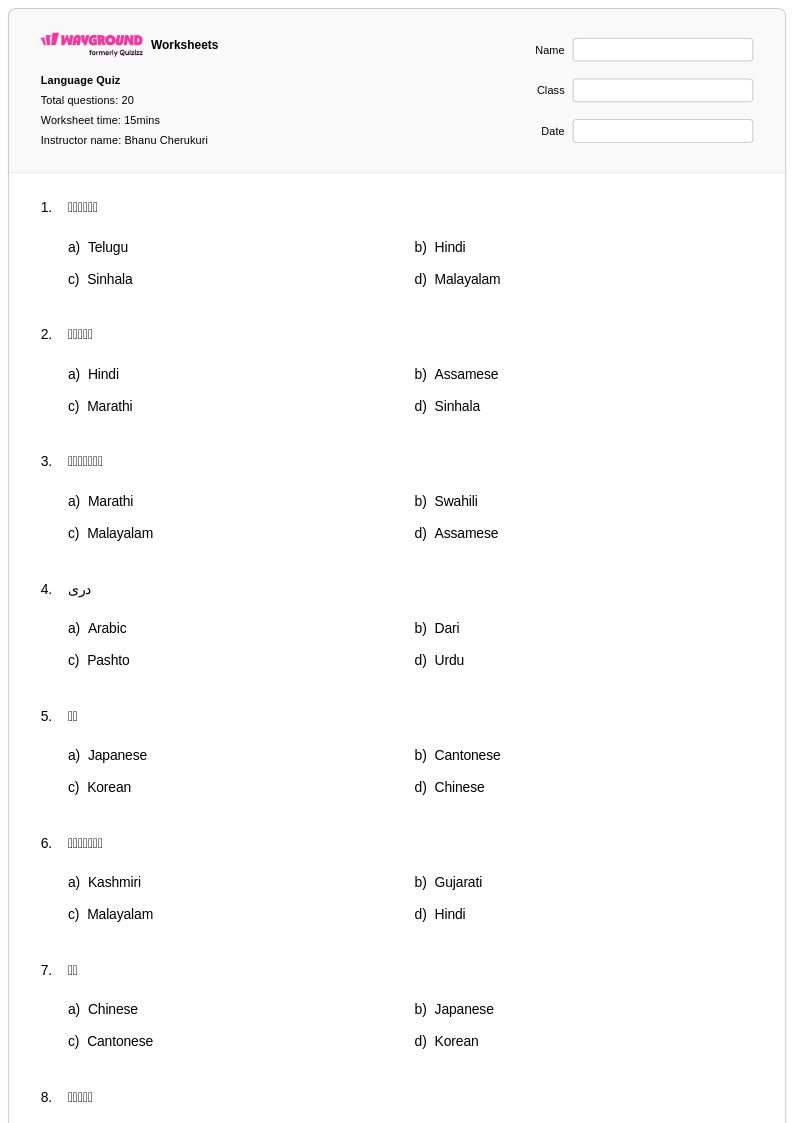
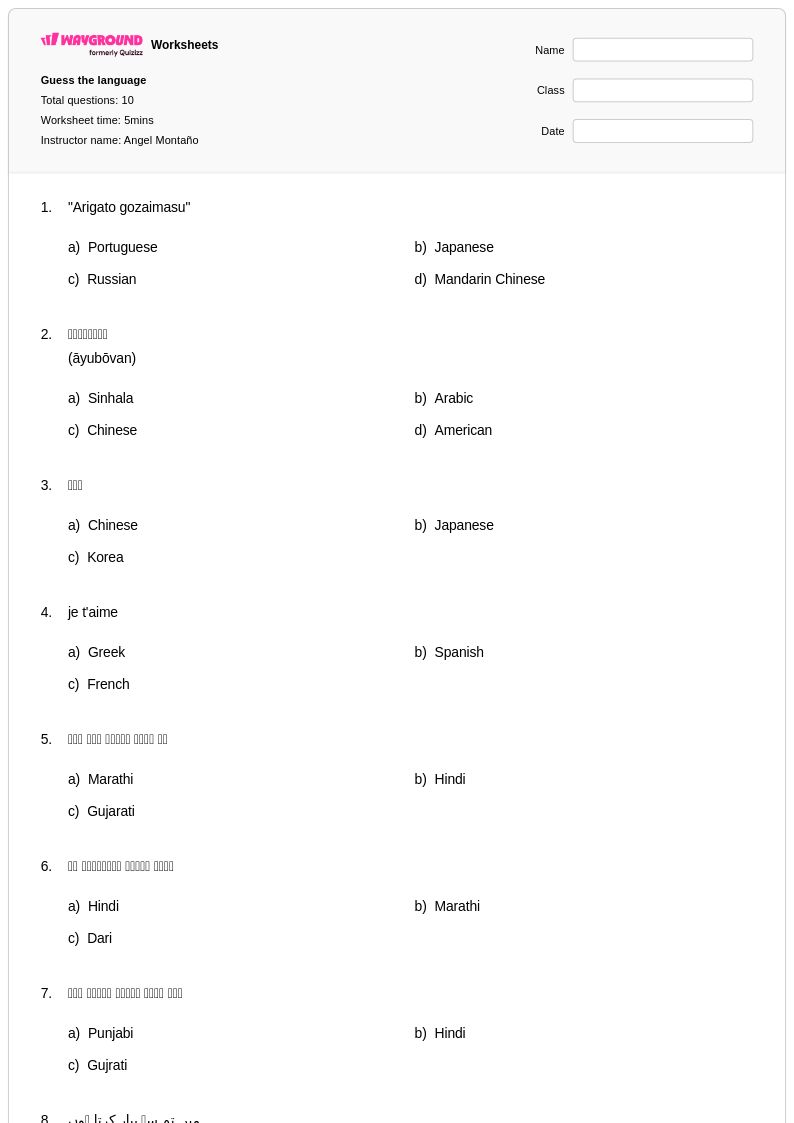
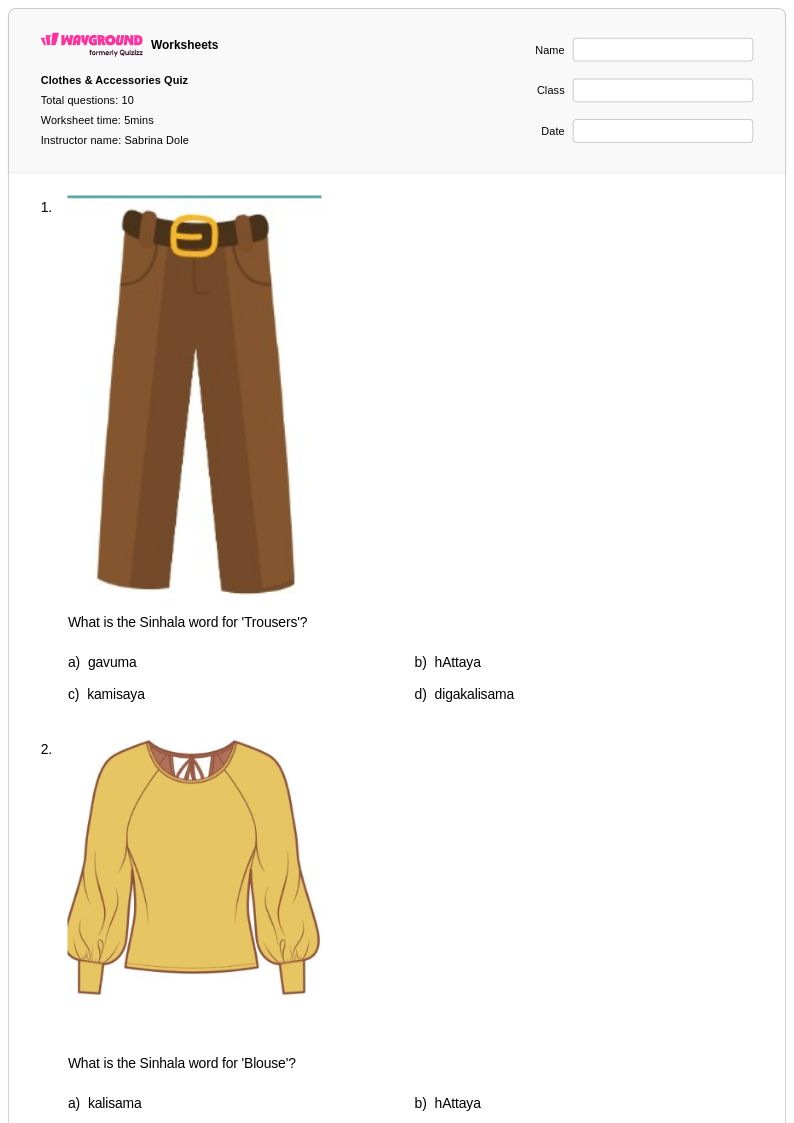
Sinhala language worksheets available through Wayground (formerly Quizizz) provide comprehensive resources for students learning this beautiful South Asian language spoken primarily in Sri Lanka. These expertly designed worksheets strengthen fundamental skills including Sinhala script recognition, character formation, vocabulary development, grammar structures, and reading comprehension. Students can practice essential elements such as the unique Sinhala alphabet with its distinctive curves and loops, basic sentence construction, common phrases for everyday communication, and cultural context that enhances language acquisition. Each worksheet collection includes detailed answer keys to support independent learning, and the materials are available as free printables in convenient PDF format, making them accessible for both classroom instruction and home study. Practice problems range from beginner-level character tracing to more advanced translation exercises and text analysis.
Wayground (formerly Quizizz) empowers educators with an extensive library of millions of teacher-created Sinhala language resources that streamline lesson planning and enhance student engagement. The platform's robust search and filtering capabilities allow teachers to quickly locate worksheets tailored to specific skill levels, learning objectives, and curriculum standards alignment. Differentiation tools enable instructors to modify content complexity, ensuring appropriate challenges for diverse learners while supporting both remediation for struggling students and enrichment opportunities for advanced learners. These flexible customization features, combined with availability in both printable and digital PDF formats, facilitate seamless integration into various teaching environments and learning management systems. Teachers can efficiently organize skill practice sessions, create targeted intervention materials, and develop comprehensive assessment tools that support systematic Sinhala language instruction and measurable student progress.
FAQs
How do I teach Sinhala script to beginners?
Teaching Sinhala script to beginners works best when instruction is sequenced from character recognition to character formation before moving into word-level reading. Start with the most frequently used letters and their phonetic sounds, using tracing activities to build muscle memory for Sinhala's distinctive curves and loops. Pairing visual mnemonics with cultural context helps students retain characters more effectively than rote repetition alone.
What exercises help students practice the Sinhala alphabet?
Effective Sinhala alphabet practice includes character tracing worksheets, matching exercises that pair letters with their phonetic sounds, and fill-in-the-blank activities using simple vocabulary. Repeated low-stakes writing practice reinforces the unique stroke patterns of Sinhala script, which differs significantly from Latin-based writing systems. Worksheets that progress from isolated character practice to simple word formation give students a clear sense of incremental achievement.
What common mistakes do students make when learning Sinhala?
One of the most frequent errors is confusing visually similar Sinhala characters, particularly those that share curved base forms but differ in small loop or line additions. Students also tend to apply Latin phonics rules to Sinhala, leading to mispronunciation of vowel modifiers and aspirated consonants. Explicit instruction on these distinctions, supported by targeted error-correction exercises, helps students build accurate reading and writing habits early.
How can I use Sinhala worksheets to support vocabulary development?
Vocabulary worksheets are most effective when they present Sinhala words in context rather than as isolated lists, helping students infer meaning and usage simultaneously. Exercises that incorporate common everyday phrases alongside cultural context accelerate acquisition because students see how vocabulary functions in real communication. Pairing new vocabulary with sentence construction tasks reinforces retention by requiring students to actively produce language rather than passively recognize it.
How do I use Wayground's Sinhala worksheets in my classroom?
Wayground's Sinhala worksheets are available as printable PDFs for traditional classroom use and in digital formats for technology-integrated learning environments, and teachers can also host them as a quiz directly on Wayground. Each worksheet includes a complete answer key, making them suitable for independent practice, homework assignments, or guided group work without additional teacher preparation. The range of available exercises, from beginner character tracing to advanced translation and text analysis, means a single collection can support multiple instructional stages within the same class.
How can I differentiate Sinhala instruction for students at different levels?
Differentiation in Sinhala instruction starts with offering tiered tasks: character tracing and phonics matching for beginners, sentence construction and vocabulary application for intermediate learners, and translation or reading comprehension for advanced students. On Wayground, teachers can apply individual student accommodations such as read aloud support, reduced answer choices, and extended time, which are especially useful for heritage language learners or students with learning differences. These settings can be saved and reapplied across sessions, reducing the administrative burden of ongoing differentiation.