
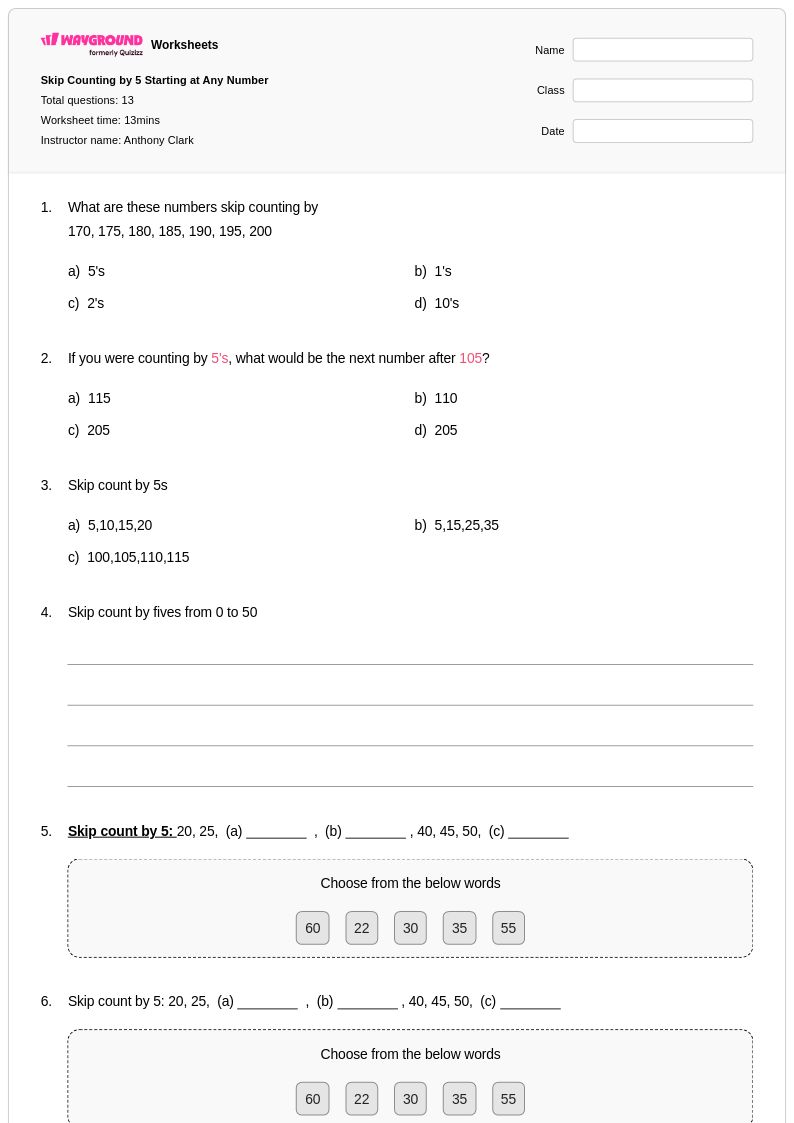
13 Q
2nd - Uni
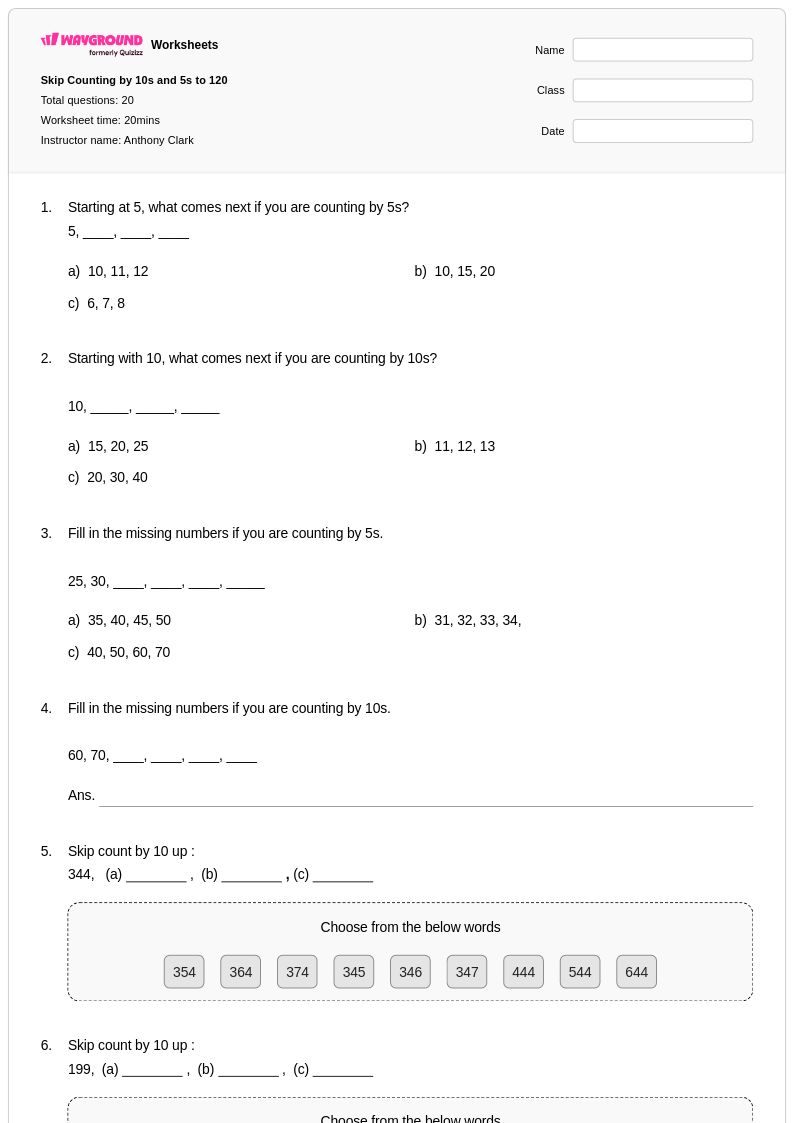
20 Q
2nd - Uni
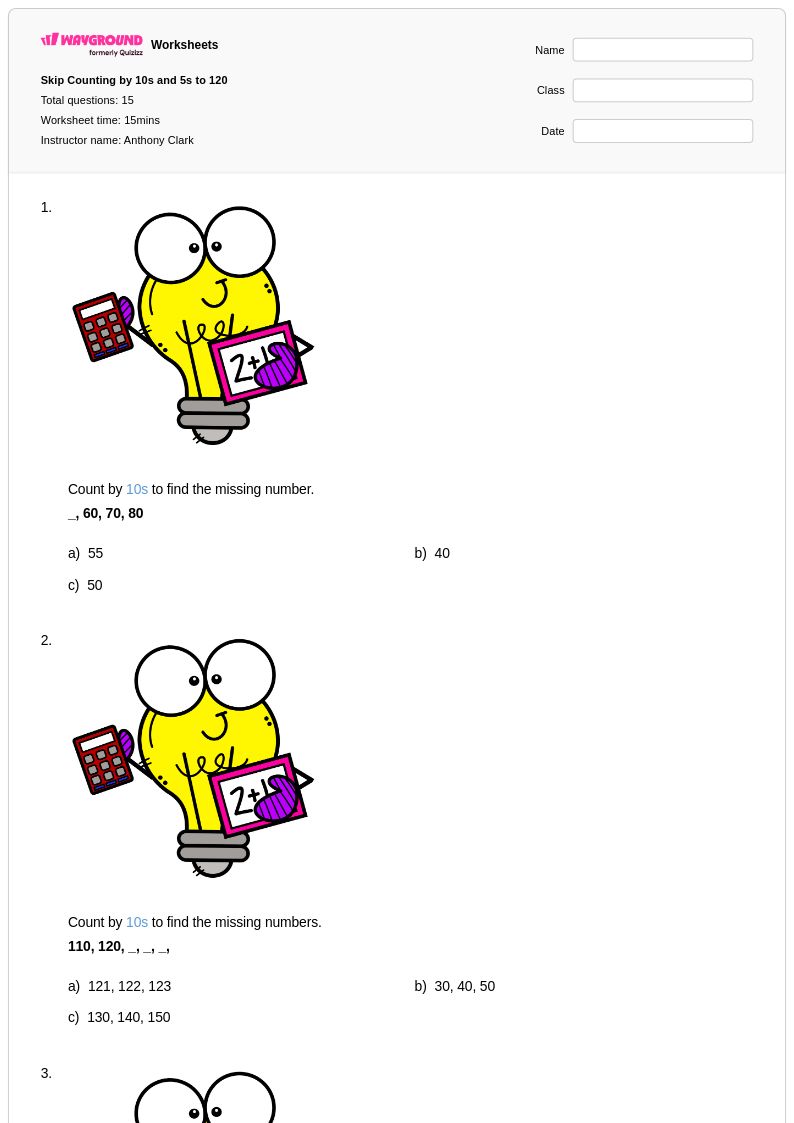
15 Q
2nd - Uni
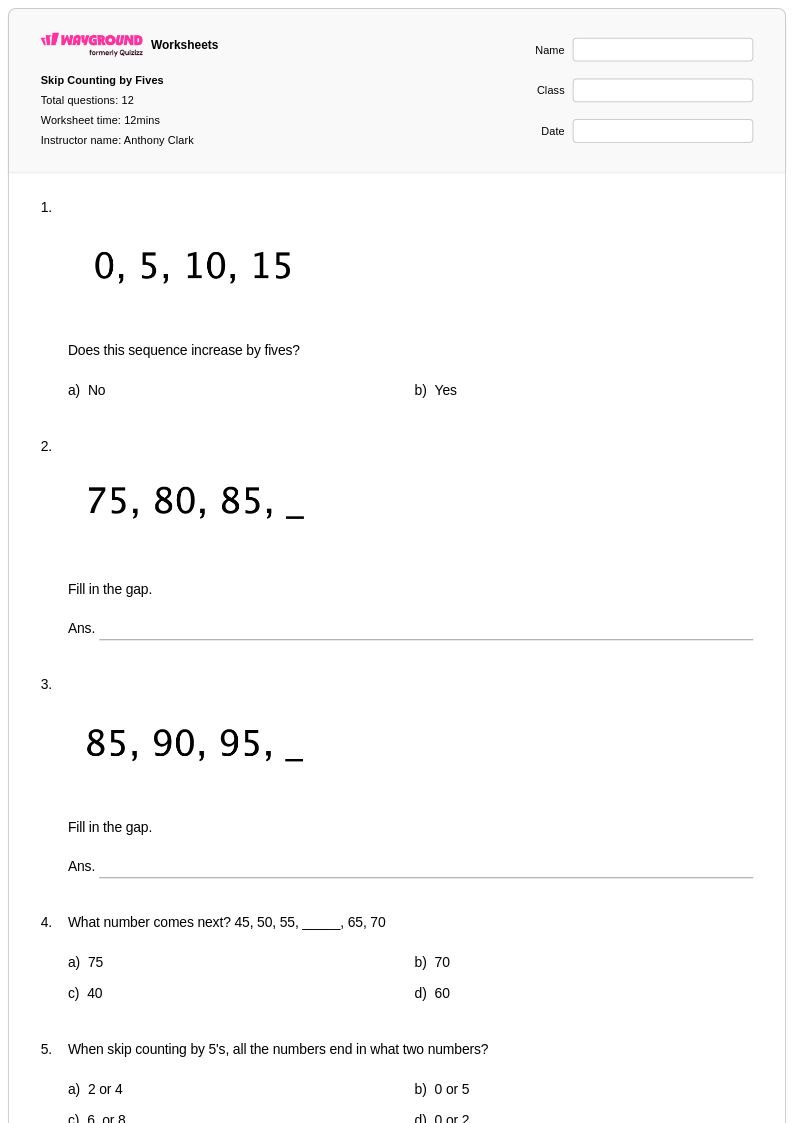
12 Q
2nd - Uni
20 Q
2nd - Uni
20 Q
2nd - Uni
15 Q
2nd - Uni
19 Q
2nd - Uni
13 Q
2nd
9 Q
2nd
20 Q
2nd - Uni
16 Q
1st - 2nd
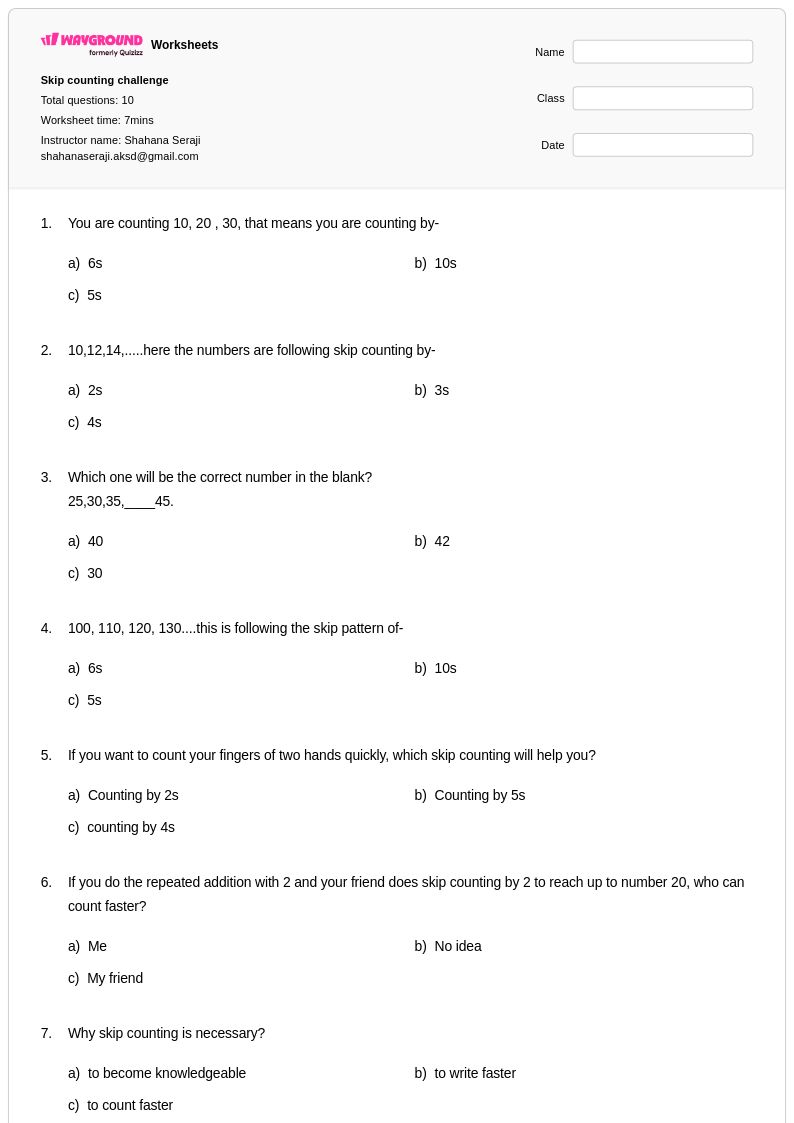
10 Q
1st - 2nd
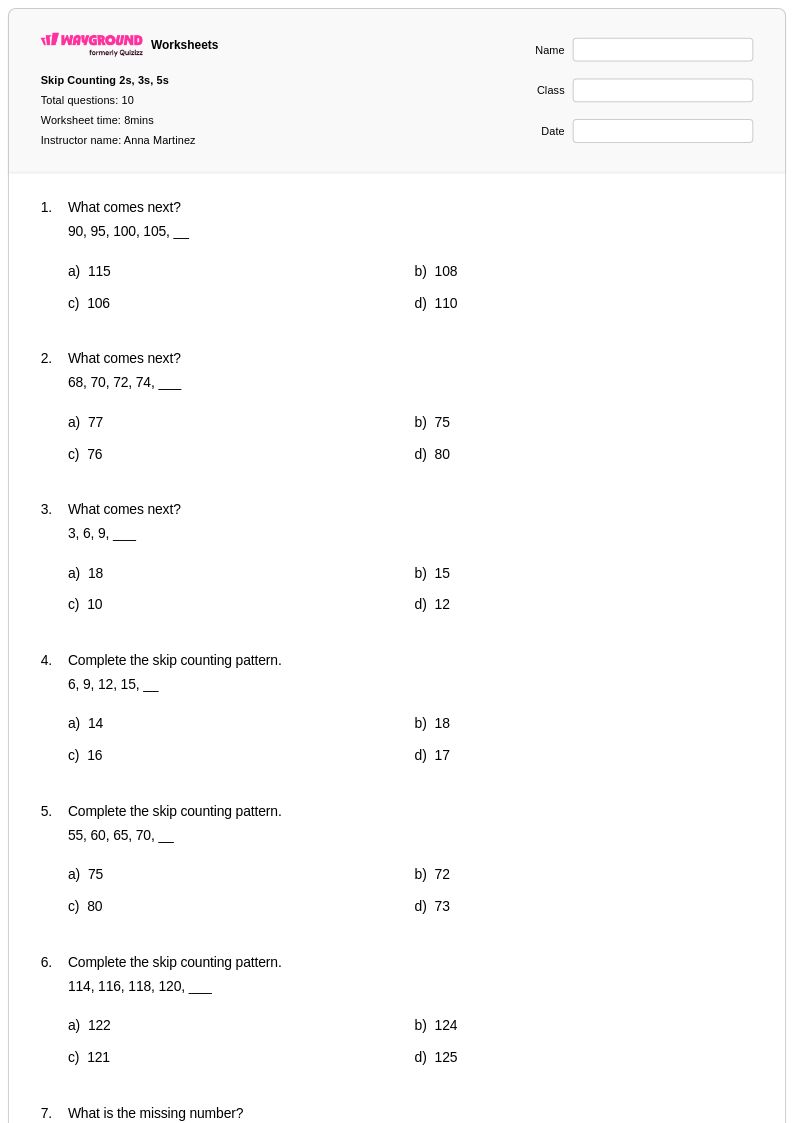
10 Q
2nd - 3rd
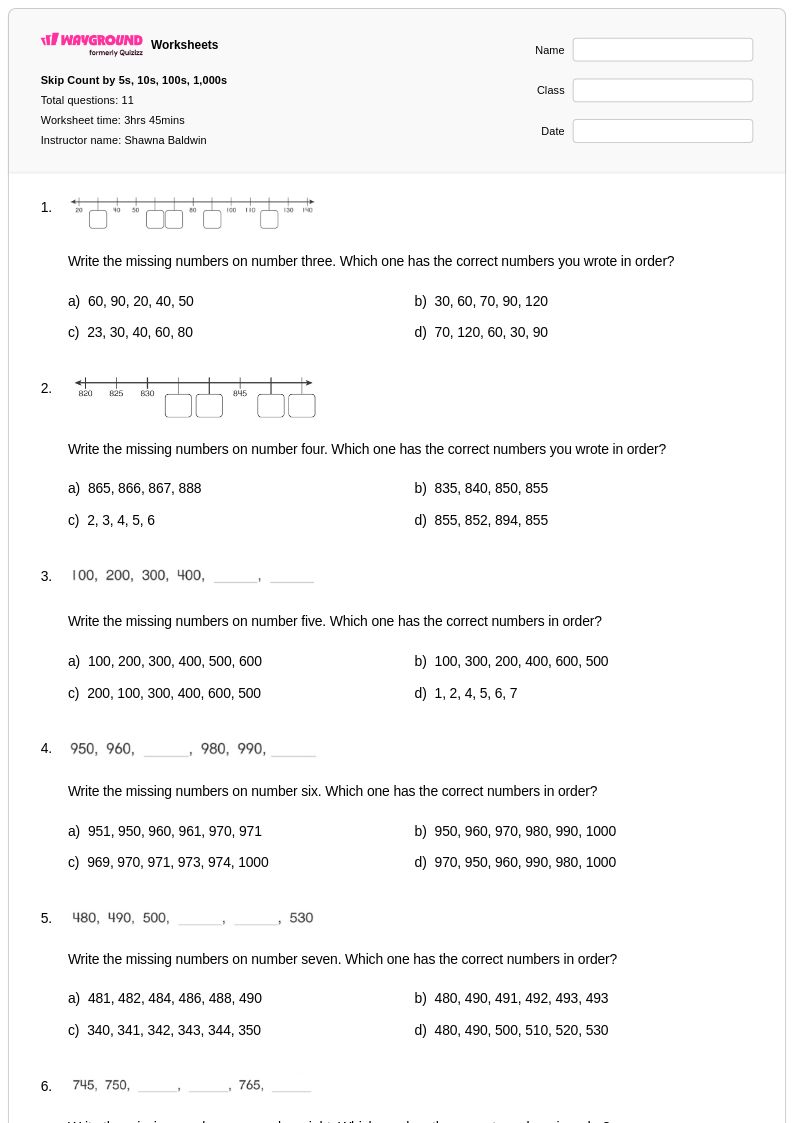
11 Q
2nd
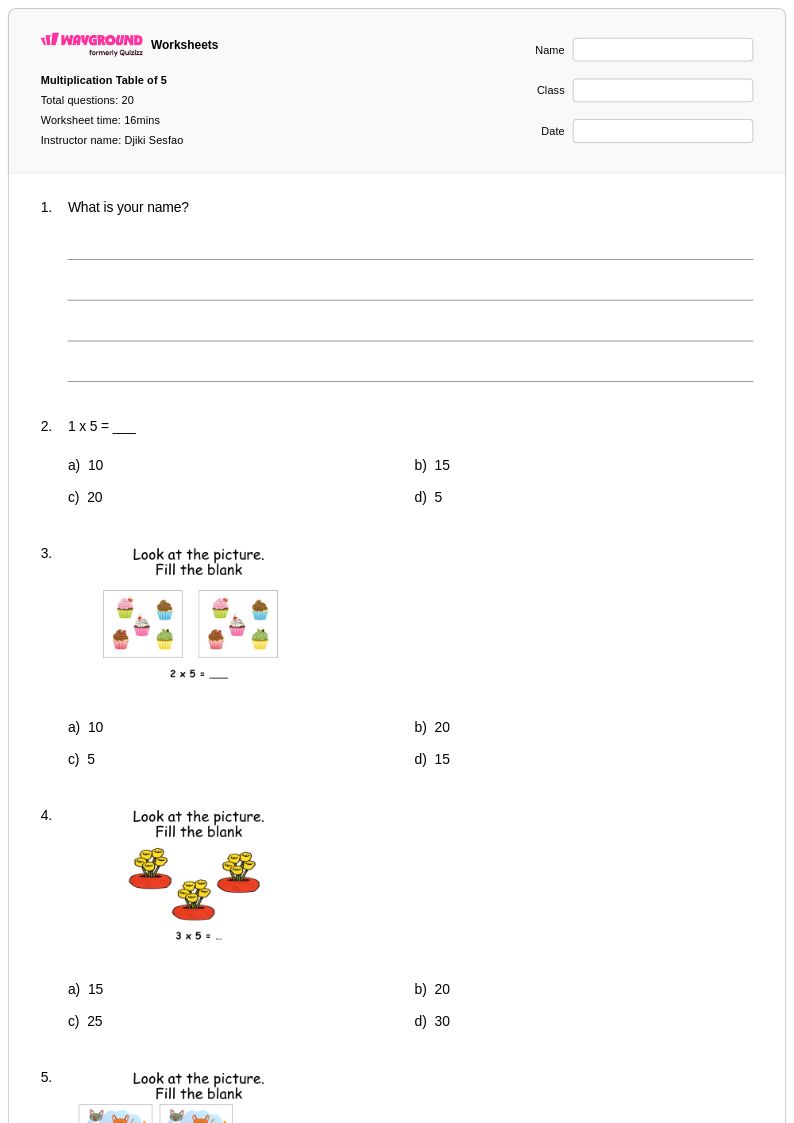
20 Q
2nd
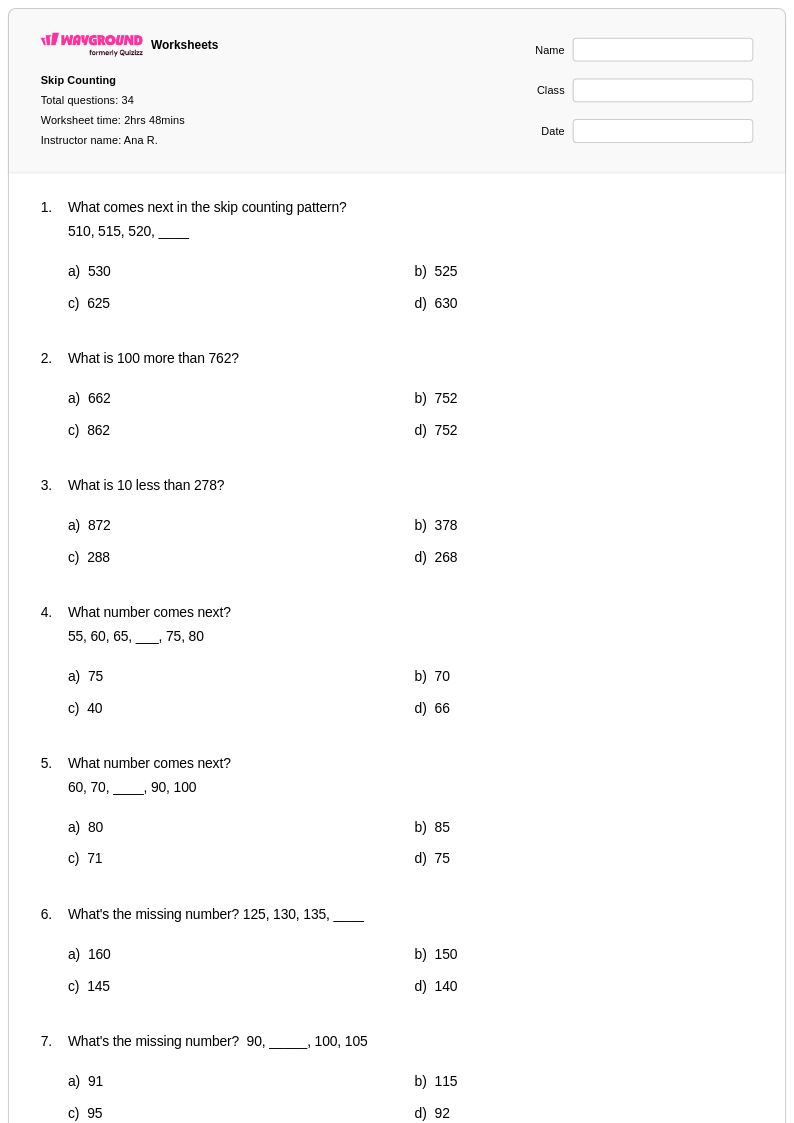
34 Q
2nd
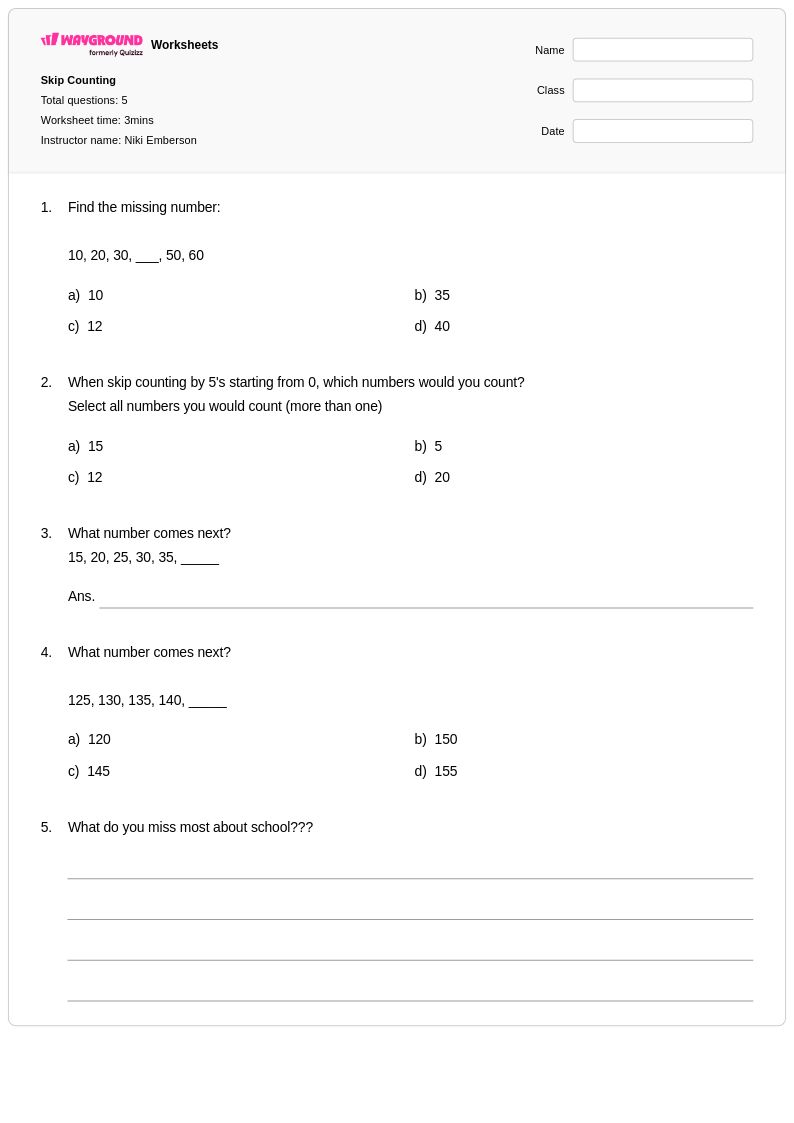
5 Q
2nd
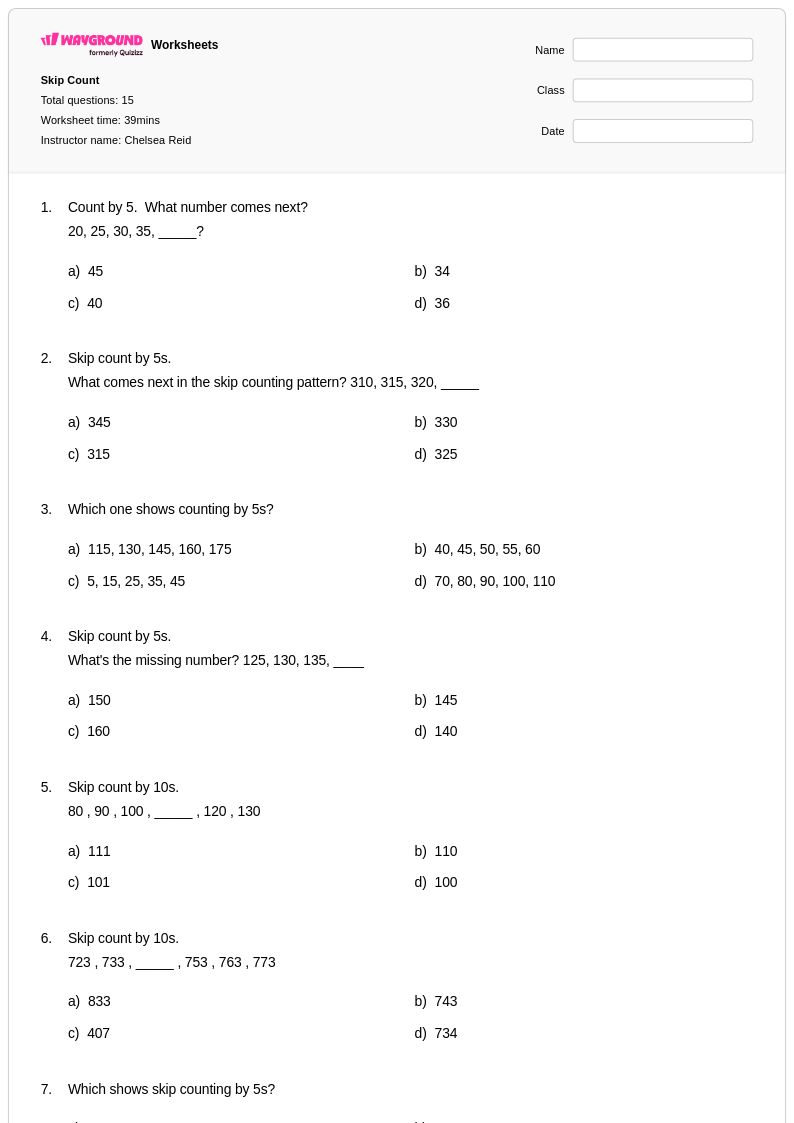
15 Q
1st - 3rd
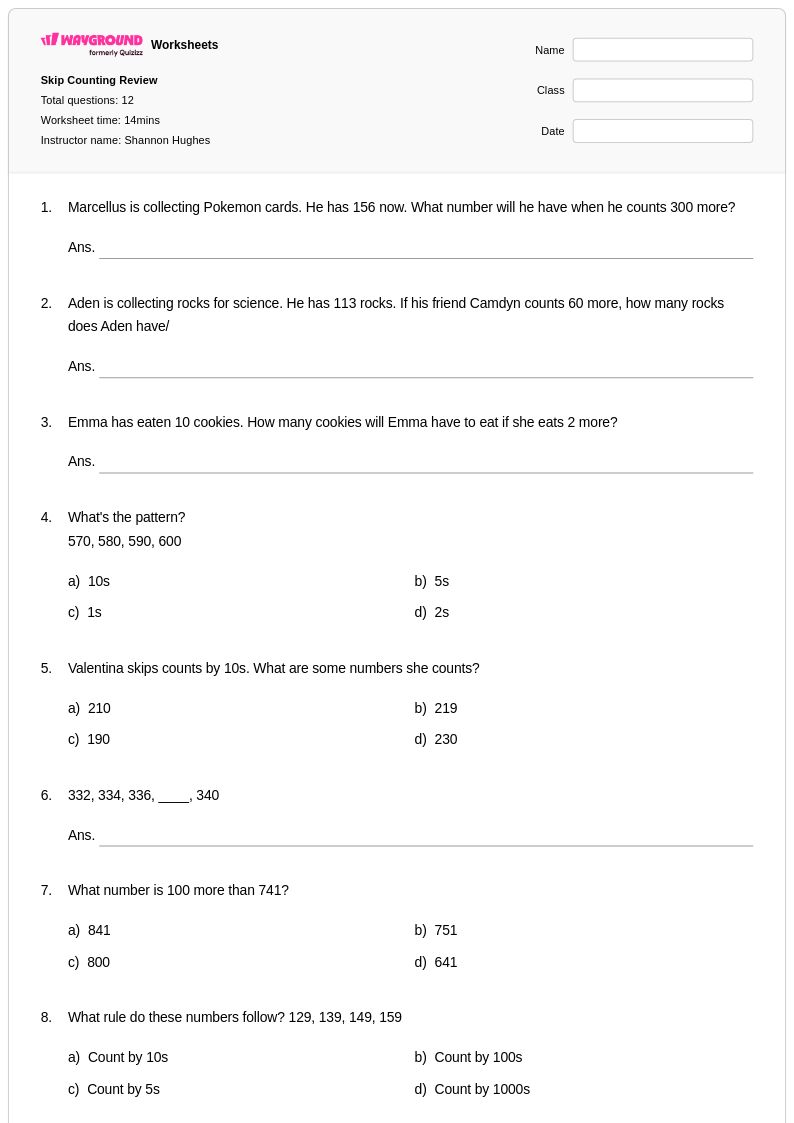
12 Q
2nd
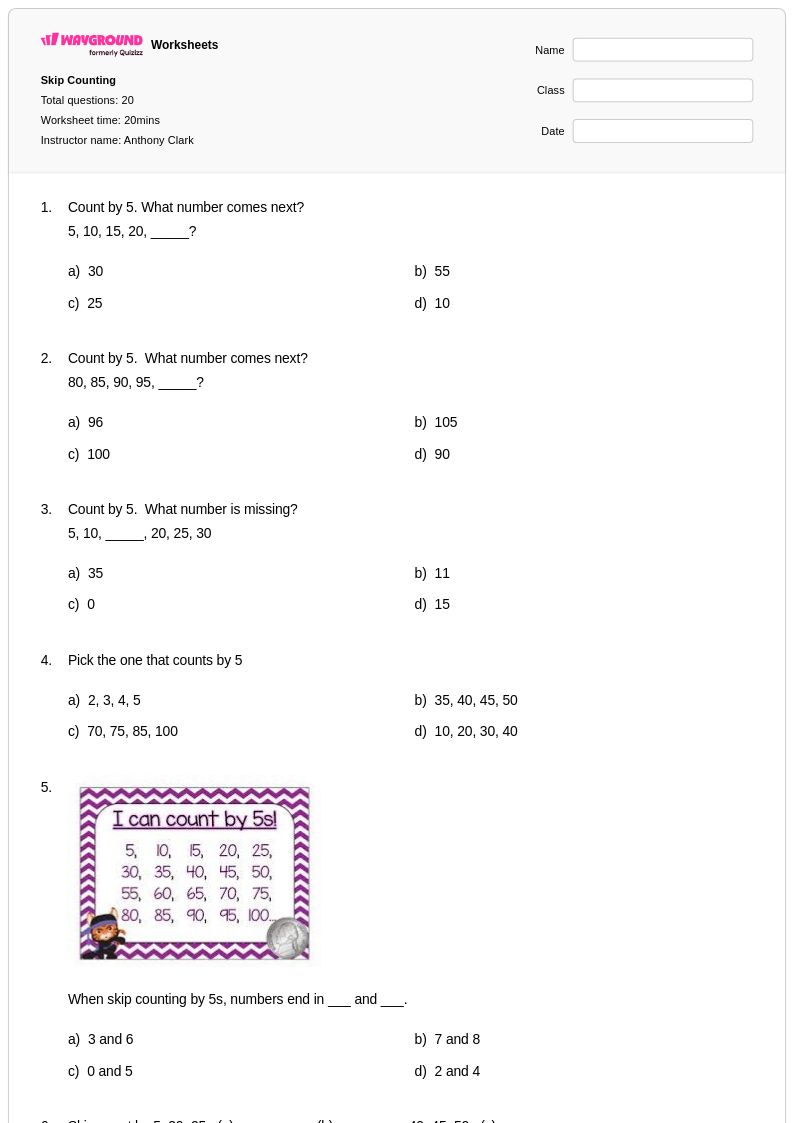
20 Q
2nd - Uni
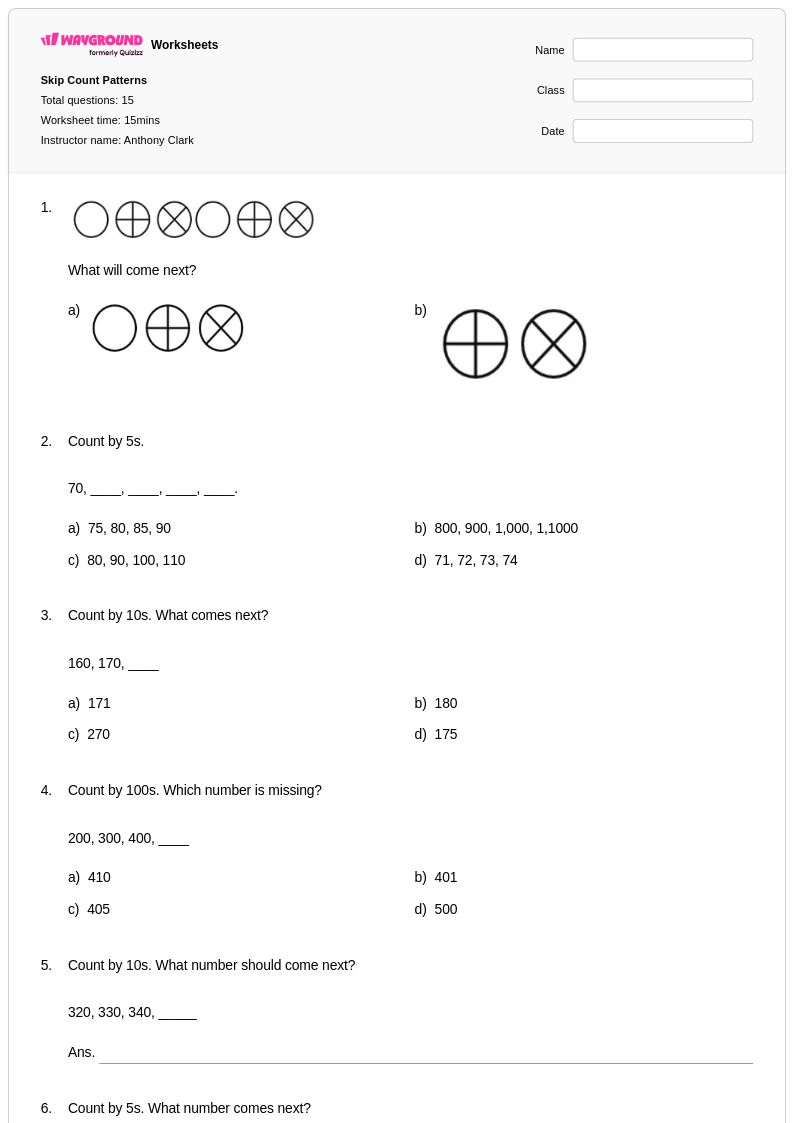
15 Q
2nd - Uni
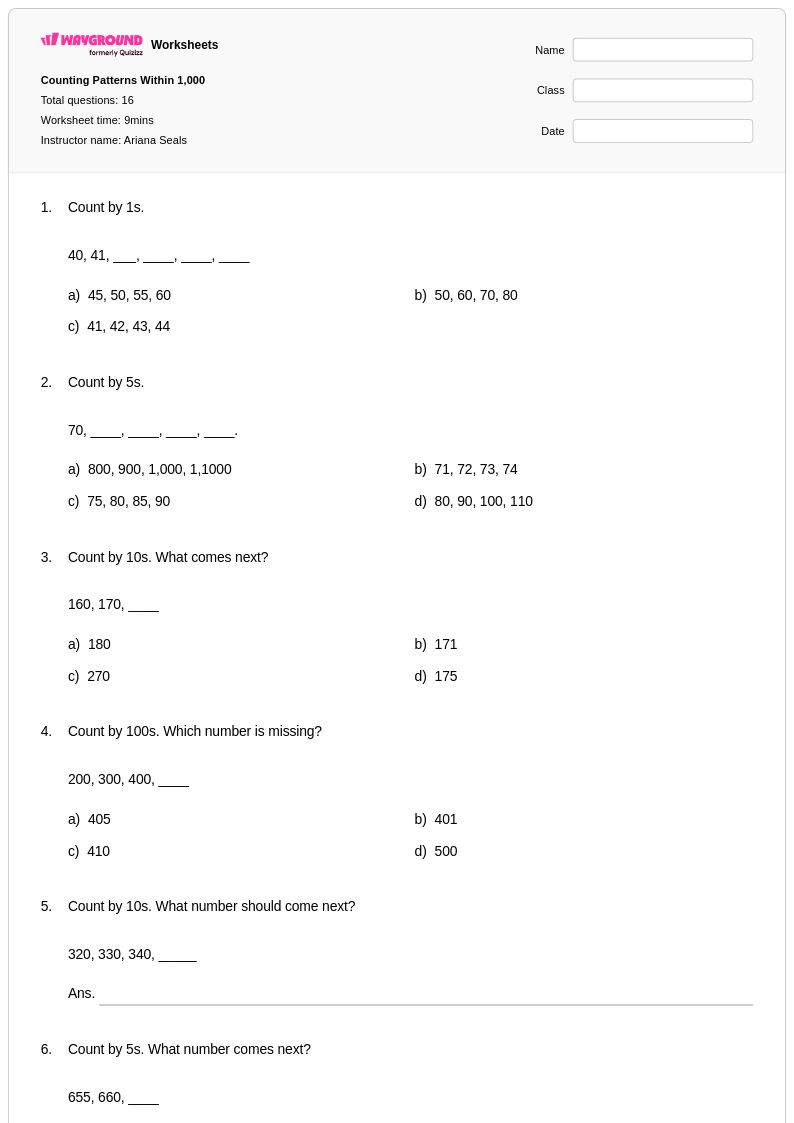
16 Q
2nd
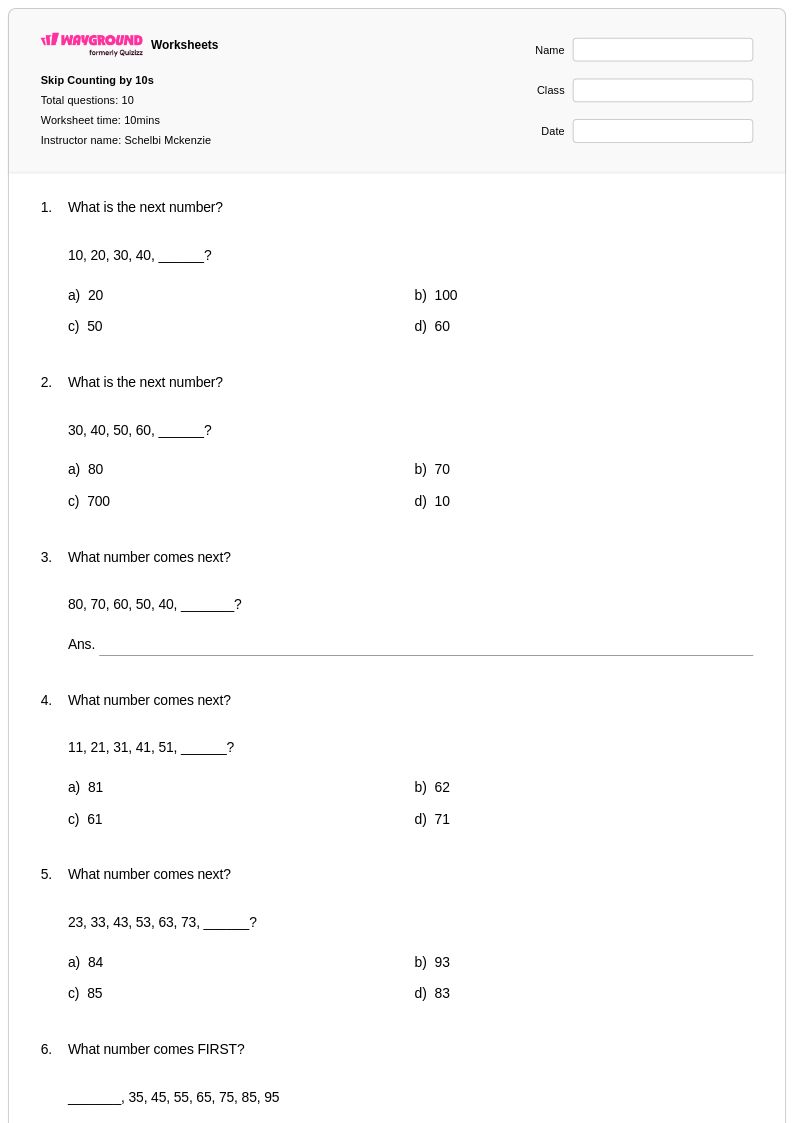
10 Q
2nd
Explore Other Subject Worksheets for year 2
Explore printable Skip Counting by 5s worksheets for Year 2
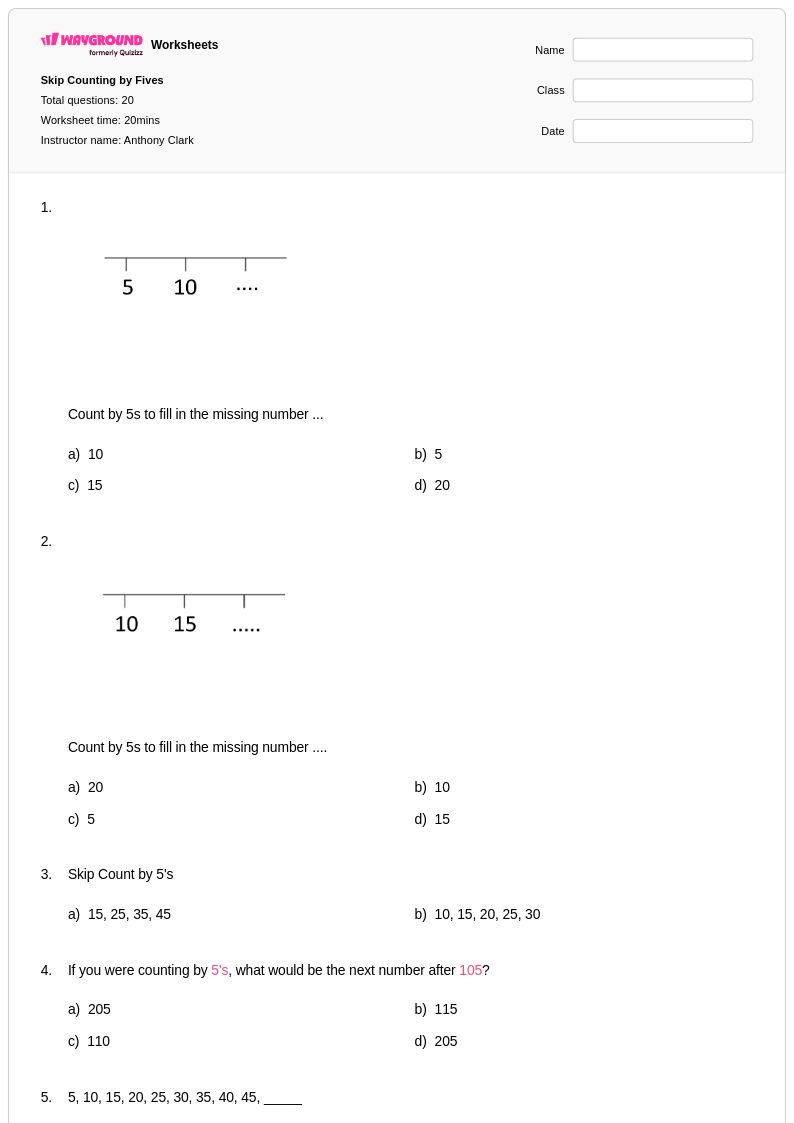
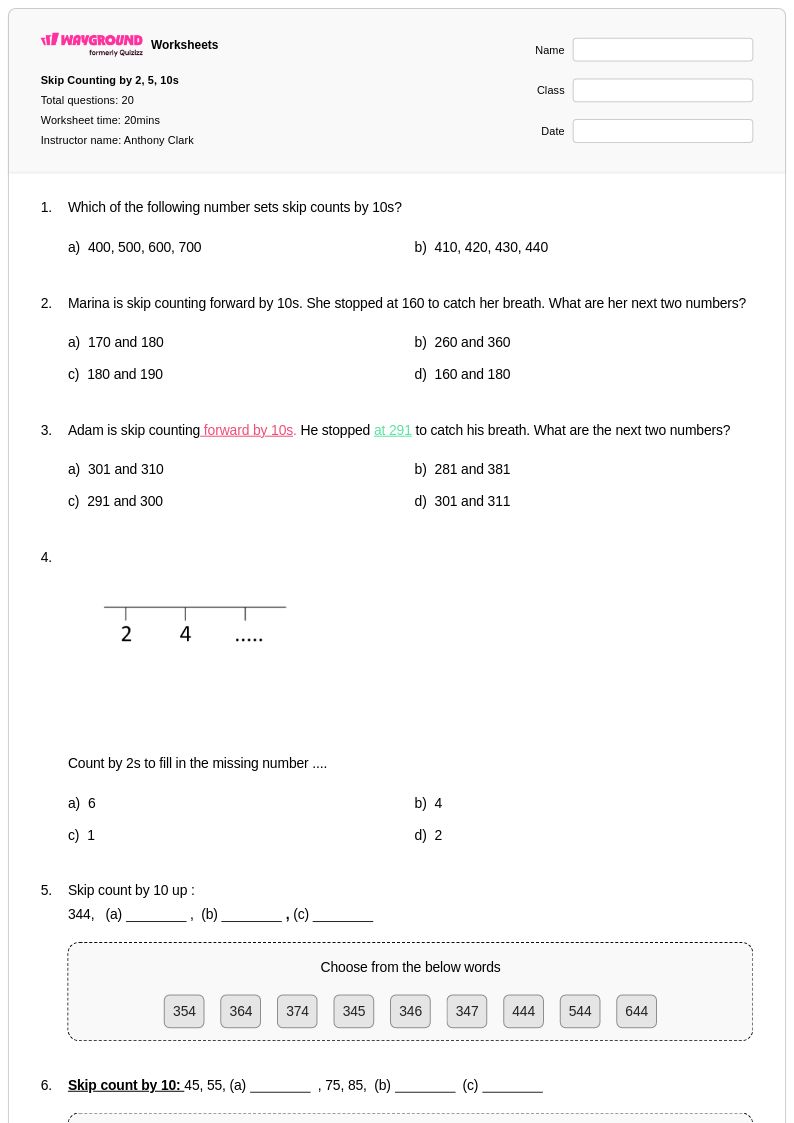
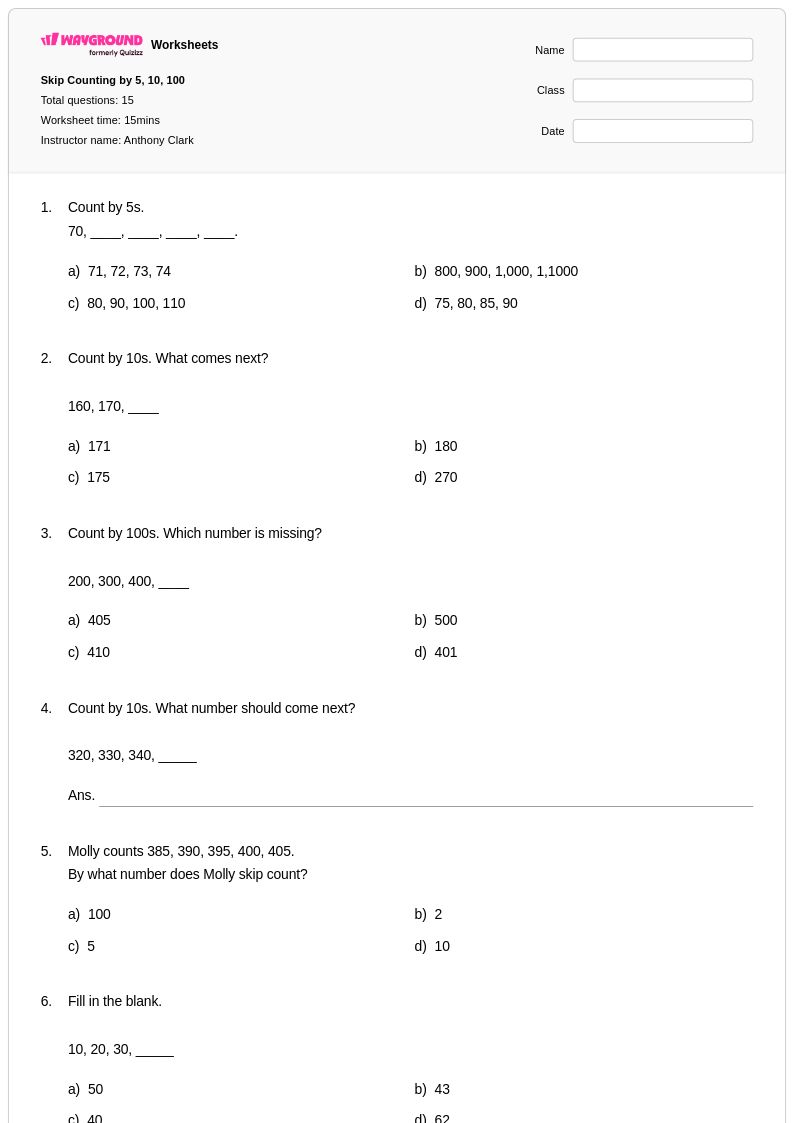
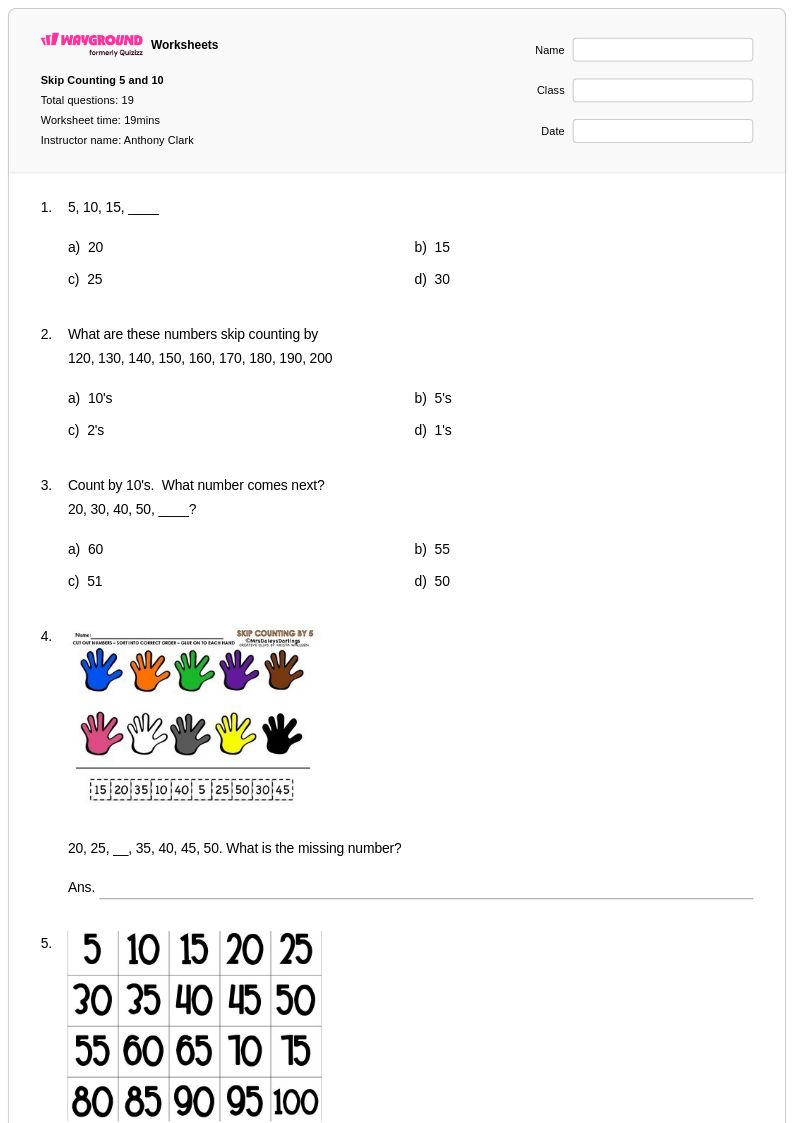
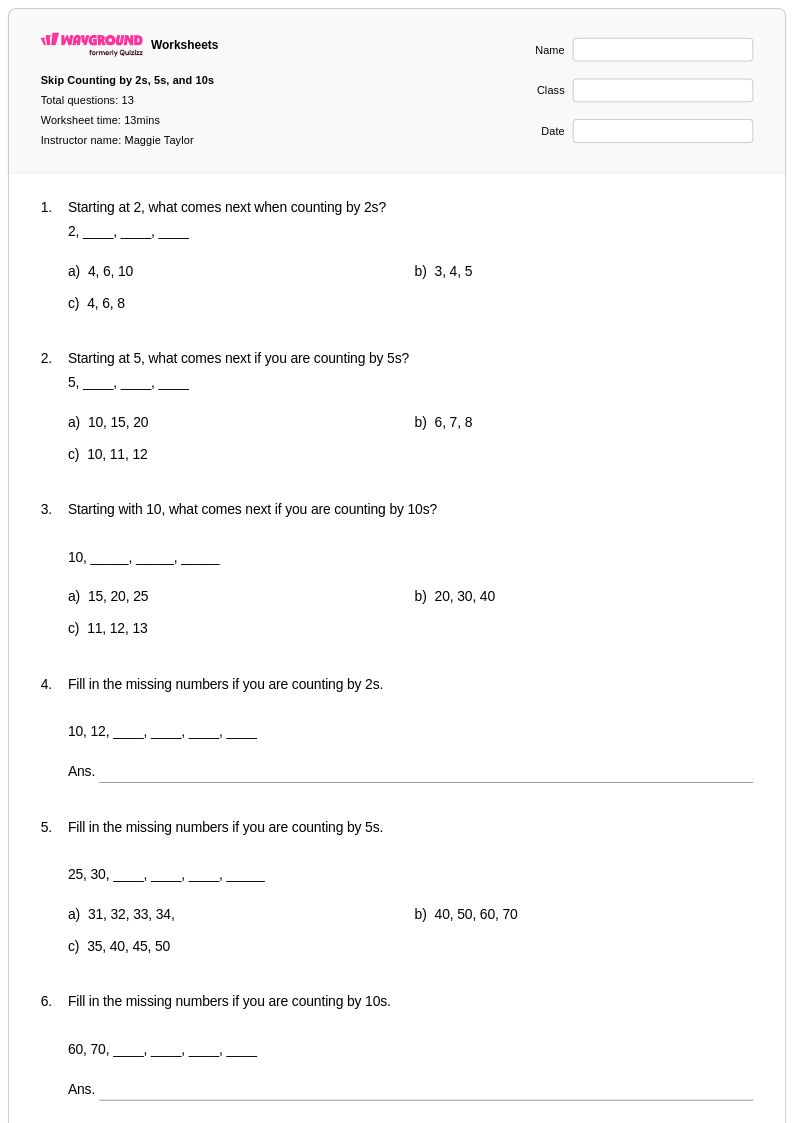
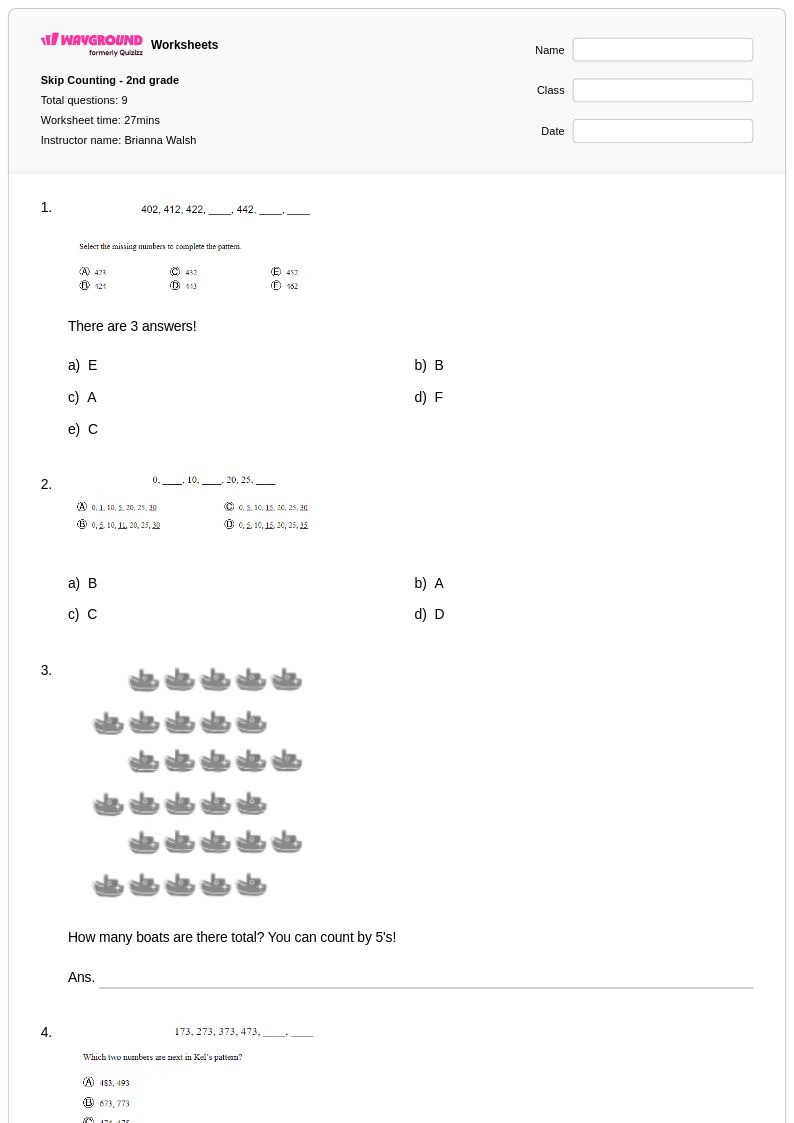
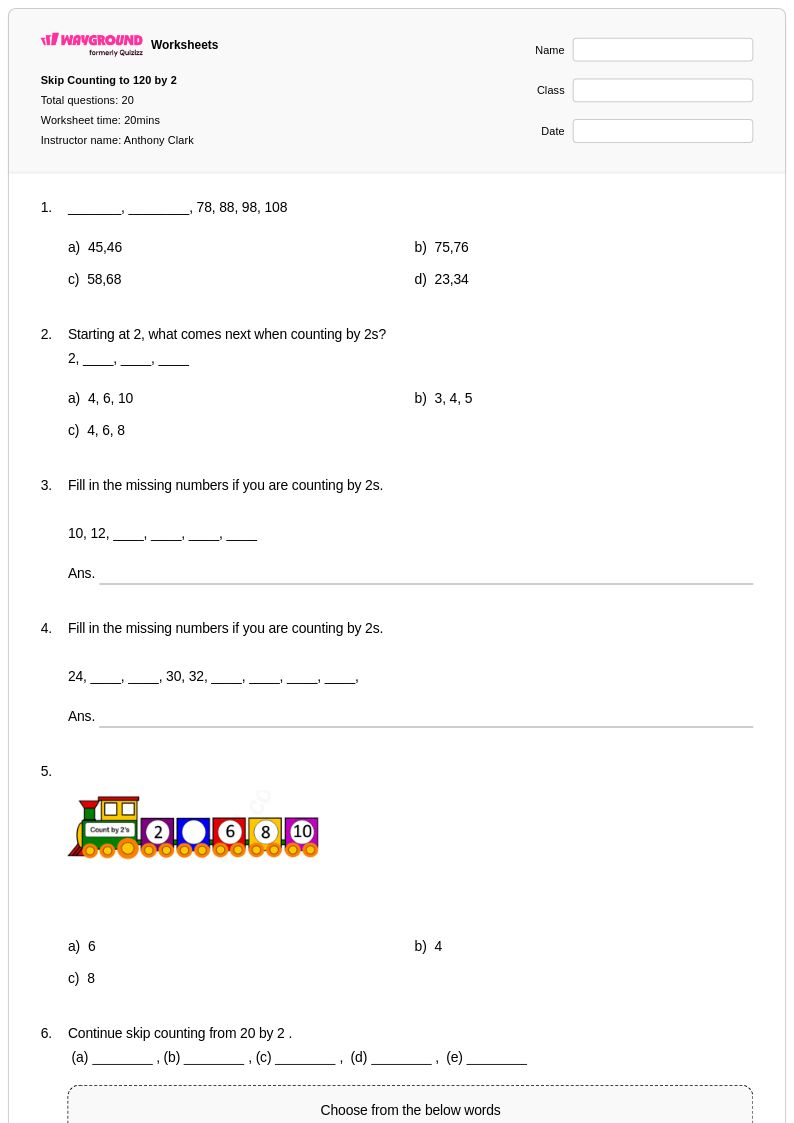
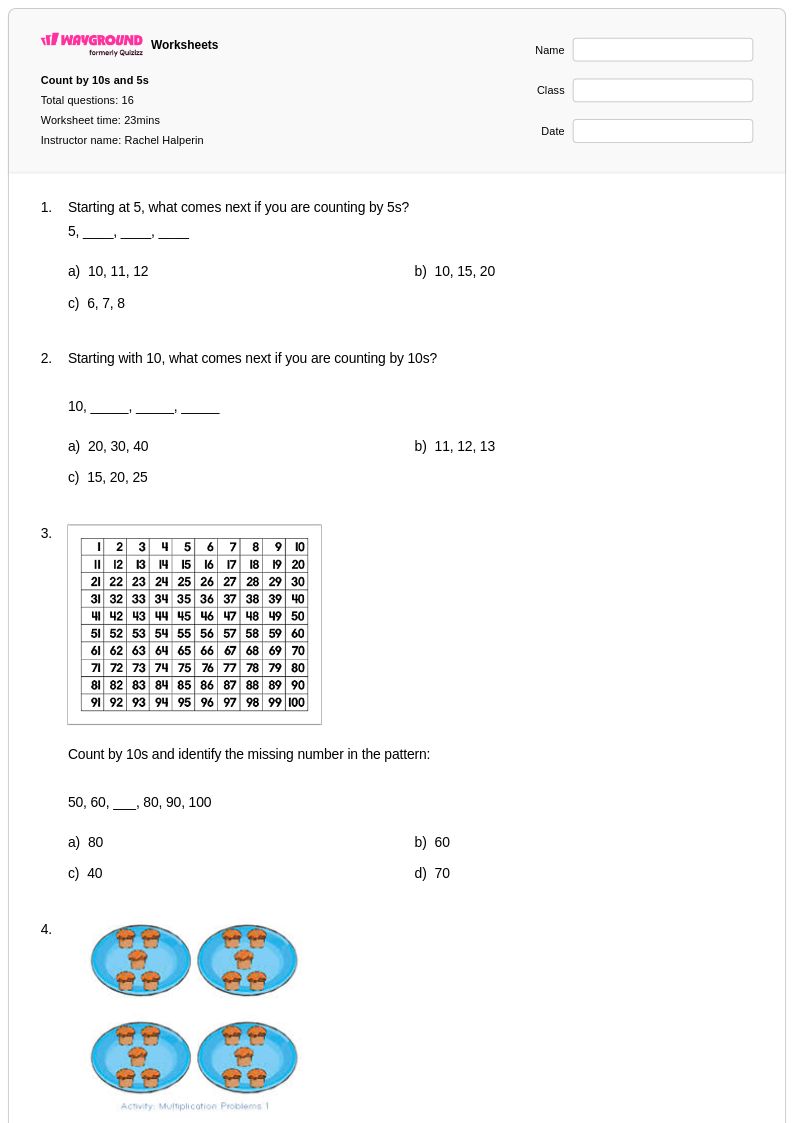
Skip counting by 5s worksheets for Year 2 students through Wayground provide essential foundational practice for developing number sense and multiplication readiness. These comprehensive printables help young learners recognize patterns in the number sequence while building confidence with systematic counting methods. Each worksheet collection includes carefully designed practice problems that progress from simple visual aids like number lines and hundreds charts to more advanced skip counting exercises. Students work through sequences such as 5, 10, 15, 20 and beyond, strengthening their ability to identify missing numbers and extend patterns independently. These free pdf resources come complete with answer keys, making them valuable tools for both classroom instruction and home practice as children master this critical mathematical skill.
Wayground's extensive library of teacher-created skip counting by 5s materials offers educators millions of high-quality resources with robust search and filtering capabilities to locate grade-appropriate content quickly. Teachers can access standards-aligned worksheets that support differentiated instruction, allowing them to customize materials for various learning levels within their Year 2 classrooms. The platform's flexible format options include both printable pdf versions for traditional paper-and-pencil work and digital formats for interactive learning experiences. These versatile resources streamline lesson planning while providing targeted practice opportunities for skill remediation, regular reinforcement, and enrichment activities that help students develop fluency with skip counting patterns that will serve as building blocks for future multiplication concepts.
FAQs
Is skip counting by 5s a Grade 2 skill?
How should I teach skip counting by 5s in Grade 2?
What exercises reinforce skip counting for second graders?
What are common challenges for 2nd graders with skip counting by 5s?
How can I use these Grade 2 skip counting worksheets?
How does skip counting by 5s support the Grade 2 curriculum?