Enhance Year 11 students' goal-setting abilities with Wayground's comprehensive Smart Goals worksheets, featuring printable PDFs, practice problems, and answer keys to develop effective personal and academic planning skills.
Explore printable Smart Goals worksheets for Year 11
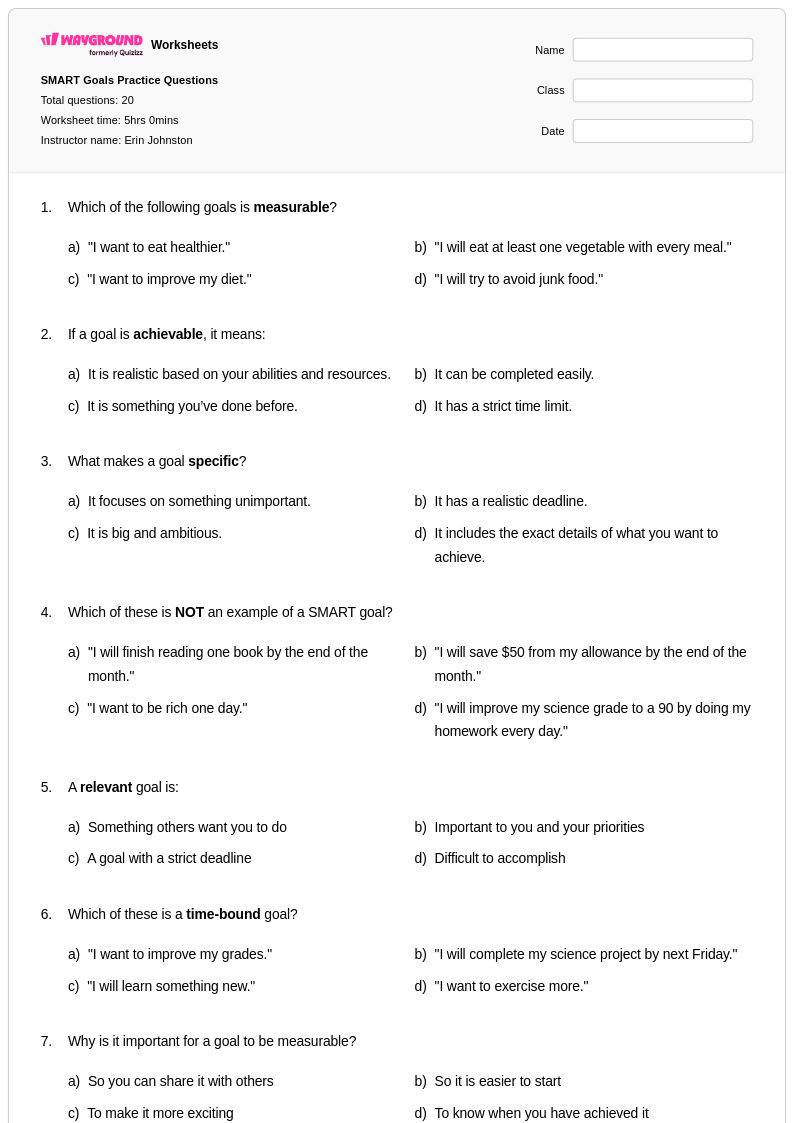
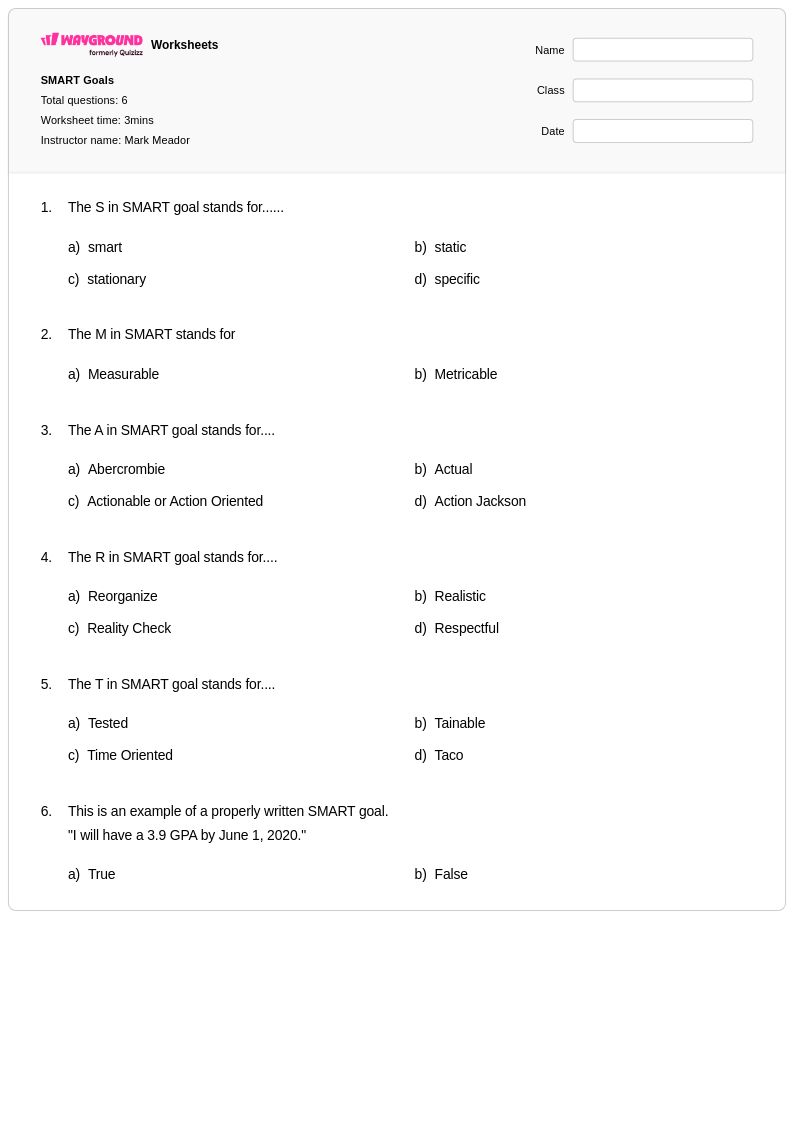
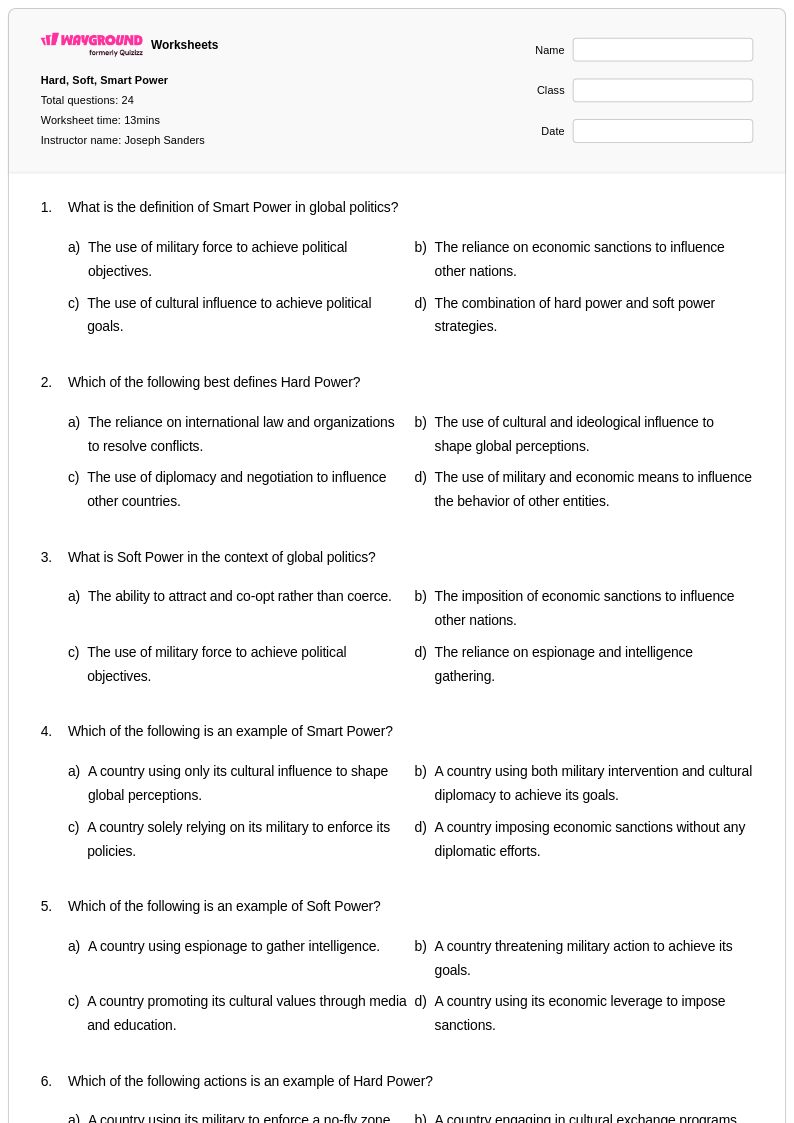
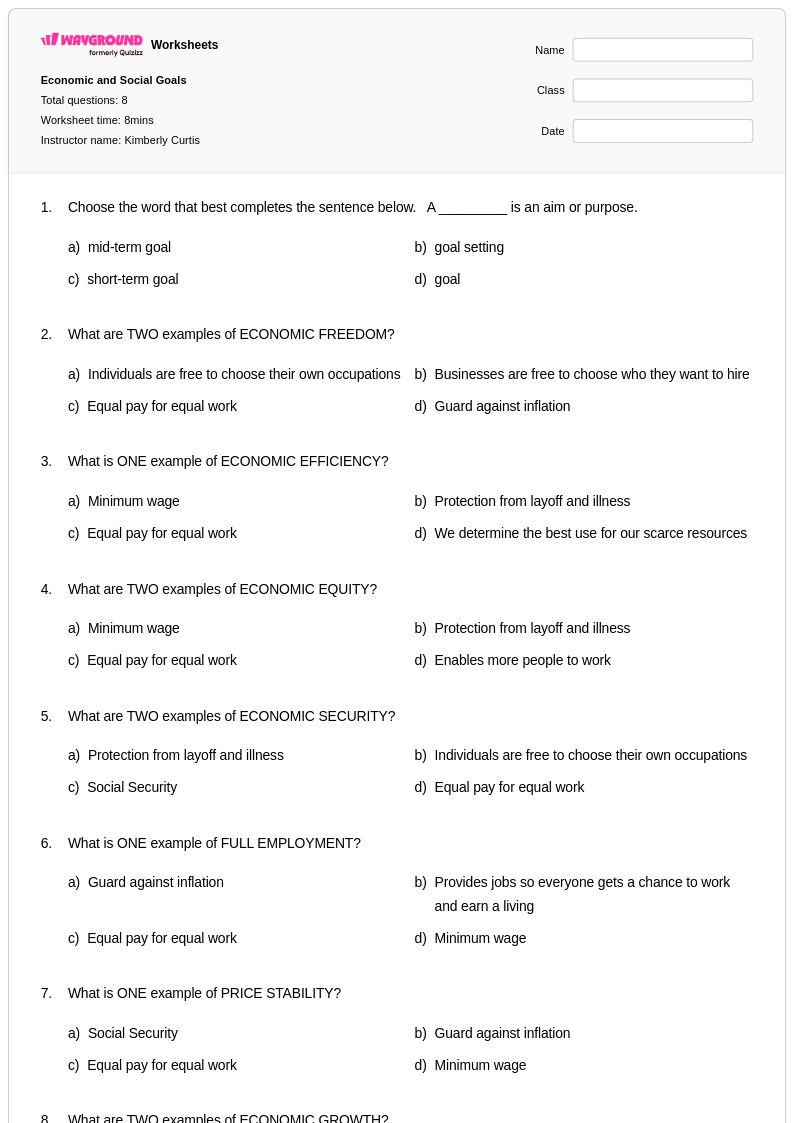
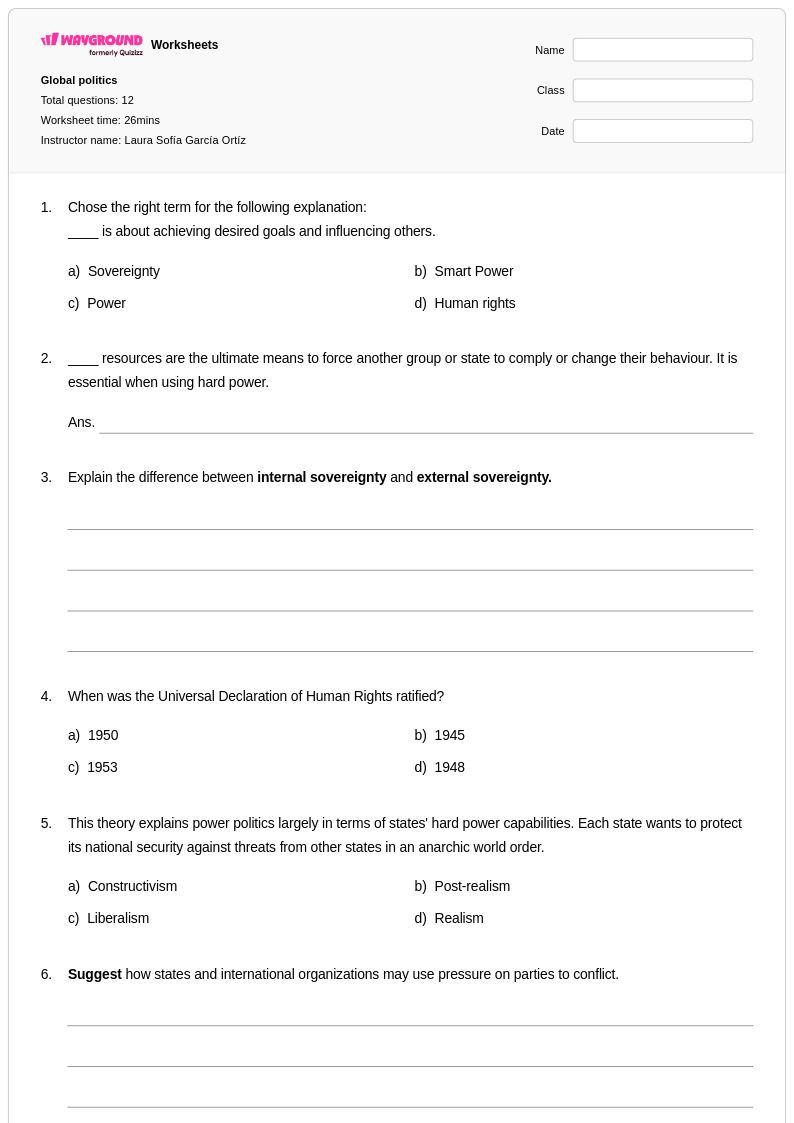
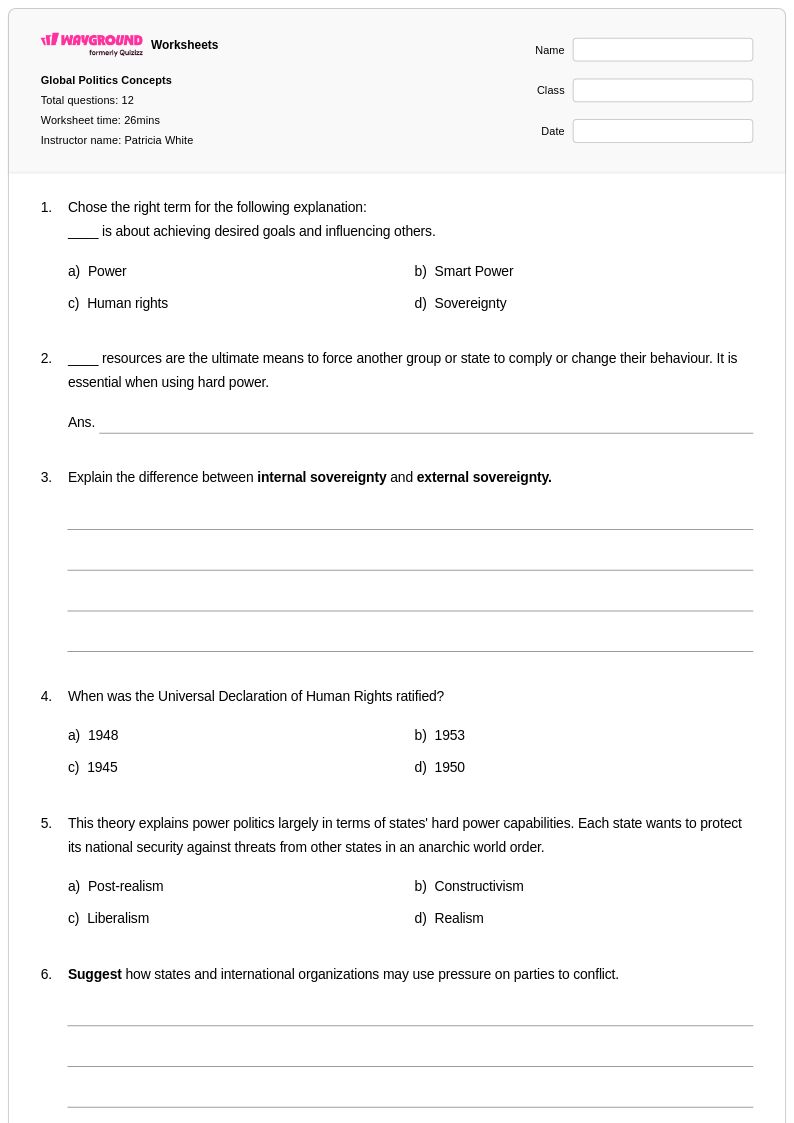
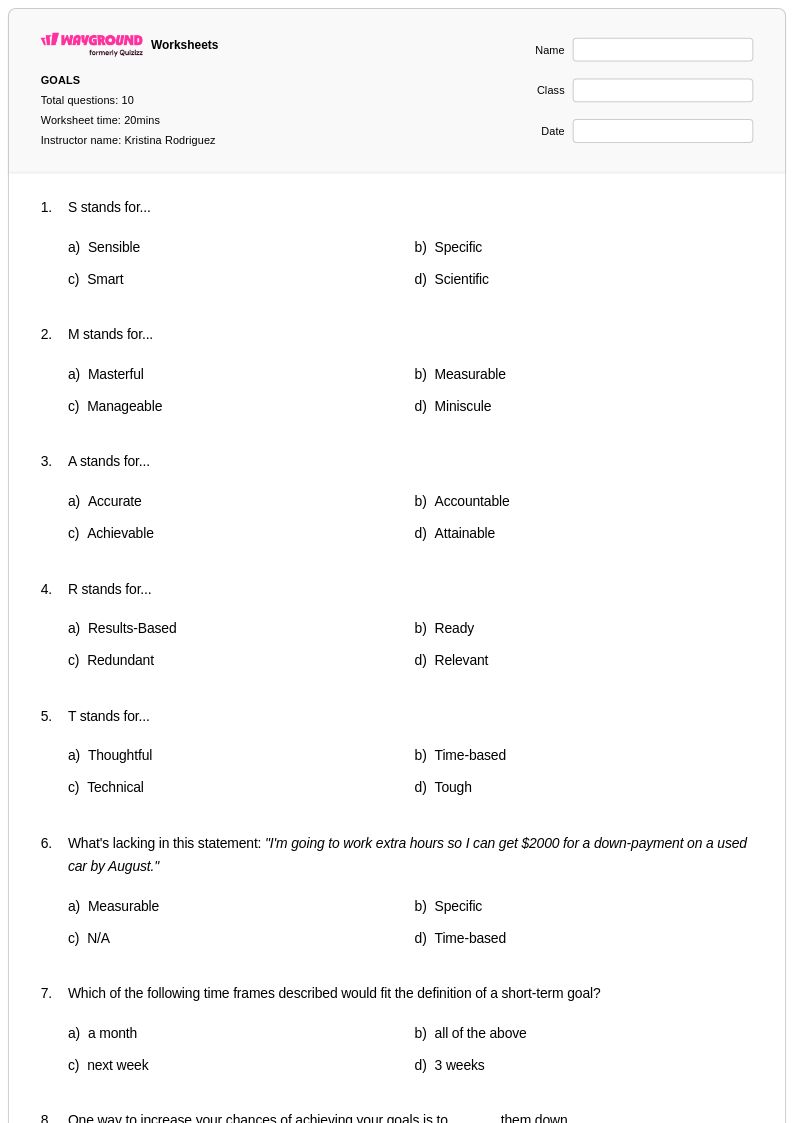
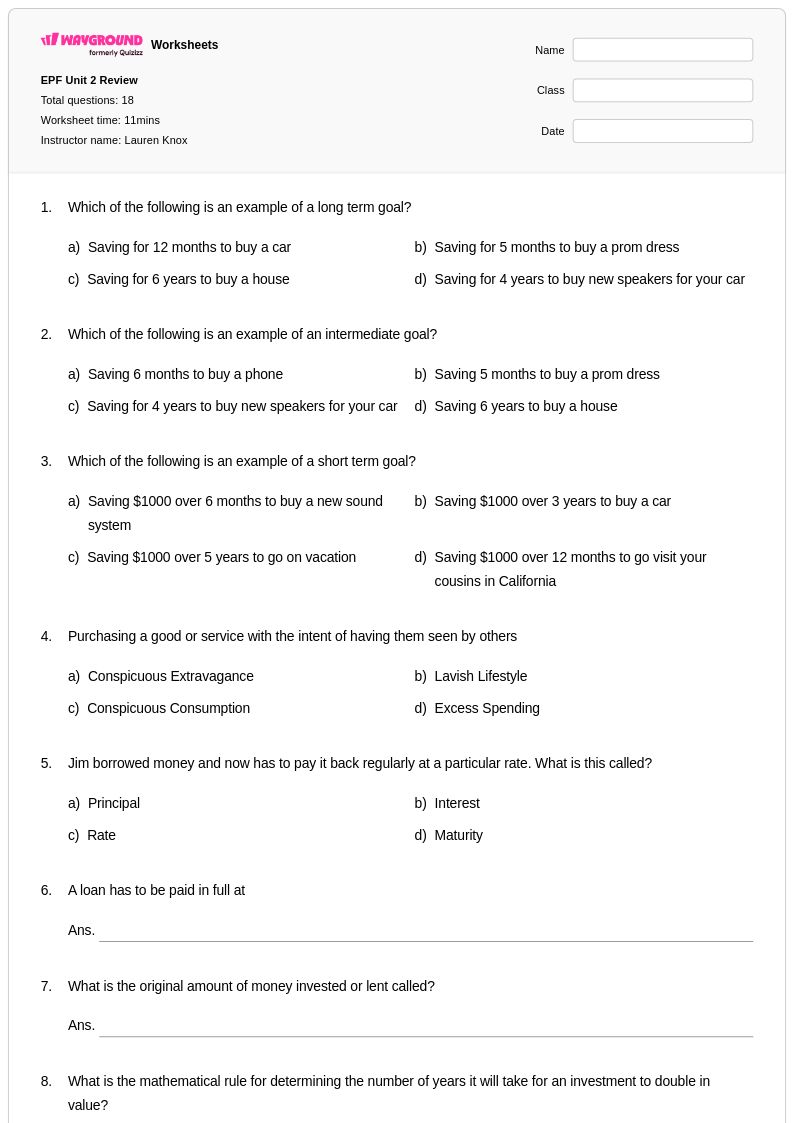
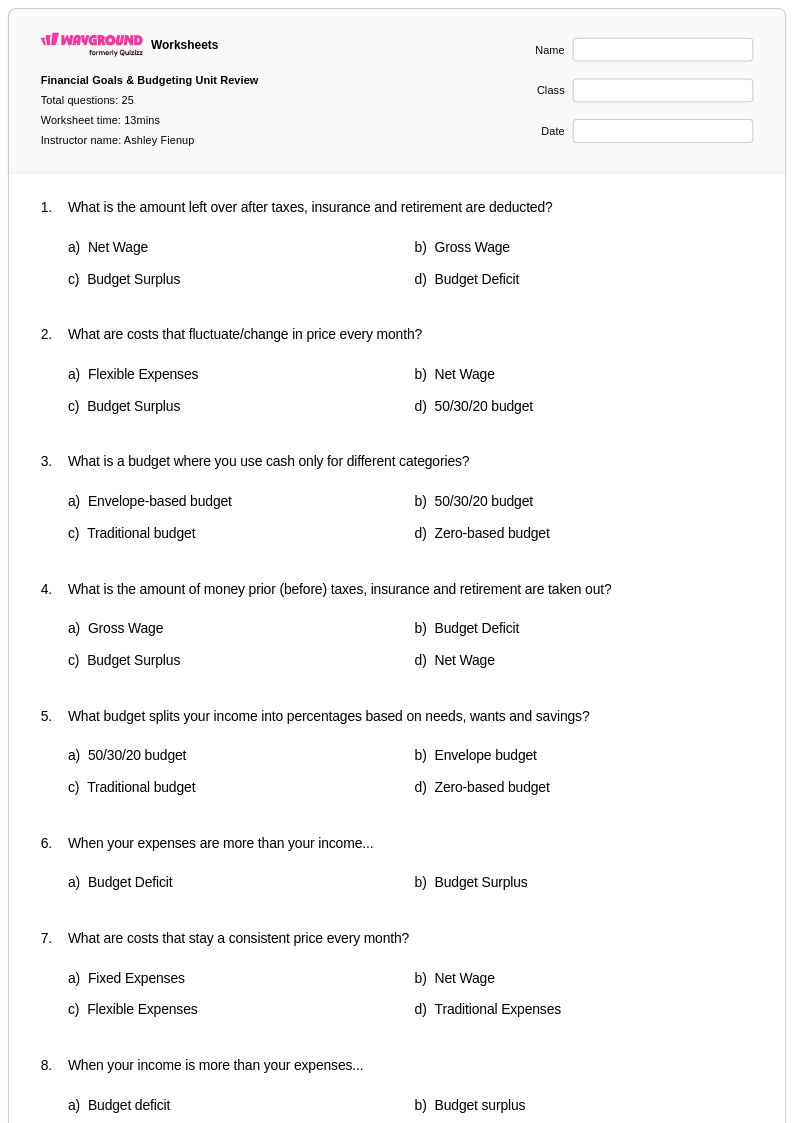
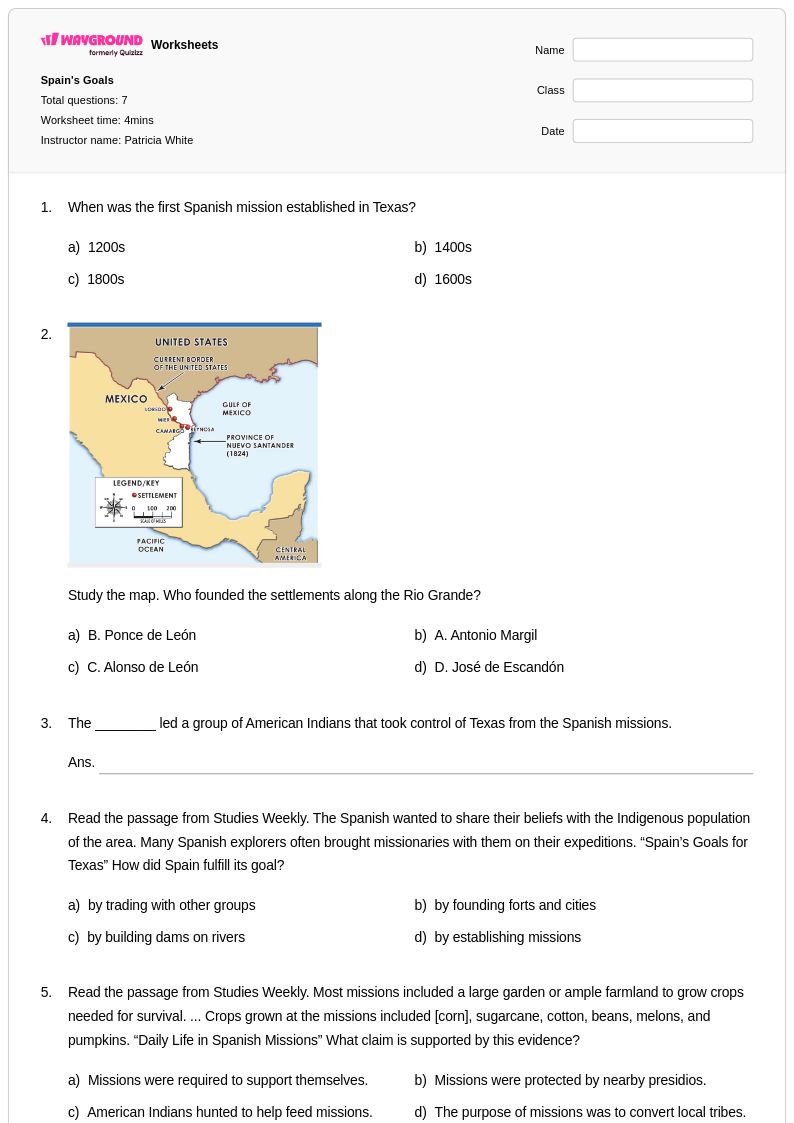
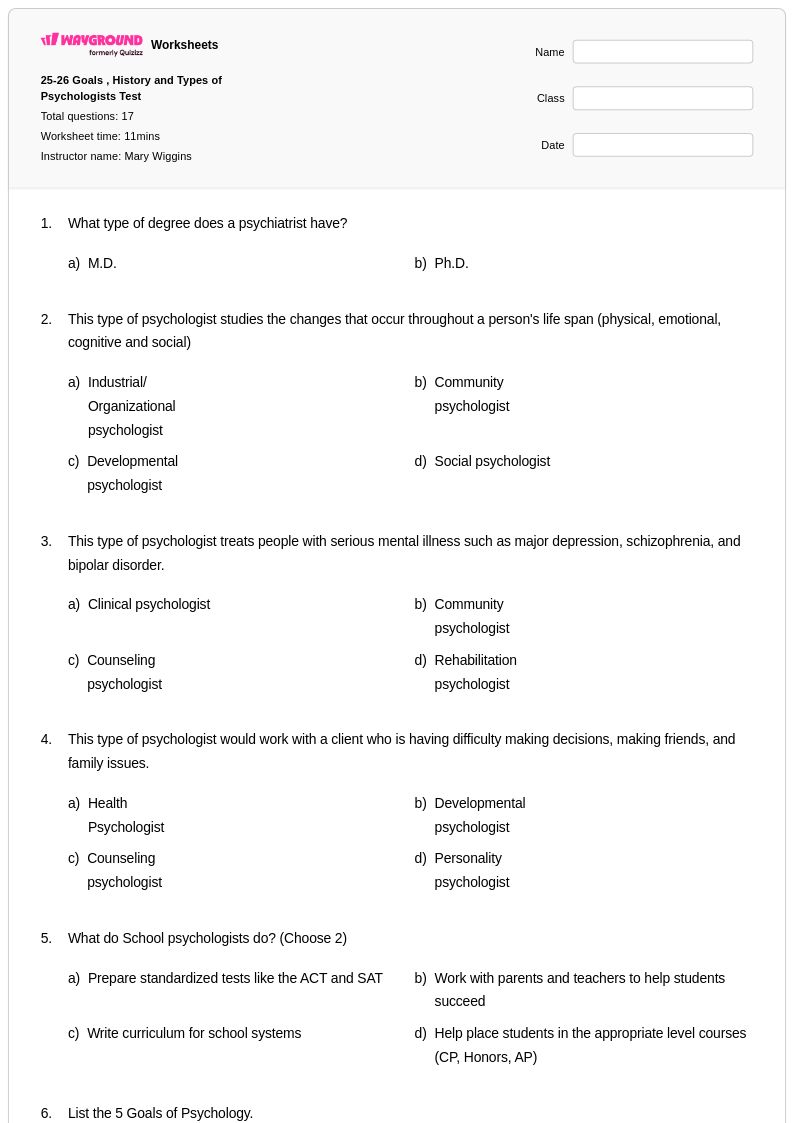
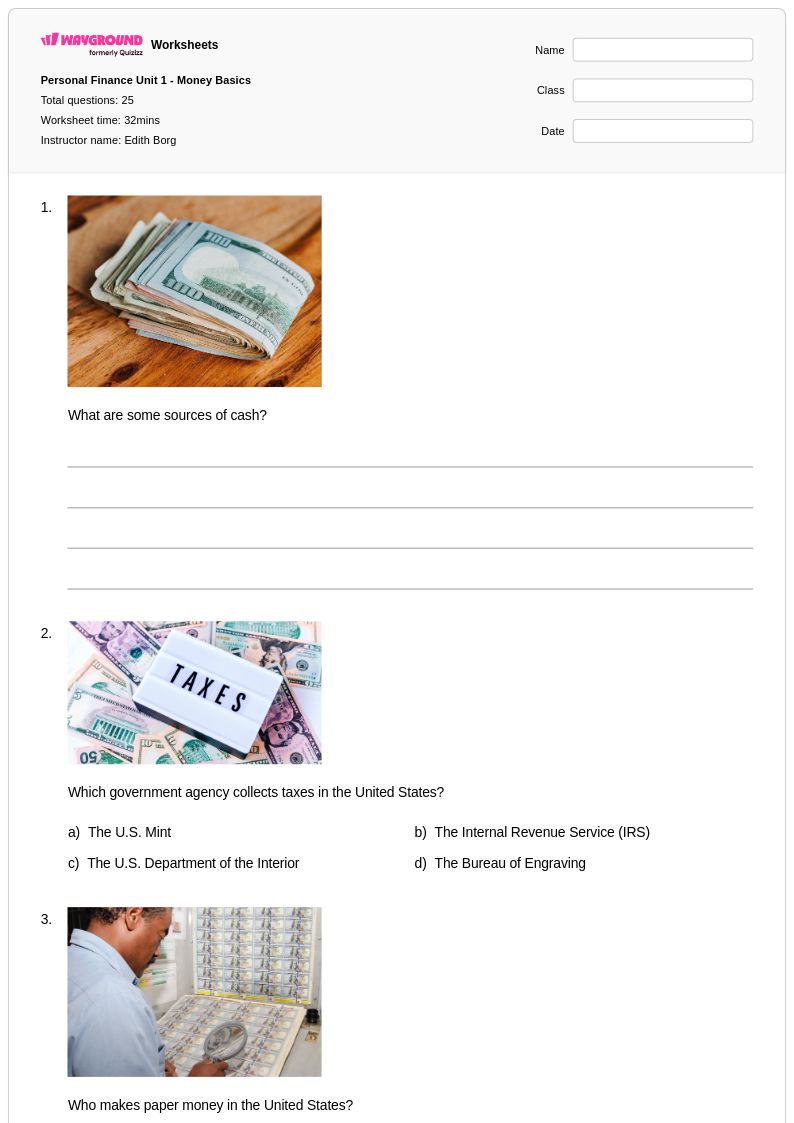
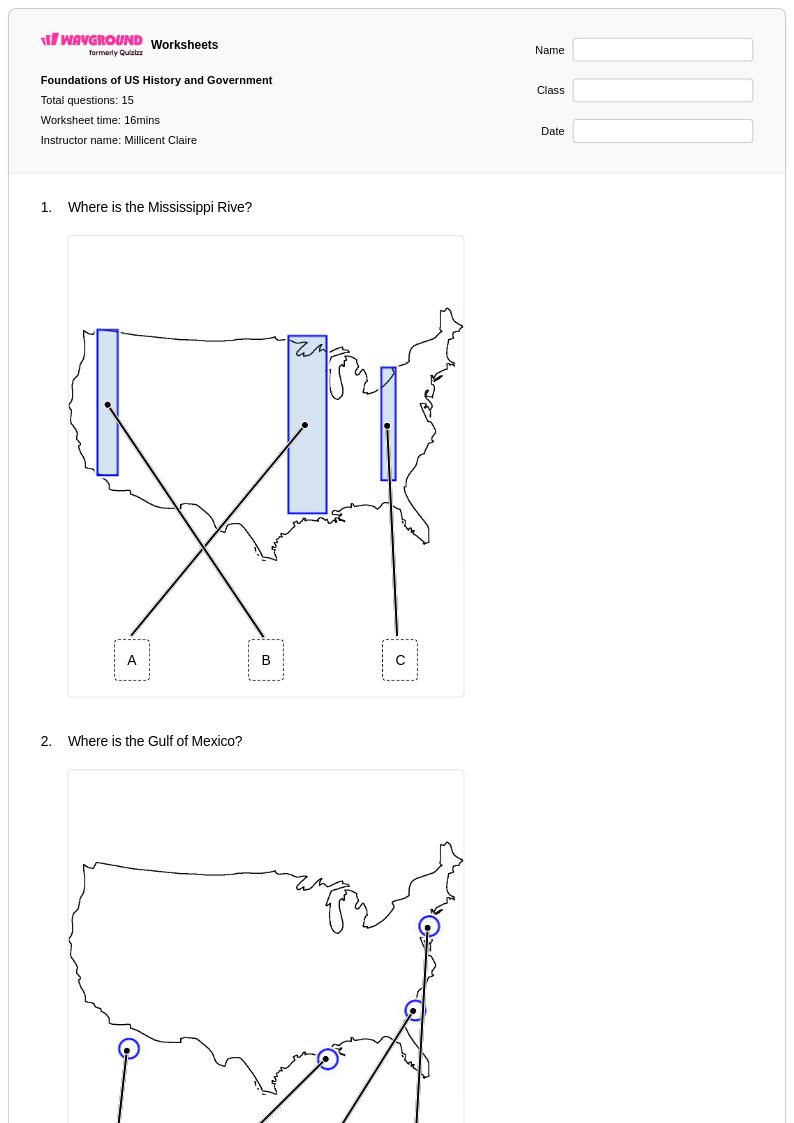
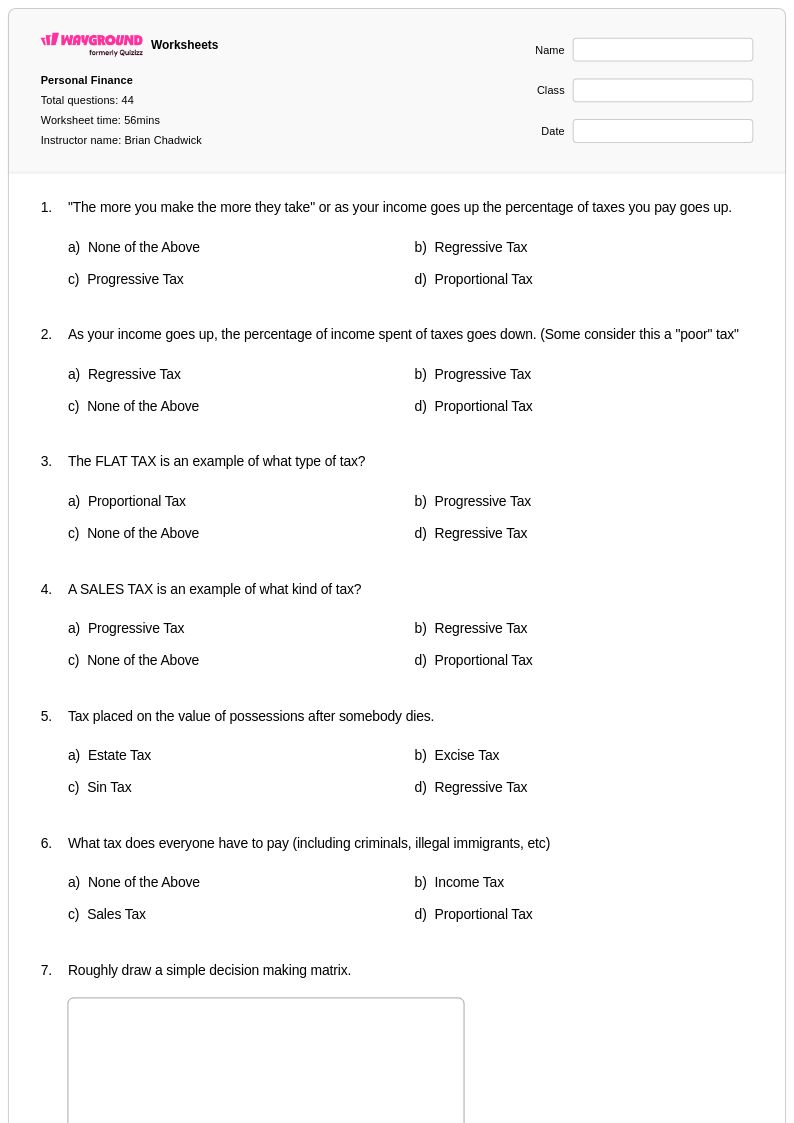
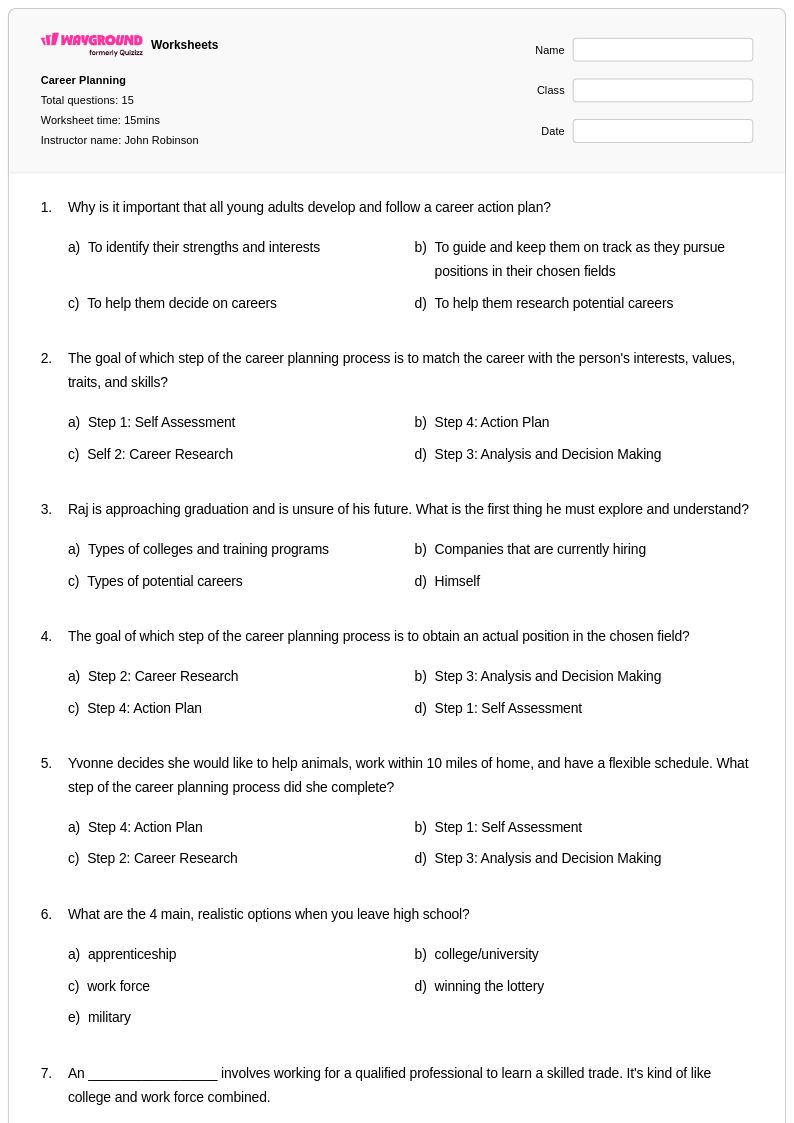
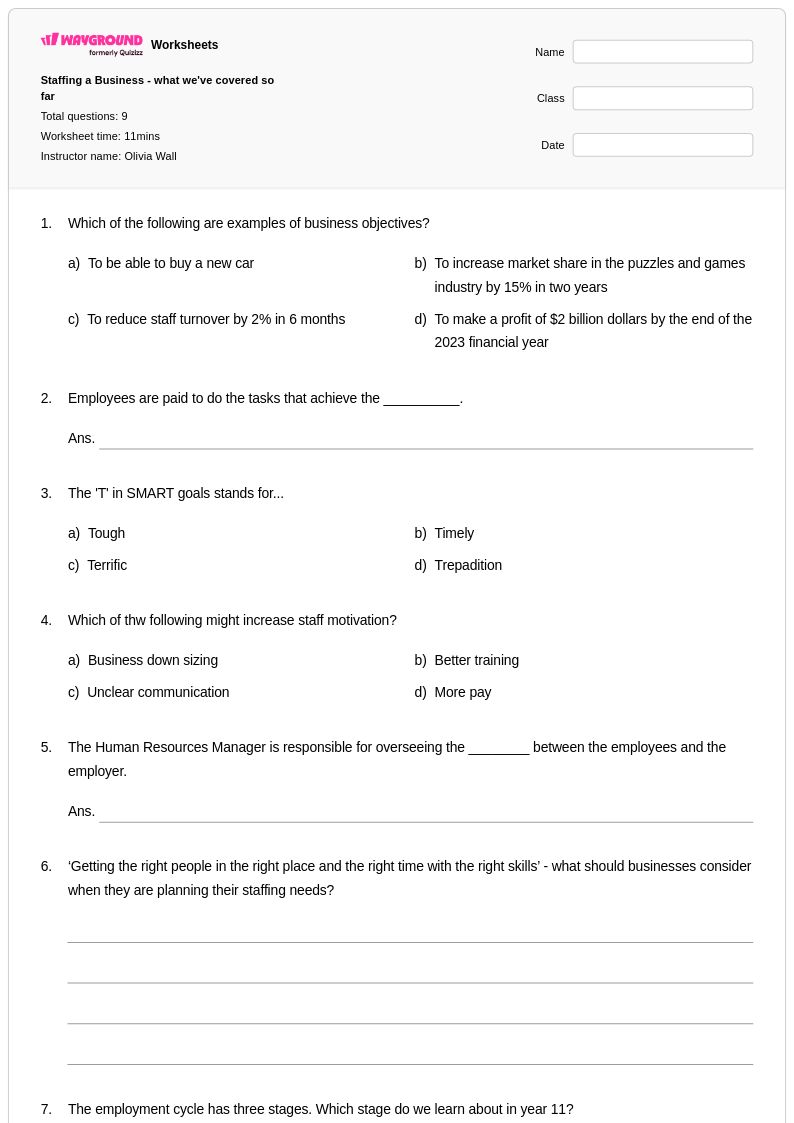
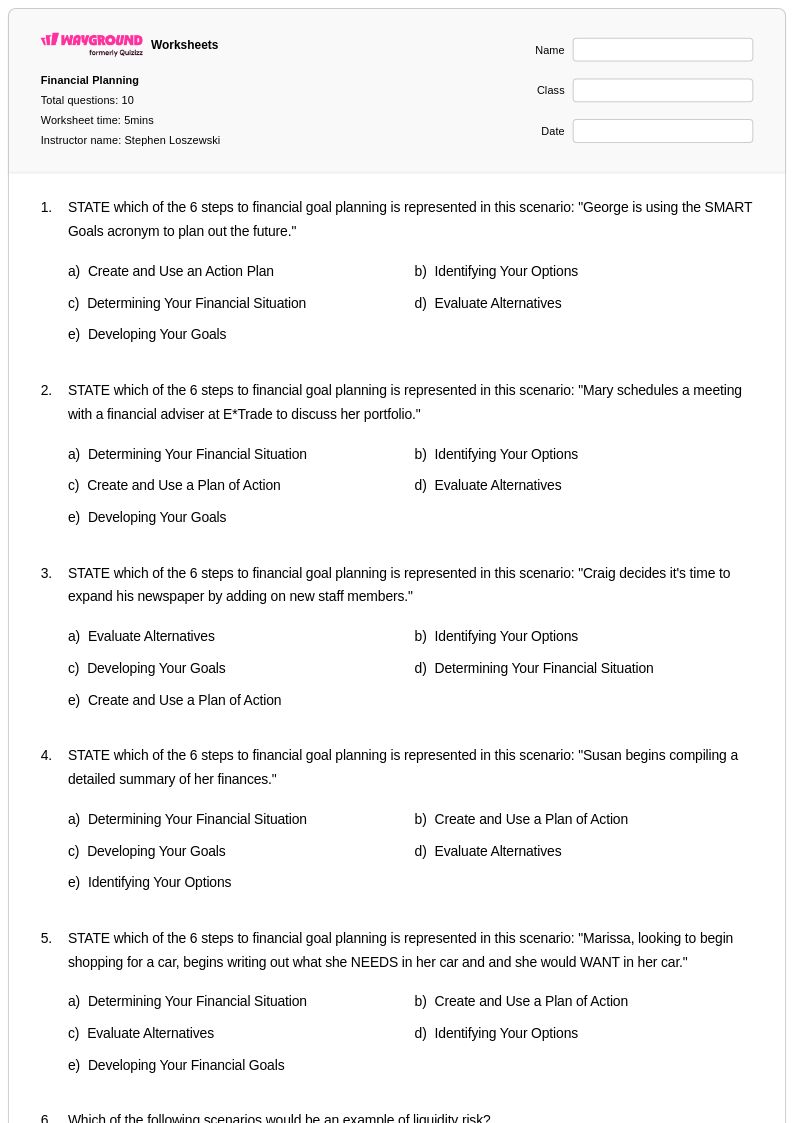
Smart Goals worksheets for Year 11 social studies available through Wayground (formerly Quizizz) provide students with structured practice in developing specific, measurable, achievable, relevant, and time-bound objectives for their personal and academic growth. These comprehensive worksheets strengthen critical thinking skills by guiding students through the process of transforming vague aspirations into concrete, actionable plans with clear timelines and success metrics. Students engage with practice problems that require them to evaluate goal statements, identify missing components, and revise objectives to meet SMART criteria. The collection includes detailed answer keys that help educators assess student understanding of goal-setting frameworks, while printable pdf formats ensure easy distribution for both classroom instruction and independent study. These free resources emphasize the connection between effective goal setting and success in academic, career, and personal contexts, making abstract planning concepts tangible for high school students.
Wayground (formerly Quizizz) supports educators with an extensive collection of teacher-created Smart Goals worksheets specifically designed for Year 11 social studies instruction. The platform's millions of educational resources include differentiated materials that accommodate various learning levels and styles, allowing teachers to customize worksheets based on individual student needs and classroom objectives. Advanced search and filtering capabilities enable quick identification of resources aligned with state standards and curriculum requirements, while both digital and printable pdf formats provide flexibility for diverse teaching environments. These tools streamline lesson planning by offering ready-to-use materials for skill practice, remediation sessions for students who need additional support with goal-setting concepts, and enrichment activities that challenge advanced learners to apply SMART criteria to complex scenarios. The platform's comprehensive worksheet collections help teachers efficiently deliver targeted instruction on essential life skills while maintaining engagement through varied practice opportunities.
FAQs
How do I teach SMART goals to students?
Start by introducing each component of the SMART acronym (Specific, Measurable, Achievable, Relevant, Time-bound) with concrete examples students can relate to, such as academic performance or extracurricular targets. Have students evaluate vague goals and rewrite them using the SMART framework, which builds critical thinking alongside goal-setting skills. Pairing guided practice with structured worksheets helps students internalize the process before applying it independently to their own personal or academic goals.
What exercises help students practice writing SMART goals?
Scenario-based exercises are especially effective — present students with broad, unformed aspirations and ask them to transform each one into a fully structured SMART goal. Practice problems that require students to identify which SMART component is missing from a given goal help sharpen analytical skills. Worksheets that walk students step-by-step through breaking a goal into actionable sub-steps and assigning realistic timelines provide the scaffolding most students need to internalize the framework.
What mistakes do students commonly make when writing SMART goals?
The most frequent error is writing goals that are too vague or unmeasurable, such as 'I want to do better in math' rather than specifying a grade target and a deadline. Students also commonly skip the 'time-bound' component, leaving goals open-ended and harder to track. Another common misconception is confusing an action (studying more) with a goal (earning a B+ by the end of the quarter), so instruction should clearly distinguish between the two.
How can I use SMART goals worksheets to support self-reflection in the classroom?
SMART goals worksheets work well as both an opening activity at the start of a semester and a mid-point check-in tool where students revisit and revise goals they set earlier. Structured reflection prompts embedded in the worksheet guide students to evaluate whether their goals are still relevant and what adjustments are needed, which builds metacognitive habits. Using these worksheets collaboratively in small groups can also spark productive peer discussion about personal development and accountability.
How do I use Wayground's SMART goals worksheets in my classroom?
Wayground's SMART goals worksheets are available as printable PDFs for traditional classroom use and in digital formats for technology-integrated or remote learning environments. Teachers can also host the worksheets as a quiz directly on Wayground, enabling real-time student response tracking. Complete answer keys are included, making it straightforward to assess whether students understand each component of the SMART framework and where additional instruction may be needed.
How can I differentiate SMART goals instruction for students with varying skill levels?
For students who struggle with self-direction, start with highly scaffolded worksheets that provide sentence starters or pre-filled examples for each SMART component. More advanced learners can be challenged with complex, multi-step goal scenarios that require them to anticipate obstacles and build contingency steps. On Wayground, teachers can apply accommodations such as read aloud, reduced answer choices, or extended time to individual students, ensuring every learner can engage with the goal-setting process at an appropriate level.