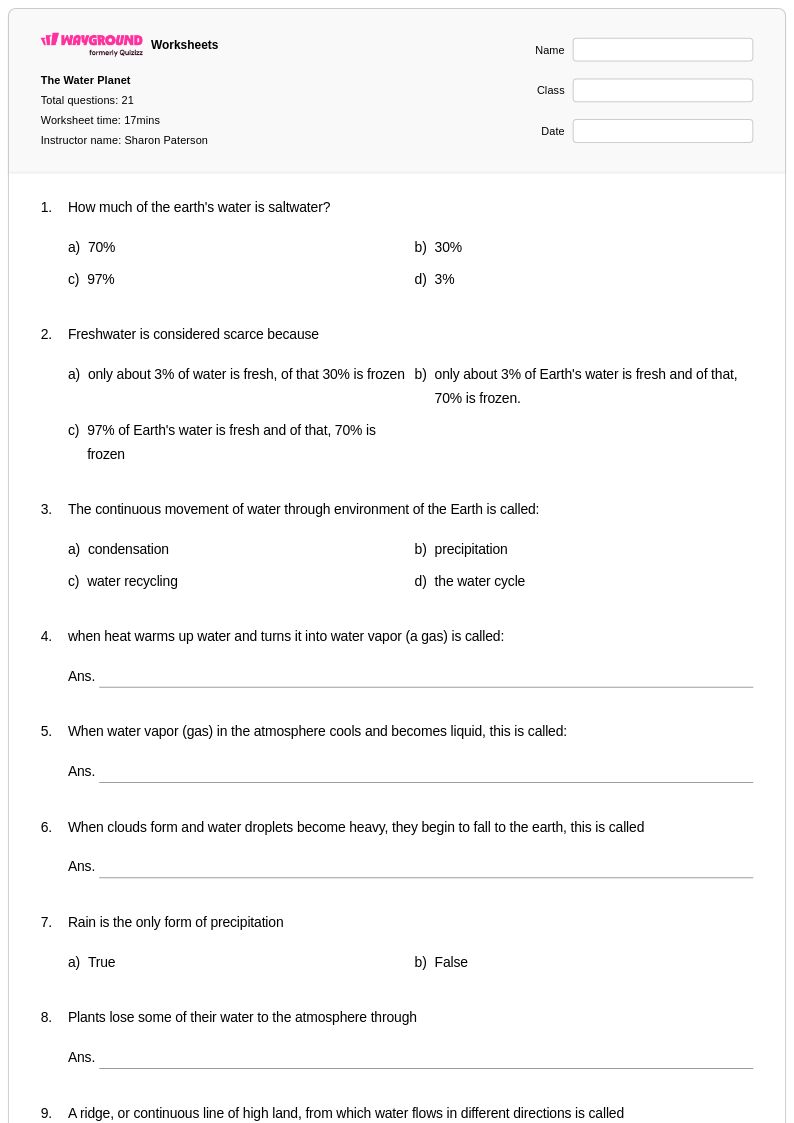
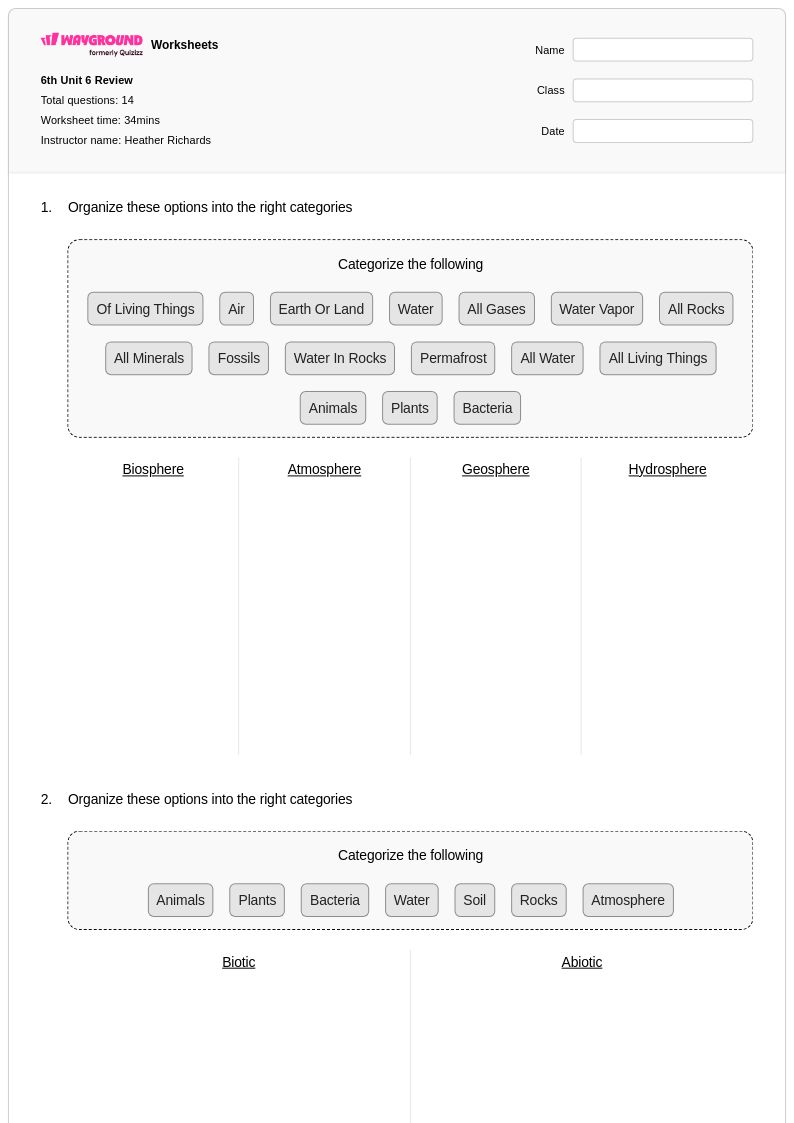
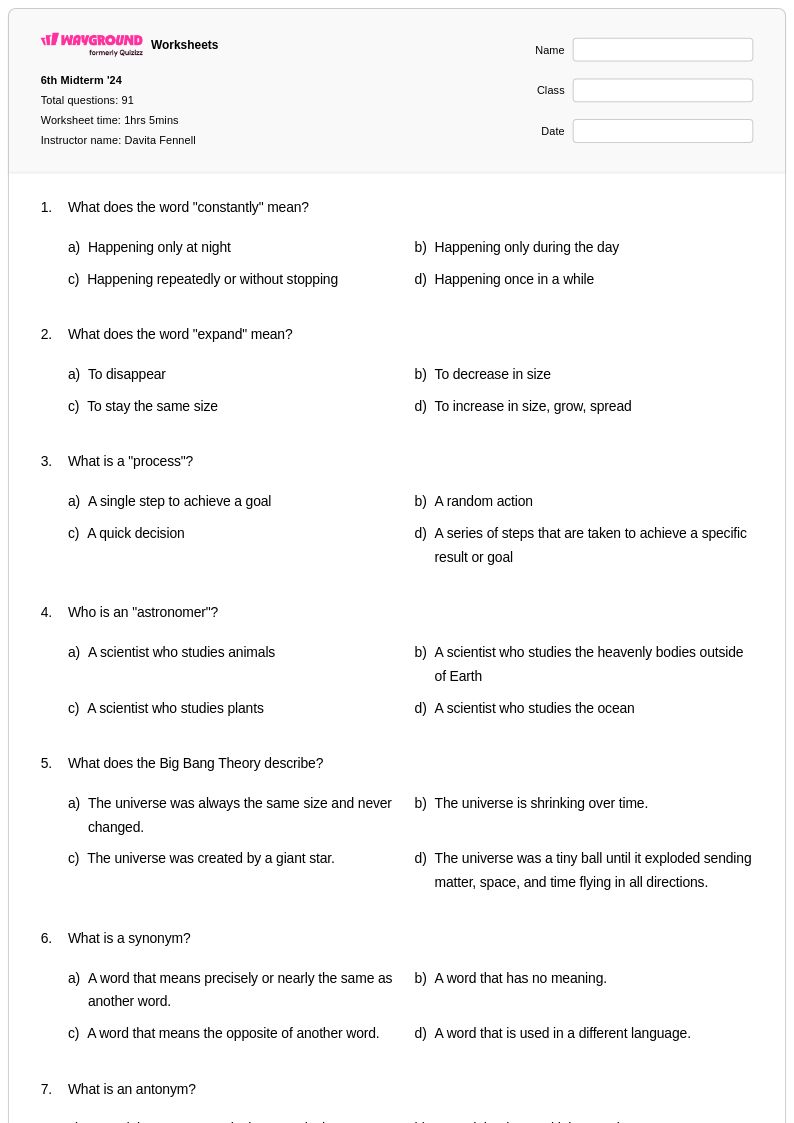
Year 6 soil layers worksheets from Wayground help students explore Earth's underground structure through engaging printables, practice problems, and free PDF resources with complete answer keys.
Explore printable Soil Layers worksheets for Year 6
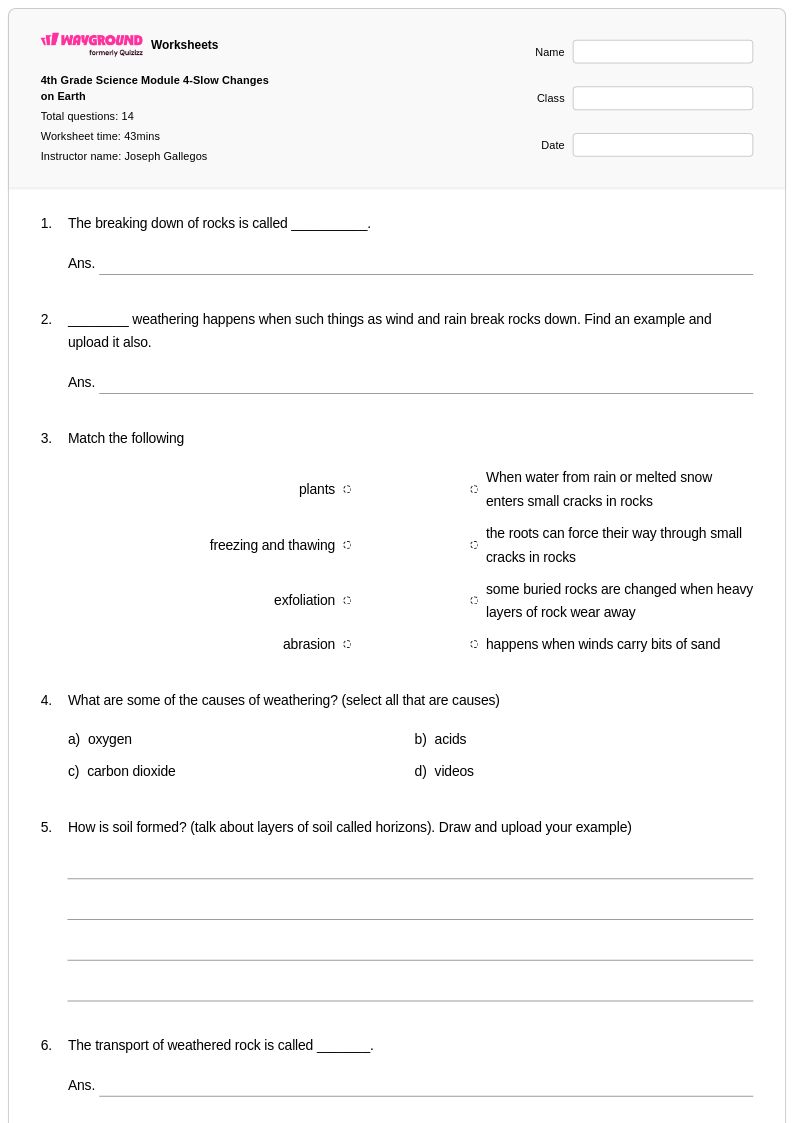
Soil layers worksheets for Year 6 students available through Wayground provide comprehensive exploration of Earth's subsurface structure and composition. These educational resources guide young learners through the fundamental concepts of soil formation, including the distinct characteristics of topsoil, subsoil, and bedrock layers that make up our planet's terrestrial foundation. Students engage with practice problems that challenge them to identify different soil horizons, analyze the organic and mineral components within each layer, and understand how weathering processes create the diverse soil profiles found across various ecosystems. Each worksheet includes detailed answer keys that support both independent study and classroom instruction, while the free printables offer flexibility for teachers to incorporate hands-on learning activities that reinforce critical thinking about Earth's dynamic surface processes.
Wayground's extensive collection of teacher-created soil layers resources transforms Year 6 Earth and Space Science instruction through millions of expertly designed worksheets that address diverse learning needs and curriculum standards. The platform's sophisticated search and filtering capabilities enable educators to quickly locate materials that align with specific learning objectives, whether focusing on soil conservation, agricultural applications, or geological formation processes. Teachers benefit from comprehensive differentiation tools that support both remediation for struggling learners and enrichment opportunities for advanced students, while the flexible customization options allow instructors to modify content complexity and focus areas. Available in both digital and printable pdf formats, these worksheet collections streamline lesson planning and provide immediate access to high-quality practice materials that enhance student understanding of how soil layers function as critical components of Earth's interconnected systems.
FAQs
How do I teach soil layers to students?
Start by grounding students in the concept of a soil profile, explaining that soil is not uniform but made up of distinct horizontal layers called horizons, each with different composition and function. Move from the surface down, introducing the O horizon (organic material), A horizon (topsoil), B horizon (subsoil), C horizon (weathered parent material), and R horizon (bedrock). Visual aids such as soil profile diagrams and cross-section analyses help students see how these layers relate to one another, and connecting each horizon to real-world functions like water filtration and nutrient cycling gives the concept practical relevance.
What exercises help students practice identifying soil horizons?
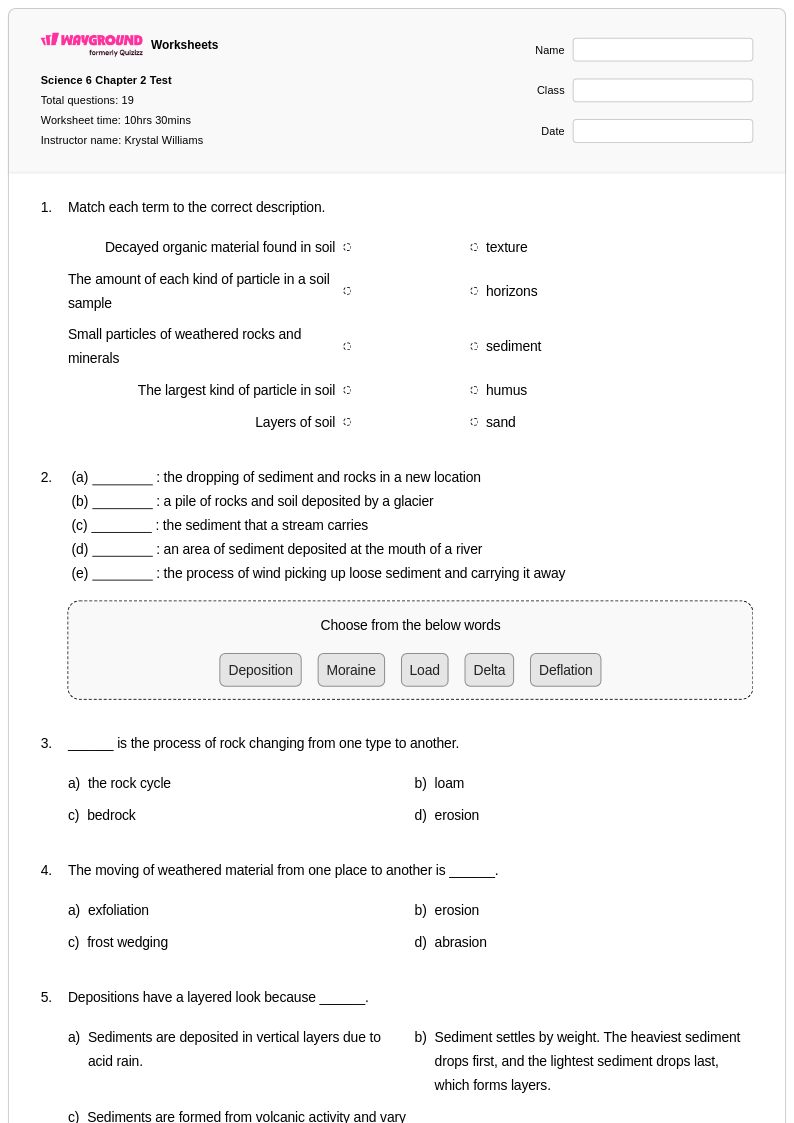
Diagram labeling exercises are among the most effective practice tools for soil horizons, requiring students to identify and annotate each layer in a soil profile cross-section. Matching activities that pair horizon names with their characteristics, such as particle size, color, and organic content, reinforce terminology. Interpretation questions that ask students to explain how a given soil profile supports agriculture or affects water movement push them toward higher-order thinking rather than simple recall.
What common mistakes do students make when learning about soil layers?
A frequent misconception is that all soils share the same horizons in the same order and thickness, when in reality soil profiles vary significantly by climate, vegetation, and parent material. Students also often confuse the O and A horizons, mistakenly treating decomposed organic matter and topsoil as the same layer. Another common error is assuming soil formation is rapid, rather than understanding pedogenesis as a slow process driven by weathering, biological activity, and climate over thousands of years.
How can I use soil layers worksheets in my classroom?
Soil layers worksheets on Wayground are available as printable PDFs for hands-on classroom use and in digital formats that support technology-integrated learning environments, including the option to host them as a quiz directly on Wayground. Printable versions work well for diagram labeling and note-taking activities during direct instruction, while digital formats allow students to complete practice problems interactively and receive immediate feedback. Teachers can also use Wayground's accommodation settings to support diverse learners, such as enabling read-aloud for students who need audio support or reducing answer choices for those who benefit from simplified options.
How does soil layer composition affect agriculture and ecosystems?
The A horizon, or topsoil, is the most agriculturally significant layer because it contains the highest concentration of organic matter and nutrients that support plant root systems. The B horizon acts as a zone of accumulation where leached minerals collect, influencing drainage and nutrient availability deeper in the profile. Understanding how each layer functions helps students connect soil science to real-world issues like erosion, soil degradation, and sustainable land management.
How do I differentiate soil layers instruction for students at different skill levels?
For students who are newer to the concept, focus on the three to four primary horizons with visual diagrams before introducing technical vocabulary like pedogenesis or eluviation. Advanced students can engage with soil formation processes, the role of climate and organisms in horizon development, and analysis of atypical soil profiles found in different biomes. On Wayground, teachers can apply individual accommodations such as reduced answer choices or extended time to specific students, ensuring that the same worksheet activity supports learners across the full skill range without requiring separate lesson plans.