
Recommended Topics for you
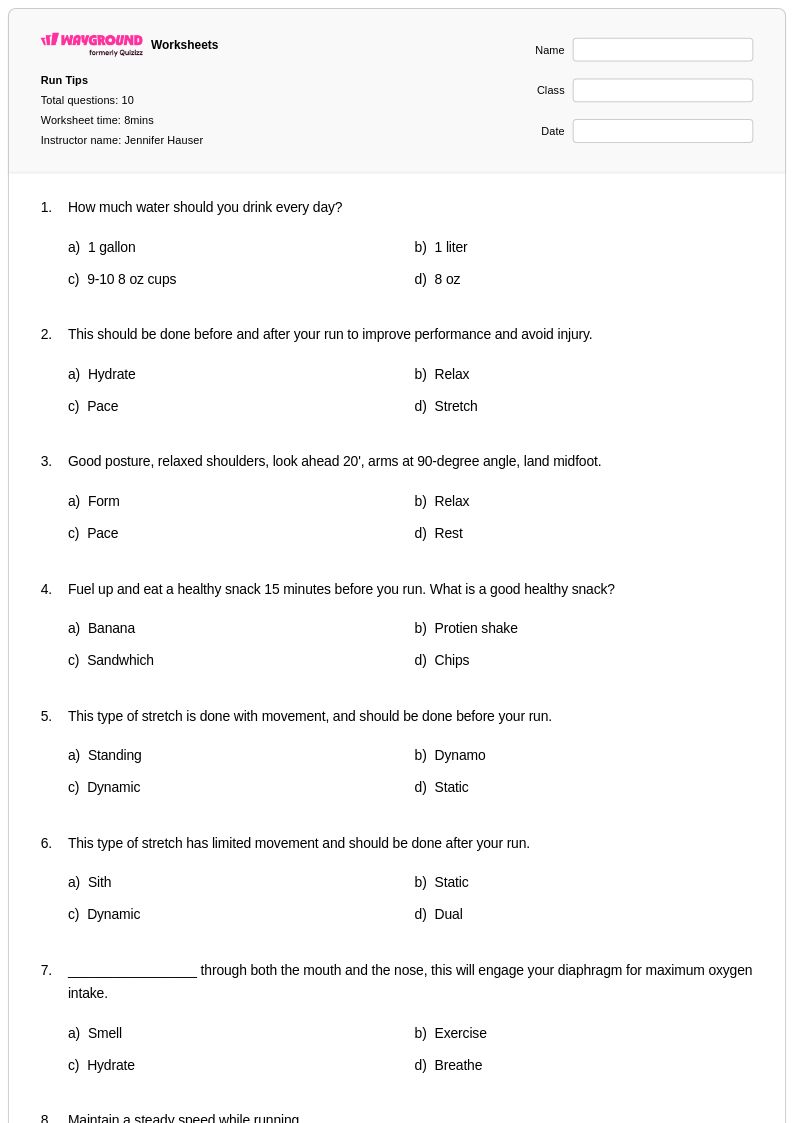
- Calf Stretch
- Elbow Stretch
- Glute Stretch
- Hamstring Stretch
- Hip Stretch
- Psoas Stretch
- Quad Stretch
- Shoulder Stretch
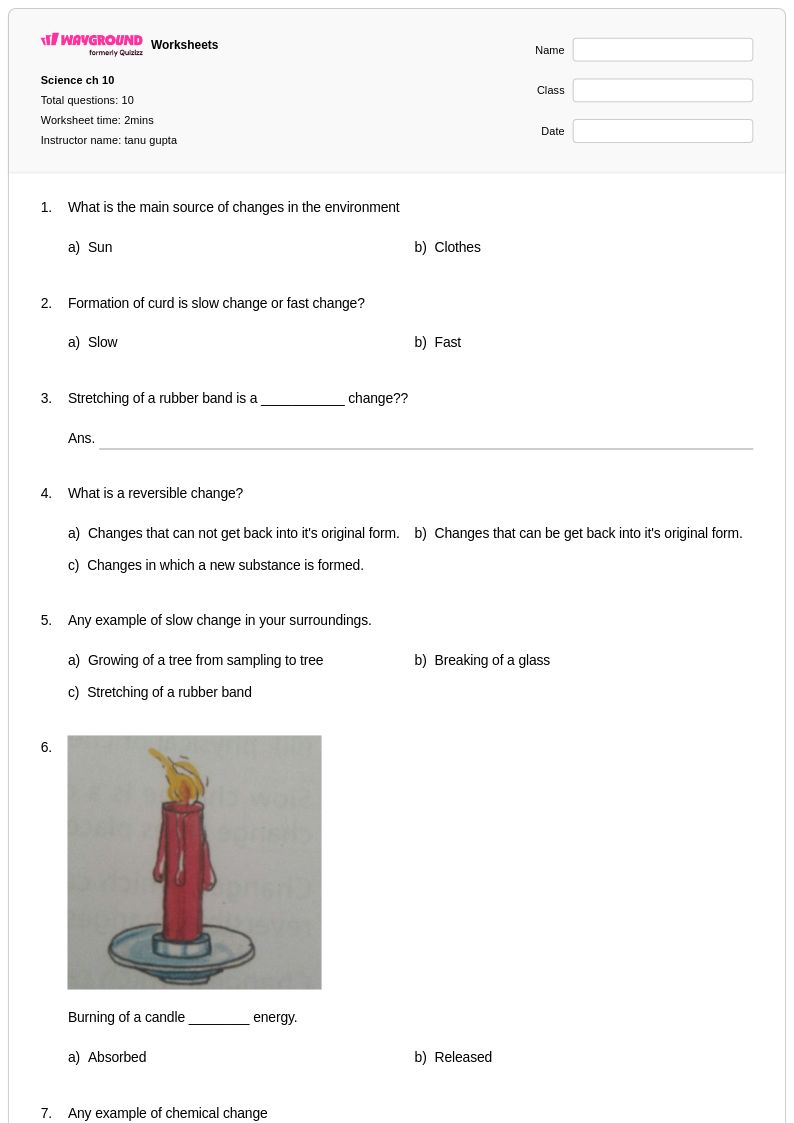
10 Q
6th
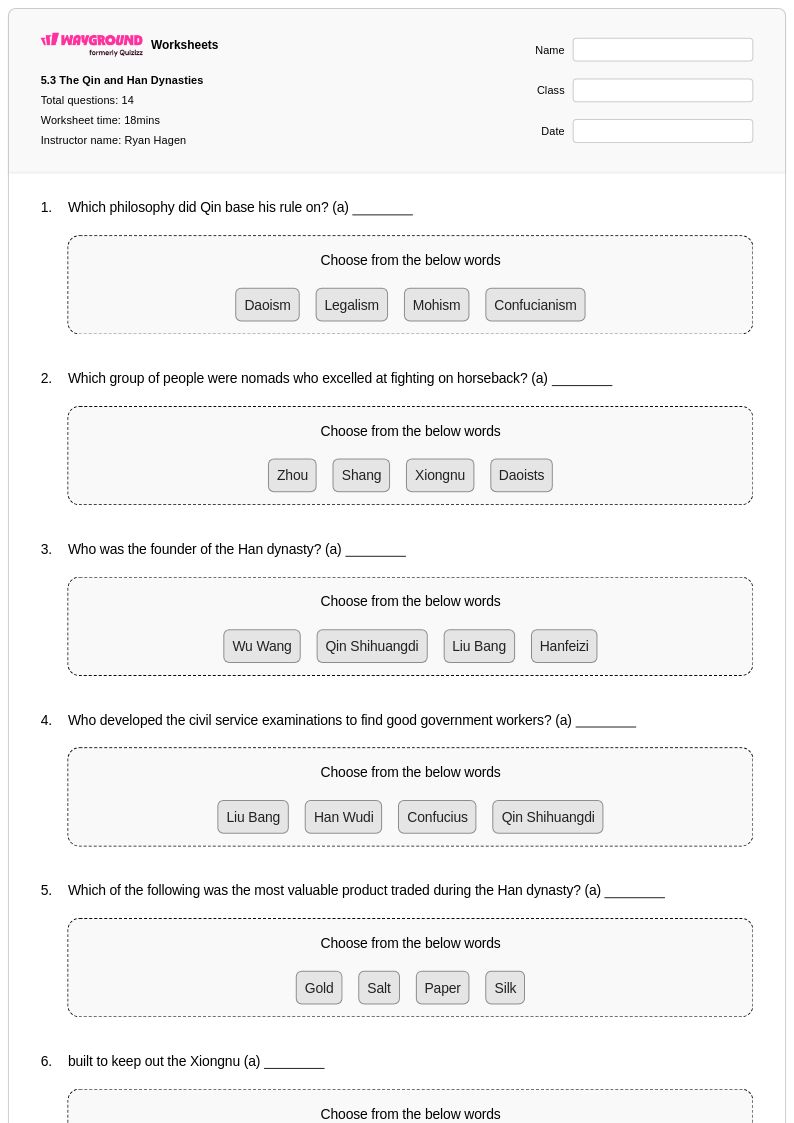
14 Q
6th
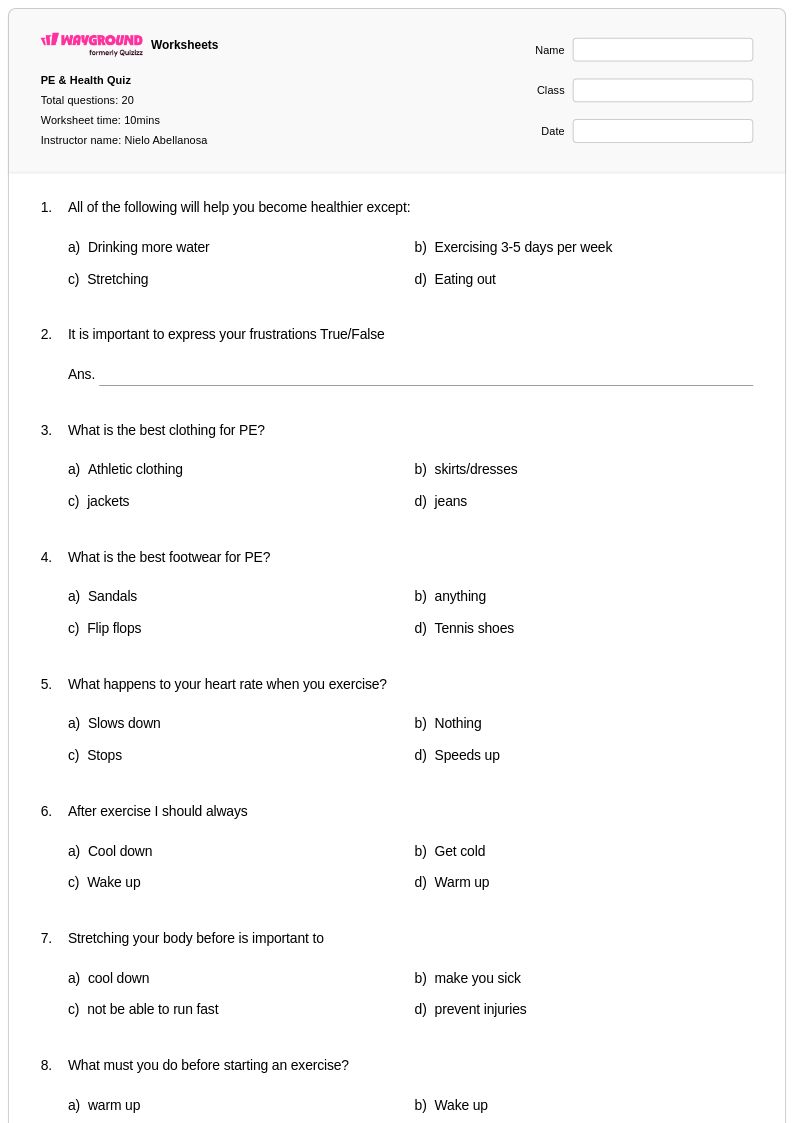
20 Q
6th - 10th
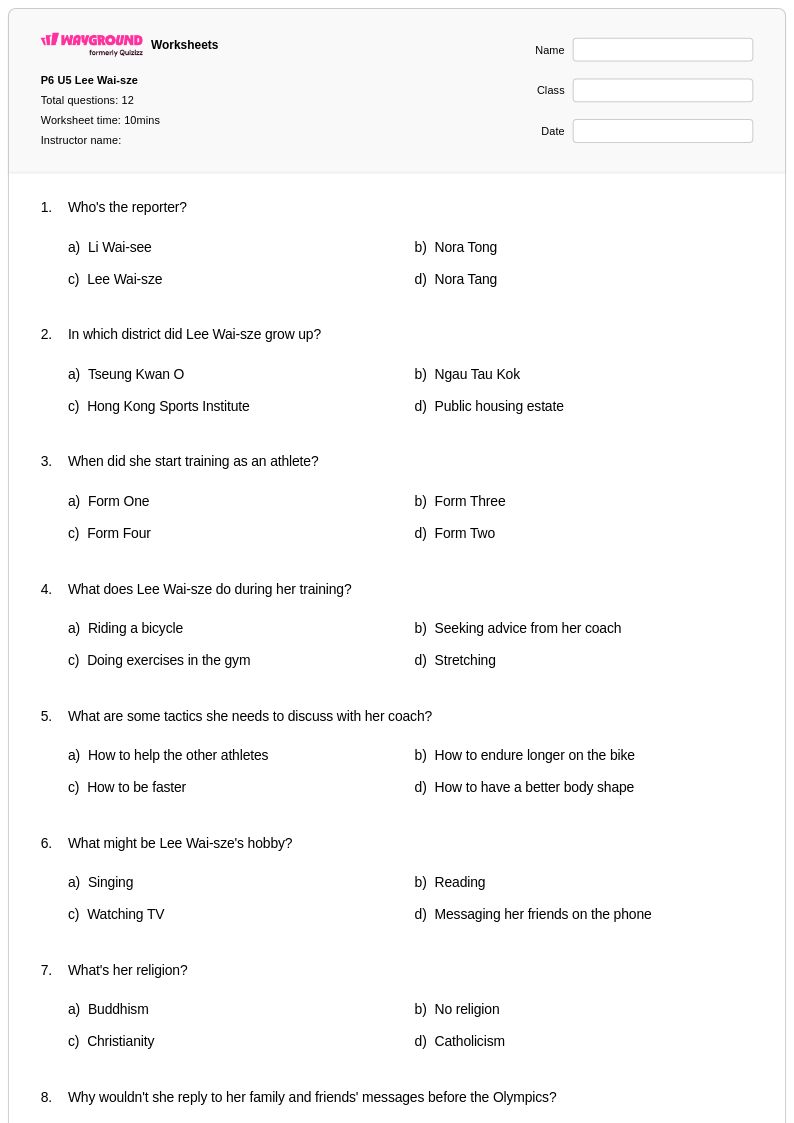
12 Q
6th
12 Q
3rd - 6th
15 Q
6th
17 Q
6th
10 Q
4th - 8th
24 Q
6th
21 Q
6th - 8th
20 Q
5th - 6th
15 Q
6th - 8th
10 Q
6th - 8th
10 Q
6th
10 Q
6th - 7th
42 Q
6th
14 Q
6th - 8th
13 Q
4th - 7th
30 Q
4th - 6th
10 Q
2nd - 9th
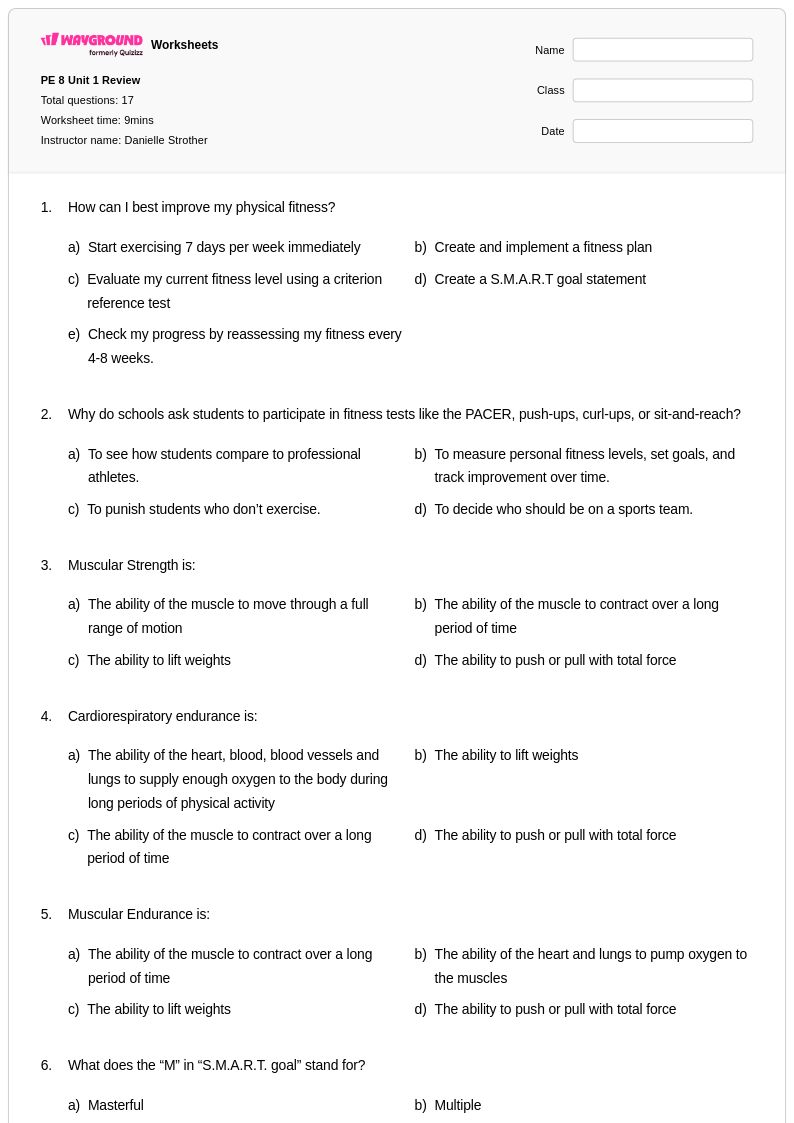
17 Q
6th - Uni
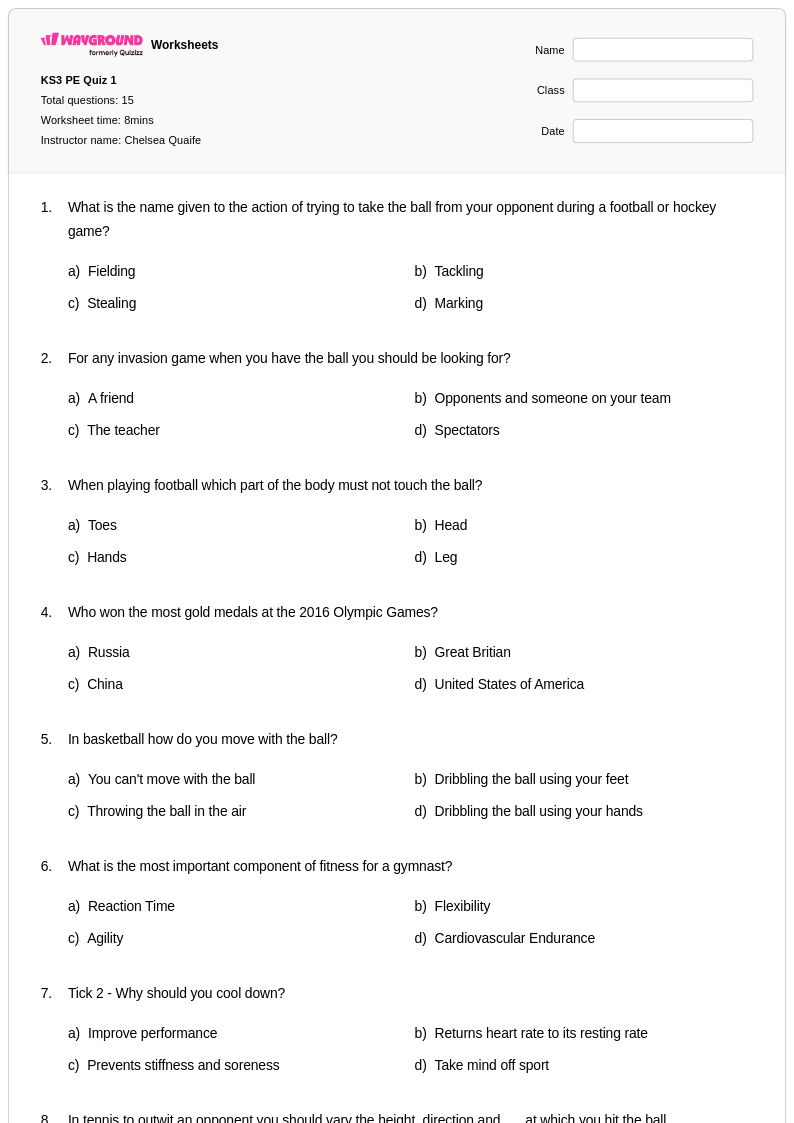
15 Q
6th - 8th
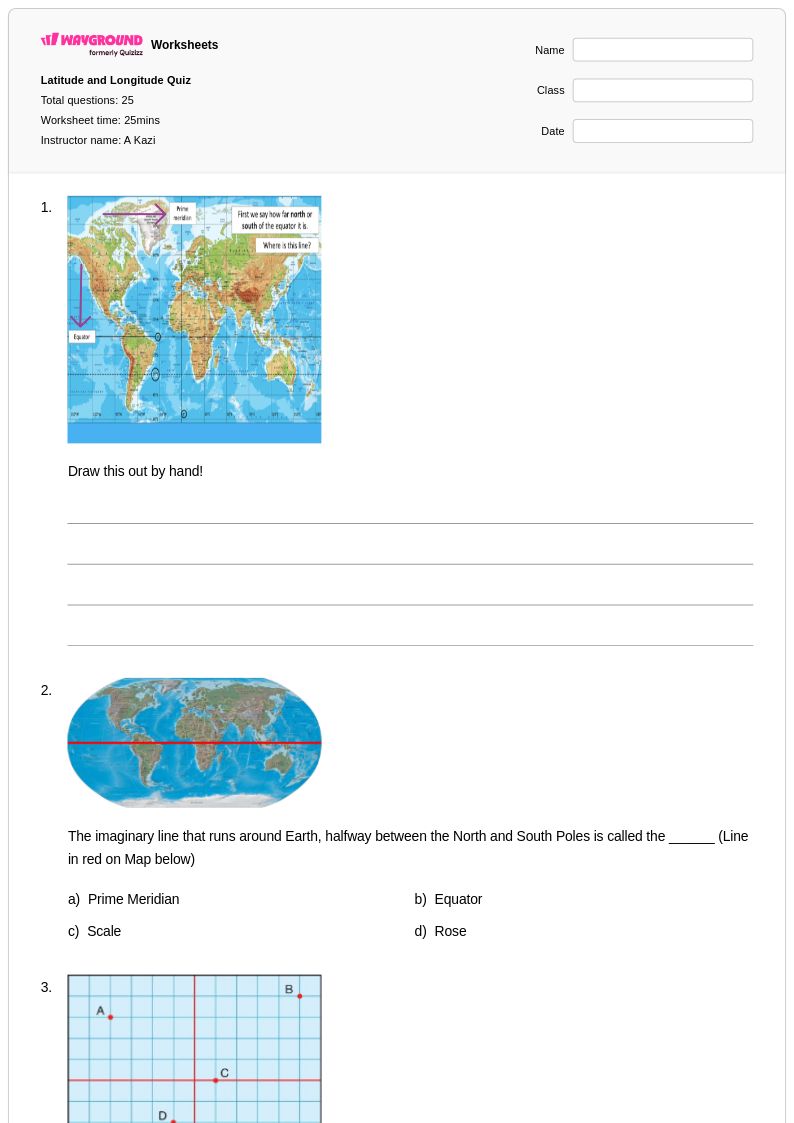
25 Q
6th
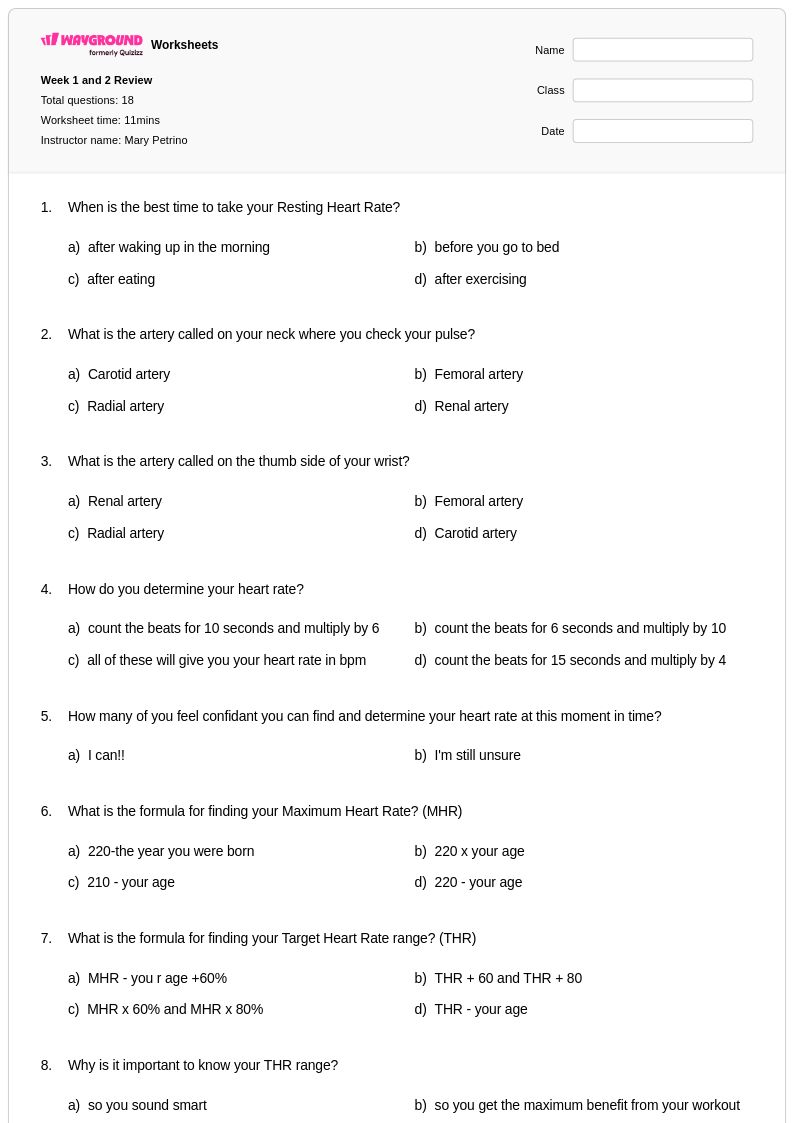
18 Q
6th
Explore Stretching Worksheets for year 6 by Topic
Explore Other Subject Worksheets for year 6
Explore printable Stretching worksheets for Year 6
Stretching worksheets for Year 6 Physical Education provide comprehensive resources that help students understand proper flexibility techniques and their role in overall fitness and injury prevention. These educational materials guide sixth graders through fundamental stretching concepts including dynamic and static stretching methods, proper form and technique, timing of stretches within exercise routines, and the physiological benefits of maintaining flexibility. The worksheets feature practical exercises that teach students to identify major muscle groups, demonstrate correct stretching positions, and develop personal stretching routines appropriate for their developmental stage. Each printable resource includes detailed instructions, visual guides, and practice problems that reinforce learning objectives, while accompanying answer keys enable both independent study and teacher-led instruction. These free educational tools strengthen students' understanding of movement mechanics and help establish lifelong habits for physical wellness.
Wayground, formerly Quizizz, supports Physical Education teachers with an extensive collection of stretching and flexibility worksheets drawn from millions of teacher-created resources specifically designed for middle school students. The platform's robust search and filtering capabilities allow educators to quickly locate materials that align with curriculum standards and match their students' specific learning needs. Teachers can access these resources in both digital and printable pdf formats, making them suitable for classroom instruction, homework assignments, or remote learning environments. The platform's differentiation tools enable instructors to customize worksheets for varying skill levels, supporting both remediation for students who need additional practice with basic concepts and enrichment activities for advanced learners ready to explore more complex stretching techniques. This flexibility in content delivery and customization helps teachers effectively plan lessons, assess student understanding, and provide targeted skill practice that enhances each student's physical education experience.
FAQs
How do I teach students the difference between static and dynamic stretching?
What exercises help students practice identifying the correct stretch for a specific muscle group?
What mistakes do students commonly make when learning proper stretching technique?
How do I use stretching worksheets to support students with different fitness levels or learning needs?
How can I use Wayground stretching worksheets in my PE class?
Why is flexibility training important to include in a PE curriculum?