Free Printable The Constitution Worksheets for Year 4
Year 4 Constitution worksheets from Wayground help students explore America's founding document through engaging printables and practice problems that teach constitutional principles, with free PDF downloads and complete answer keys included.
Explore printable The Constitution worksheets for Year 4
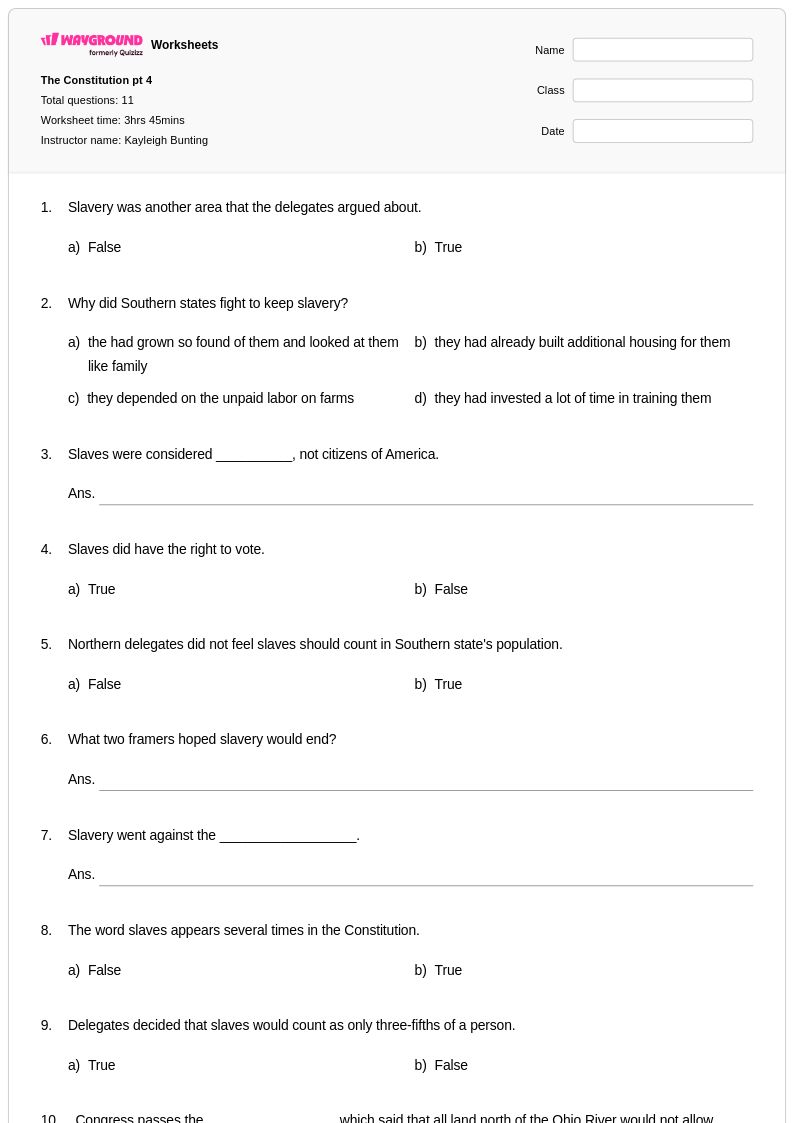
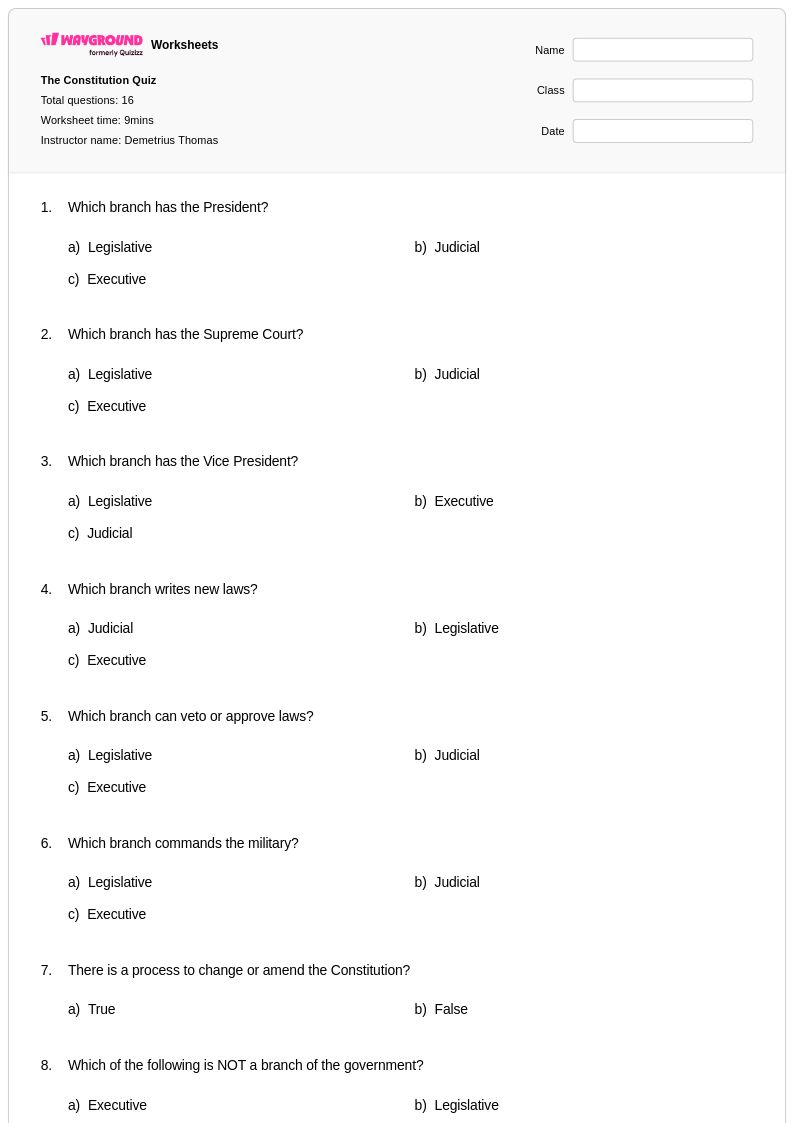
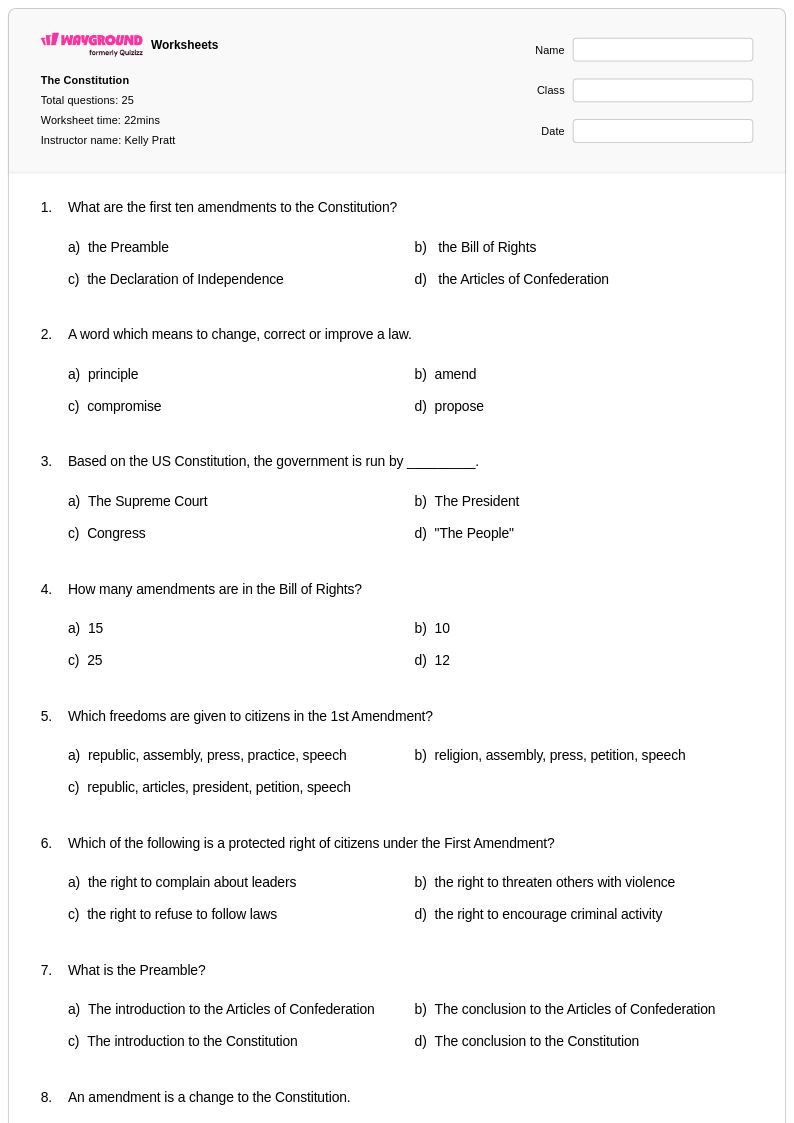
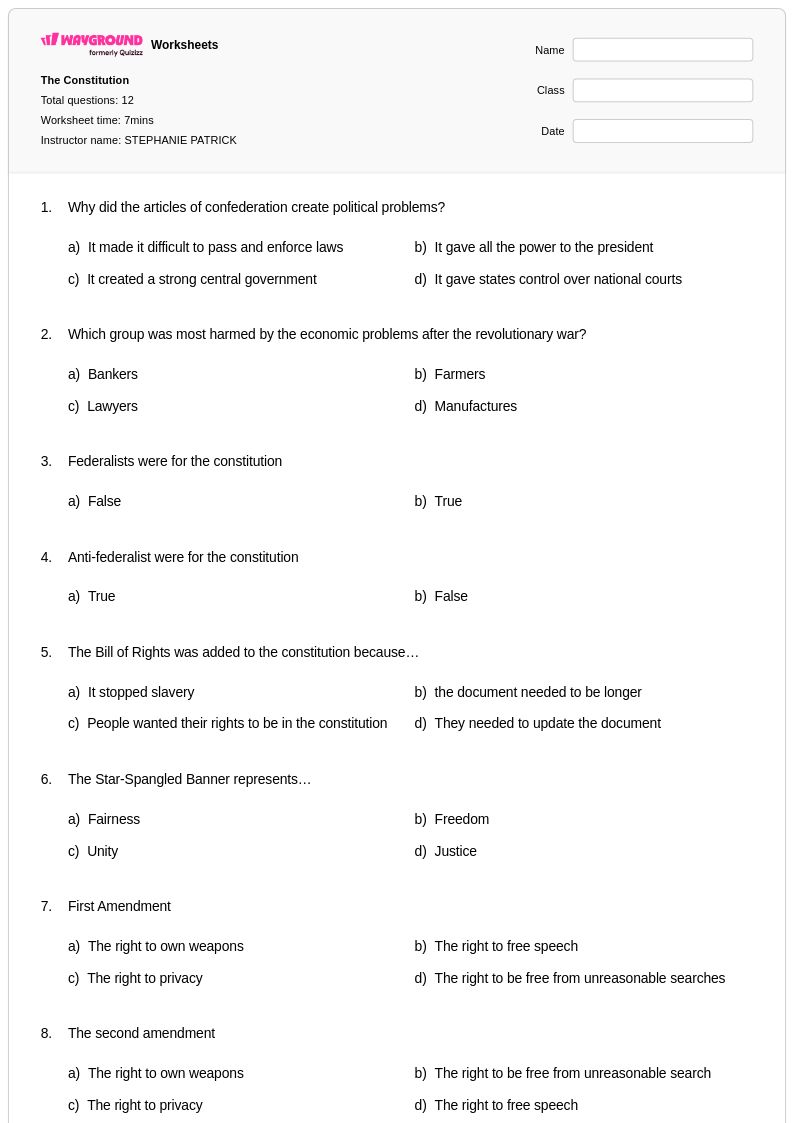
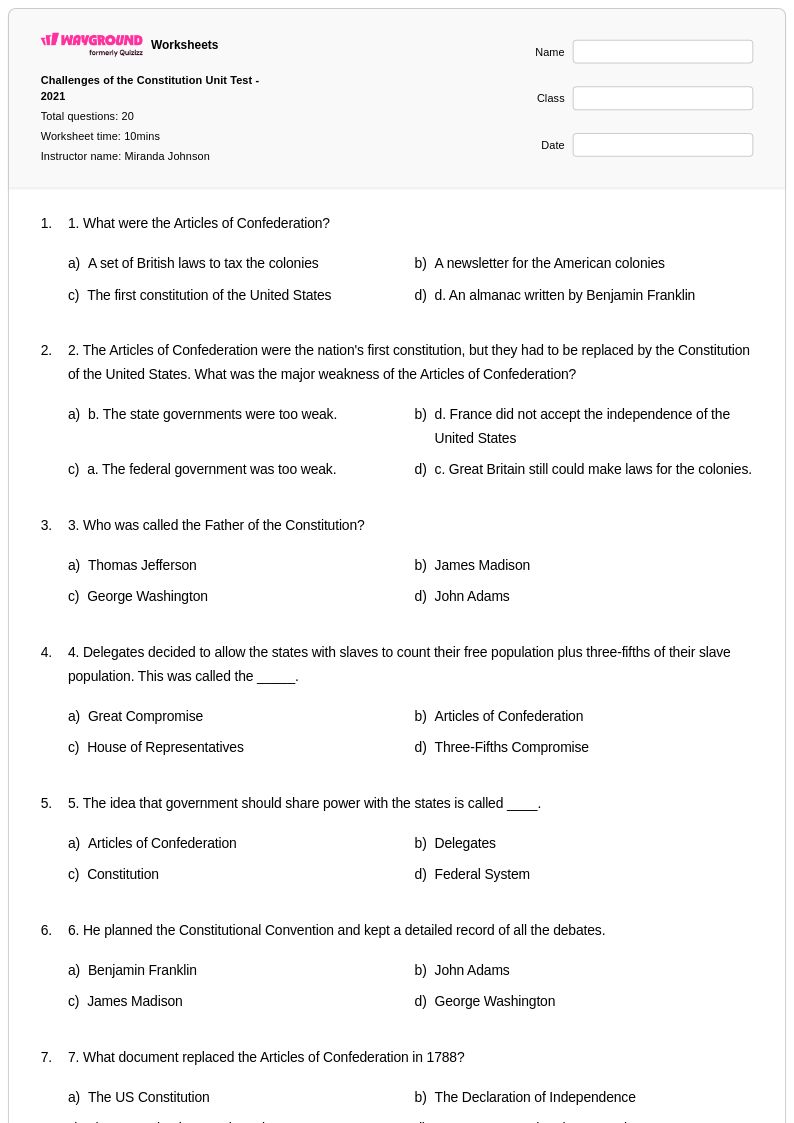
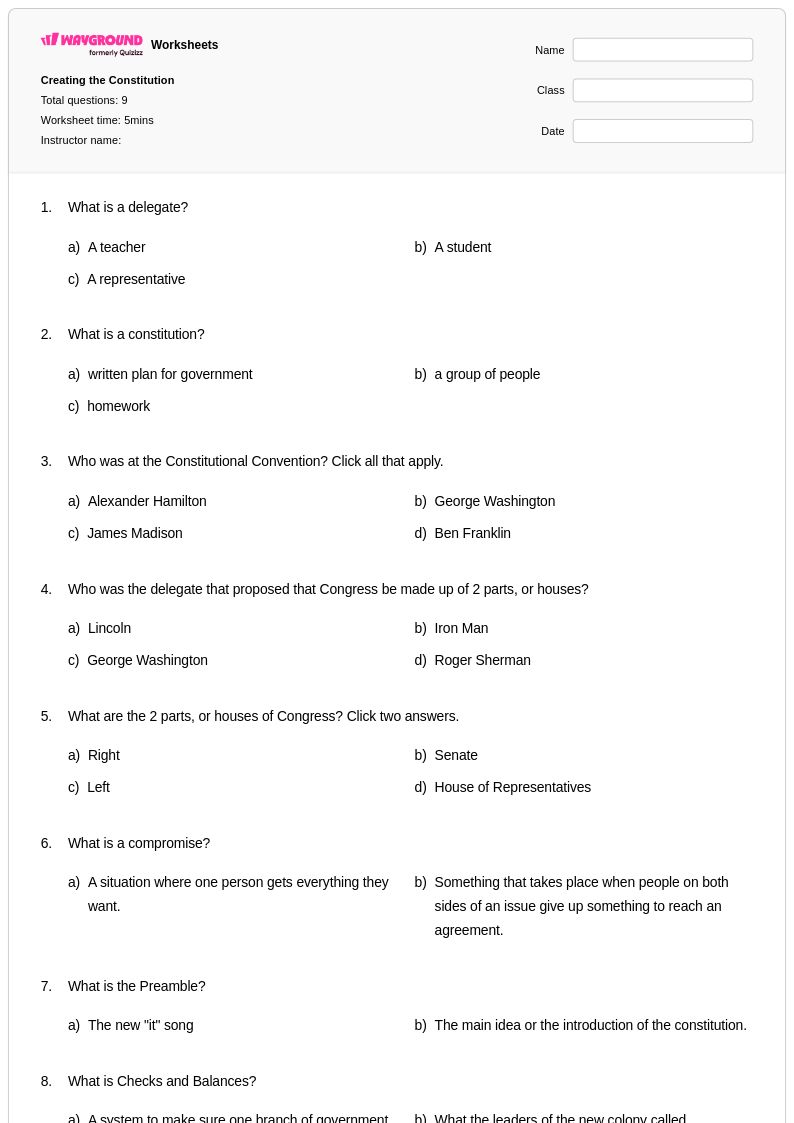
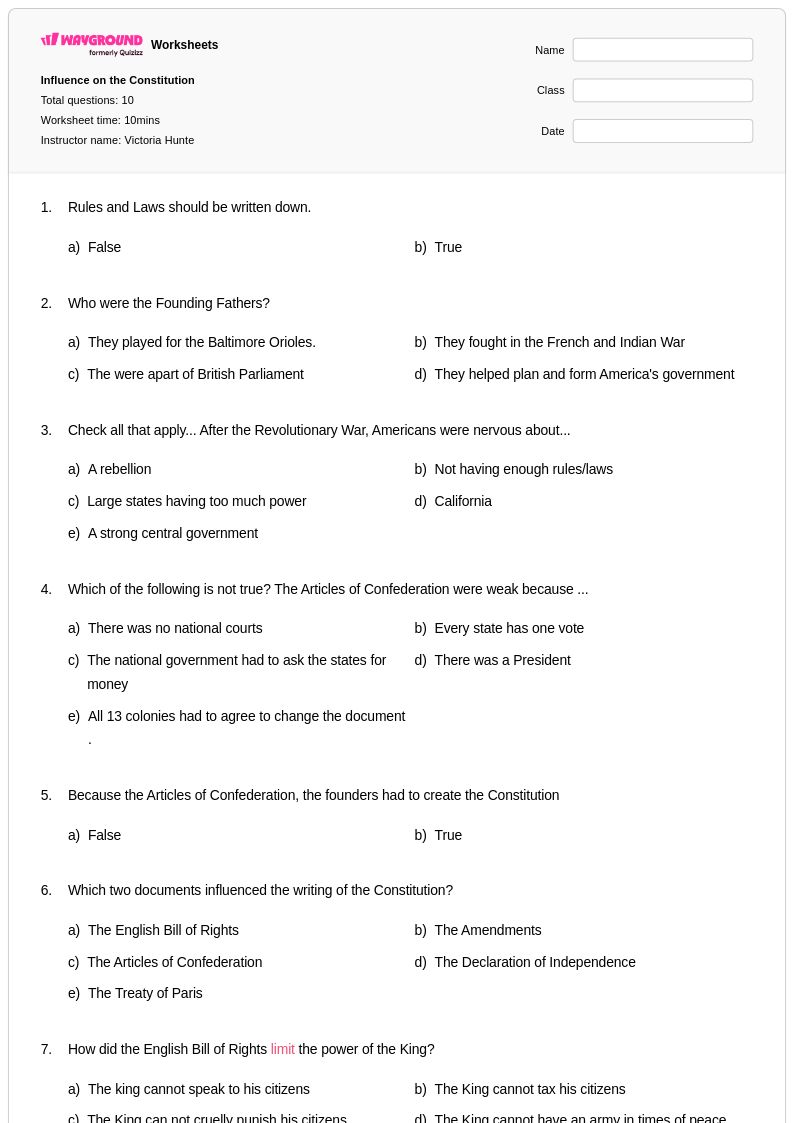
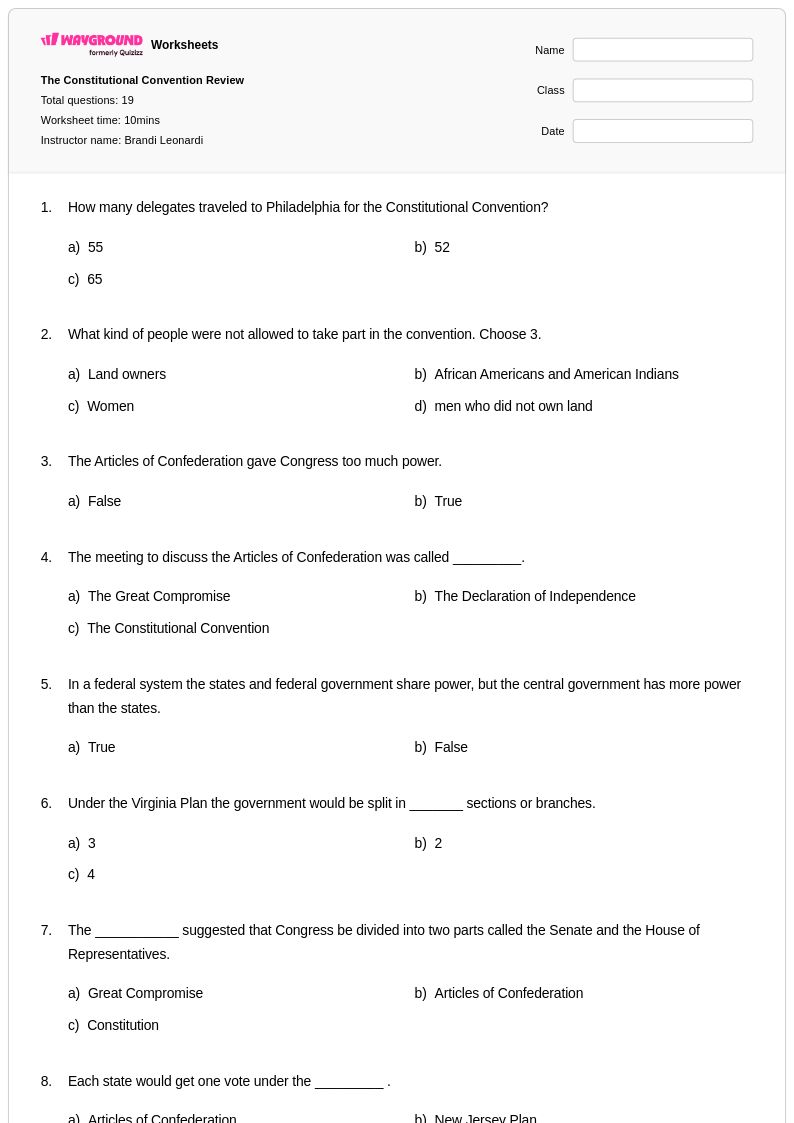
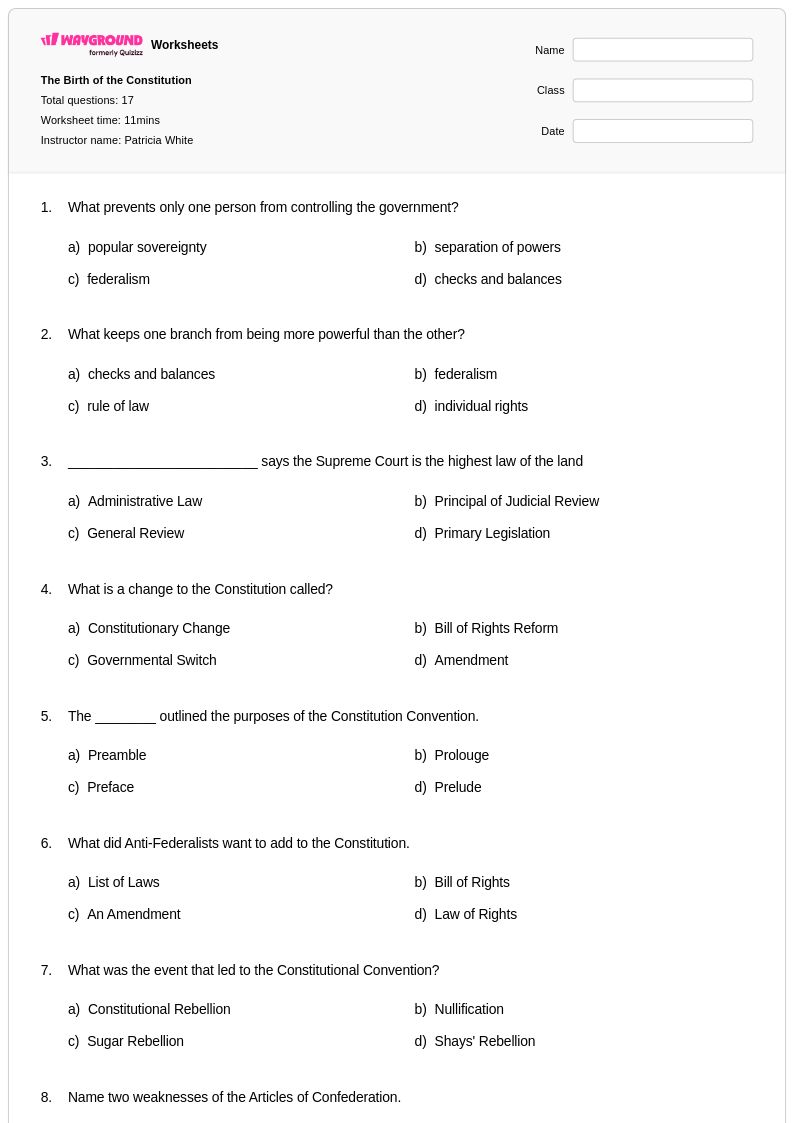
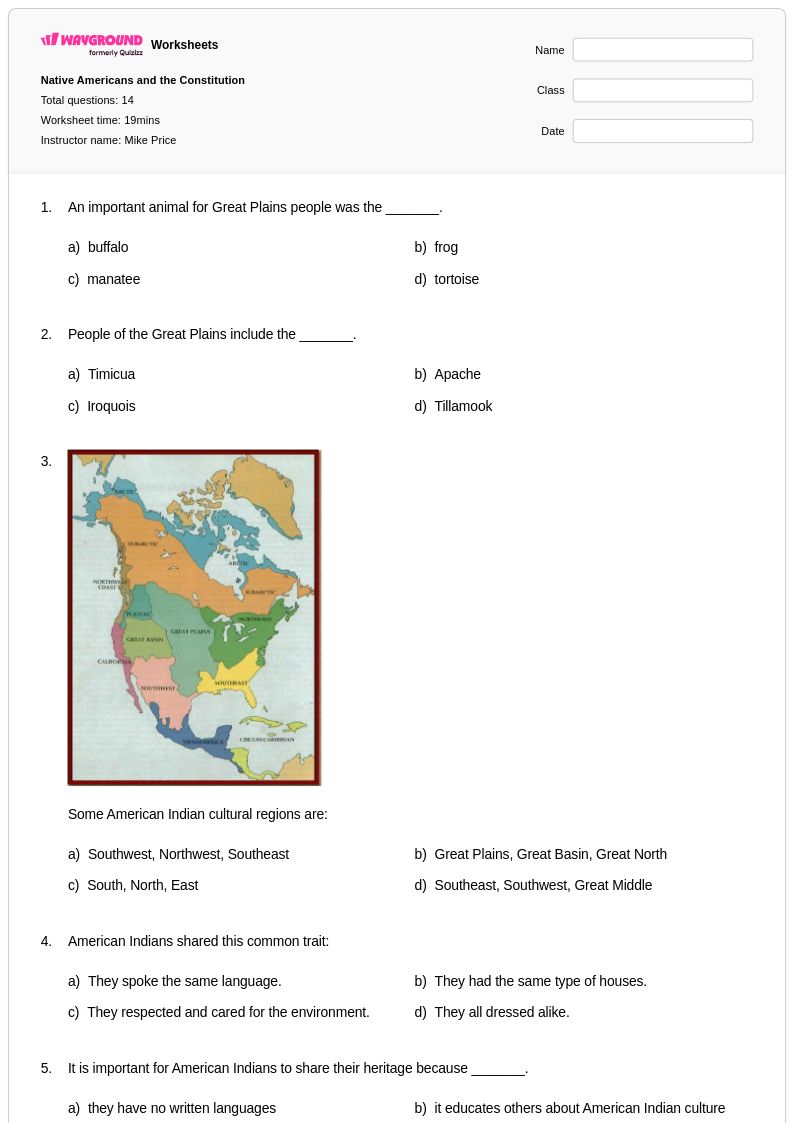
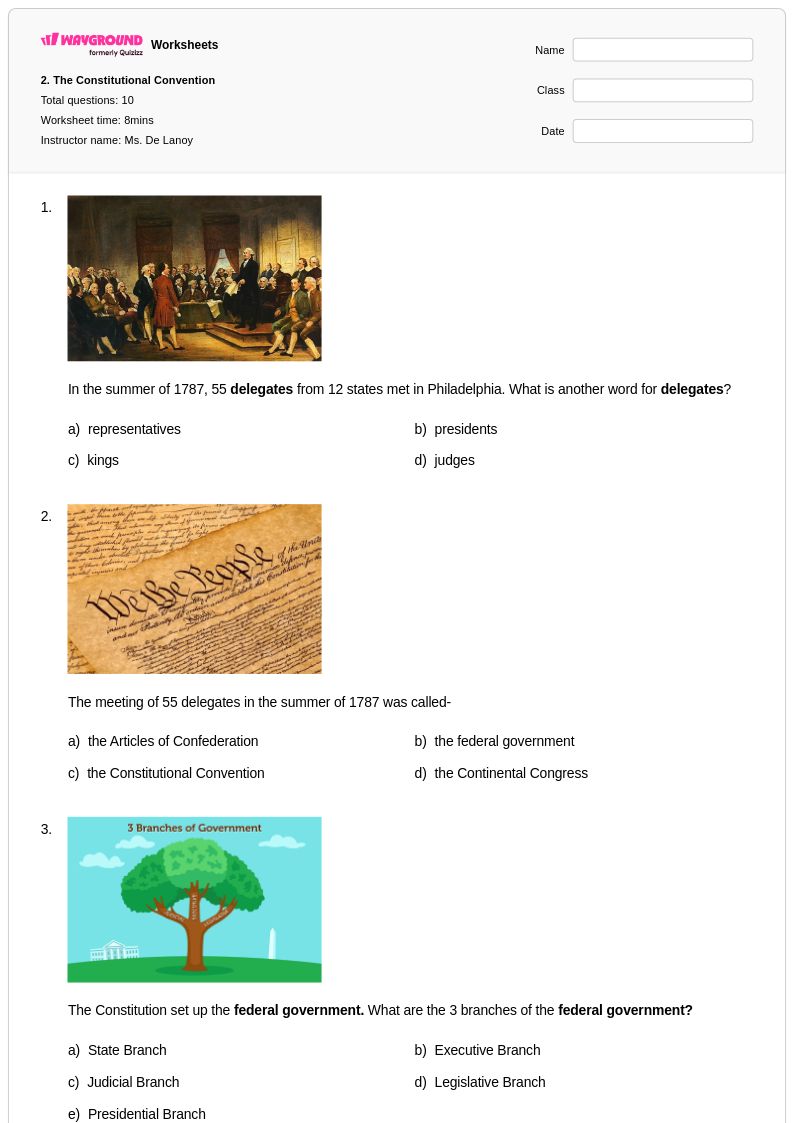
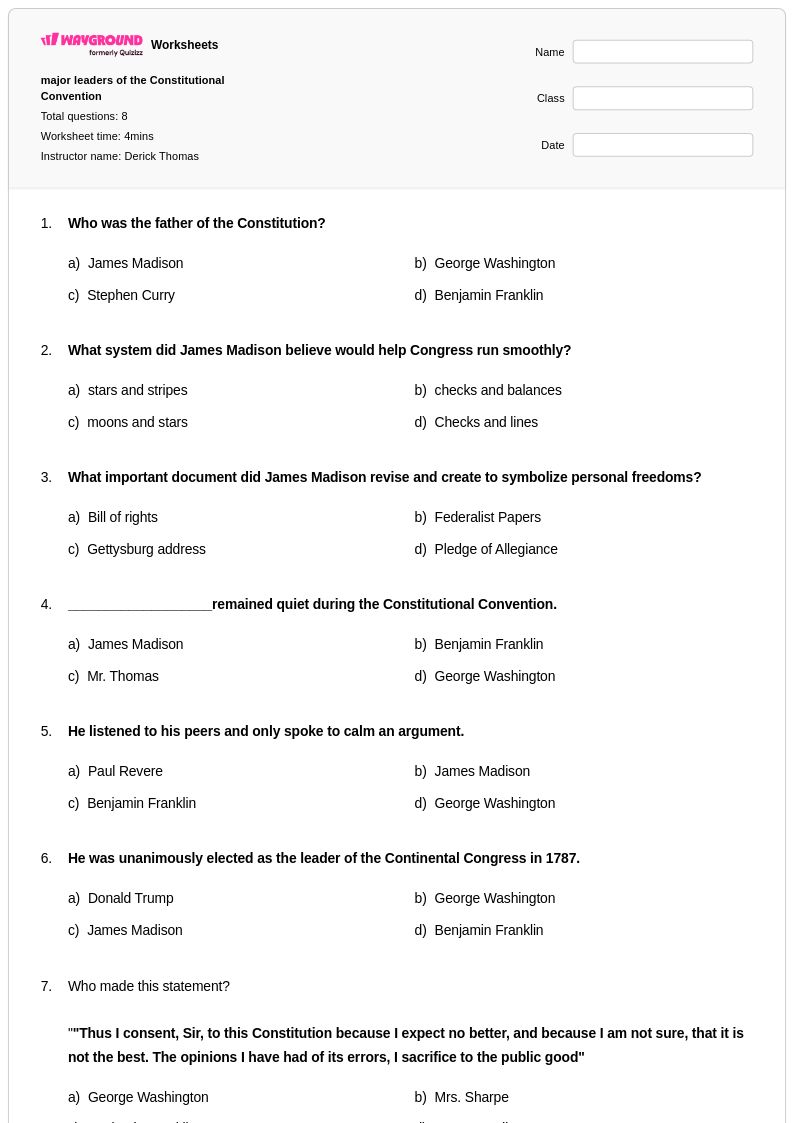
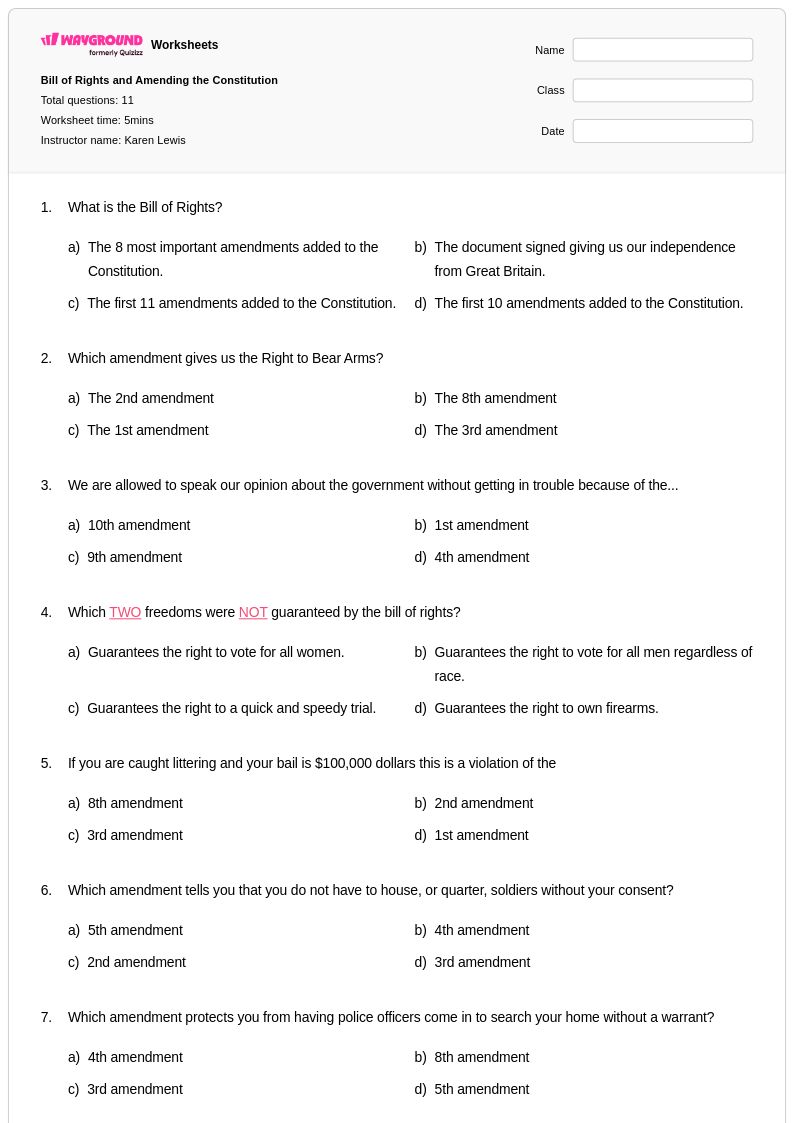
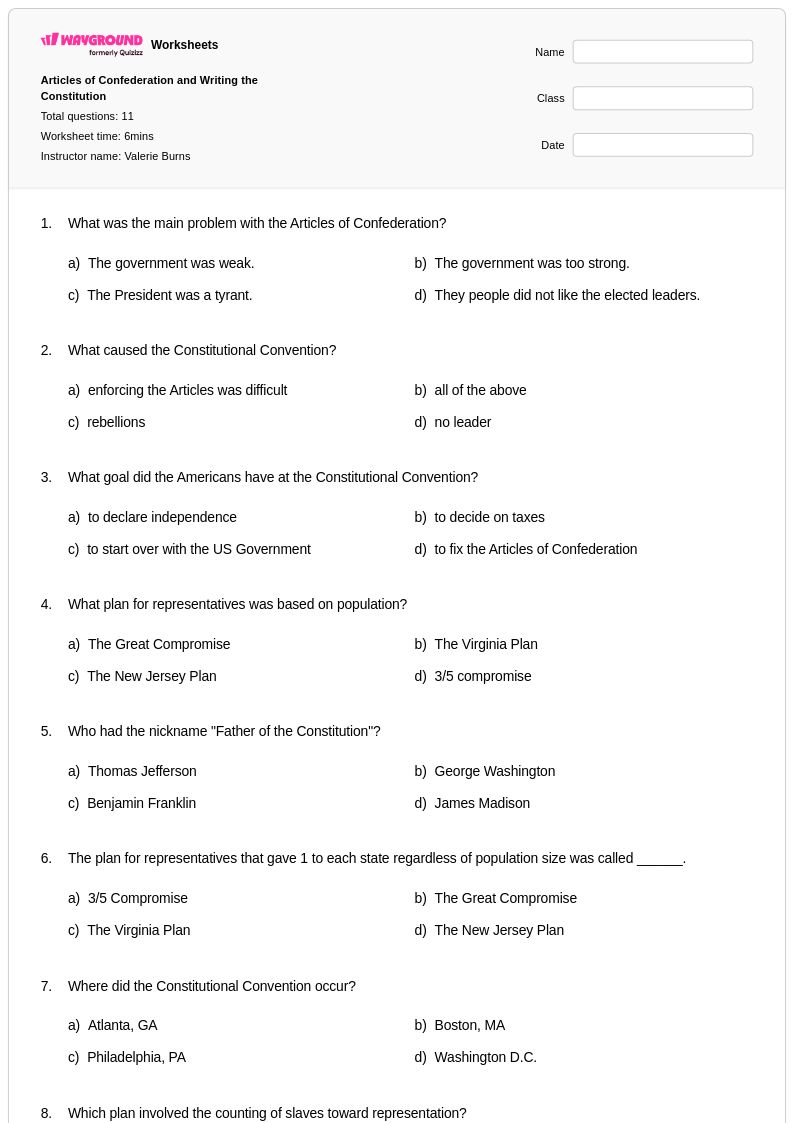
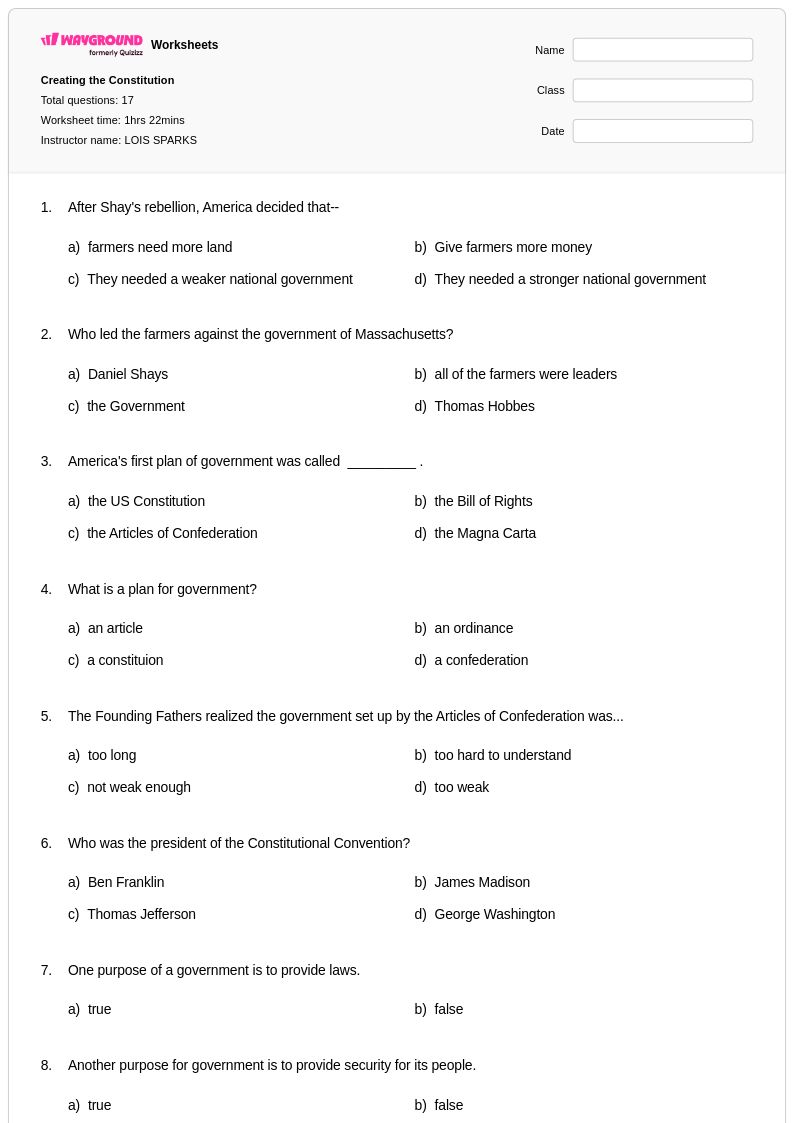
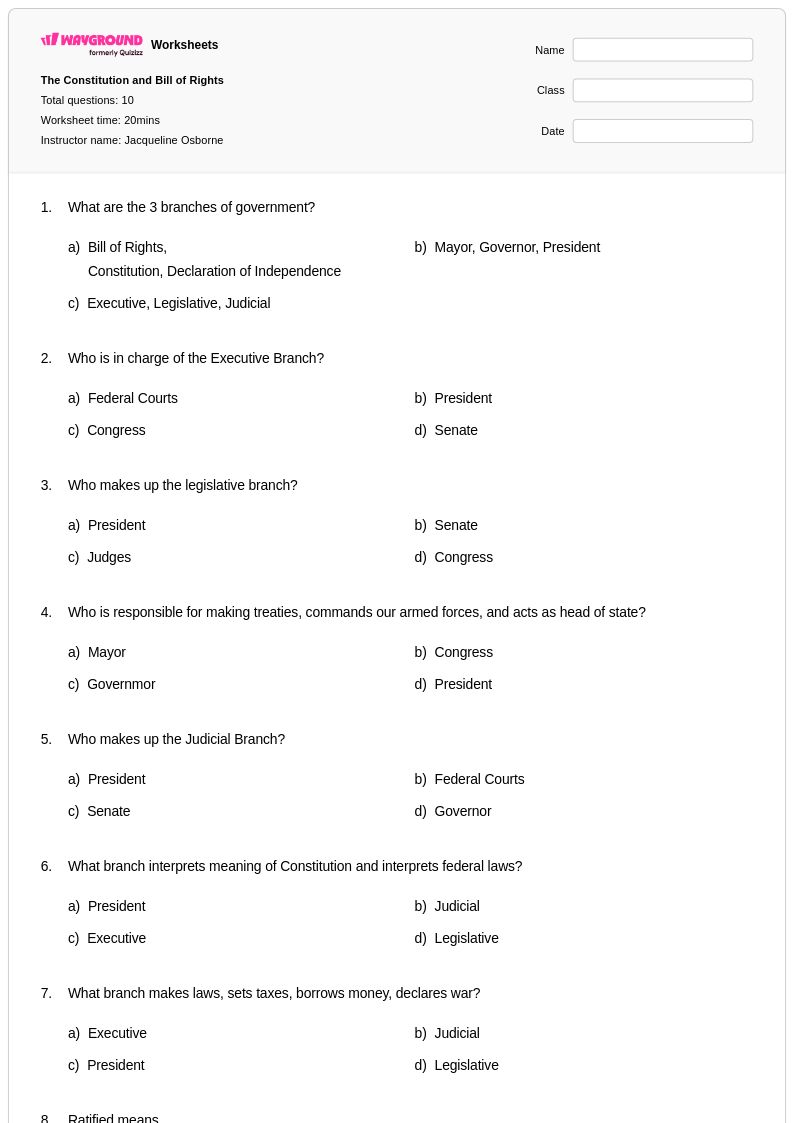
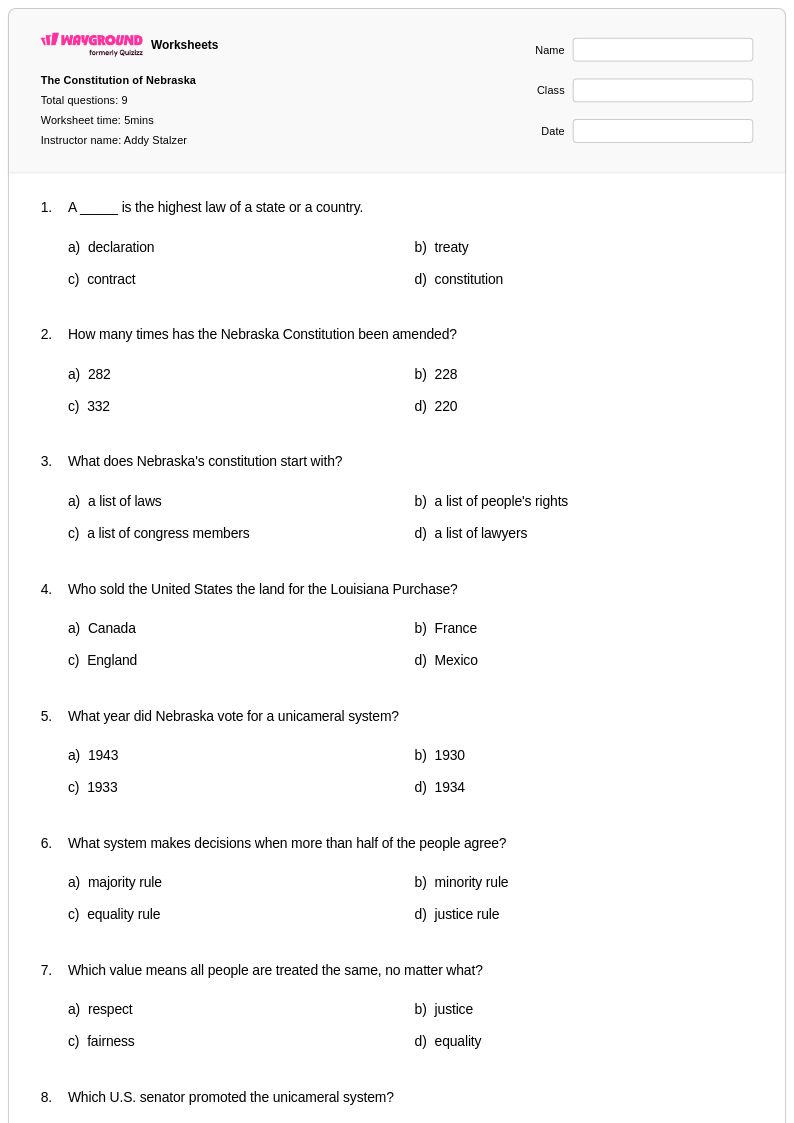
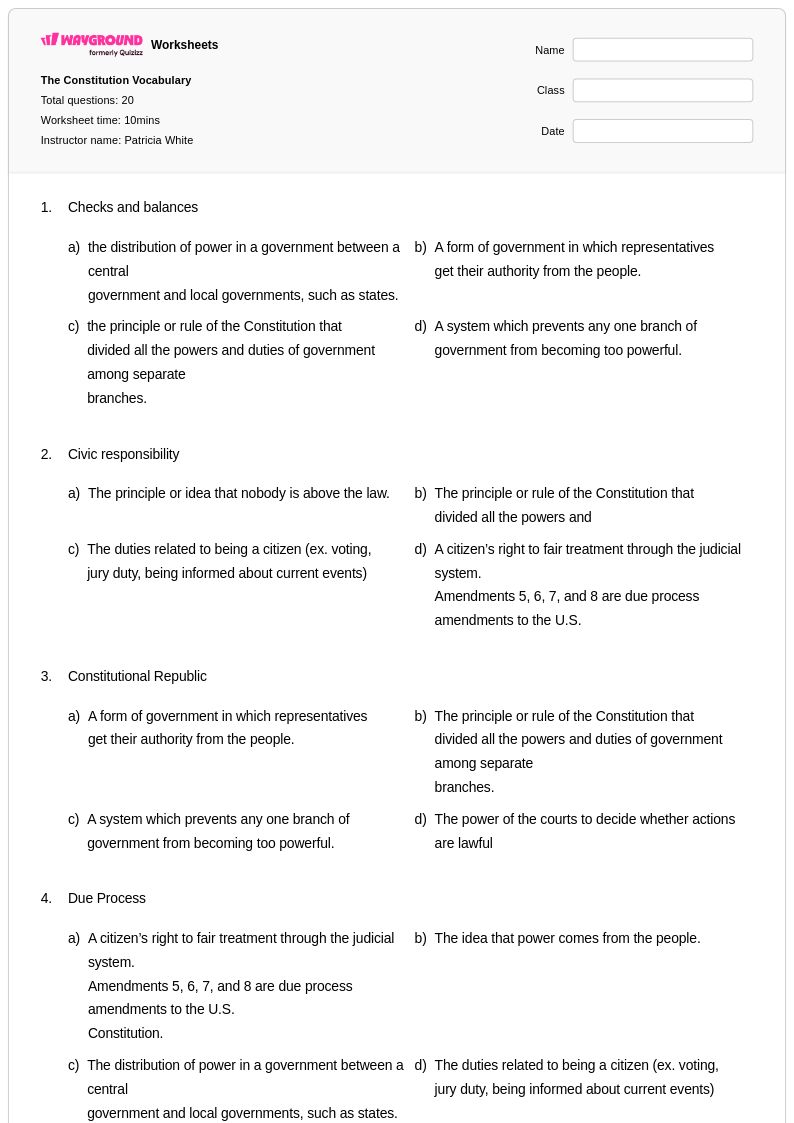
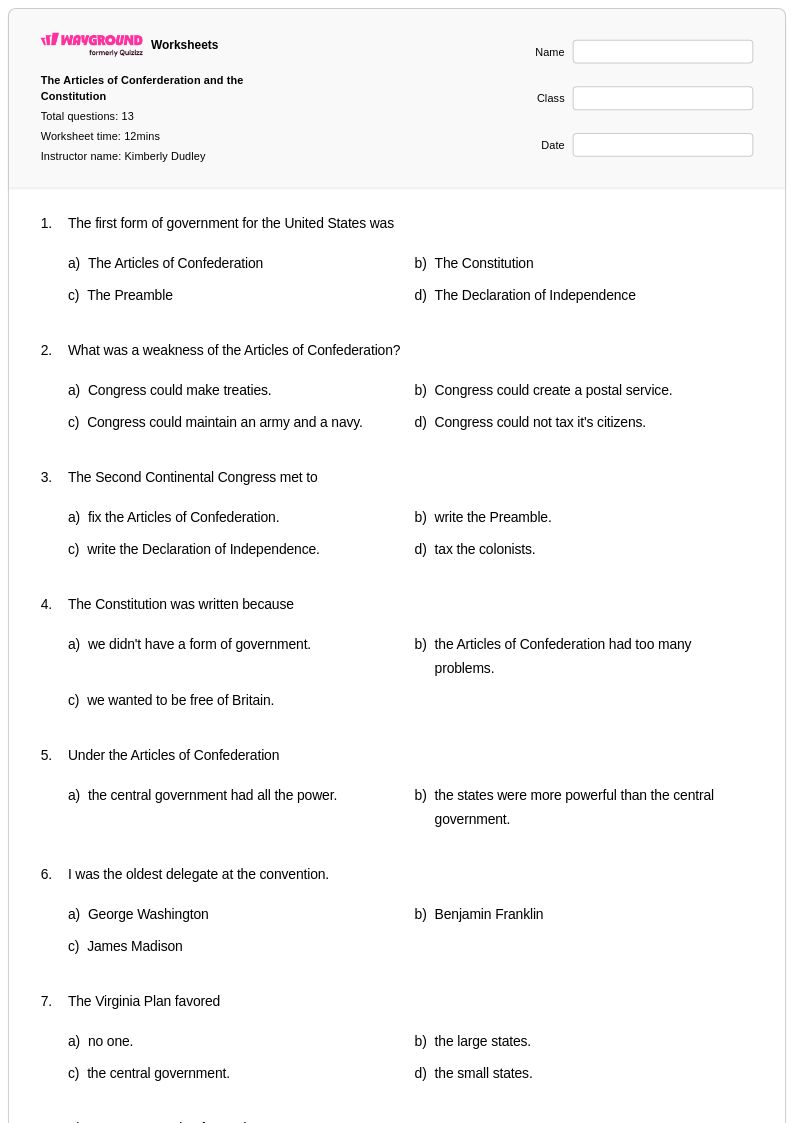
The Constitution worksheets available through Wayground (formerly Quizizz) provide Year 4 students with comprehensive practice materials that introduce the foundational principles of American government. These carefully designed printables help young learners understand key constitutional concepts including the purpose of our nation's founding document, the three branches of government, and fundamental rights and responsibilities of citizens. Each worksheet incorporates age-appropriate activities such as vocabulary matching, short answer questions, and visual diagrams that reinforce constitutional literacy while building critical thinking skills. Teachers can access complete answer keys and free pdf downloads that support both classroom instruction and independent practice, ensuring students develop a solid understanding of how the Constitution shapes our democratic society.
Wayground (formerly Quizizz) empowers educators with millions of teacher-created Constitution resources specifically aligned to Year 4 social studies standards, offering robust search and filtering capabilities that make lesson planning efficient and effective. The platform's differentiation tools allow teachers to customize worksheets based on individual student needs, providing both remediation support for struggling learners and enrichment opportunities for advanced students. These constitutional resources are available in both printable and digital formats, including downloadable pdfs that facilitate flexible classroom implementation whether for whole-group instruction, small group activities, or homework assignments. The extensive collection enables teachers to provide consistent skill practice while addressing diverse learning styles, ensuring all fourth-grade students can engage meaningfully with constitutional concepts that form the foundation of civic knowledge.
FAQs
How do I teach the US Constitution to middle and high school students?
Teaching the US Constitution effectively starts with grounding students in its historical context, particularly the problems with the Articles of Confederation that made a new framework necessary. From there, work through the structural pillars: federalism, separation of powers, and checks and balances. Incorporating primary source analysis, such as reading excerpts from the Preamble or specific articles, helps students move beyond memorization toward genuine constitutional reasoning. Connecting constitutional principles to landmark Supreme Court cases makes the document feel alive and relevant rather than static.
What are the most common misconceptions students have about the US Constitution?
One of the most persistent misconceptions is that the Constitution is a fixed, unchanging document, when in fact the amendment process is a core feature by design. Students also frequently confuse separation of powers with checks and balances, treating them as the same concept rather than understanding that checks and balances describe how each branch limits the others. Another common error is conflating the Bill of Rights with the entire Constitution, underestimating the scope of the original document and its subsequent amendments.
What exercises help students practice understanding constitutional amendments?
Effective practice for constitutional amendments involves matching amendments to the rights or processes they establish, analyzing short case scenarios to identify which amendment applies, and sequencing amendments to understand how the document has evolved over time. Having students compare the original constitutional text with key amendments, such as the 13th, 14th, and 19th, builds critical reading skills alongside content knowledge. Scenario-based questions that ask students to argue whether a constitutional right has been violated are especially strong for higher-order thinking.
How can I help students understand the compromises that shaped the Constitution?
The major compromises of the Constitutional Convention, including the Great Compromise, the Three-Fifths Compromise, and the Commerce Compromise, are best taught by first establishing the competing interests each compromise resolved. Structured debate activities, where students argue the positions of large versus small states or free versus slave states, help them understand why delegates made the concessions they did. Following this with document analysis tasks that trace how those compromises appear in the actual constitutional text reinforces the connection between political negotiation and written law.
How do I use Constitution worksheets effectively in my classroom?
Constitution worksheets on Wayground are available as both printable PDFs and in digital formats, making them adaptable for traditional paper-based instruction and technology-integrated classrooms alike. Teachers can assign them as guided practice during direct instruction, independent review activities, or formative assessments, depending on where students are in a unit. For Constitution Day observances or civics units, targeted worksheets on the Preamble, amendments, or founding compromises can anchor a full lesson. Wayground also allows teachers to host worksheets as quizzes directly on the platform, enabling quick feedback and progress monitoring.
What is the Preamble of the US Constitution and how do I teach it?
The Preamble is the introductory statement of the US Constitution that outlines the six purposes of the new government: forming a more perfect union, establishing justice, ensuring domestic tranquility, providing for the common defense, promoting the general welfare, and securing the blessings of liberty. Teaching the Preamble effectively involves having students unpack the meaning of each phrase rather than simply memorizing the text. Asking students to connect each stated purpose to a real government function or current event is a strong comprehension-building strategy.
How do I differentiate Constitution instruction for students with different learning needs?
Differentiation for Constitution instruction can include modified primary source excerpts with scaffolded vocabulary support, tiered questions that range from recall to analysis, and reduced answer choices for students who need lower cognitive load on assessment tasks. On Wayground, teachers can apply individual accommodations such as read-aloud settings, extended time, and reduced answer choices to specific students without affecting the rest of the class. These settings are reusable across sessions, which reduces setup time when supporting students with IEPs or 504 plans across a multi-week civics unit.