Free Printable Thomas Jefferson Worksheets for Year 7
Year 7 students can explore Thomas Jefferson's legacy through our comprehensive collection of free printable worksheets and practice problems, featuring engaging activities with answer keys to deepen understanding of this founding father's impact on American history.
Explore printable Thomas Jefferson worksheets for Year 7
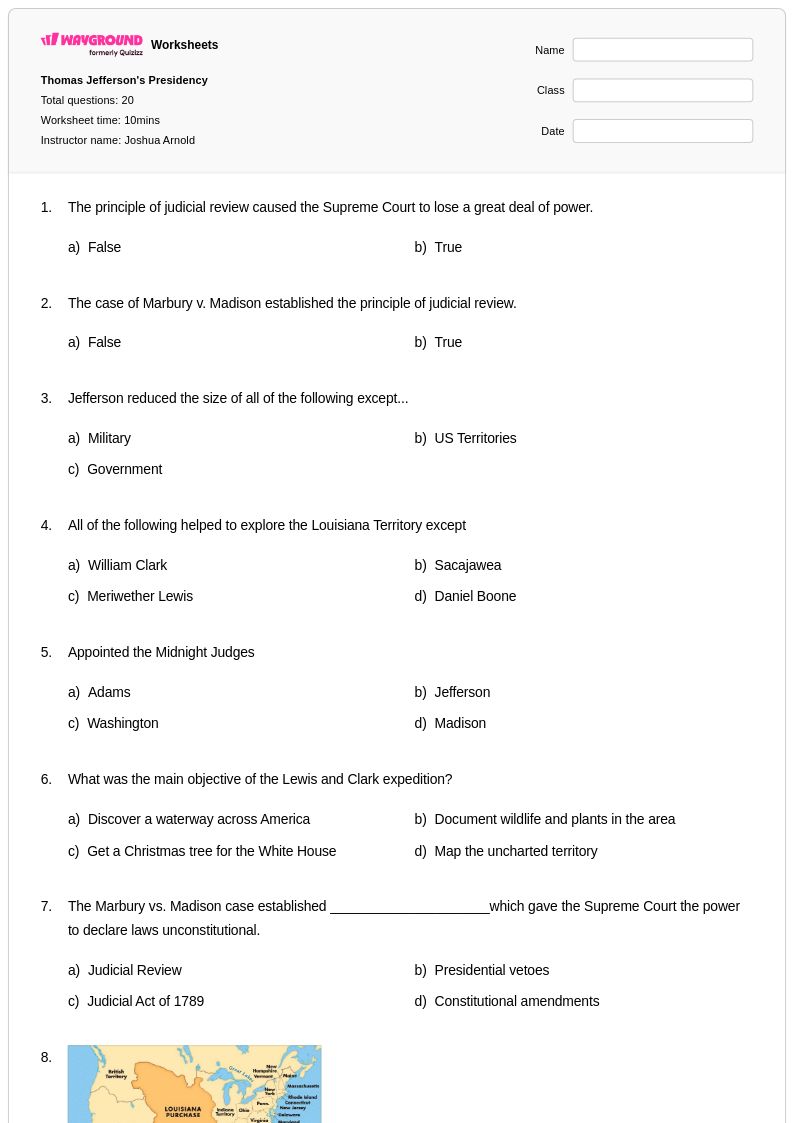
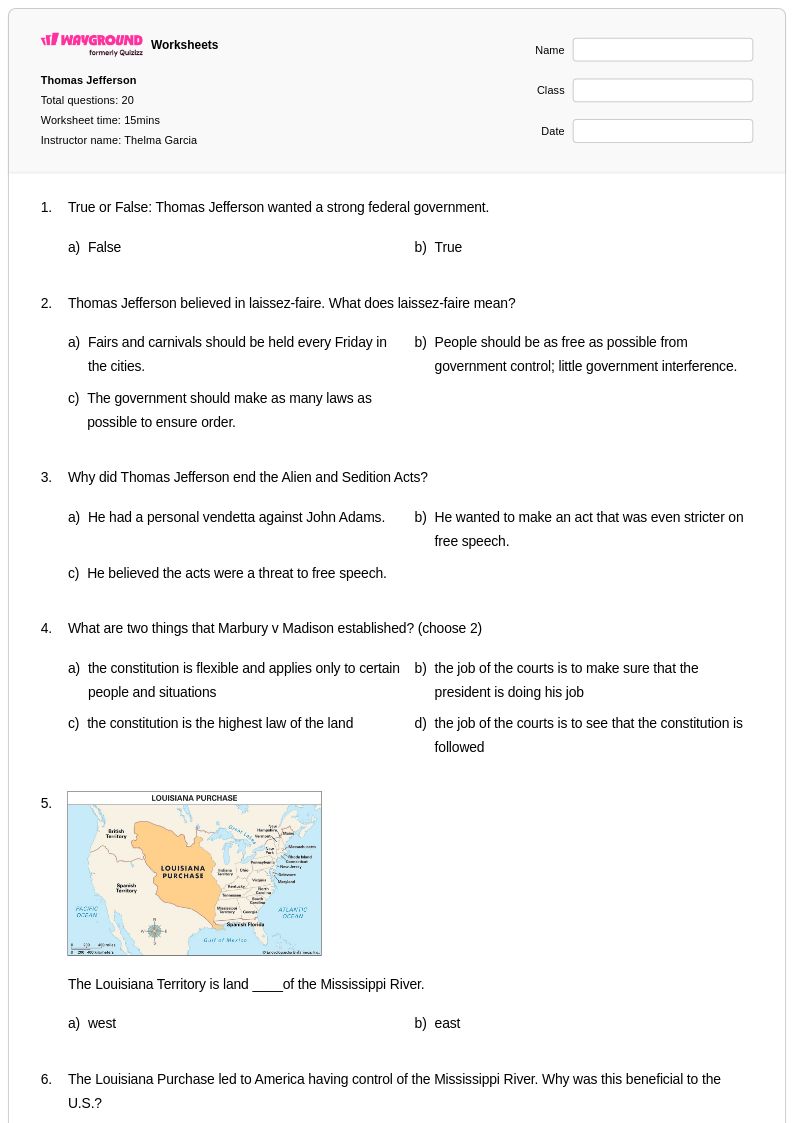
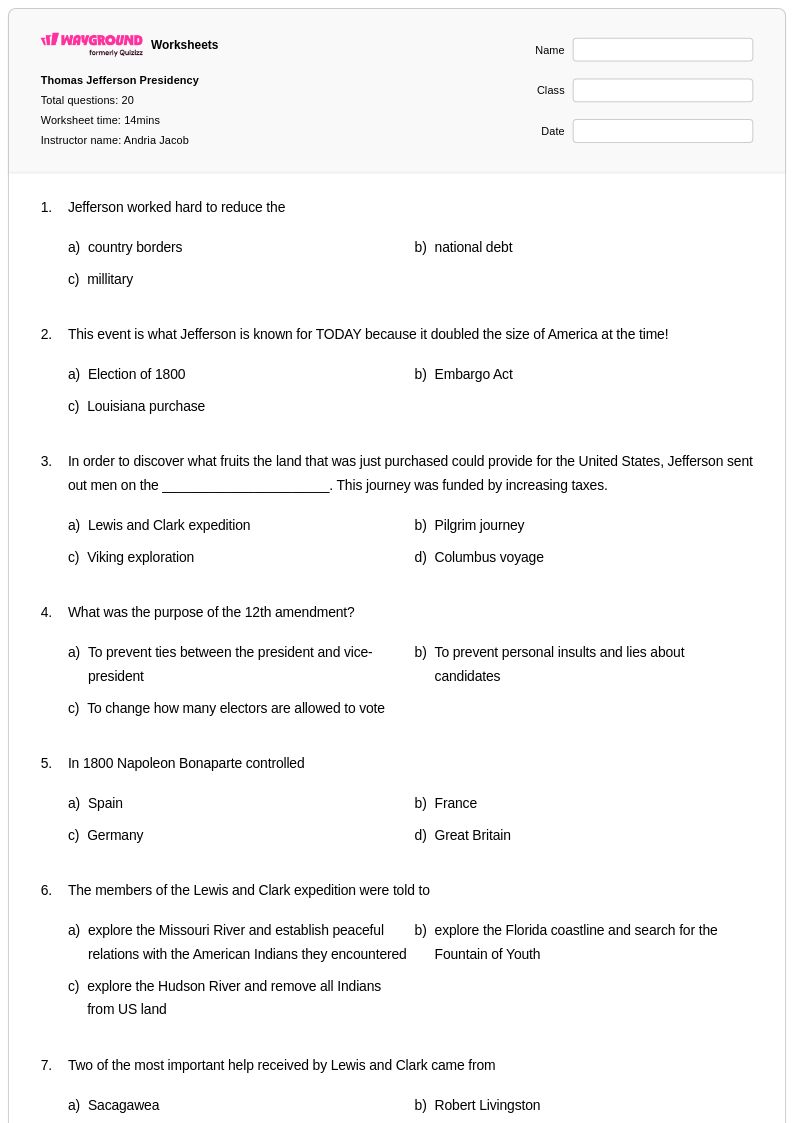
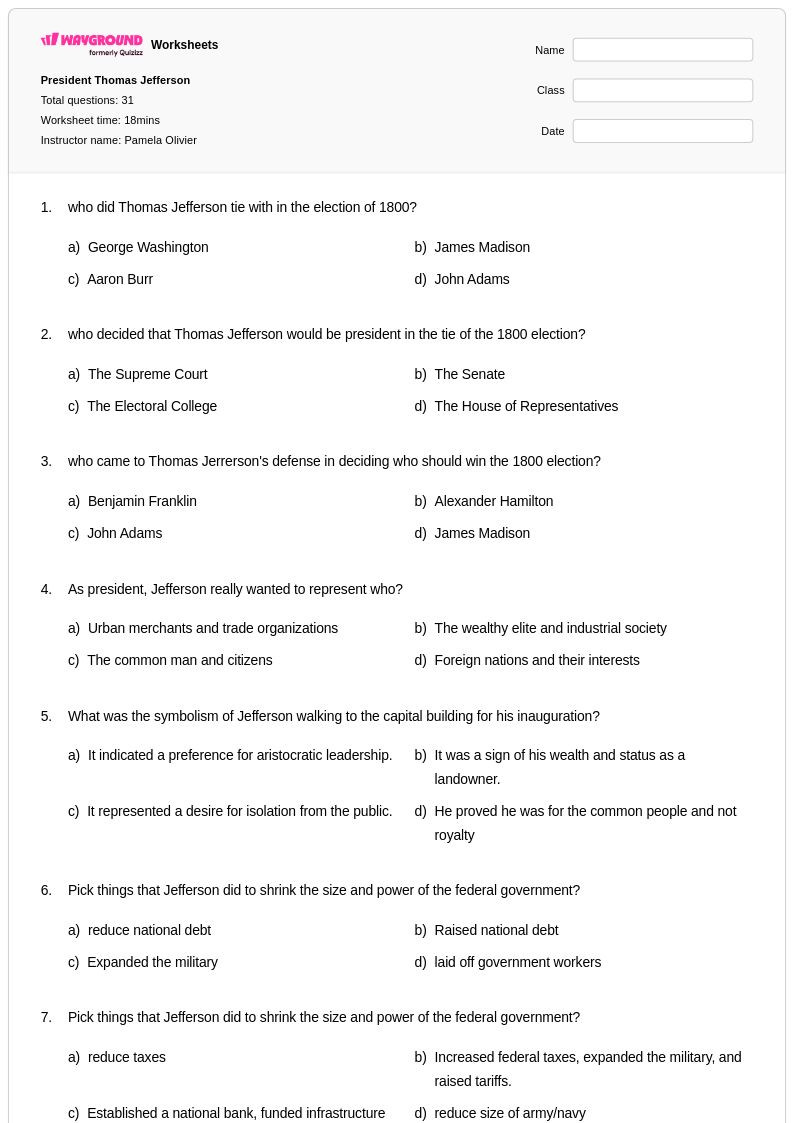
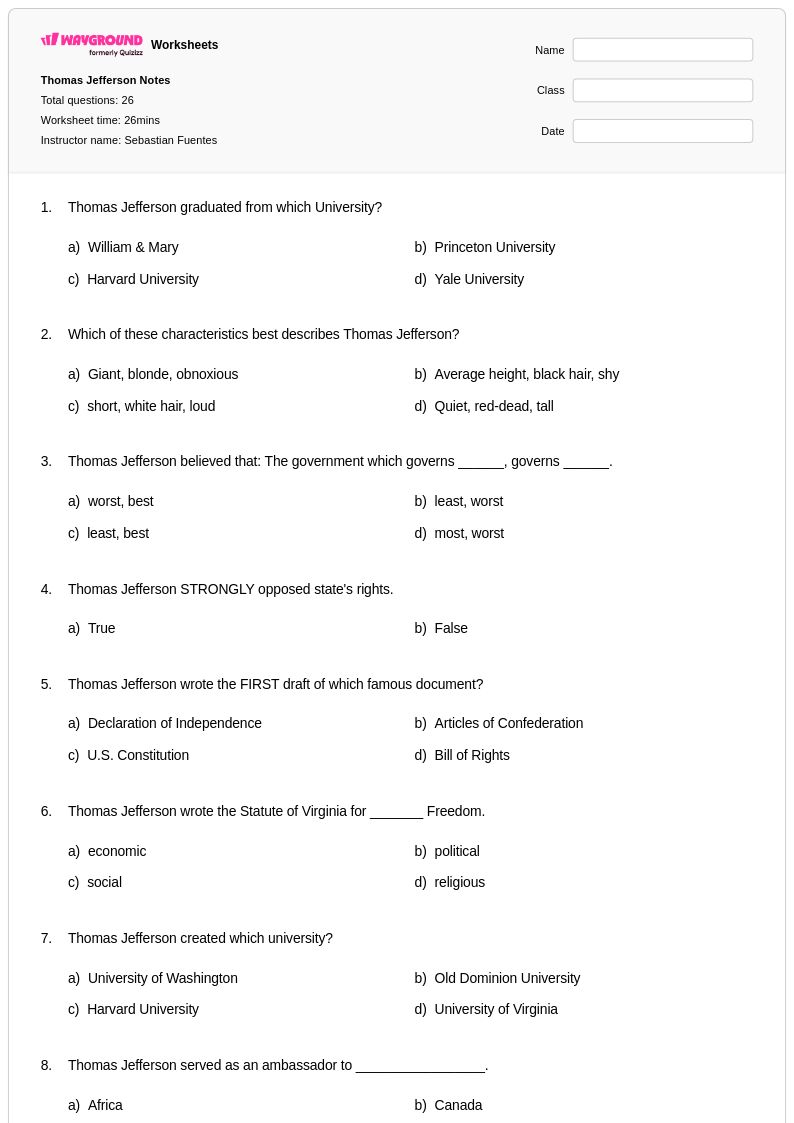
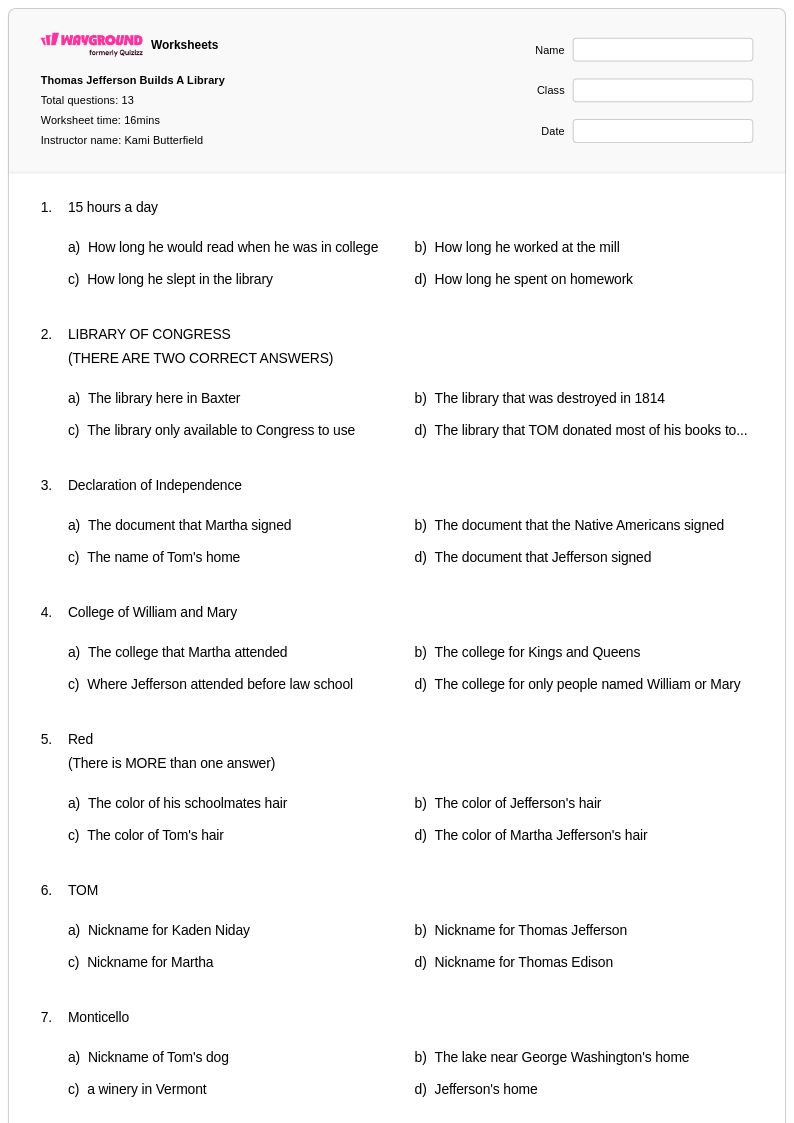
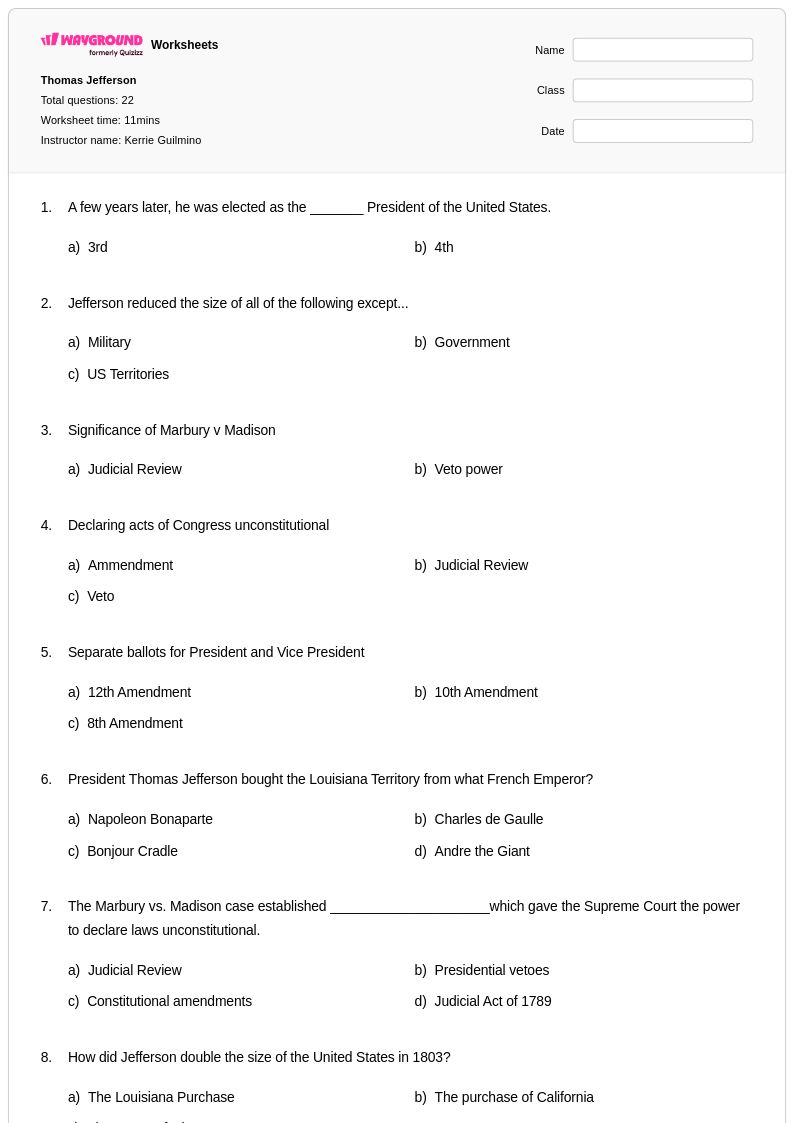
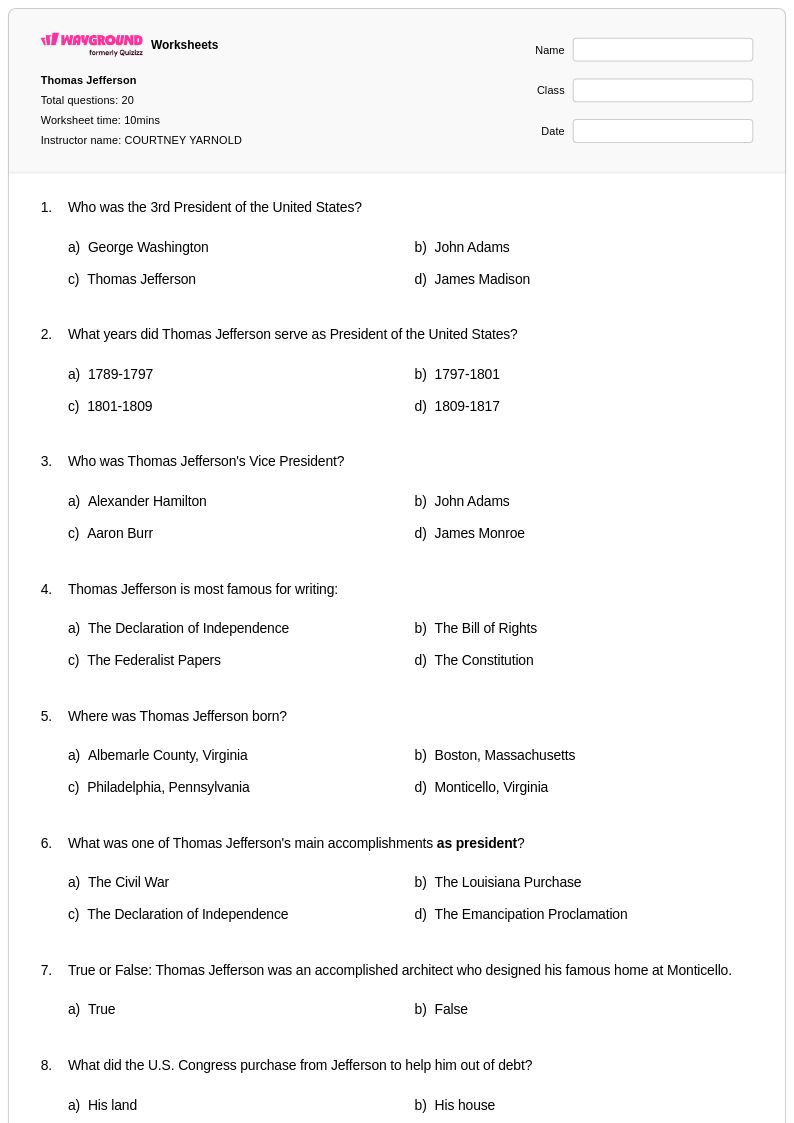
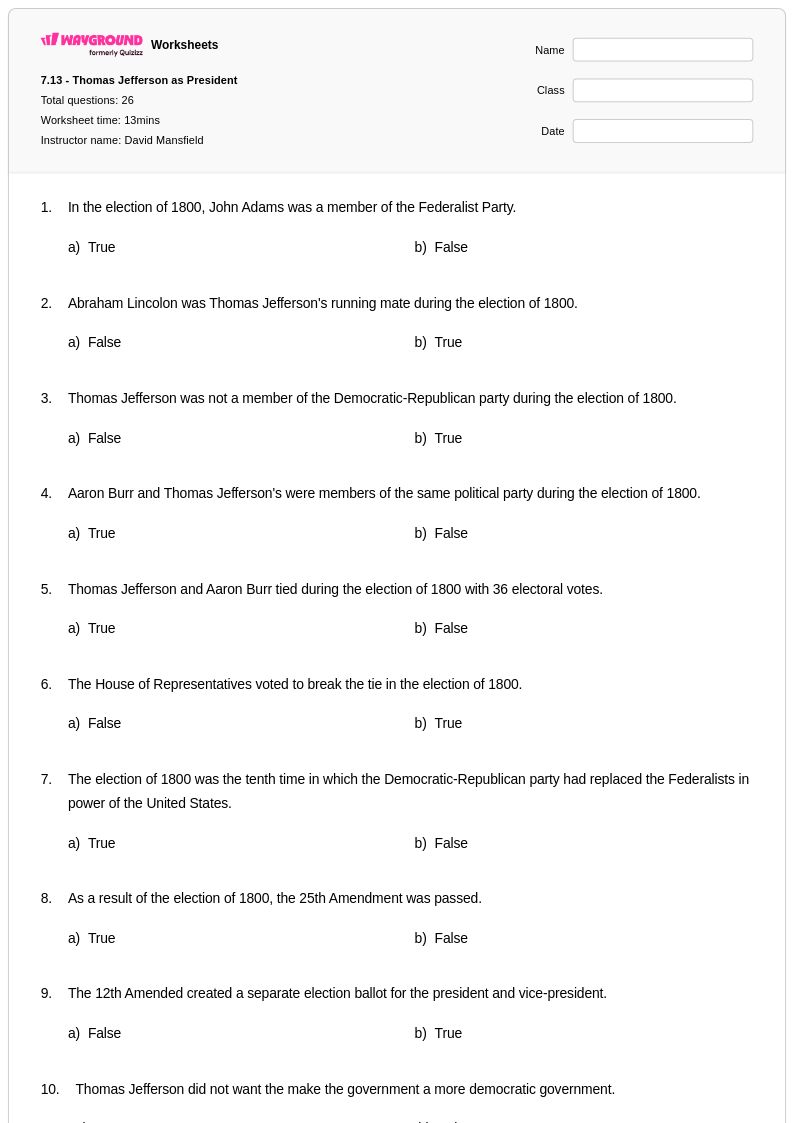
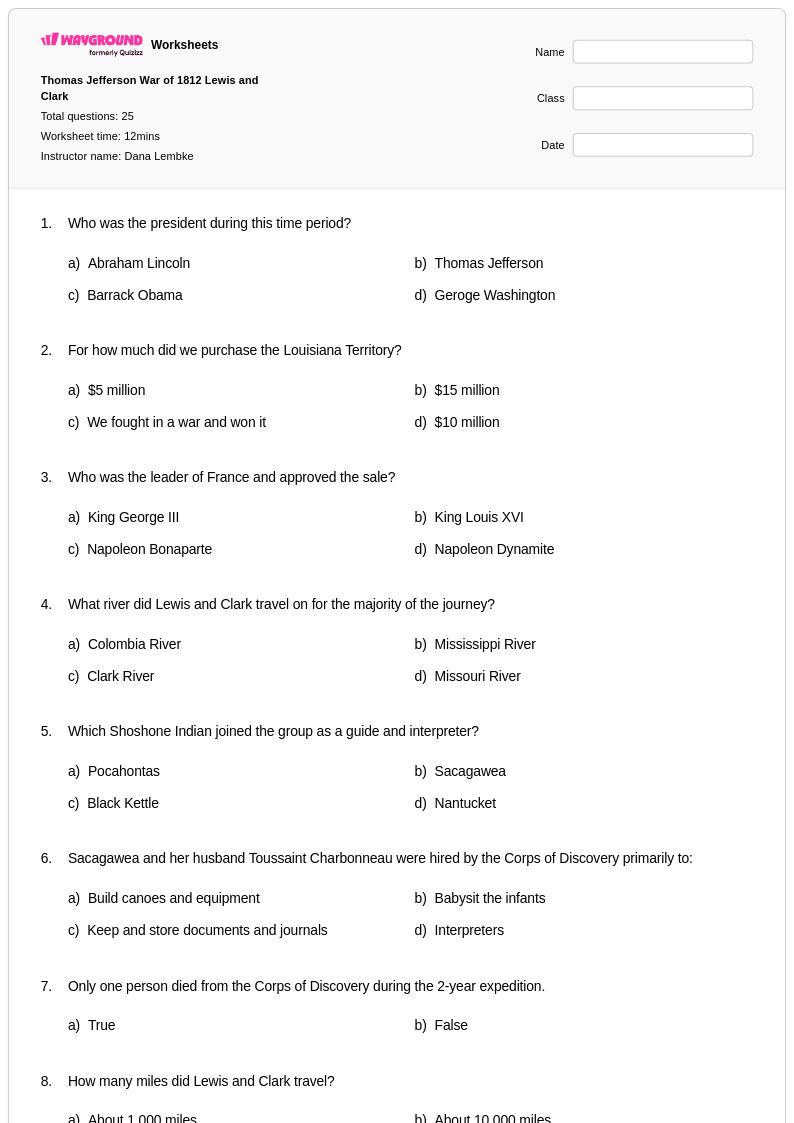
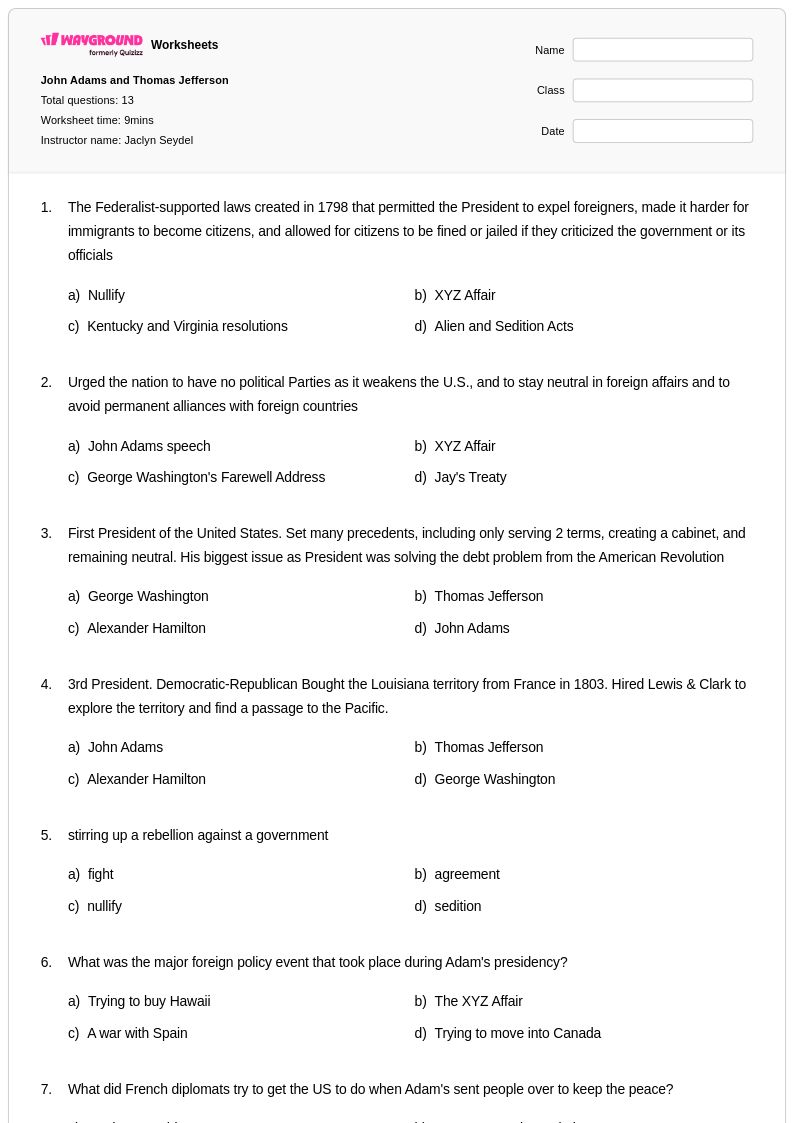
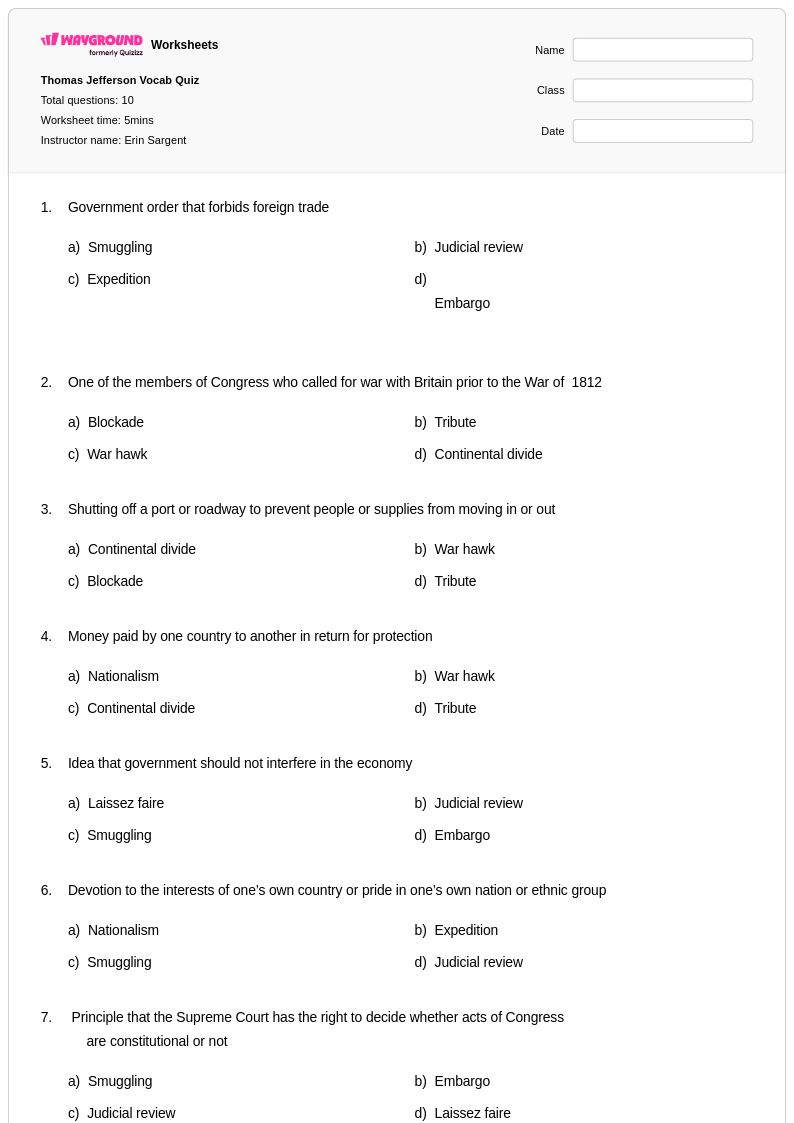
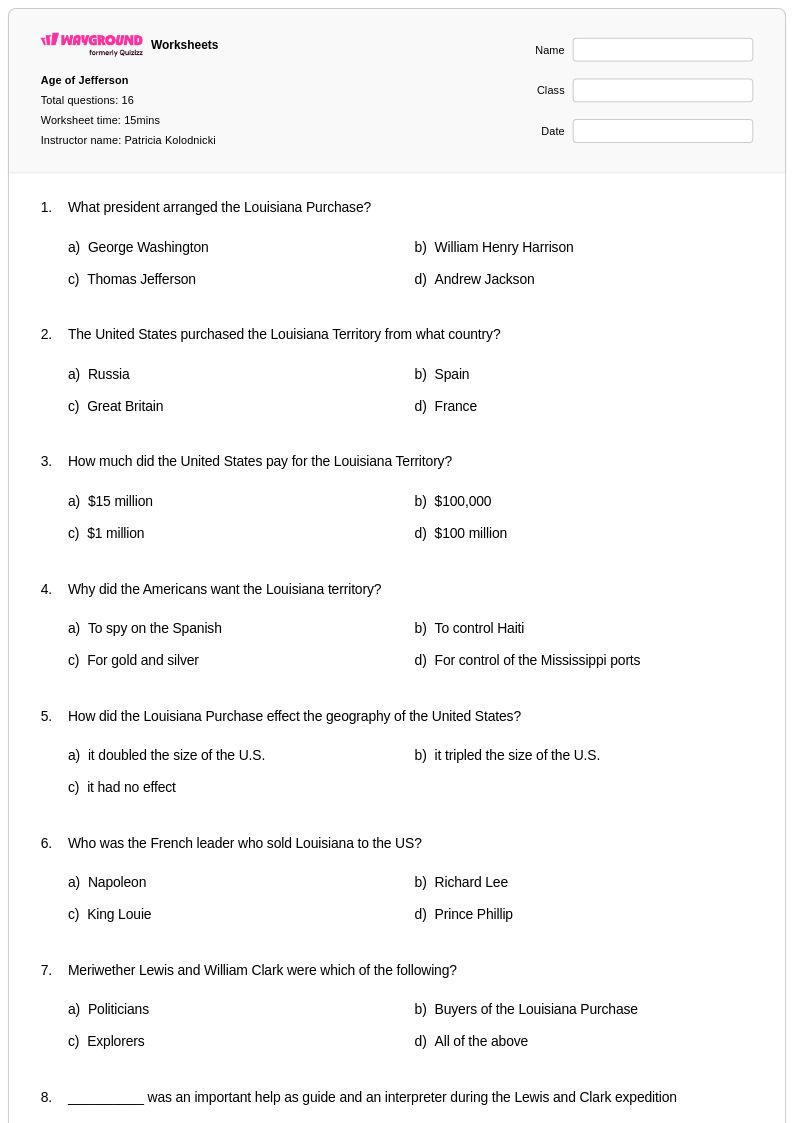
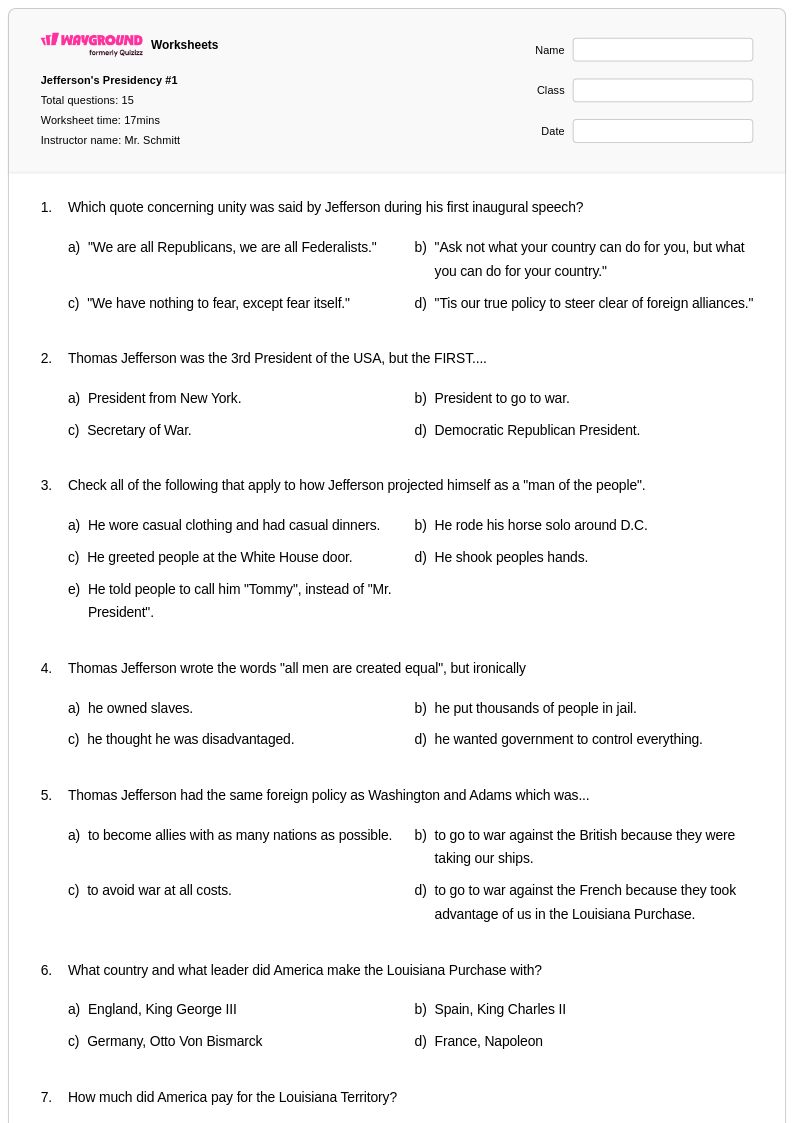
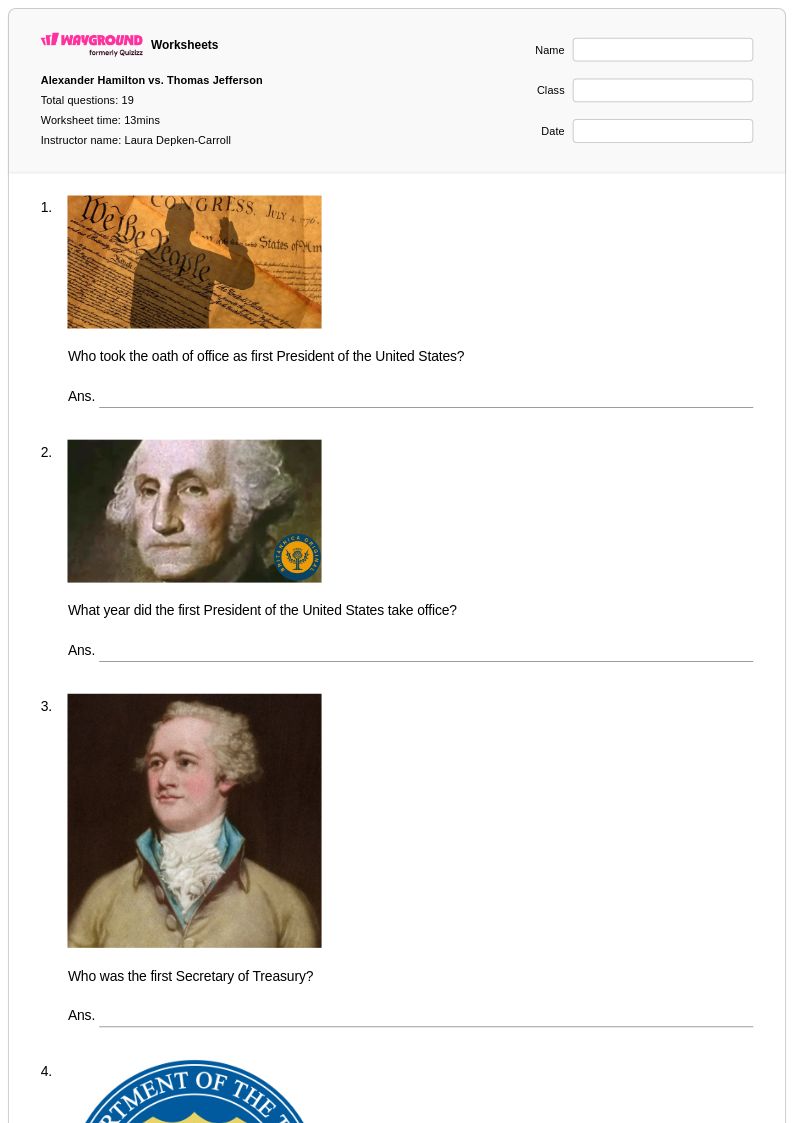
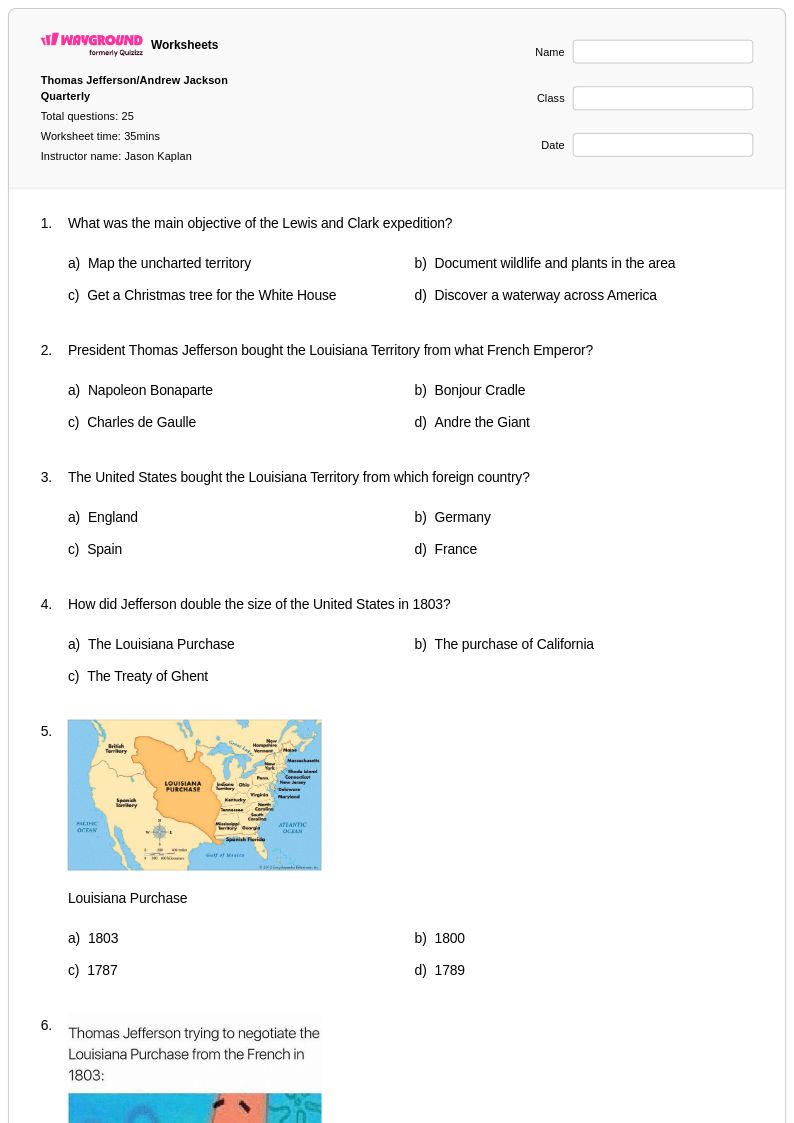
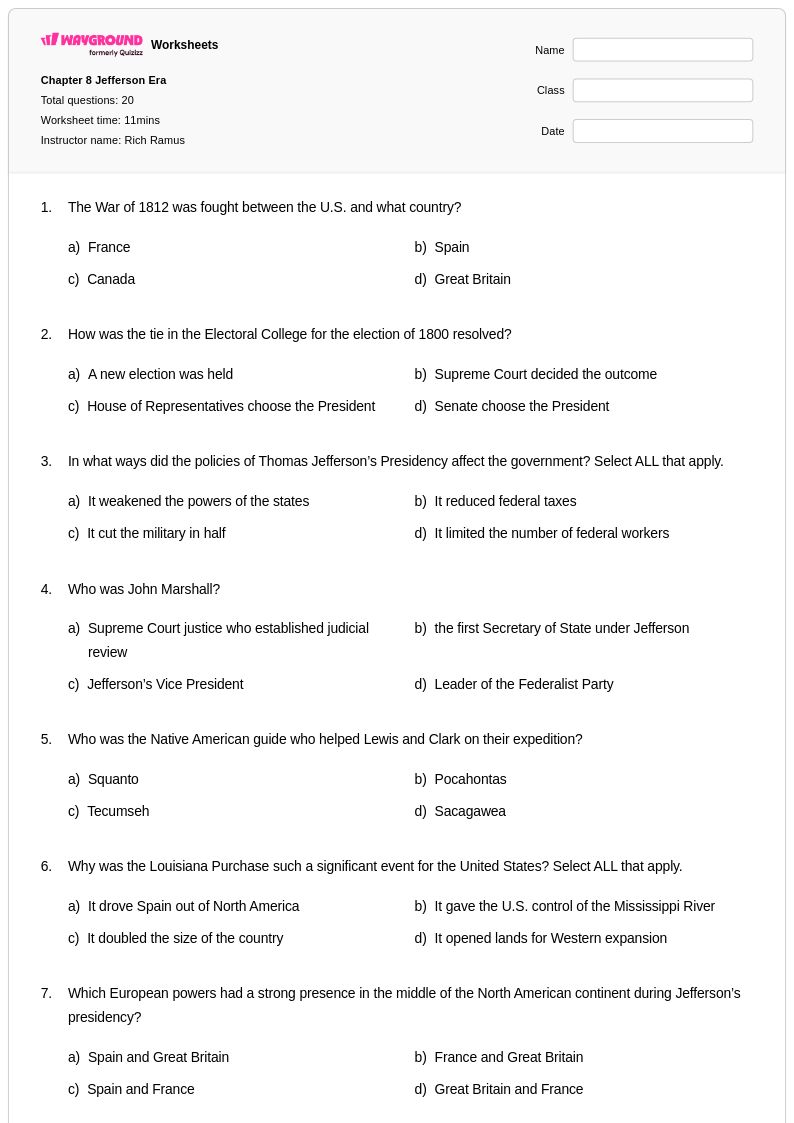
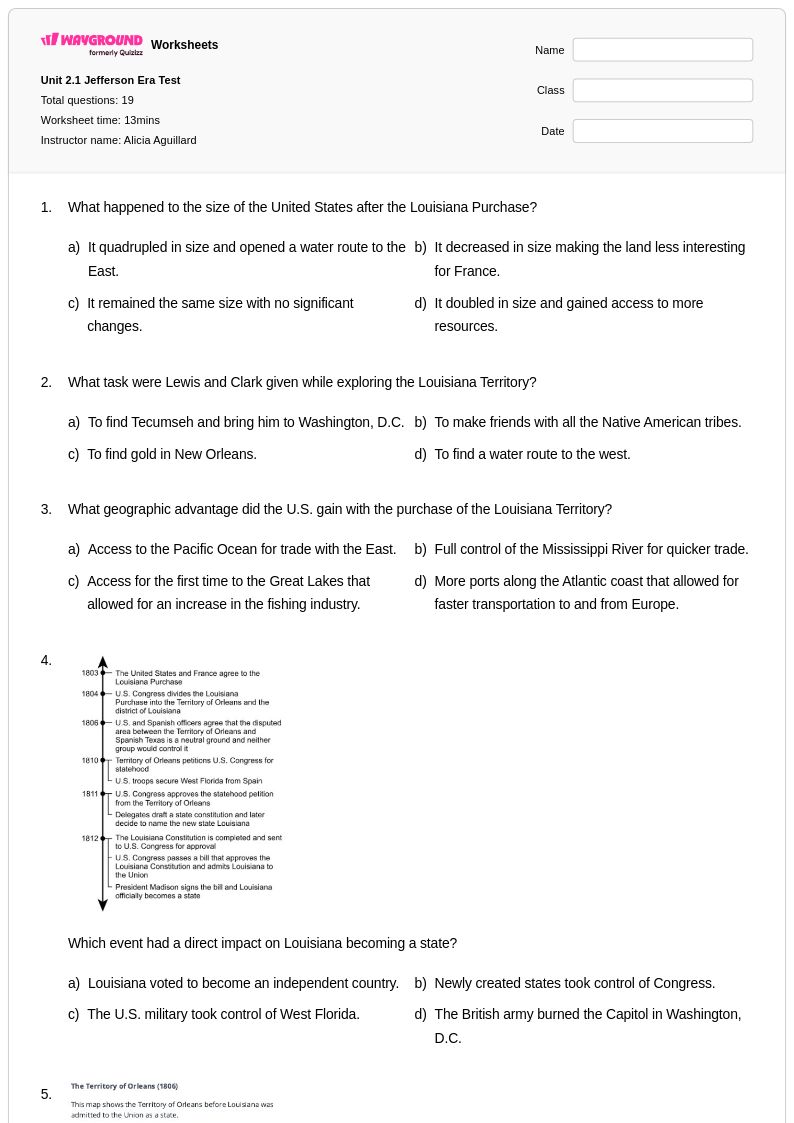
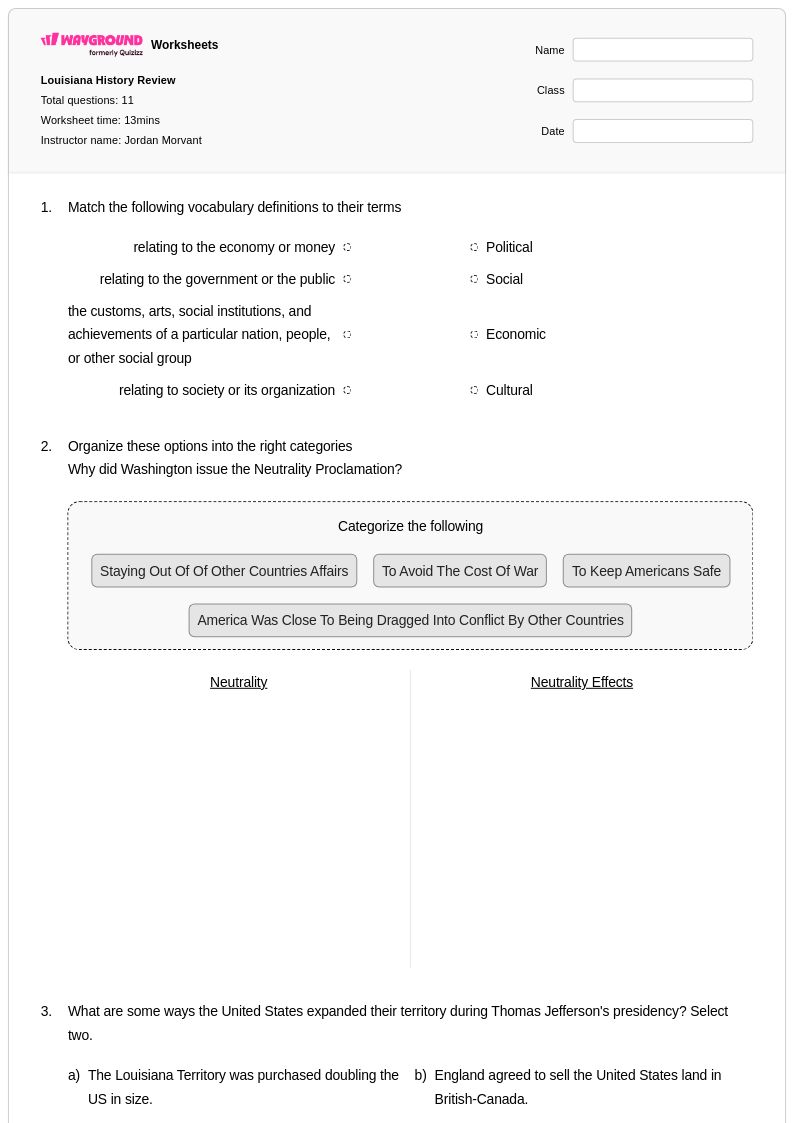
Thomas Jefferson worksheets for Year 7 students available through Wayground offer comprehensive coverage of one of America's most influential founding fathers and his lasting impact on the nation. These educational resources help students develop critical thinking skills as they explore Jefferson's roles as the primary author of the Declaration of Independence, the third President of the United States, and the architect of the Louisiana Purchase. The worksheet collection strengthens students' ability to analyze primary sources, understand cause-and-effect relationships in historical events, and evaluate the complexities of Jefferson's legacy, including the contradictions between his ideals of liberty and his ownership of enslaved people. Teachers can access free printables that include practice problems requiring students to examine Jefferson's political philosophy, his contributions to early American government, and his influence on westward expansion, with comprehensive answer keys provided in convenient pdf format.
Wayground's extensive library, built from millions of teacher-created resources, provides educators with powerful tools to effectively teach about Thomas Jefferson to Year 7 students through carefully curated worksheet collections. The platform's advanced search and filtering capabilities allow teachers to quickly locate materials that align with state and national social studies standards, ensuring that Jefferson-focused lessons meet curriculum requirements while addressing diverse learning needs. Teachers can customize worksheets to support differentiation strategies, creating versions for remediation that focus on basic biographical facts and timeline activities, while developing enrichment materials that challenge advanced learners to analyze Jefferson's political writings and debate his historical significance. The flexibility of both printable and digital formats, including downloadable pdf versions, enables seamless integration into classroom instruction and remote learning environments, supporting comprehensive skill practice in historical analysis and critical reasoning.
FAQs
How do I teach Thomas Jefferson to elementary and middle school students?
Teaching Thomas Jefferson effectively means grounding students in three core areas: his authorship of the Declaration of Independence, the Louisiana Purchase and westward expansion, and his complex legacy on slavery and individual liberty. Start with primary source excerpts from the Declaration, then use timeline activities to connect his biography to broader historical events. Comparative exercises that ask students to evaluate Jefferson's stated political philosophy against his actions as president build critical thinking and spark meaningful discussion.
What worksheets and activities help students practice what they've learned about Thomas Jefferson?
Effective practice activities for Thomas Jefferson include primary source document analysis, timeline construction, and short-answer exercises that require students to connect Jefferson's ideas to specific historical outcomes. Comparative exercises that ask students to weigh Jefferson's advocacy for liberty against his ownership of enslaved people develop higher-order thinking rather than simple recall. These activity types reinforce key concepts like the Declaration of Independence, the Louisiana Purchase, and Jefferson's role in shaping early American democracy.
What common mistakes do students make when learning about Thomas Jefferson?
A frequent misconception is that Thomas Jefferson was a straightforward hero of liberty, without acknowledging the contradiction between his written ideals and his enslavement of over 600 people during his lifetime. Students also often conflate Jefferson's role as a founding thinker with his actual presidential decisions, such as the Louisiana Purchase, which expanded federal power in ways that conflicted with his stated strict-constructionist views. Addressing these tensions directly in instruction helps students develop a more accurate and nuanced historical understanding.
How do I use Thomas Jefferson worksheets in my classroom?
Thomas Jefferson worksheets on Wayground are available as printable PDFs for traditional classroom use and in digital formats for technology-integrated learning environments, giving teachers flexibility regardless of their classroom setup. Teachers can also host worksheets as interactive quizzes directly on Wayground, making them suitable for individual practice, group review, or formative assessment. Each worksheet includes a complete answer key, so grading and feedback require minimal additional preparation.
How can I differentiate Thomas Jefferson instruction for students with different learning needs?
Wayground's accommodation tools allow teachers to support diverse learners when assigning Thomas Jefferson worksheets digitally. Individual students can be given extended time per question, read-aloud audio support for text-heavy primary source content, or reduced answer choices to lower cognitive load on selected questions. These settings can be applied per student without notifying the rest of the class and are saved for reuse in future sessions, making differentiation practical rather than burdensome.
What aspects of Thomas Jefferson's presidency should I focus on for a social studies unit?
A well-rounded Thomas Jefferson unit should cover his authorship of the Declaration of Independence, the Louisiana Purchase and its role in westward expansion, and his political philosophy around states' rights and limited government. Equally important is addressing Jefferson's legacy on slavery, including the contradiction between his ideals and his actions, which is essential for developing students' ability to critically evaluate historical figures. Connecting these themes to the development of American democratic principles gives students a framework for understanding Jefferson's enduring influence.