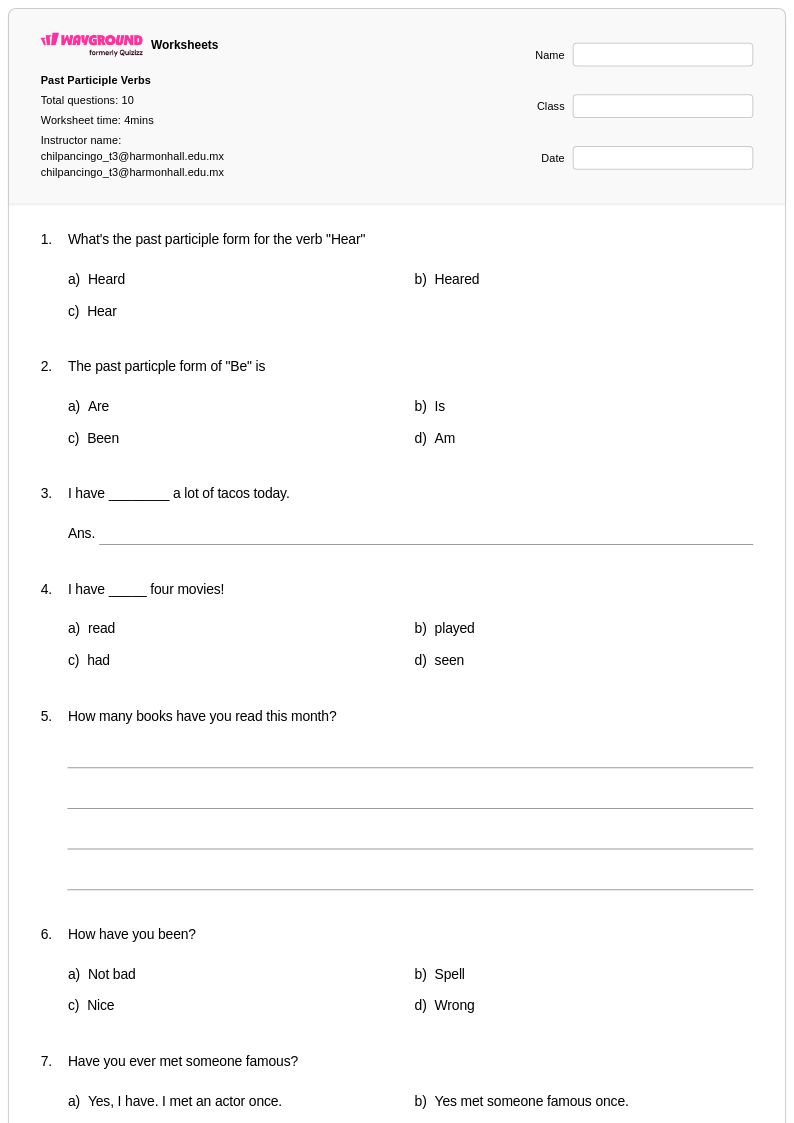
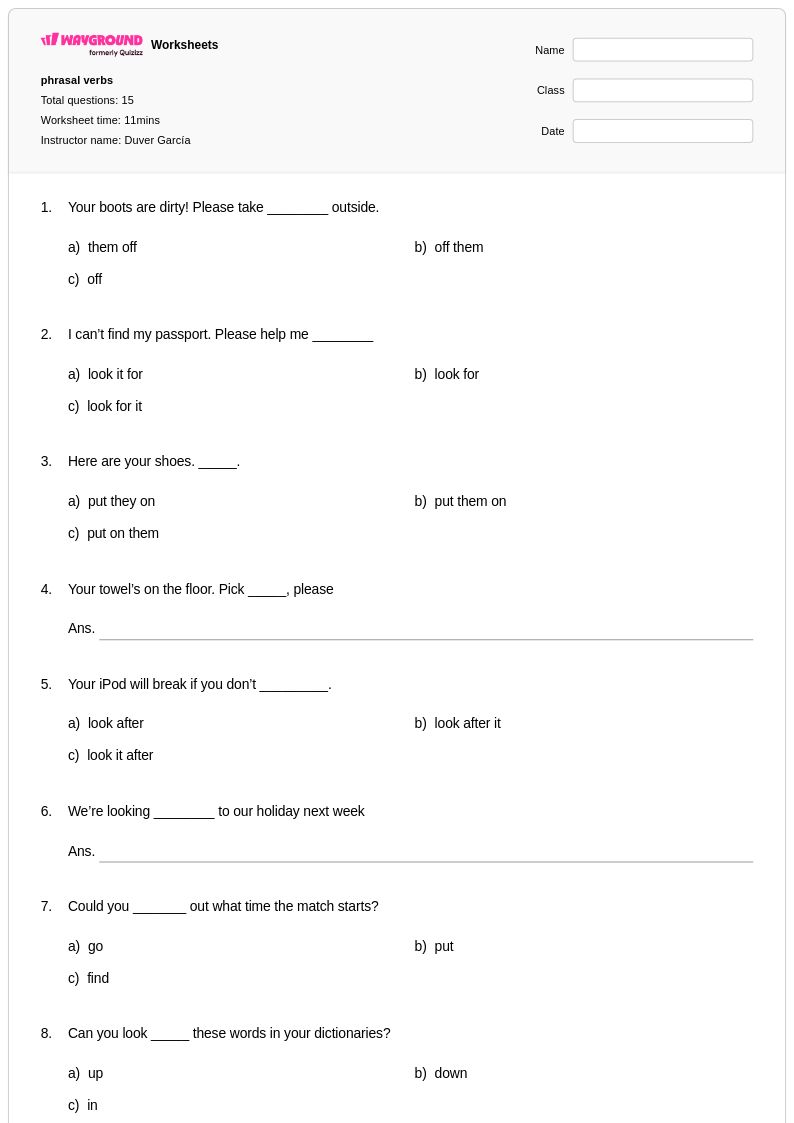
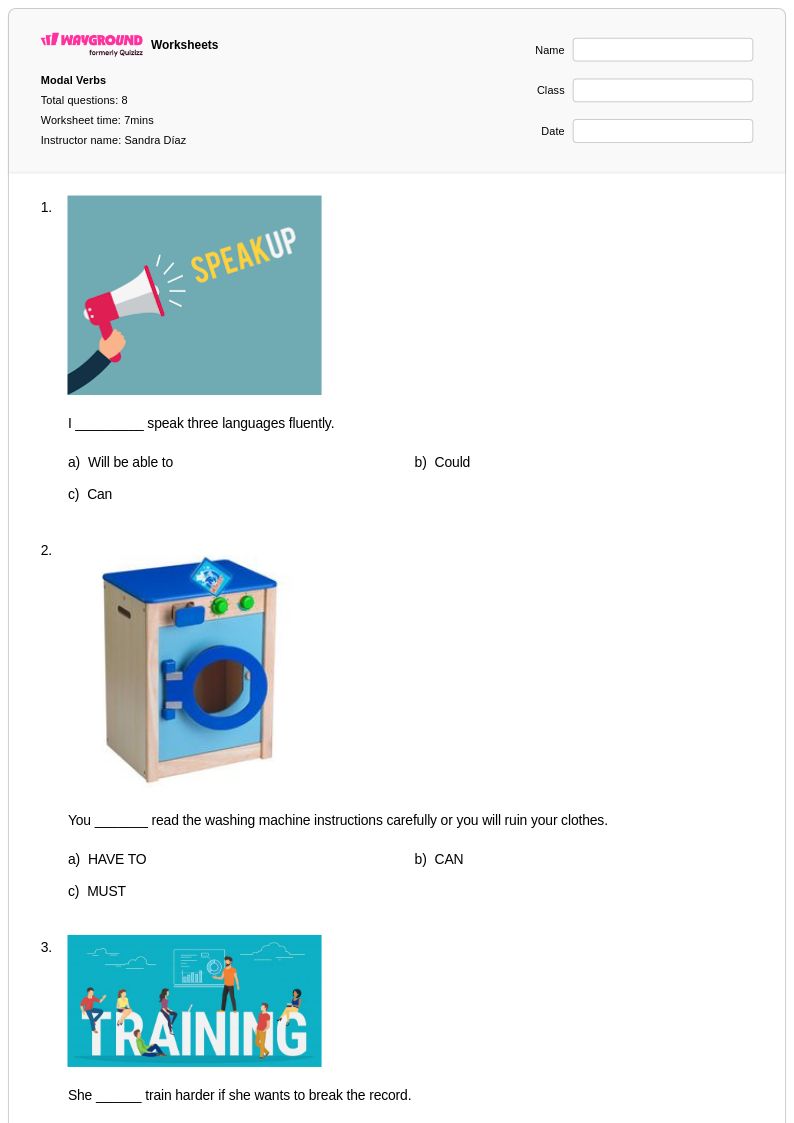
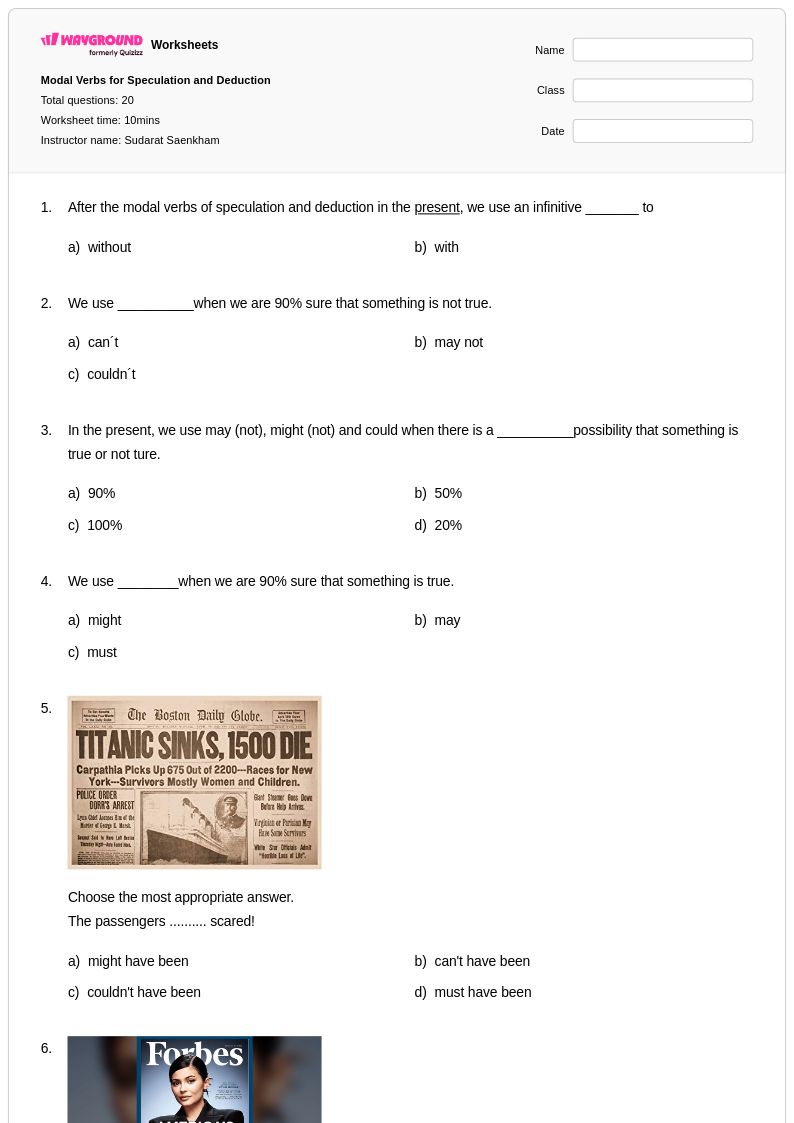
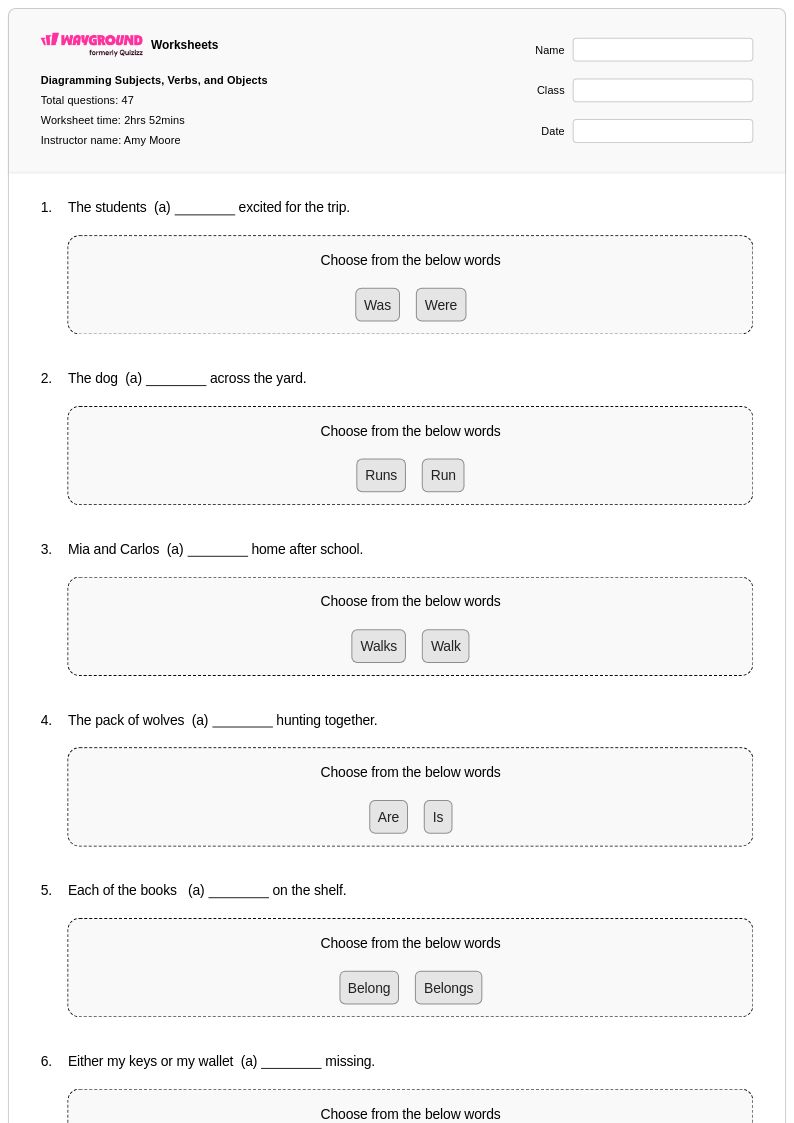
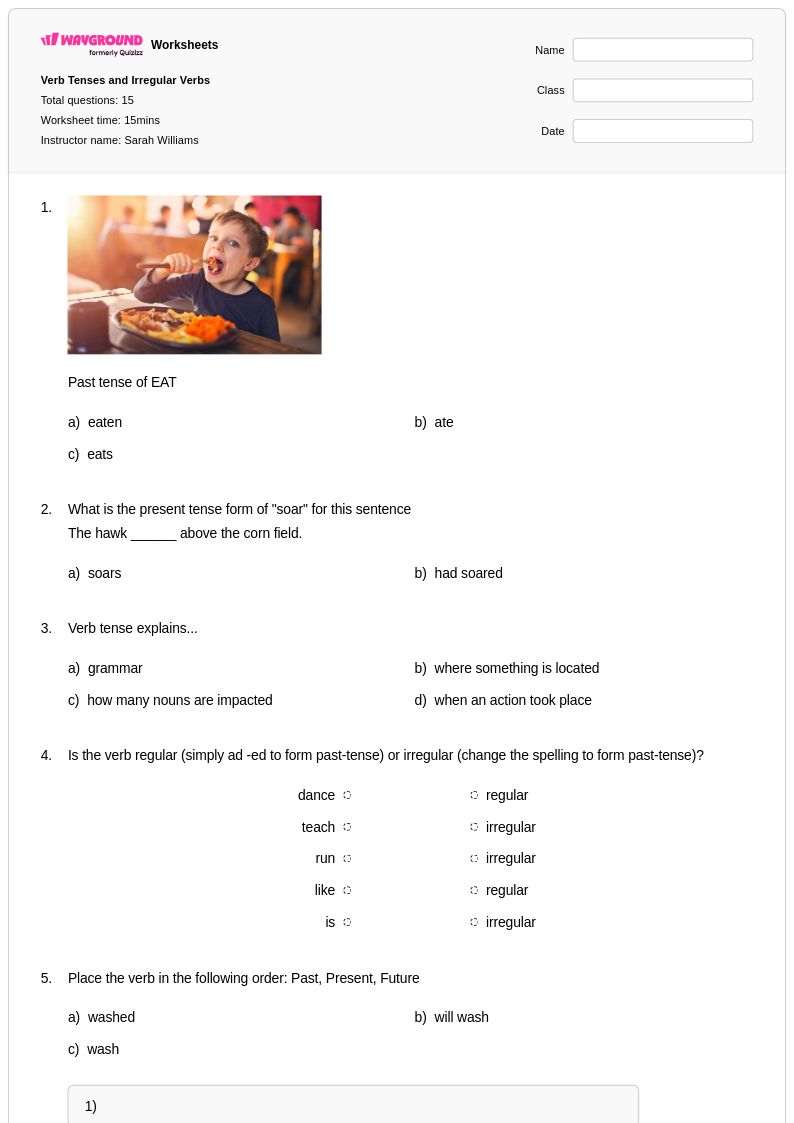
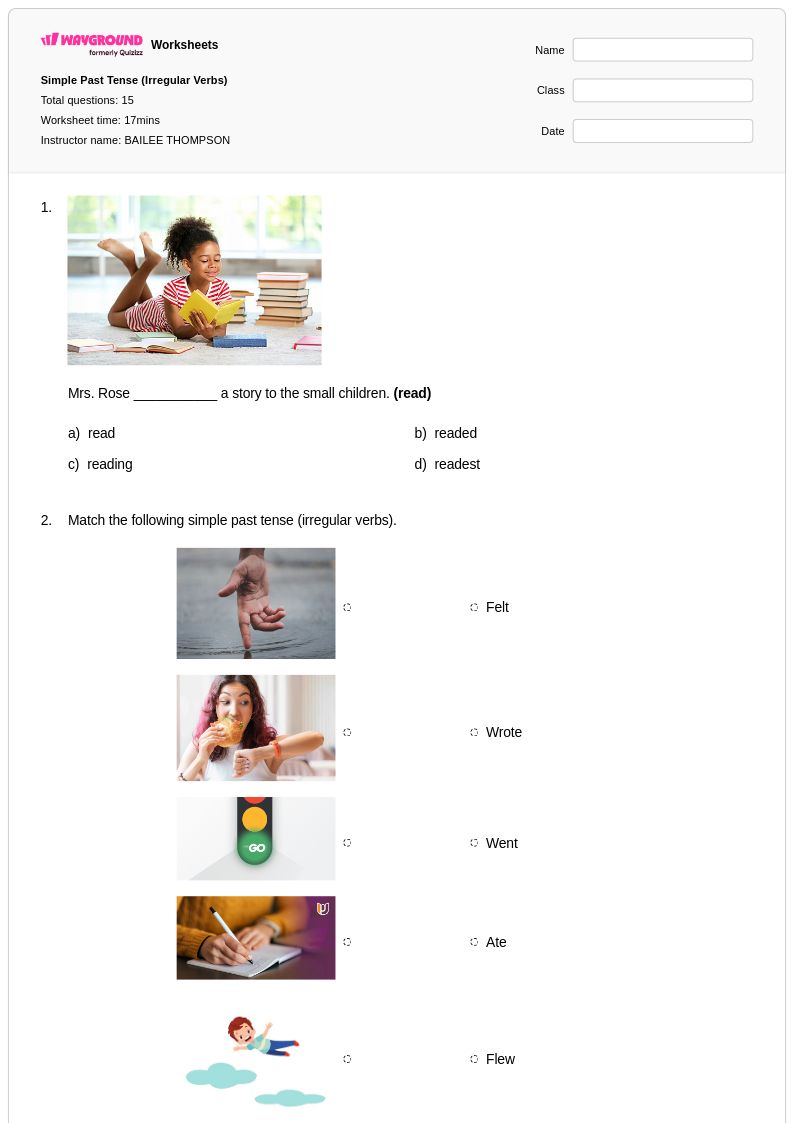
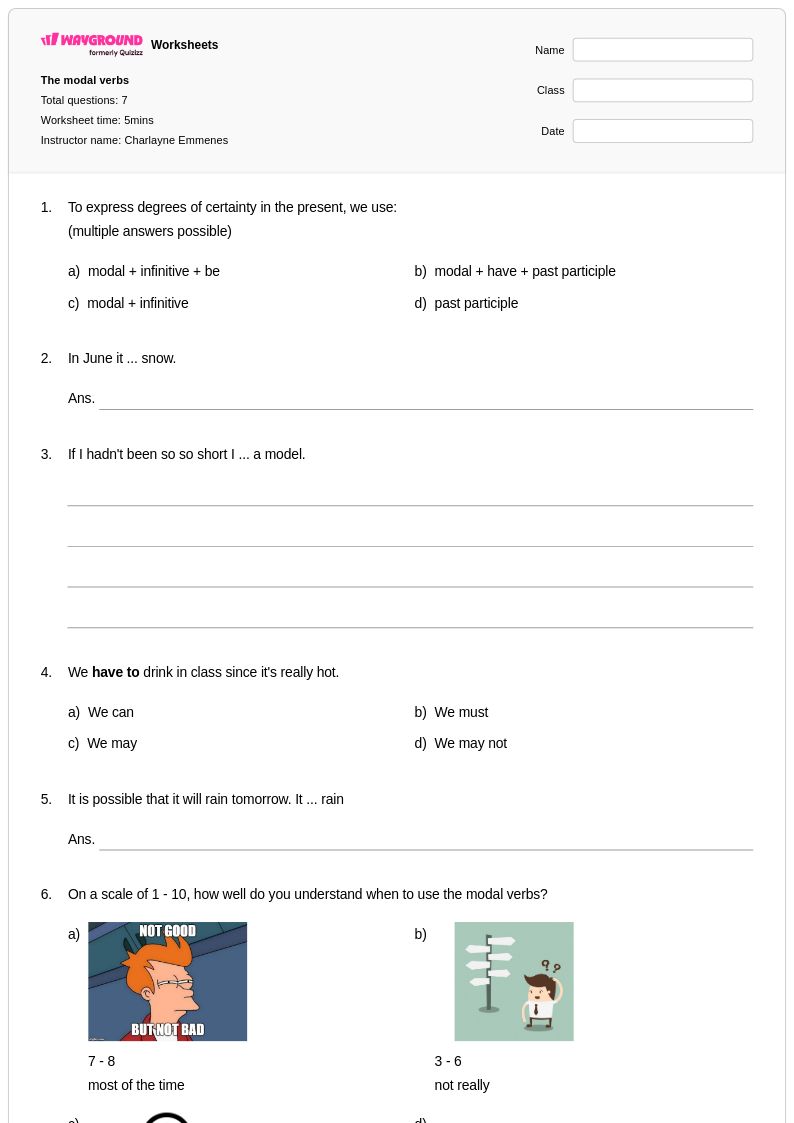
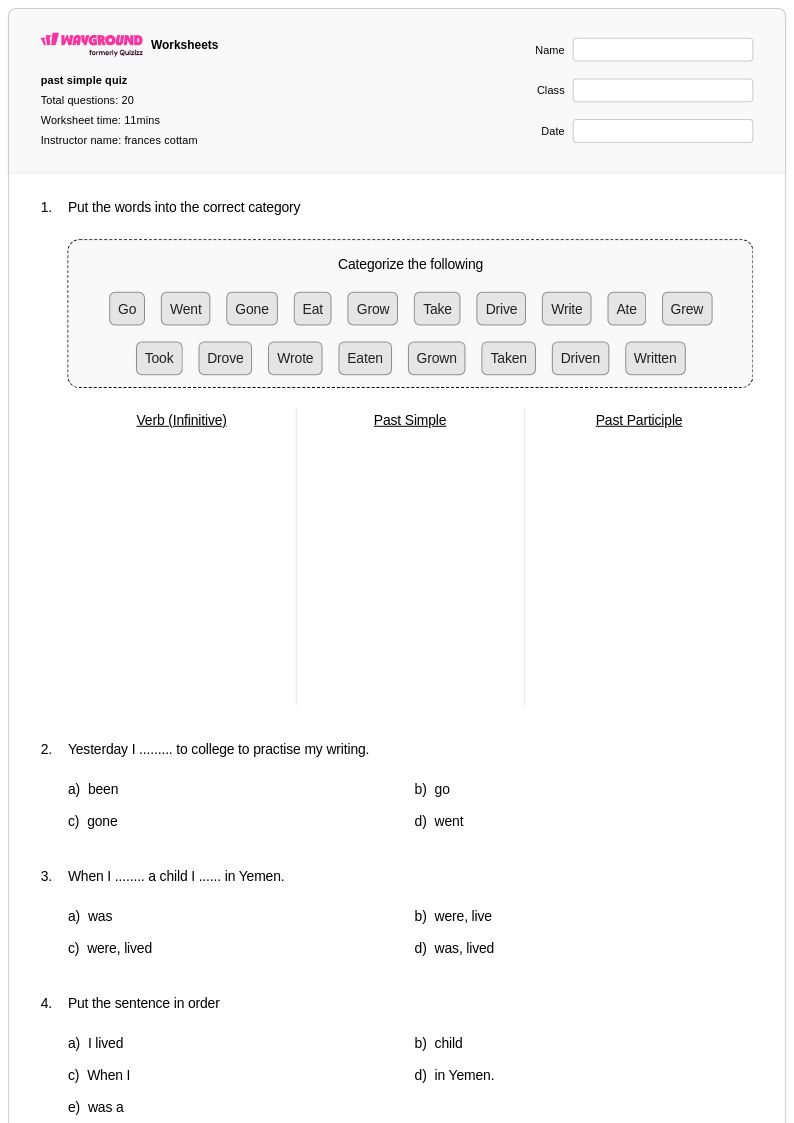
Year 10 English verb worksheets from Wayground help students master action words, linking verbs, and verb tenses through engaging printables, practice problems, and comprehensive answer keys in downloadable PDF format.
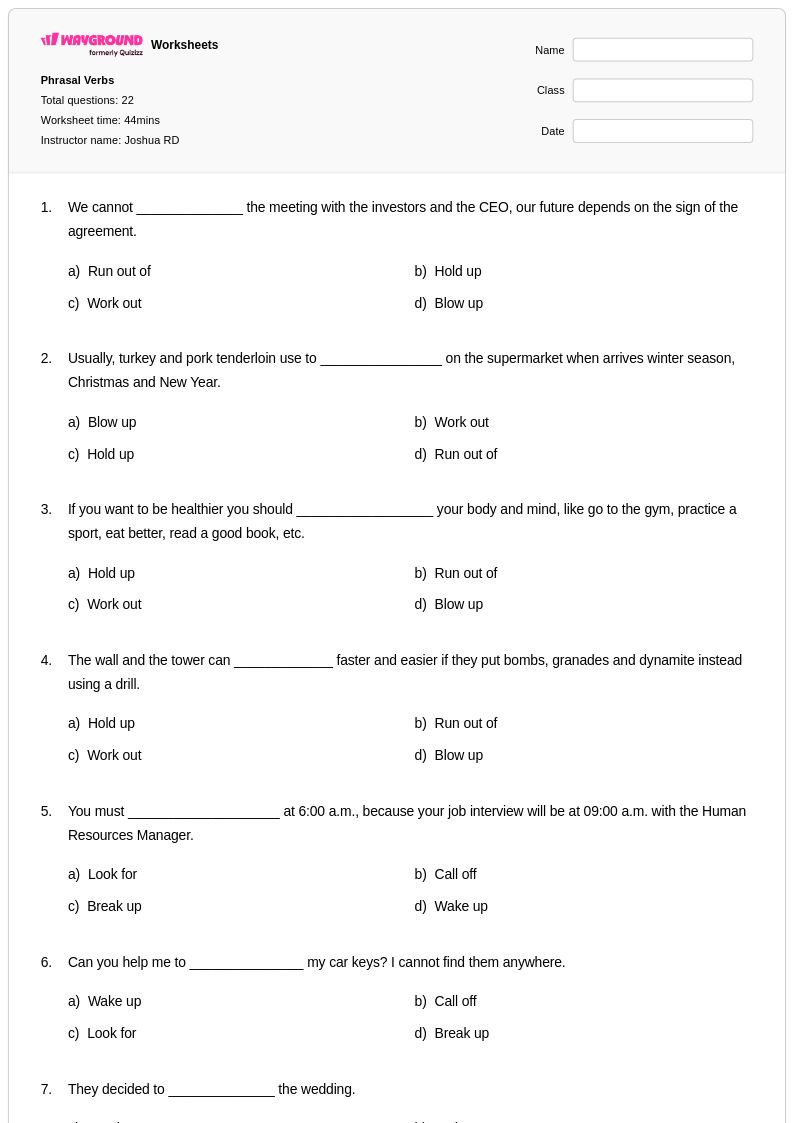
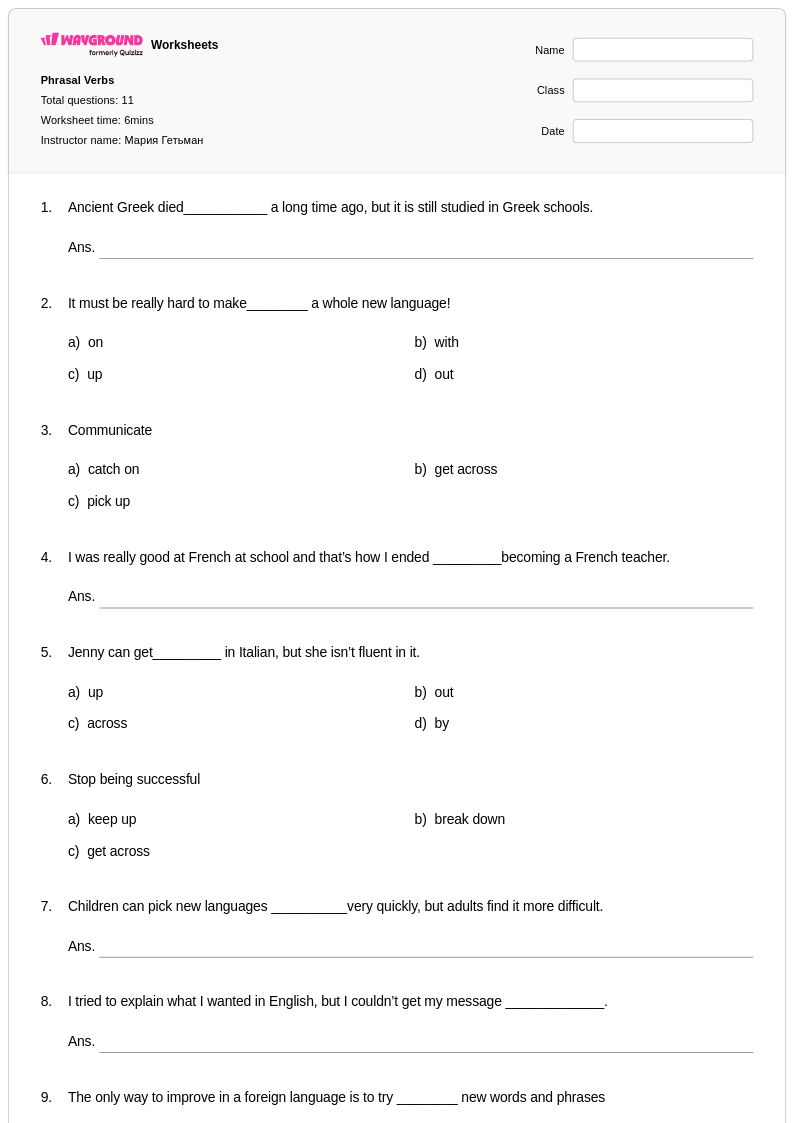
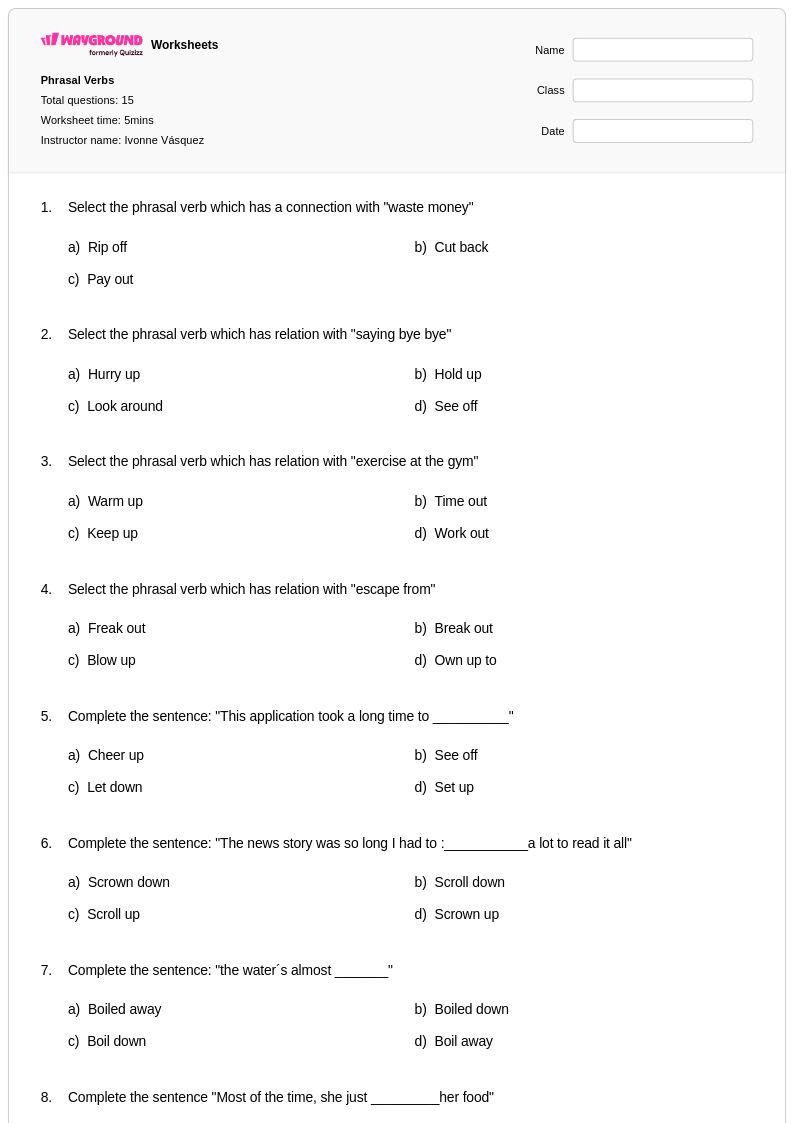
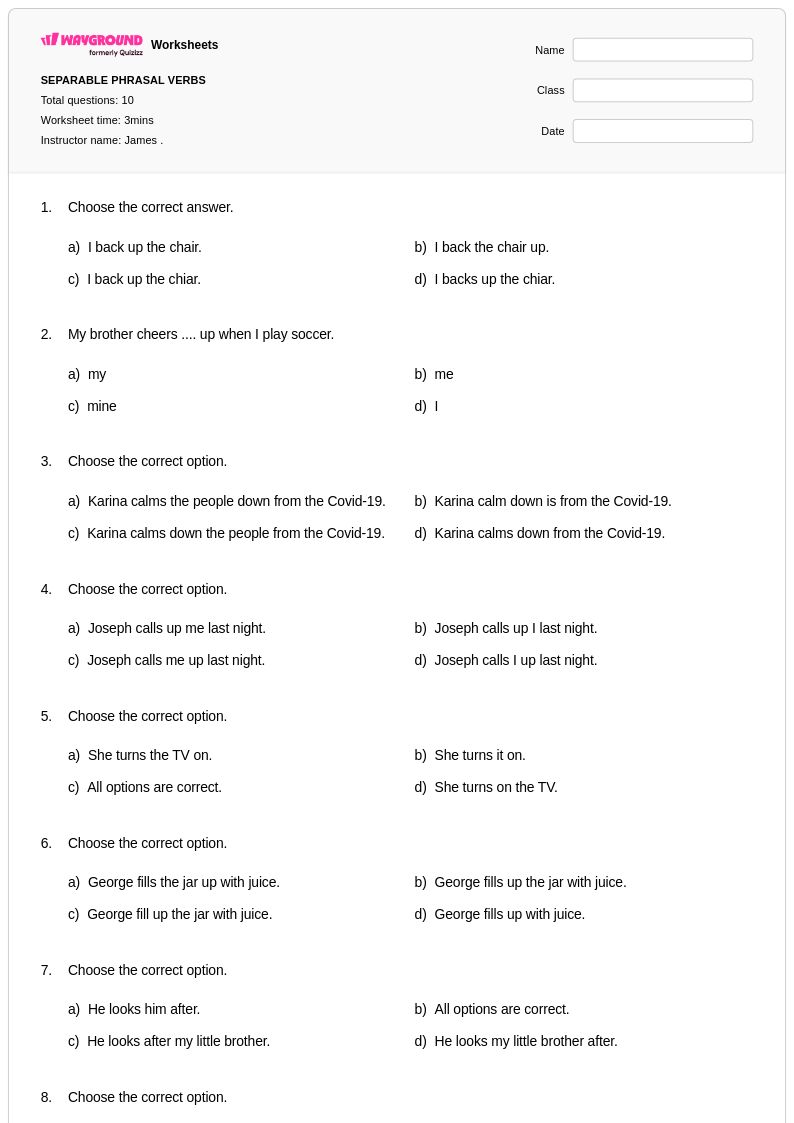
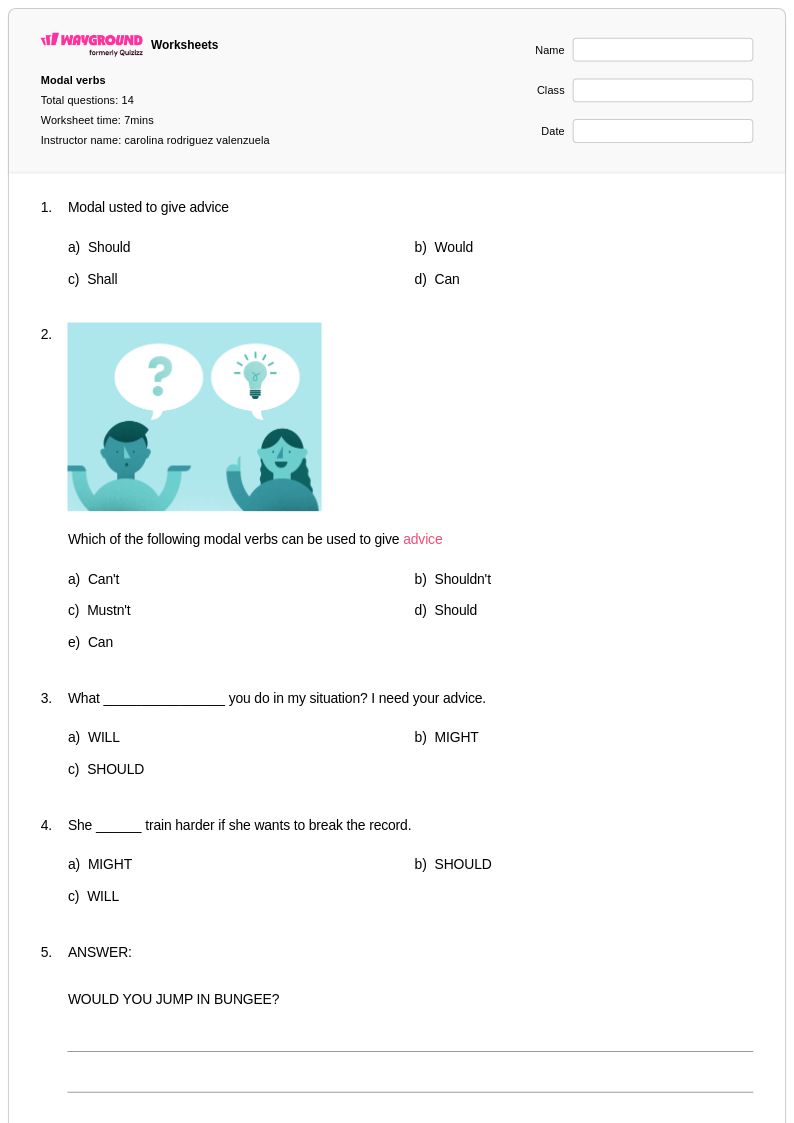
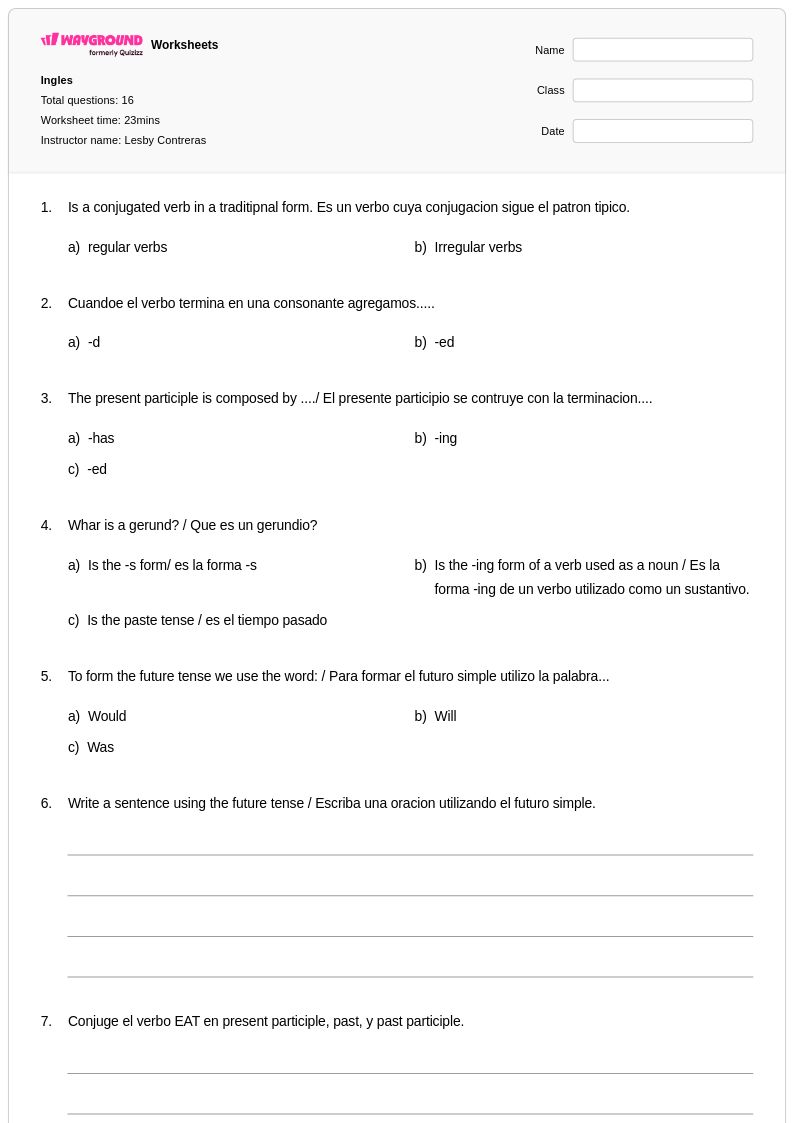
Year 10 verb worksheets available through Wayground provide comprehensive practice opportunities for students to master this fundamental component of English grammar. These educational resources focus on developing sophisticated understanding of verb types, including action verbs, linking verbs, and helping verbs, while advancing students' recognition of complex verb forms such as perfect tenses, progressive aspects, and subjunctive mood. The worksheets strengthen critical skills including proper verb conjugation, subject-verb agreement in complex sentences, and accurate use of irregular verb forms that commonly challenge tenth-grade students. Each printable resource includes detailed answer keys and structured practice problems that guide students through progressively challenging exercises, from identifying basic verb functions to analyzing verb usage in advanced literary passages and academic writing contexts.
Wayground's extensive collection of teacher-created verb worksheets offers educators powerful tools for differentiated instruction and targeted skill development in Year 10 English classrooms. The platform's millions of educational resources include standards-aligned materials that can be easily customized to meet diverse learning needs, with robust search and filtering capabilities that help teachers quickly locate specific verb concepts or difficulty levels. These versatile worksheets are available in both digital and pdf formats, enabling seamless integration into various instructional approaches whether for whole-class lessons, small group remediation, or individual enrichment activities. Teachers can efficiently plan comprehensive verb instruction sequences, assess student understanding through formative practice, and provide targeted interventions for students struggling with advanced grammatical concepts, while the platform's flexibility supports both traditional printable assignments and interactive digital learning experiences.
FAQs
How do I teach verbs to elementary and middle school students?
Start by anchoring the concept with action verbs, since they are the most concrete and easiest for students to identify in sentences. From there, layer in linking verbs and helping verbs with explicit sentence-level examples, showing students how each type functions differently. Using sentence sorting activities, color-coding by verb type, and daily mentor sentence analysis helps students build familiarity before moving into verb tenses and agreement.
What exercises help students practice identifying and using verbs correctly?
Effective verb practice includes sentence completion tasks, verb identification in context passages, tense-sorting activities, and error-correction exercises. Students benefit from working across all three verb types — action, linking, and helping — so they can distinguish between them in real sentences rather than in isolation. Progressive practice that moves from recognition to application, such as rewriting sentences in different tenses, builds both accuracy and fluency.
What are the most common mistakes students make with verb tenses?
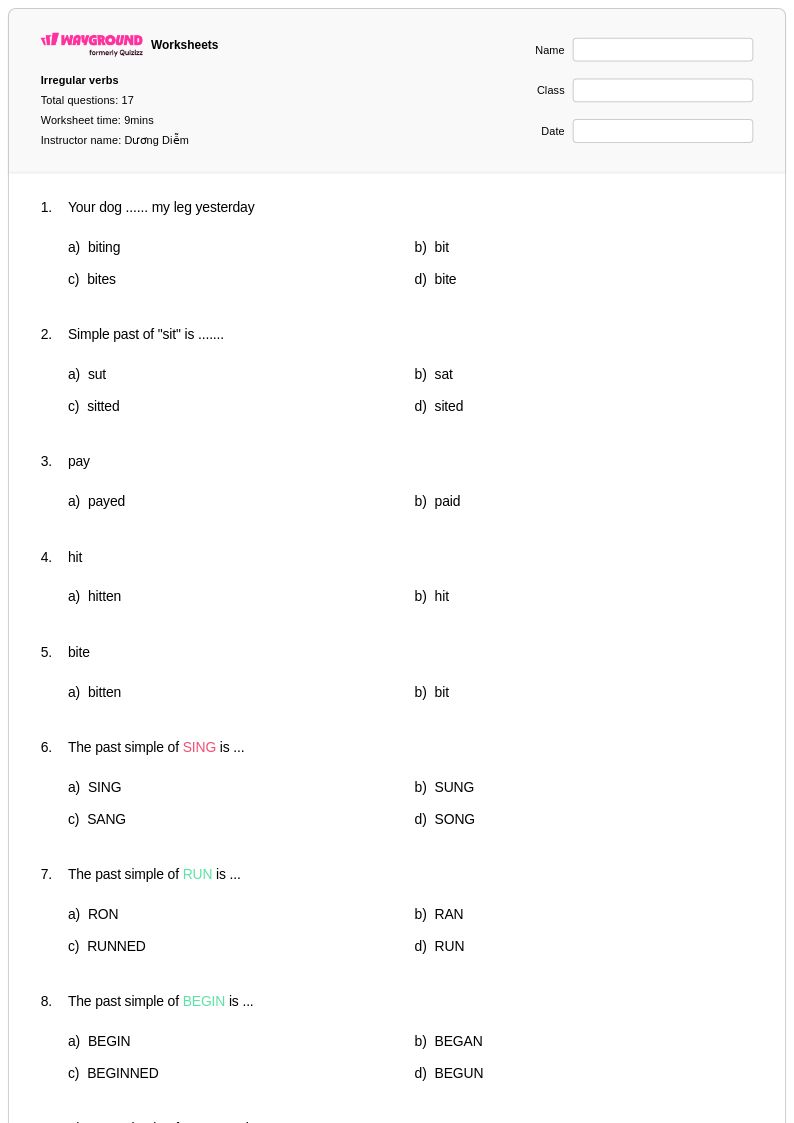
Students frequently confuse simple past with past perfect and struggle to apply irregular verb forms consistently, defaulting to regular past-tense endings like adding '-ed' to verbs such as 'run' or 'go.' Tense shifting within a single piece of writing is another persistent error, especially in narrative tasks. Students also commonly misuse helping verbs, pairing them incorrectly with main verbs in perfect or progressive constructions.
How do students commonly confuse action verbs, linking verbs, and helping verbs?
The most frequent confusion occurs with linking verbs, particularly 'appears,' 'feels,' 'seems,' and 'looks,' which students often misidentify as action verbs because they associate them with physical actions. Helping verbs are similarly misread as the main verb of a sentence when students have not yet learned to identify verb phrases. Teaching students to test for these categories using substitution strategies — replacing the verb with 'is' or 'are' to check for linking function — helps resolve the confusion.
How do I teach subject-verb agreement effectively?
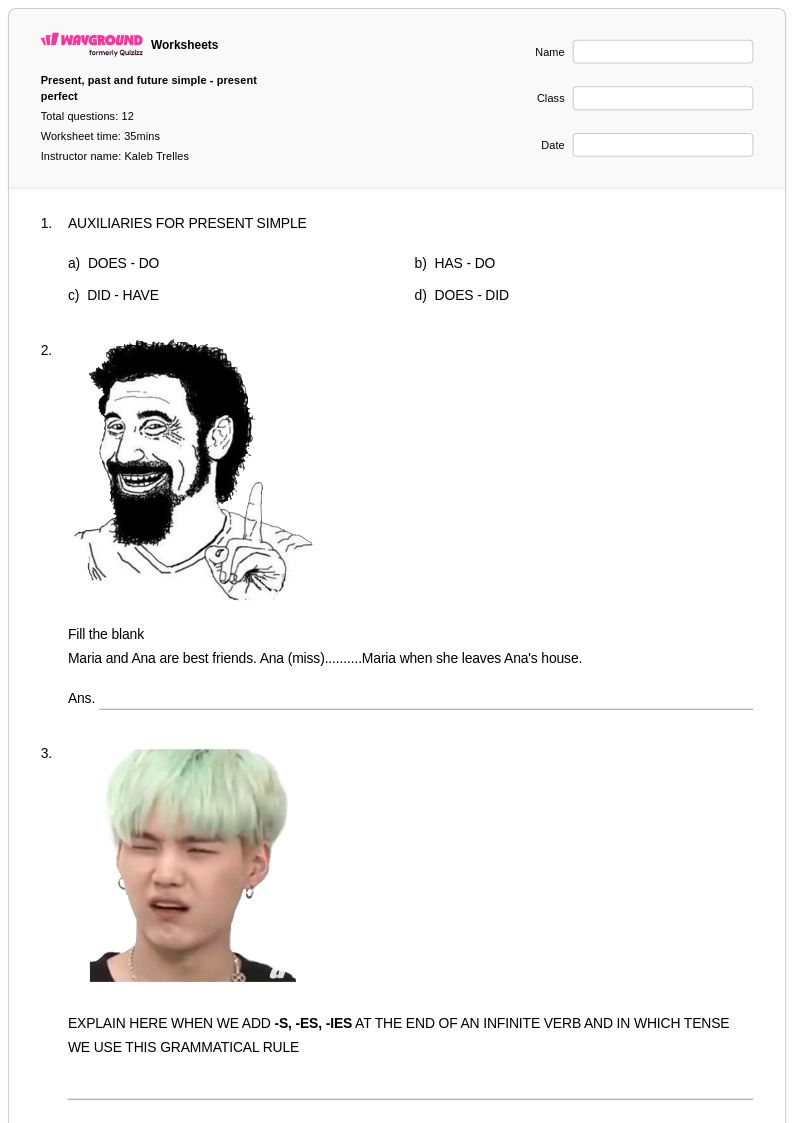
Subject-verb agreement is best taught by first ensuring students can reliably identify the subject of a sentence before attempting to match it with a verb. Common sticking points include indefinite pronouns, collective nouns, and subjects separated from the verb by a prepositional phrase. Targeted practice with sentences that isolate these patterns — rather than relying only on full paragraph correction — gives students the focused repetition needed to internalize the rule.
How do I use Wayground's verb worksheets in my classroom?
Wayground's verb worksheets are available as printable PDFs for traditional classroom use and in digital formats for technology-integrated environments, giving teachers flexibility across instructional settings. Teachers can assign digital versions as interactive practice, host them as a quiz directly on Wayground, or print them for independent work and homework. Each worksheet includes a complete answer key, making them efficient for both instruction and self-paced student review.
How can I differentiate verb worksheets for students with different learning needs?
Wayground supports student-level accommodations that can be applied individually without affecting other students' experiences, including Read Aloud for students who need questions read to them, reduced answer choices to lower cognitive load for struggling learners, and extended time for students who need more processing time. Font size and display theme adjustments are also available through Reading Mode to support accessibility needs. These settings are saved per student and apply automatically in future sessions, so setup is a one-time process for each learner.