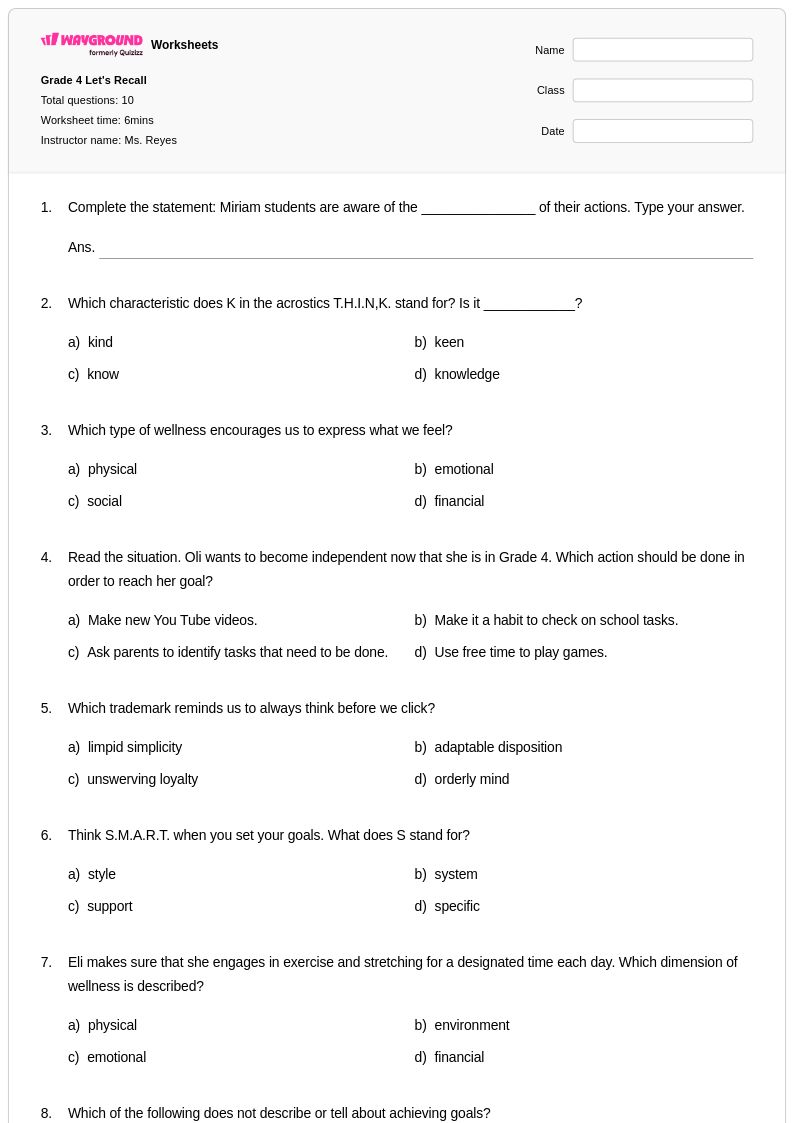
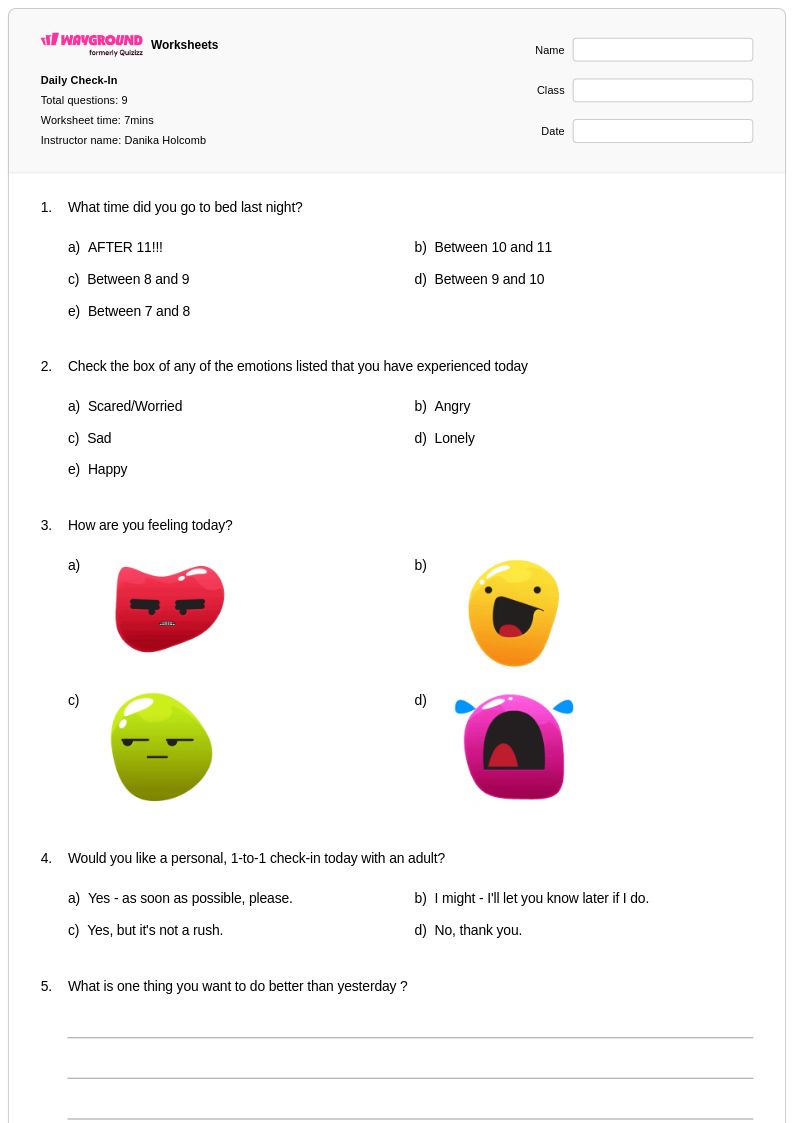
Year 4 wellness worksheets from Wayground help students explore healthy habits and personal well-being through engaging printables, practice problems, and free PDF resources with comprehensive answer keys.
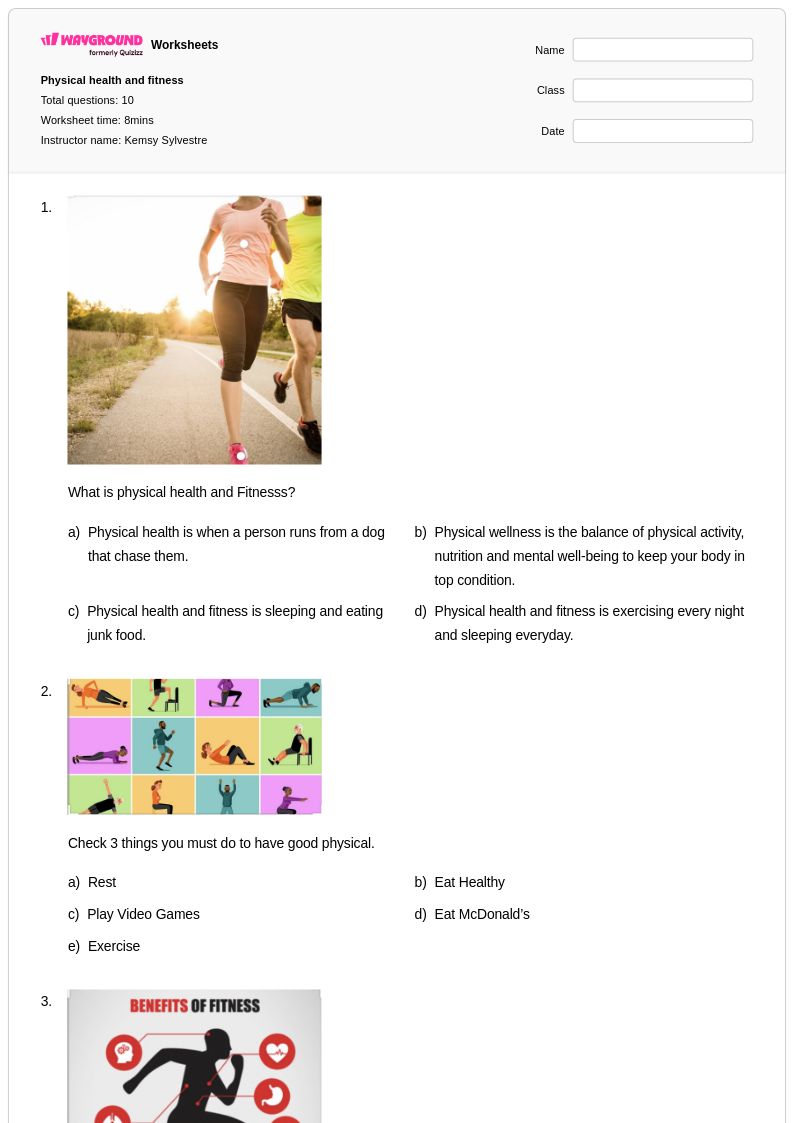
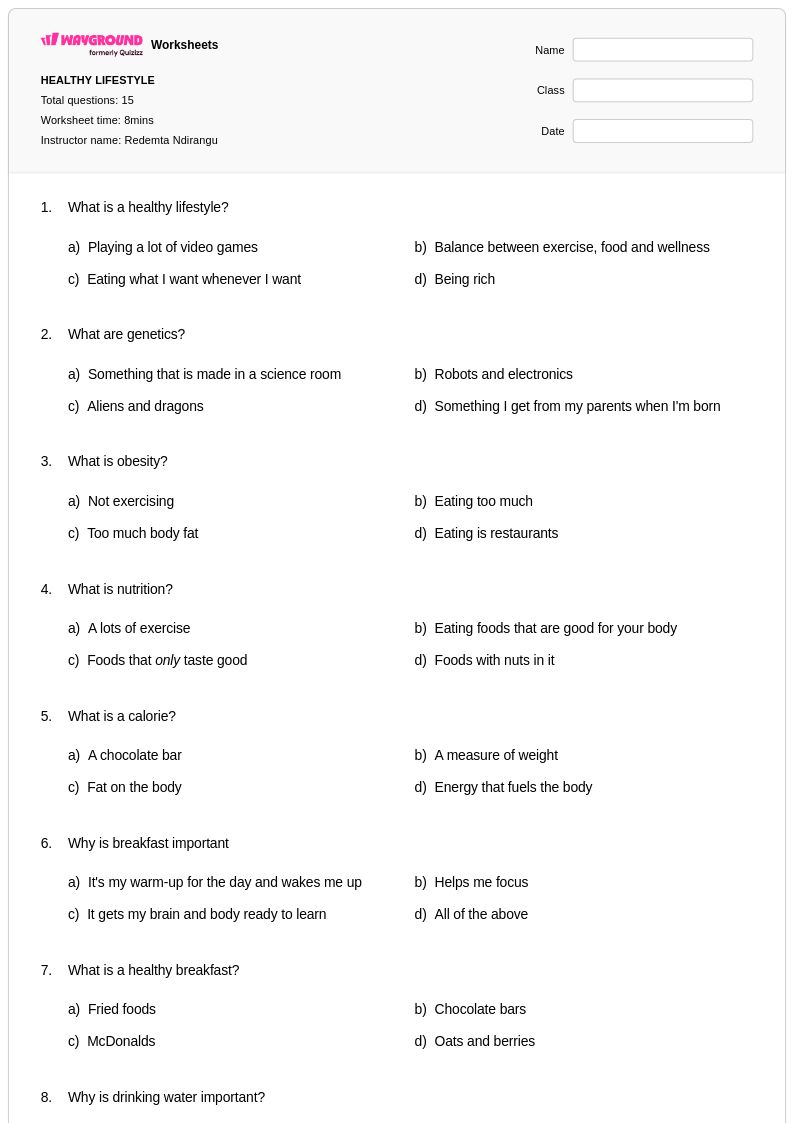
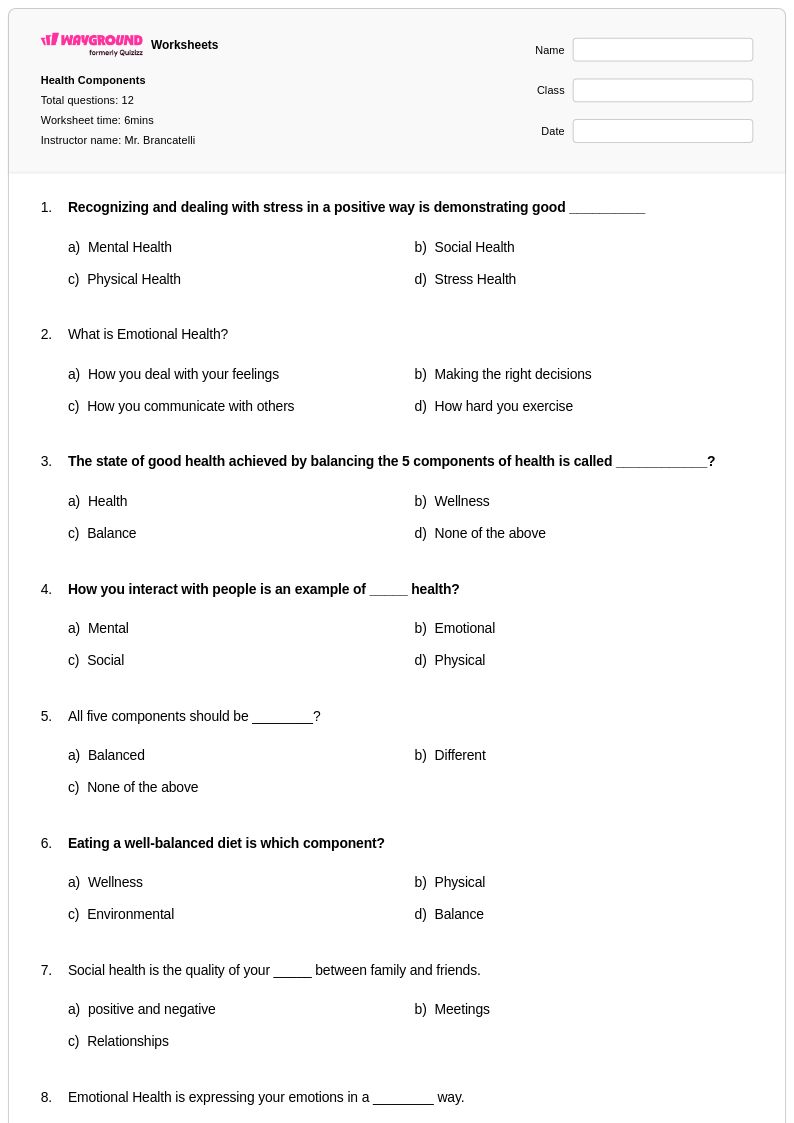
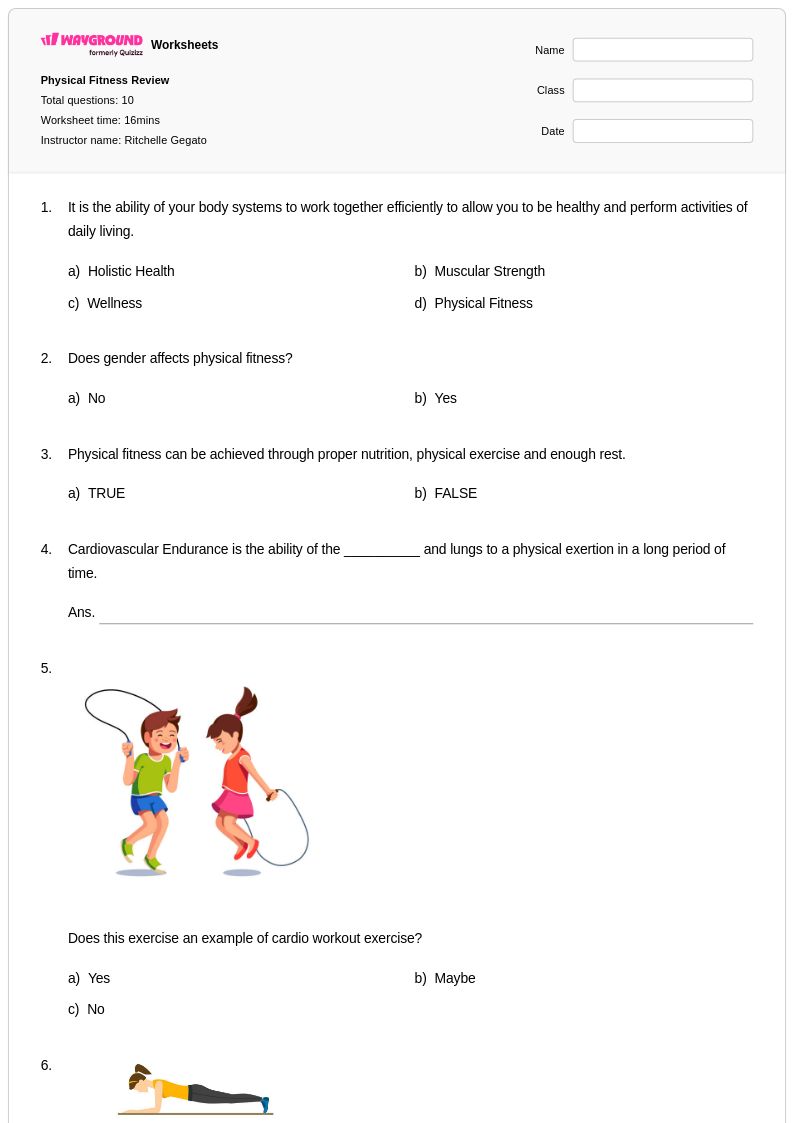
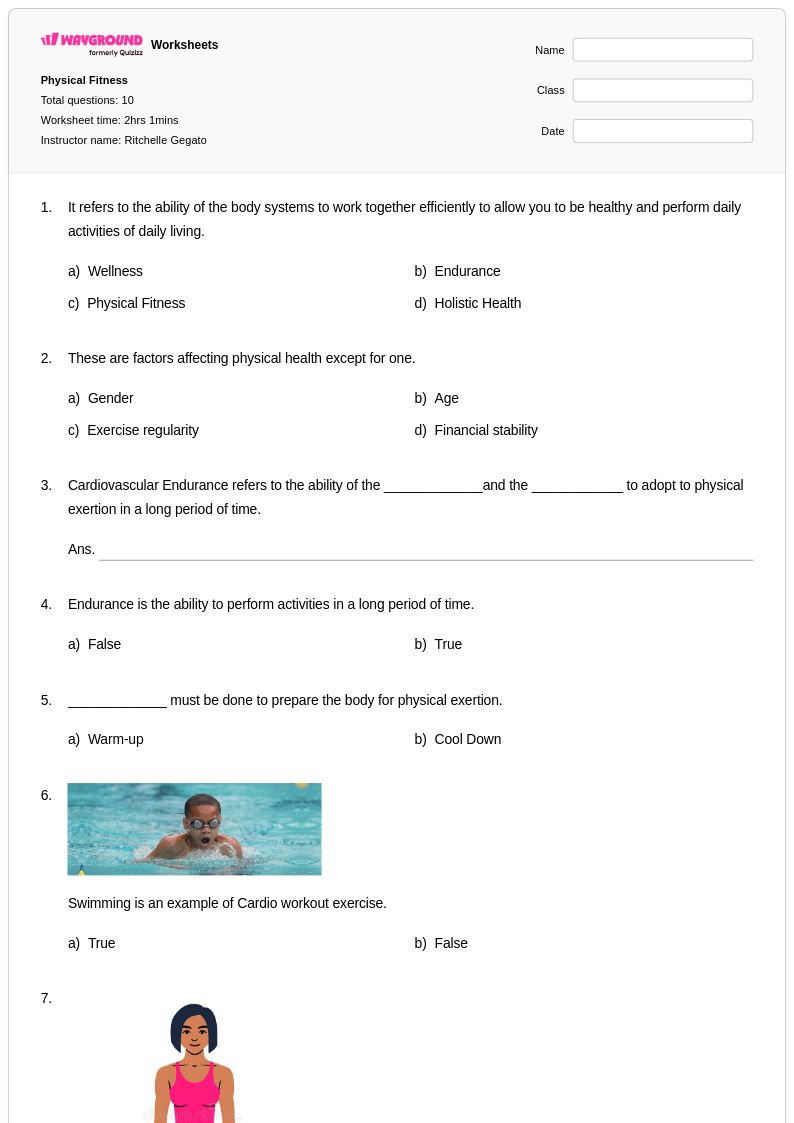
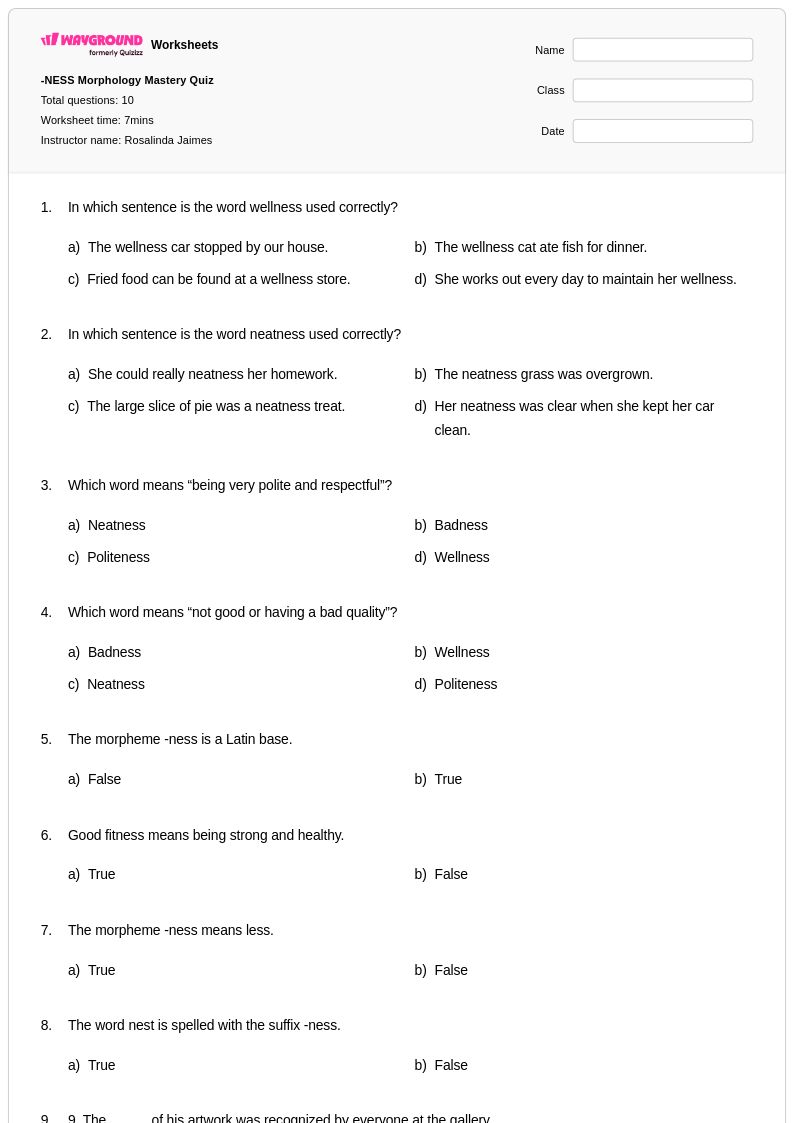
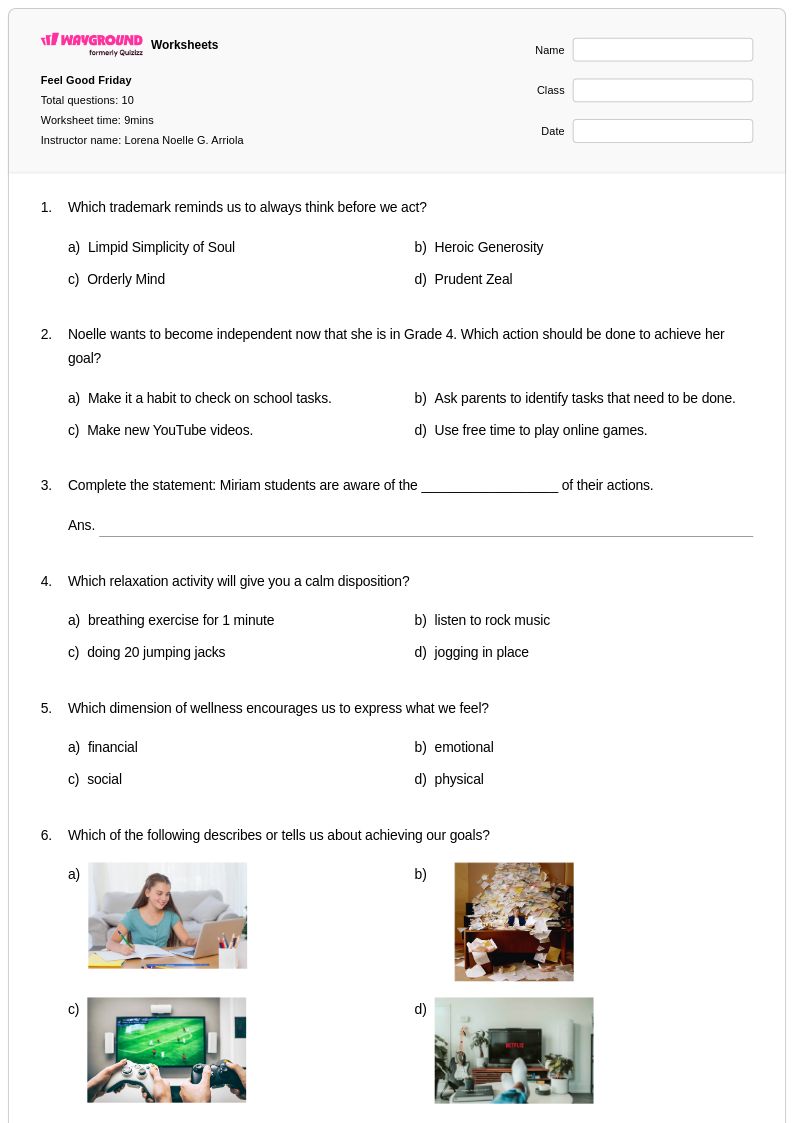
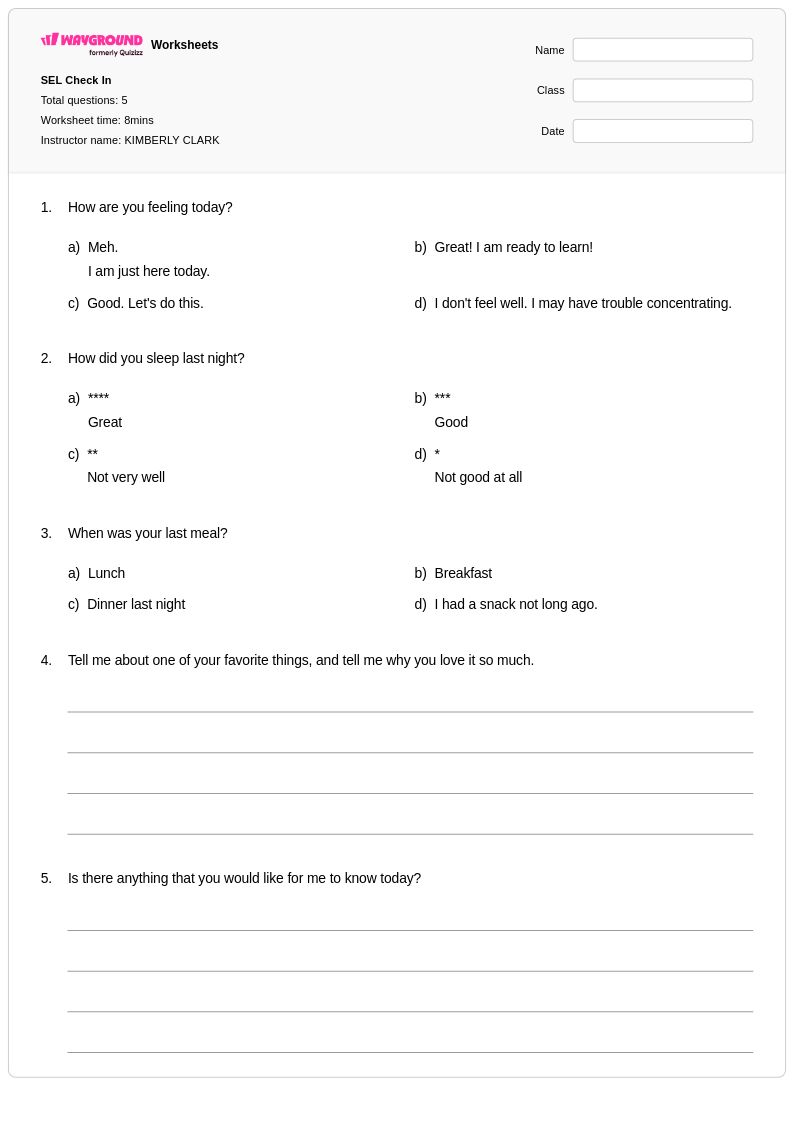
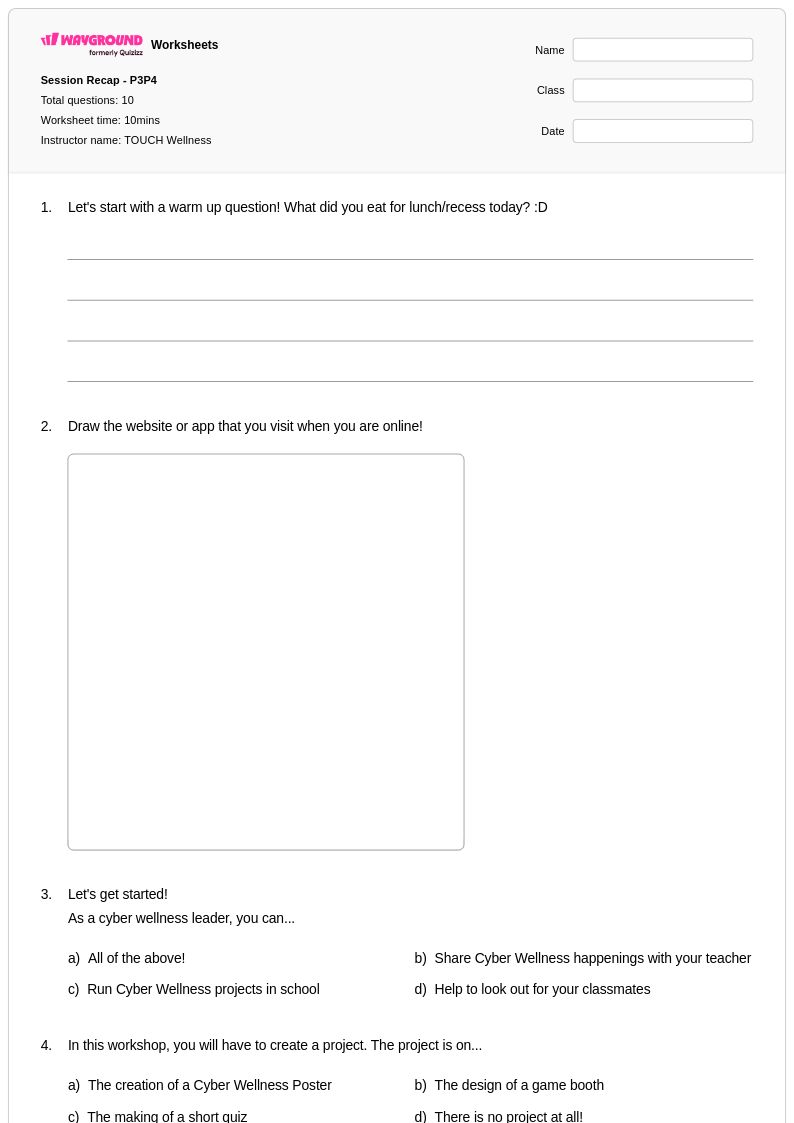
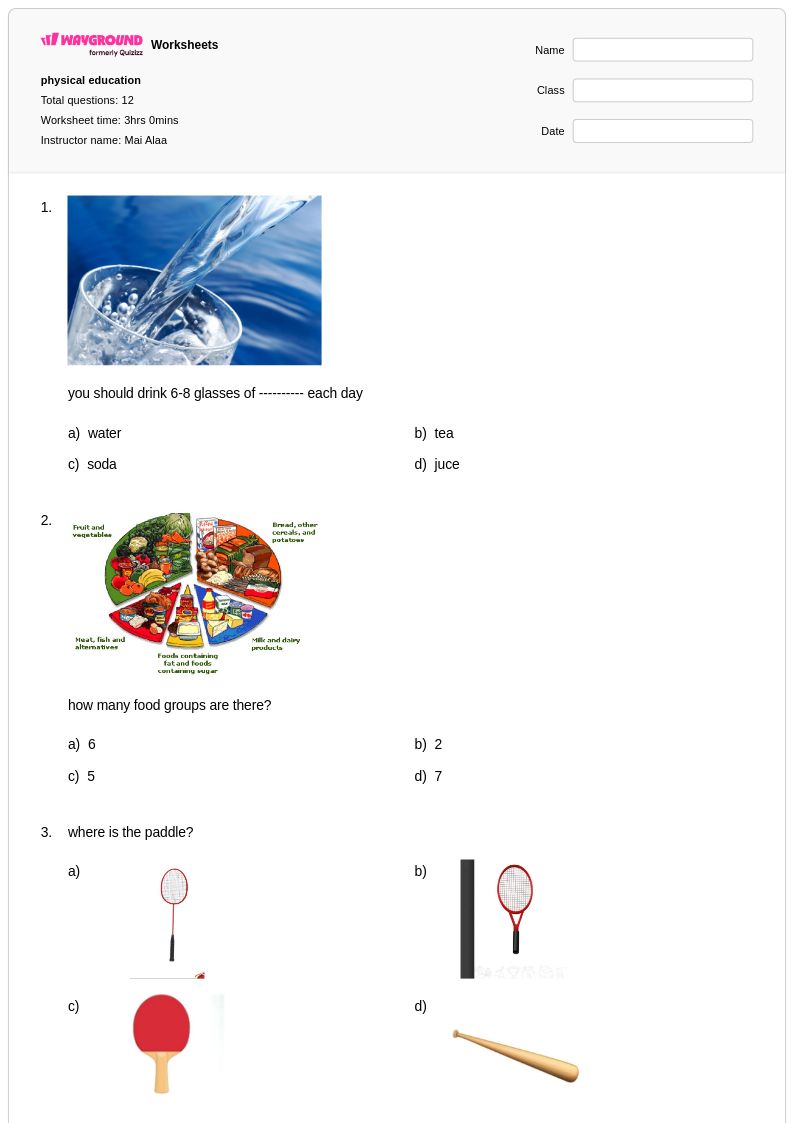
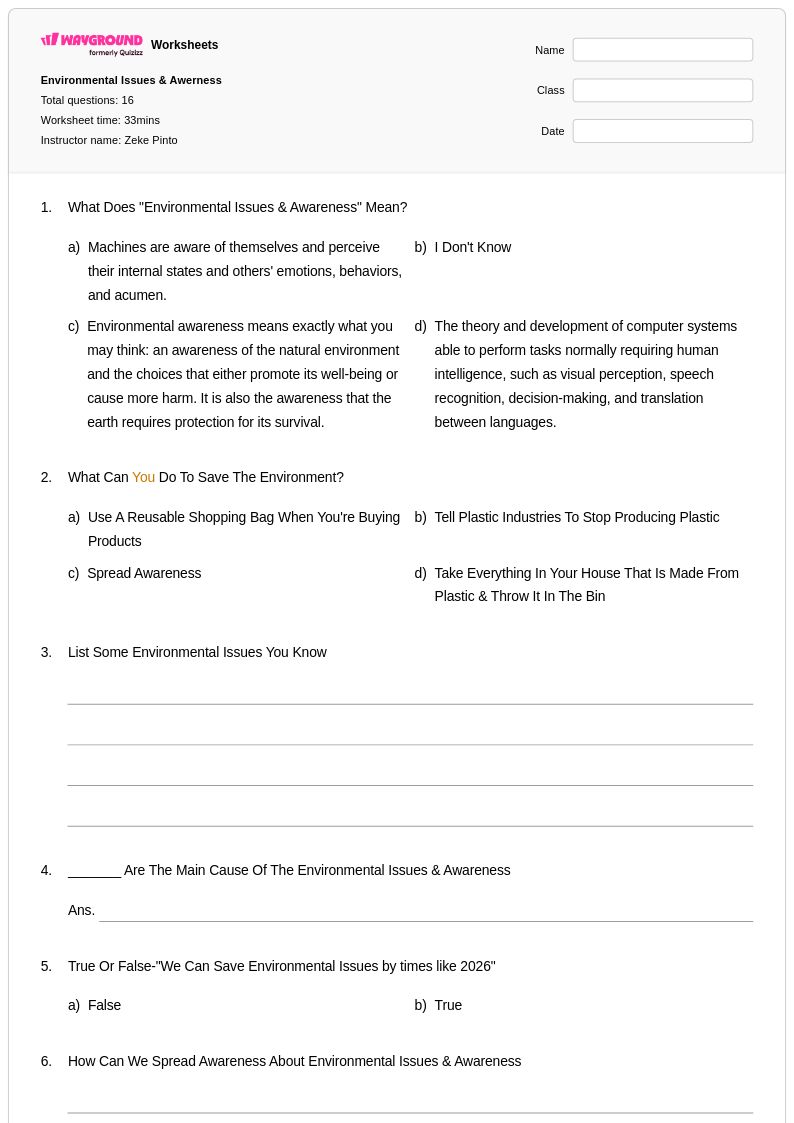
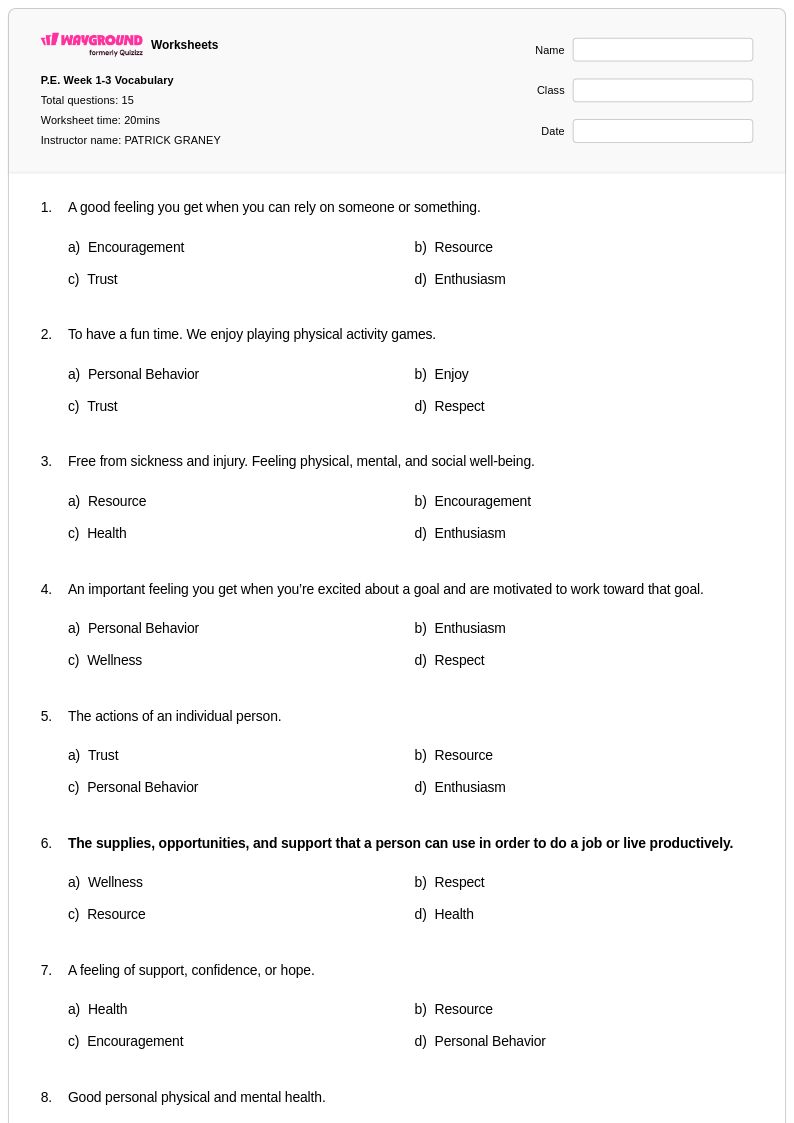
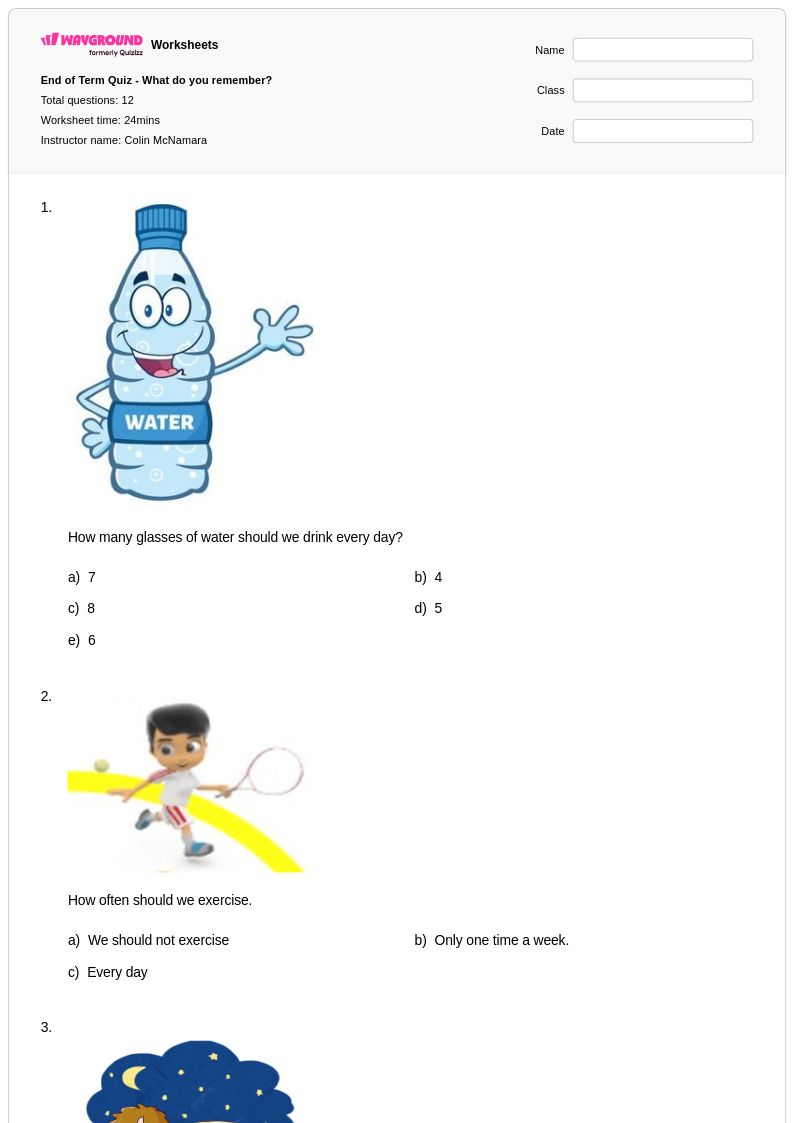
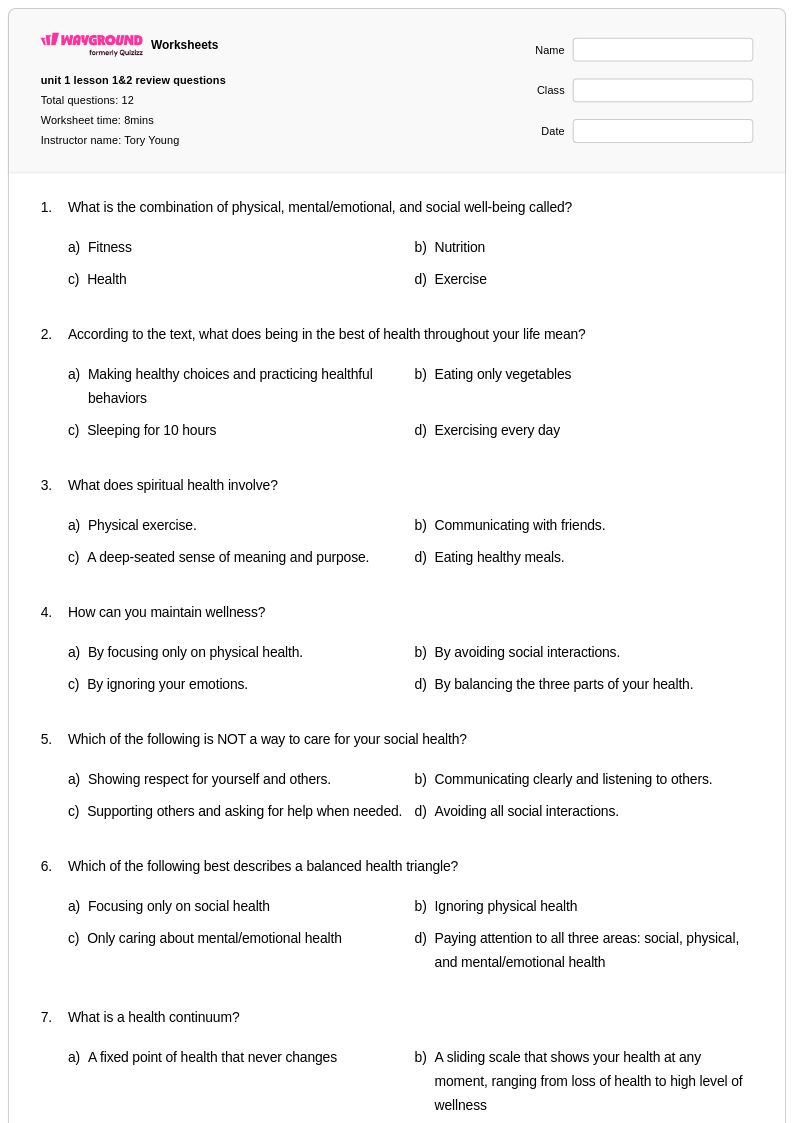
Wellness worksheets for Year 4 students available through Wayground (formerly Quizizz) provide comprehensive educational resources that help young learners develop fundamental understanding of personal health and well-being concepts. These expertly designed printables focus on essential wellness topics including nutrition basics, personal hygiene habits, emotional health awareness, sleep importance, and physical activity benefits that are developmentally appropriate for fourth-grade students. The worksheets strengthen critical life skills through engaging practice problems that encourage students to identify healthy choices, analyze daily habits, and reflect on wellness practices in their own lives. Each resource includes detailed answer keys that support both independent learning and guided instruction, with free pdf formats ensuring easy accessibility for classroom and home use.
Wayground (formerly Quizizz) empowers educators with an extensive collection of millions of teacher-created wellness resources specifically curated for Year 4 physical education instruction. The platform's robust search and filtering capabilities enable teachers to quickly locate materials aligned with health education standards while supporting diverse learning needs through built-in differentiation tools. These customizable worksheets are available in both printable and digital formats, including downloadable pdf versions that facilitate seamless integration into existing lesson plans. Teachers can efficiently address varying skill levels within their classrooms, using these resources for targeted remediation, enrichment activities, and regular skill practice that reinforces wellness concepts throughout the academic year, ultimately supporting comprehensive health education that promotes lifelong healthy habits in elementary students.
FAQs
How do I teach the dimensions of wellness in a health or PE class?
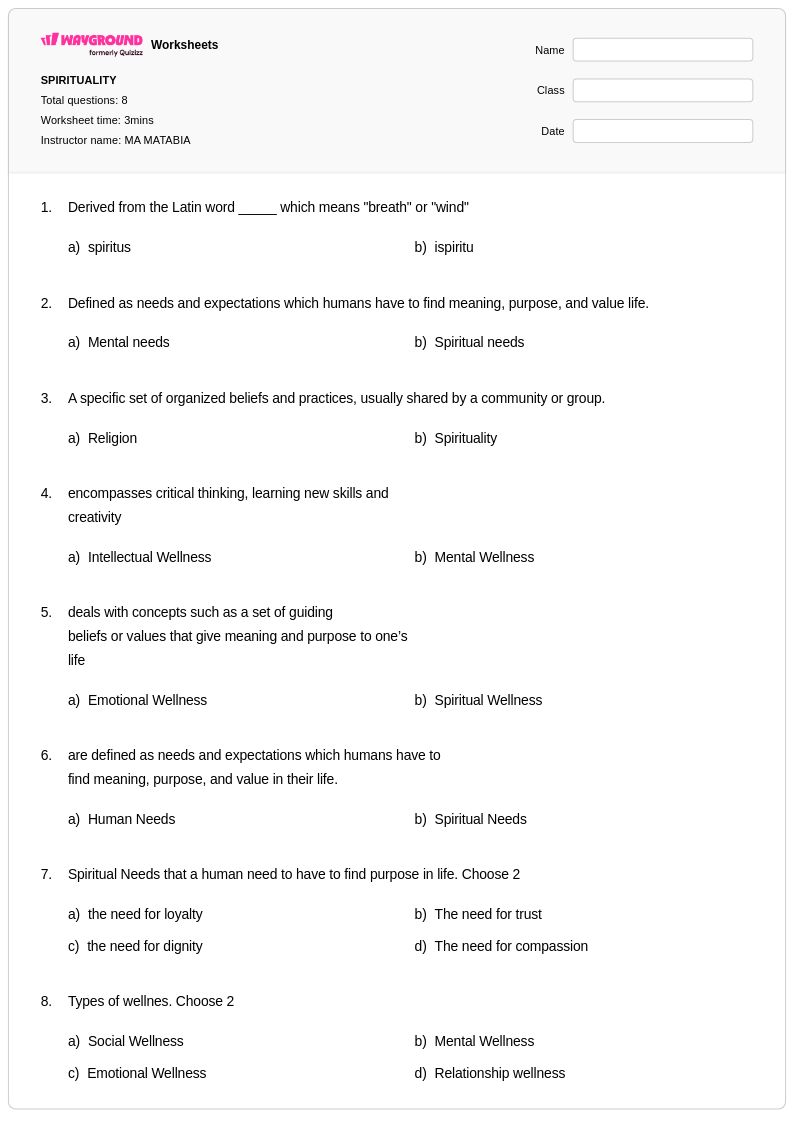
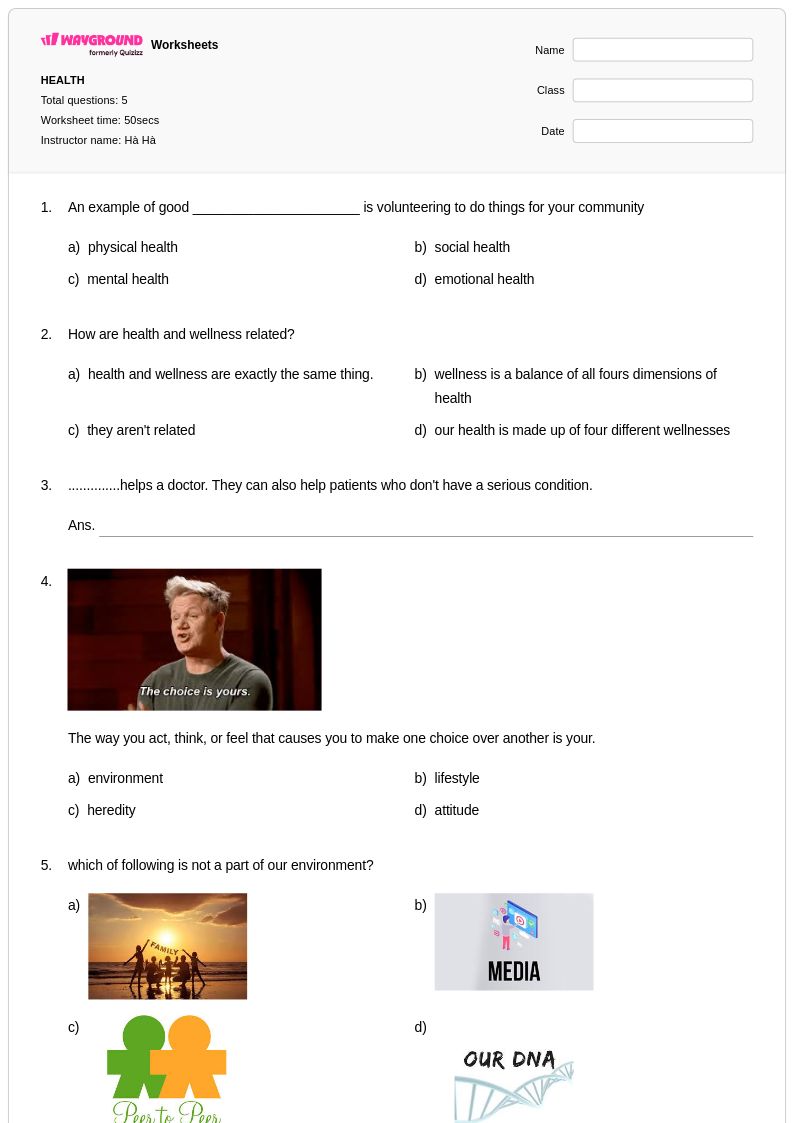
Teaching the dimensions of wellness works best when students can connect each dimension (physical, emotional, social, intellectual, spiritual, and environmental) to their own daily experiences. Start by having students self-assess their current habits across each dimension, then use guided reflection activities to help them identify areas for growth. Structured worksheets that prompt personal goal-setting give students a concrete framework for understanding wellness as a holistic, interconnected concept rather than just physical fitness.
What activities help students practice stress management techniques like progressive muscle relaxation?
Progressive muscle relaxation is best taught through step-by-step guided practice where students systematically tense and release muscle groups from feet to head. Worksheets that walk students through each muscle group with prompts for reflection afterward help reinforce the technique and build awareness of physical stress responses. Regular low-stakes practice, either in class or as a homework activity, helps students internalize the skill so they can apply it independently during high-stress situations like exams.
What common mistakes do students make when learning about emotional and mindful eating?
Students frequently conflate emotional eating with simply enjoying food, missing the distinction between eating in response to physical hunger versus emotional triggers like stress, boredom, or anxiety. Another common misconception is that mindful eating means eating less, when it actually focuses on awareness, pace, and attunement to hunger and fullness cues. Worksheets that include food-mood journaling prompts or hunger scale activities help students recognize these patterns in concrete, personal terms rather than as abstract health concepts.
How can I use wellness worksheets to support students with different learning needs?
Wellness worksheets can be differentiated by adjusting the complexity of reflection prompts, reducing the number of response options for students who need lower cognitive load, or enabling read-aloud support for students with reading challenges. On Wayground, teachers can apply individual accommodations such as extended time, read aloud, and reduced answer choices to specific students while the rest of the class works with default settings. These accommodations are saved and reusable across future sessions, making it practical to consistently support diverse learners throughout a wellness unit.
How do I use Wayground's wellness worksheets in my classroom?
Wayground's wellness worksheets are available as printable PDFs for traditional classroom use and in digital formats for technology-integrated environments, giving teachers flexibility depending on their setup. Teachers can also host worksheets as a live or self-paced quiz directly on Wayground, allowing for real-time student responses and built-in answer key grading. This makes them practical for formative assessment, independent practice, or structured in-class activities across physical education and health courses.
What wellness topics are most important to cover in a K-12 health curriculum?
A comprehensive K-12 wellness curriculum should address the dimensions of health, mental health awareness, stress management strategies, nutrition and mindful eating, personal fitness planning, and healthy decision-making. Introducing these topics progressively, with age-appropriate complexity, helps students build a coherent understanding of holistic well-being over time. Anchoring instruction in self-assessment and personal goal-setting makes these concepts personally relevant, which increases both engagement and retention.