Free Printable Writer's Effect Worksheets for Year 7
Explore Wayground's free Year 7 writer's effect worksheets and printables that help students analyze how authors create specific impacts through language choices, complete with practice problems and answer keys.
Explore printable Writer's Effect worksheets for Year 7
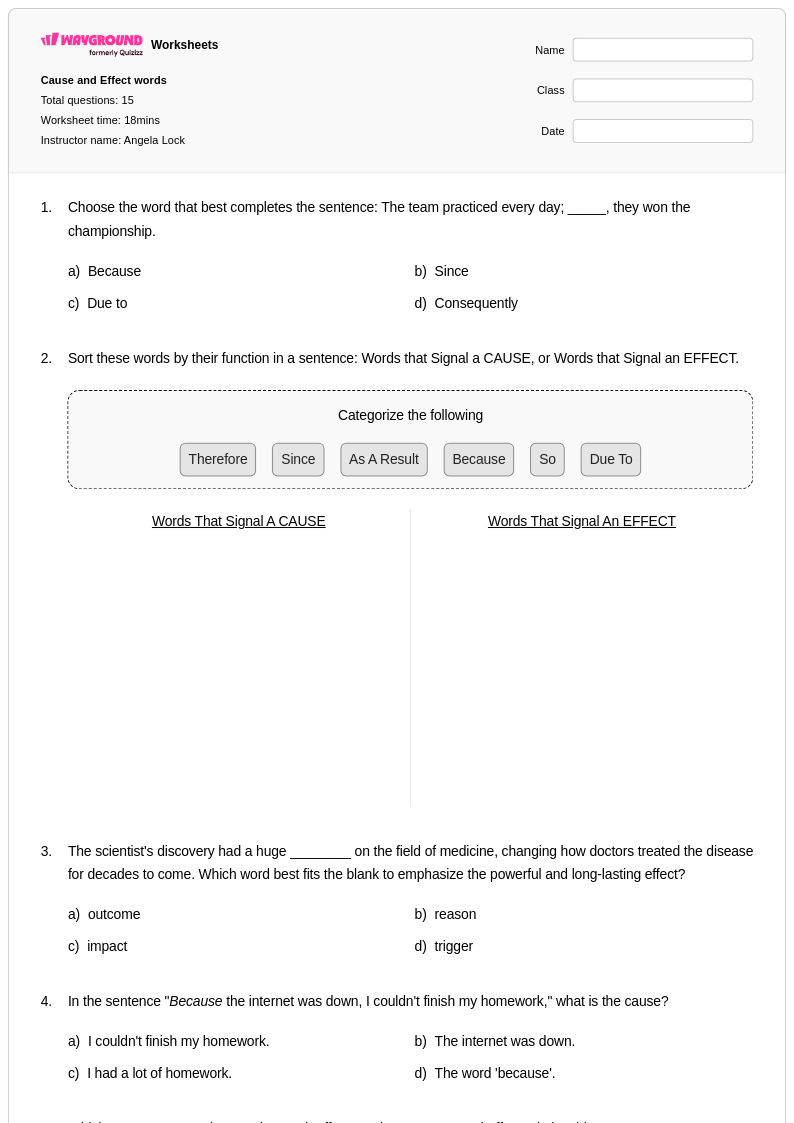
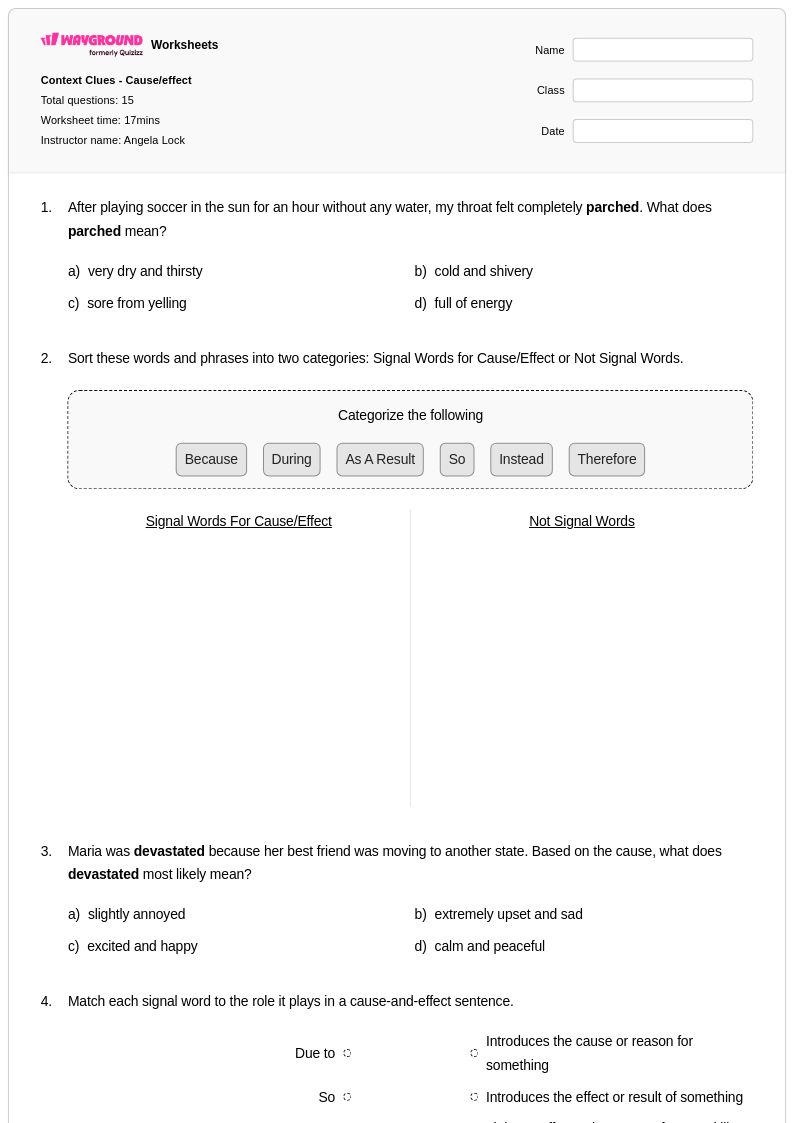
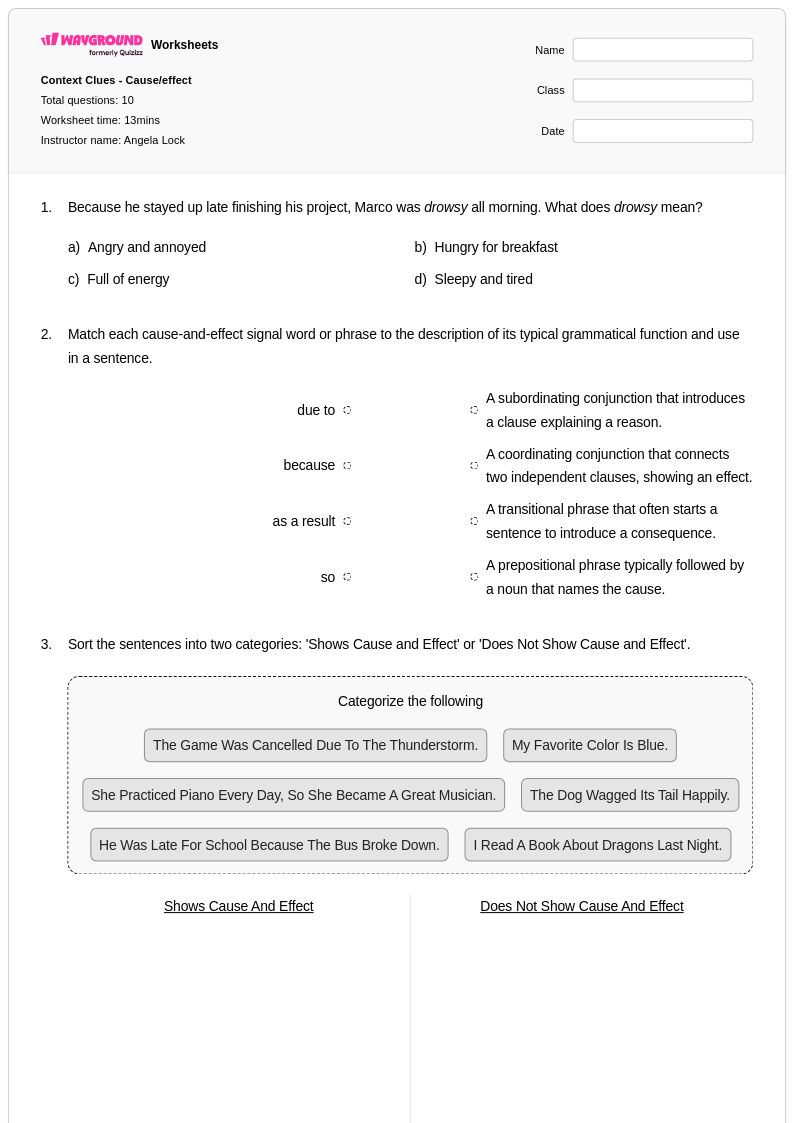
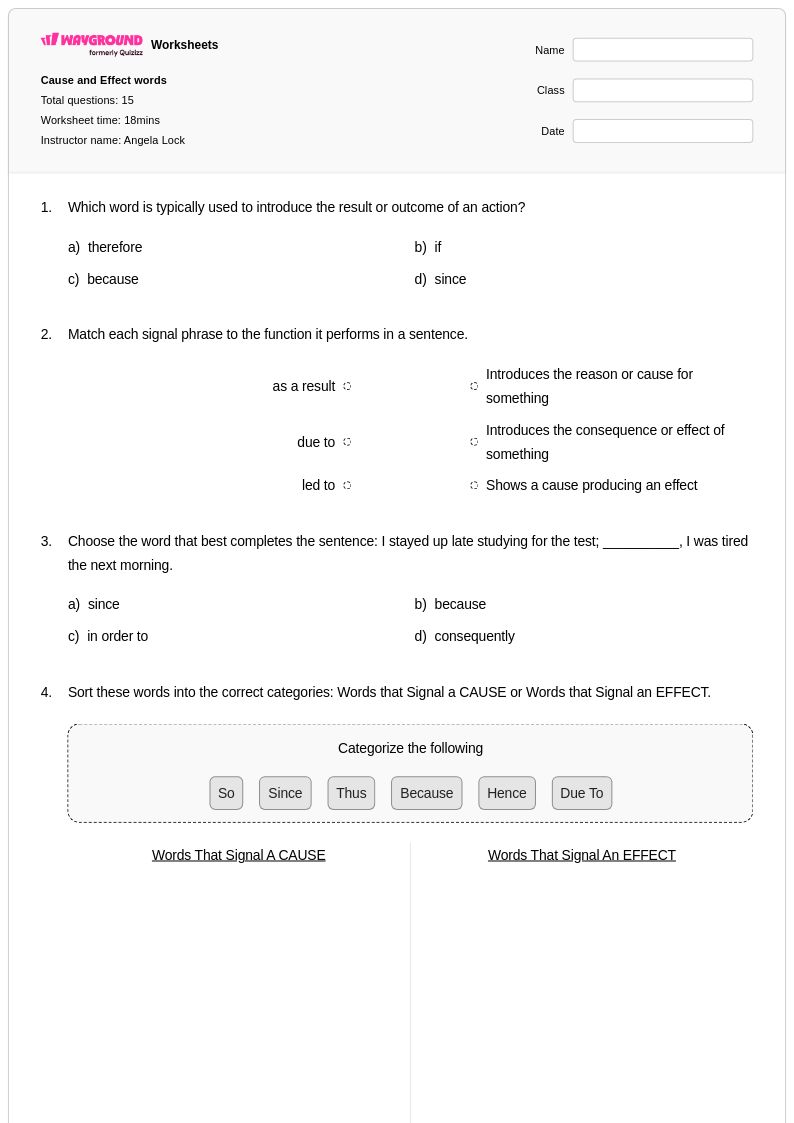
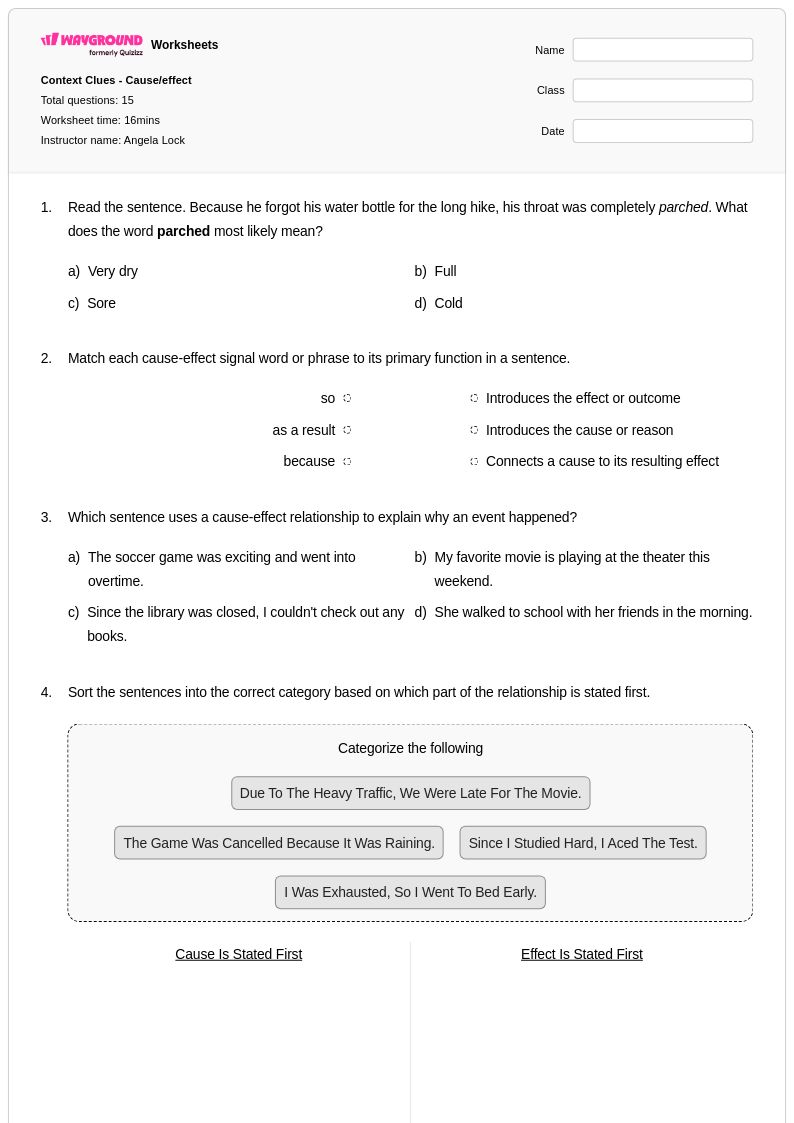
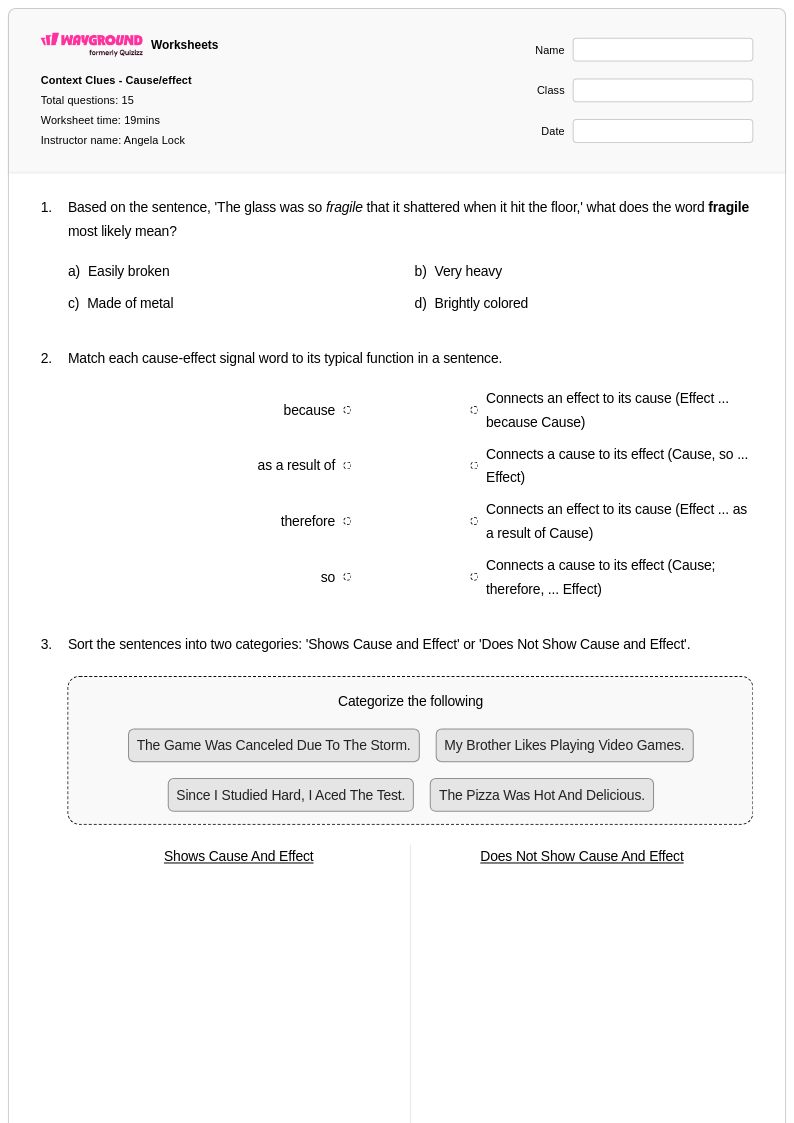
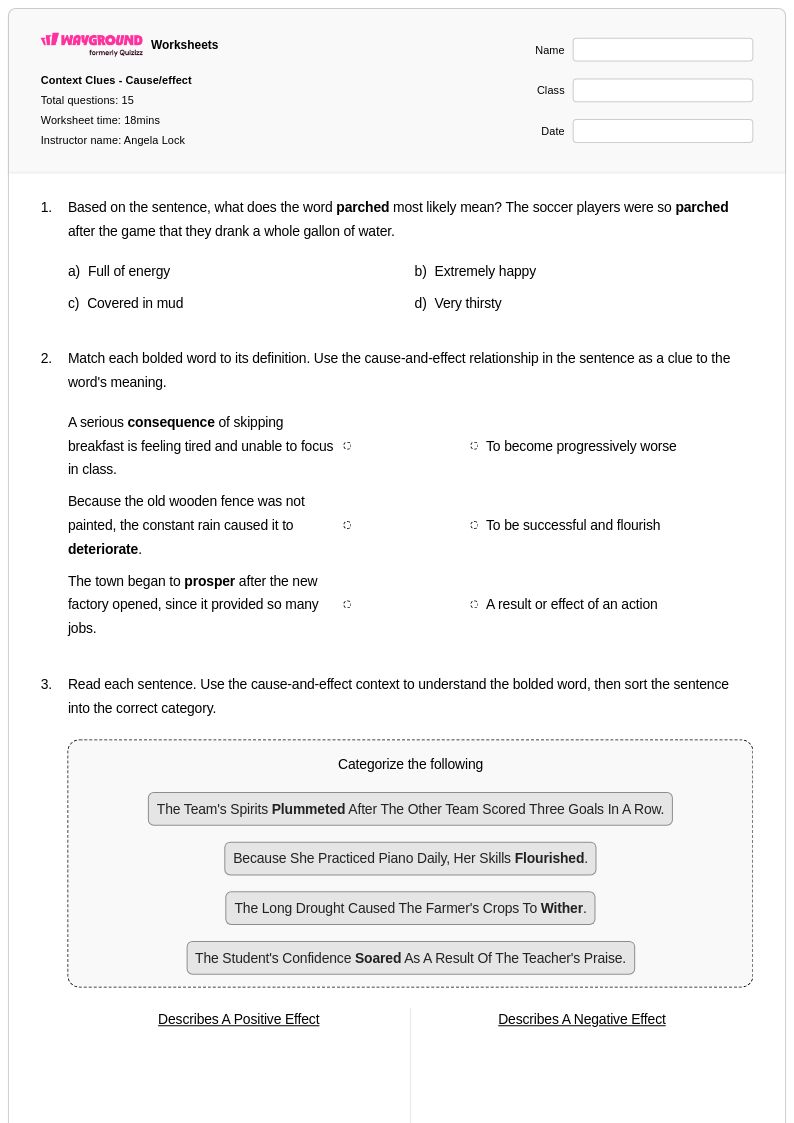
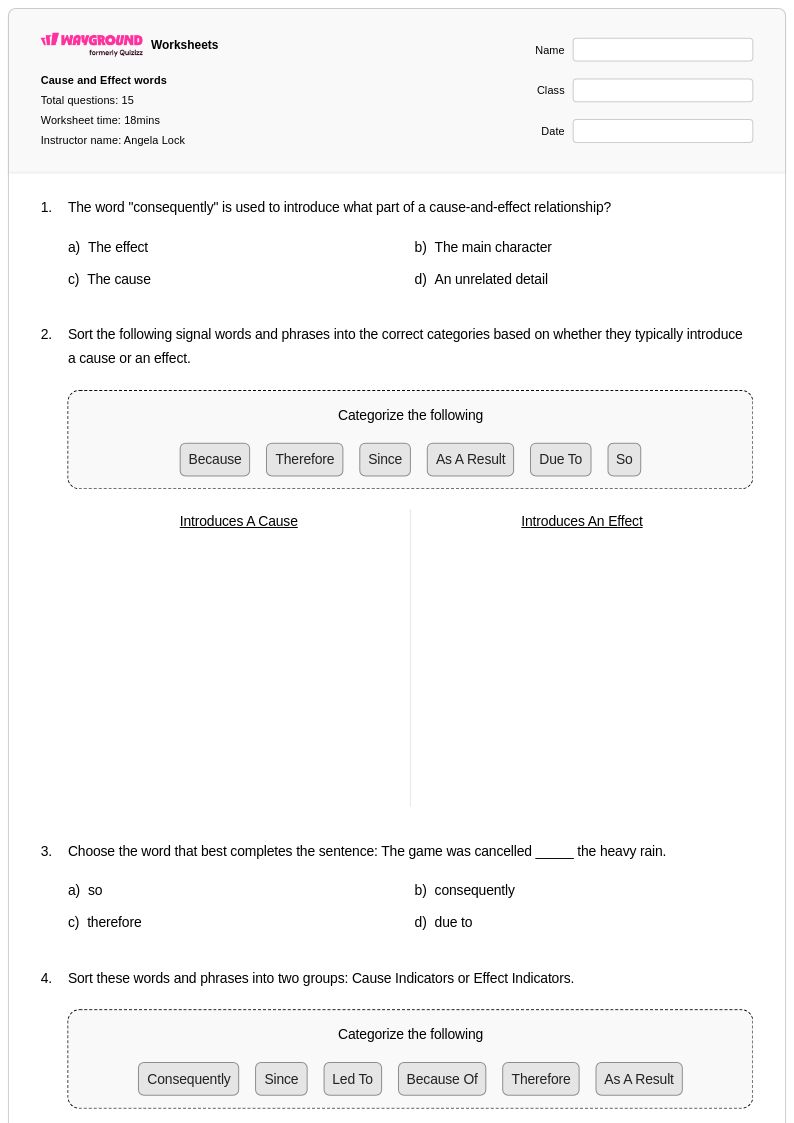
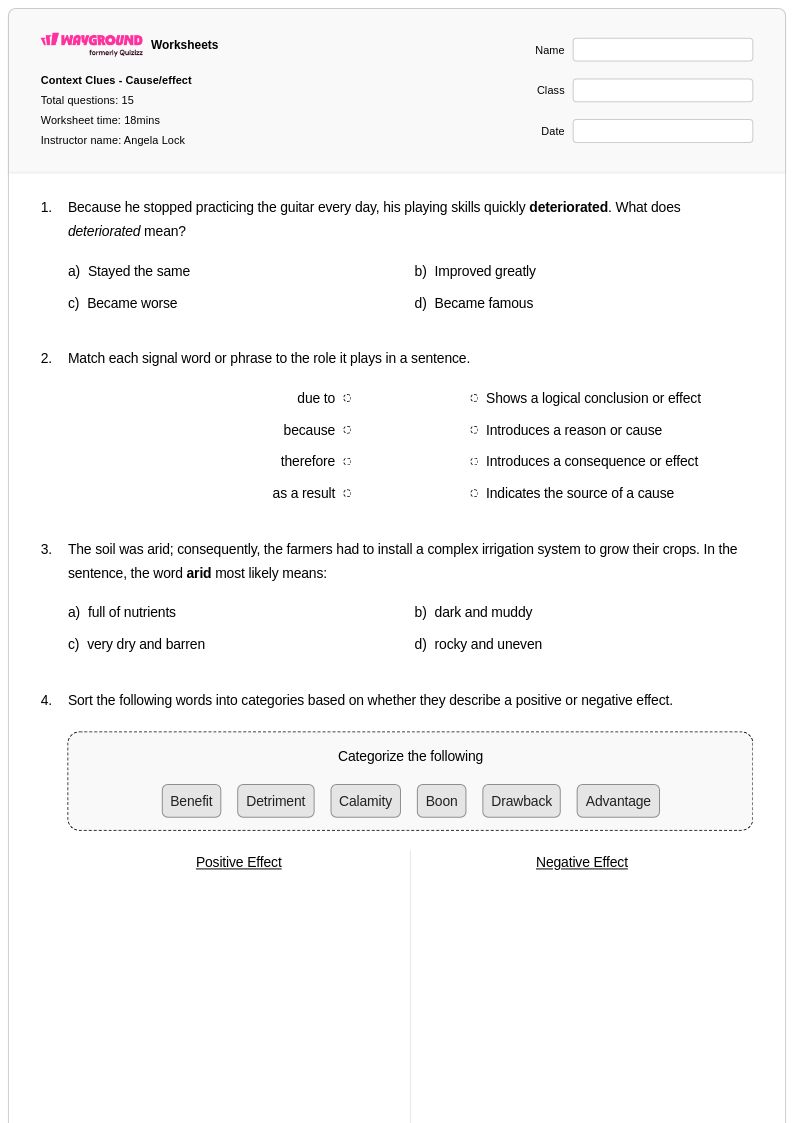
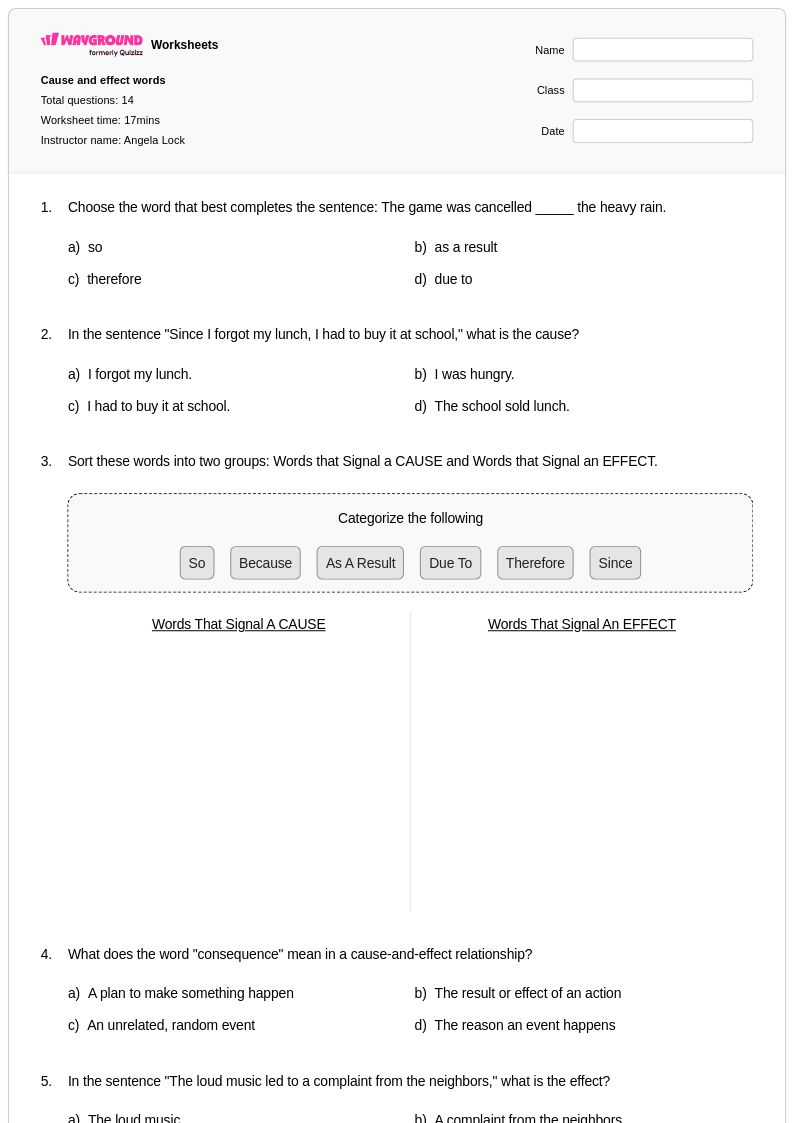
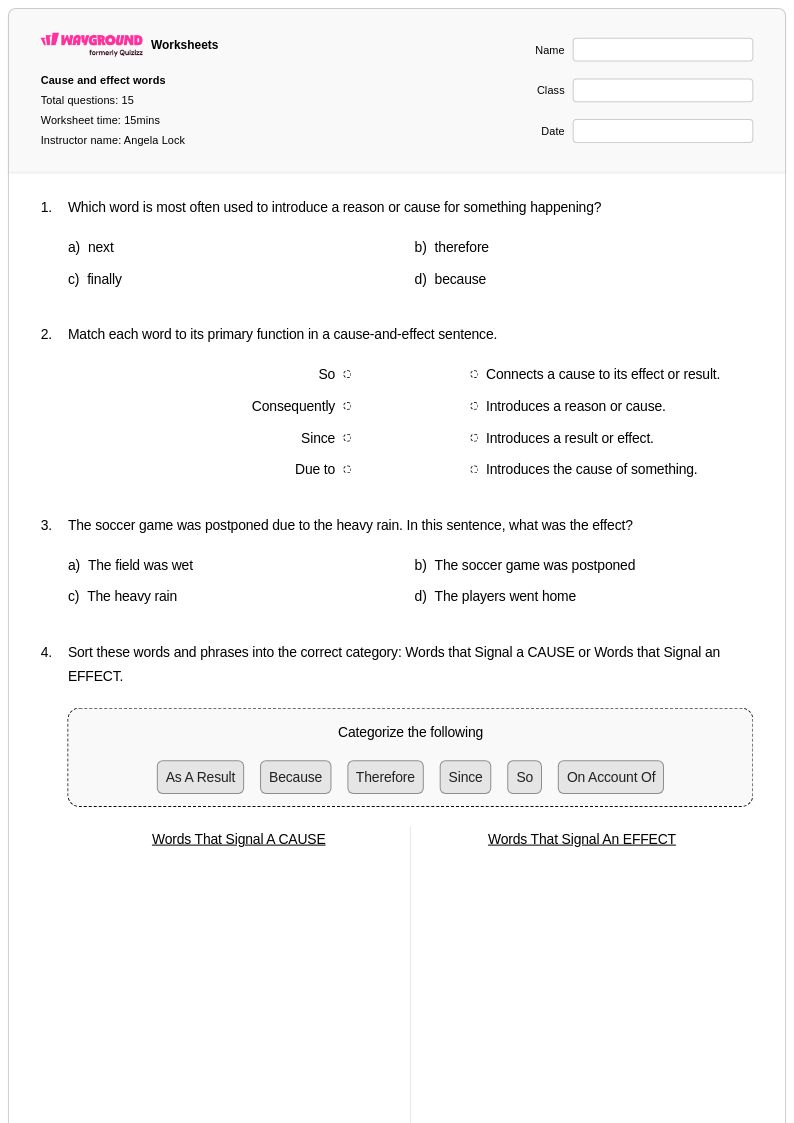
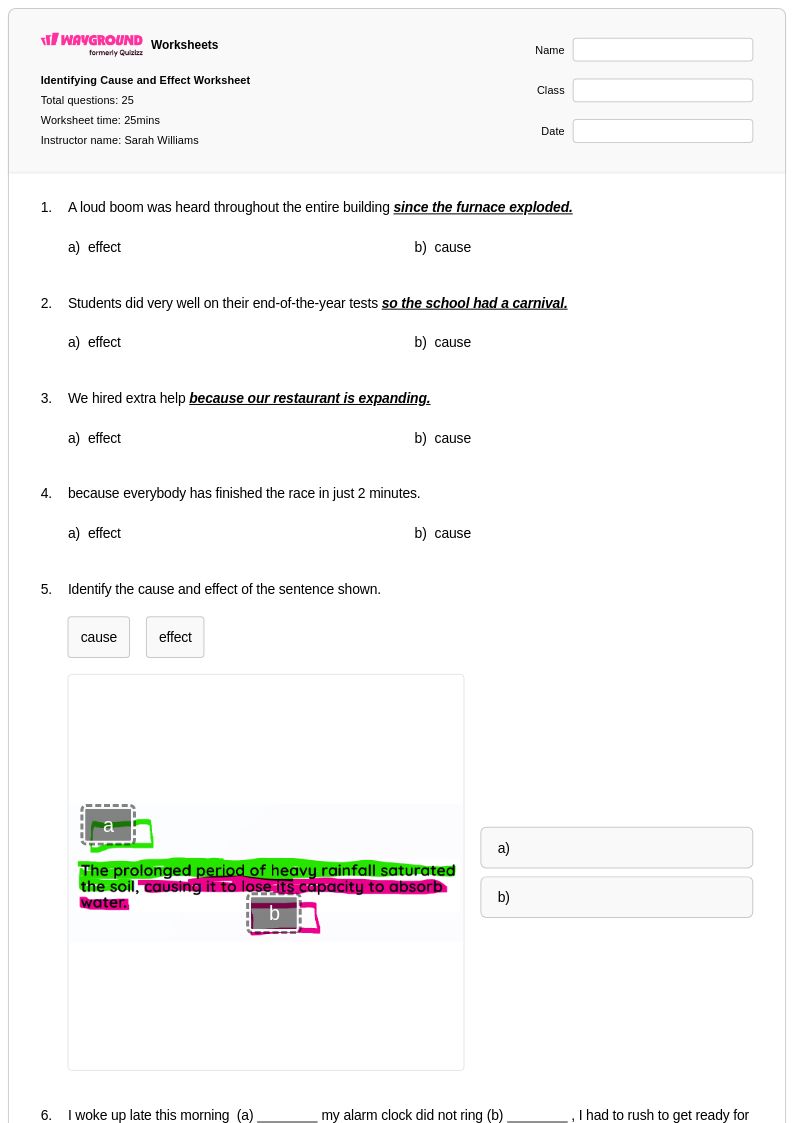
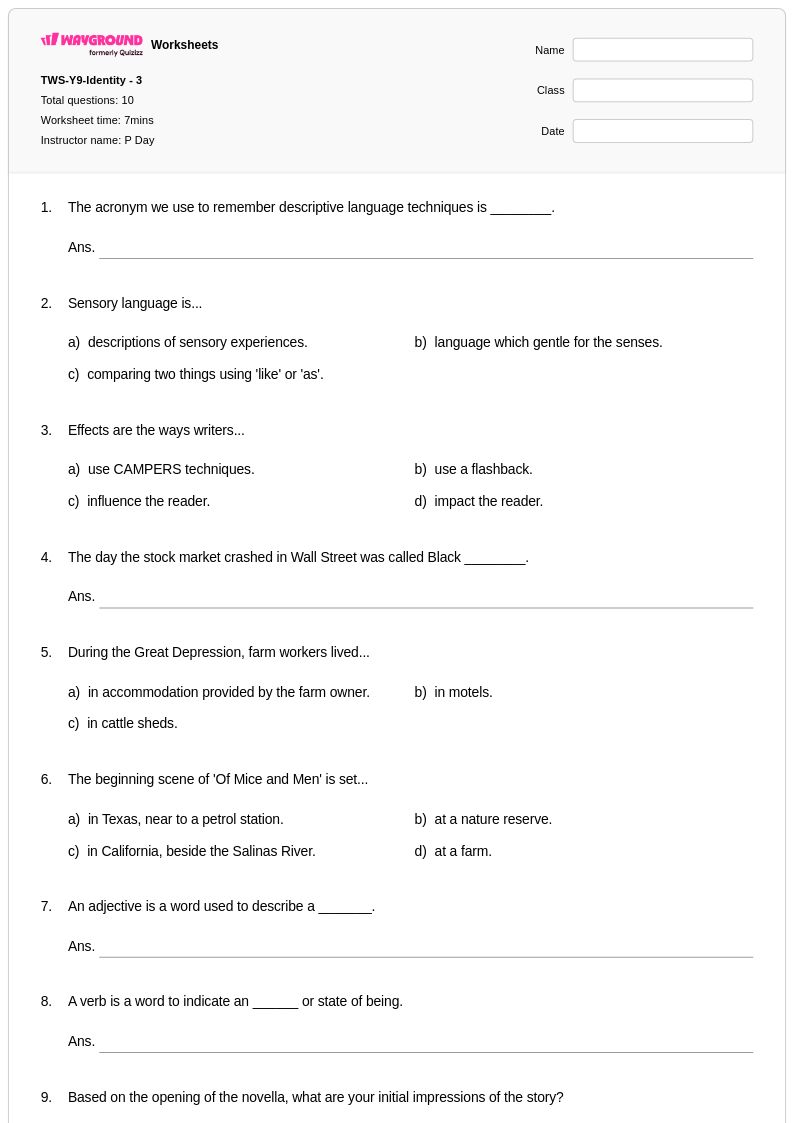
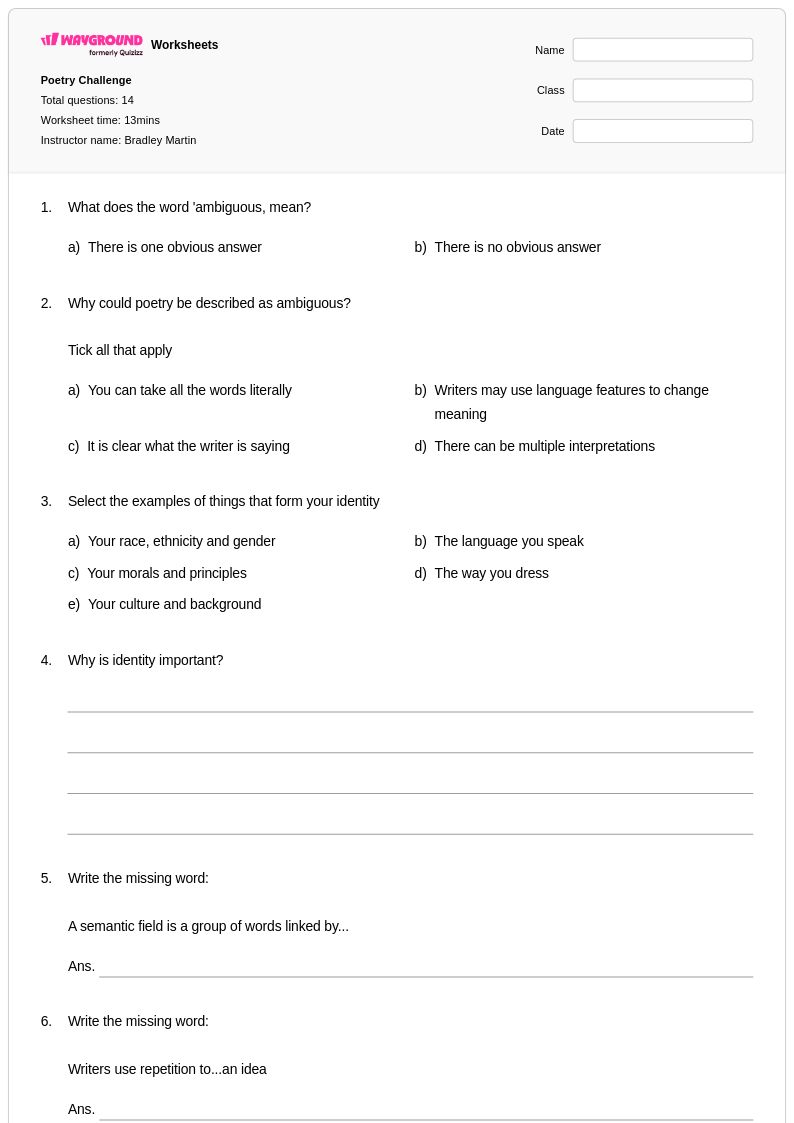
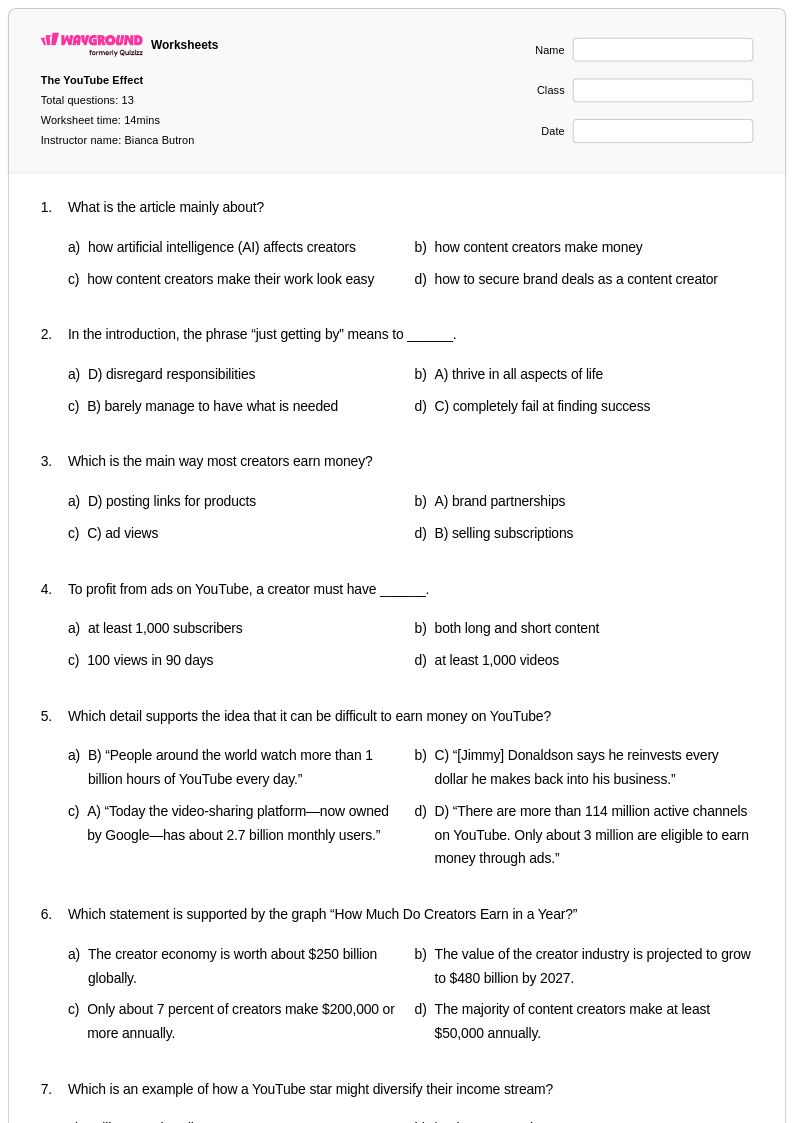
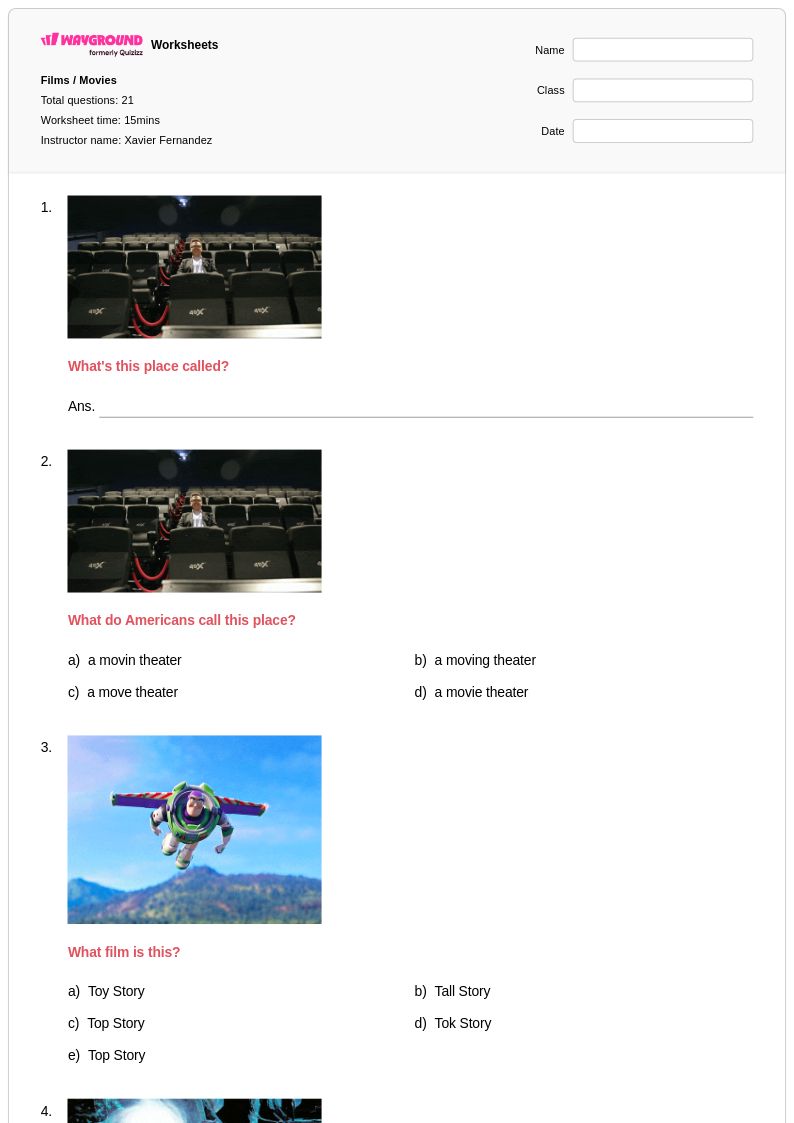
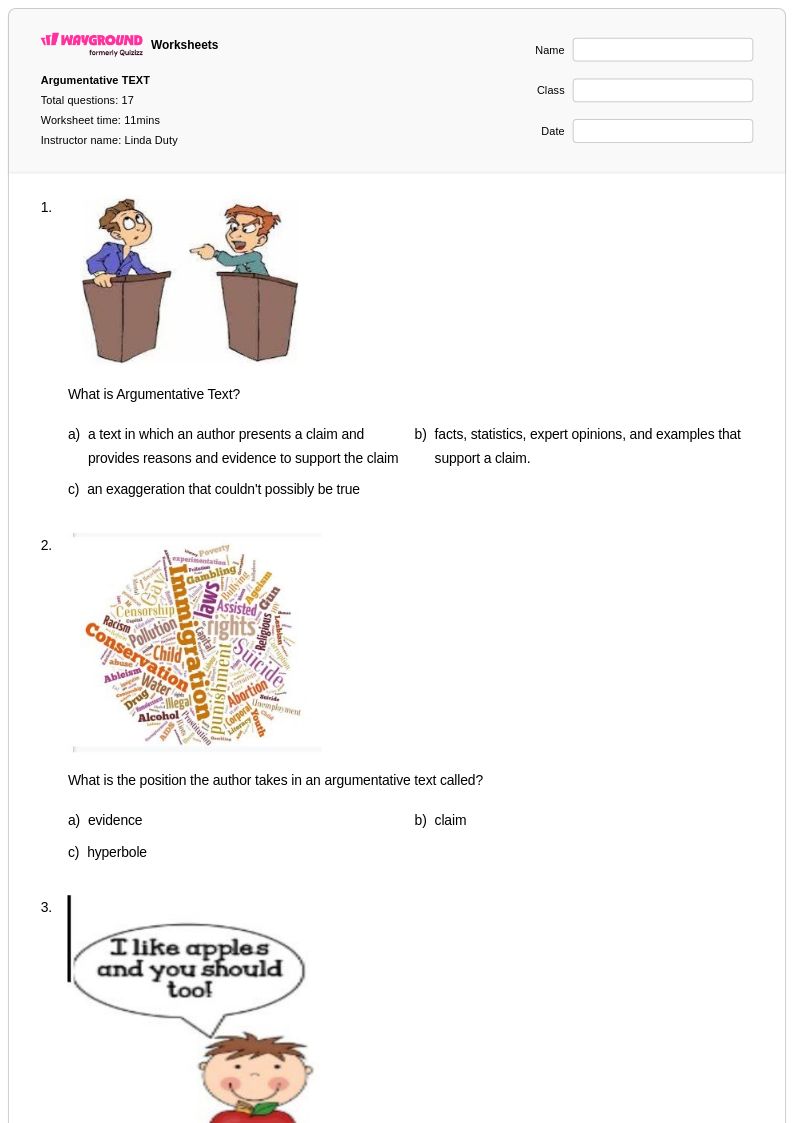
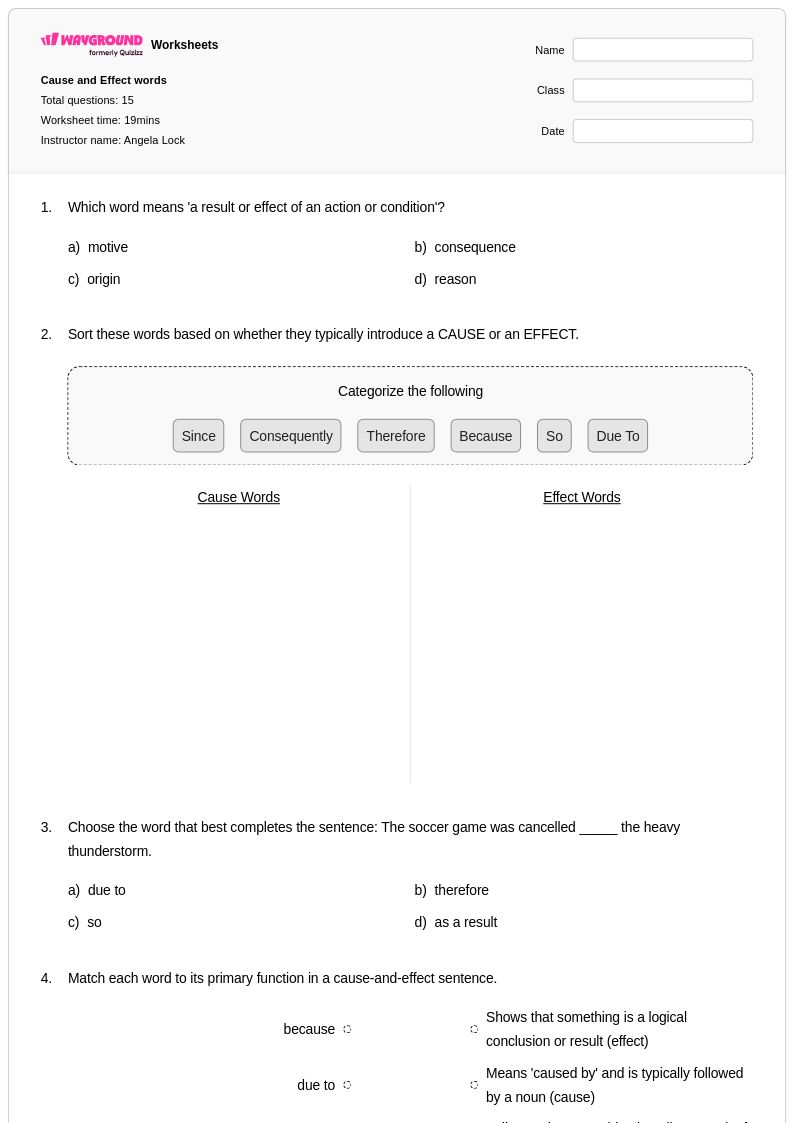
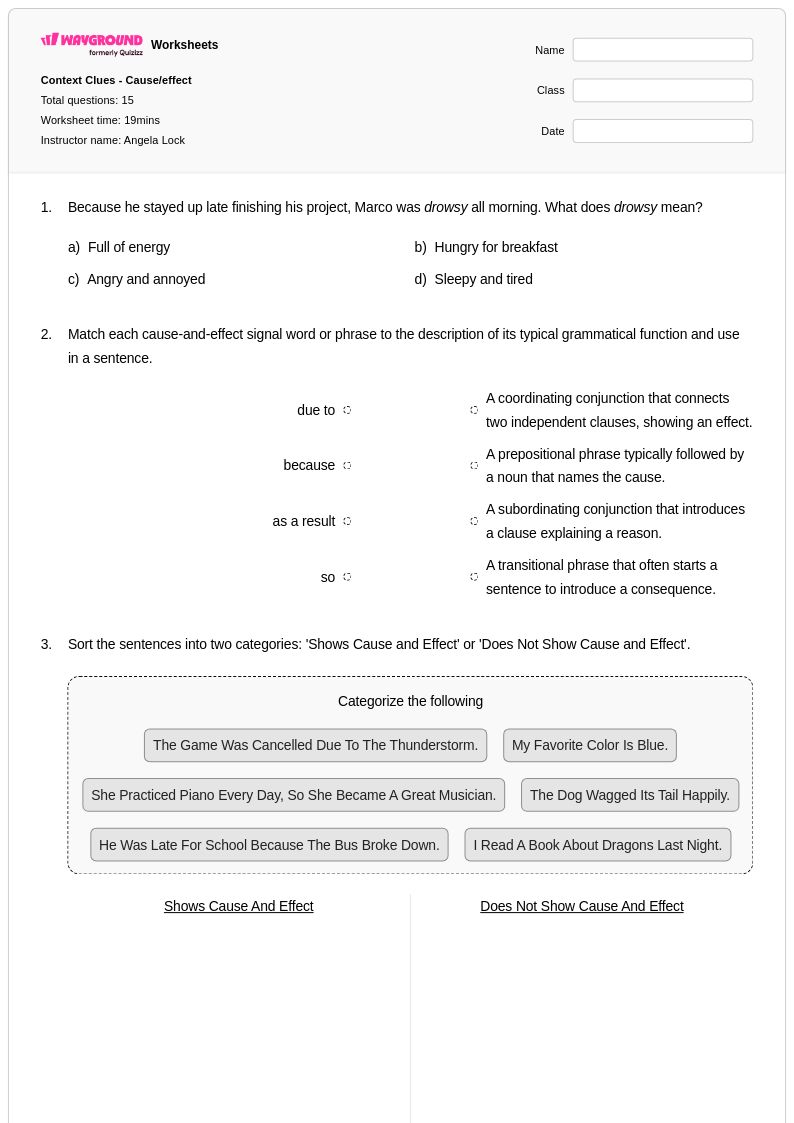
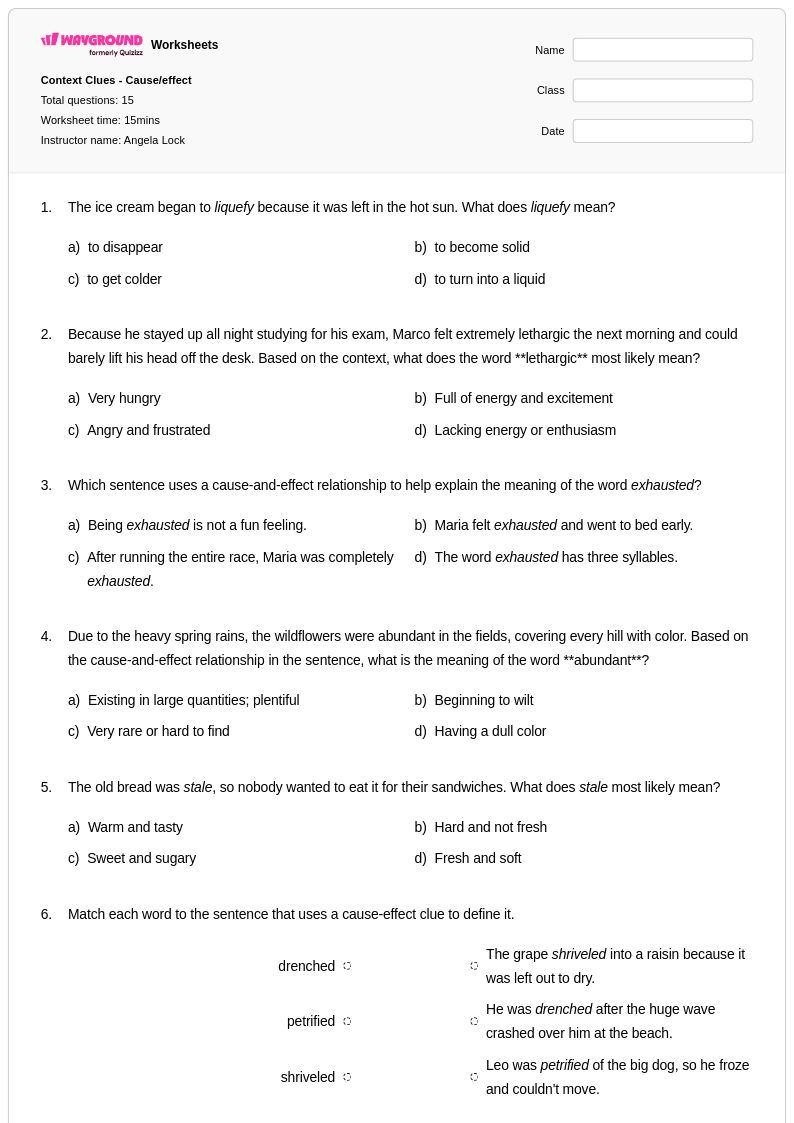
Writer's effect worksheets for Year 7 students available through Wayground (formerly Quizizz) provide comprehensive practice in analyzing how authors deliberately craft their writing to influence readers' thoughts, emotions, and responses. These carefully designed resources help seventh-grade students develop critical reading skills by examining literary techniques such as word choice, sentence structure, figurative language, tone, and narrative perspective. Students work through practice problems that challenge them to identify specific authorial choices and explain their impact on meaning and reader engagement. Each worksheet includes detailed answer keys that guide students through the analytical process, while free printable pdf formats ensure easy classroom distribution and independent study opportunities.
Wayground (formerly Quizizz) empowers educators with millions of teacher-created resources specifically focused on writer's effect analysis, offering robust search and filtering capabilities that allow instructors to locate materials perfectly aligned with Year 7 English language arts standards. The platform's differentiation tools enable teachers to customize worksheets for diverse learning needs, providing both remediation support for struggling readers and enrichment challenges for advanced students. Available in both printable and interactive digital formats, these comprehensive worksheet collections streamline lesson planning while offering flexible options for skill practice, formative assessment, and targeted intervention. Teachers can efficiently organize their writer's effect instruction knowing that each resource has been developed by experienced educators who understand the complexities of teaching analytical reading skills to middle school students.
FAQs
How do I teach writer's effect to my students?
Teaching writer's effect means guiding students to move beyond what a text says to how and why an author says it that way. Start by modeling close reading with short, high-impact passages, asking students to identify specific language choices and link them to the effect on the reader. Build a shared classroom vocabulary around tone, mood, imagery, figurative language, and structural choices so students can articulate their analysis precisely. Gradually release responsibility by having students annotate independently and then discuss their reasoning in pairs or small groups before writing analytical responses.
What exercises help students practice analyzing writer's effect?
Effective practice exercises include annotating short extracts for specific techniques, matching language choices to intended effects, and writing structured analytical paragraphs using a point-evidence-effect framework. Comparison tasks, where students evaluate two passages on a similar theme to contrast authorial choices, are particularly powerful for deepening analytical thinking. Worksheets that prompt students to examine tone, imagery, figurative language, and narrative technique in the same text help them see how multiple devices work together to create overall impact.
What mistakes do students commonly make when analyzing writer's effect?
The most common mistake is identifying a technique without explaining its effect, often called 'feature-spotting,' where a student writes 'the author uses a metaphor' without connecting it to meaning or reader response. Students also frequently confuse tone with mood, or assign a single fixed meaning to a technique without considering context. Another common error is making vague claims like 'this makes the reader feel sad' without grounding the interpretation in specific word choices or structural decisions. Targeted practice that requires students to complete the reasoning chain from technique to effect to purpose helps correct these patterns.
How can I differentiate writer's effect instruction for students with different skill levels?
For students who need more support, reduce the complexity of the source text and focus on one or two techniques at a time, such as tone and word choice, before introducing structural or more abstract elements. More confident students can be challenged with ambiguous or multi-layered texts where authorial intent is not obvious, requiring them to weigh competing interpretations. On Wayground, teachers can apply accommodations at the individual student level, including reduced answer choices to lower cognitive load and Read Aloud support for students who benefit from hearing the text, without other students being aware of those adjustments.
How do I use Wayground's writer's effect worksheets in my classroom?
Wayground's writer's effect worksheets are available as printable PDFs for traditional classroom use and in digital formats for technology-integrated or hybrid learning environments. Teachers can also host worksheets directly as a quiz on Wayground, allowing students to complete the activity online with immediate feedback. Each worksheet includes answer keys so teachers can use them for independent practice, formative assessment, or guided instruction. The platform's search and filtering tools make it straightforward to find materials aligned to specific curriculum standards or skill levels, whether you need an introductory activity or a more advanced analytical challenge.
How do I assess whether my students understand writer's effect?
Look for whether students can connect a specific language choice or technique to a precise, text-grounded effect on the reader rather than making sweeping generalizations. Strong responses will name the technique, cite the specific word or phrase, explain the connotations or effect, and link back to the author's broader purpose. A reliable formative check is to give students an unseen short passage and ask them to write two or three analytical sentences unprompted, then use their responses to identify which students are feature-spotting and which are constructing full analytical reasoning chains.