
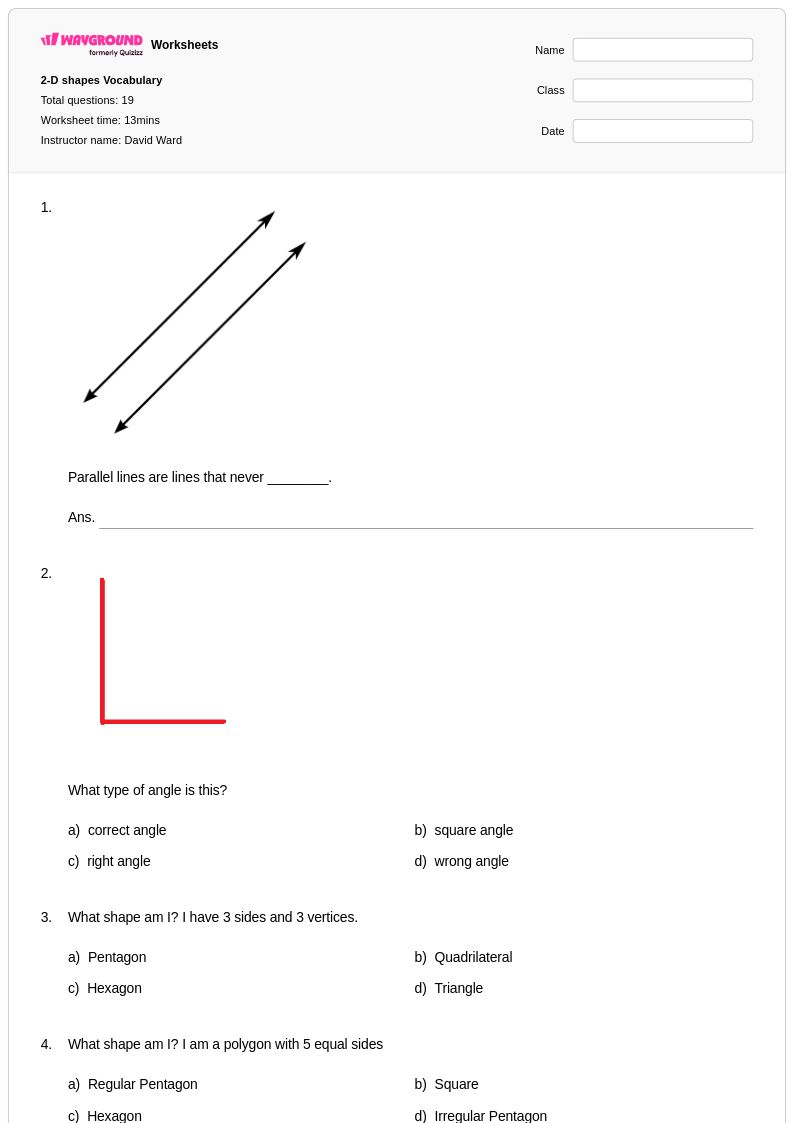
19Q
2nd - 3rd
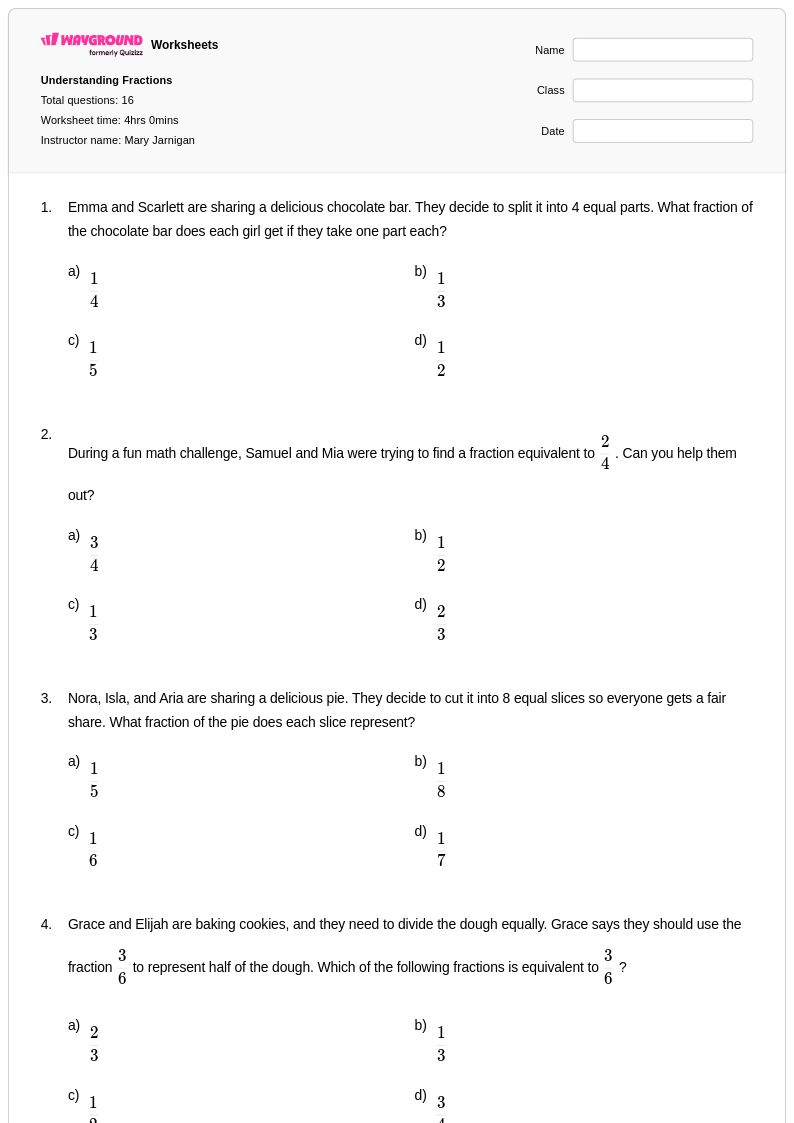
16Q
3rd
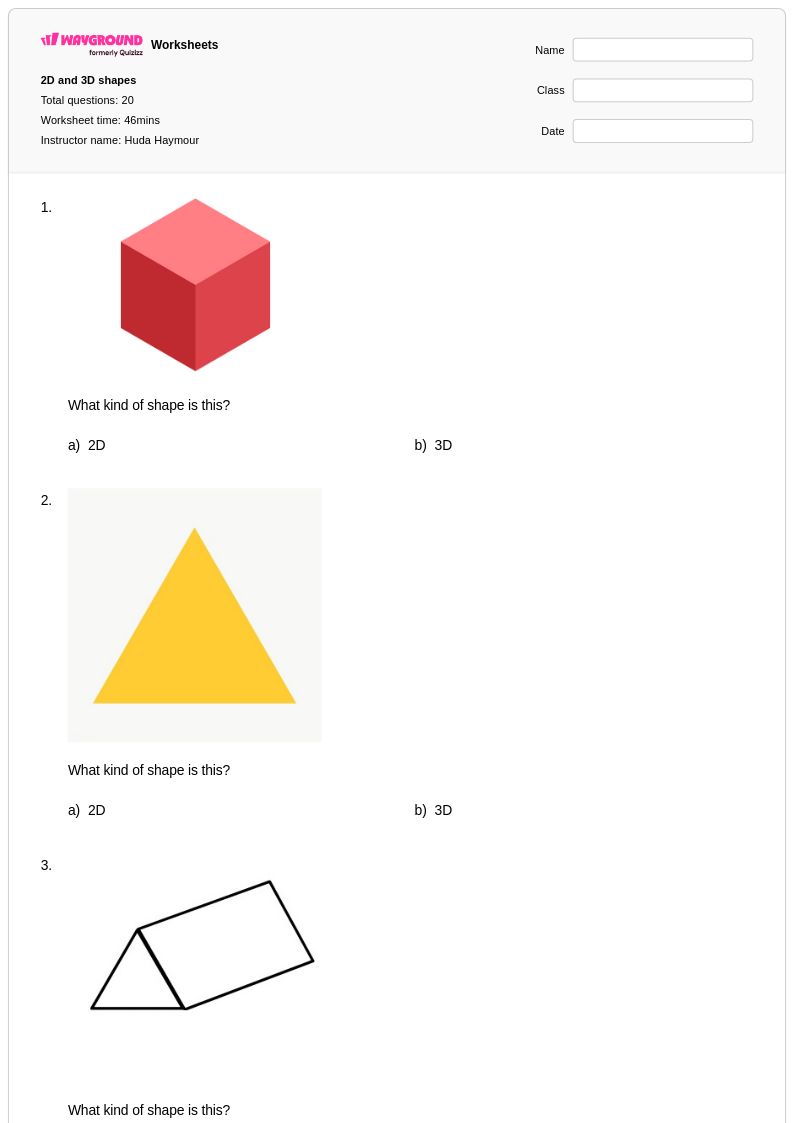
20Q
2nd - 3rd
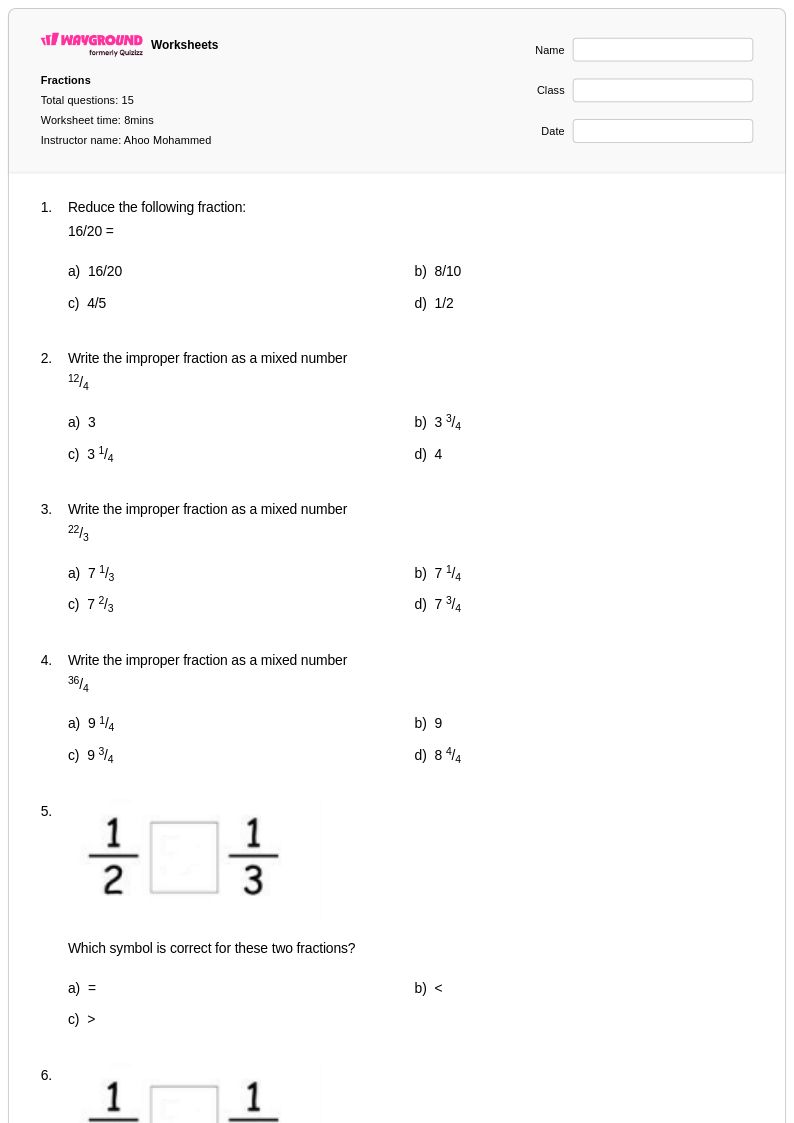
15Q
3rd
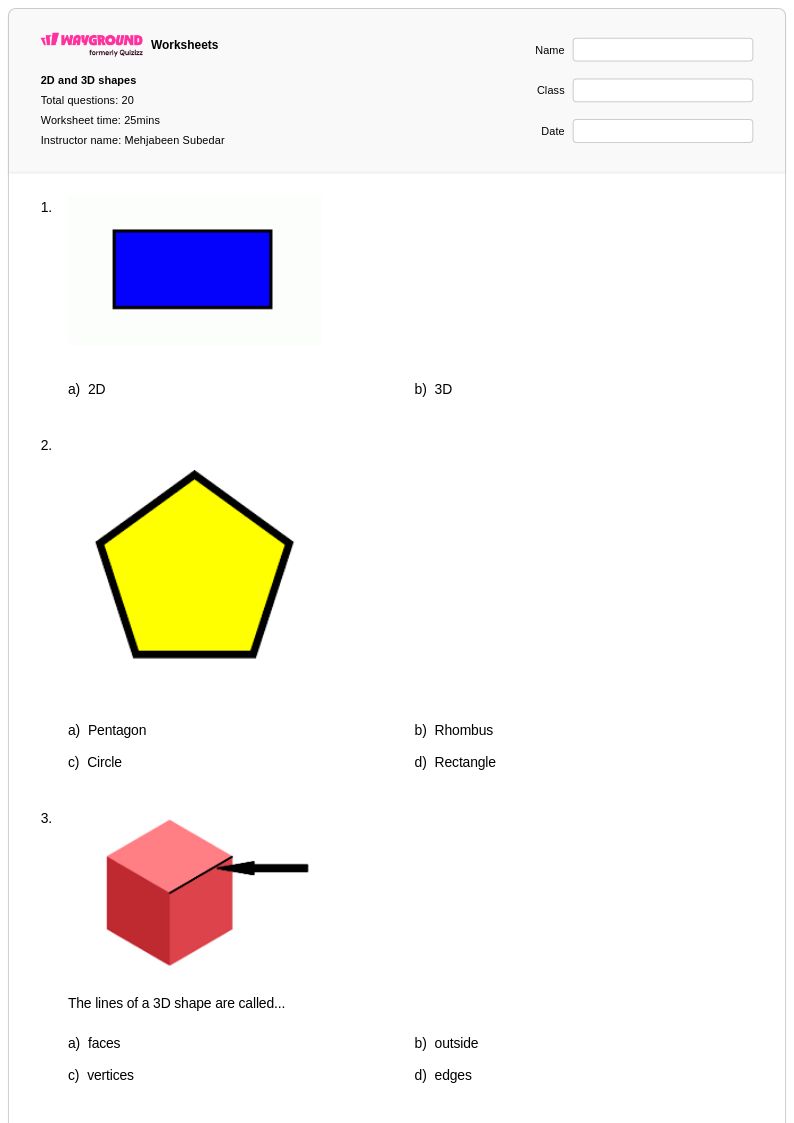
20Q
3rd
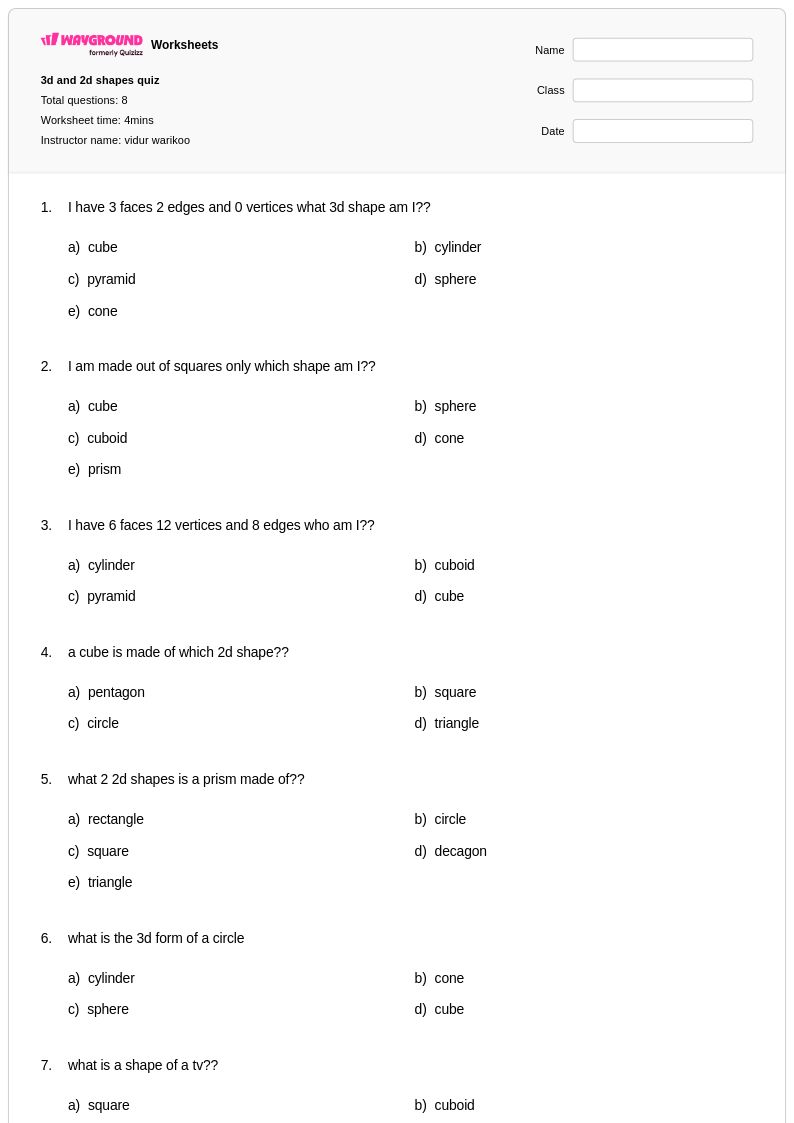
8Q
3rd - 4th
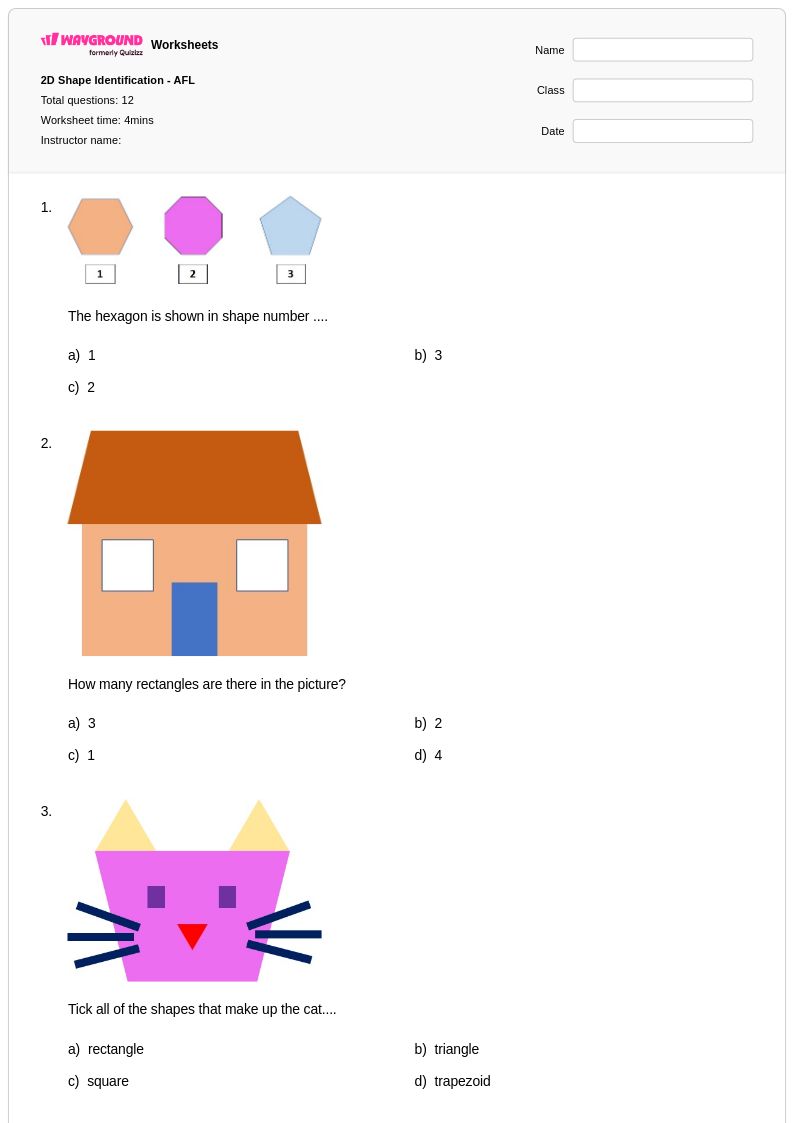
12Q
3rd
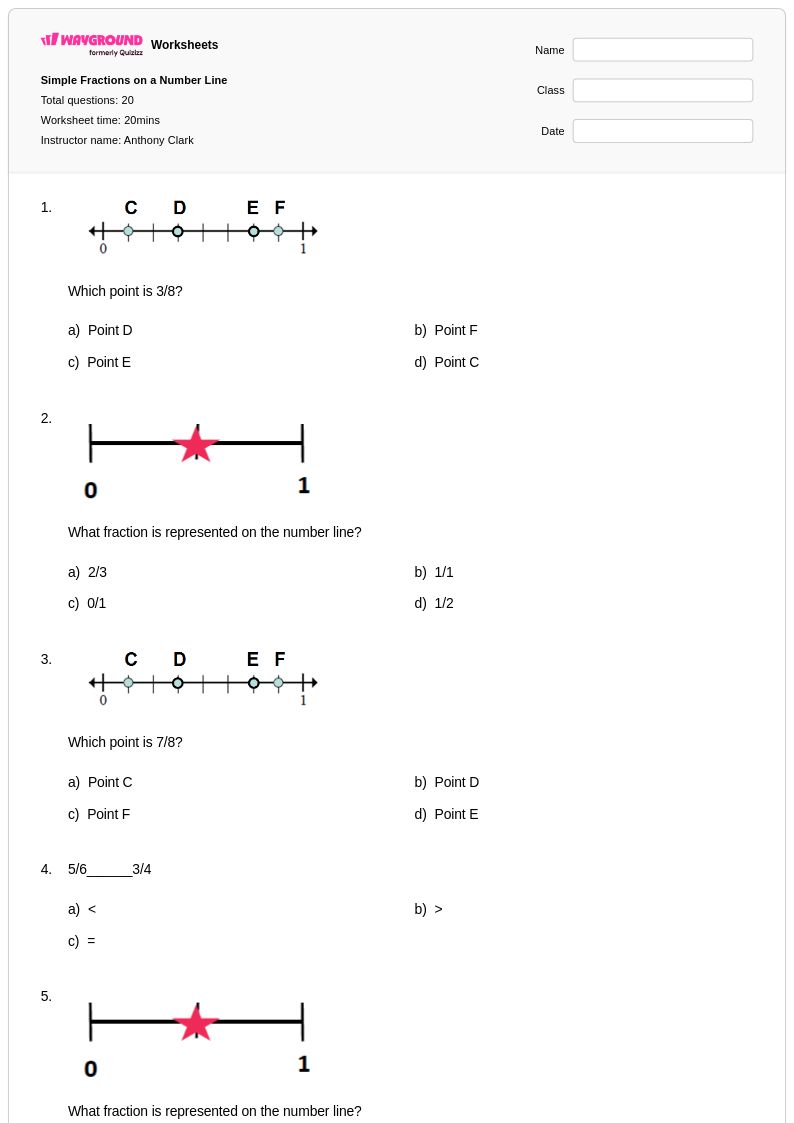
20Q
3rd - Uni
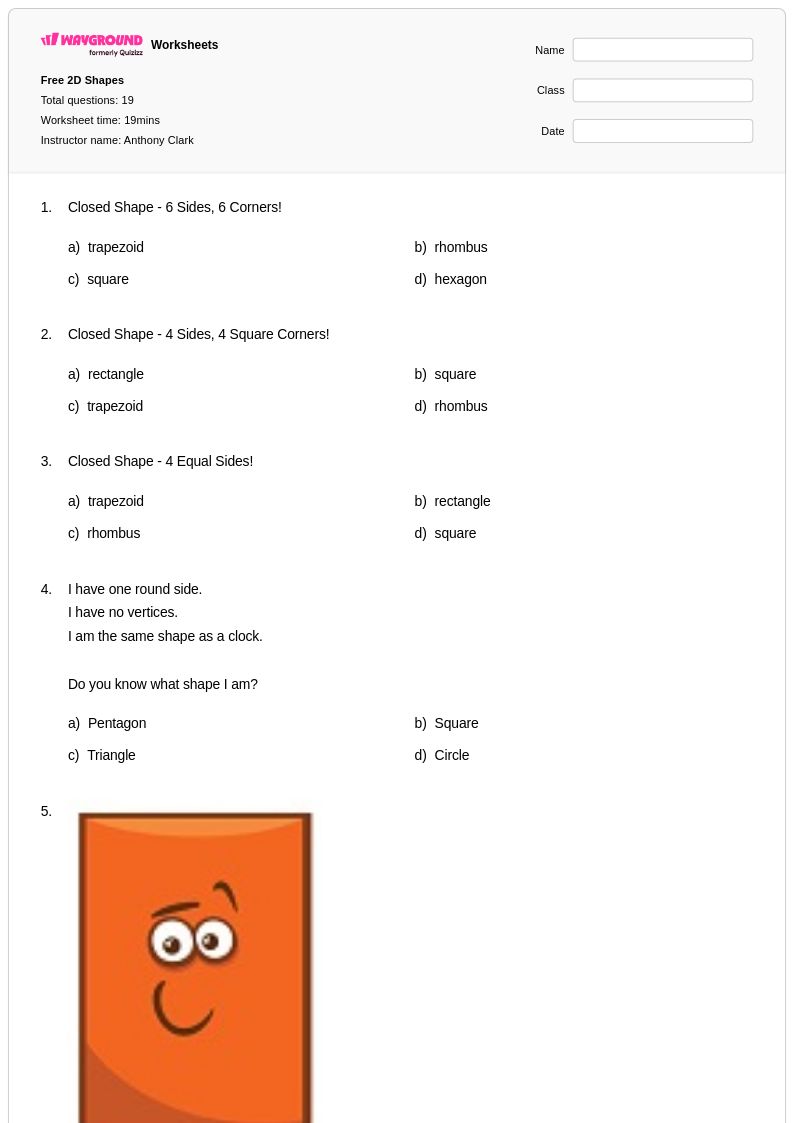
19Q
1st - Uni
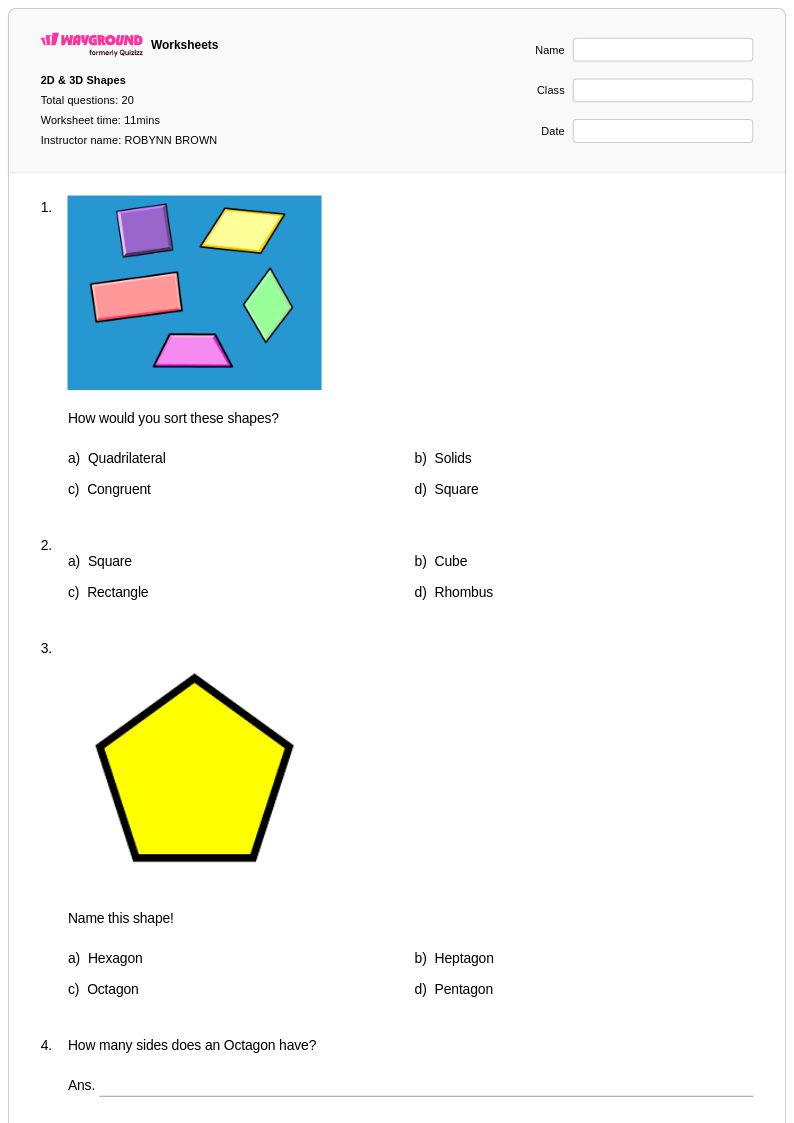
20Q
3rd
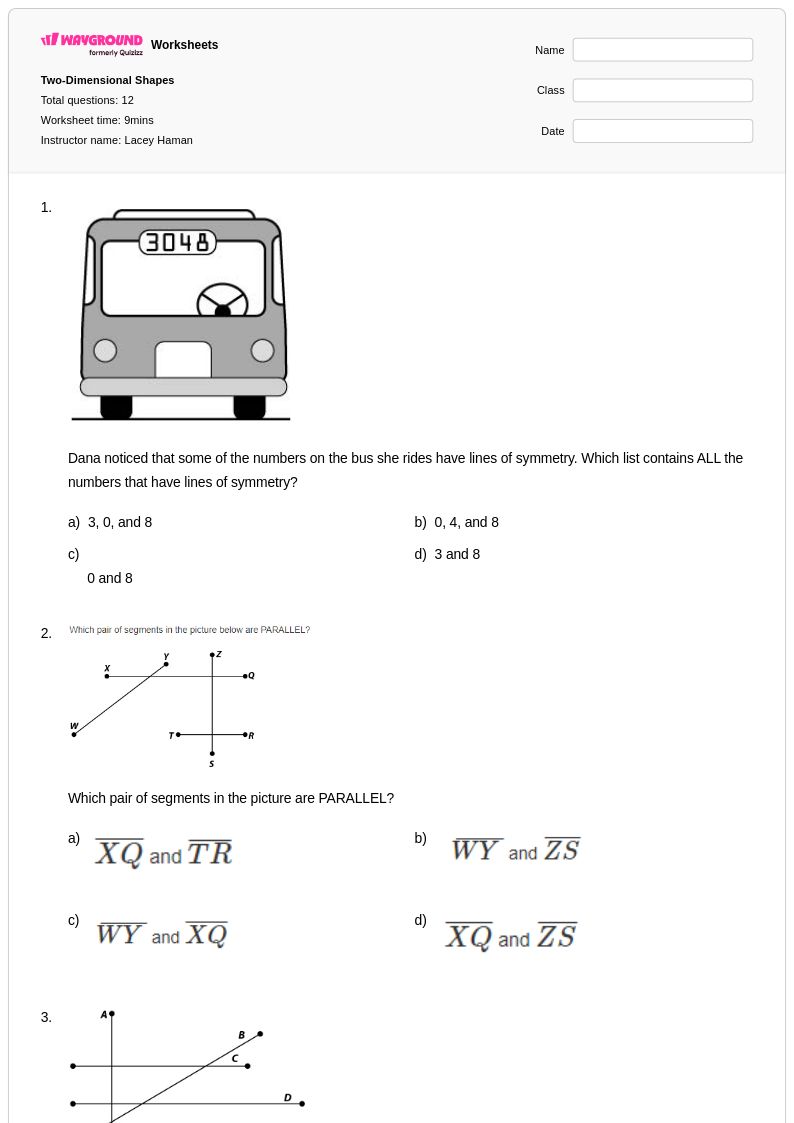
12Q
3rd
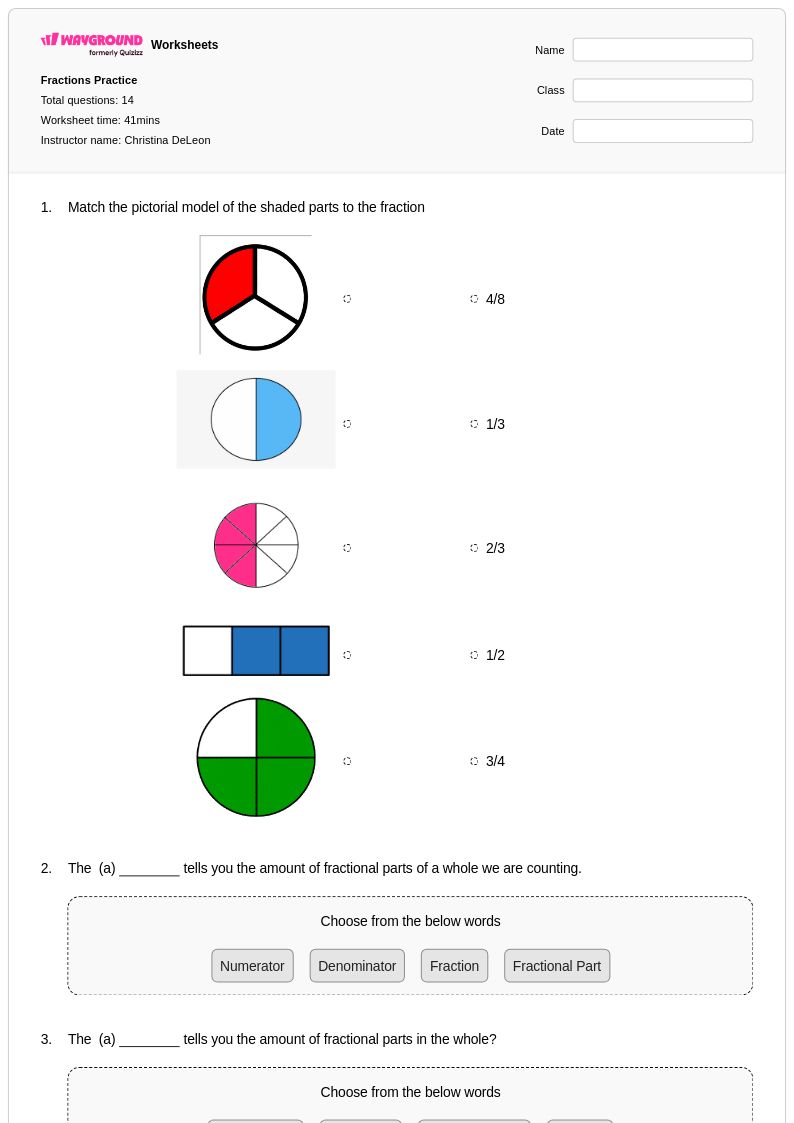
14Q
3rd
12Q
3rd
10Q
3rd
17Q
2nd - 5th
10Q
3rd
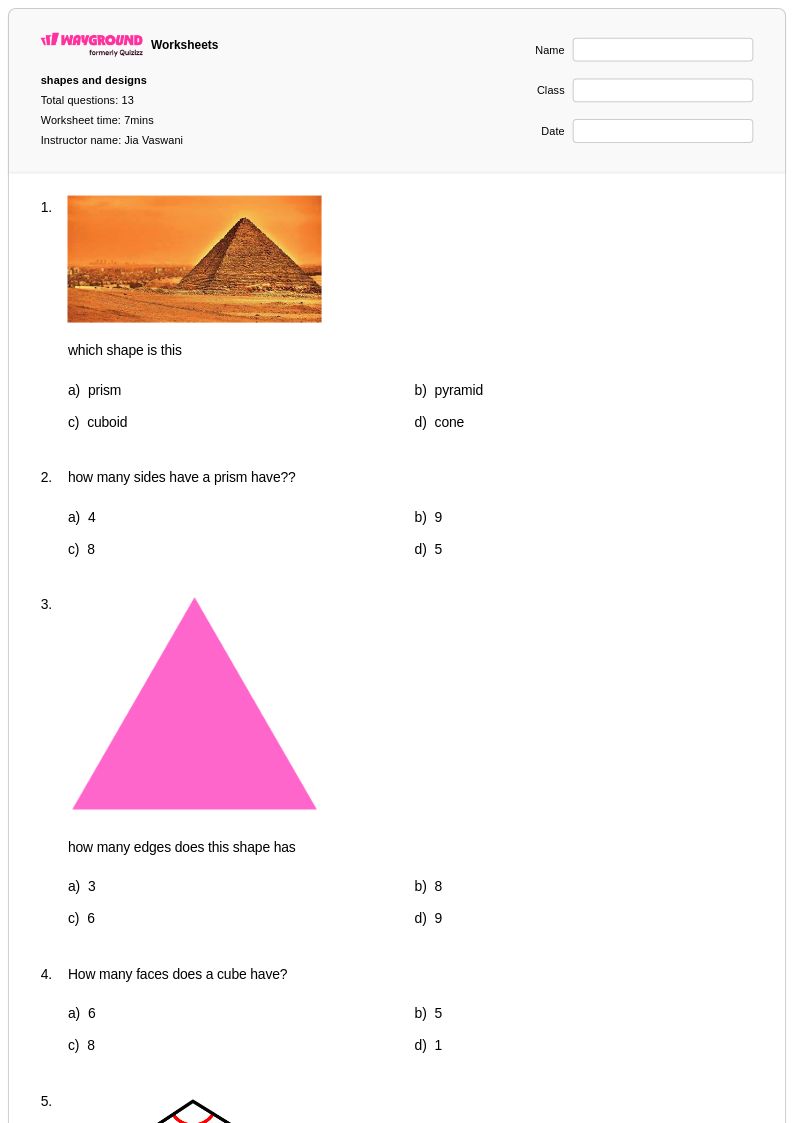
13Q
3rd
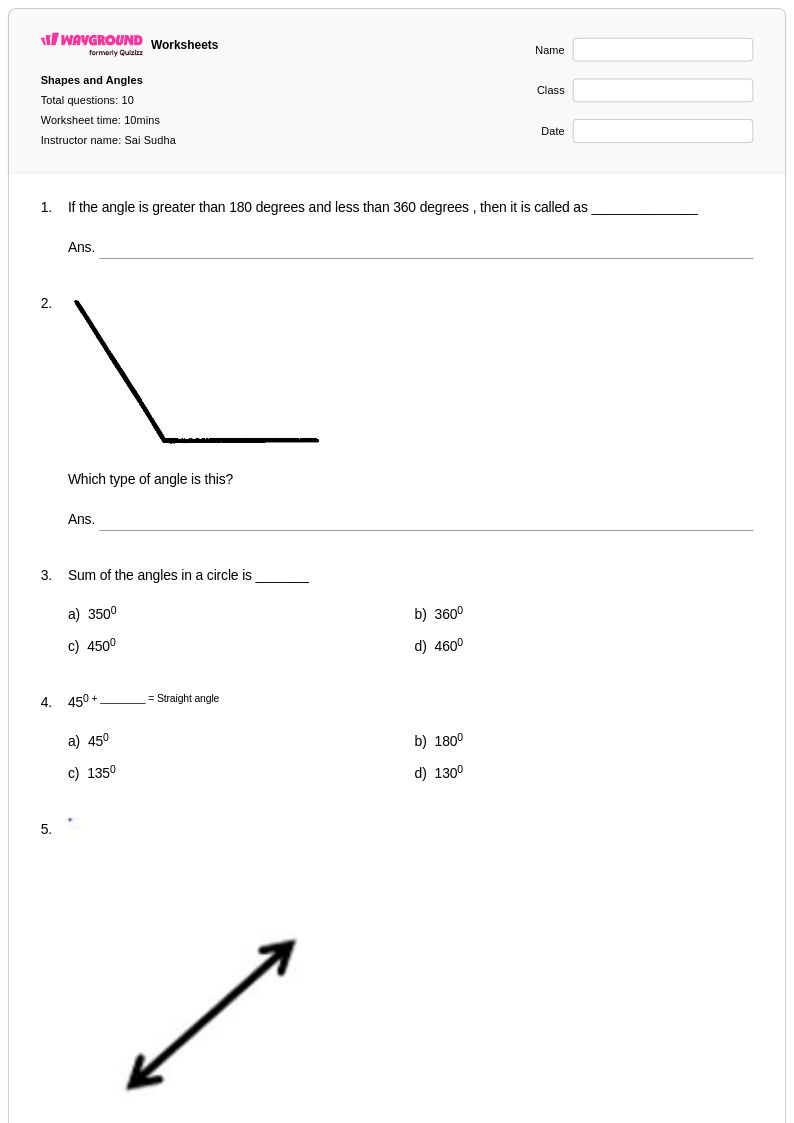
10Q
3rd - 6th
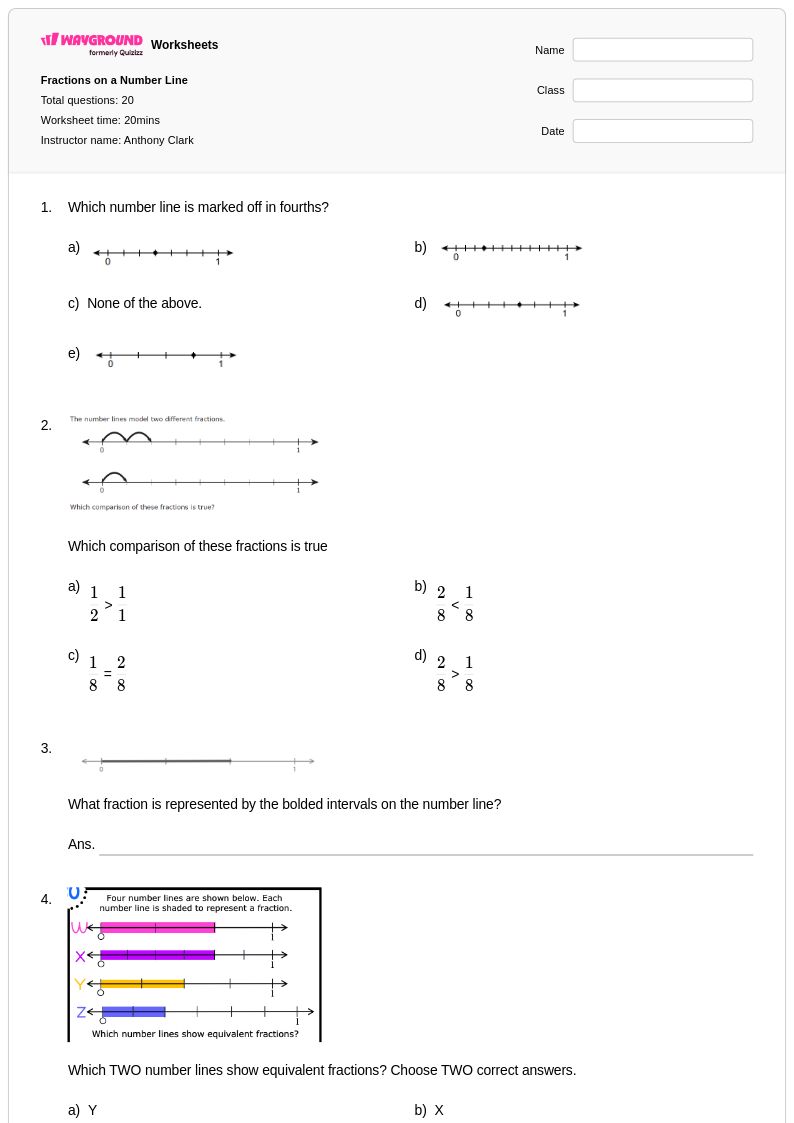
20Q
3rd - Uni
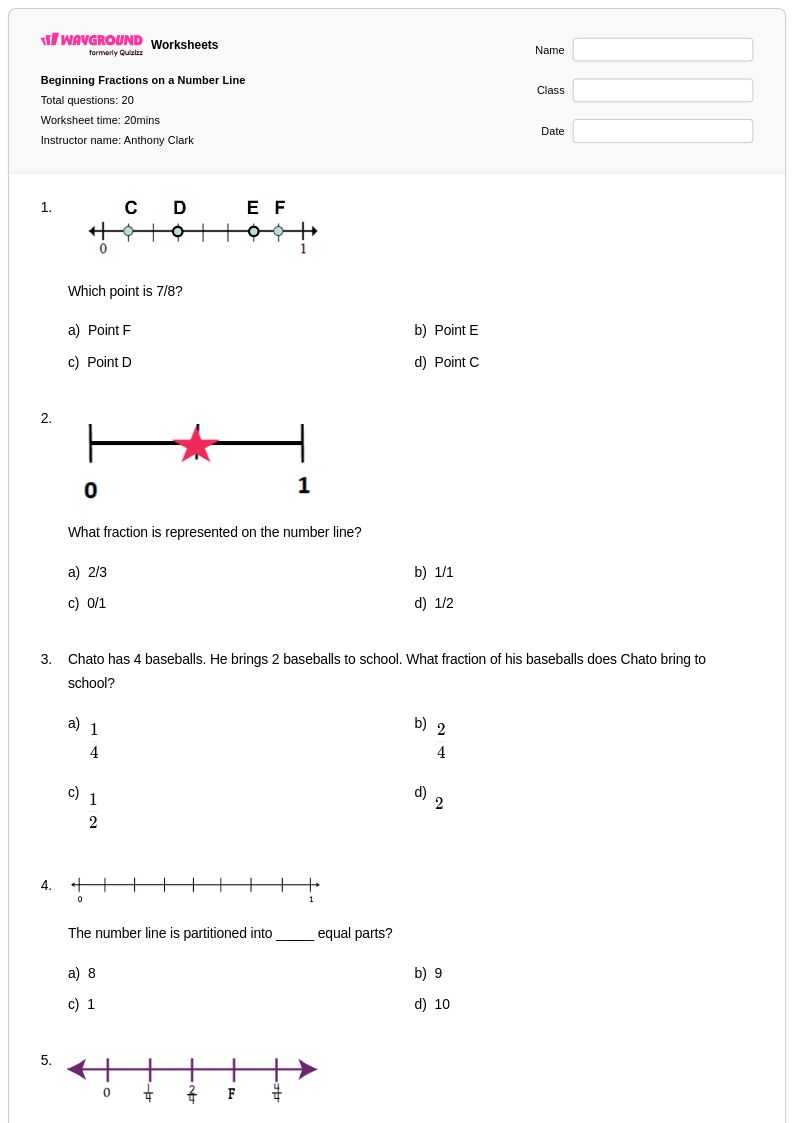
20Q
3rd - Uni
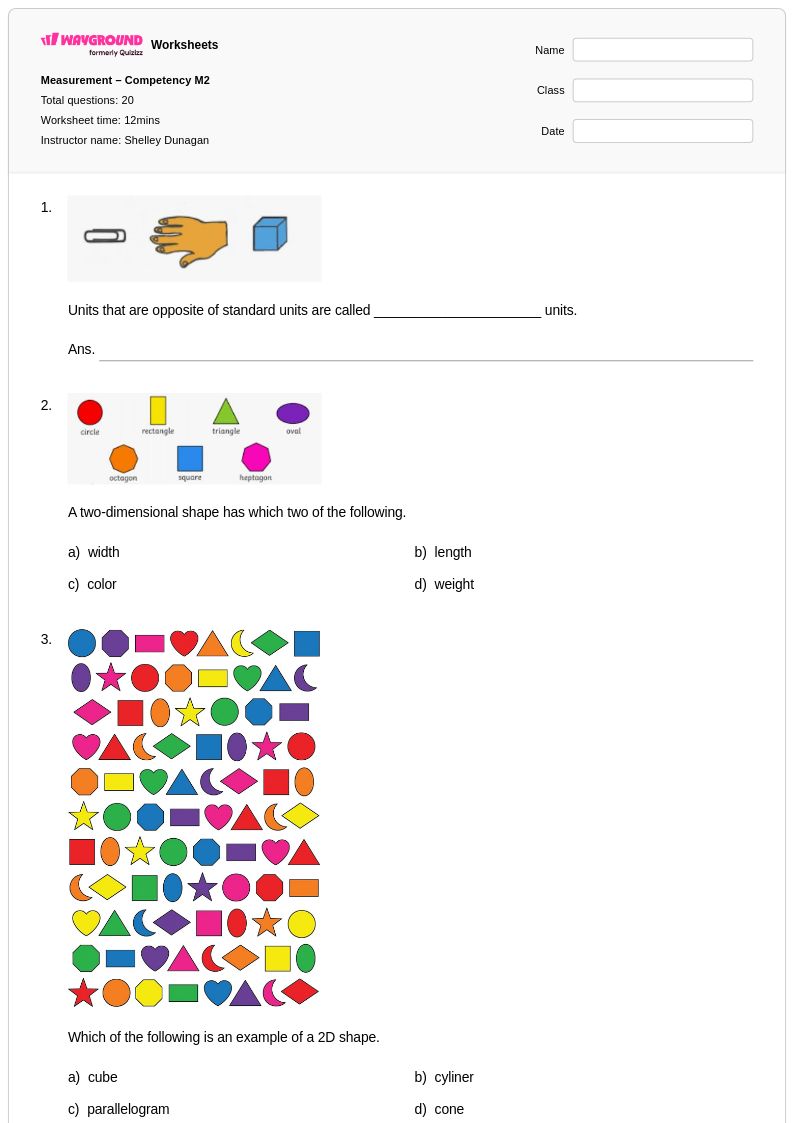
20Q
1st - 3rd
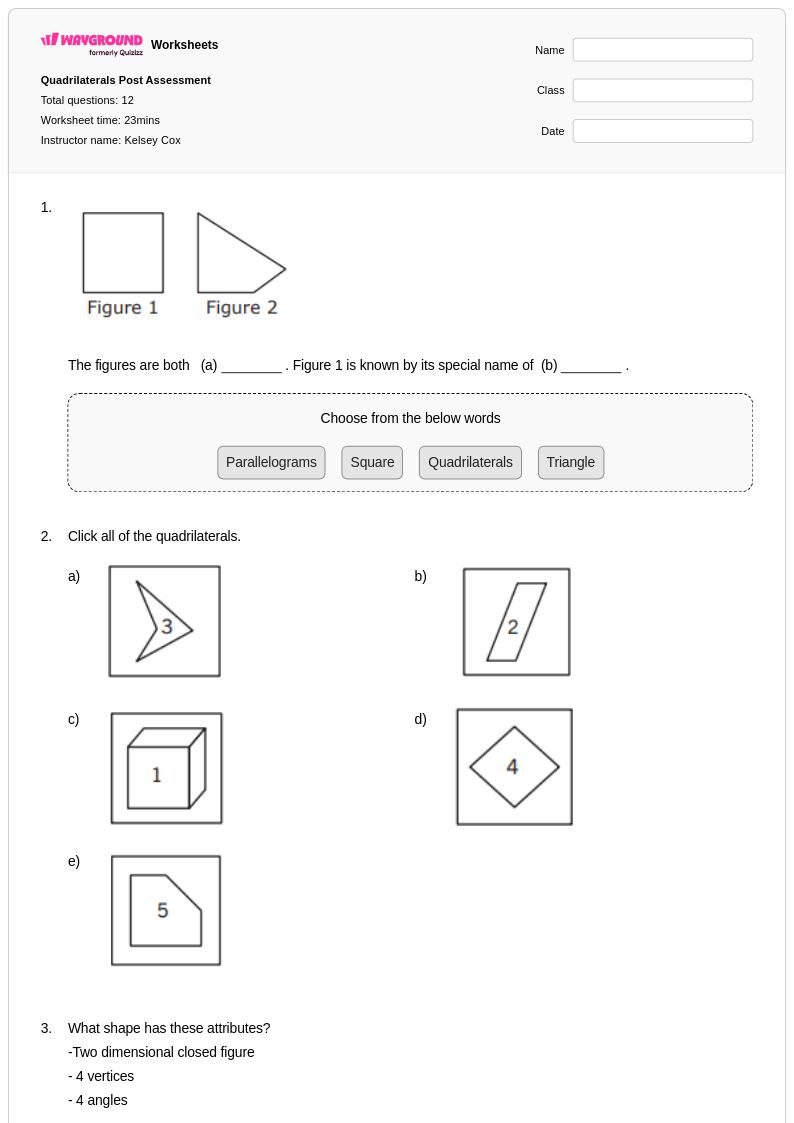
12Q
3rd
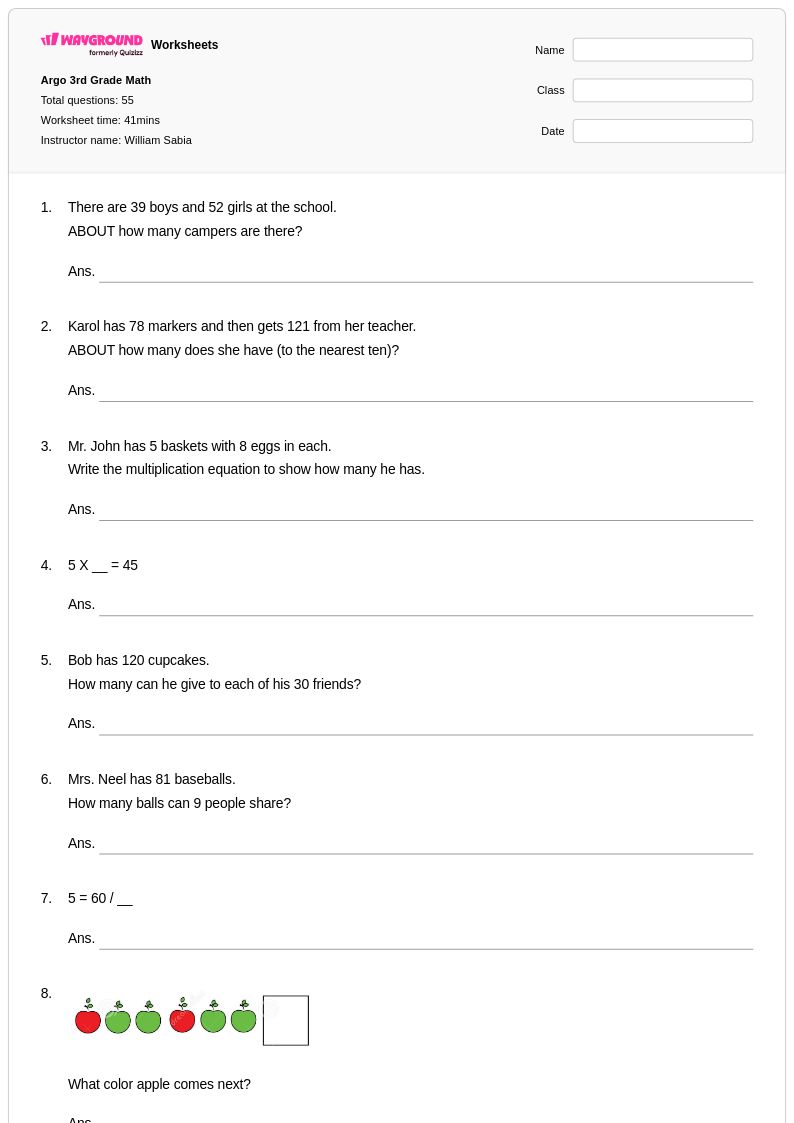
55Q
3rd
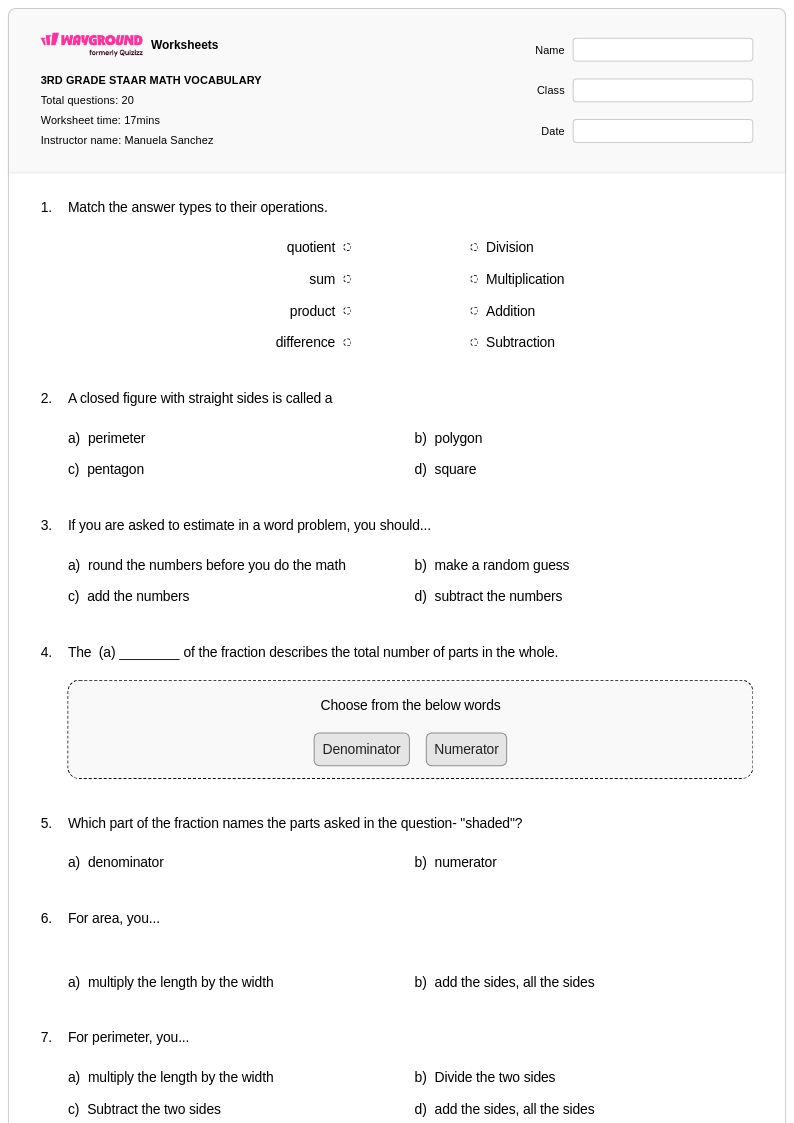
20Q
3rd
Explorar 2D Shapes and Fractions hojas de trabajo por grados
Explore otras hojas de trabajo de materias para class 3
Explore printable 2D Shapes and Fractions worksheets for Class 3
2D shapes and fractions worksheets for Class 3 students available through Wayground (formerly Quizizz) provide essential practice in understanding how geometric shapes can be divided into equal parts to represent fractional concepts. These comprehensive printables help young learners visualize fractions through familiar shapes like circles, rectangles, squares, and triangles, strengthening their ability to identify unit fractions, compare fractional parts, and recognize equivalent representations. Each worksheet includes carefully designed practice problems that progress from basic fraction identification within shapes to more complex tasks involving shading fractional parts and comparing fractions using visual models. The accompanying answer key ensures accurate assessment and enables students to check their understanding independently, while the free pdf format makes these resources accessible for both classroom instruction and home practice.
Wayground (formerly Quizizz) supports mathematics educators with millions of teacher-created resources specifically designed for Class 3 fraction instruction, including extensive collections focused on 2D shapes and fractional representations. The platform's robust search and filtering capabilities allow teachers to quickly locate worksheets that align with specific learning standards and match their students' current skill levels, while built-in differentiation tools enable educators to modify content for remediation or enrichment purposes. These flexible resources are available in both printable and digital formats, including downloadable pdf versions, making lesson planning more efficient and providing multiple options for skill practice. Teachers can customize worksheets to target specific learning objectives, create varied practice opportunities, and ensure students develop a solid conceptual foundation in geometric fraction models that will support their mathematical growth throughout elementary school.
FAQs
How do I teach fractions with 2D shapes in third grade?
What worksheet exercises build third-grade fraction skills?
What mistakes do third graders make when reading fractions from shapes?
How should I use a Grade 3 2D shapes and fractions worksheet on Wayground?
How do shape models fit the Grade 3 Common Core fraction progression?
How can I differentiate fraction models for a mixed-ability third-grade class?
What fraction concepts should third graders know from 2D shape models?