Free Printable Addition and Subtraction Worksheets for Class 5
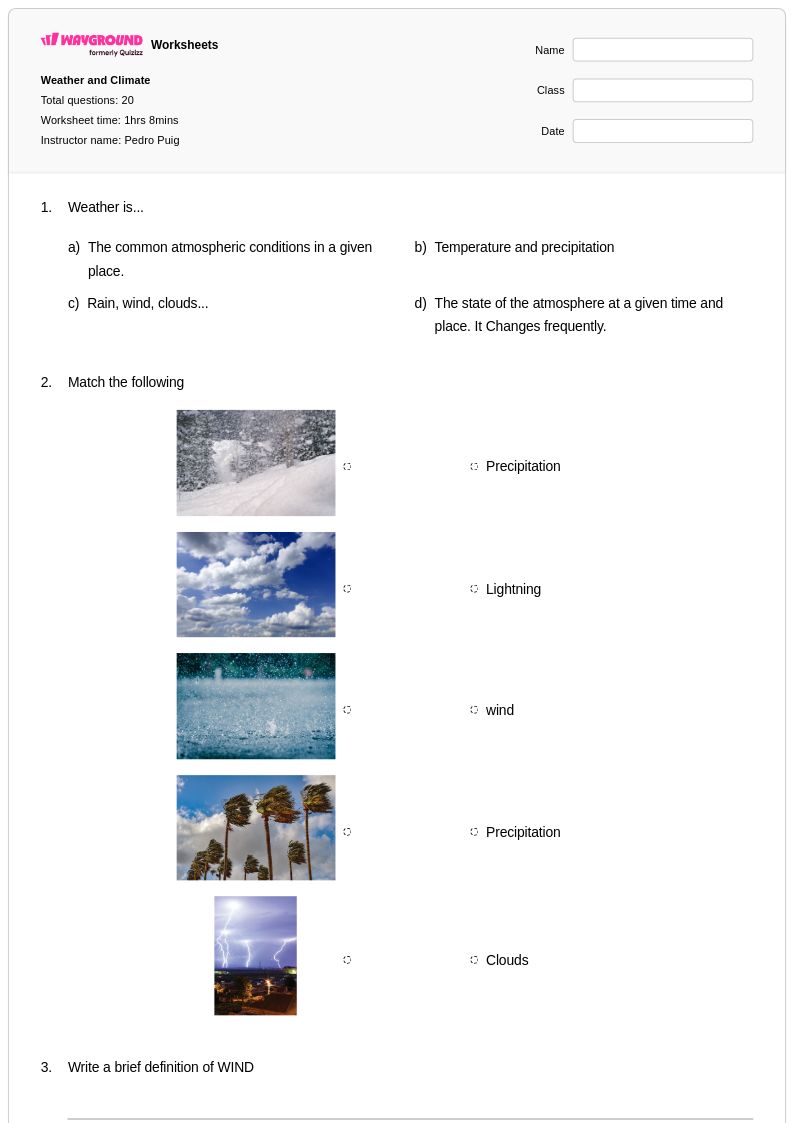
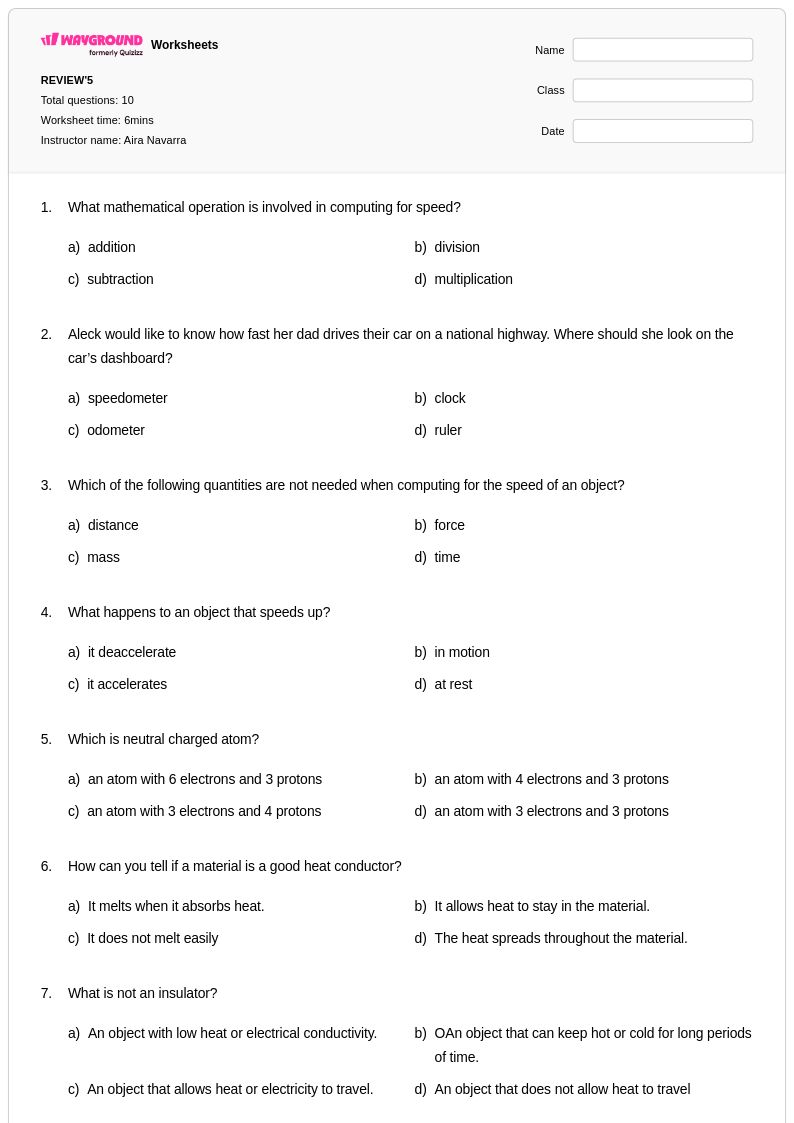
Class 5 addition and subtraction worksheets from Wayground provide free printables and practice problems with answer keys to help students master mathematical operations with units and measurements in science contexts.
Explore printable Addition and Subtraction worksheets for Class 5
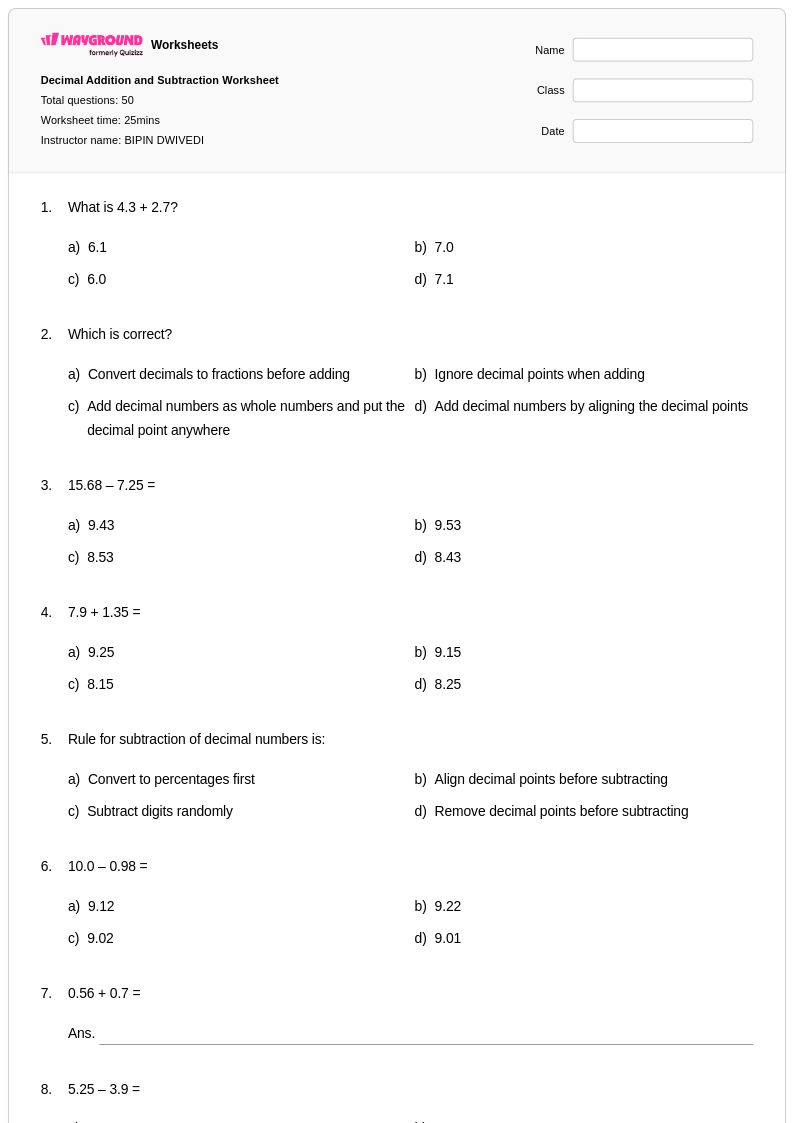
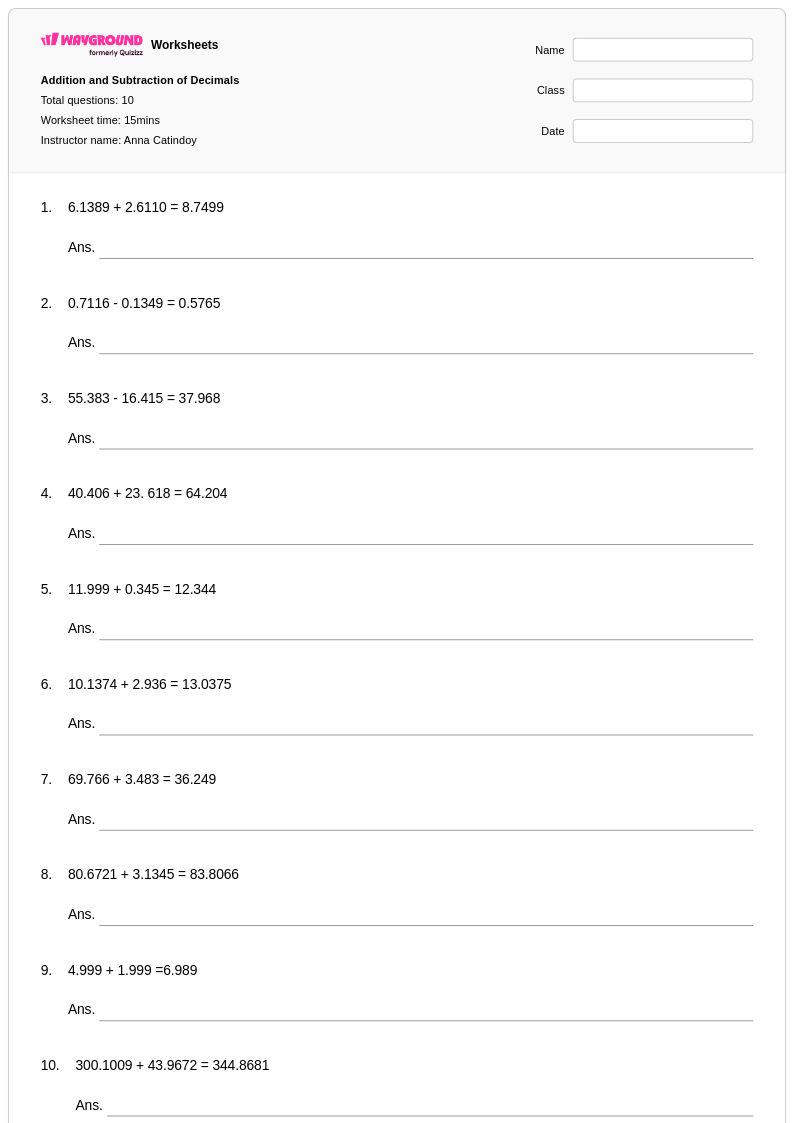
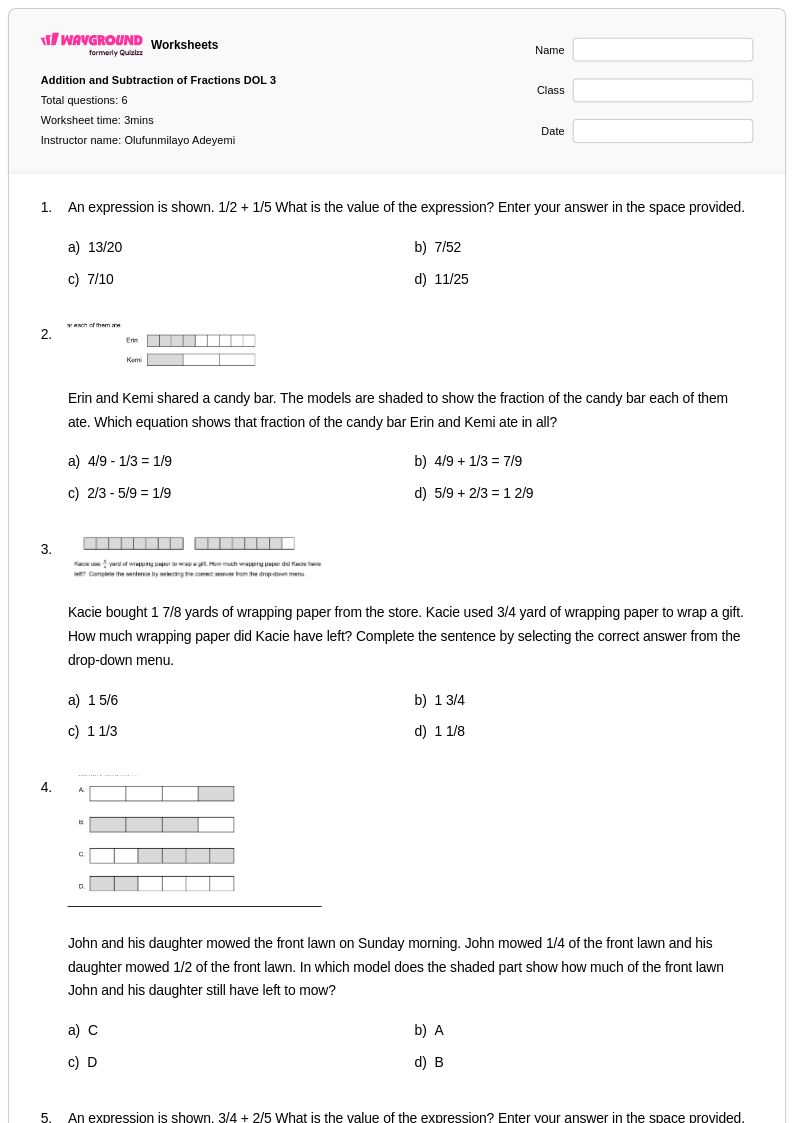
Addition and subtraction worksheets for Class 5 units and measurement provide essential practice for students learning to perform mathematical operations with various units of measurement. These comprehensive worksheets available through Wayground (formerly Quizizz) focus on developing computational skills while reinforcing measurement concepts, helping students add and subtract quantities involving length, weight, volume, and time. The practice problems systematically guide learners through scenarios where they must combine or find the difference between measurements, strengthening their ability to work with both whole numbers and decimals in measurement contexts. Each worksheet includes detailed answer keys and is available as free printables in convenient PDF format, making it easy for educators to assess student progress and provide immediate feedback on measurement calculations.
Wayground (formerly Quizizz) supports teachers with an extensive collection of measurement computation worksheets created by millions of educators worldwide, offering robust search and filtering capabilities to locate materials perfectly suited to Class 5 addition and subtraction with units and measurement. The platform's standards-aligned resources include differentiation tools that allow teachers to customize worksheets for varying skill levels, ensuring that both struggling learners and advanced students receive appropriate challenge levels in their measurement practice. These flexible materials are available in both printable and digital formats, including downloadable PDFs, enabling seamless integration into lesson planning, targeted remediation sessions, enrichment activities, and regular skill practice routines that build mathematical confidence and computational fluency with measurement units.
FAQs
How do I teach addition and subtraction with units and measurement?
Start by ensuring students understand that you can only add or subtract measurements with the same unit, making unit conversion a prerequisite skill. Use concrete examples from science contexts, such as adding lengths in centimeters or subtracting masses in grams, before introducing mixed-unit problems. Building fluency with same-unit operations first helps students develop the conceptual foundation needed for more complex multi-step conversions.
What exercises help students practice adding and subtracting measurements?
Effective practice includes same-unit addition and subtraction problems (e.g., adding lengths in meters), followed by exercises that require unit conversion before operating (e.g., adding centimeters and meters). Problems that span multiple unit systems, such as length, mass, volume, and time, help students generalize the skill across scientific and mathematical contexts. Scaffolded worksheets that progress from simple to mixed-unit problems are particularly effective for building computational fluency.
What mistakes do students commonly make when adding and subtracting measurements?
The most common error is adding or subtracting the numerical values without first converting units to a common base, for example, adding 3 km and 500 m as if they were the same unit. Students also frequently drop unit notation in their answers or apply inconsistent units mid-calculation. Explicit instruction on maintaining proper unit notation throughout each step of a problem significantly reduces these errors.
How do I use addition and subtraction measurement worksheets in my classroom?
Wayground's addition and subtraction worksheets are available as printable PDFs for traditional classroom use and in digital formats for technology-integrated environments, including the option to host them as a quiz directly on Wayground. This flexibility makes them suitable for in-class practice, homework assignments, or targeted remediation sessions. Each worksheet includes a complete answer key, so teachers can use them efficiently for self-paced student work or guided group review.
How can I differentiate addition and subtraction measurement practice for different skill levels?
Differentiation can be achieved by varying problem complexity, starting students at basic same-unit operations and progressing toward advanced problems requiring multiple unit conversions. On Wayground, teachers can apply student-level accommodations such as read aloud support, reduced answer choices, and extended time to ensure accessibility for diverse learners. These settings can be assigned to individual students while the rest of the class works with default settings, with no disruption to the overall learning environment.
When should students convert units before adding or subtracting measurements?
Students should convert units whenever two measurements are expressed in different units within the same operation, for example, adding 2.5 liters and 300 milliliters requires converting to a common unit before calculating. A reliable rule of thumb is that if the units in a problem do not match, conversion must happen first. Teaching students to check unit consistency as the first step in any measurement calculation prevents the majority of computational errors.