
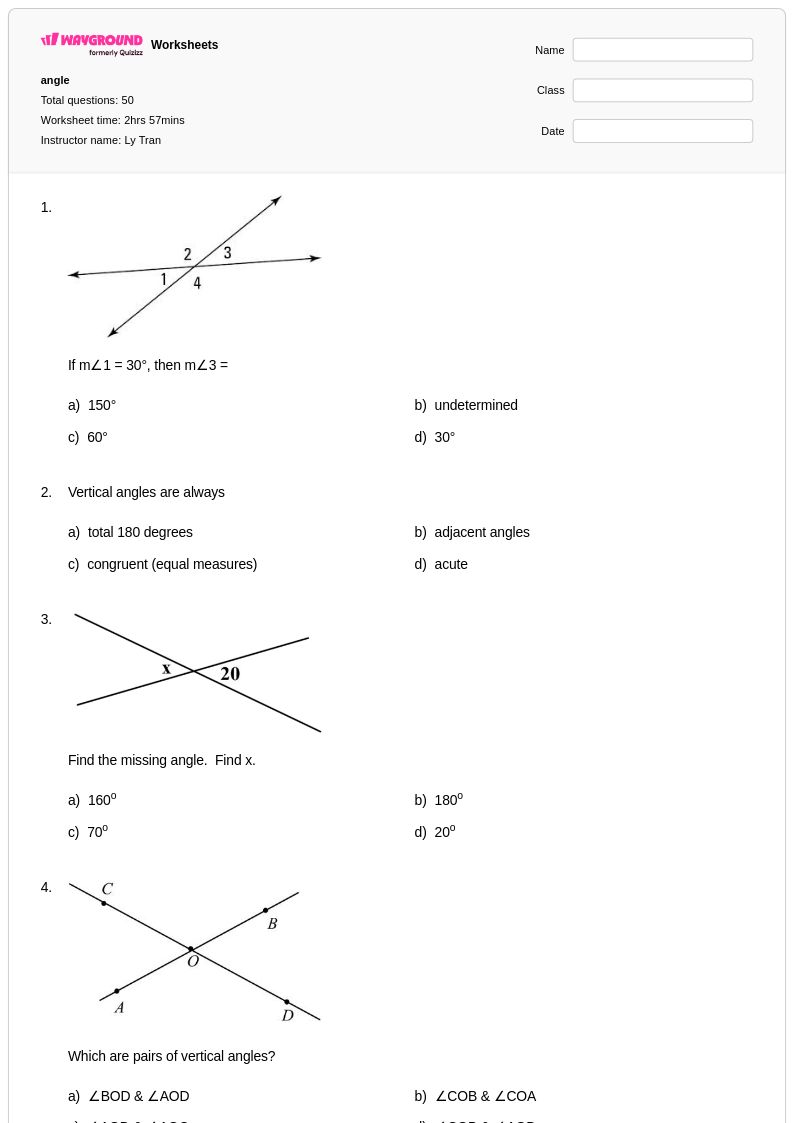
50 Q
6th
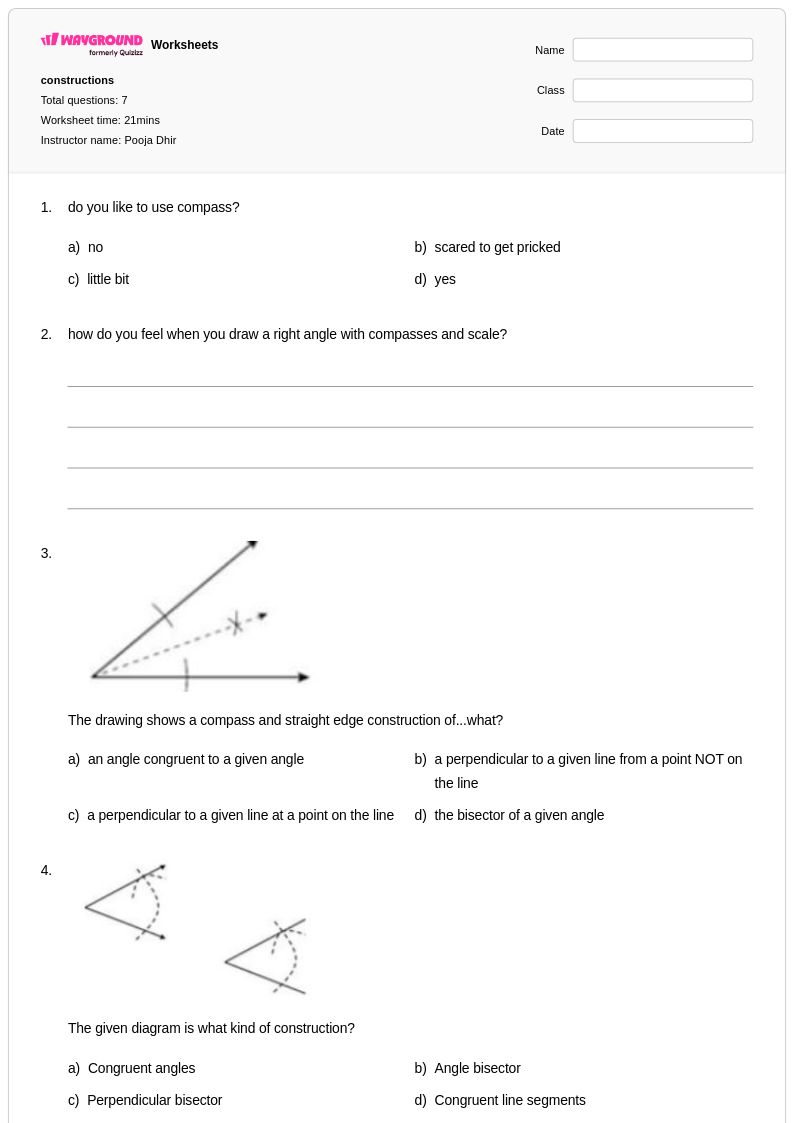
7 Q
6th
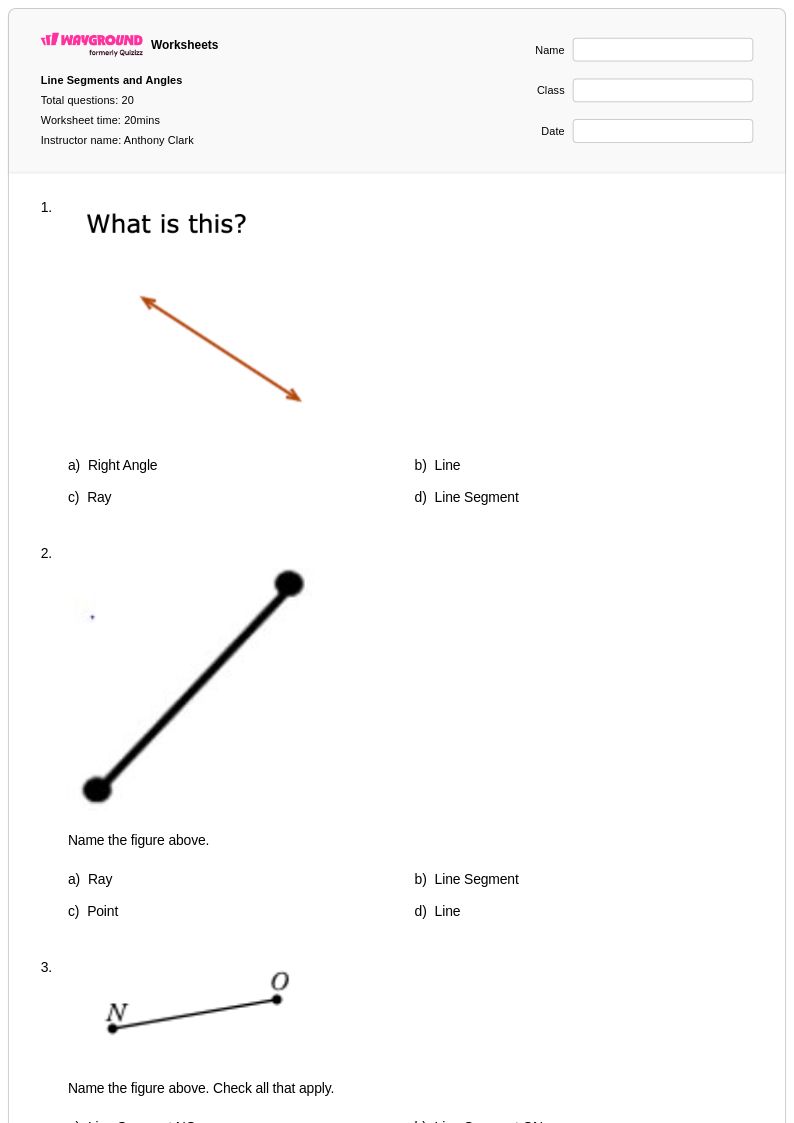
20 Q
4th - Uni
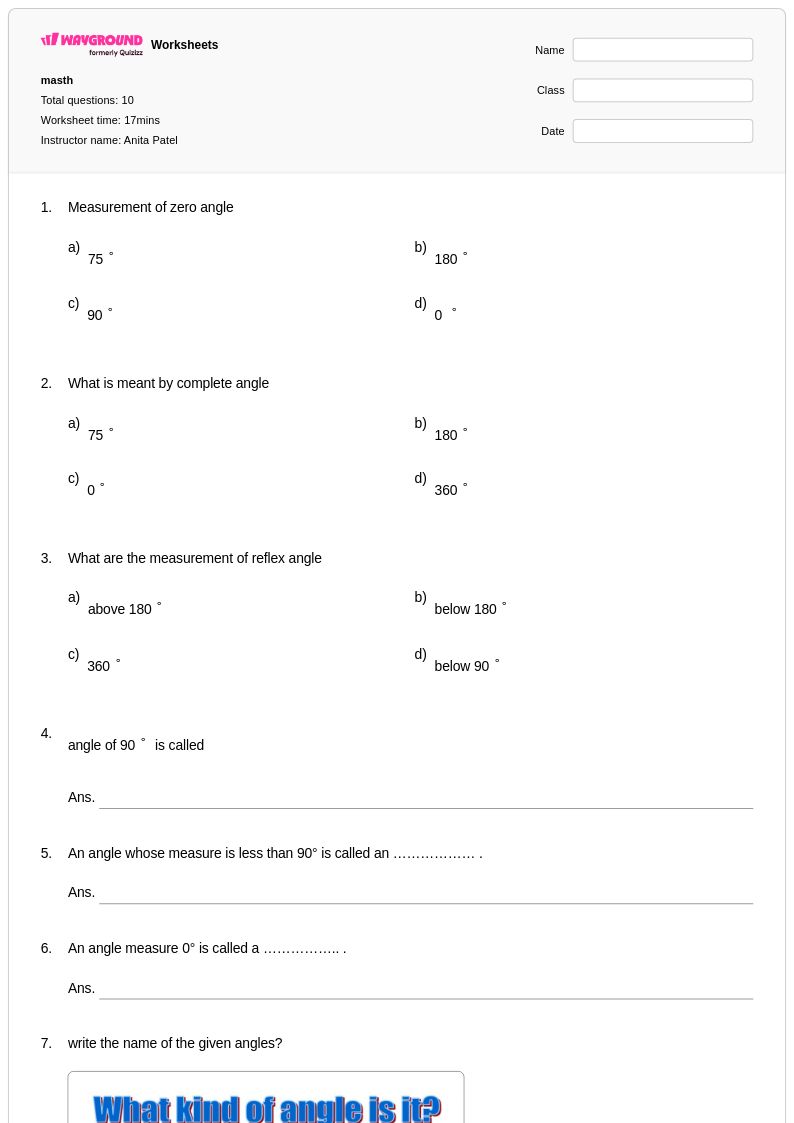
10 Q
6th - 7th
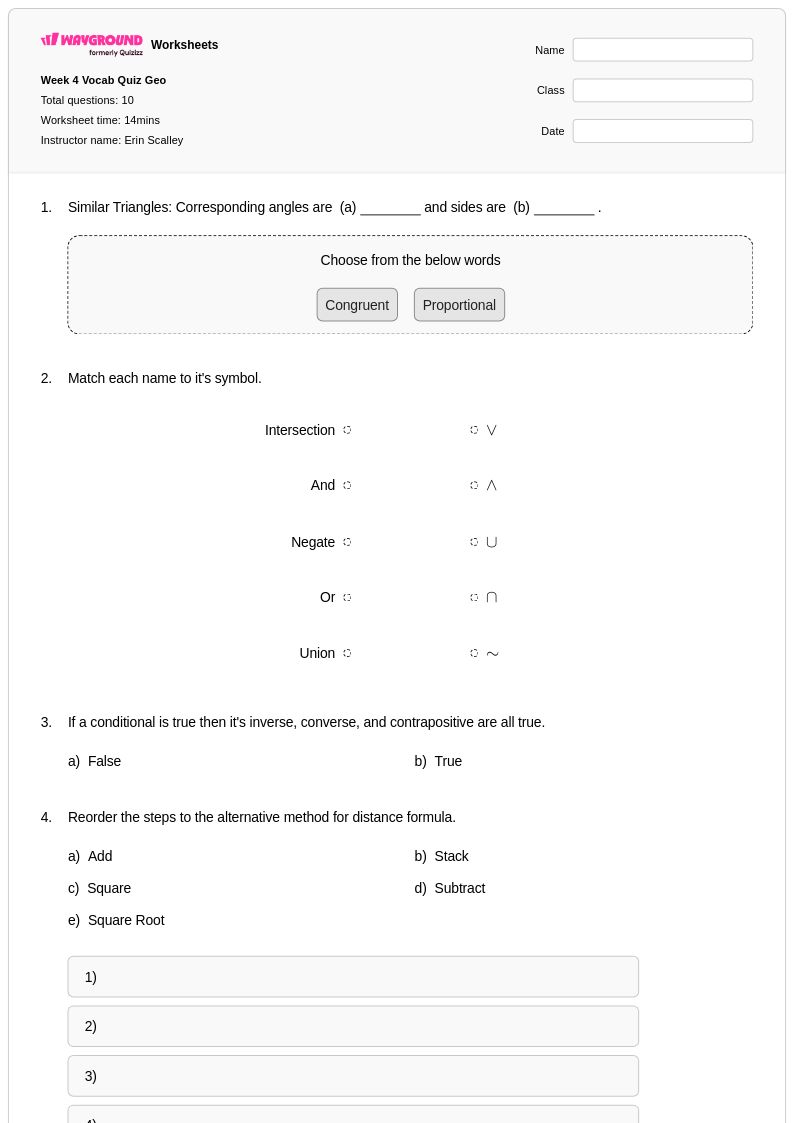
15 Q
6th - 8th
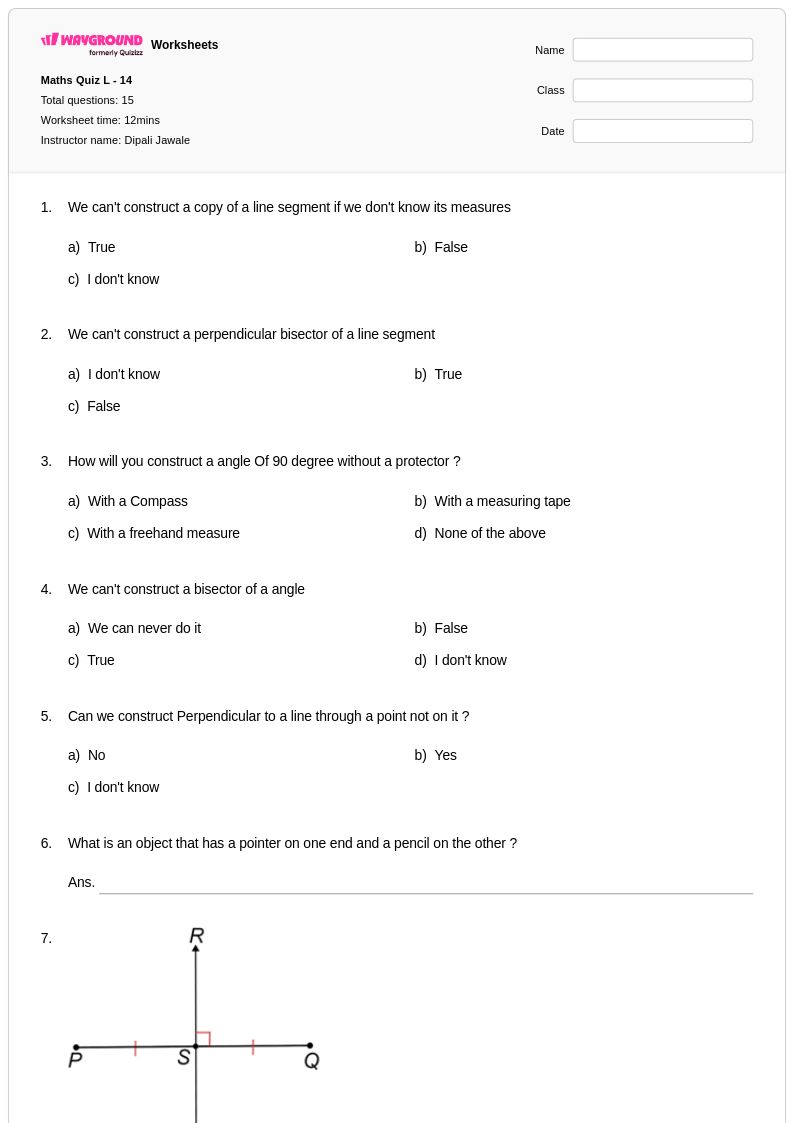
15 Q
6th
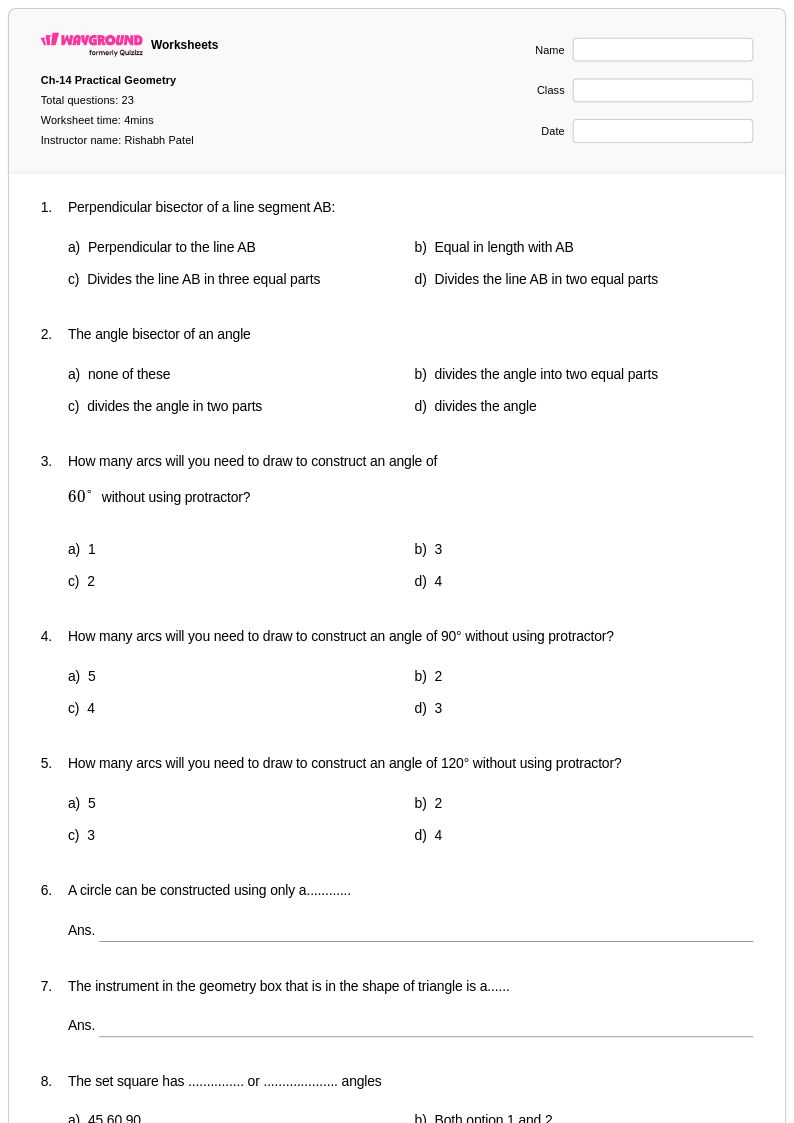
23 Q
6th
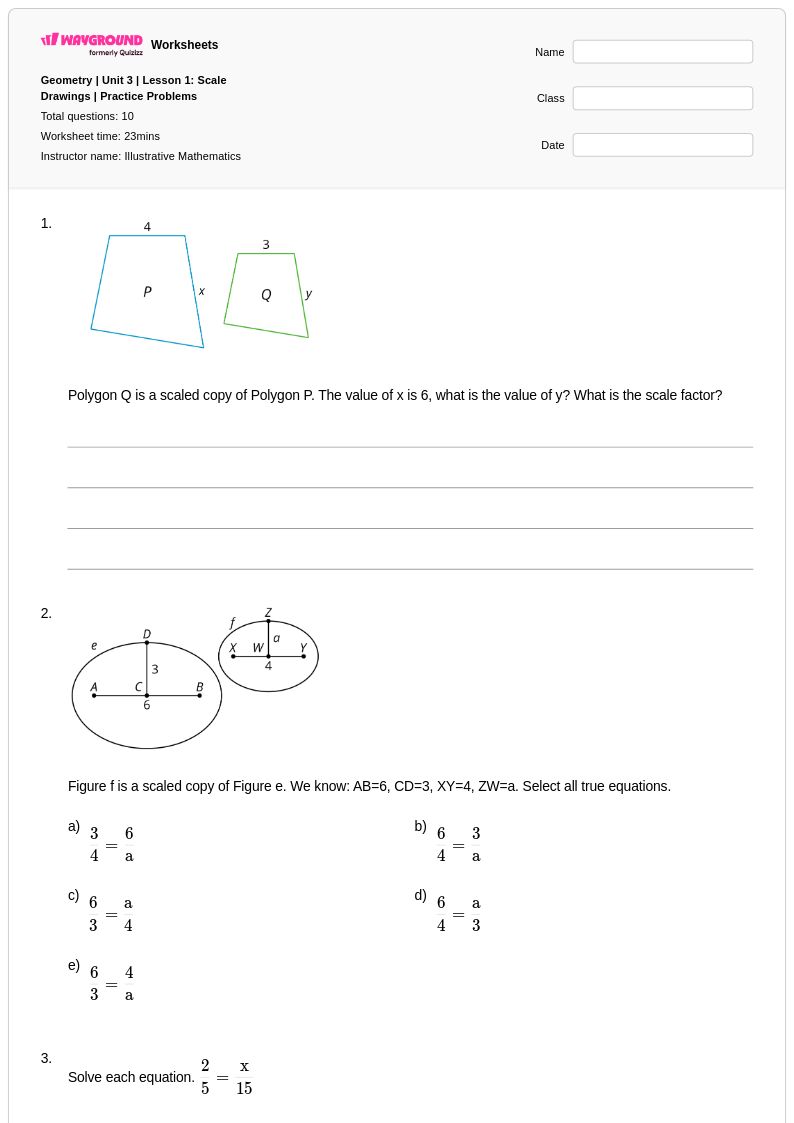
10 Q
6th - Uni
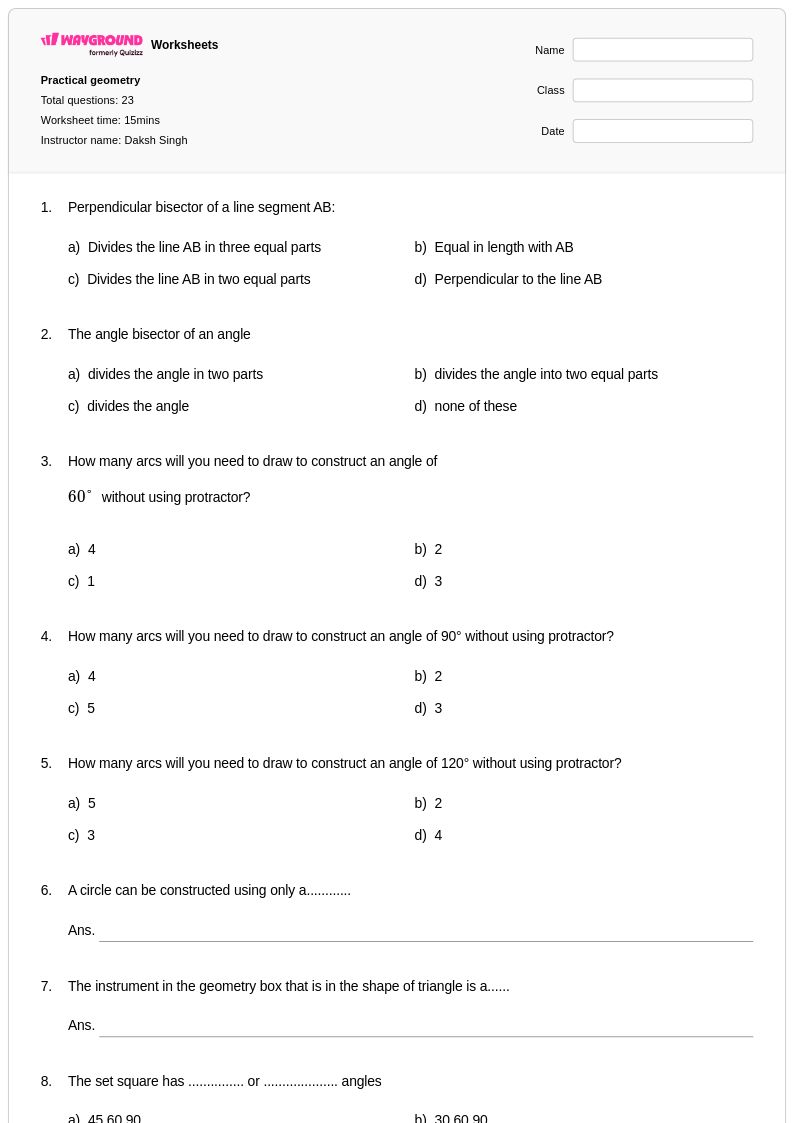
23 Q
6th
15 Q
6th
20 Q
6th
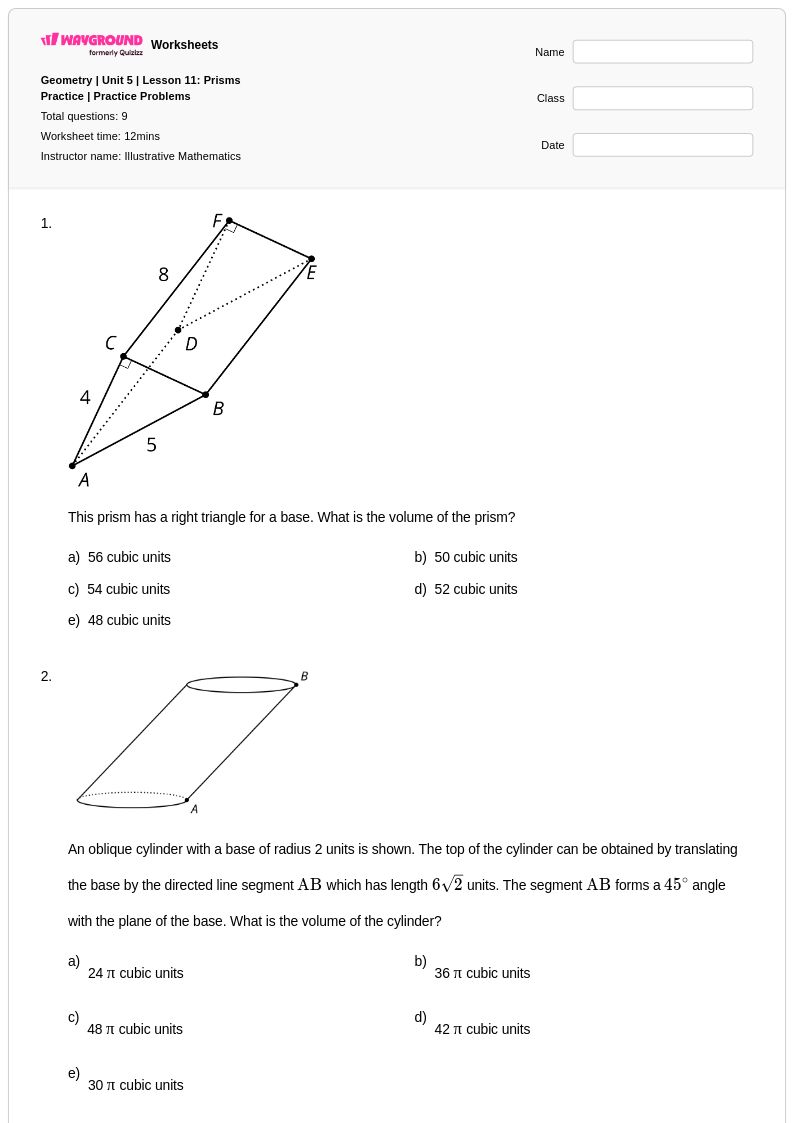
9 Q
6th - Uni
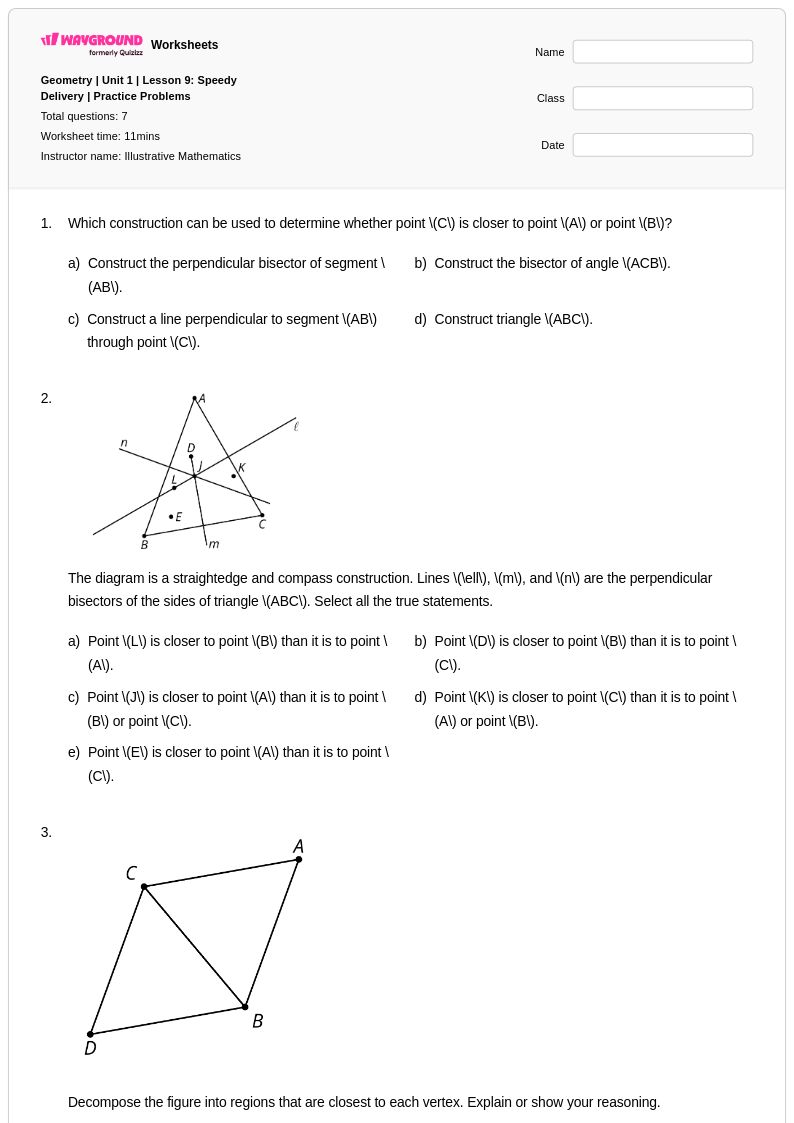
7 Q
6th - Uni
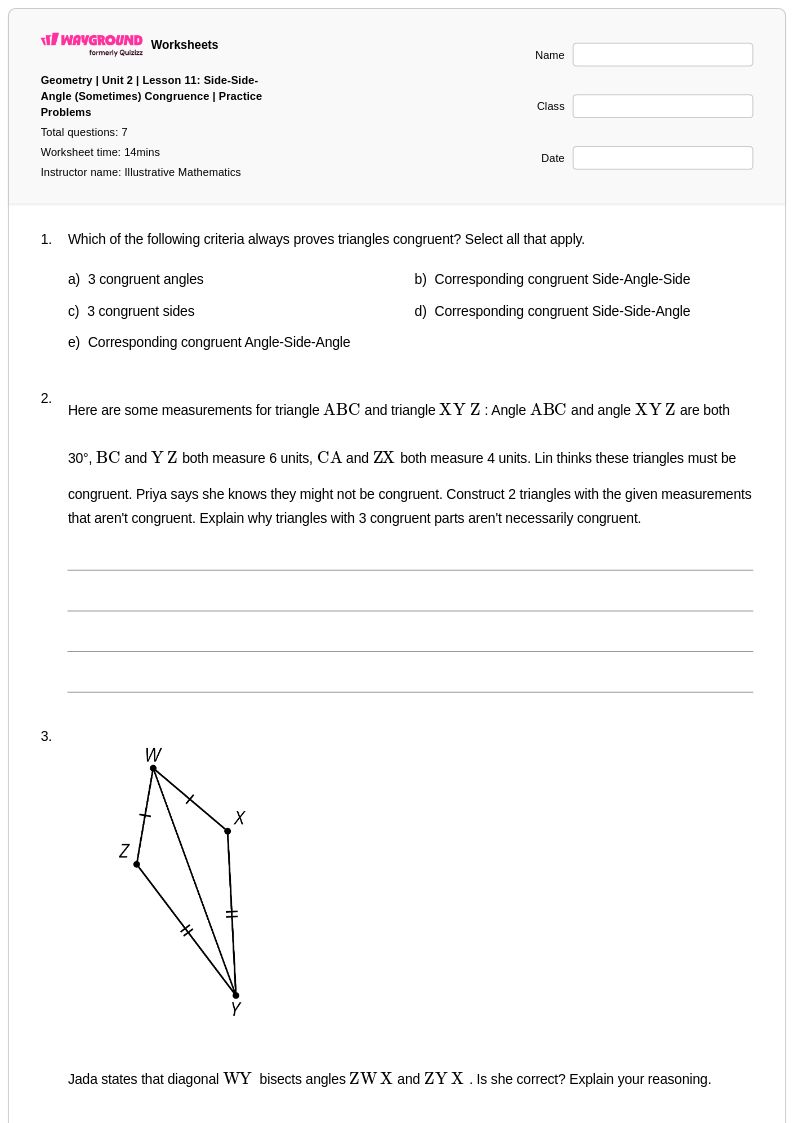
7 Q
6th - Uni
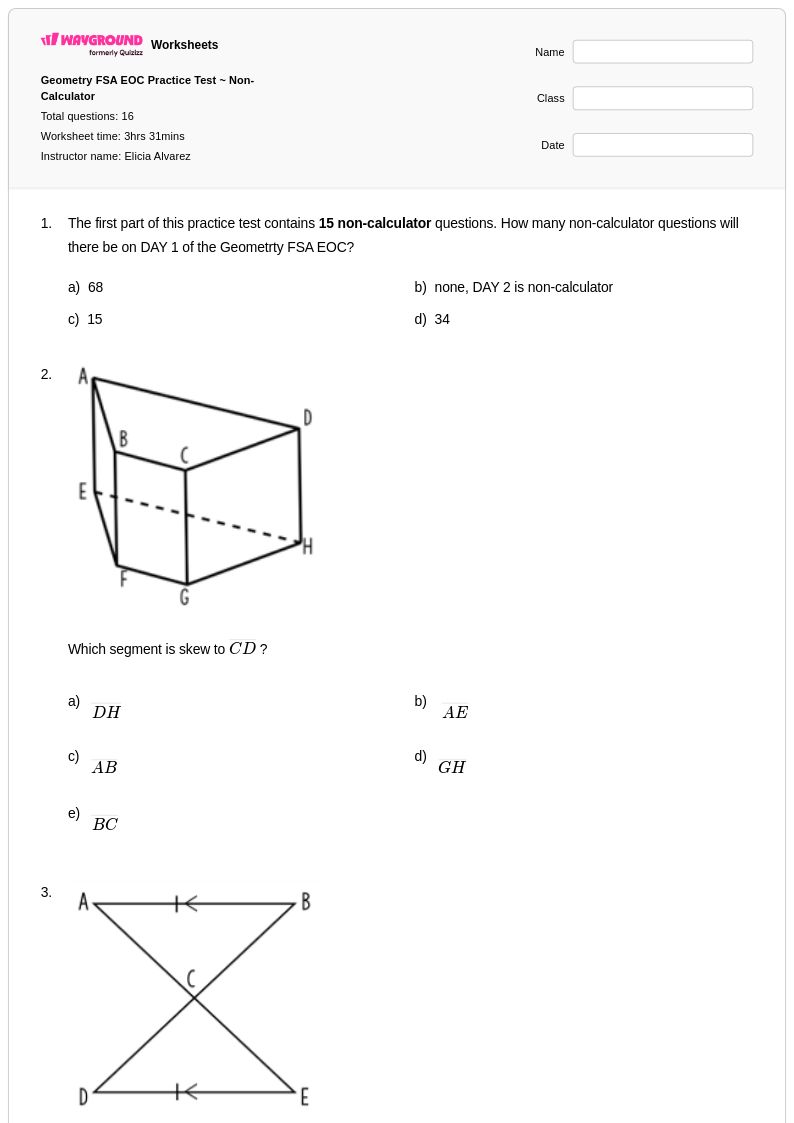
16 Q
6th - 12th
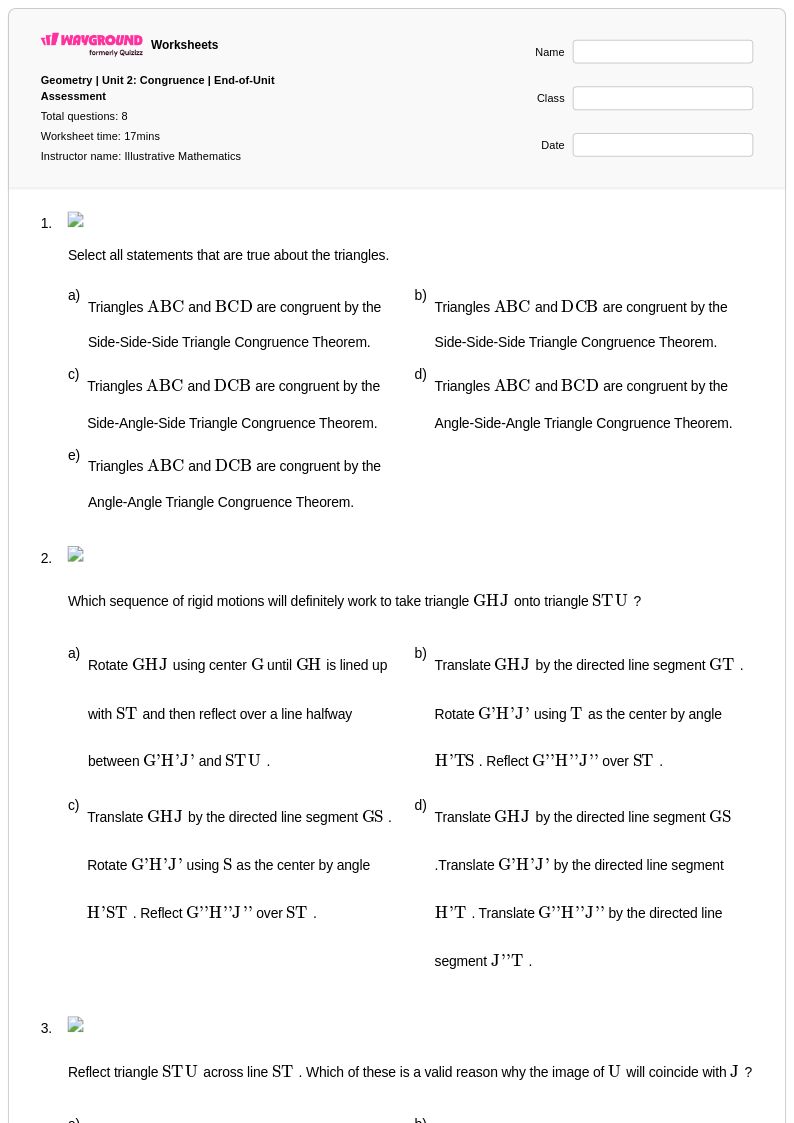
8 Q
6th - Uni

31 Q
6th
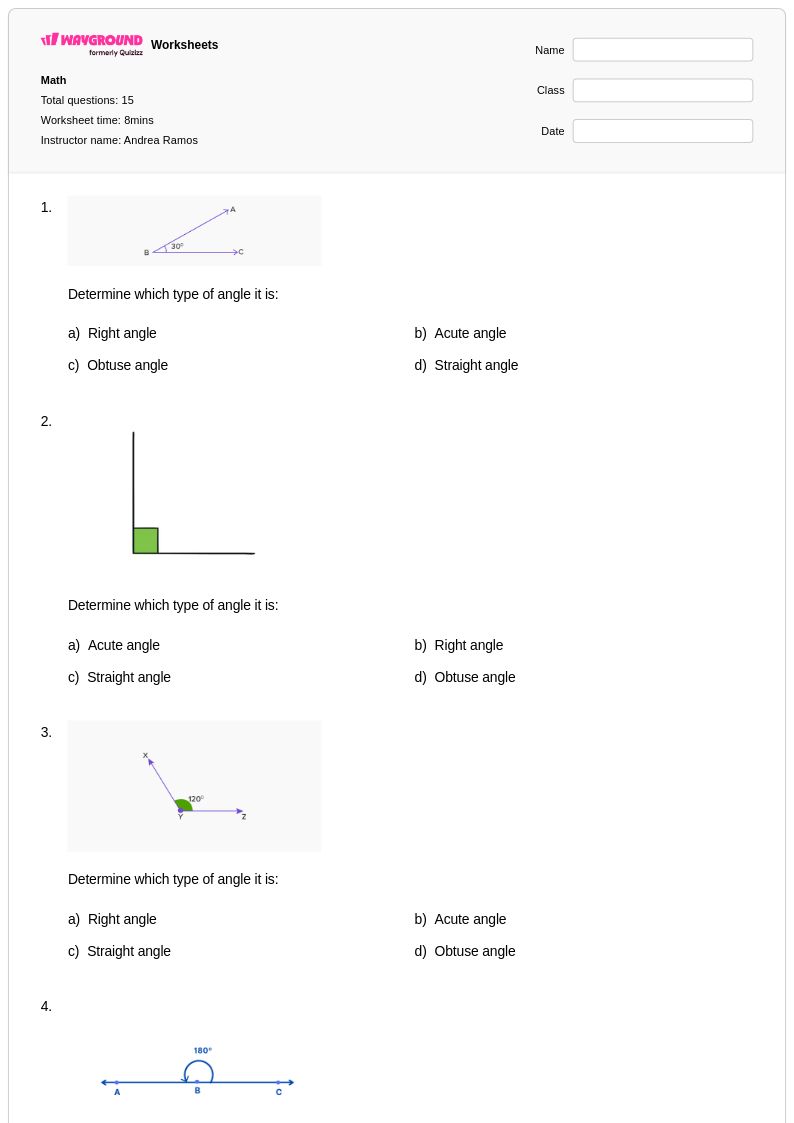
15 Q
6th
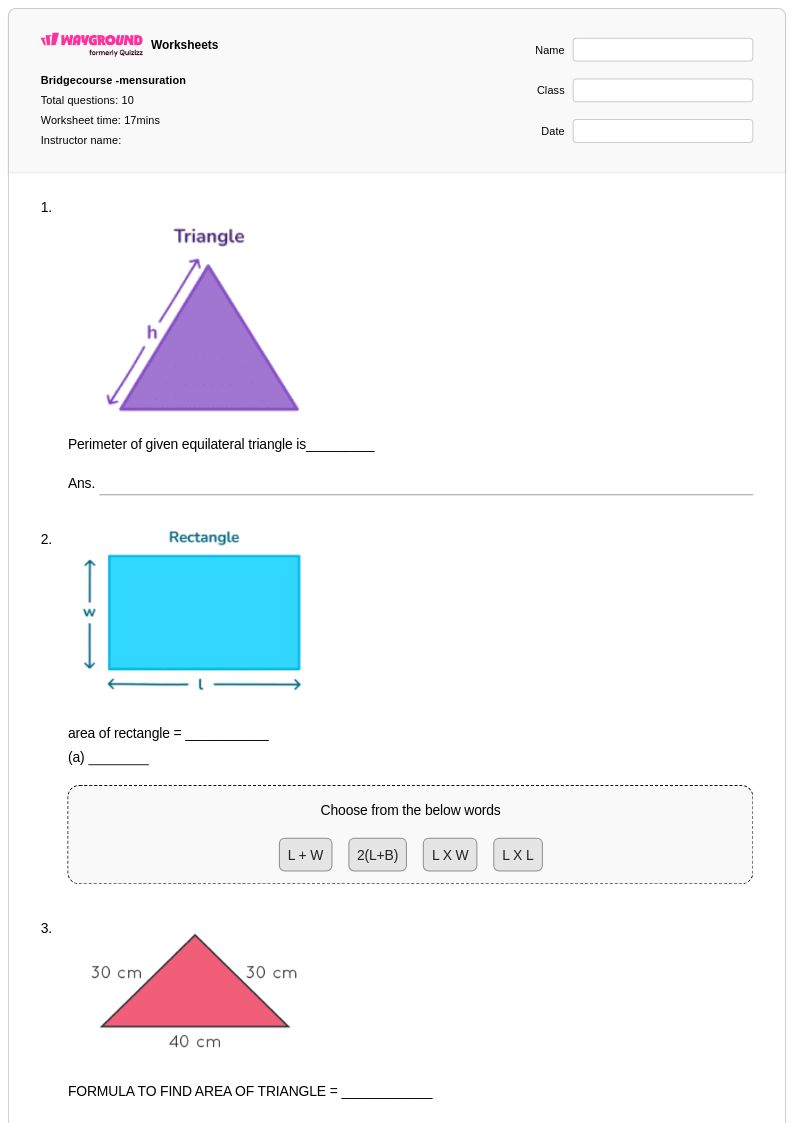
10 Q
6th
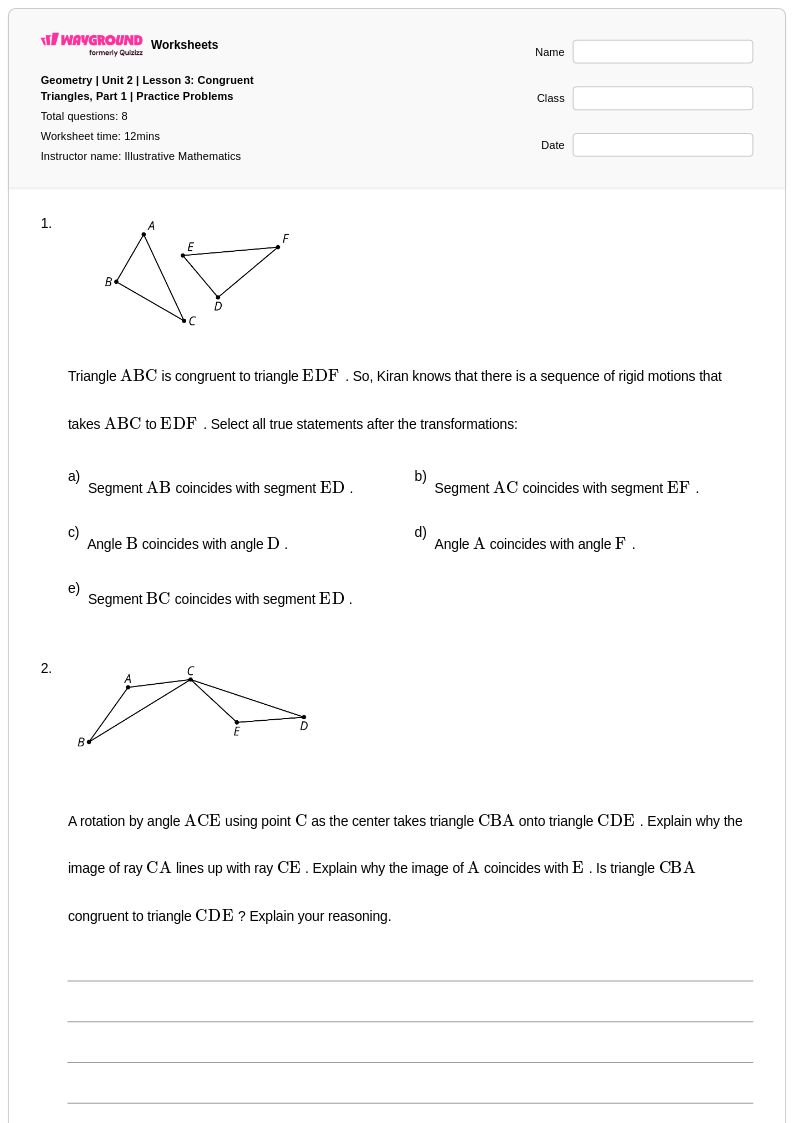
8 Q
6th - Uni
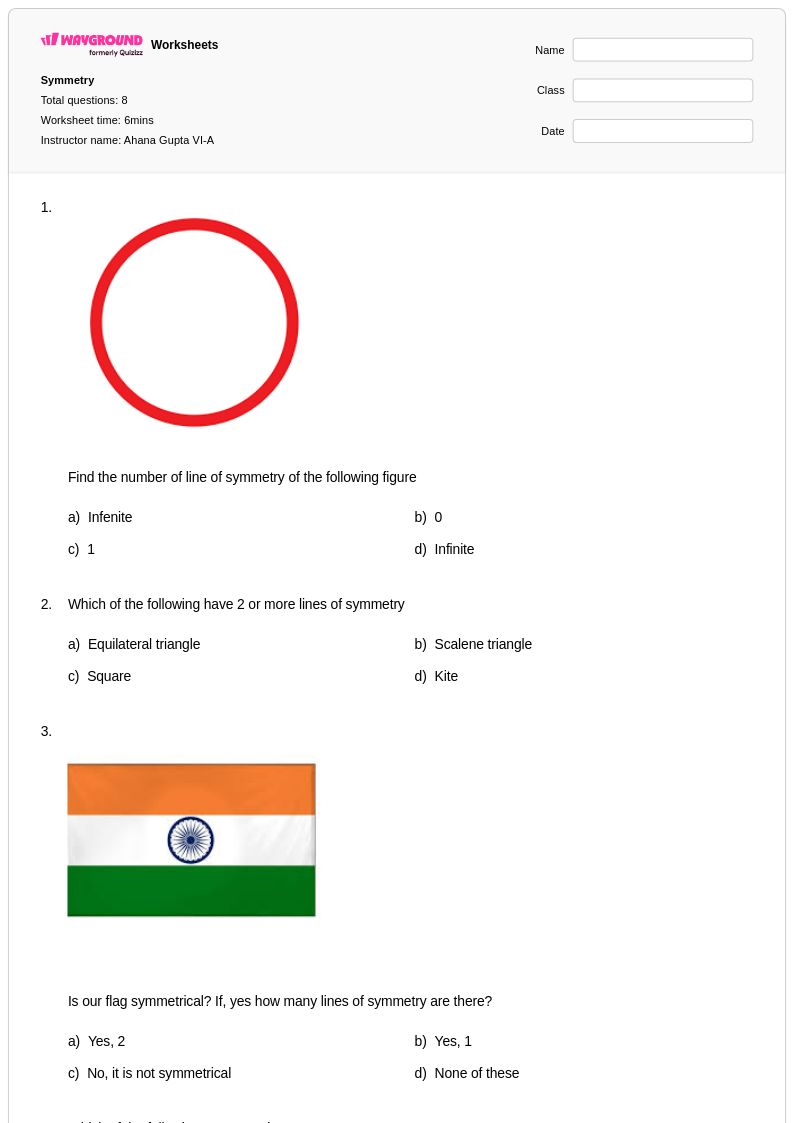
8 Q
6th
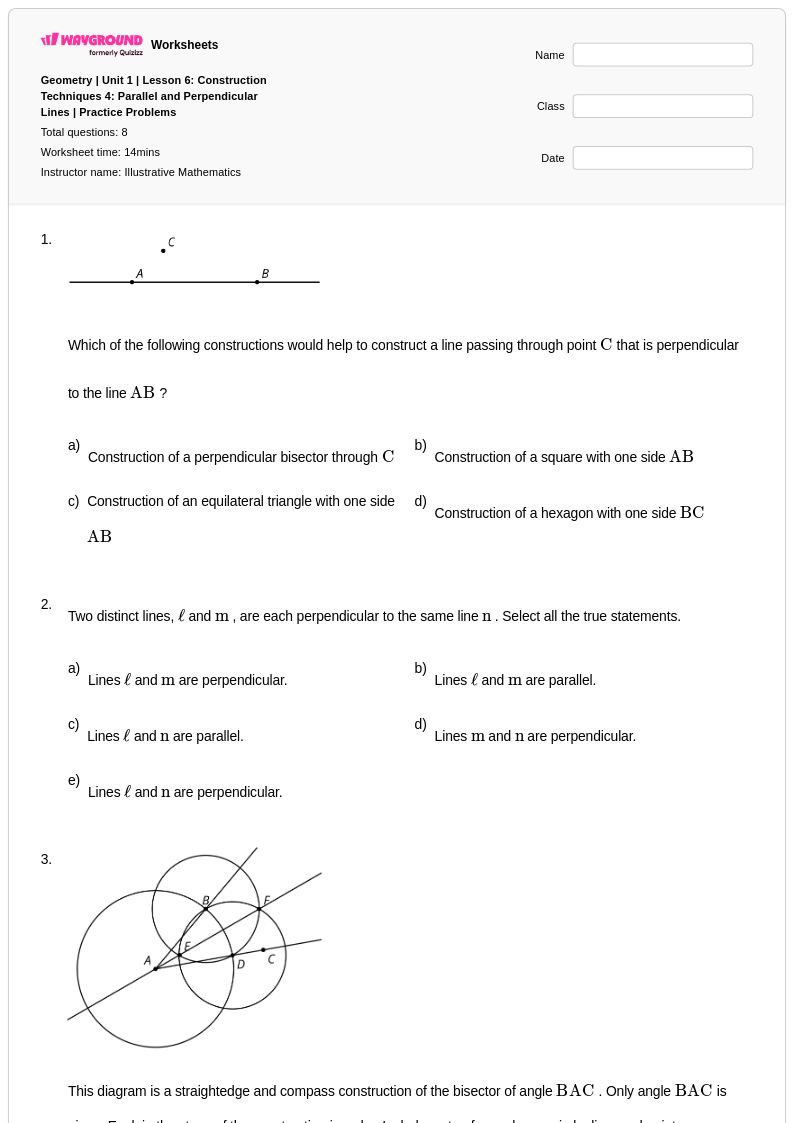
8 Q
6th - Uni
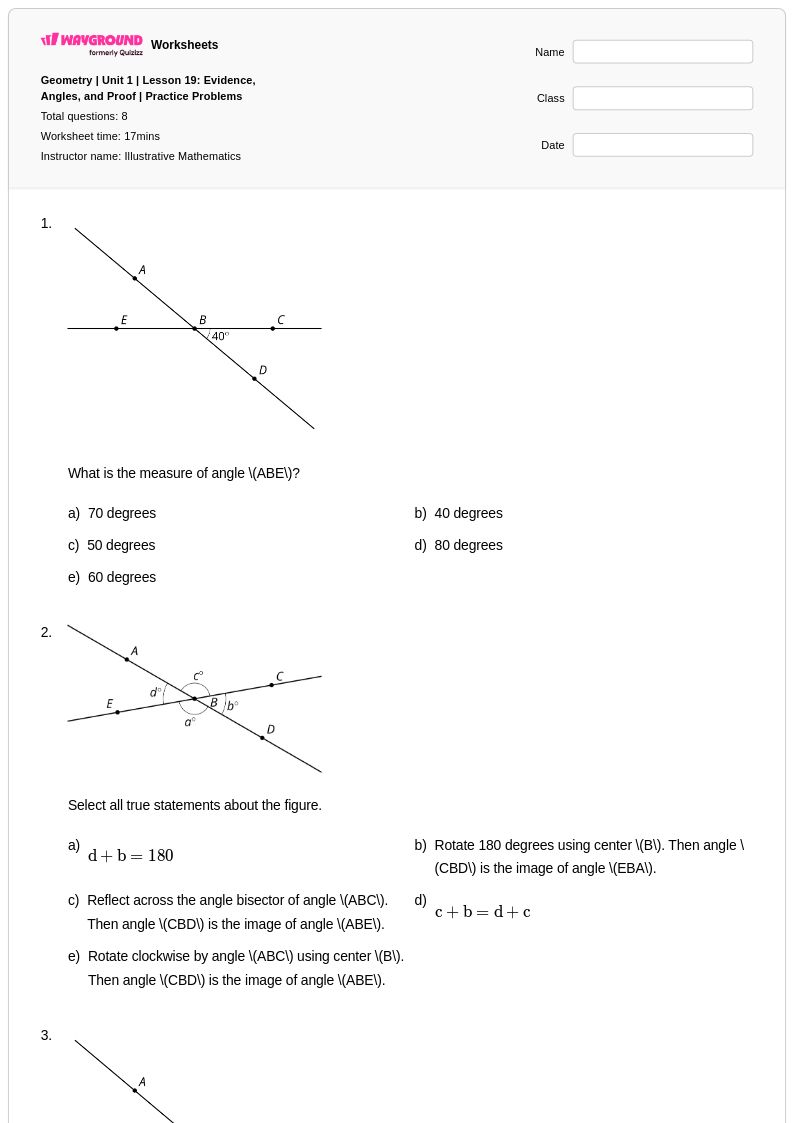
8 Q
6th - Uni
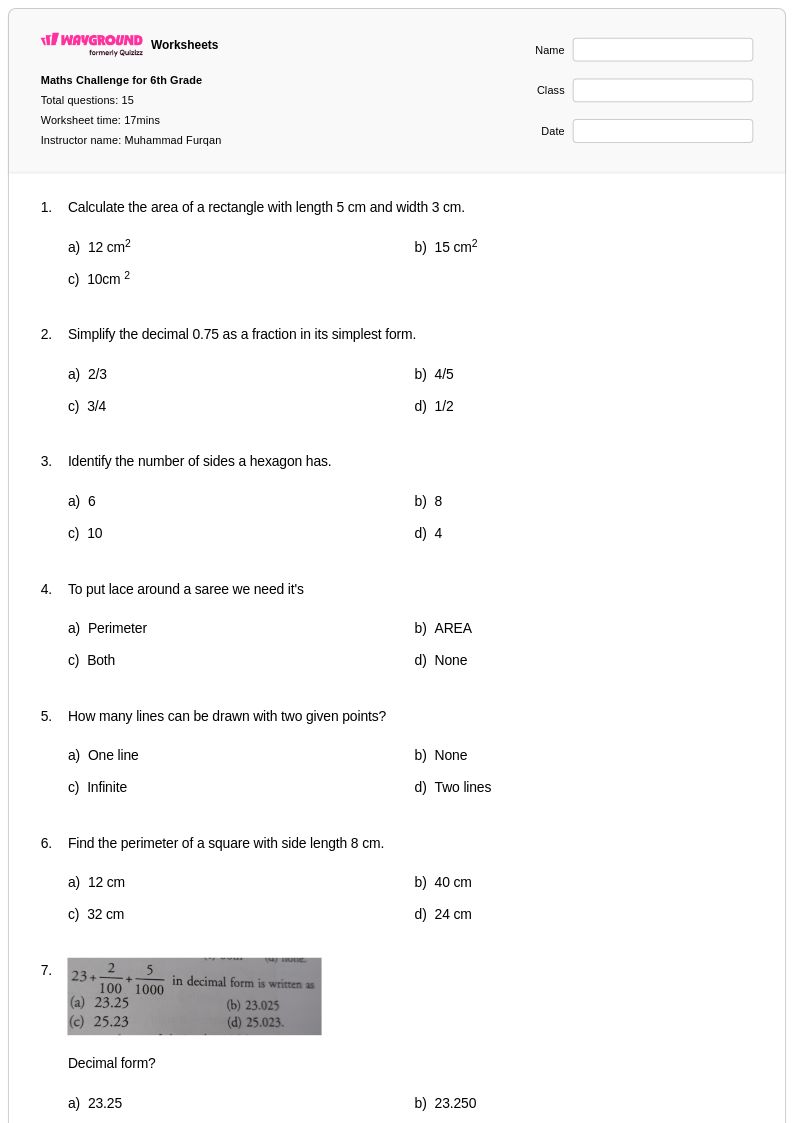
15 Q
6th
Explore Other Subject Worksheets for class 6
Explore printable Angle Bisector worksheets for Class 6
Angle bisector worksheets for Class 6 students available through Wayground (formerly Quizizz) provide comprehensive practice opportunities for mastering this fundamental geometric concept. These carefully crafted resources help students understand how to identify, construct, and apply angle bisectors while strengthening their spatial reasoning and measurement skills. The worksheets feature varied practice problems that guide students through the process of dividing angles into two equal parts using both geometric construction techniques and algebraic methods. Each printable worksheet includes detailed answer keys that support independent learning and self-assessment, while the free pdf format ensures easy classroom distribution and homework assignments.
Wayground (formerly Quizizz) empowers educators with access to millions of teacher-created angle bisector resources that can be seamlessly integrated into Class 6 mathematics instruction. The platform's robust search and filtering capabilities allow teachers to quickly locate materials aligned with specific learning standards and differentiate instruction based on individual student needs. These versatile worksheet collections support comprehensive lesson planning by offering flexible customization options that enable educators to modify problems, adjust difficulty levels, and create targeted practice sets for remediation or enrichment. Available in both printable and digital formats including downloadable pdfs, these resources facilitate diverse instructional approaches while ensuring students receive consistent skill practice whether learning in traditional classrooms or remote environments.
FAQs
How do I teach angle bisectors to Grade 6 students?
What exercises help Grade 6 students practice angle bisectors?
What mistakes do students make when finding angle bisectors?
How can I use a Grade 6 angle bisector worksheet in class?
How do angle bisectors fit into the Grade 6 geometry curriculum?
How can I differentiate angle-bisector practice for mixed-ability students?
What grade do students learn about angle bisectors?