
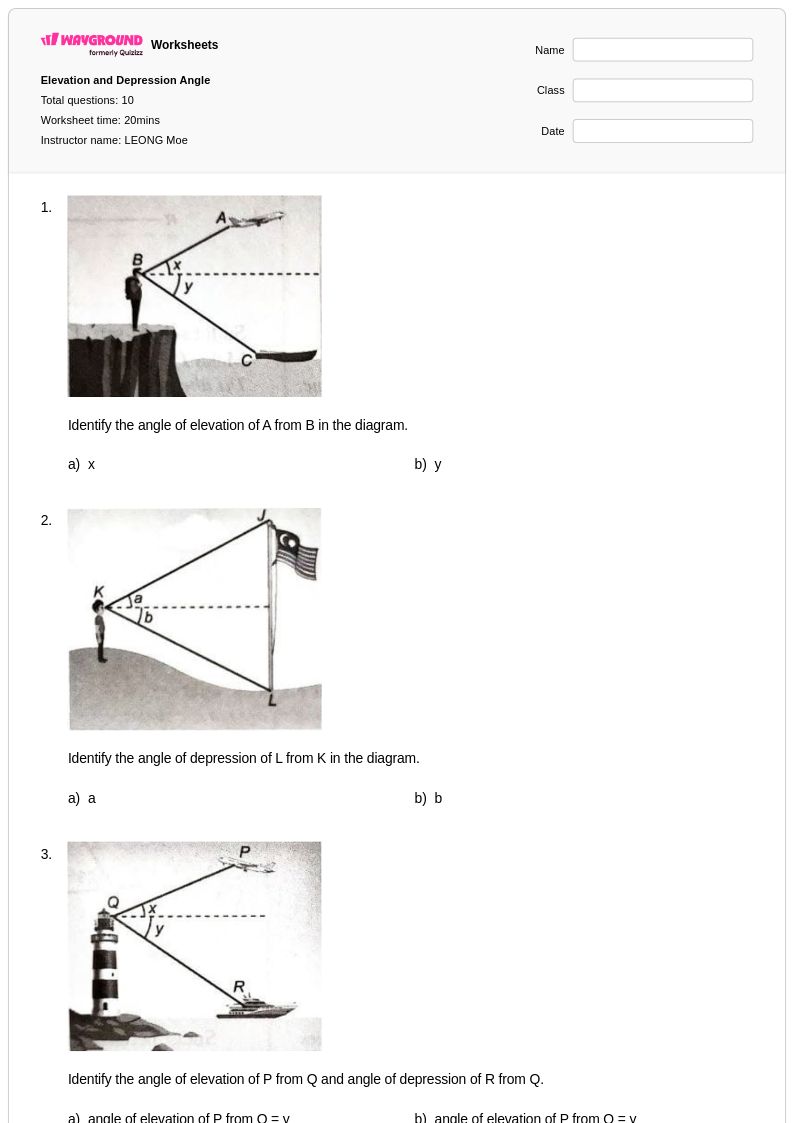
10 Q
7th
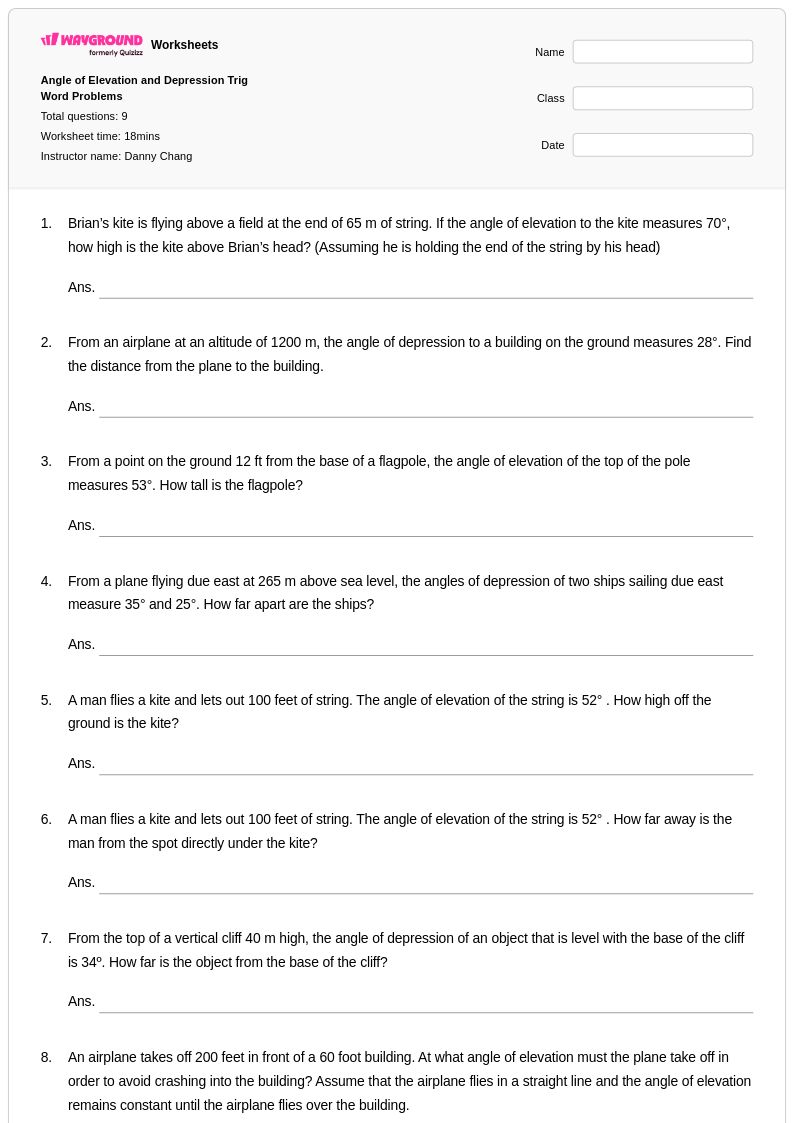
9 Q
7th - 11th
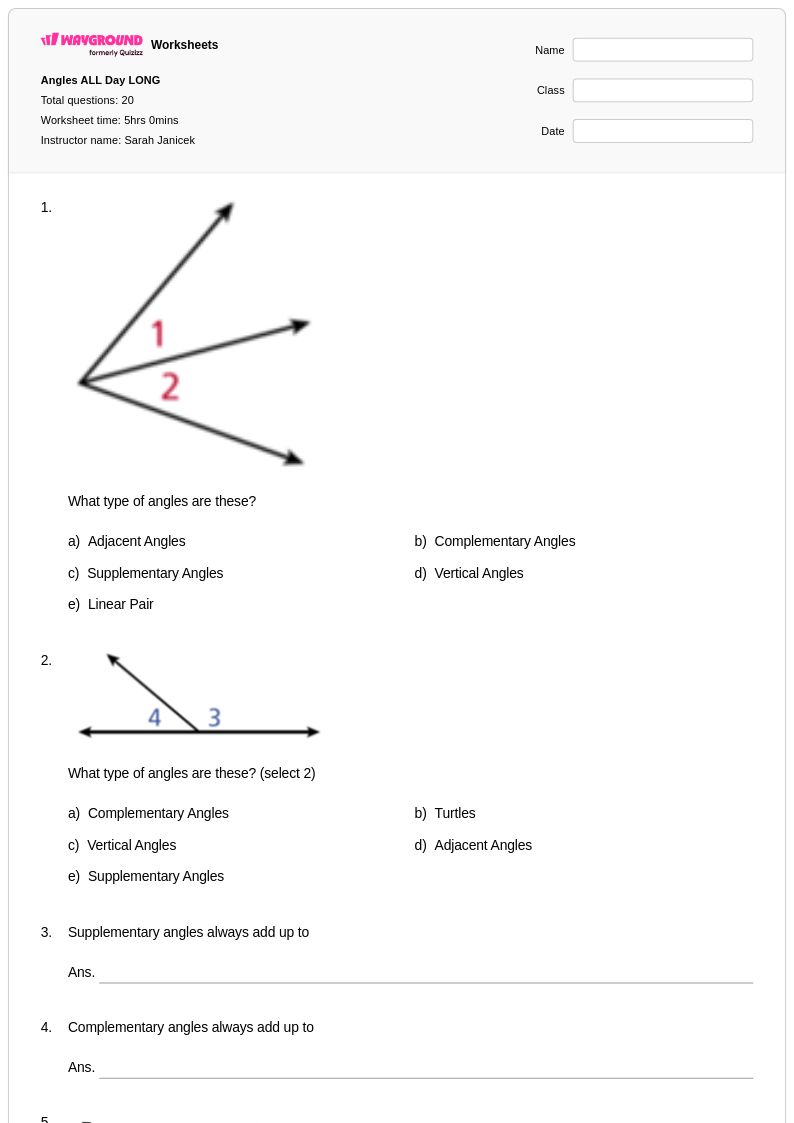
20 Q
7th
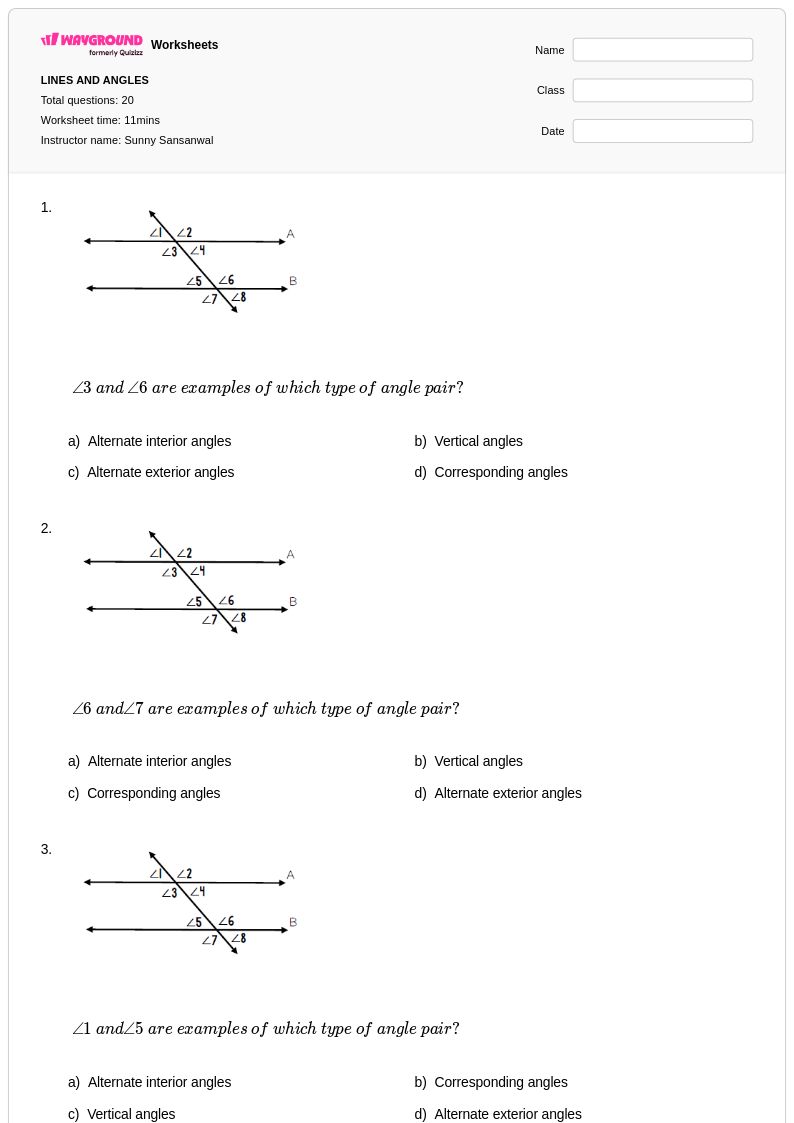
20 Q
7th
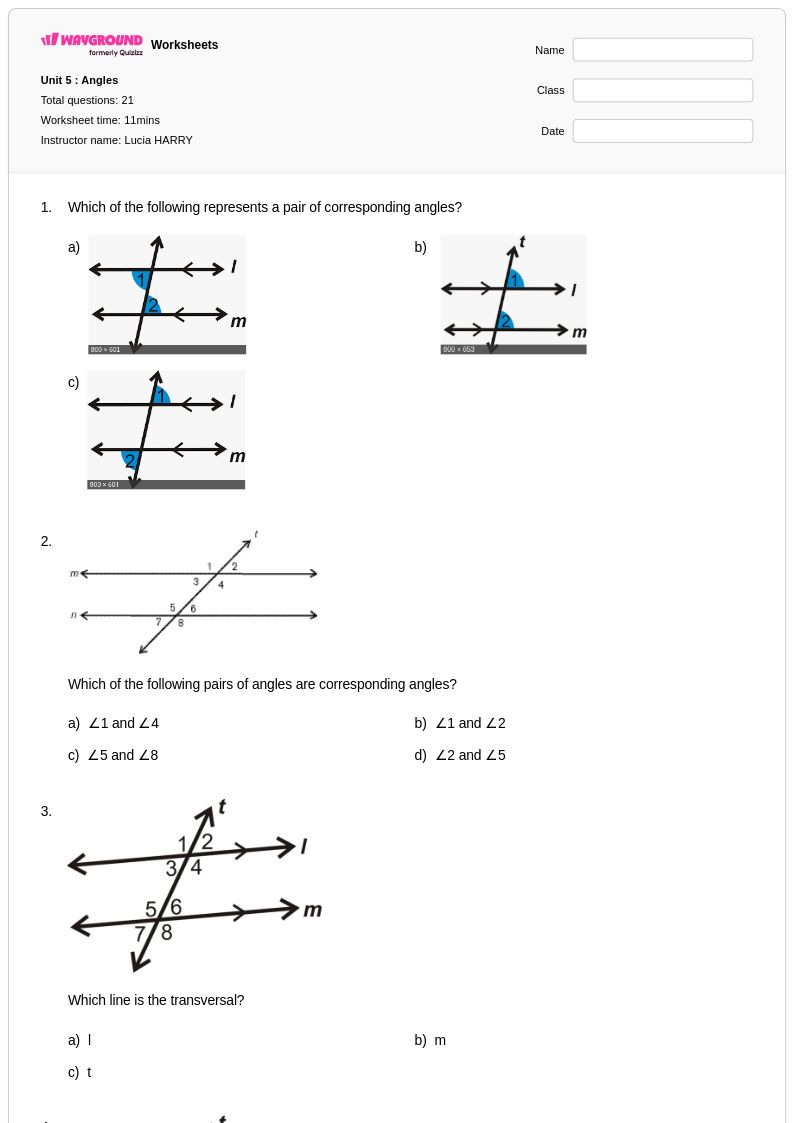
21 Q
7th - 9th
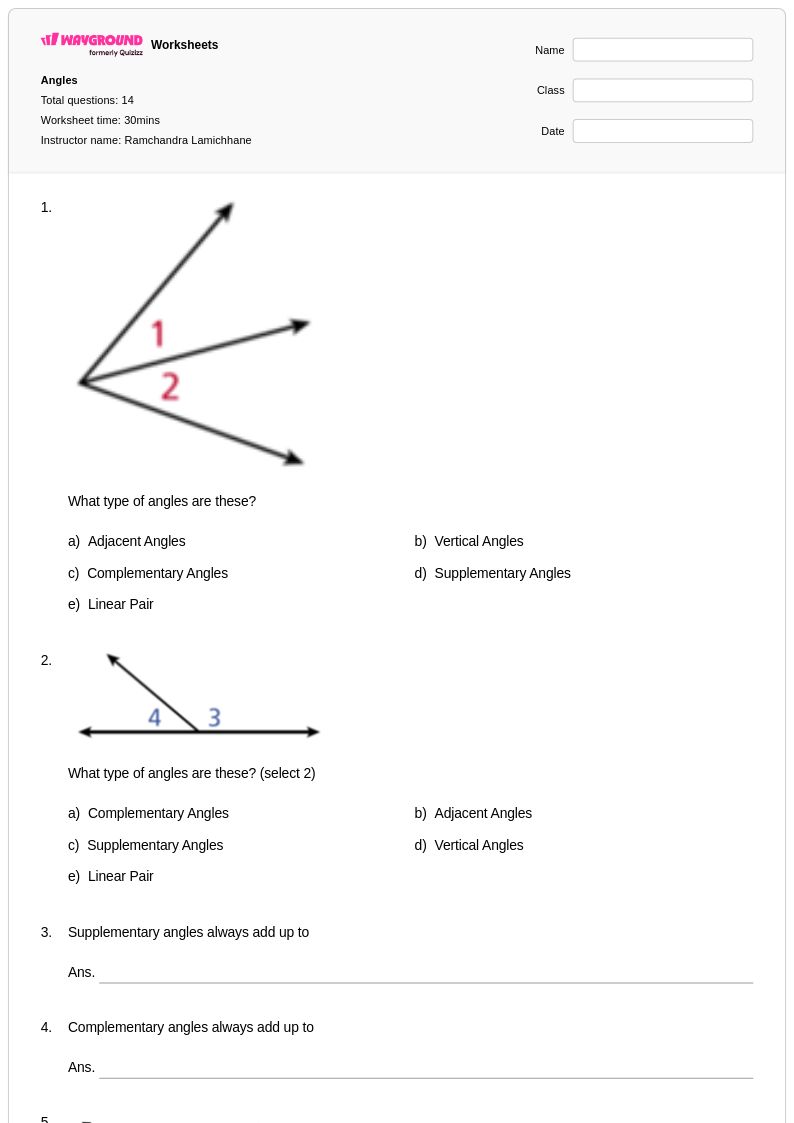
14 Q
6th - 8th
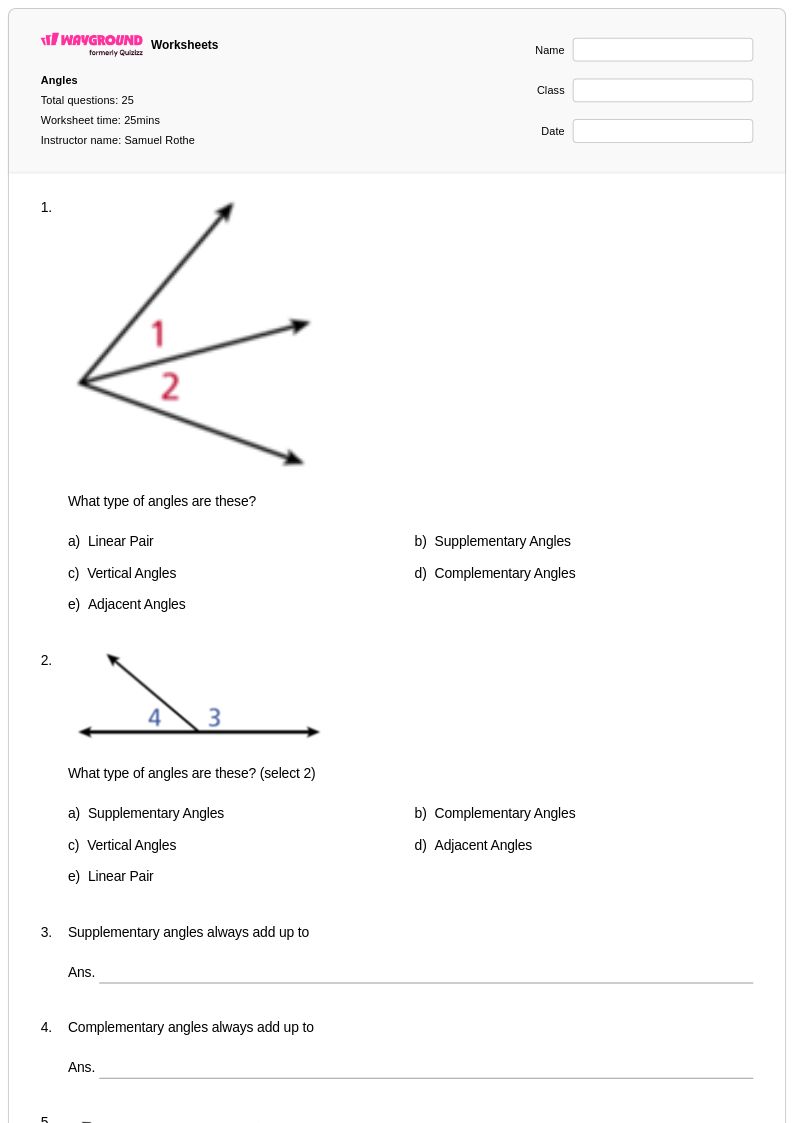
25 Q
6th - 8th
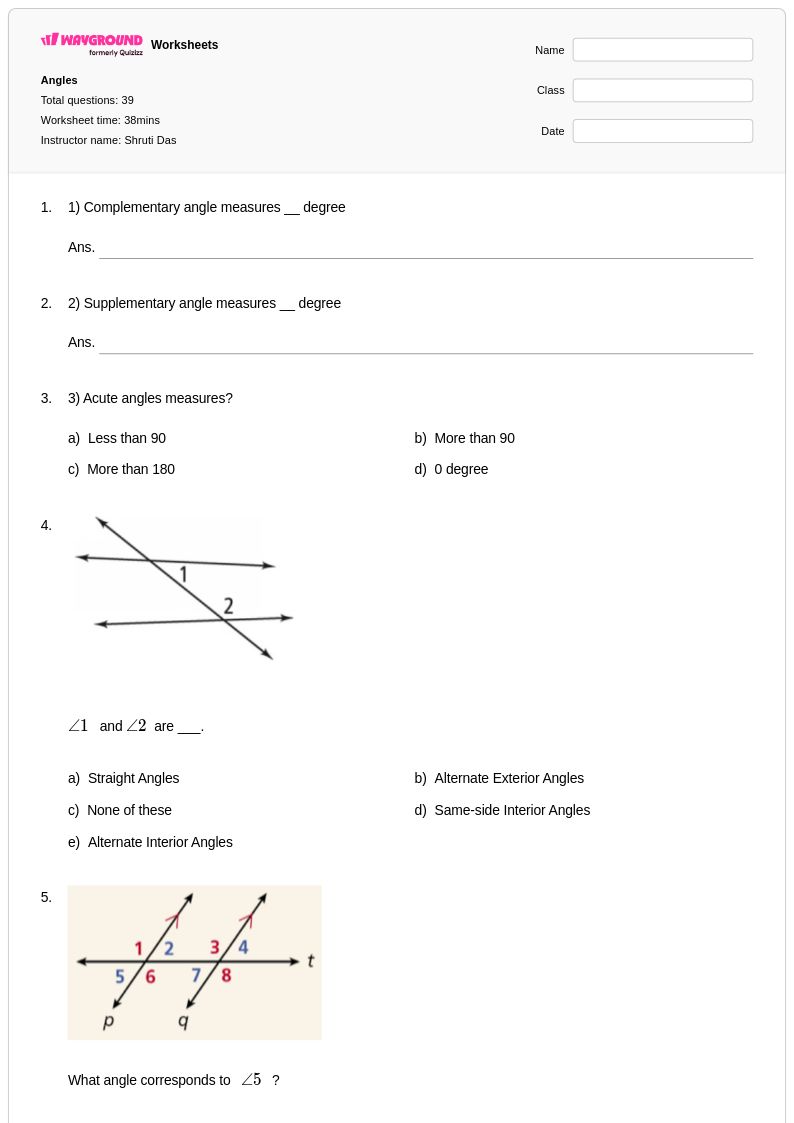
39 Q
7th
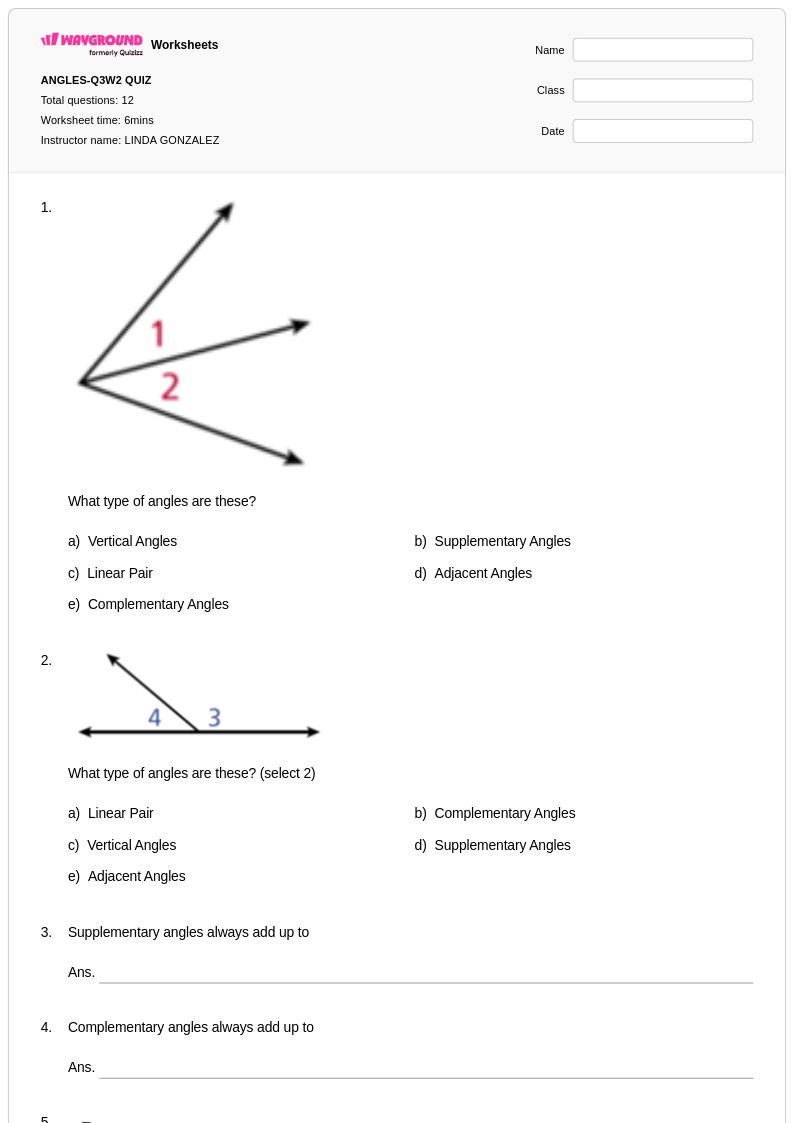
12 Q
7th
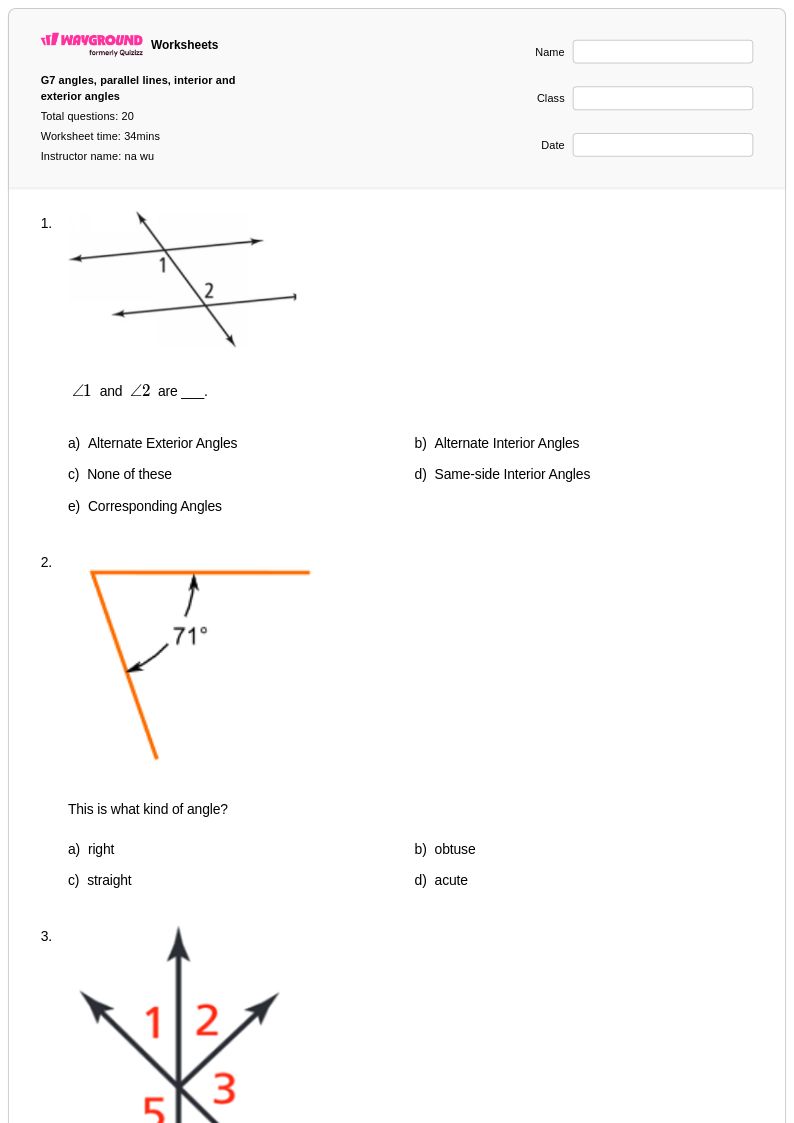
20 Q
7th
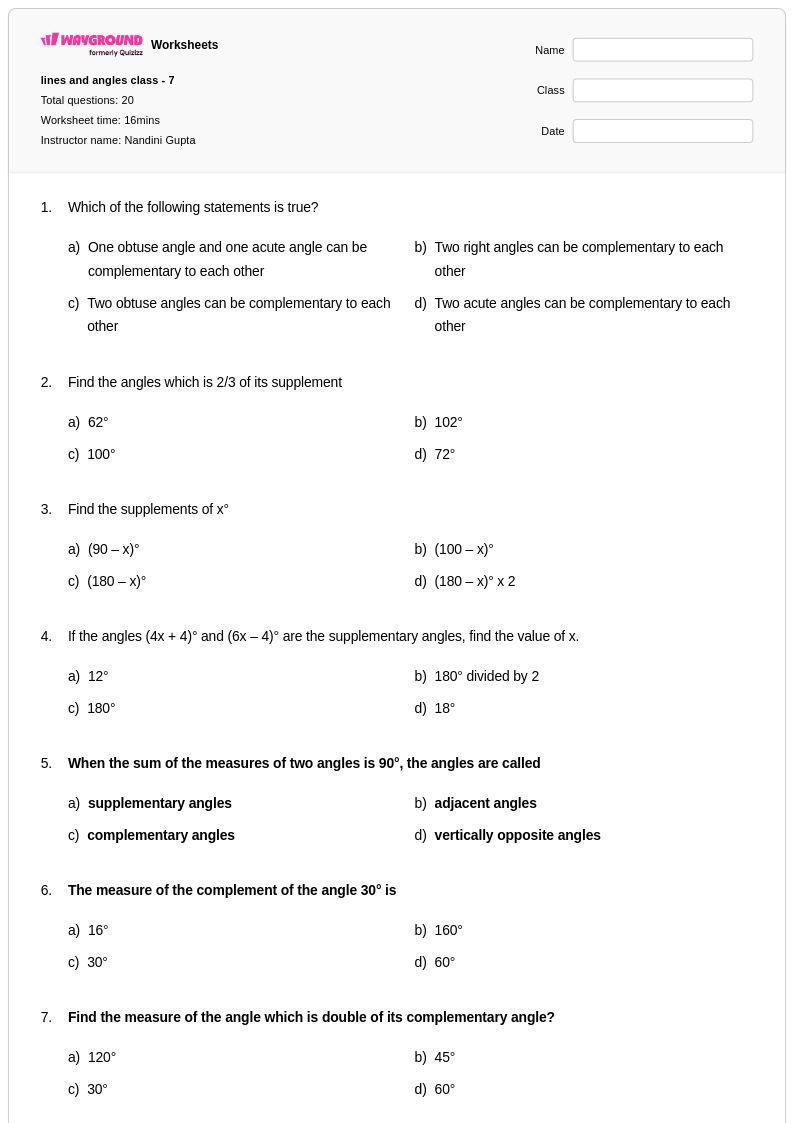
20 Q
5th - 8th
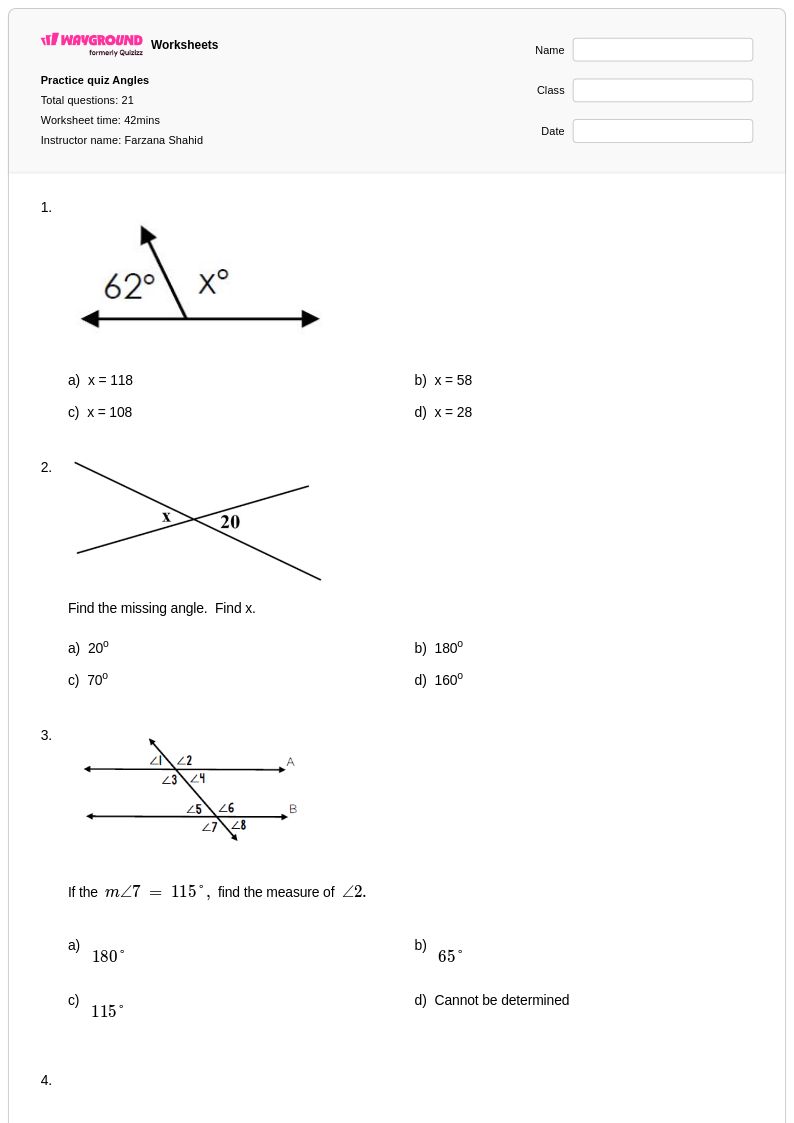
21 Q
7th
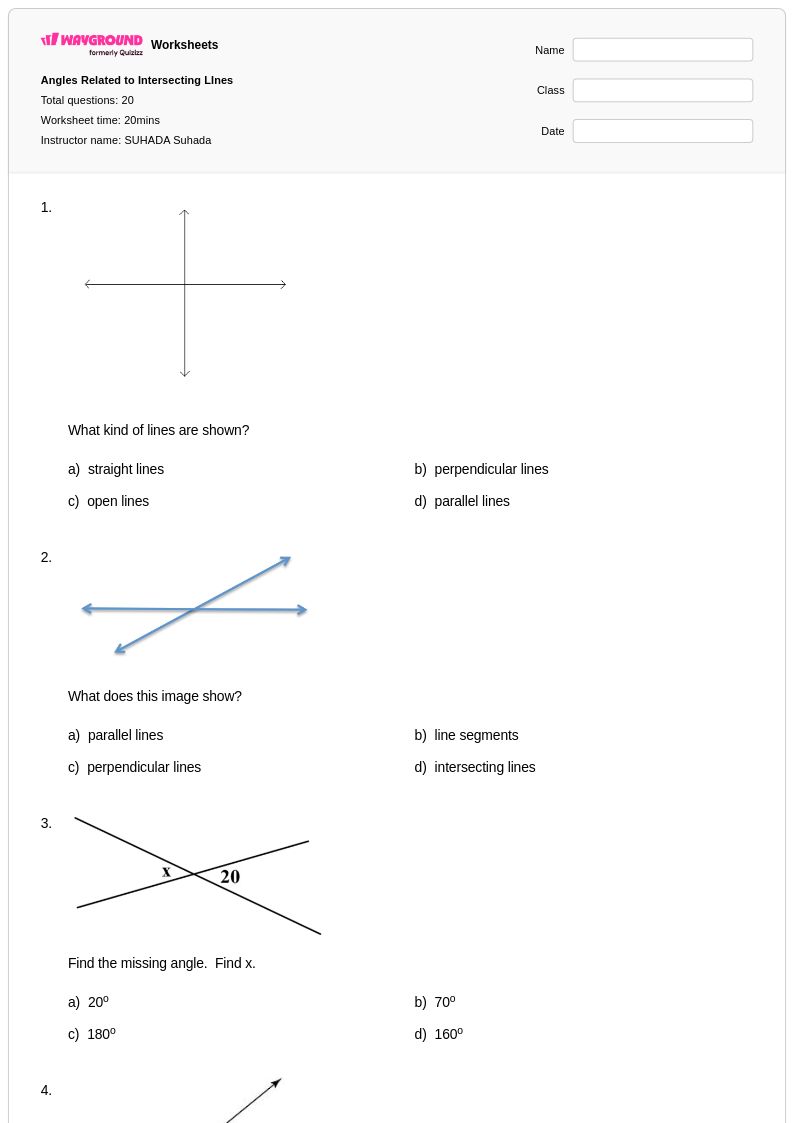
20 Q
7th
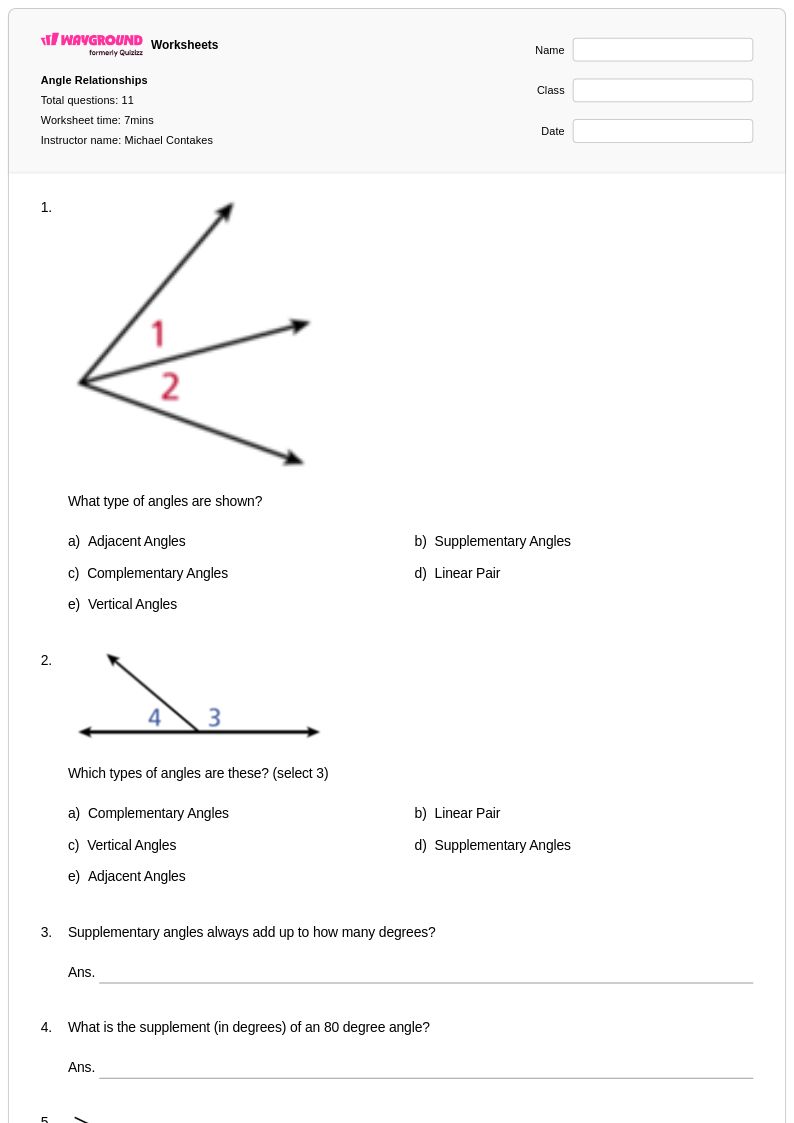
11 Q
7th - 8th
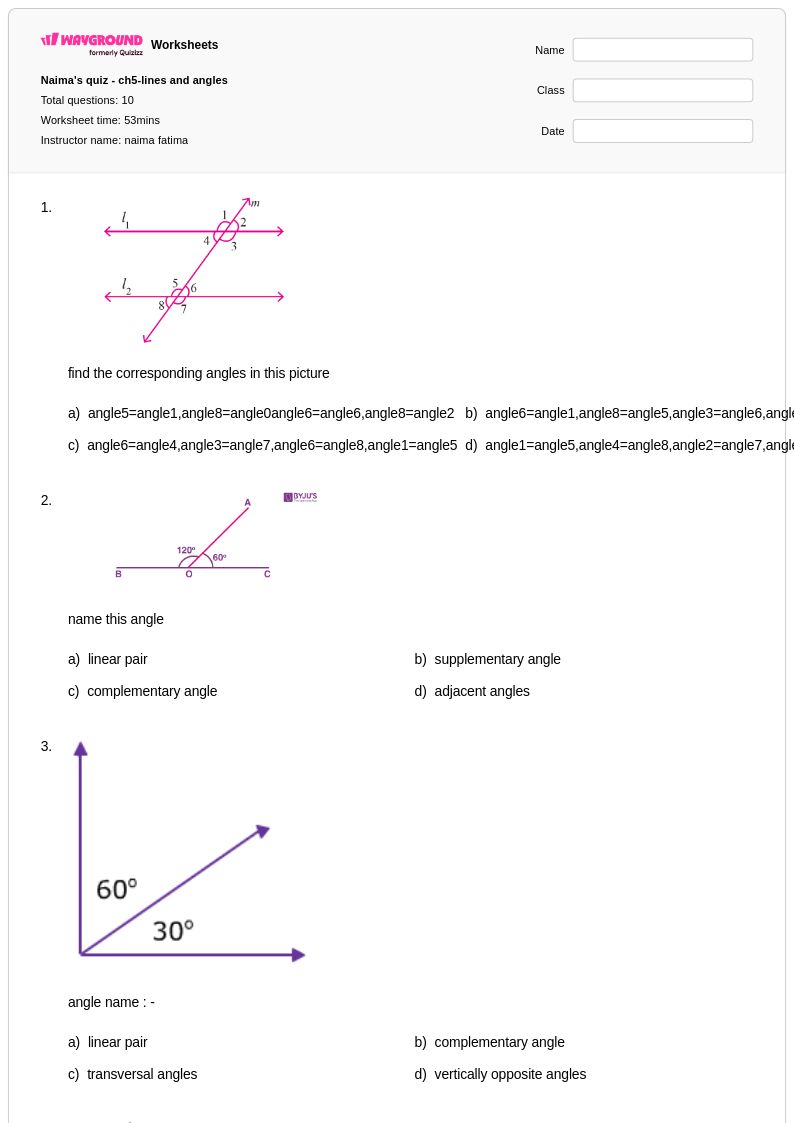
10 Q
7th
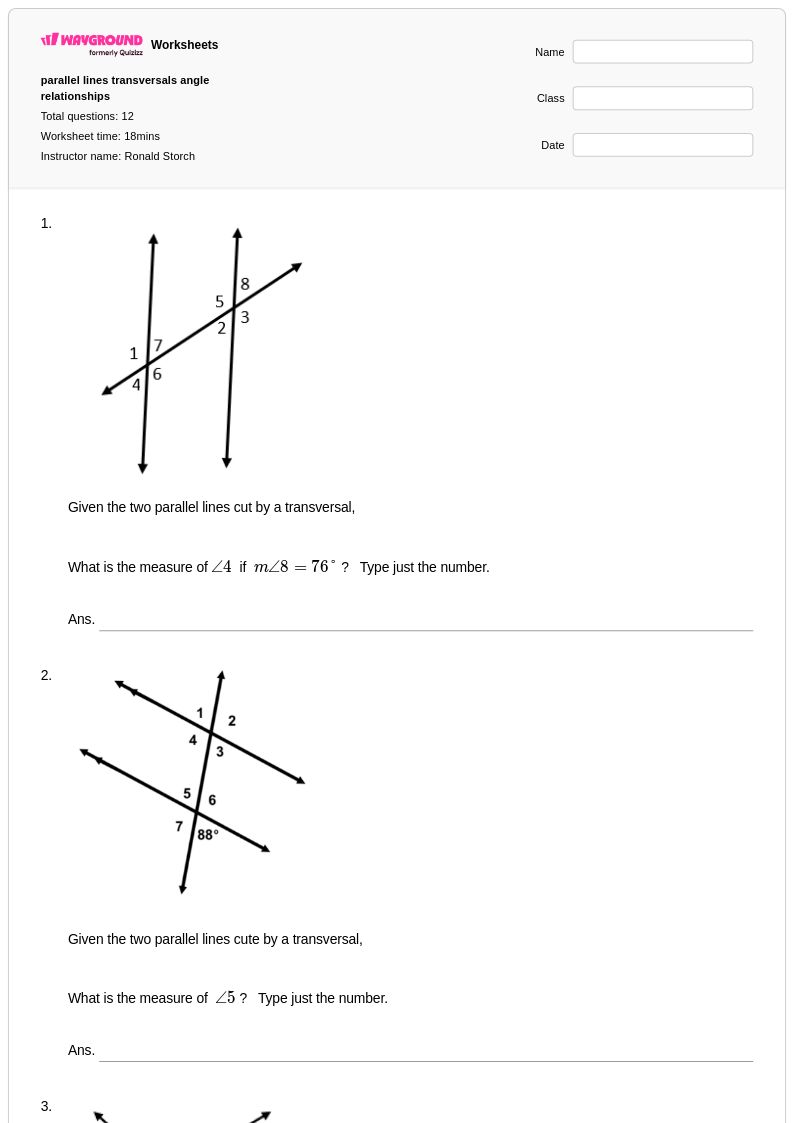
12 Q
7th
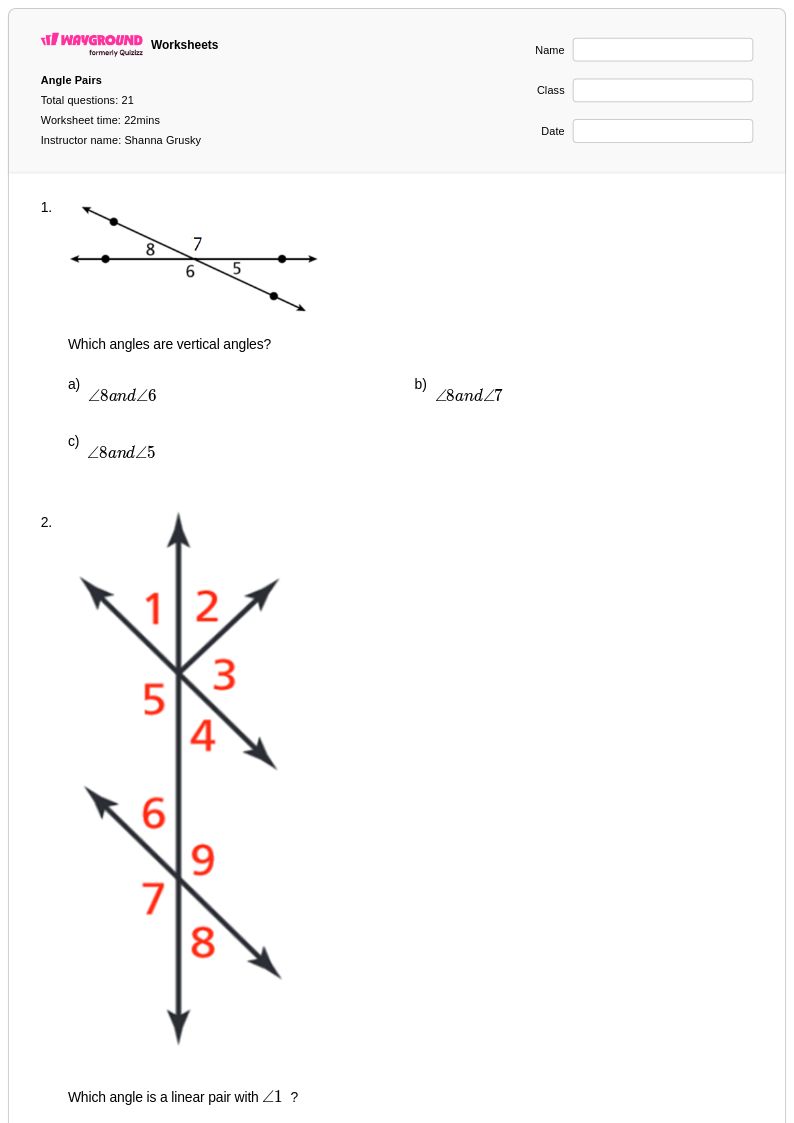
21 Q
7th
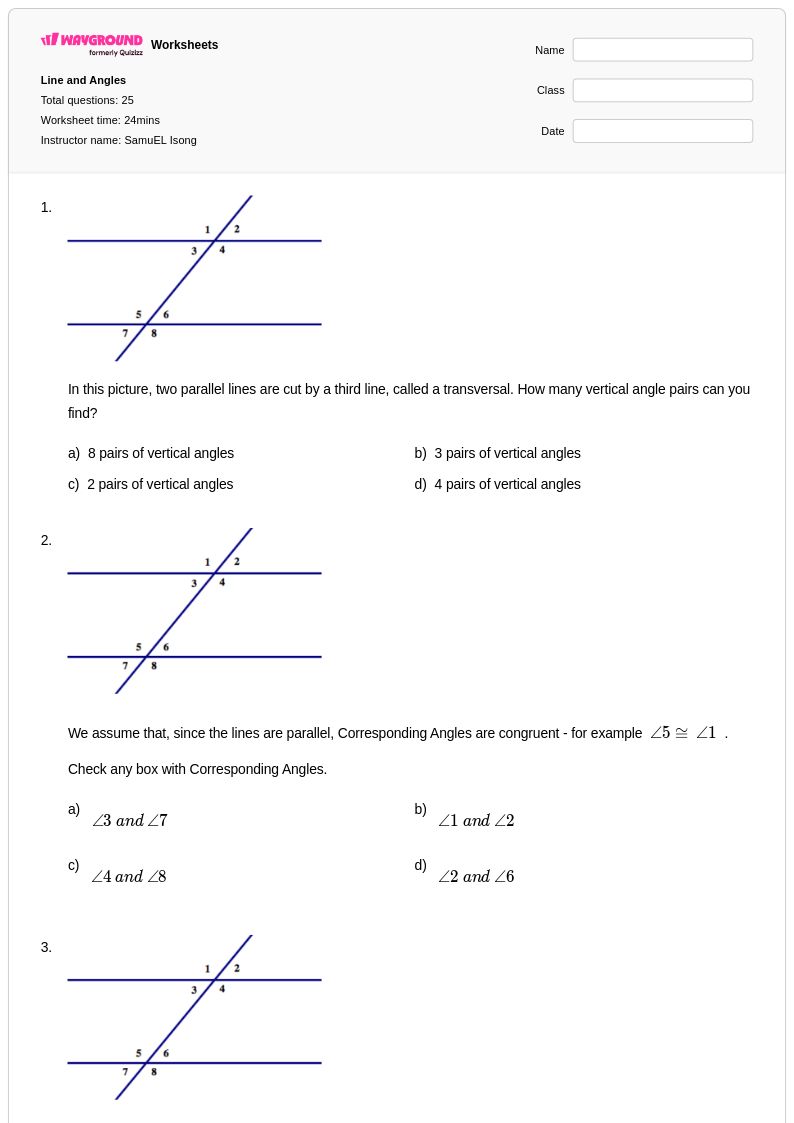
25 Q
5th - 10th
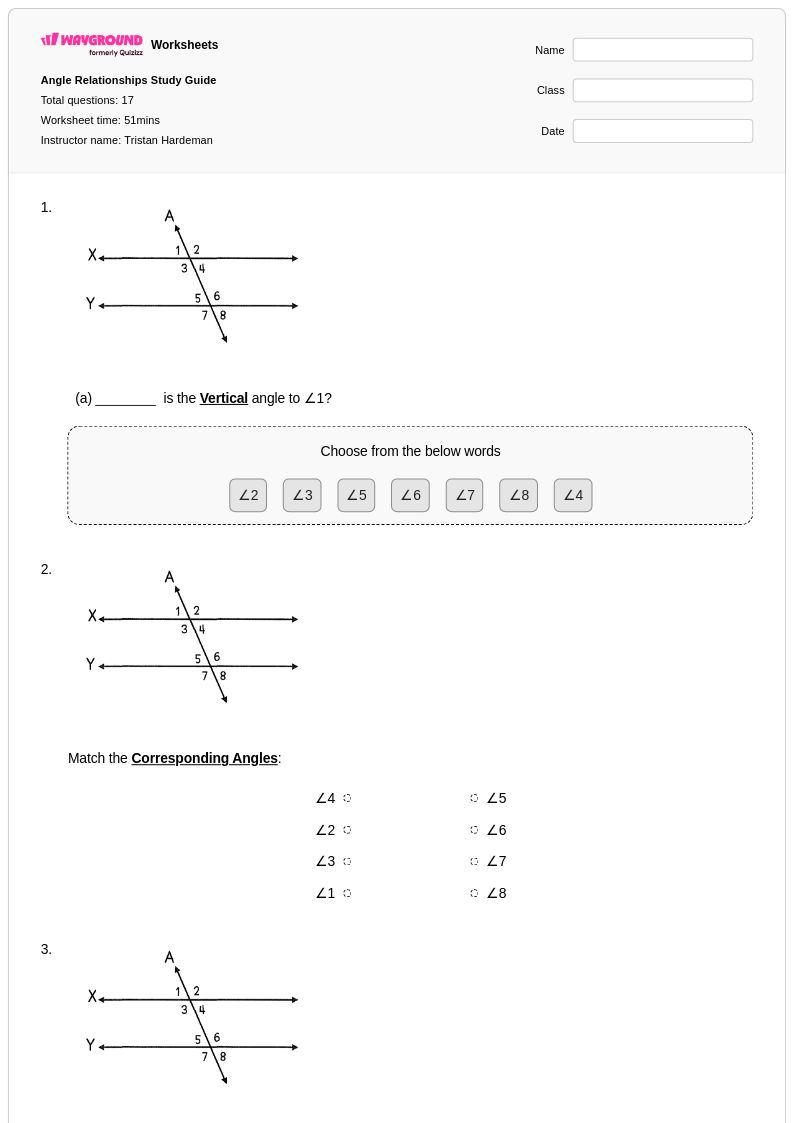
17 Q
7th
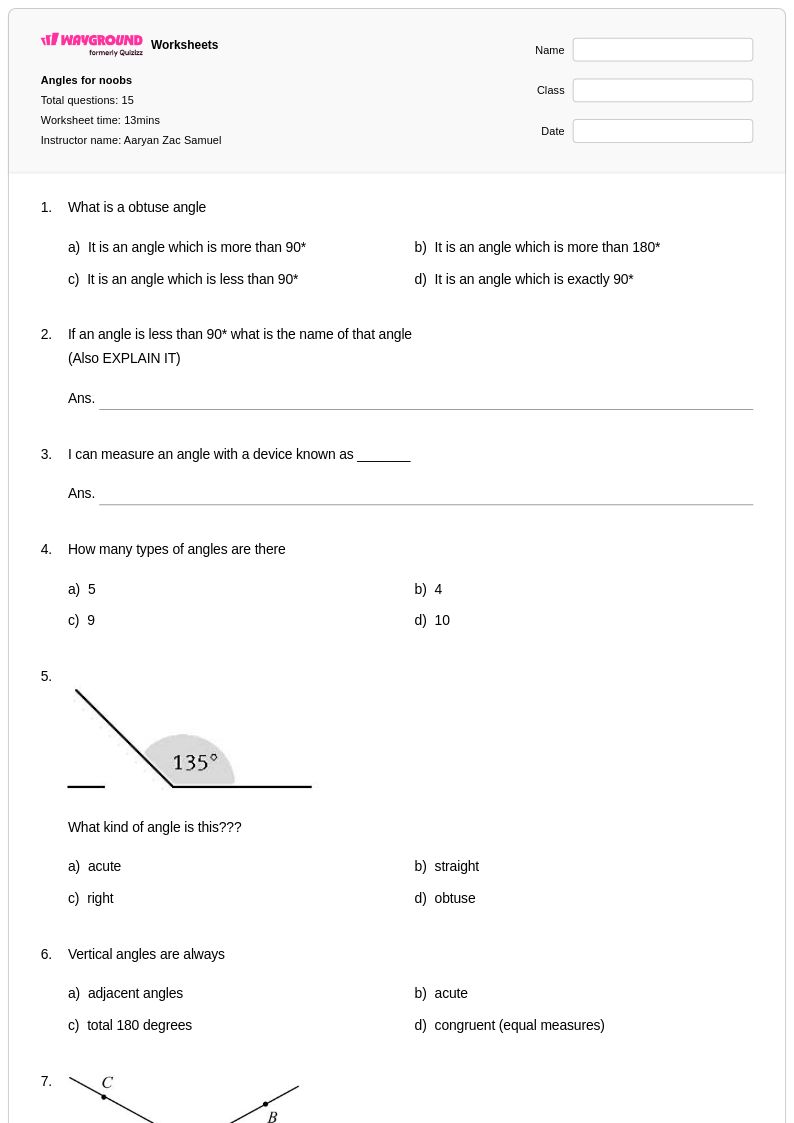
15 Q
4th - 9th
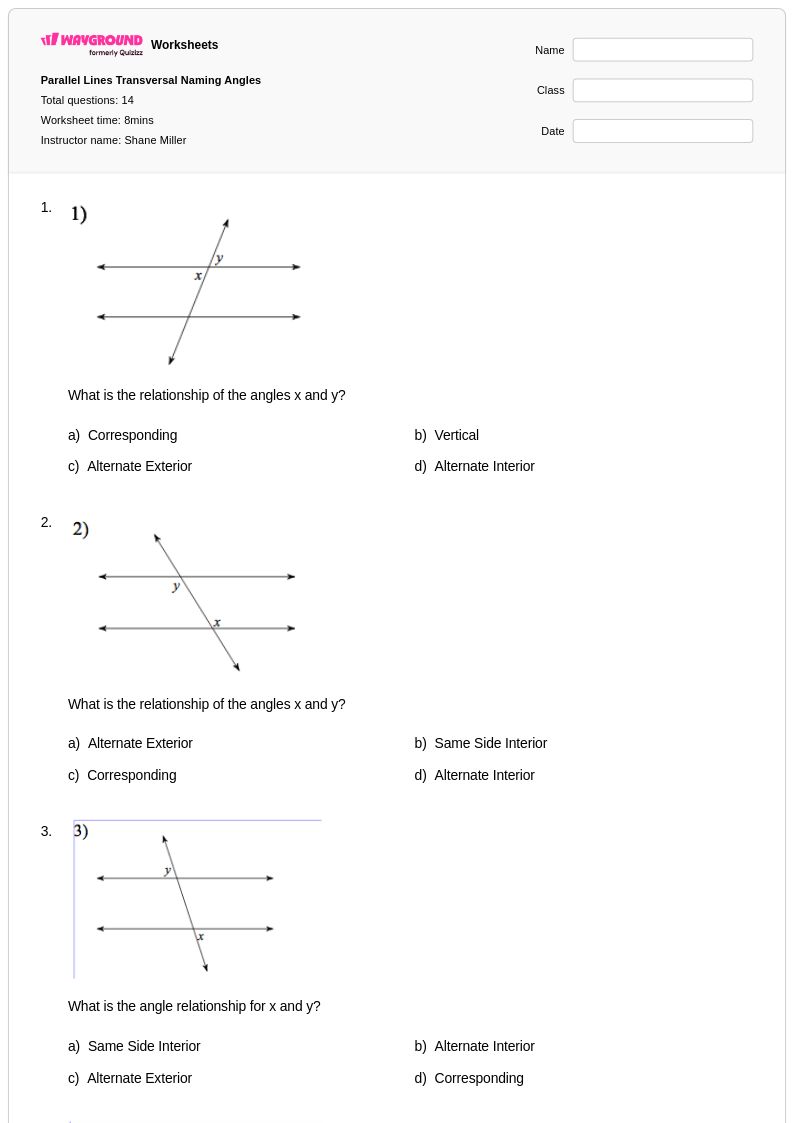
14 Q
7th - 10th
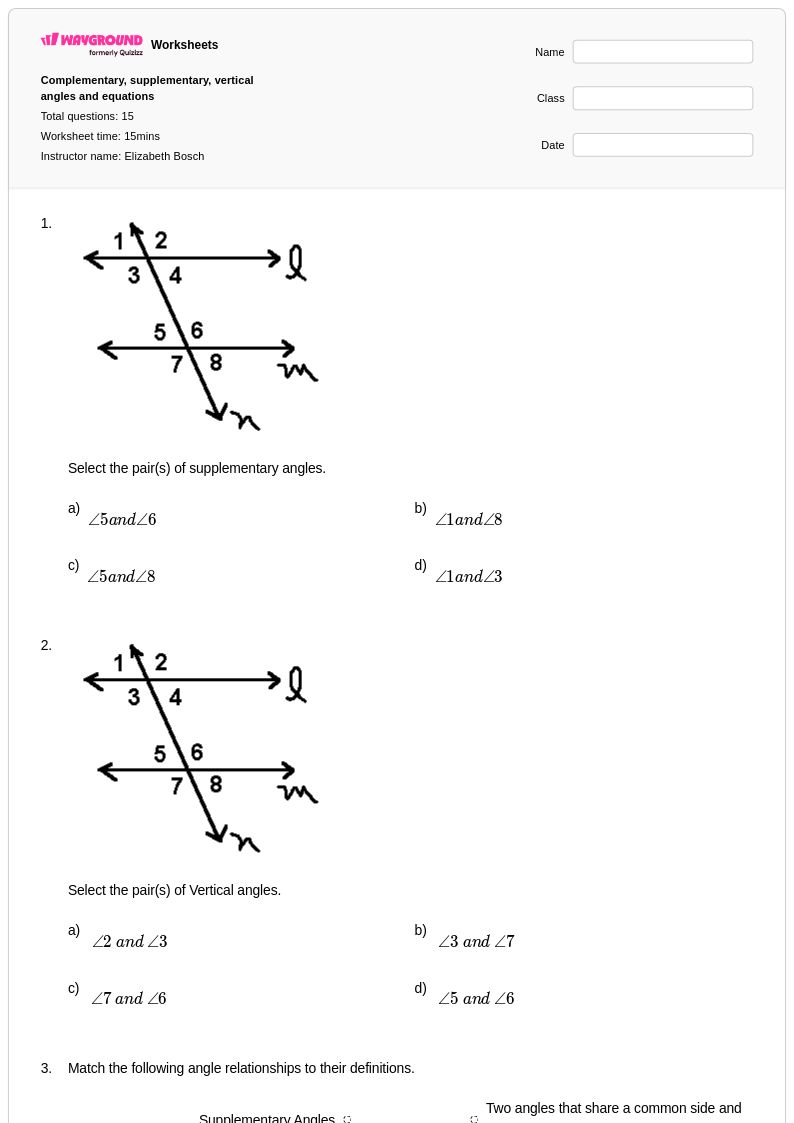
15 Q
7th - Uni
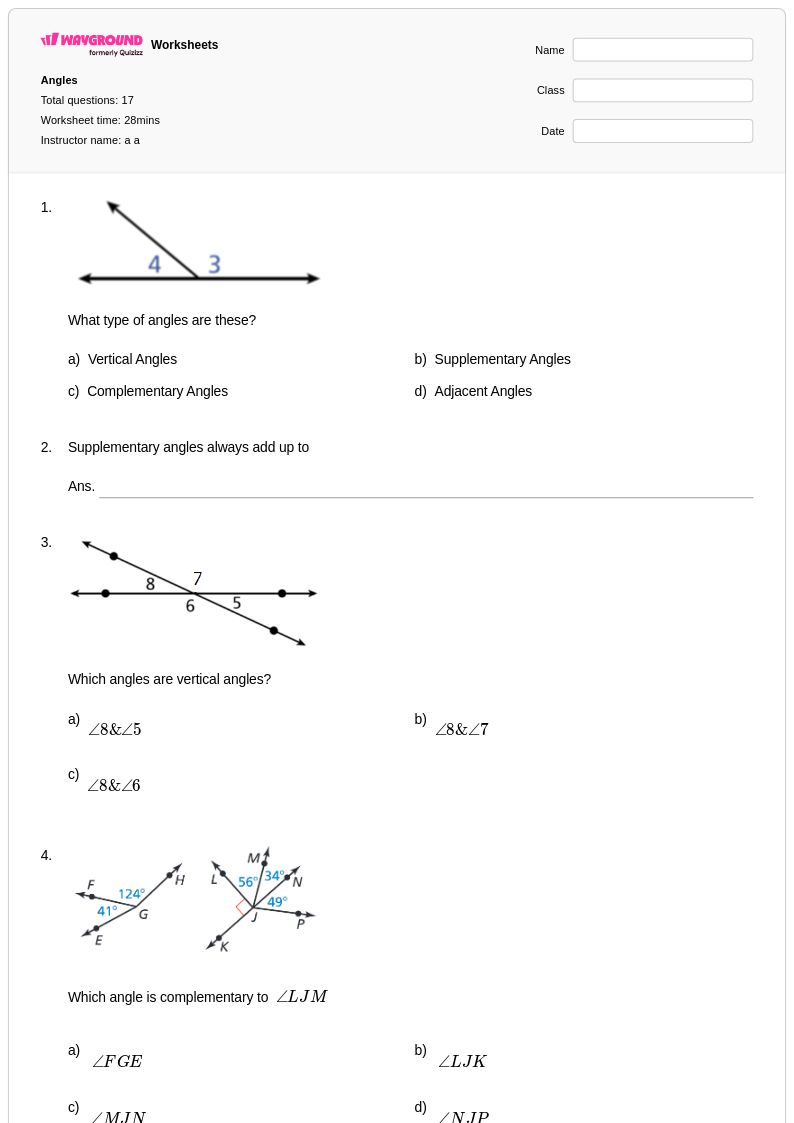
17 Q
6th - 7th
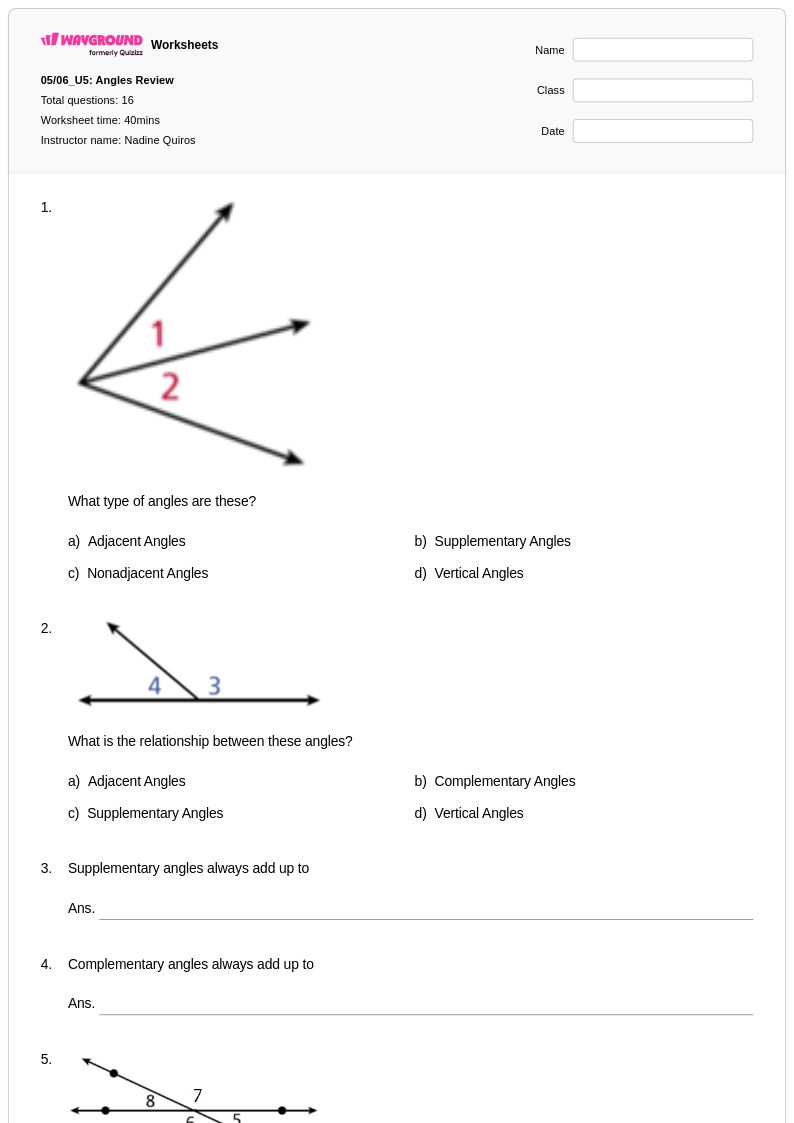
16 Q
7th
Explore Angle of Elevation and Depression Worksheets by Grades
Explore Other Subject Worksheets for class 7
Explore printable Angle of Elevation and Depression worksheets for Class 7
Class 7 angle of elevation and depression worksheets available through Wayground (formerly Quizizz) provide students with essential practice in understanding and calculating these fundamental trigonometric concepts. These comprehensive worksheets focus on developing students' ability to identify when objects are positioned above or below the horizontal line of sight, measure the resulting angles, and apply basic trigonometric relationships to solve real-world problems involving heights, distances, and slopes. Each worksheet collection includes carefully structured practice problems that progress from simple angle identification exercises to more complex word problems involving ladders leaning against buildings, aircraft flight paths, and observation scenarios from elevated positions. The materials come complete with detailed answer keys and are available as free printables in convenient pdf format, making them accessible for both classroom instruction and independent study.
Wayground (formerly Quizizz) empowers educators with millions of teacher-created resources specifically designed to support Class 7 trigonometry instruction, including extensive collections focused on angle of elevation and depression concepts. The platform's robust search and filtering capabilities allow teachers to quickly locate worksheets that align with specific curriculum standards and match their students' skill levels, while built-in differentiation tools enable customization of problem difficulty and complexity. These versatile resources are available in both printable pdf format for traditional paper-based assignments and digital formats for interactive online learning, providing flexibility for diverse classroom environments and teaching preferences. Teachers can seamlessly integrate these materials into their lesson planning for initial concept introduction, targeted skill remediation, advanced student enrichment, or regular practice sessions that reinforce trigonometric problem-solving strategies throughout the academic year.
FAQs
How do I teach angles of elevation and depression in Grade 7?
What exercises are useful for practicing angles of elevation and depression in Grade 7?
What common errors should I look for when students solve elevation and depression problems?
How should I assign a Grade 7 angle of elevation and depression worksheet?
How can I support mixed-ability learners with these worksheets?
Are these angle of elevation and depression worksheets appropriate for Grade 7?