
Recommended Topics for you
- Area Calculation
- Average Speed
- Calculating Speed
- Capacity Conversion
- Conversion Graphs
- Converting Units
- Distance, Rate, and Time
- Length Conversion
- Load Calculation
- Reading Meters
- Reading Metric Ruler
- Reconstitution Calculation
- Scale and Conversions
- Speed, Distance, and Time
- Speed Calculations
- Units of Measurement
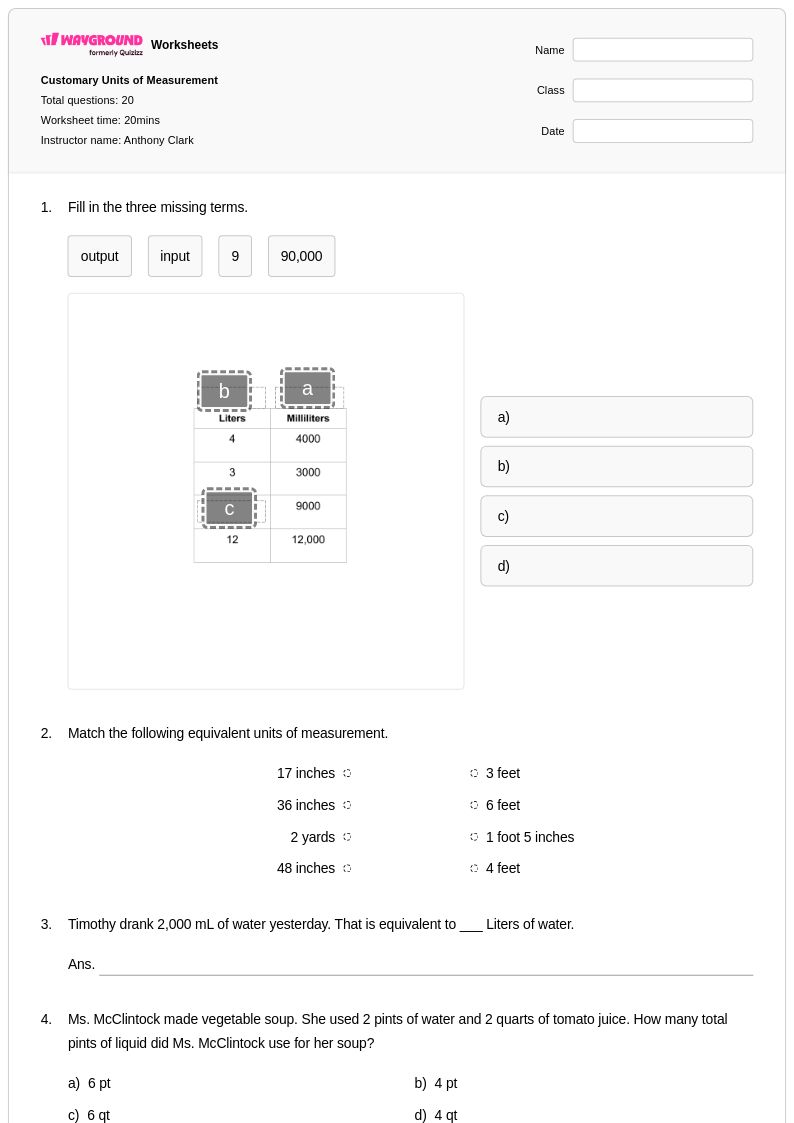
20 Q
4th - Uni
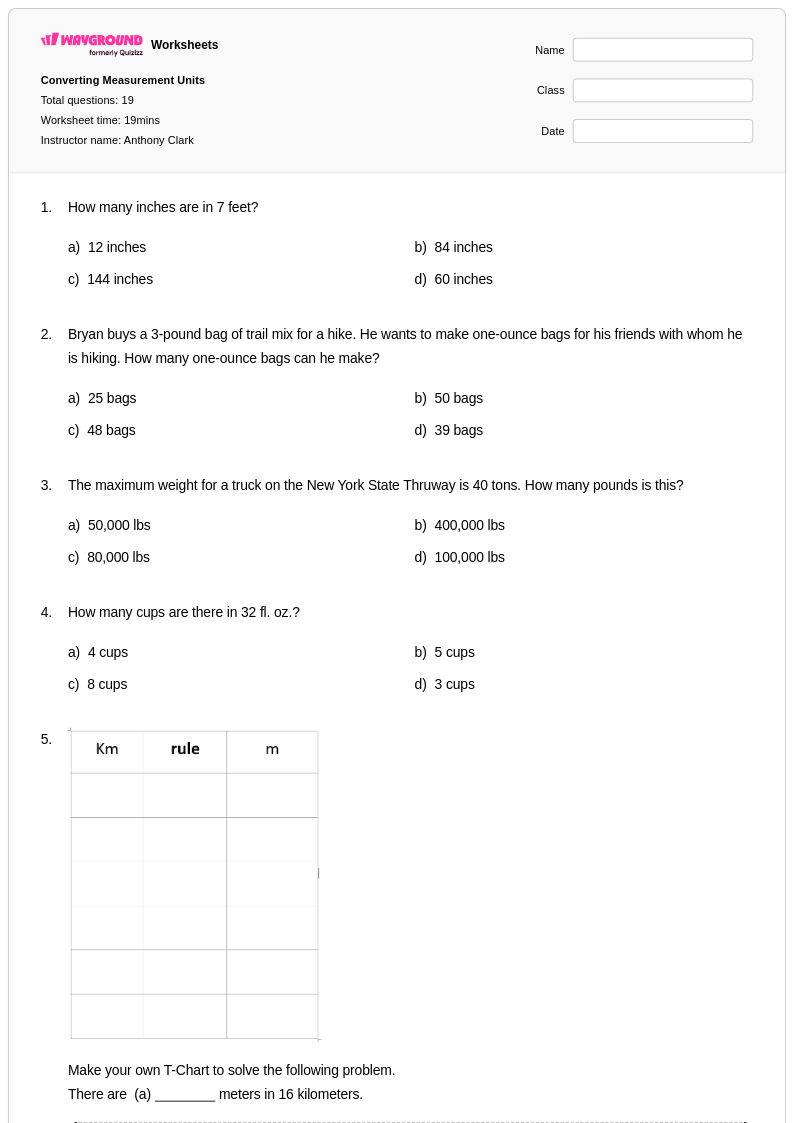
19 Q
5th - Uni
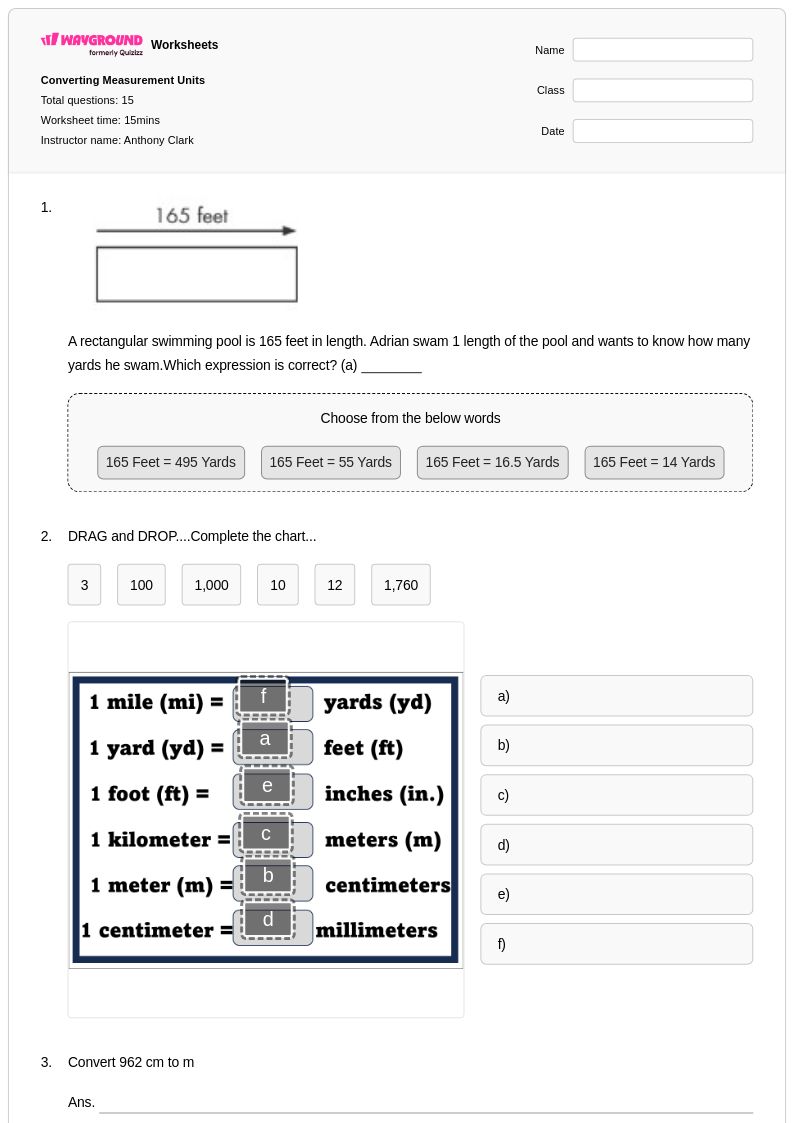
15 Q
5th - Uni
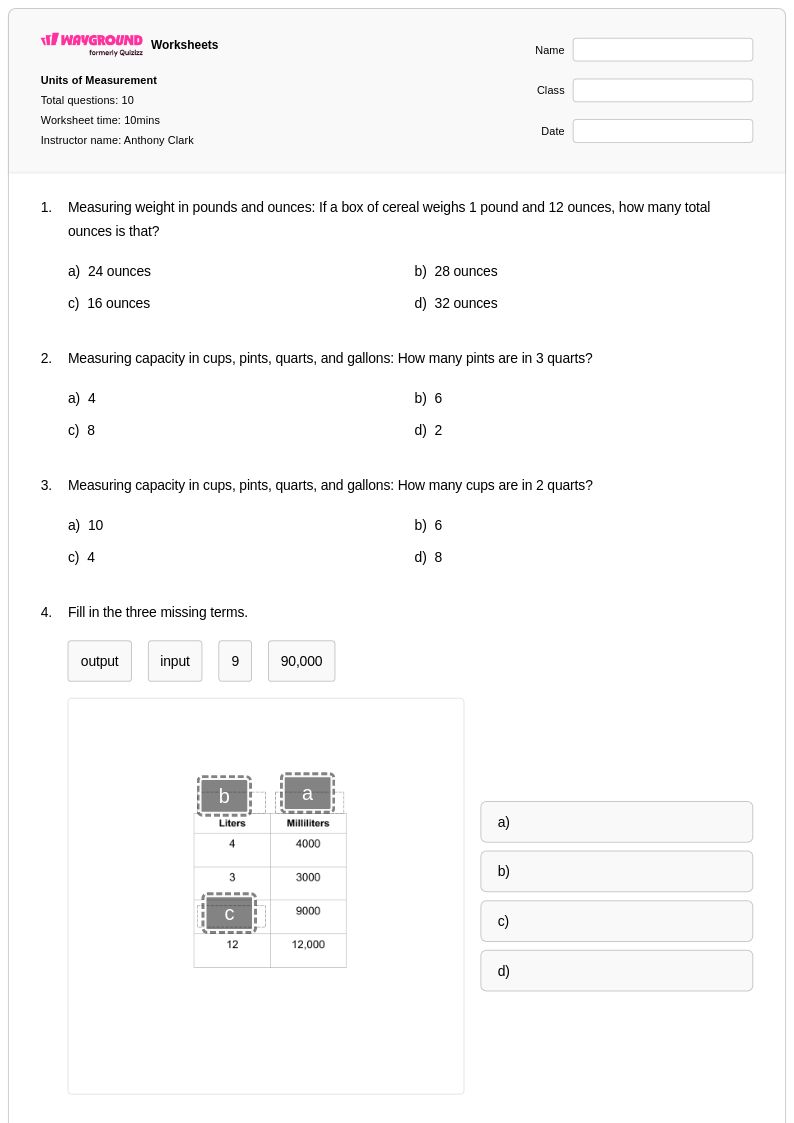
10 Q
4th - Uni
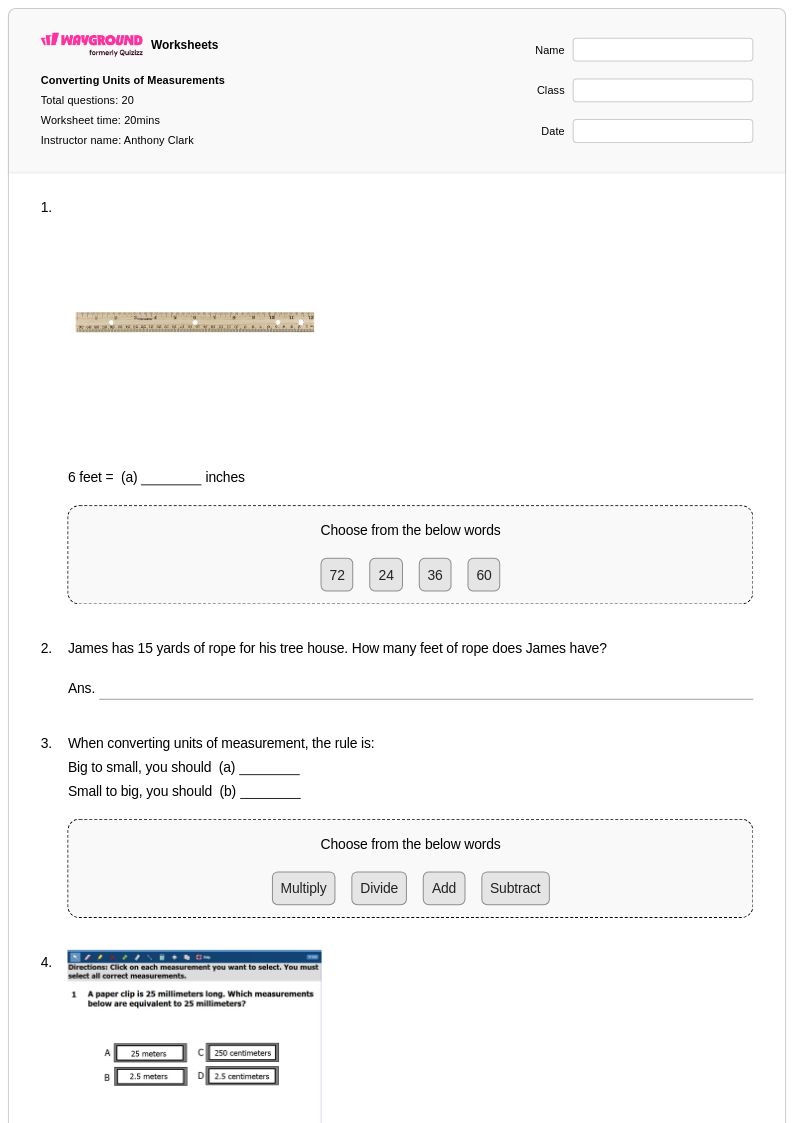
20 Q
5th - Uni
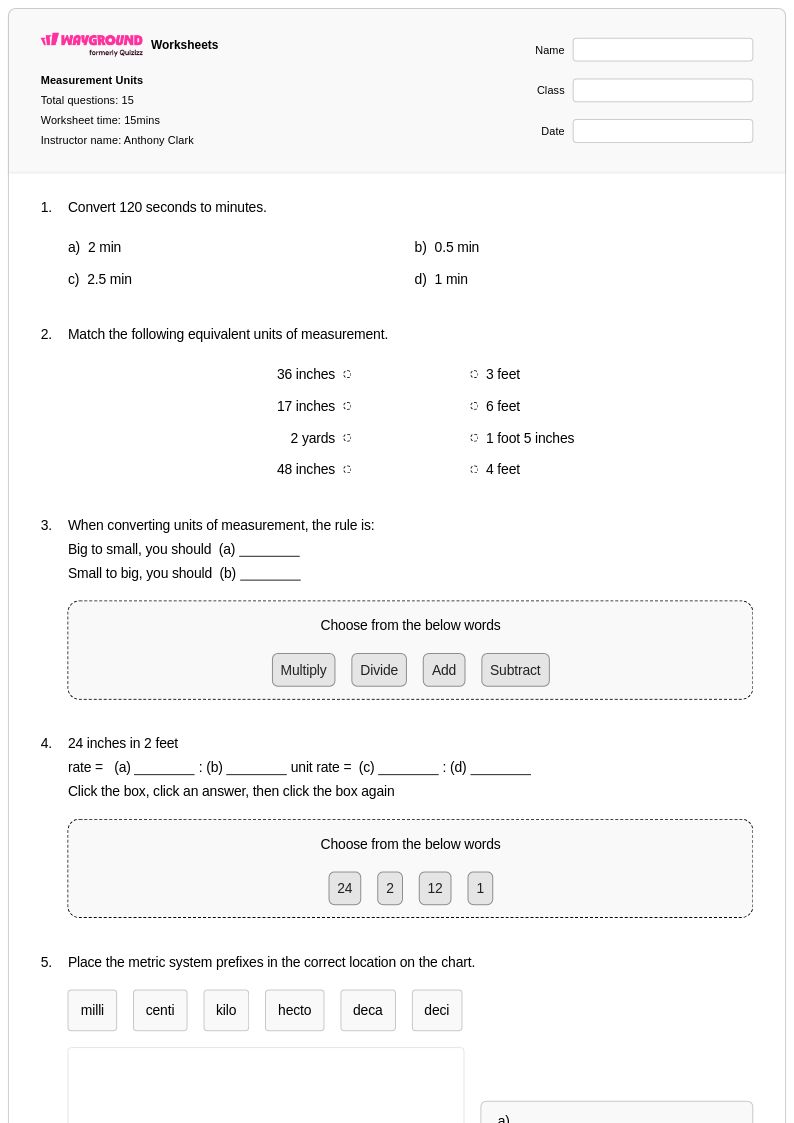
15 Q
4th - Uni
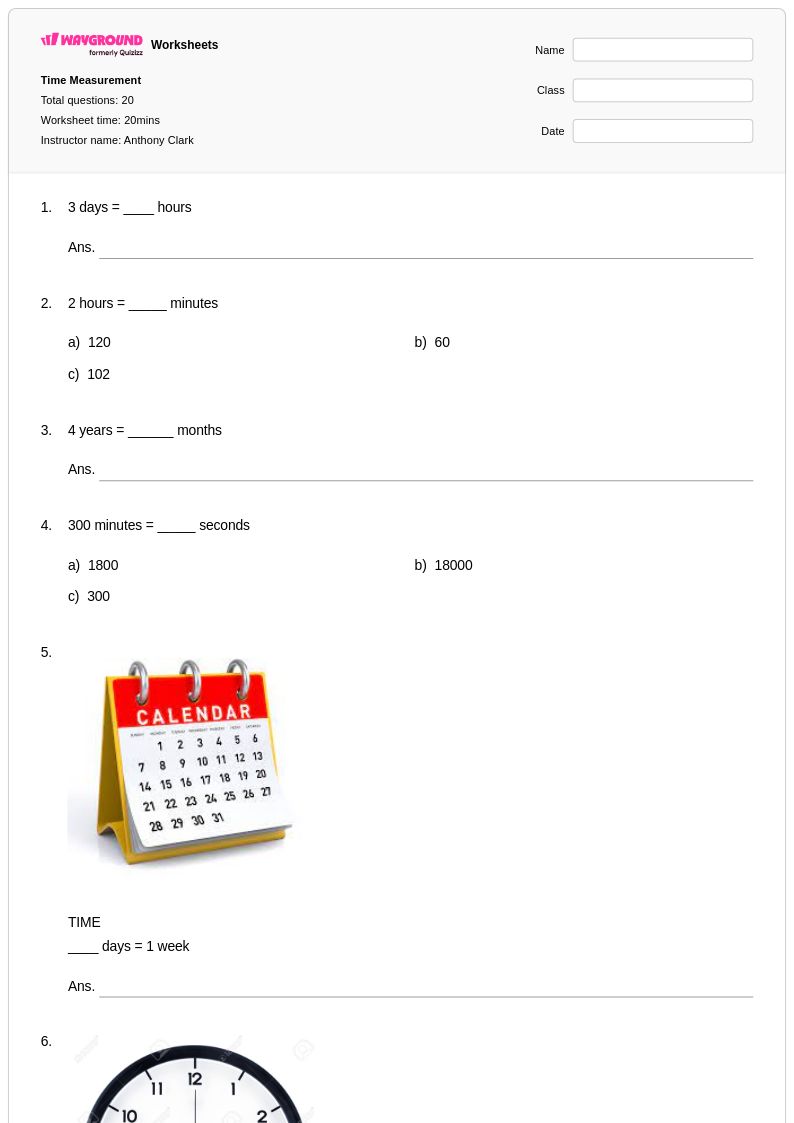
20 Q
3rd - Uni
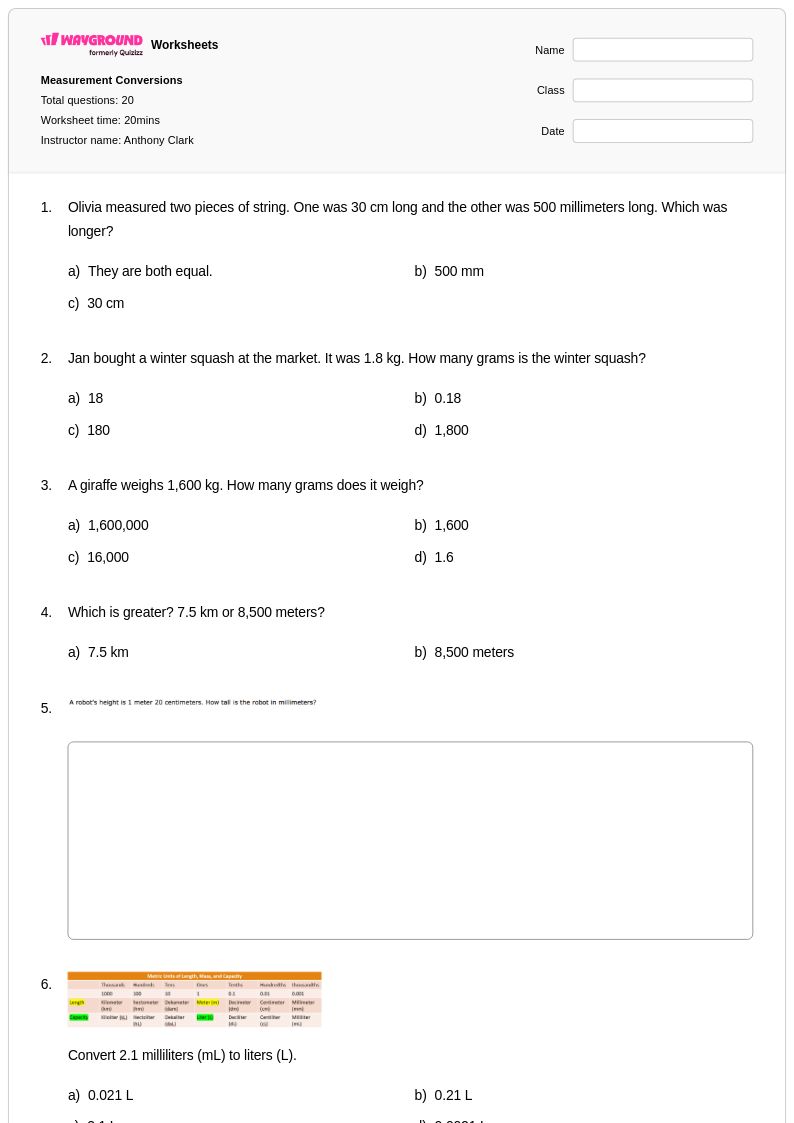
20 Q
5th - Uni
20 Q
4th - Uni
20 Q
5th - Uni
20 Q
4th - Uni
20 Q
3rd - Uni
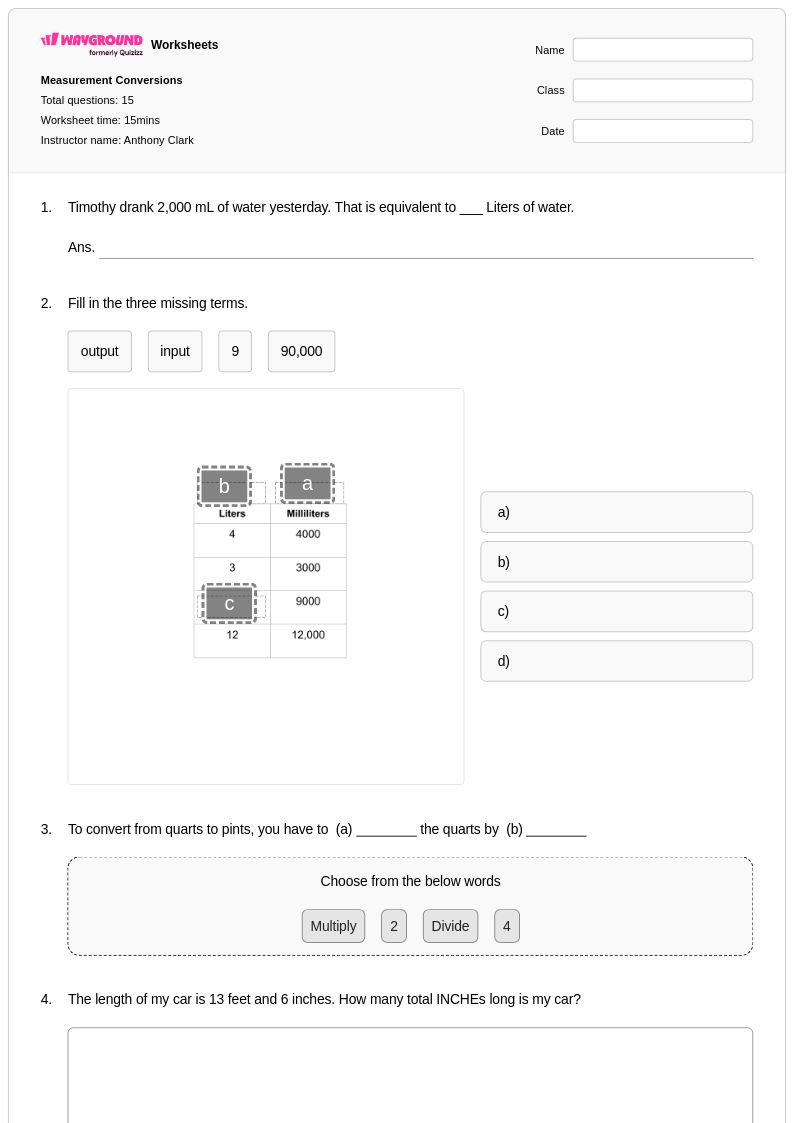
15 Q
4th - Uni
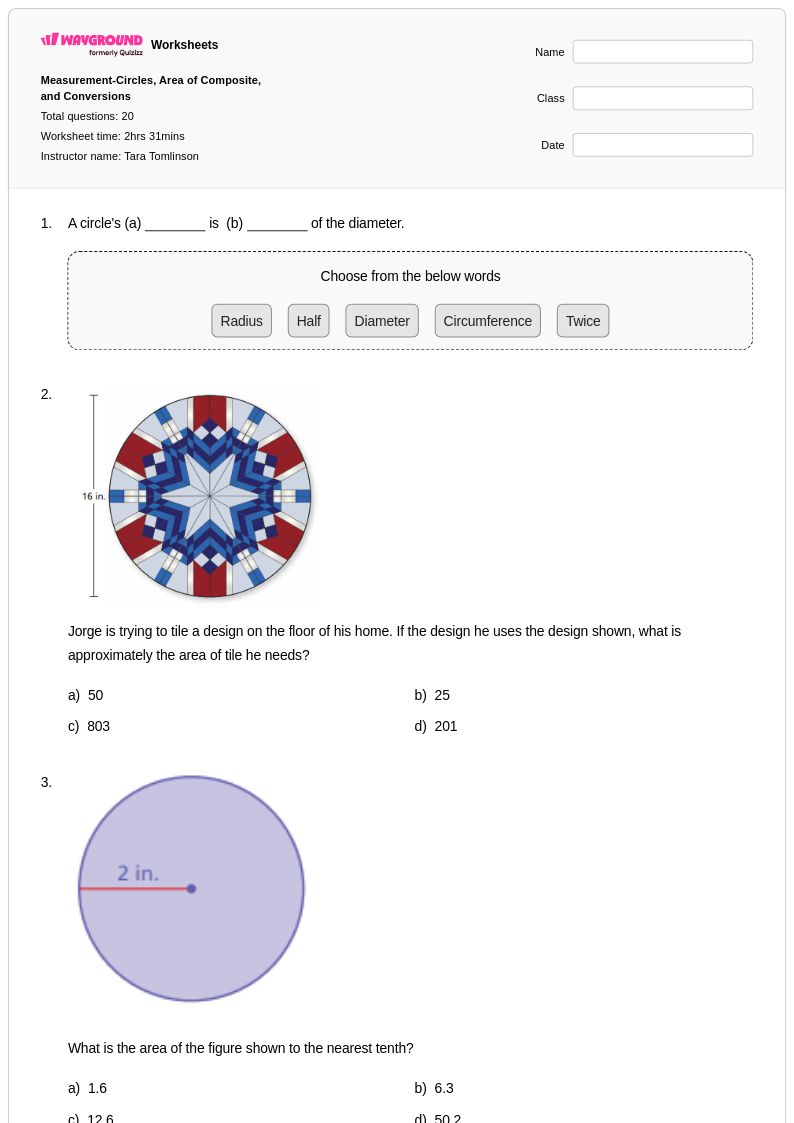
20 Q
7th
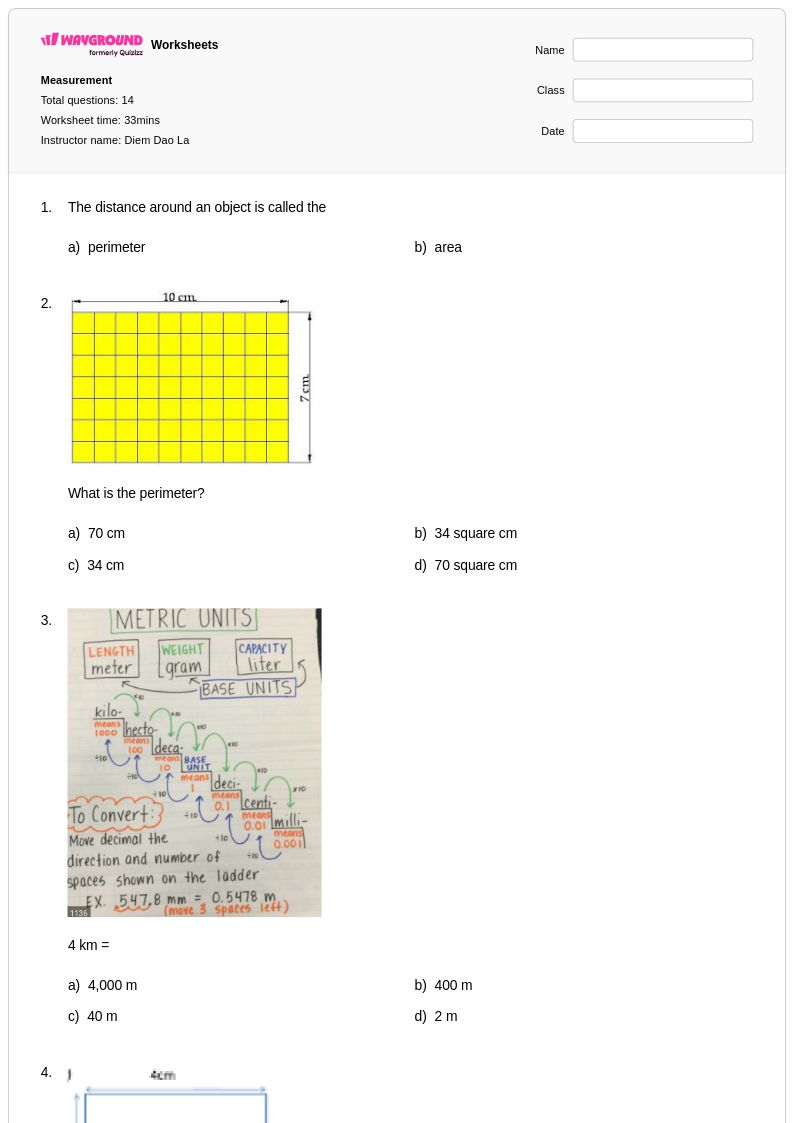
14 Q
7th
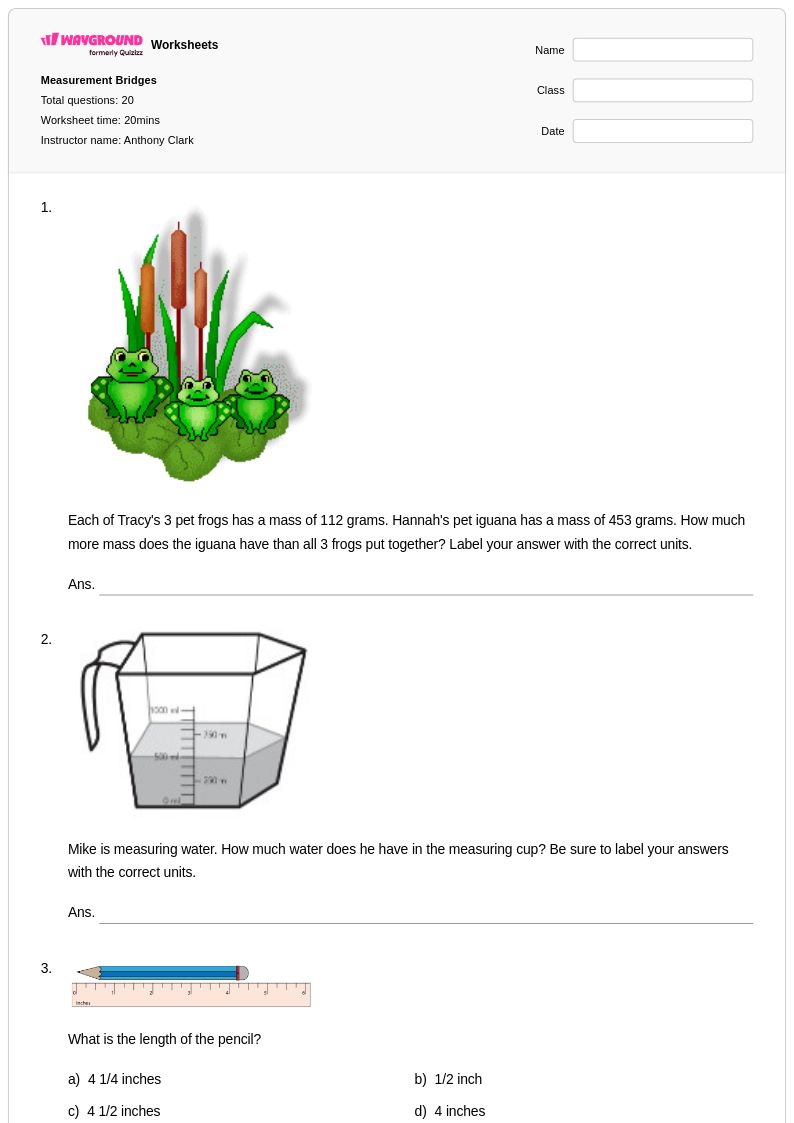
20 Q
3rd - Uni
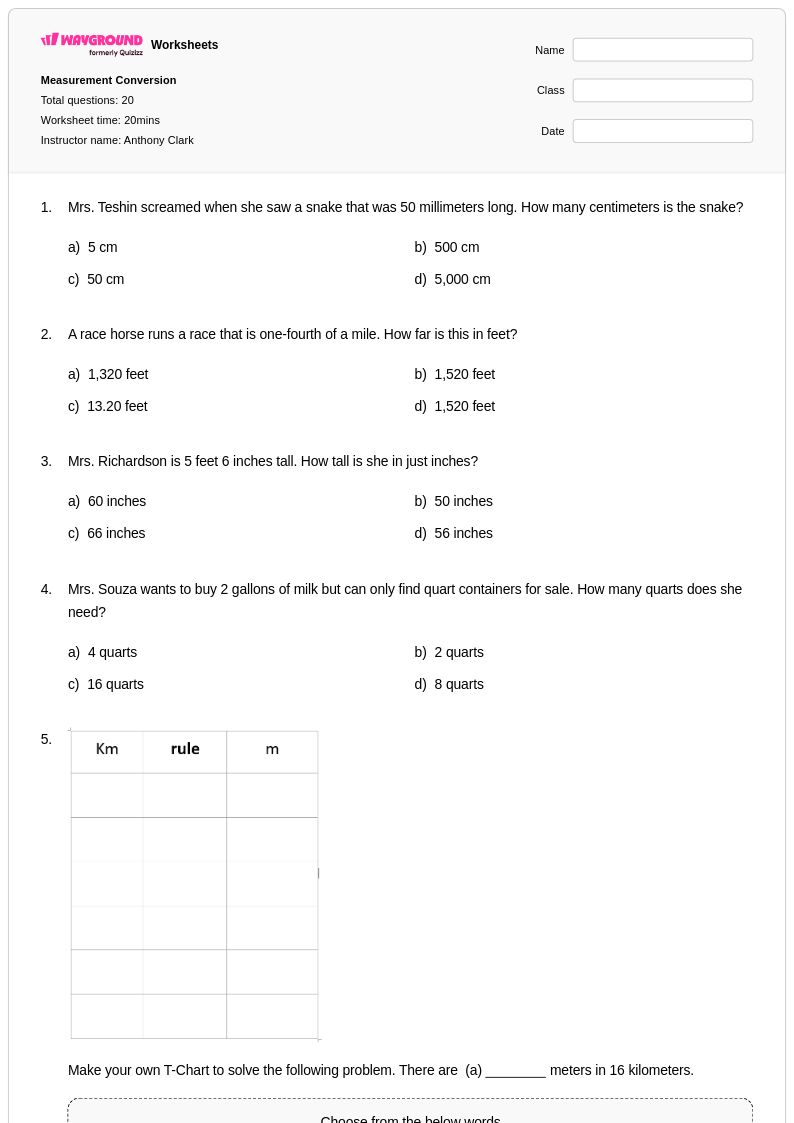
20 Q
5th - Uni
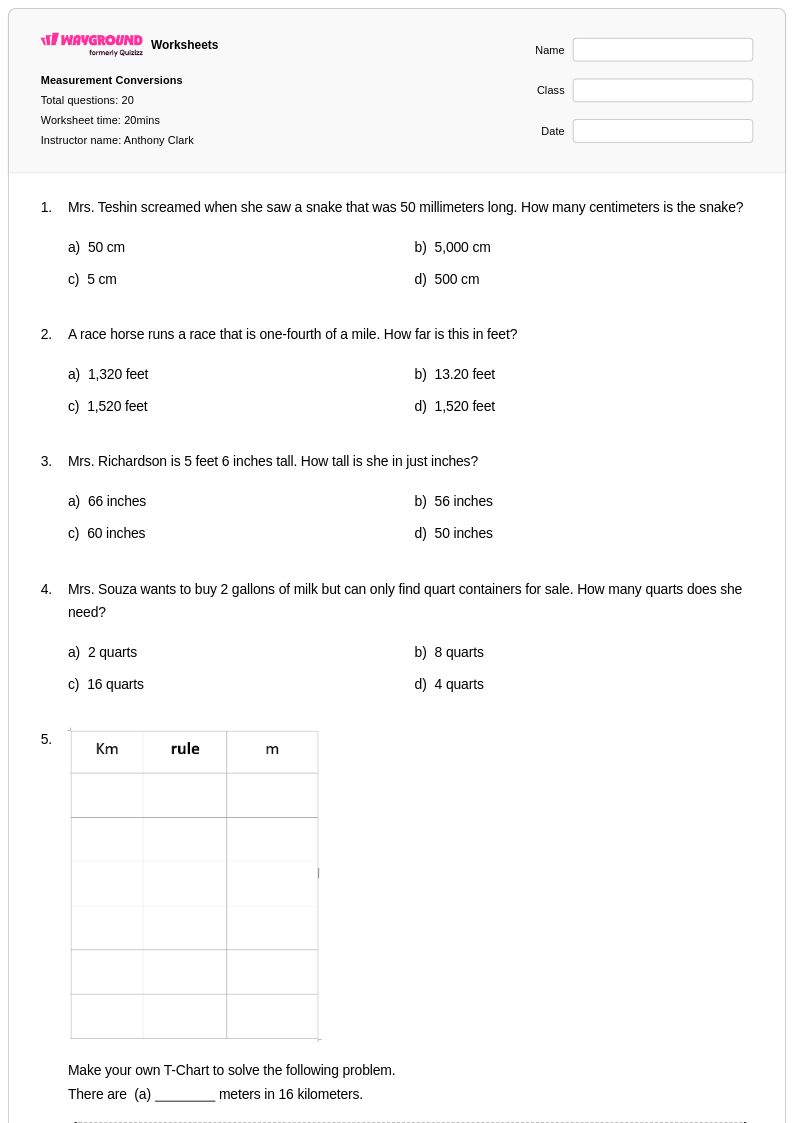
20 Q
5th - Uni
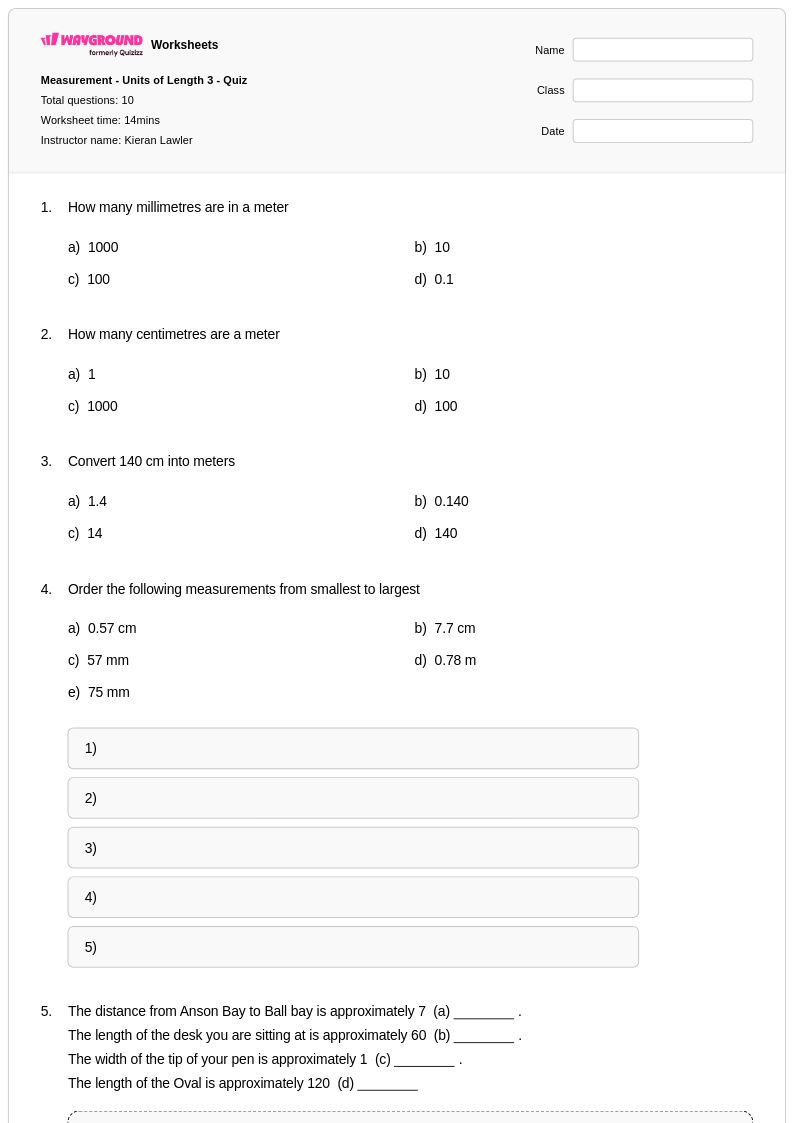
10 Q
7th
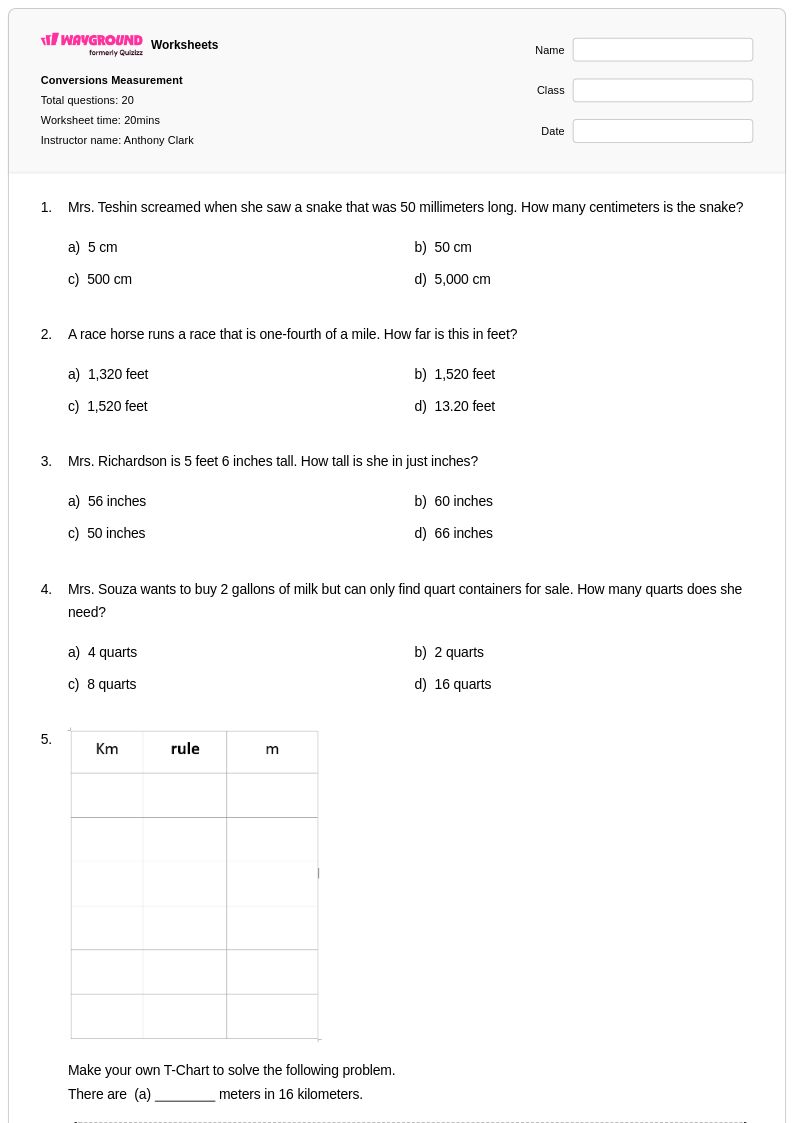
20 Q
5th - Uni
15 Q
3rd - Uni
20 Q
1st - Uni
15 Q
4th - Uni
20 Q
5th - Uni
Explore Measurement Worksheets by Grades
Explore Measurement Worksheets for class 7 by Topic
Explore Other Subject Worksheets for class 7
Explore printable Measurement worksheets for Class 7
Class 7 measurement worksheets available through Wayground (formerly Quizizz) provide comprehensive practice opportunities for students developing essential skills in calculating area, volume, surface area, and unit conversions. These carefully crafted resources strengthen students' ability to apply measurement formulas, work with both metric and customary units, and solve real-world problems involving perimeter, circumference, and dimensional analysis. The worksheet collections include detailed answer keys that support independent learning and self-assessment, while the free printable format ensures accessibility for all classroom environments. Students engage with practice problems that progressively build complexity, from basic unit conversions to multi-step measurement challenges involving composite figures and three-dimensional objects.
Wayground (formerly Quizizz) empowers educators with millions of teacher-created measurement resources specifically designed for Class 7 mathematics instruction. The platform's robust search and filtering capabilities allow teachers to quickly locate worksheets aligned with specific standards and learning objectives, while differentiation tools enable customization based on individual student needs and skill levels. These comprehensive collections support effective lesson planning by offering both printable pdf formats for traditional classroom use and digital versions for technology-integrated instruction. Teachers utilize these versatile resources for targeted skill practice, remediation sessions for struggling learners, and enrichment activities for advanced students, ensuring that measurement concepts are thoroughly reinforced across diverse learning contexts and instructional approaches.
FAQs
How do I teach measurement concepts in seventh grade?
What measurement practice is useful for seventh graders?
What measurement mistakes do seventh graders commonly make?
How can I use these seventh-grade measurement worksheets in class?
How does Grade 7 measurement follow the Common Core progression?
How can I scaffold Grade 7 measurement problems?
What measurement topics are usually covered in seventh grade?