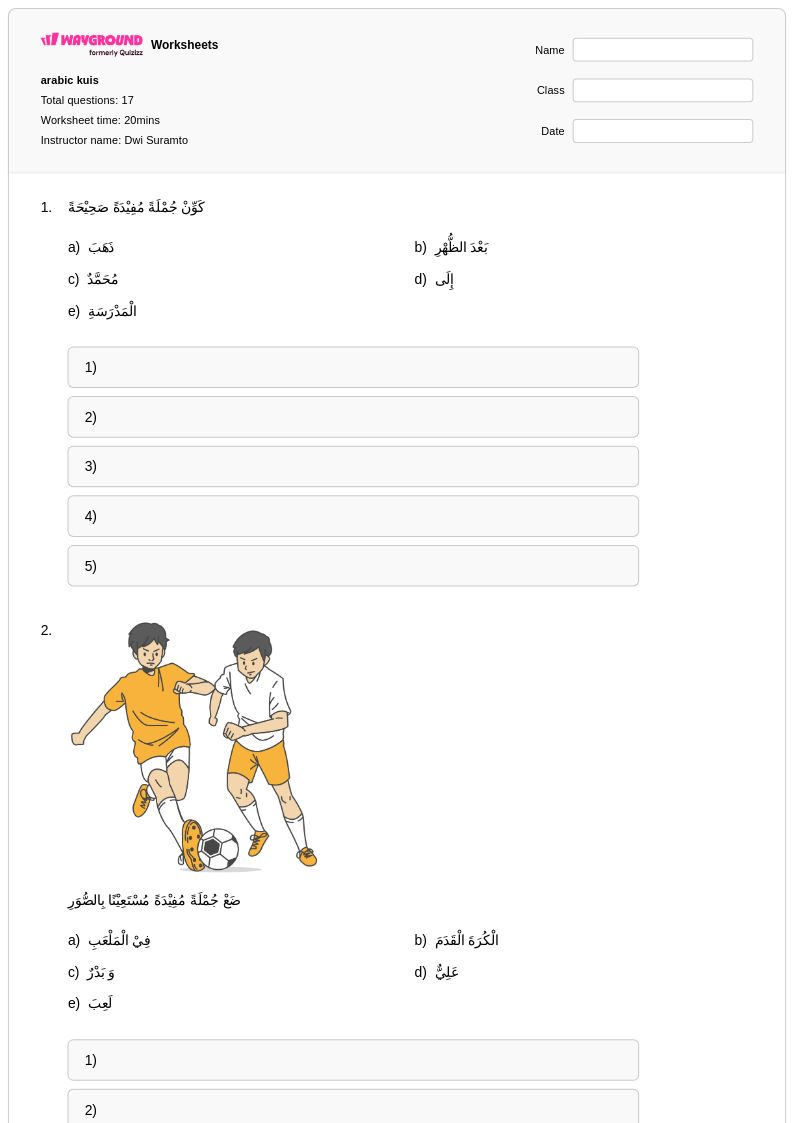
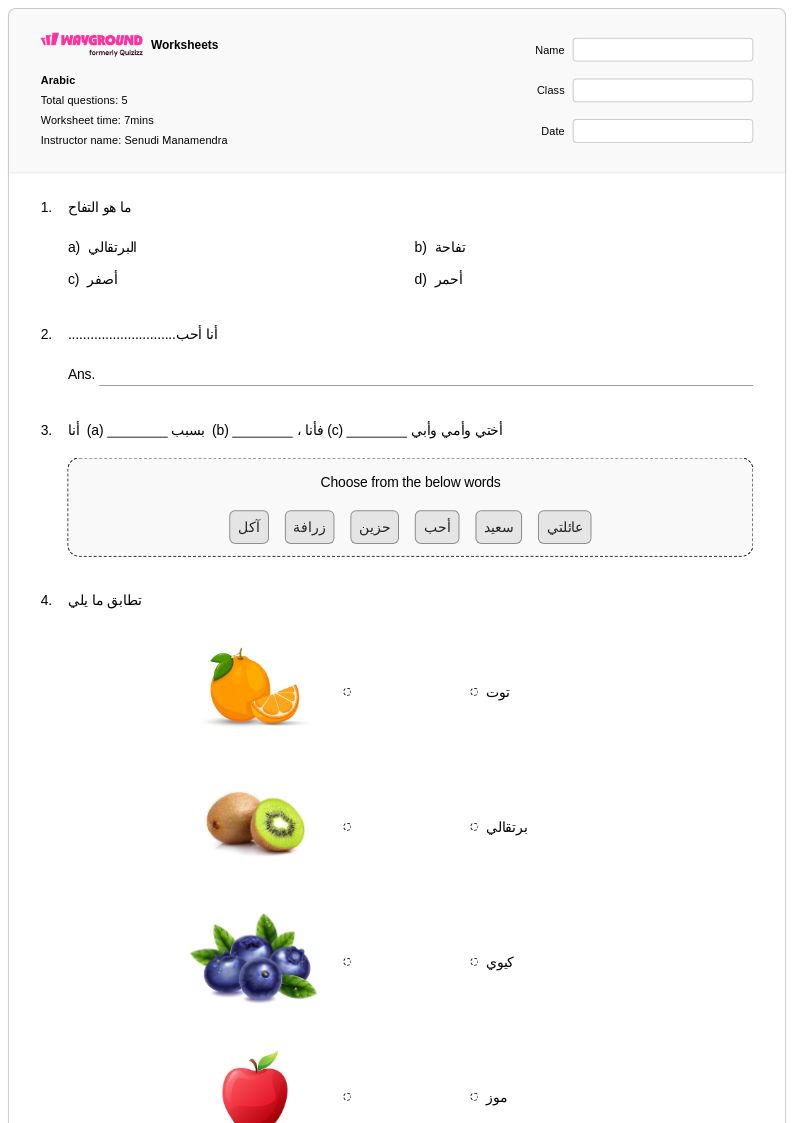
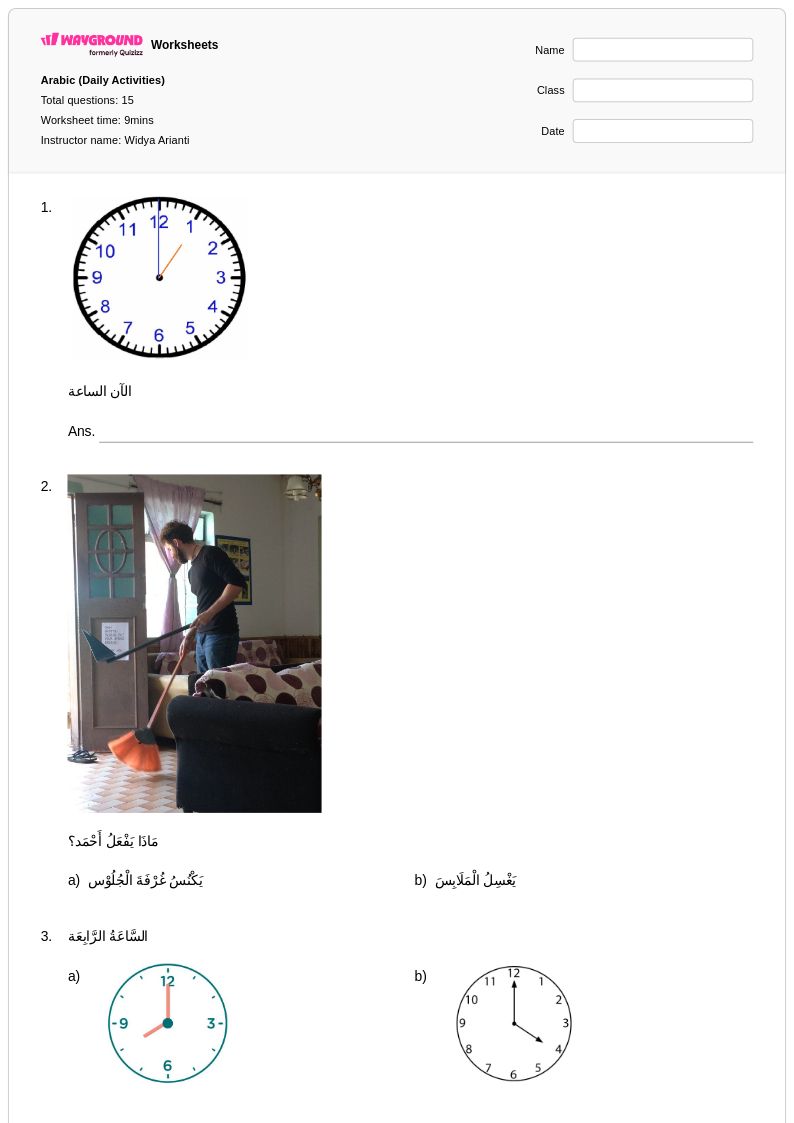
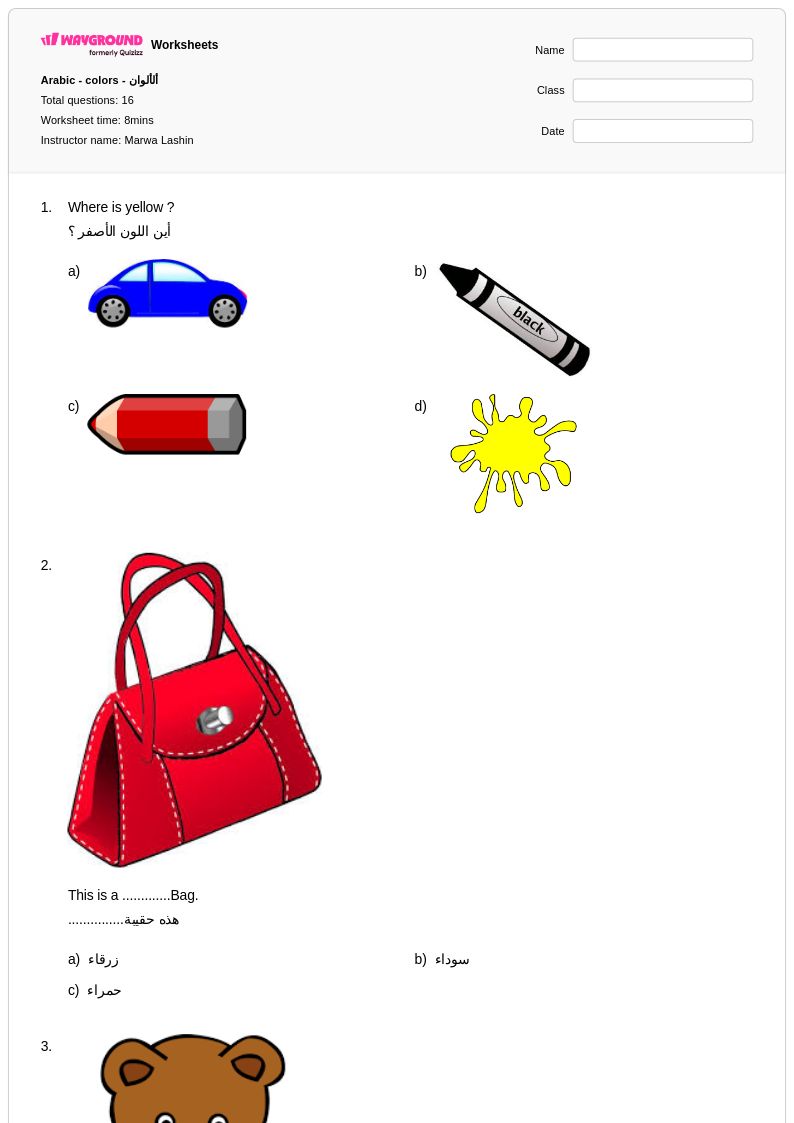
Enhance your Class 5 students' Arabic language skills with Wayground's comprehensive collection of free worksheets, printables, and practice problems featuring answer keys to support effective foreign language learning.
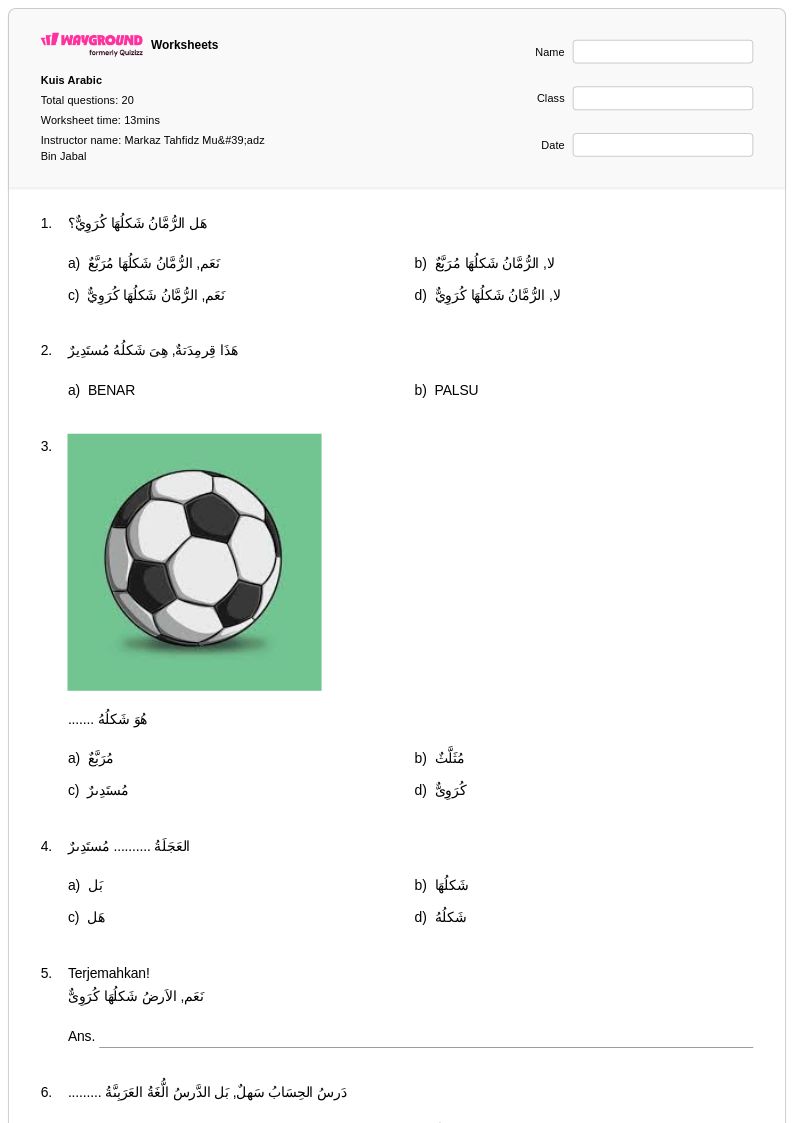
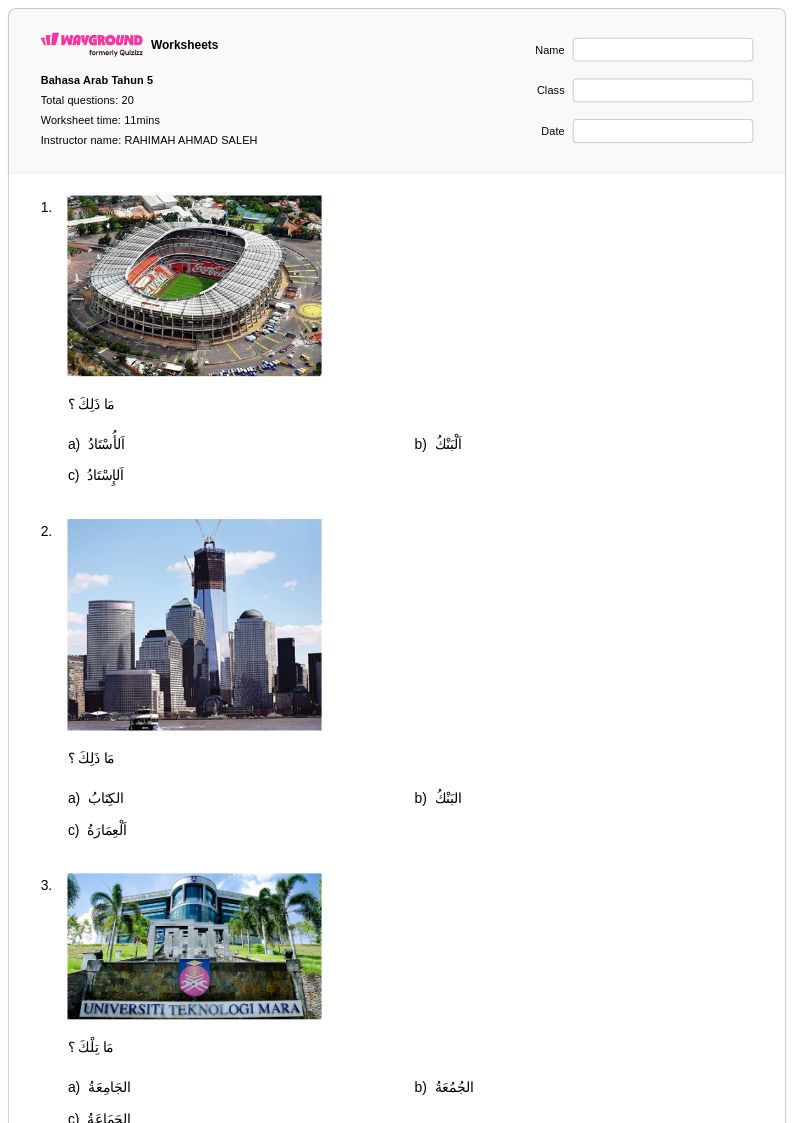
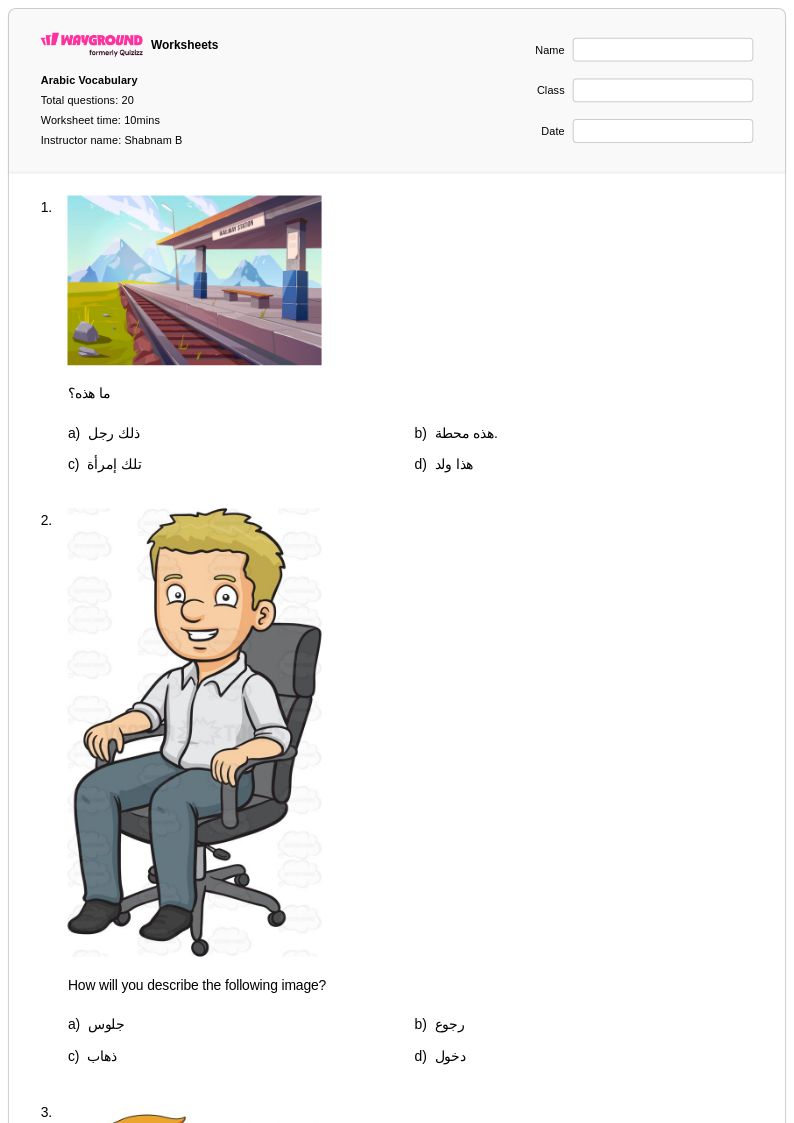
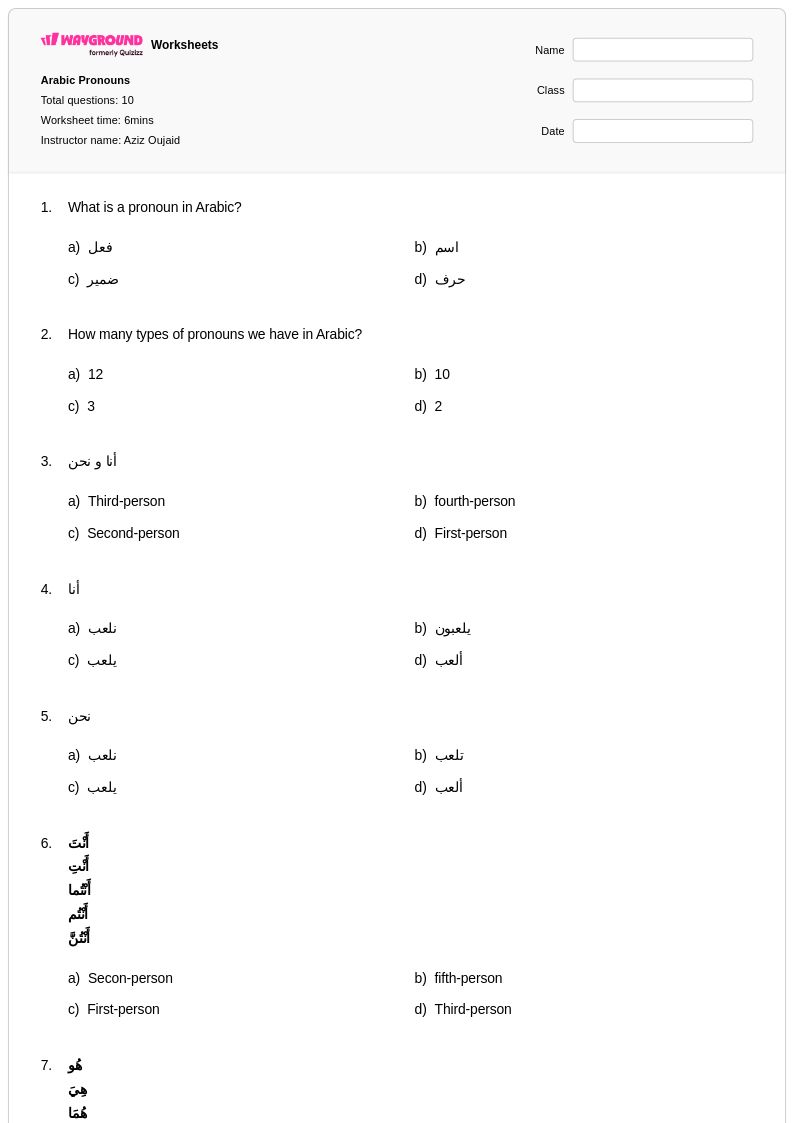
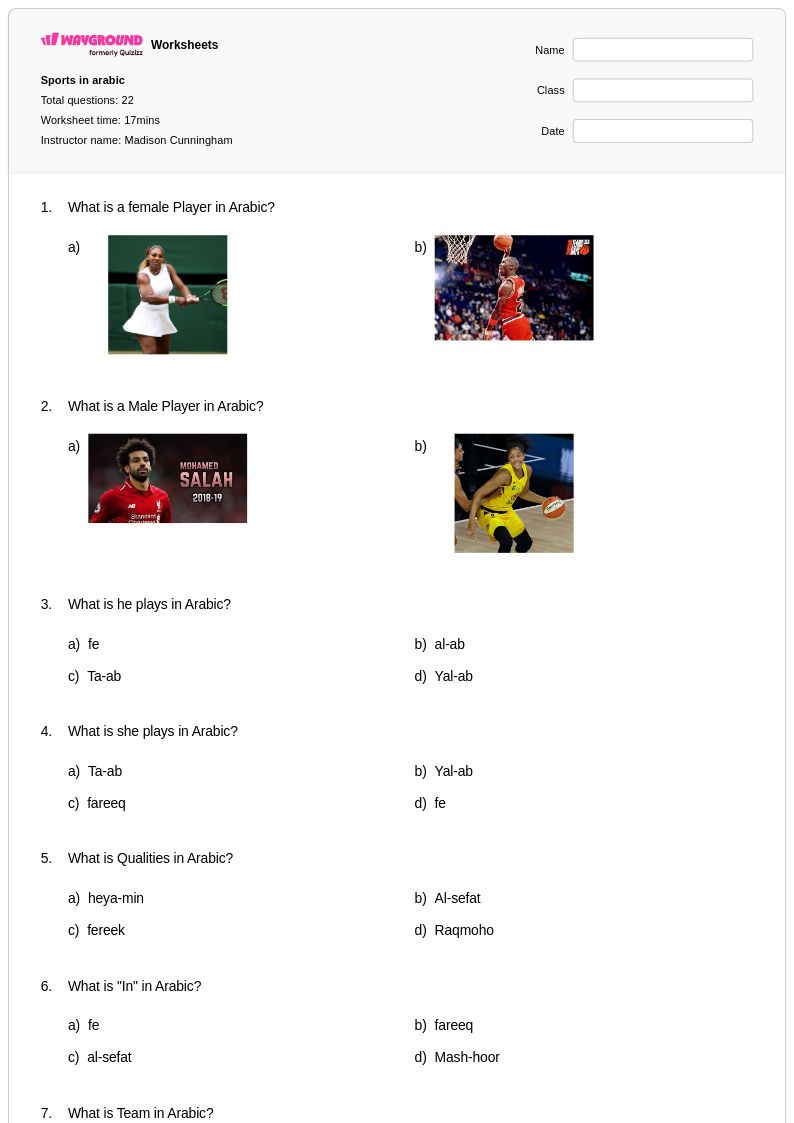
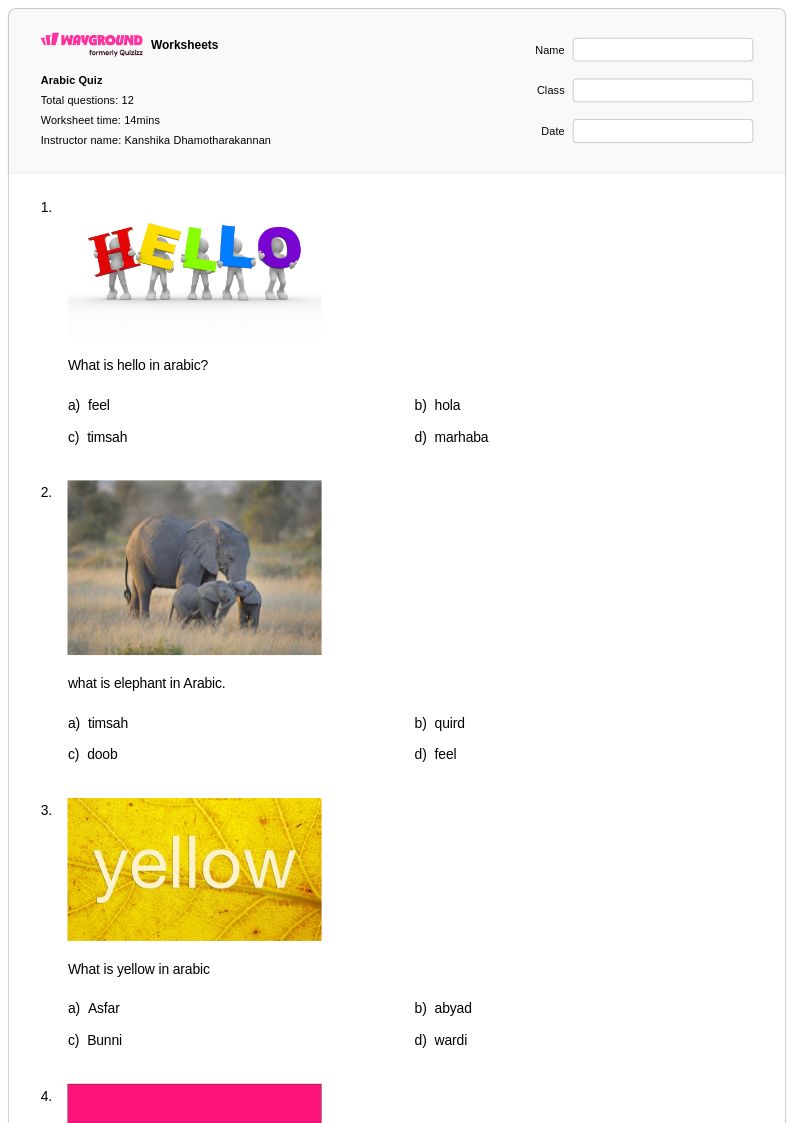
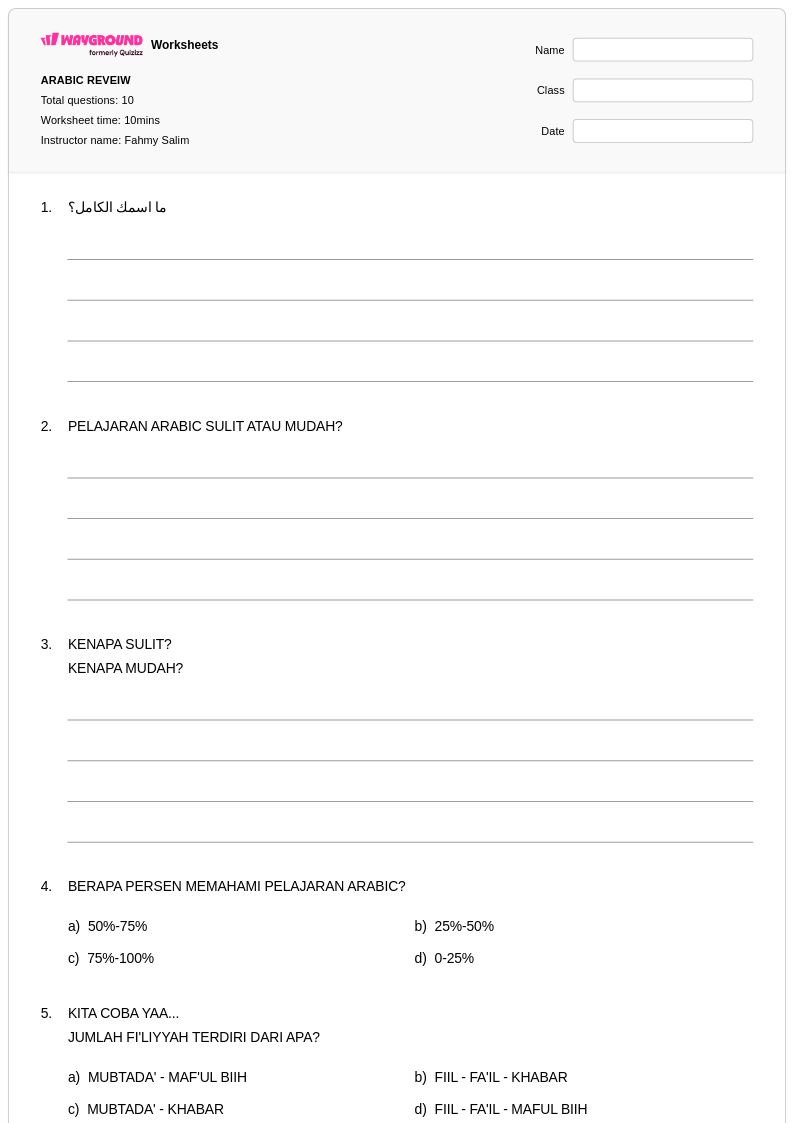
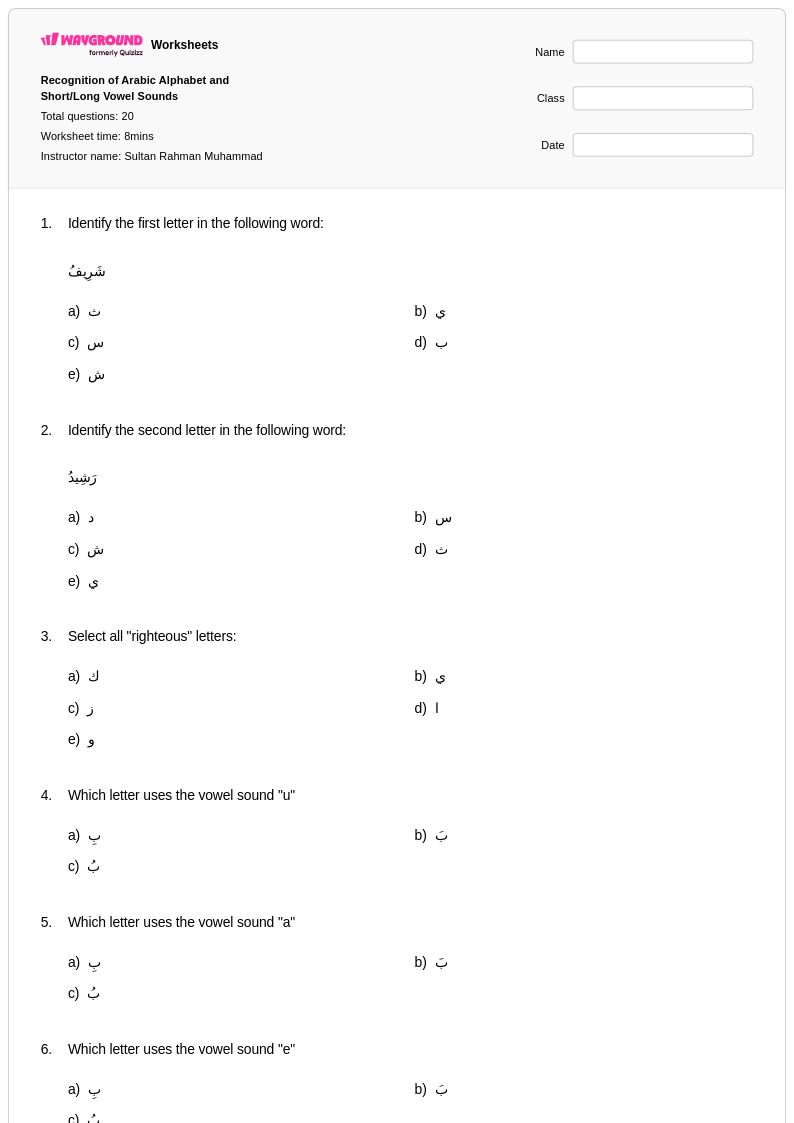
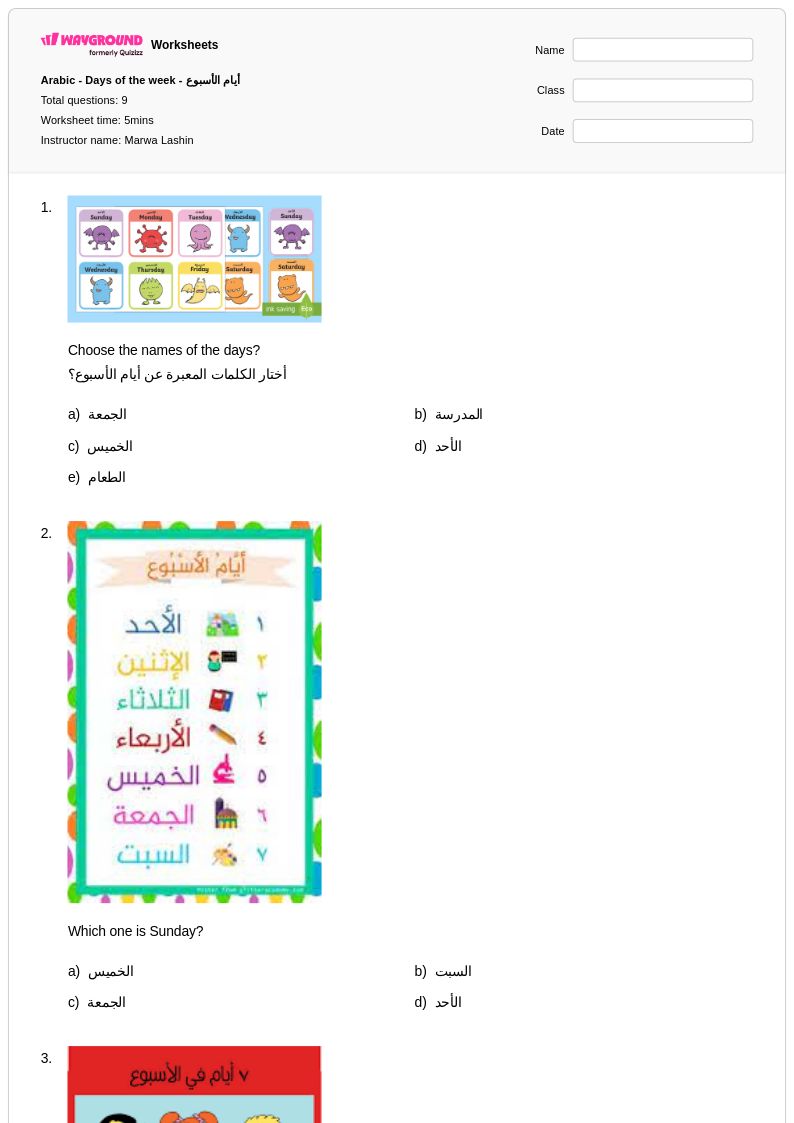
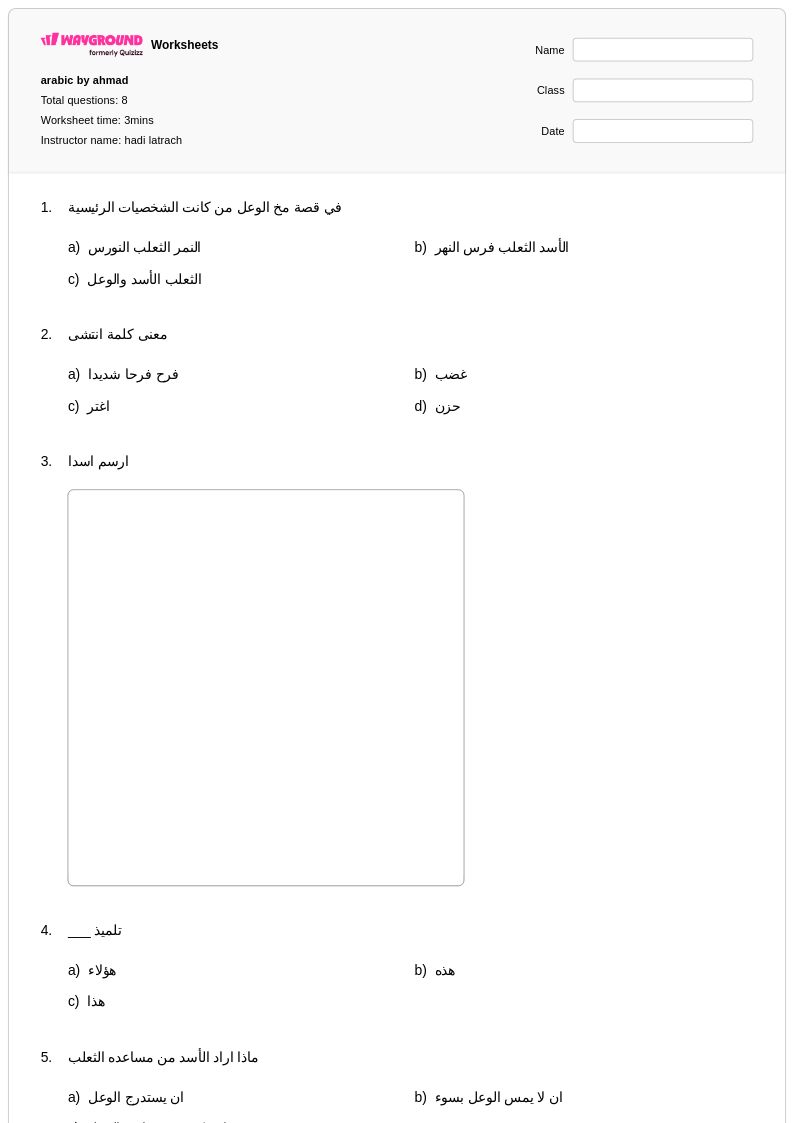
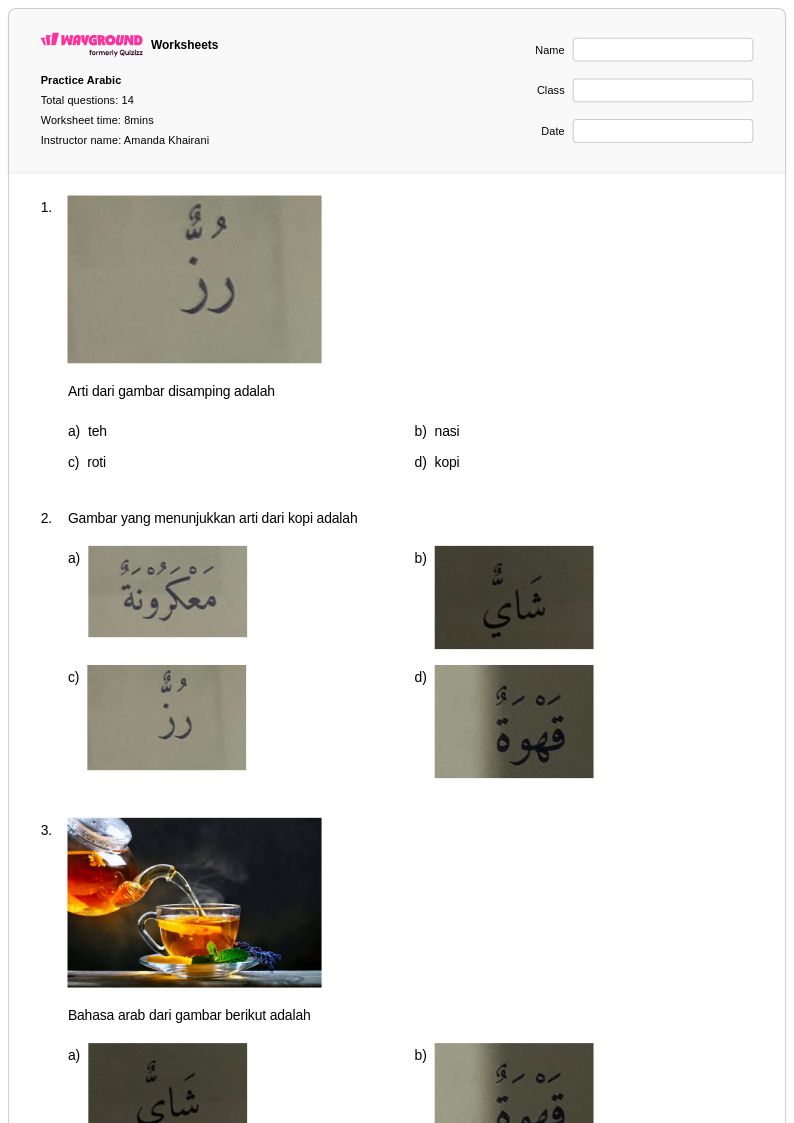
Arabic language worksheets for Class 5 students through Wayground (formerly Quizizz) provide comprehensive resources designed to build foundational skills in reading, writing, speaking, and understanding this essential world language. These carefully structured materials focus on core Arabic concepts including alphabet recognition, basic vocabulary development, simple sentence construction, and cultural awareness appropriate for elementary learners. Each worksheet collection includes practice problems that reinforce letter formation, phonetic awareness, and beginning conversational phrases, while accompanying answer keys enable students to self-assess their progress and teachers to provide targeted feedback. Available as free printables and digital resources, these pdf materials support systematic language acquisition through engaging exercises that make Arabic accessible and enjoyable for young learners.
Wayground (formerly Quizizz) empowers educators with millions of teacher-created Arabic language resources specifically curated for Class 5 instruction, featuring robust search and filtering capabilities that help locate materials aligned with curriculum standards and learning objectives. The platform's differentiation tools allow teachers to customize worksheets based on individual student needs, accommodating various proficiency levels within the same classroom while maintaining appropriate challenge and support. These flexible resources are available in both printable and digital formats, including downloadable pdf versions, enabling seamless integration into lesson planning whether for in-person or remote learning environments. Teachers can efficiently utilize these materials for skill practice, targeted remediation of specific Arabic language concepts, and enrichment activities that deepen cultural understanding and linguistic competency.
FAQs
How do I teach Arabic script to beginners?
Begin by introducing students to the Arabic alphabet in small clusters, focusing on letter shapes and their connected forms since Arabic is a cursive script where letters change appearance depending on their position in a word. Tracing exercises help students internalize stroke order and directionality, as Arabic is written right to left. Pairing letter recognition with phonetic sounds early on prevents students from memorizing shapes without understanding pronunciation.
What exercises help students practice Arabic letter formation?
Alphabet tracing sheets are the most effective starting point, allowing students to build muscle memory for each letter's form before attempting freehand writing. Follow-up exercises should include fill-in-the-blank word completion and matching letters to their isolated, initial, medial, and final forms, since each Arabic letter has up to four distinct shapes. Repeated short-burst practice is more effective than longer infrequent sessions for retaining script recognition.
What mistakes do students commonly make when learning Arabic?
One of the most common errors is confusing visually similar letters such as ب، ت، ث (ba, ta, tha), which share the same base shape and differ only by the number and placement of dots. Students also frequently struggle with right-to-left directionality, especially when transitioning from a left-to-right writing system. Another persistent misconception is treating Arabic vowels as optional, when in fact short vowels (harakat) are essential for correct pronunciation and meaning.
How do I differentiate Arabic worksheets for students at different proficiency levels?
For beginner students, focus on isolated letter recognition, tracing, and single-word vocabulary before introducing sentence-level work. Intermediate learners benefit from grammar-focused exercises covering root-and-pattern morphology, verb conjugation, and common phrase structures. On Wayground, teachers can apply accommodations such as Read Aloud support and reduced answer choices for individual students, which is especially useful when scaffolding Arabic script recognition for learners who need additional support without singling them out in front of peers.
How do I use Arabic worksheets from Wayground in my classroom?
Wayground's Arabic worksheets are available as printable PDFs for traditional classroom use and in digital formats for technology-integrated learning environments, including the option to host them as a quiz directly on Wayground. Teachers can assign digital versions for independent practice or homework, while printed versions work well for in-class tracing, writing, and vocabulary drills. All worksheets include complete answer keys, so grading and providing immediate feedback requires minimal preparation time.
How do I incorporate cultural context when teaching Arabic language skills?
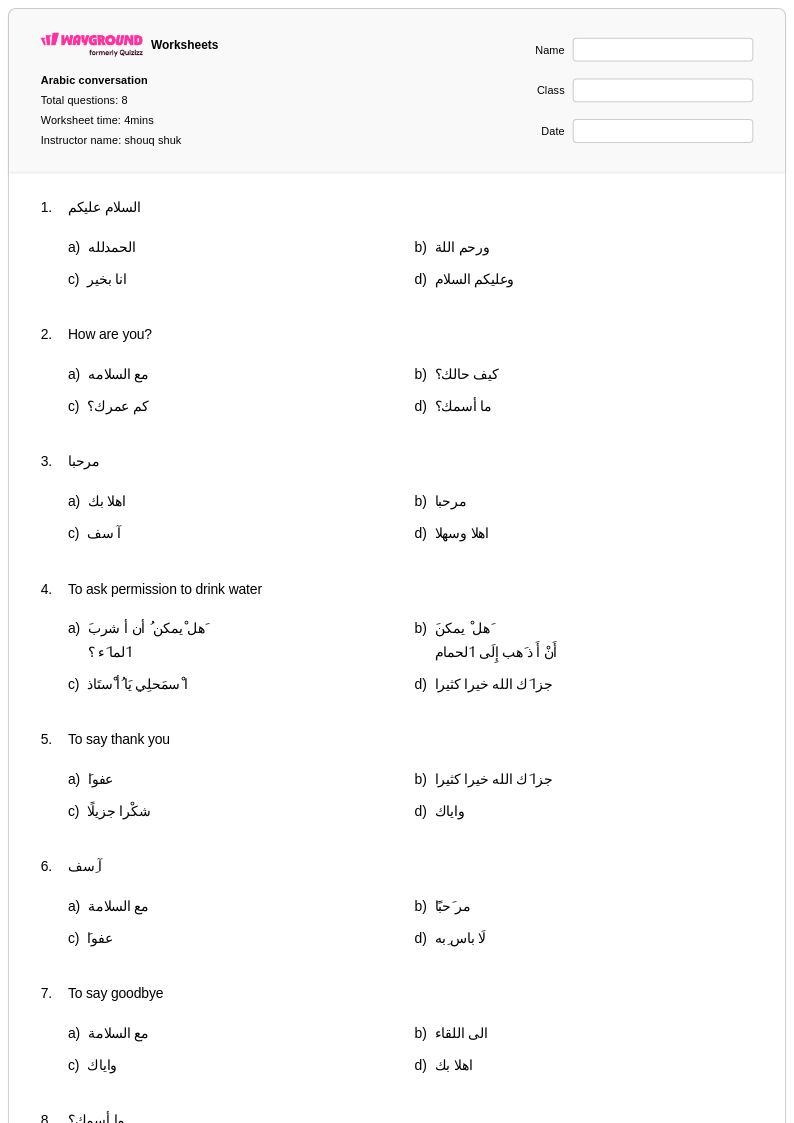
Language and culture are deeply intertwined in Arabic instruction, so integrating common greetings, Islamic calendar references, and culturally significant vocabulary gives students meaningful context for the words they are learning. Conversational dialogue exercises that reflect real-life situations, such as greetings, shopping, or family introductions, help students understand not just vocabulary but social register and formality norms. This approach builds cultural competency alongside linguistic competency, which is especially important given Arabic's role across more than 20 countries with regional dialect variation.