Free Printable Atom Structure Worksheets for Class 7
Explore comprehensive Class 7 atom structure worksheets and printables from Wayground that help students master atomic components, electron arrangements, and nuclear composition through engaging practice problems with complete answer keys.
Explore printable Atom Structure worksheets for Class 7
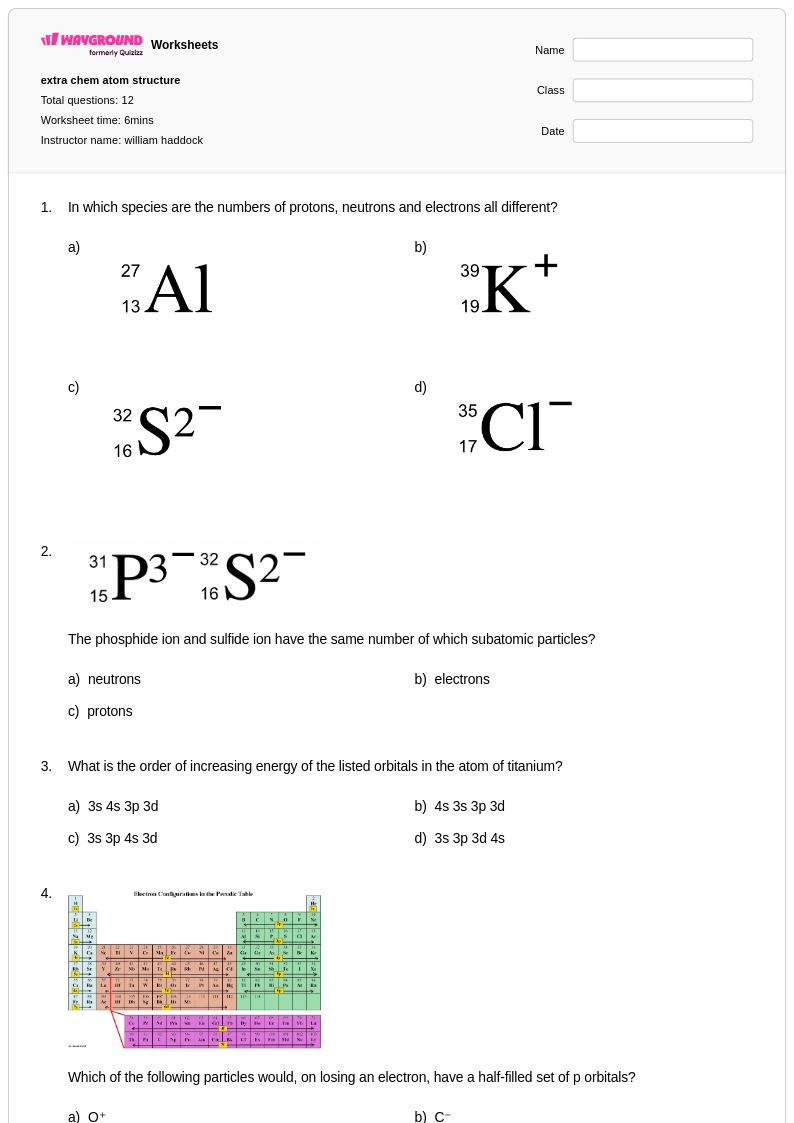
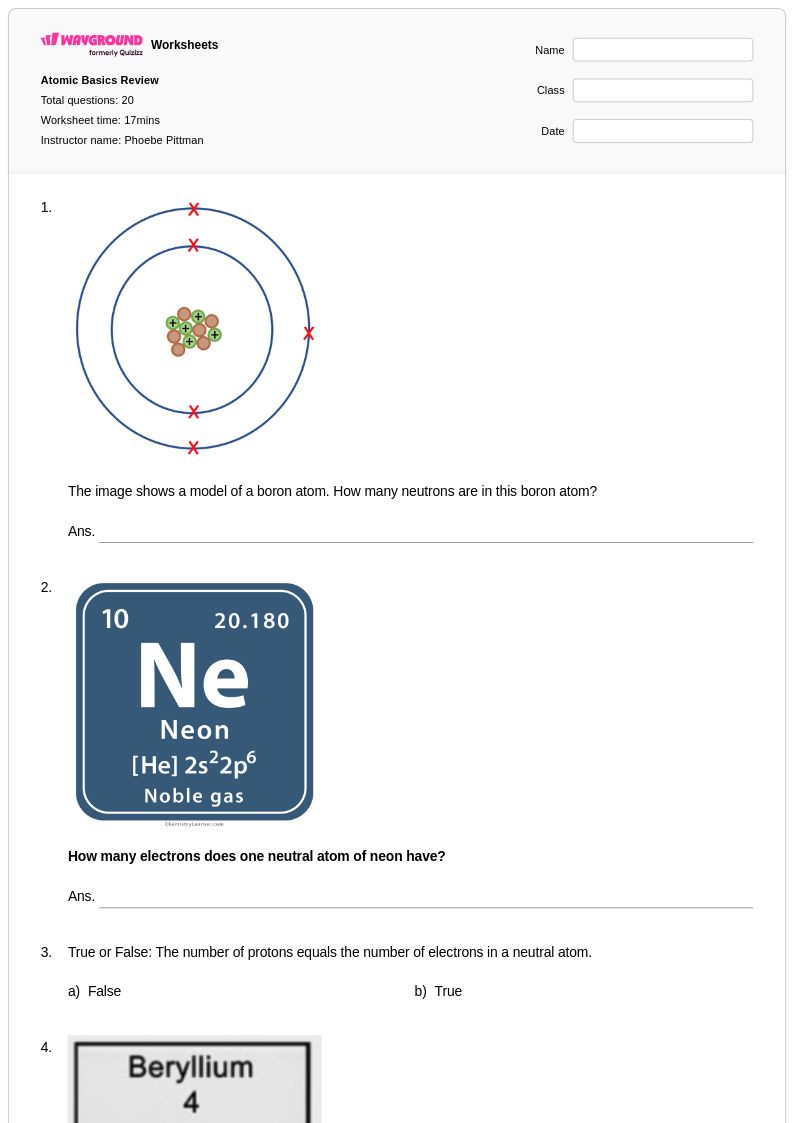
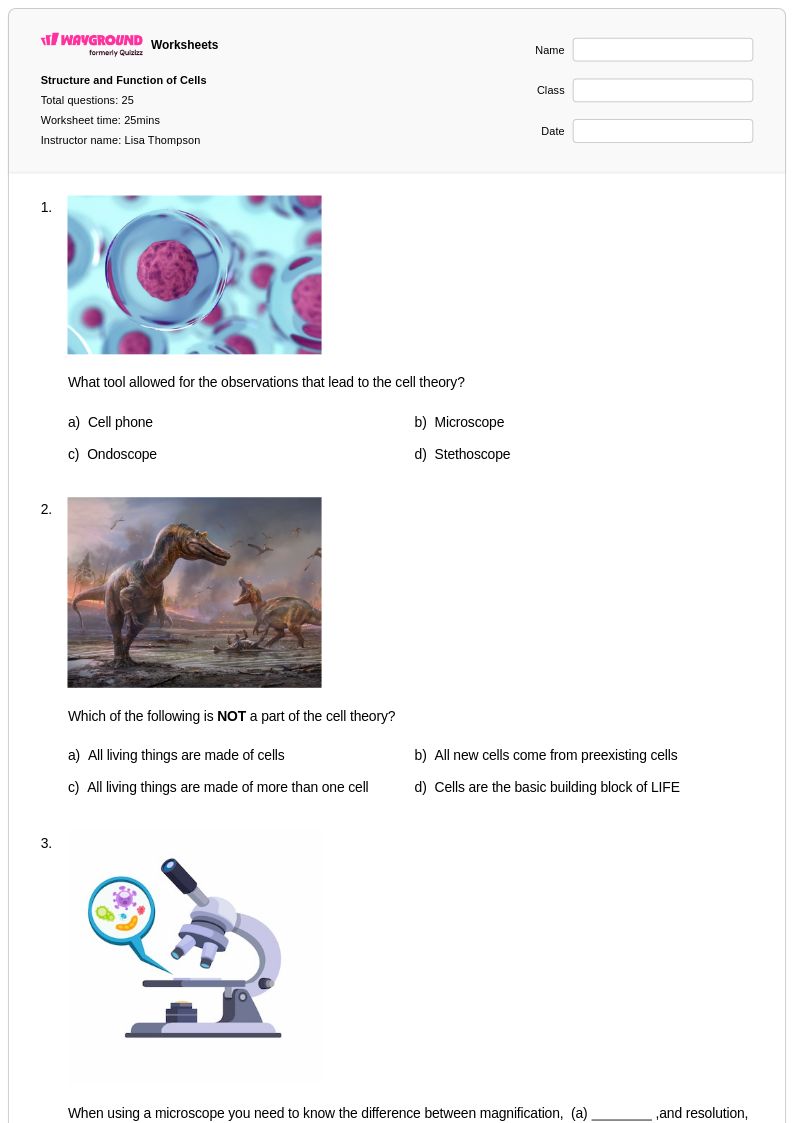
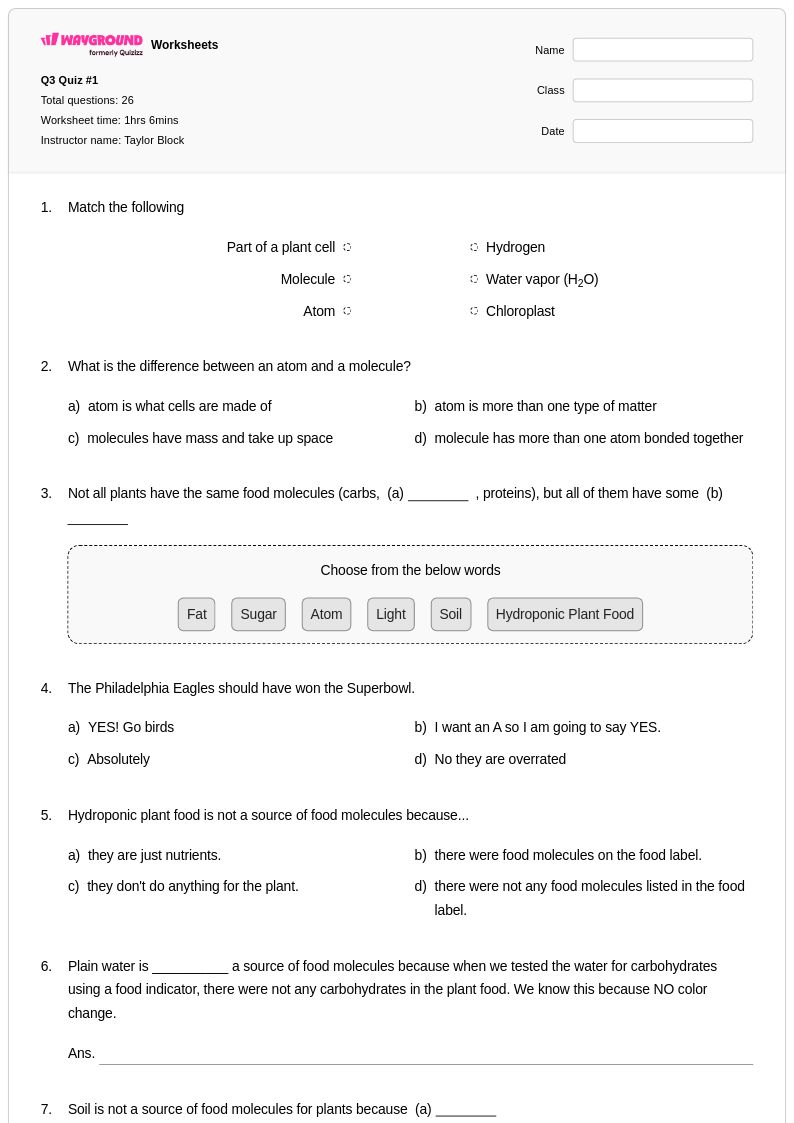
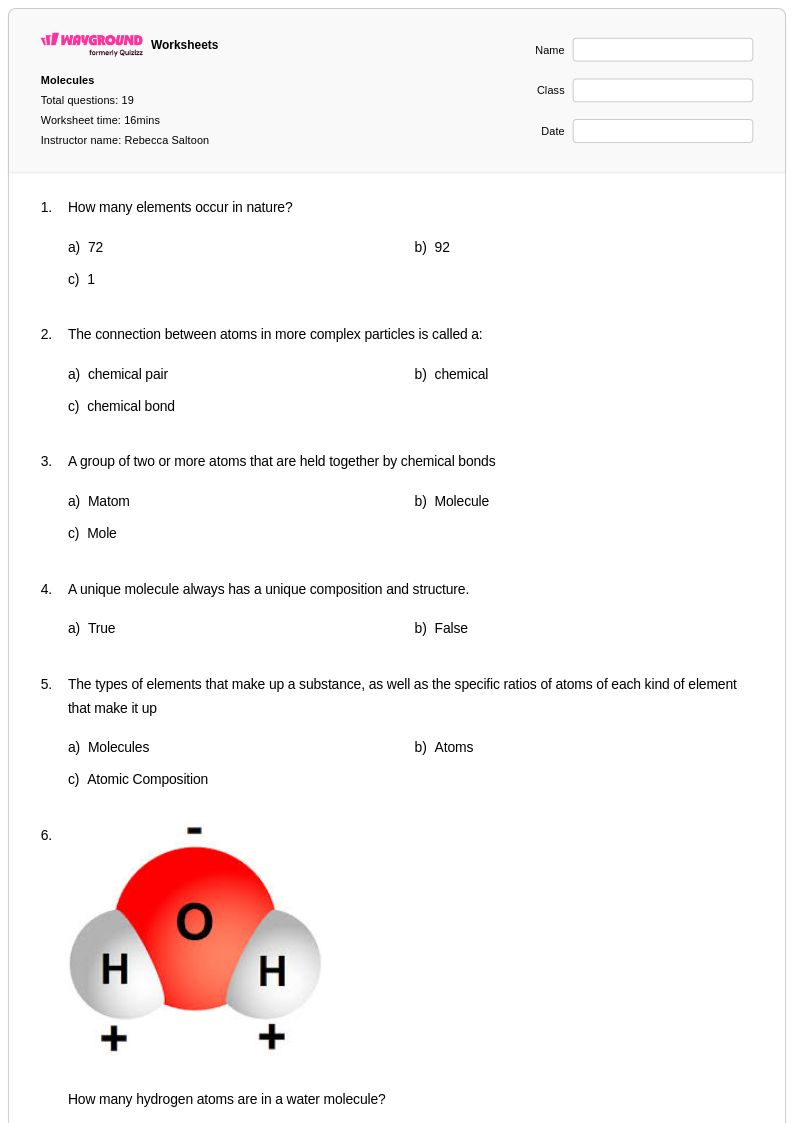
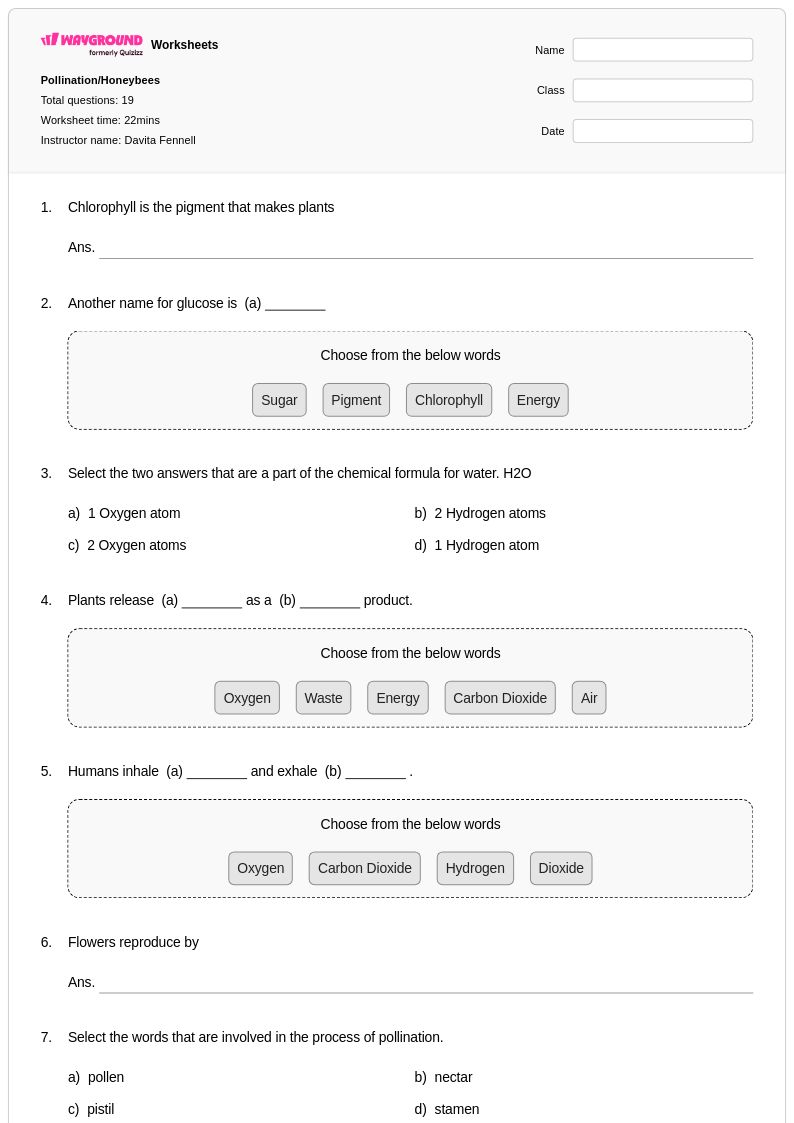
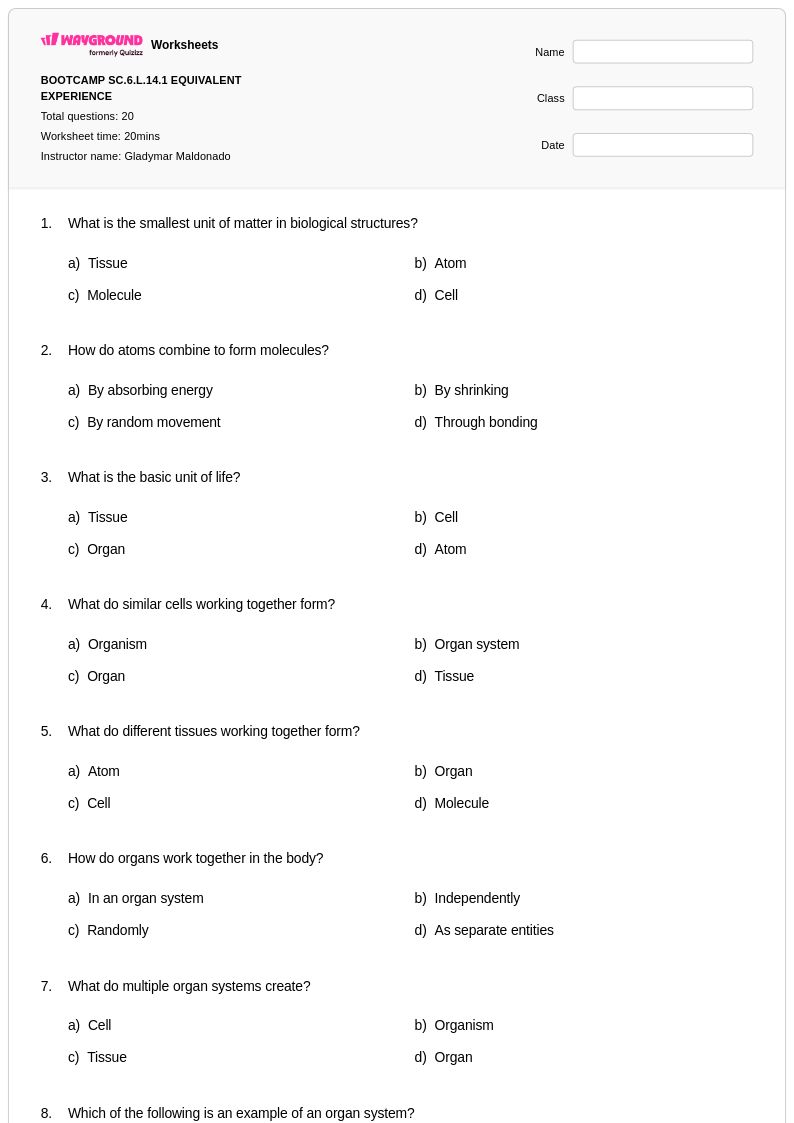
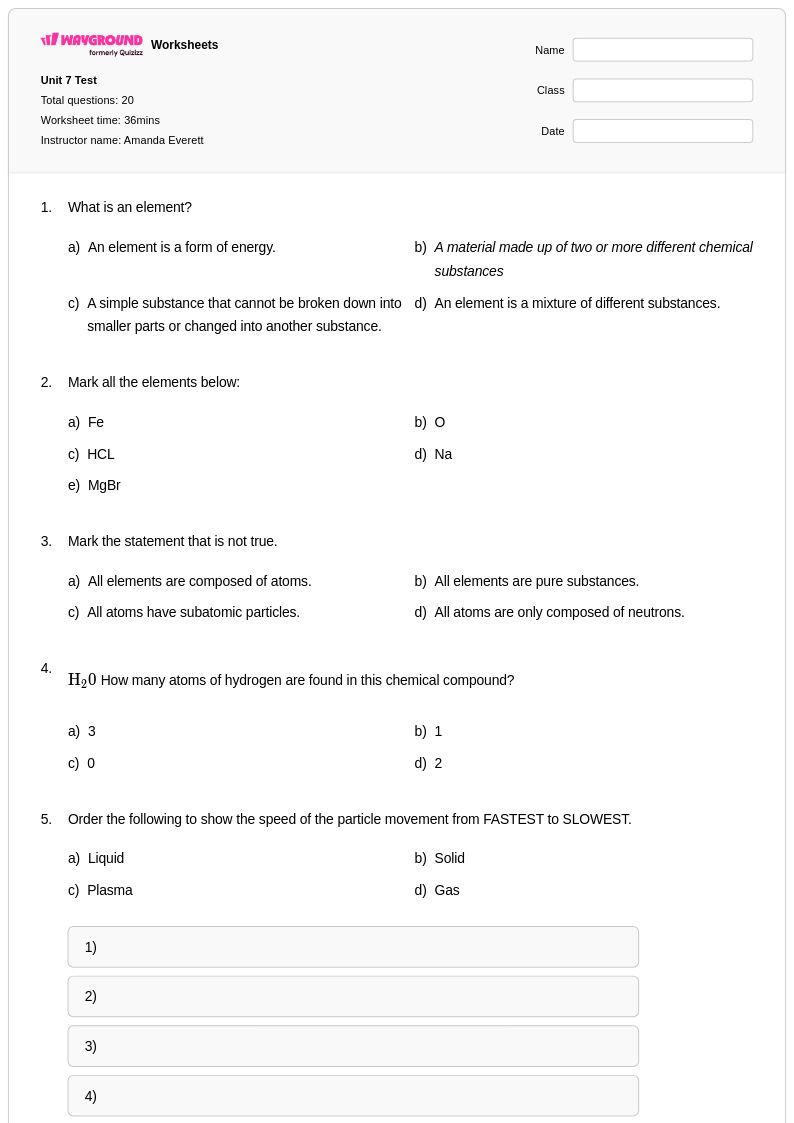
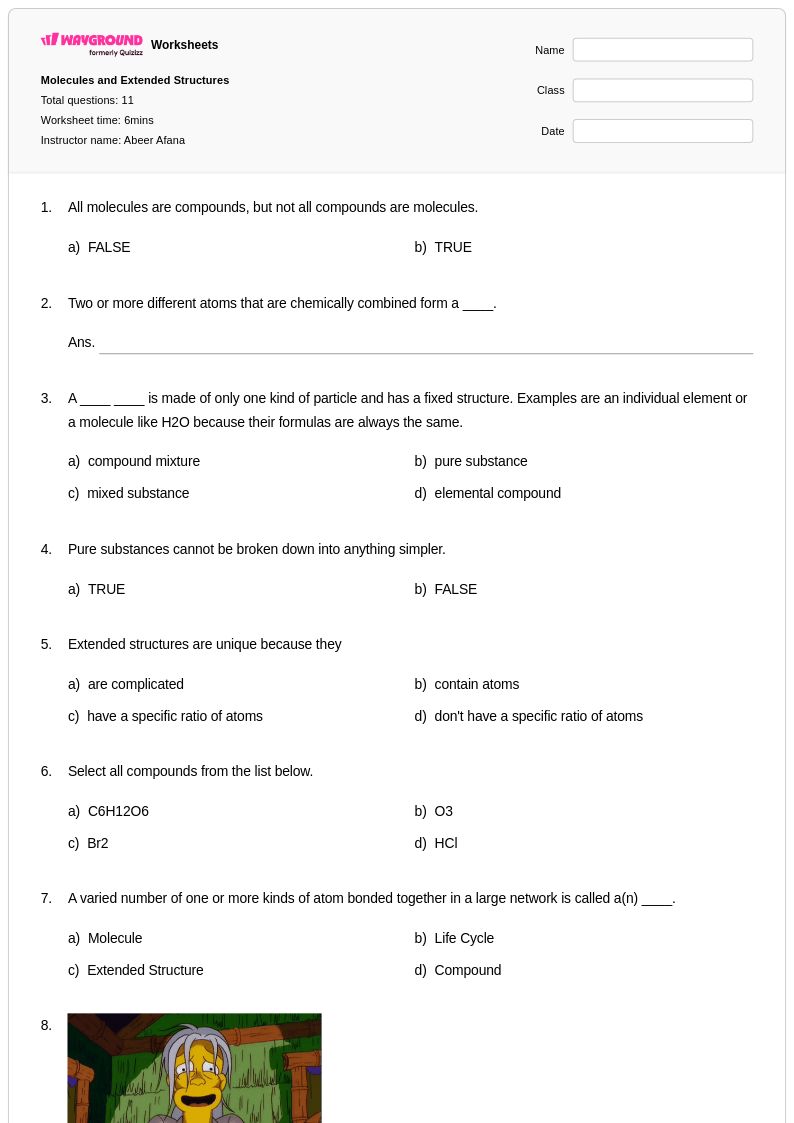
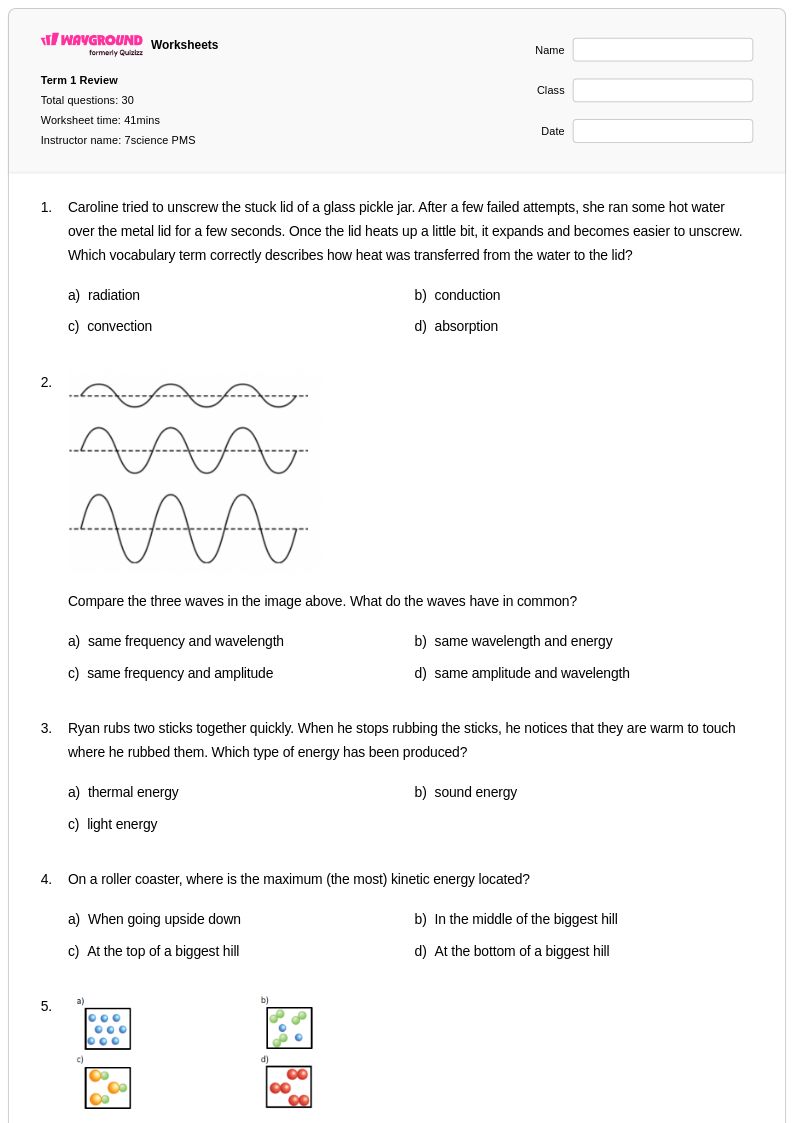
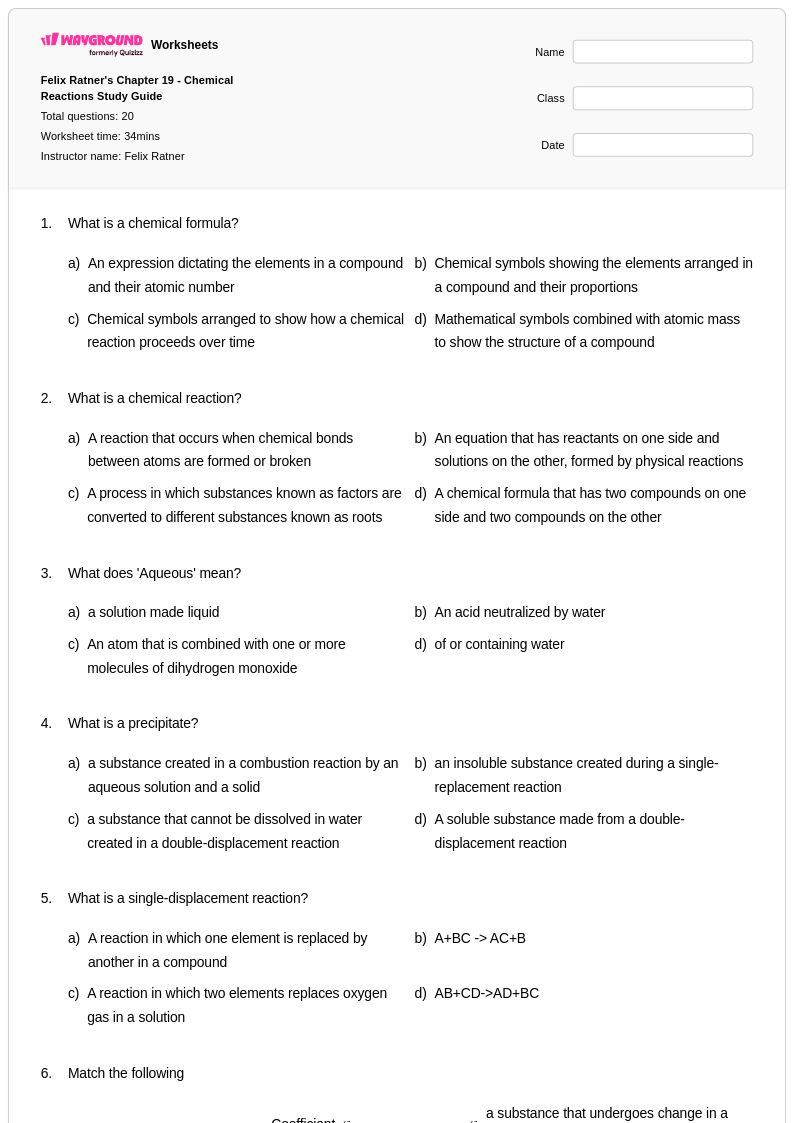
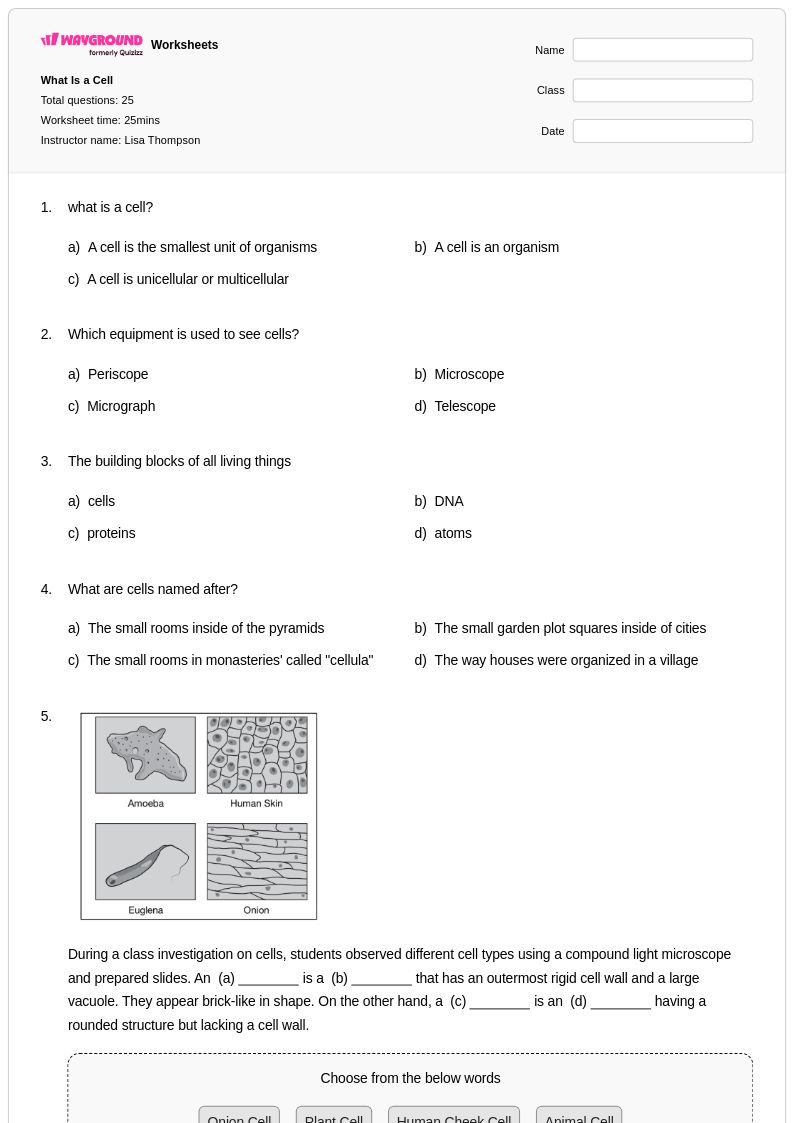
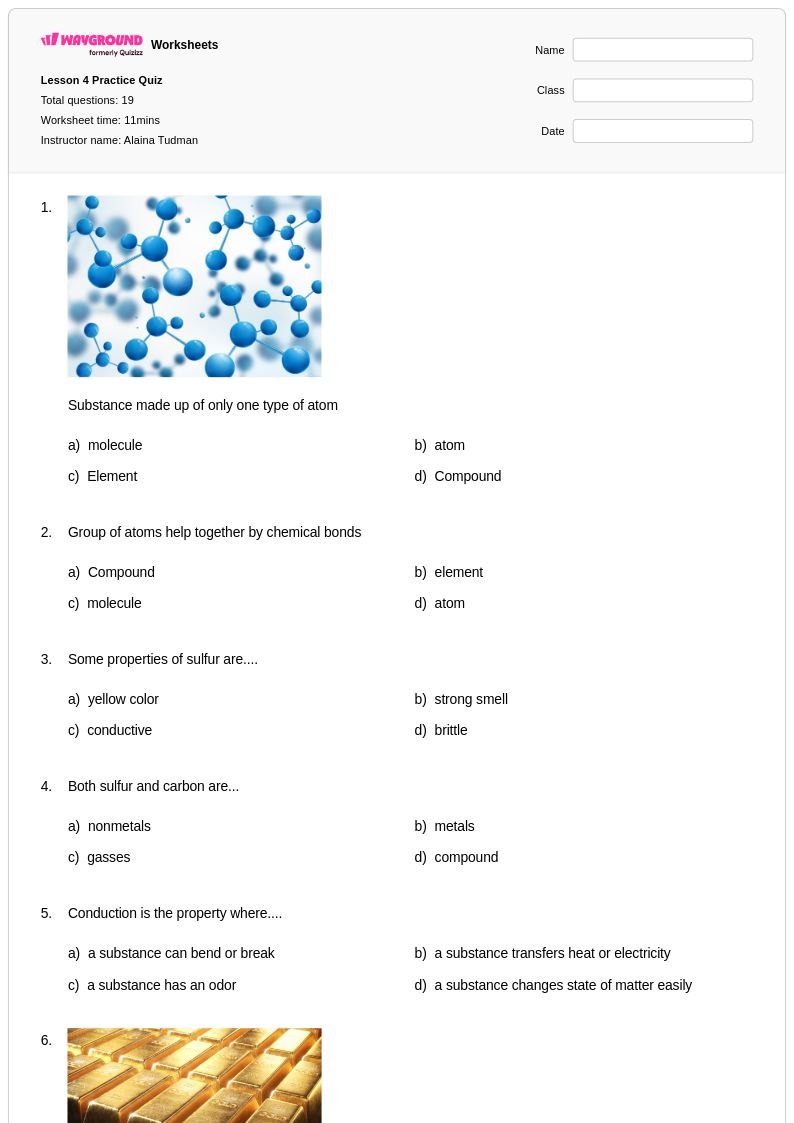
Atom structure worksheets for Class 7 students available through Wayground (formerly Quizizz) provide comprehensive coverage of fundamental atomic concepts that form the foundation of chemistry education. These carefully designed practice problems guide students through the essential components of atoms, including protons, neutrons, and electrons, while building critical skills in identifying atomic number, mass number, and electron configuration. The worksheet collections strengthen students' ability to interpret atomic diagrams, calculate subatomic particle quantities, and understand the relationship between atomic structure and elemental properties. Each printable resource includes detailed answer keys that support independent learning and self-assessment, with free pdf formats ensuring accessibility for all classroom environments and homework assignments.
Wayground (formerly Quizizz) empowers teachers with millions of educator-created atom structure resources that streamline lesson planning and differentiated instruction for Class 7 chemistry concepts. The platform's robust search and filtering capabilities allow educators to quickly locate worksheets aligned with specific learning standards and customize content difficulty levels to meet diverse student needs. Teachers can seamlessly blend printable pdf worksheets with digital formats to accommodate various learning preferences and classroom technologies. These versatile tools support targeted remediation for struggling learners, enrichment activities for advanced students, and systematic skill practice that reinforces atomic theory comprehension. The extensive collection ensures educators have immediate access to high-quality materials for formative assessment, homework assignments, and review sessions that build student confidence in fundamental chemistry concepts.
FAQs
How do I teach atom structure to chemistry students?
Start with the historical development of atomic models, moving from Dalton's solid sphere to Bohr's planetary model before introducing the quantum mechanical model. Use atomic diagrams to ground abstract concepts in visual representations students can draw and label. Once students can identify protons, neutrons, and electrons, build toward electron configuration, valence electrons, and ion formation as connected ideas rather than isolated facts.
What exercises help students practice identifying subatomic particles and atomic structure?
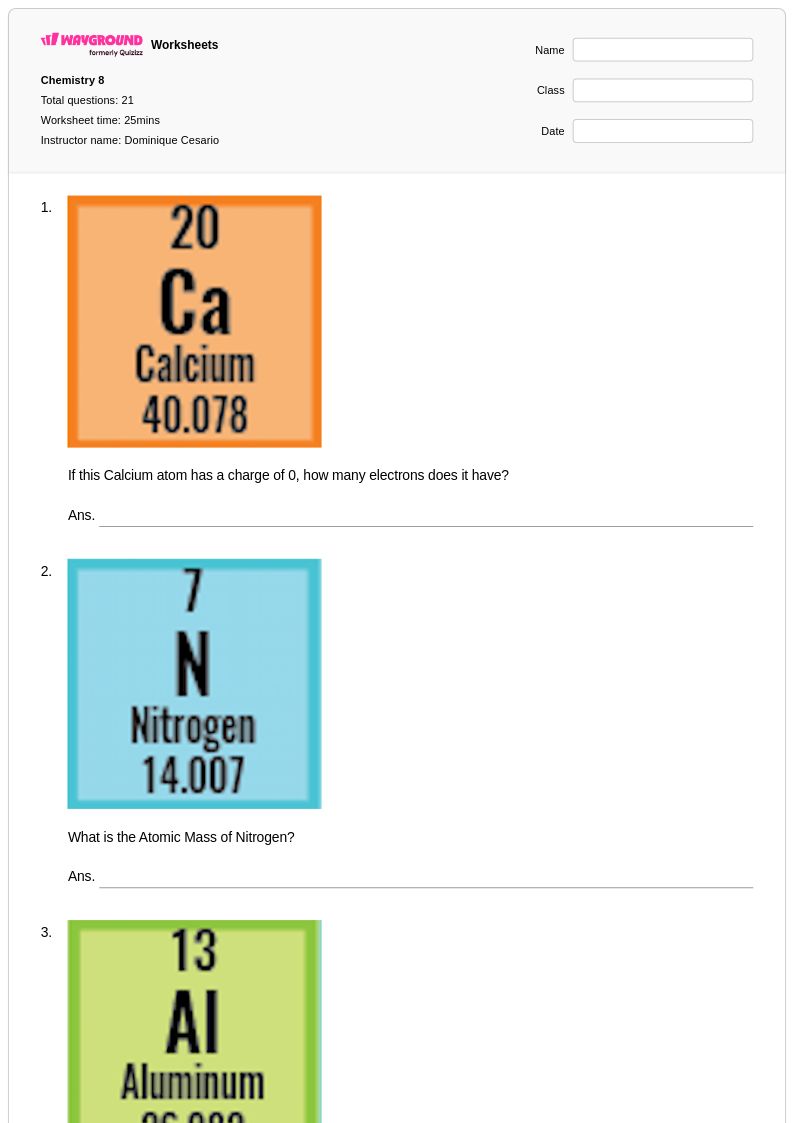
Effective practice includes reading the periodic table to determine proton and electron counts, drawing Bohr diagrams for elements across different periods, and calculating atomic mass from isotope data. Worksheets that ask students to interpret and complete atomic diagrams are particularly useful because they require students to apply multiple concepts simultaneously, including atomic number, mass number, and charge.
What mistakes do students commonly make when learning atom structure?
A frequent misconception is confusing atomic number with atomic mass, leading to errors when identifying elements or calculating neutron counts. Students also struggle to distinguish between neutral atoms and ions, often forgetting that ion formation changes the electron count but not the proton count. Another common error is misreading electron shell diagrams, particularly when filling shells in the correct order for elements beyond the second period.
How do I differentiate atom structure instruction for students at different ability levels?
For struggling students, begin with proton, neutron, and electron identification before introducing electron configuration or isotopes. For advanced learners, extend into orbital notation and quantum numbers. On Wayground, teachers can apply accommodations such as reduced answer choices to lower cognitive load for selected students, or enable Read Aloud so questions are read to students who need additional support, without disrupting the experience for the rest of the class.
How can I use Wayground's atom structure worksheets in my classroom?
Wayground's atom structure worksheets are available as printable PDFs for traditional classroom use and in digital formats for technology-integrated or remote learning environments. Teachers can also host worksheets as a quiz directly on Wayground, giving students an interactive experience while automatically capturing responses. All worksheets include complete answer keys, making them efficient for independent practice, homework, or targeted remediation sessions.
How do I help students understand electron configuration and valence electrons?
Connect electron configuration directly to the structure of the periodic table, showing students how periods correspond to energy levels and groups to valence electron counts. Practice should include writing electron configurations from atomic number, identifying valence electrons from configurations, and predicting bonding behavior based on valence electron count. Repeated exposure through diagram-based and notation-based exercises helps students internalize the pattern rather than memorize individual cases.