Free Printable Beginner English Worksheets for Class 1
Develop foundational reading and writing skills with Class 1 beginner English worksheets from Wayground, featuring free printables and practice problems with answer keys to support early literacy development.
Explore printable Beginner English worksheets for Class 1
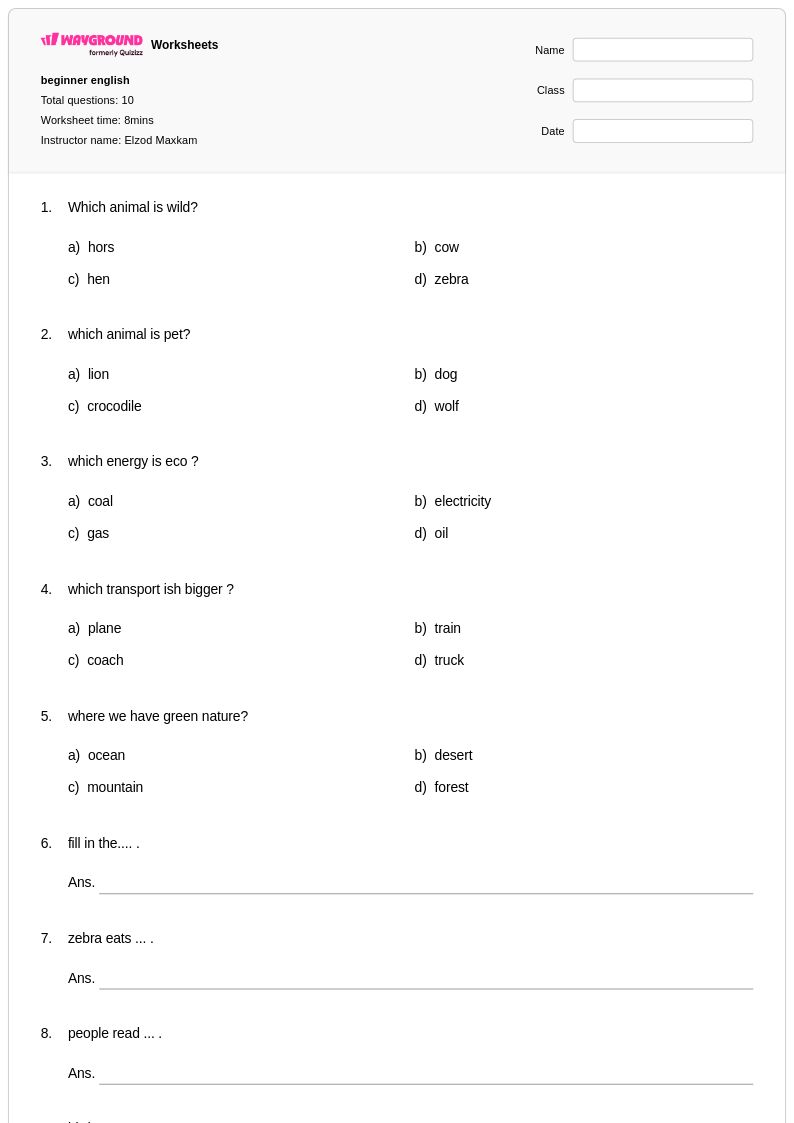
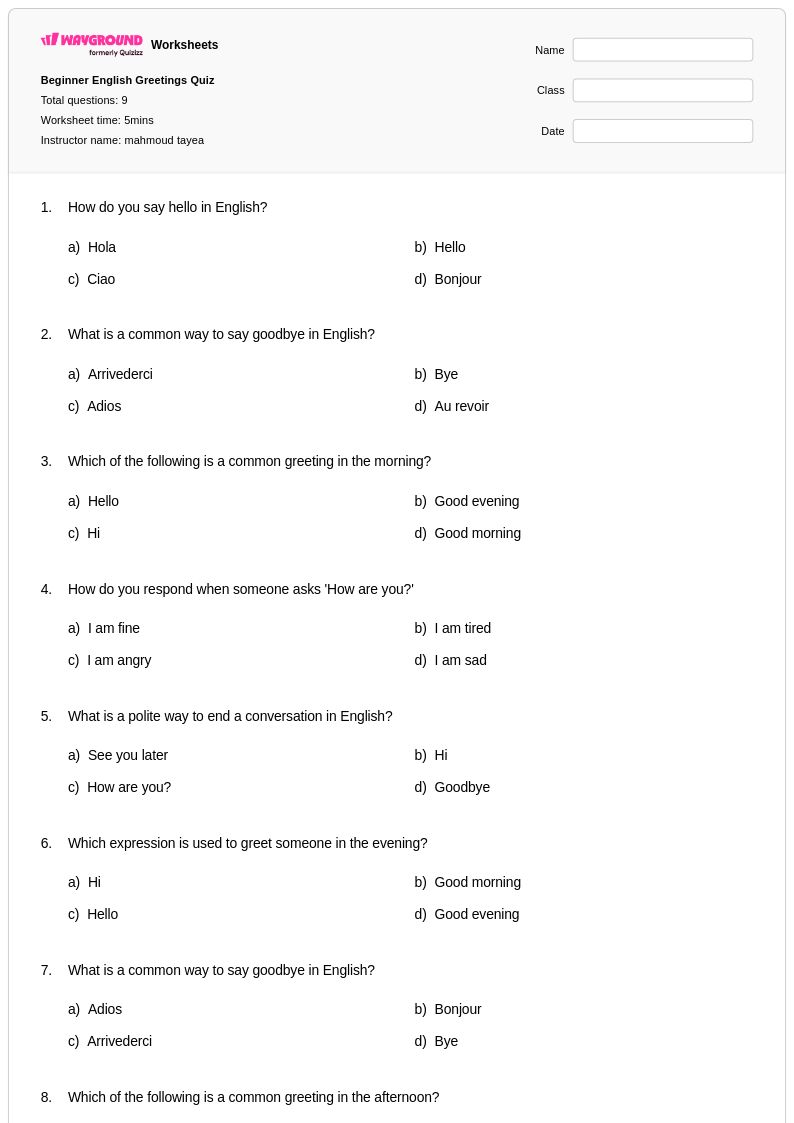
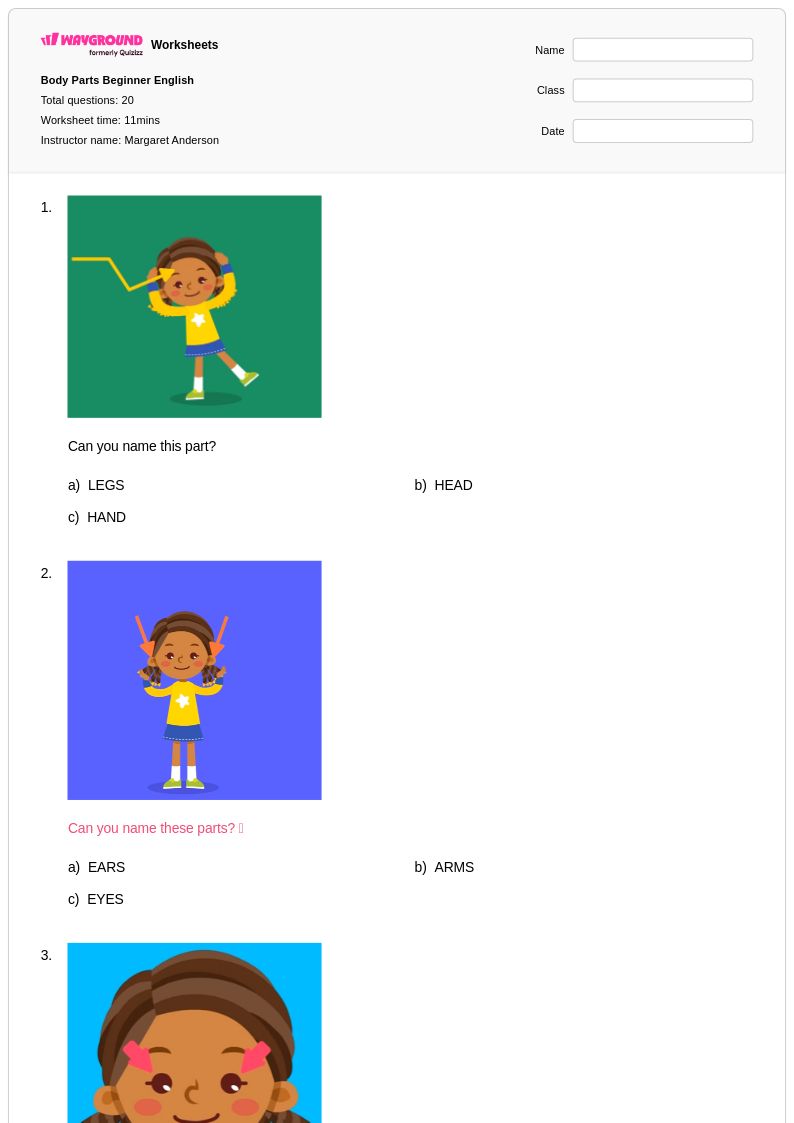
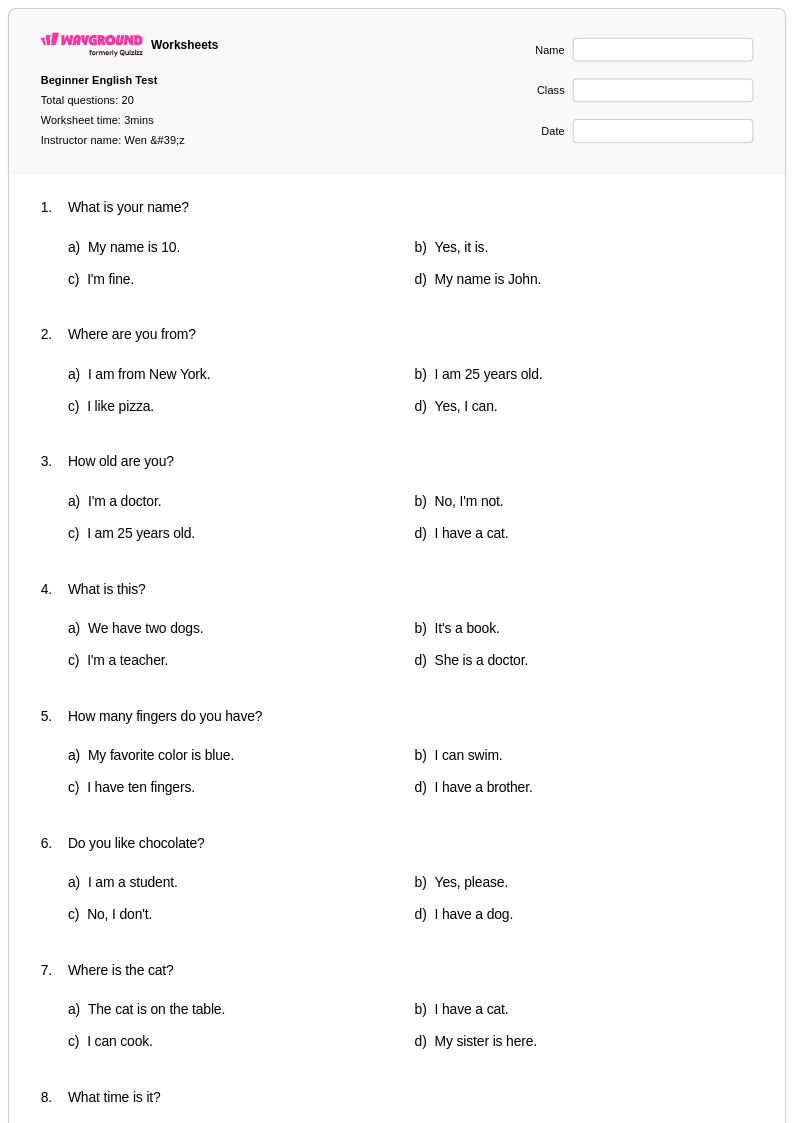
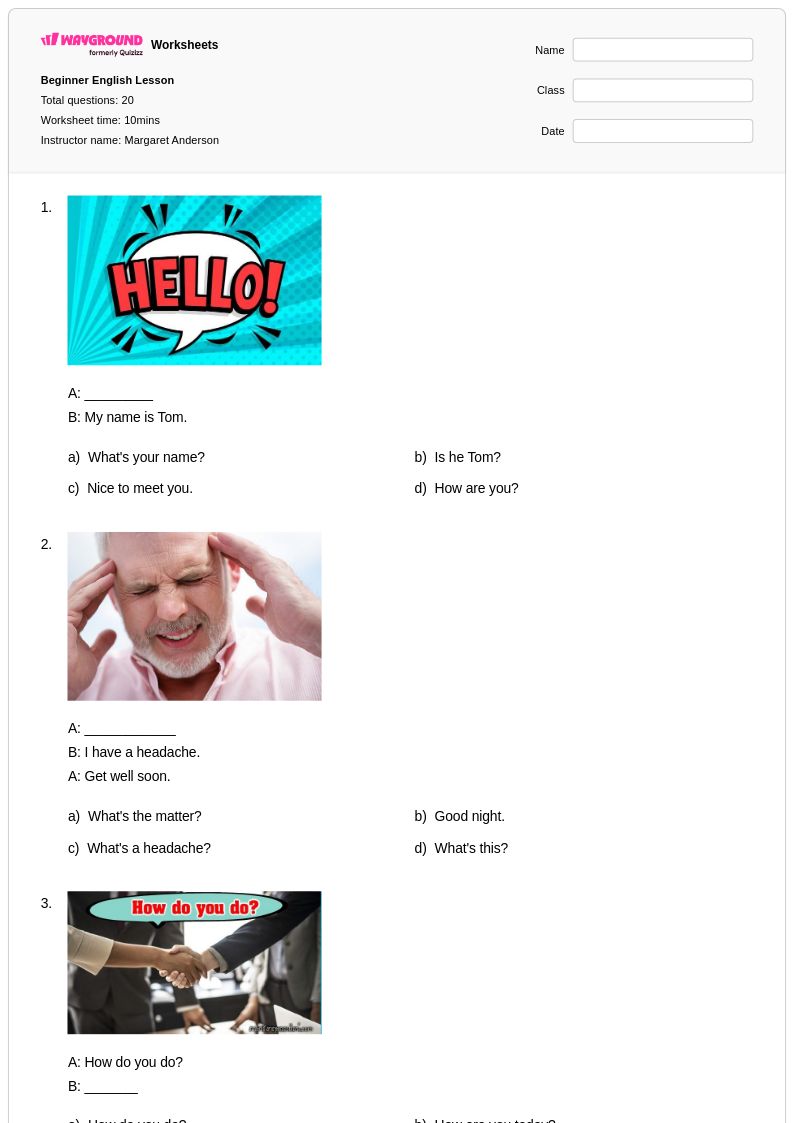
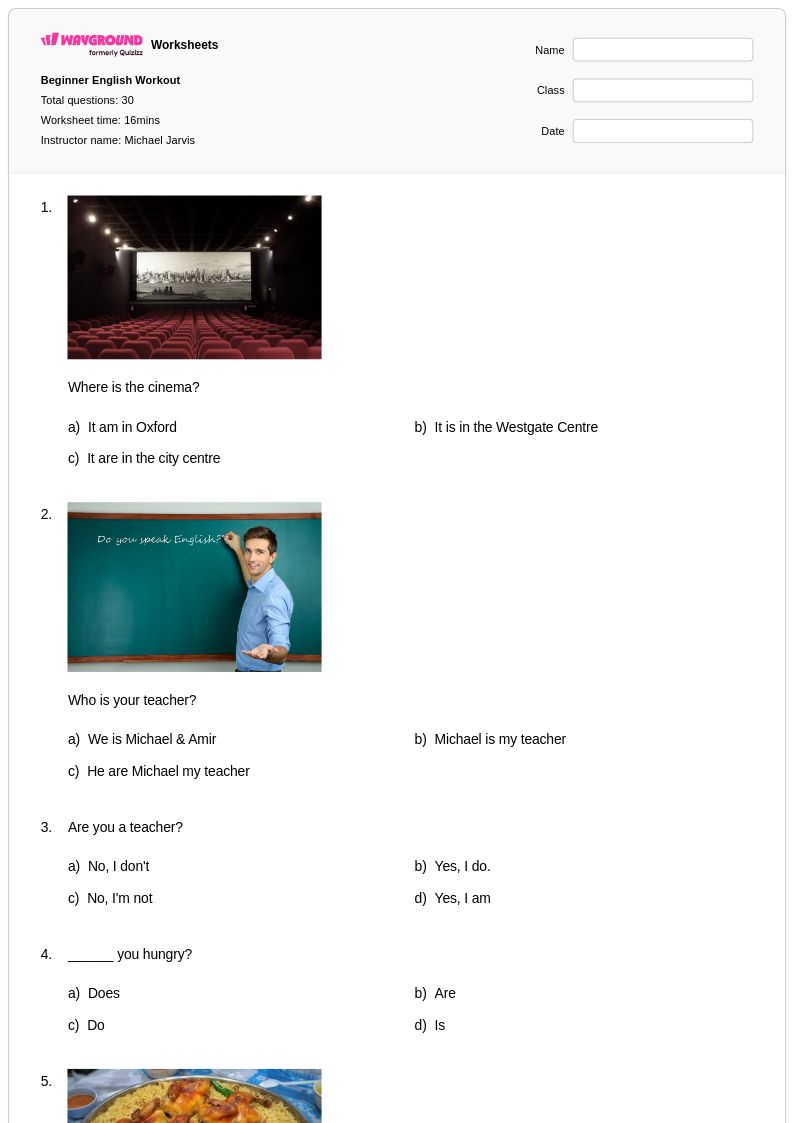
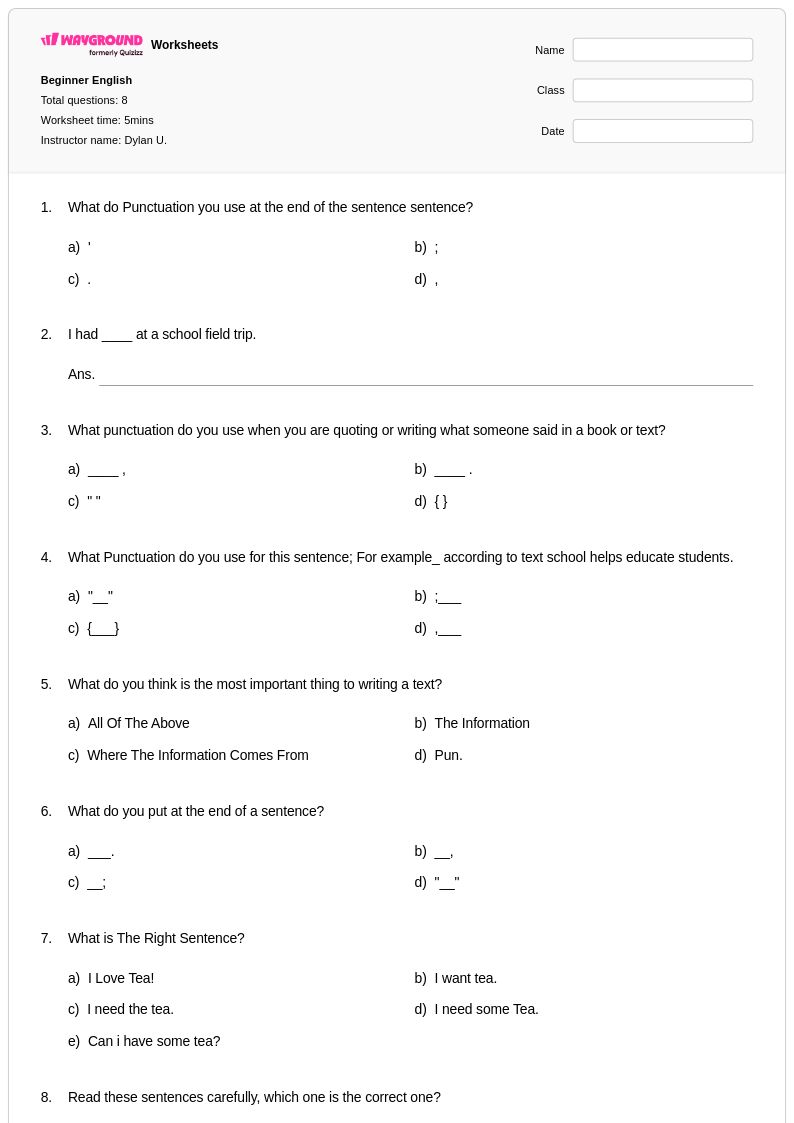
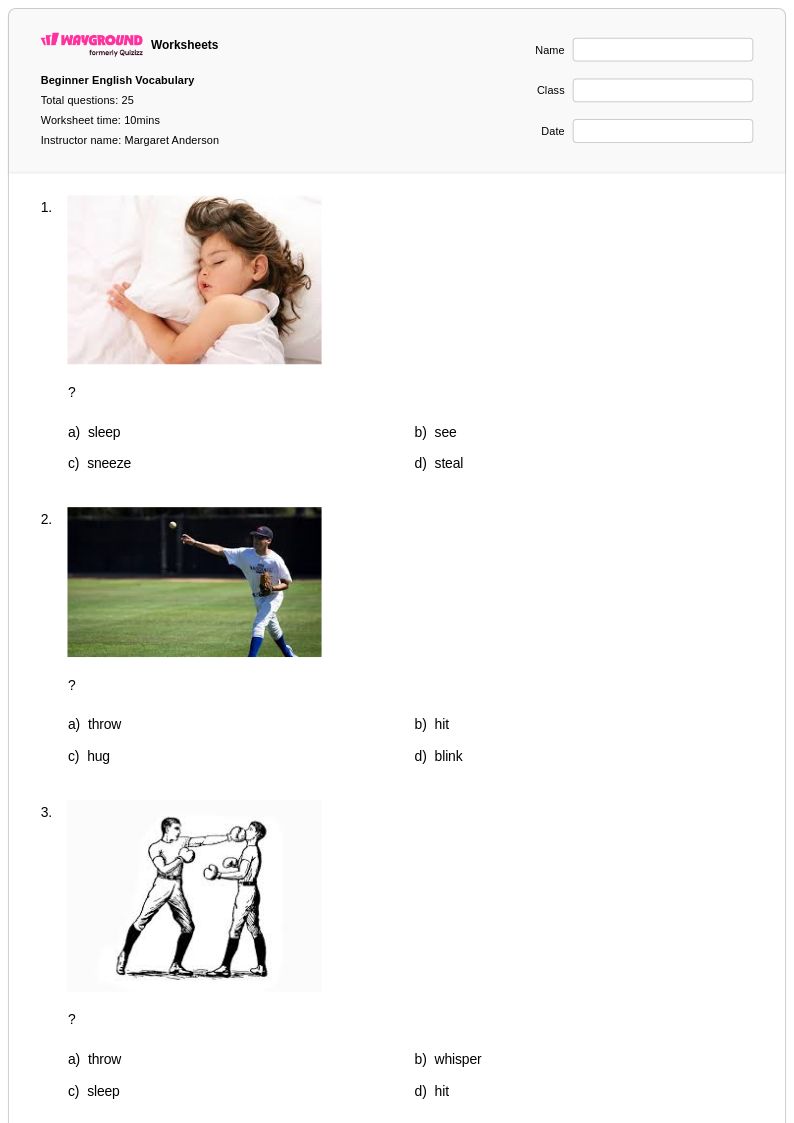
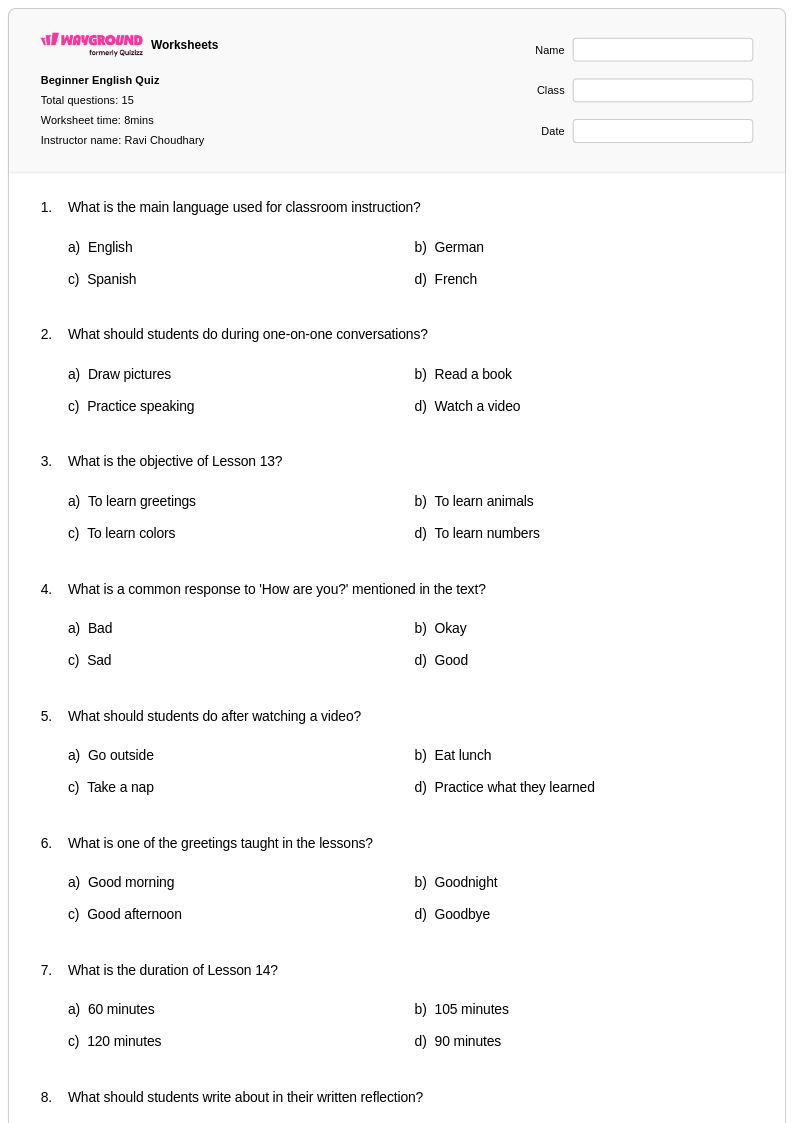
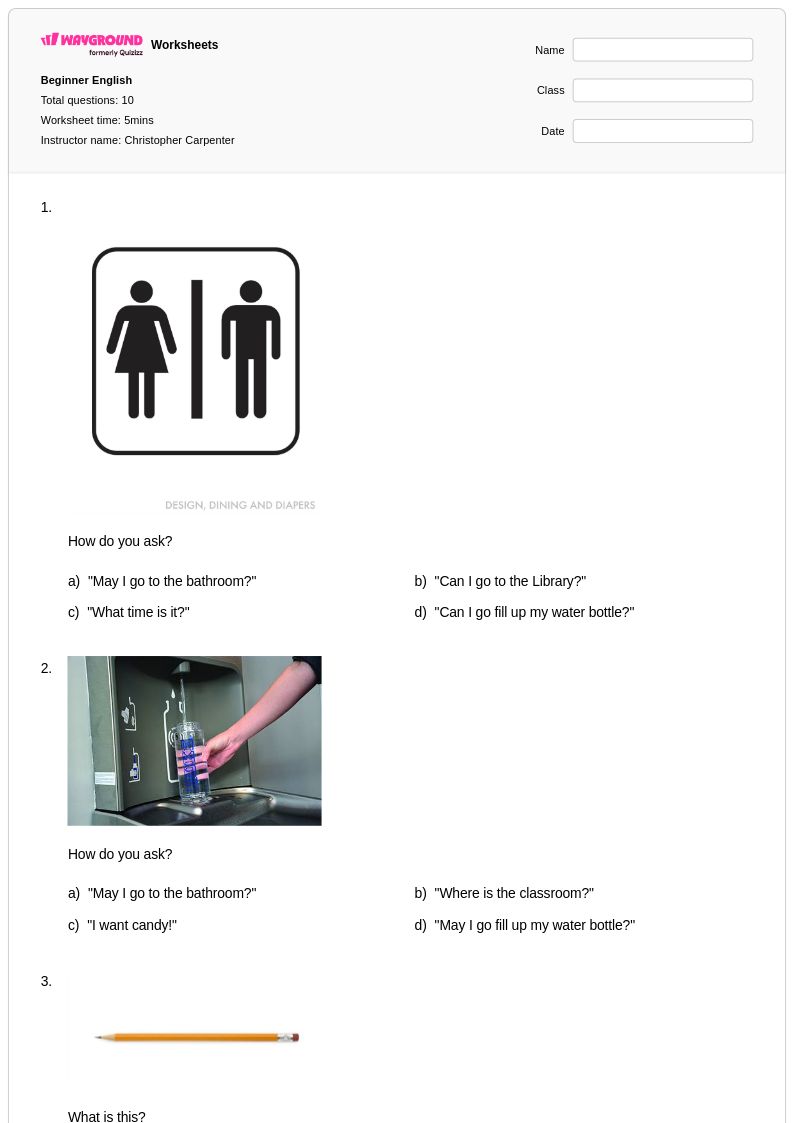
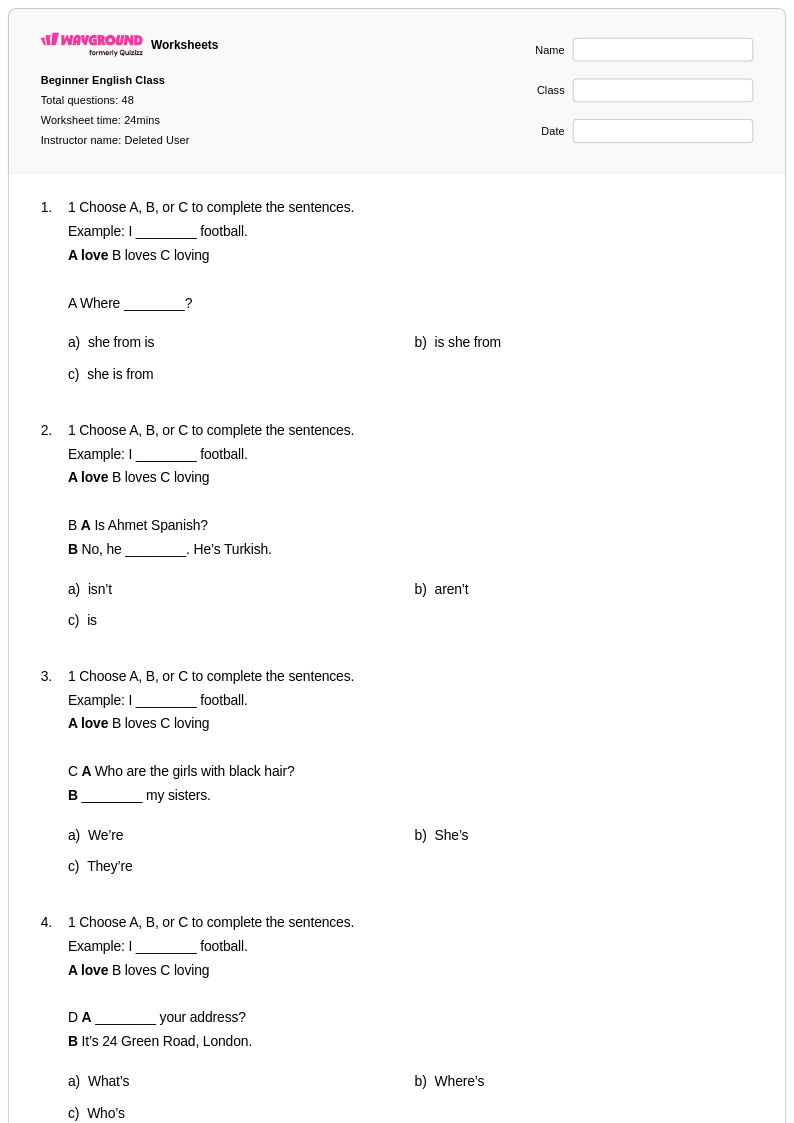
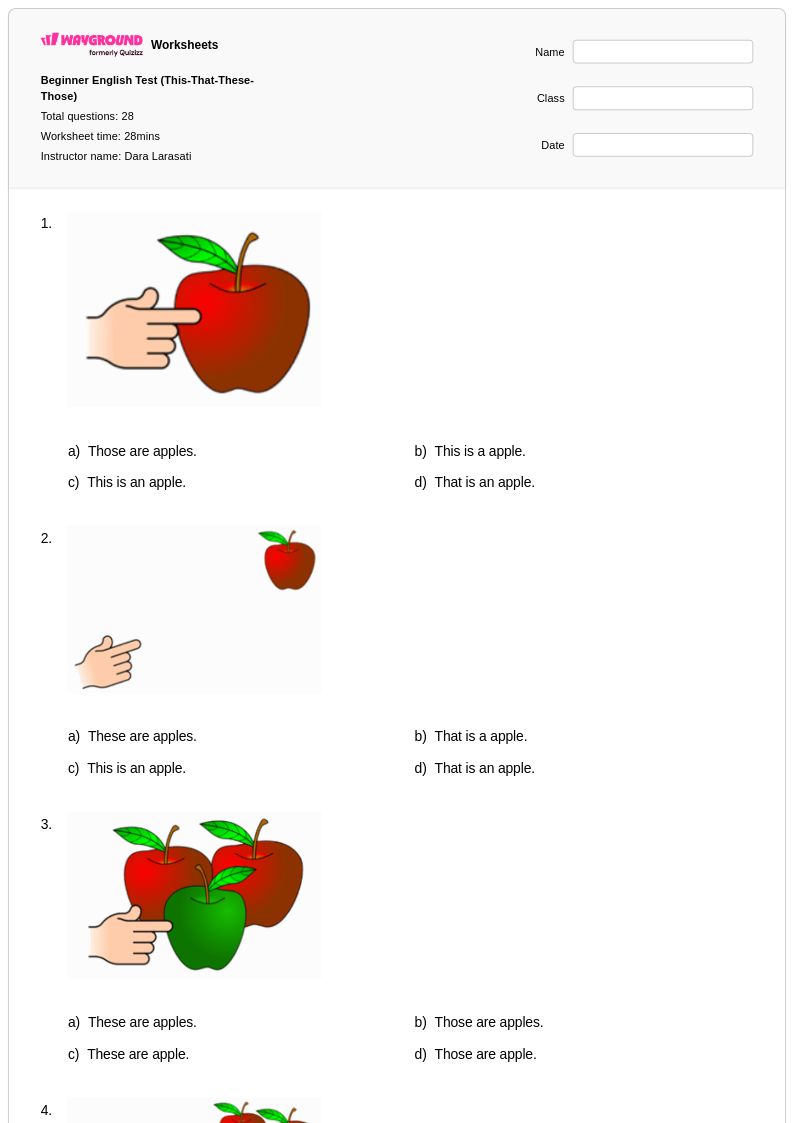
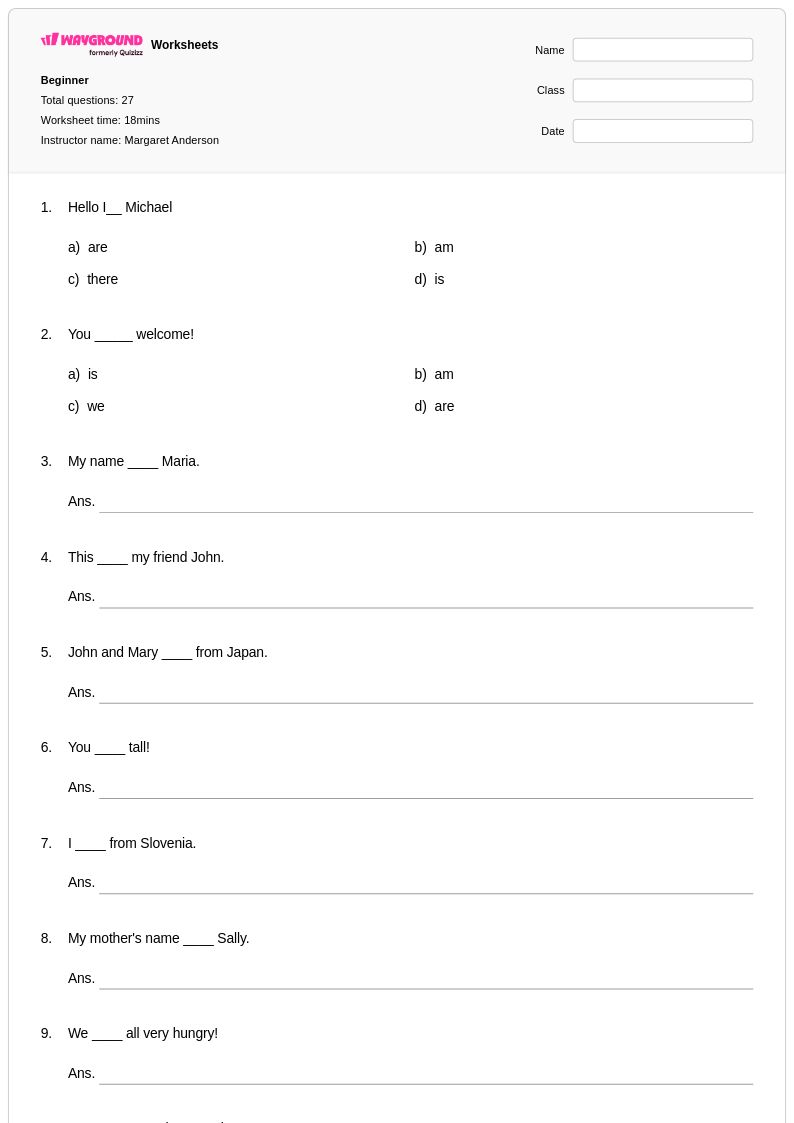
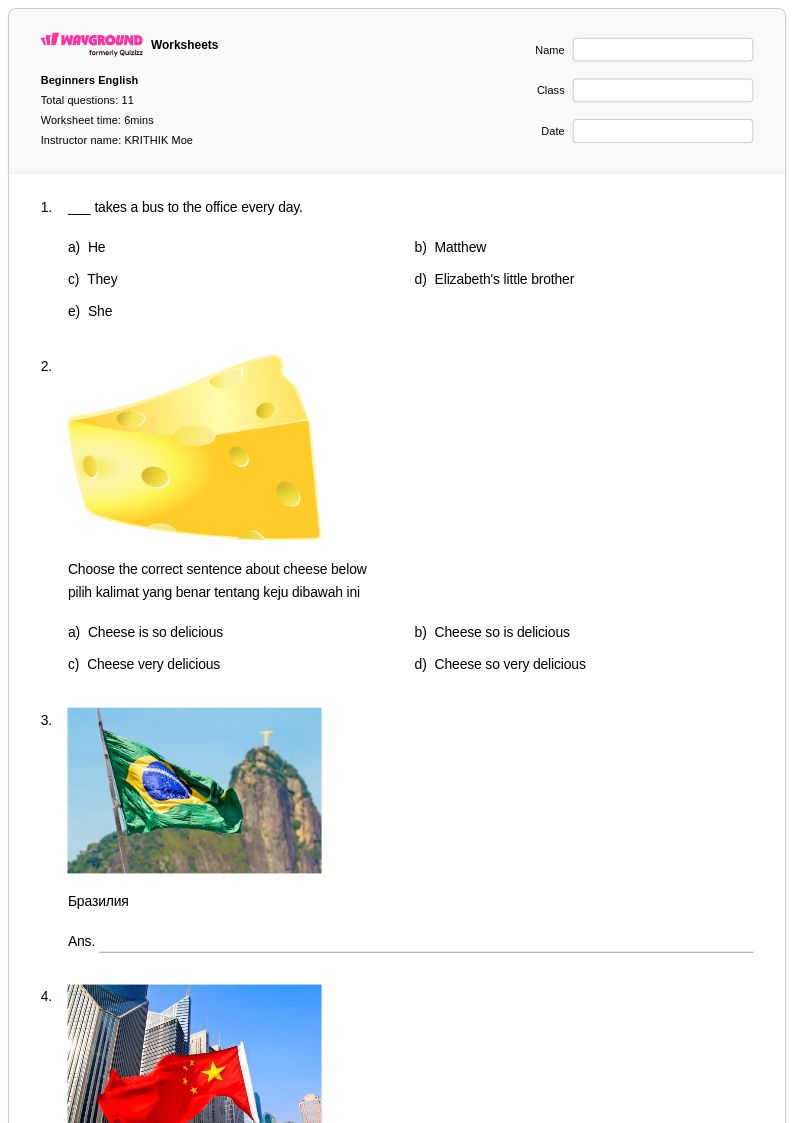
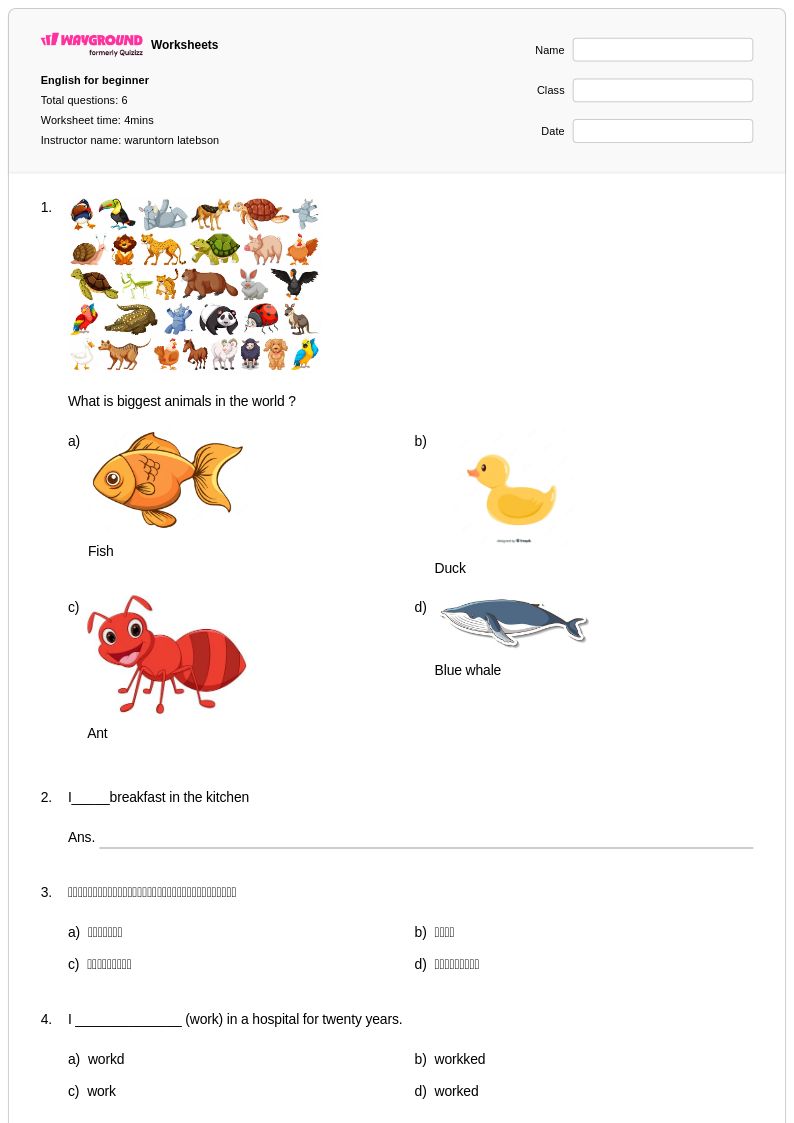
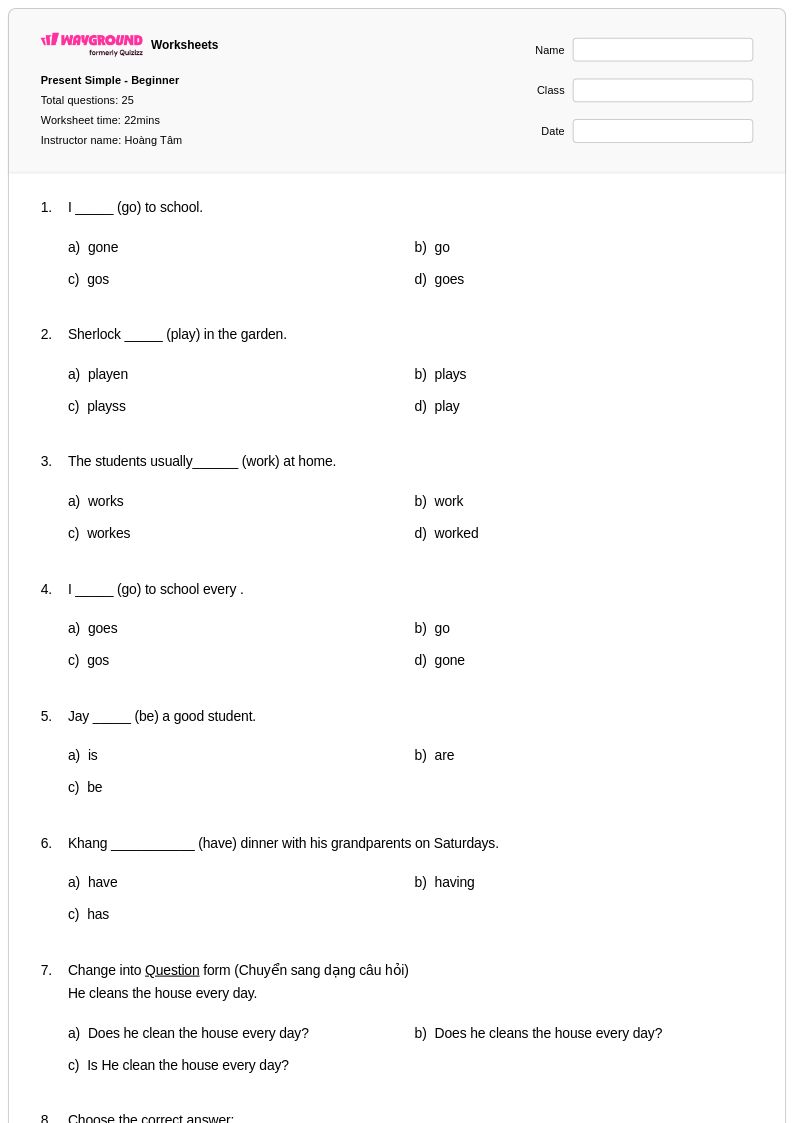
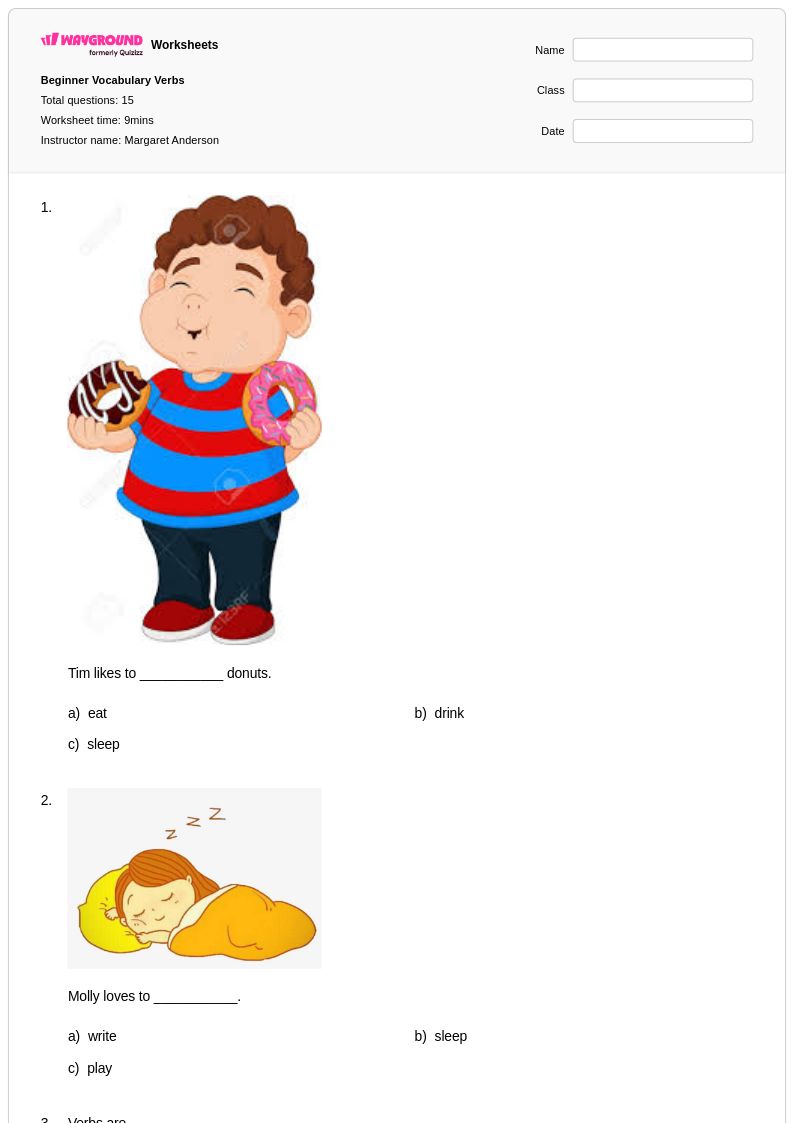
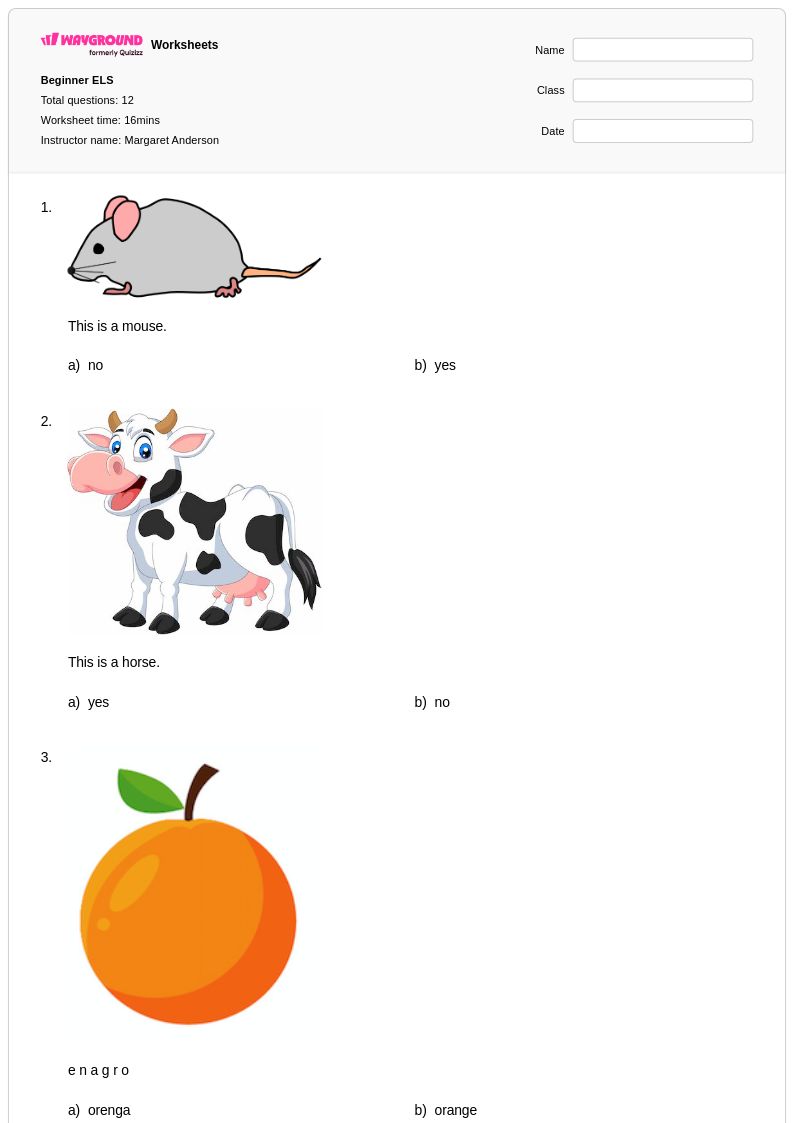
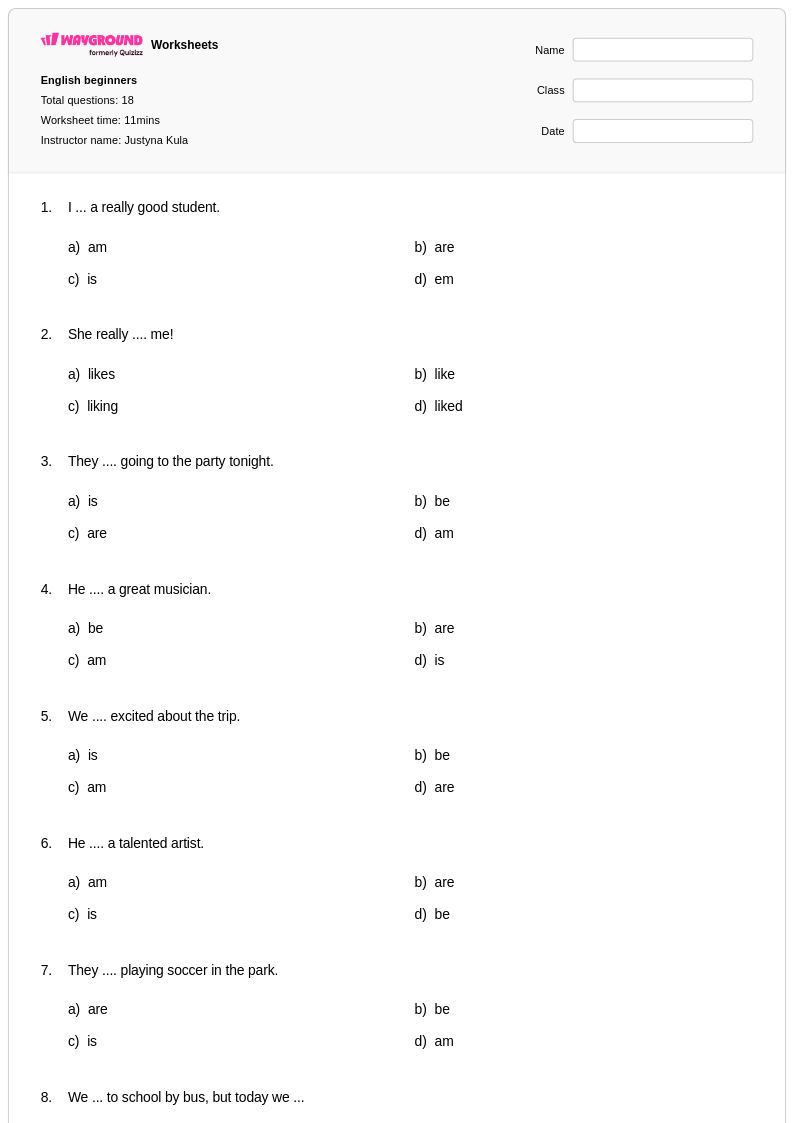
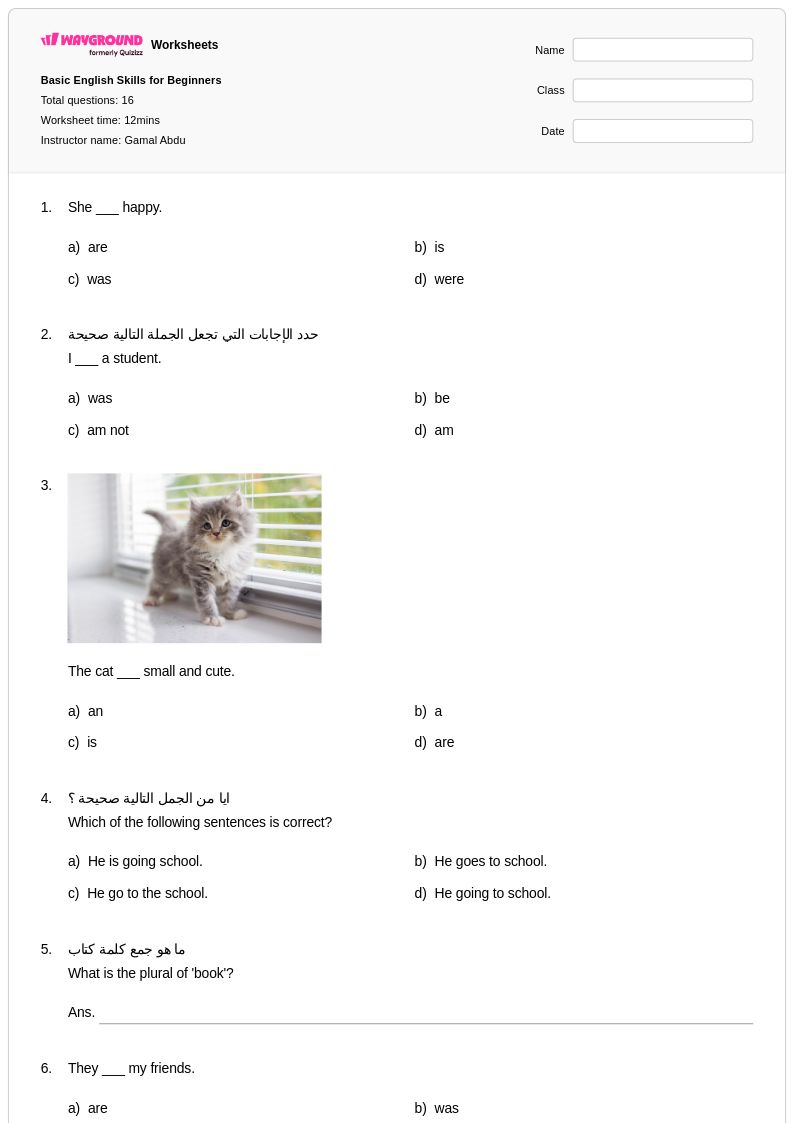
Beginner English worksheets for Class 1 students available through Wayground (formerly Quizizz) provide essential foundational support for young learners taking their first steps into literacy development. These carefully designed resources focus on fundamental skills including letter recognition, basic phonics, simple sight words, and early reading comprehension activities that align with developmental expectations for first-grade learners. Each worksheet collection emphasizes skill-building through age-appropriate practice problems that gradually increase in complexity, helping students build confidence while mastering core concepts. Teachers can access comprehensive answer keys alongside each printable resource, ensuring efficient grading and immediate feedback opportunities. The free pdf format makes these educational printables easily accessible for both classroom instruction and home practice, supporting consistent skill reinforcement across learning environments.
Wayground (formerly Quizizz) empowers educators with an extensive library containing millions of teacher-created Beginner English resources specifically tailored for Class 1 instruction. The platform's robust search and filtering capabilities allow teachers to quickly locate worksheets that match their specific curriculum needs and student skill levels, while standards alignment features ensure content meets educational benchmarks for early literacy development. Advanced differentiation tools enable educators to customize worksheets for diverse learning needs, supporting both remediation for struggling readers and enrichment opportunities for advanced students. The flexible format options, including printable pdf versions and digital alternatives, accommodate various teaching styles and classroom technologies. This comprehensive resource collection streamlines lesson planning while providing teachers with reliable materials for targeted skill practice, formative assessment, and ongoing student progress monitoring in beginner English concepts.
FAQs
How do I teach beginner English to students who have no prior exposure to the language?
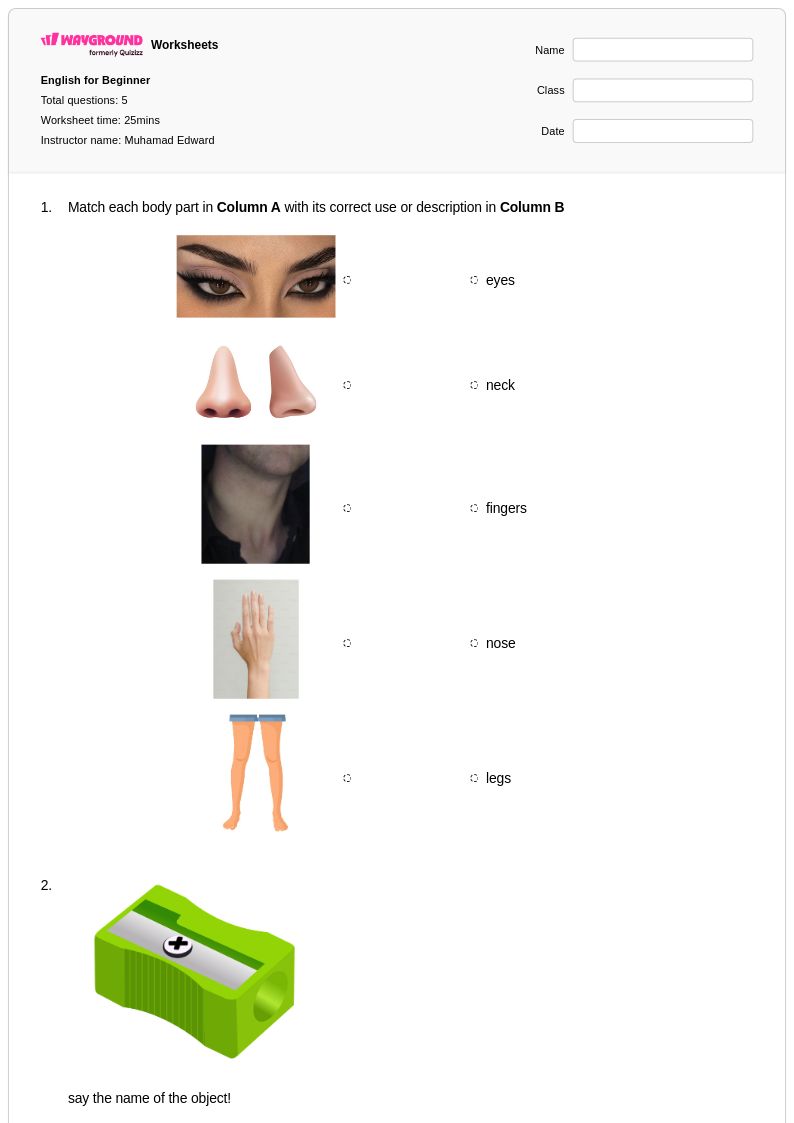
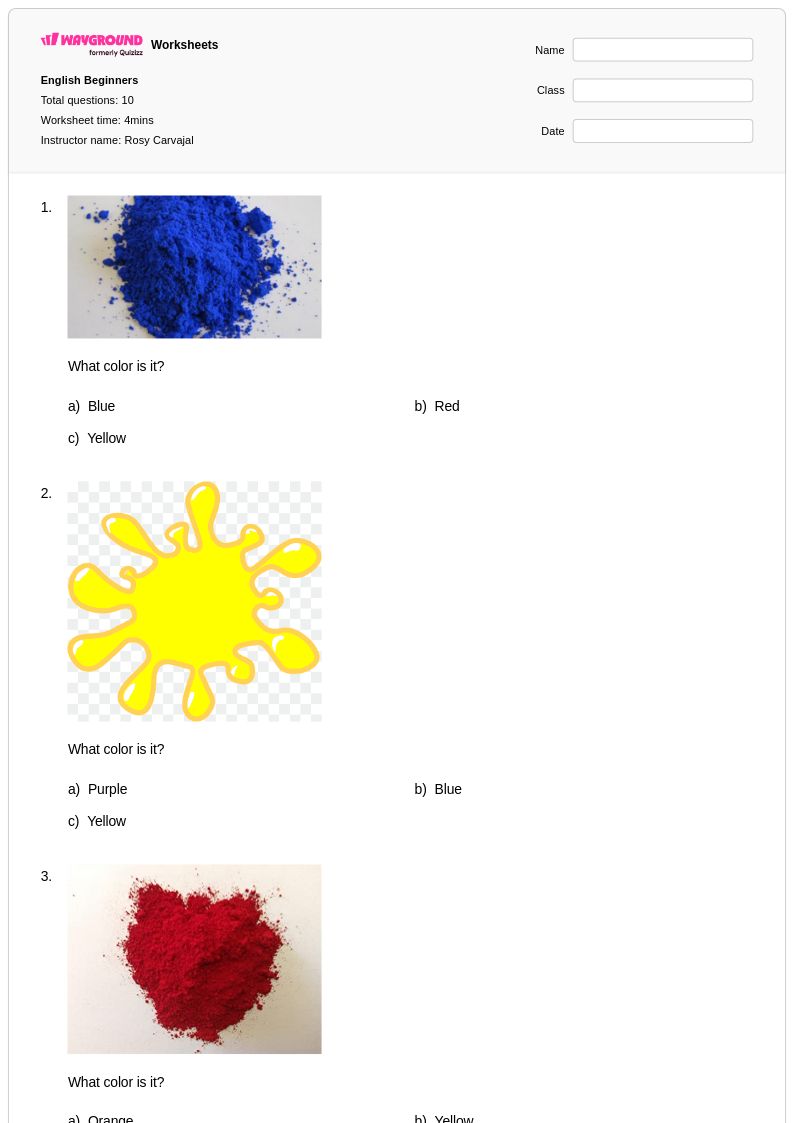
Start with concrete, high-frequency vocabulary tied to familiar objects and routines, then layer in phonics patterns and basic sentence frames once students can recognize and produce a core word bank. Visual supports such as labeled pictures and word-image matching activities help bridge meaning before students can decode text independently. Repetition across multiple modalities, speaking, writing, listening, and reading, is essential for retention at the beginner level.
What exercises help beginner English students practice foundational skills?
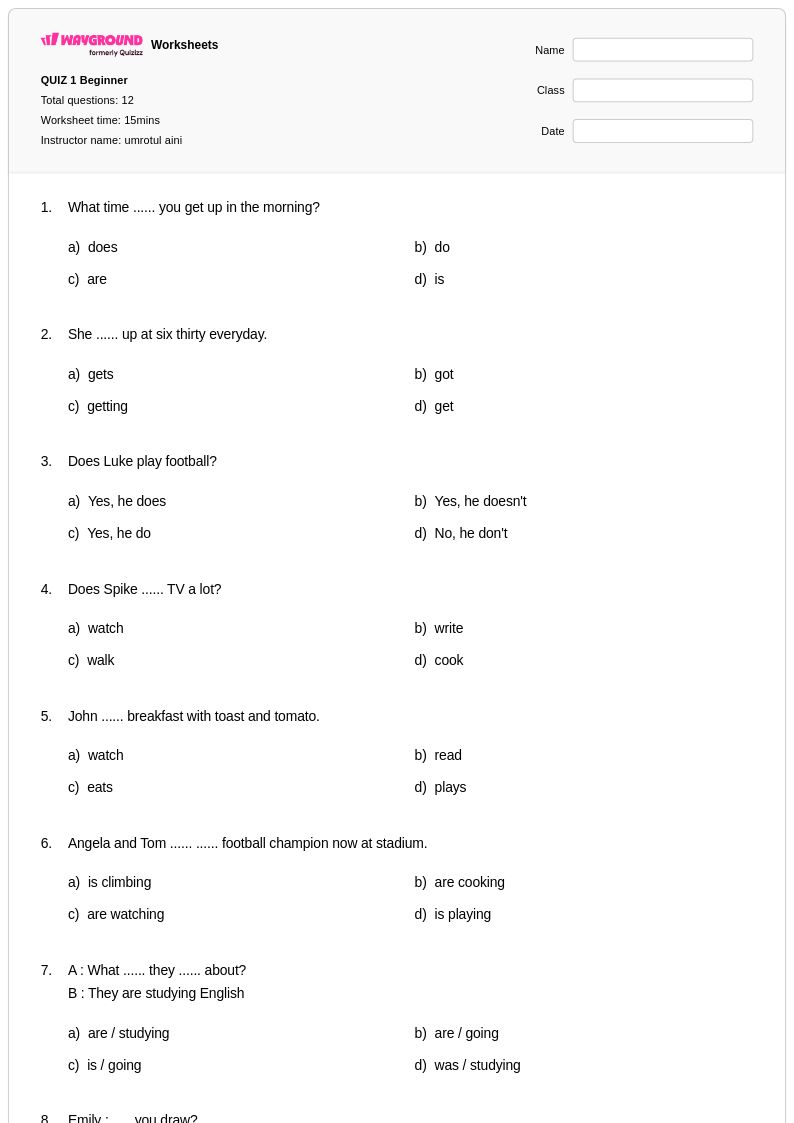
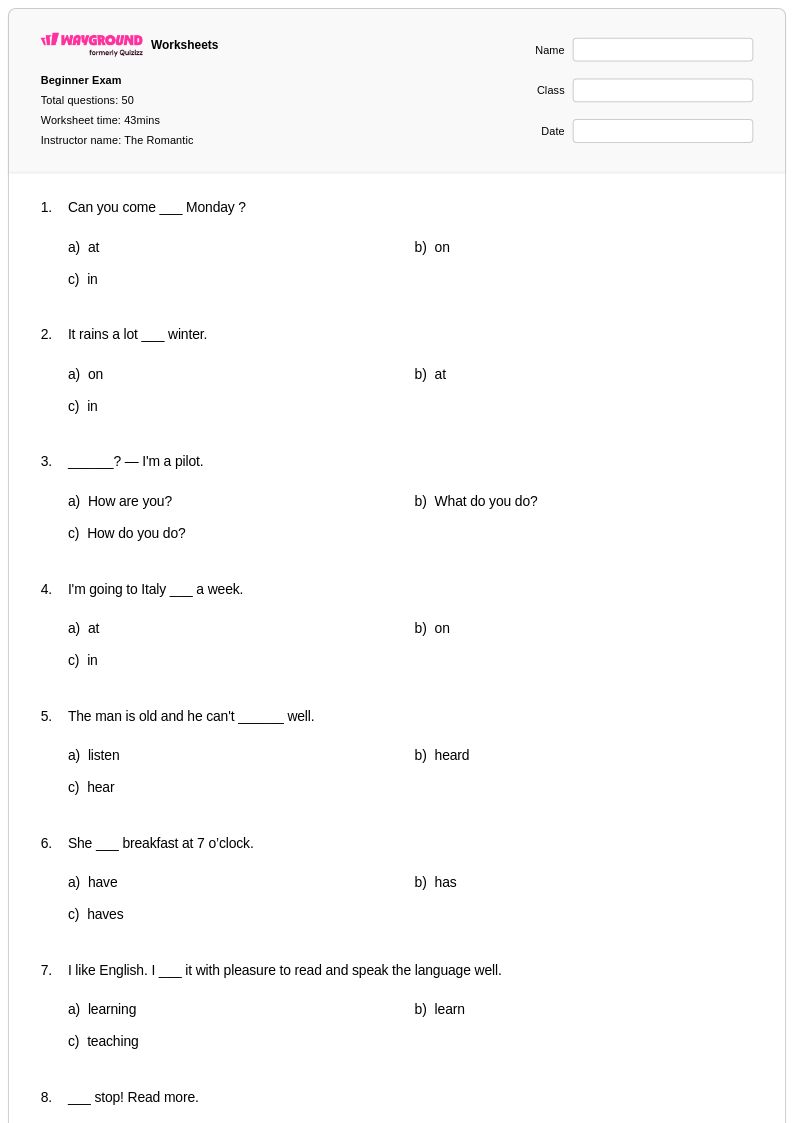
Effective practice exercises for beginner English learners include letter recognition tasks, phonics pattern drills, fill-in-the-blank sentences with word banks, and visual vocabulary matching. These structured formats reduce cognitive load by limiting the number of variables a student must manage at once, allowing them to focus on the target skill. Consistent, short practice sessions with immediate feedback accelerate acquisition more reliably than longer, infrequent exposure.
What are the most common mistakes beginner English learners make?
Beginner English learners frequently confuse letters with similar shapes or sounds, such as b/d or p/q, and struggle with irregular phonics patterns that contradict rules they have just learned. They also tend to omit articles and prepositions in early sentence production because these words carry less visual or semantic weight. Recognizing these predictable error patterns allows teachers to address them proactively through targeted practice rather than waiting for them to become ingrained habits.
How can I differentiate beginner English instruction for students at different readiness levels?
For students who need additional support, reduce the number of answer choices on vocabulary and phonics activities to limit cognitive load, and enable read-aloud features so students can hear questions and prompts rather than relying solely on decoding. More advanced beginners can be extended with open-ended sentence writing or word sorting tasks that push beyond recognition into production. On Wayground, teachers can apply individualized accommodations such as extended time, read aloud, and reduced answer choices to specific students without affecting the experience of the rest of the class.
How do I use Wayground's beginner English worksheets in my classroom?
Wayground's beginner English worksheets are available as printable PDFs for traditional classroom use and in digital formats for technology-integrated environments, making them suitable for in-class practice, small group instruction, or homework. Teachers can also host worksheets as a quiz directly on Wayground, enabling real-time progress tracking and immediate student feedback. Complete answer keys are included with every worksheet, so grading and formative assessment require minimal additional preparation time.
How do I track progress for beginner English learners who are developing at different rates?
Progress tracking for beginner English learners is most effective when tied to specific, observable skills such as letter identification accuracy, sight word recall, or correct sentence completion rather than holistic reading levels alone. Using worksheets with included answer keys allows teachers to score tasks quickly and identify which specific phonics patterns or vocabulary sets a student has not yet mastered. Documenting results by skill category over time reveals growth trends and flags students who need targeted remediation before gaps widen.