
Recommended Topics for you
39 Q
1st - 5th
16 Q
1st - 5th
15 Q
1st - 5th
10 Q
1st
10 Q
KG - 1st
10 Q
1st
9 Q
1st
10 Q
1st
10 Q
1st

18 Q
1st - 5th
16 Q
1st - 5th
14 Q
1st
21 Q
1st - 5th
10 Q
KG - 2nd
21 Q
1st - 5th
13 Q
1st - 5th
10 Q
1st - 5th
20 Q
1st
5 Q
1st - 5th
11 Q
1st

10 Q
1st
10 Q
1st
10 Q
1st
10 Q
1st
Explore Early Writing Practice Worksheets by Grades
Explore Early Writing Practice Worksheets for class 1 by Topic
Explore Other Subject Worksheets for class 1
Explore printable Early Writing Practice worksheets for Class 1
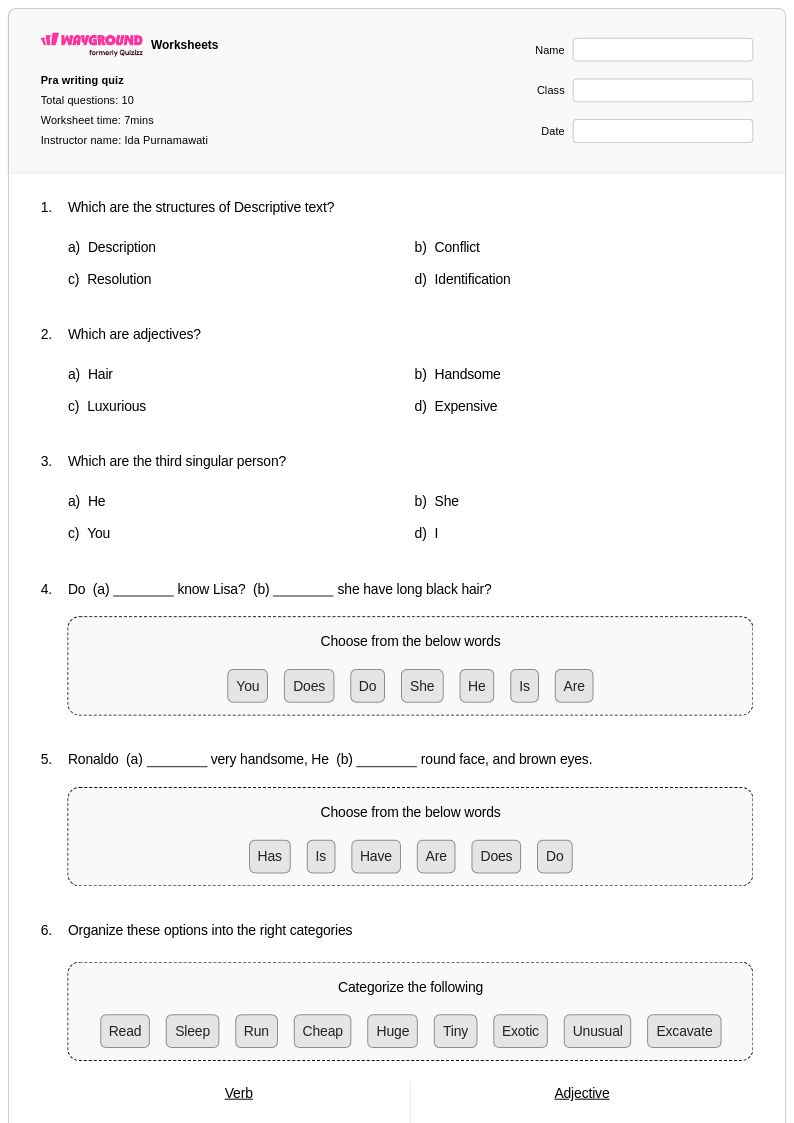
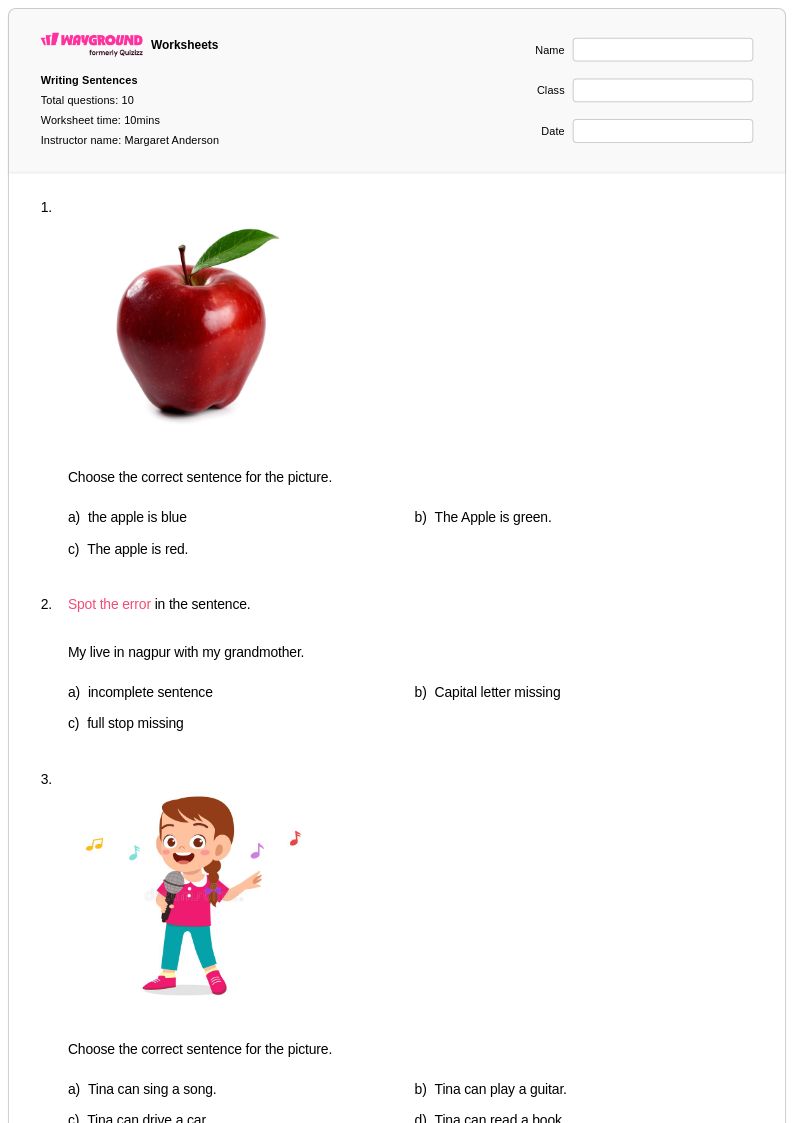
Early writing practice worksheets for Class 1 students available through Wayground (formerly Quizizz) provide essential foundational support for developing writers as they master the fundamental mechanics of written communication. These comprehensive printables focus on critical early writing skills including proper letter formation, basic sentence construction, phonetic spelling patterns, and simple story sequencing. Students engage with practice problems that strengthen fine motor coordination through tracing exercises, build vocabulary through word-building activities, and develop confidence in expressing ideas through guided writing prompts. Each worksheet collection includes detailed answer keys that enable both independent learning and structured assessment, while the free pdf format ensures accessibility for diverse classroom and home learning environments.
Wayground (formerly Quizizz) empowers educators with millions of teacher-created early writing practice resources that streamline instructional planning and differentiated learning approaches. The platform's robust search and filtering capabilities allow teachers to quickly locate worksheets aligned with specific learning standards and individual student needs, while customization tools enable modifications for remediation and enrichment purposes. These digital and printable resources support flexible implementation across various learning environments, from traditional classroom instruction to remote learning scenarios. Teachers can efficiently organize skill-building practice sessions, track student progress through systematic worksheet completion, and adapt content difficulty levels to match diverse developmental stages within their Class 1 classrooms, ensuring every young writer receives appropriate challenge and support.
FAQs
How do I teach early writing skills to young learners?
What exercises help students practice pre-writing skills?
What common mistakes do young students make when learning to write?
How can I differentiate early writing practice for students at different skill levels?
How do I use Wayground's early writing practice worksheets in my classroom?