Free Printable Brainstorming Worksheets for Kindergarten
Discover free kindergarten brainstorming worksheets and printables from Wayground that help young learners develop early writing skills through guided practice problems and creative thinking exercises with comprehensive answer keys.
Explore printable Brainstorming worksheets for Kindergarten
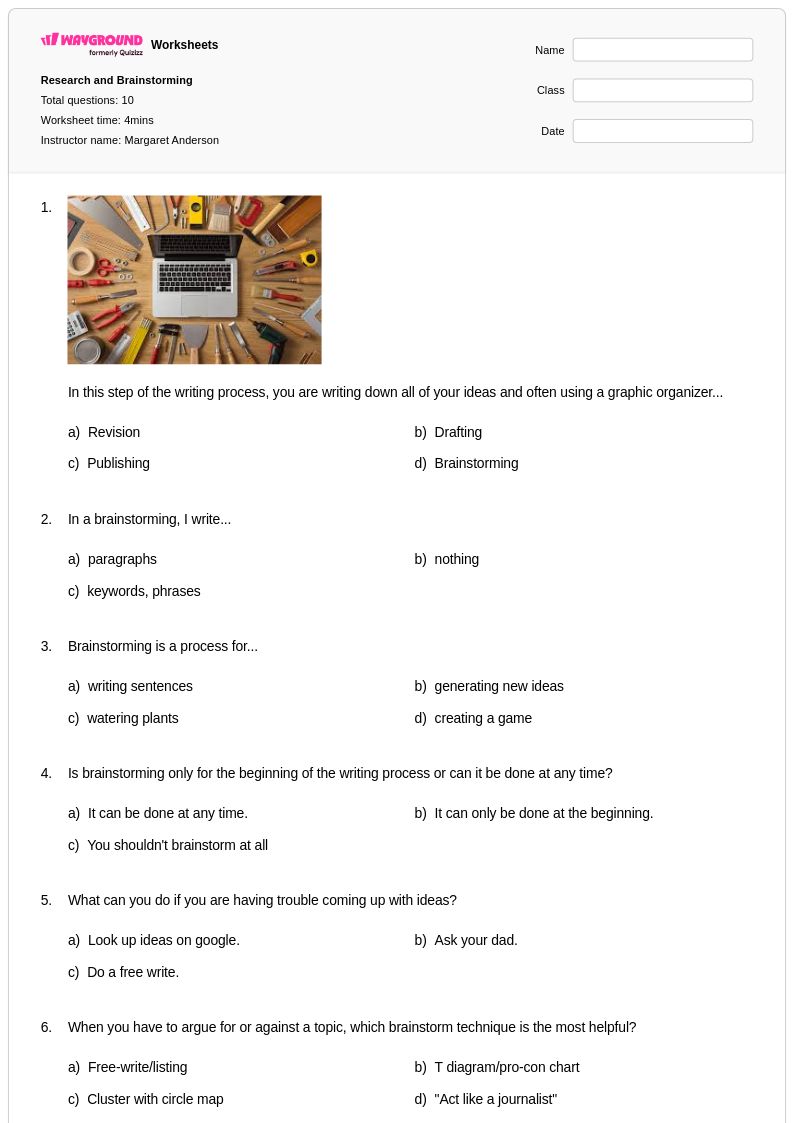
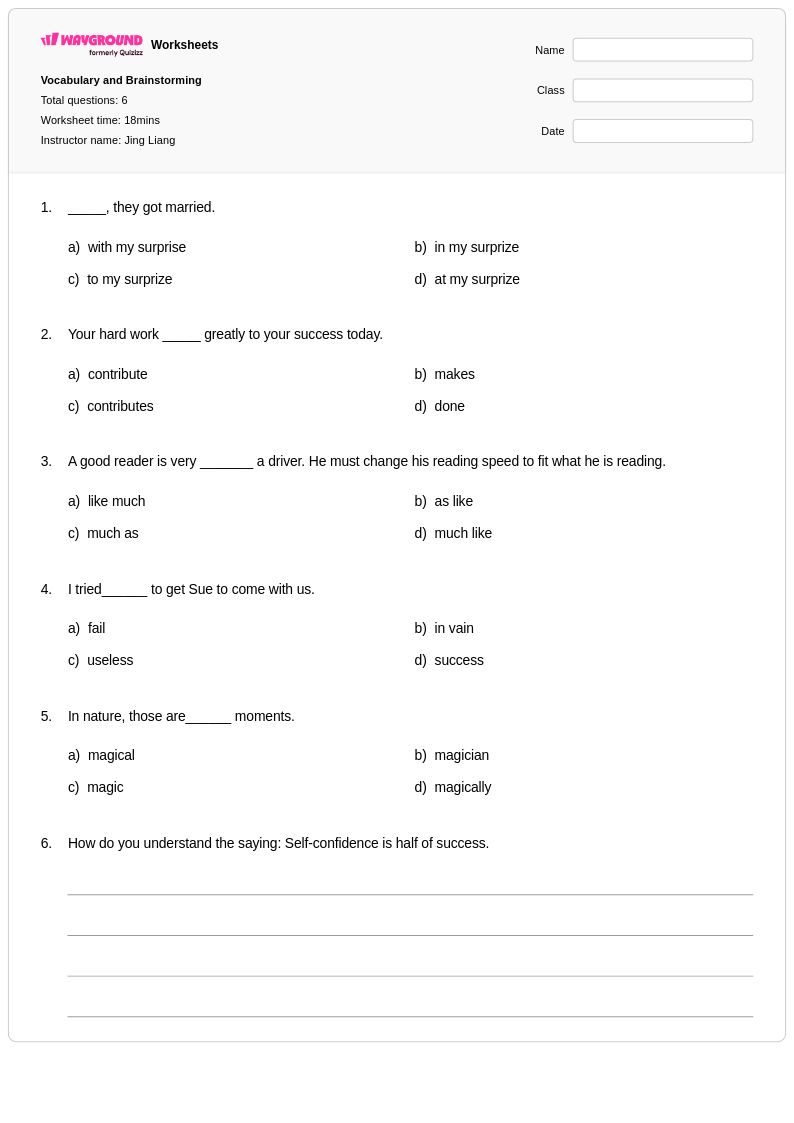
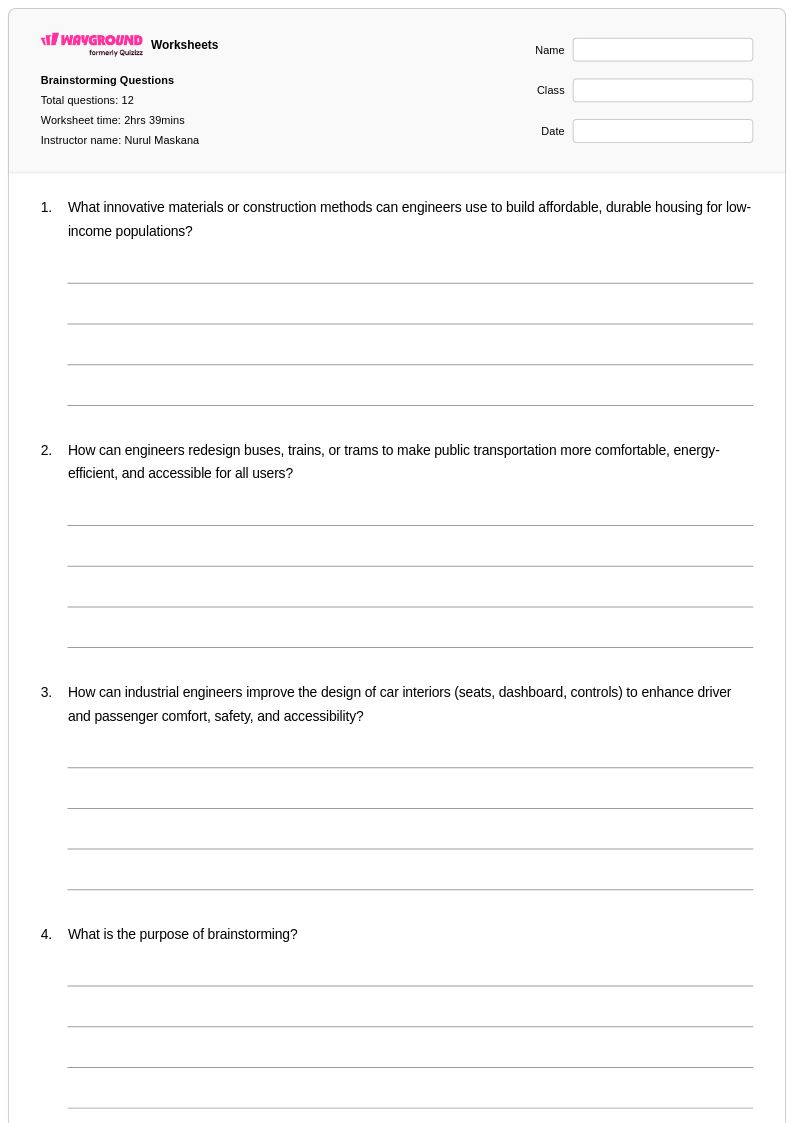
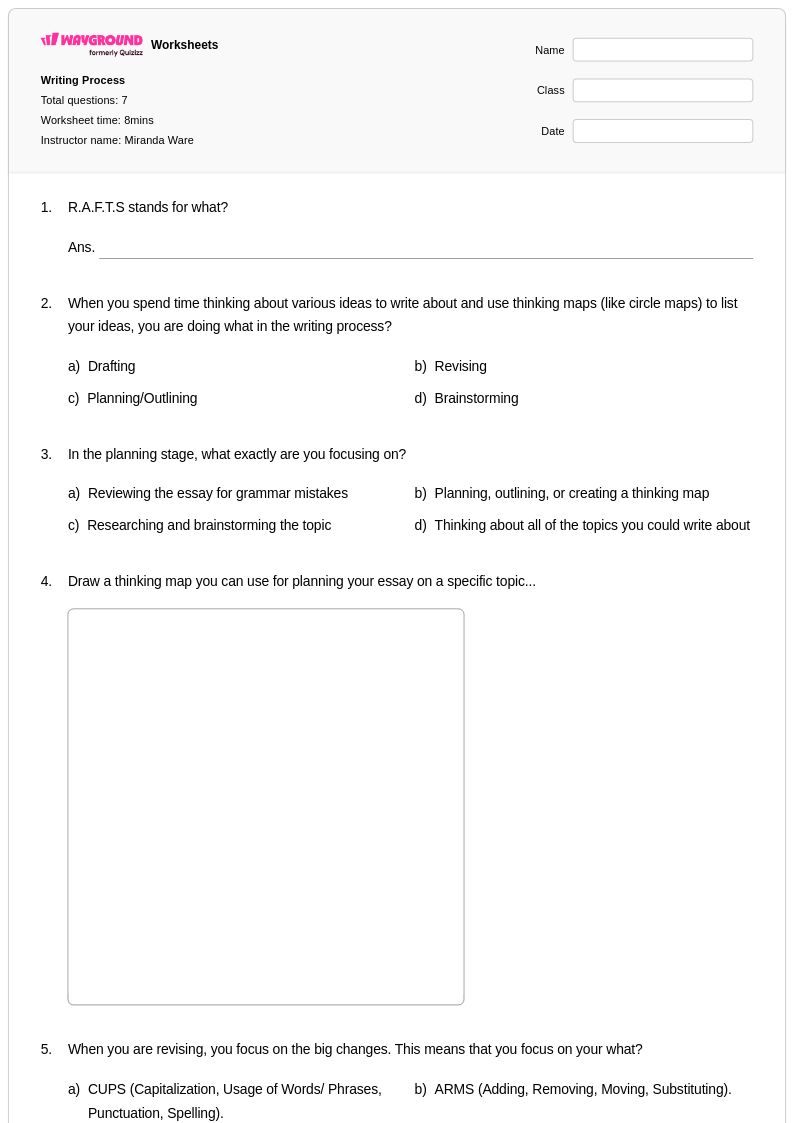
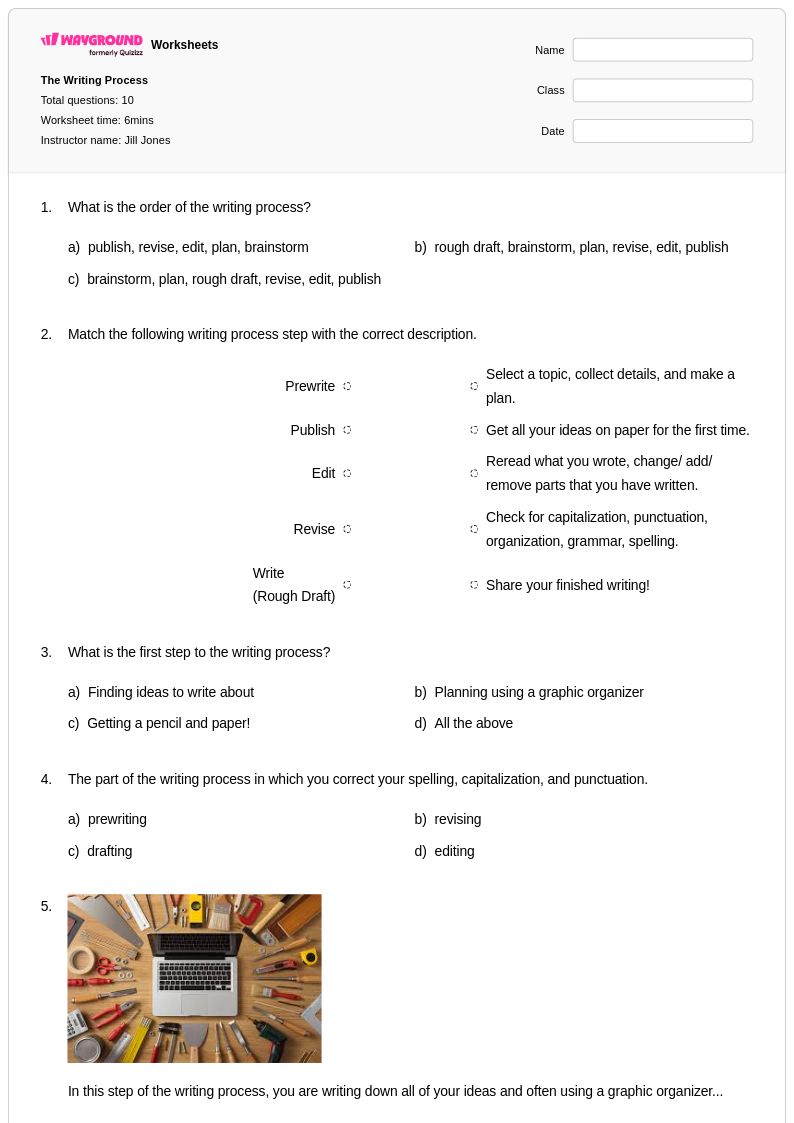
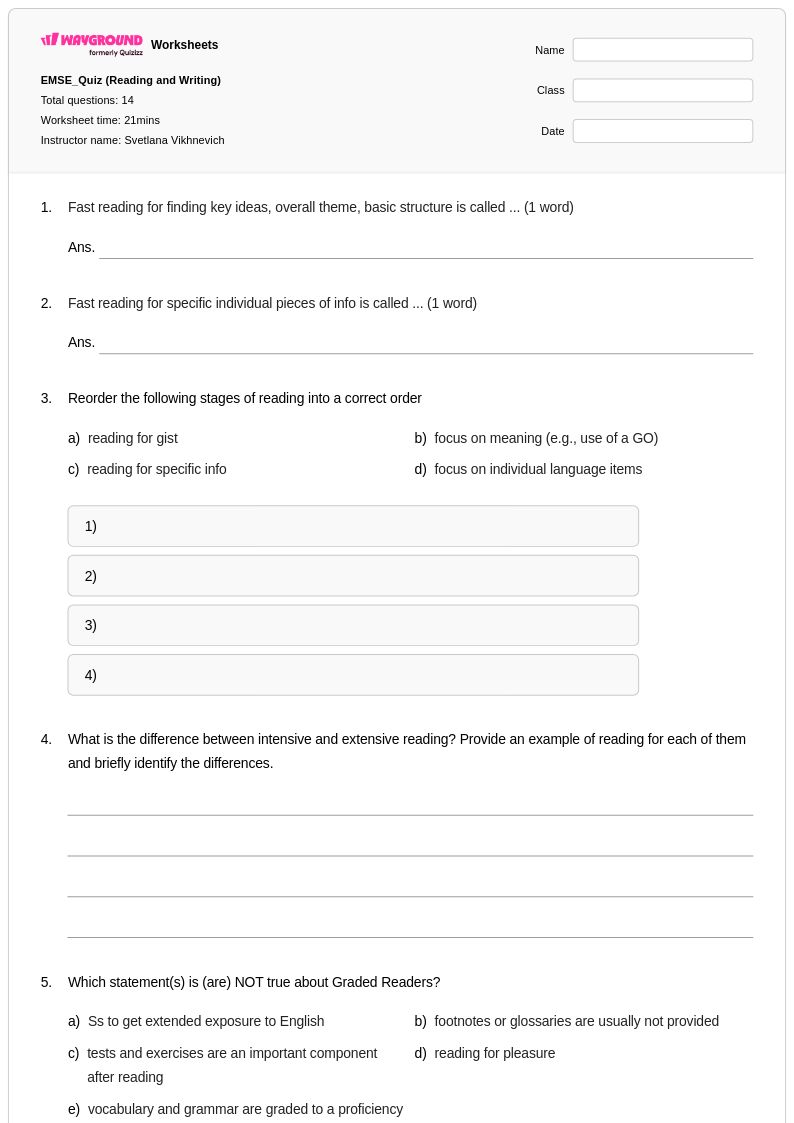
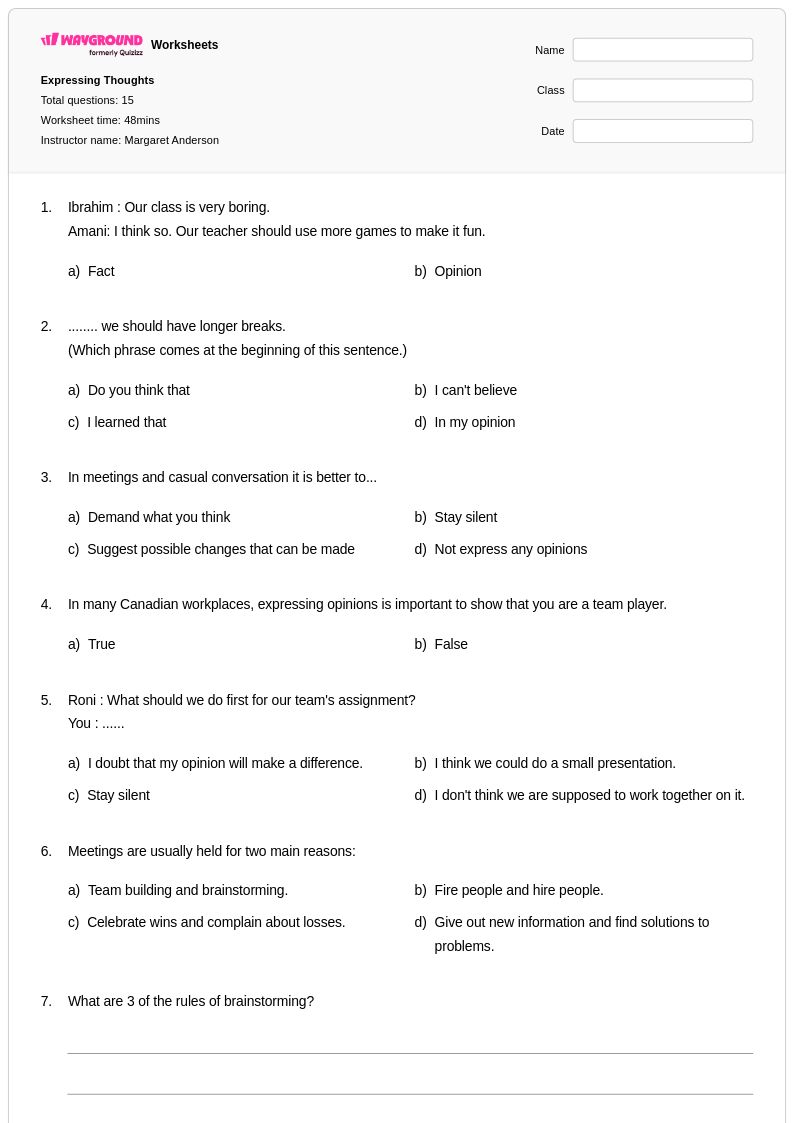
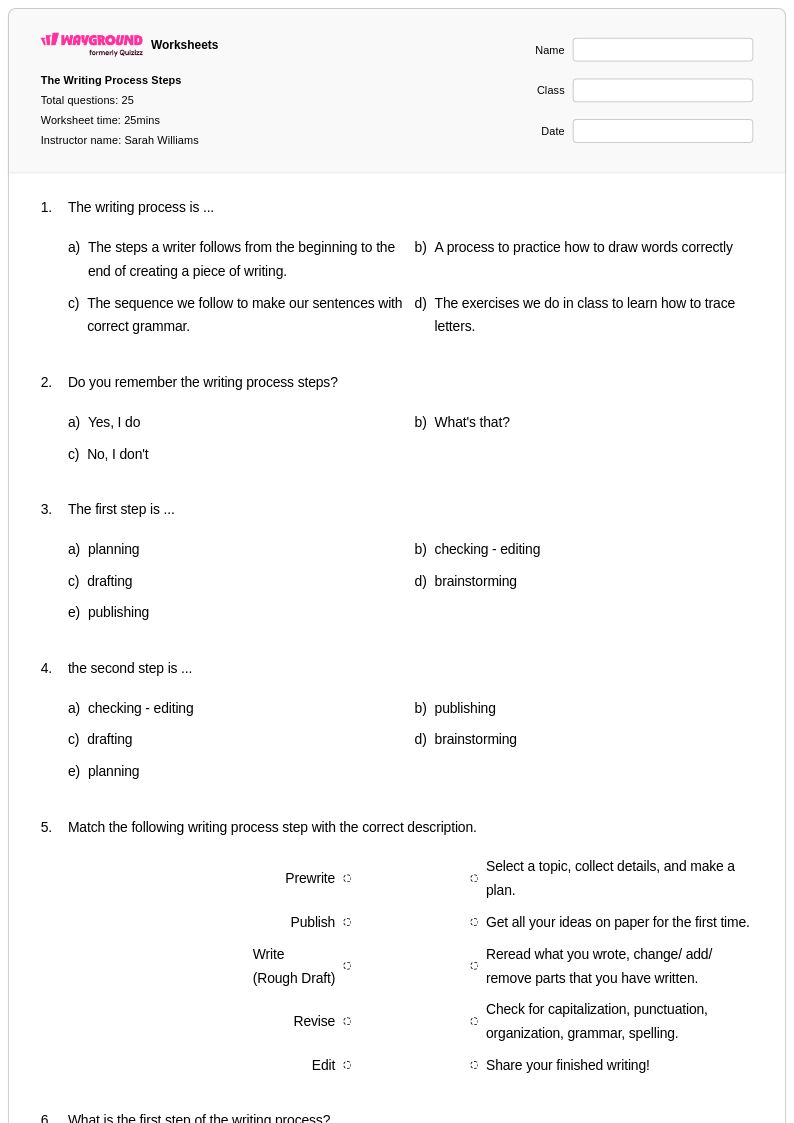
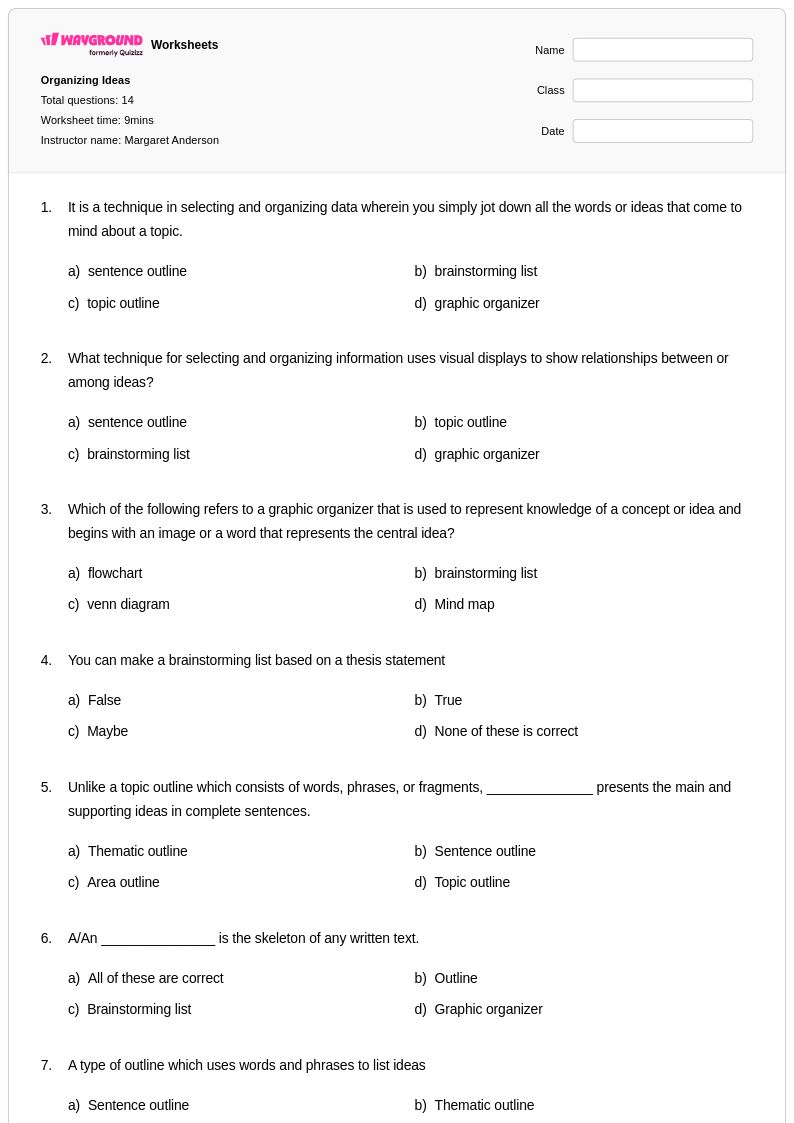
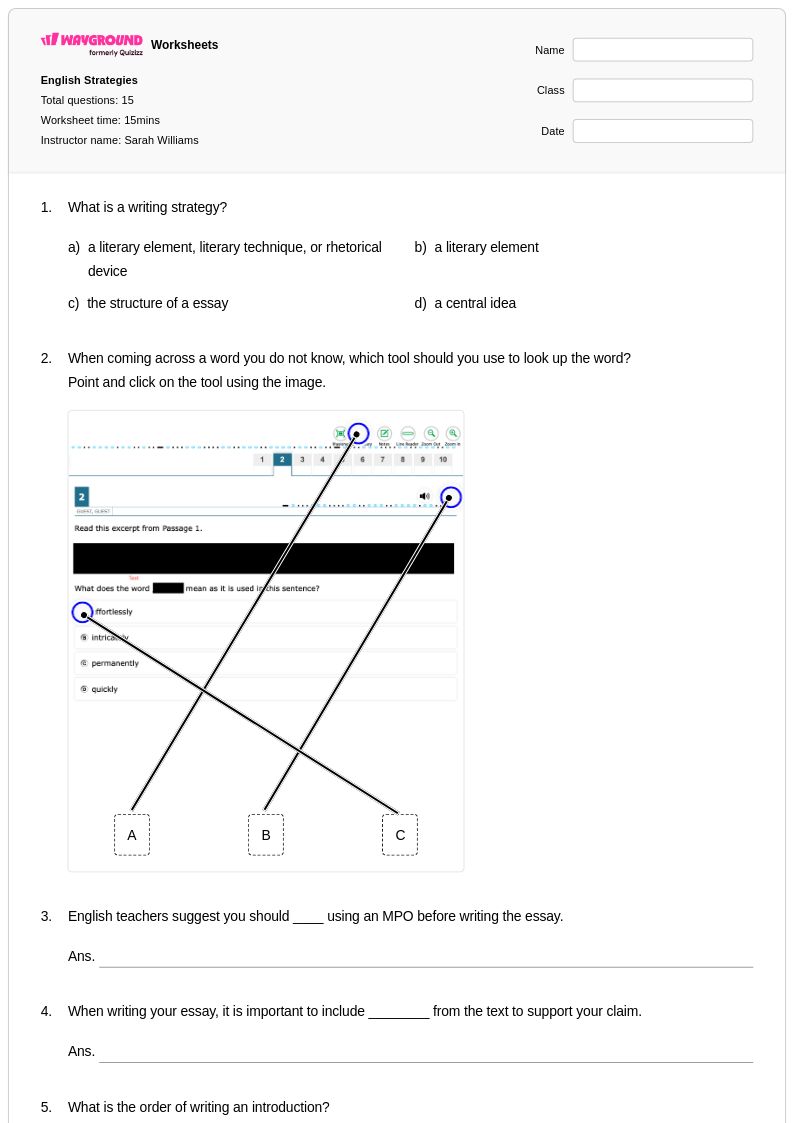
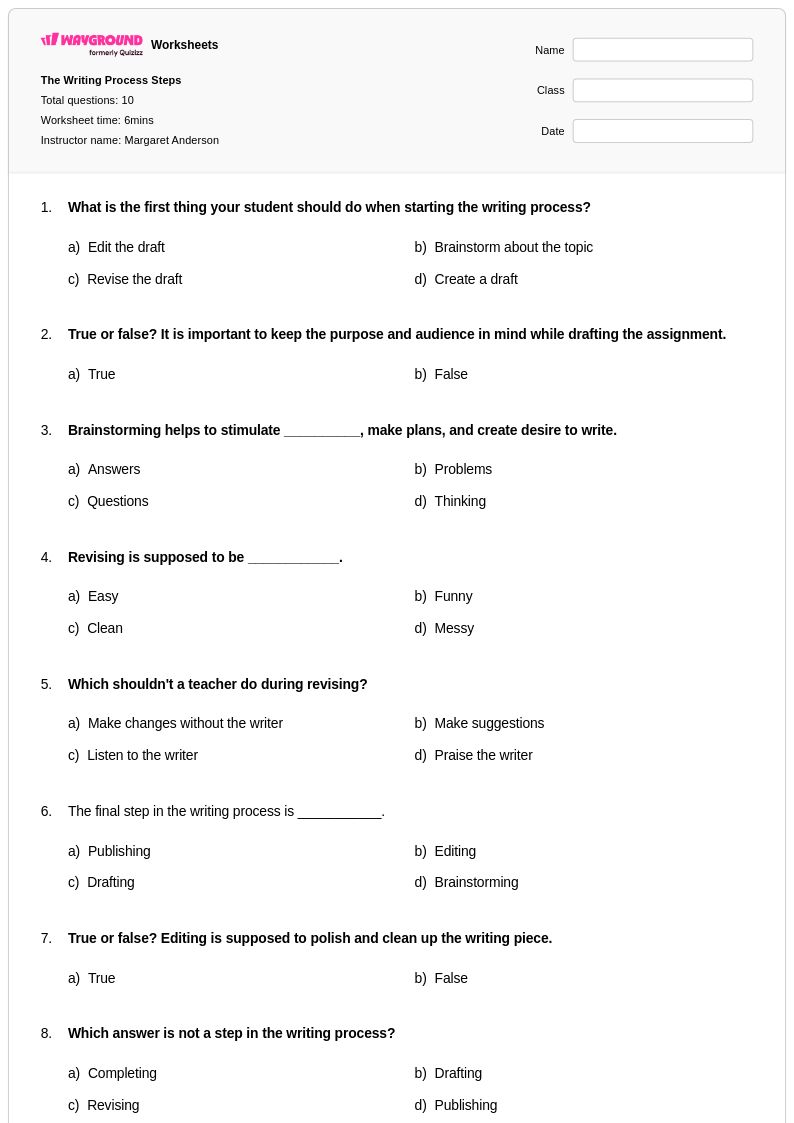
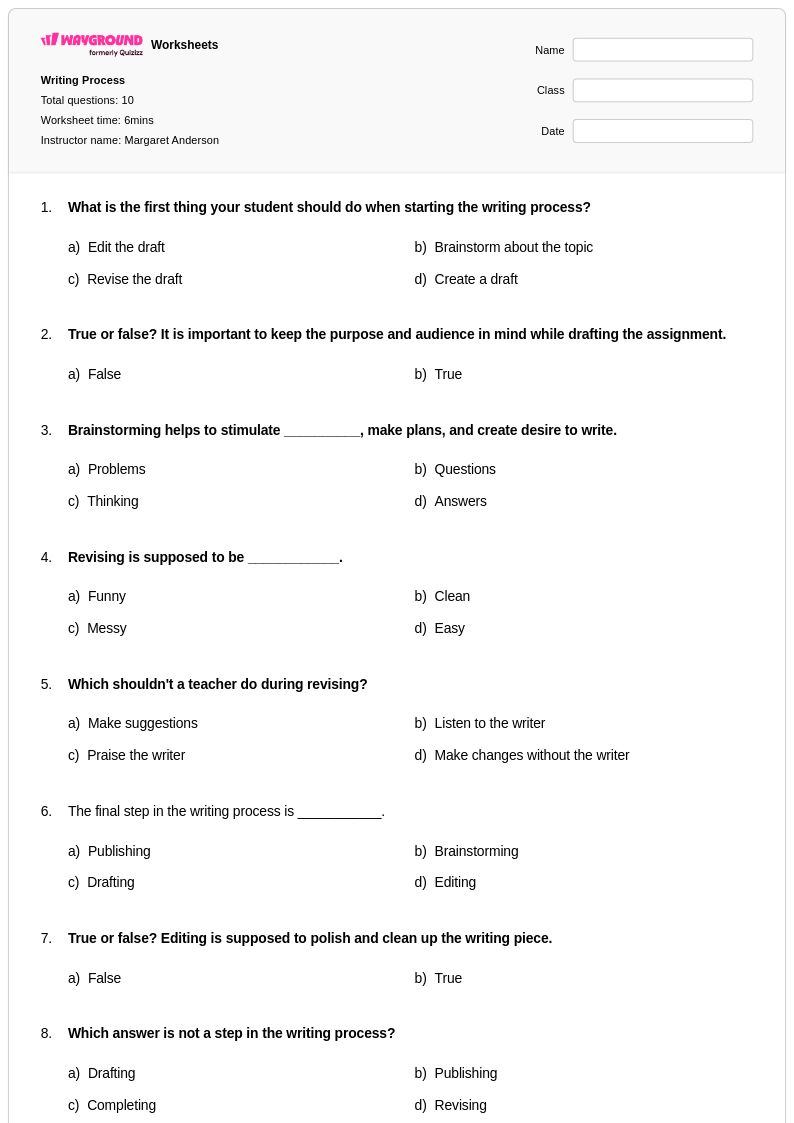
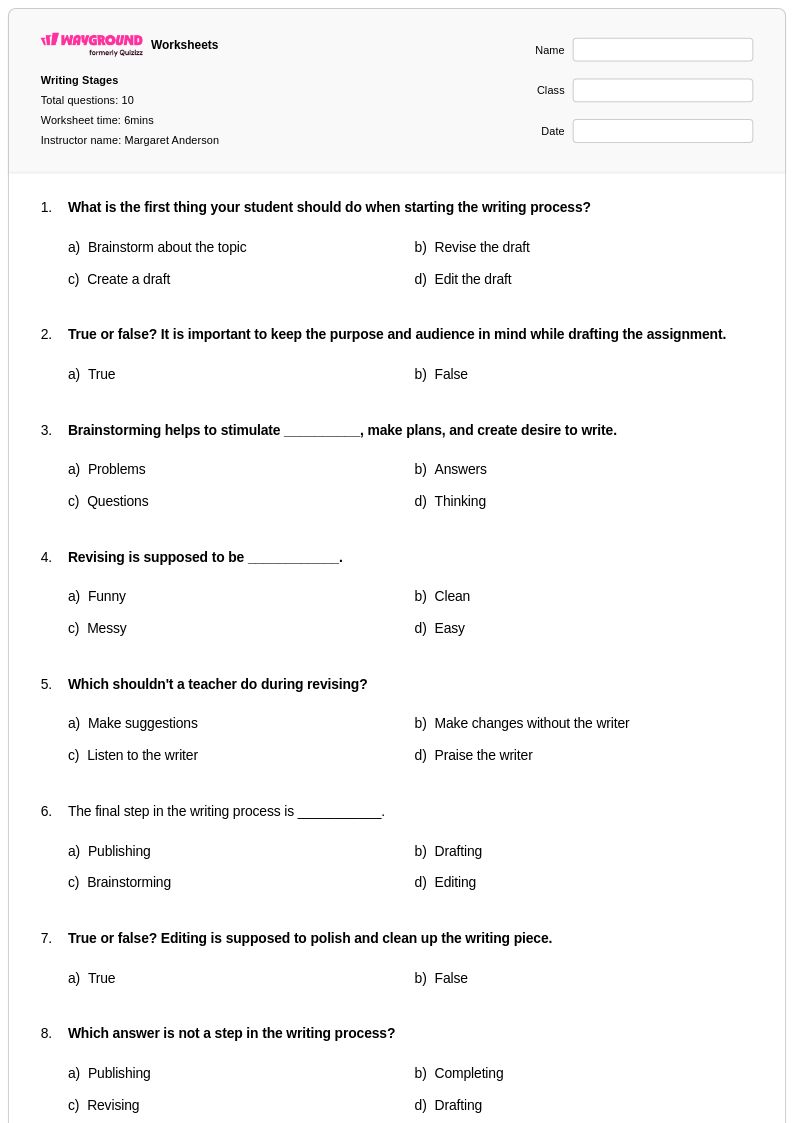
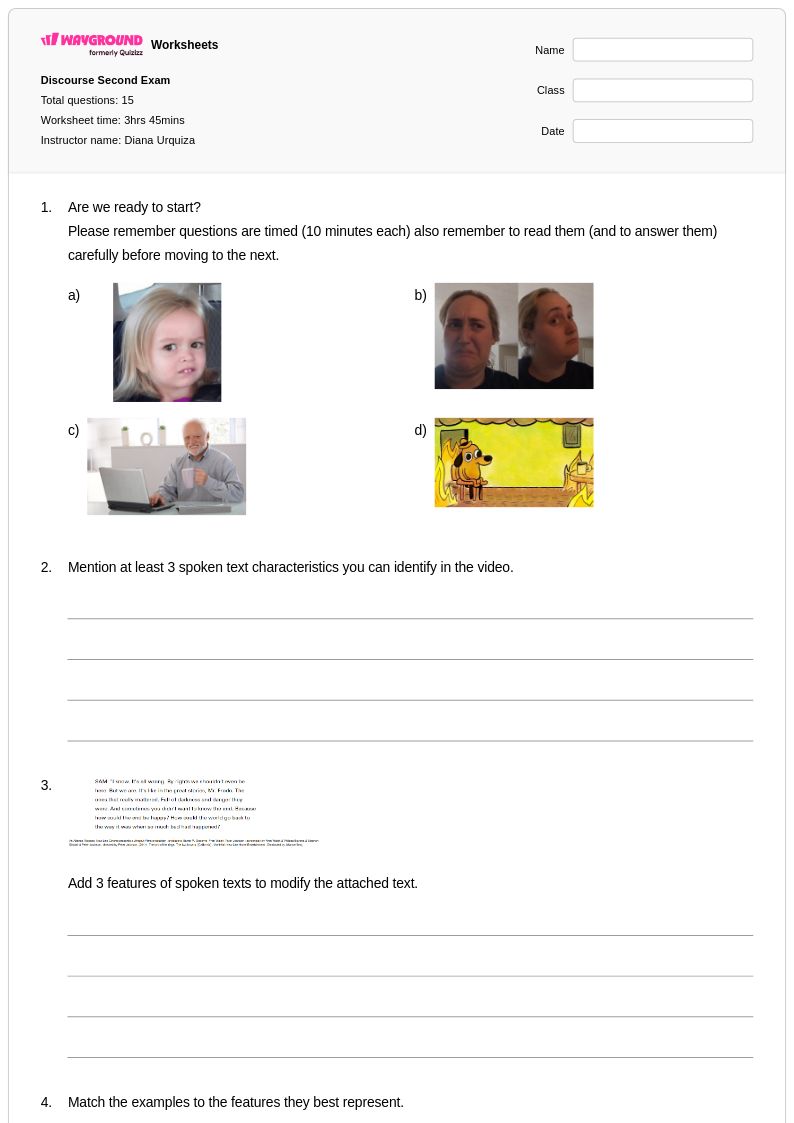
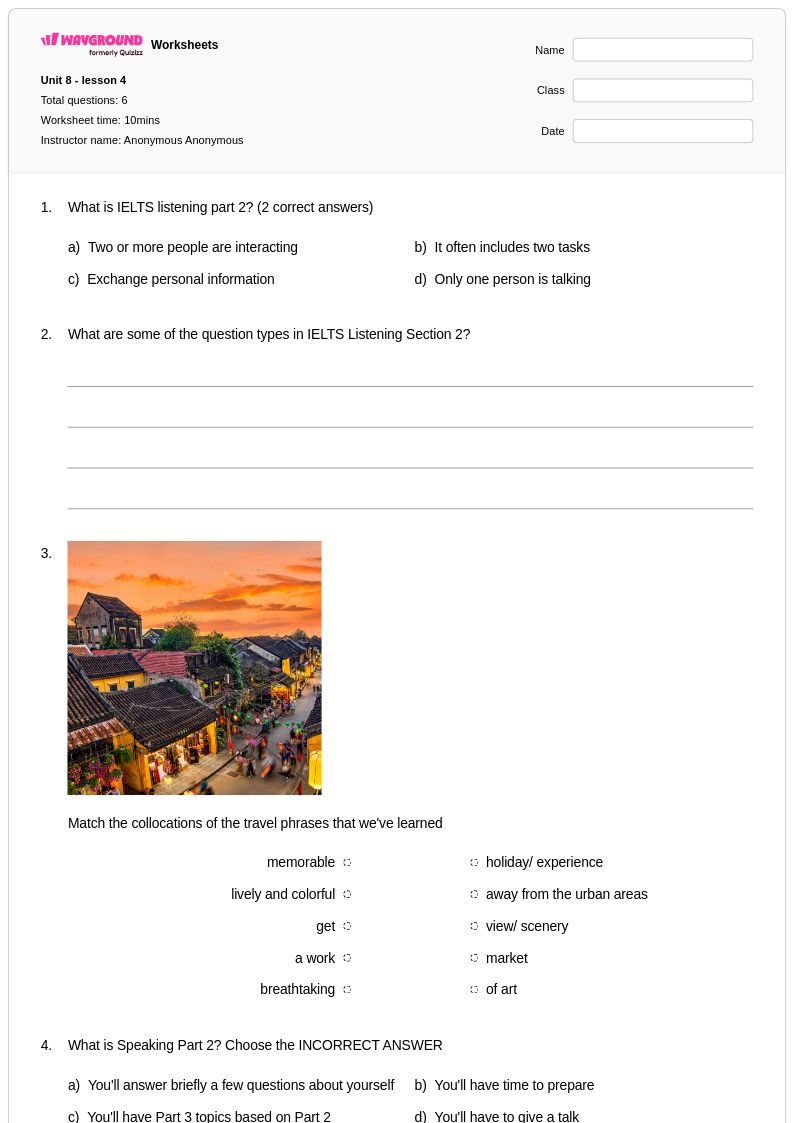
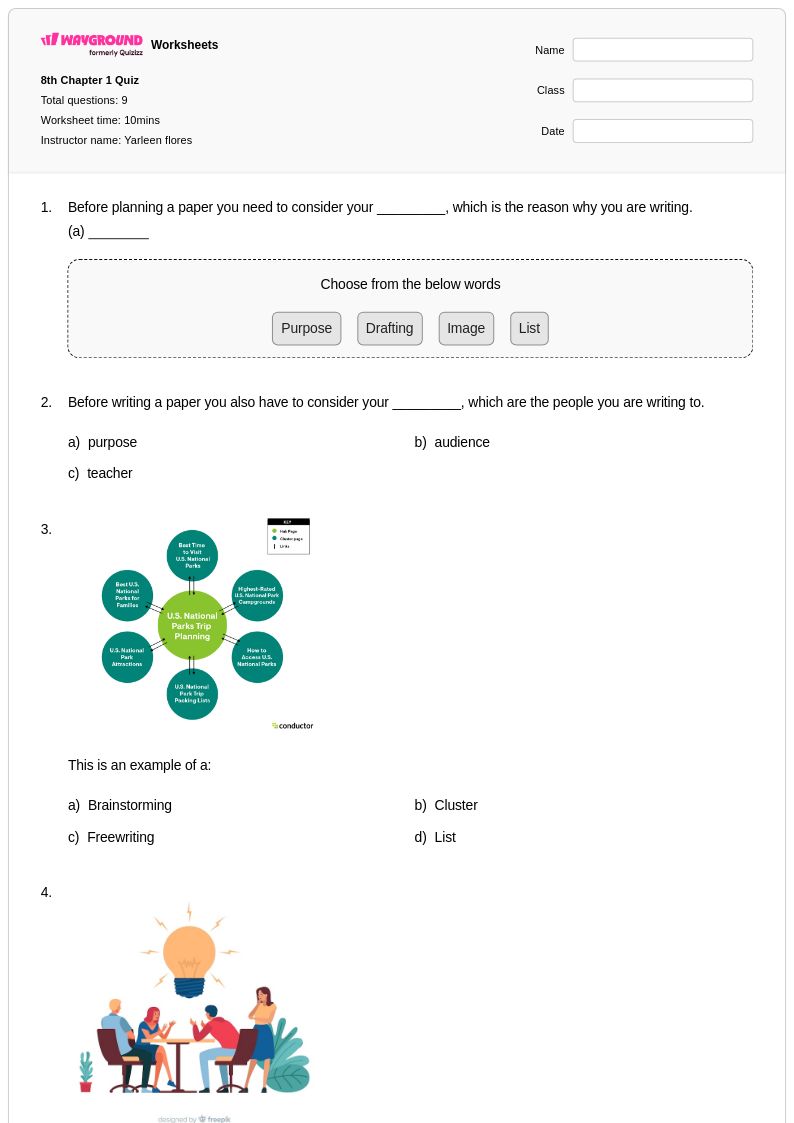
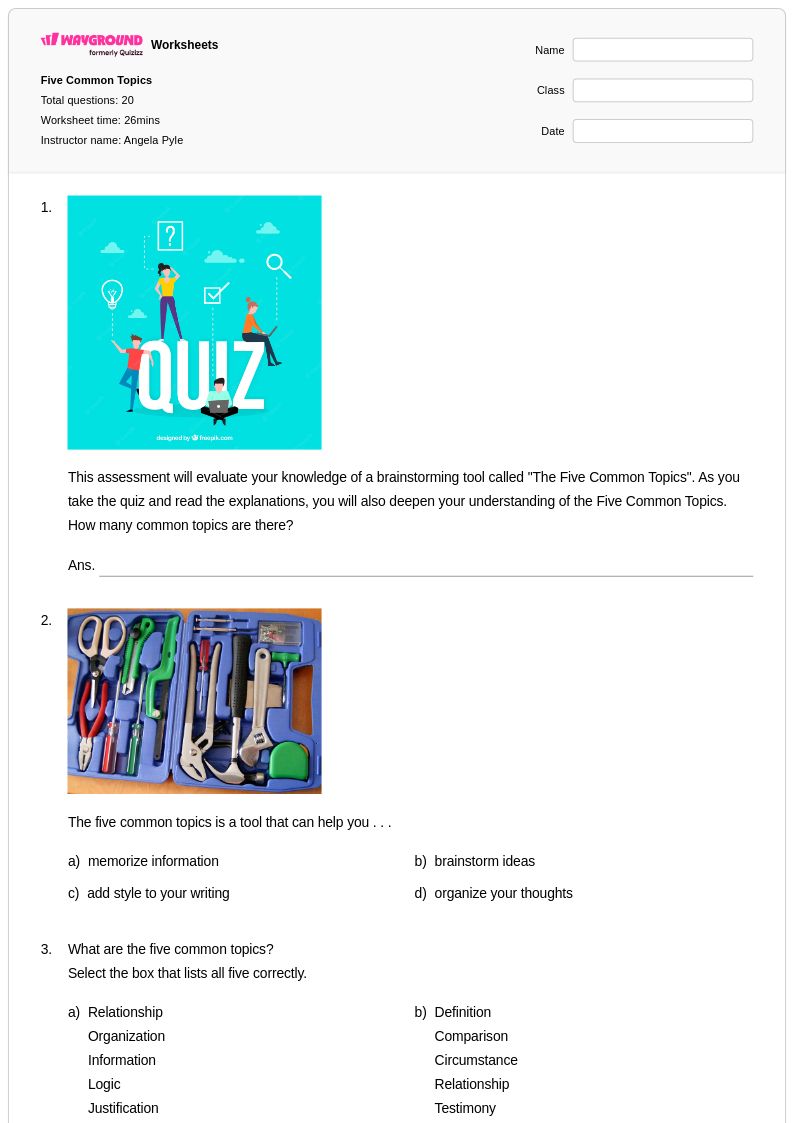
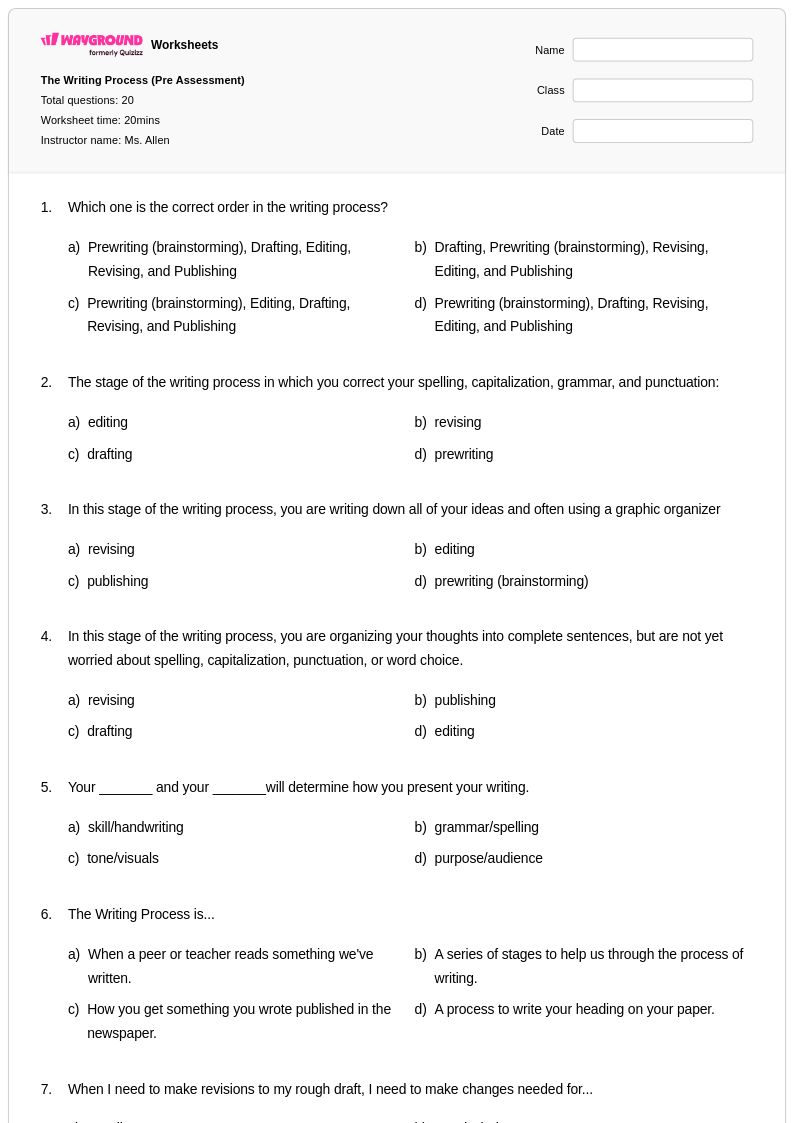
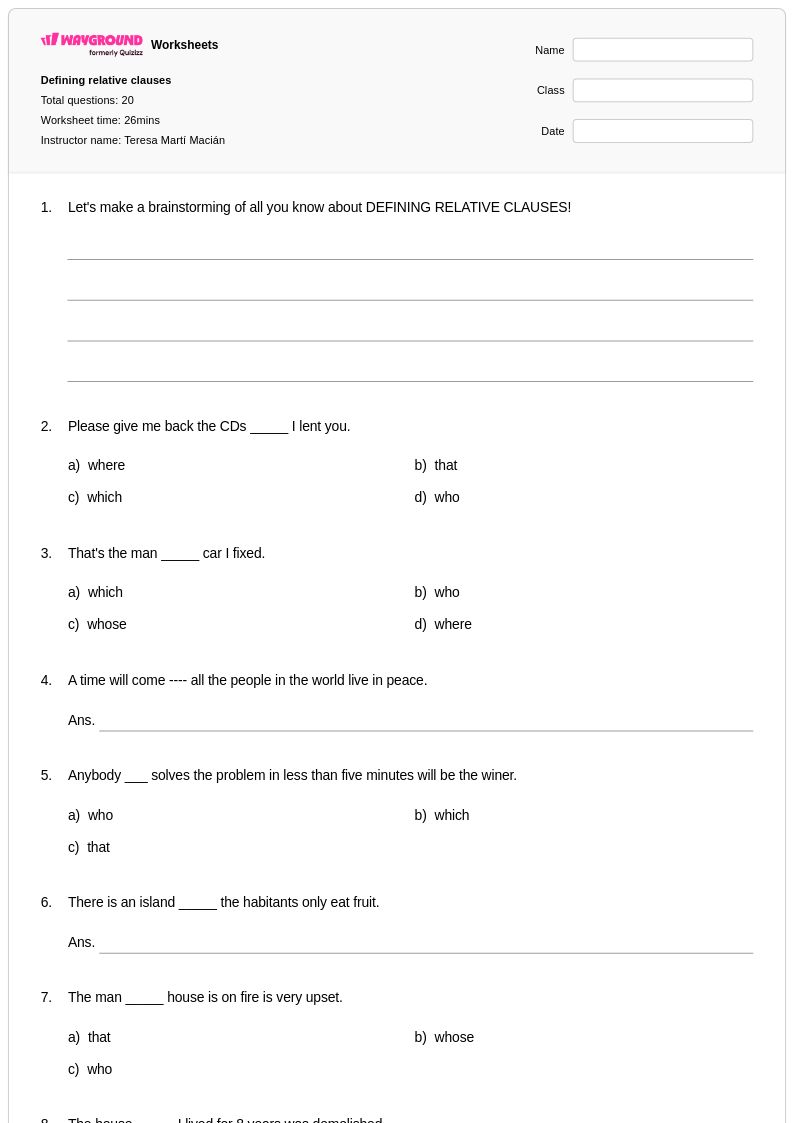
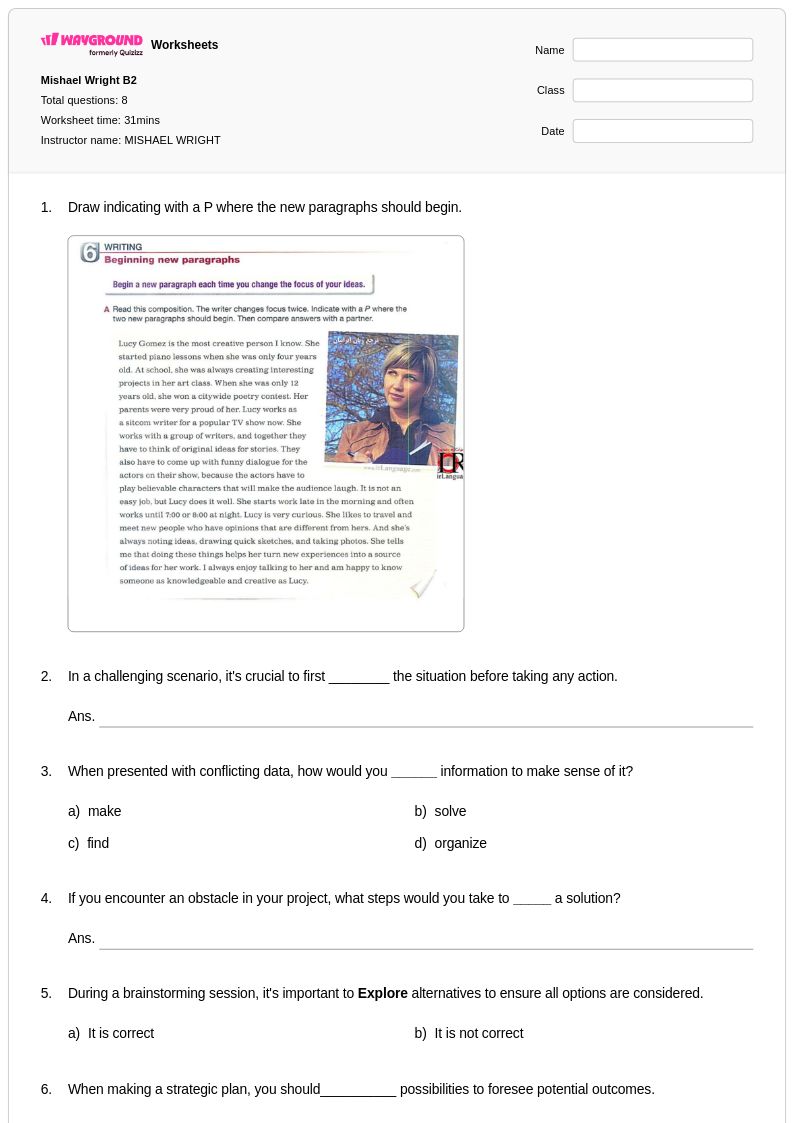
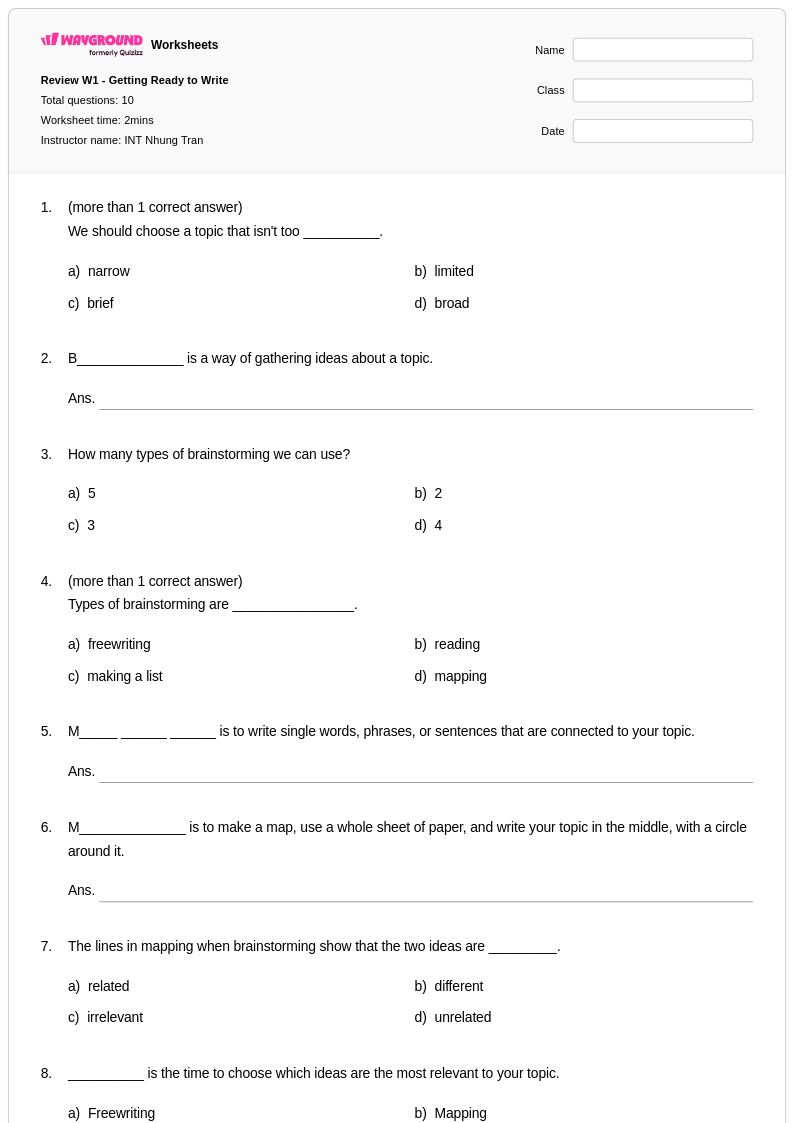
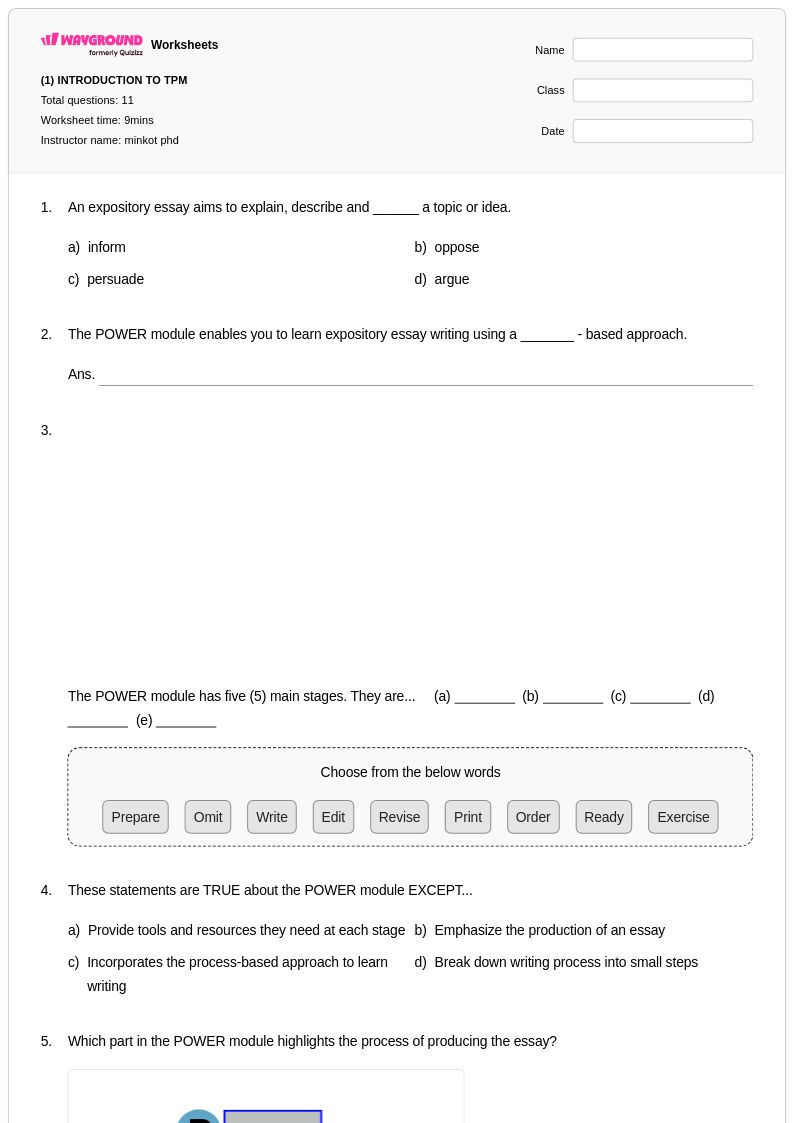
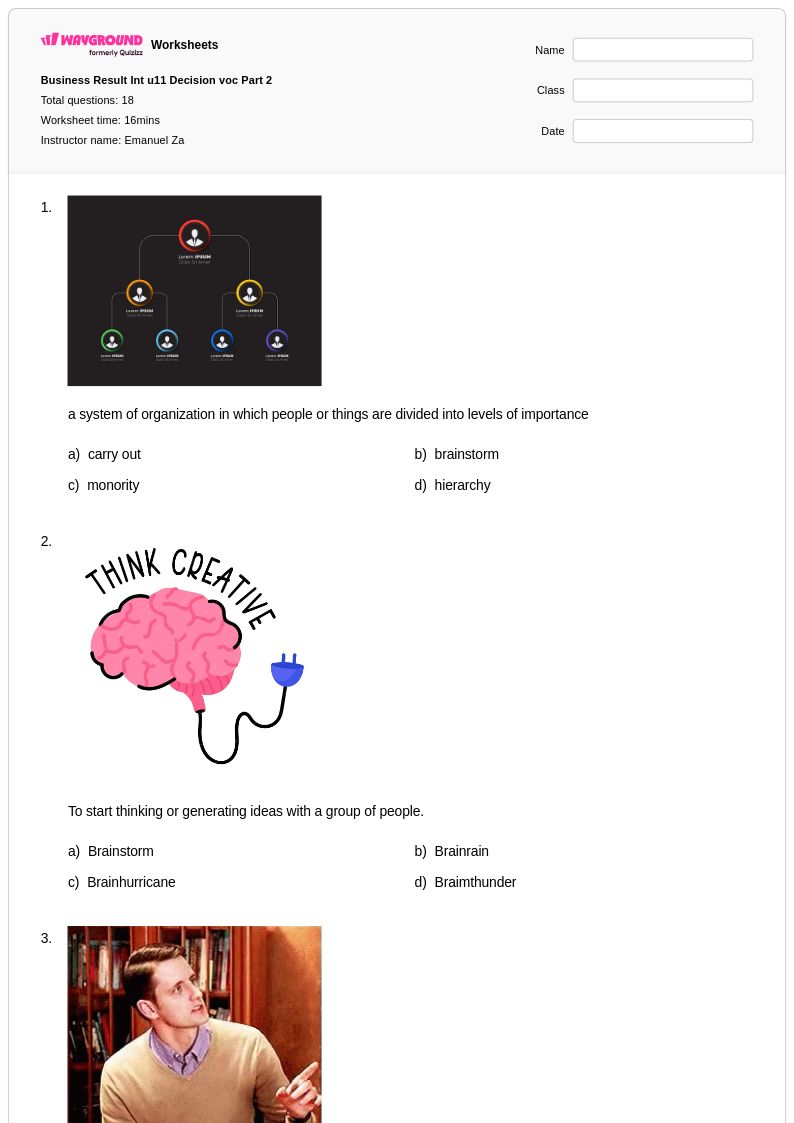
Brainstorming worksheets for kindergarten students available through Wayground (formerly Quizizz) introduce young learners to the foundational writing process skill of generating and organizing ideas before putting pencil to paper. These carefully designed printables help kindergarteners develop pre-writing skills through age-appropriate activities that encourage creative thinking, idea collection, and basic organizational strategies. The worksheets strengthen essential cognitive abilities including divergent thinking, visual representation of thoughts through pictures and simple words, and the understanding that good writing begins with planning. Each free resource includes clear instructions suitable for emerging readers and writers, with answer keys provided to support both independent practice and guided instruction. These pdf materials focus on making brainstorming accessible and engaging through colorful graphics, picture prompts, and structured templates that help young minds capture their thoughts systematically.
Wayground (formerly Quizizz) supports kindergarten teachers with an extensive collection of millions of teacher-created brainstorming resources that address diverse learning needs and curriculum standards. The platform's robust search and filtering capabilities allow educators to quickly locate materials that match specific learning objectives, whether focusing on narrative ideas, descriptive writing preparation, or creative story development. Teachers benefit from comprehensive differentiation tools that accommodate varying skill levels within the kindergarten classroom, from students just beginning to connect letters and sounds to those ready for more complex idea organization. The flexible customization options enable educators to modify worksheets for individual student needs, while the availability of both printable and digital formats, including downloadable pdf versions, ensures seamless integration into any instructional environment. These features collectively support effective lesson planning, targeted remediation for struggling learners, enrichment opportunities for advanced students, and consistent skill practice that builds confidence in the earliest stages of the writing process.
FAQs
How do I teach brainstorming techniques to students?
Effective brainstorming instruction introduces students to multiple structured techniques rather than treating idea generation as a single skill. Start with guided practice in mind mapping and clustering to help students visualize connections between ideas, then progress to listing and free-writing exercises that lower the barrier to getting thoughts on paper. Modeling each technique explicitly before asking students to work independently builds confidence at the critical early stages of the writing process.
What brainstorming exercises are most effective for developing prewriting skills?
The most effective prewriting exercises are those that match the cognitive demand to the writing task at hand. Mind mapping works well for narrative and creative writing because it encourages associative thinking, while structured listing suits informational and argumentative tasks where students need to inventory evidence or examples. Rotating students through multiple techniques across assignments helps them internalize which method best fits a given purpose.
What mistakes do students commonly make when brainstorming before writing?
The most common error is self-editing during idea generation — students discard ideas before fully exploring them, which narrows their thinking before formal writing even begins. A second frequent mistake is treating brainstorming as a one-time step rather than a recursive process they can return to when they get stuck. Teaching students to suspend judgment during free-writing and clustering, and to revisit their brainstorm as a living document, directly addresses both issues.
How can I differentiate brainstorming activities for students with different ability levels?
For students who struggle with open-ended idea generation, providing partially completed graphic organizers or sentence stems gives them a scaffold without removing the cognitive work of generating ideas. Advanced learners benefit from more open-ended prompts that require them to make abstract conceptual connections across topics. On Wayground, teachers can apply accommodations such as reduced answer choices and read aloud support to individual students, allowing the same brainstorming activity to serve the full range of learners in one classroom.
How do I use Wayground's brainstorming worksheets in my classroom?
Wayground's brainstorming worksheets are available as printable PDFs for traditional classroom use and in digital formats for technology-integrated learning environments, so they work whether your students are at desks or on devices. Teachers can also host worksheets as a quiz directly on Wayground, making it easy to track student responses during a prewriting activity. Each worksheet includes answer keys, which supports both independent student work and teacher-led collaborative brainstorming sessions.
How does brainstorming fit into the broader writing process?
Brainstorming is the generative first stage of the writing process, where students produce and organize raw ideas before committing to a draft. Strong brainstorming habits reduce writer's block and improve draft quality because students enter the drafting stage with a clearer sense of direction and richer source material to draw from. Explicitly connecting brainstorming activities to subsequent drafting and revision steps helps students see prewriting as purposeful rather than a procedural requirement.