Free Printable Business Cycle Worksheets for Class 10
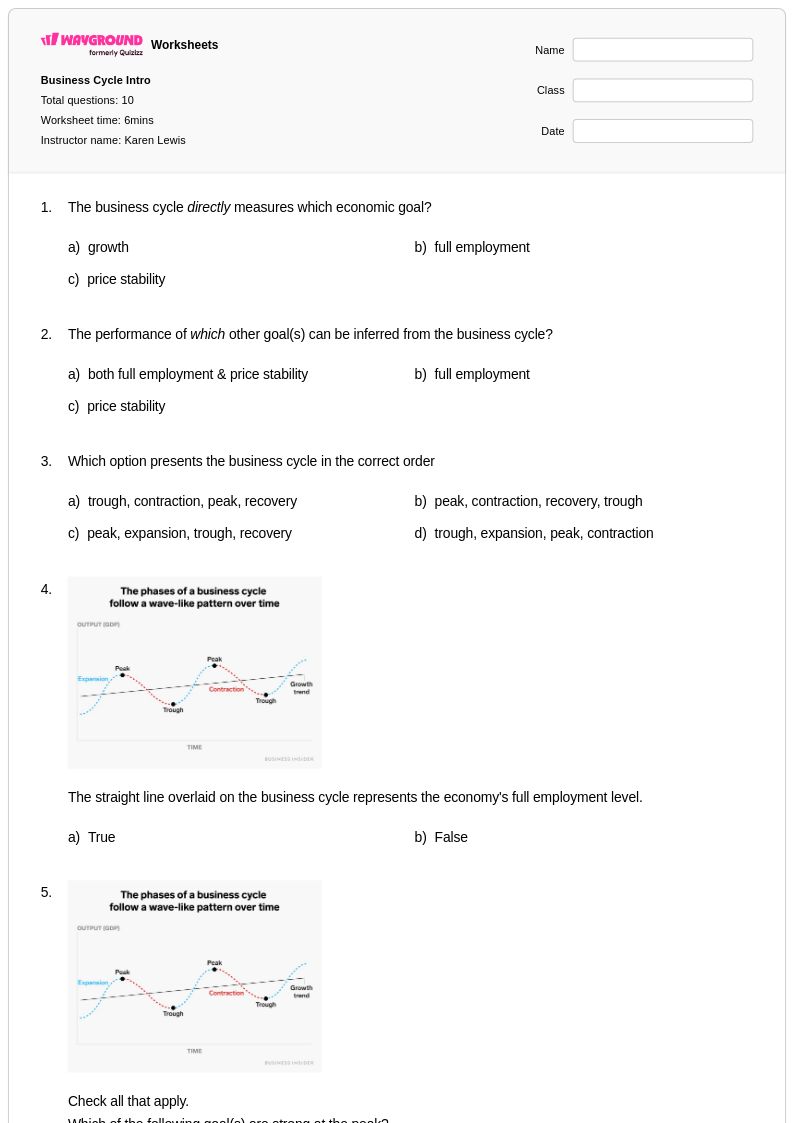
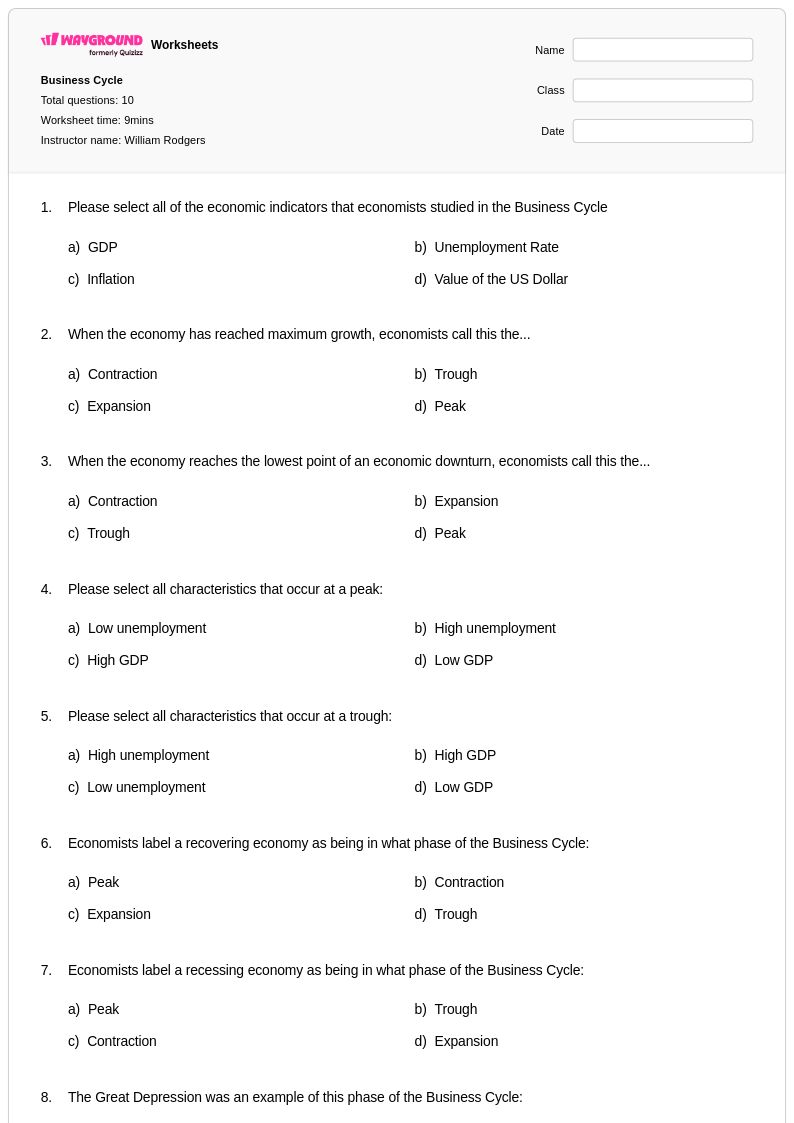
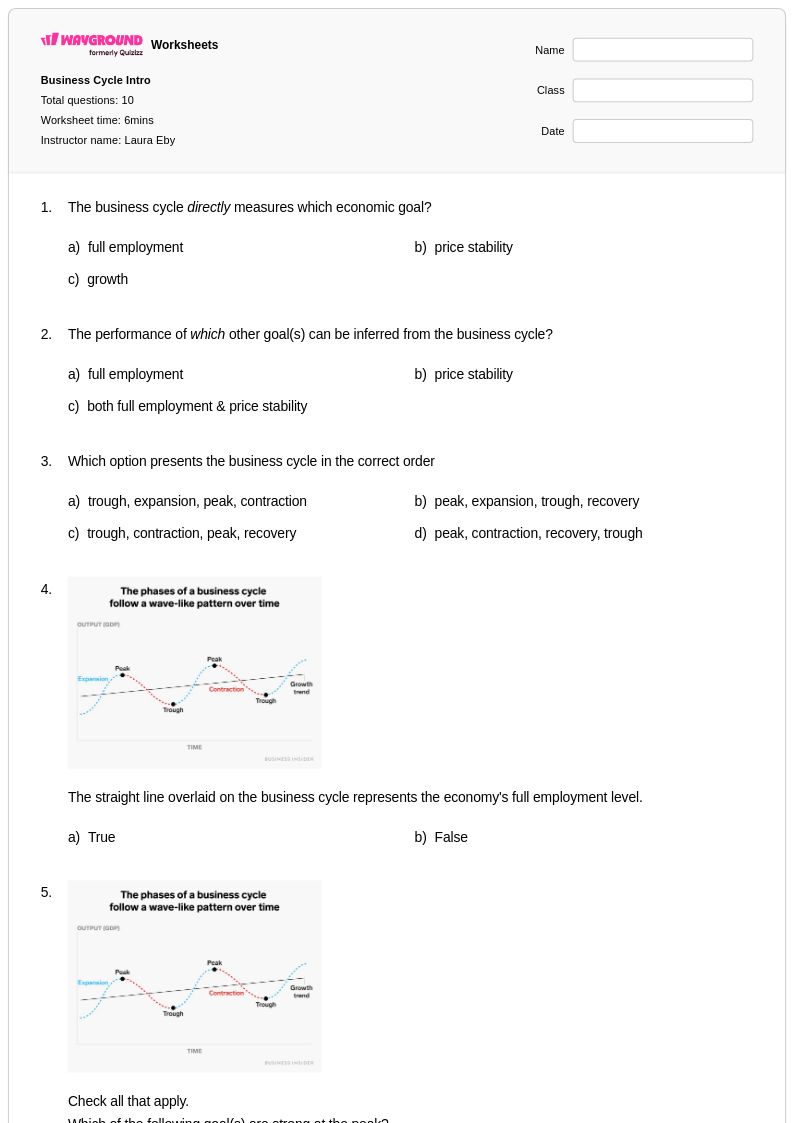
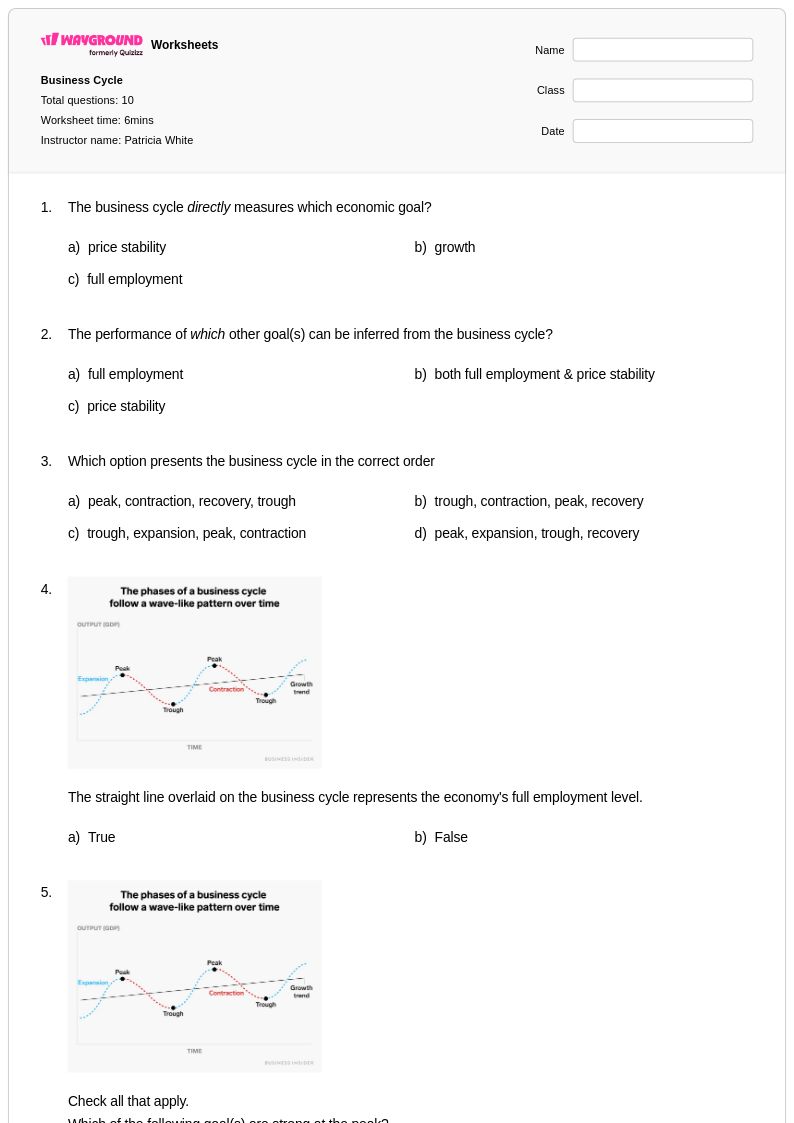
Explore Class 10 business cycle worksheets and printables that help students understand economic fluctuations, recession patterns, and growth phases through engaging practice problems with comprehensive answer keys.
Explore printable Business Cycle worksheets for Class 10
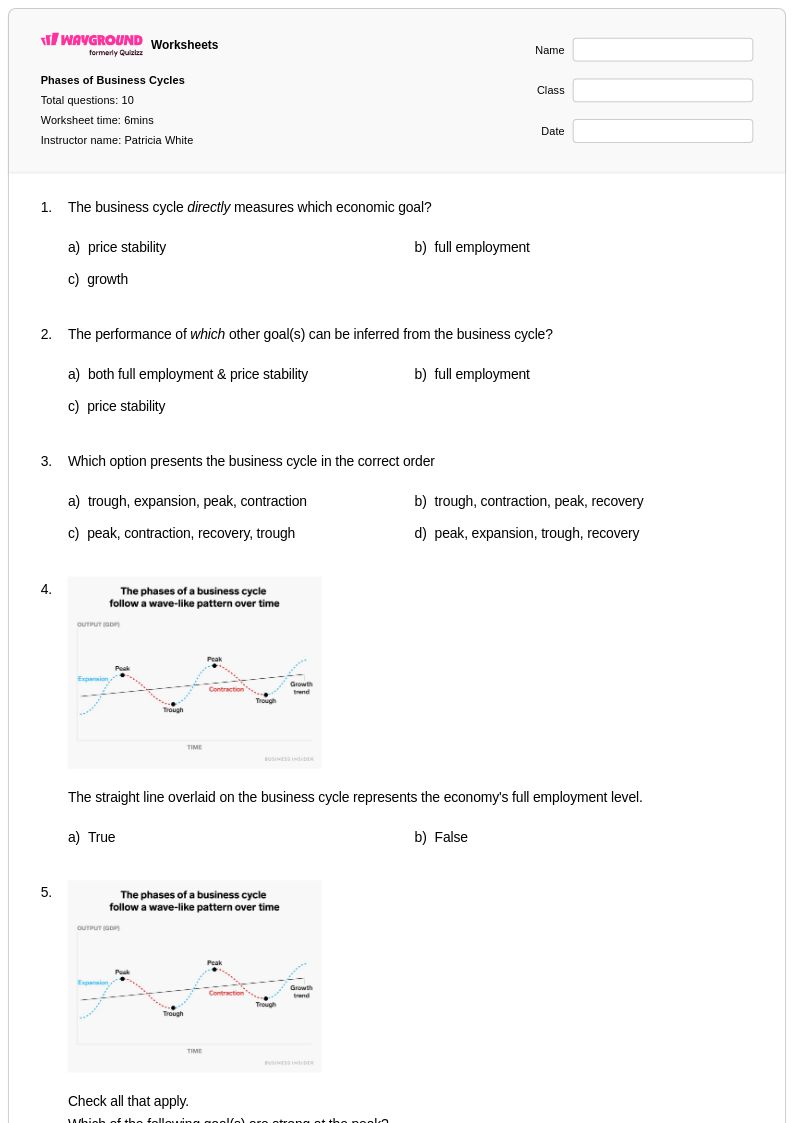
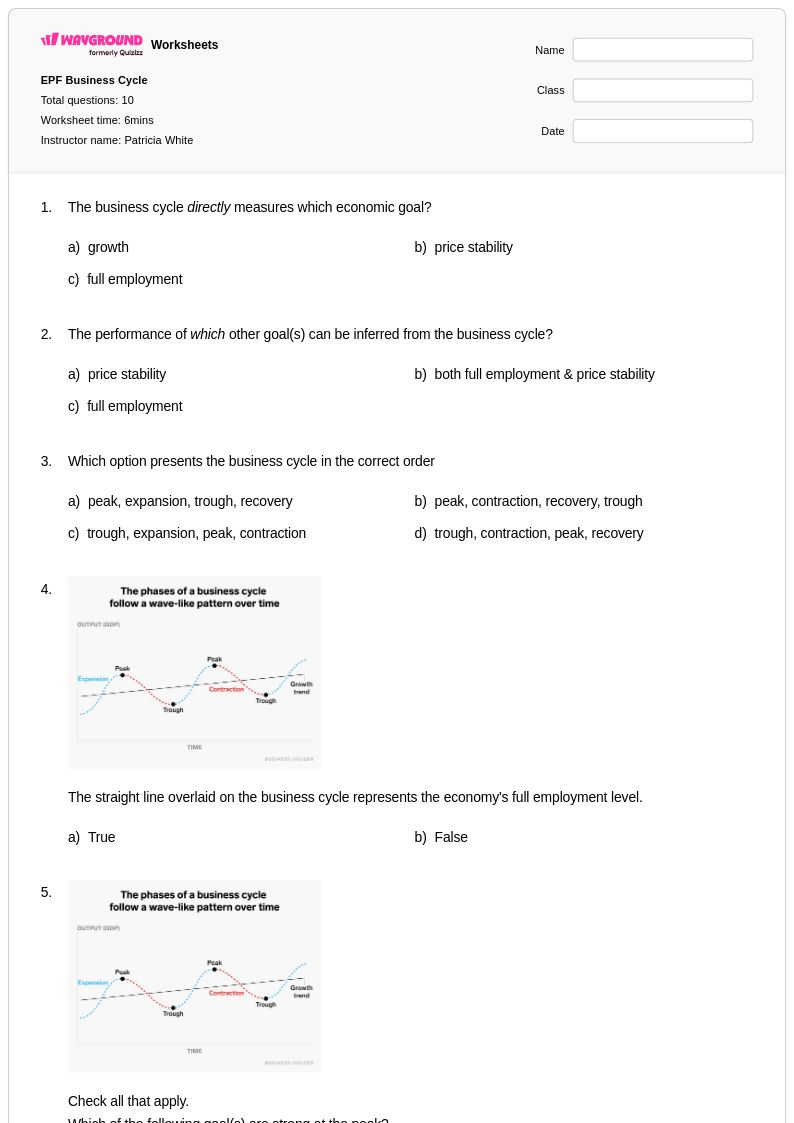
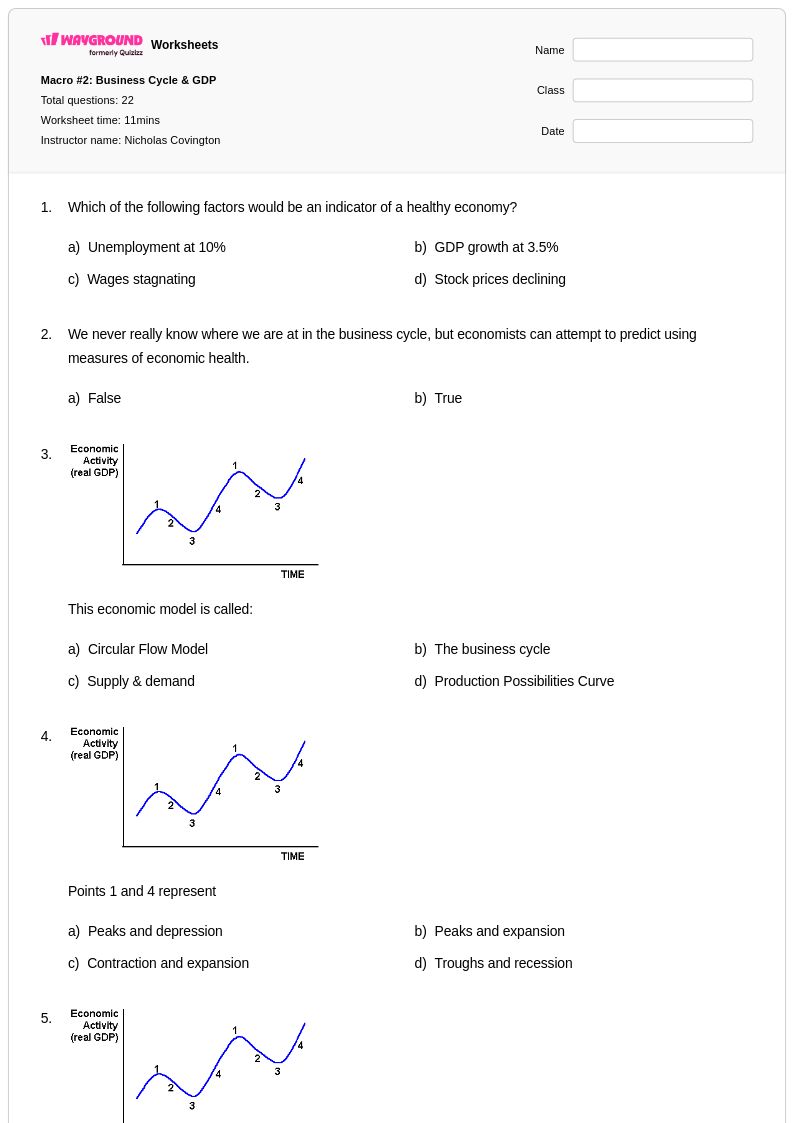
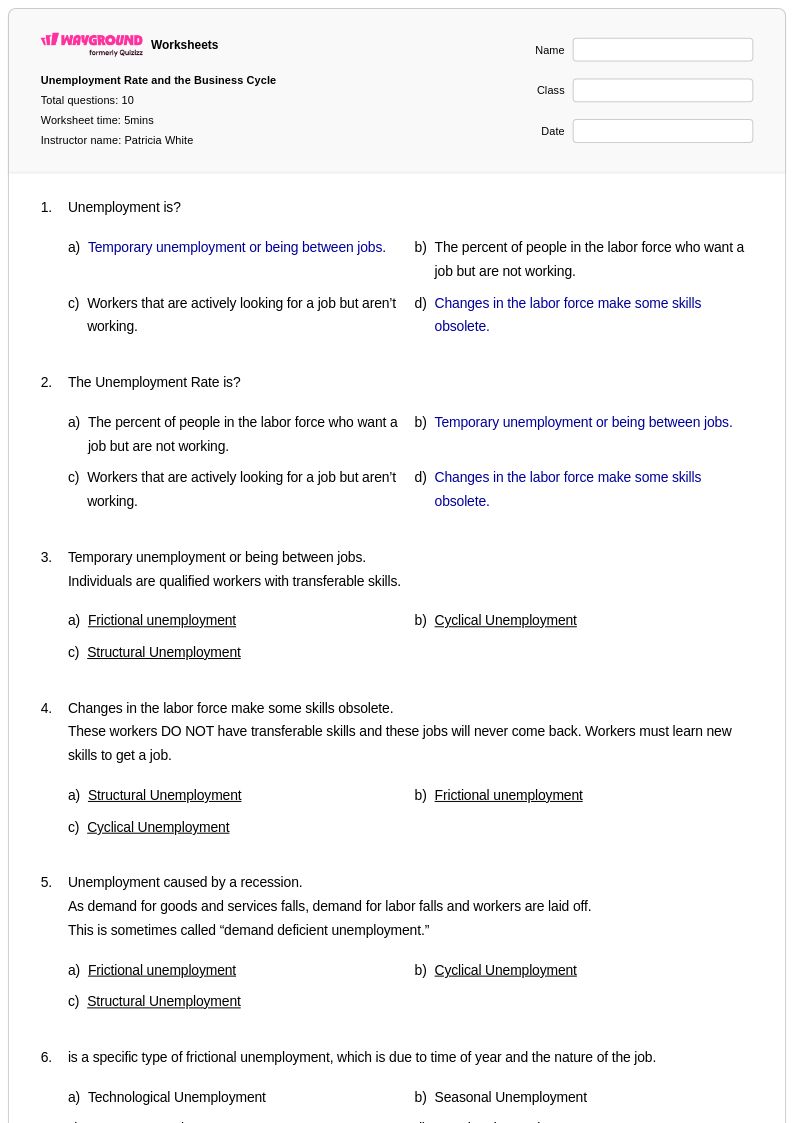
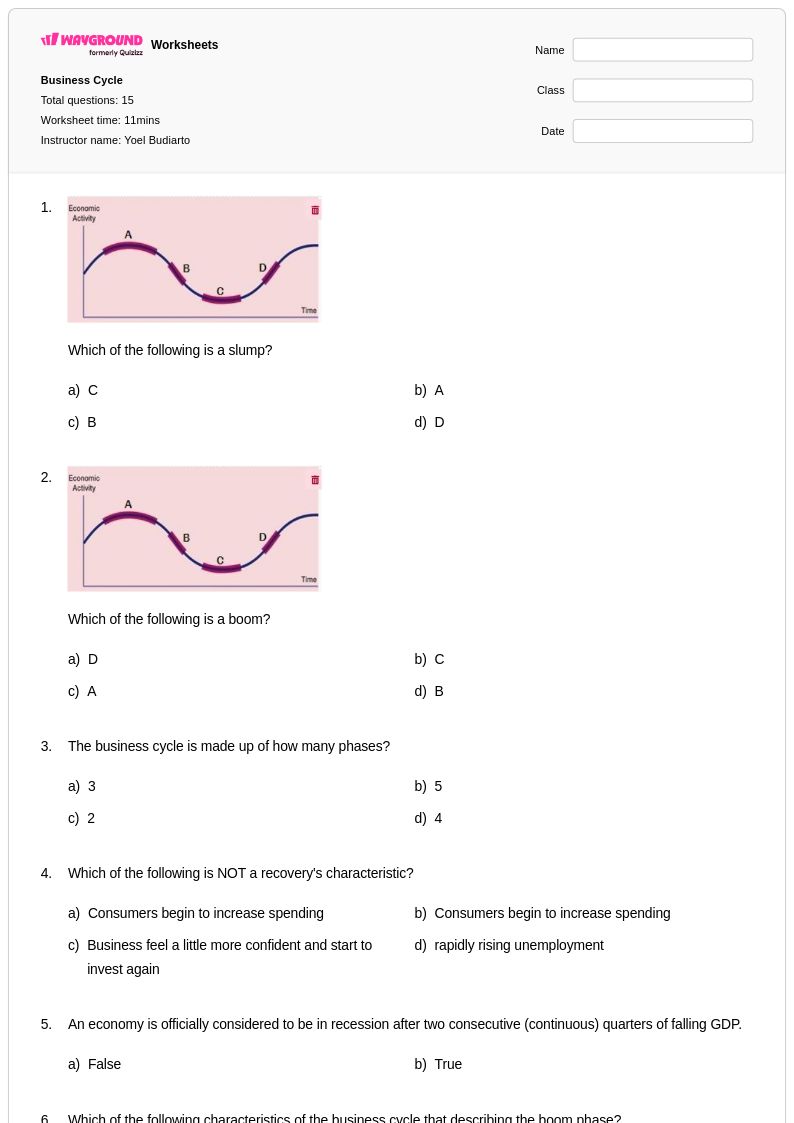
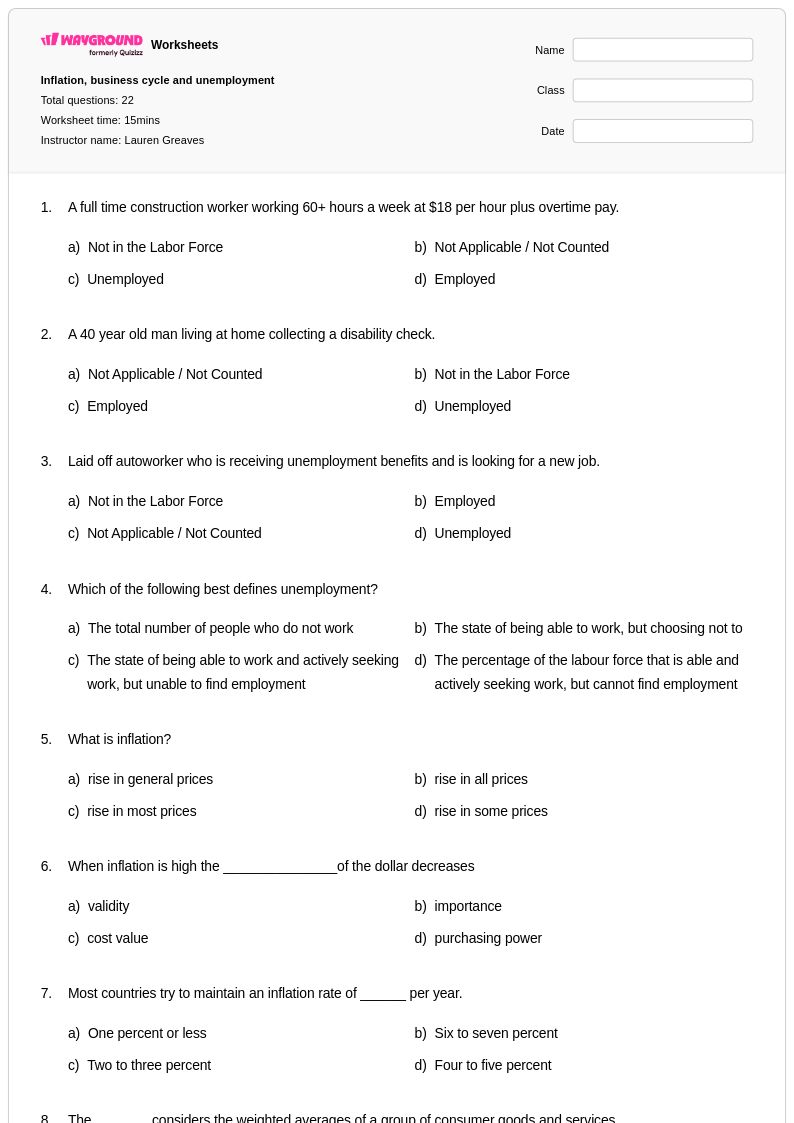
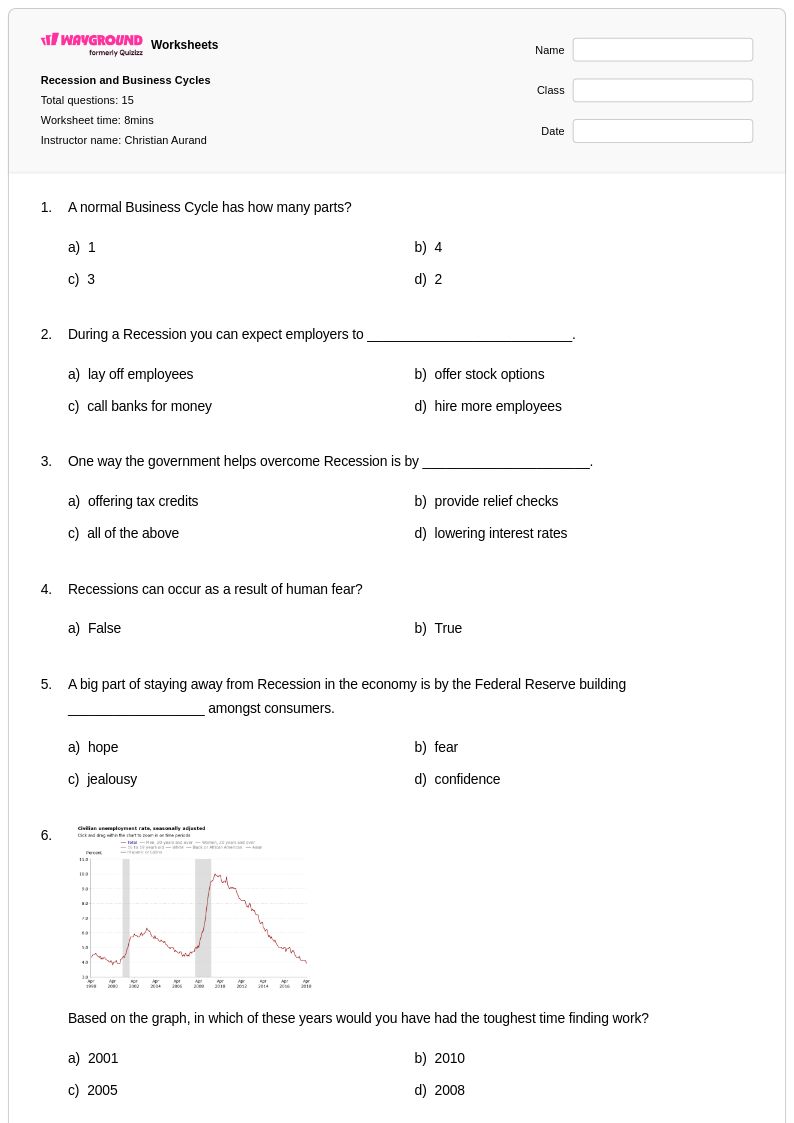
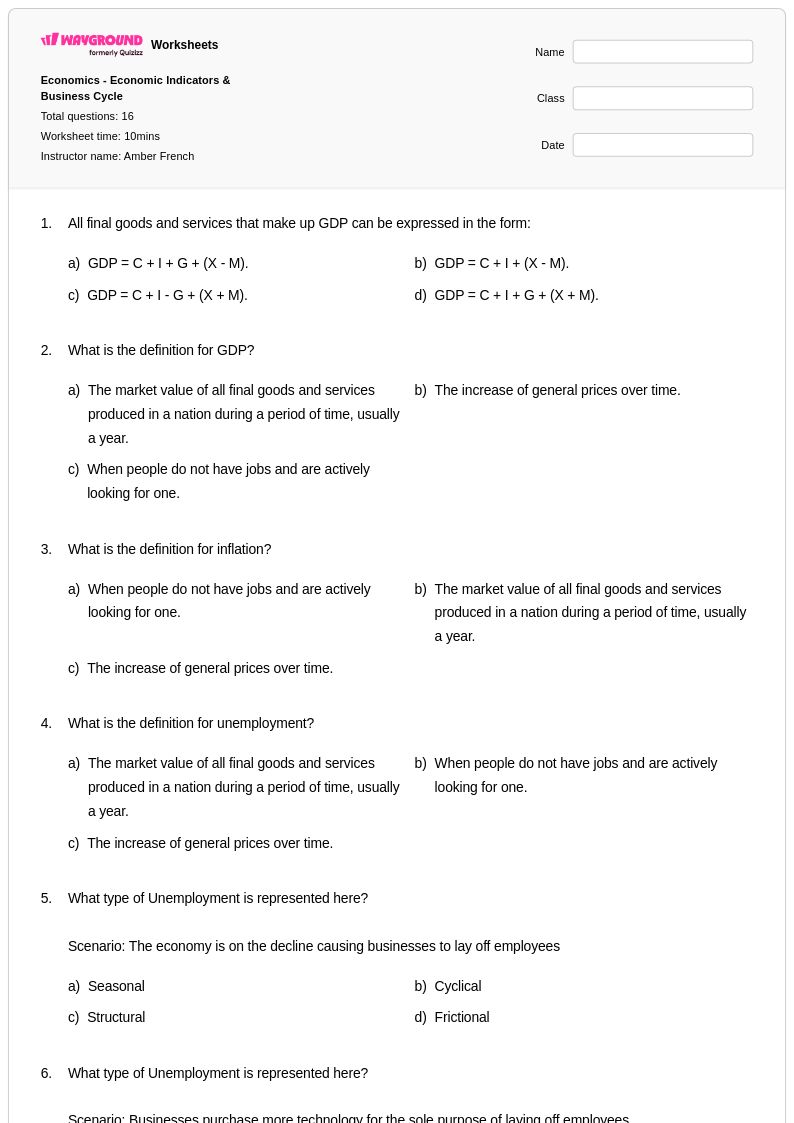
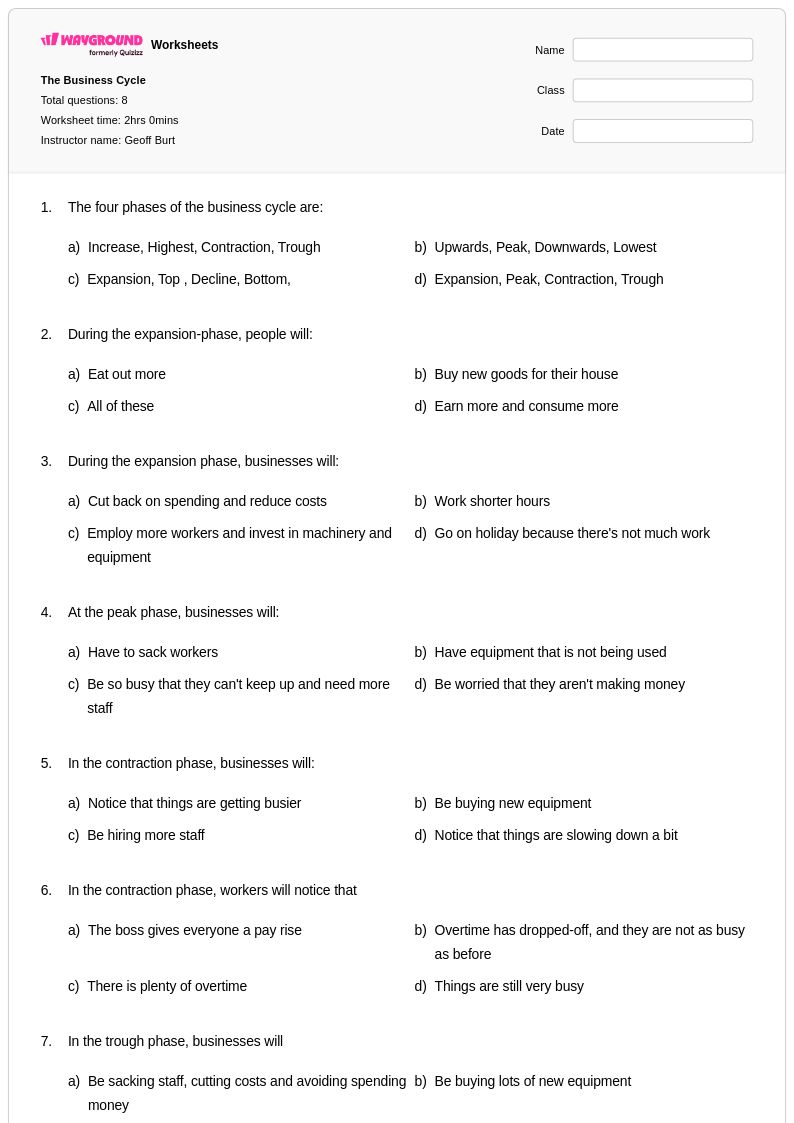
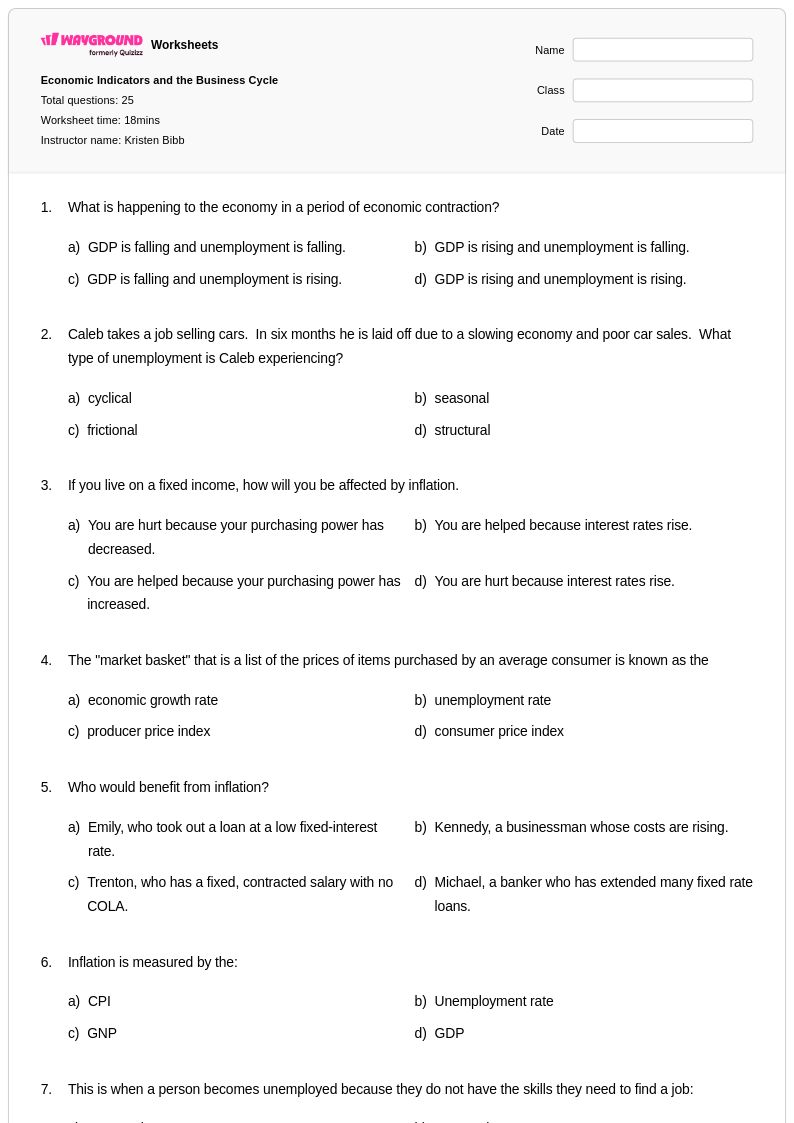
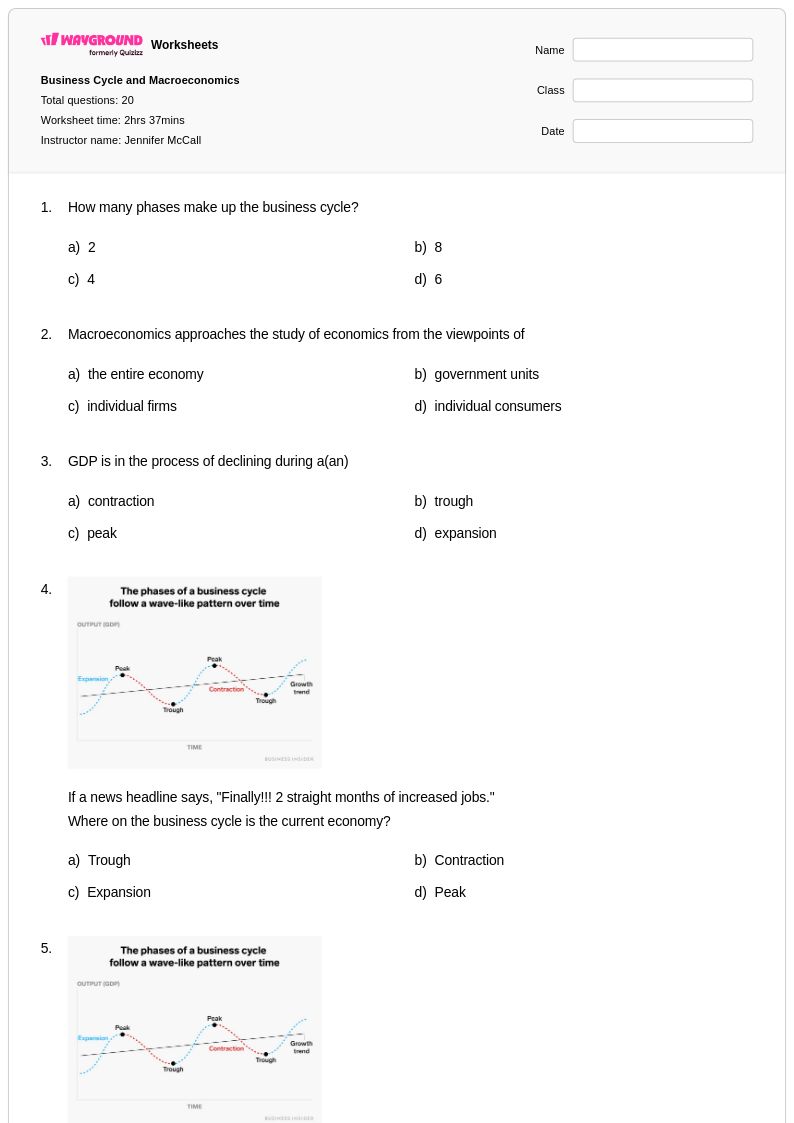
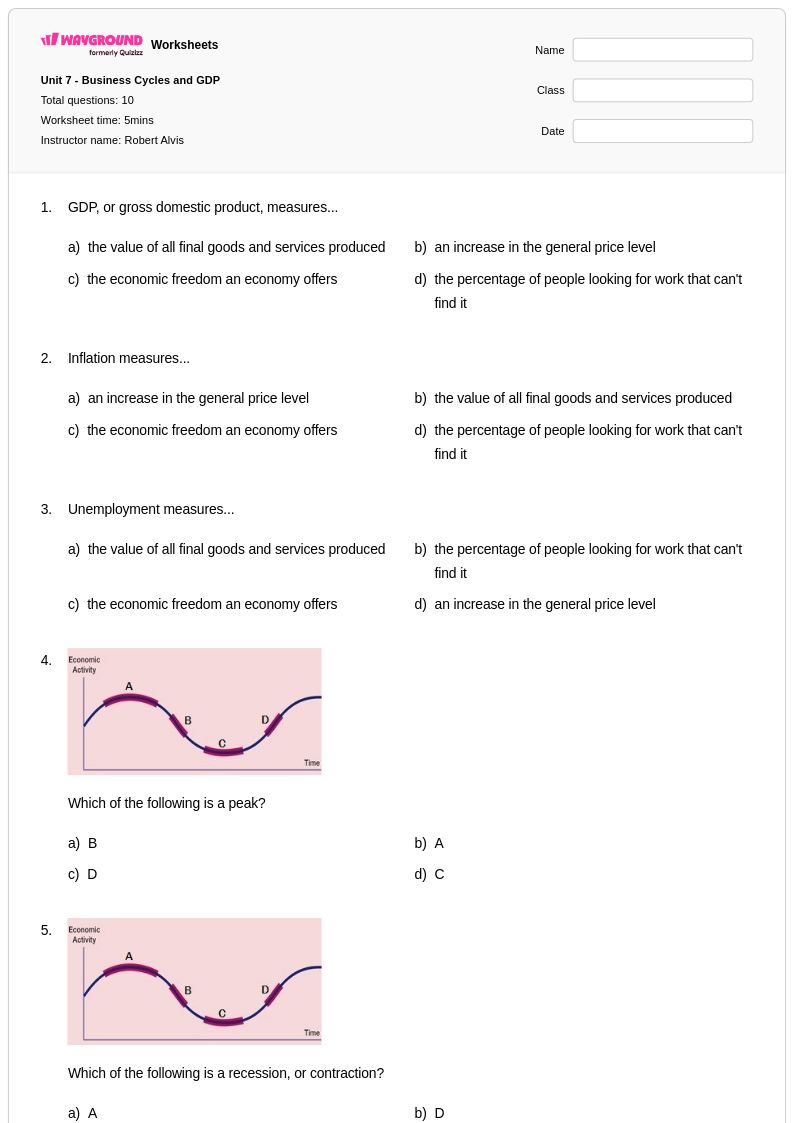
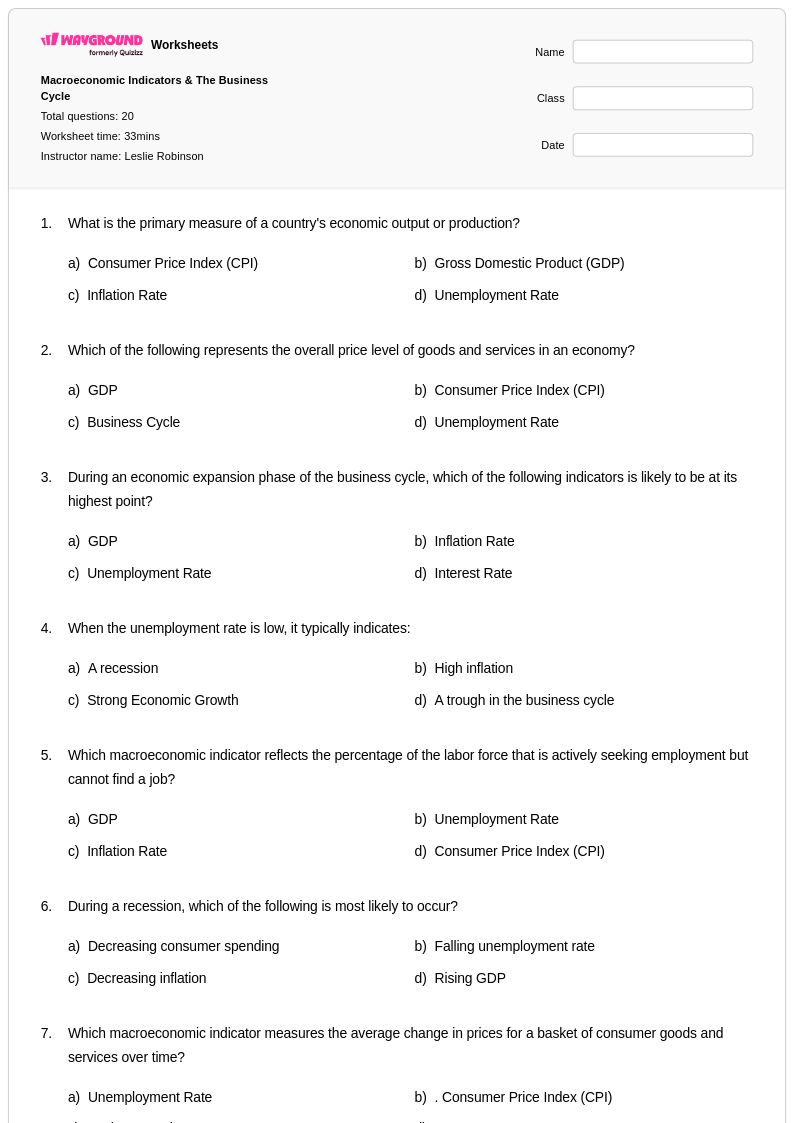
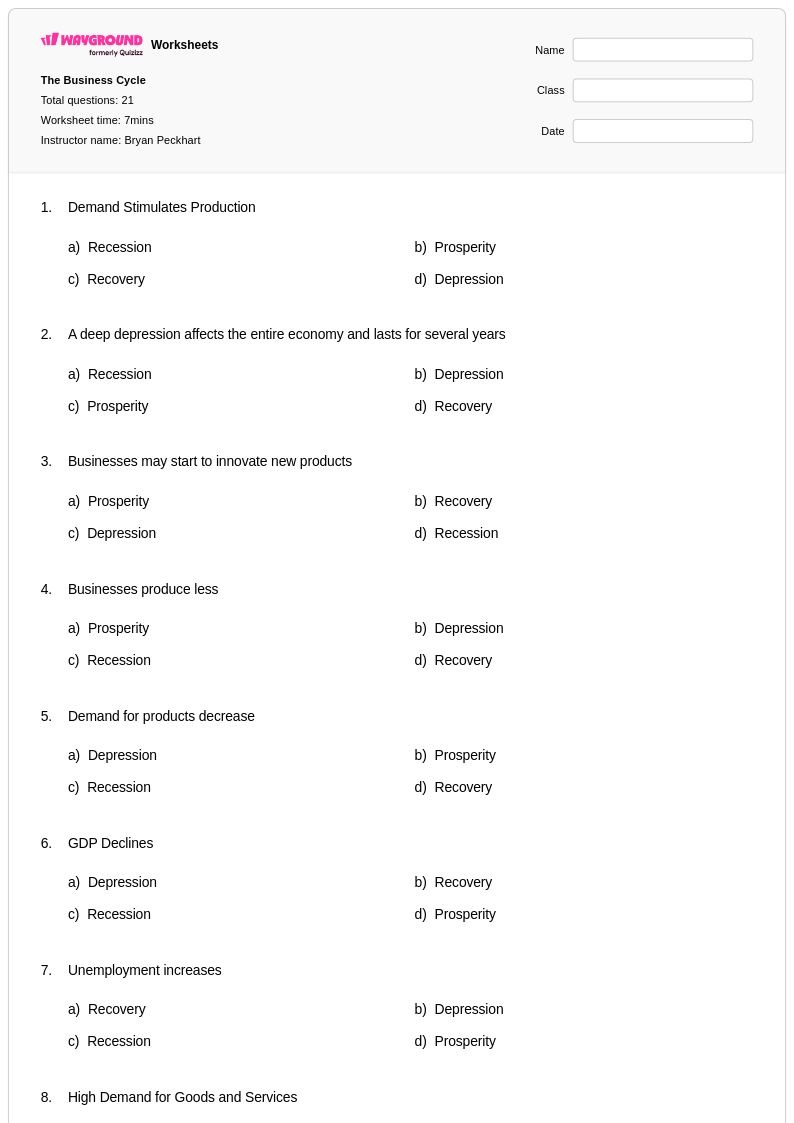
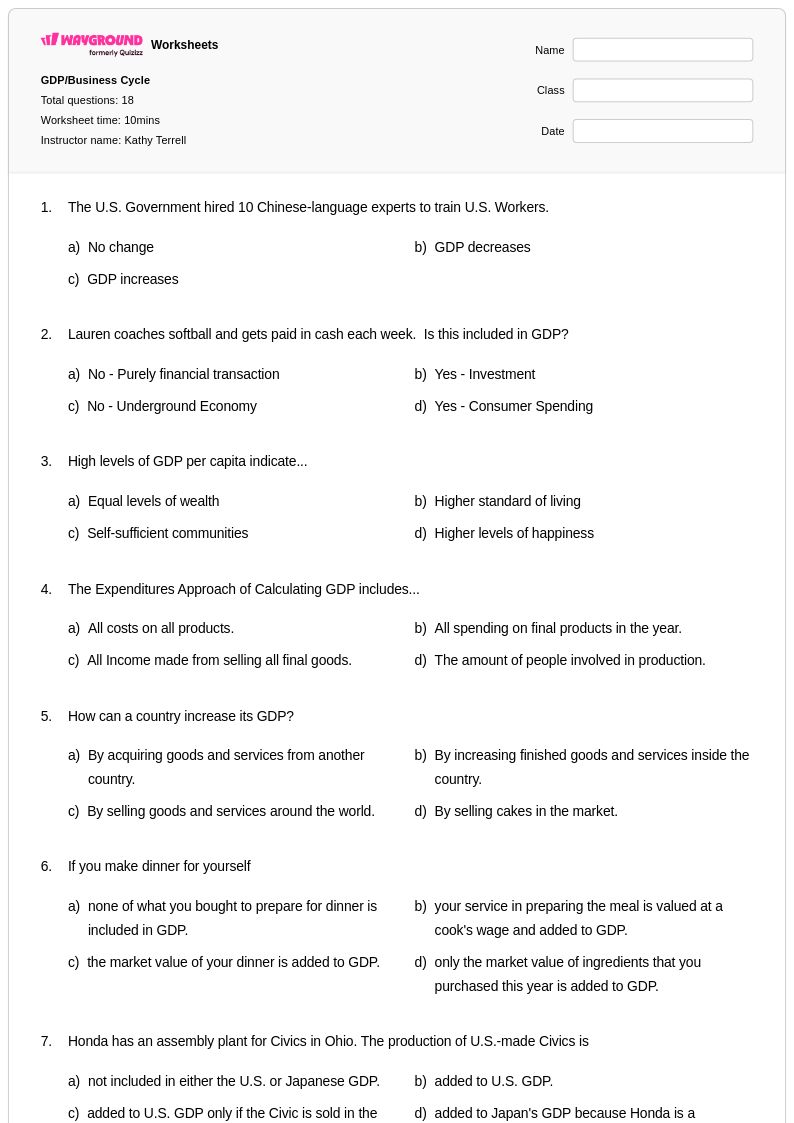
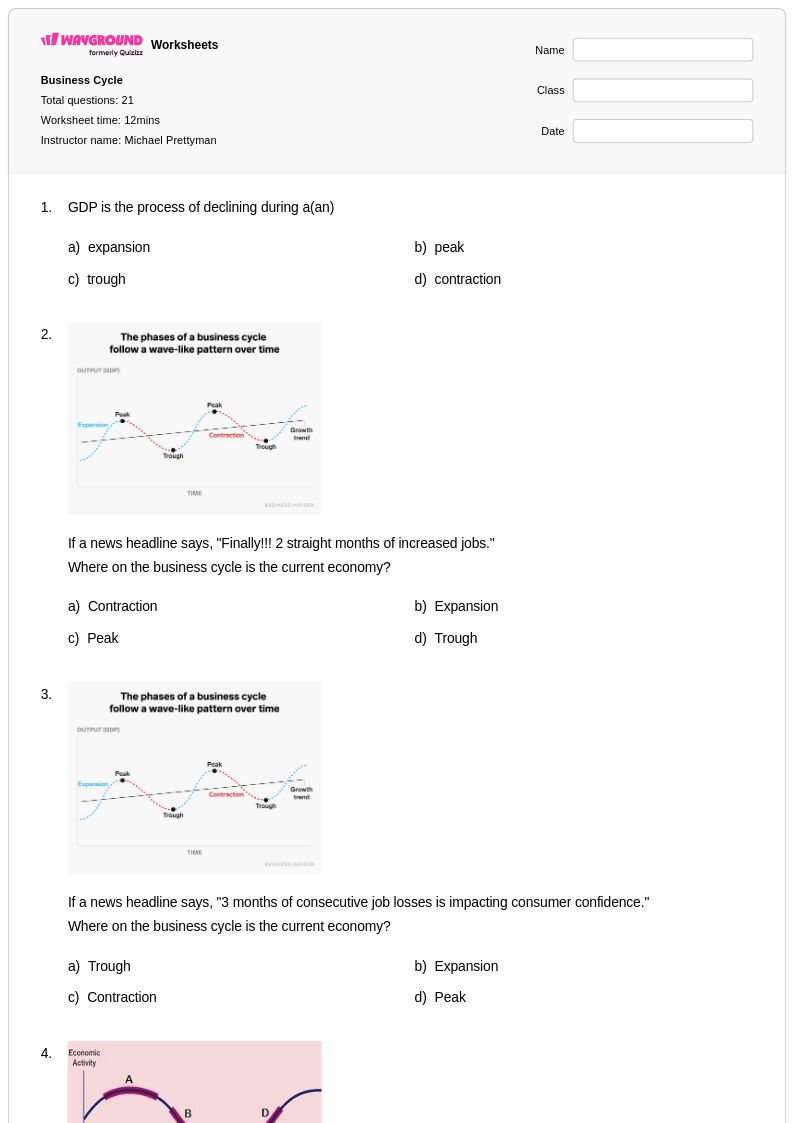
Business cycle worksheets for Class 10 economics through Wayground (formerly Quizizz) provide comprehensive coverage of economic fluctuations, helping students understand the recurring patterns of expansion, peak, contraction, and trough that characterize market economies. These educational resources strengthen critical analytical skills by guiding students through the identification of business cycle phases, examination of leading and lagging economic indicators, and analysis of government policy responses to economic downturns and periods of growth. Students engage with practice problems that require them to interpret real-world economic data, graph business cycle movements, and evaluate the effectiveness of fiscal and monetary interventions. Each worksheet includes a detailed answer key to support independent learning and self-assessment, while the free printable format ensures accessibility for diverse classroom environments and study situations.
Wayground's extensive collection of teacher-created business cycle resources supports educators with millions of professionally developed materials that can be easily located through robust search and filtering capabilities. The platform's alignment with national economics standards ensures that Class 10 teachers can confidently integrate these worksheets into their curriculum planning while addressing specific learning objectives related to macroeconomic concepts. Differentiation tools allow instructors to customize content complexity and modify practice problems to meet varying student ability levels, making these resources valuable for both remediation of struggling learners and enrichment of advanced students. The availability of materials in both printable pdf format and interactive digital versions provides flexibility for traditional classroom instruction, remote learning environments, and hybrid educational models, enabling teachers to deliver consistent, high-quality economics education regardless of instructional circumstances.
FAQs
How do I teach the business cycle to high school economics students?
Start by grounding students in the four phases of the business cycle: expansion, peak, contraction, and trough. Use real GDP data and historical recessions, such as 2008 or the 2020 COVID contraction, to make the cycle concrete rather than abstract. From there, connect each phase to observable indicators like unemployment rates and inflation so students can recognize cyclical patterns in current events.
What exercises help students practice identifying business cycle phases?
Effective practice includes graphing exercises where students plot historical GDP data and label each phase, as well as scenario-based problems that ask them to identify which stage of the cycle a described economy is experiencing. Interpreting economic indicator charts, such as unemployment trends alongside output data, reinforces the relationship between variables and helps students move beyond memorization toward genuine analysis.
What common mistakes do students make when learning about the business cycle?
A frequent misconception is that recessions and depressions are interchangeable terms, when in fact a recession is a specific technical condition defined by consecutive quarters of negative GDP growth. Students also commonly confuse the direction of unemployment and economic output, assuming they move together rather than inversely. Another error is treating the business cycle as perfectly regular and predictable, rather than understanding that the timing and severity of each phase vary significantly.
How do I connect business cycle concepts to fiscal and monetary policy in my lessons?
Once students can identify cycle phases, layer in policy responses by asking what tools a government or central bank would use during a contraction versus an expansion. During contraction, fiscal stimulus and lower interest rates are typical responses; during expansion, contractionary policy may be used to prevent overheating. Having students analyze historical policy decisions, such as Federal Reserve rate changes during recessions, bridges theory to application effectively.
How can I use Wayground's business cycle worksheets in my classroom?
Wayground's business cycle worksheets are available as printable PDFs for traditional classroom use and in digital formats for technology-integrated learning environments, giving teachers flexibility regardless of their classroom setup. You can also host them as a quiz directly on Wayground, which enables real-time student progress tracking. Each worksheet includes a complete answer key, reducing prep time while supporting accurate and immediate feedback.
How do I differentiate business cycle instruction for students at different levels?
For students still building foundational knowledge, start with basic cycle identification tasks, such as labeling a pre-drawn graph or matching phases to definitions. More advanced students can work through macroeconomic analysis problems that require interpreting multiple economic indicators simultaneously or evaluating the effectiveness of historical policy interventions. On Wayground, teachers can also apply accommodations such as read aloud, extended time, or reduced answer choices to individual students to further support differentiated learning.