Free Printable Reading Paycheck Stubs Worksheets for Class 10
Class 10 students can master reading paycheck stubs with Wayground's comprehensive collection of free worksheets, printables, and practice problems that include detailed answer keys to build essential financial literacy skills.
Explore printable Reading Paycheck Stubs worksheets for Class 10
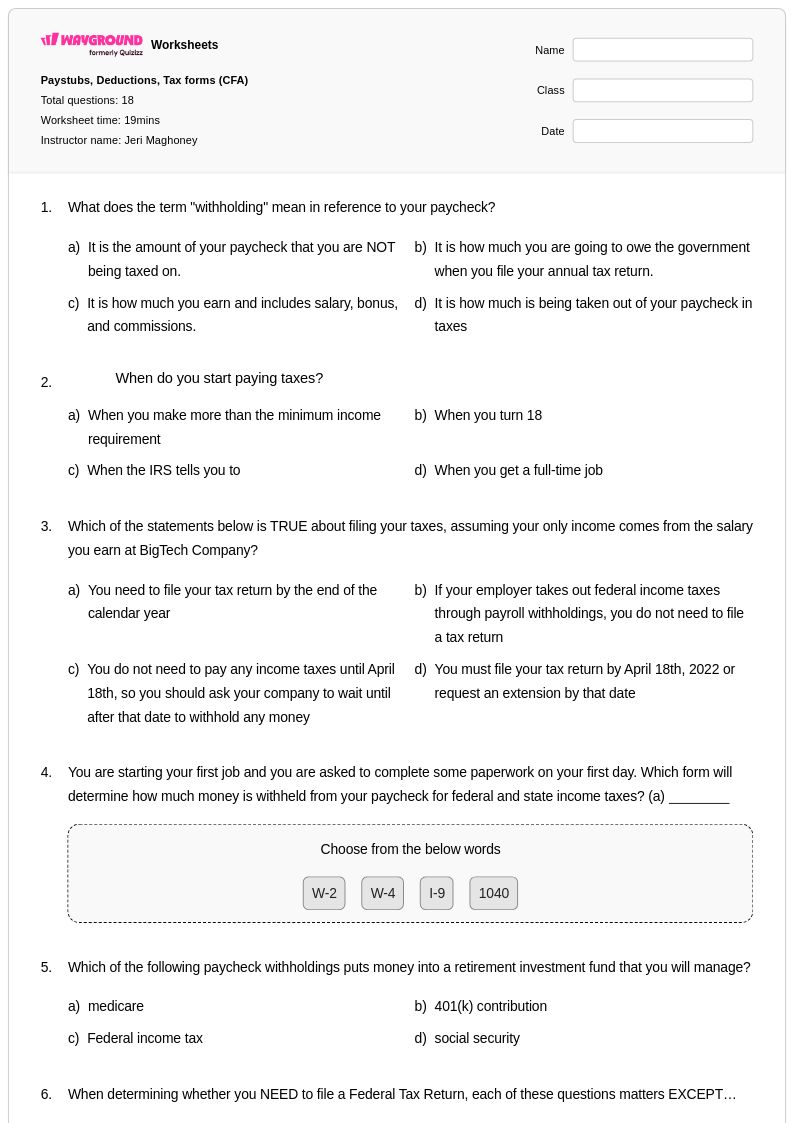
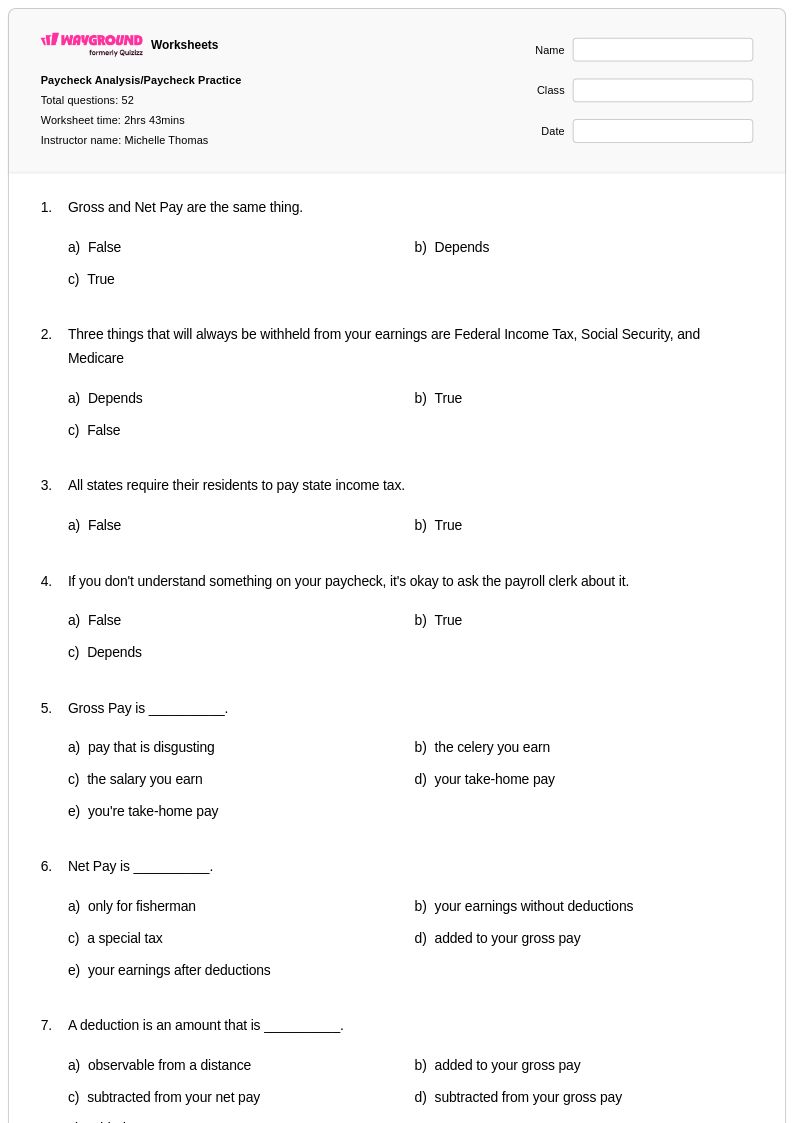
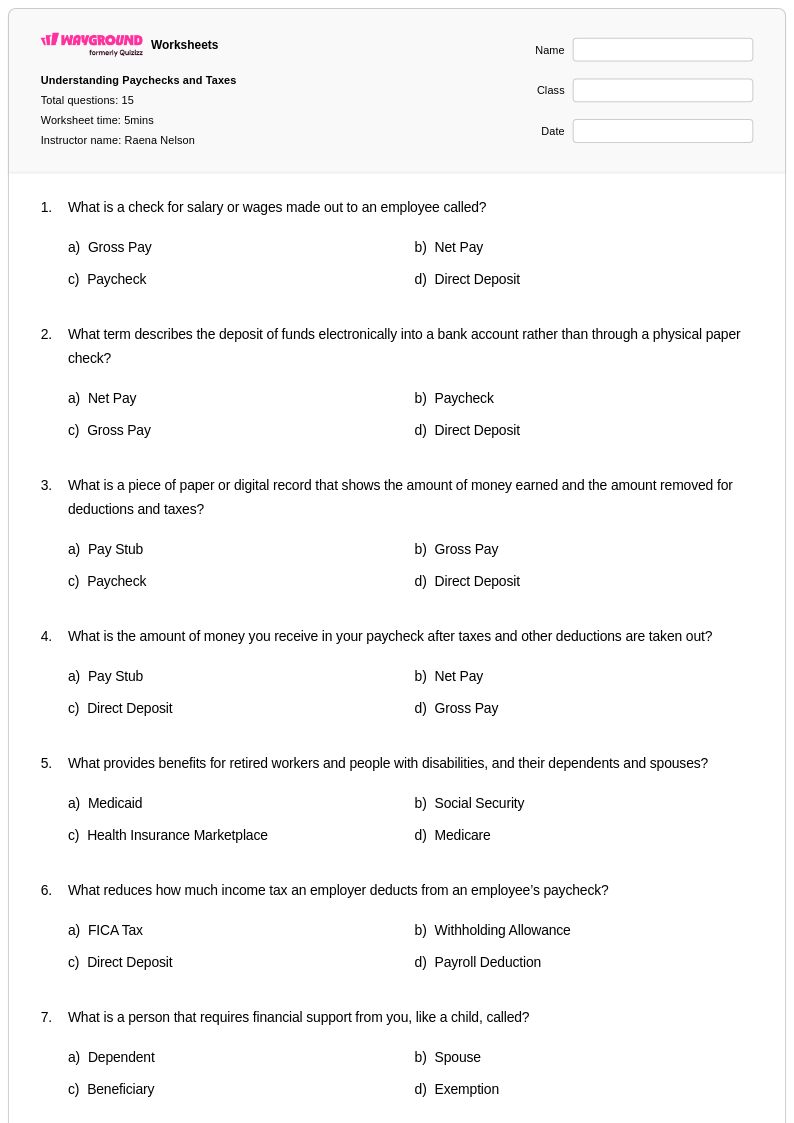
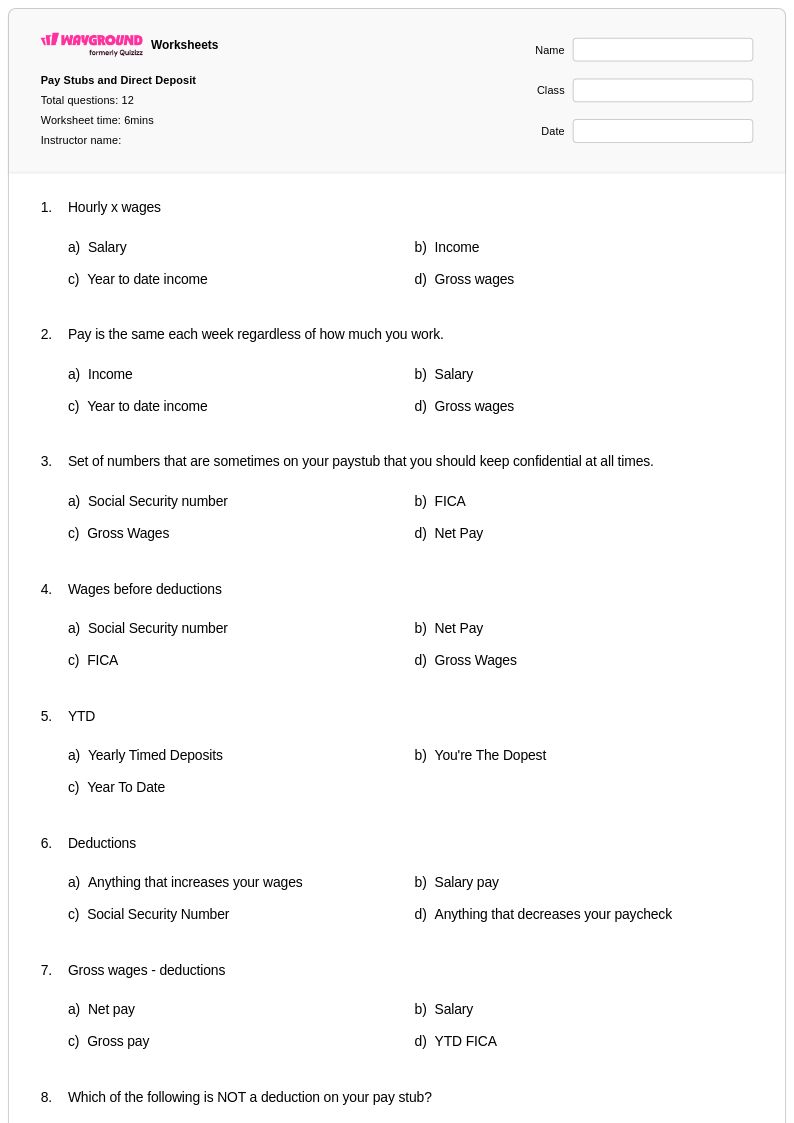
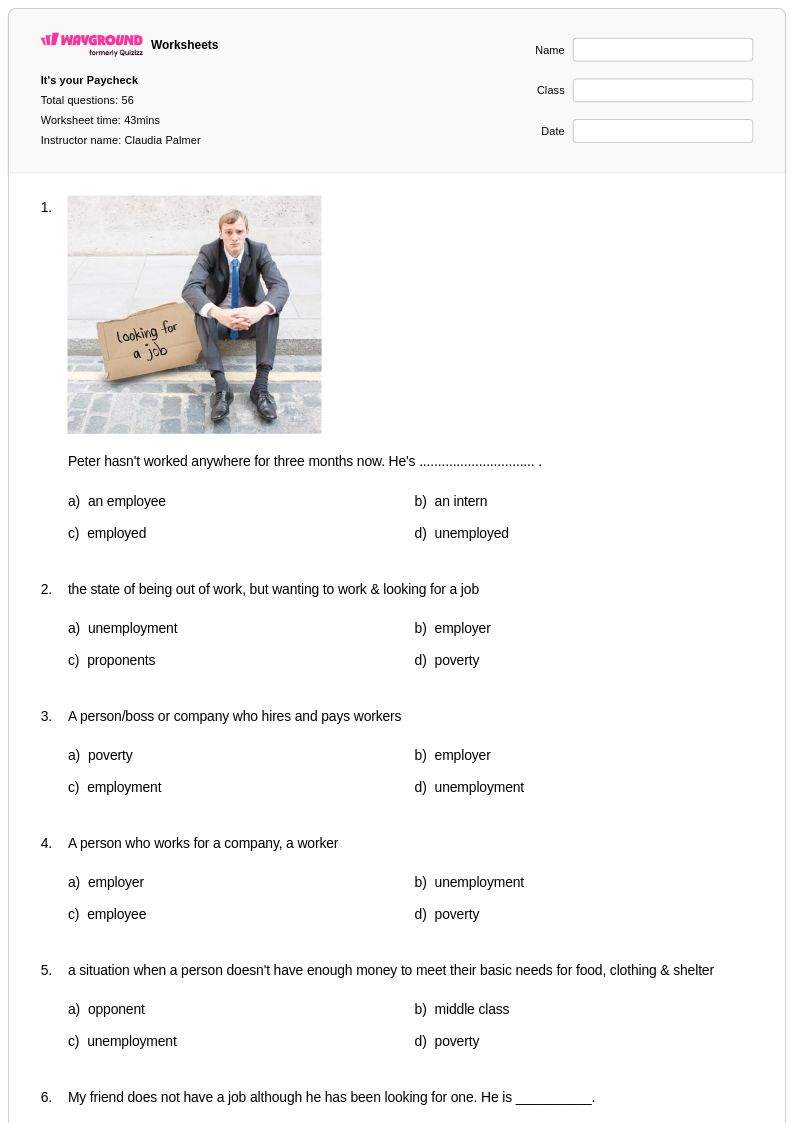
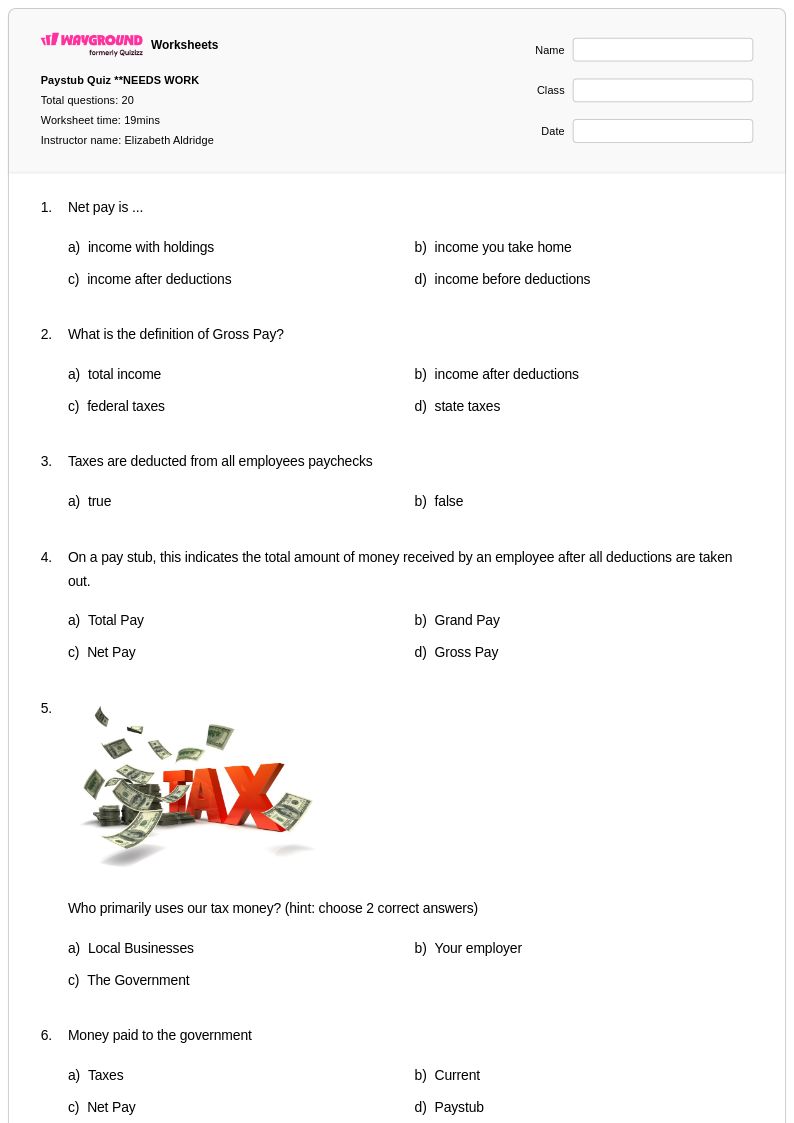
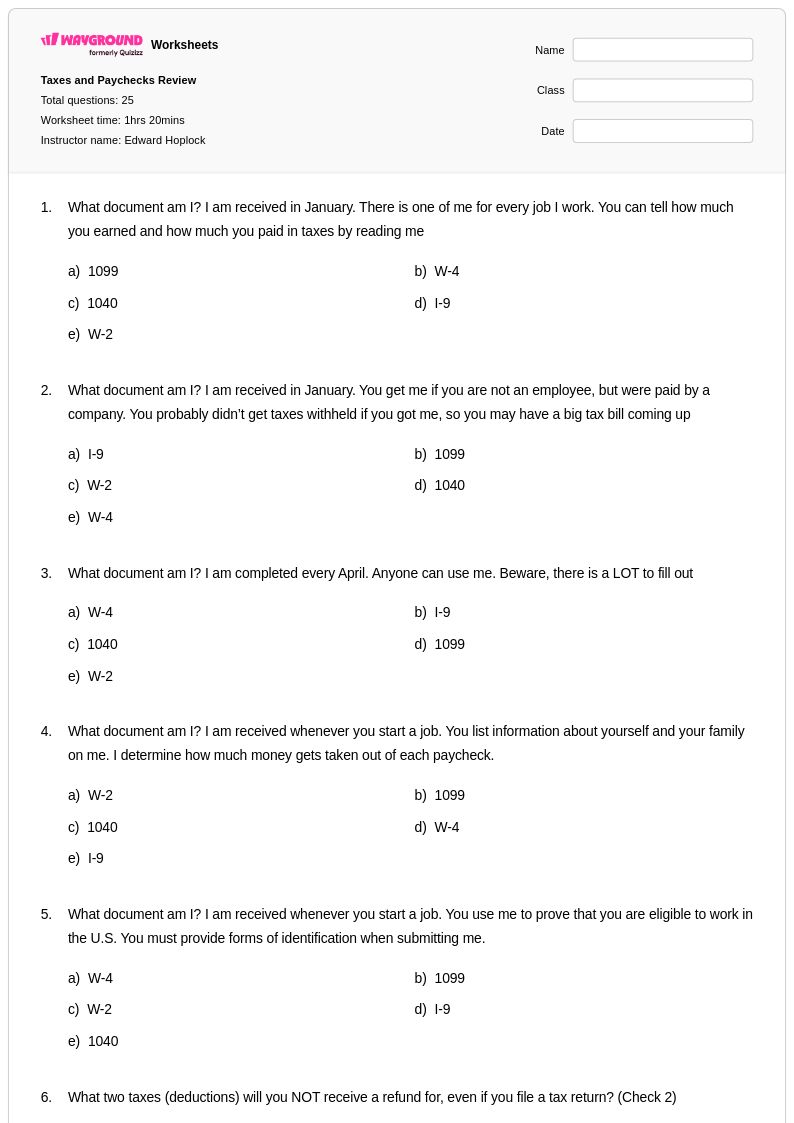
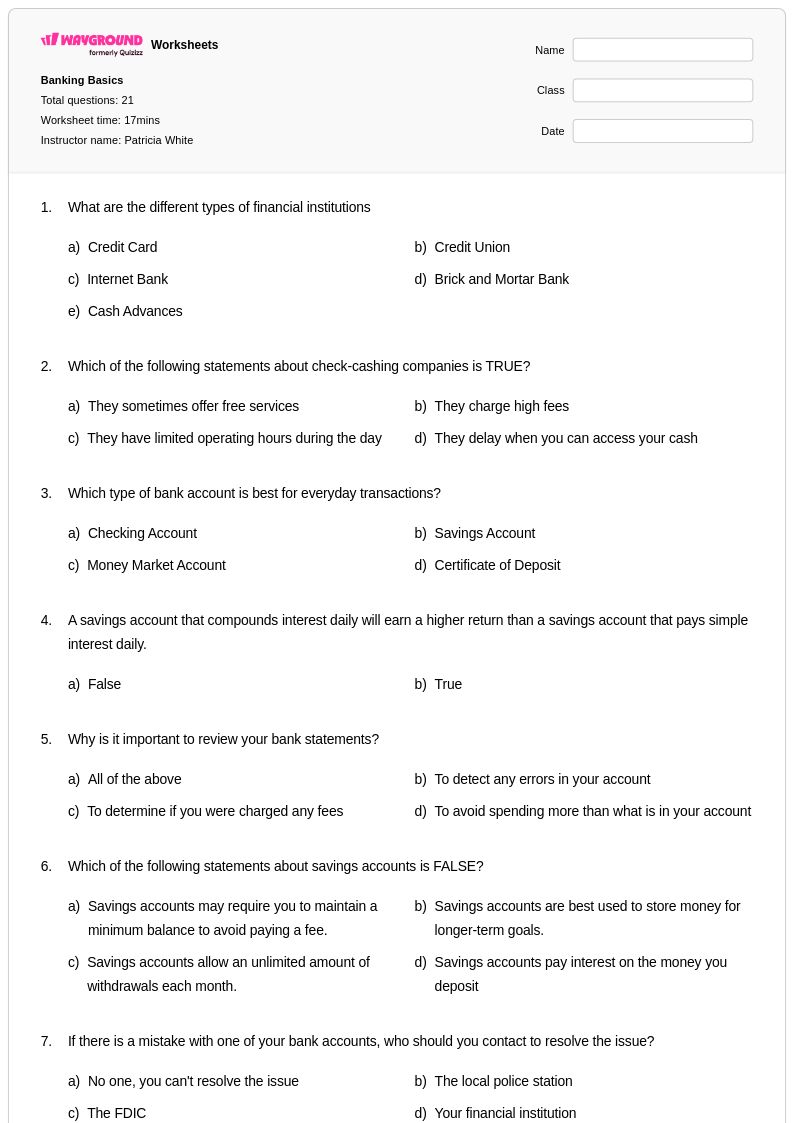
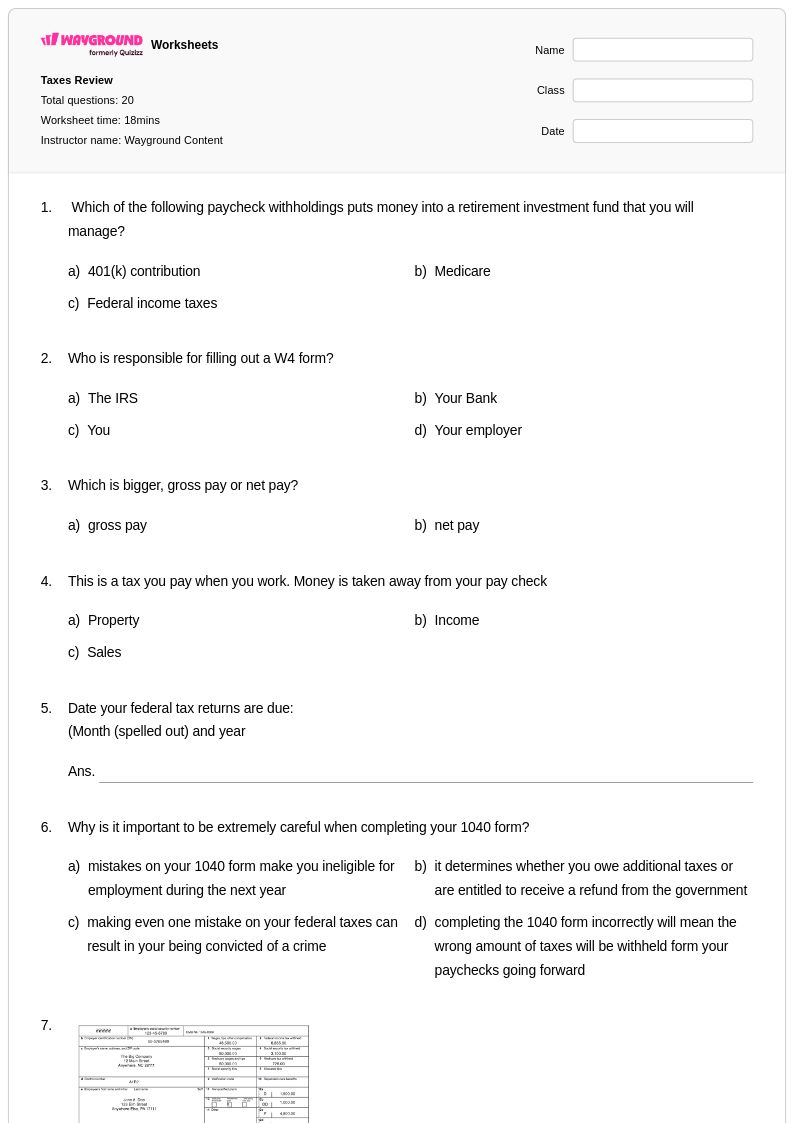
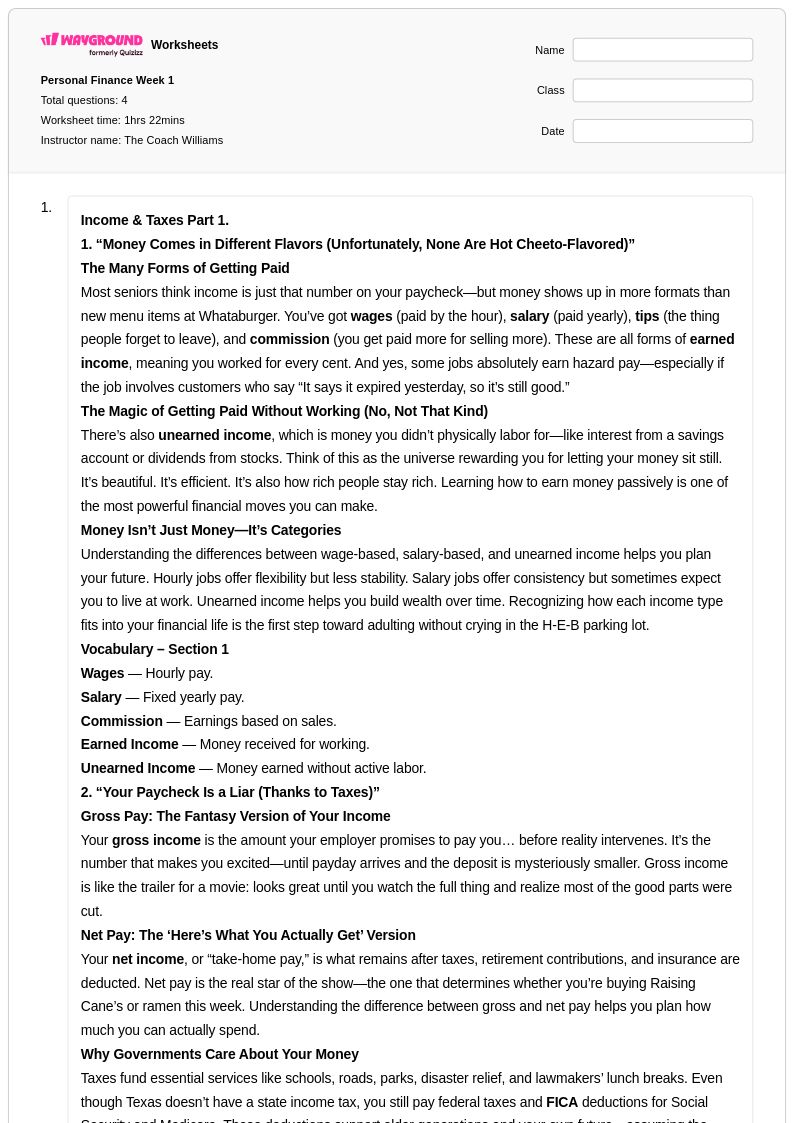
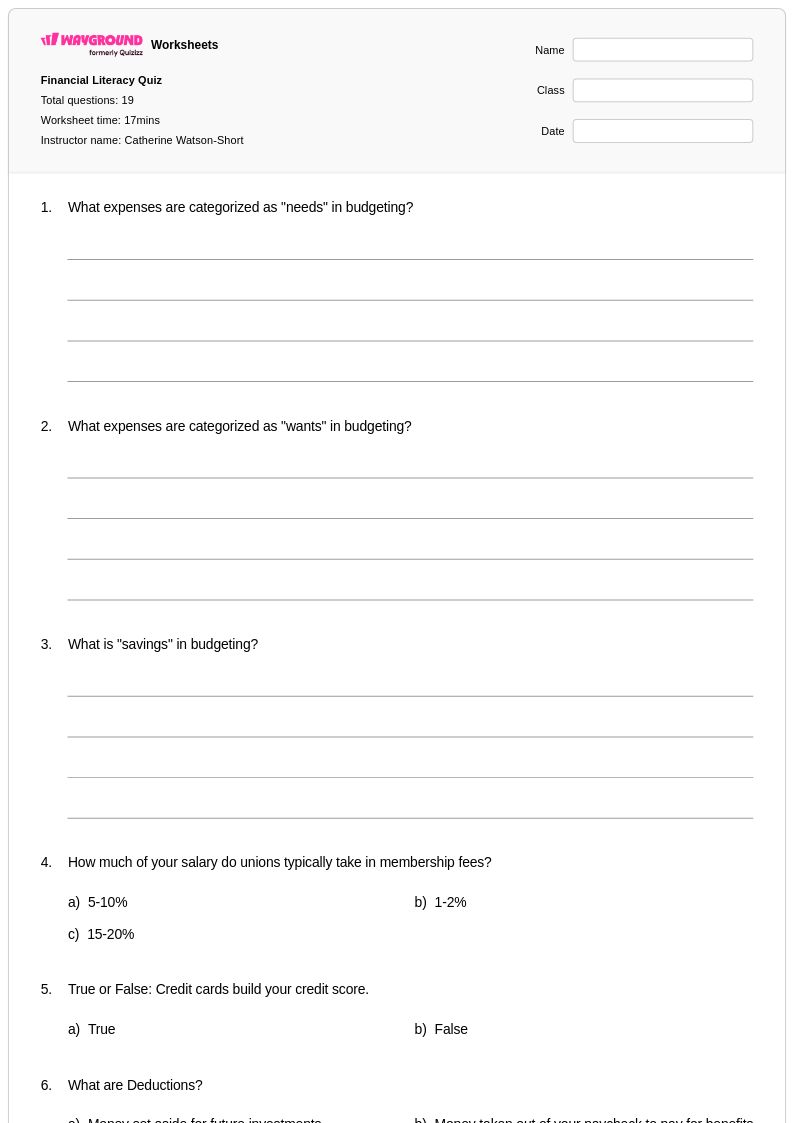
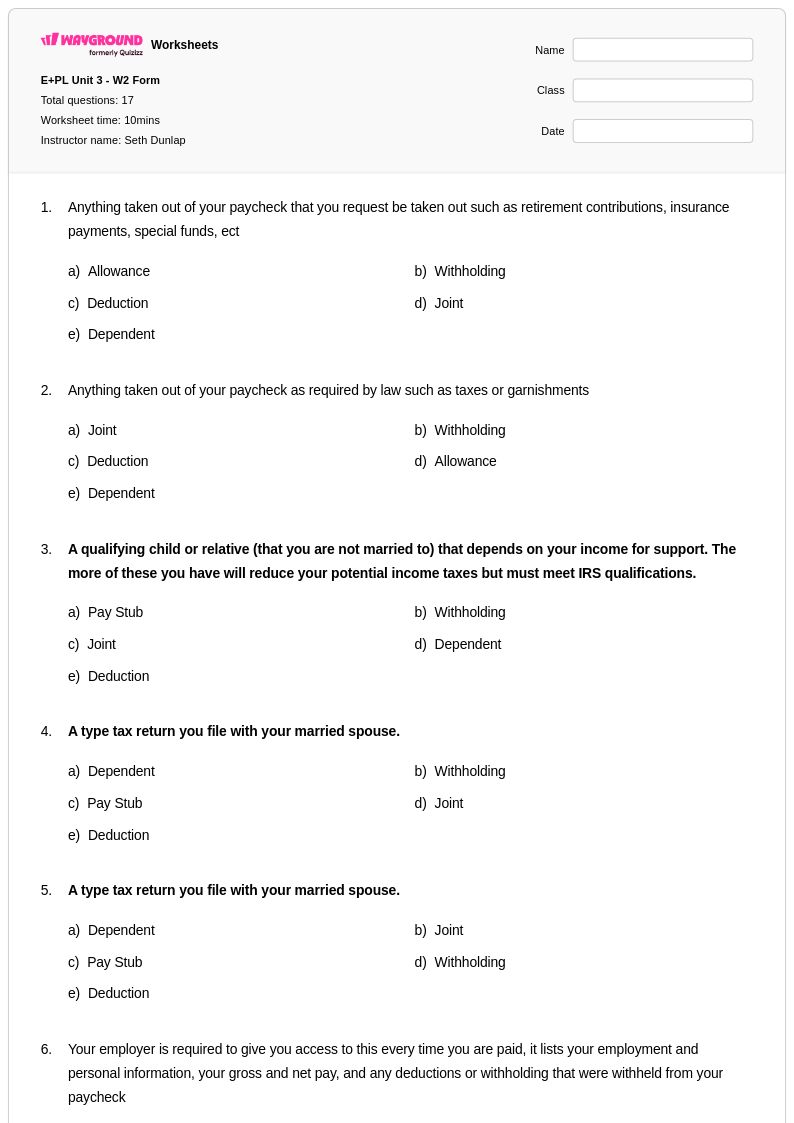
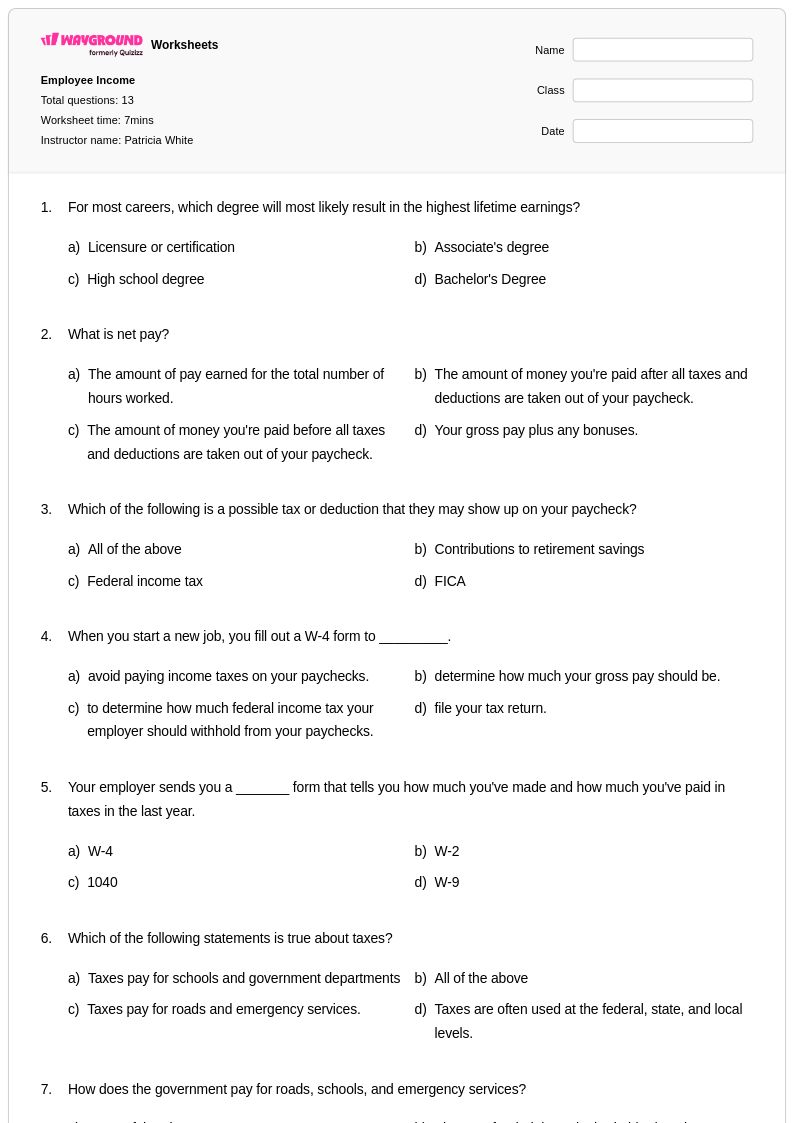
Reading paycheck stubs represents a crucial financial literacy skill for Class 10 students, bridging classroom economics concepts with real-world personal finance management. Wayground's comprehensive collection of reading paycheck stubs worksheets provides students with authentic practice opportunities to decode the various components of earnings statements, including gross pay, net pay, federal and state tax deductions, Social Security contributions, Medicare withholdings, and voluntary deductions such as health insurance premiums. These carefully designed practice problems strengthen students' ability to calculate take-home pay, understand tax obligations, and recognize the difference between salary and hourly wage structures. Each worksheet comes with a detailed answer key that enables students to verify their calculations and understand common payroll terminology, while the free printable format ensures accessibility for both classroom instruction and independent study.
Wayground's extensive library of millions of teacher-created resources empowers educators to deliver comprehensive instruction on paycheck analysis through diverse, standards-aligned materials that accommodate varying skill levels and learning preferences. Teachers can efficiently locate targeted worksheets using advanced search and filtering tools, allowing them to differentiate instruction for students who need additional support with basic calculations or enrichment activities involving complex deduction scenarios. The platform's flexible customization options enable educators to modify existing materials or combine multiple resources to create comprehensive lesson plans that address specific curriculum requirements. Available in both digital and printable pdf formats, these resources support diverse classroom environments and teaching styles, facilitating seamless integration into economics units while providing valuable practice for remediation sessions and skill reinforcement activities that prepare students for independent financial decision-making.
FAQs
How do I teach students to read a paycheck stub?
Start by introducing the key components of a pay stub in sequence: gross pay, tax deductions (federal, state, and local), voluntary deductions like health insurance or retirement contributions, and finally net pay. Use a real or realistic sample pay stub as an anchor document, and walk students through each line item before asking them to calculate values independently. Connecting each deduction to a real-world explanation — why FICA exists, what a 401(k) contribution means — builds both comprehension and financial motivation.
What exercises help students practice reading paycheck stubs?
Effective practice exercises include filling in missing values on a partially completed pay stub, calculating net pay from a given gross pay and list of deductions, and comparing two pay stubs to identify differences in tax withholding or benefits elections. Scaffolded worksheets that start with simple hourly pay calculations and progress to salary structures with multiple deduction types are particularly effective for building skill incrementally.
What mistakes do students commonly make when reading paycheck stubs?
The most common error is confusing gross pay with net pay — students frequently treat the larger number as their actual take-home amount, which leads to miscalculations in budgeting tasks. Students also struggle to distinguish between pre-tax and post-tax deductions, often applying deductions in the wrong order when calculating net pay. A third frequent misconception is assuming all employees have identical deductions, so comparing two stubs with different withholding elections is a useful corrective exercise.
How do I differentiate paycheck stub lessons for students at different skill levels?
For students who are still developing number sense, begin with whole-number hourly wages and a single deduction before introducing percentages and multiple line items. Advanced students can work with commission-based pay, overtime calculations, or year-to-date totals that require multi-step reasoning. On Wayground, teachers can apply accommodations such as reduced answer choices and read-aloud support to individual students, so struggling learners receive targeted scaffolding without disrupting the rest of the class.
How do I use Wayground's paycheck stub worksheets in my classroom?
Wayground's reading paycheck stub worksheets are available as printable PDFs for traditional paper-based instruction and in digital formats for technology-integrated classrooms, and teachers can also host them directly as a quiz on Wayground. Each worksheet includes a complete answer key, making them suitable for independent practice, homework assignments, or formative assessment. The digital format is especially useful for hybrid or remote settings where students need structured financial literacy practice without teacher-led direct instruction.
At what grade level should students learn to read a paycheck stub?
Paycheck stub literacy is most commonly introduced in middle or high school, typically within personal finance, economics, or career readiness courses where students are beginning to think about employment. However, foundational components — such as understanding gross versus net pay or calculating a percentage deduction — can be introduced earlier as applied math practice. The skill is particularly high-impact for students approaching working age, making it a strong fit for 8th through 12th grade financial literacy units.