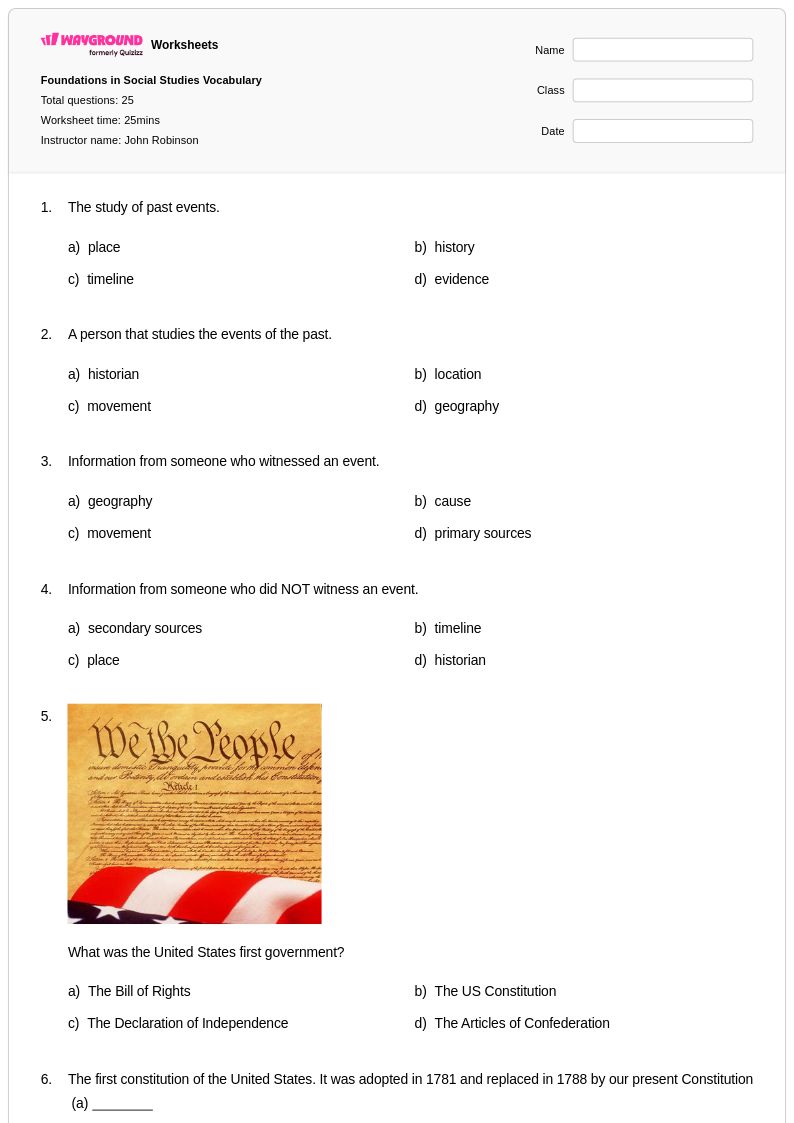
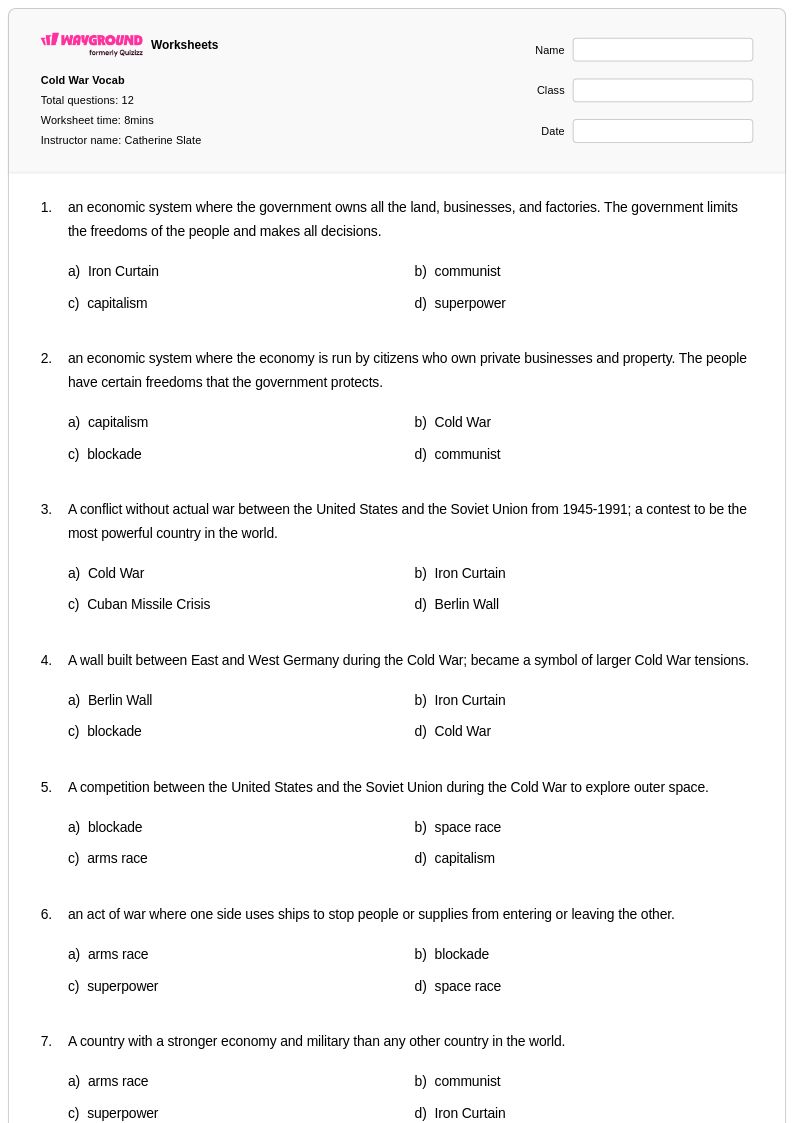
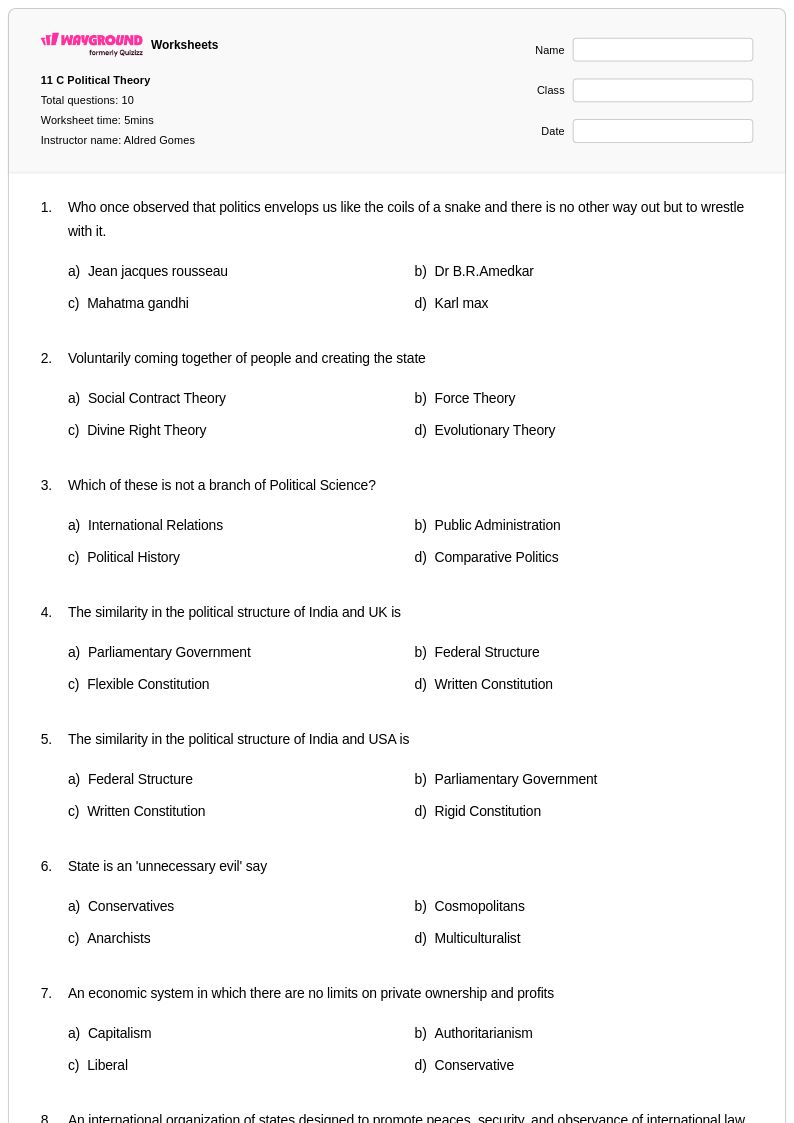
Explore Wayground's free Class 5 capitalism worksheets and printables that help students understand economic systems, private ownership, and market principles through engaging practice problems and comprehensive answer keys.
Explore printable Capitalism worksheets for Class 5
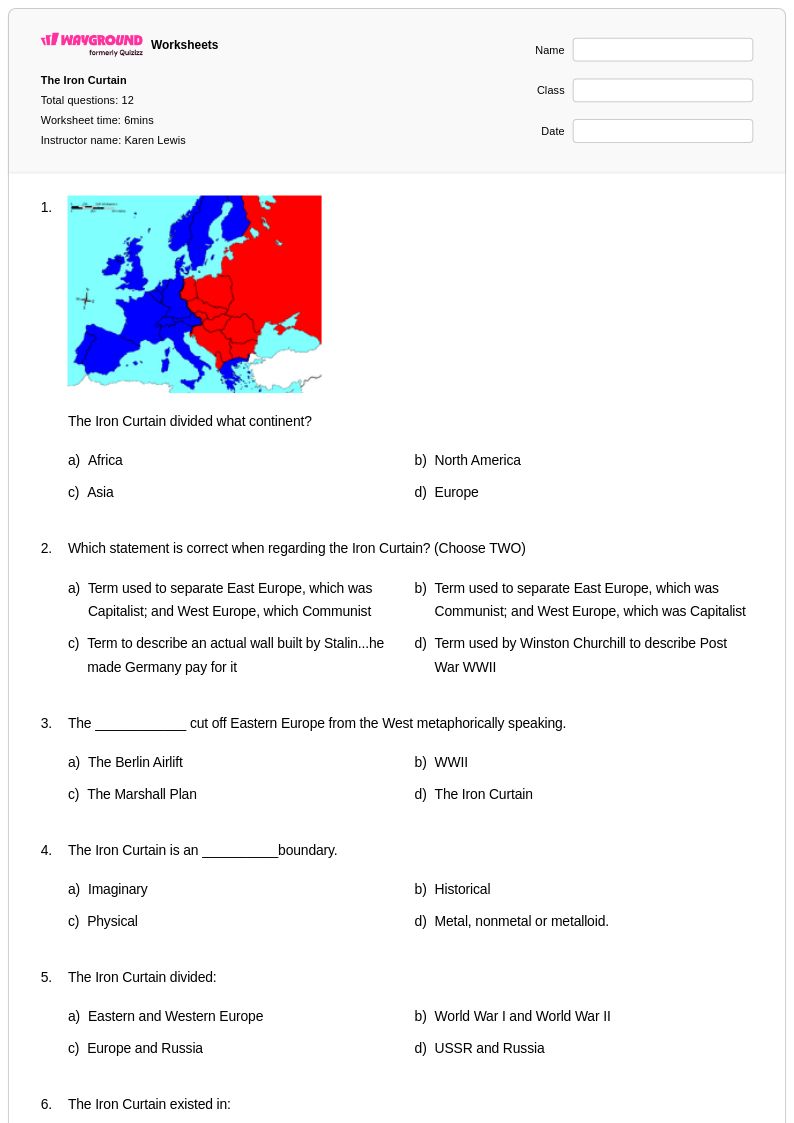
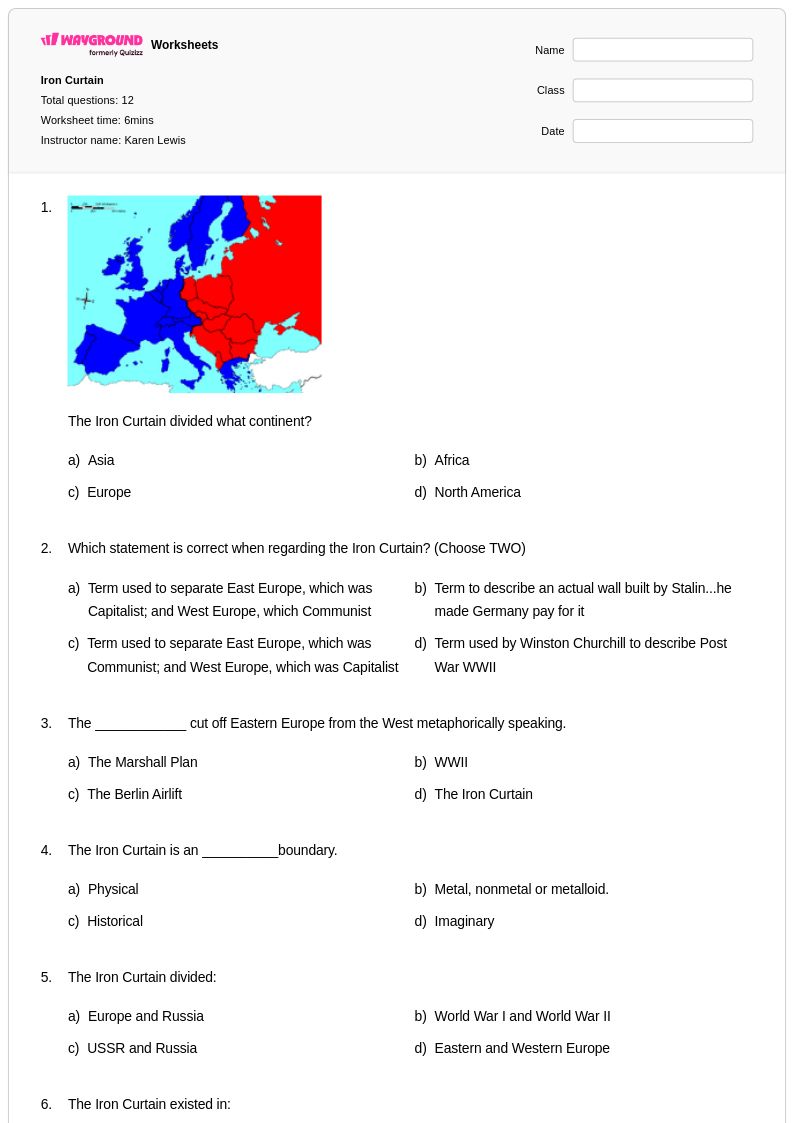
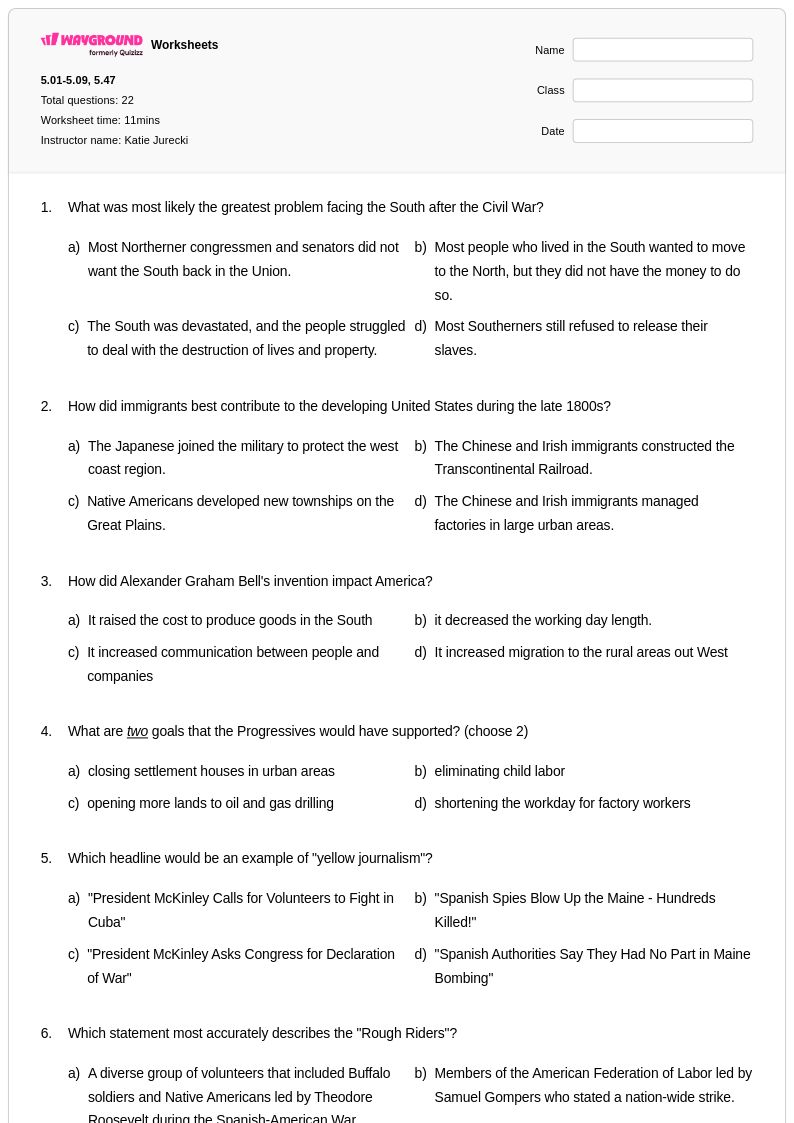
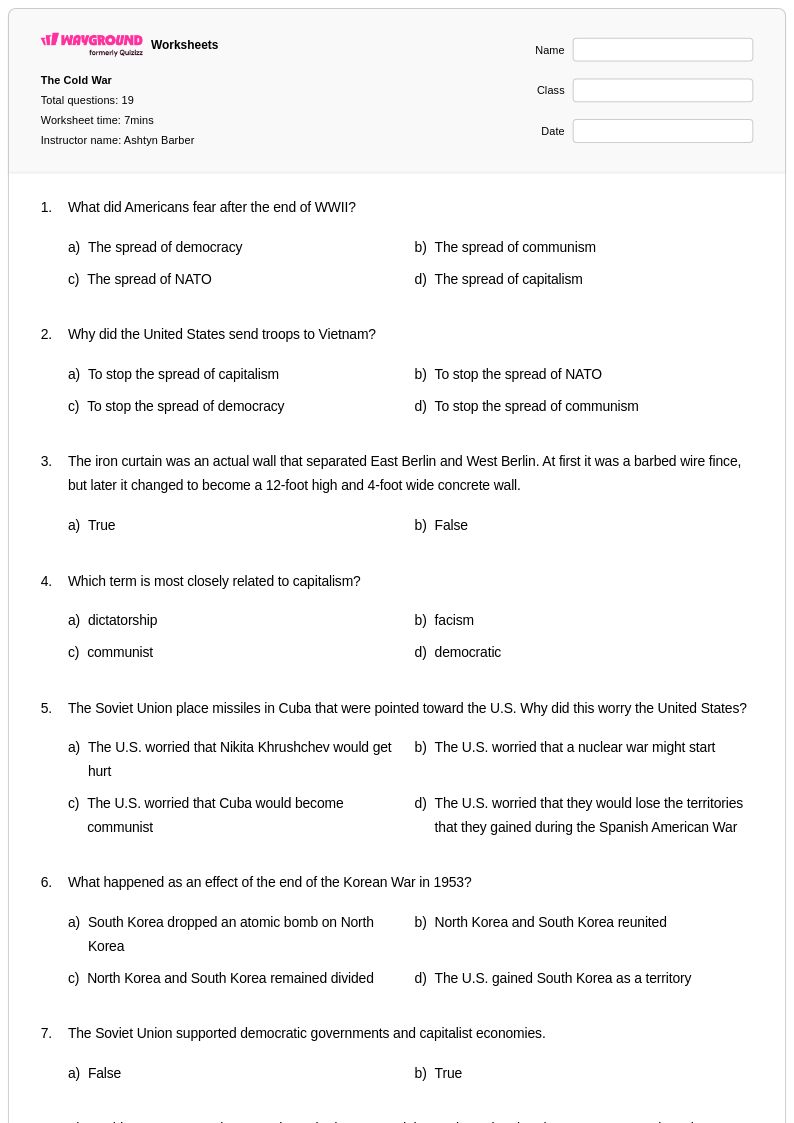
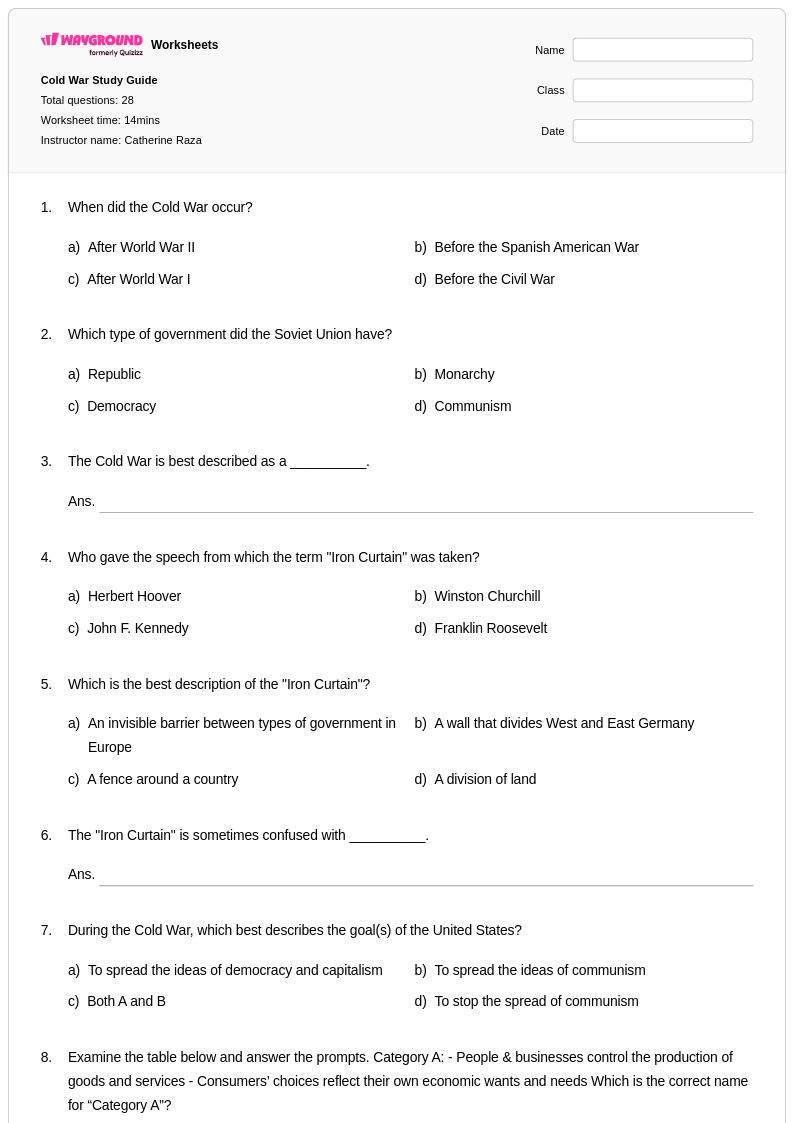
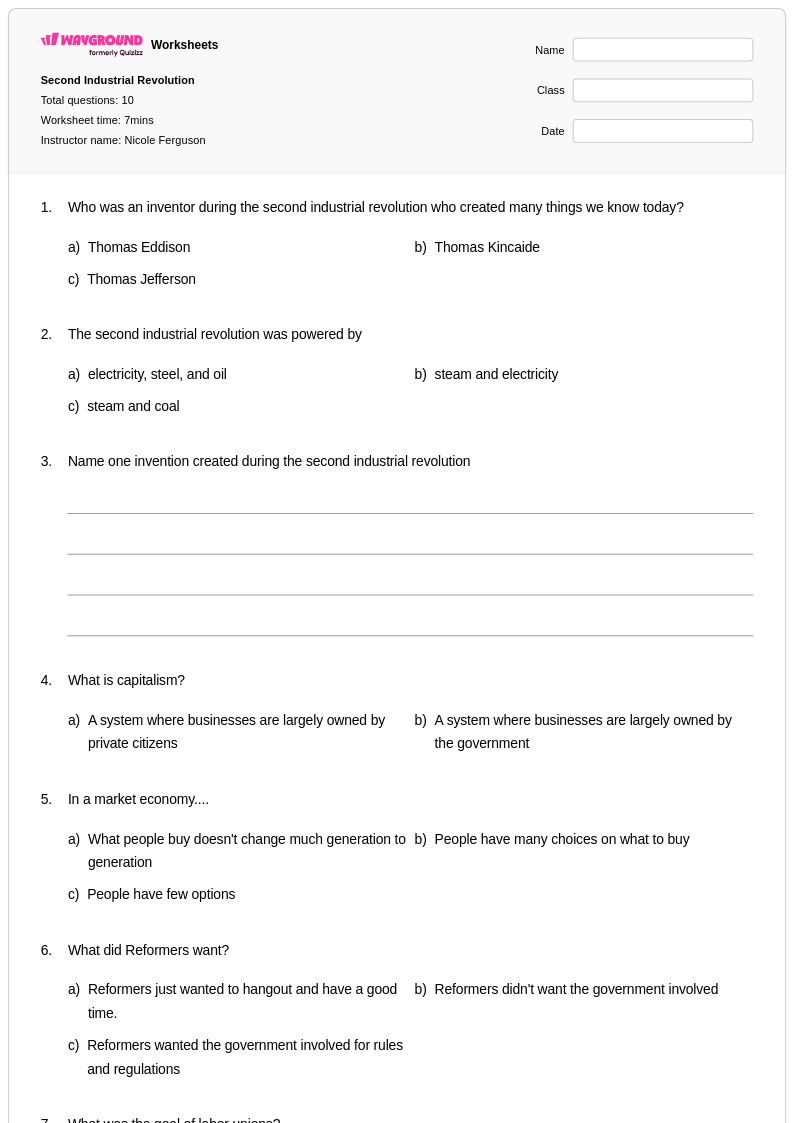
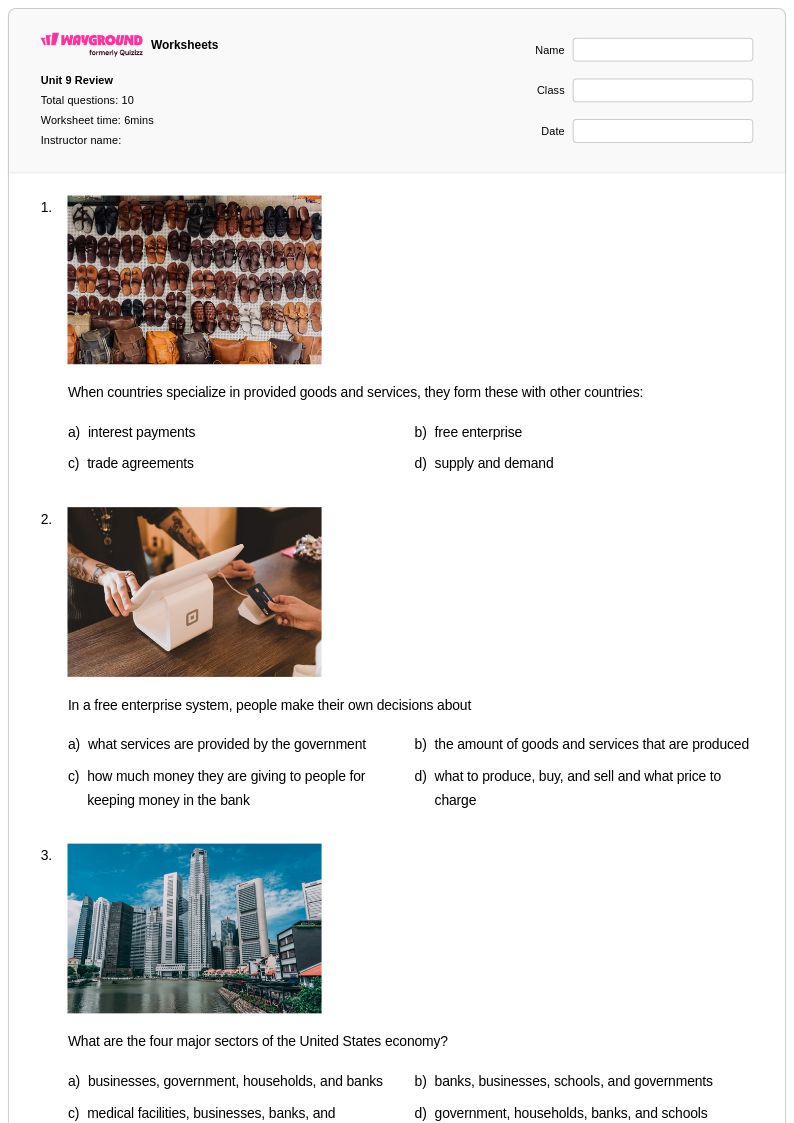
Class 5 capitalism worksheets available through Wayground (formerly Quizizz) provide students with age-appropriate introductions to fundamental economic concepts within our free market system. These educational resources help fifth-grade learners understand basic principles such as private ownership, competition between businesses, supply and demand, and the role of consumers in making economic choices. The worksheets strengthen critical thinking skills by presenting real-world scenarios where students analyze how businesses compete for customers, examine the relationship between price and quality, and explore how individual economic decisions impact communities. Each printable resource includes comprehensive practice problems that guide students through identifying characteristics of capitalism, comparing different economic systems, and understanding how entrepreneurship drives innovation and economic growth. Teachers can access complete answer keys in convenient PDF format to support effective assessment and provide immediate feedback on student understanding.
Wayground (formerly Quizizz) empowers educators with millions of teacher-created capitalism worksheets specifically designed for Class 5 social studies instruction. The platform's robust search and filtering capabilities enable teachers to quickly locate resources aligned with state standards and curriculum objectives, while differentiation tools allow for seamless customization to meet diverse learning needs within the classroom. These comprehensive worksheet collections are available in both printable PDF format and interactive digital versions, providing flexibility for traditional classroom instruction, remote learning environments, or hybrid educational models. Teachers utilize these resources for lesson planning, targeted skill practice, remediation for struggling learners, and enrichment activities for advanced students, ensuring that complex economic concepts are accessible and engaging for all fifth-grade learners while building foundational knowledge essential for future social studies success.
FAQs
How do I teach capitalism to students who have no background in economics?
Start by anchoring capitalism in concepts students already experience, such as buying goods, starting a small business, or competing for limited resources. Introduce the four core pillars: private ownership, free markets, competition, and profit motive, using relatable examples like local businesses or consumer choices. From there, students can compare capitalism to other economic systems to build contrast and deepen understanding. Scaffolded worksheets that move from vocabulary to application work well for building foundational knowledge before tackling more complex analysis.
What are good practice exercises for helping students understand how capitalism works?
Effective practice for capitalism includes supply and demand scenarios, market competition case studies, and exercises where students analyze the role of profit motive in business decisions. Vocabulary reinforcement activities that match key terms like 'private ownership,' 'market regulation,' and 'competition' to definitions and real-world examples help solidify conceptual understanding. Analytical tasks that ask students to evaluate the advantages and challenges of capitalism as an economic model push beyond recall toward critical thinking. Worksheets that incorporate economic data interpretation build the skills students need to connect theory to contemporary issues.
What misconceptions do students commonly have about capitalism?
A common misconception is that capitalism means zero government involvement, when in reality most capitalist economies include market regulation to prevent monopolies and protect consumers. Students also frequently conflate capitalism with wealth equality, not understanding that capitalism produces competitive markets but does not guarantee equitable outcomes. Another error is treating supply and demand as separate forces rather than as an interdependent system that sets prices. Worksheets that present contrasting market structures and real-world regulatory examples help students confront and correct these misunderstandings.
How do I use capitalism worksheets in my classroom?
Capitalism worksheets on Wayground are available as printable PDFs for traditional classroom use and in digital formats for technology-integrated environments, making them flexible for both in-person and online instruction. Teachers can also host these worksheets as a quiz directly on Wayground, enabling real-time student responses and automated grading. Each worksheet includes a comprehensive answer key, supporting independent student practice, small group work, or teacher-led review. For students who need additional support, Wayground's built-in accommodation tools allow teachers to enable features like read aloud, extended time, and reduced answer choices on a per-student basis.
How can I differentiate capitalism instruction for students at different ability levels?
For struggling learners, focus first on core vocabulary and concrete examples of private ownership and market competition before introducing abstract concepts like profit motives or market regulation. Advanced students benefit from comparative tasks that ask them to evaluate capitalism against mixed or command economies using economic data. On Wayground, teachers can apply individual accommodations such as read aloud for English language learners, reduced answer choices for students with processing challenges, or extended time for students who need it, all without disrupting the experience of other students.
How do I connect capitalism to real-world examples students can relate to?
Connecting capitalism to students' daily experience is one of the most effective instructional strategies for this topic. Examples like streaming service competition, sneaker brand rivalries, or gig economy jobs illustrate private ownership, market competition, and profit motive in action. Having students analyze why prices rise and fall for products they buy, or why certain businesses succeed while others fail, grounds abstract economic theory in observable reality. Case studies comparing capitalist market structures in different countries can then expand students' analytical lens beyond domestic examples.