Free Printable Celestial Sphere Worksheets for Class 6
Class 6 celestial sphere worksheets from Wayground provide free printables and practice problems with answer keys to help students master the fundamentals of mapping stars and celestial coordinates.
Explore printable Celestial Sphere worksheets for Class 6
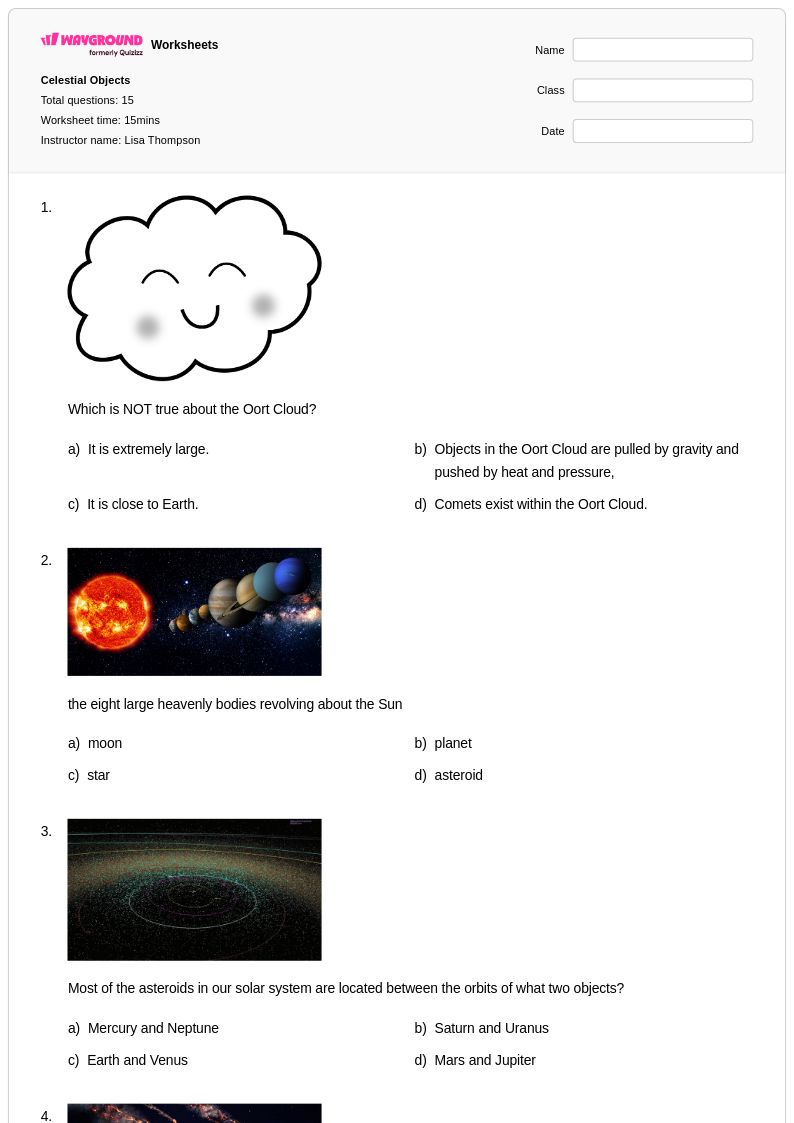
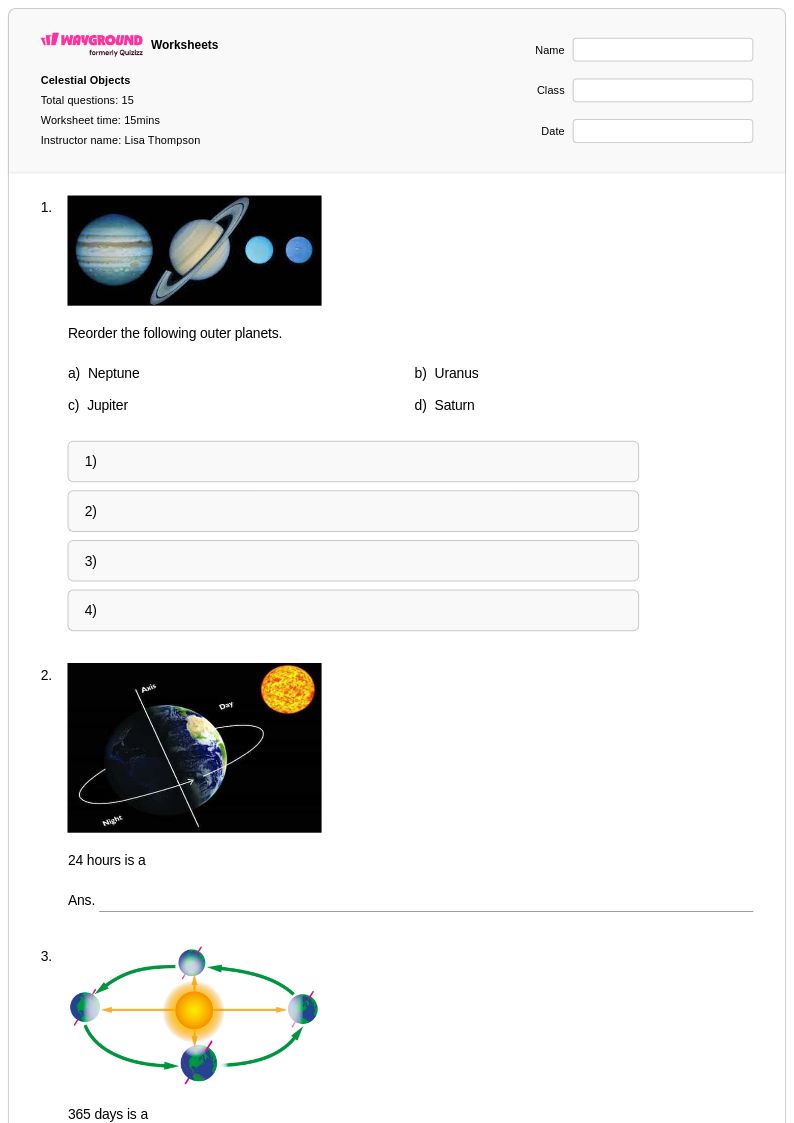
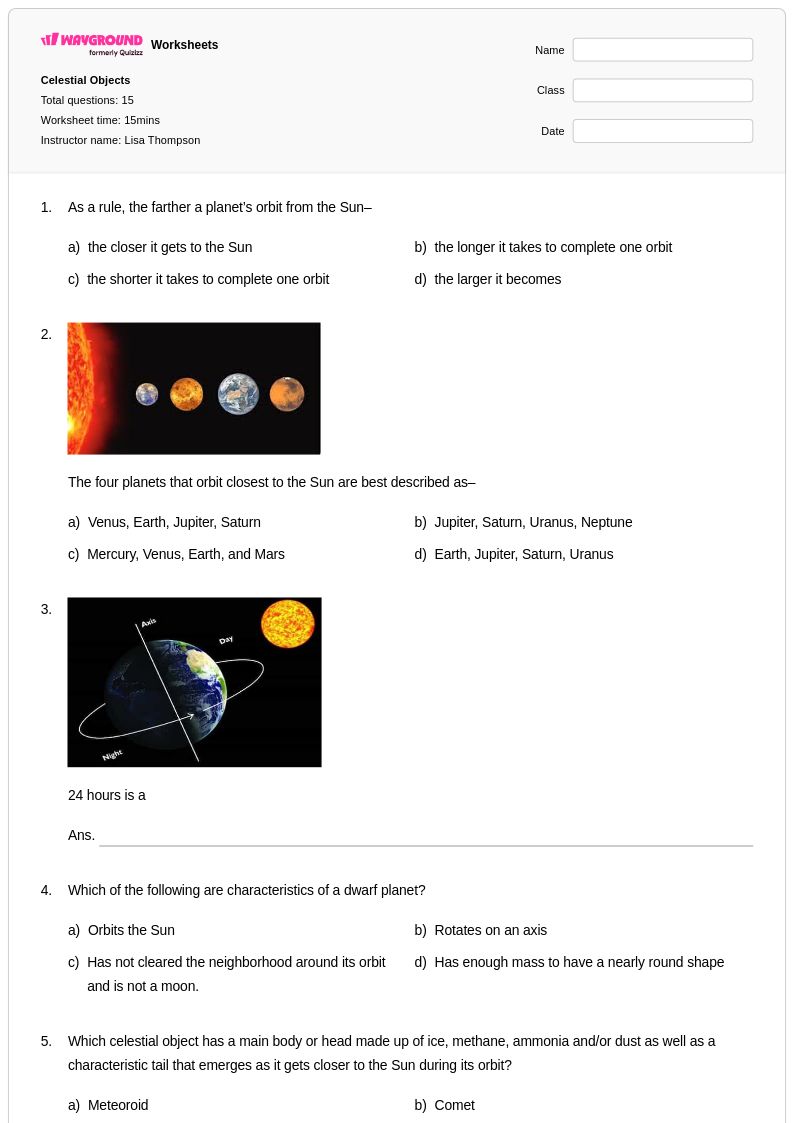
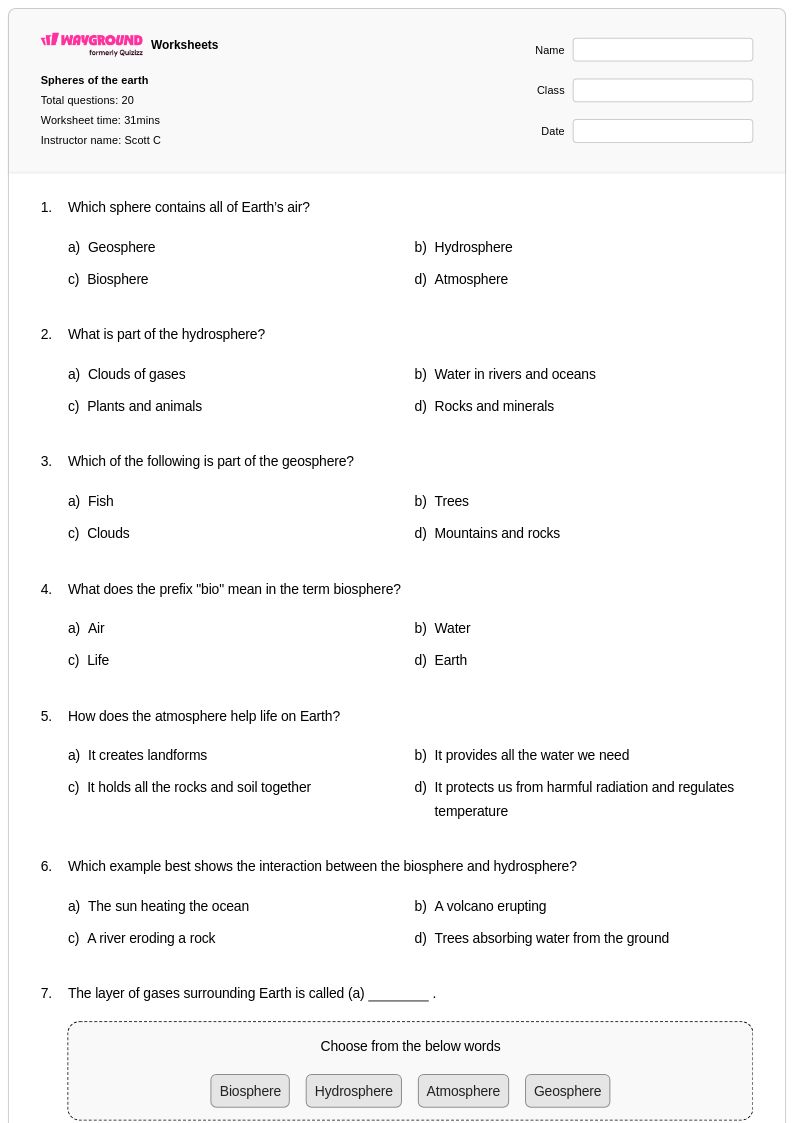
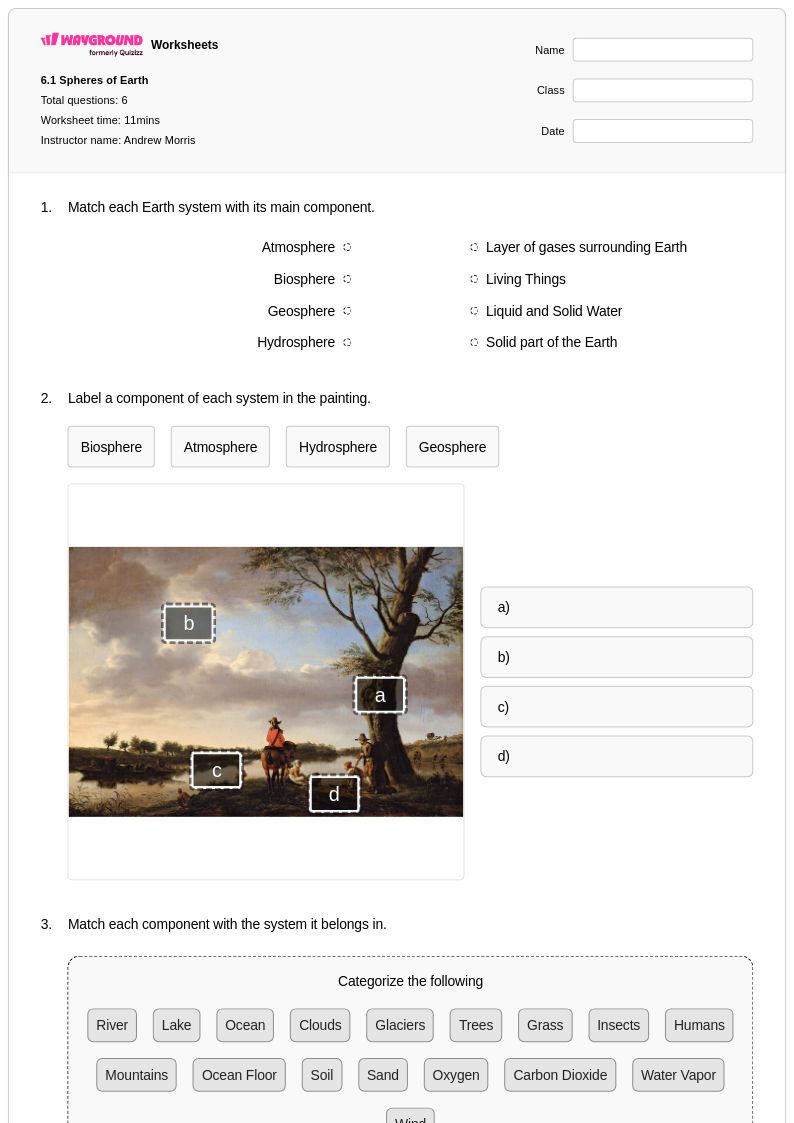
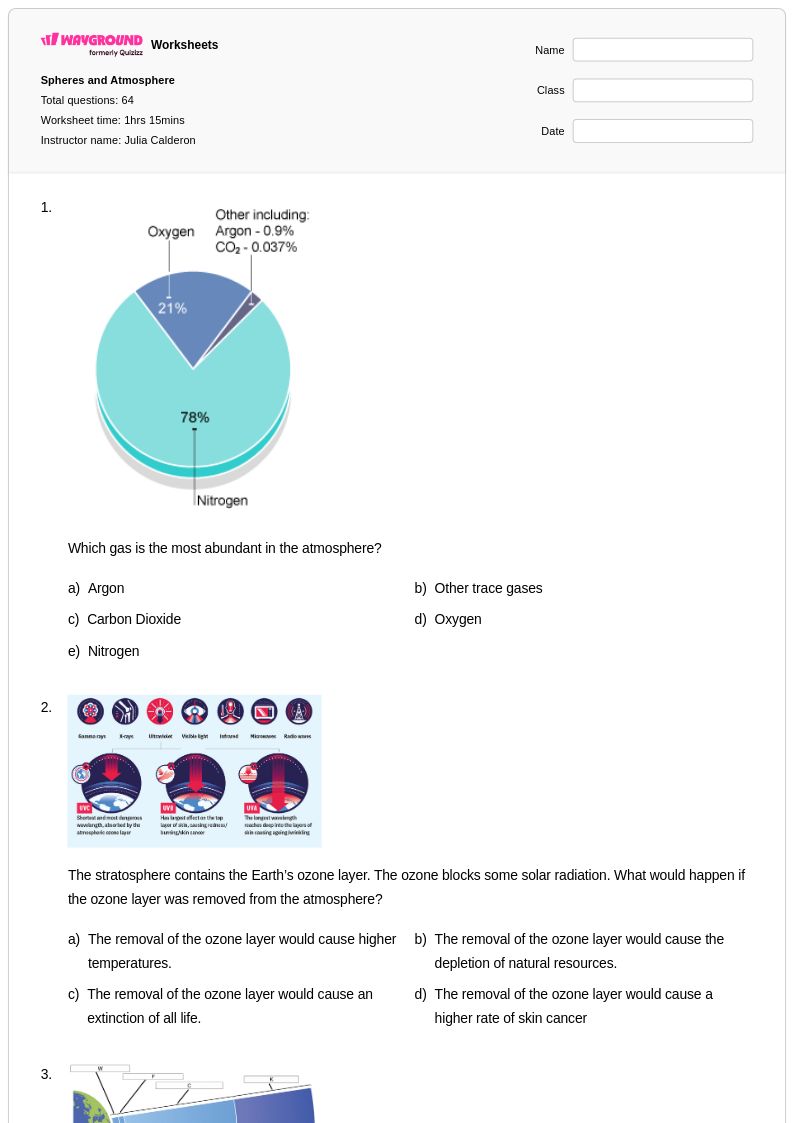
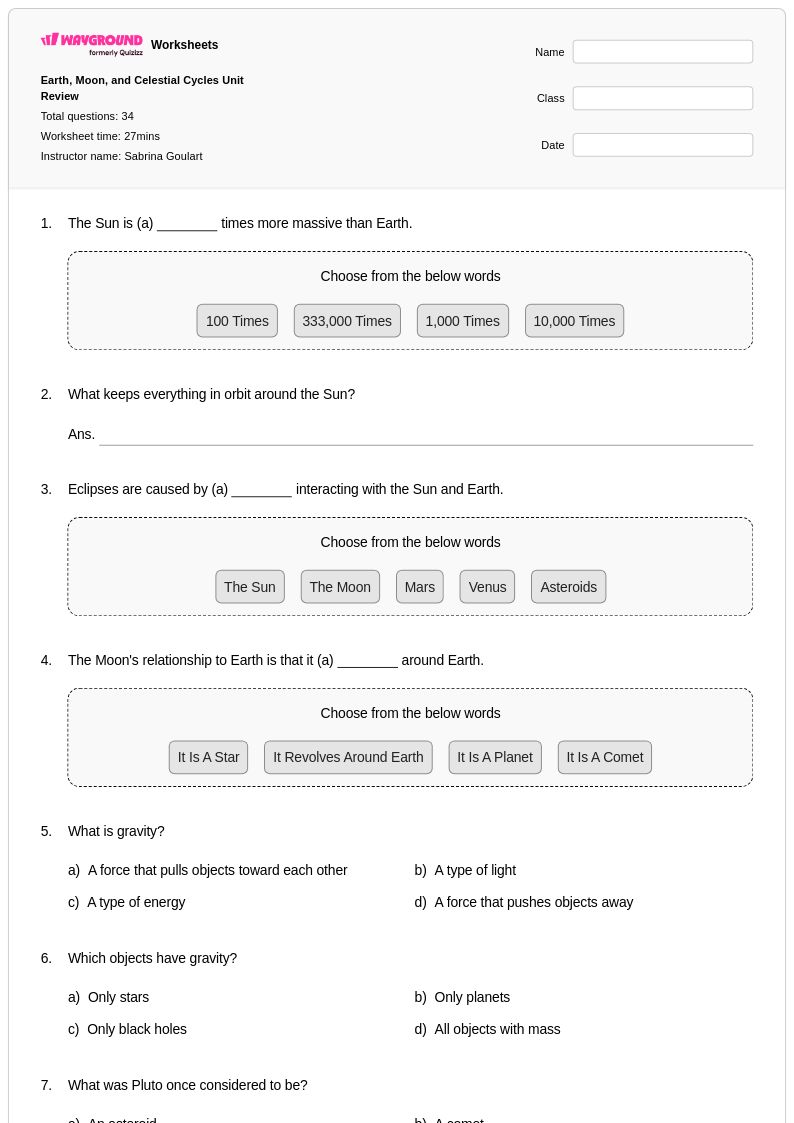
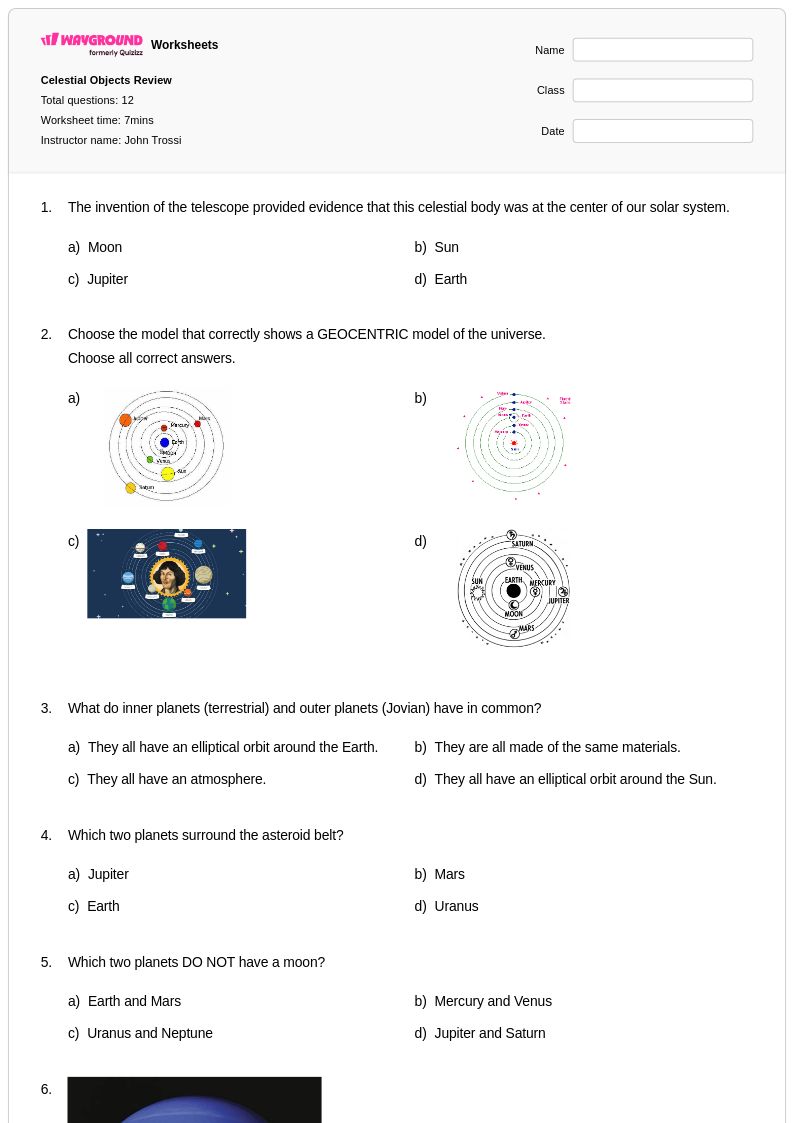
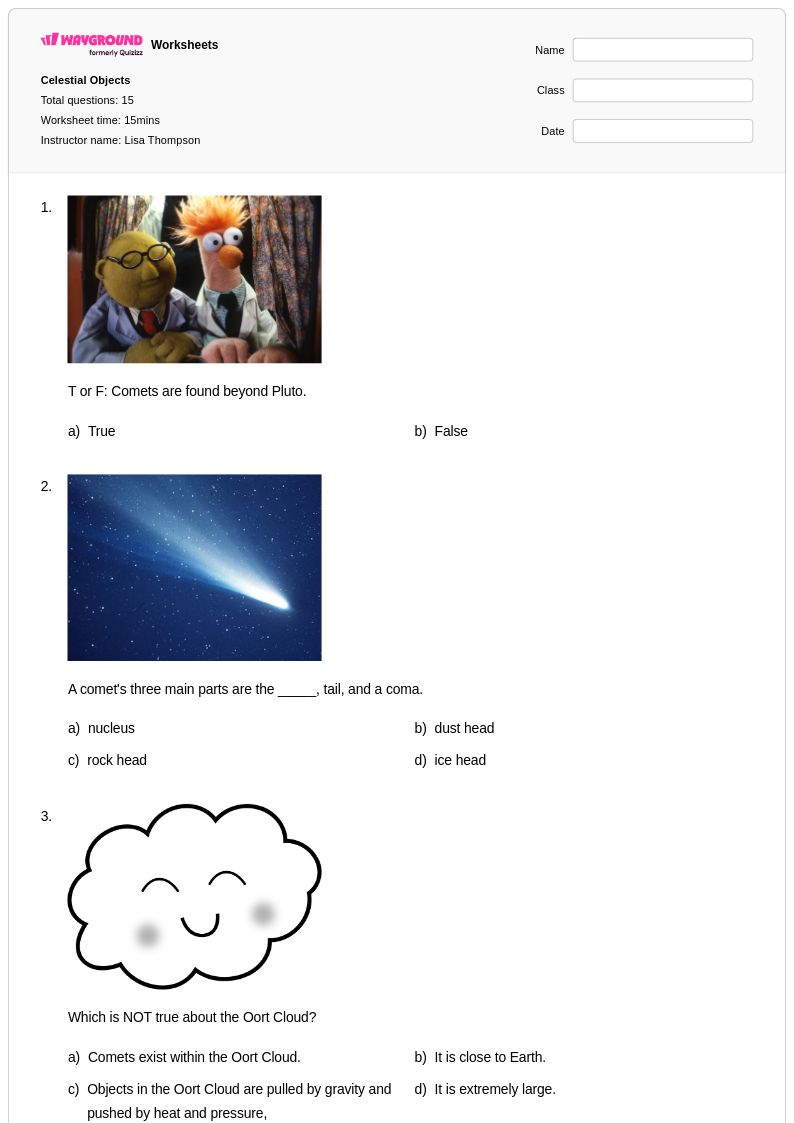
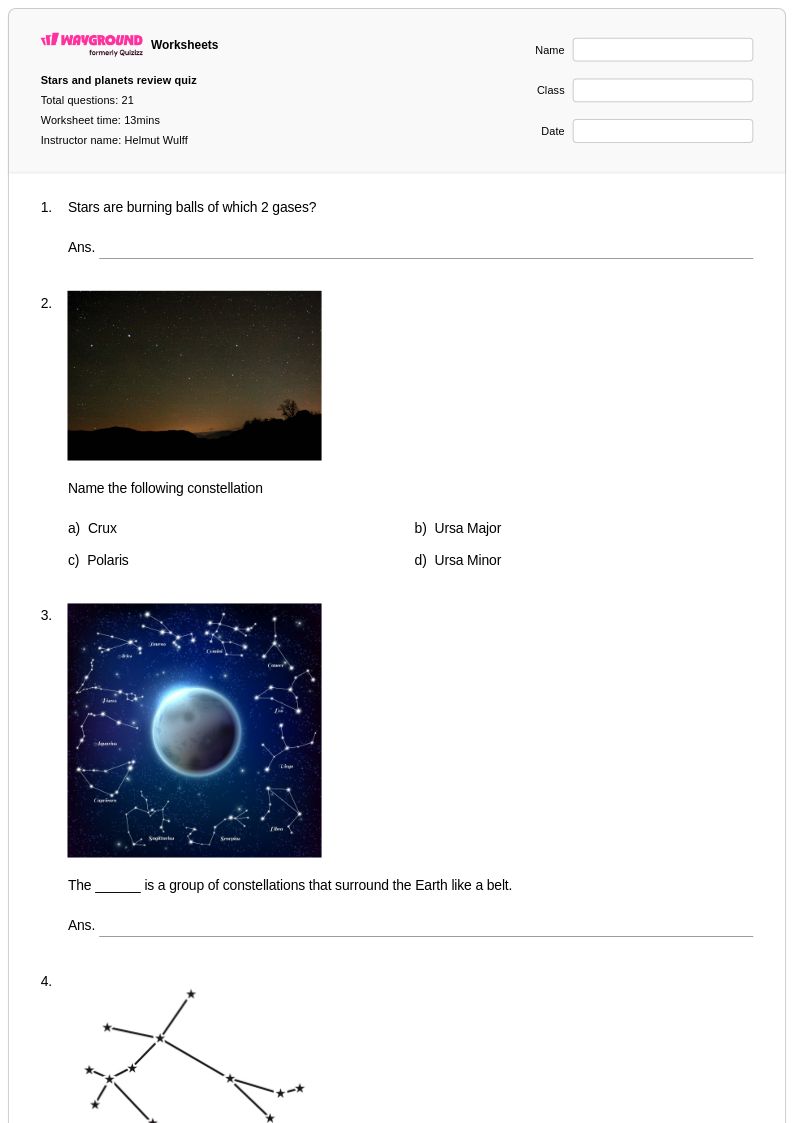
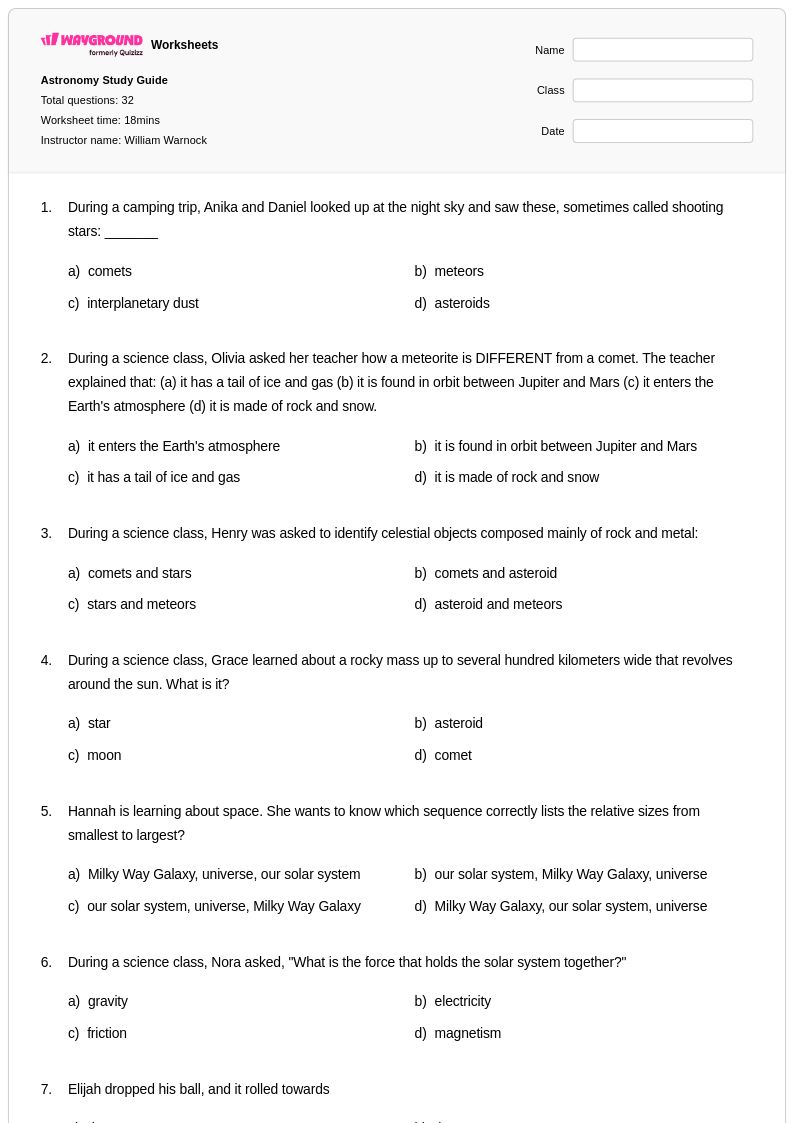
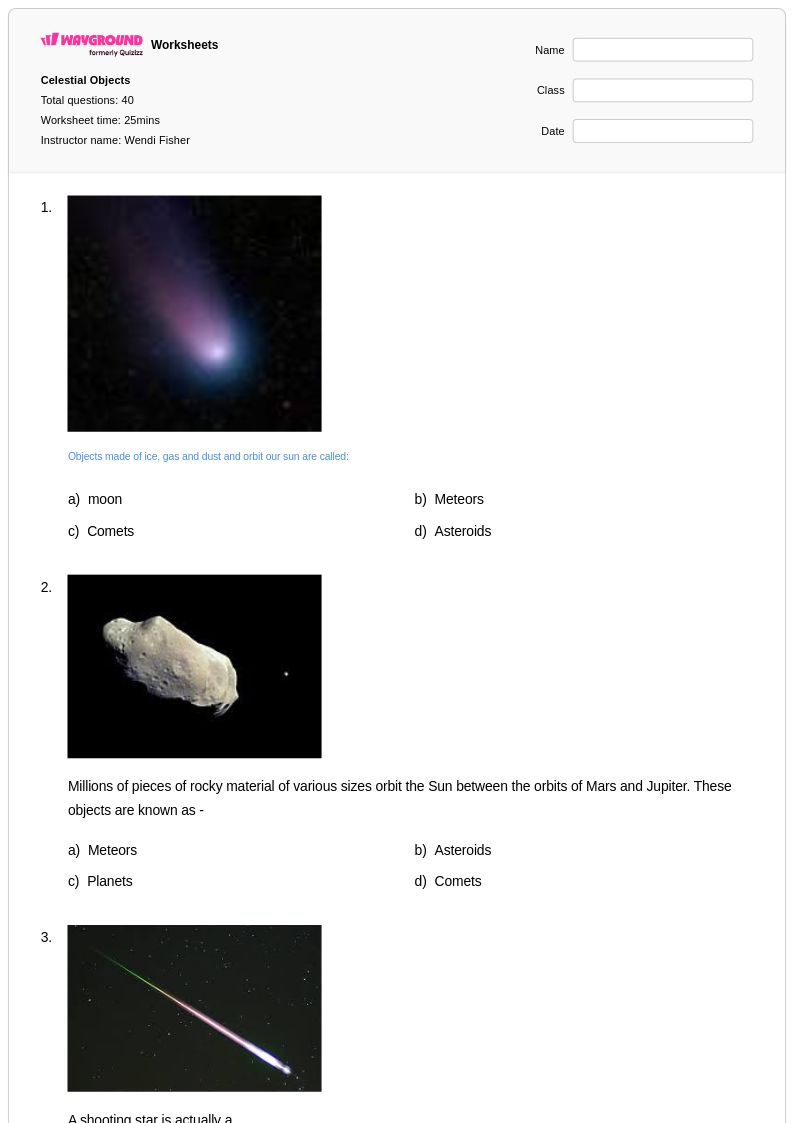
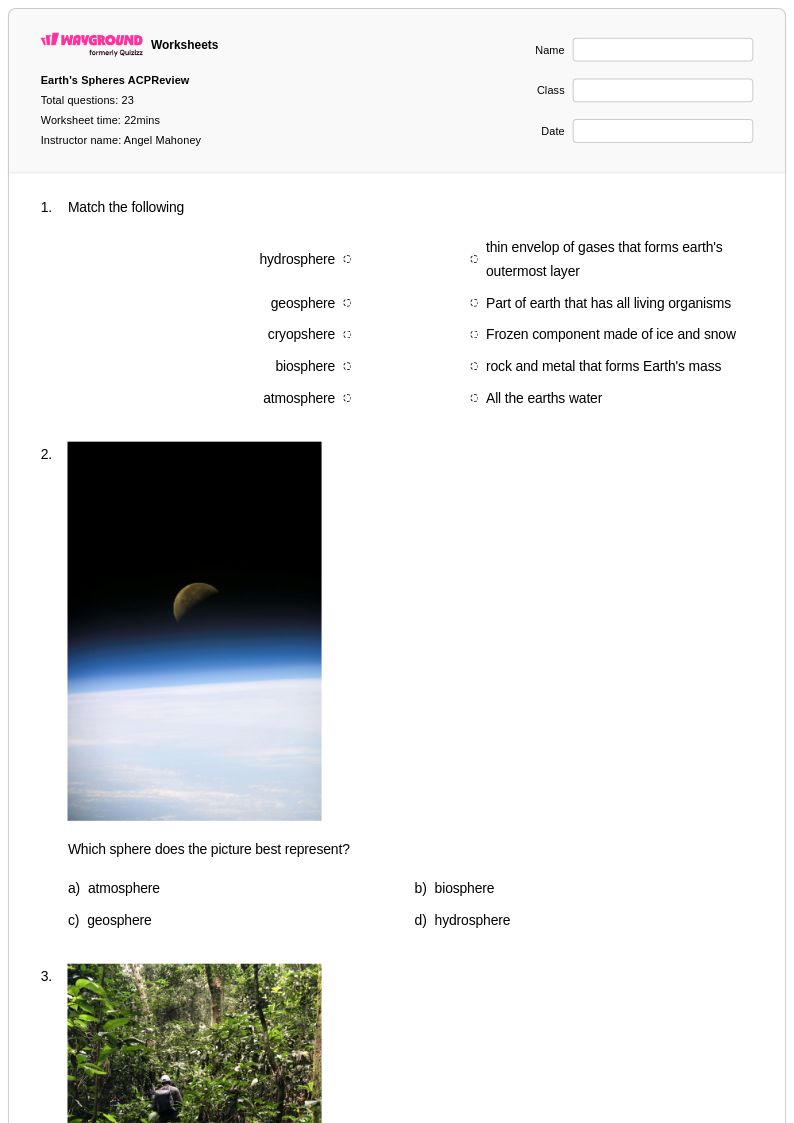
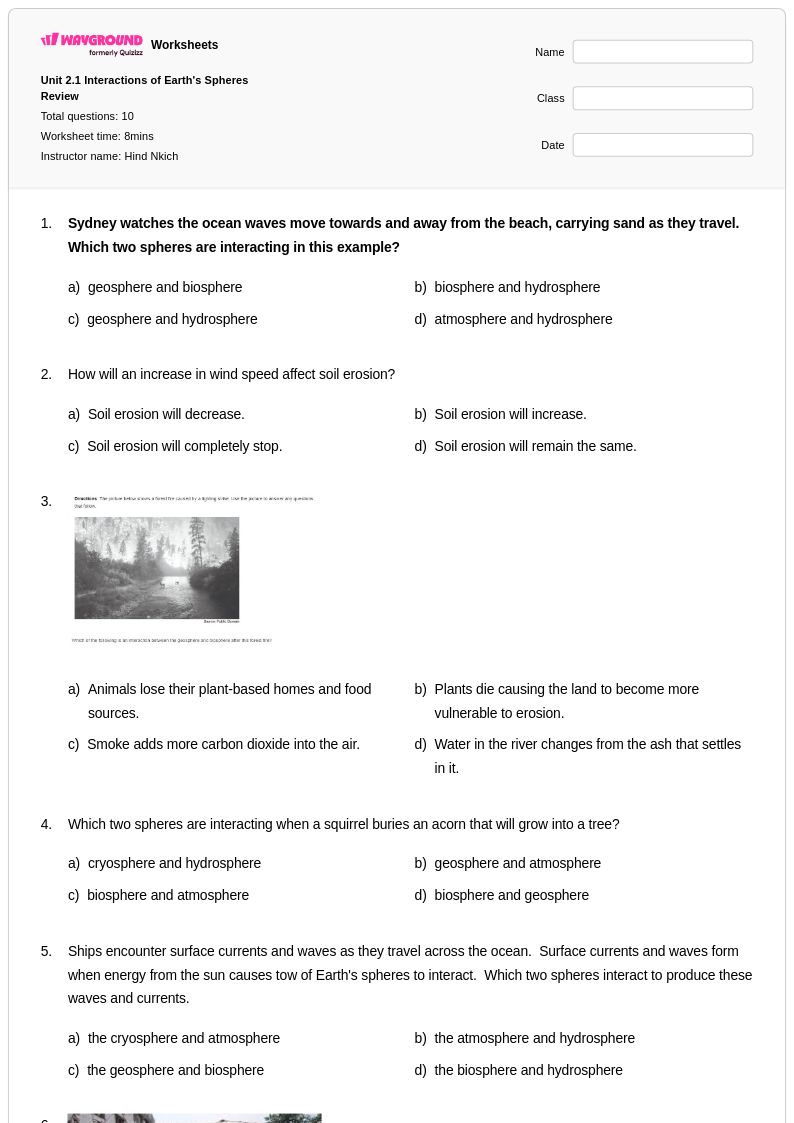
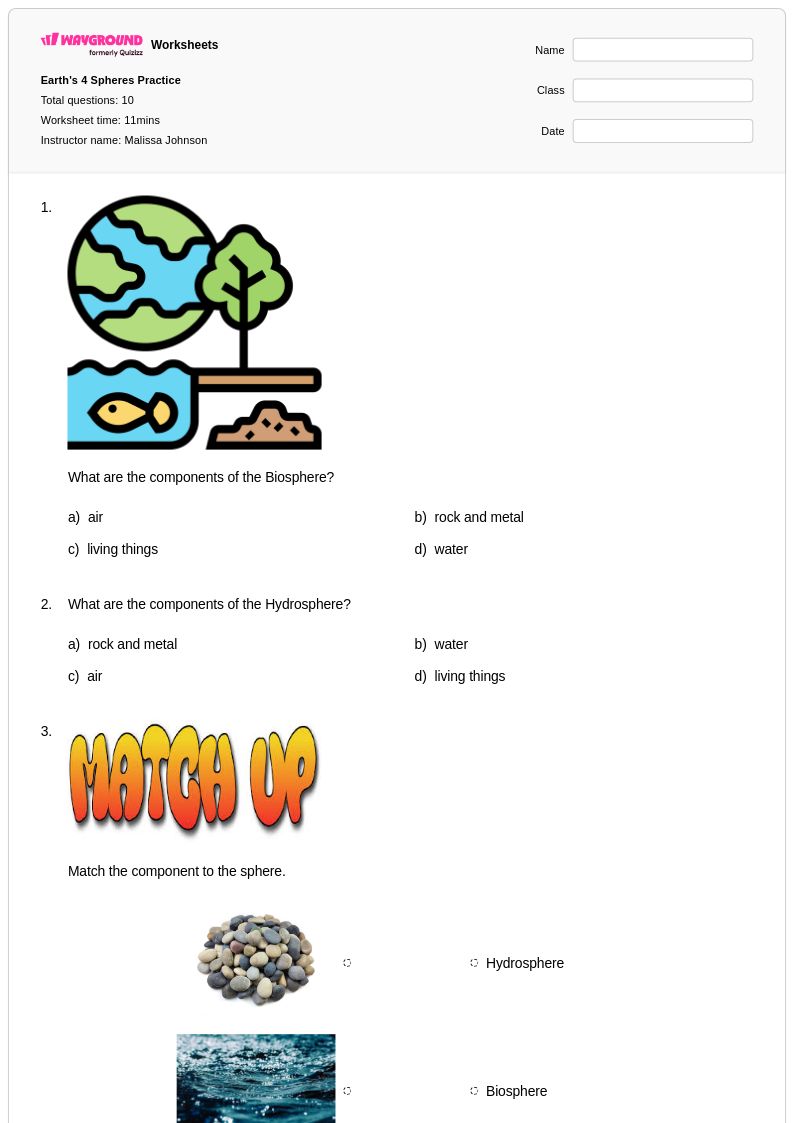
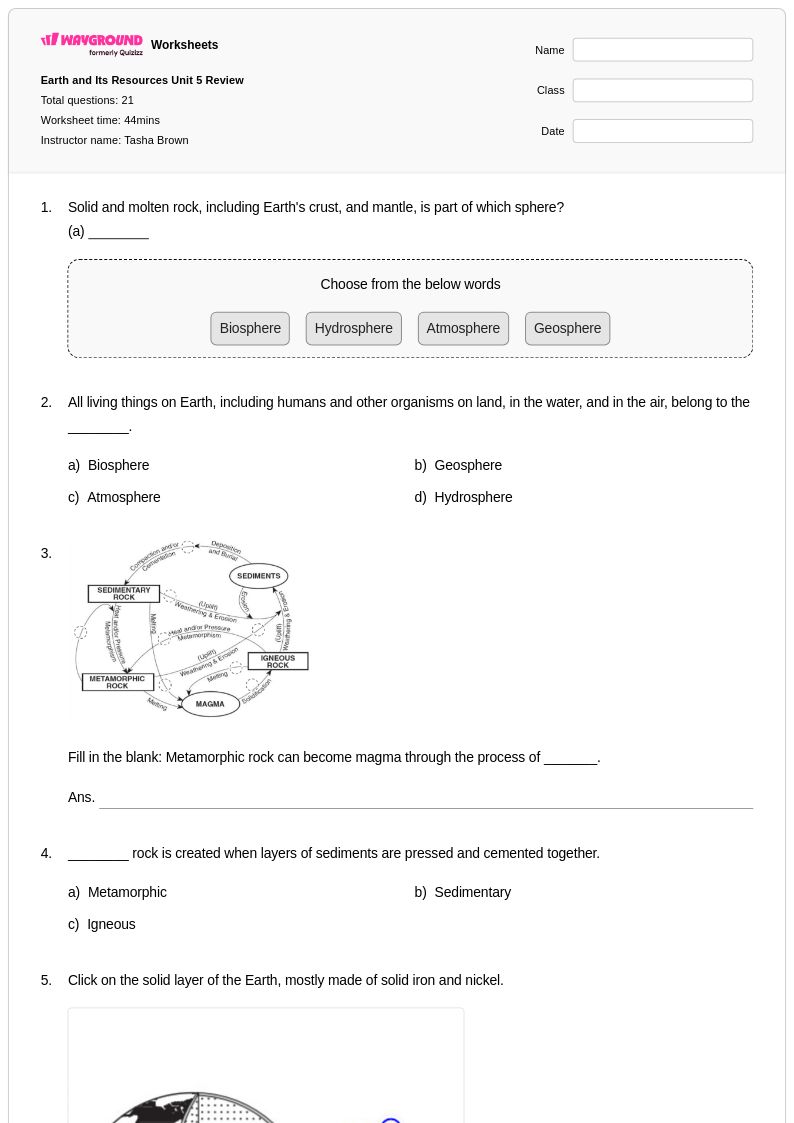
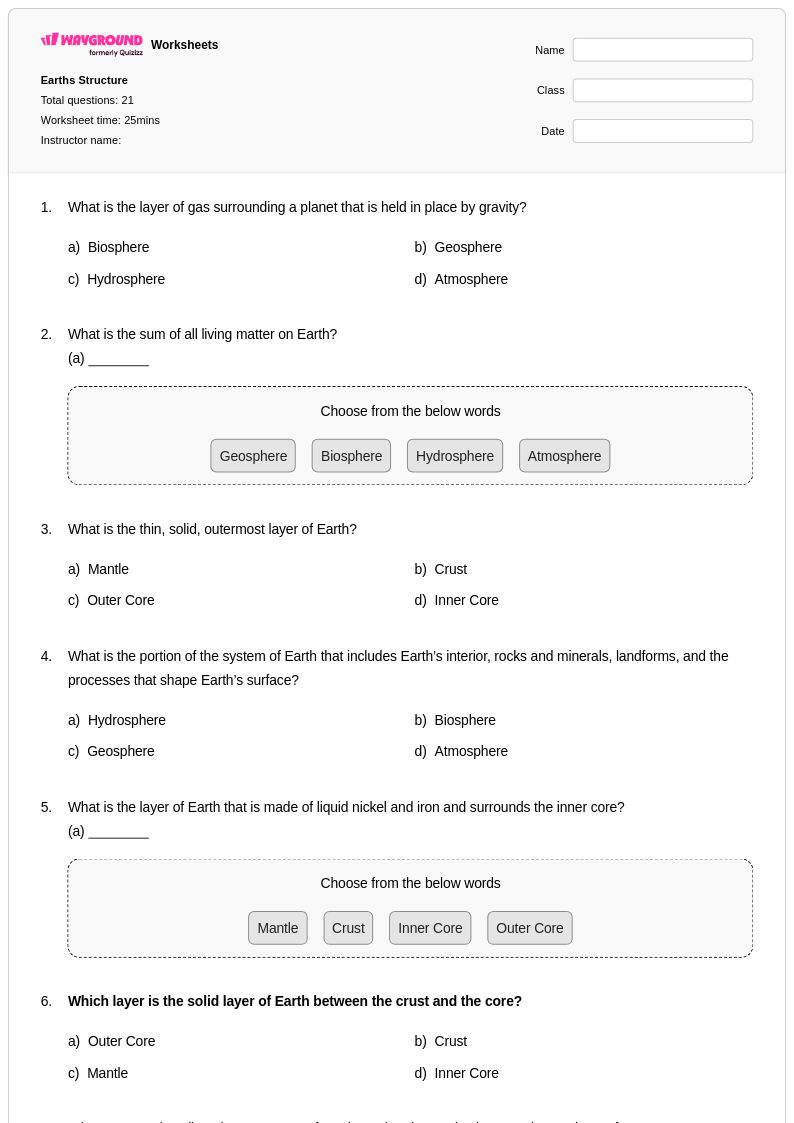
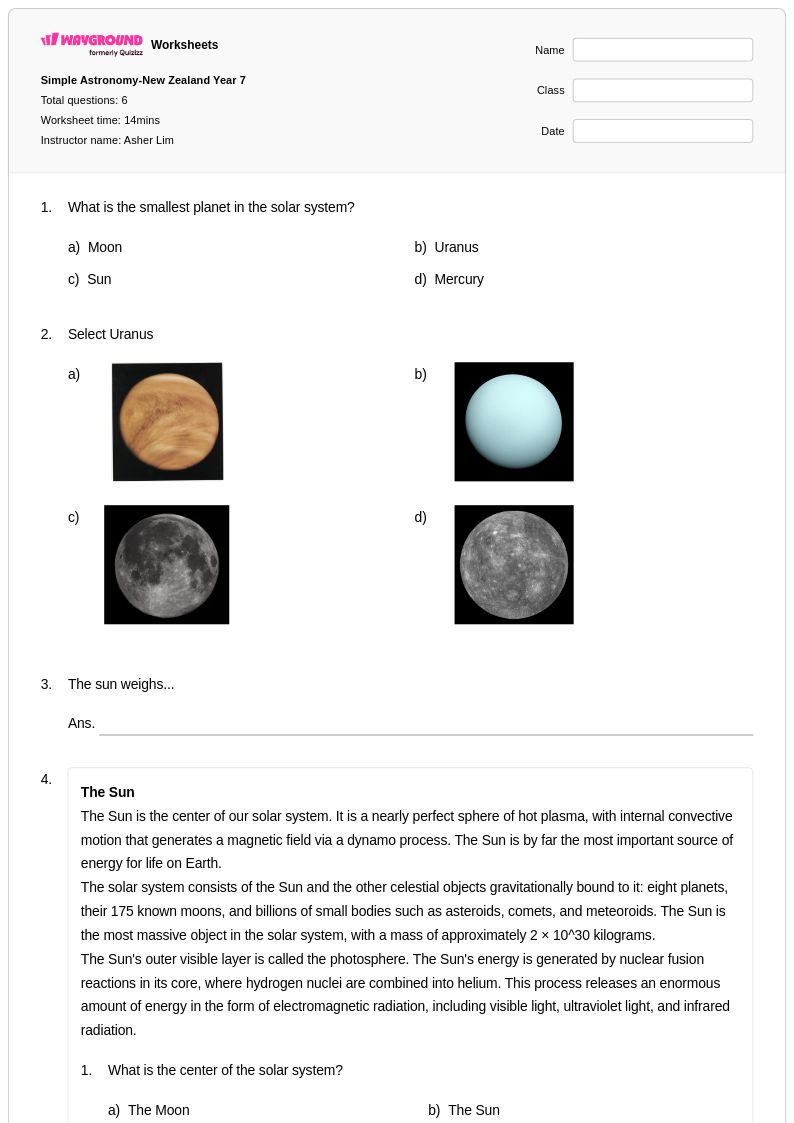
Celestial Sphere worksheets for Class 6 students available through Wayground provide comprehensive practice with understanding Earth's relationship to the night sky and how celestial objects appear to move across the heavens. These educational resources strengthen essential skills in spatial reasoning, coordinate systems, and astronomical observation techniques while helping students visualize complex three-dimensional concepts like celestial coordinates, star patterns, and seasonal changes in constellation visibility. The worksheets include practice problems that challenge students to identify constellations on star charts, understand right ascension and declination, and explain why different stars are visible at different times of year. Teachers can access complete answer keys and utilize these printables as free pdf downloads to support classroom instruction and independent study sessions.
Wayground's extensive collection of teacher-created celestial sphere resources offers educators flexible tools to customize instruction based on individual student needs and learning objectives. The platform's robust search and filtering capabilities allow teachers to quickly locate worksheets aligned with specific science standards while accessing millions of vetted educational materials developed by experienced classroom professionals. These digital and printable resources support differentiated instruction through multiple difficulty levels and question formats, enabling teachers to provide targeted remediation for struggling learners or enrichment opportunities for advanced students. The availability of both interactive digital formats and traditional pdf printables ensures seamless integration into diverse teaching environments, whether for homework assignments, assessment preparation, or hands-on laboratory activities that reinforce understanding of celestial navigation and astronomical coordinate systems.
FAQs
How do I teach the celestial sphere to middle or high school students?
Start by grounding the concept in what students can observe: the apparent dome of the sky and how the Sun, Moon, and stars seem to move across it. From there, introduce the celestial sphere as an imaginary construct astronomers use to map object positions, then layer in the coordinate system — right ascension and declination — as analogues to longitude and latitude on Earth. Hands-on activities like star chart reading or rotating a physical globe beneath a projected sky map help make the abstract geometry tangible.
What exercises help students practice celestial sphere coordinates?
Effective practice tasks include reading and plotting positions using right ascension and declination on a star chart, identifying the celestial equator and ecliptic plane on a labeled diagram, and explaining how Earth's rotation produces apparent stellar motion. Problems that ask students to compare a given star's coordinates across seasons reinforce why the coordinate system is useful for navigation and observation planning.
What misconceptions do students commonly have about the celestial sphere?
The most persistent misconception is that the celestial sphere is a real physical structure rather than a useful mathematical model. Students also frequently confuse the ecliptic plane with the celestial equator, not realizing Earth's axial tilt is what separates the two. Another common error is assuming that right ascension works exactly like compass bearing — students need explicit instruction on why RA is measured eastward in hours rather than degrees.
How do celestial sphere worksheets help students connect Earth's rotation to apparent sky motion?
Worksheets that pair coordinate labeling with rotation diagrams require students to trace how a fixed point on the celestial sphere appears to move as Earth spins, making the cause-and-effect relationship explicit rather than assumed. This approach is especially effective because it forces students to distinguish between an object's actual position in space and its apparent motion from Earth's surface — a distinction that underpins most of observational astronomy.
How can I use Wayground's celestial sphere worksheets in my classroom?
Wayground's celestial sphere worksheets are available as printable PDF downloads for traditional classroom use and in digital formats for technology-integrated or remote learning environments, including the option to host them as a quiz directly on Wayground. All worksheets include detailed answer keys, making them practical for independent practice, homework assignments, or in-class review. Teachers can filter resources by topic — such as right ascension, declination, or the ecliptic plane — to locate materials aligned with specific astronomy standards quickly.
How do I differentiate celestial sphere instruction for students at different skill levels?
For students who are still building foundational understanding, begin with worksheets focused on labeling key features — celestial equator, poles, and ecliptic — before introducing coordinate math. More advanced students can tackle problems involving stellar position identification and the relationship between Earth's axial tilt and ecliptic angle. On Wayground, teachers can apply accommodations such as reduced answer choices or read-aloud support to individual students, allowing the same core worksheet to serve learners at varying levels without disrupting the rest of the class.