Free Printable Challenging Beliefs in Critical Thinking Worksheets for Class 10
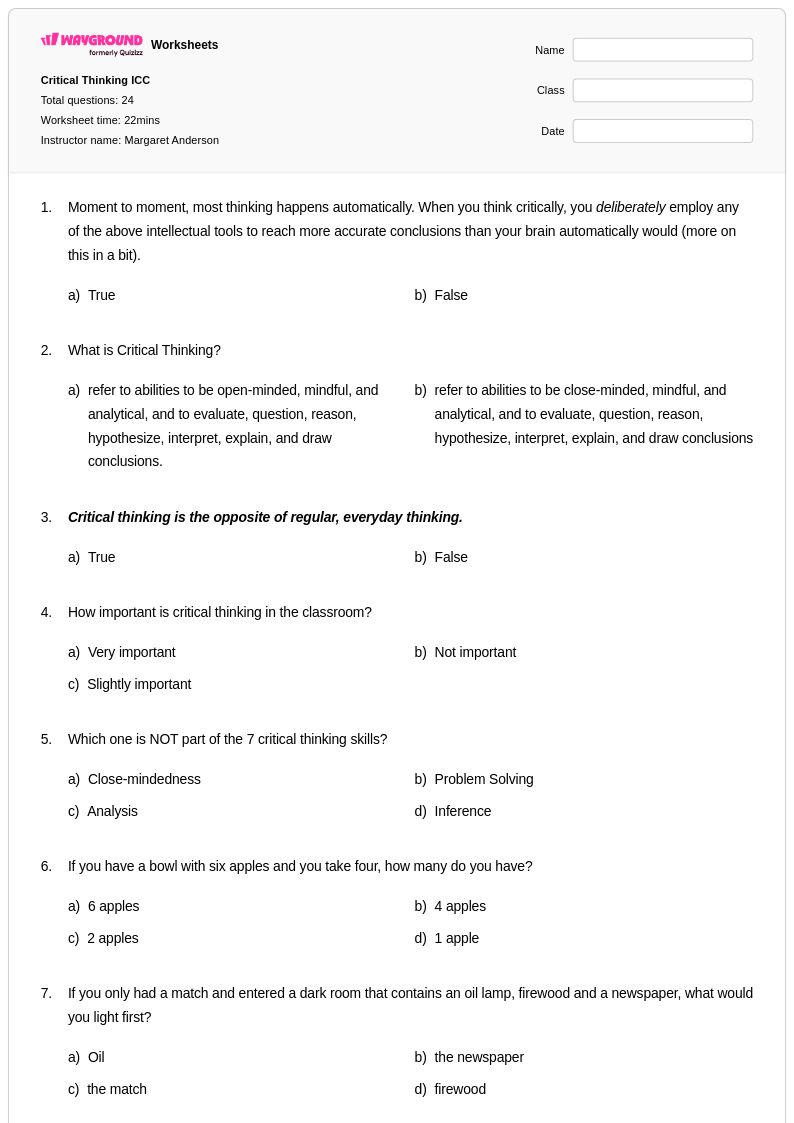
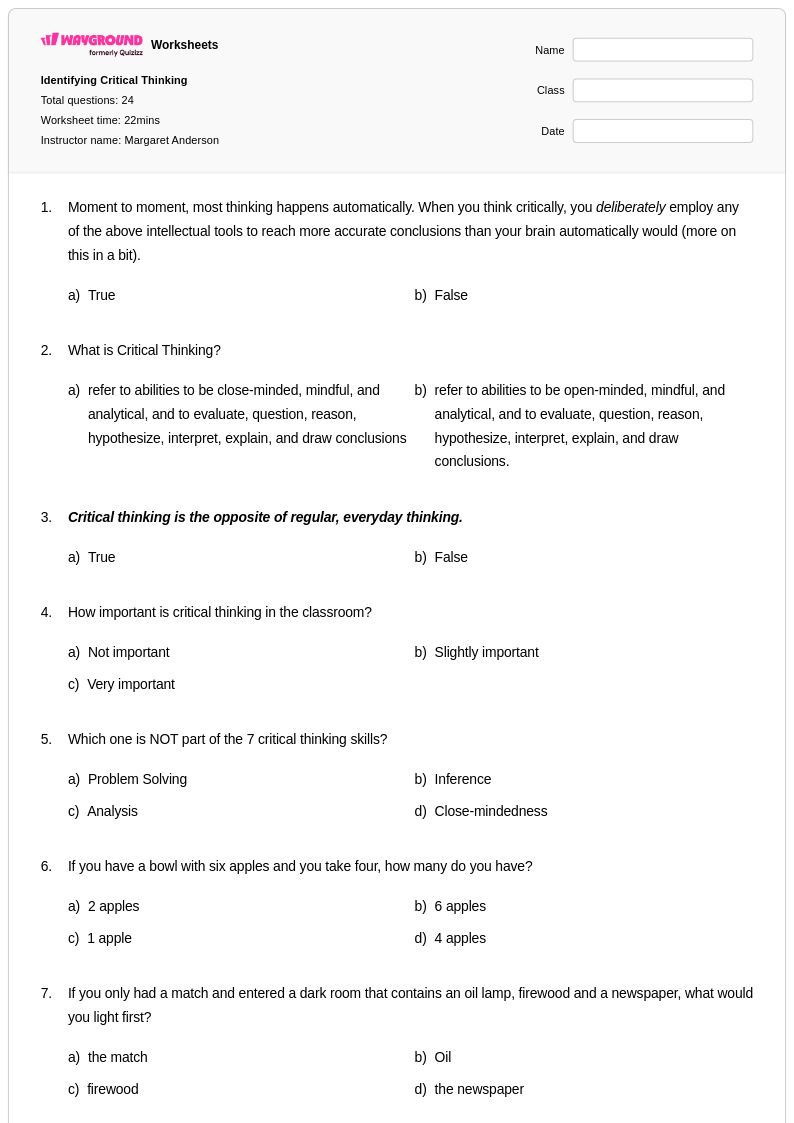
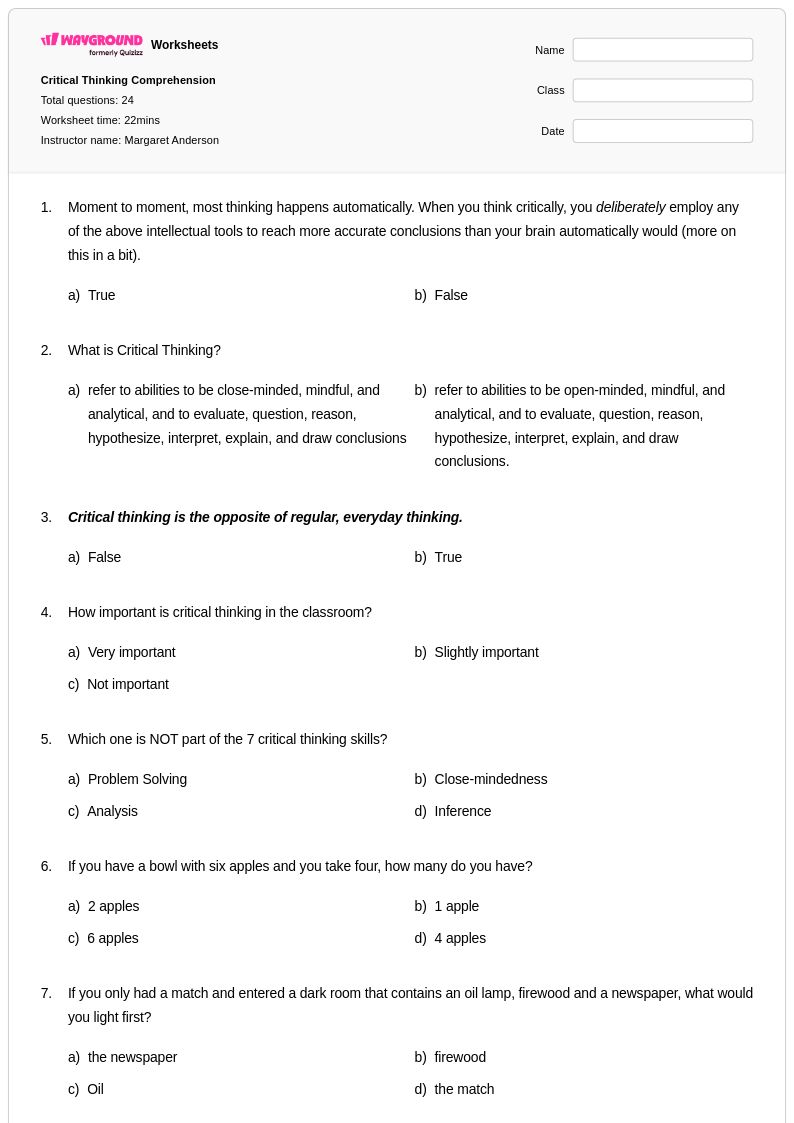
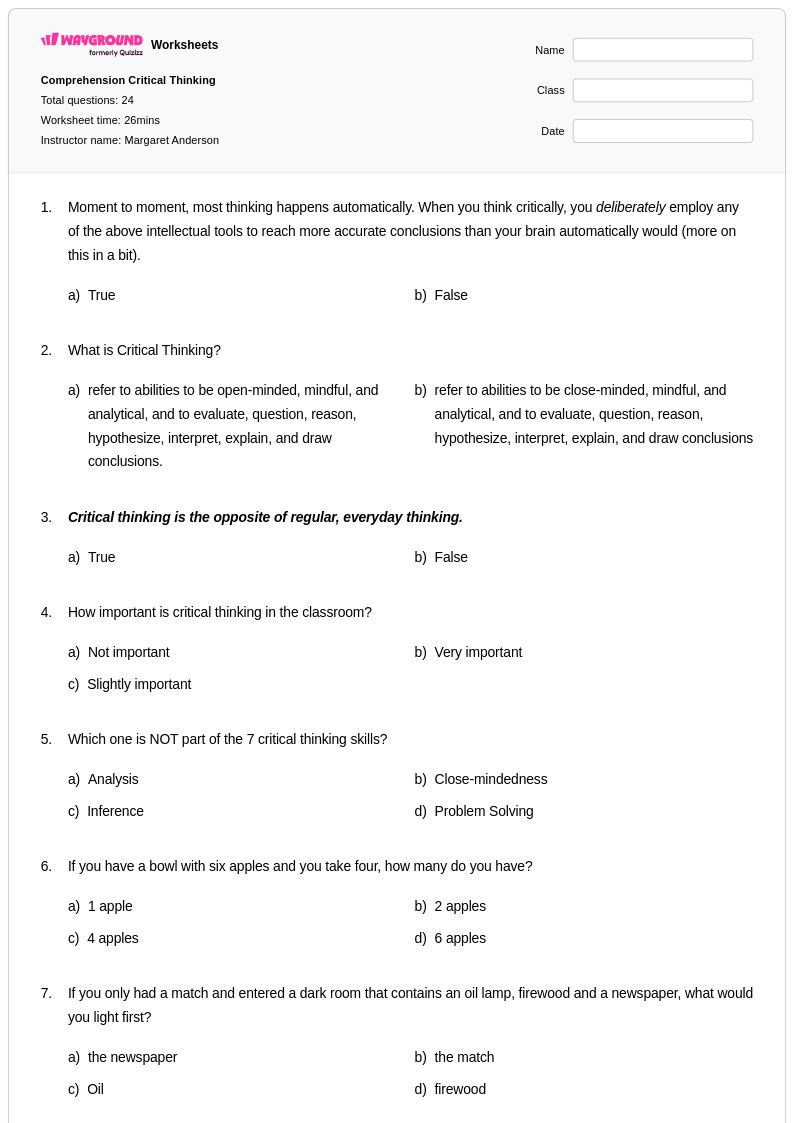
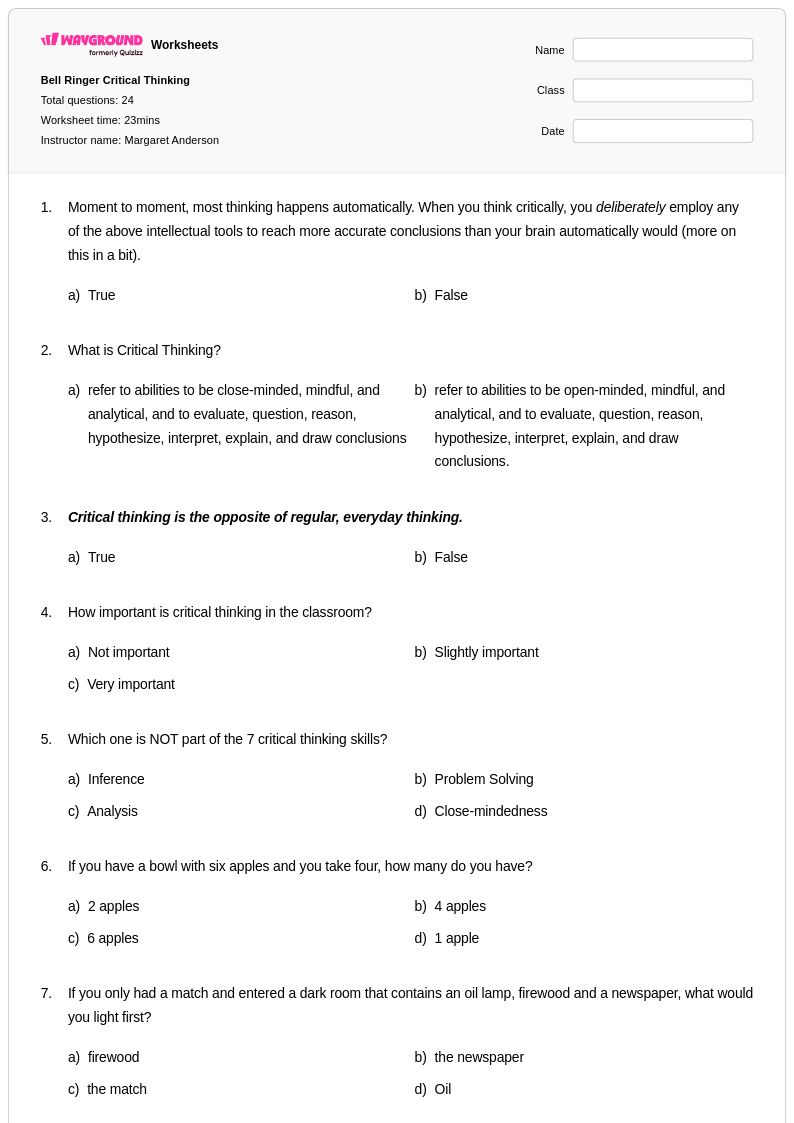
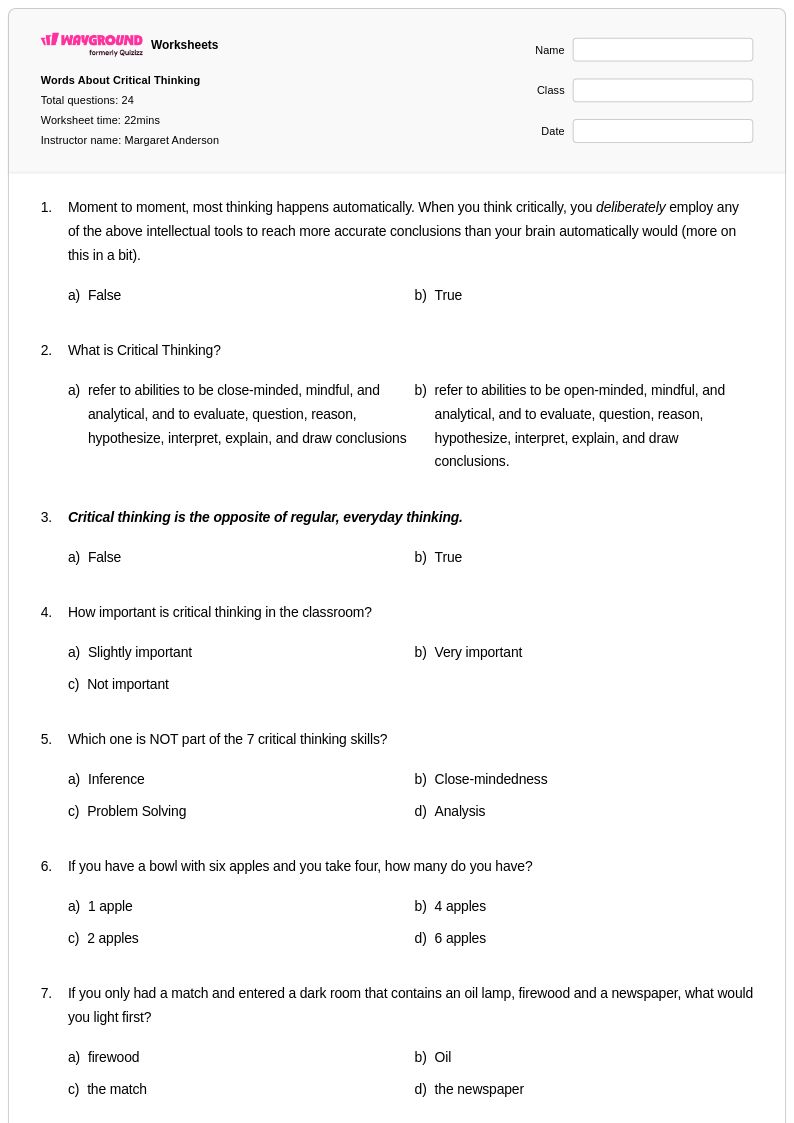
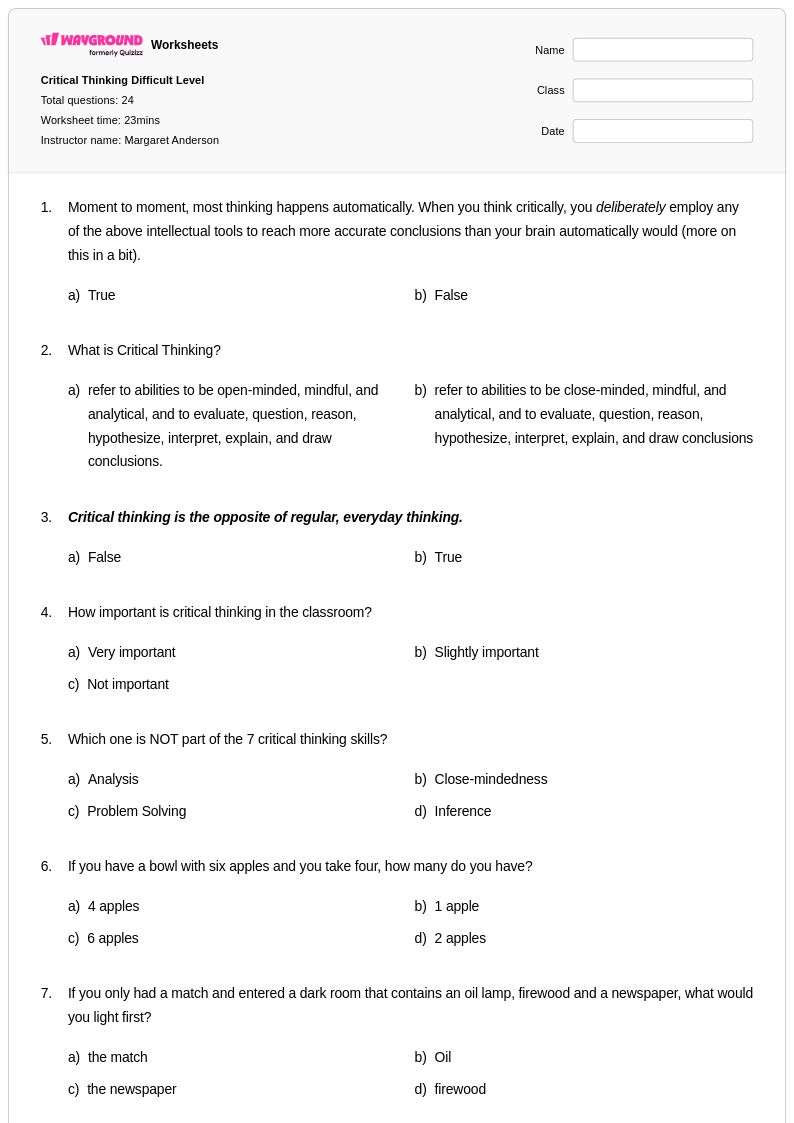
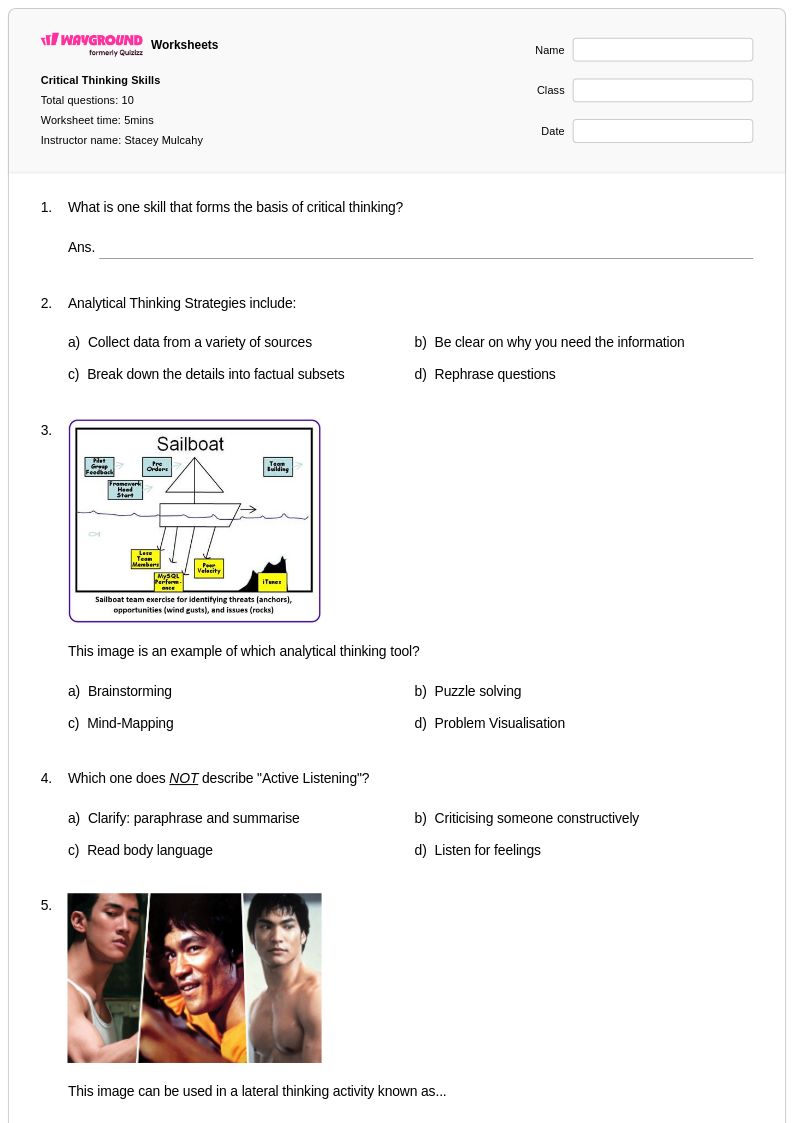
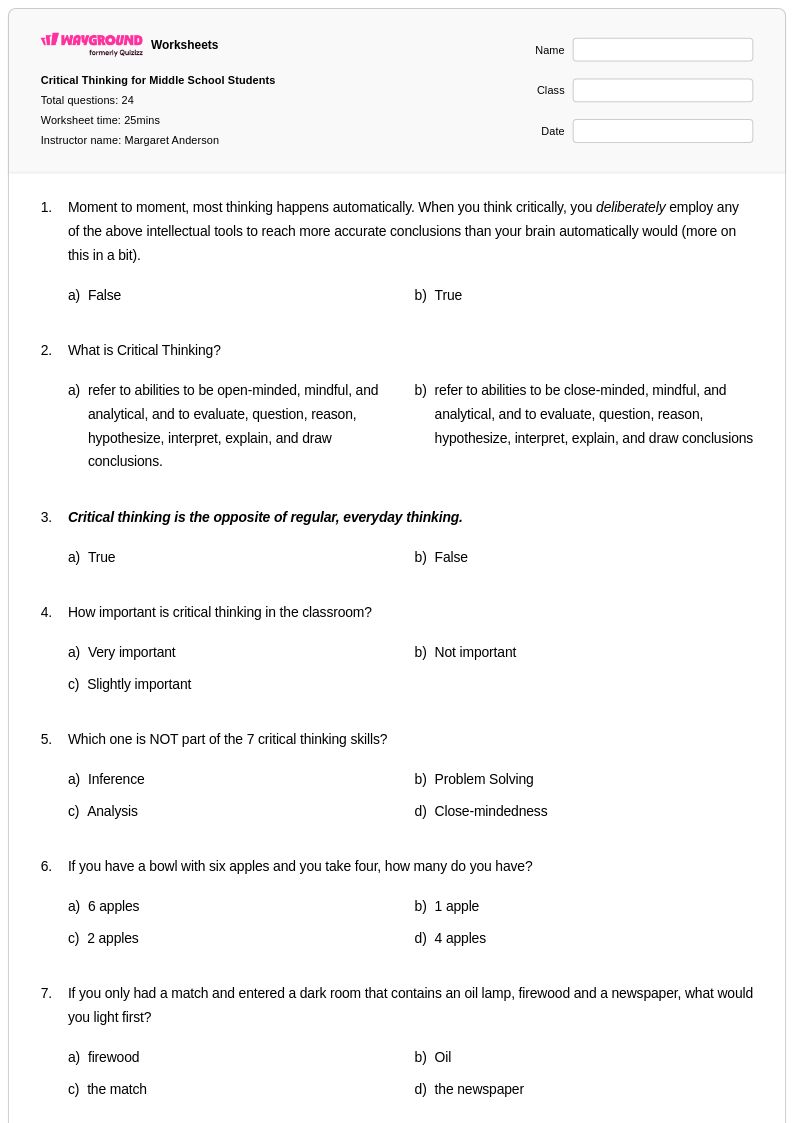
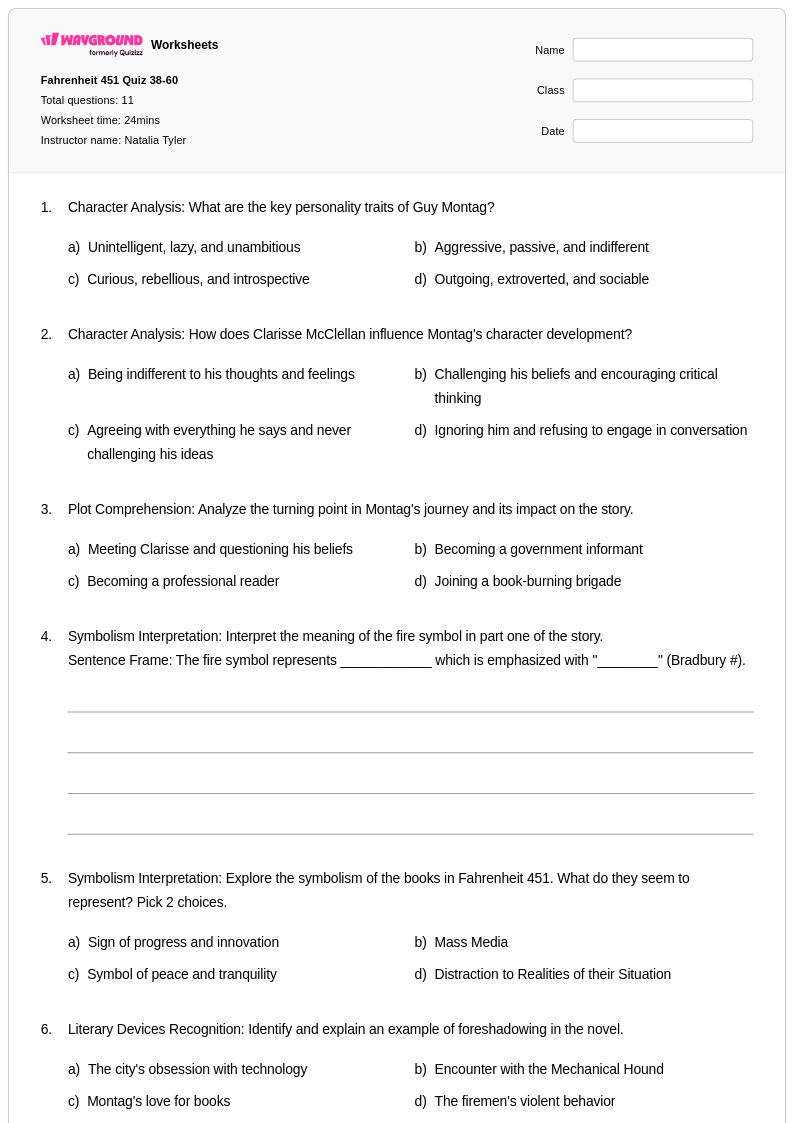
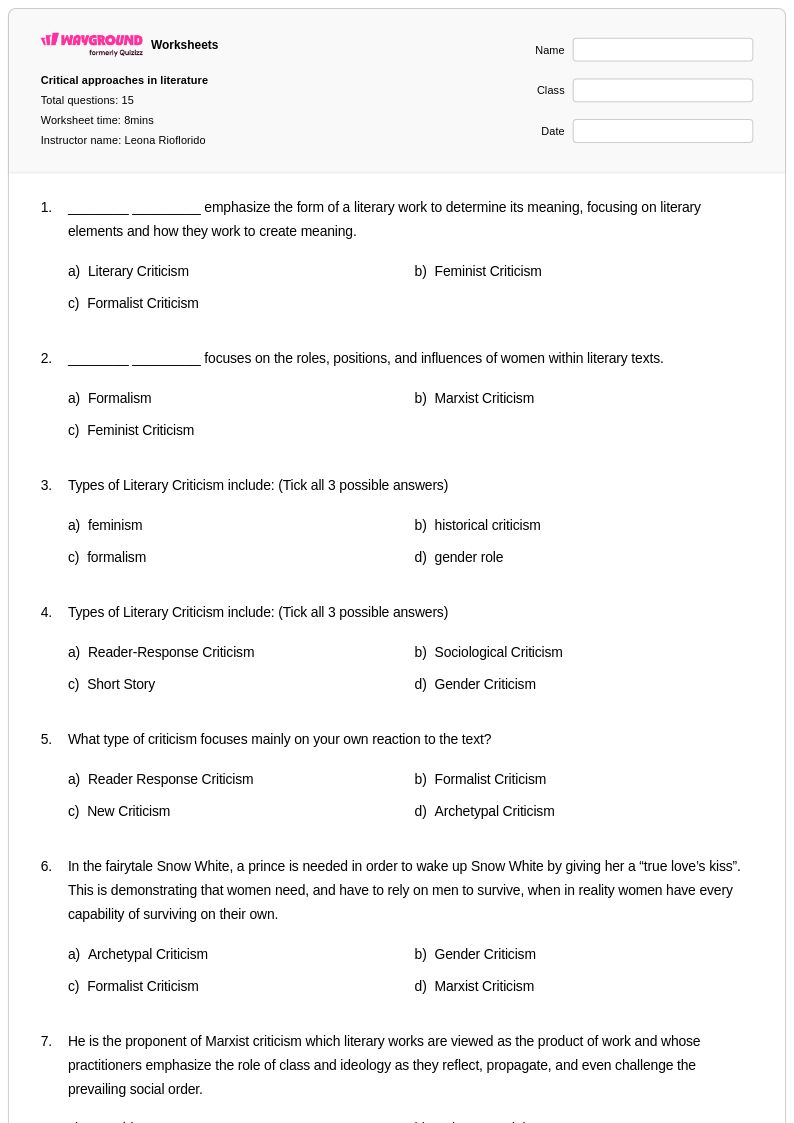
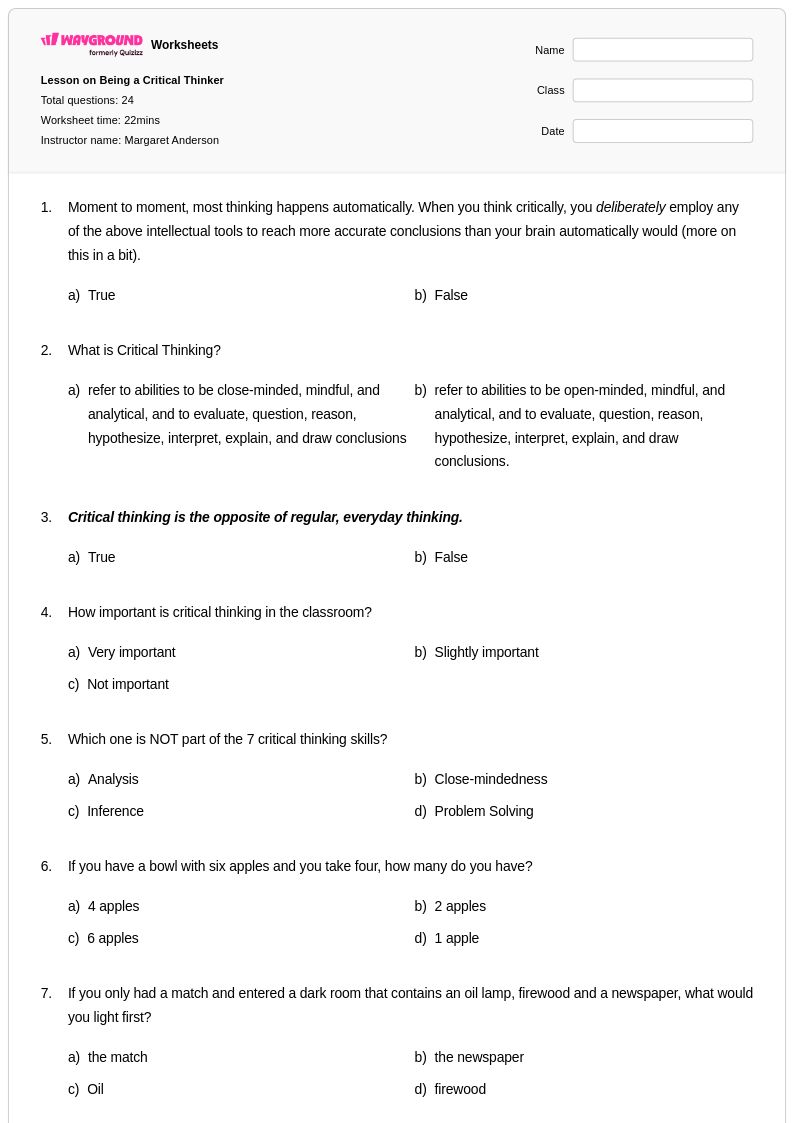
Enhance Class 10 students' critical thinking skills with Wayground's free worksheets and printables focused on challenging beliefs in reading comprehension, featuring practice problems and answer keys to develop analytical reasoning abilities.
Explore printable Challenging Beliefs in Critical Thinking worksheets for Class 10
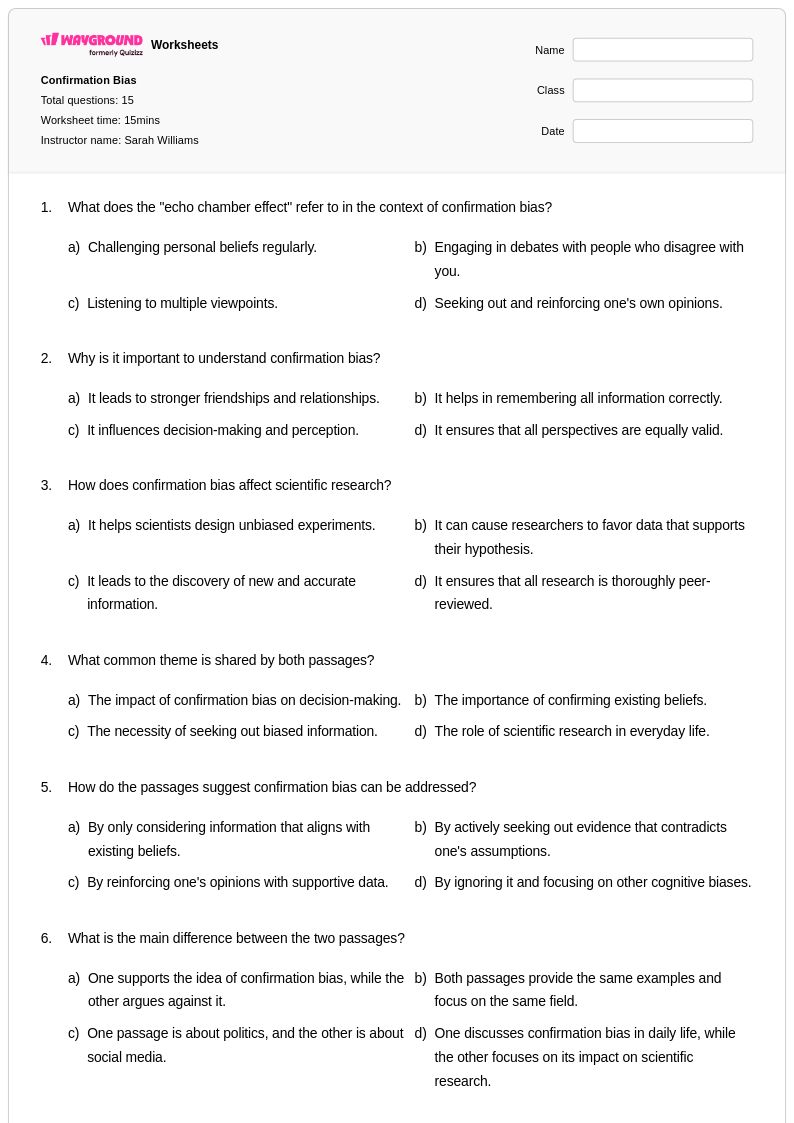
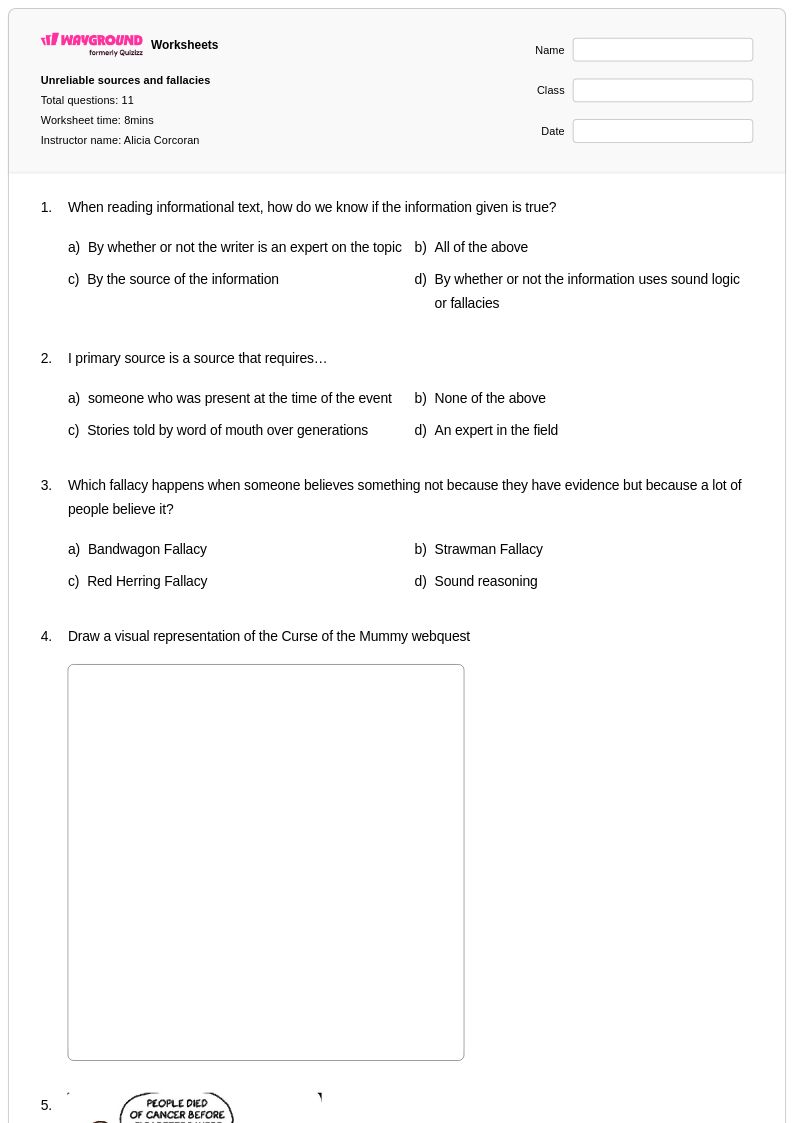
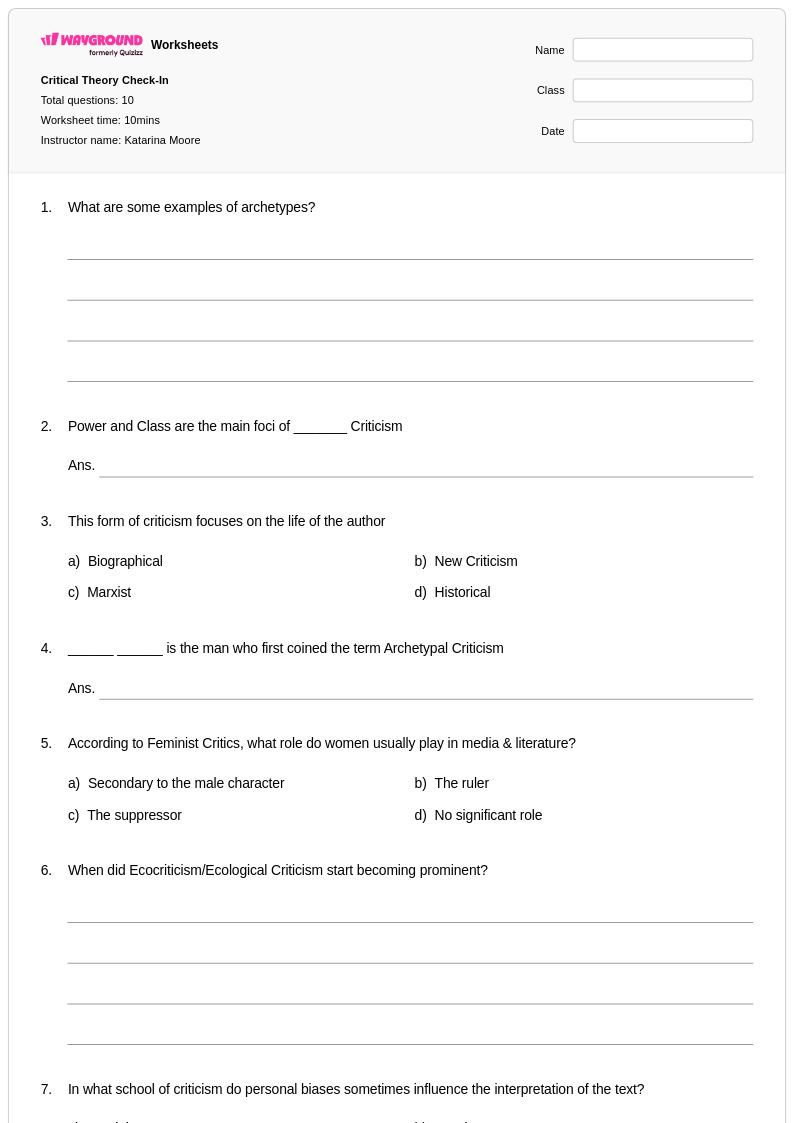
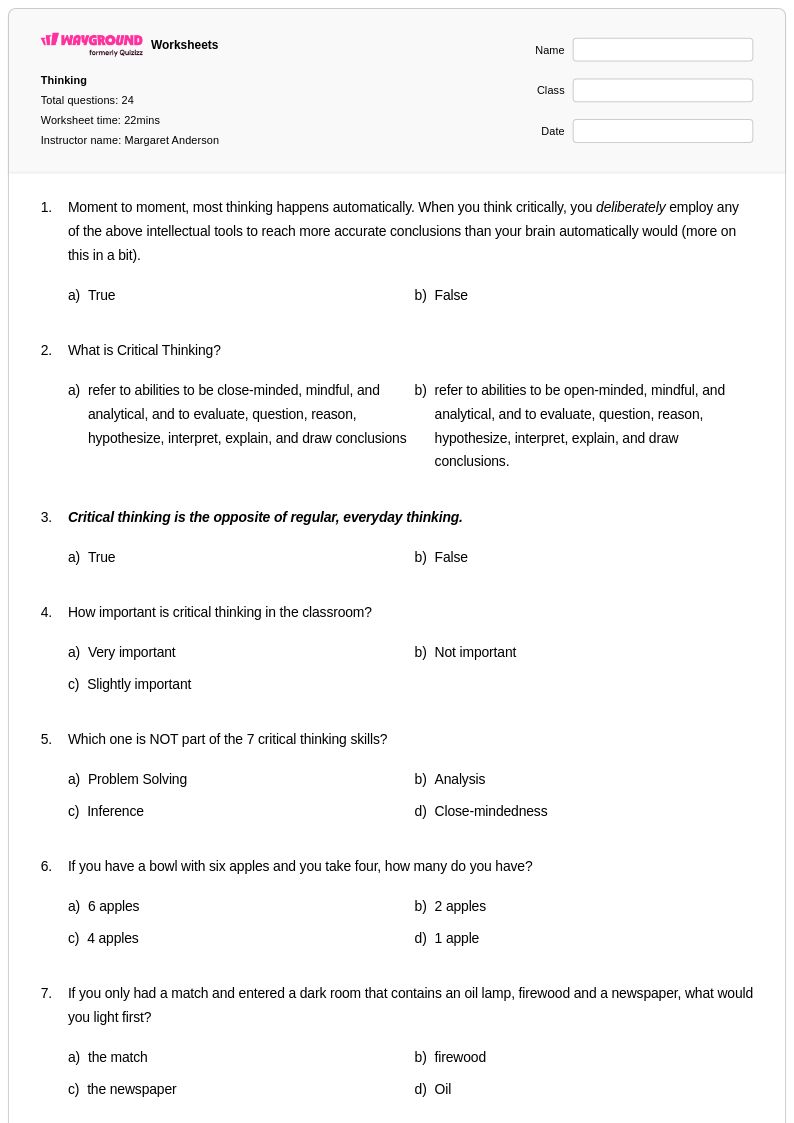
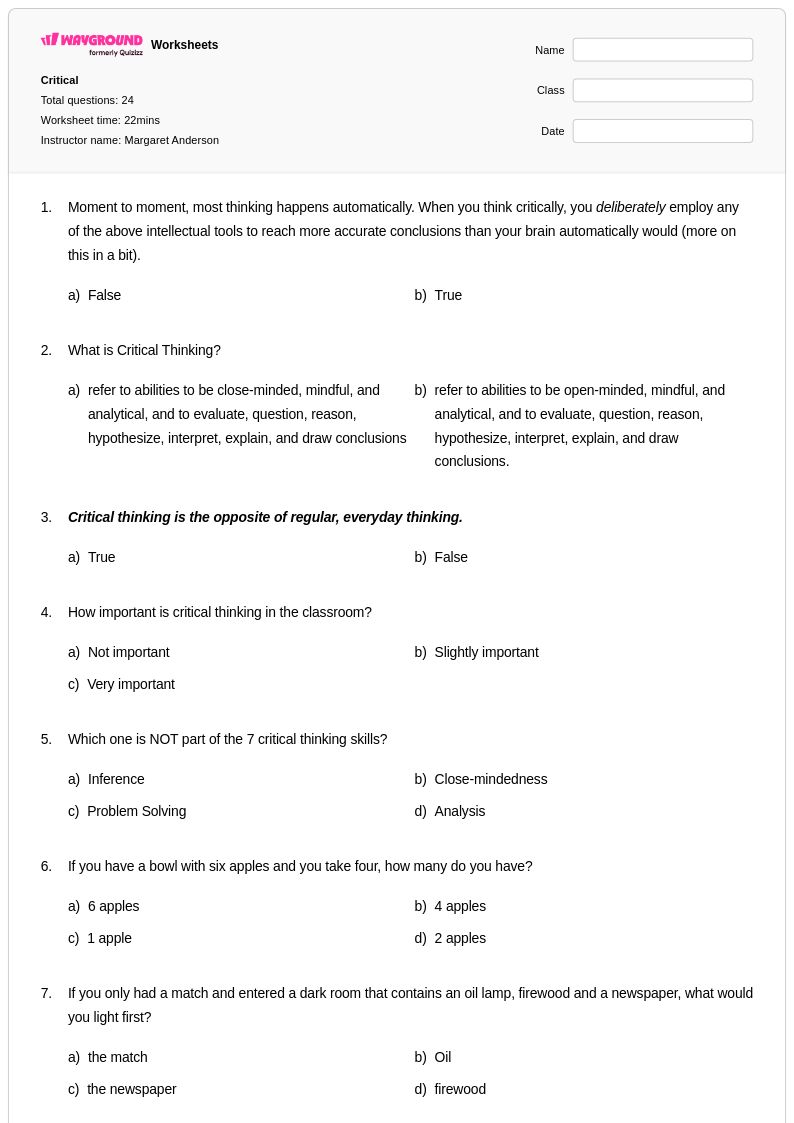
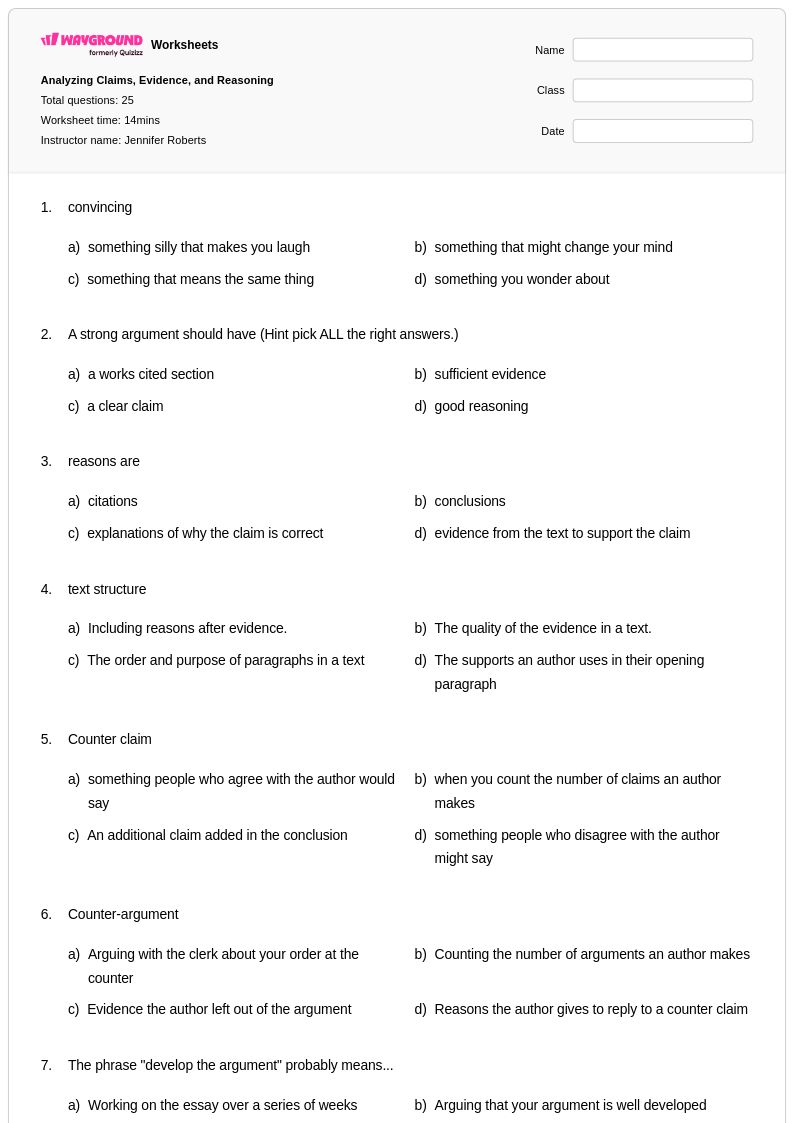
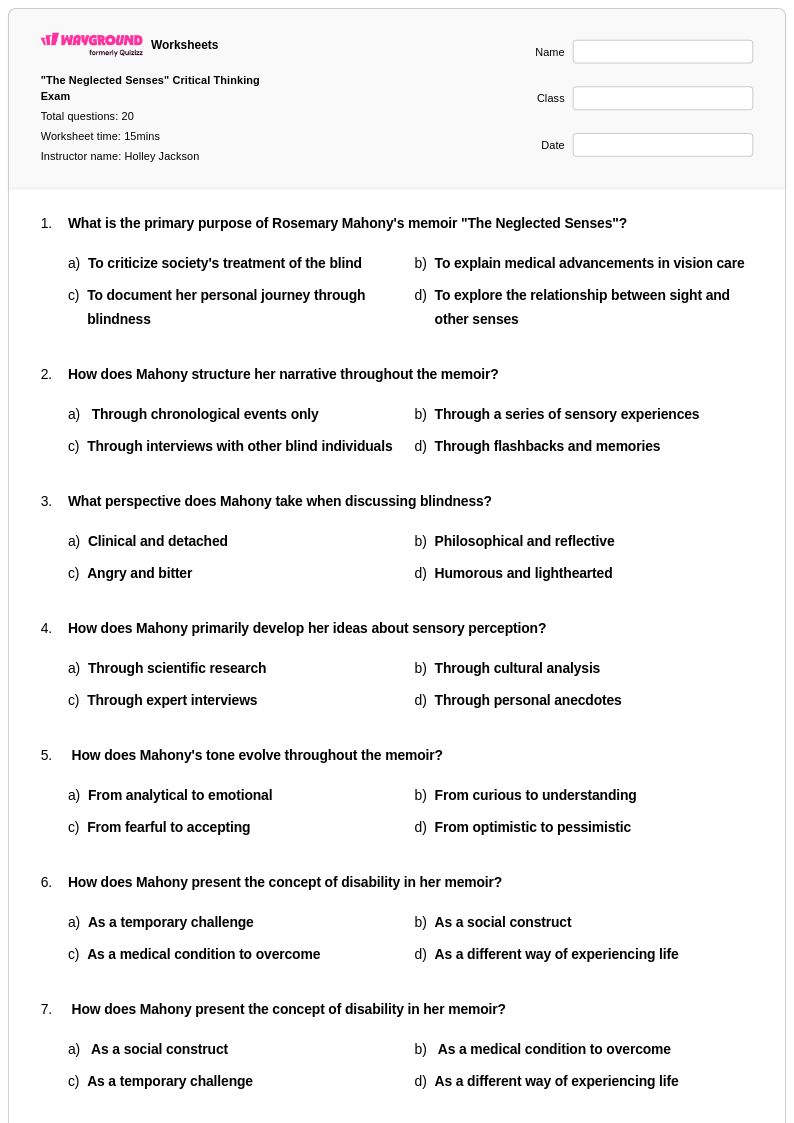
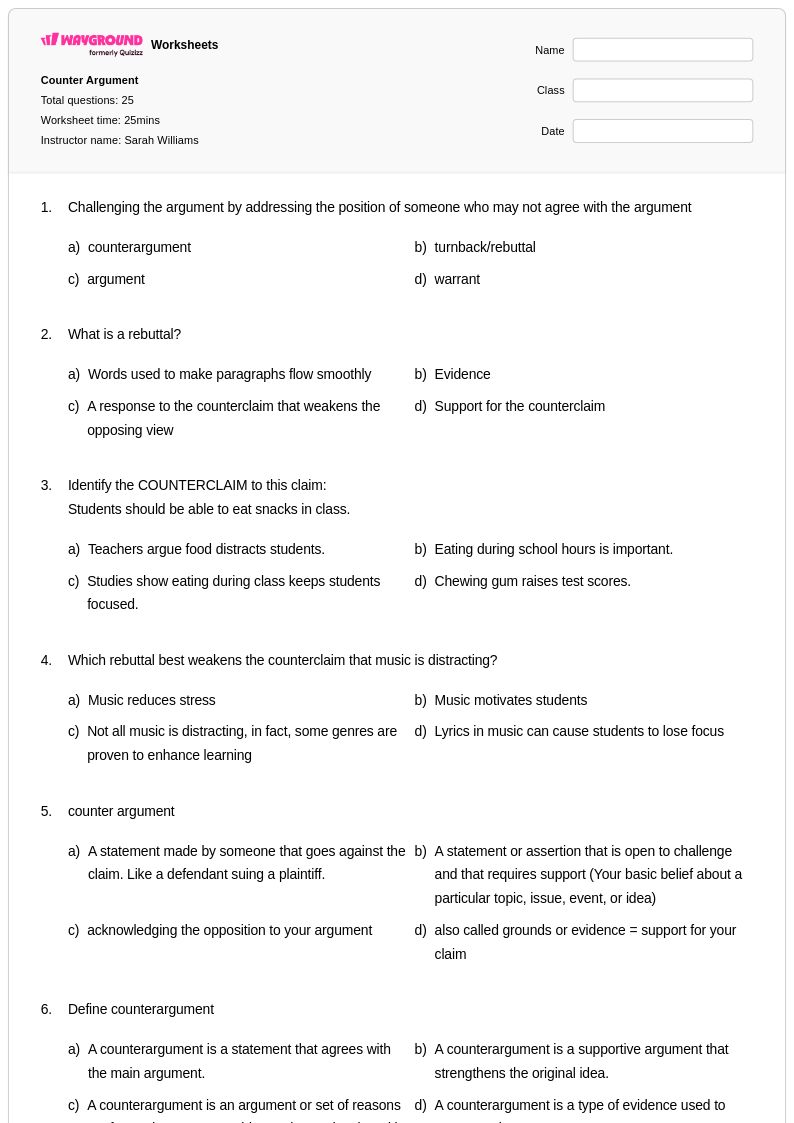
Challenging beliefs in critical thinking represents a fundamental component of Class 10 reading comprehension strategies, requiring students to move beyond surface-level understanding to examine underlying assumptions, biases, and perspectives within texts. Wayground's comprehensive worksheet collection focuses on developing these sophisticated analytical skills through carefully structured practice problems that guide students to question authors' premises, identify logical fallacies, and evaluate the credibility of sources and arguments. These printable resources strengthen students' ability to approach complex texts with a questioning mindset, teaching them to recognize when authors present information as fact versus opinion, to identify gaps in reasoning, and to consider alternative viewpoints that may not be explicitly stated. Each worksheet includes detailed answer keys that not only provide correct responses but also explain the reasoning process behind effective critical analysis, making these free educational materials invaluable for both independent study and classroom instruction in pdf format.
Wayground, formerly Quizizz, empowers educators with millions of teacher-created resources specifically designed to support critical thinking instruction through reading comprehension activities that challenge student assumptions and promote deeper analytical thinking. The platform's robust search and filtering capabilities enable teachers to quickly locate worksheets aligned with specific learning standards while offering extensive differentiation tools that accommodate varying skill levels within Class 10 classrooms. Teachers can customize existing materials or create new practice opportunities using flexible digital tools, then seamlessly distribute content in both printable pdf format for traditional classroom use and interactive digital formats for technology-enhanced learning environments. These comprehensive features streamline lesson planning while providing targeted resources for remediation with struggling readers, enrichment for advanced students, and consistent skill practice that builds students' confidence in questioning and evaluating complex textual arguments across all academic disciplines.
FAQs
How do I teach students to challenge their own beliefs in a critical thinking unit?
Start by making implicit assumptions explicit — give students a claim they likely agree with and ask them to list every assumption the claim depends on. From there, introduce structured inquiry techniques like Socratic questioning, which pushes students to justify their reasoning rather than simply assert it. The goal is to build intellectual humility: students should learn that questioning a belief is not the same as rejecting it, but rather subjecting it to the same scrutiny they would apply to any other argument.
What exercises help students practice identifying and questioning assumptions?
Effective practice exercises include assumption-mapping tasks where students deconstruct a stated argument into its explicit and hidden premises, and source evaluation activities that ask students to identify who is making a claim and what incentives they might have. Structured worksheets that walk students through the steps of examining a belief — identifying the claim, listing supporting evidence, recognizing counterarguments, and checking for logical fallacies — build the procedural habit of critical examination. Repeated practice with varied topics, from everyday decisions to complex social issues, helps students transfer these skills across contexts.
What common mistakes do students make when trying to think critically about their own beliefs?
The most common error is confirmation bias — students selectively gather evidence that supports what they already believe while dismissing contradictory information. A related mistake is conflating emotional investment in an idea with logical support for it, which makes it difficult for students to evaluate a belief on its merits. Students also frequently confuse opinions with facts, especially when a claim is stated with confidence or comes from a trusted source. Worksheets that explicitly ask students to label each piece of evidence as fact, inference, or opinion help counter these patterns.
How can I help students recognize logical fallacies when analyzing arguments?
Begin by teaching a small set of the most common fallacies — ad hominem, straw man, false dichotomy, and appeal to authority — with clear, relatable examples before asking students to identify them in real or constructed arguments. Practice should move from recognition to application: once students can name a fallacy, they should be able to explain why the reasoning fails and what a valid version of the argument would look like. Critical thinking worksheets that pair flawed arguments with guiding questions scaffold this analysis effectively.
How do I use Challenging Beliefs in Critical Thinking worksheets in my classroom?
These worksheets are available as printable PDFs for traditional classroom use and in digital formats for technology-integrated environments, including the option to host them as a quiz on Wayground, which accommodates a range of instructional setups. They work well as independent practice, small-group discussion starters, or formative assessment tools during a critical thinking unit. Each worksheet includes an answer key, supporting both teacher-led instruction and independent or self-paced student work.
How do I differentiate challenging-beliefs activities for students at different skill levels?
For students who are newer to critical thinking, simplify the source material and provide sentence starters that model analytical language, such as 'This claim assumes that...' or 'A counterargument could be...' More advanced students can work with complex, multi-part arguments or primary sources that require deeper contextual analysis. On Wayground, teachers can apply student-level accommodations such as reduced answer choices to lower cognitive load for struggling learners, or use read-aloud features for students who need auditory support, without affecting the experience of other students in the class.