Free Printable Film Analysis Worksheets for Class 10
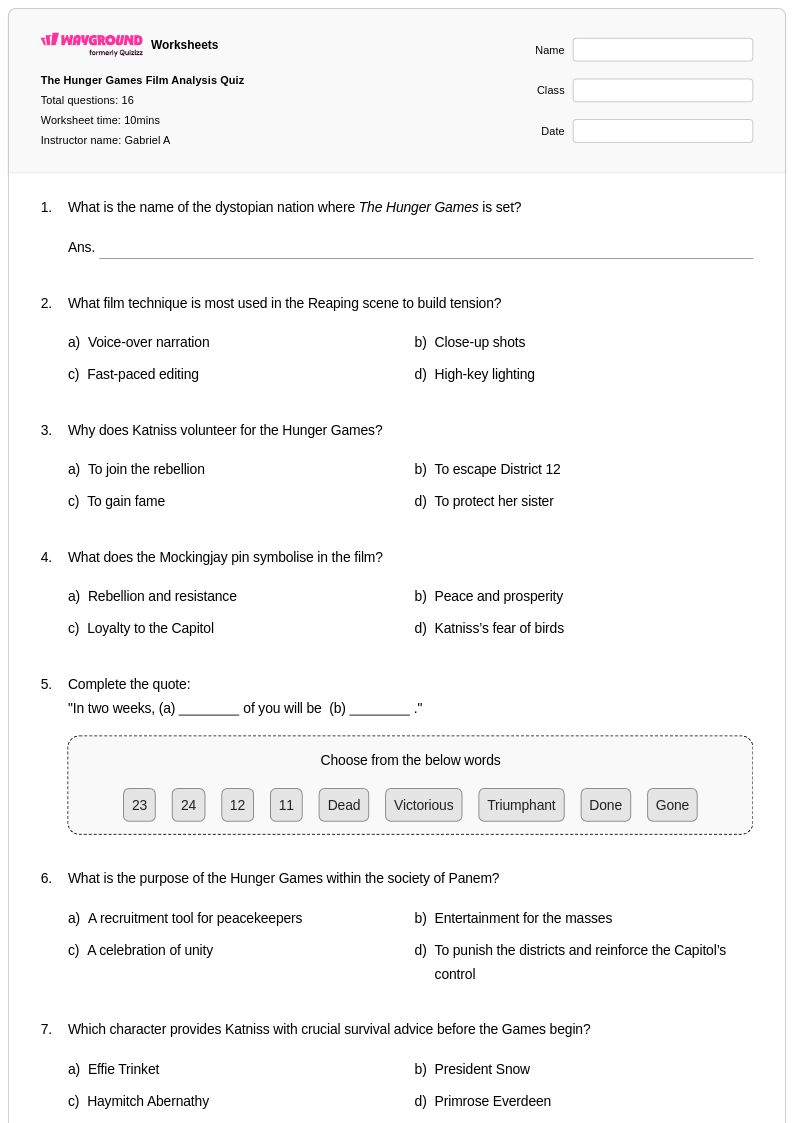
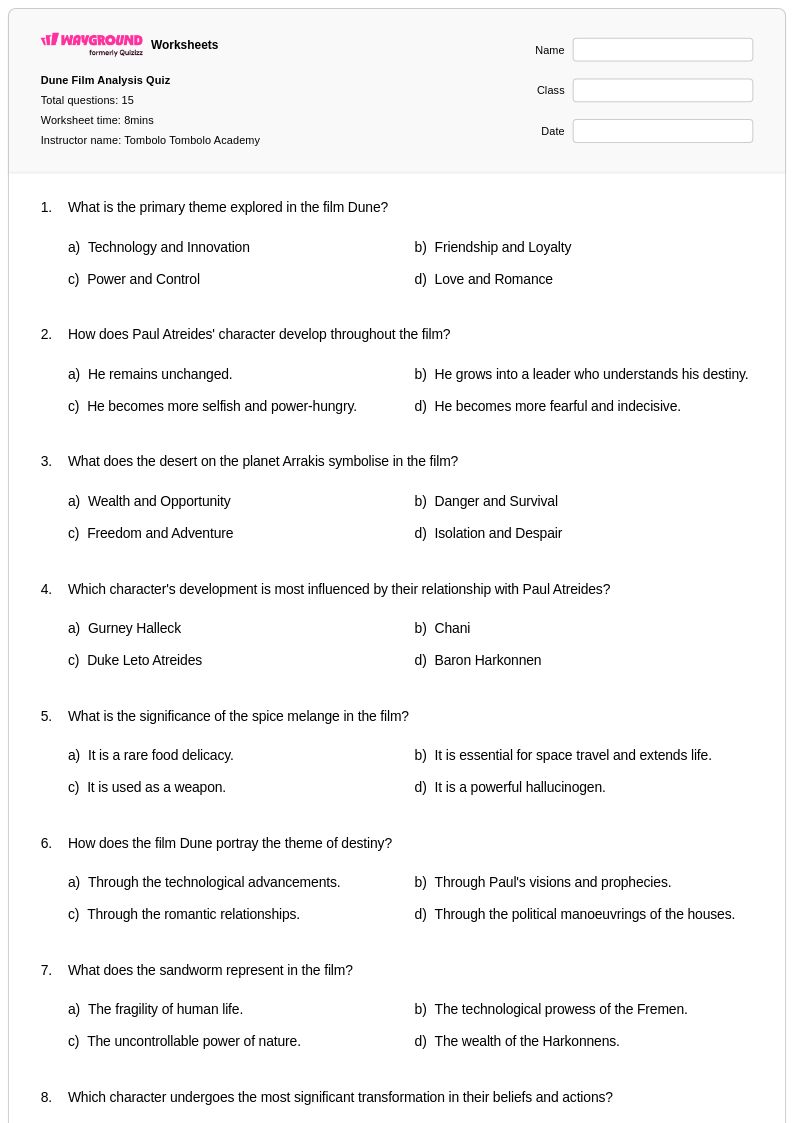
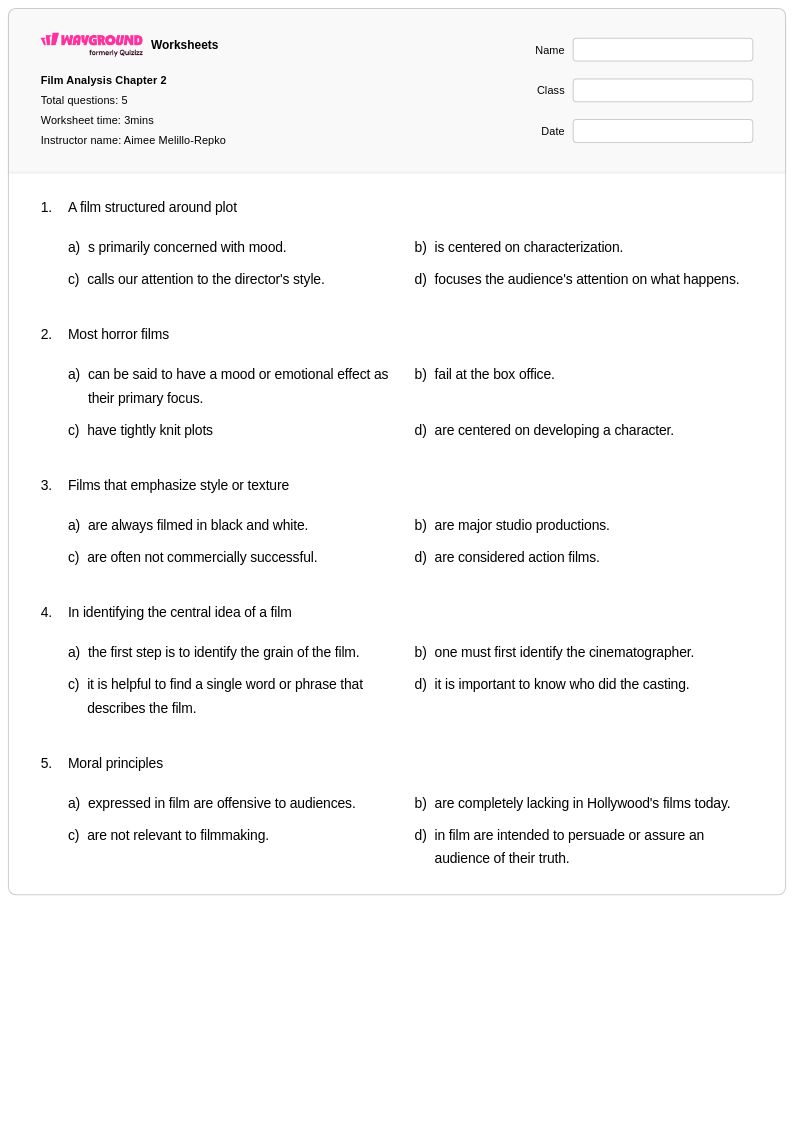
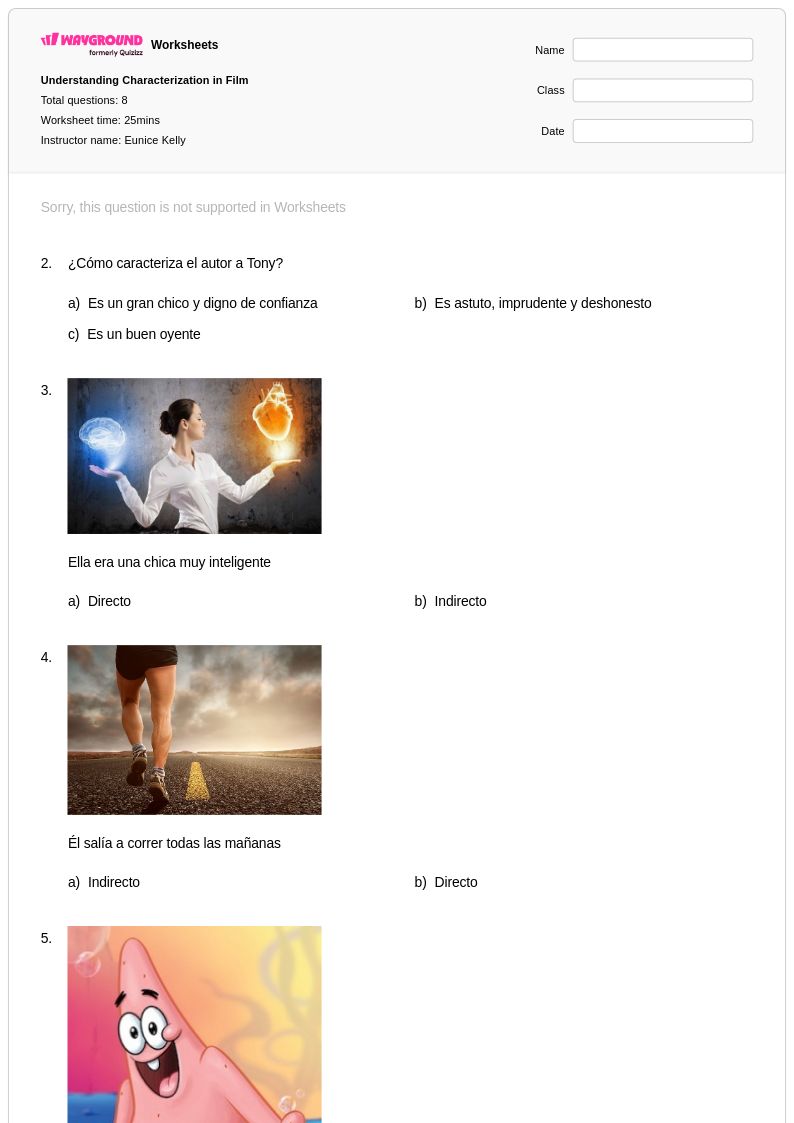
Class 10 film analysis worksheets from Wayground help students develop critical viewing skills through engaging printables and practice problems with comprehensive answer keys for enhanced learning.
Explore printable Film Analysis worksheets for Class 10
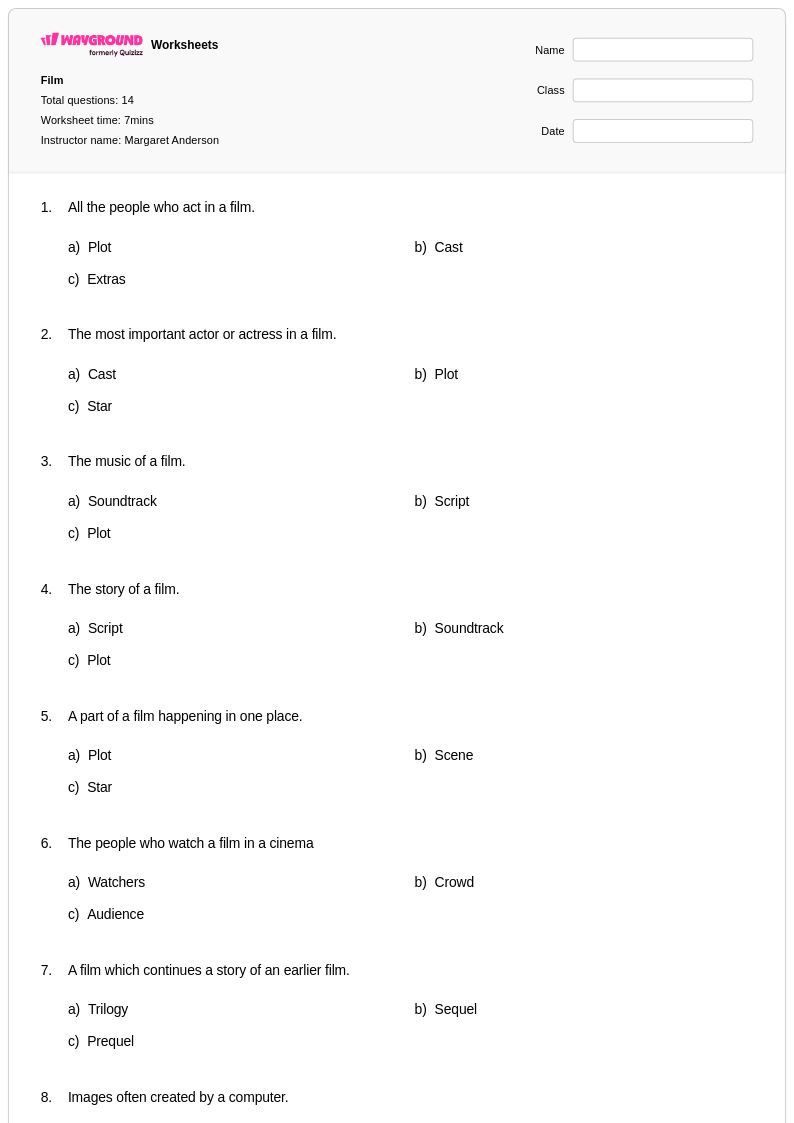
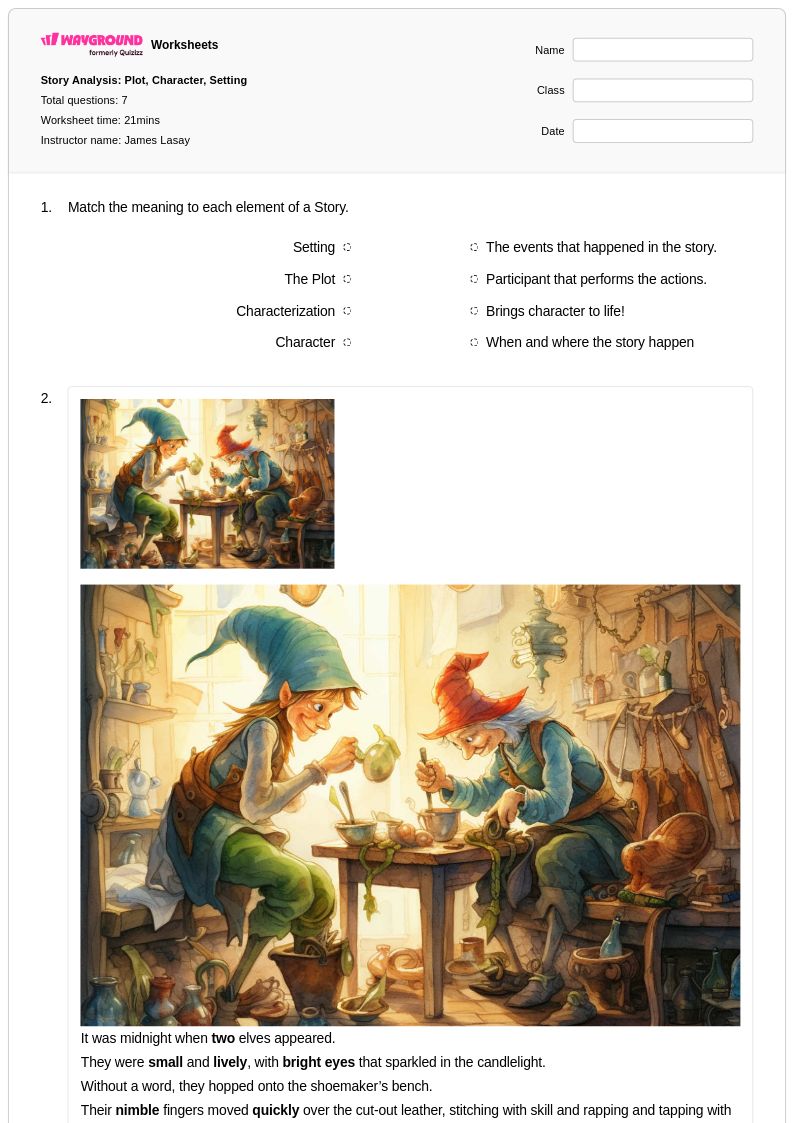
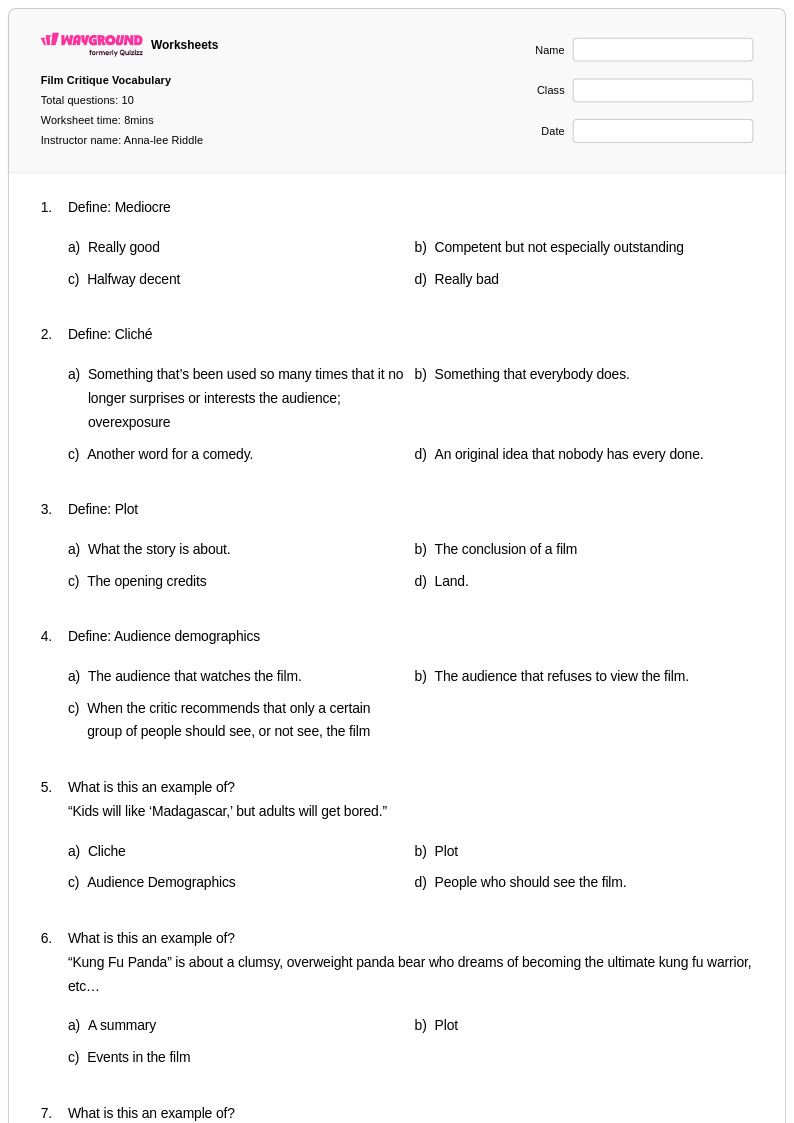
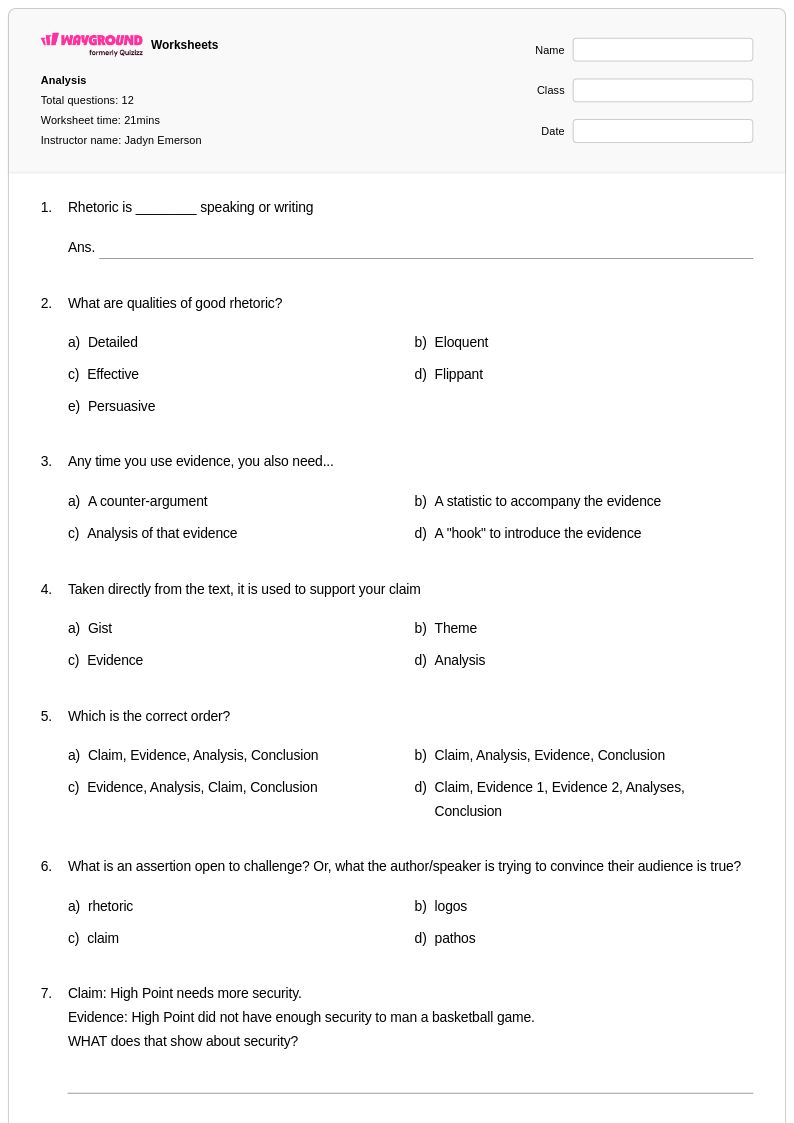
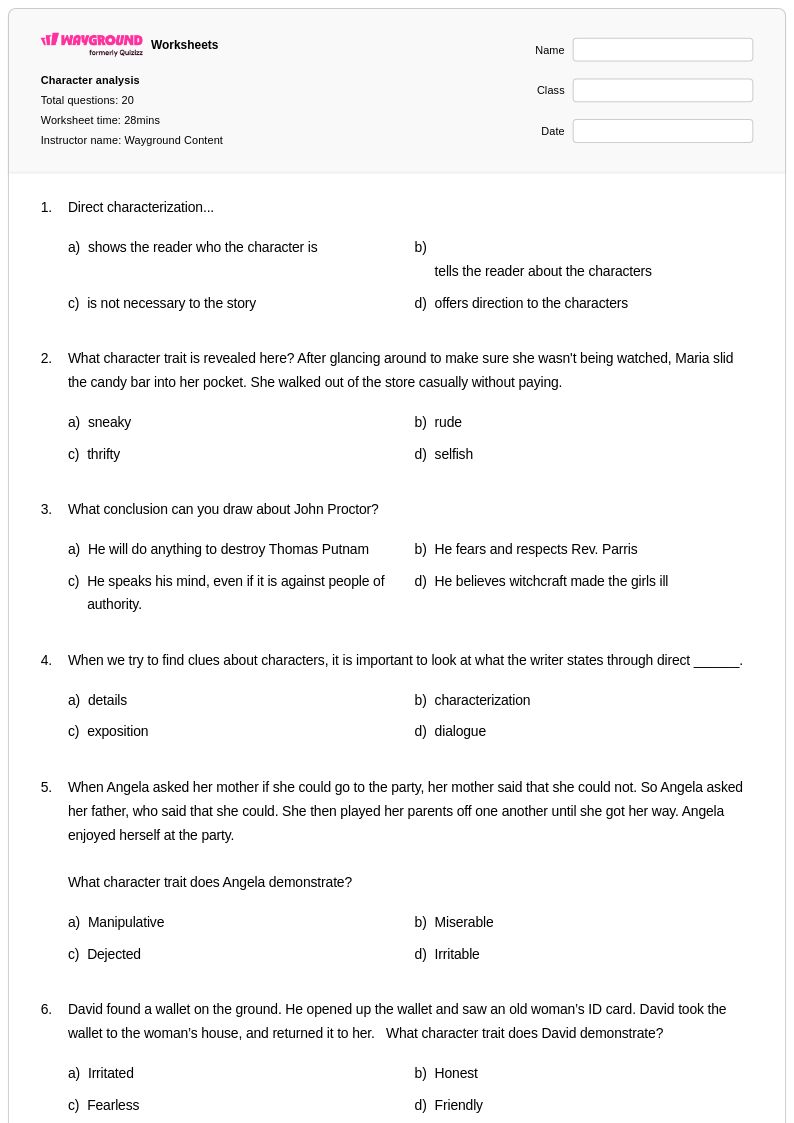
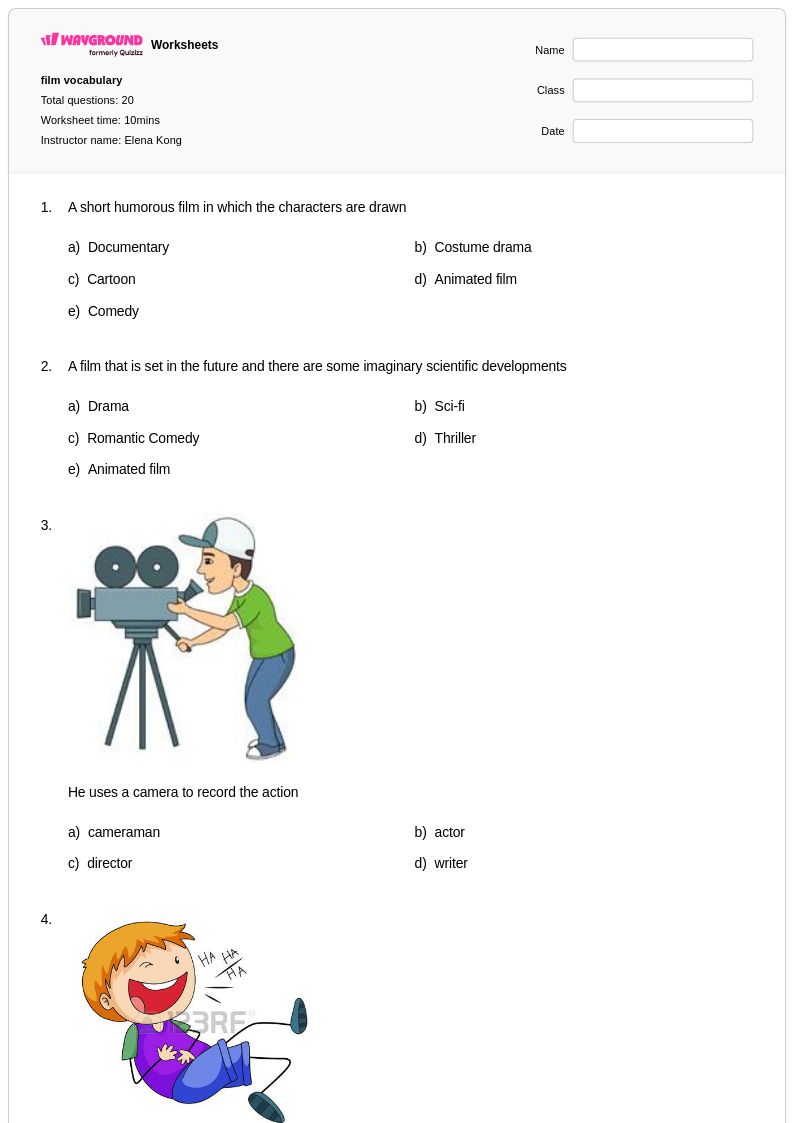
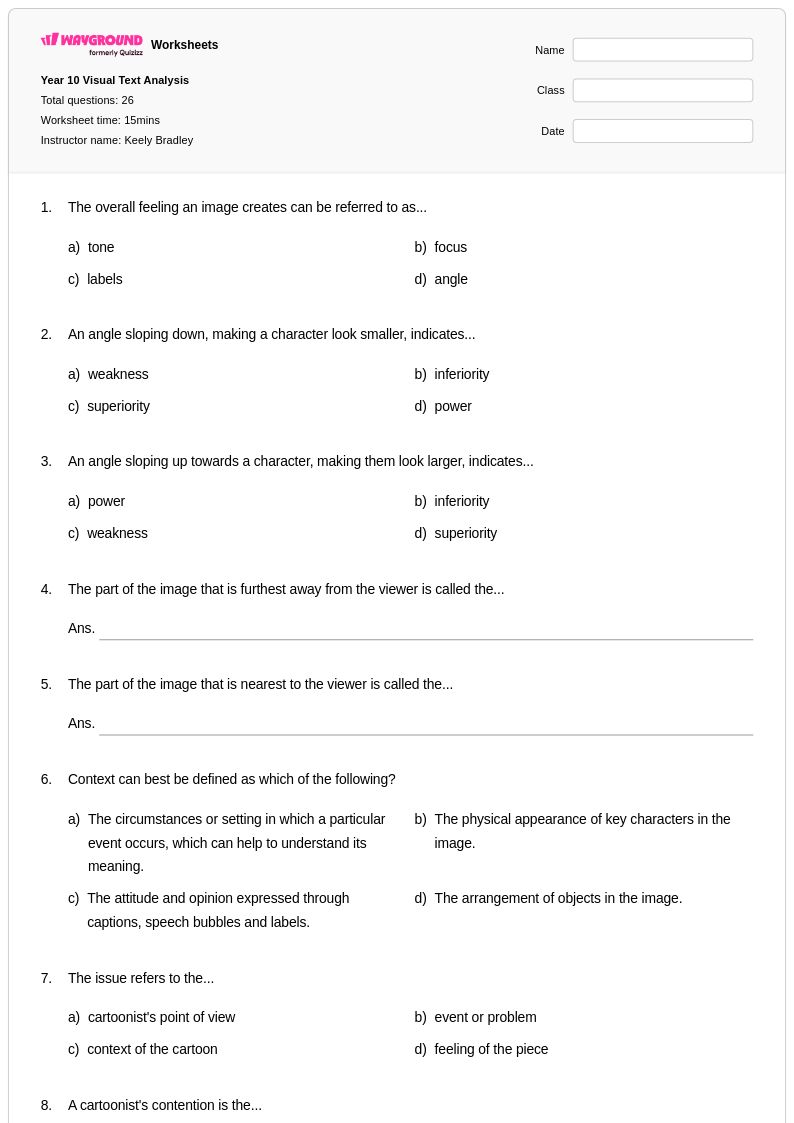
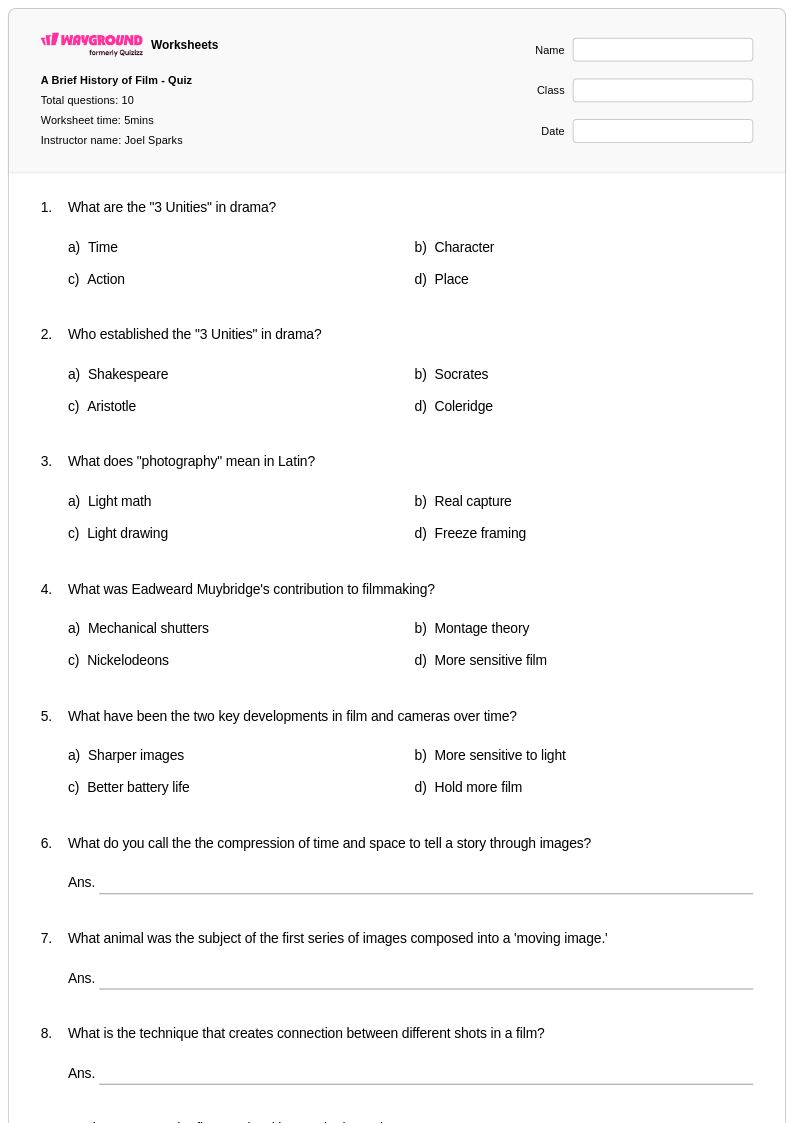
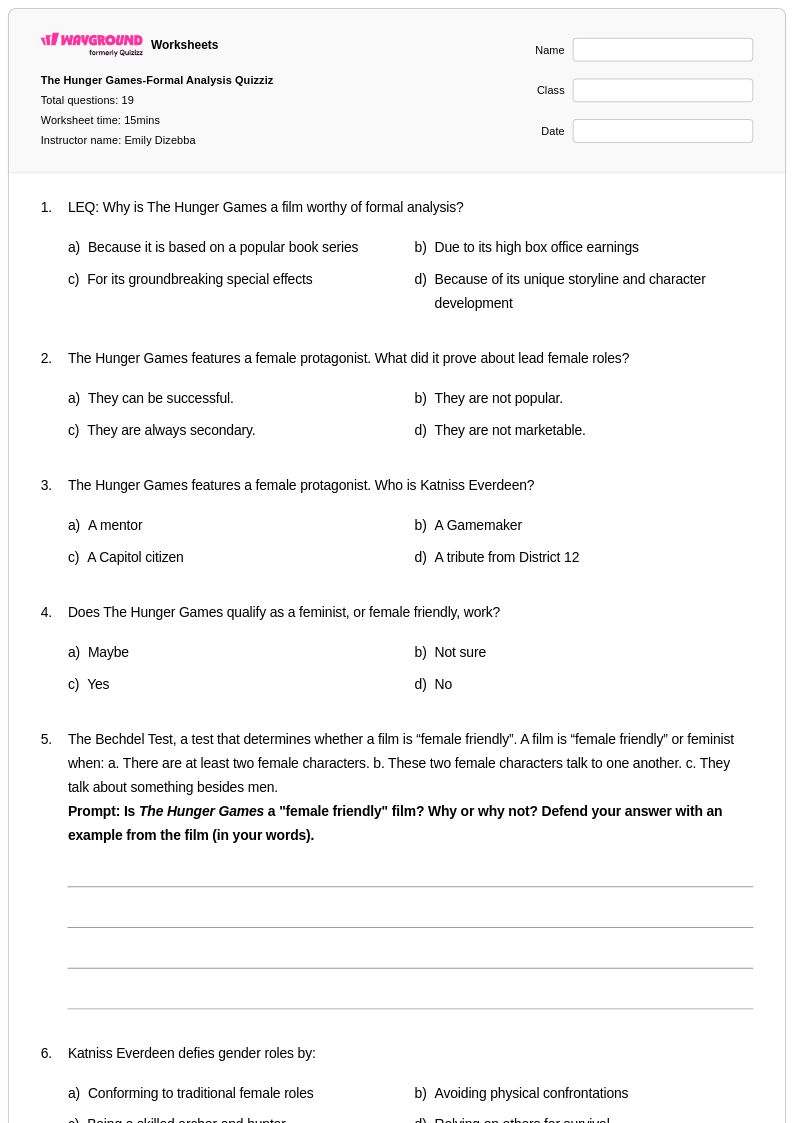
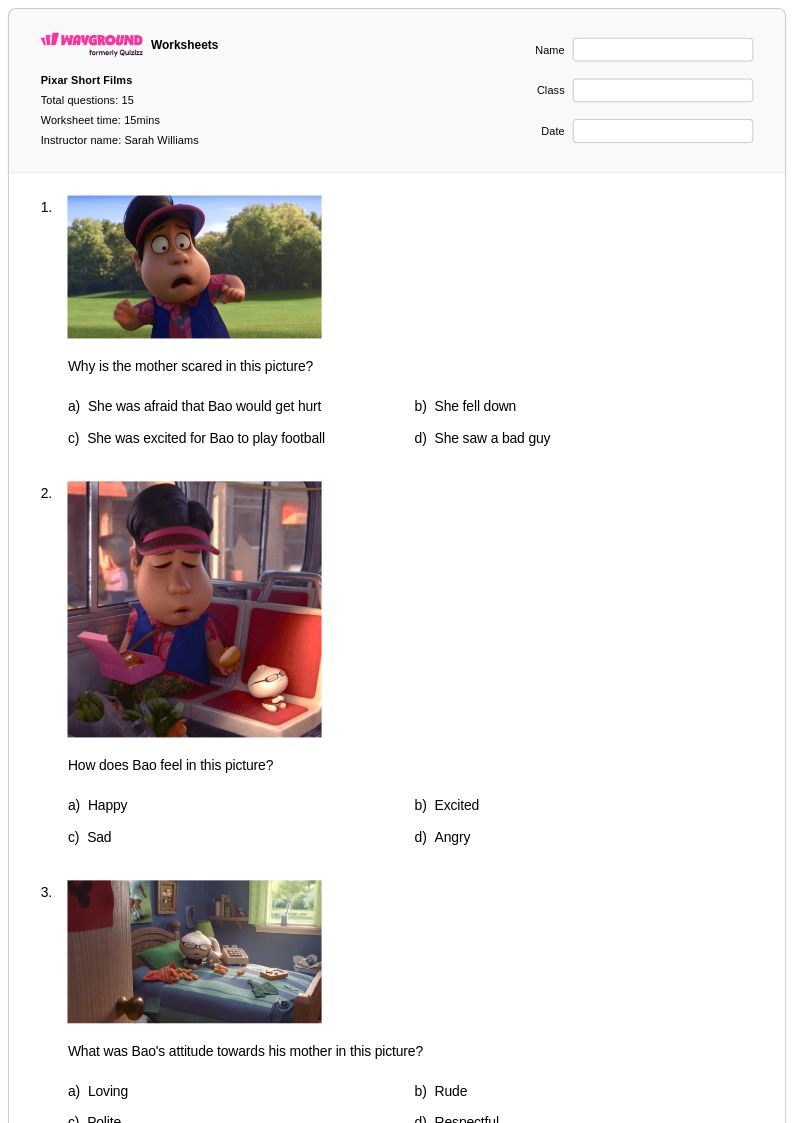
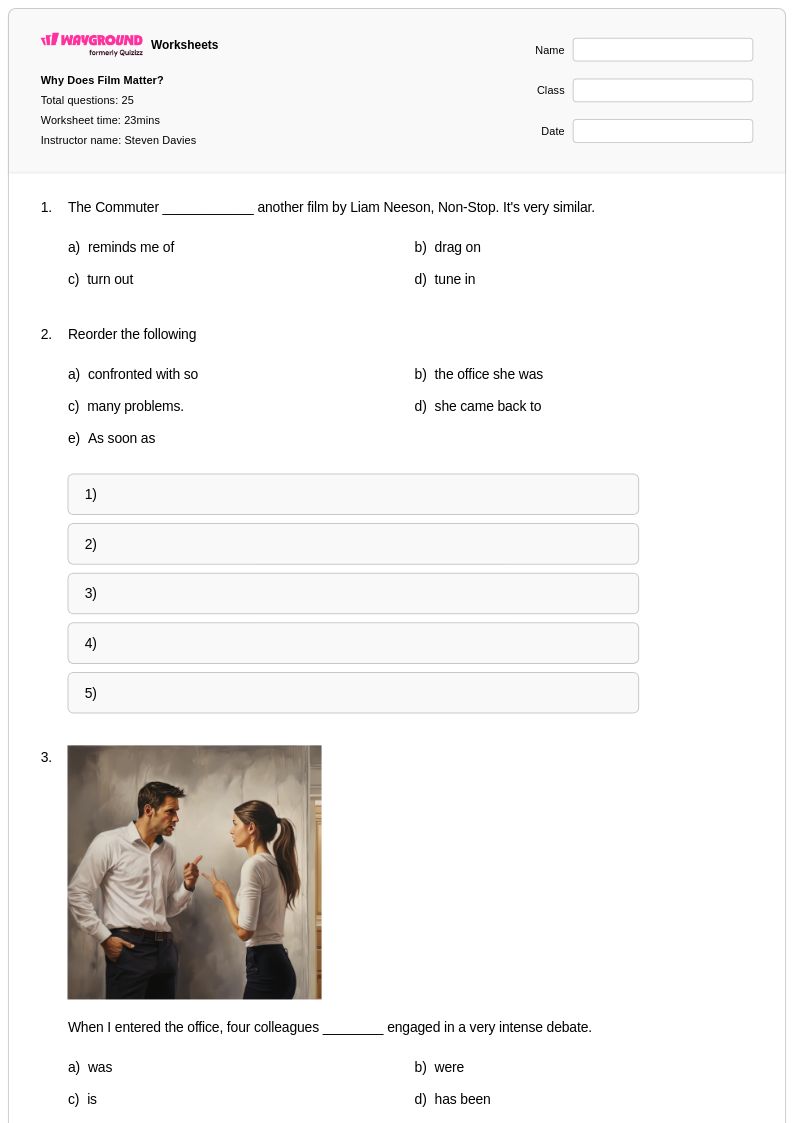
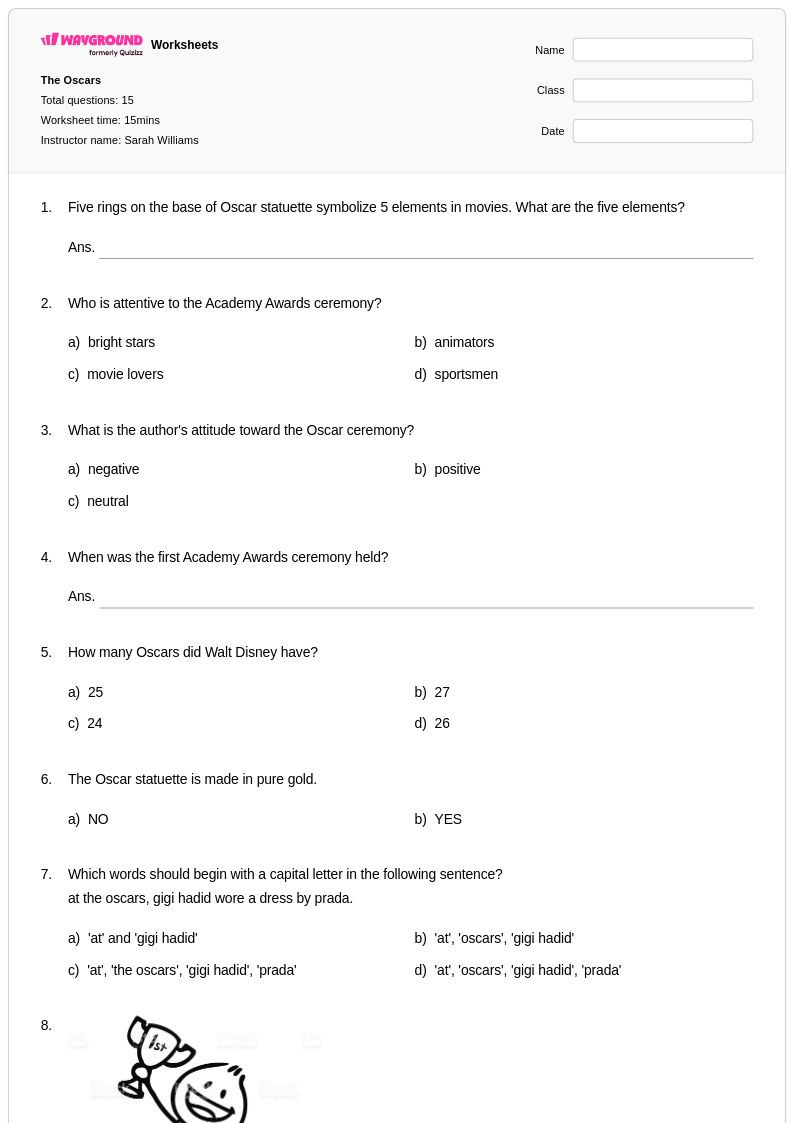
Film analysis worksheets for Class 10 students available through Wayground (formerly Quizizz) provide comprehensive tools for developing sophisticated reading comprehension strategies through cinematic texts. These expertly designed resources guide students through the critical examination of visual storytelling elements, including cinematography, narrative structure, character development, and thematic interpretation. Students strengthen essential analytical skills by practicing close reading techniques adapted for film medium, learning to decode symbolic imagery, analyze directorial choices, and construct evidence-based interpretations of complex visual narratives. Each worksheet includes detailed answer keys and practice problems that scaffold learning from basic plot comprehension to advanced critical analysis, with free printables covering diverse film genres and historical periods to engage varied student interests.
Wayground (formerly Quizizz) empowers educators with an extensive collection of millions of teacher-created film analysis resources specifically aligned with Class 10 reading comprehension standards and learning objectives. The platform's advanced search and filtering capabilities enable teachers to quickly locate worksheets targeting specific analytical skills, from identifying literary devices in screenplays to evaluating directorial techniques and cultural contexts. Robust differentiation tools allow instructors to customize content complexity for diverse learners, while flexible formatting options provide both printable pdf versions for traditional classroom use and interactive digital formats for technology-enhanced learning environments. These comprehensive resources support strategic lesson planning, targeted remediation for struggling readers, enrichment opportunities for advanced students, and consistent skill practice that builds students' confidence in analyzing complex visual and textual media across academic disciplines.
FAQs
How do I teach film analysis in the classroom?
Teaching film analysis effectively means moving students beyond passive viewing toward active interpretation of cinematic techniques. Start by introducing core elements one at a time: cinematography (camera angles, lighting, shot composition), narrative structure, character development, and sound design. Once students can identify these elements in isolation, practice applying them together through structured viewing guides or worksheets that prompt analysis of a single scene before scaling up to a full film.
What exercises help students practice film analysis skills?
The most effective film analysis exercises ask students to slow down and examine specific choices rather than summarize plot. Scene breakdown activities work well — students pause at key moments and identify camera angles, lighting changes, or musical shifts and explain what effect those choices create. Comparative exercises, where students analyze the same narrative moment across two different films or directors, also build analytical depth by forcing them to articulate contrast.
What common mistakes do students make when analyzing films?
The most frequent error is treating film analysis like a book report — students summarize what happens instead of analyzing how and why directorial choices create meaning. Students also tend to describe visual elements without interpreting their significance, writing 'the camera zooms in' without explaining the emotional or narrative effect. Another common misconception is treating personal preference as analysis; teachers should push students to ground all claims in specific, observable evidence from the film itself.
How can I use film analysis worksheets to support visual media literacy?
Film analysis worksheets build visual media literacy by giving students a structured vocabulary and framework for reading moving images the same way they read written texts. Prompts that ask students to identify symbolic meaning, interpret thematic content, or evaluate narrative structure transfer directly to reading comprehension skills. Using worksheets consistently across multiple films helps students internalize analytical habits rather than applying them only when prompted.
How do I use Wayground's film analysis worksheets in my classroom?
Wayground's film analysis worksheets are available as printable PDFs for traditional classroom use and in digital formats for technology-integrated learning environments, and you can also host them as a quiz directly on Wayground. Each worksheet includes an answer key, so teachers can use them for guided practice, independent work, or post-viewing assessment without additional prep. The digital format is especially useful for remote or hybrid settings where students need to complete viewing and analysis activities asynchronously.
How can I differentiate film analysis instruction for students at different skill levels?
Differentiation in film analysis often comes down to scaffolding the complexity of the interpretive task. Struggling students benefit from sentence frames and vocabulary banks that give them language for describing cinematic techniques, while advanced students can be pushed to connect directorial choices to broader cultural or historical context. On Wayground, teachers can apply individual accommodations such as read aloud support, reduced answer choices, and extended time to specific students, ensuring the same worksheet activity works across varied skill levels in the same class.