Free Printable Chemical Change Worksheets for Class 6
Explore Wayground's free Class 6 chemical change worksheets with printable PDFs, practice problems, and answer keys to help students master identifying reactions, observing physical versus chemical changes, and understanding molecular transformations.
Explore printable Chemical Change worksheets for Class 6
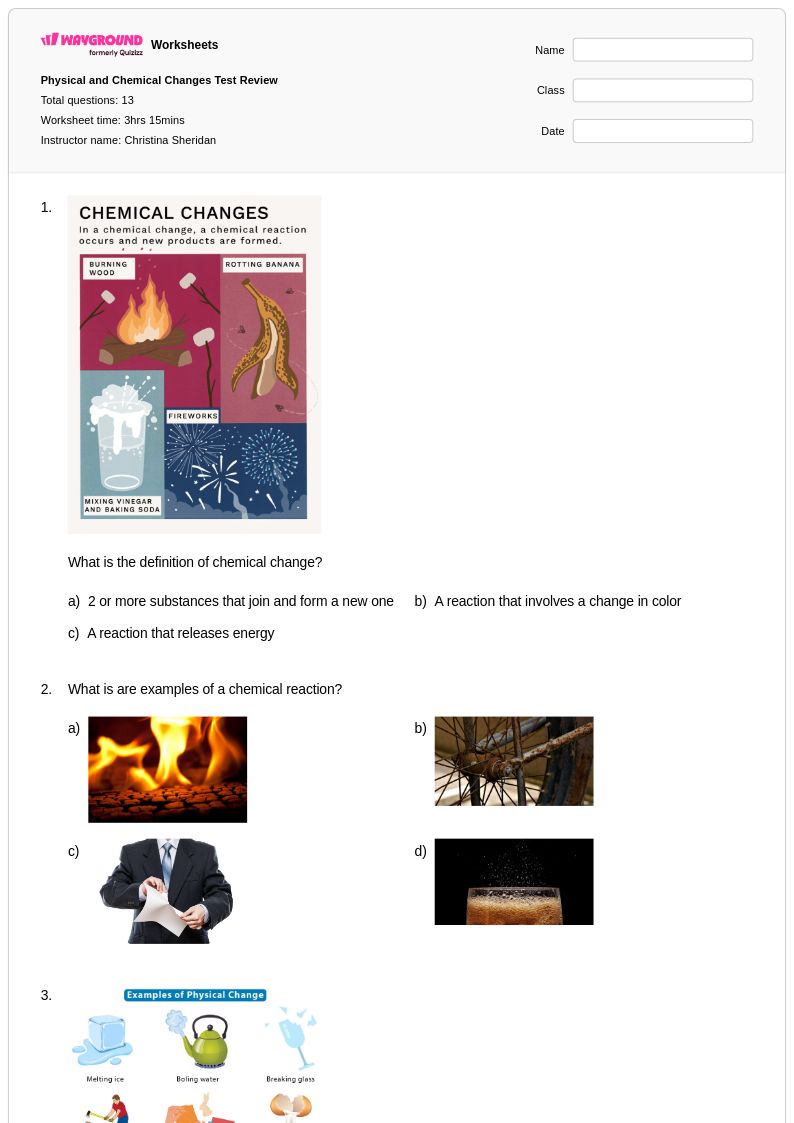
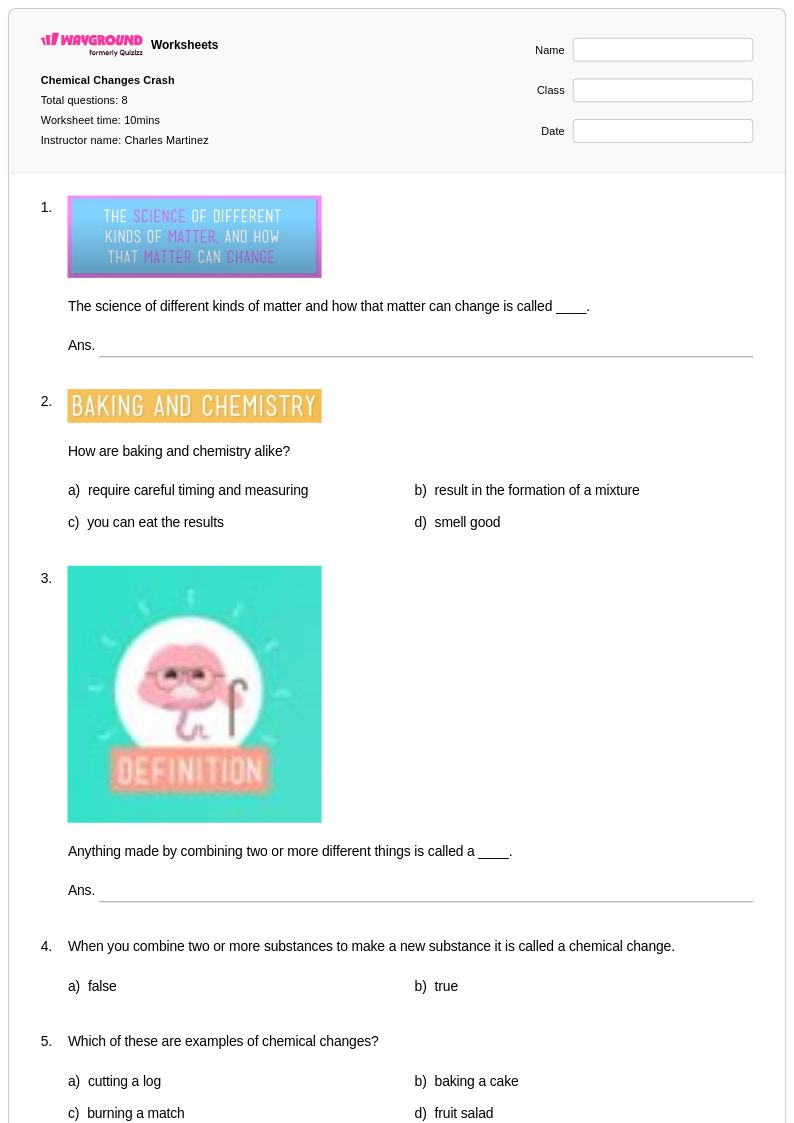
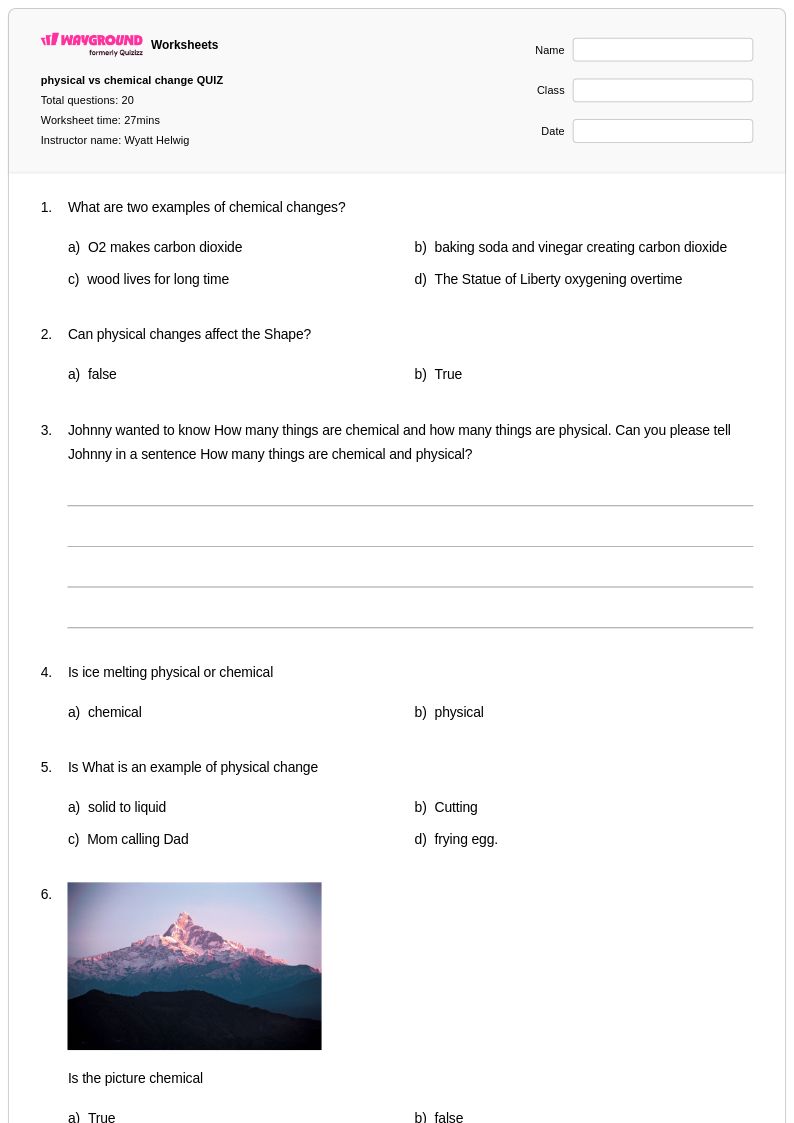
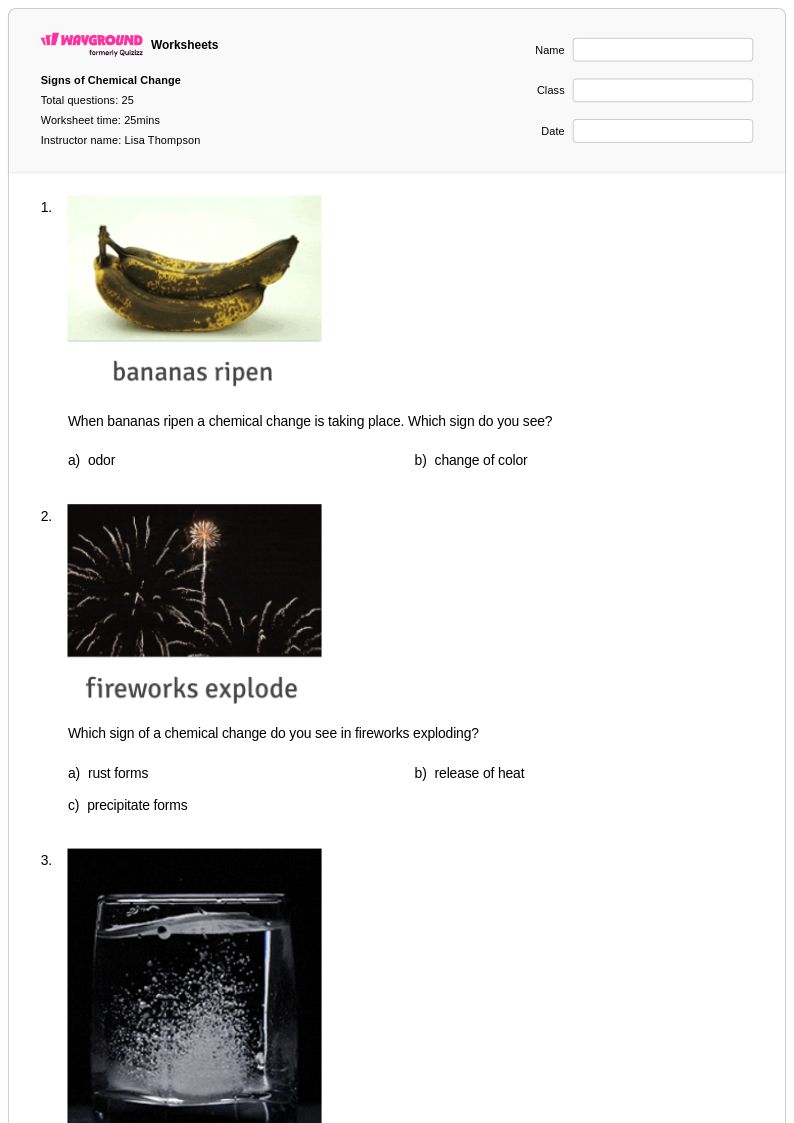
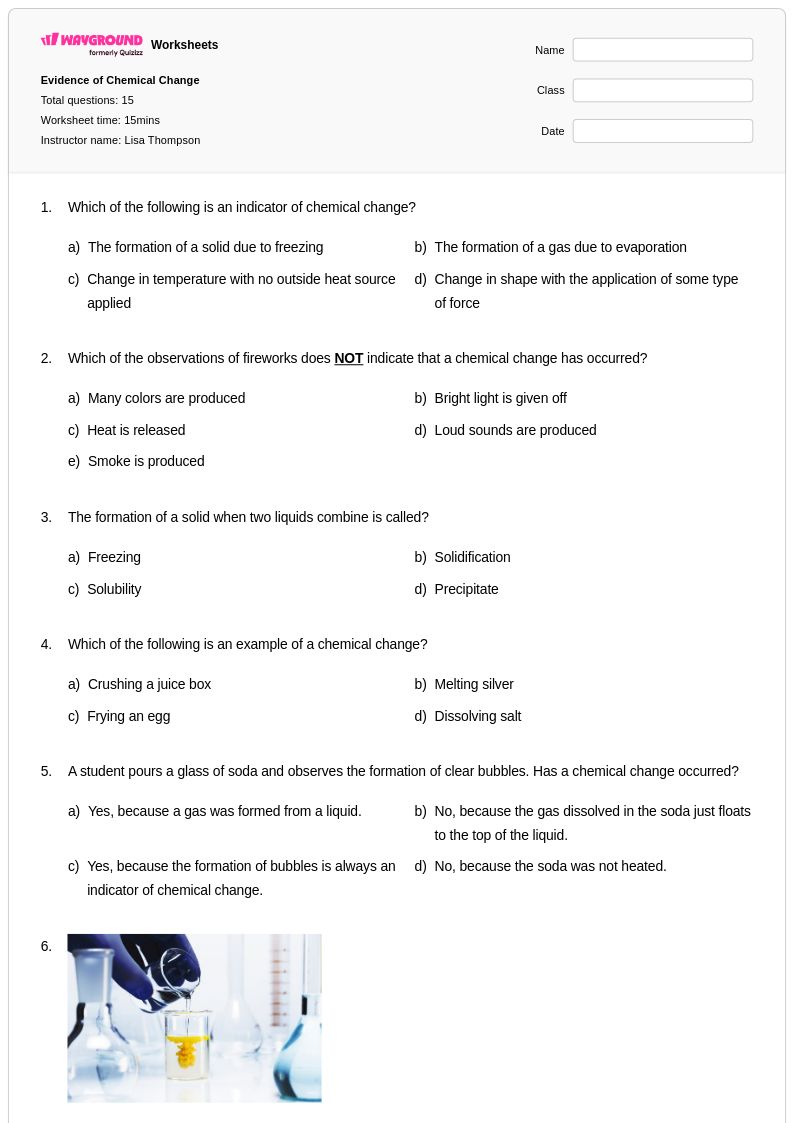
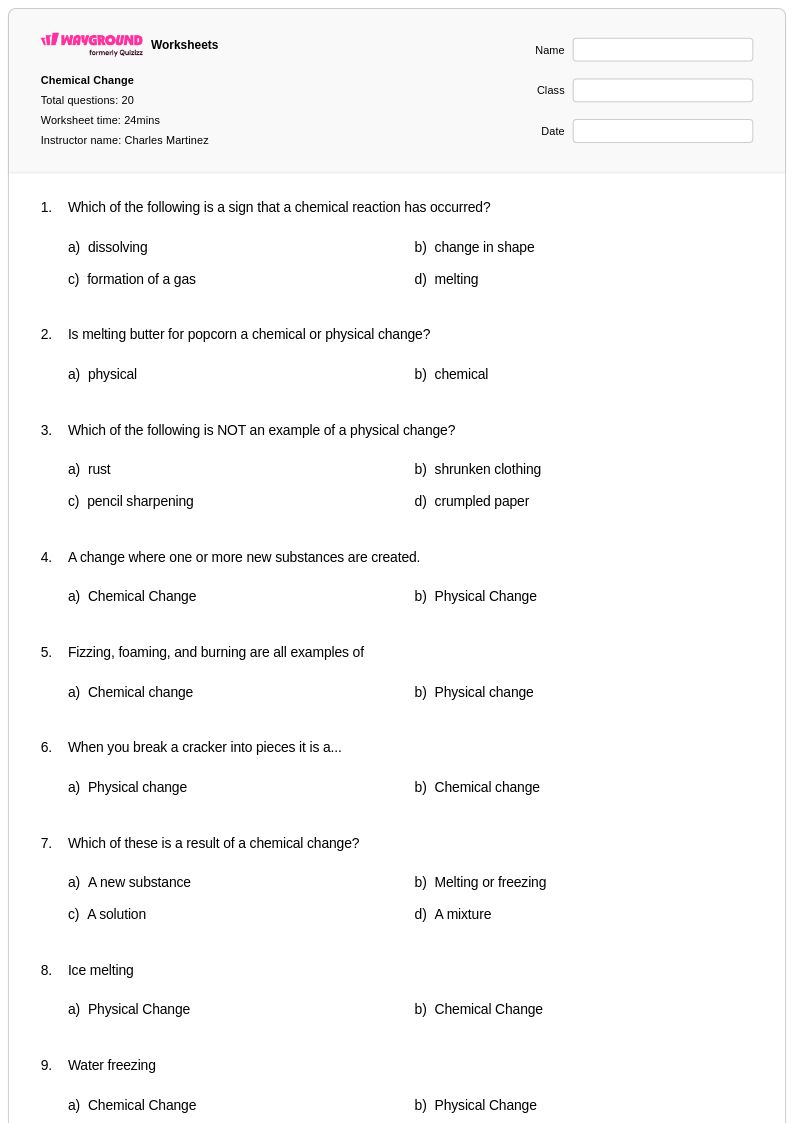
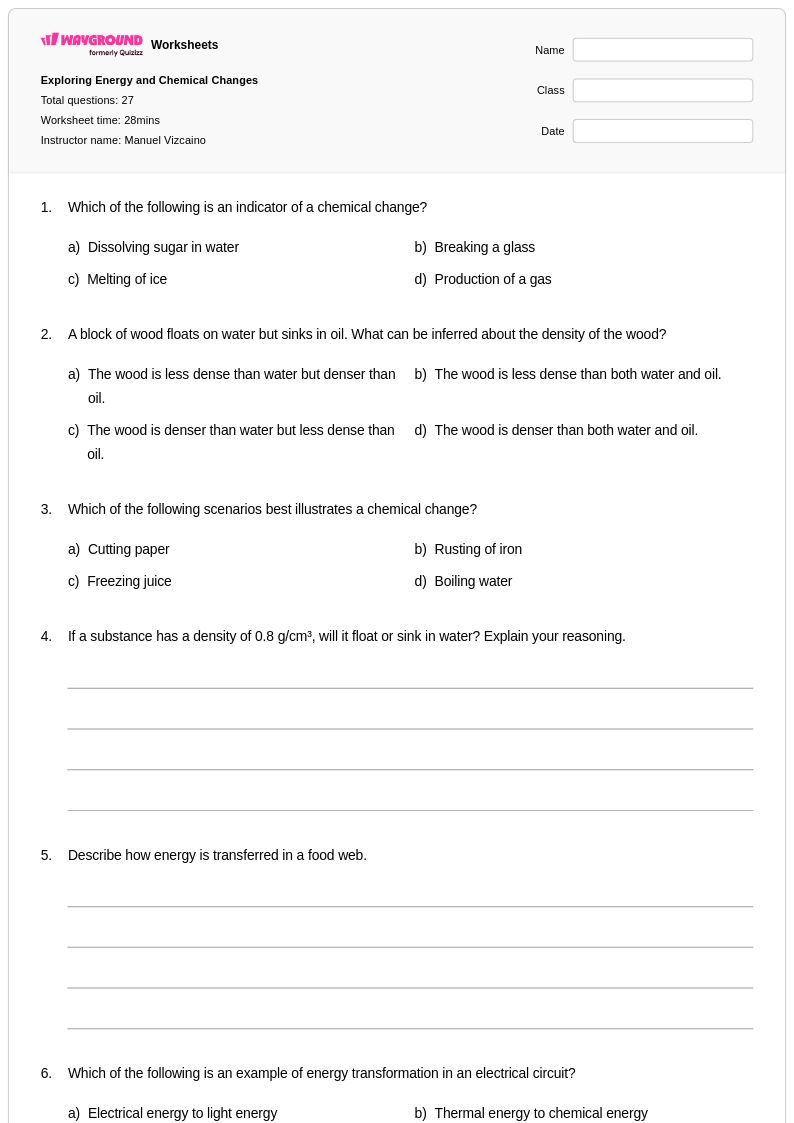
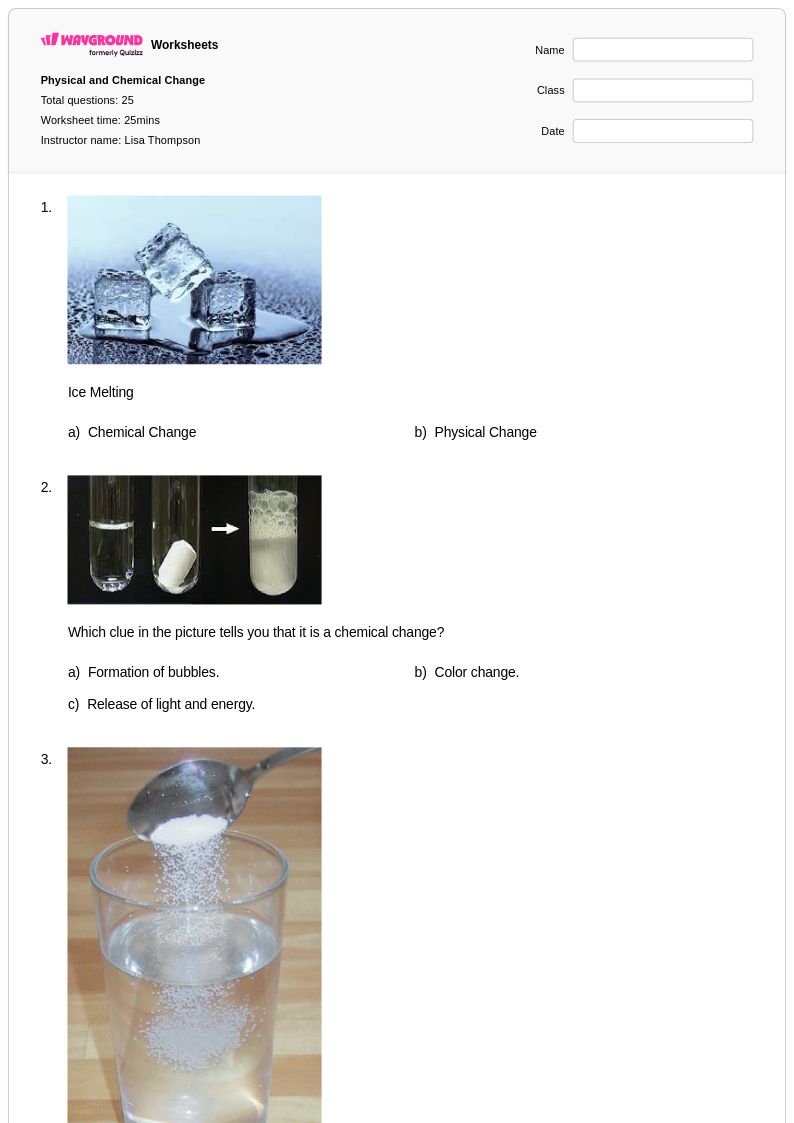
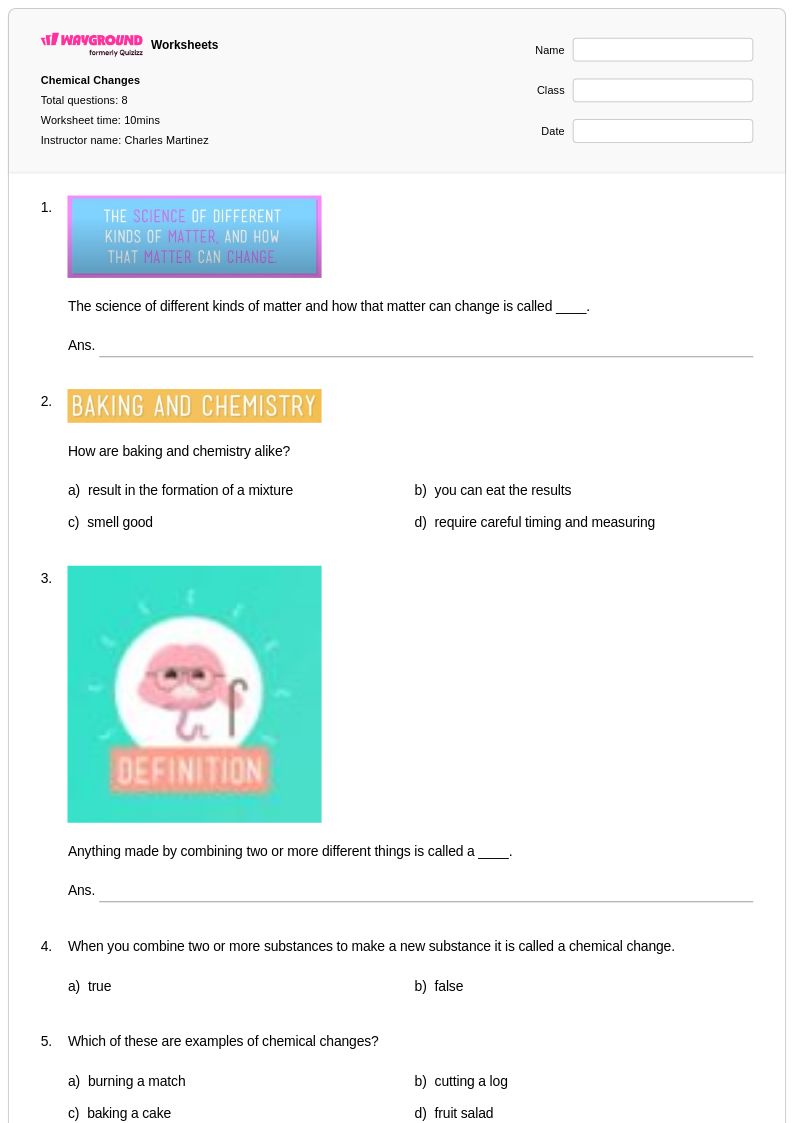
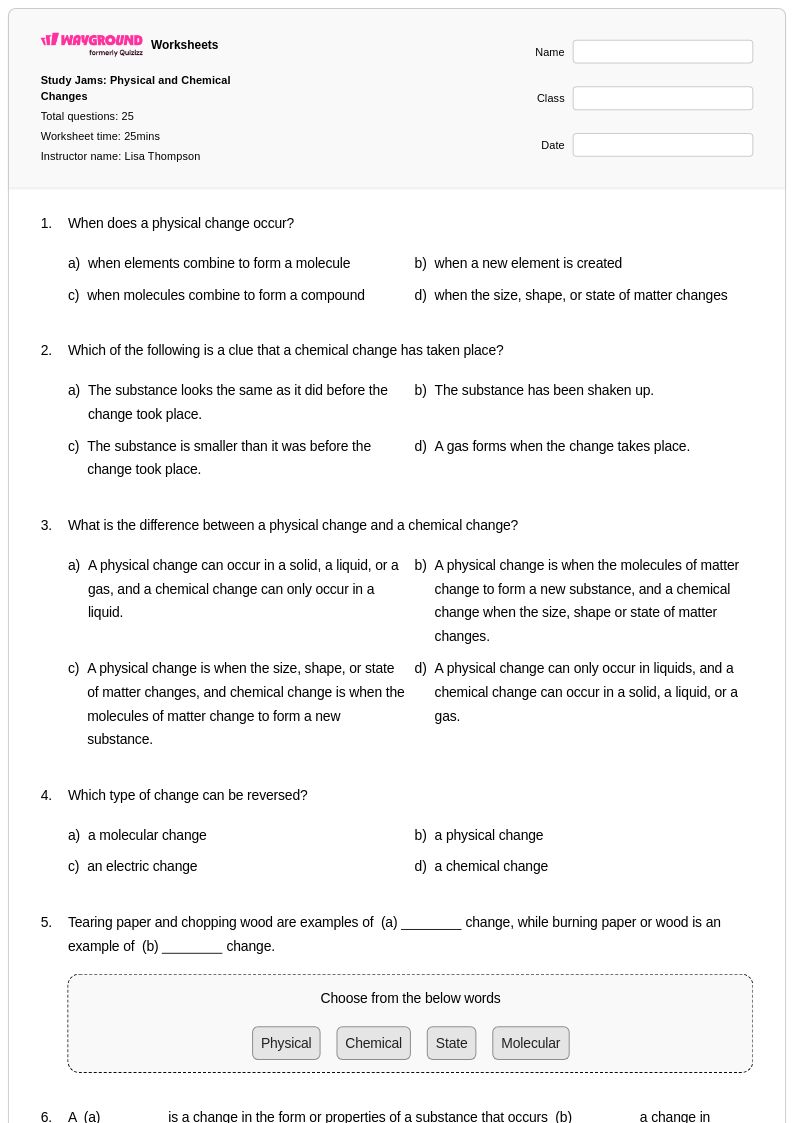
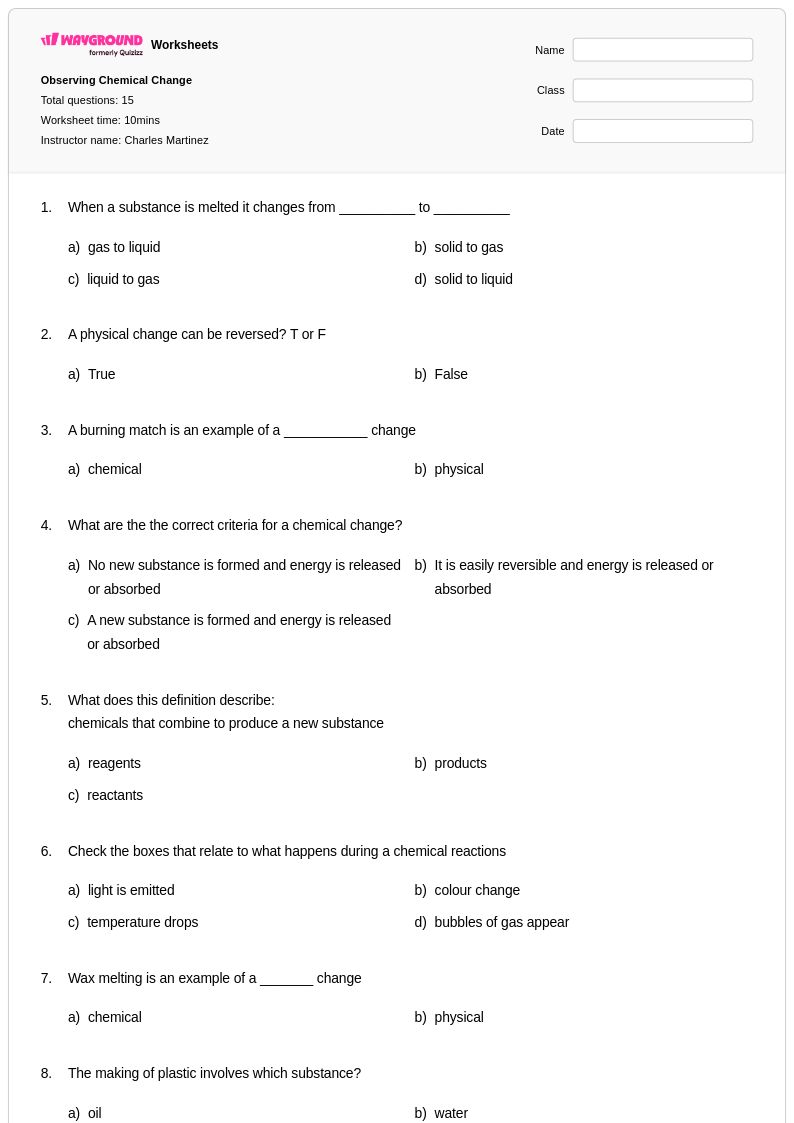
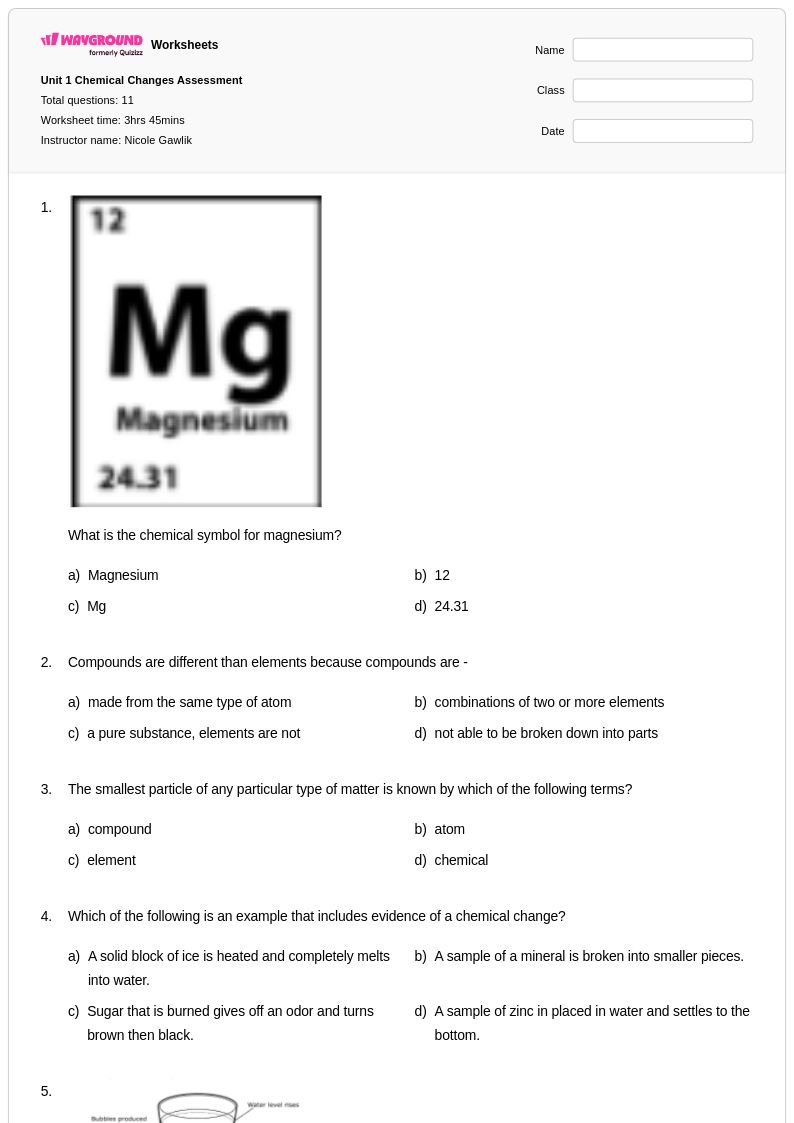
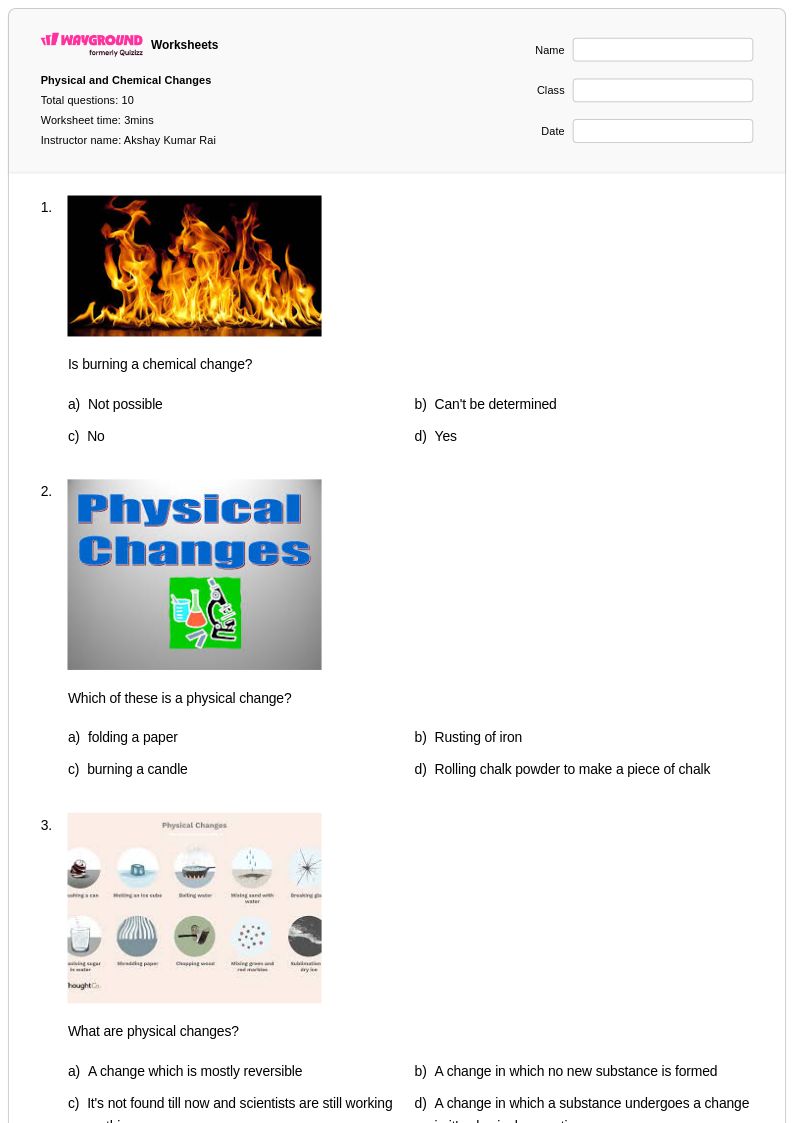
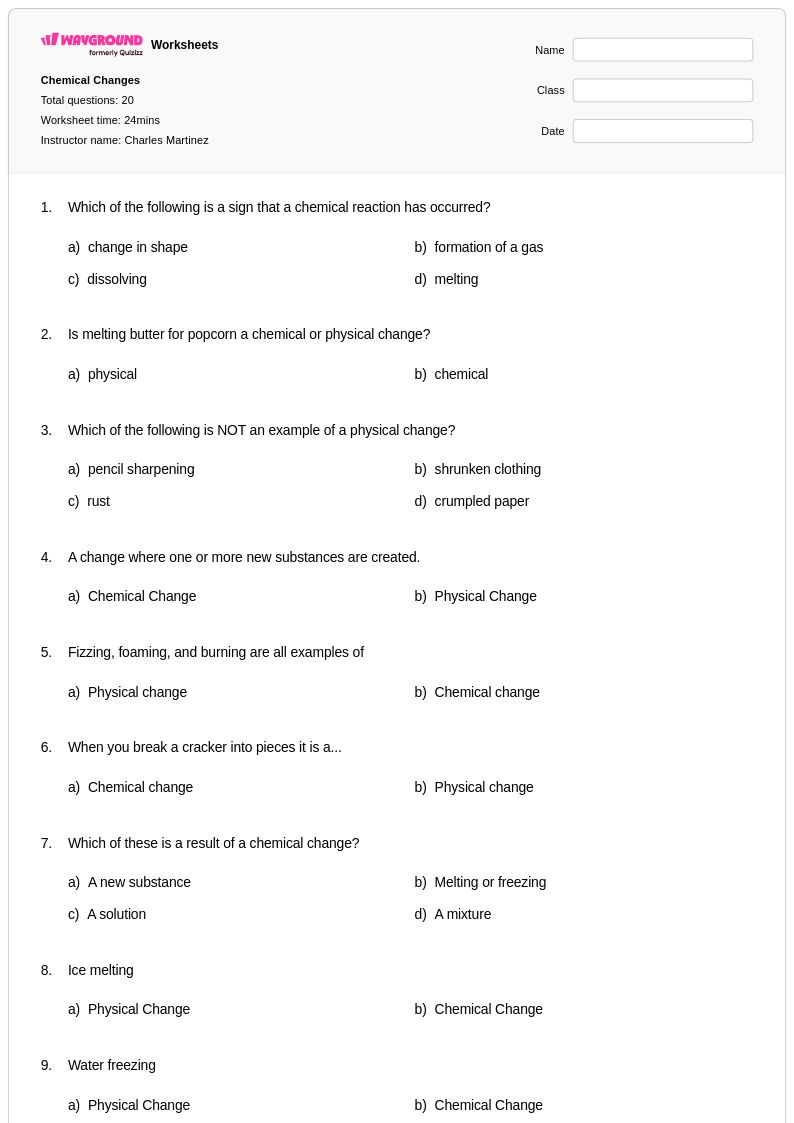
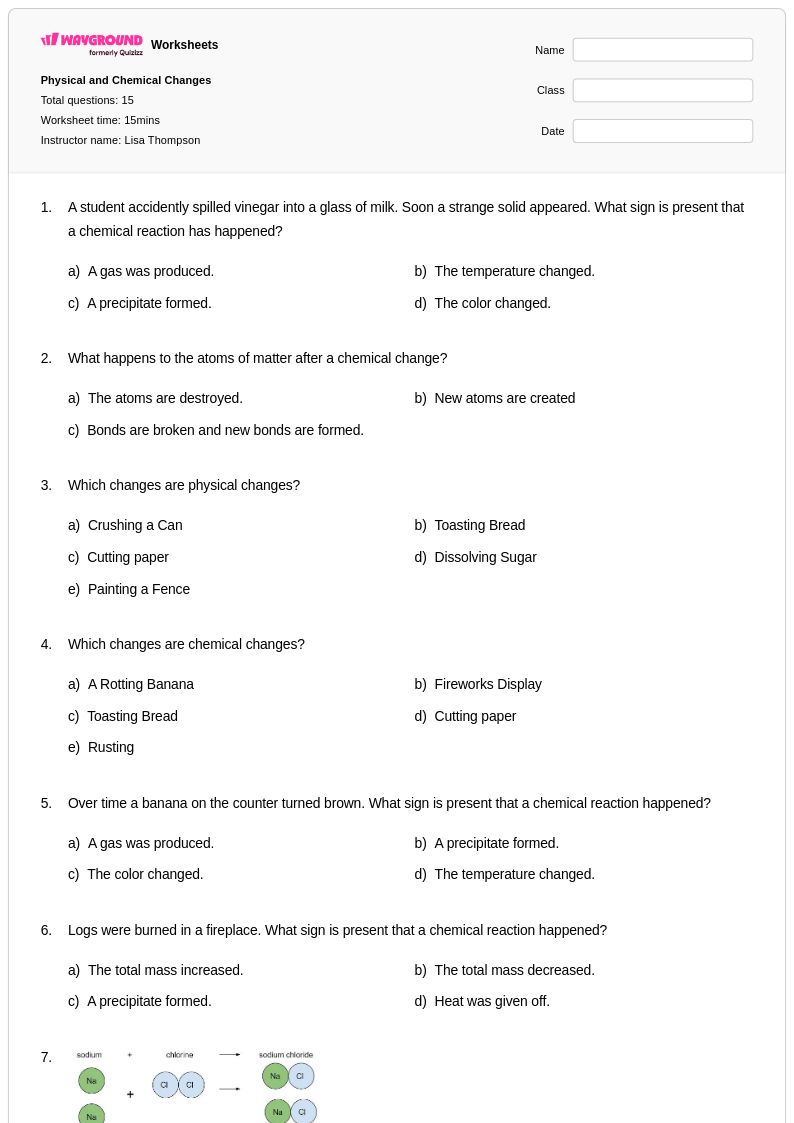
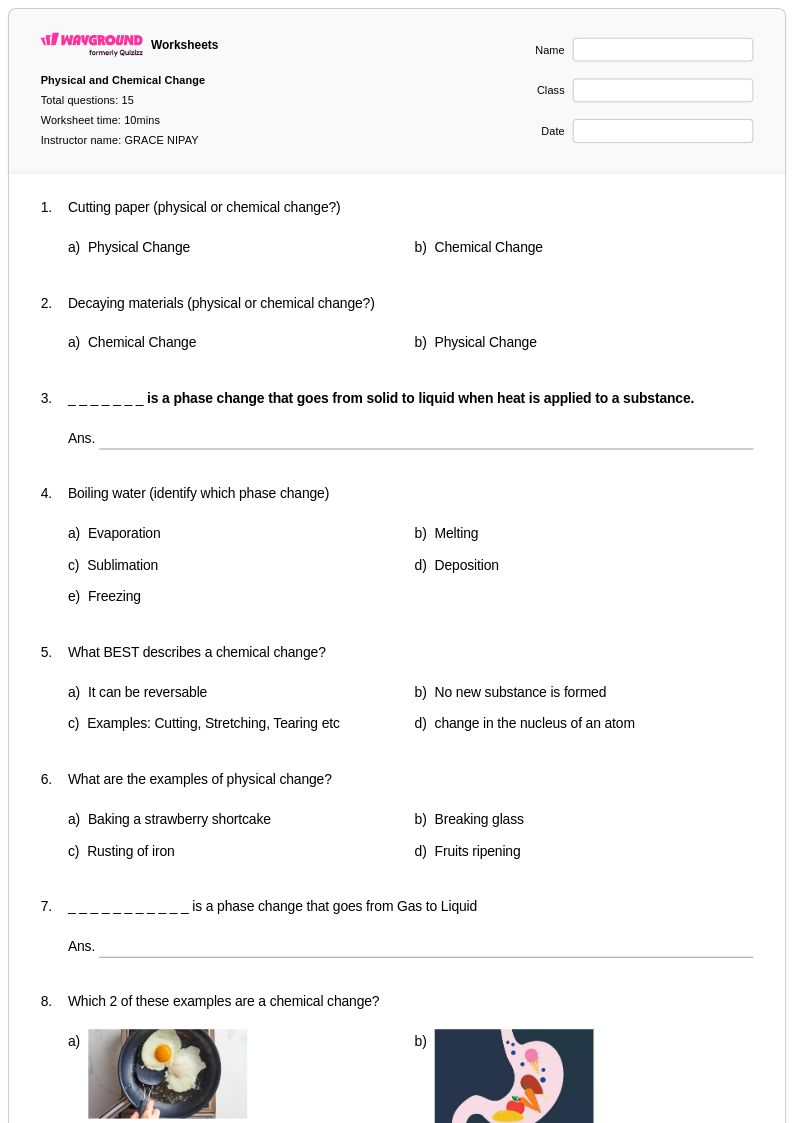
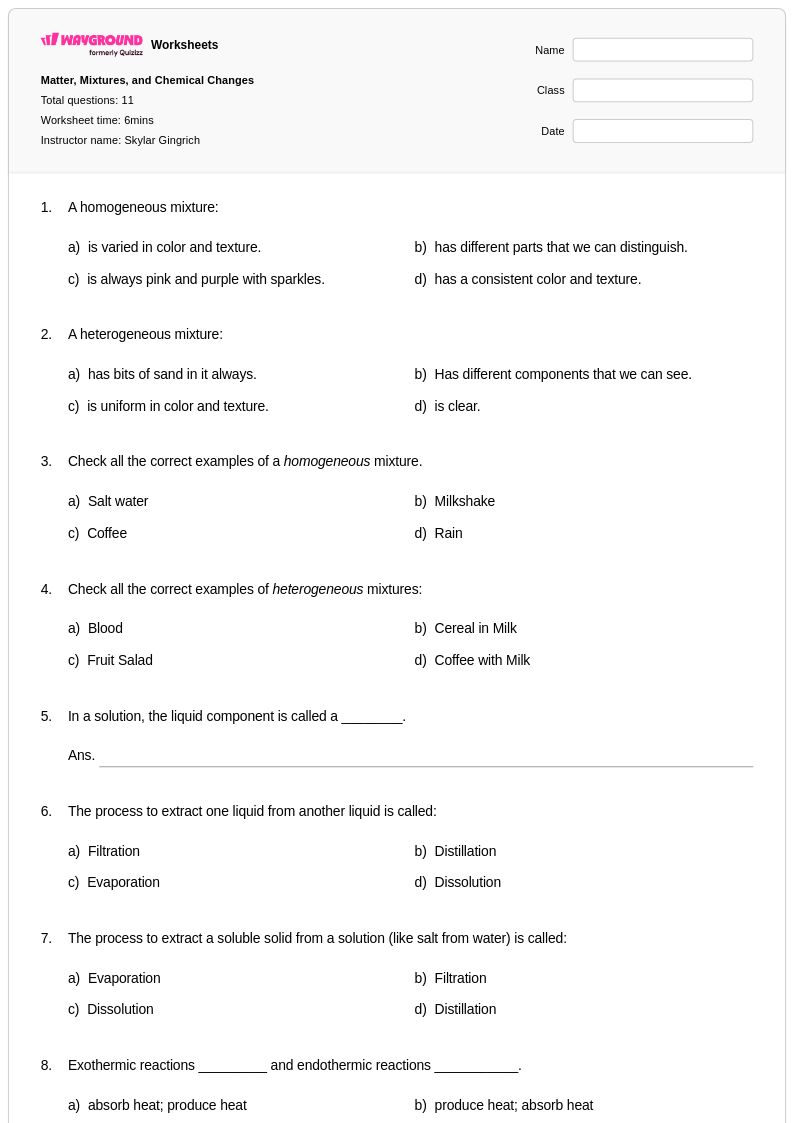
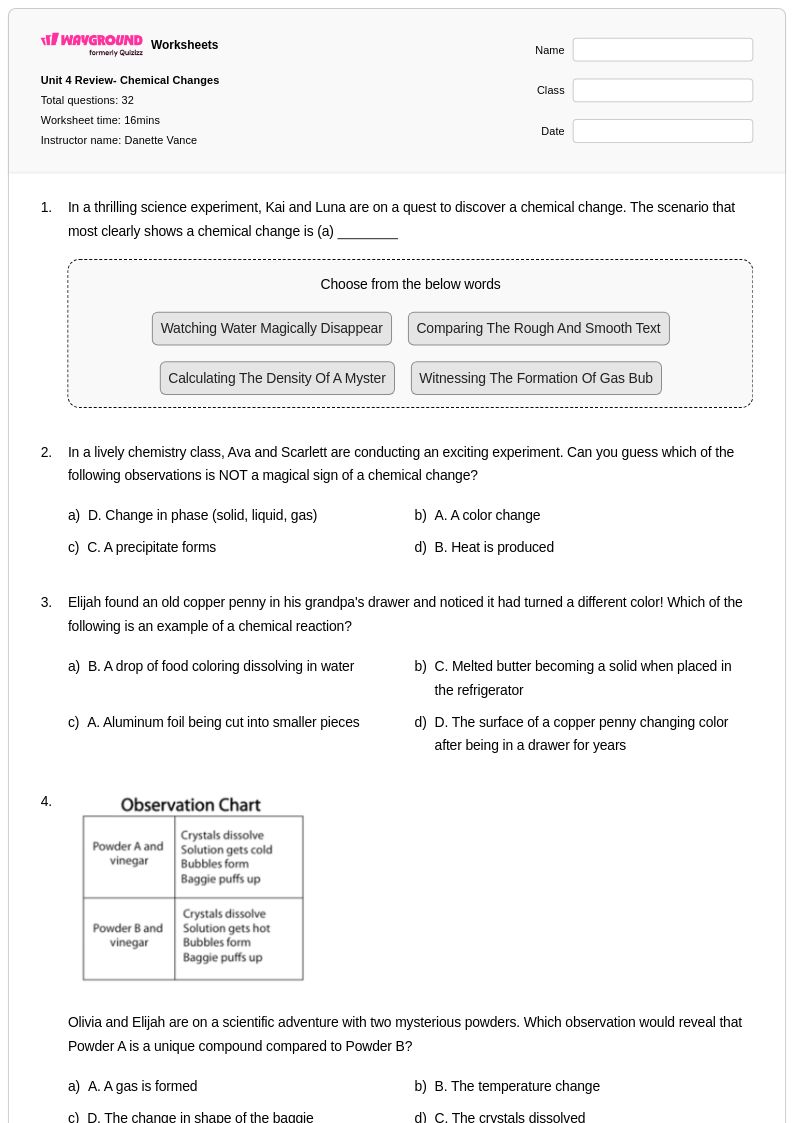
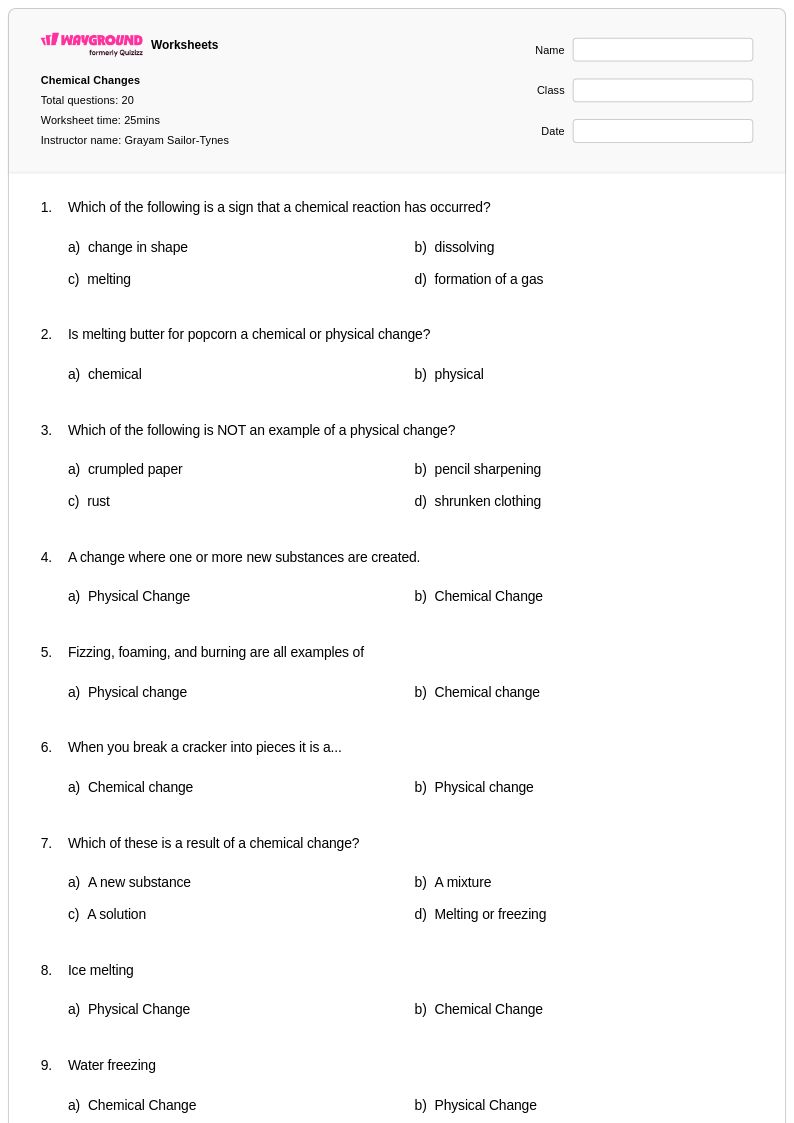
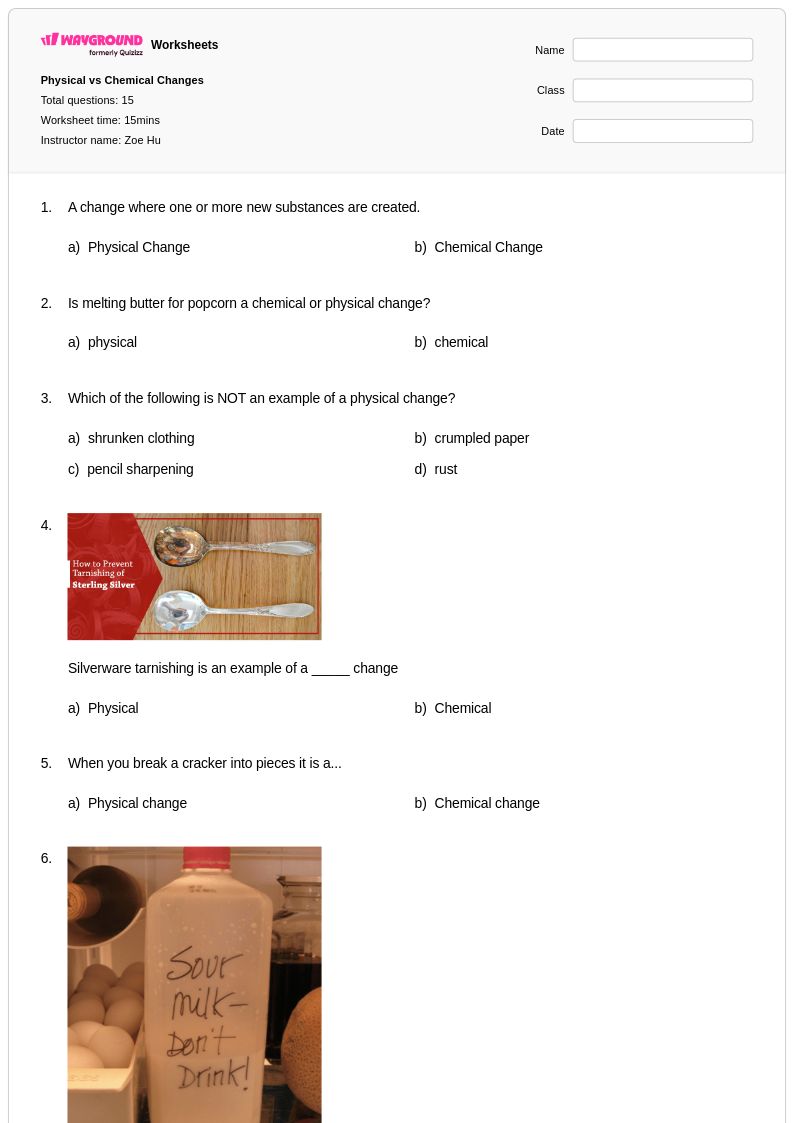
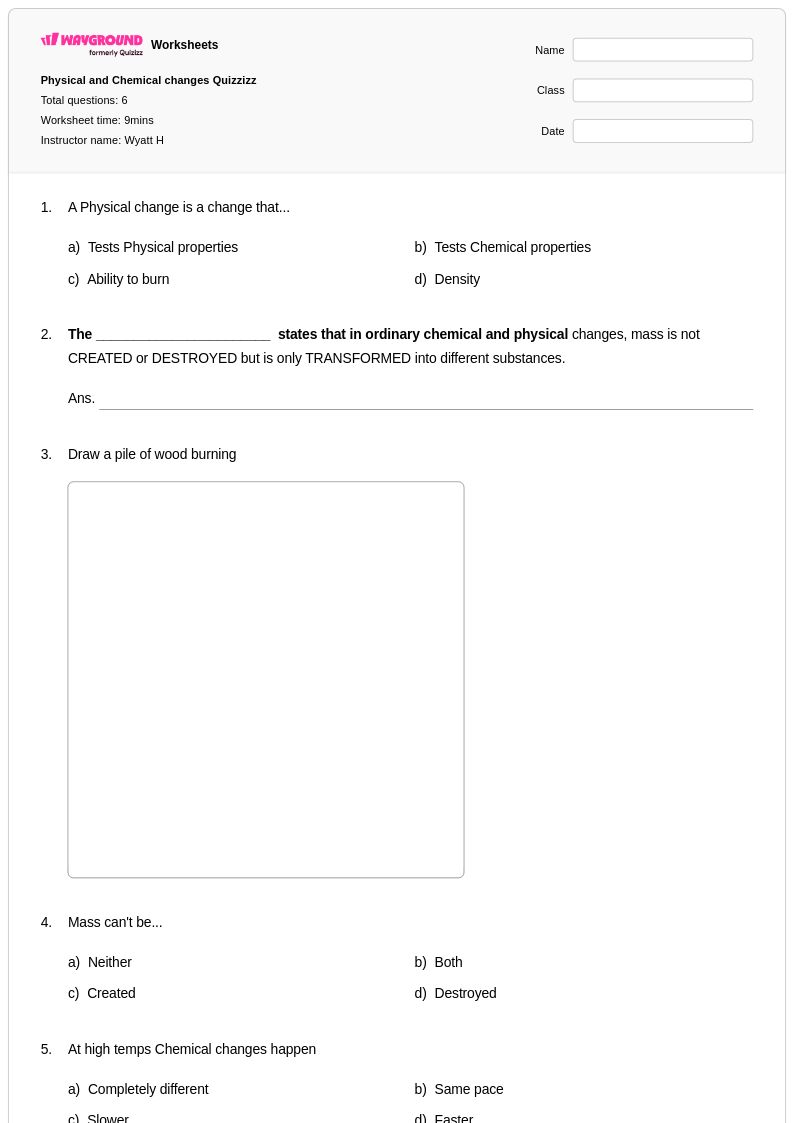
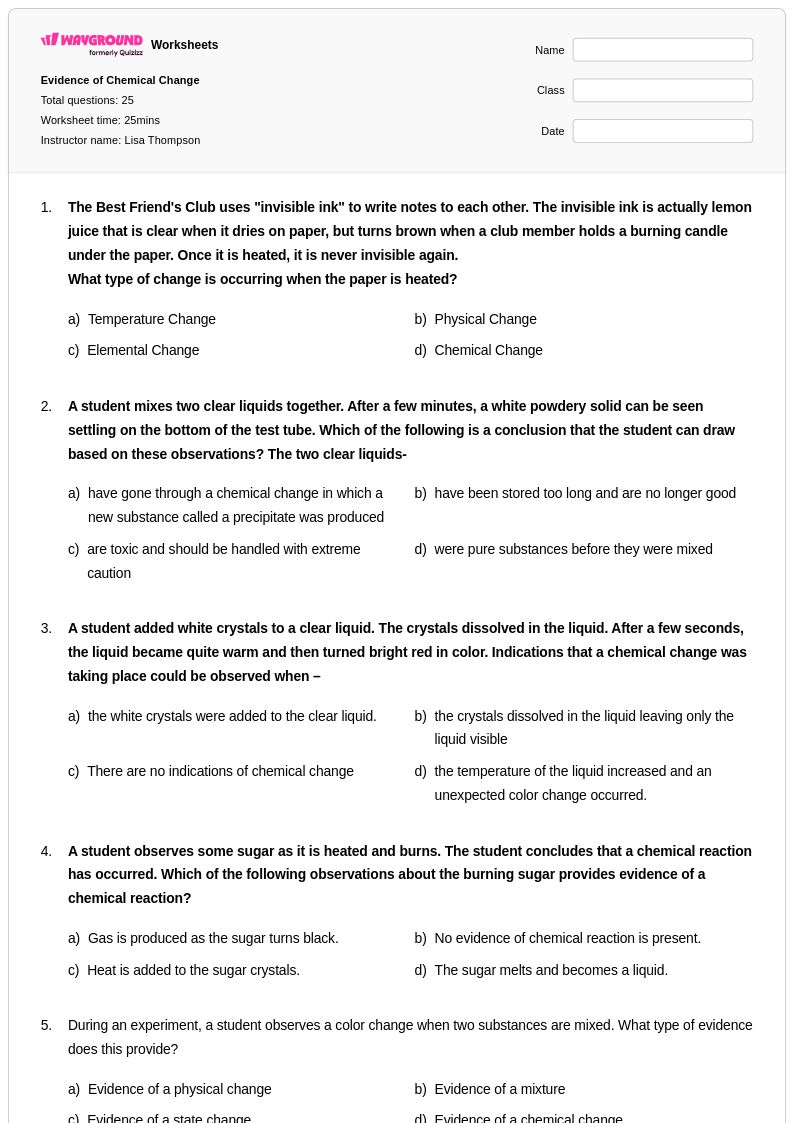
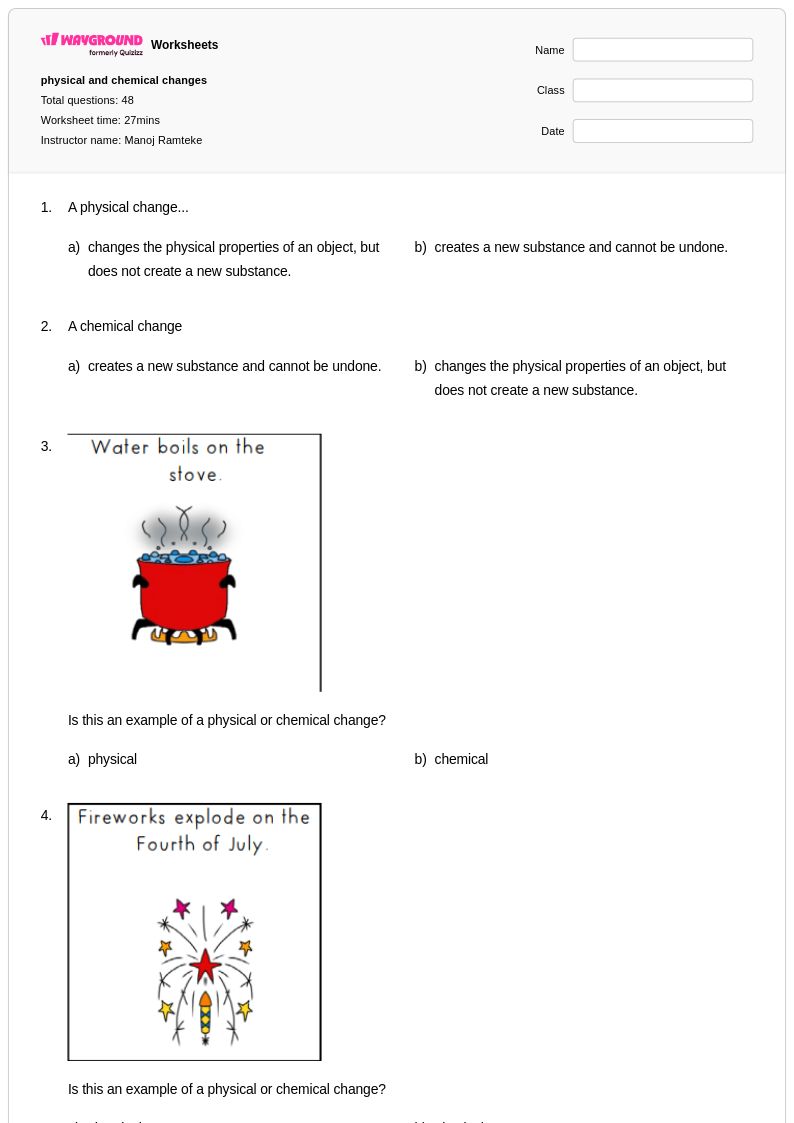
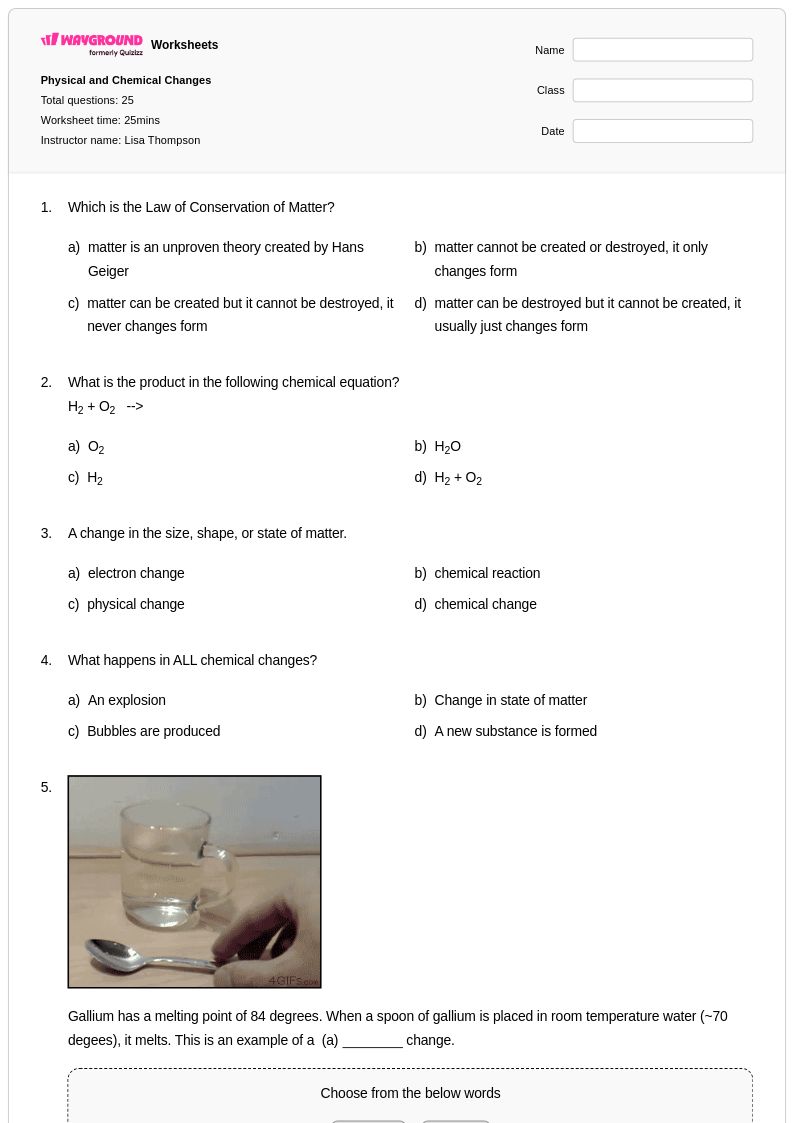
Chemical change worksheets for Class 6 students available through Wayground (formerly Quizizz) provide comprehensive practice materials that help young scientists understand the fundamental differences between physical and chemical transformations. These educational resources focus on developing critical observation and analytical skills as students learn to identify evidence of chemical reactions such as color changes, gas production, temperature fluctuations, and the formation of precipitates. The worksheets include a variety of practice problems that challenge students to classify different scenarios, predict outcomes of chemical processes, and explain the scientific reasoning behind their observations. Each worksheet comes with a detailed answer key to support both independent learning and classroom instruction, and teachers can access these materials as free printables in convenient PDF format for seamless distribution and use.
Wayground (formerly Quizizz) empowers educators with an extensive collection of millions of teacher-created resources specifically designed to enhance chemistry instruction at the Class 6 level. The platform's robust search and filtering capabilities allow teachers to quickly locate chemical change worksheets that align with specific curriculum standards and learning objectives. Advanced differentiation tools enable instructors to customize content difficulty levels, ensuring that both struggling learners and advanced students receive appropriate challenges for skill development. These versatile materials are available in both printable PDF format and interactive digital versions, providing flexibility for various teaching environments and learning preferences. Teachers can efficiently incorporate these resources into lesson planning, targeted remediation sessions, enrichment activities, and regular skill practice, ultimately supporting comprehensive understanding of chemical change concepts through varied and engaging educational experiences.
FAQs
How do I teach students the difference between physical and chemical changes?
Start by anchoring instruction in observable evidence: chemical changes produce new substances, which is often signaled by color change, gas production, precipitate formation, or an energy change such as heat or light. Physical changes, by contrast, alter form but not composition. Use concrete examples like burning wood (chemical) versus cutting wood (physical), and have students sort examples into categories before moving to more ambiguous cases. Building this distinction early prevents the most common misconception students carry into later chemistry units.
What exercises help students practice identifying evidence of chemical change?
Worksheets that present real-world scenarios and ask students to identify which observable signs indicate a chemical change are highly effective for building this skill. Practice problems should include combustion, oxidation, and synthesis reactions so students see the concept across multiple contexts. Including both true chemical changes and physical change distractors within the same exercise sharpens students' ability to discriminate between the two, which is the core competency assessed on most science exams.
What are the most common mistakes students make when learning about chemical changes?
The most frequent error is confusing a color change or temperature change with definitive proof of a chemical reaction, without recognizing that physical changes can also produce these effects. Students also commonly struggle with the conservation of mass, assuming that matter is lost or gained during a reaction rather than rearranged. Another persistent misconception is treating all gas production as evidence of a chemical change, even when it results from a physical process like boiling. Targeted practice problems that address these specific errors help students self-correct before assessments.
How do I help students understand balancing chemical equations?
Balancing chemical equations is best taught as a direct application of the law of conservation of mass: atoms are neither created nor destroyed, only rearranged. Begin with simple binary reactions before introducing combustion or synthesis reactions, and have students count atoms on each side explicitly before adjusting coefficients. A common instructional misstep is introducing subscript changes to balance equations, so worksheets that reinforce coefficient-only adjustments are essential for building procedurally accurate habits.
How can I use chemical change worksheets to support students with different learning needs?
Chemical change worksheets on Wayground can be assigned digitally, which allows teachers to apply individual accommodations such as read aloud for students who need audio support, reduced answer choices to lower cognitive load, and extended time configurable per student. These settings are saved and reusable across sessions, so differentiation does not require re-setup for each assignment. Remaining students receive standard settings without any notification, preserving a smooth classroom experience for everyone.
How do I use Wayground's chemical change worksheets in my classroom?
Wayground's chemical change worksheets are available as printable PDFs for traditional classroom and lab use, and in digital formats for technology-integrated or hybrid learning environments. Teachers can also host worksheets directly as a quiz on Wayground, making them suitable for formative assessment, bell ringers, or independent practice. Each worksheet includes a complete answer key, reducing grading time and allowing teachers to focus on targeted reteaching where students show gaps.