Free Printable Separation Methods Worksheets for Class 6
Master Class 6 separation methods with Wayground's comprehensive chemistry worksheets, featuring printable PDFs, free practice problems, and complete answer keys to help students understand filtration, evaporation, and distillation techniques.
Explore printable Separation Methods worksheets for Class 6
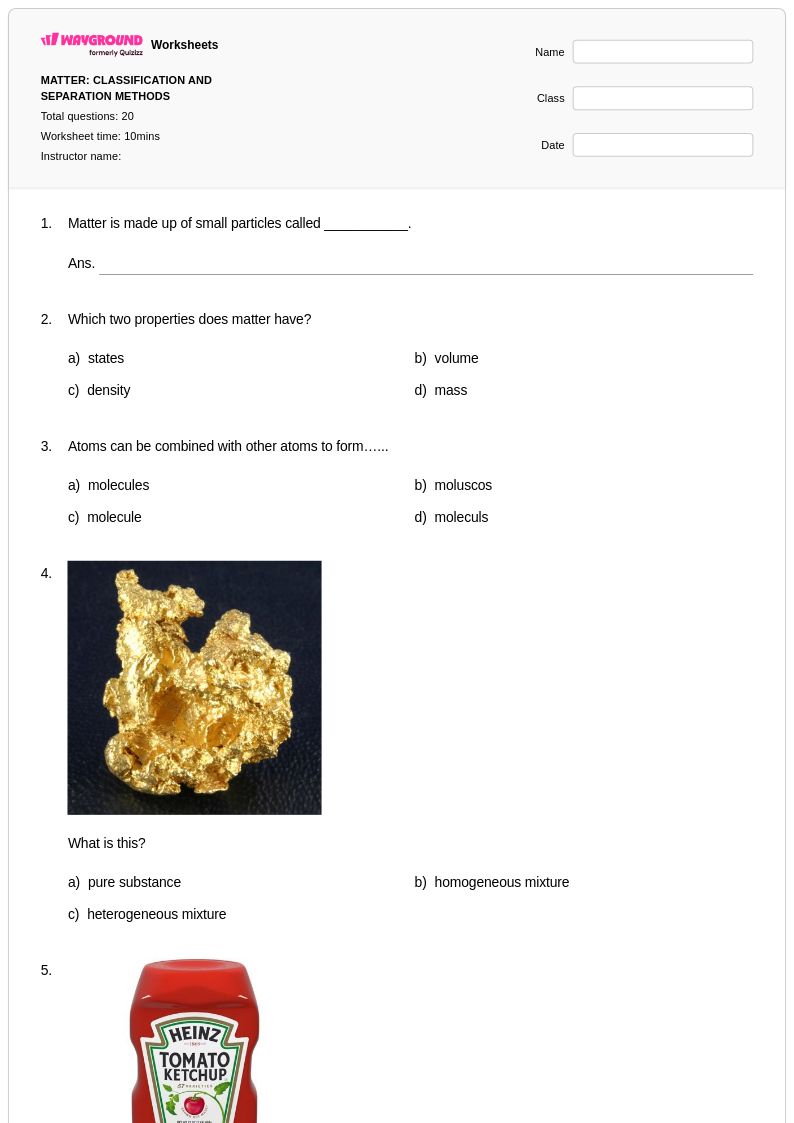
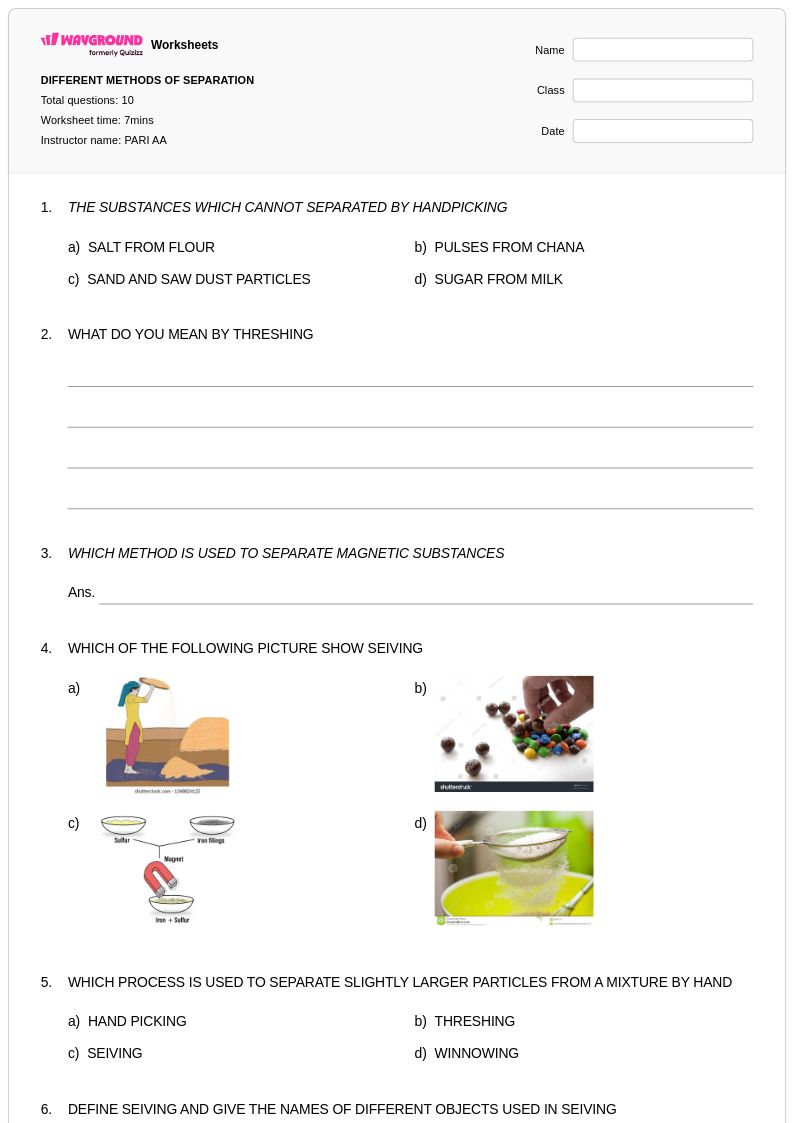
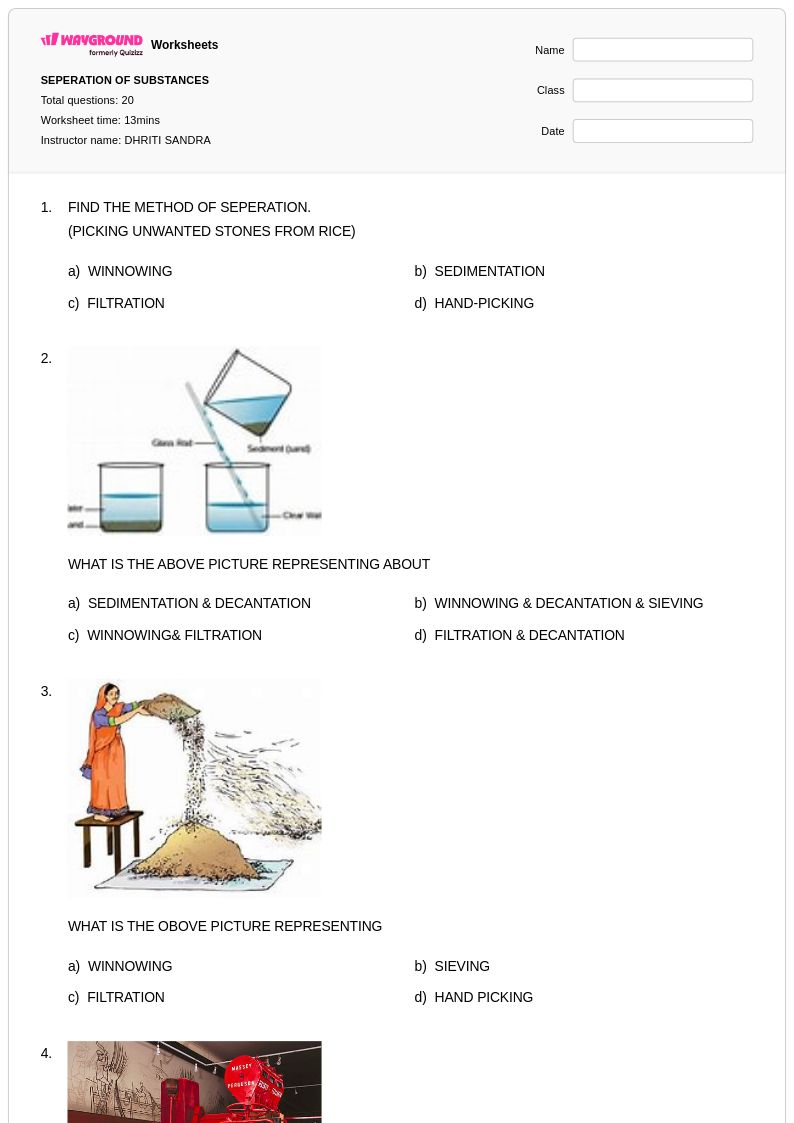
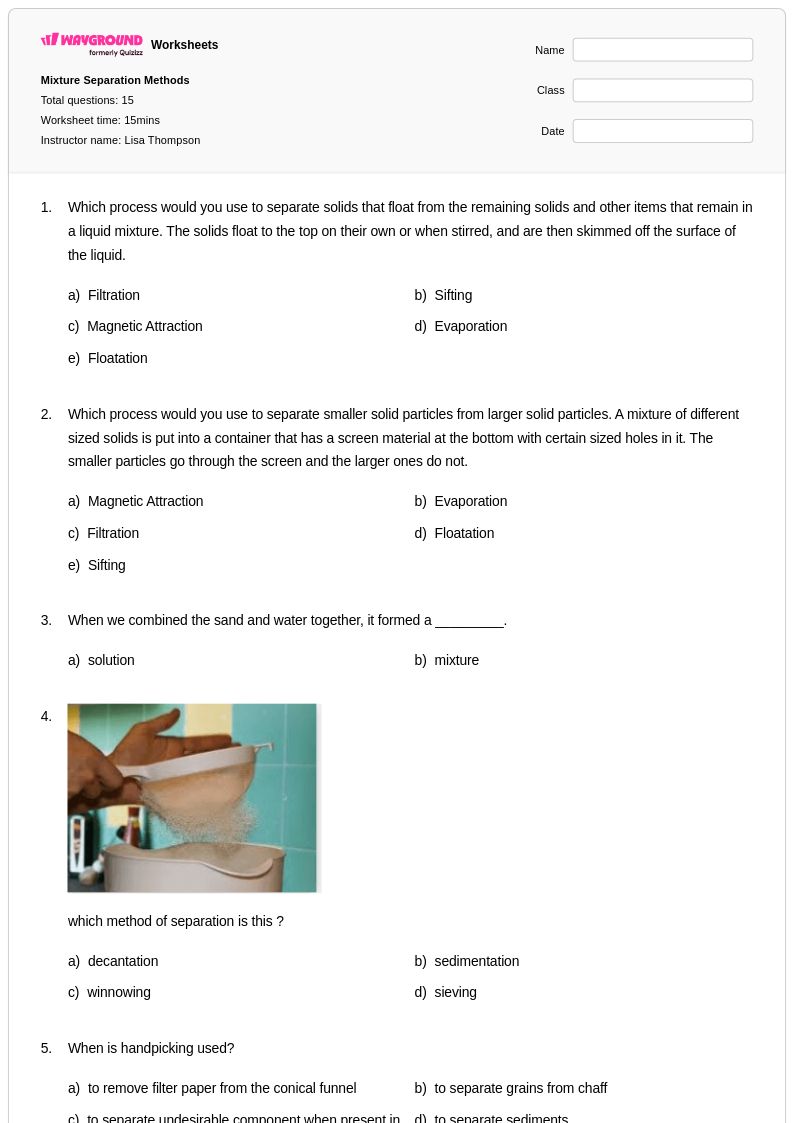
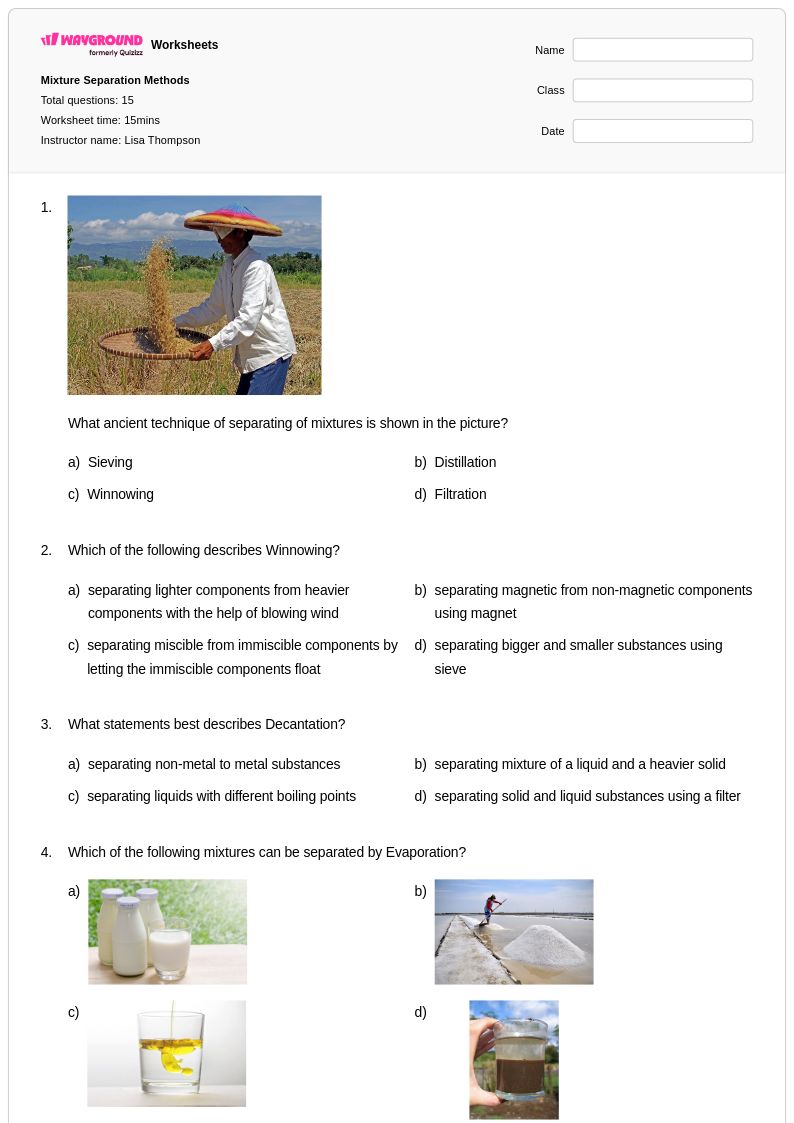
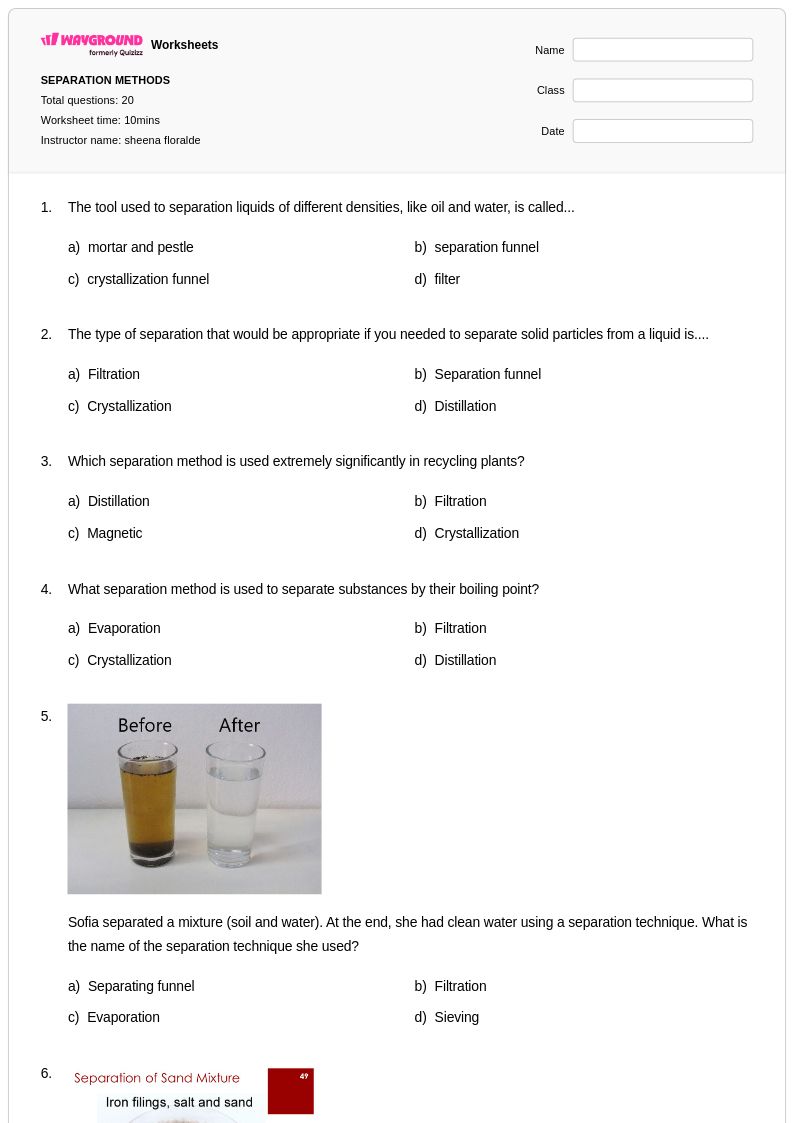
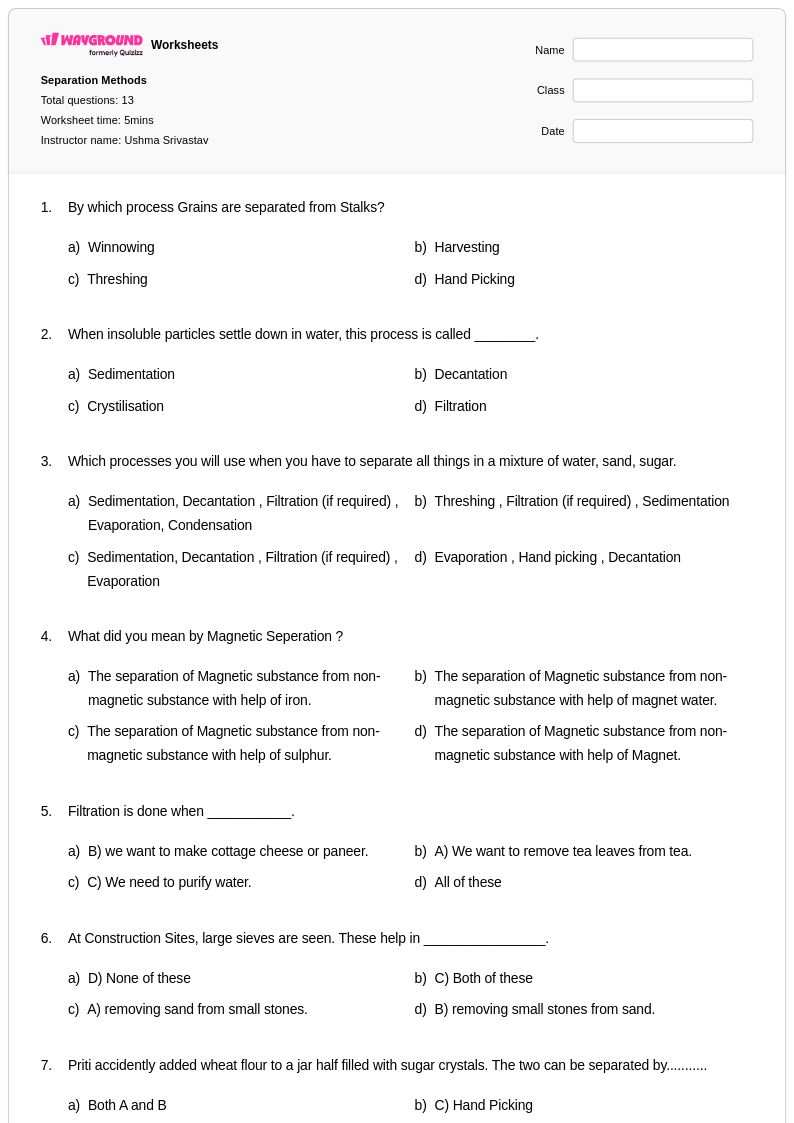
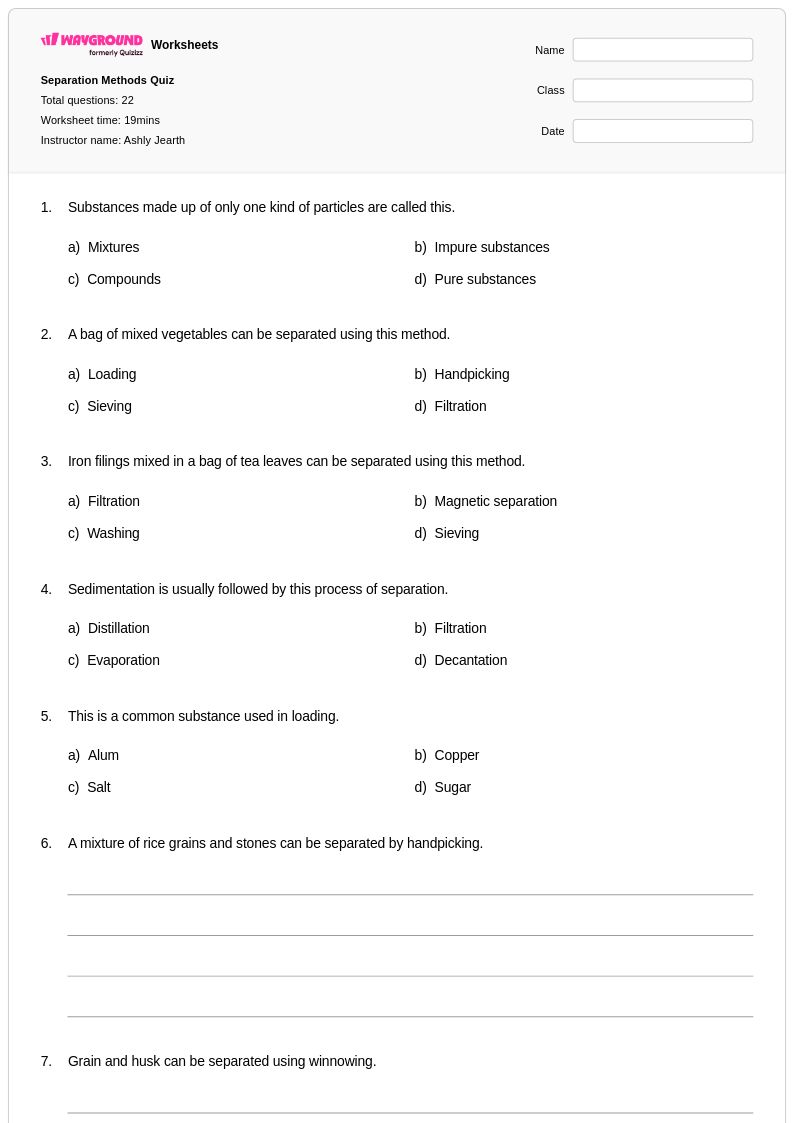
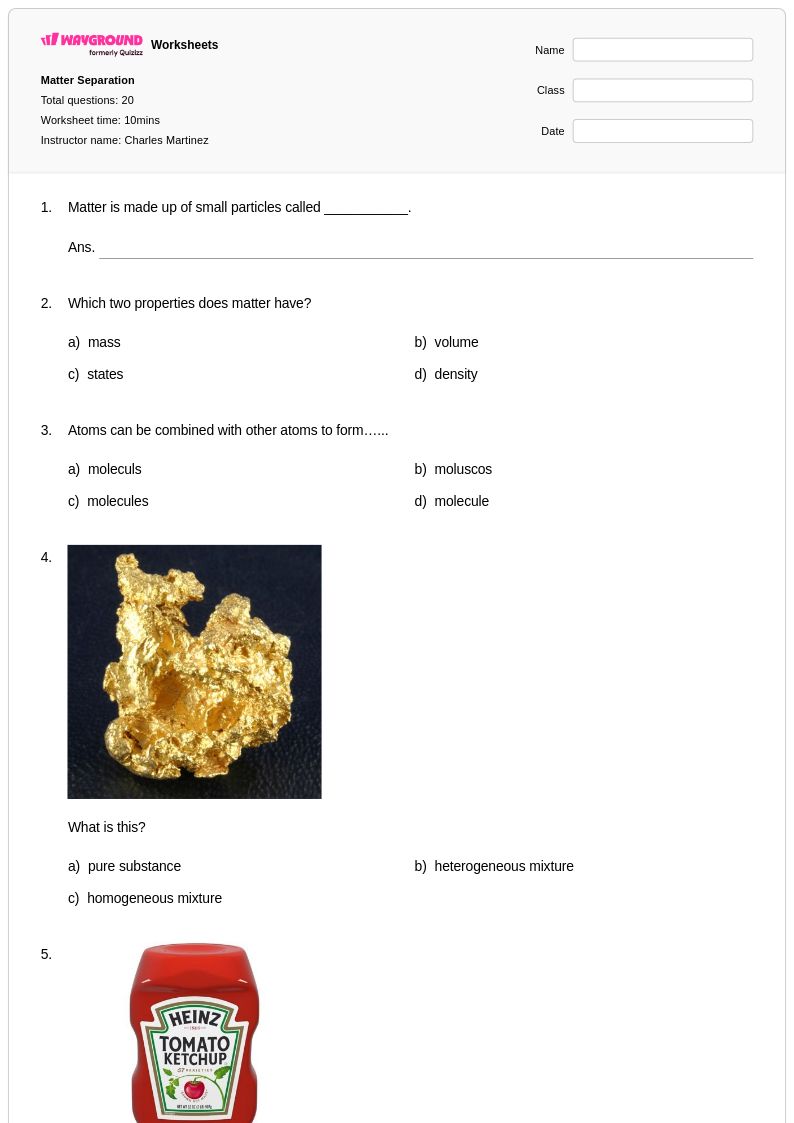
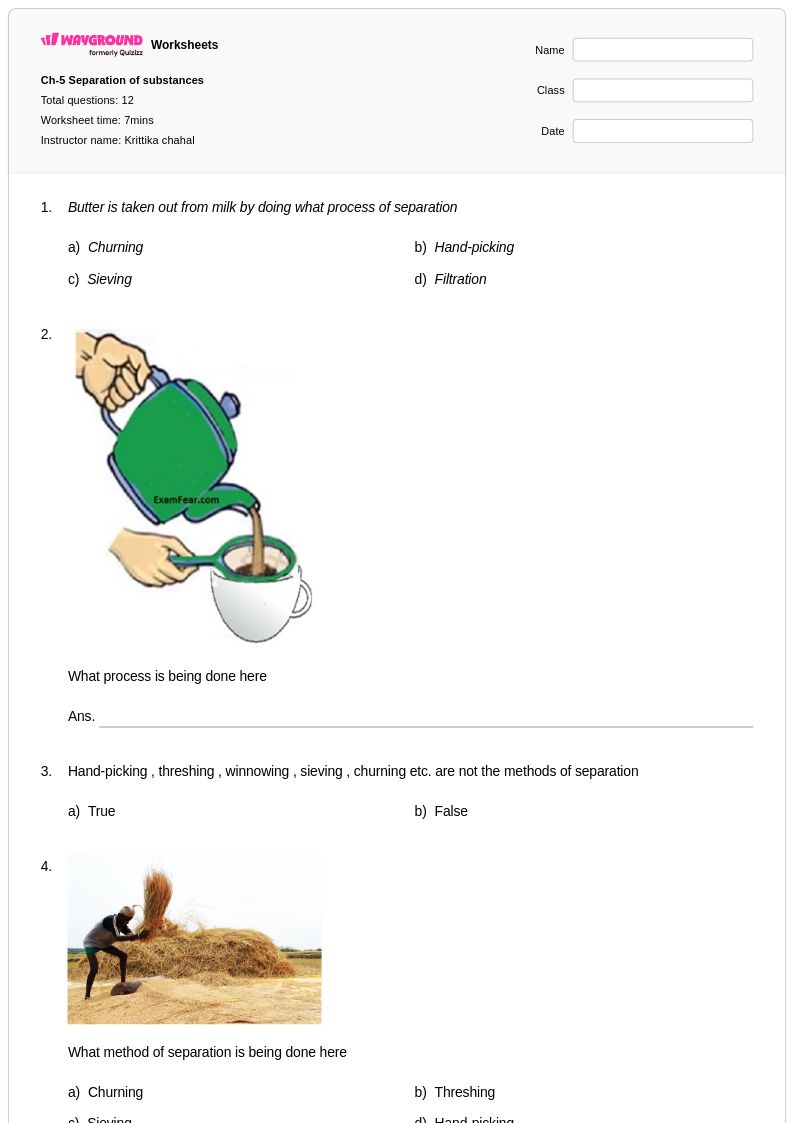
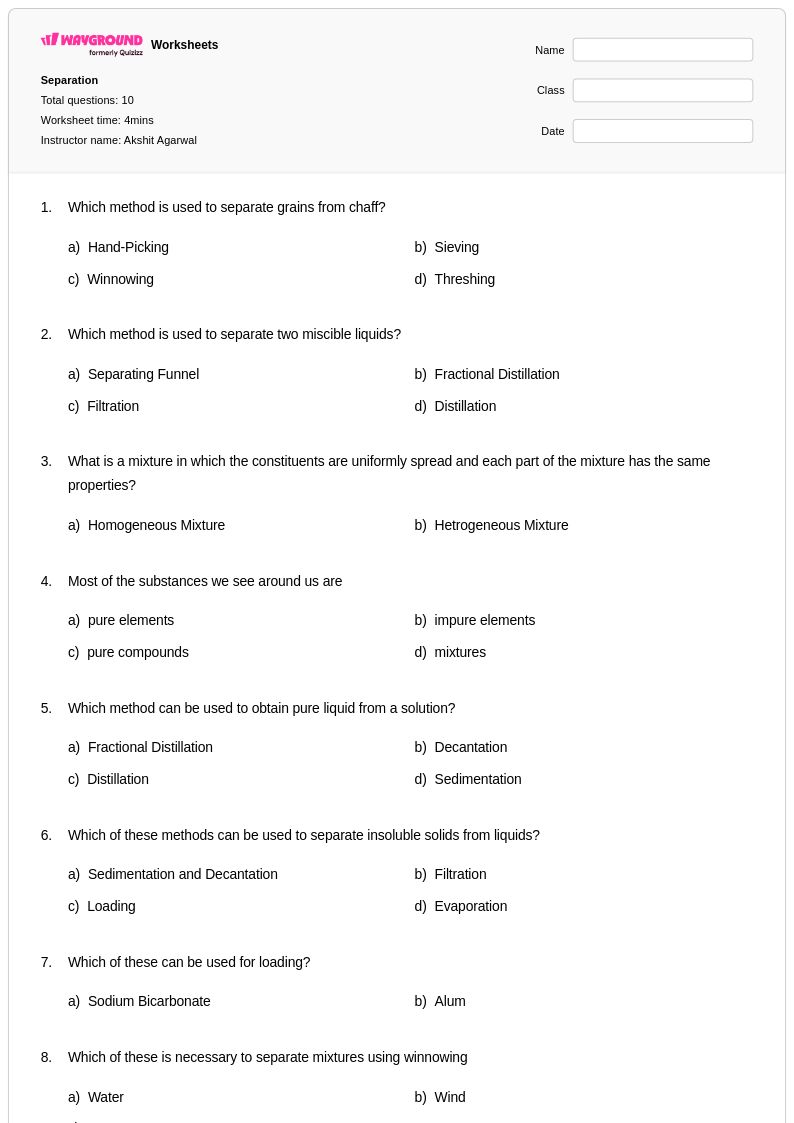
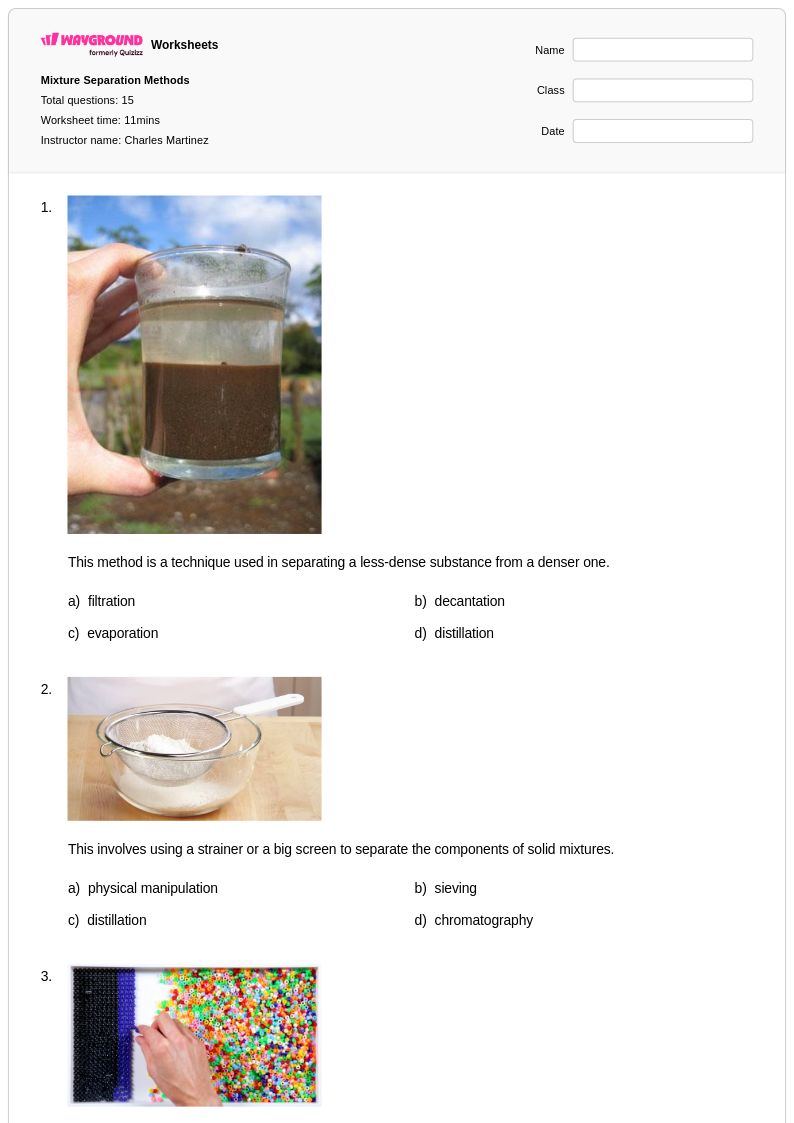
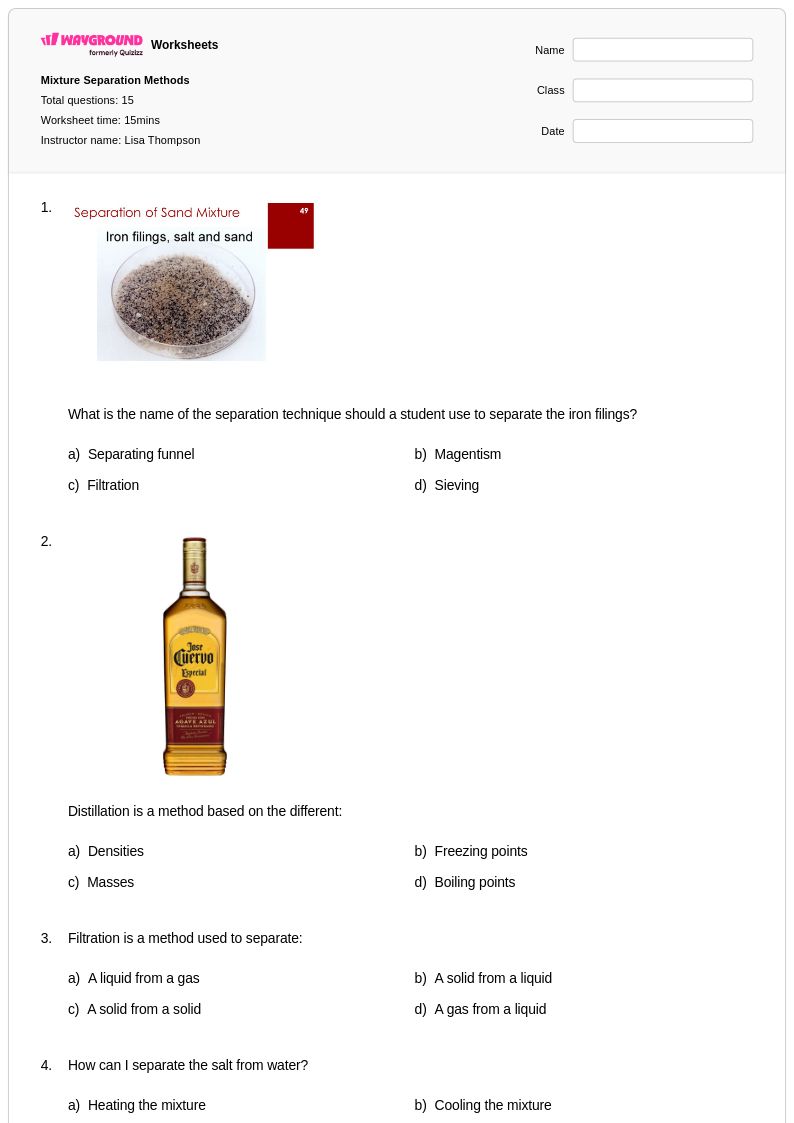
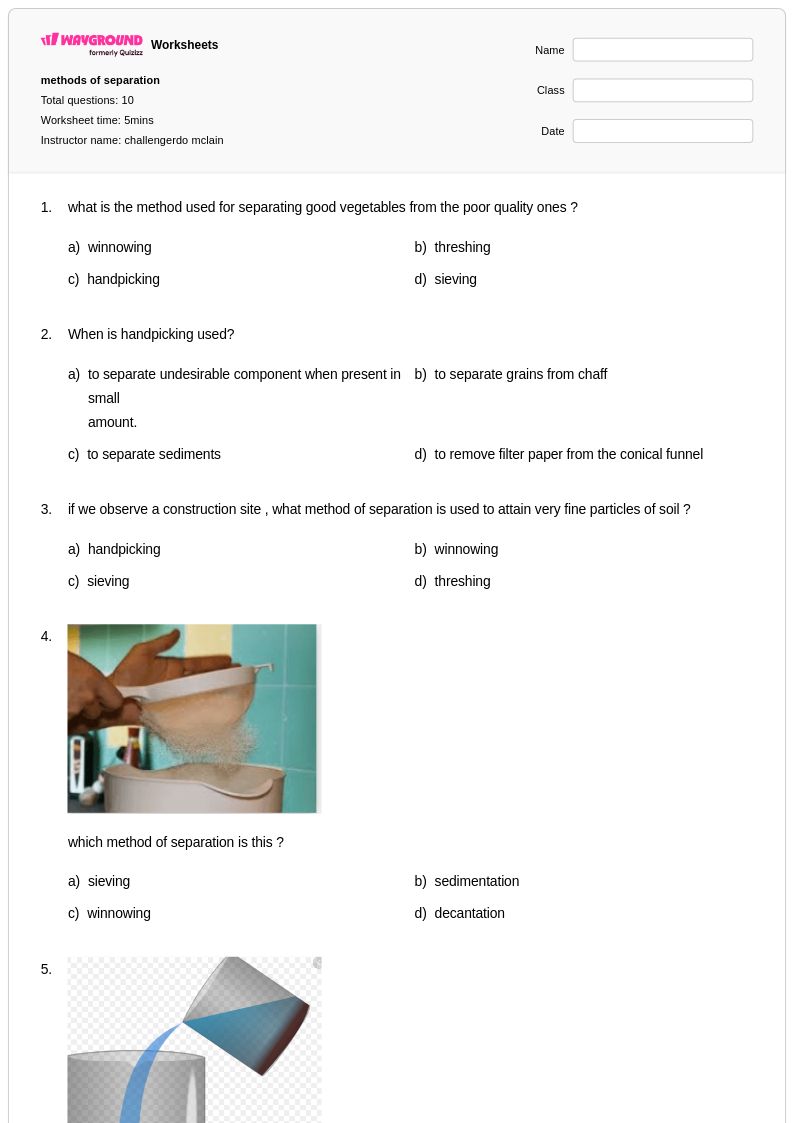
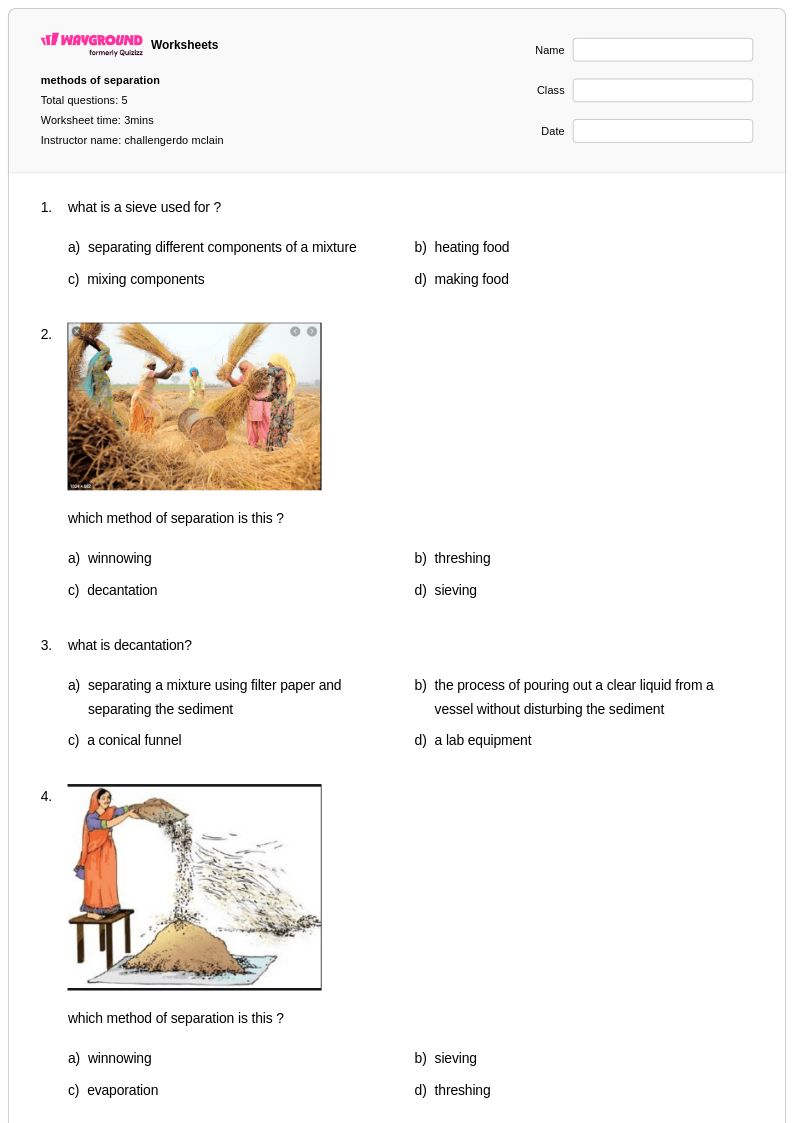
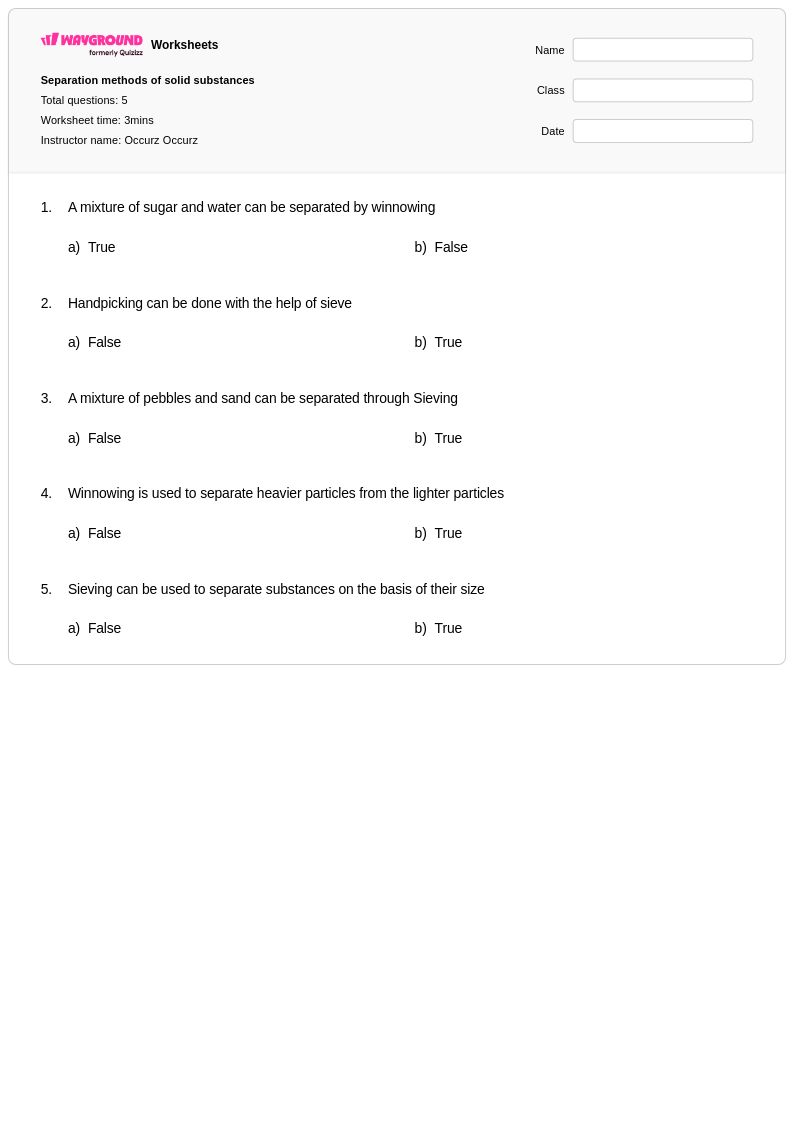
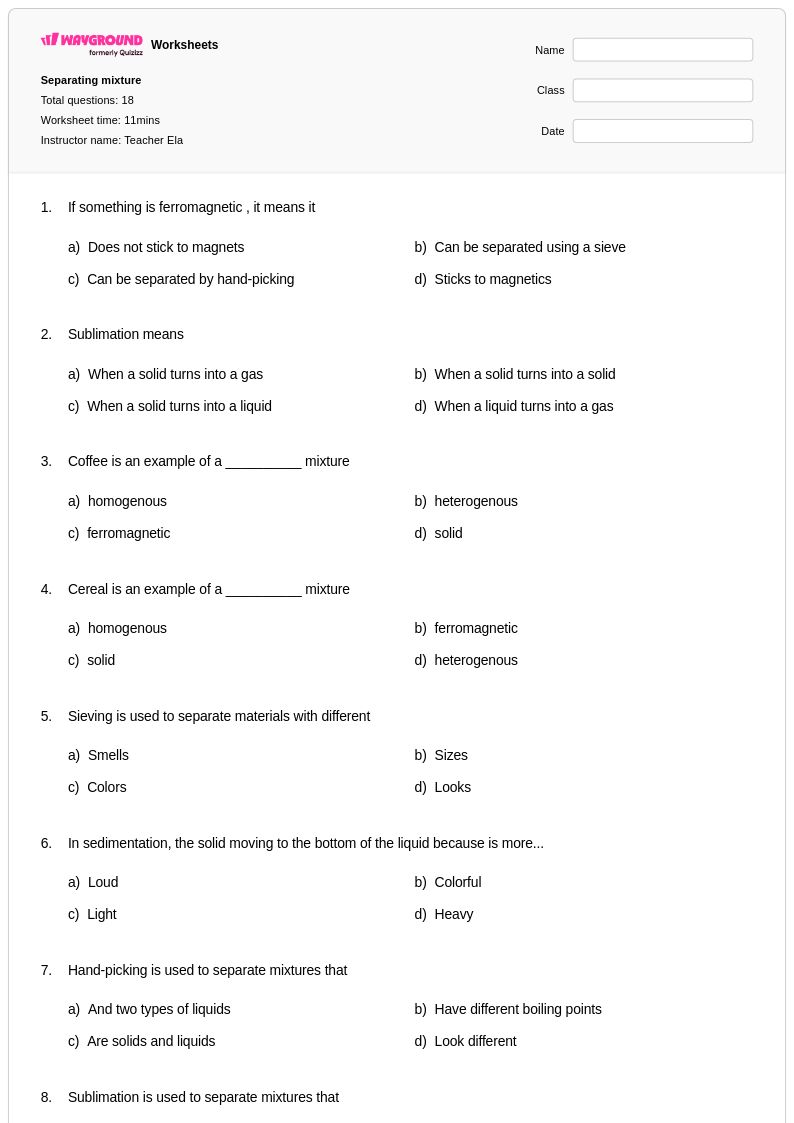
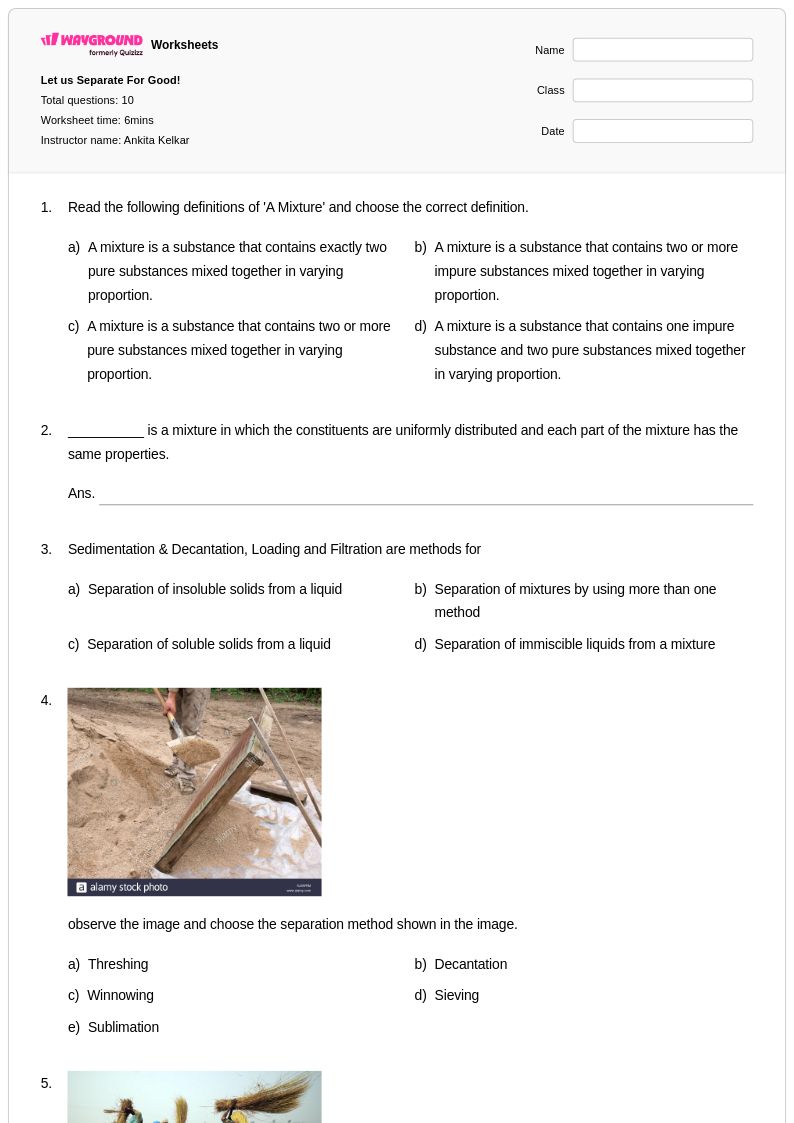
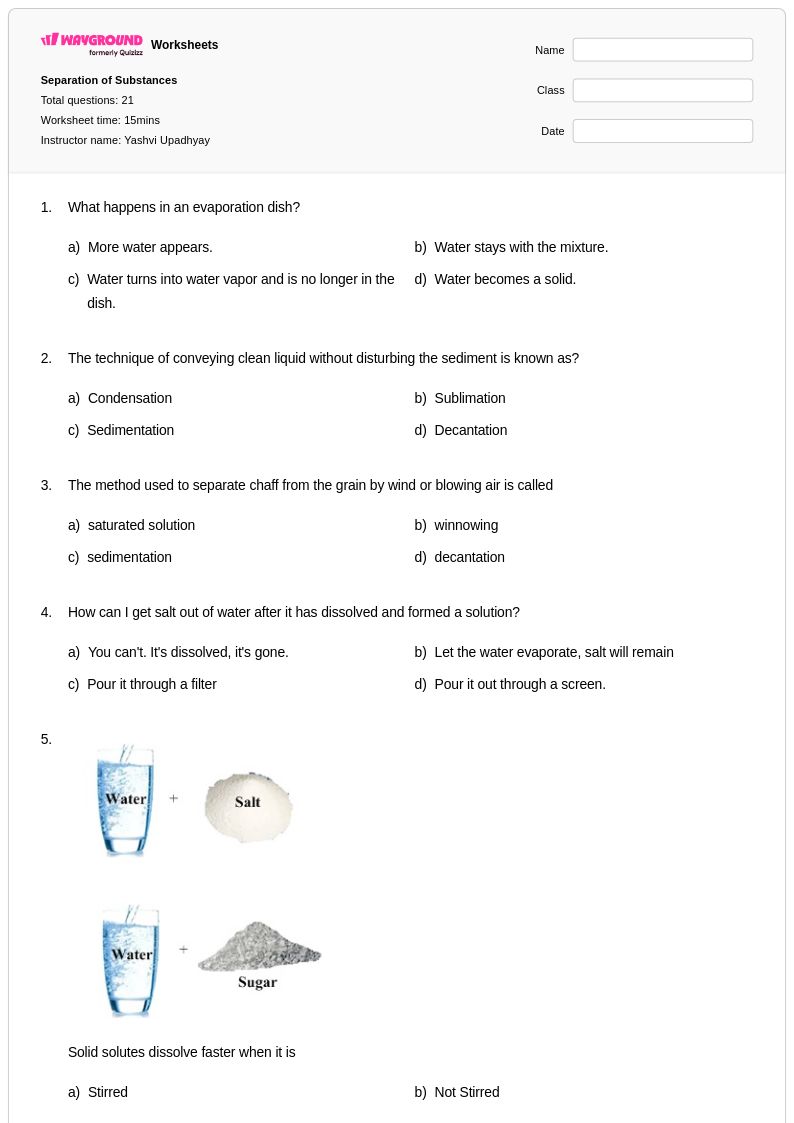
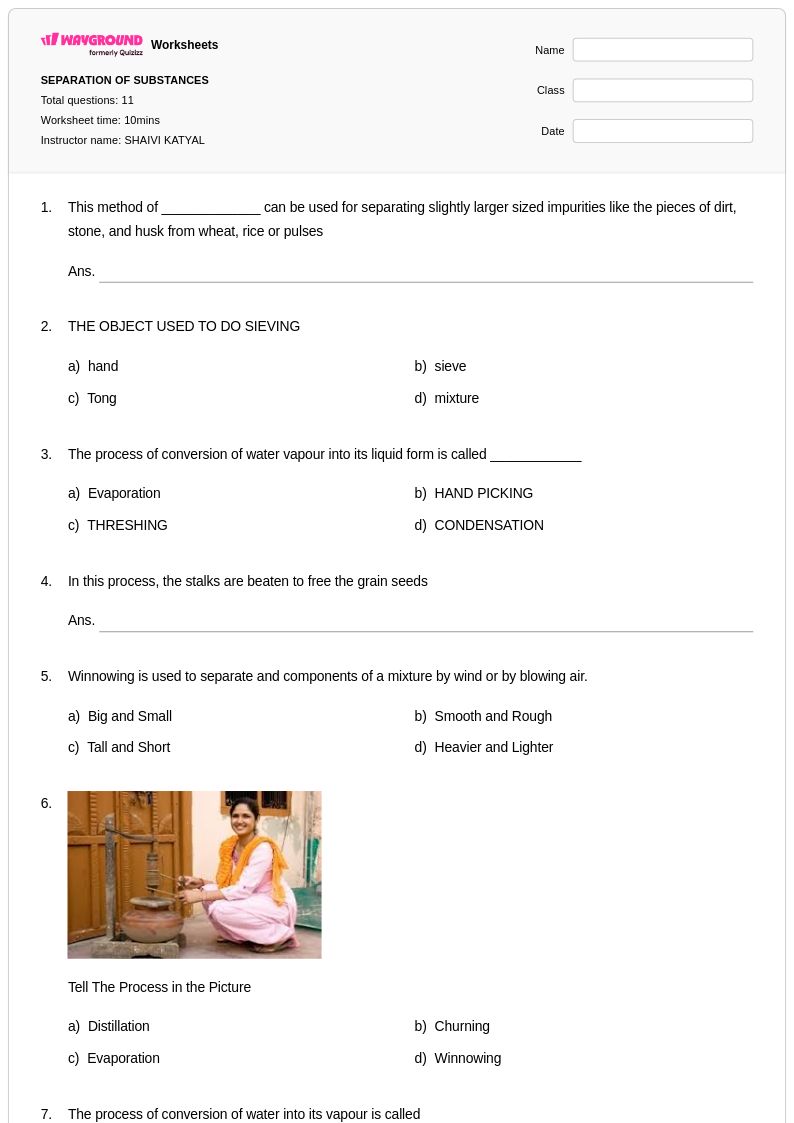
Separation methods worksheets for Class 6 students available through Wayground (formerly Quizizz) provide comprehensive coverage of fundamental chemistry concepts that introduce young learners to the scientific processes used to separate mixtures. These expertly crafted educational resources focus on key separation techniques including filtration, evaporation, magnetism, sieving, and distillation, helping students understand how different physical properties can be utilized to isolate individual components from combined materials. The worksheets strengthen critical thinking skills through hands-on practice problems that require students to identify appropriate separation methods for various real-world scenarios, from separating sand and water to isolating iron filings from a mixture. Each worksheet comes complete with detailed answer keys and is available as free printables in convenient pdf format, making them accessible for both classroom instruction and independent study.
Wayground (formerly Quizizz) supports educators with an extensive collection of teacher-created separation methods resources, drawing from millions of high-quality worksheets developed by experienced chemistry instructors and curriculum specialists. The platform's robust search and filtering capabilities allow teachers to quickly locate materials that align with specific learning standards and grade-level expectations, while built-in differentiation tools enable customization for diverse learning needs and abilities. These versatile resources are available in both printable pdf formats for traditional classroom use and digital formats for interactive learning experiences, providing flexibility for various teaching environments and student preferences. Teachers can seamlessly integrate these materials into lesson planning for initial concept introduction, targeted skill practice, remediation for struggling learners, or enrichment activities for advanced students, ensuring comprehensive coverage of separation methods concepts throughout the academic year.
FAQs
How do I teach separation methods in chemistry?
Effective teaching of separation methods begins with grounding students in the physical and chemical properties that make each technique possible — for example, filtration relies on particle size differences, while distillation exploits differences in boiling points. Start with concrete, real-world examples like separating sand from water or purifying seawater before introducing formal definitions. Progression from simple single-component separations to multi-step procedures helps students build confidence and transferable reasoning skills before encountering more complex mixture scenarios.
What exercises help students practice identifying the right separation technique?
The most effective practice exercises present students with unfamiliar mixtures and ask them to justify which technique — filtration, distillation, chromatography, crystallization, or magnetic separation — is most appropriate based on the mixture's properties. Scenario-based problems that mirror real laboratory situations are especially valuable because they require students to apply conceptual knowledge rather than recall definitions. Progressing from single-method identification tasks to multi-step separation procedures builds the analytical depth students need for lab work and assessments.
What mistakes do students commonly make when learning separation methods?
A frequent misconception is that any technique can separate any mixture — students often overlook that method selection must be driven by the specific physical or chemical properties of the substances involved. Students commonly confuse filtration with evaporation, both of which involve removing a liquid, without recognizing that filtration targets insoluble solids while evaporation removes a solvent from a dissolved substance. Another common error is misapplying chromatography principles, particularly failing to understand that separation occurs because different components travel at different rates due to varying affinities for the stationary and mobile phases.
How can I use separation methods worksheets to prepare students for lab work?
Separation methods worksheets are most effective as pre-lab preparation tools when they ask students to predict outcomes, identify equipment, and sequence procedural steps before they handle materials in person. Using worksheets that present step-by-step separation procedures reinforces the logic behind laboratory protocols, reducing procedural errors during hands-on sessions. On Wayground, these worksheets are available as printable PDFs for traditional classroom distribution and in digital formats for technology-integrated settings, and teachers can also host them as a quiz directly on Wayground to assess student readiness before lab day.
How do I differentiate separation methods instruction for students at different skill levels?
Differentiation for separation methods can be achieved by varying the complexity of mixture scenarios — lower-level tasks focus on single-technique identification with familiar substances, while advanced tasks require students to design multi-step separation sequences for complex mixtures. For students who need additional support during digital practice, Wayground offers accommodations including read aloud for question text, reduced answer choices to lower cognitive load, and extended time settings that can be applied to individual students without affecting the rest of the class. These settings are reusable across sessions, making it practical to maintain consistent support for specific learners throughout a unit.
How do I assess whether students truly understand separation methods versus just memorizing technique names?
True understanding of separation methods is best assessed through application tasks that require students to analyze an unfamiliar mixture, identify relevant physical or chemical properties, and defend their choice of technique — rather than simply matching a method name to a definition. Including multi-step problems where students must sequence two or more separation techniques reveals whether they understand how the properties of each component drive procedural decisions. Answer keys with step-by-step explanations, like those included with Wayground's separation methods worksheets, also help teachers identify exactly where a student's reasoning breaks down rather than just whether the final answer is correct.