Free Printable Neutralisation Reaction Worksheets for Class 6
Class 6 neutralisation reaction worksheets from Wayground help students master acid-base chemistry through engaging printables, practice problems, and comprehensive answer keys for effective learning.
Explore printable Neutralisation Reaction worksheets for Class 6
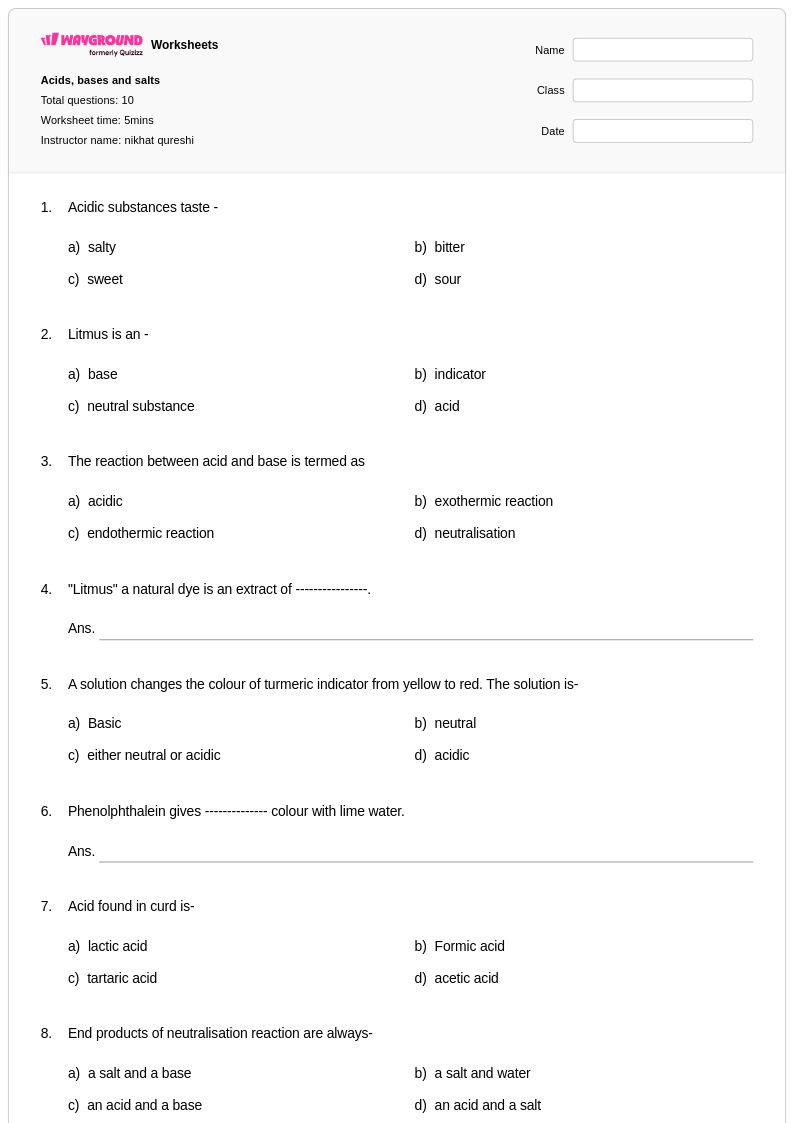
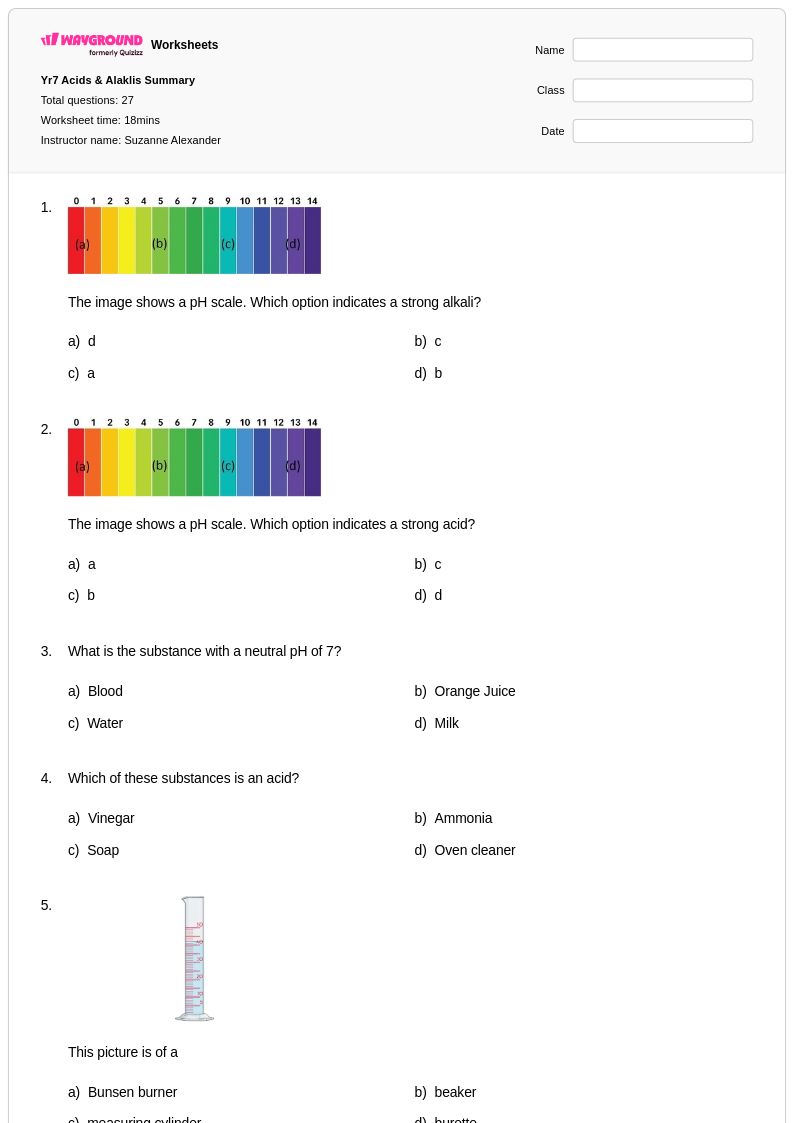
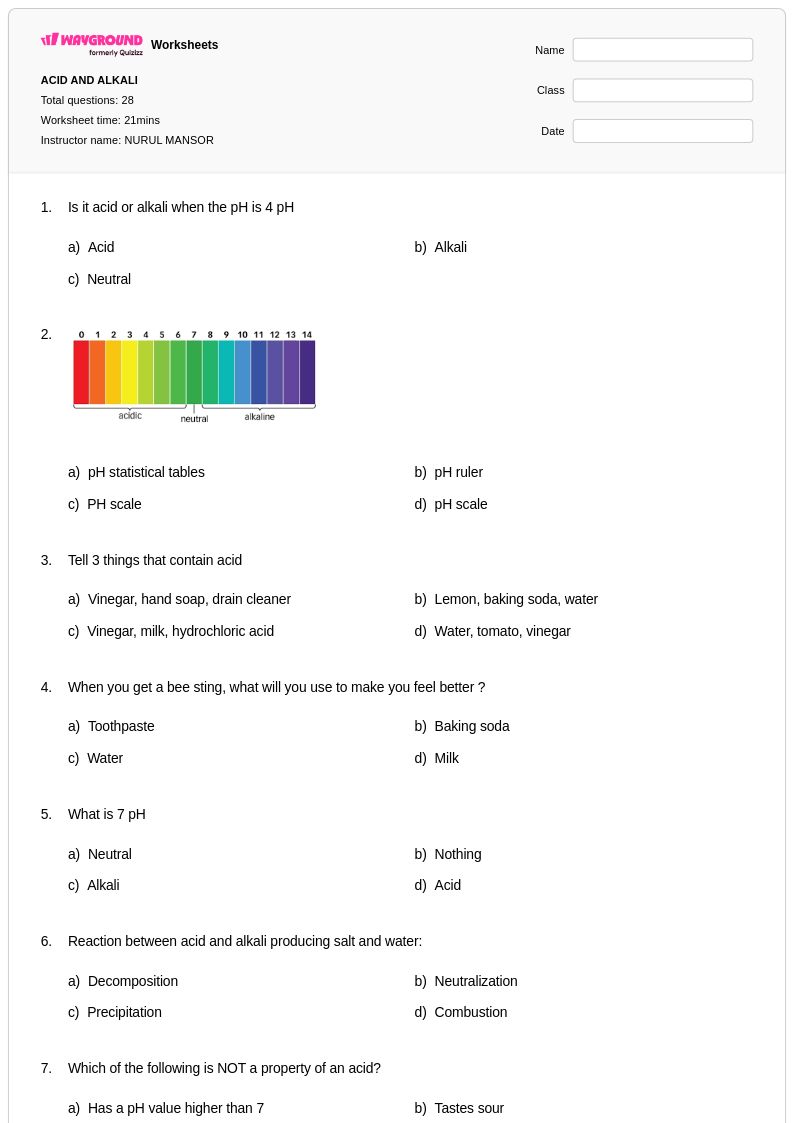
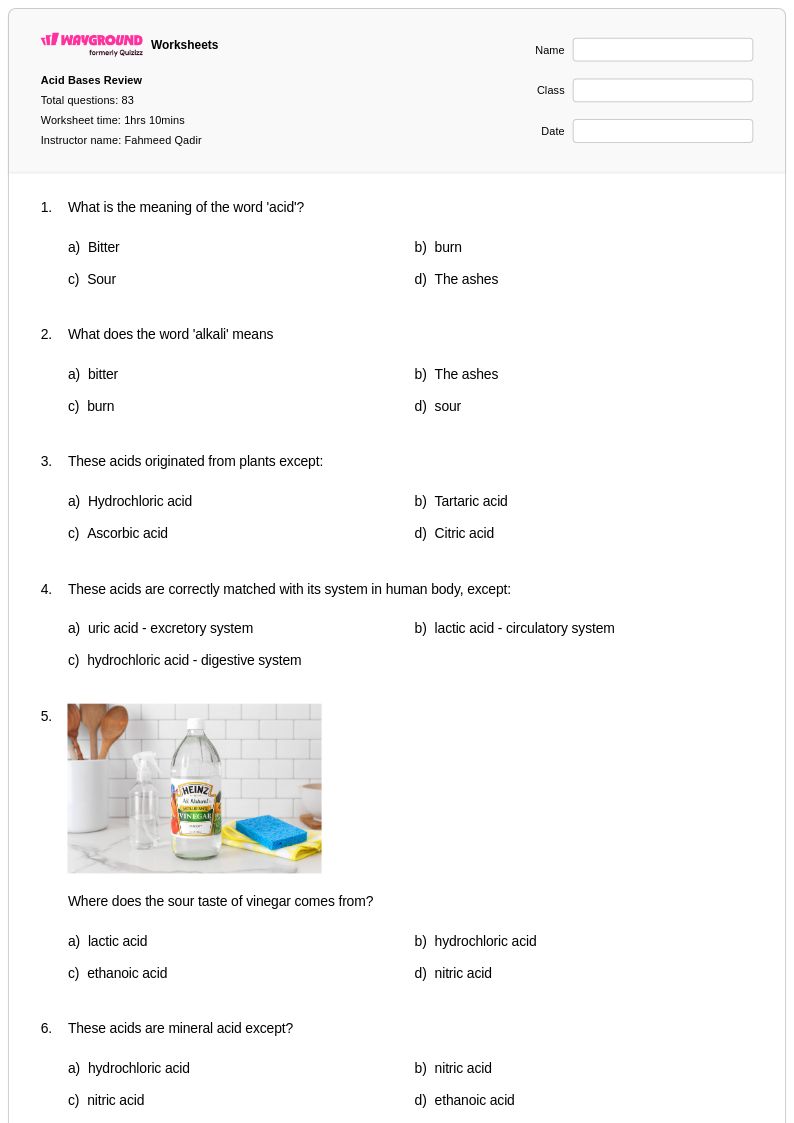
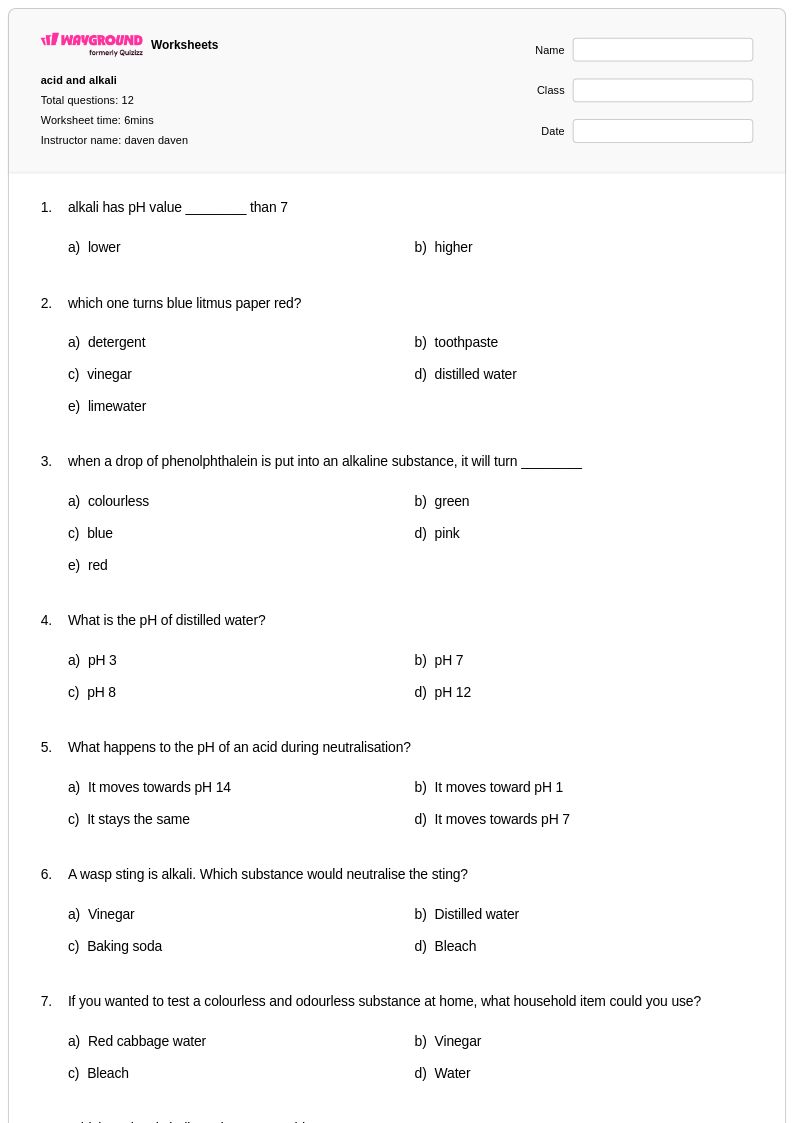
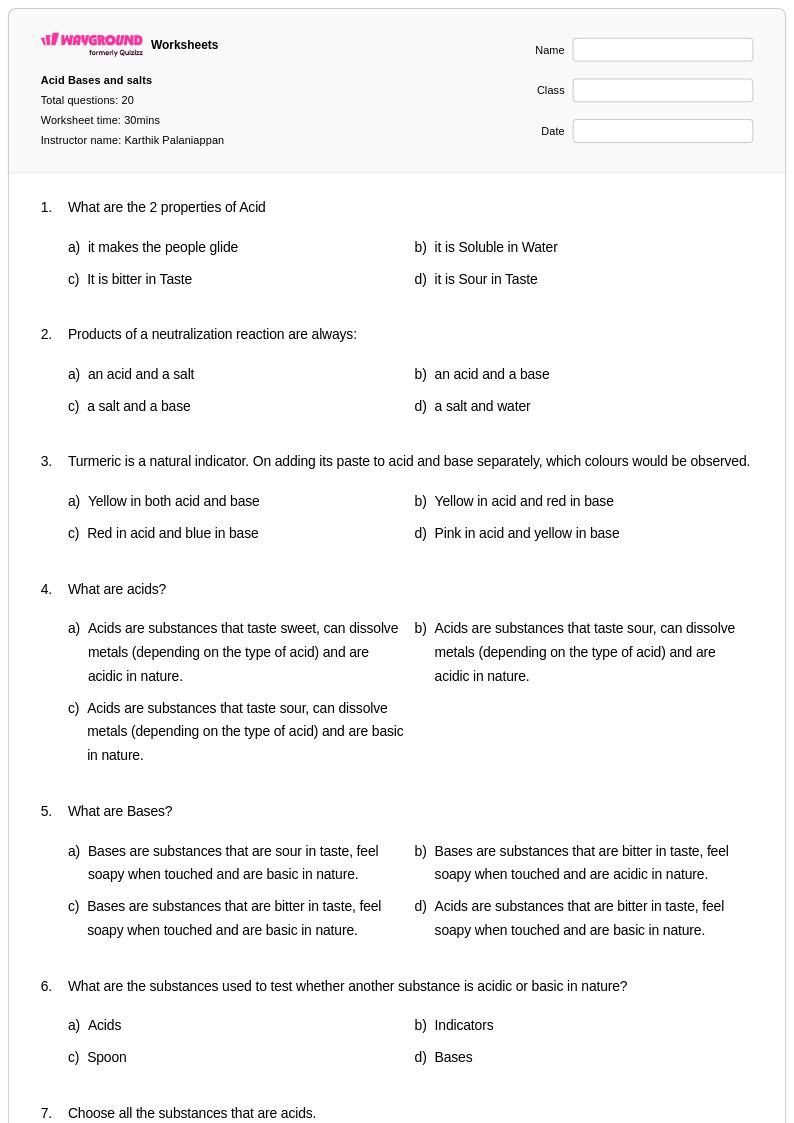
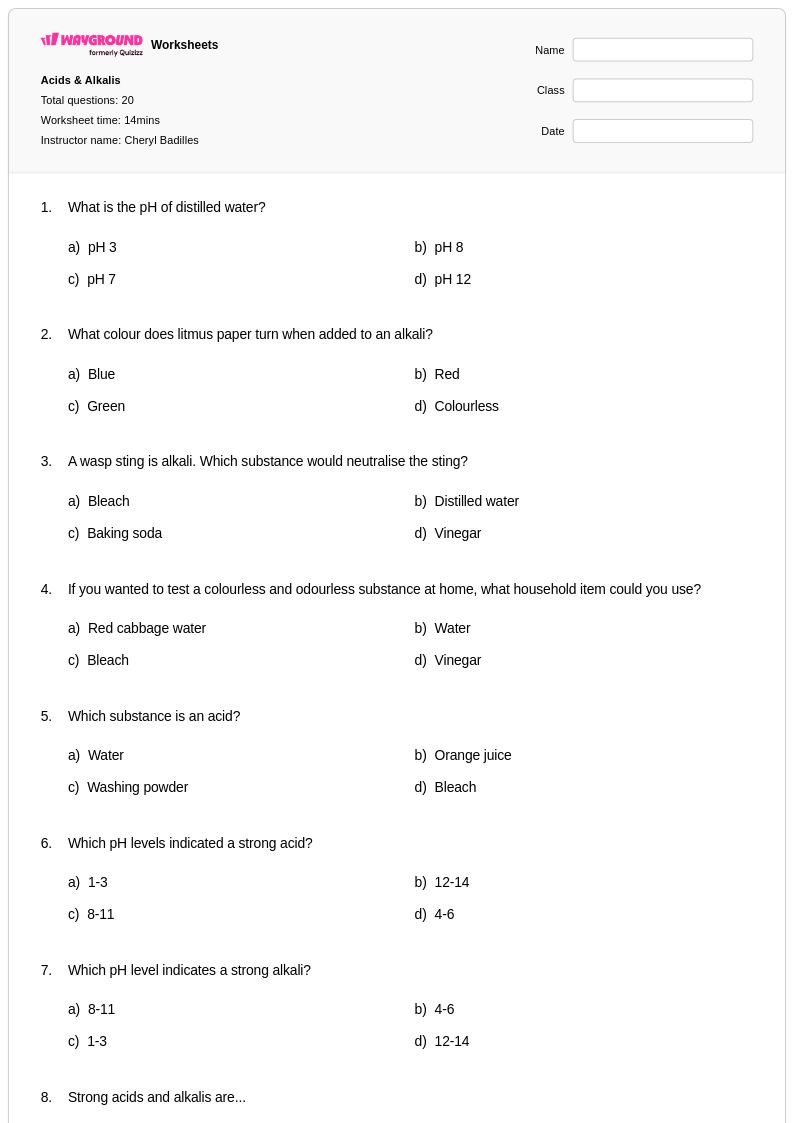
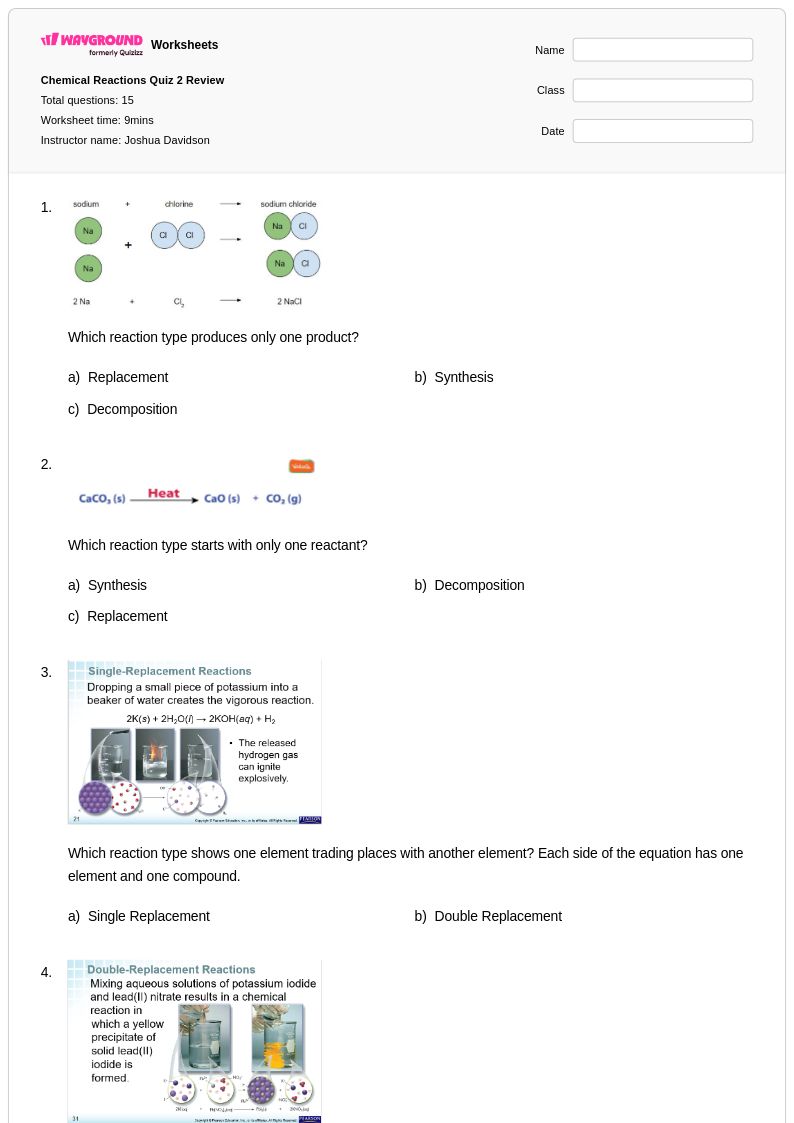
Neutralization reactions represent a fundamental concept in Class 6 chemistry that students must master to understand how acids and bases interact to form salt and water. Wayground's comprehensive collection of neutralization reaction worksheets provides educators with expertly crafted materials that guide students through the essential principles of pH balance, chemical equations, and real-world applications of these important reactions. These carefully designed practice problems help students identify acids and bases, predict the products of neutralization reactions, and understand the role of indicators in determining when neutralization is complete. Each worksheet comes with a detailed answer key that supports both independent learning and teacher-guided instruction, while the free printable format ensures easy classroom distribution and homework assignments.
Wayground, formerly Quizizz, empowers teachers with millions of educator-created resources specifically designed to support chemistry instruction at the Class 6 level. The platform's advanced search and filtering capabilities allow teachers to quickly locate neutralization reaction materials that align with state and national science standards, ensuring that worksheet selections support curriculum requirements and learning objectives. Teachers can easily customize these resources to meet diverse classroom needs, whether for remediation with struggling students or enrichment activities for advanced learners. The flexible digital and printable pdf formats enable seamless integration into both traditional classroom settings and remote learning environments, while the extensive variety of practice problems supports systematic skill development from basic acid-base identification through complex neutralization equation balancing.
FAQs
How do I teach neutralisation reactions to chemistry students?
Start by building students' understanding of acids and bases separately before introducing the concept that they react to form salt and water. Use everyday examples like antacids neutralising stomach acid to ground the abstract chemistry in familiar contexts. From there, move students toward writing and balancing neutralisation equations, then progress to pH prediction and titration calculations as their confidence grows.
What exercises help students practice neutralisation reactions?
Effective practice exercises include writing and balancing molecular equations for acid-base pairs, predicting the salt and water products from given reactants, and solving pH change calculations across a range of reaction scenarios. Titration problems are particularly valuable for pushing students beyond surface-level understanding into stoichiometric reasoning. A mix of simple neutralisation scenarios and complex multi-step problems ensures students build both foundational fluency and higher-order problem-solving skills.
What mistakes do students commonly make with neutralisation reactions?
A frequent error is assuming all neutralisation reactions produce a neutral pH of 7, when in practice the pH of the resulting solution depends on the relative strengths of the acid and base involved. Students also commonly misidentify the salt product, particularly when polyatomic ions are present, or forget to balance the equation before attempting stoichiometric calculations. Misconceptions around strong versus weak acids and bases are another persistent source of errors in titration problems.
How do I differentiate neutralisation reaction practice for students at different skill levels?
Begin lower-ability students with simple strong acid and strong base pairs where the products are straightforward to identify and the equations are easier to balance. More advanced students can work through weak acid or weak base scenarios, multi-step titration calculations, and problems that require interpreting pH curves. On Wayground, teachers can apply individual accommodations such as reduced answer choices or read-aloud support for students who need additional scaffolding, while other students receive standard settings without disruption.
How can I use Wayground's neutralisation reaction worksheets in my classroom?
Wayground's neutralisation reaction worksheets are available as printable PDFs for traditional classroom use and in digital formats for technology-integrated environments, making them suitable for in-class instruction, homework, and blended learning setups. Teachers can also host worksheets as a quiz directly on Wayground, enabling real-time student responses and built-in assessment. Each worksheet includes a complete answer key, supporting both teacher-led correction and independent student self-assessment.
How do I assess student understanding of neutralisation reactions?
Effective assessment tasks include asking students to predict and write the products of unfamiliar acid-base combinations, balance unbalanced neutralisation equations from scratch, and calculate the pH or concentration changes in a titration. Common error patterns to watch for include incorrect salt formulas, unbalanced equations submitted as final answers, and confusion between the endpoint and equivalence point in titration problems. These diagnostic indicators help teachers identify whether gaps are conceptual or procedural.