
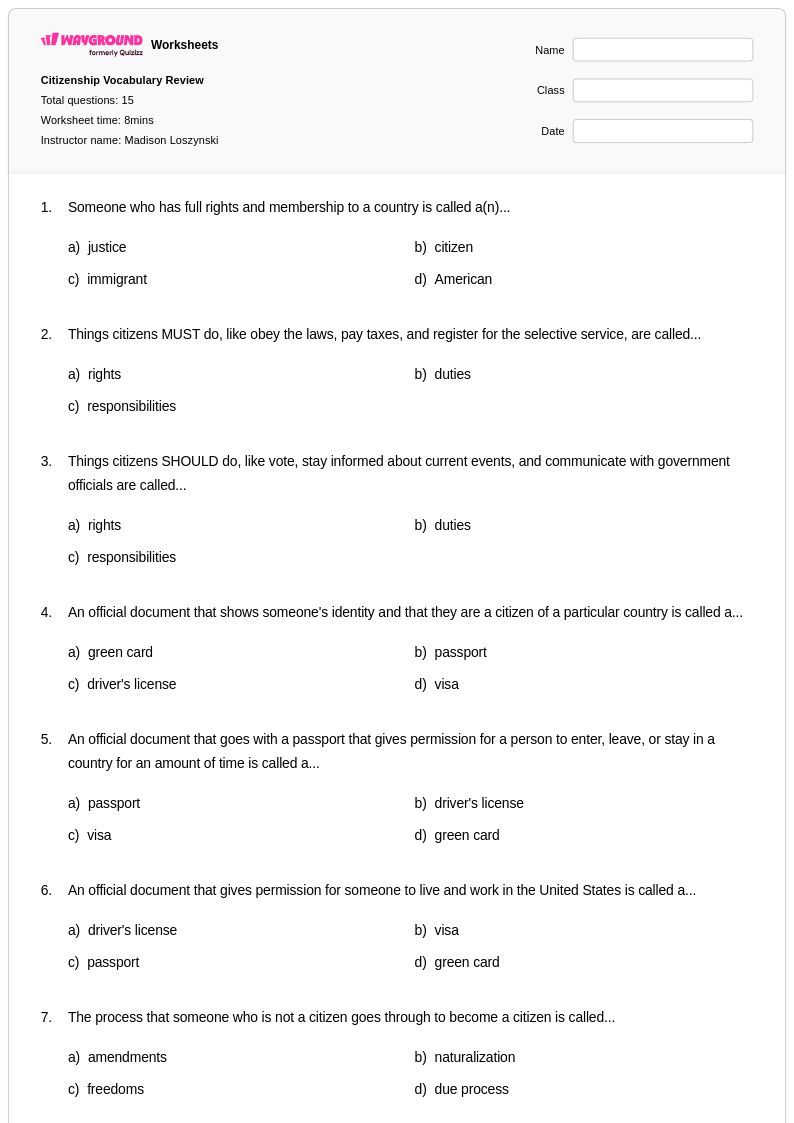
15 Q
5th - 8th
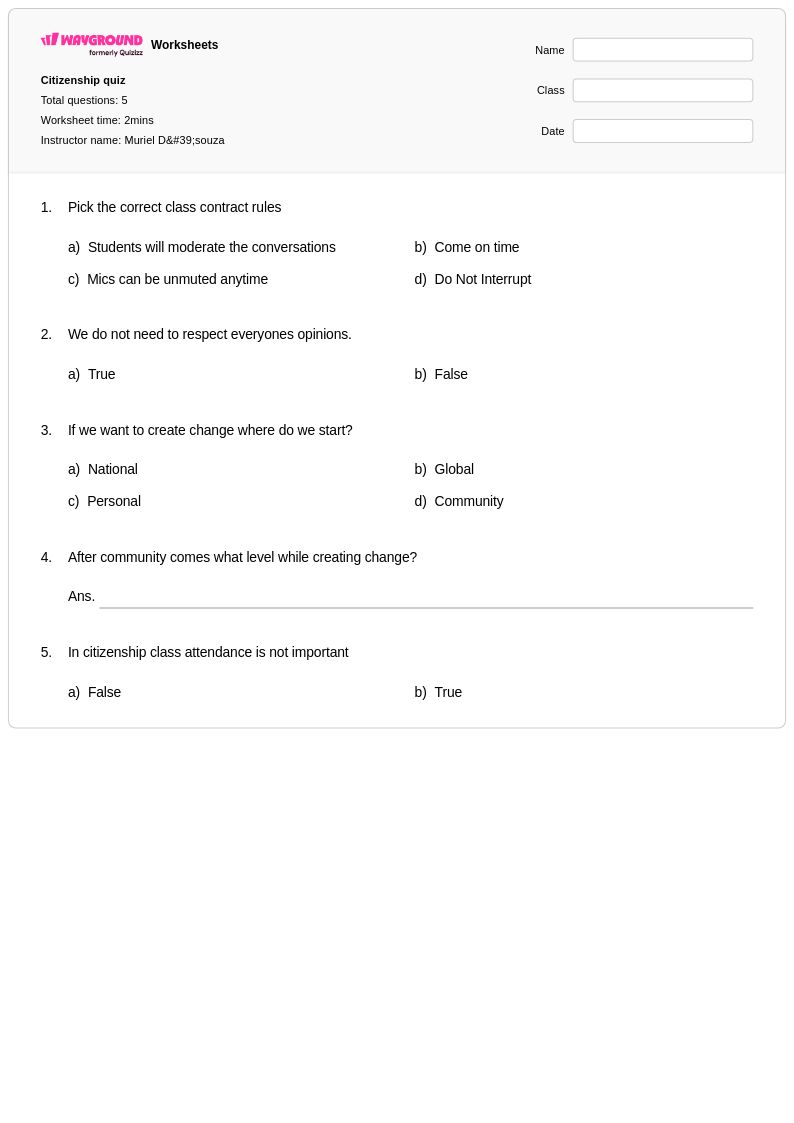
5 Q
4th - 5th
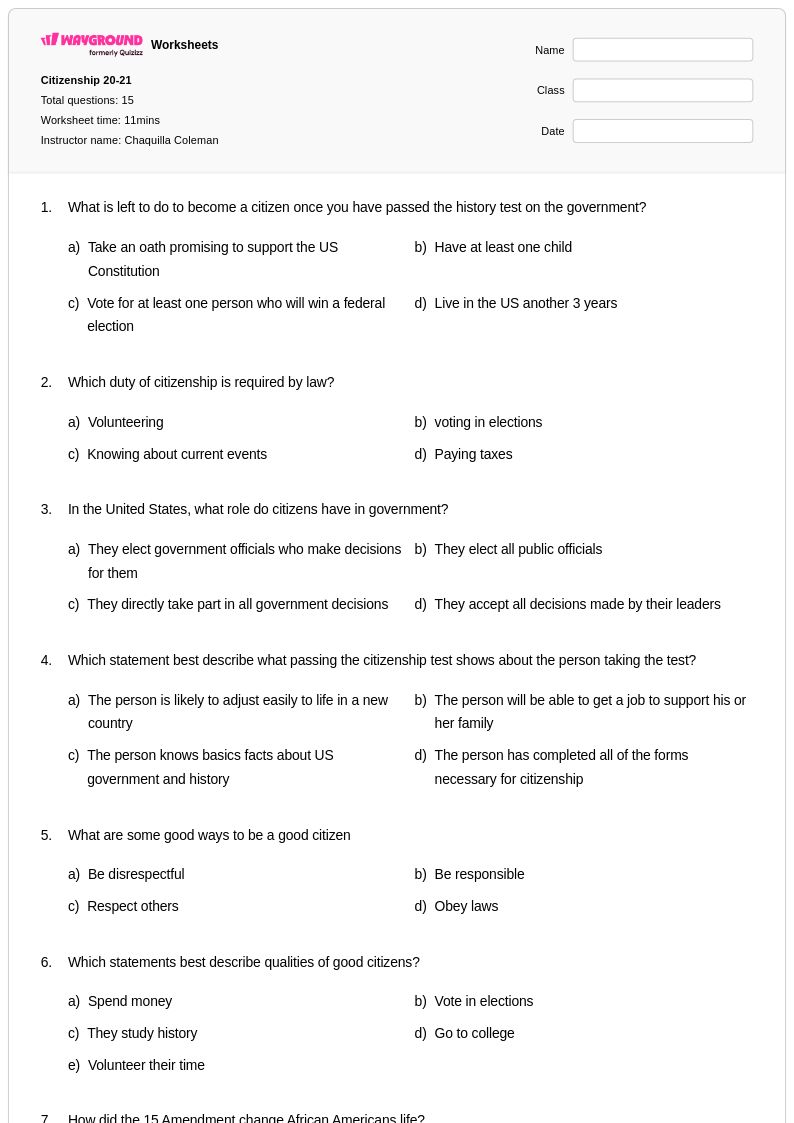
15 Q
4th - 5th
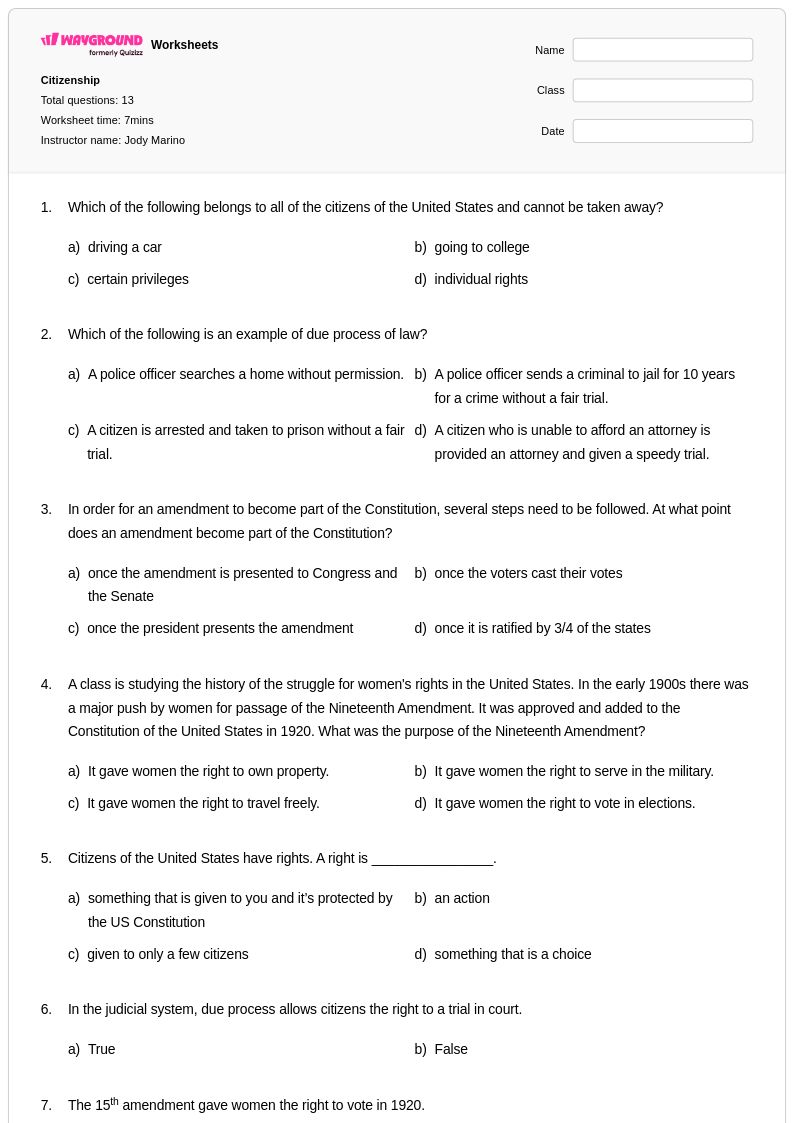
13 Q
5th
14 Q
5th
20 Q
4th - 5th
16 Q
5th
8 Q
1st - 5th
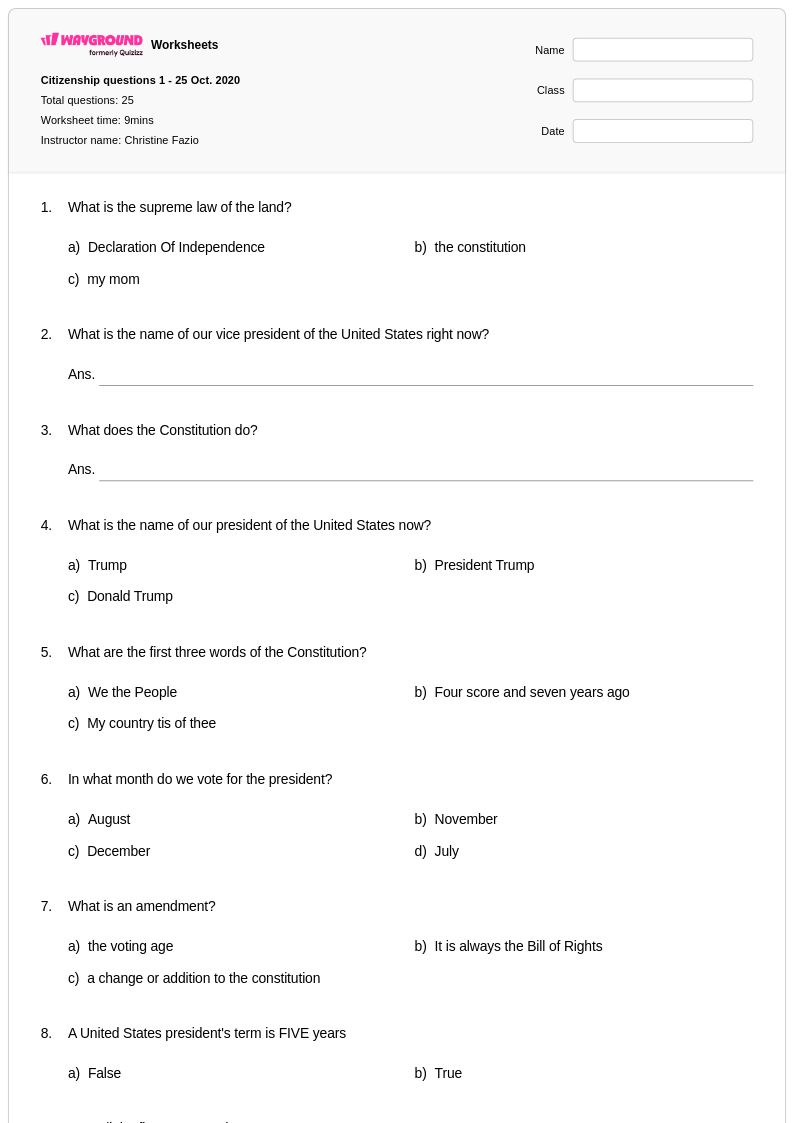
25 Q
5th - 8th
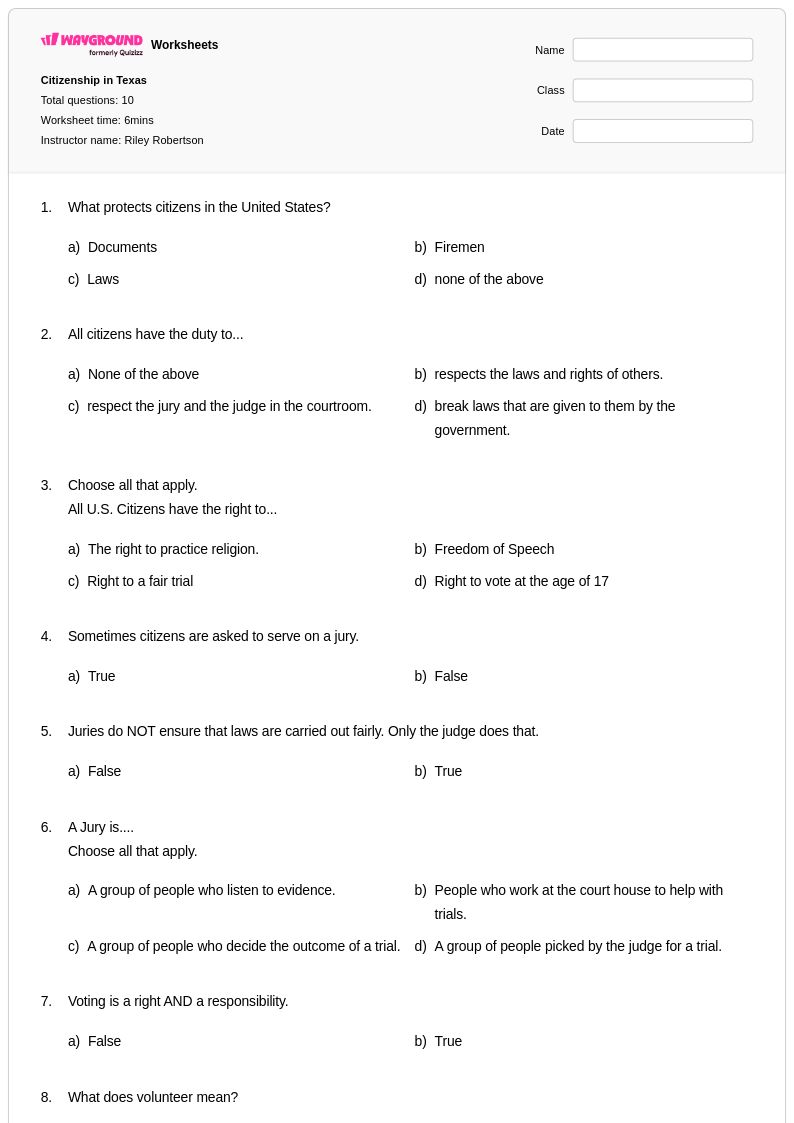
10 Q
4th - 5th
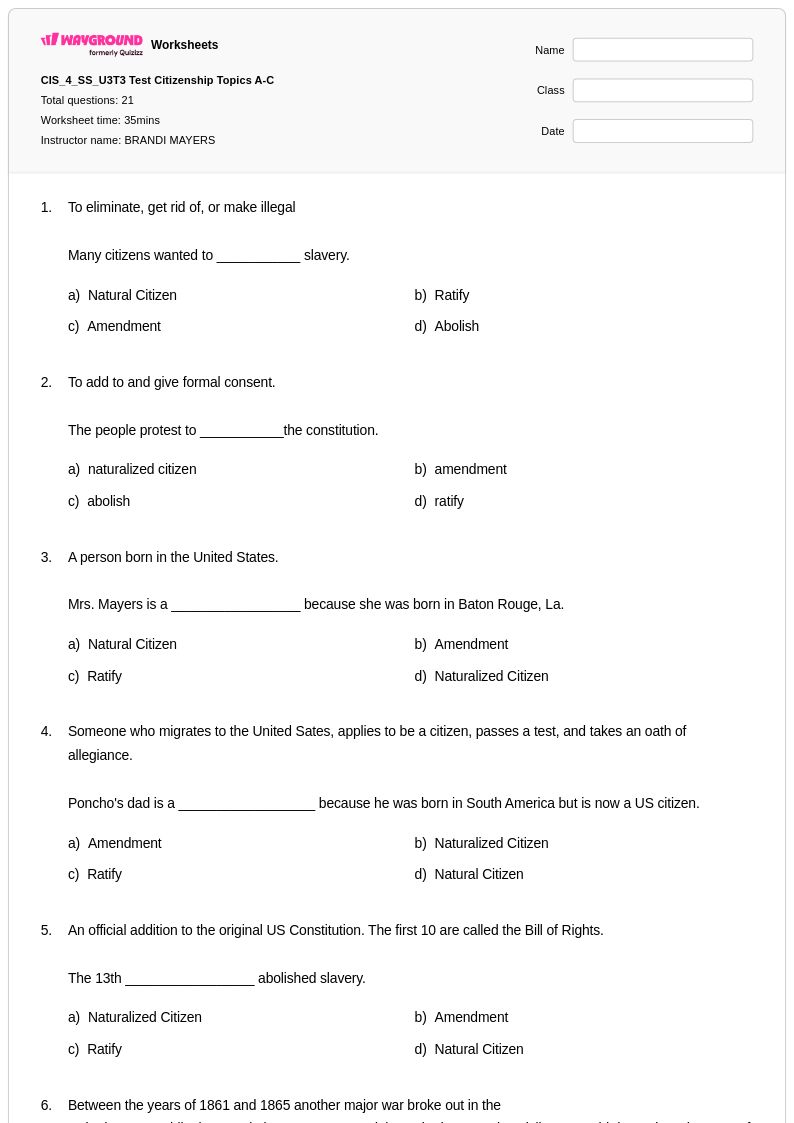
21 Q
3rd - 5th
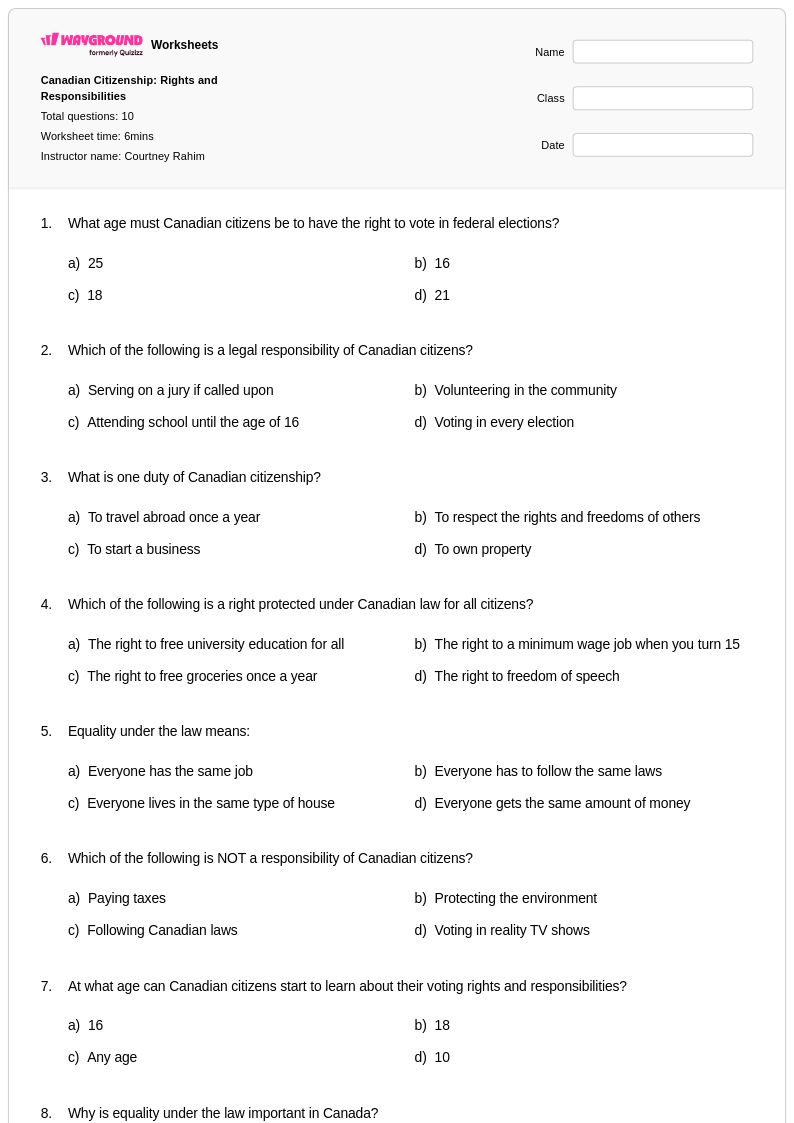
10 Q
5th
10 Q
5th
9 Q
5th - 6th
20 Q
1st - 5th
20 Q
5th
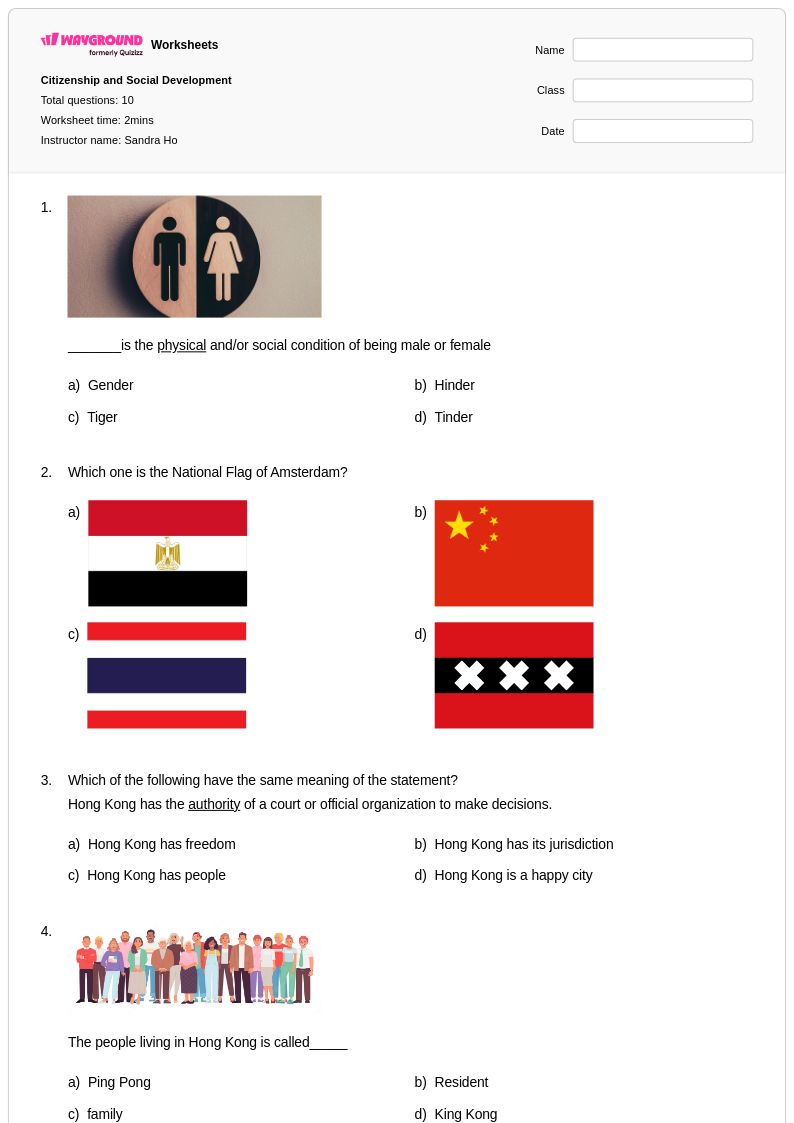
10 Q
5th
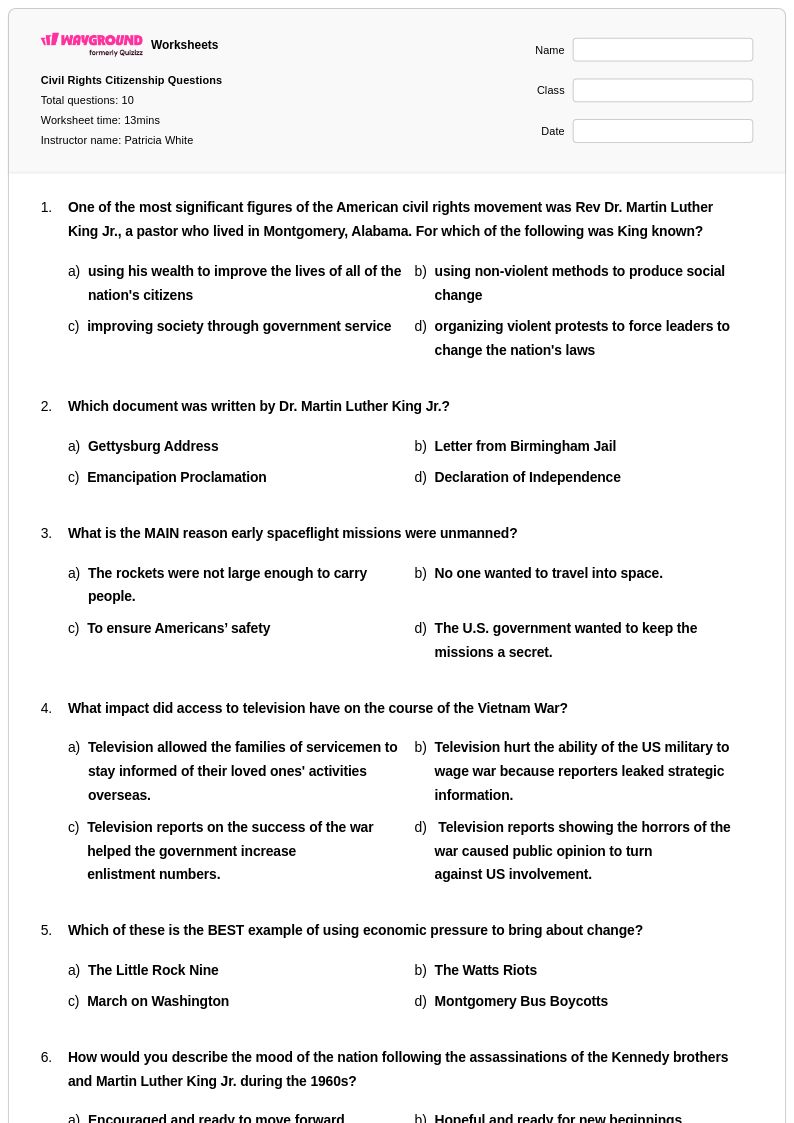
10 Q
5th
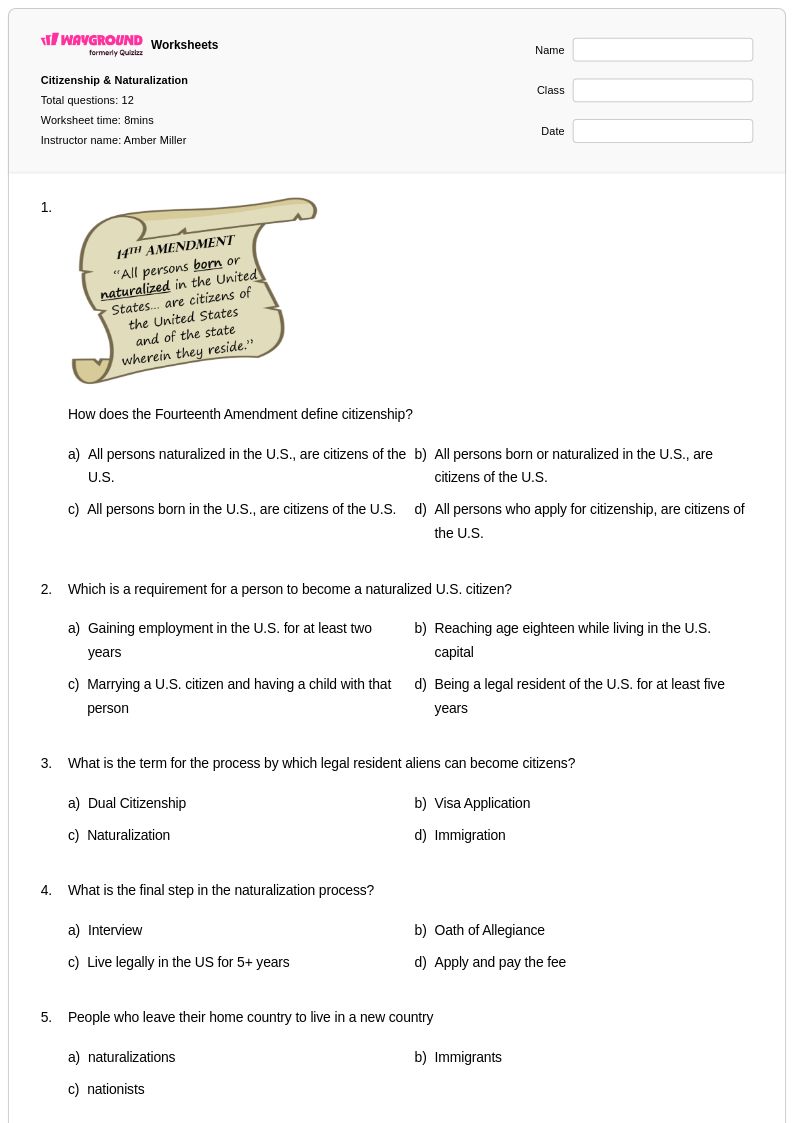
12 Q
4th - 8th
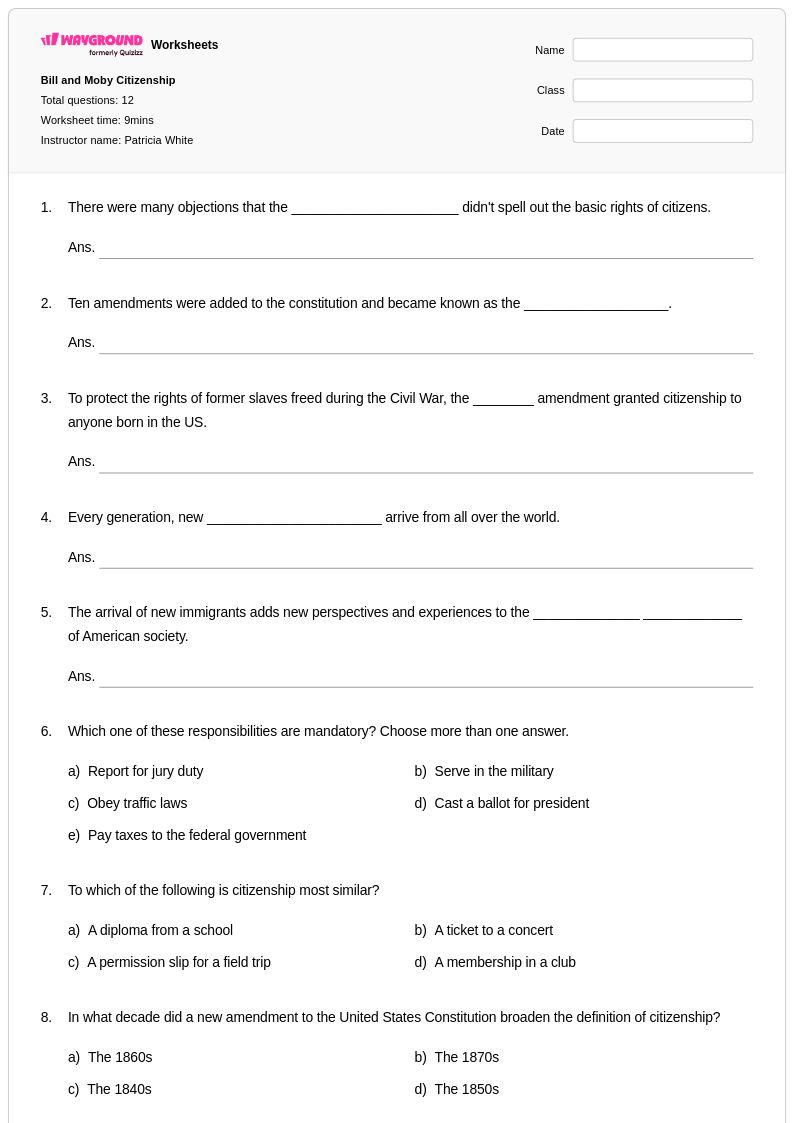
12 Q
4th - 5th
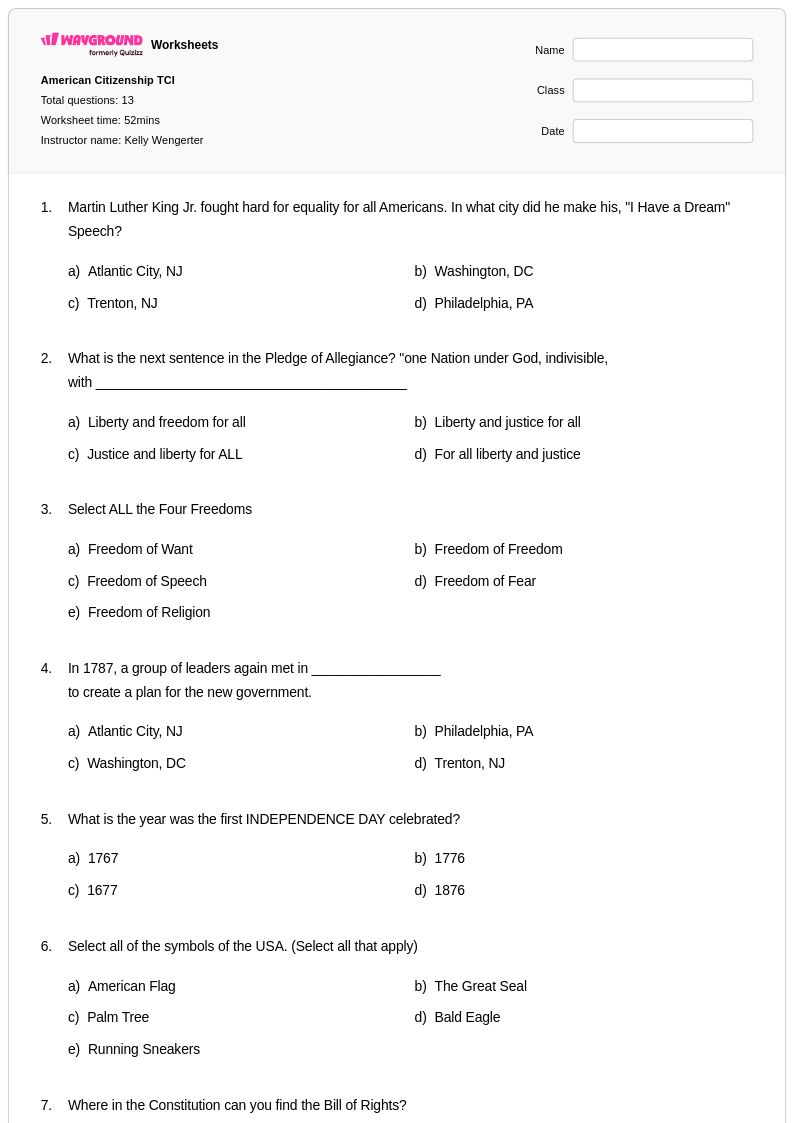
13 Q
2nd - 6th
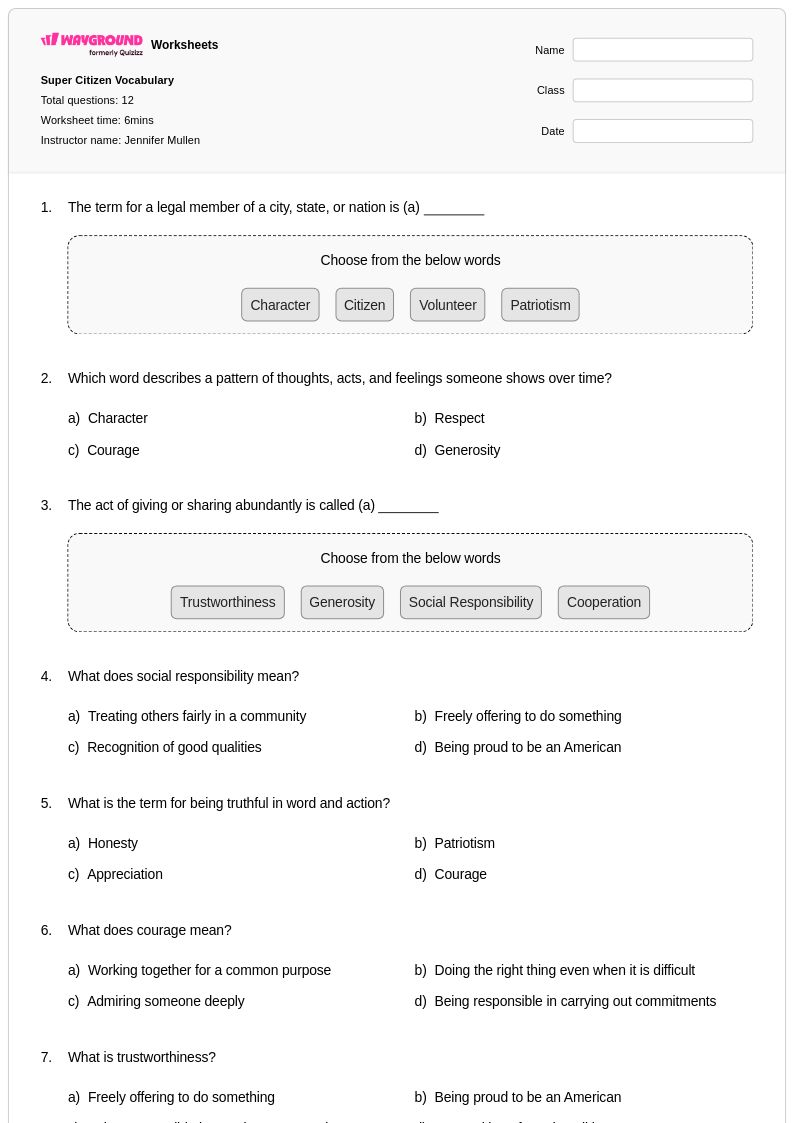
25 Q
5th
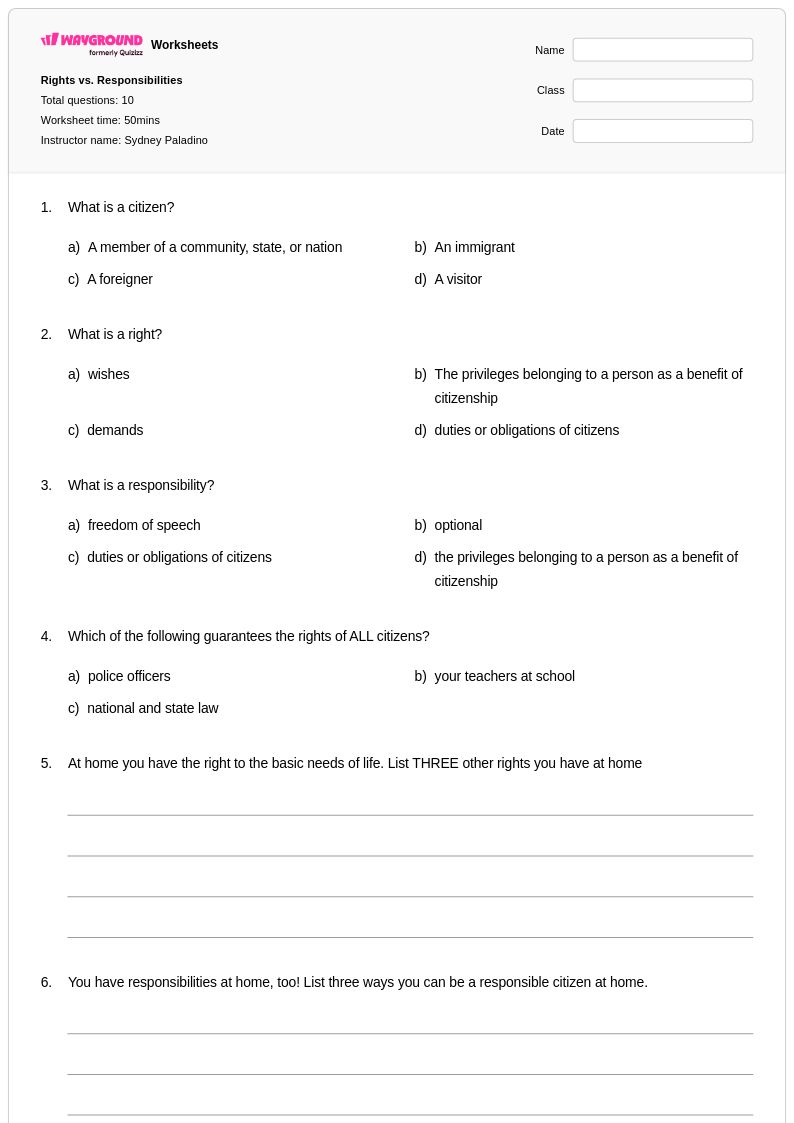
10 Q
3rd - 5th
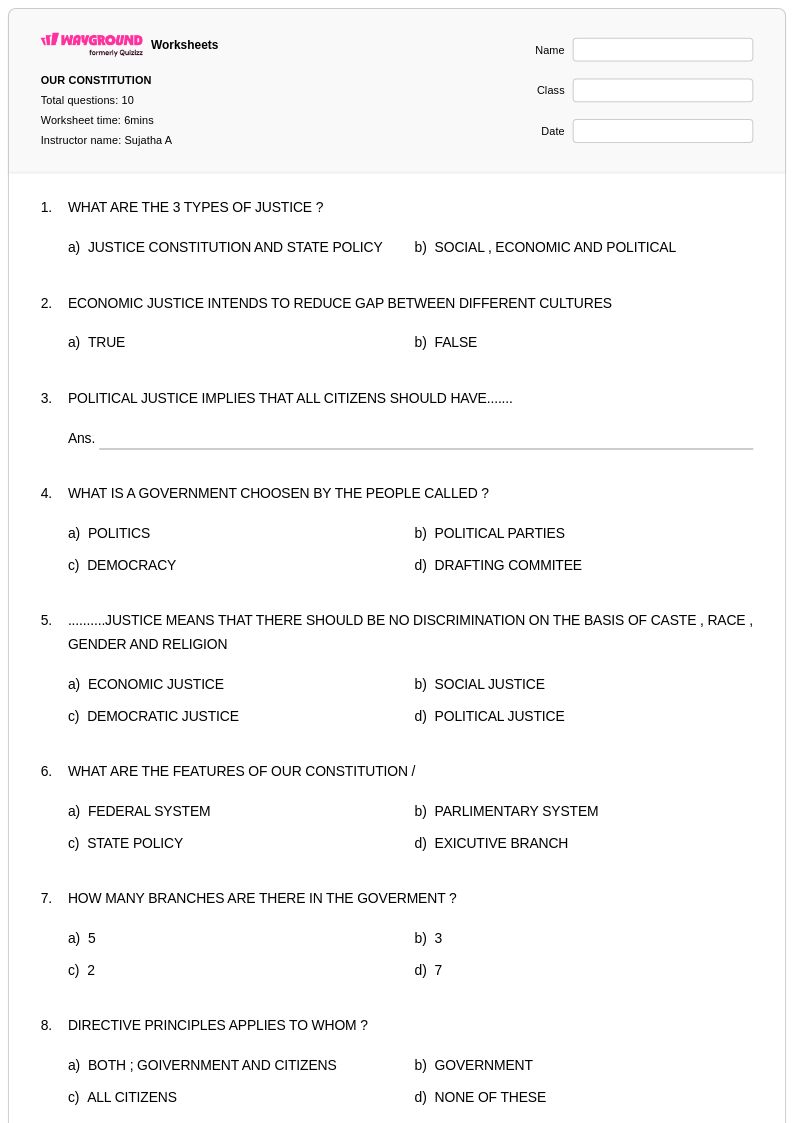
10 Q
5th - 7th
Explore Citizenship Worksheets by Grades
Explore Other Subject Worksheets for class 5
Explore printable Citizenship worksheets for Class 5
Class 5 citizenship worksheets from Wayground (formerly Quizizz) provide comprehensive resources for teaching students the fundamental concepts of what it means to be an active, responsible citizen in American society. These expertly crafted materials help fifth-grade students explore essential citizenship topics including civic duties, rights and responsibilities, voting processes, community participation, and the relationship between citizens and their government. Each worksheet strengthens critical thinking skills as students analyze scenarios involving civic engagement, practice identifying examples of good citizenship, and develop understanding of how individual actions impact their communities. The collection includes detailed answer keys to support accurate assessment, free printables that require no special preparation, and practice problems designed to reinforce key concepts through varied question formats and real-world applications.
Wayground (formerly Quizizz) empowers educators with millions of teacher-created citizenship resources that streamline lesson planning and enhance student learning outcomes. The platform's robust search and filtering capabilities allow teachers to quickly locate materials aligned with state standards and curriculum requirements, while differentiation tools enable customization for diverse learning needs and ability levels. Teachers can access these comprehensive worksheet collections in both printable pdf formats for traditional classroom use and digital formats for technology-integrated instruction, providing maximum flexibility for different teaching environments. These versatile resources support targeted skill practice, remediation for struggling learners, and enrichment opportunities for advanced students, making it easier for educators to address individual student needs while building essential citizenship knowledge and civic engagement skills across the entire Class 5 classroom.
FAQs
How do I teach citizenship and civic responsibility in the classroom?
What exercises help students practice civic responsibilities and democratic participation?
What mistakes do students commonly make when learning about citizenship and civic rights?
How can I differentiate citizenship instruction for students at different skill levels?
How do I use Wayground's citizenship worksheets in my classroom?