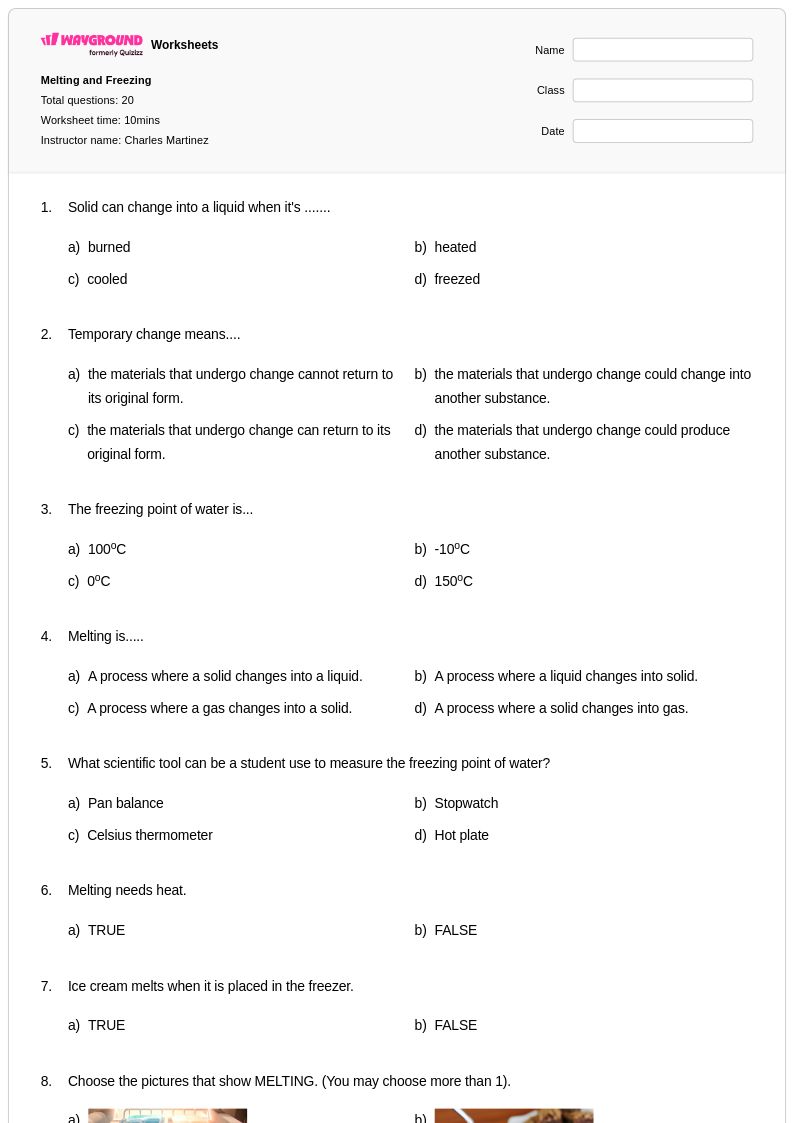
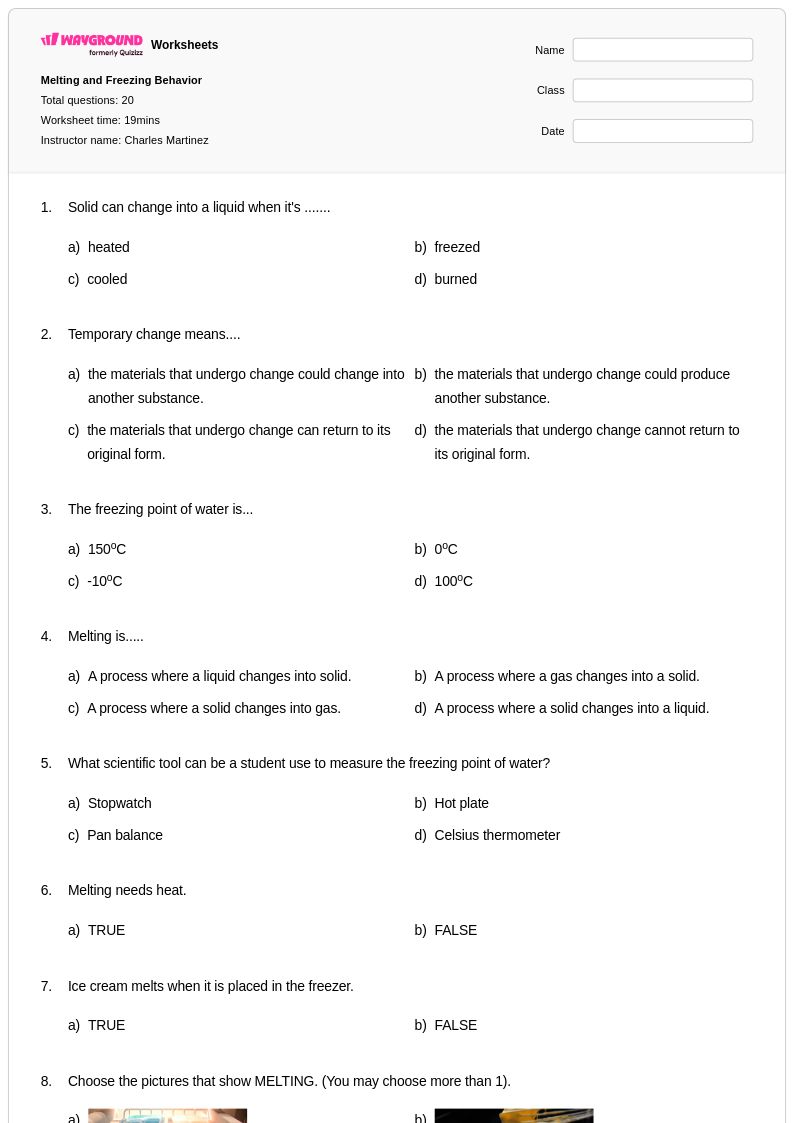
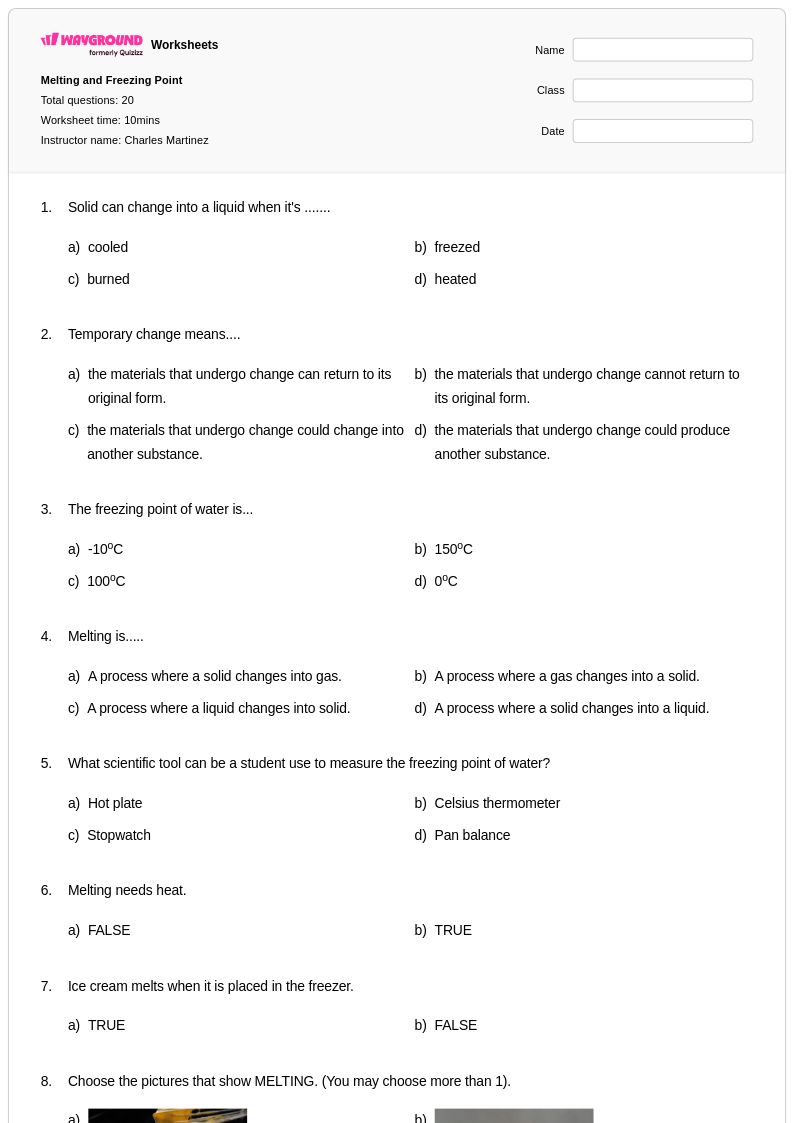
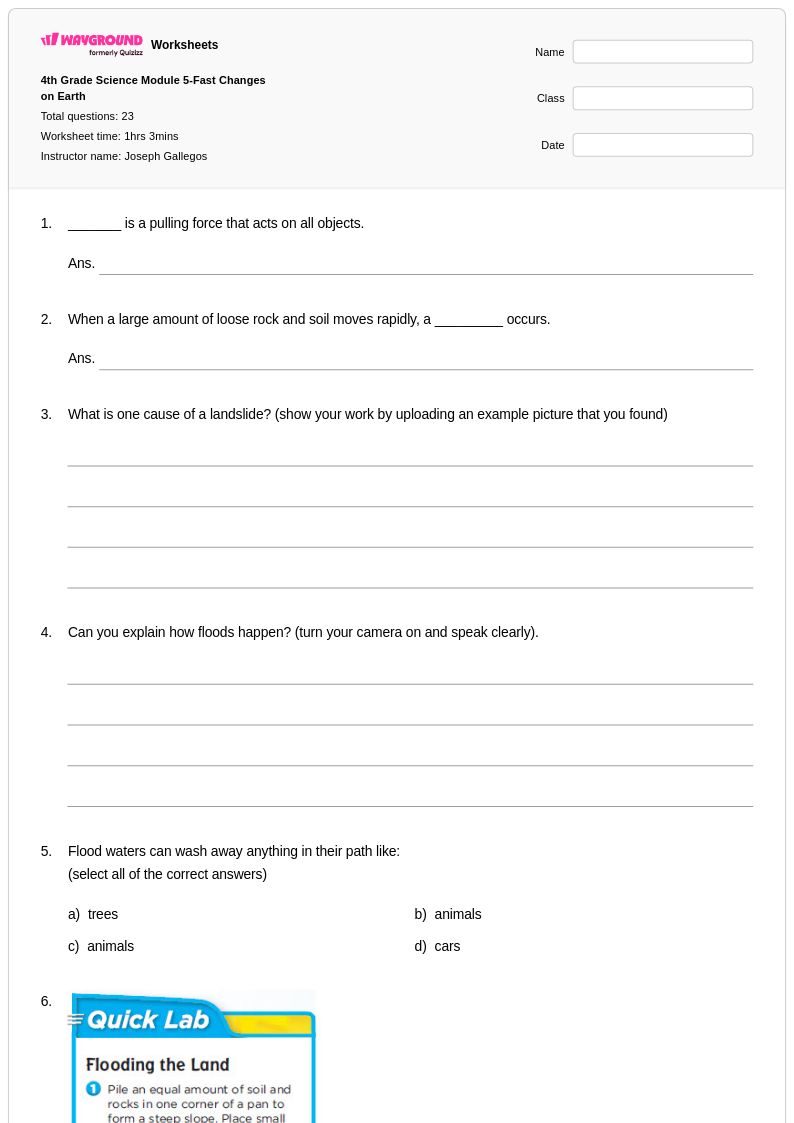
Free Printable Classification and Changes Worksheets for Class 5
Explore Wayground's free Class 5 classification and changes worksheets with printable PDFs, practice problems, and answer keys to help students master how matter can be classified and understand physical and chemical changes.
Explore printable Classification and Changes worksheets for Class 5
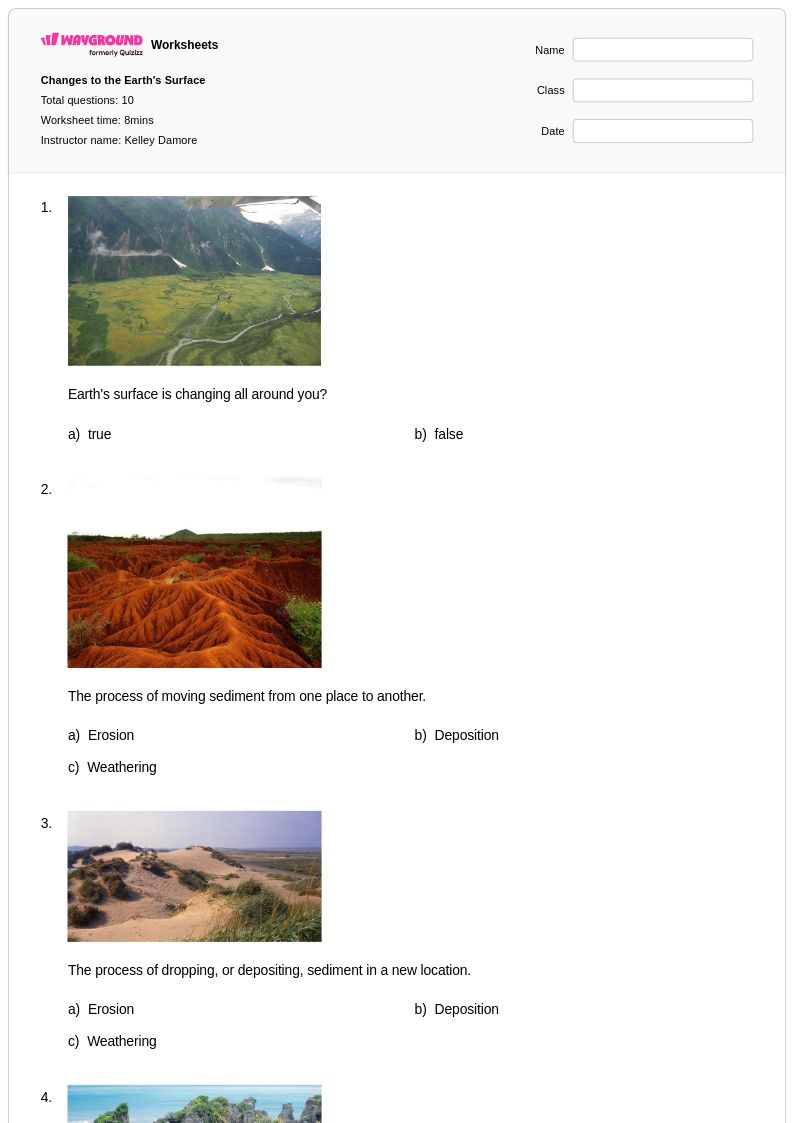
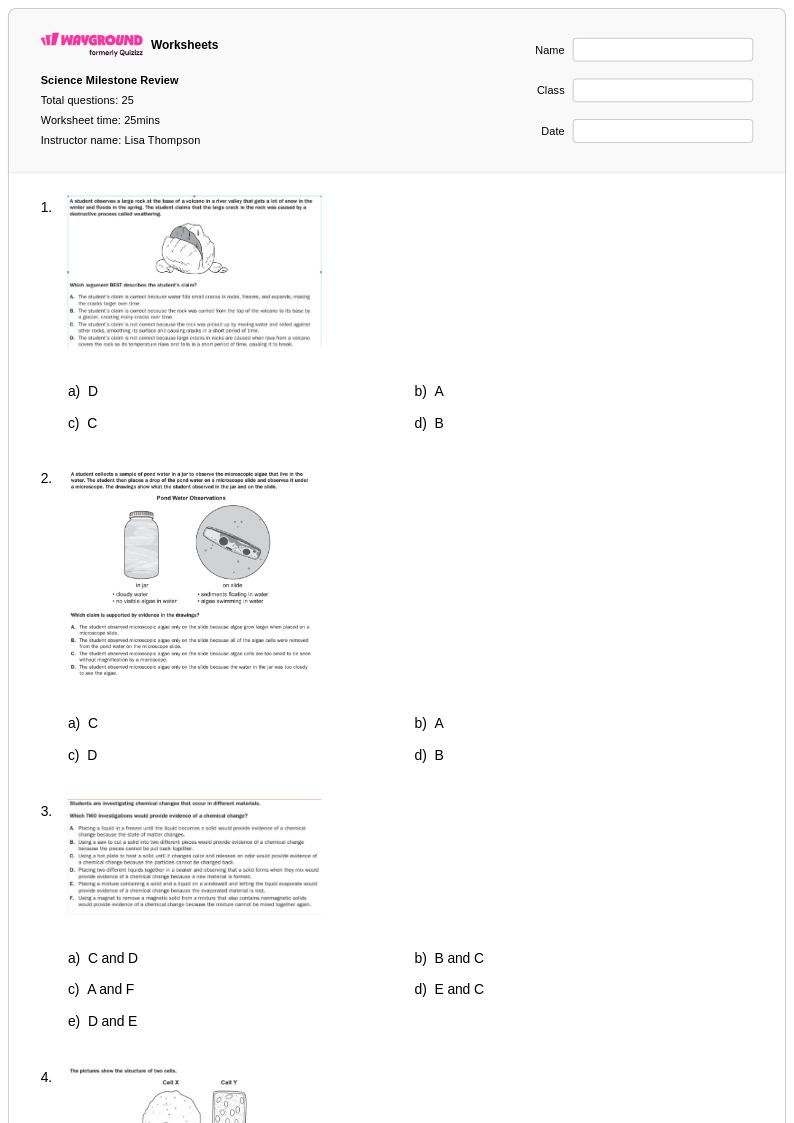
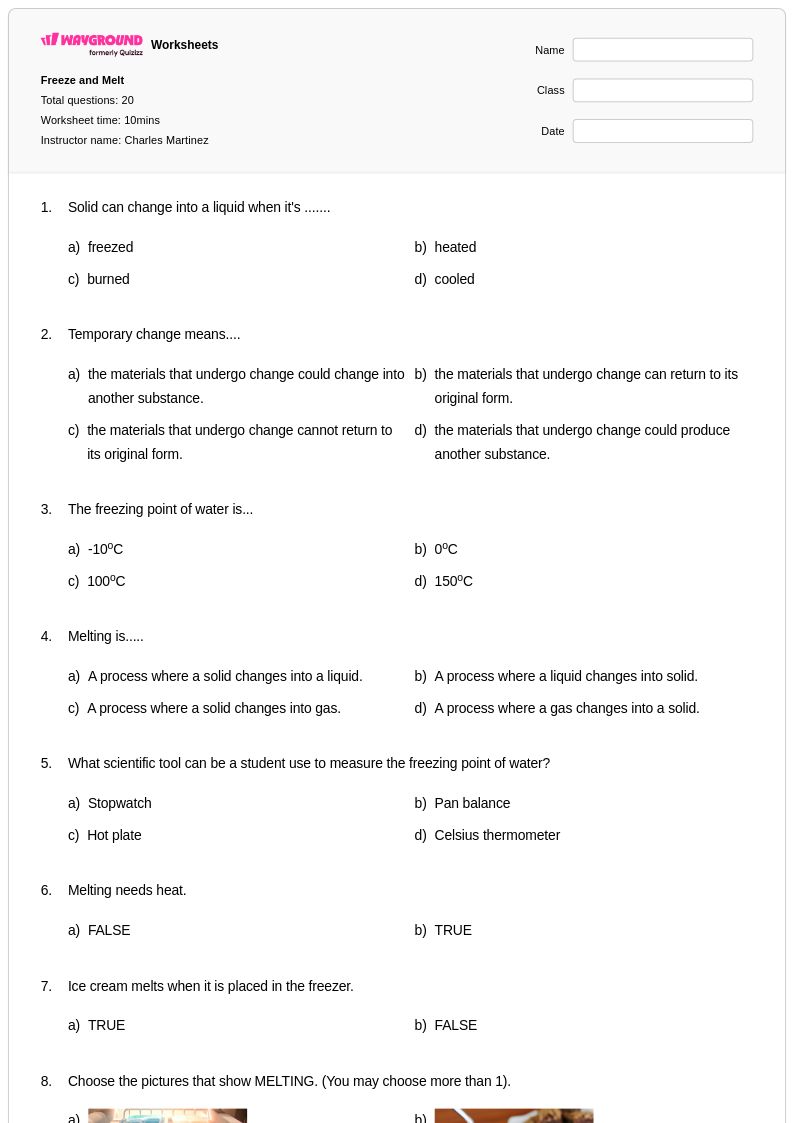
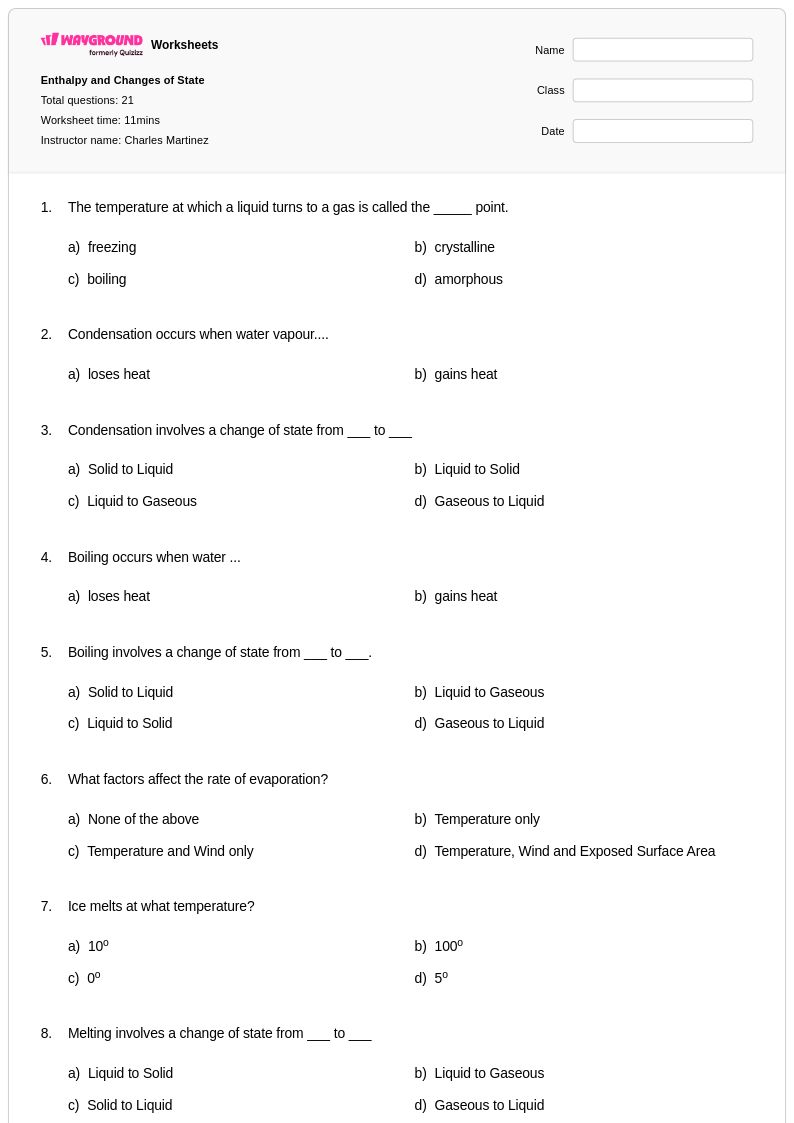
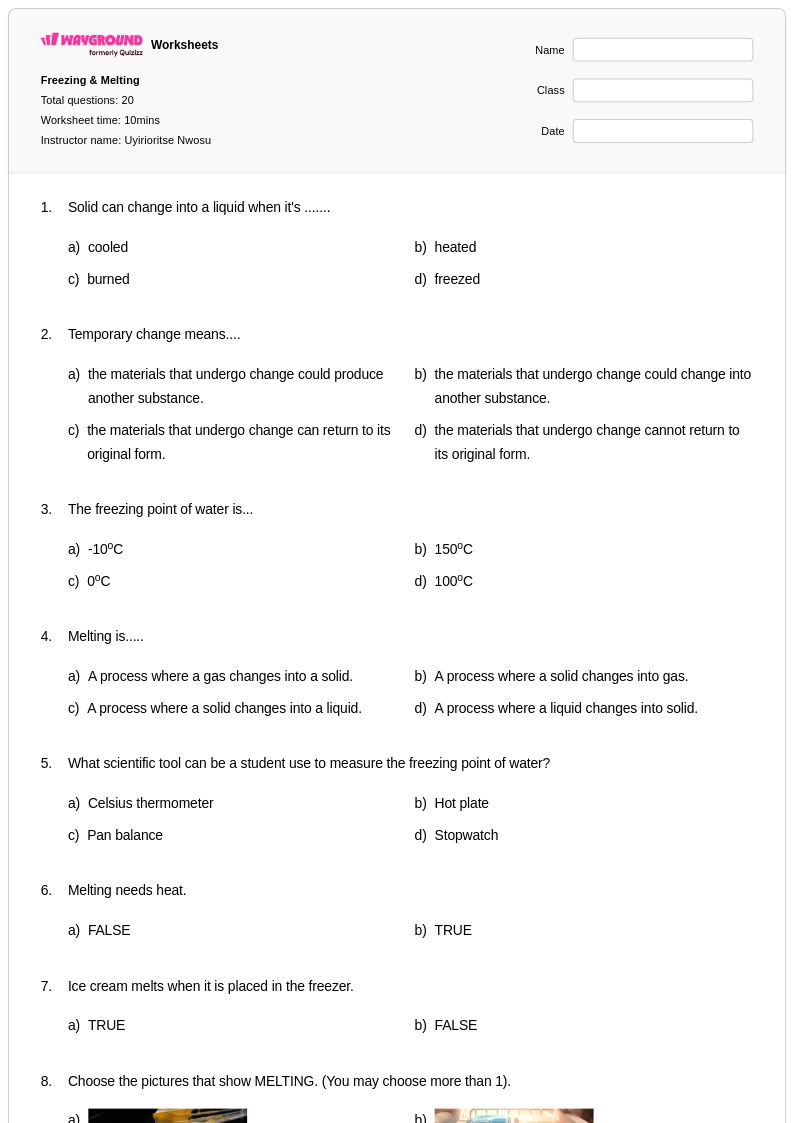
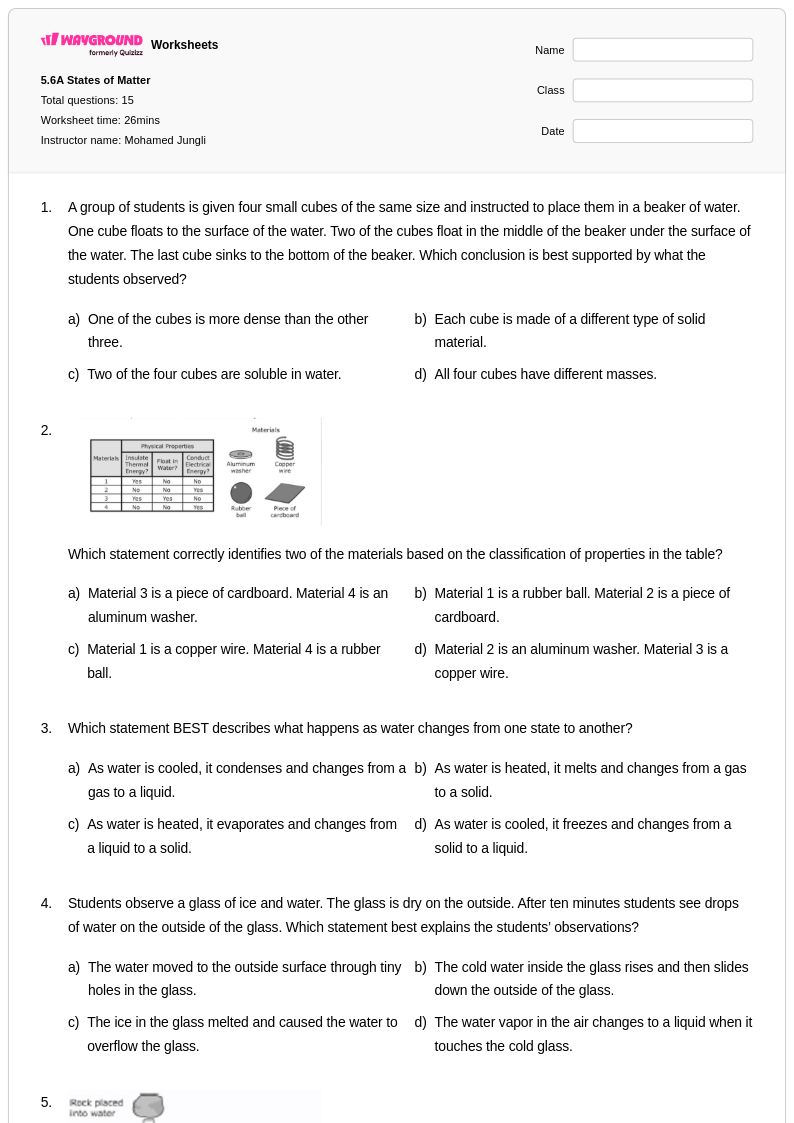
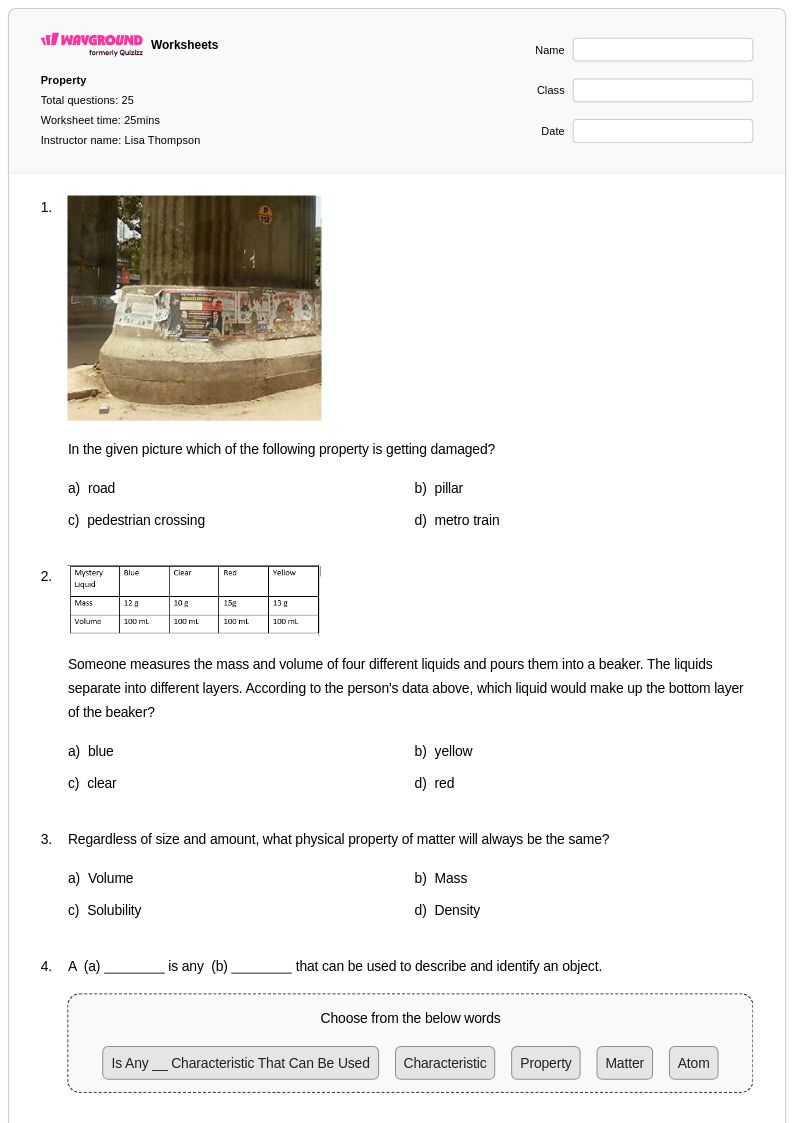
Class 5 classification and changes worksheets from Wayground (formerly Quizizz) provide comprehensive practice opportunities for students to master fundamental concepts about how matter can be categorized and transformed. These educational resources strengthen critical thinking skills as students learn to identify physical and chemical properties, distinguish between reversible and irreversible changes, and classify materials based on observable characteristics. The worksheet collection includes diverse practice problems that guide students through sorting activities, property identification exercises, and real-world applications of material changes, with each printable resource accompanied by a detailed answer key to support independent learning and immediate feedback. These free pdf worksheets cover essential topics such as states of matter transitions, mixture separation techniques, and the difference between physical changes like melting and chemical changes like burning.
Wayground (formerly Quizizz) empowers teachers with millions of educator-created worksheet resources specifically designed for grade 5 classification and changes instruction, featuring robust search and filtering capabilities that allow quick access to standards-aligned materials. The platform's differentiation tools enable teachers to customize worksheets based on individual student needs, while flexible formatting options provide both printable pdf versions for traditional classroom use and digital formats for technology-integrated learning environments. These comprehensive worksheet collections support effective lesson planning by offering varied difficulty levels for remediation and enrichment purposes, ensuring that all students can engage with classification and changes concepts at their appropriate skill level. Teachers benefit from the extensive customization features that allow modification of existing worksheets or creation of entirely new practice materials, streamlining the preparation process while maintaining high-quality, pedagogically sound content for skill practice and assessment.
FAQs
How do I teach students to distinguish between physical and chemical changes?
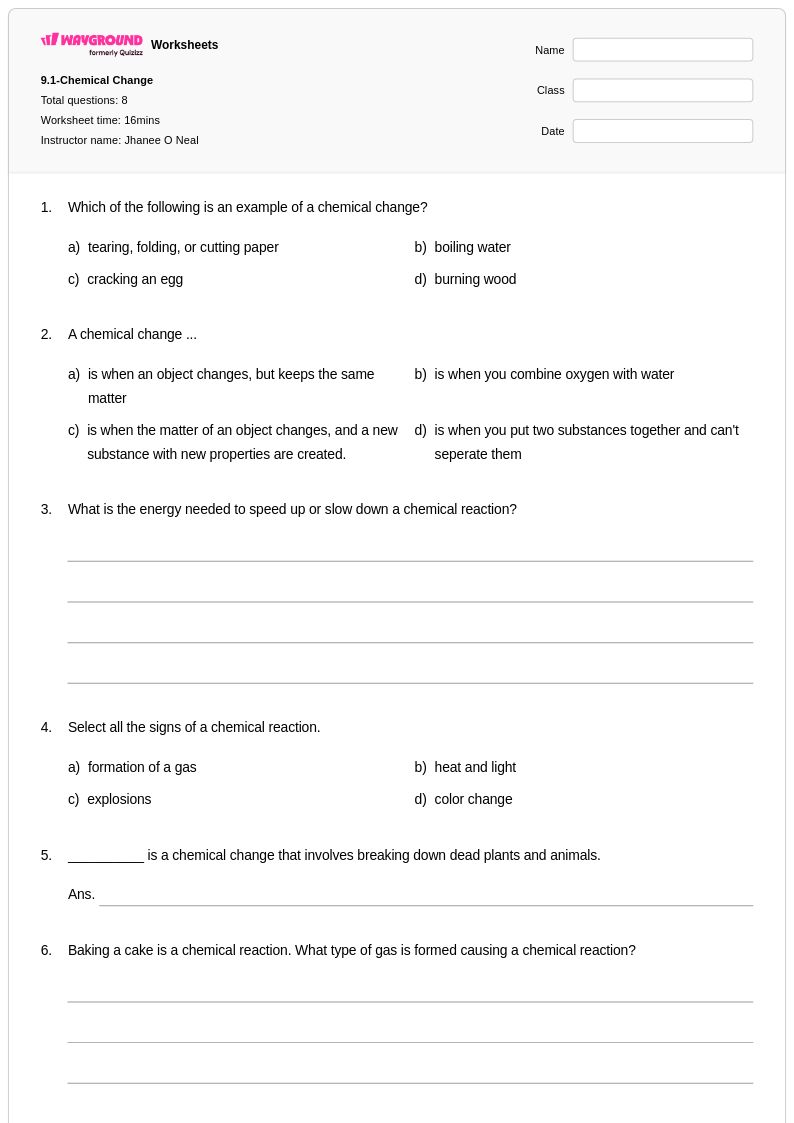
Start by anchoring instruction in observable evidence: physical changes alter the form or appearance of a substance without producing a new substance, while chemical changes result in one or more new substances with different properties. Teach students to look for indicators of chemical change such as gas production, color change, temperature change, or precipitate formation. Using concrete examples like tearing paper (physical) versus burning paper (chemical) helps students build reliable mental models before applying the distinction to less familiar scenarios.
What are the most common mistakes students make when classifying matter as elements, compounds, or mixtures?
The most frequent error is conflating compounds with mixtures because both contain more than one type of substance. Students need explicit instruction that compounds are chemically bonded substances with fixed ratios and distinct properties, while mixtures retain the individual properties of their components and can be separated by physical means. Another common misconception is assuming all mixtures are heterogeneous; teachers should specifically address homogeneous mixtures like saltwater to prevent this overgeneralization.
What exercises help students practice identifying physical and chemical properties of matter?
Effective practice exercises ask students to sort property lists into physical (mass, color, density, boiling point) versus chemical (flammability, reactivity, toxicity) categories, then justify their reasoning. Scenarios where students must predict whether a described change is physical or chemical — and cite specific evidence — build the analytical thinking this concept requires. Classification and changes worksheets that pair practice problems with answer keys allow students to self-check and correct misconceptions independently.
How can I use classification and changes worksheets to support students at different ability levels?
Differentiation for this topic works best when lower-level tasks focus on identifying and sorting familiar examples, while higher-level tasks ask students to analyze unfamiliar substances or design scenarios that illustrate a specific type of change. On Wayground, teachers can apply per-student accommodations such as reduced answer choices to lower cognitive load for struggling learners, or enable Read Aloud for students who benefit from audio support. These settings can be applied to individual students without affecting the rest of the class, making seamless differentiation practical in a single-session workflow.
How do I use classification and changes worksheets from Wayground in my classroom?
Wayground's classification and changes worksheets are available as printable PDFs for traditional classroom use and in digital formats for technology-integrated or remote learning environments. Teachers can also host worksheets as a live quiz on Wayground, enabling real-time student responses and immediate feedback. This flexibility makes them suitable for direct instruction, independent practice, homework assignments, or formative assessment checkpoints throughout a chemistry unit.
How do I sequence instruction on matter classification and changes across a unit?
Begin with physical versus chemical properties of matter before moving to states of matter and phase changes, then introduce classification of pure substances and mixtures as a culminating concept. This sequence ensures students can describe and compare materials before they are asked to classify them into hierarchical categories. Regularly revisiting prior concepts through short practice problems prevents the fragmented understanding that often occurs when these closely related topics are taught in isolation.