
10 Q
3rd - 12th
24 Q
6th - 8th
14 Q
5th - 6th
10 Q
6th
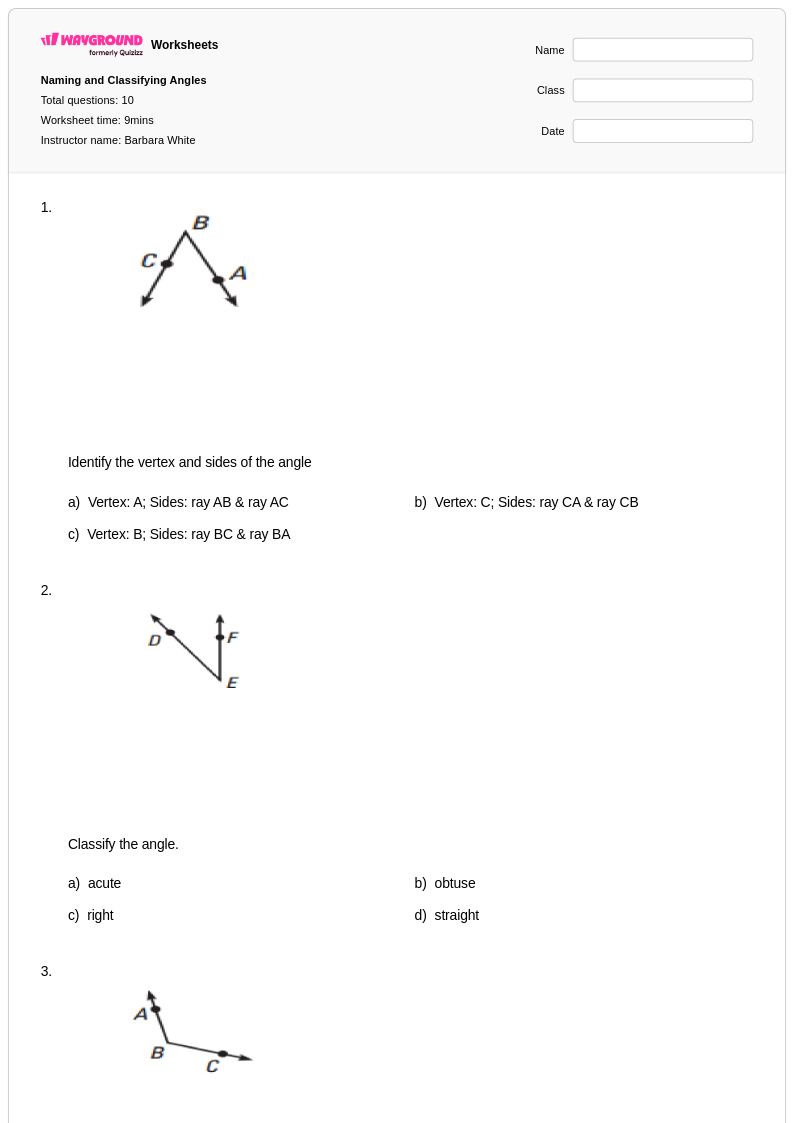
10 Q
3rd - 12th
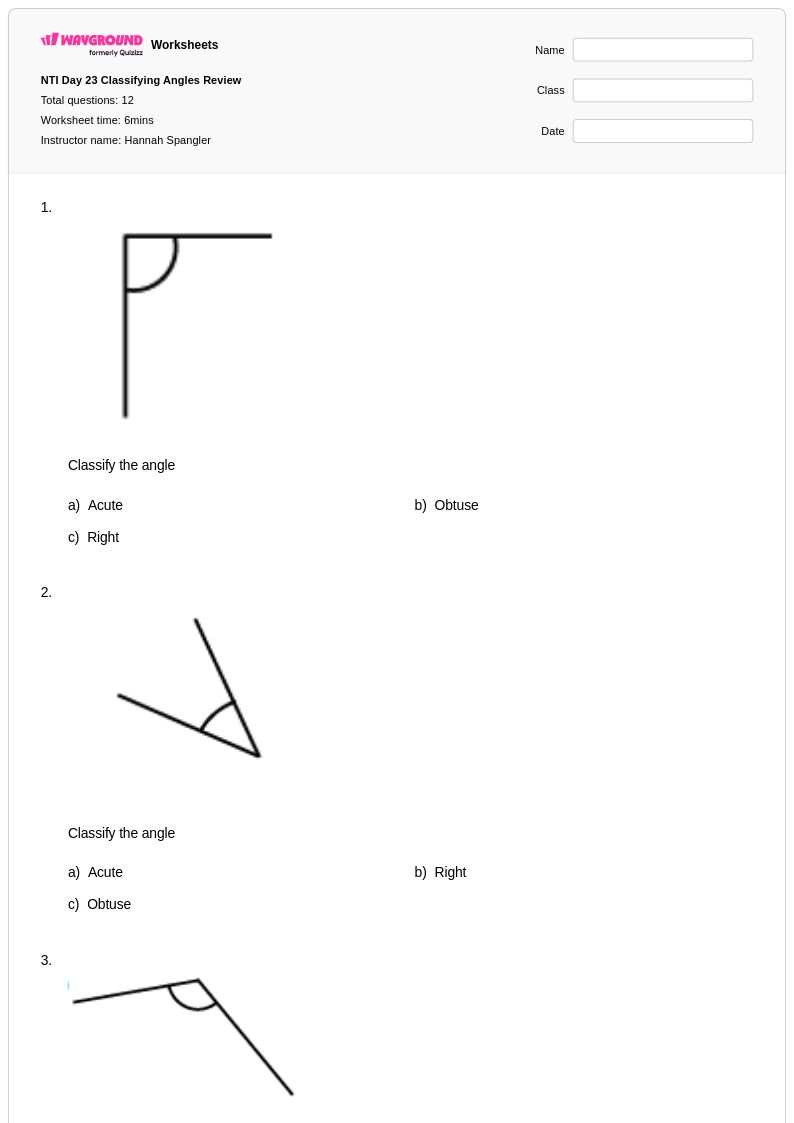
12 Q
3rd - 11th
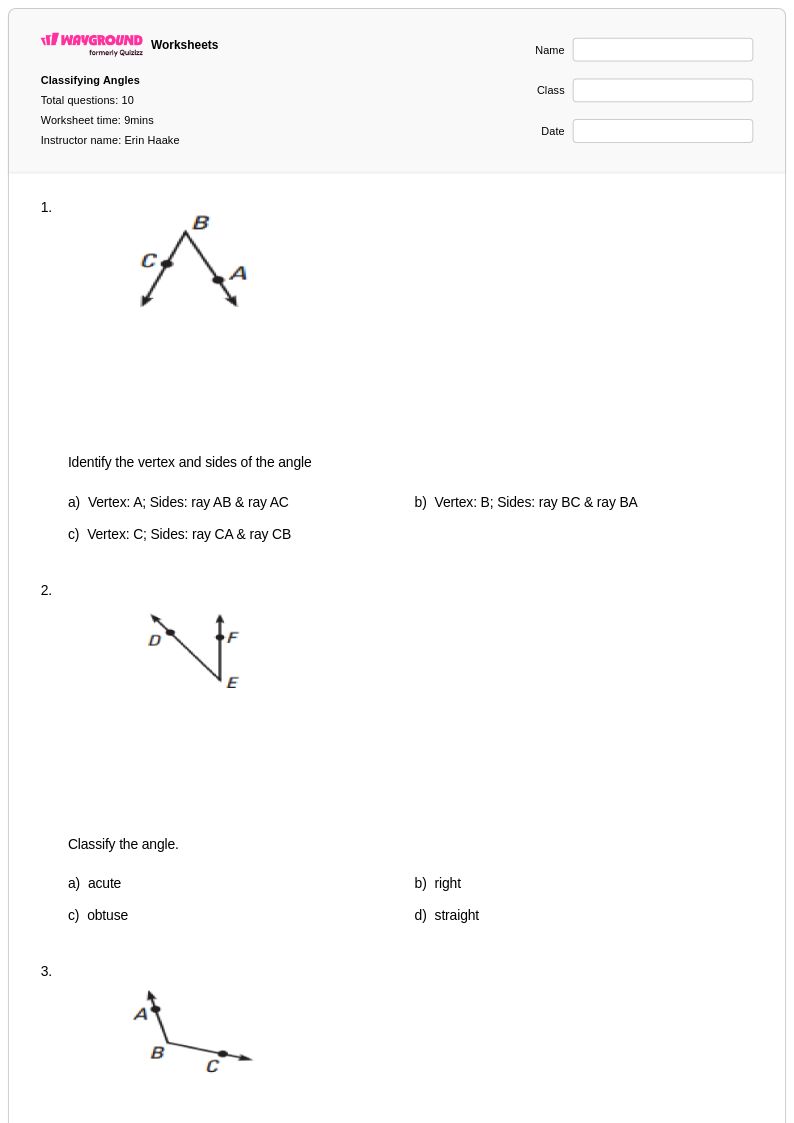
10 Q
3rd - 12th
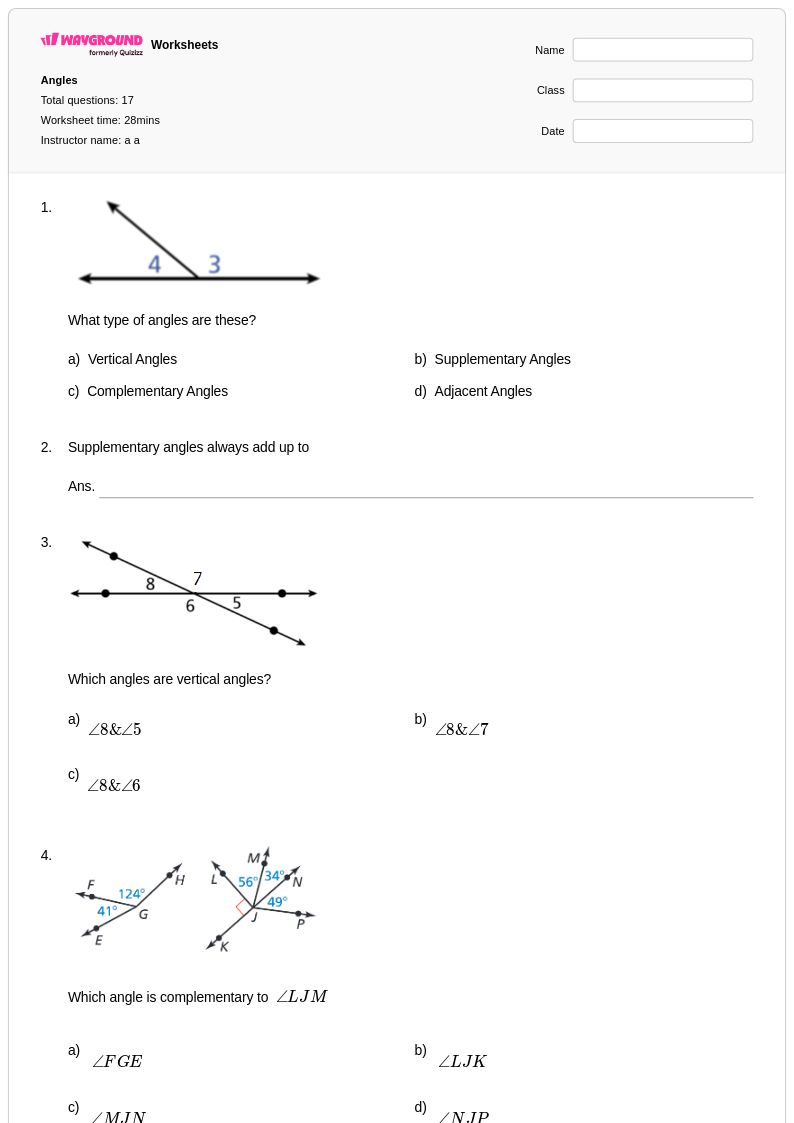
17 Q
6th - 7th
20 Q
5th - Uni
20 Q
5th - Uni
10 Q
6th - 8th
15 Q
5th - Uni
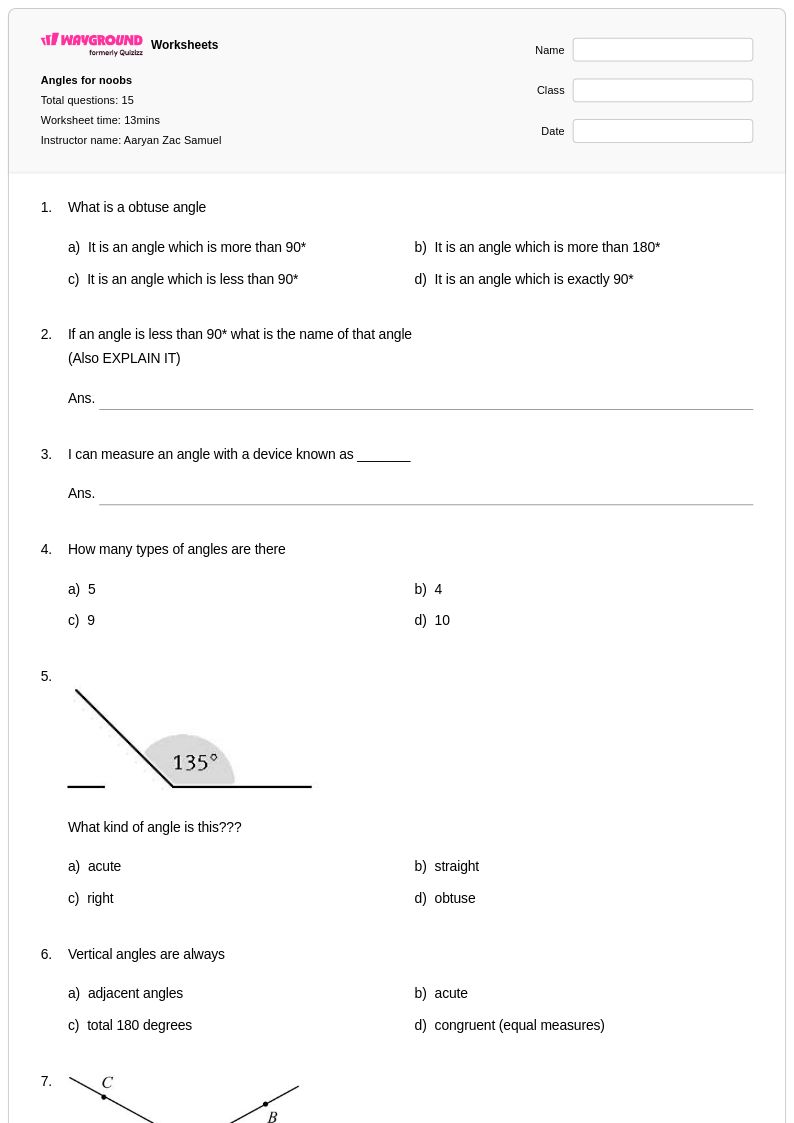
15 Q
4th - 9th
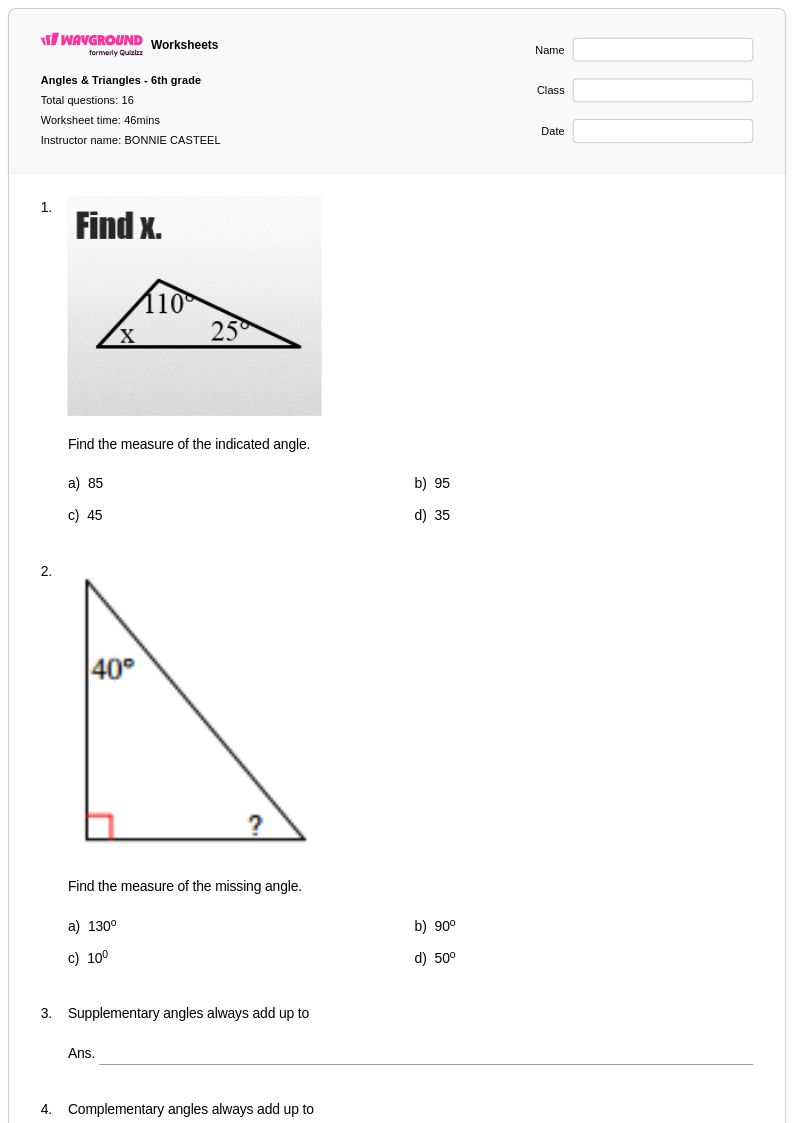
16 Q
6th
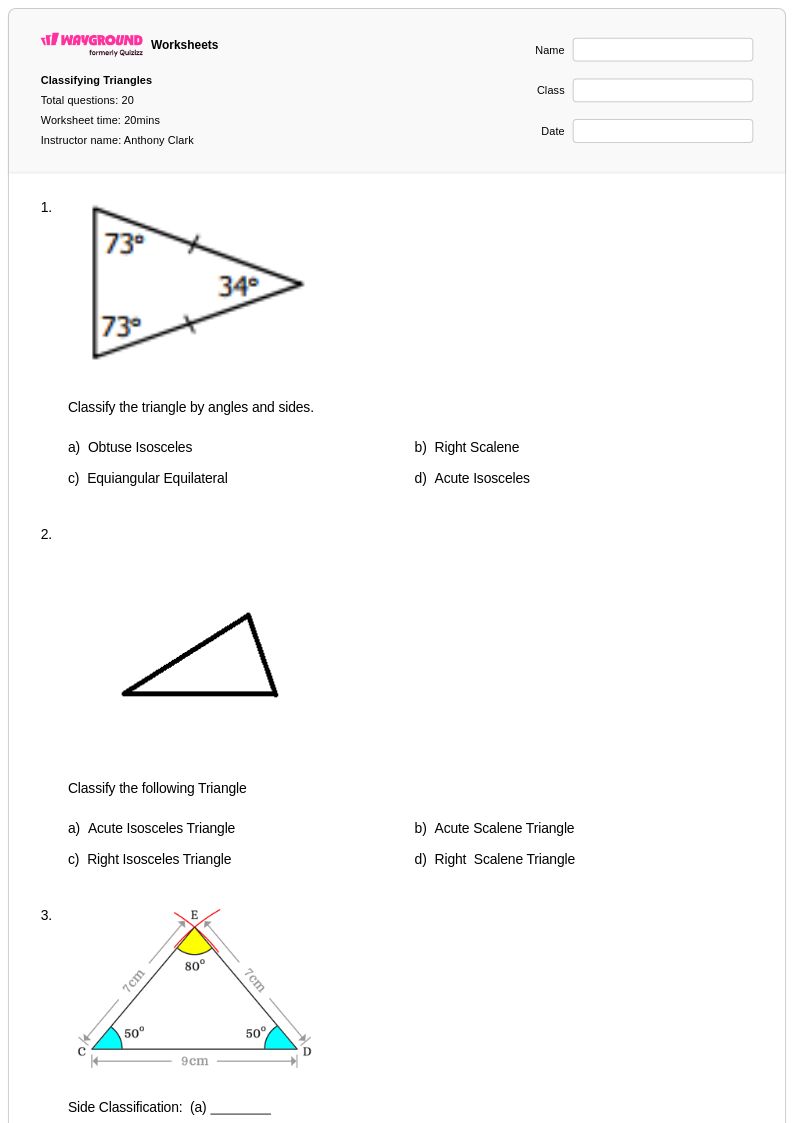
20 Q
5th - Uni
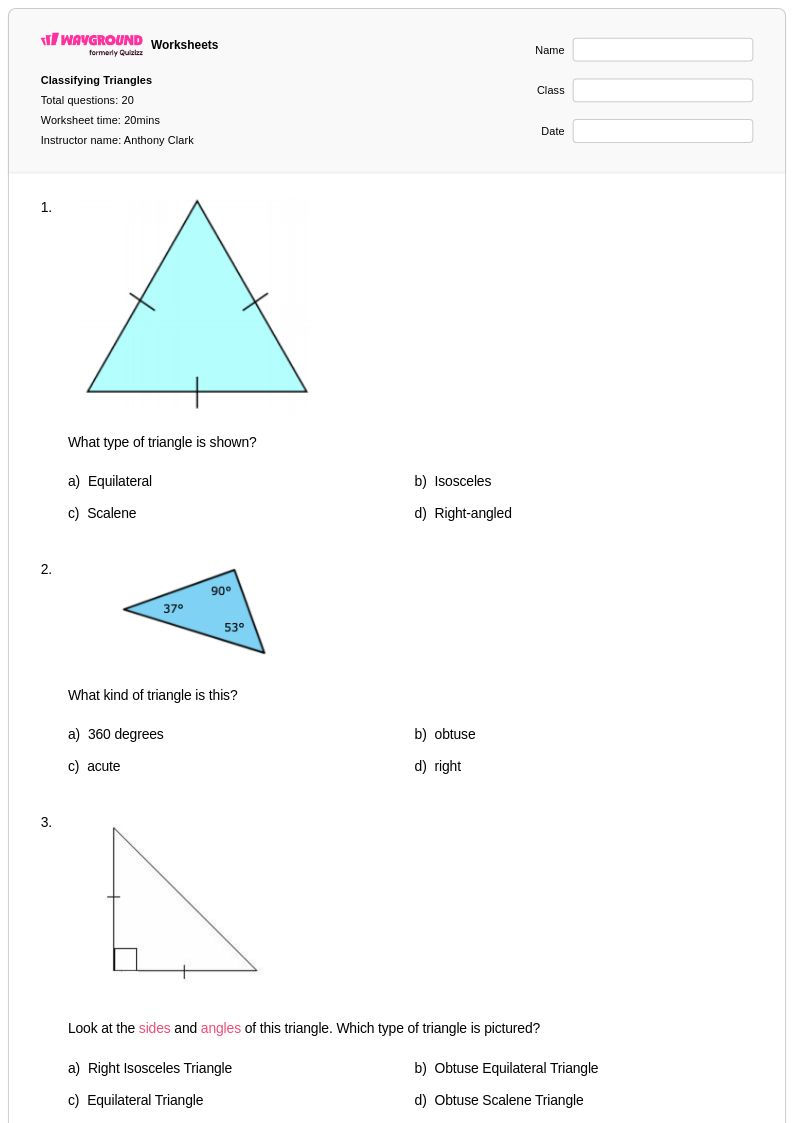
20 Q
5th - Uni
20 Q
5th - Uni
20 Q
5th - Uni
18 Q
5th - Uni
20 Q
5th - Uni
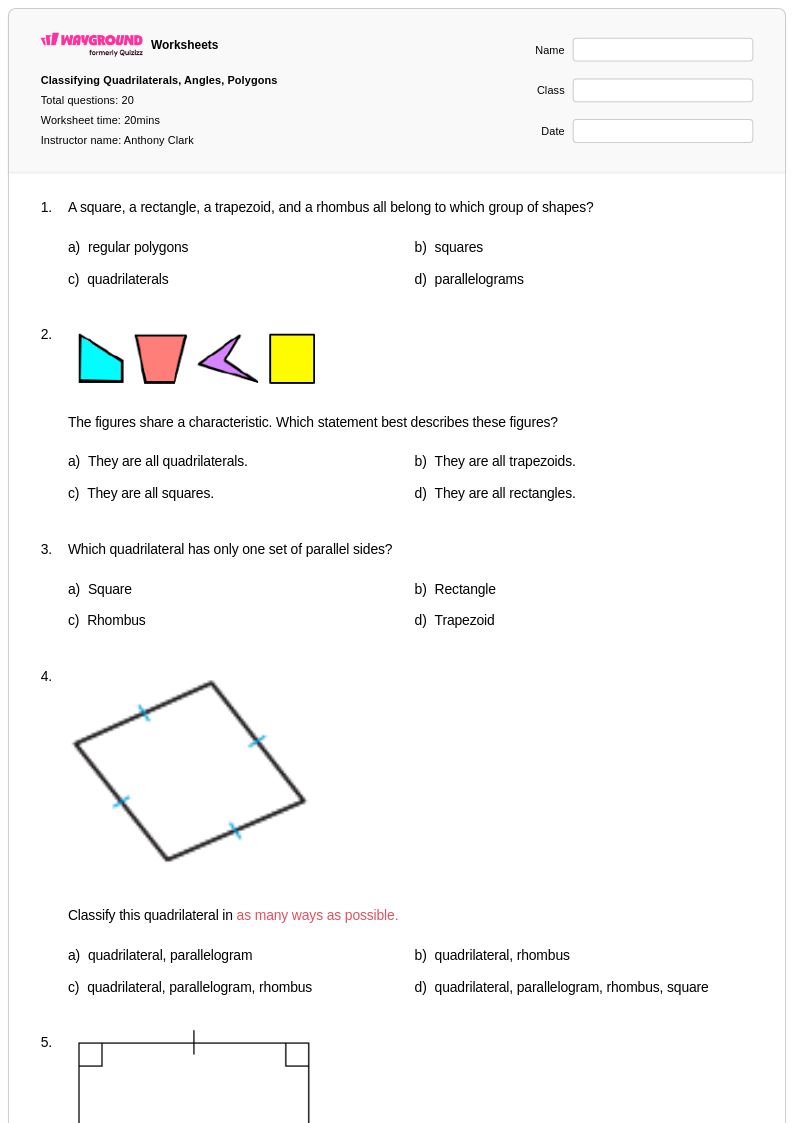
20 Q
5th - Uni
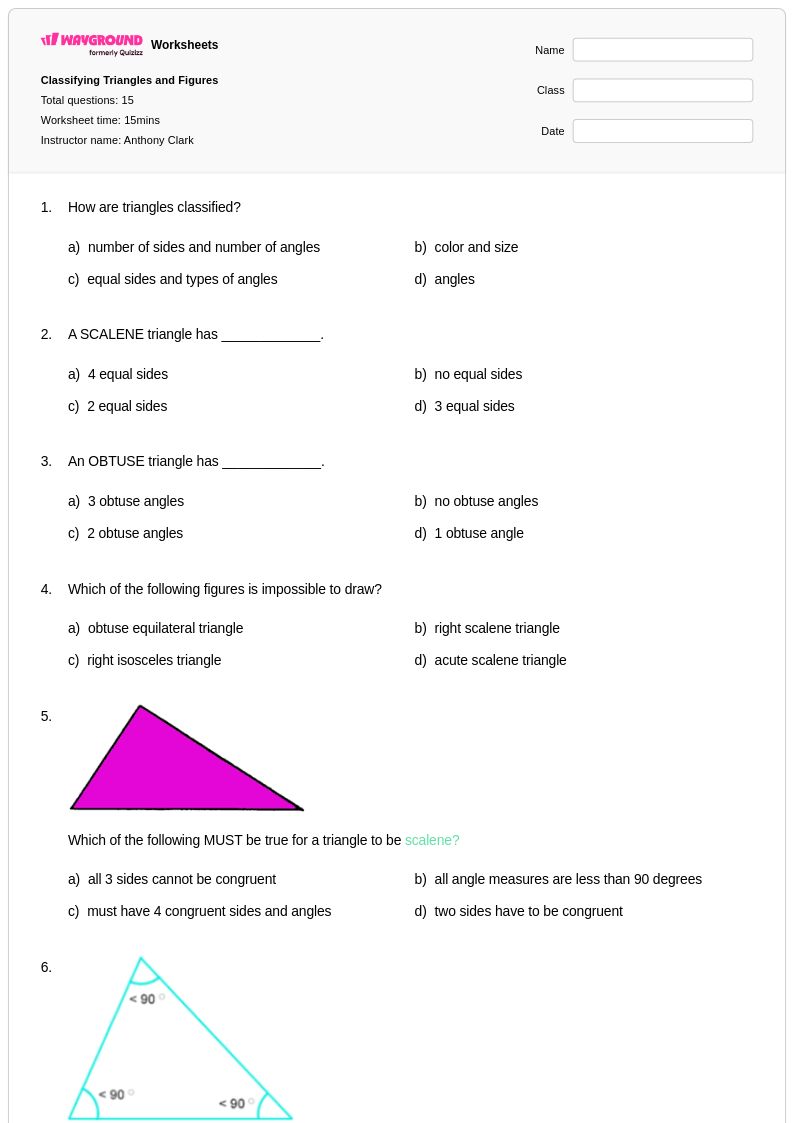
15 Q
5th - Uni
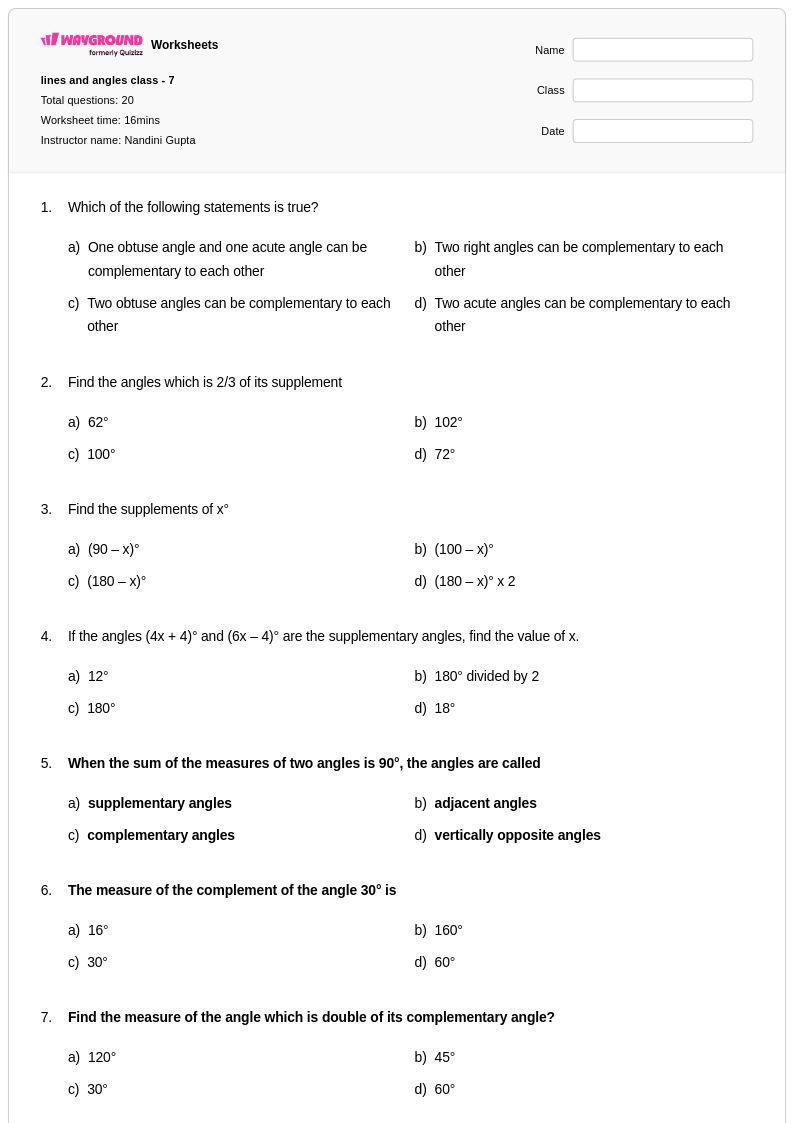
20 Q
5th - 8th
Explore Other Subject Worksheets for class 6
Explore printable Classifying Angles worksheets for Class 6
Classifying angles worksheets for Class 6 students available through Wayground (formerly Quizizz) provide comprehensive practice in identifying and categorizing the fundamental angle types that form the foundation of geometric understanding. These expertly crafted resources strengthen students' ability to distinguish between acute, right, obtuse, straight, and reflex angles while developing precise mathematical vocabulary and measurement skills. The worksheets feature diverse practice problems that challenge students to classify angles in isolation, within geometric figures, and in real-world contexts, ensuring mastery of this critical concept. Teachers can access these free printables with complete answer keys, making assessment and feedback efficient while supporting independent student practice through clear, structured exercises in convenient pdf format.
Wayground (formerly Quizizz) empowers educators with an extensive collection of millions of teacher-created angle classification resources, featuring robust search and filtering capabilities that enable quick identification of materials aligned to specific grade-level standards and learning objectives. The platform's differentiation tools allow teachers to customize worksheets based on individual student needs, supporting both remediation for struggling learners and enrichment opportunities for advanced students. Available in both printable and digital formats including downloadable pdfs, these resources seamlessly integrate into lesson planning while providing flexible options for classroom instruction, homework assignments, and targeted skill practice sessions that reinforce Class 6 angle classification concepts across diverse learning environments.
FAQs
How do I teach angle classification in Grade 6?
What exercises help sixth graders practice classifying angles?
What mistakes do Grade 6 students make when classifying angles?
How can I use Grade 6 classifying angles worksheets on Wayground?
How does classifying angles fit into the Common Core middle school progression?
How can I differentiate Grade 6 angle-classification practice?
What grade do students learn about reflex angles?