
20 Q
2nd
5 Q
1st
11 Q
1st
13 Q
4th
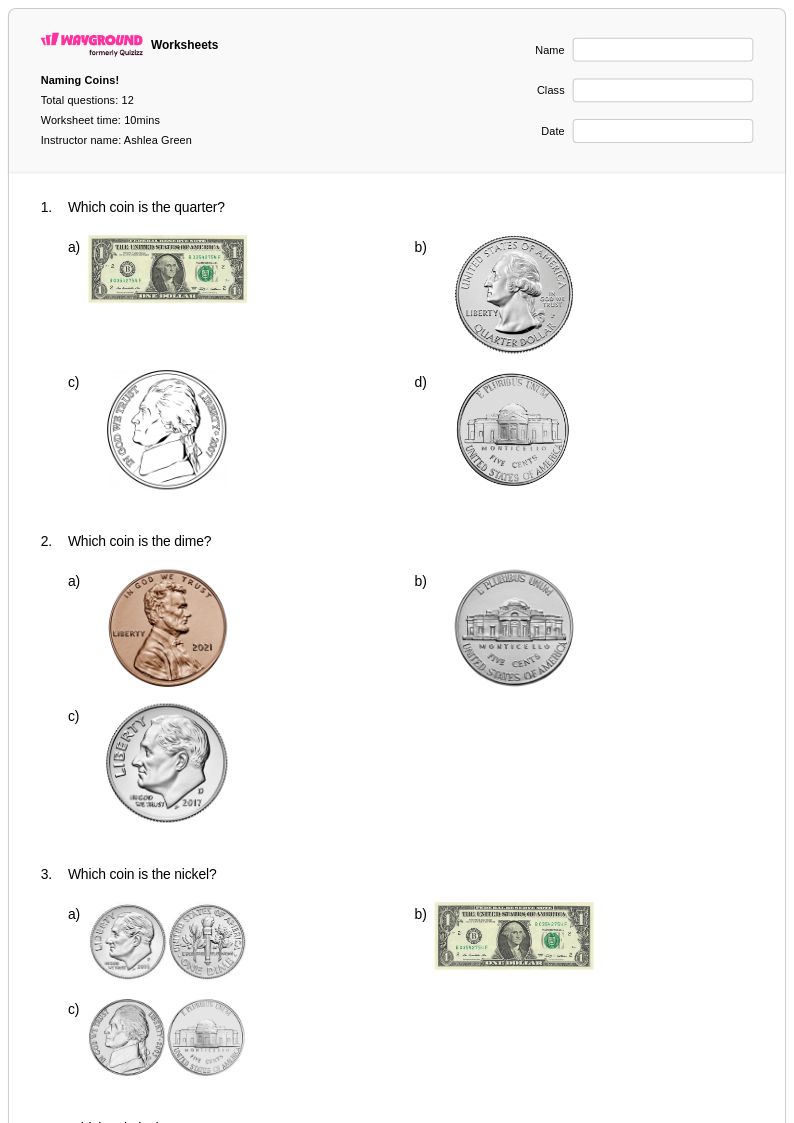
12 Q
2nd
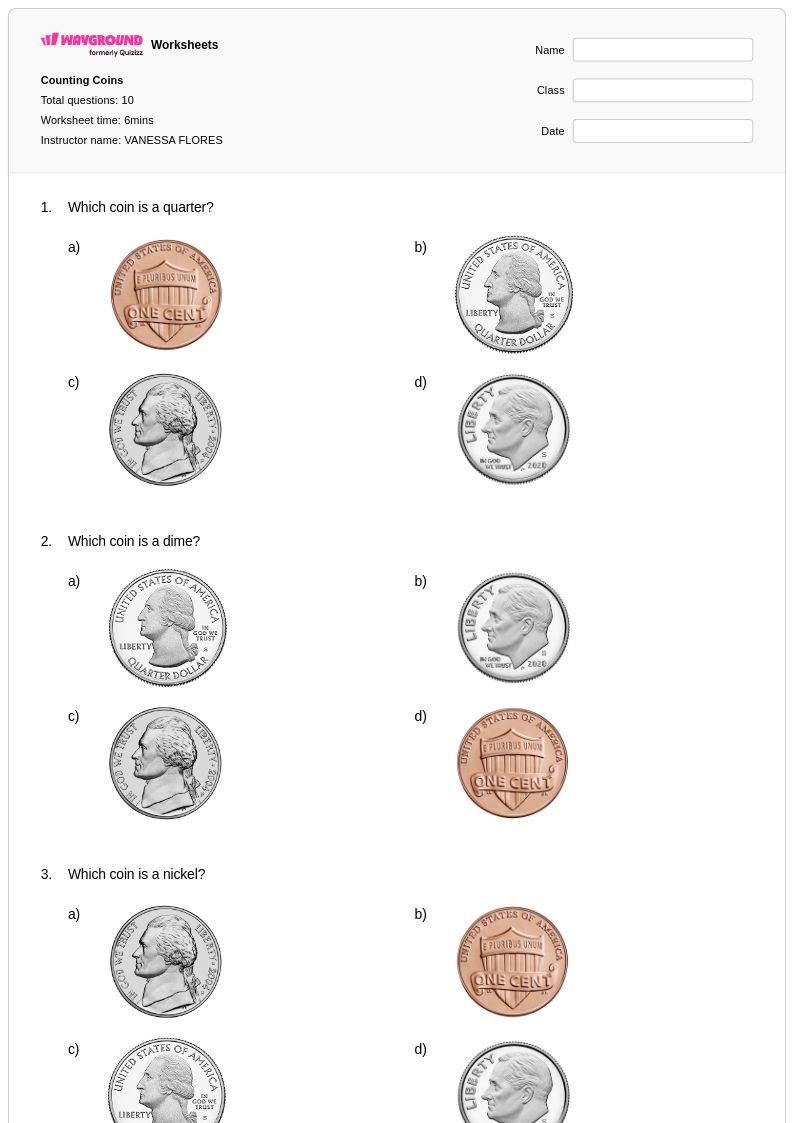
10 Q
1st
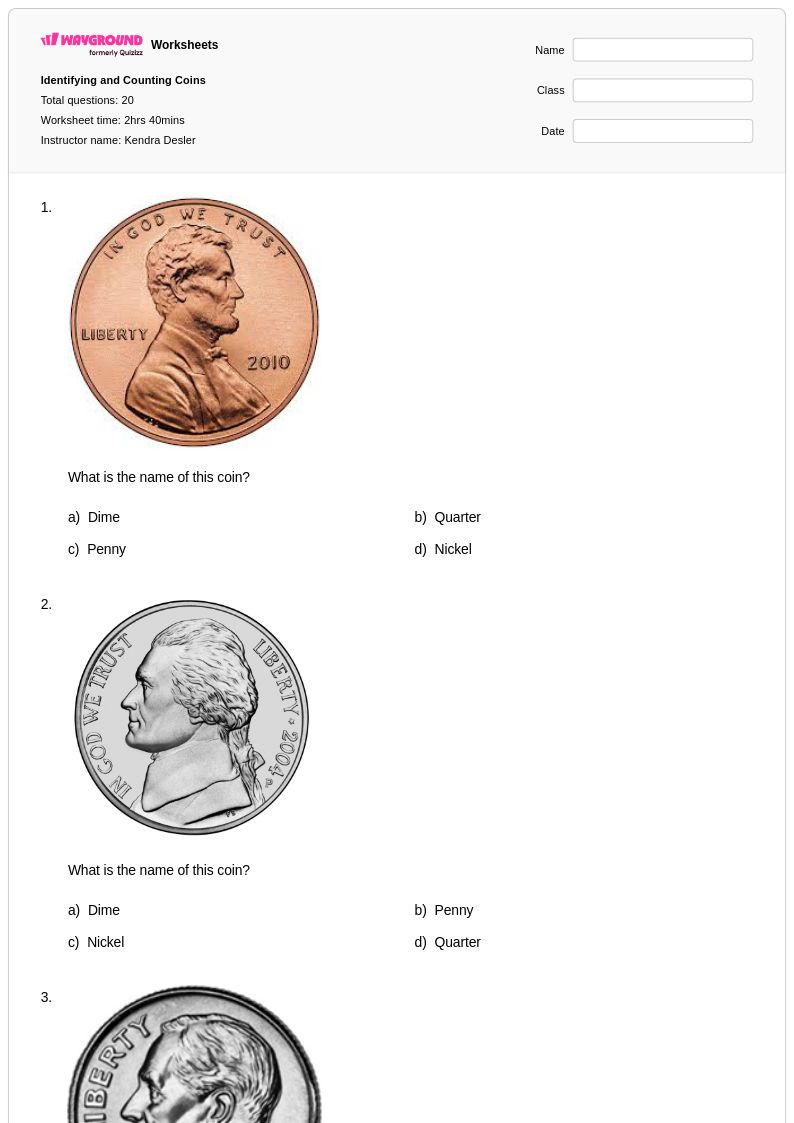
20 Q
2nd
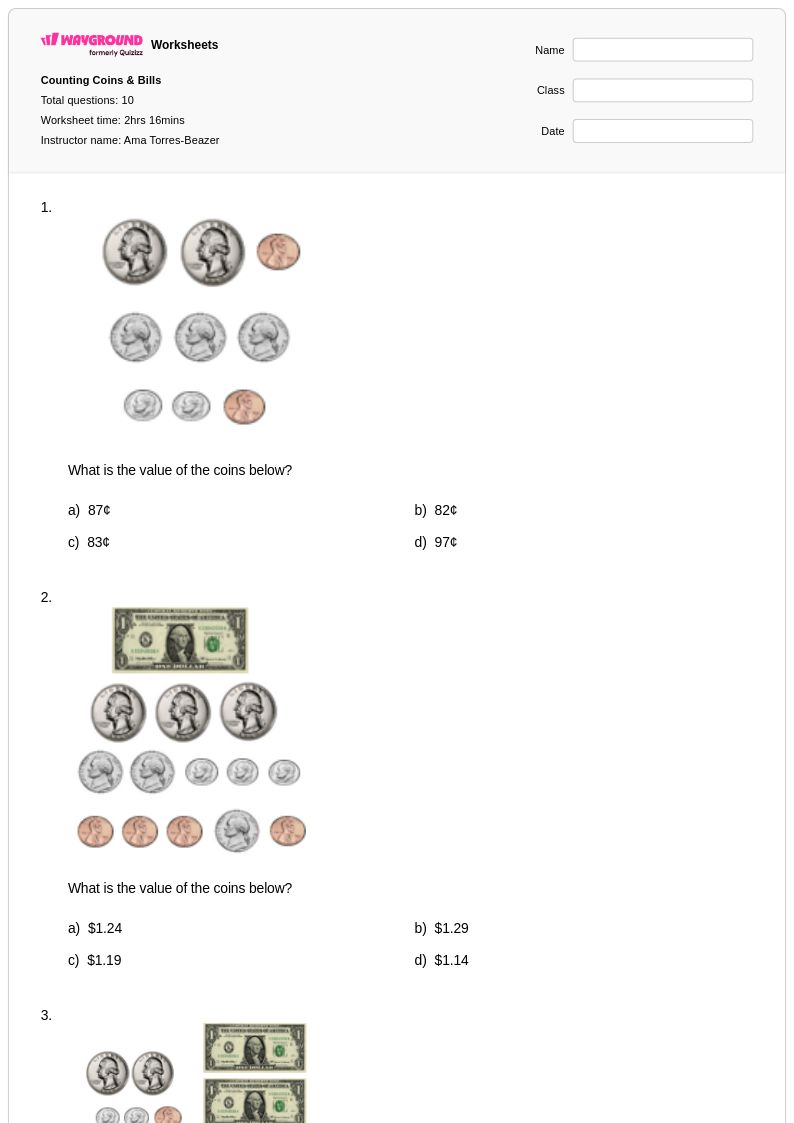
10 Q
2nd - 3rd
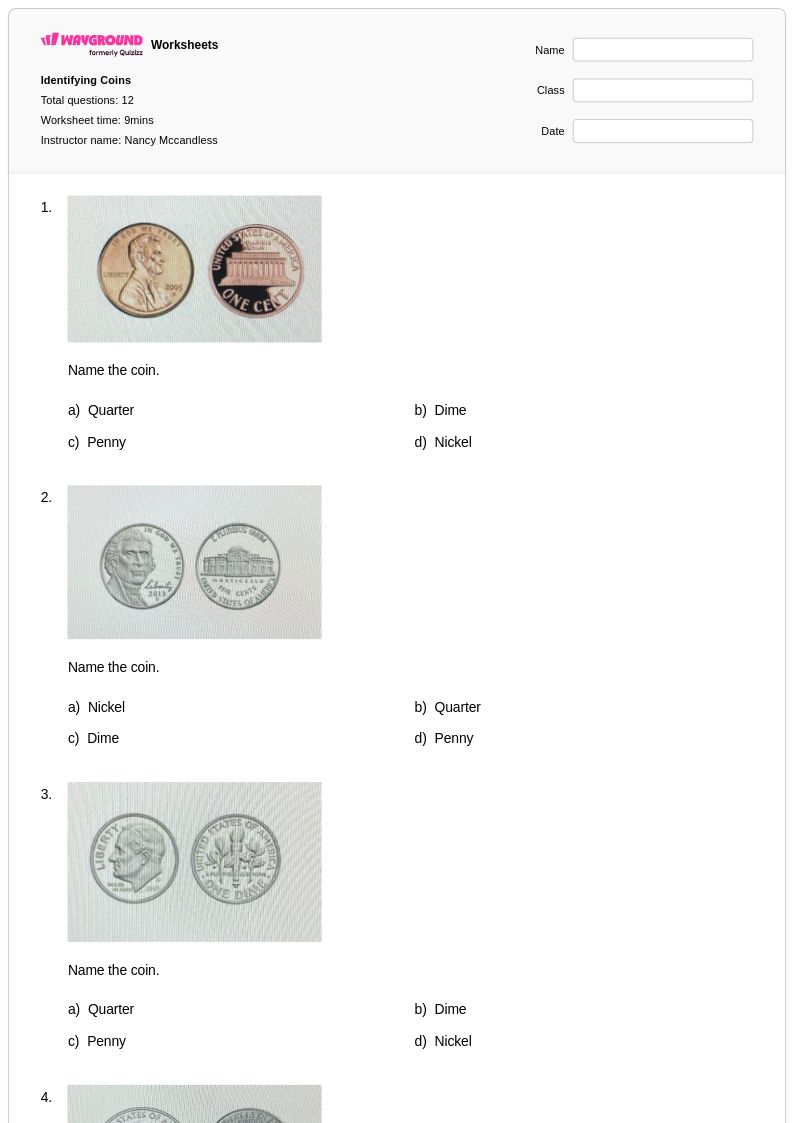
12 Q
KG
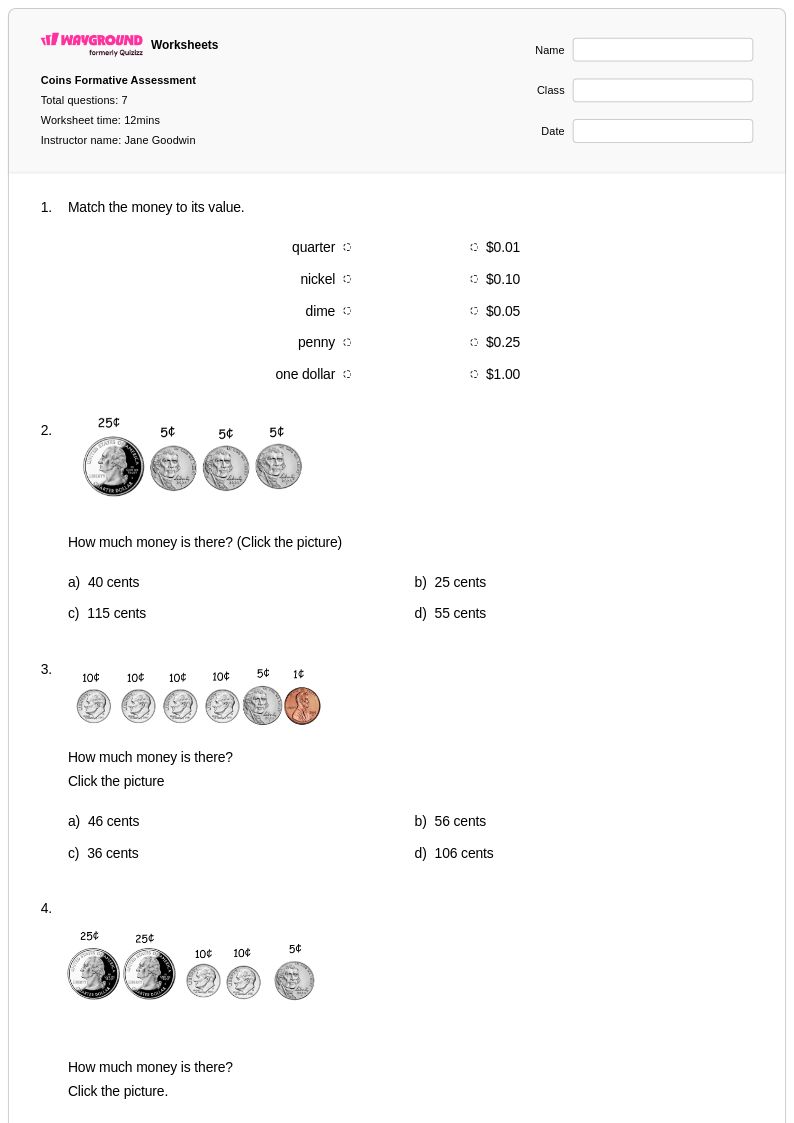
7 Q
2nd
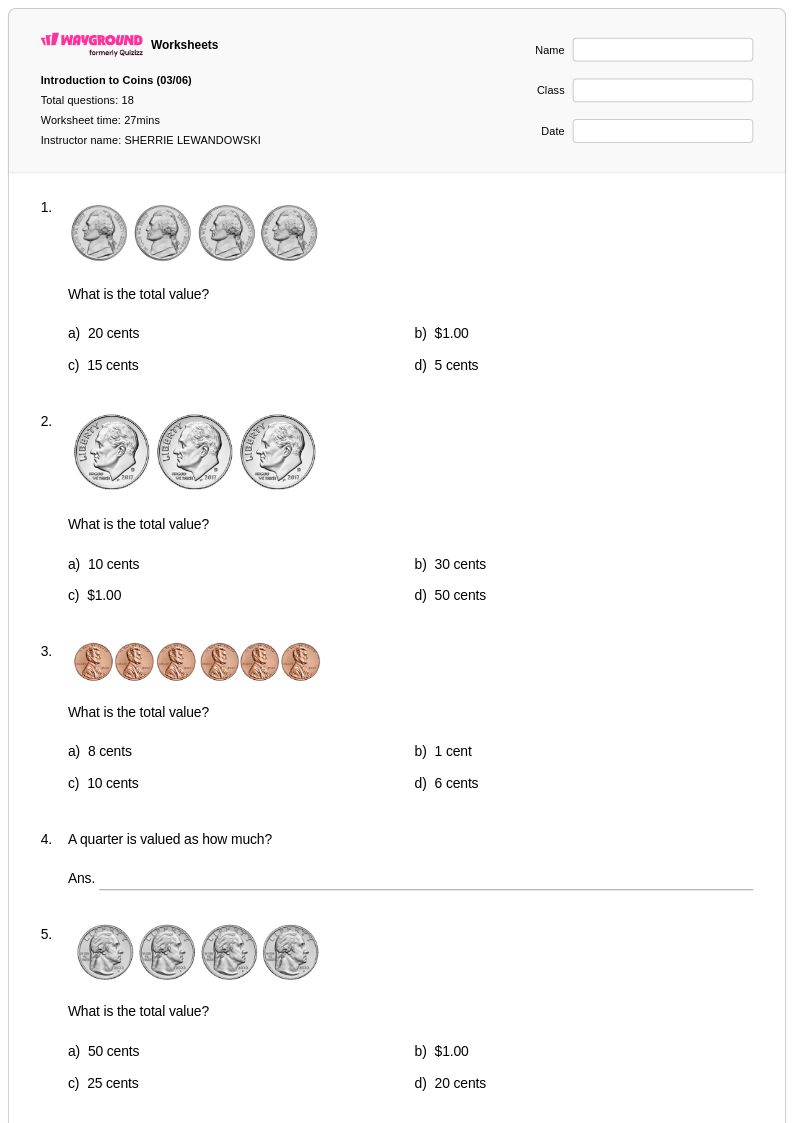
18 Q
6th - 8th
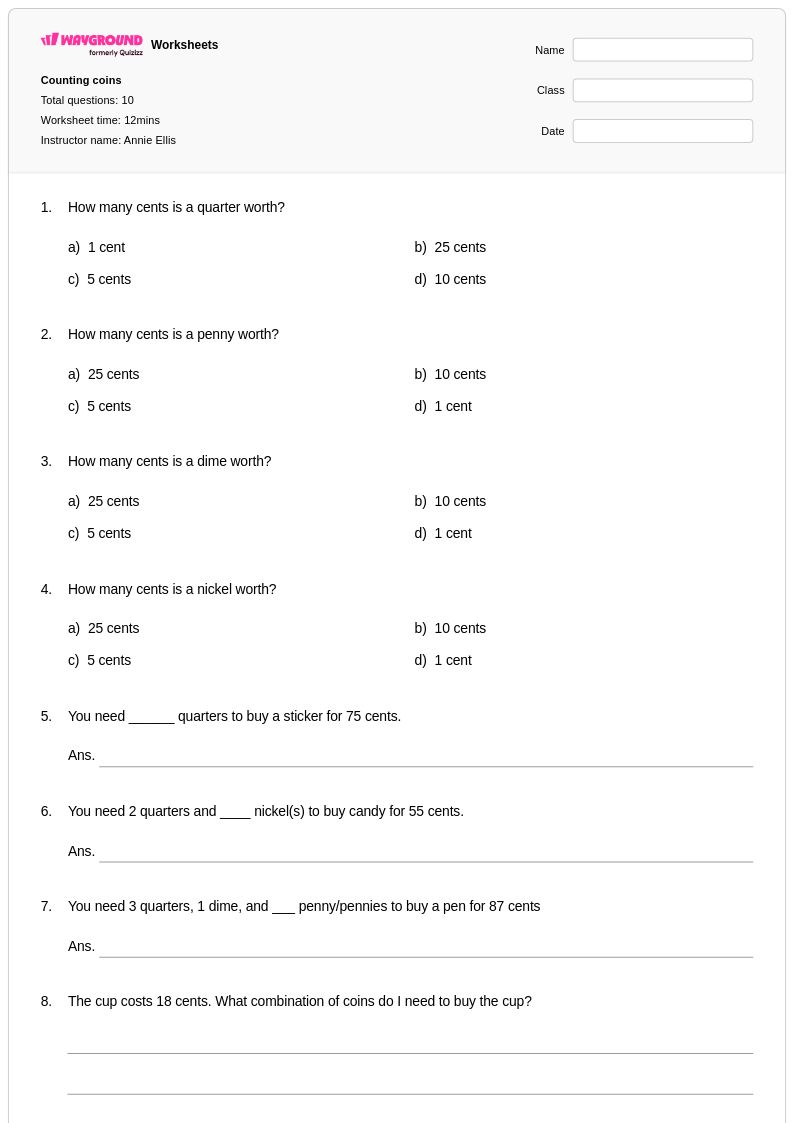
10 Q
KG - 3rd
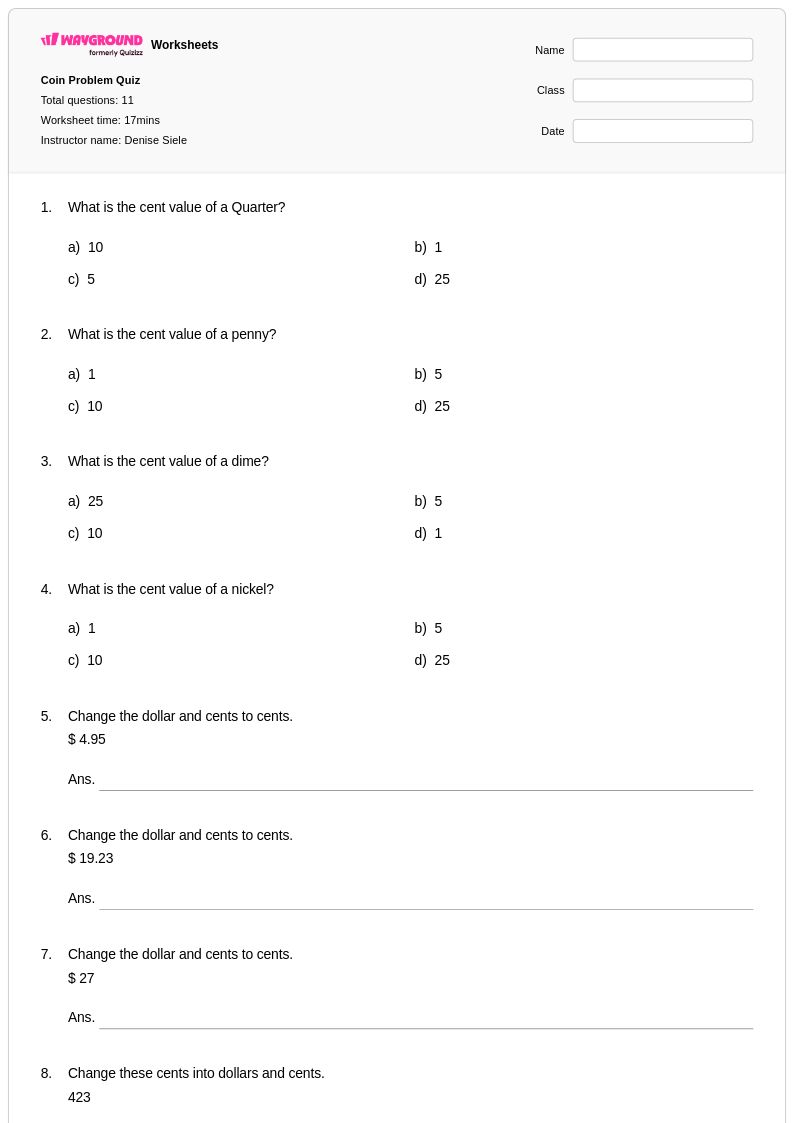
11 Q
10th
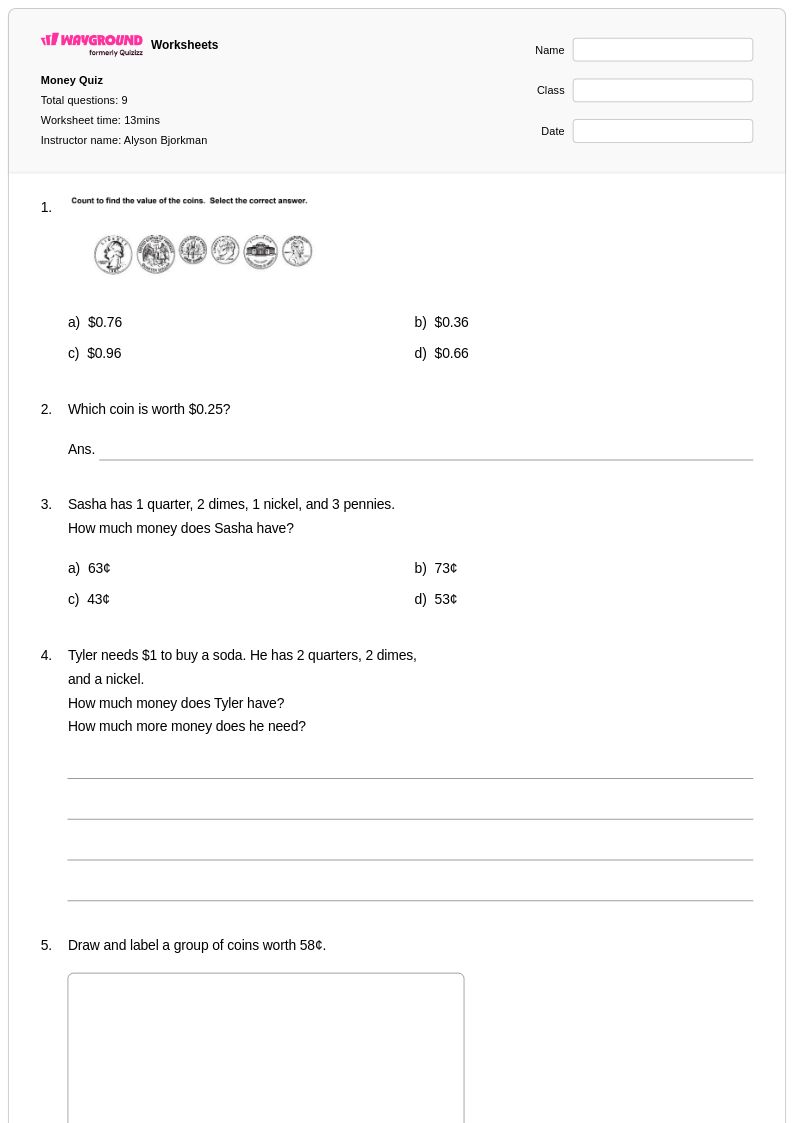
9 Q
2nd
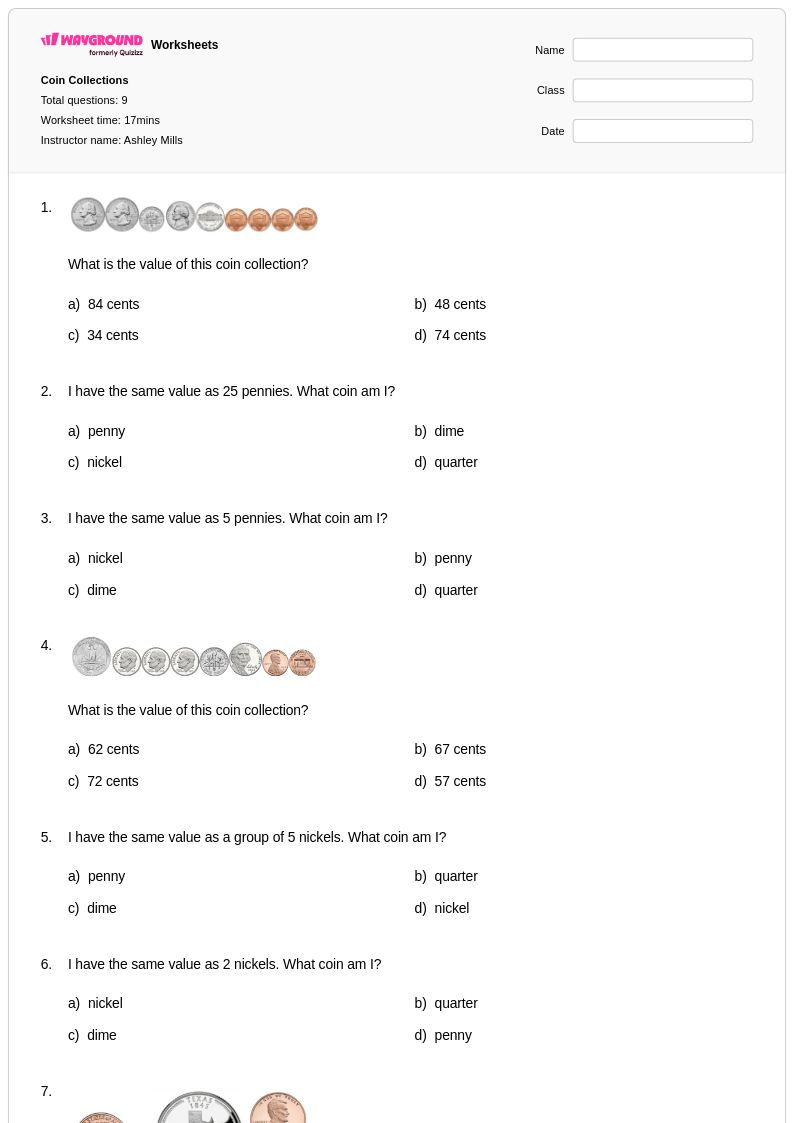
9 Q
2nd
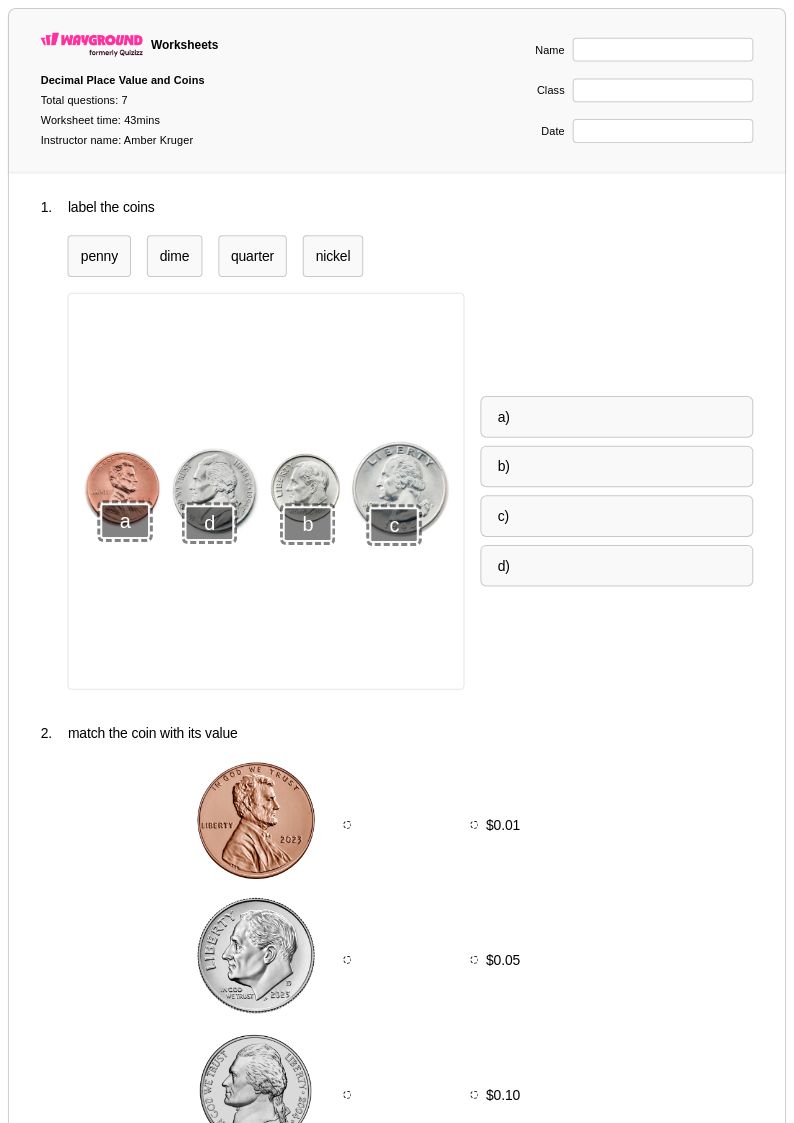
7 Q
4th
15 Q
1st - 2nd
14 Q
2nd
76 Q
2nd
10 Q
KG
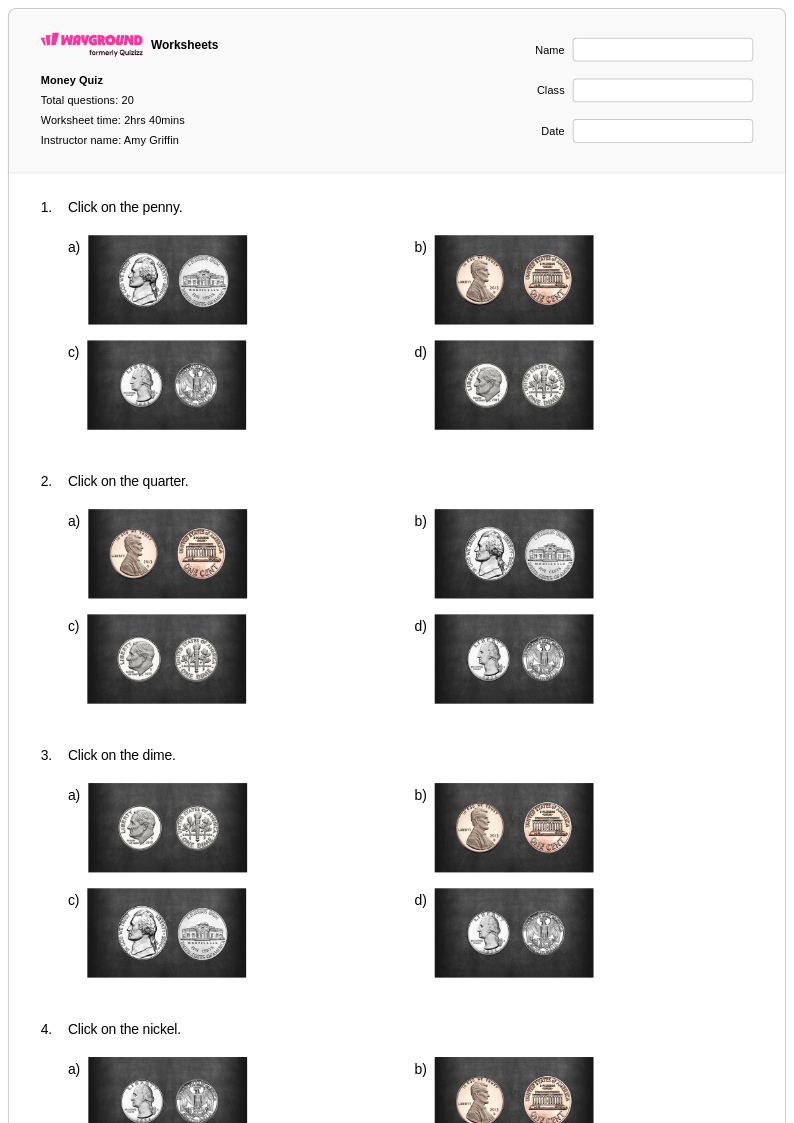
20 Q
2nd
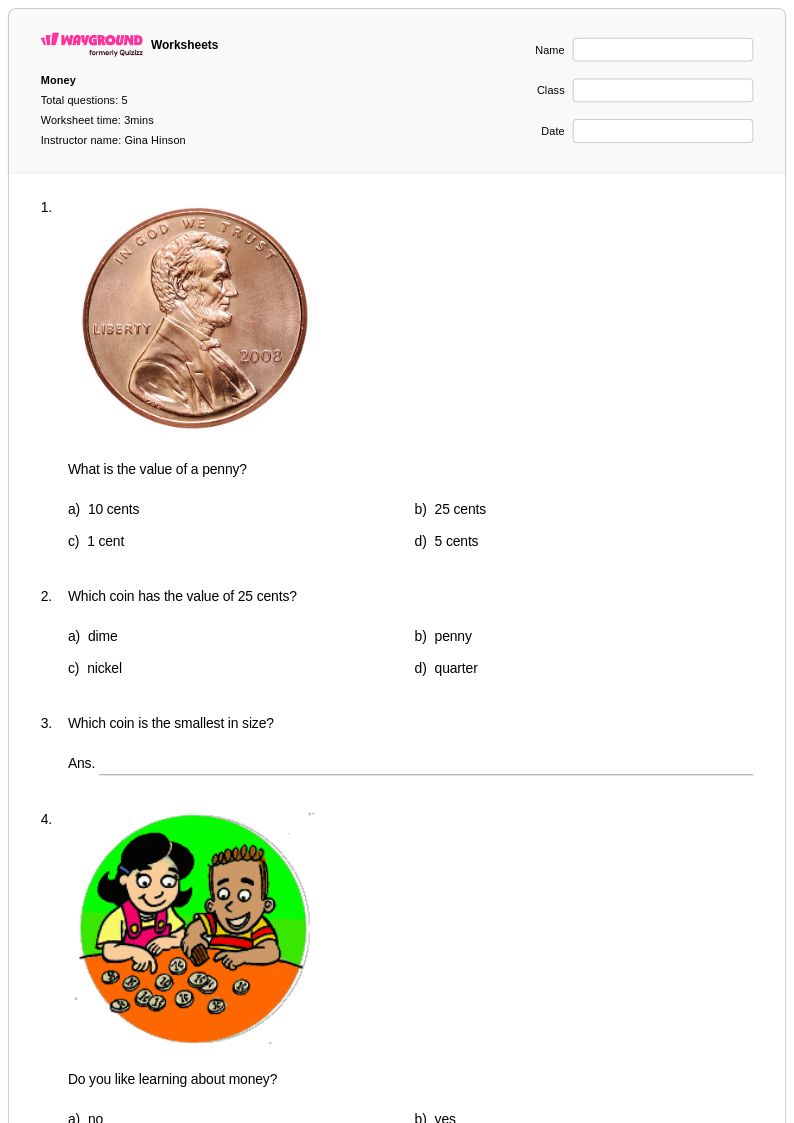
5 Q
1st
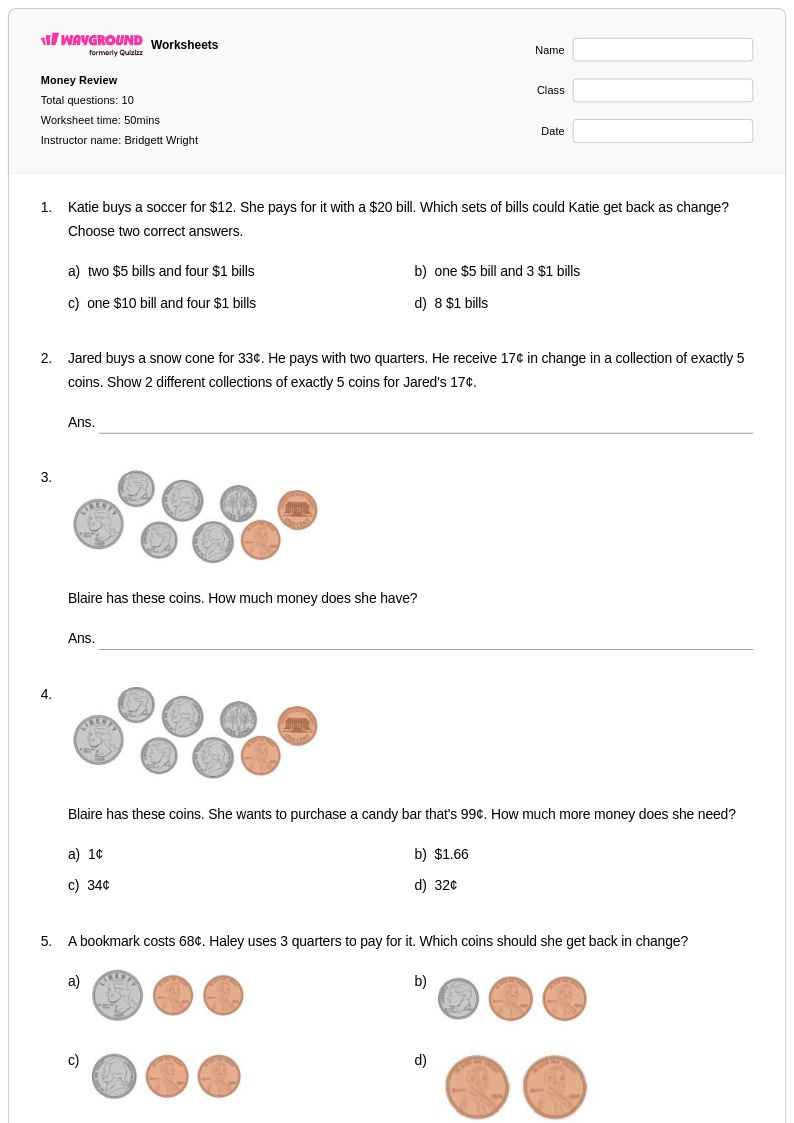
10 Q
2nd
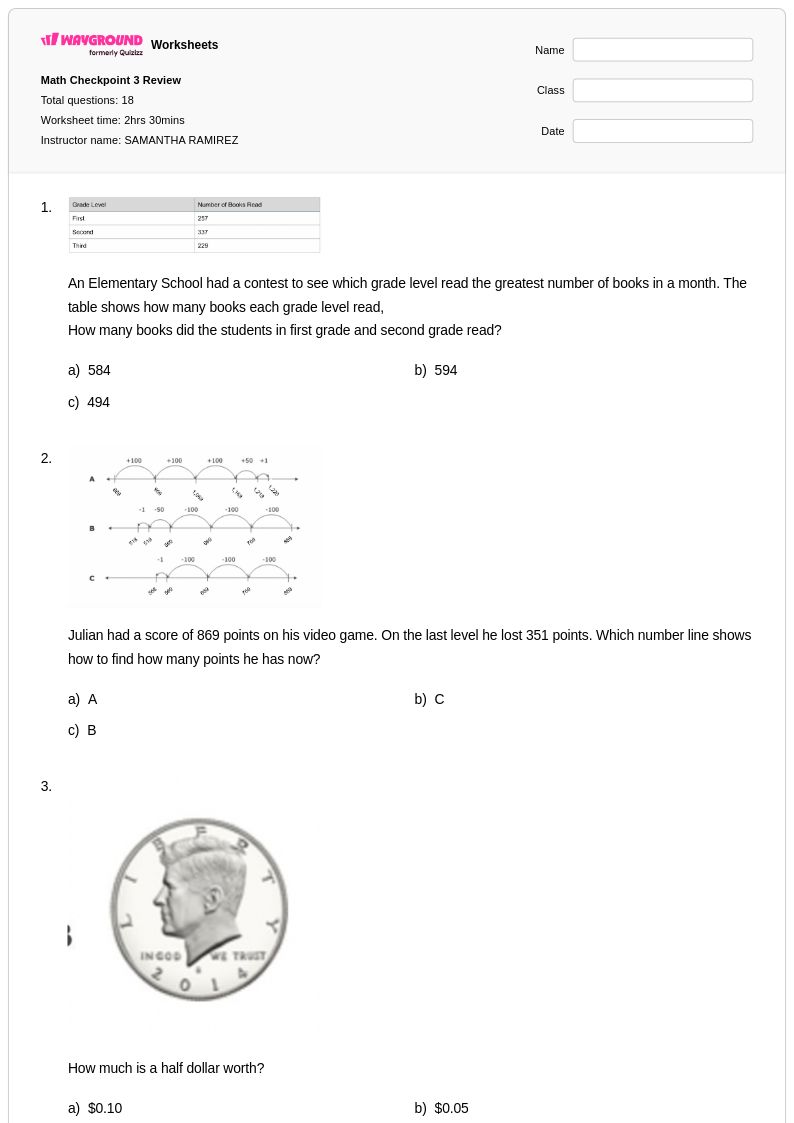
18 Q
2nd
Explore Worksheets by Grade
Explore Worksheets by Subjects
Explore printable Coin Names and Values worksheets
Coin Names and Values worksheets available through Wayground (formerly Quizizz) provide essential foundational practice for students learning to identify and understand the monetary value of different coins in the U.S. currency system. These comprehensive worksheets strengthen critical mathematical skills including visual recognition of pennies, nickels, dimes, and quarters, understanding their respective values, and making connections between coin names and their numerical worth. Students engage with carefully structured practice problems that progress from basic coin identification to more complex value comparisons, building confidence in handling real-world money concepts. Each worksheet comes with a complete answer key and is available as a free printable pdf, making it easy for educators to incorporate immediate feedback and assessment into their mathematics instruction.
Wayground (formerly Quizizz) supports teachers with an extensive collection of coin names and values worksheets created by millions of educators worldwide, ensuring diverse approaches to this fundamental mathematics concept. The platform's robust search and filtering capabilities allow teachers to quickly locate worksheets that align with specific curriculum standards and match their students' varying skill levels. Advanced differentiation tools enable educators to customize content for remediation or enrichment purposes, while the flexible format options include both printable pdf versions for traditional classroom use and digital formats for interactive learning experiences. These comprehensive resources streamline lesson planning by providing ready-to-use materials that support systematic skill practice, helping teachers effectively address individual student needs while building essential money math competencies across diverse learning environments.
FAQs
How do I teach students coin names and values?
What exercises help students practice coin names and values?
What mistakes do students make when identifying coin values?
How can I use a coin names and values worksheet from Wayground?
How does coin instruction progress under Common Core math?
How can I differentiate coin names and values practice?