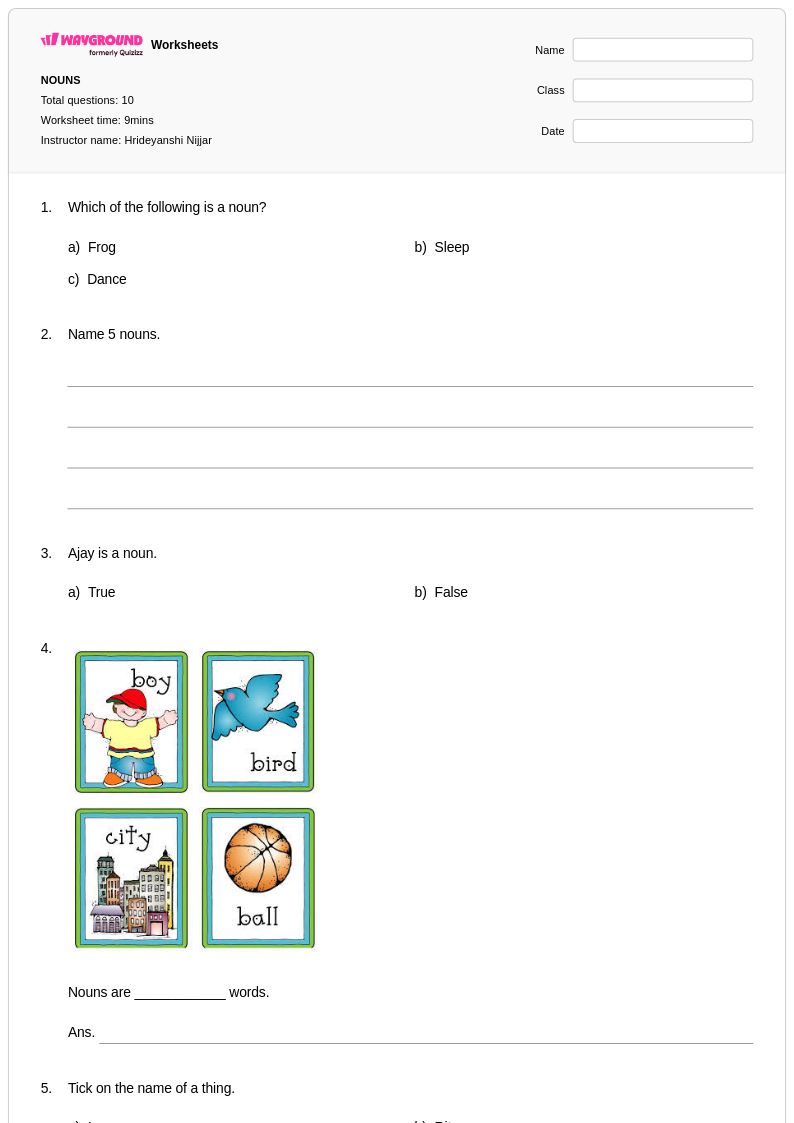
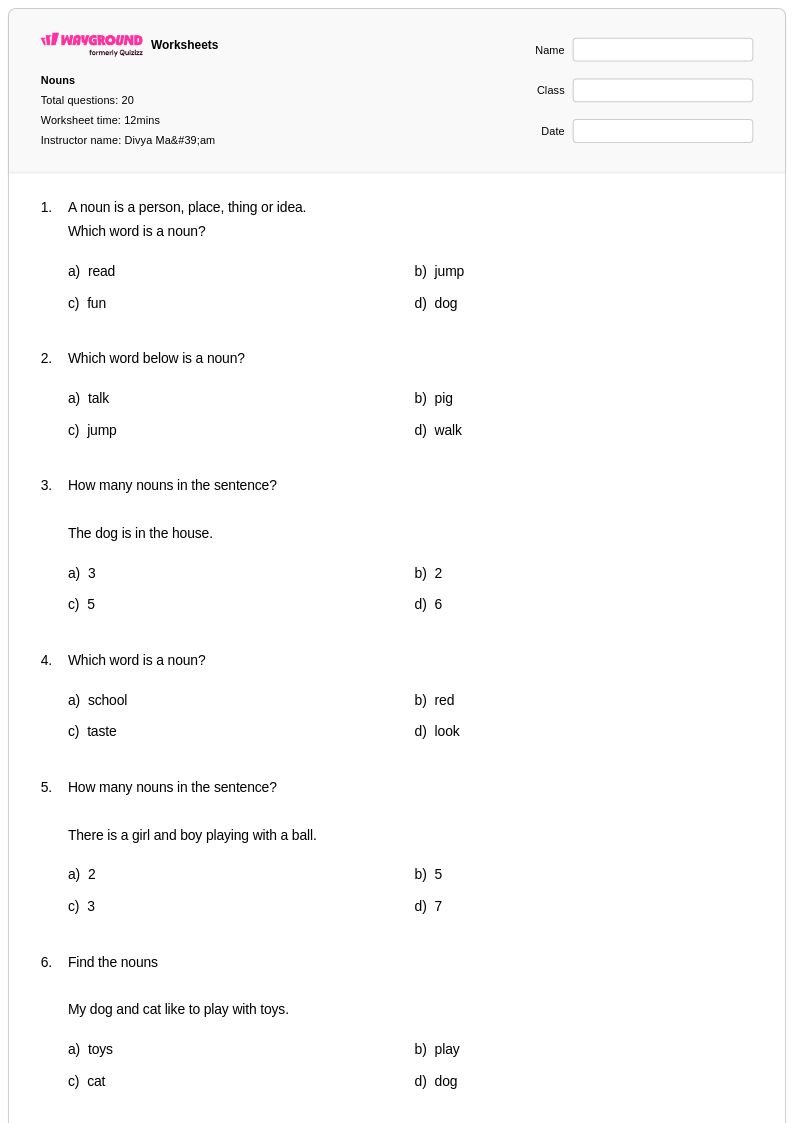
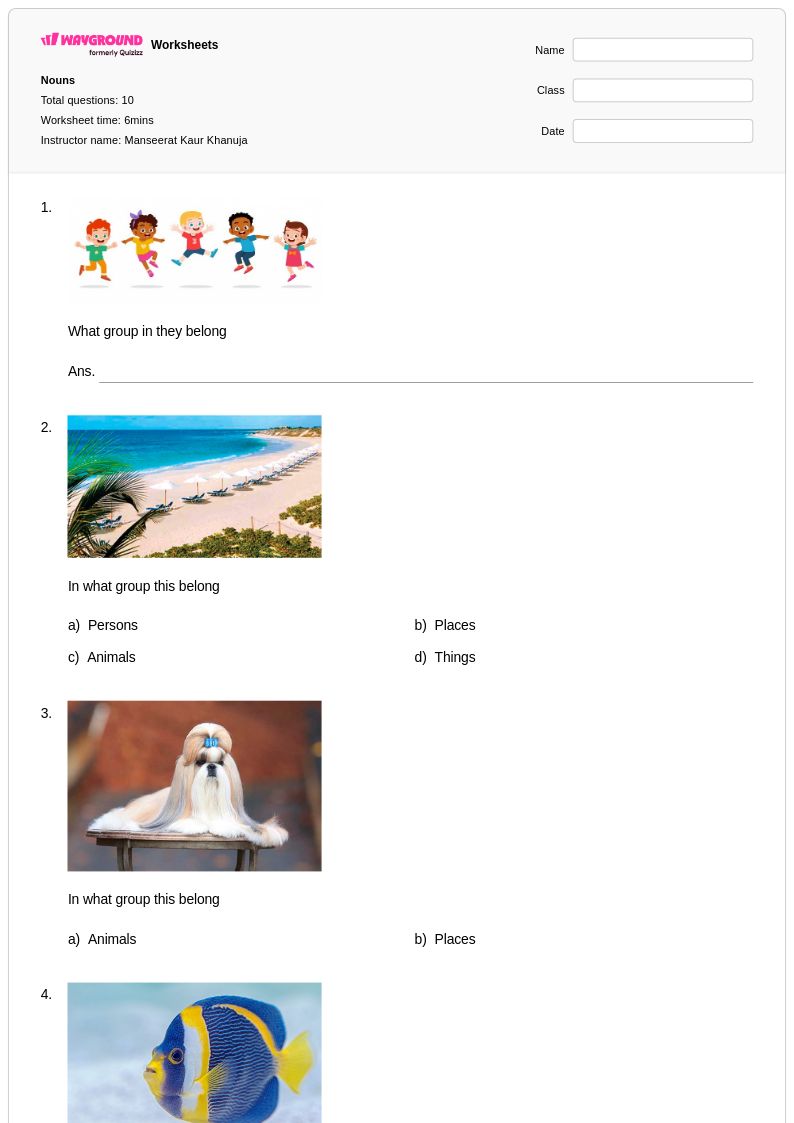
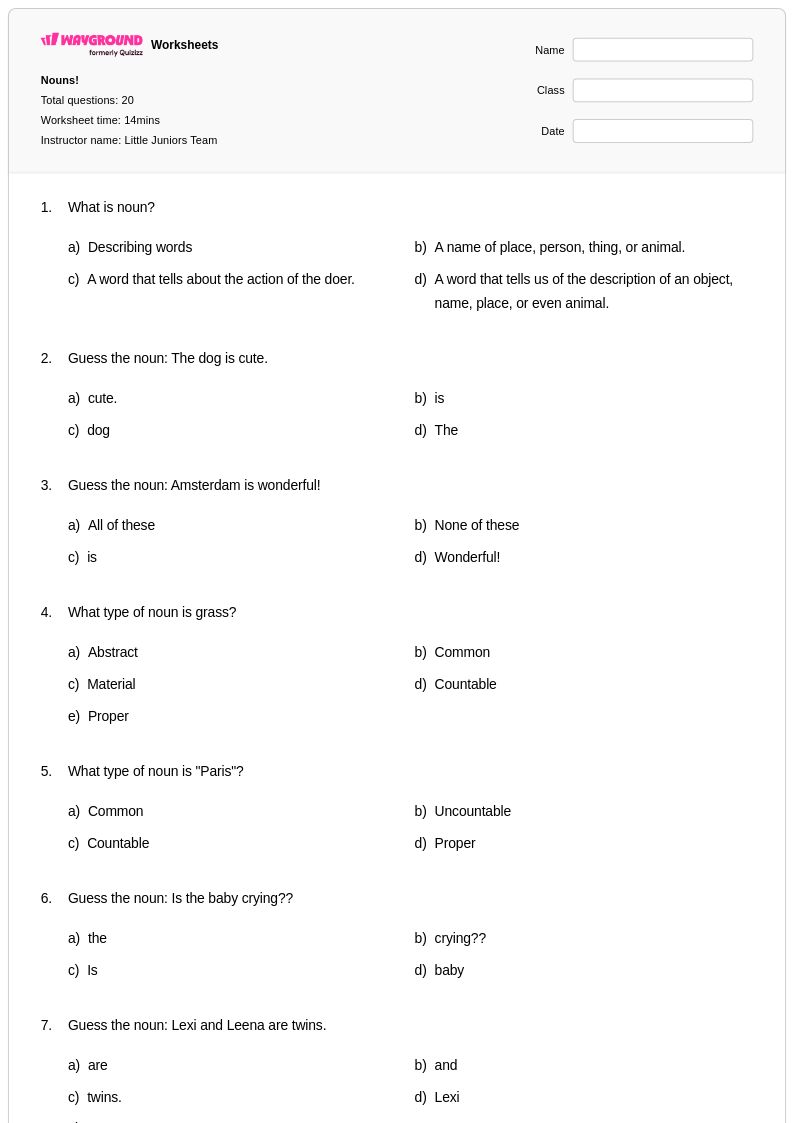
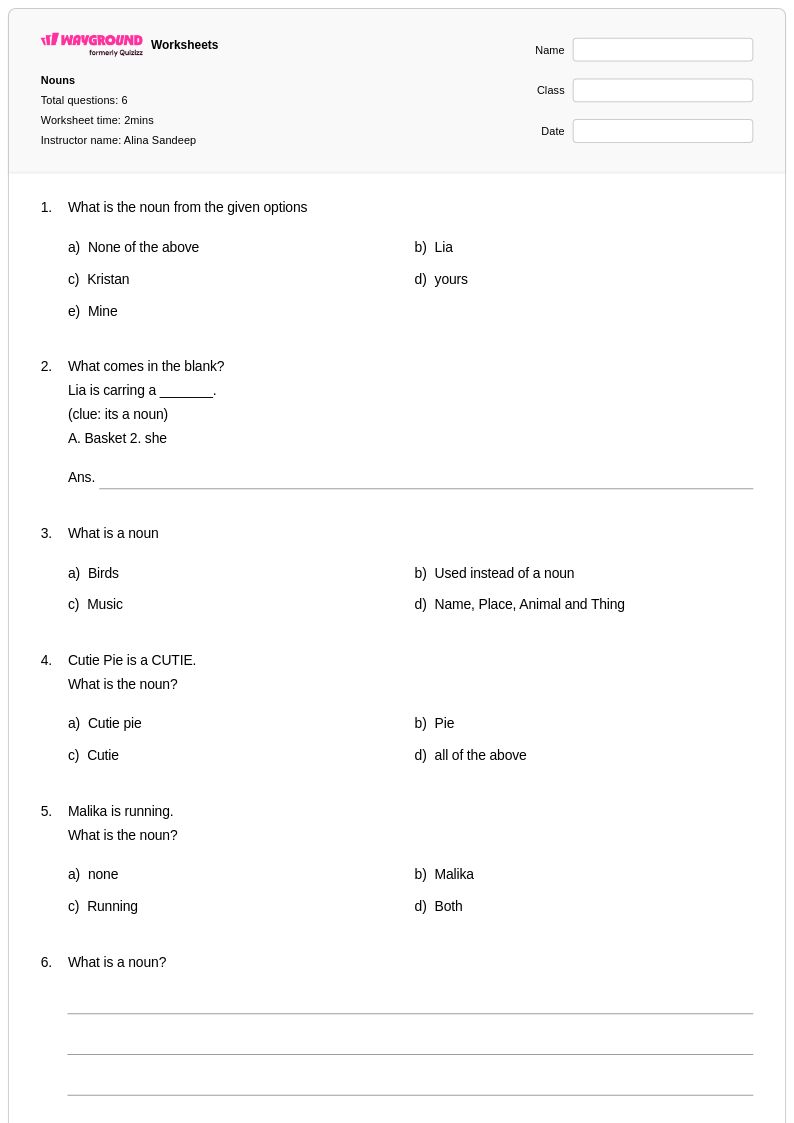
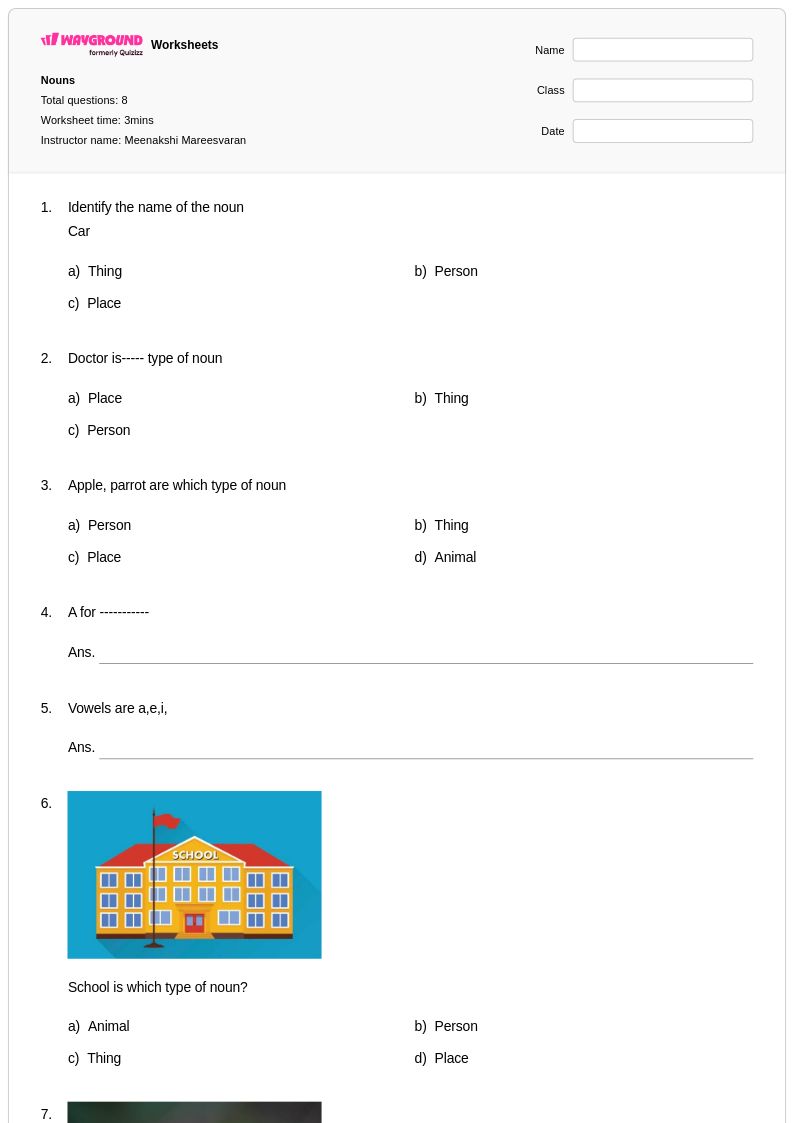
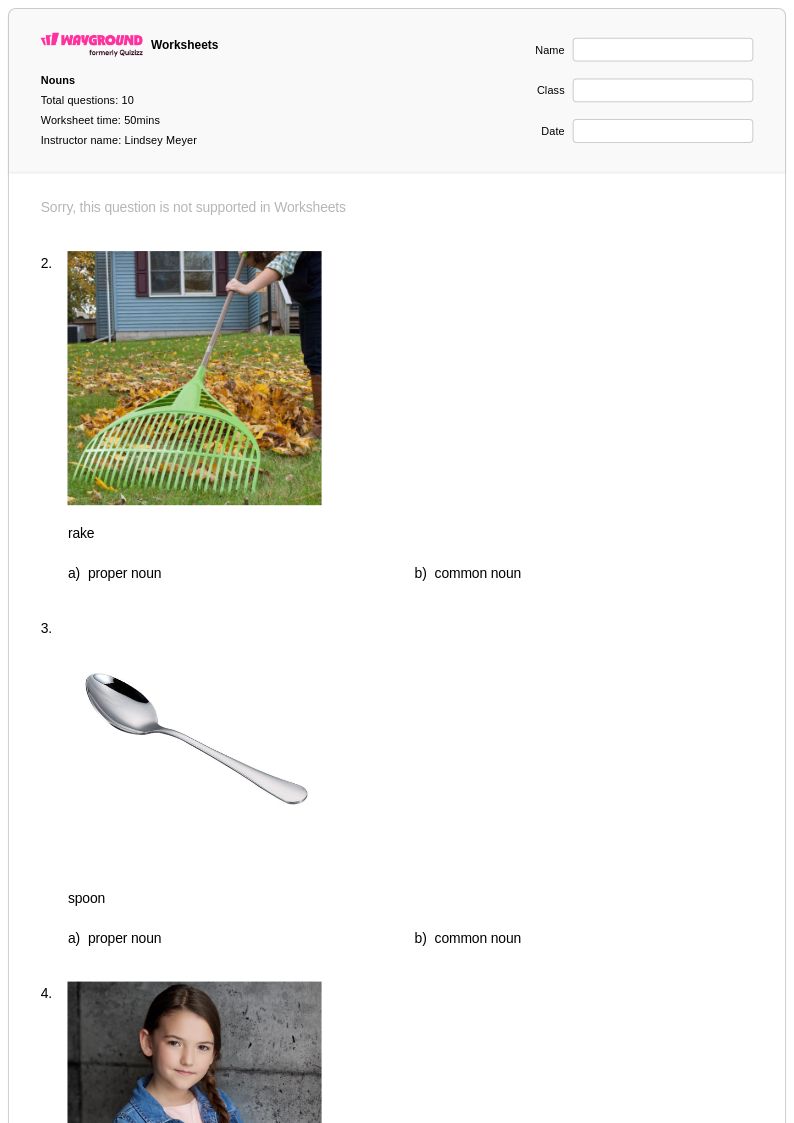
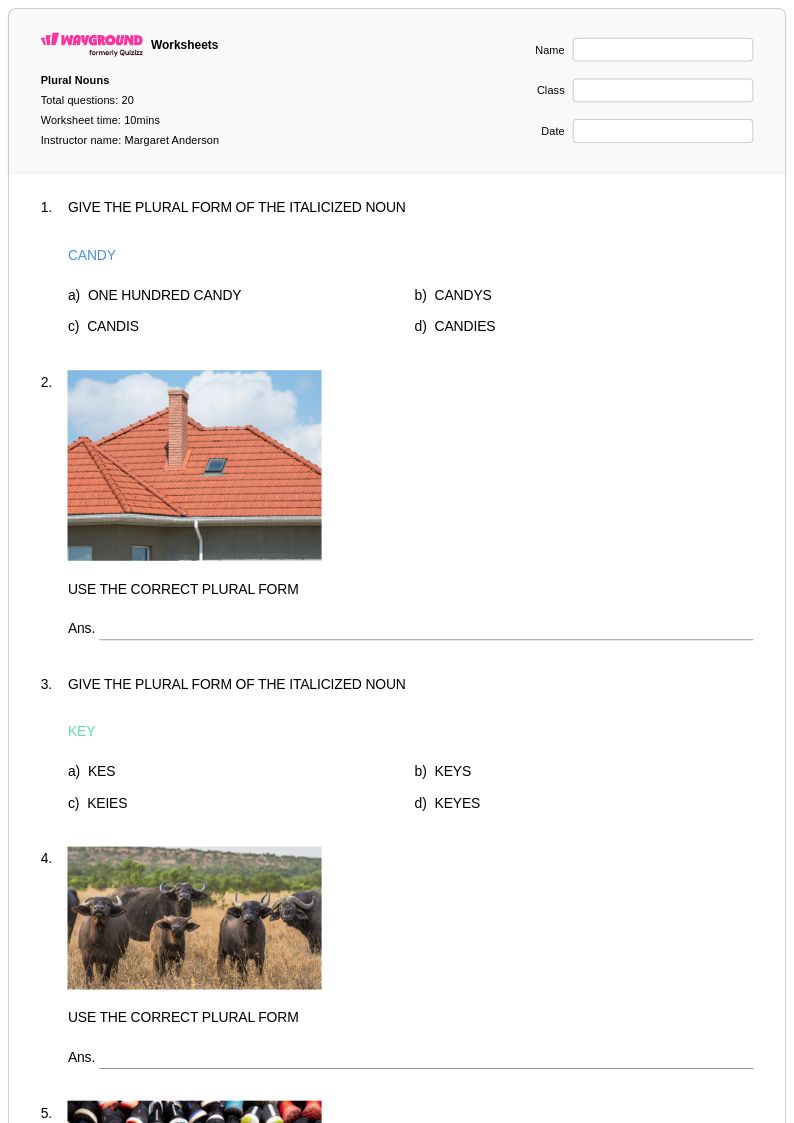
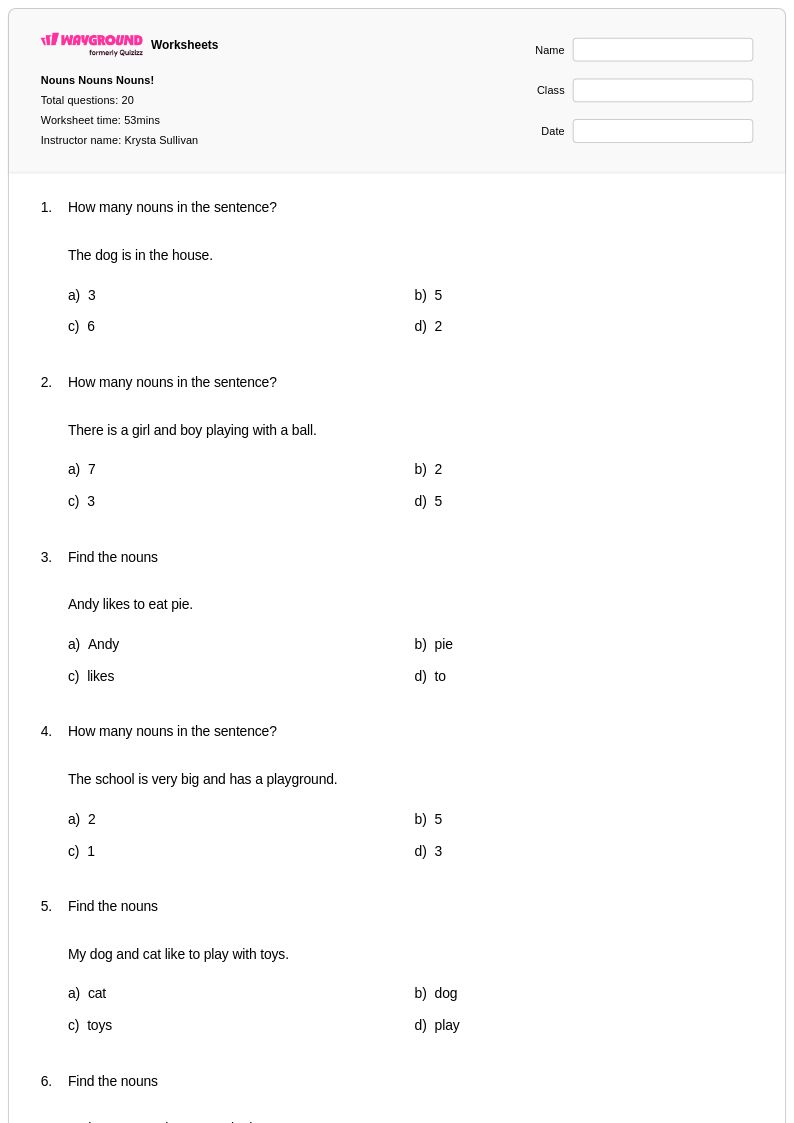
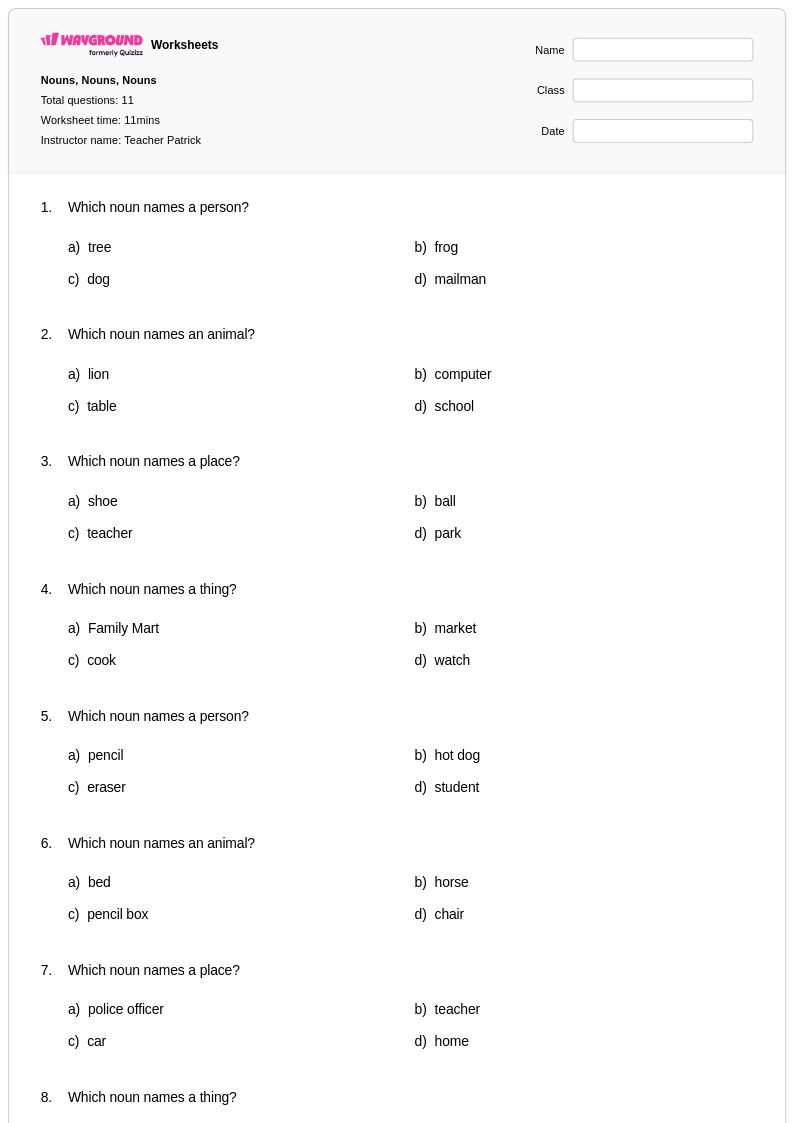
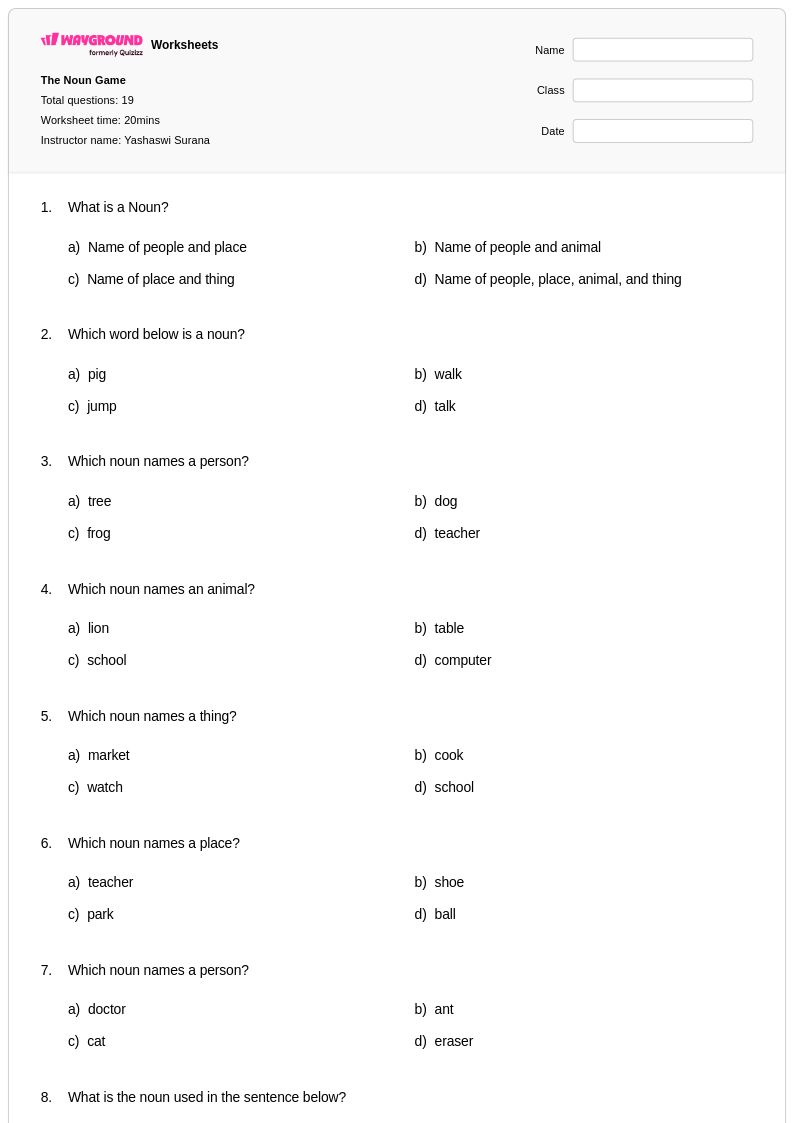
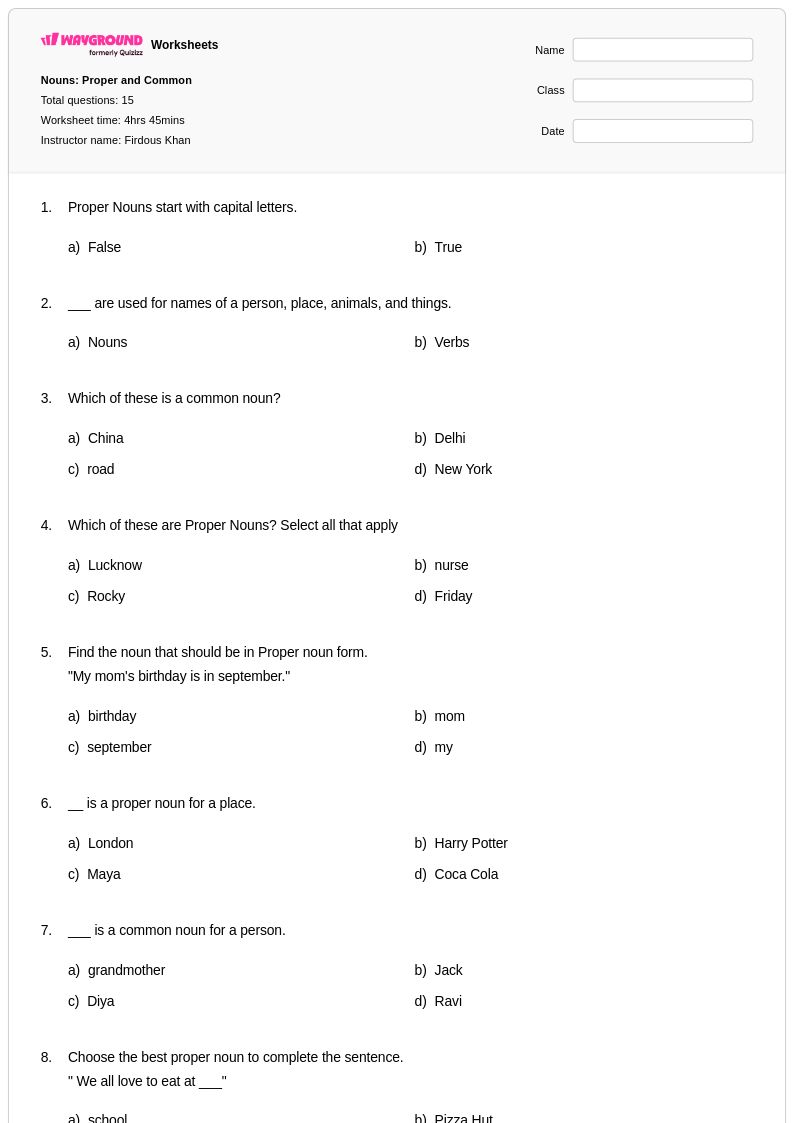
Wayground's free Class 1 nouns worksheets and printables help young learners identify and practice using people, places, and things through engaging exercises, complete with answer keys and downloadable PDFs.
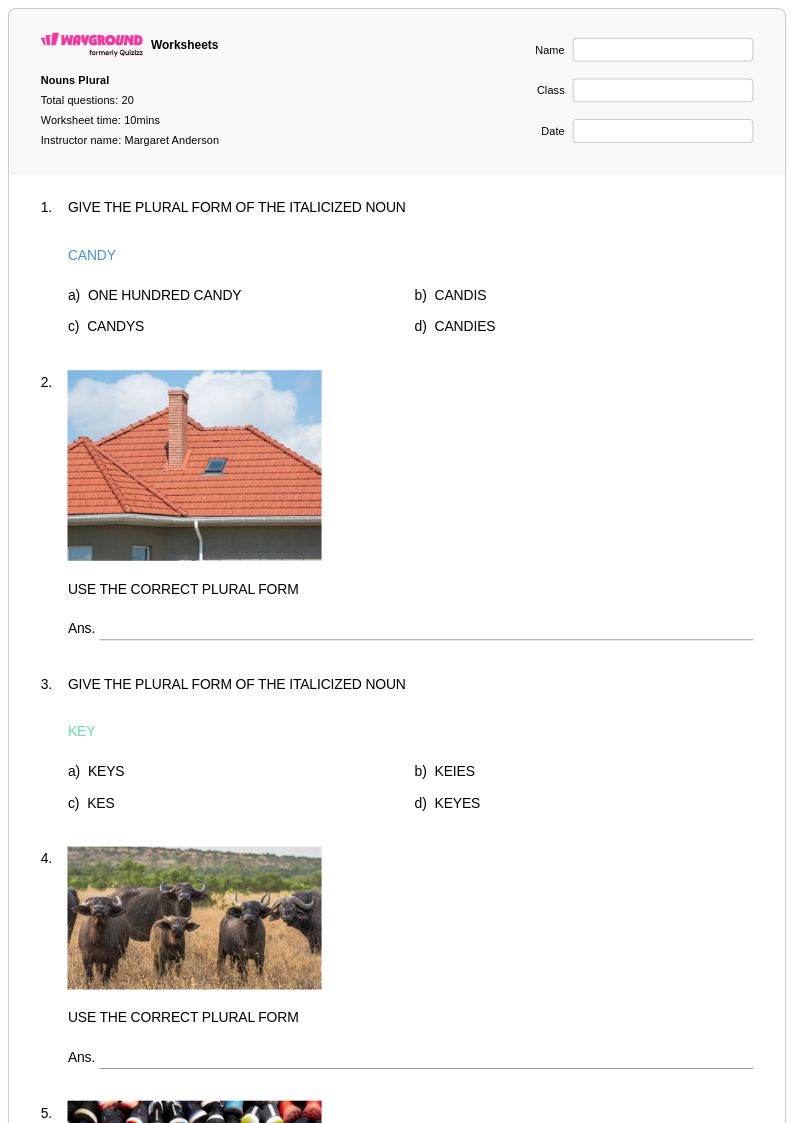
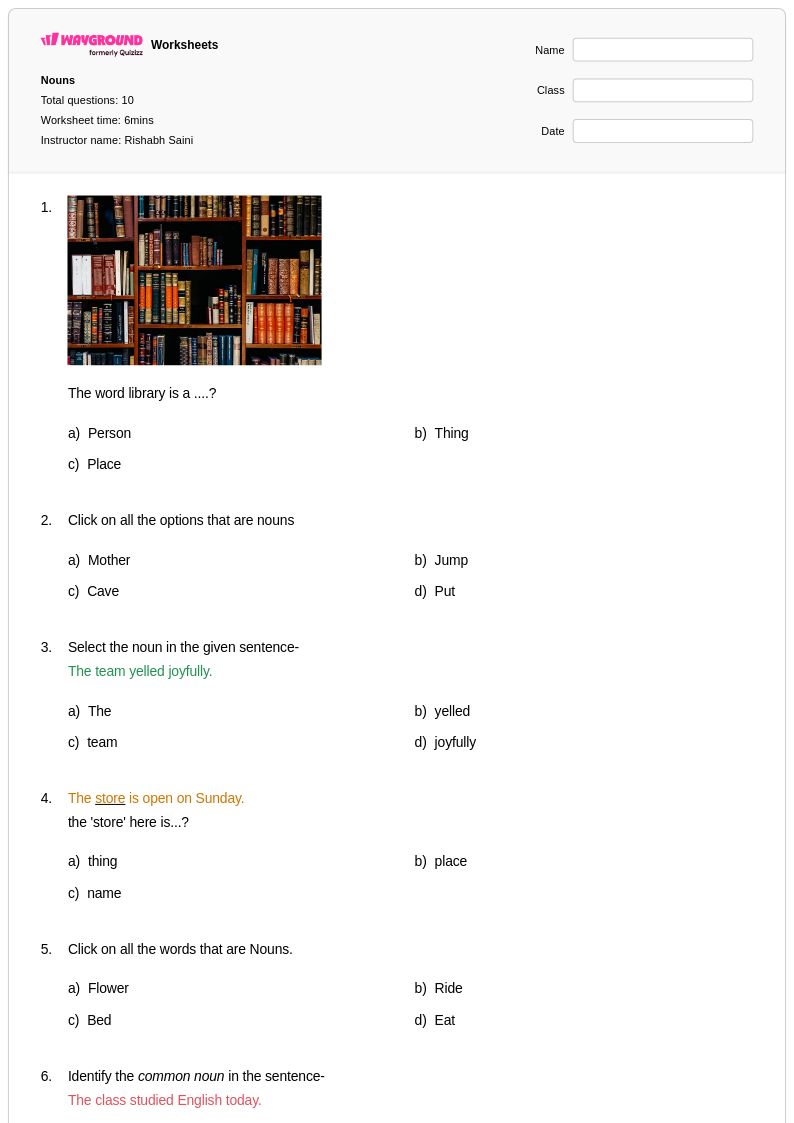
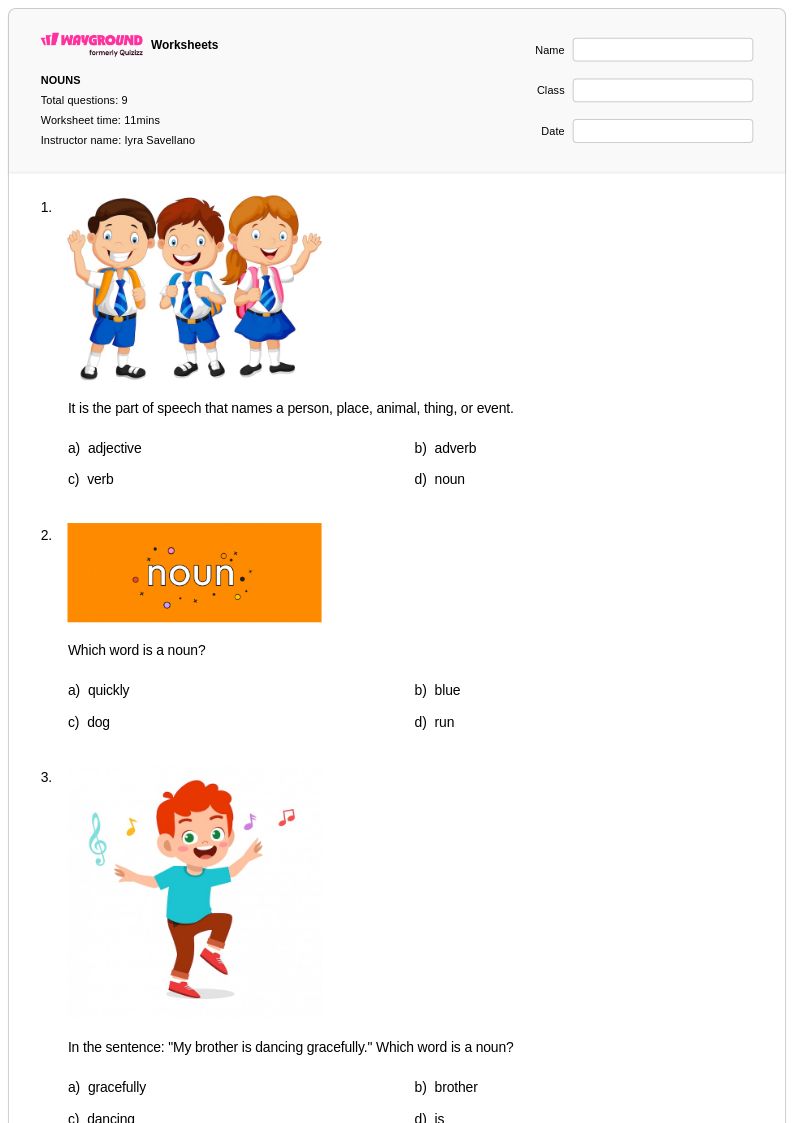
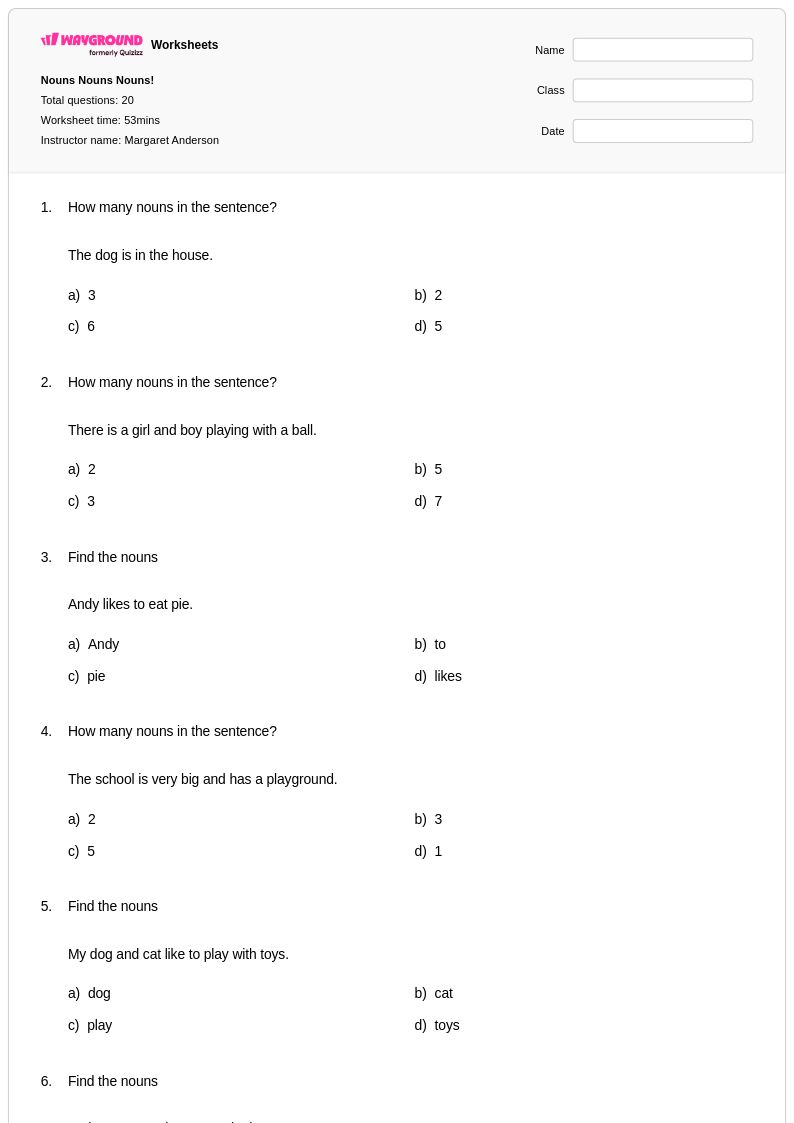
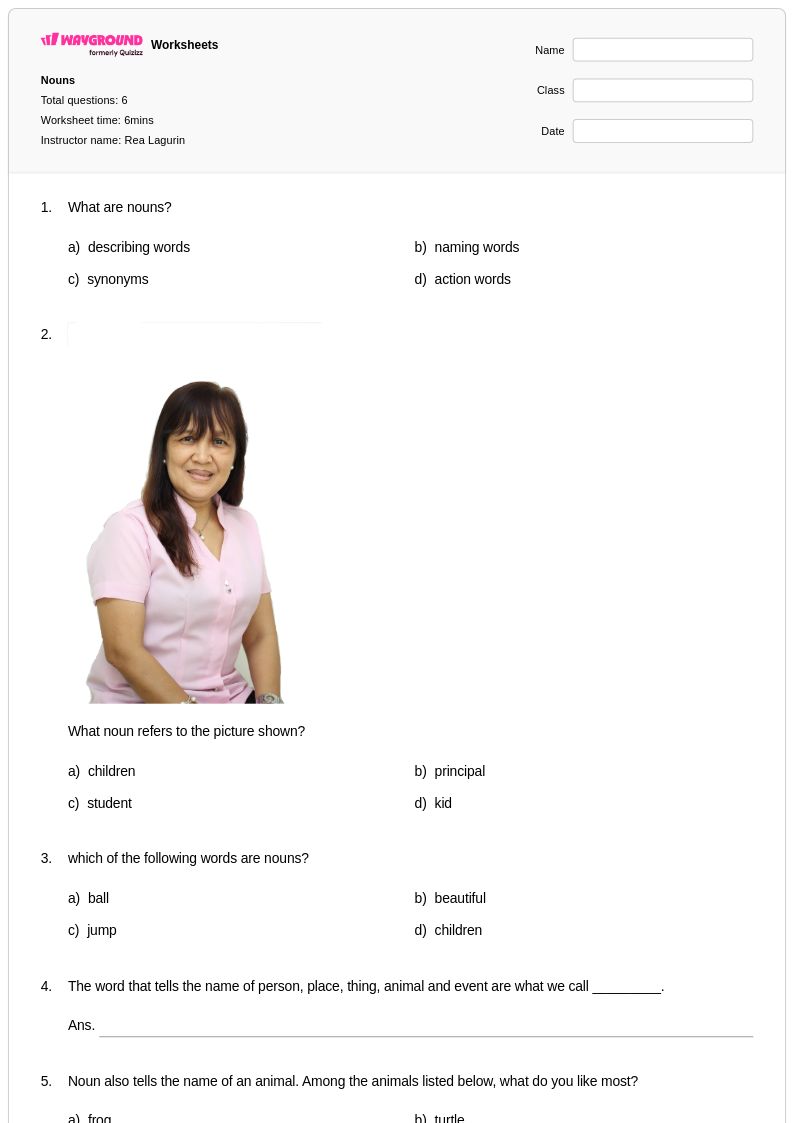
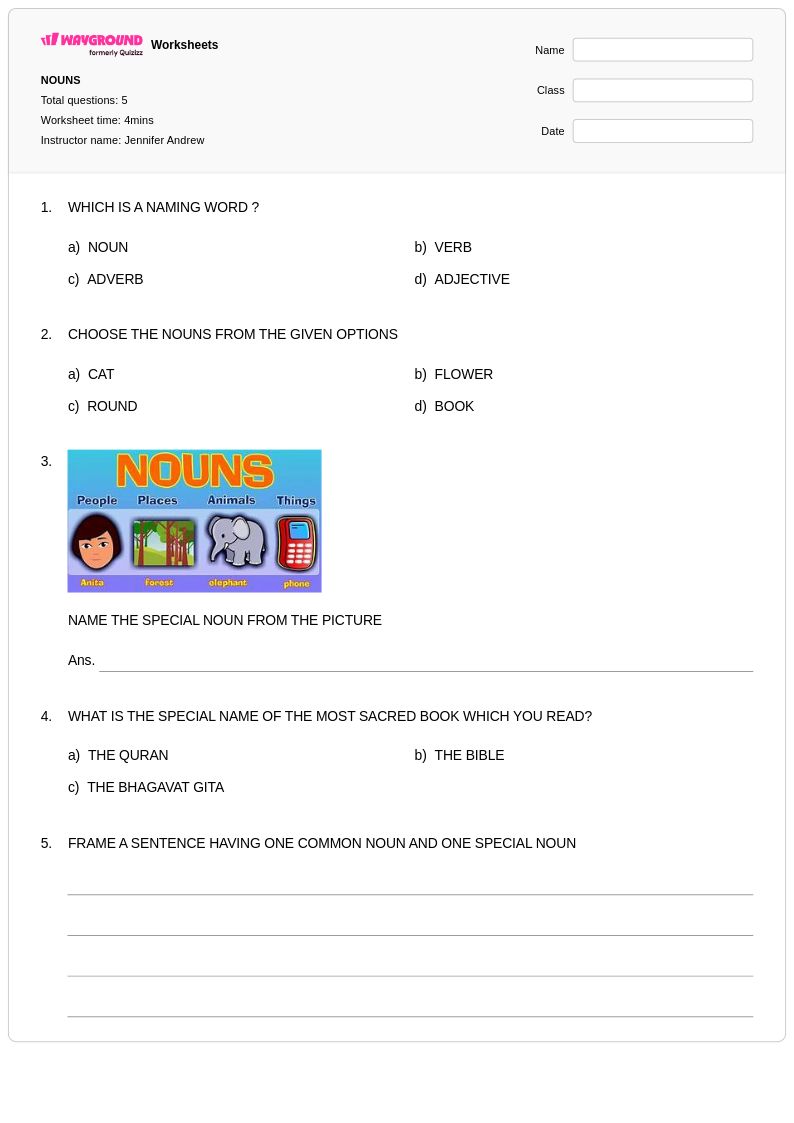
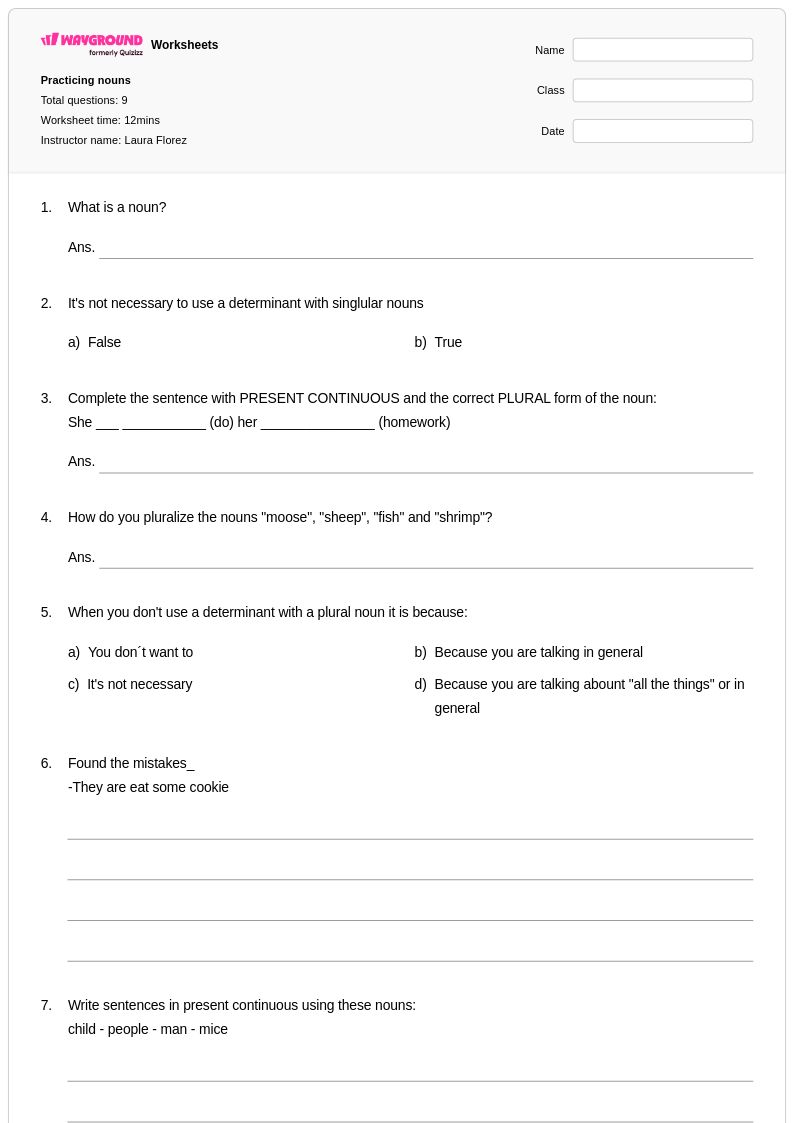
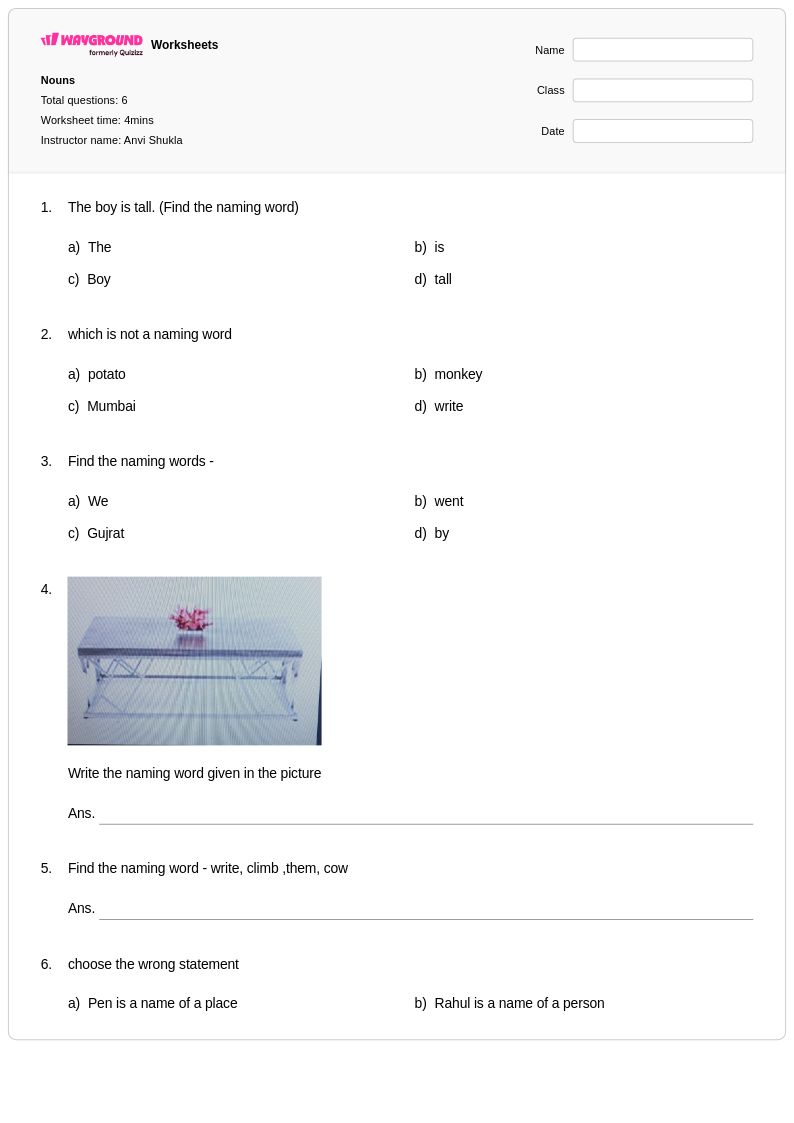
Nouns worksheets for Class 1 students available through Wayground (formerly Quizizz) provide essential foundational practice in identifying and understanding the building blocks of language. These comprehensive printables focus on helping young learners recognize people, places, things, and animals as distinct categories of nouns through engaging exercises and visual activities. Each worksheet collection includes structured practice problems that guide students through progressive skill development, from basic noun identification to categorizing different types of nouns in simple sentences. The materials come complete with answer keys and are available as free pdf downloads, making them accessible resources for both classroom instruction and home practice. These carefully designed worksheets strengthen students' ability to distinguish nouns from other words while building vocabulary and reading comprehension skills essential for early literacy development.
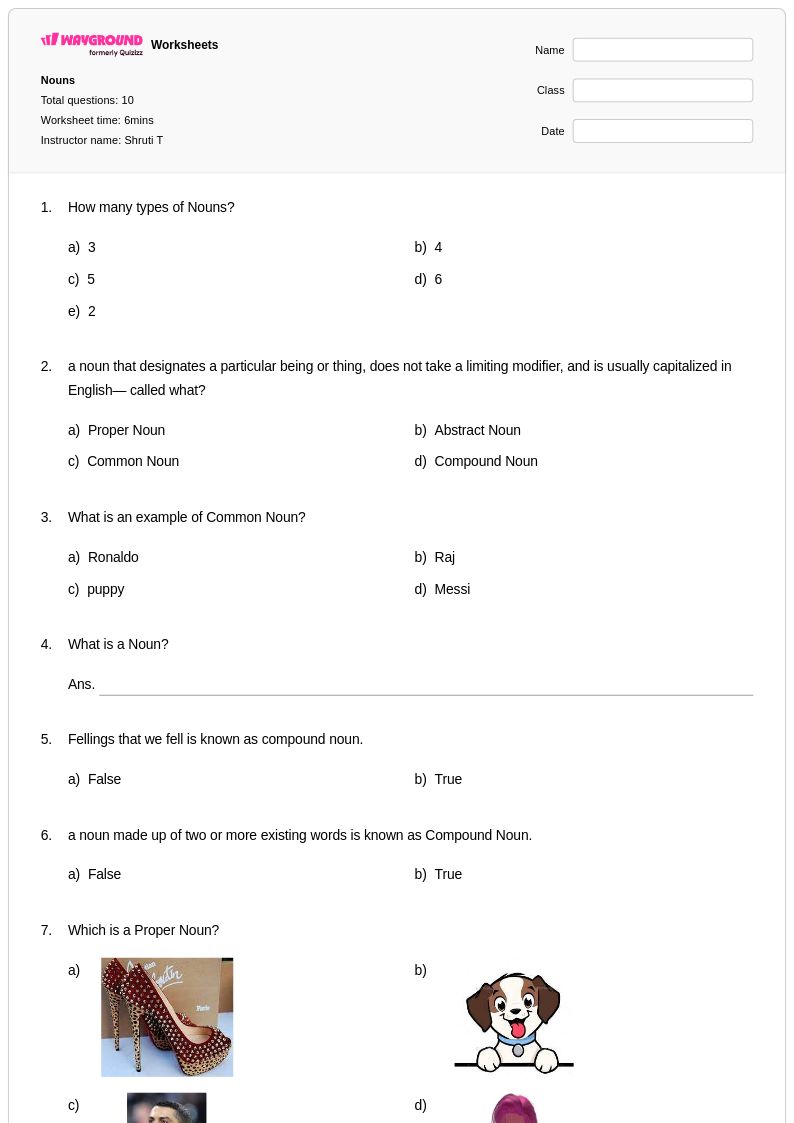
Wayground (formerly Quizizz) supports teachers with an extensive library of millions of teacher-created noun worksheets specifically designed for Class 1 instruction. The platform's robust search and filtering capabilities allow educators to quickly locate materials that align with state standards and match their specific curriculum requirements. Teachers can easily differentiate instruction by selecting from worksheets that range from basic picture-based noun identification to more advanced exercises involving common and proper nouns. The flexible customization tools enable educators to modify existing worksheets or combine multiple resources to create targeted practice sets for individual student needs. Available in both printable pdf format and digital versions, these noun worksheets facilitate seamless lesson planning, provide effective remediation opportunities for struggling learners, offer enrichment activities for advanced students, and deliver consistent skill practice that reinforces classroom learning objectives.
FAQs
How do I teach the difference between common and proper nouns?
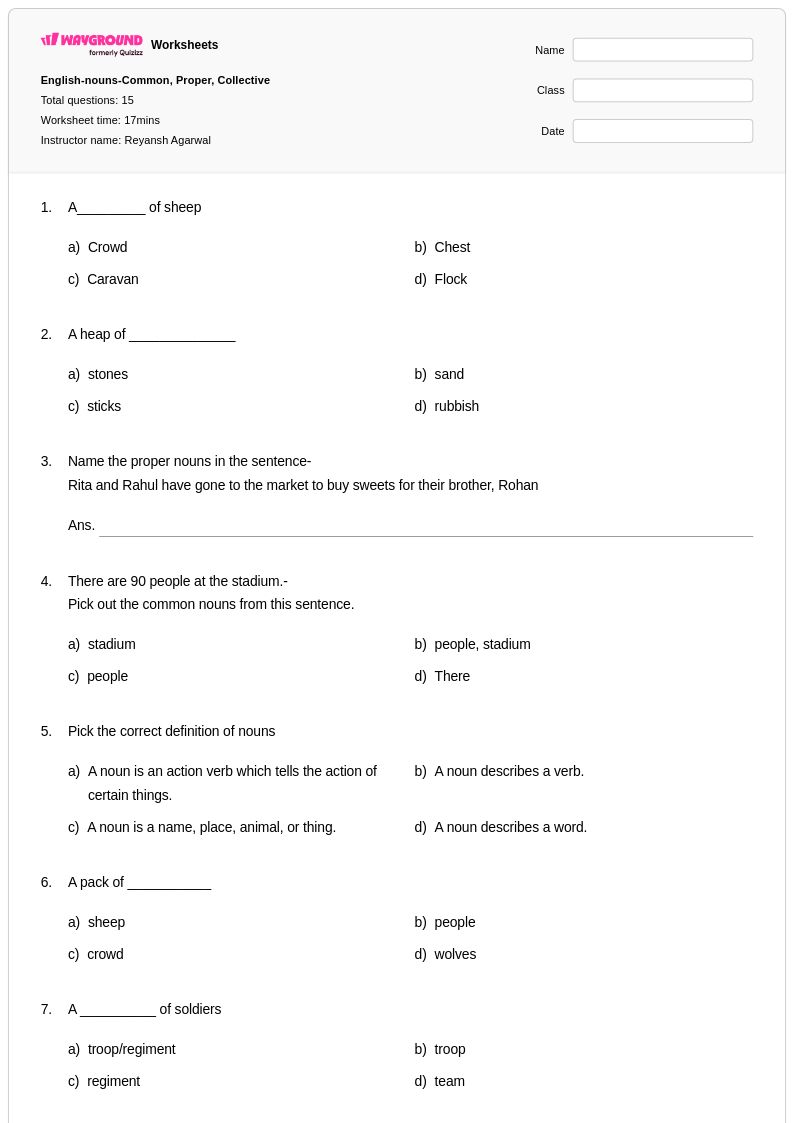
Start by establishing that common nouns name general people, places, or things, while proper nouns name specific ones and always begin with a capital letter. A reliable classroom strategy is to give students a common noun and ask them to generate a proper noun counterpart — for example, 'city' becomes 'Chicago' or 'teacher' becomes 'Ms. Rivera.' This pairing exercise builds the conceptual distinction quickly and gives students immediate practice applying capitalization rules in context.
What are effective exercises for practicing singular and plural nouns?
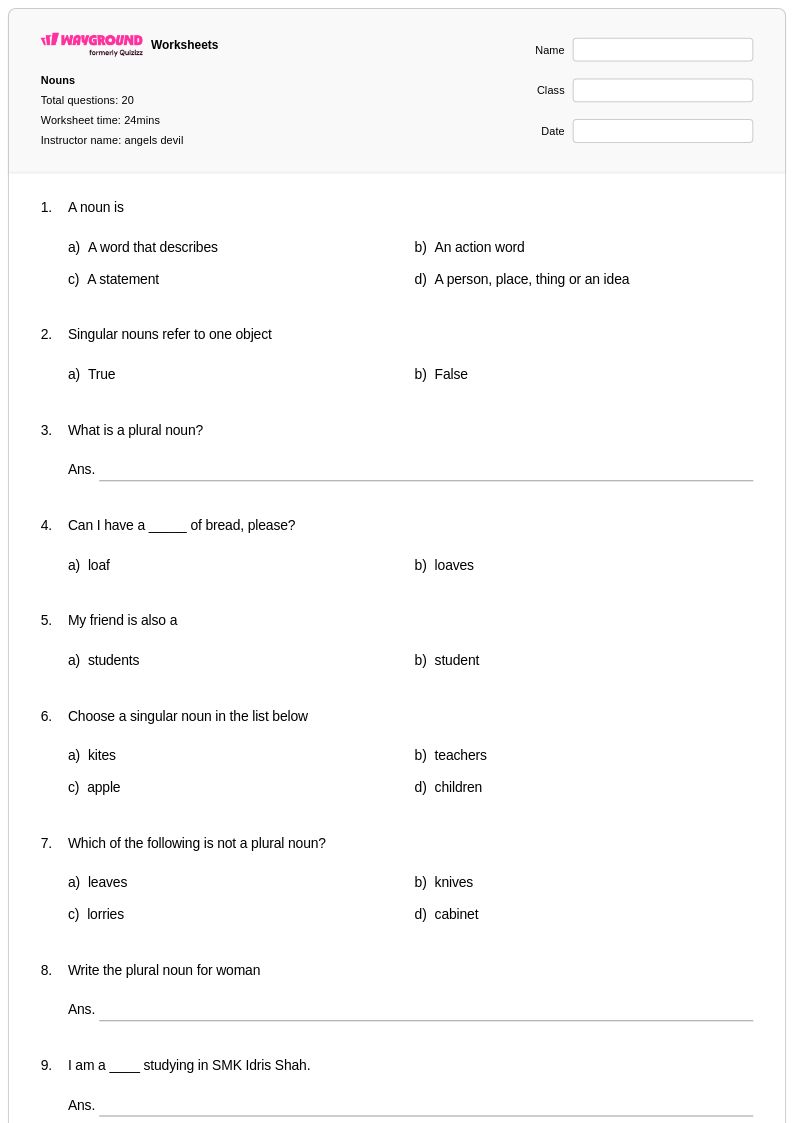
Singular-to-plural conversion exercises are the most direct form of practice, especially when they include irregular plurals like 'child/children' or 'mouse/mice' alongside regular '-s' and '-es' patterns. Sorting activities — where students categorize a list of nouns as singular or plural — build recognition skills before requiring production. Sentence-level tasks that ask students to rewrite sentences by changing a noun's number reinforce how plurality affects agreement with verbs and articles.
What mistakes do students commonly make when identifying abstract nouns?
The most frequent error is conflating abstract nouns with adjectives or verbs — students often misclassify 'freedom' or 'happiness' because they associate those words with descriptions or actions rather than things. Another common mistake is assuming all nouns must be tangible, which causes students to overlook words like 'justice,' 'courage,' or 'knowledge' entirely. Targeted identification exercises that mix concrete and abstract nouns in the same set are the most effective way to address this confusion.
How do I help students who struggle with irregular plural nouns?
Irregular plurals require direct, repeated exposure because they cannot be decoded by applying a rule. Grouping them by pattern — such as vowel-change plurals like 'foot/feet' and 'tooth/teeth,' or Latin-origin plurals like 'cactus/cacti' — gives students a partial structure to lean on rather than pure memorization. Flashcard drills, fill-in-the-blank sentences, and cumulative review exercises that revisit previously learned irregulars alongside new ones are the most effective practice formats.
How can I use noun worksheets to differentiate instruction in my classroom?
Noun worksheets can be layered by task complexity — beginning learners benefit from noun identification in isolated sentences, while more advanced students can work on classifying noun types or converting singular to plural in paragraph-level writing. On Wayground, teachers can apply individual accommodations such as read aloud support, reduced answer choices, and extended time for specific students, ensuring the same worksheet set serves diverse learners without requiring separate materials.
How do Wayground's noun worksheets work in the classroom?
Wayground's noun worksheets are available as printable PDFs for traditional classroom use and in digital formats for technology-integrated learning environments, and teachers can also host them as a live quiz directly on Wayground. Each worksheet includes an answer key, enabling efficient grading and immediate student feedback. The platform's search and filtering tools allow teachers to locate worksheets by noun subtype — such as proper nouns, plural nouns, or abstract nouns — so instruction stays targeted to the specific skill being taught.