Free Printable Proper Nouns Worksheets for Class 1
Explore Wayground's collection of free Class 1 proper nouns worksheets and printables with answer keys to help young learners identify and practice using specific names of people, places, and things through engaging activities and practice problems.
Explore printable Proper Nouns worksheets for Class 1
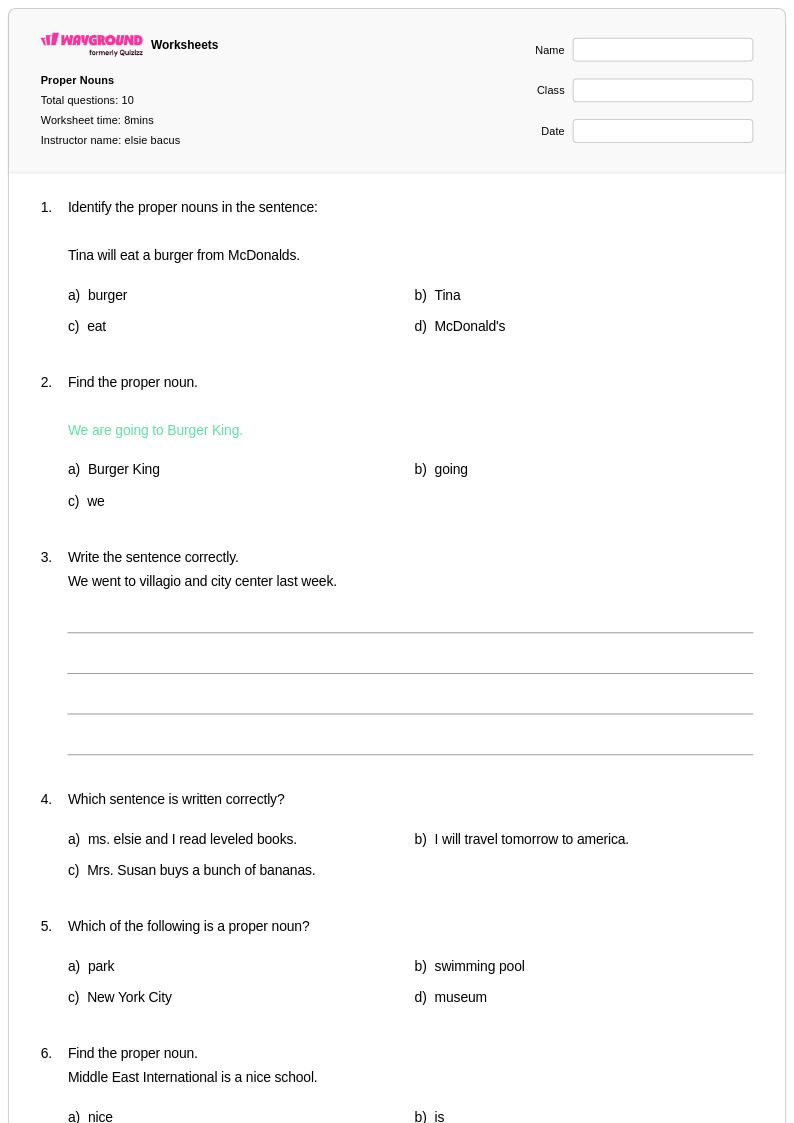
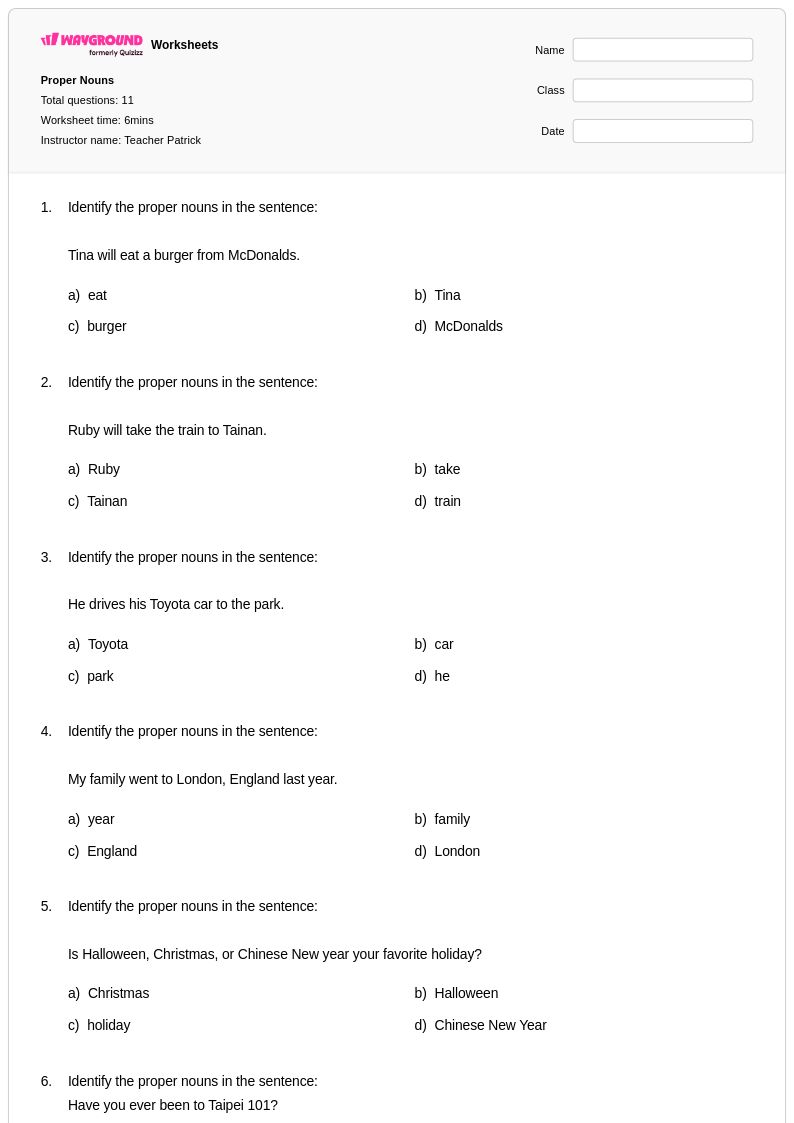
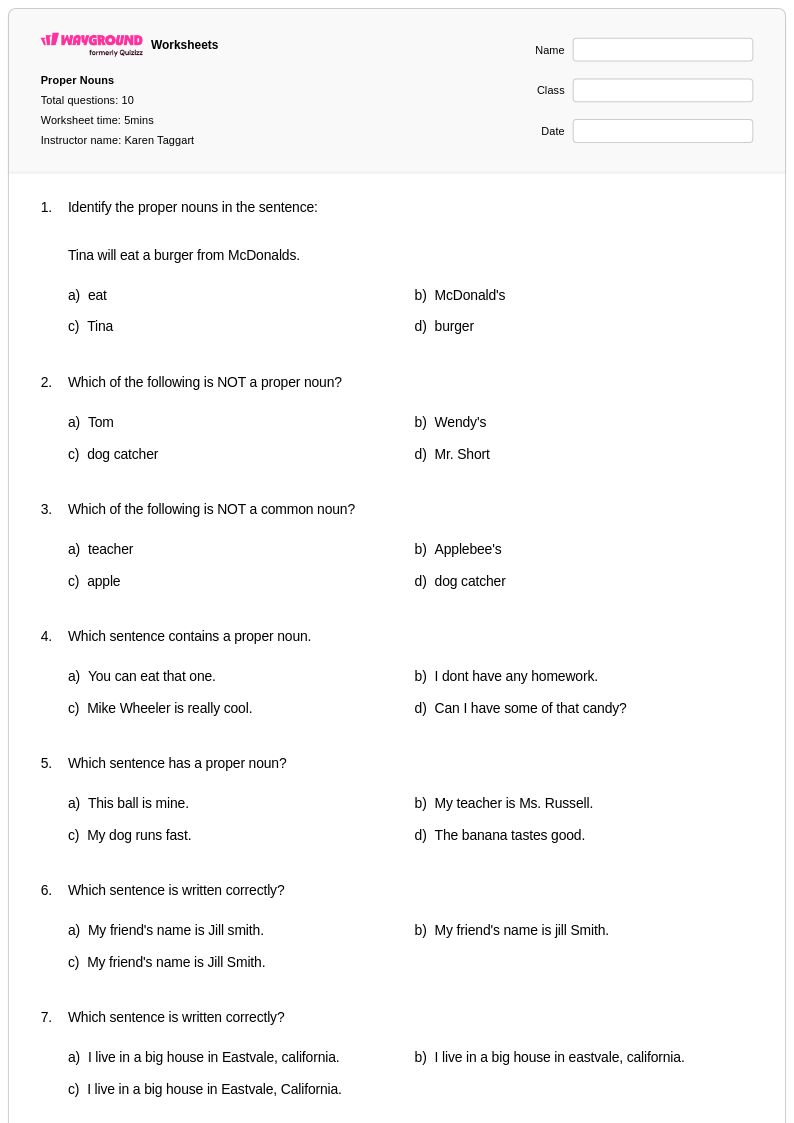
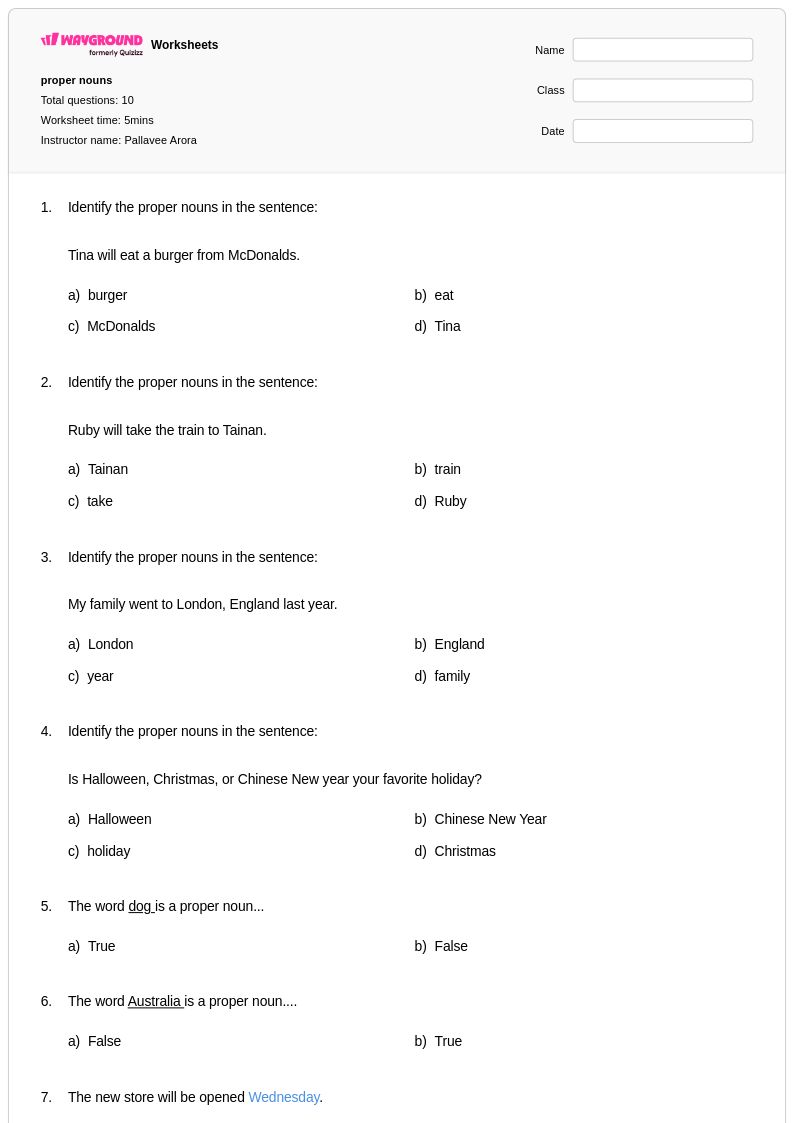
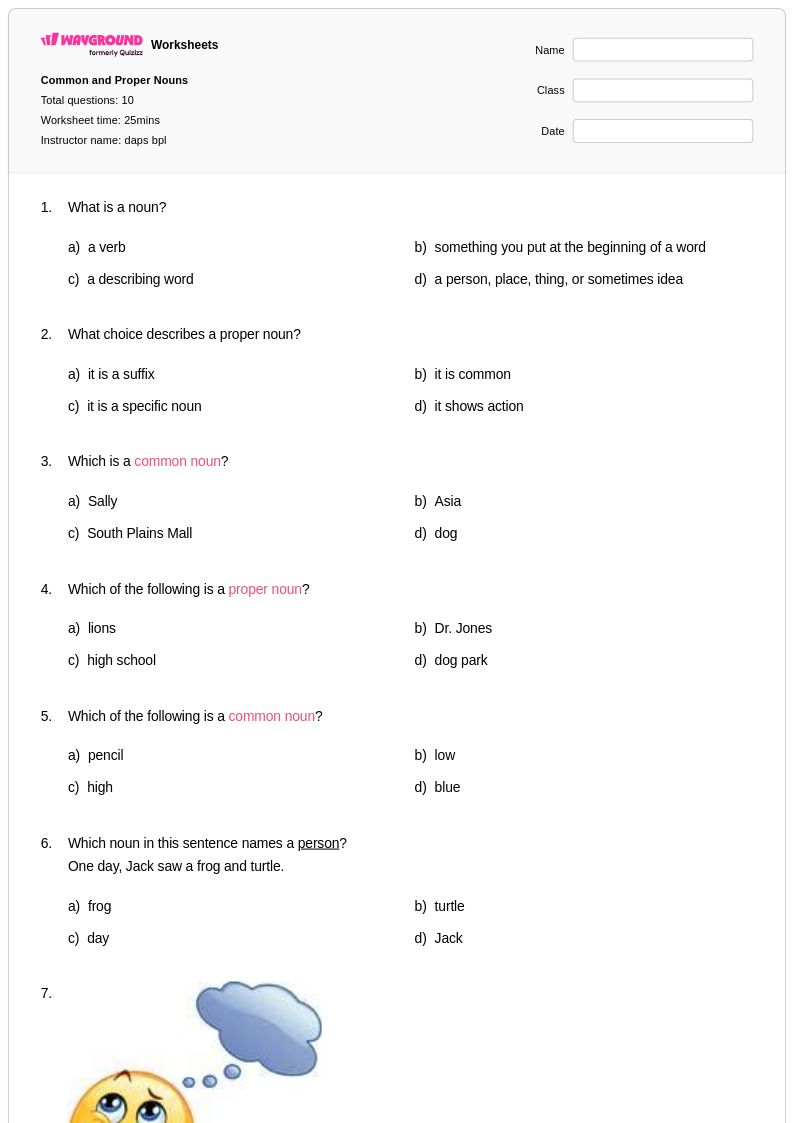
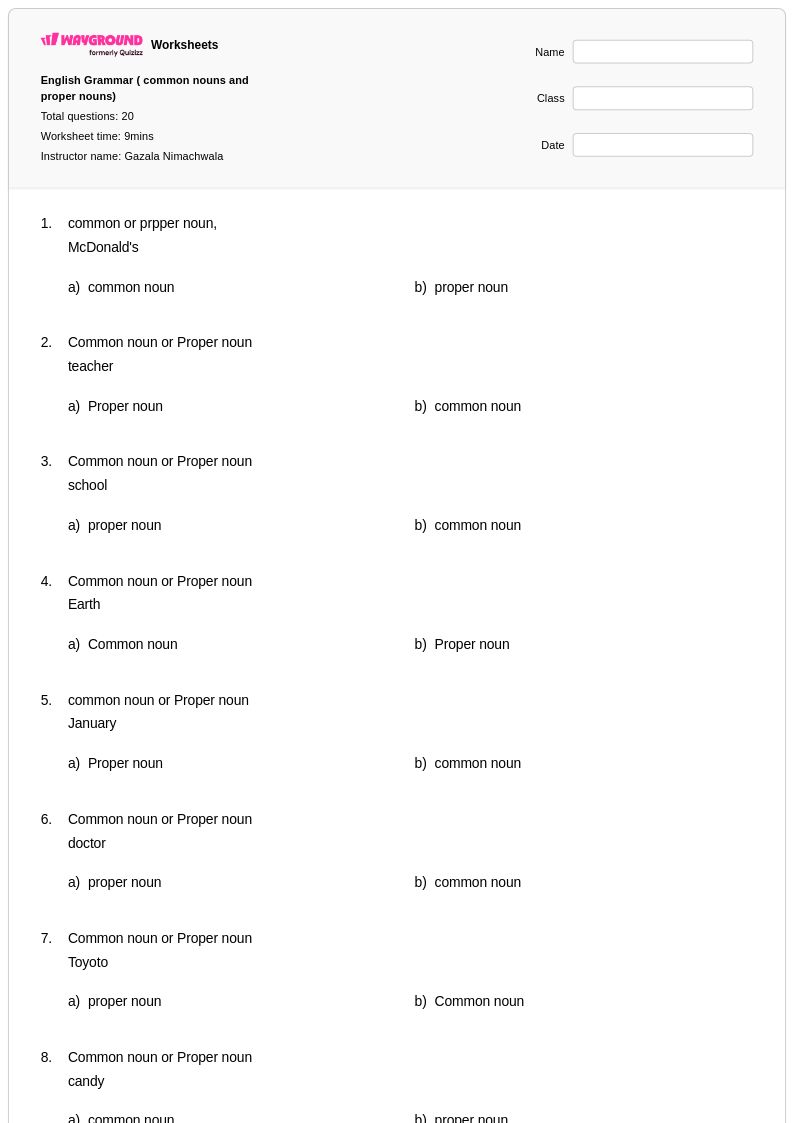
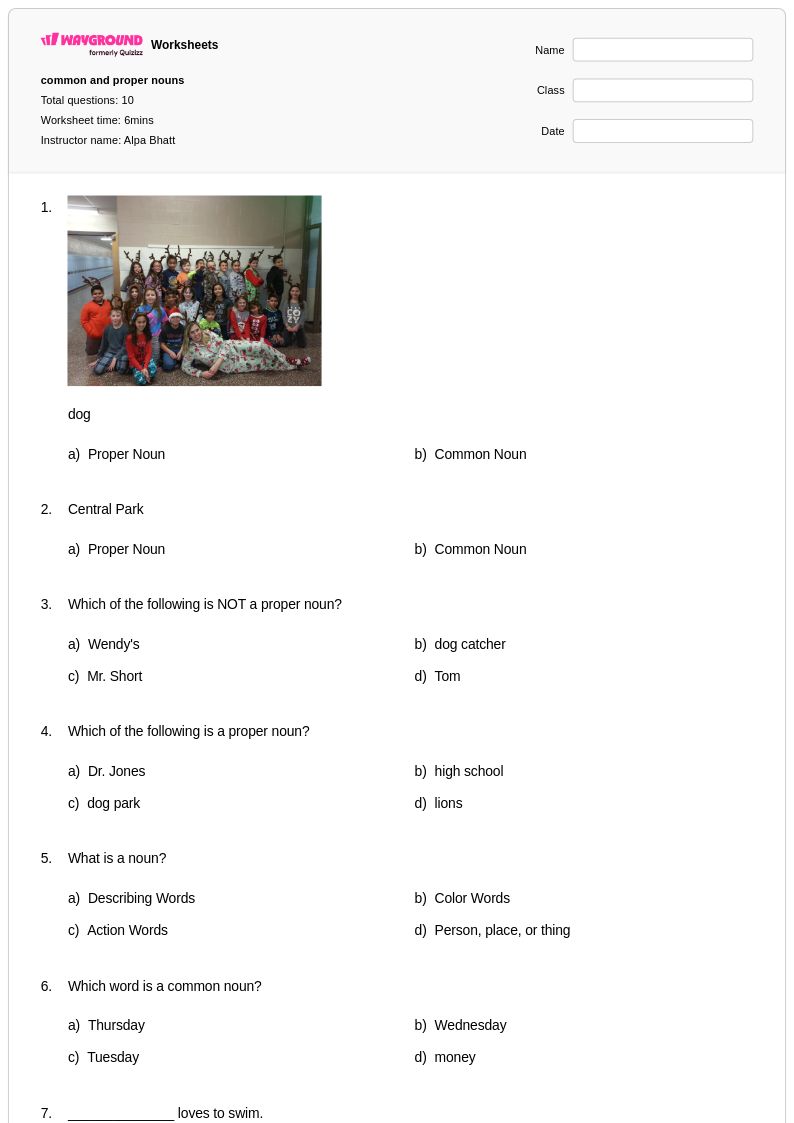
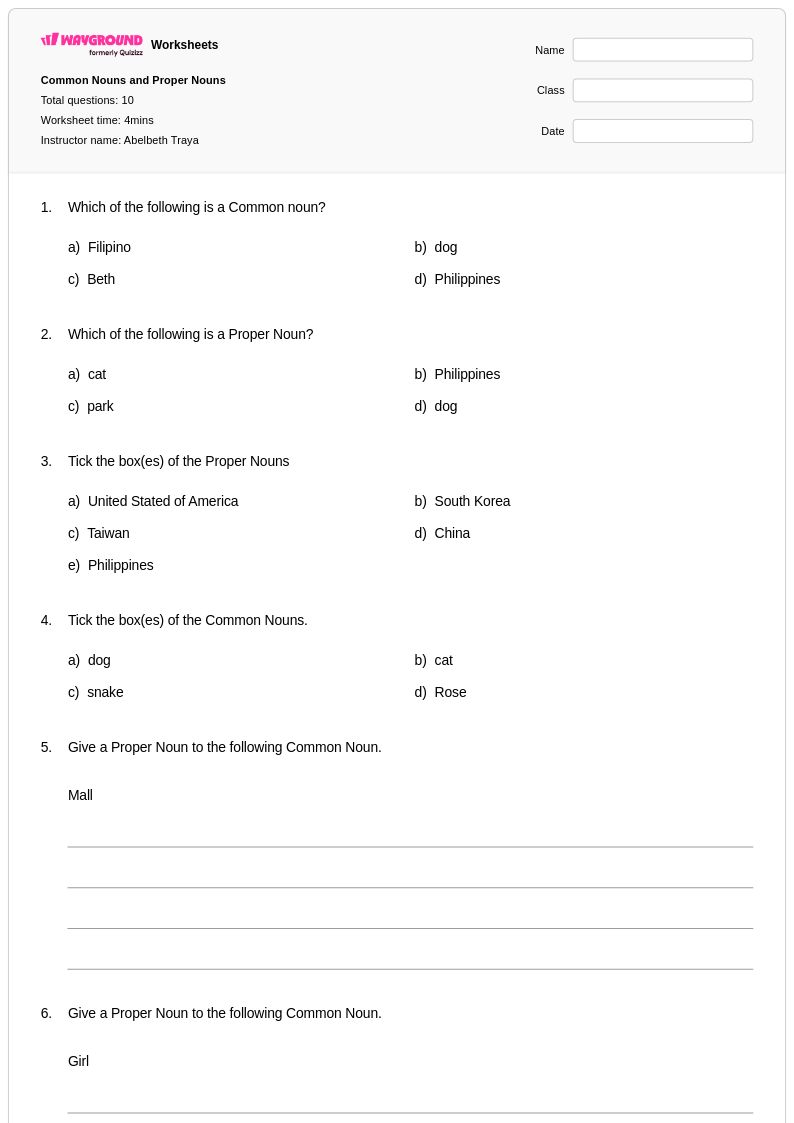
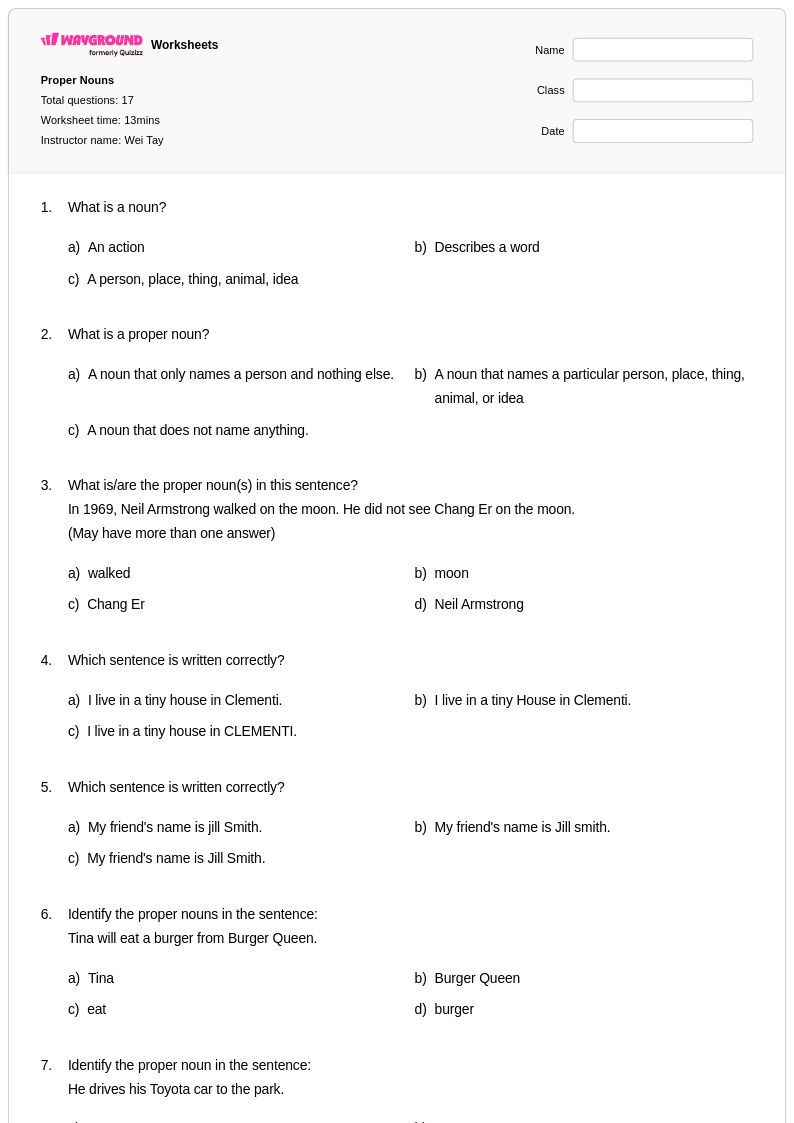
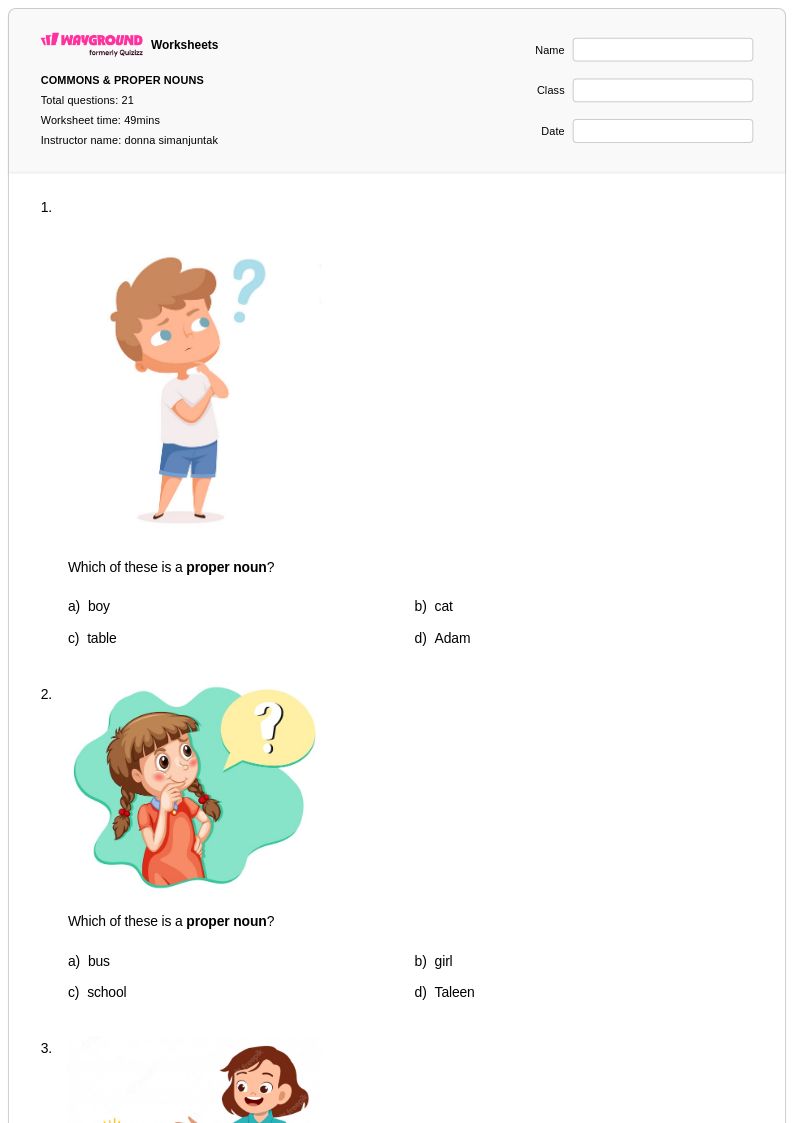
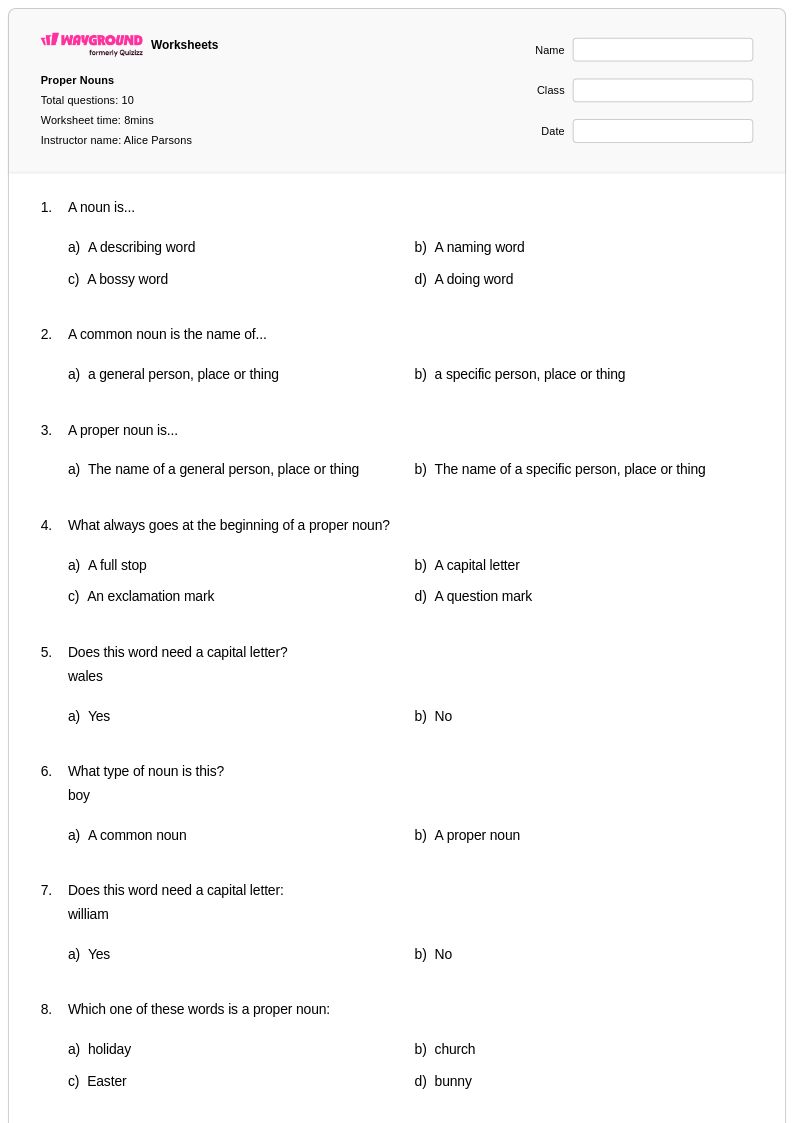
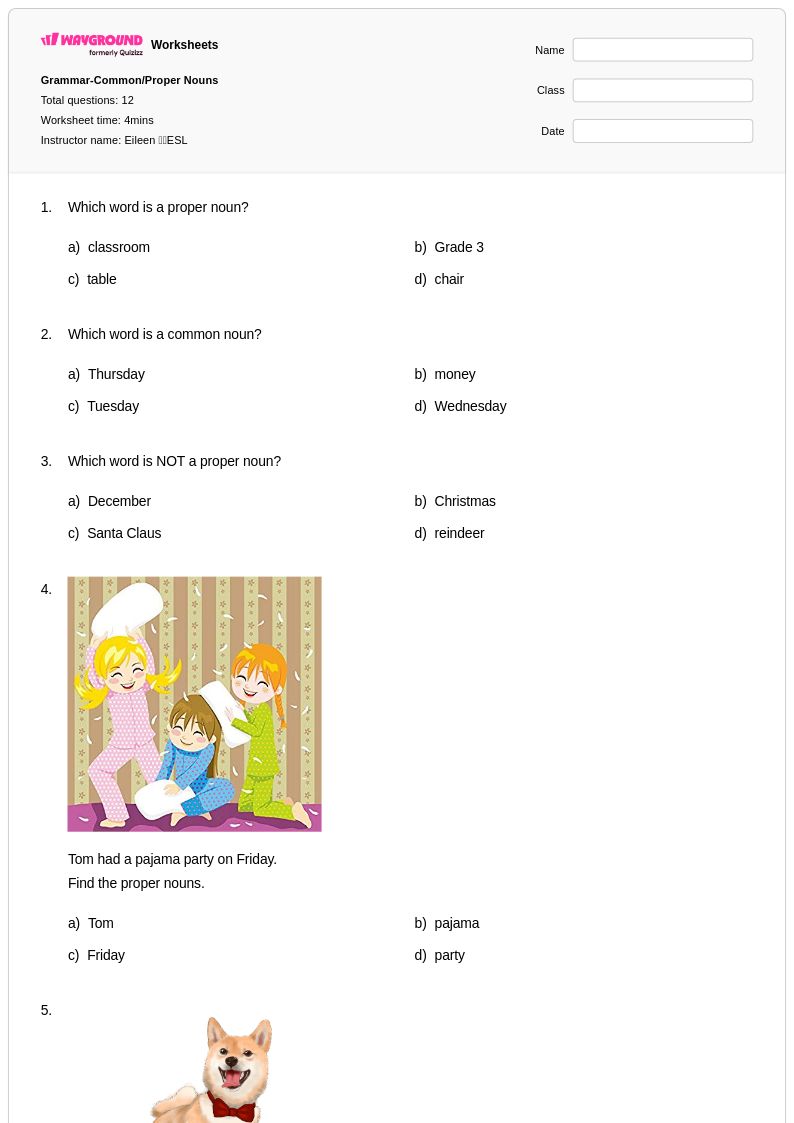
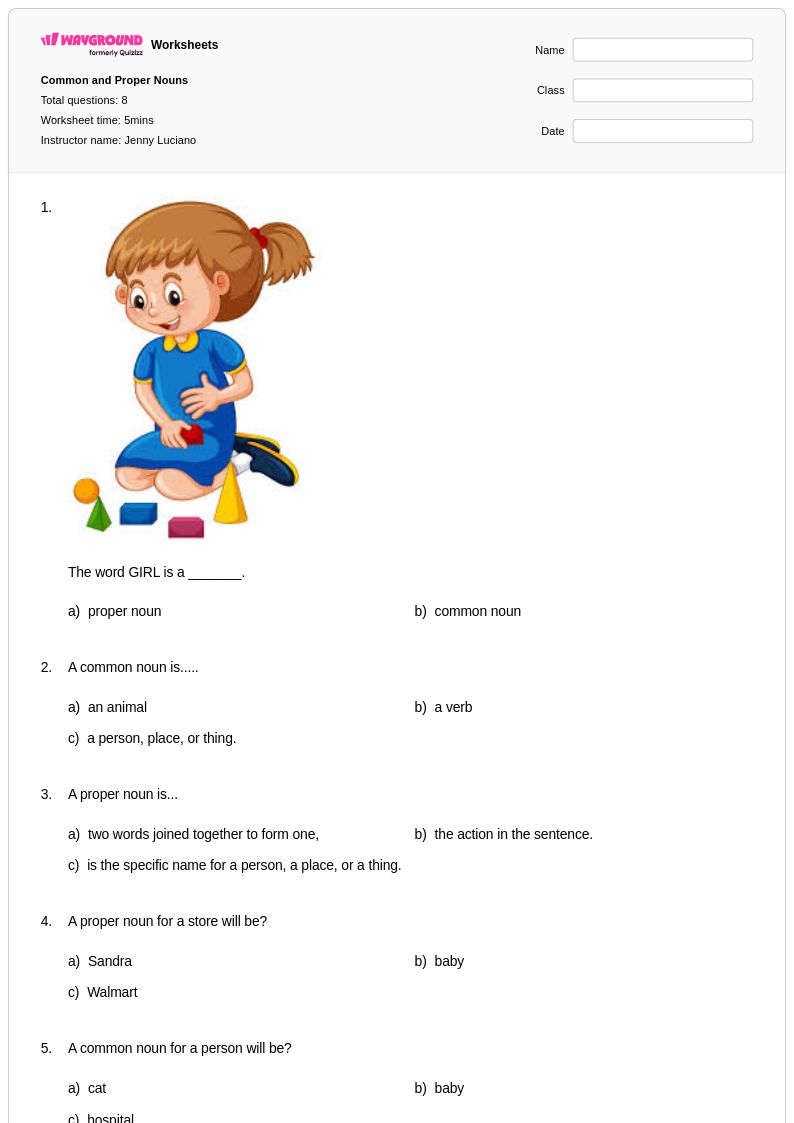
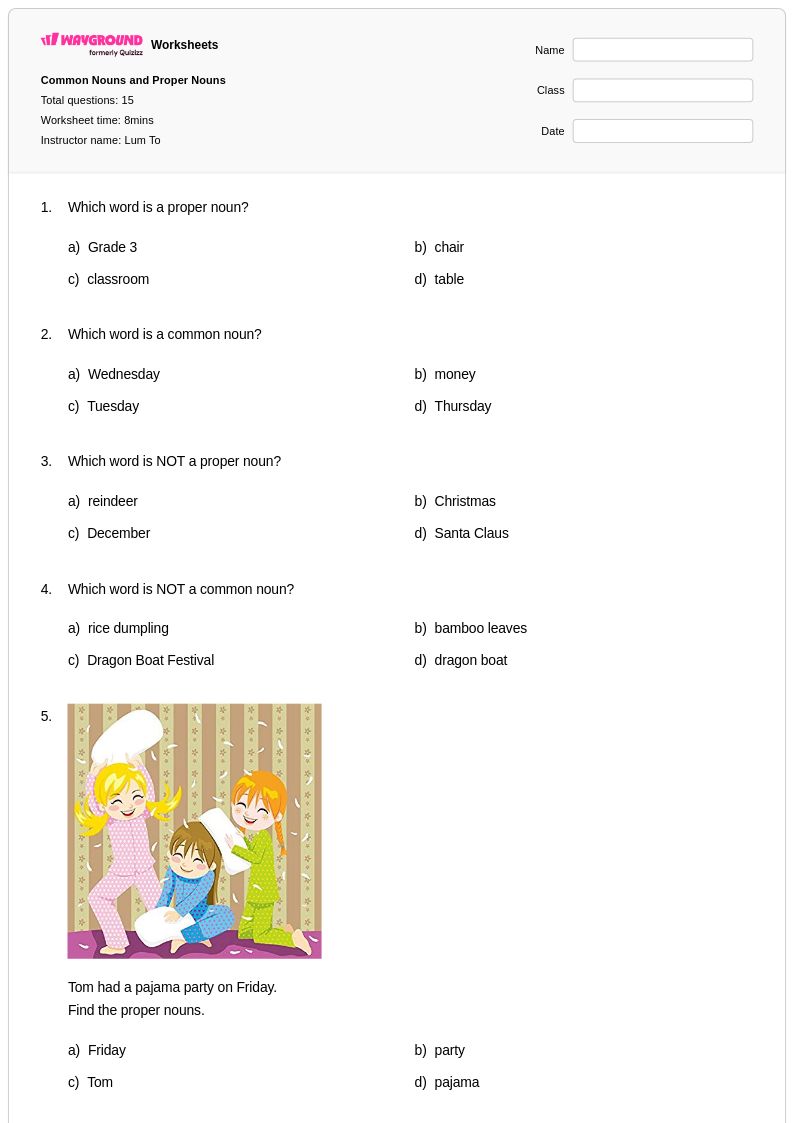
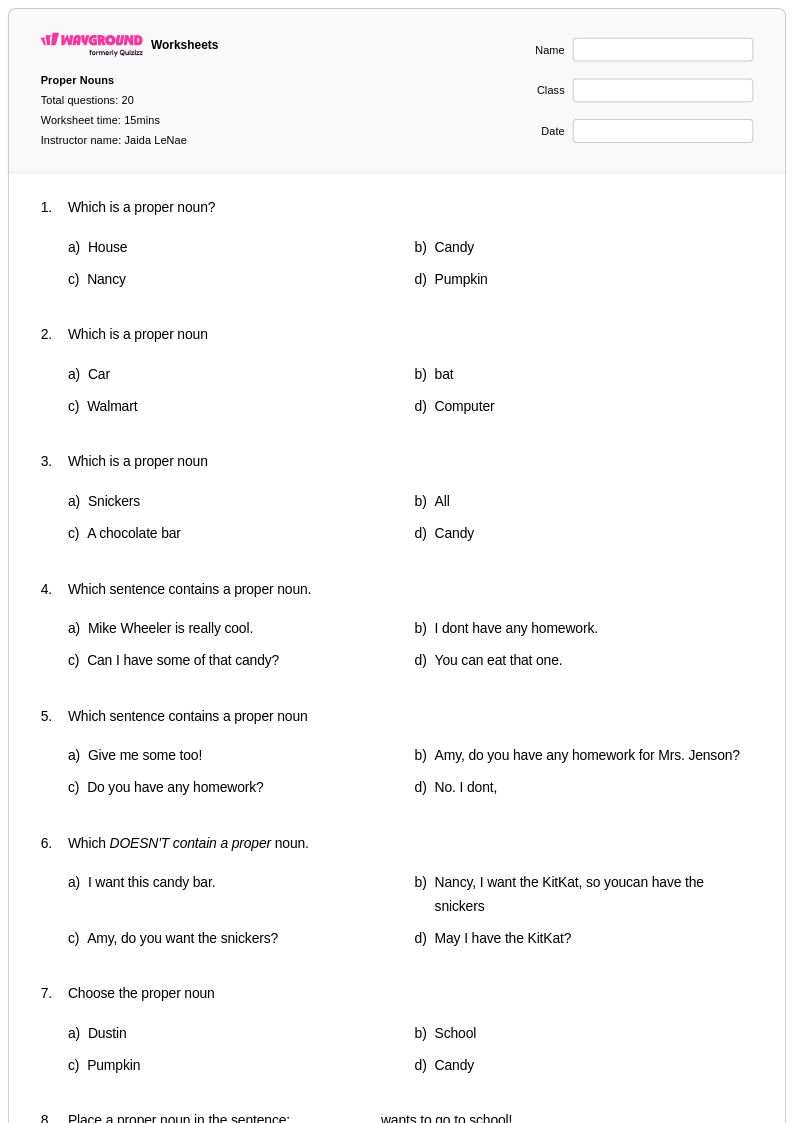
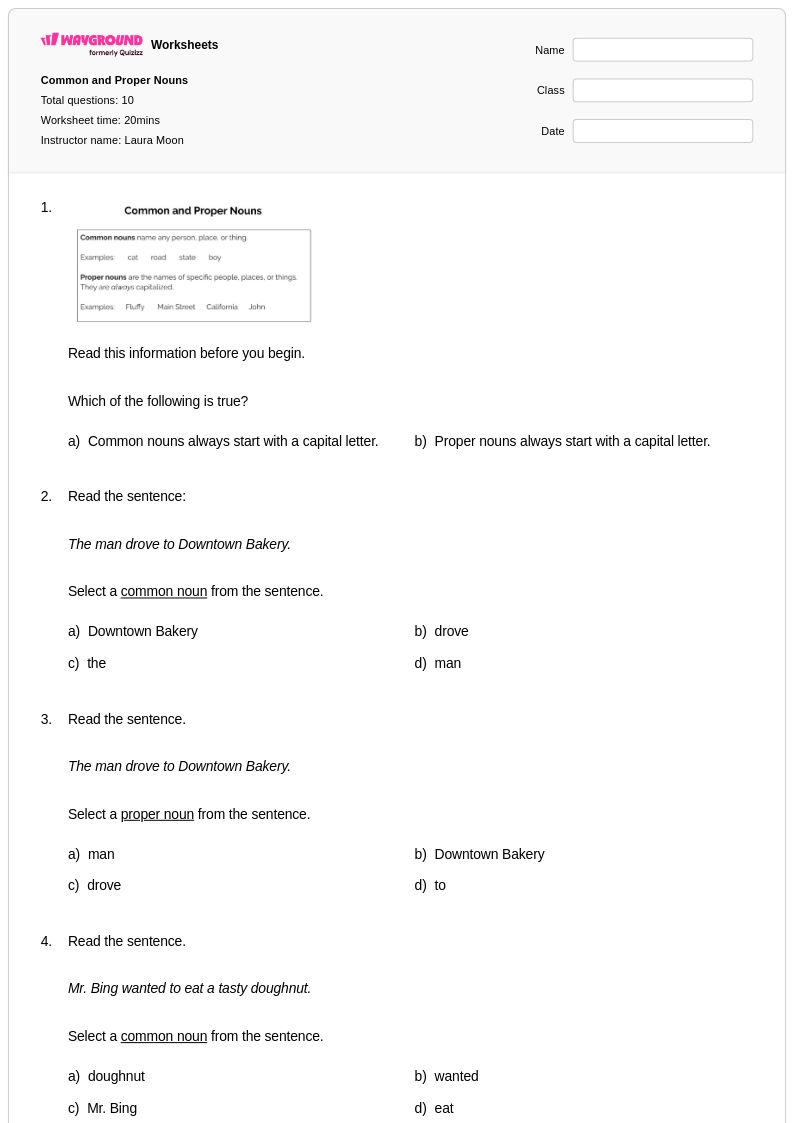
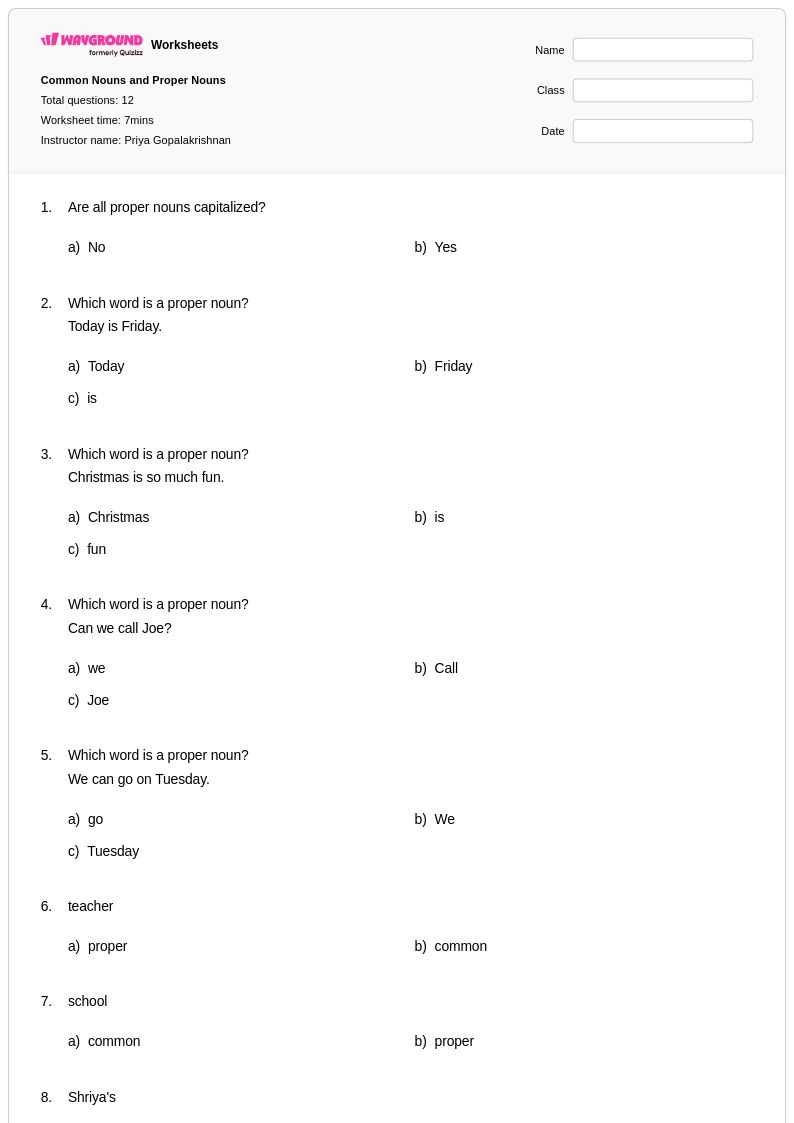
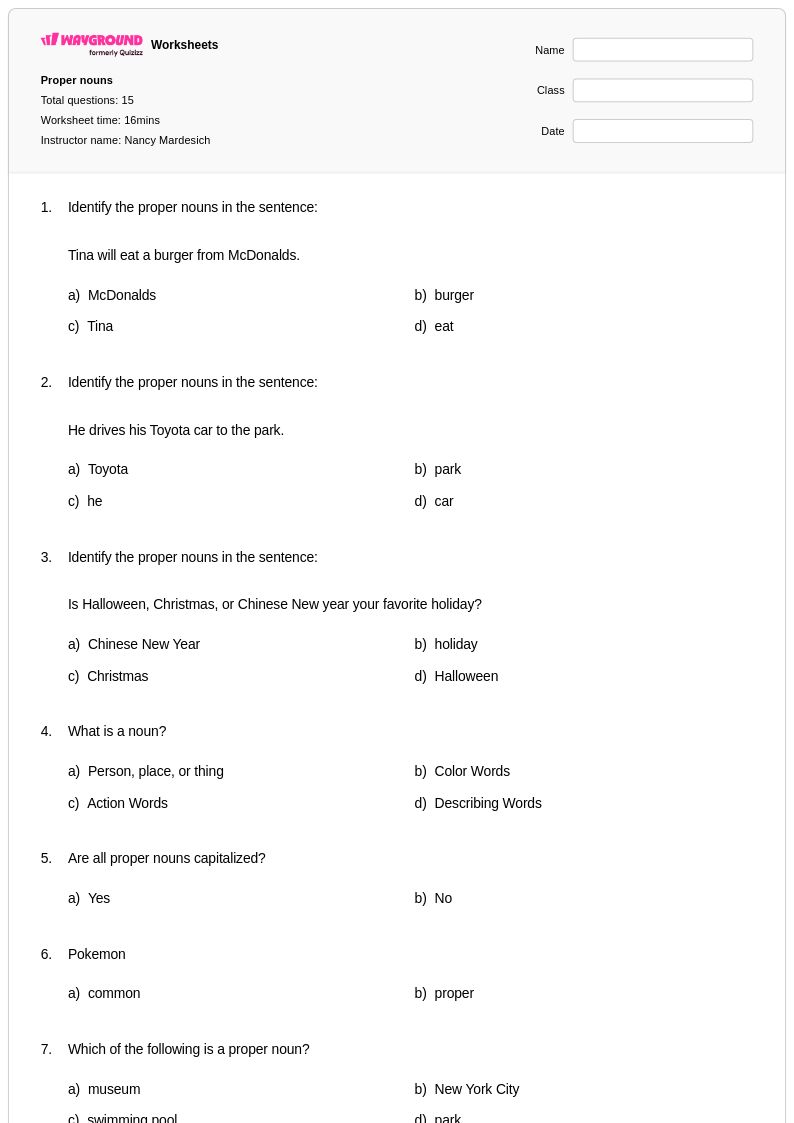
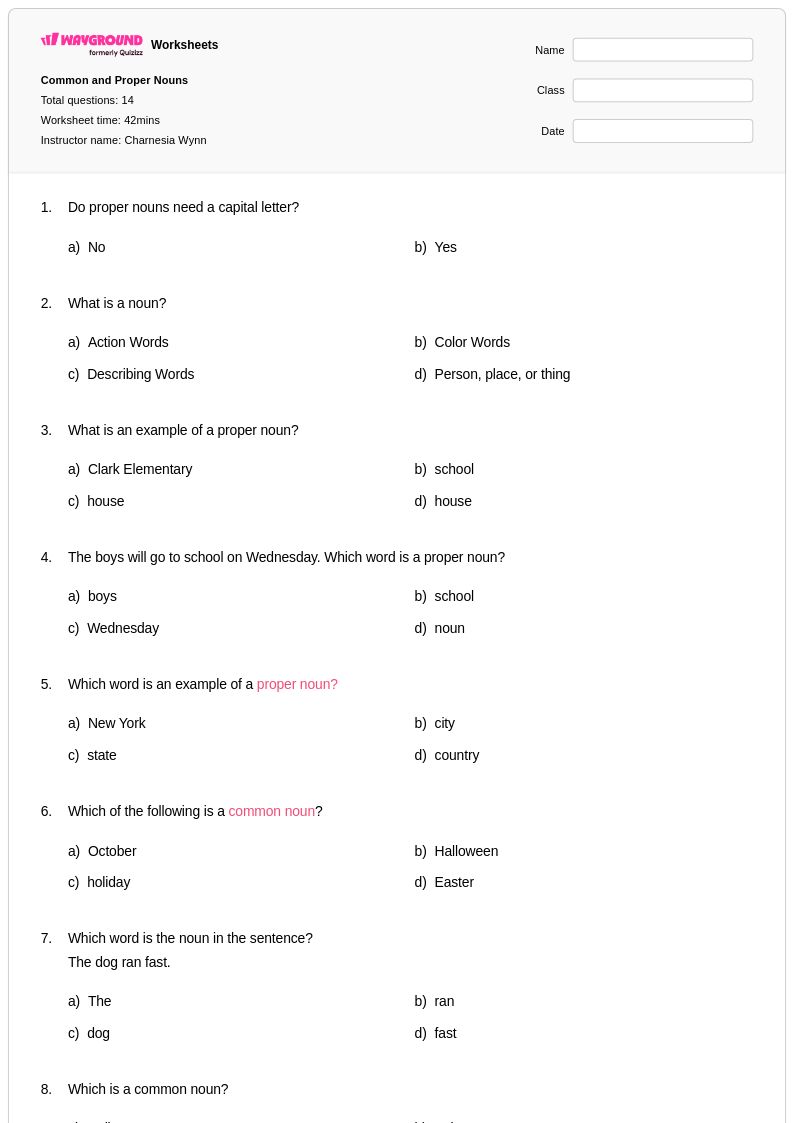
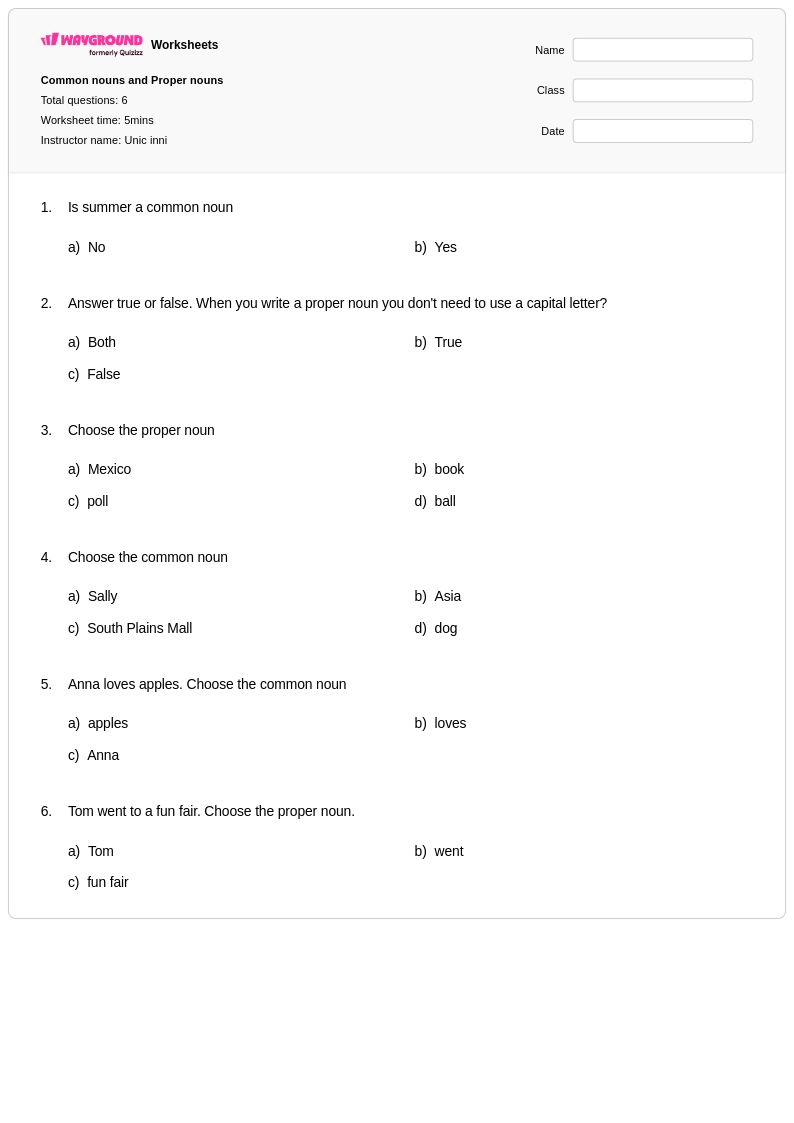
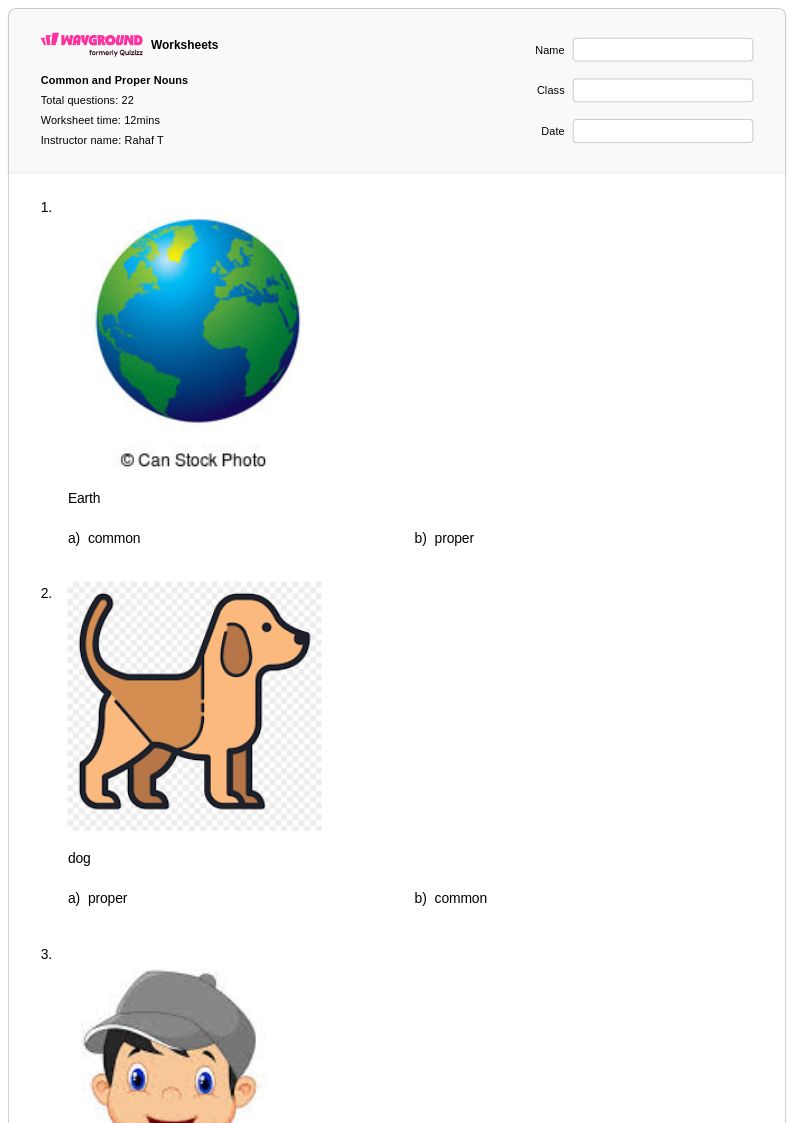
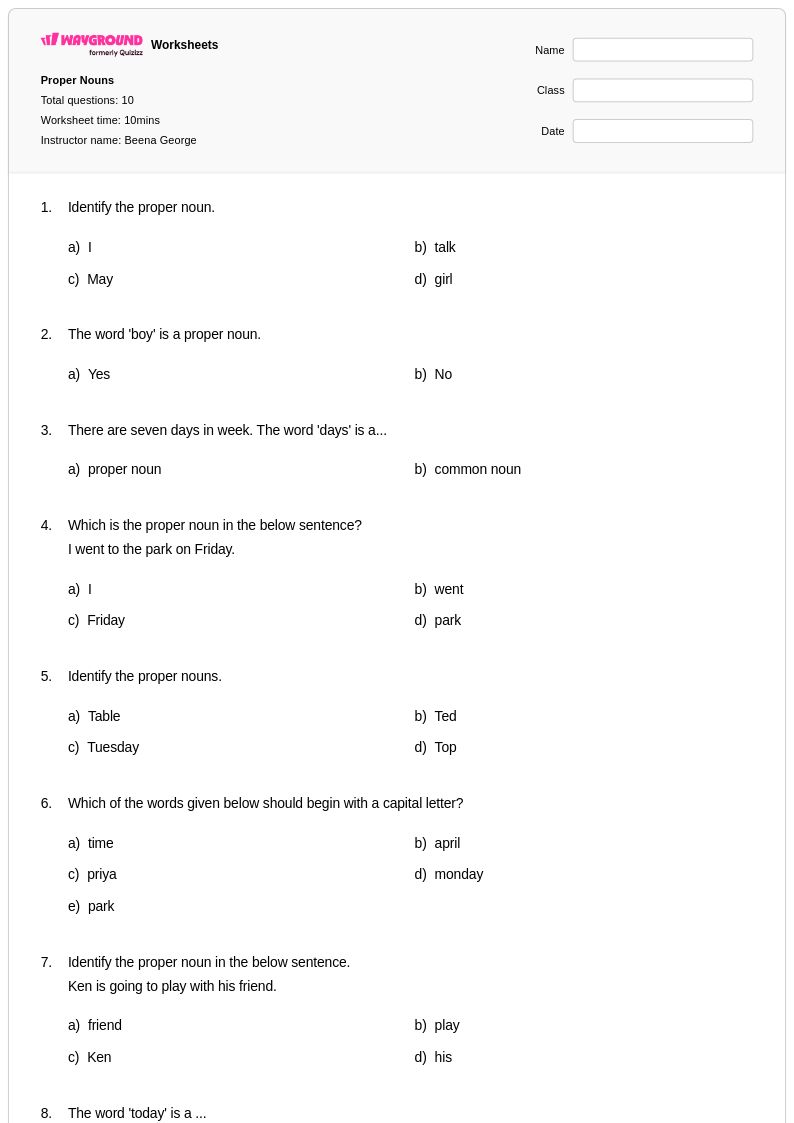
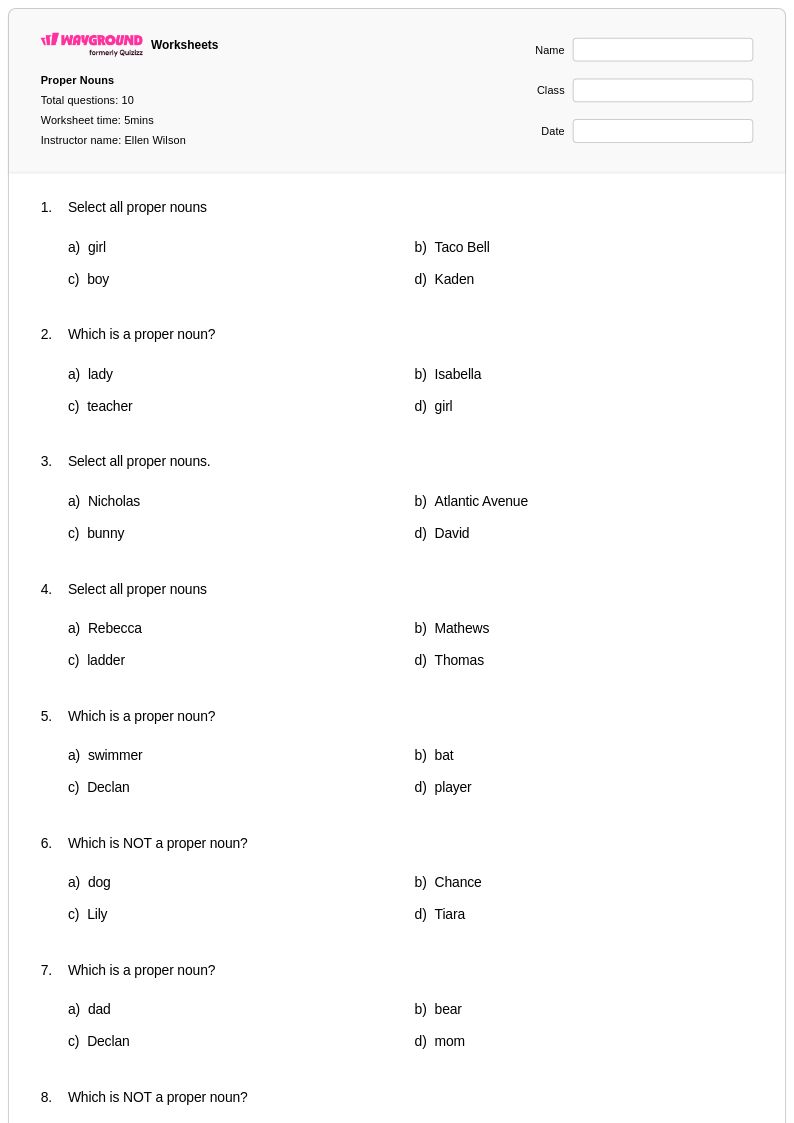
Class 1 proper nouns worksheets available through Wayground (formerly Quizizz) provide young learners with essential practice in identifying and using names of specific people, places, and things. These carefully designed educational resources strengthen foundational grammar skills by teaching students to recognize the difference between common nouns like "dog" or "school" and proper nouns such as "Buddy" or "Lincoln Elementary School." The worksheets feature engaging practice problems that help first-grade students understand capitalization rules while building vocabulary through real-world examples of proper nouns they encounter daily. Teachers can access comprehensive answer keys and free printables that support both independent work and guided instruction, making these pdf resources invaluable for developing early literacy skills.
Wayground (formerly Quizizz) empowers educators with millions of teacher-created proper noun worksheets specifically aligned to Class 1 learning standards and developmental needs. The platform's robust search and filtering capabilities allow teachers to quickly locate resources that match their students' skill levels, while differentiation tools enable customization for learners who need additional support or enrichment opportunities. These flexible worksheets are available in both printable and digital formats, including downloadable pdf versions that seamlessly integrate into lesson planning and homework assignments. Whether used for initial skill introduction, targeted remediation, or ongoing practice, these comprehensive proper noun resources help teachers provide systematic grammar instruction that builds confident writers and readers in the primary grades.
FAQs
How do I teach proper nouns to elementary students?
Begin by establishing the distinction between common and proper nouns using familiar examples from students' own lives, such as their names, their school's name, and their city. Anchor the lesson around the capitalization rule: proper nouns always begin with a capital letter because they name a specific person, place, organization, or thing. Using real-world references like geographic locations, brand names, and historical figures helps students connect the concept to language they already encounter, making the rule feel purposeful rather than arbitrary.
What exercises help students practice identifying proper nouns?
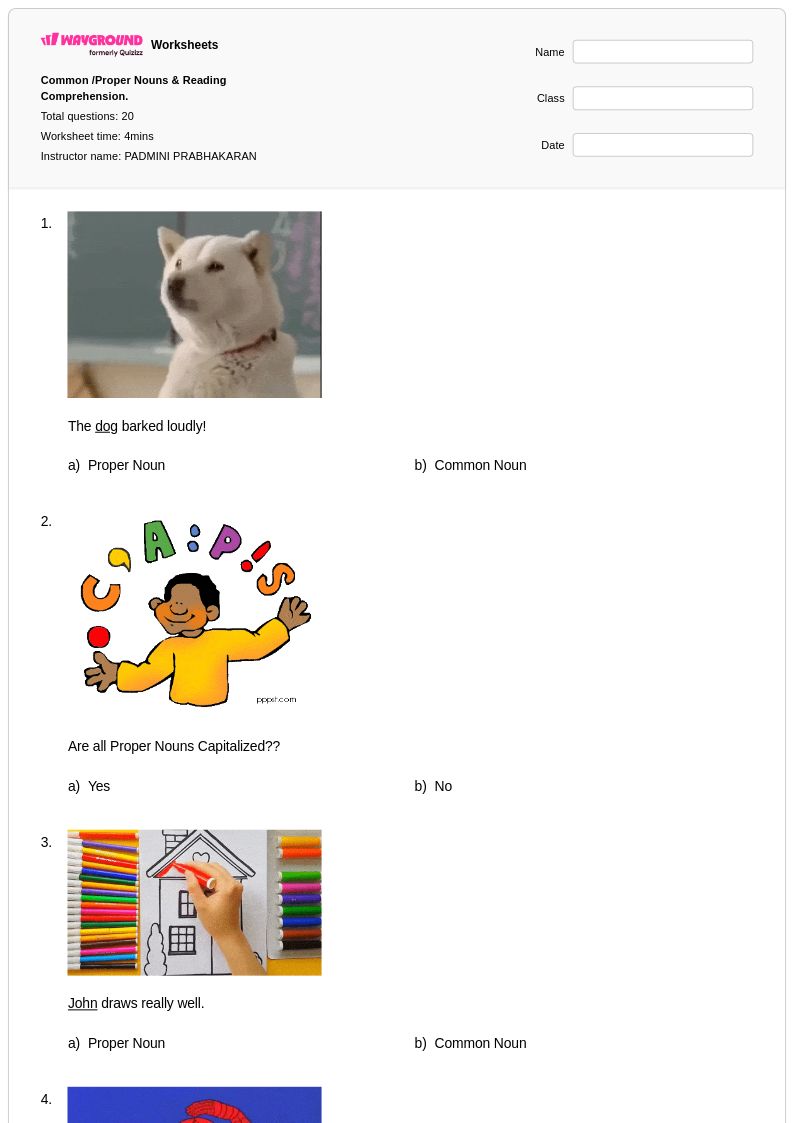
Effective practice exercises include identifying and underlining proper nouns within sentences, sorting word lists into common versus proper noun categories, and rewriting sentences by replacing common nouns with specific proper nouns. Exercises that use real-world examples such as city names, famous figures, and organizations tend to be most effective because they ground abstract grammar rules in familiar context. Moving from identification tasks to application tasks, where students produce proper nouns in their own writing, builds deeper and more transferable understanding.
What capitalization mistakes do students commonly make with proper nouns?
The most common error is inconsistent capitalization: students frequently capitalize common nouns they consider important (like "Mom" used generically) while failing to capitalize proper nouns they overlook (like a country name mid-sentence). Students also struggle with multi-word proper nouns, often capitalizing only the first word in a title or organization name. Another frequent mistake is failing to recognize that brand names and cultural references function as proper nouns and therefore require capitalization.
How do I differentiate proper noun instruction for students at different skill levels?
For students still building foundational skills, focus on high-frequency, concrete proper nouns such as names of people and cities before introducing abstract categories like organizations or historical periods. Advanced students benefit from application tasks that require them to integrate proper nouns correctly into original writing rather than simply identifying them in prepared sentences. On Wayground, teachers can apply accommodations such as reduced answer choices to lower cognitive load for individual students, or enable Read Aloud so questions are audio-supported, without affecting the experience of other students in the class.
How do I use Wayground's proper noun worksheets in my classroom?
Wayground's proper noun worksheets are available as printable PDFs for traditional classroom use and in digital formats for technology-integrated environments, making them suitable for in-class instruction, independent practice, and homework assignments. Teachers can also host worksheets directly as a quiz on Wayground, enabling real-time student responses and immediate feedback. Complete answer keys are included with every worksheet, reducing grading time and allowing teachers to return feedback quickly.
How do proper noun worksheets fit into a broader grammar unit?
Proper noun worksheets work best when sequenced after students have a working understanding of common nouns and basic sentence structure, since recognizing proper nouns depends on knowing what a noun is in the first place. Within a grammar unit, proper noun practice bridges noun identification skills with capitalization conventions, making it a natural connector between parts-of-speech instruction and mechanics lessons. Teachers often use proper noun exercises as a recurring warm-up activity to reinforce capitalization habits throughout the year rather than treating it as a one-time lesson.