
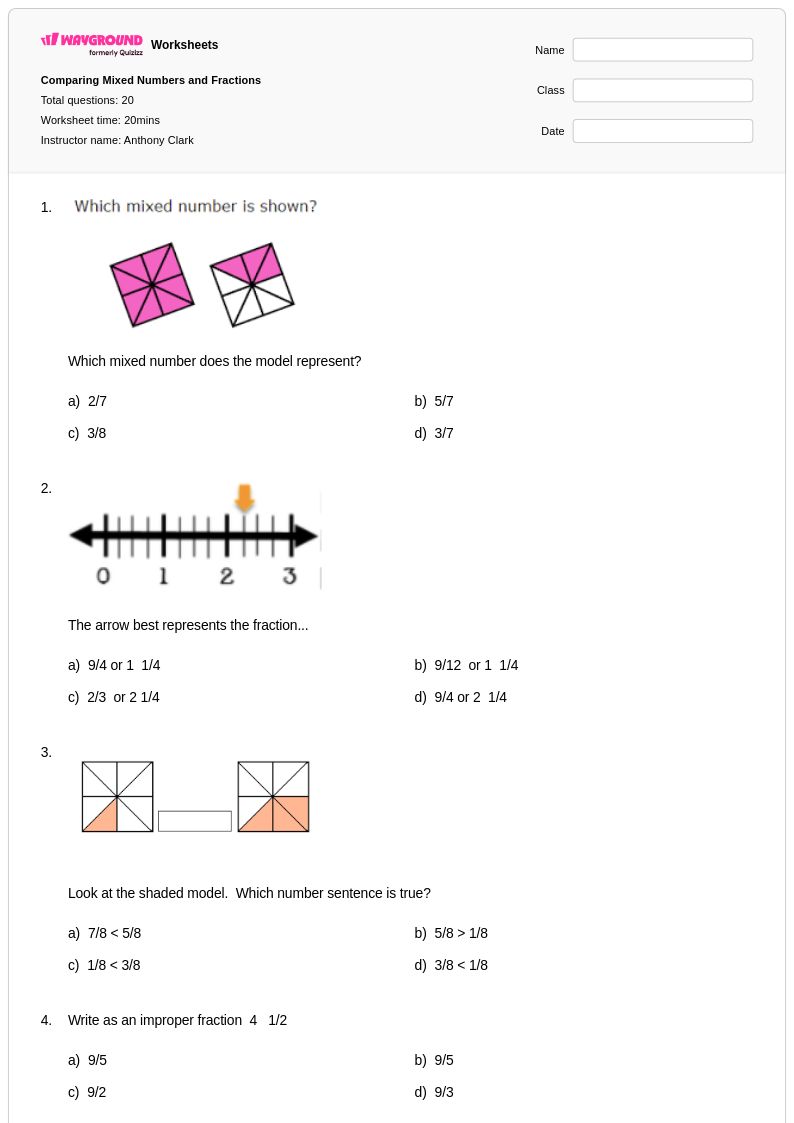
20 Q
5th - Uni
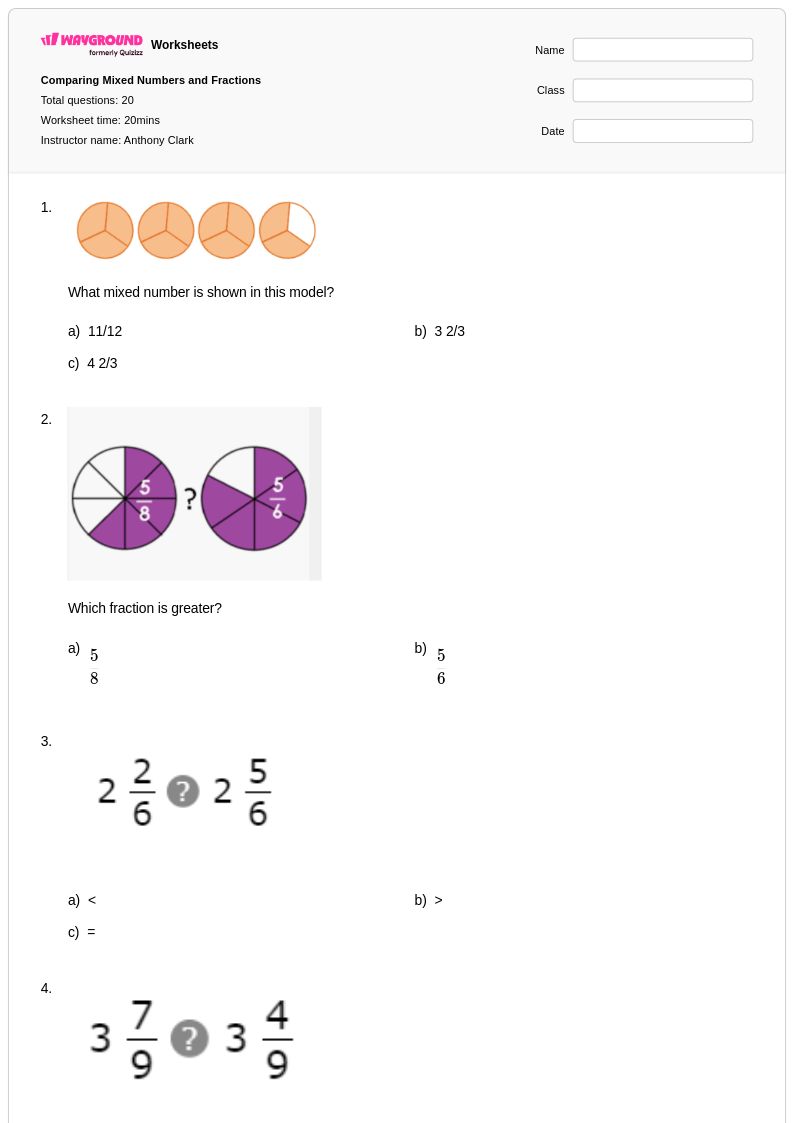
20 Q
5th - Uni
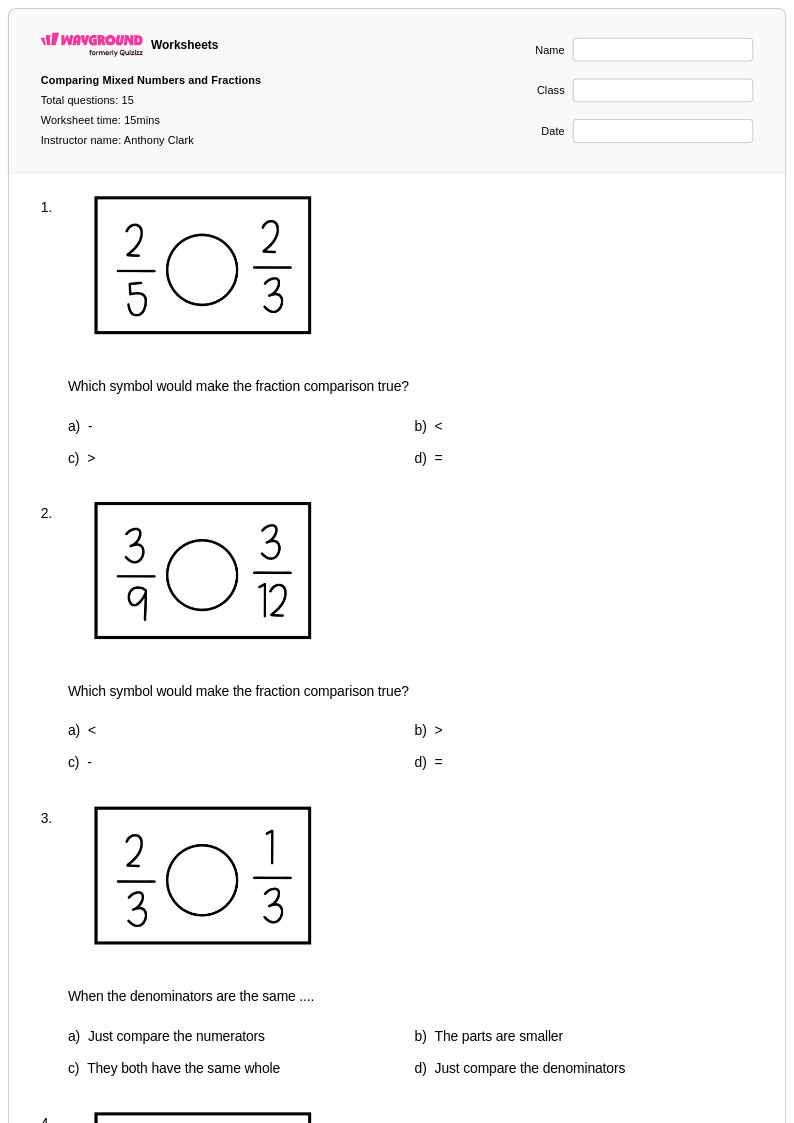
15 Q
6th - Uni
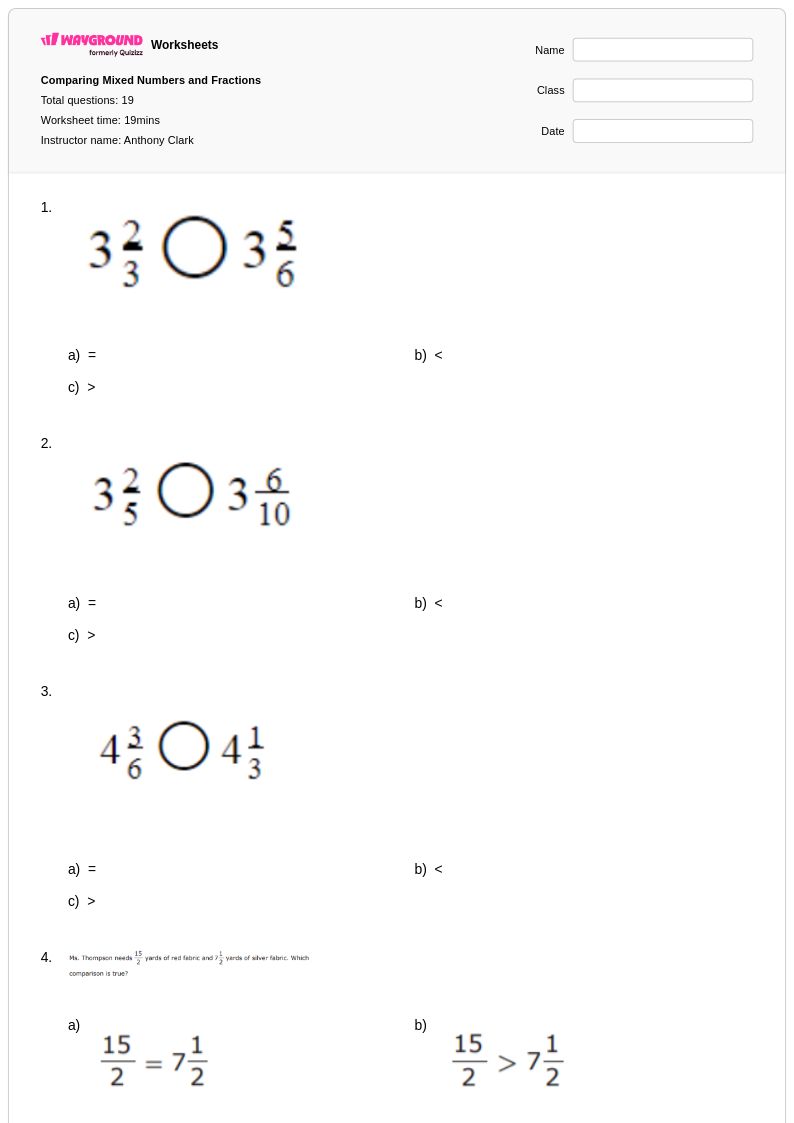
19 Q
6th - Uni
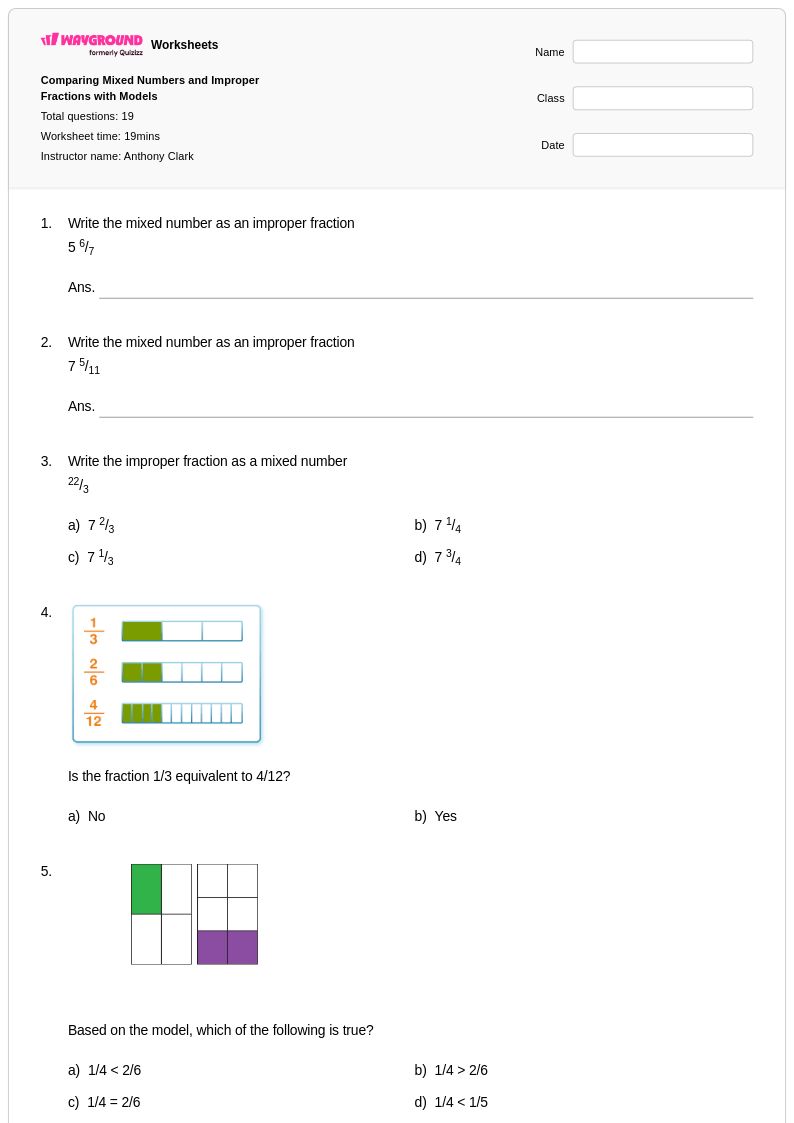
19 Q
4th - Uni
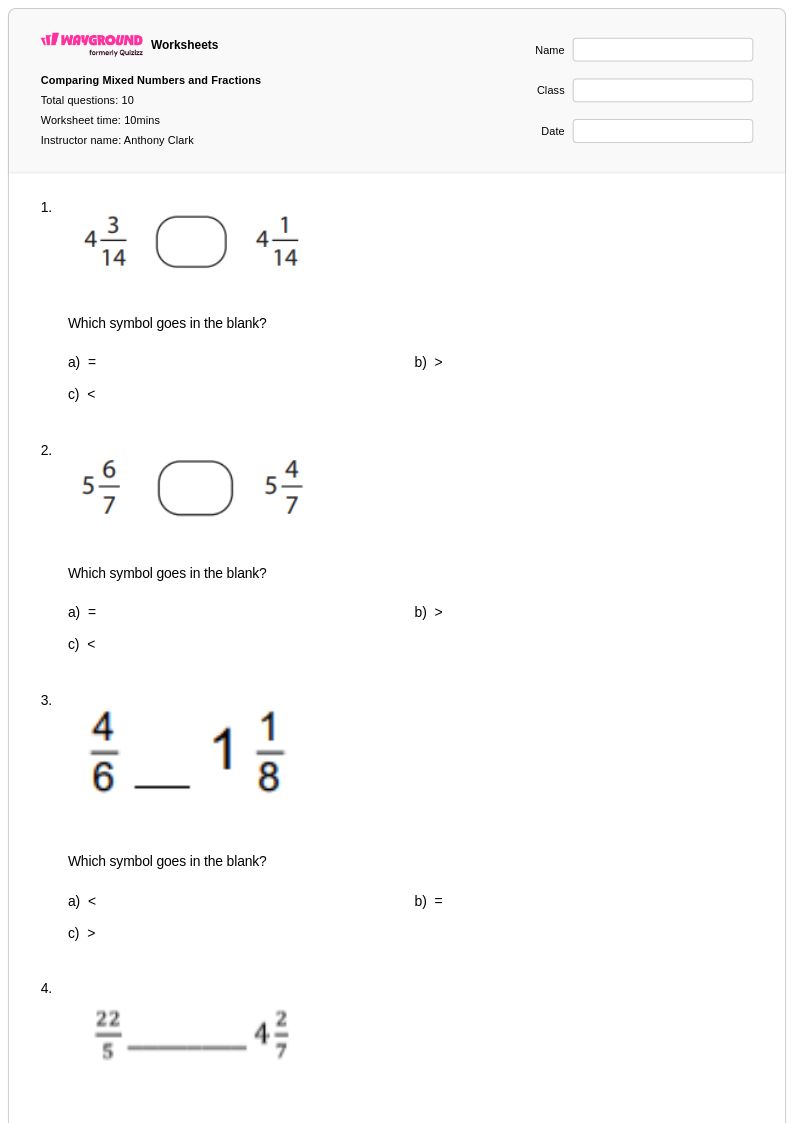
10 Q
6th - Uni
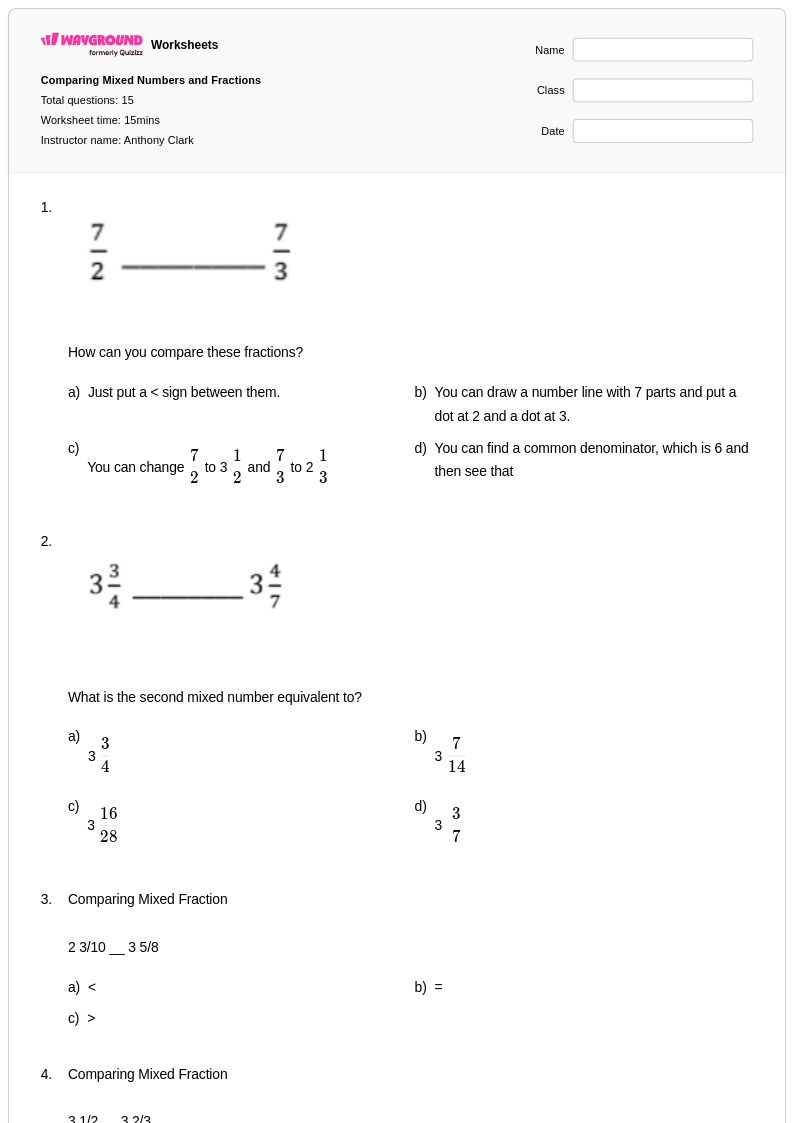
15 Q
6th - Uni
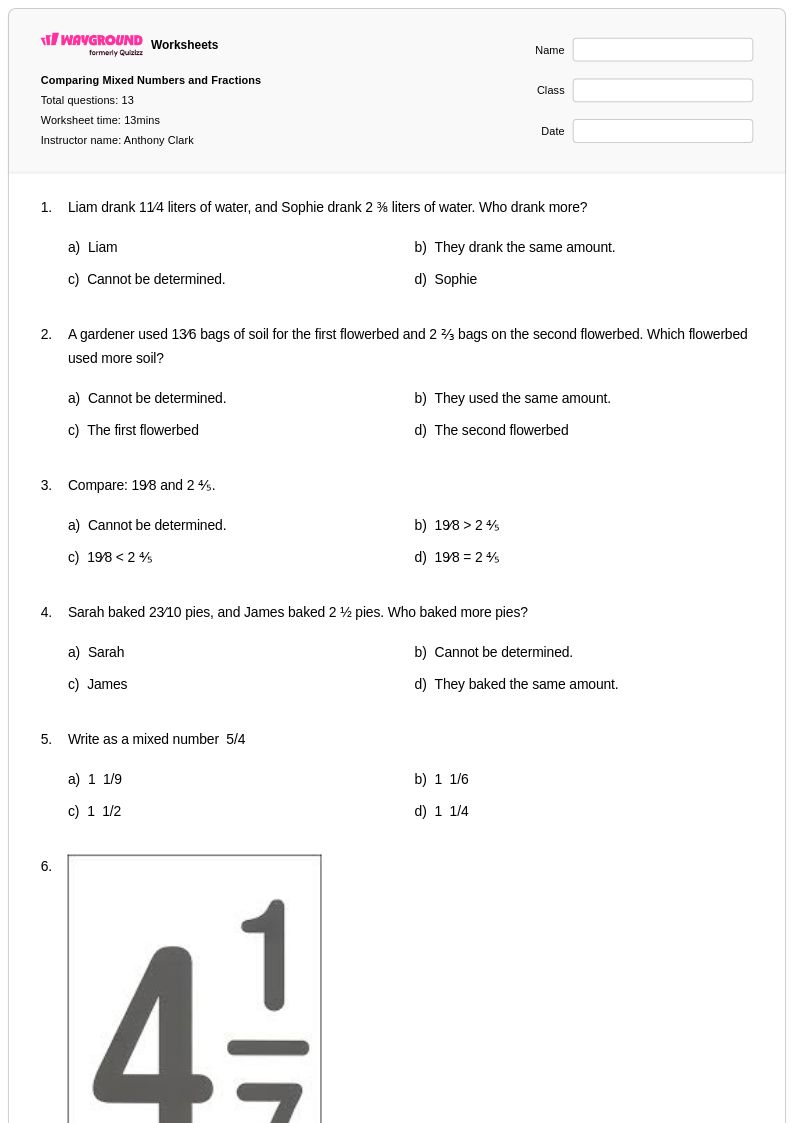
13 Q
5th - Uni
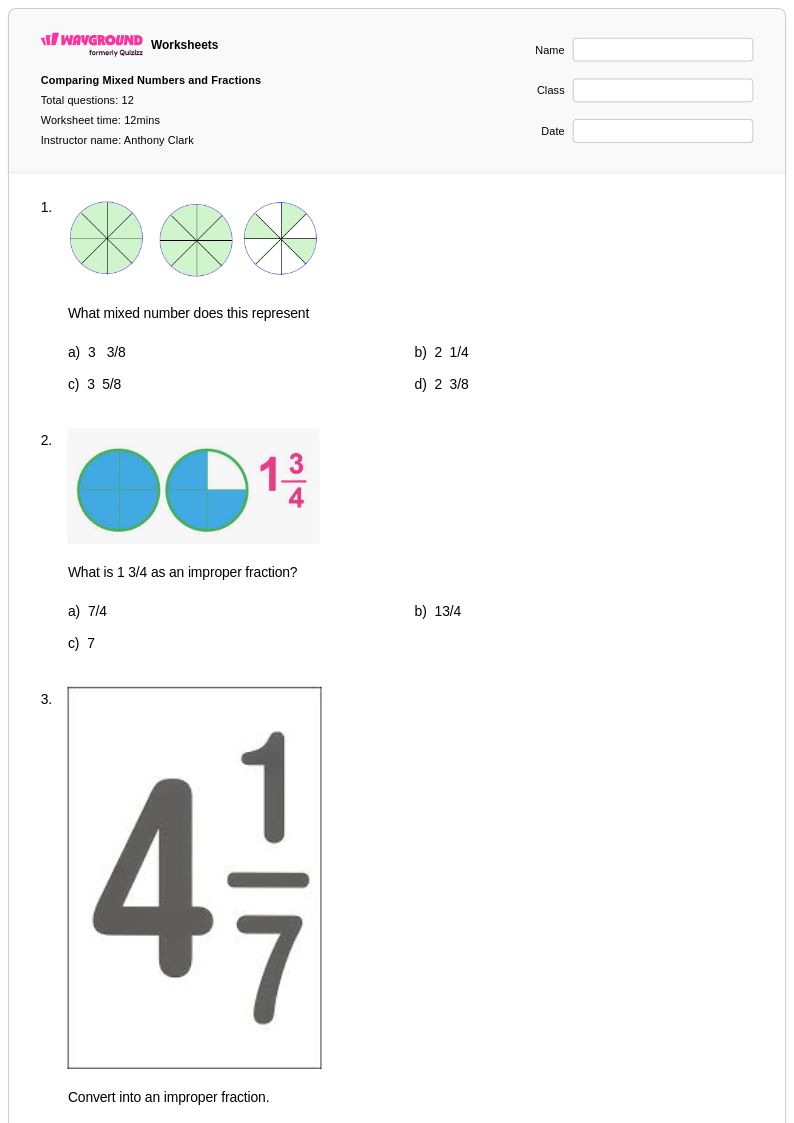
12 Q
5th - Uni
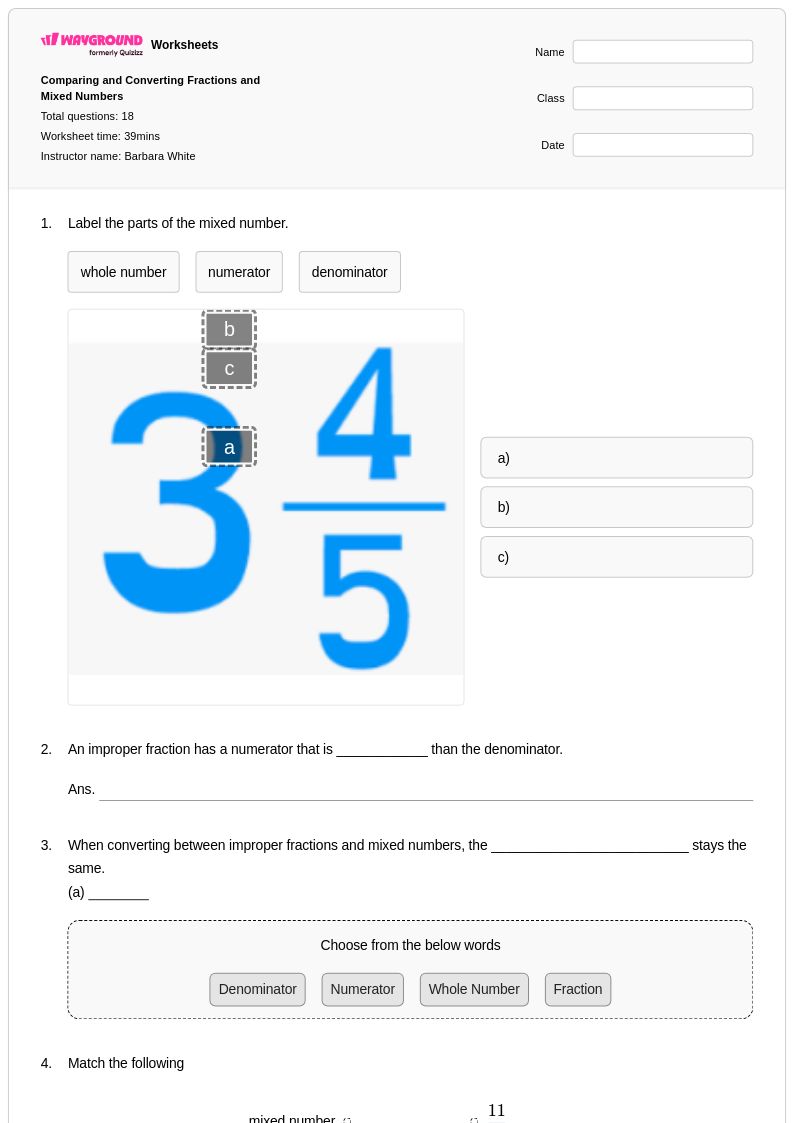
18 Q
6th - 8th
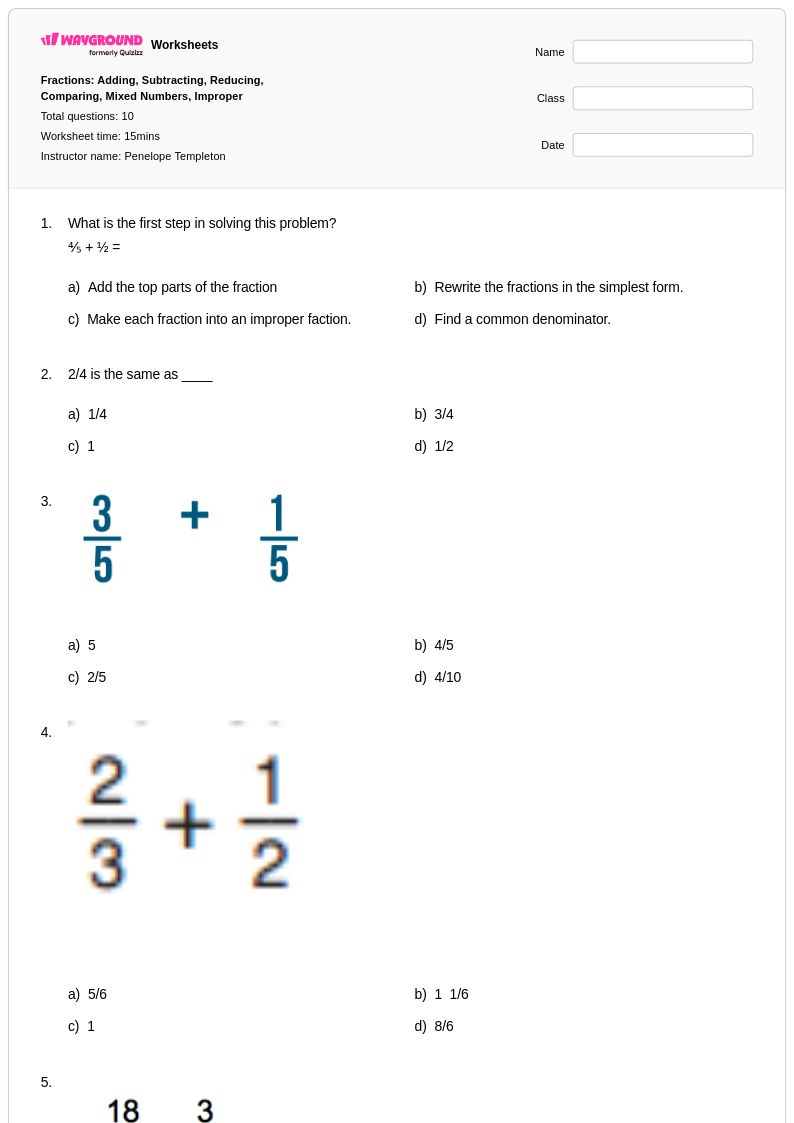
10 Q
5th - 12th
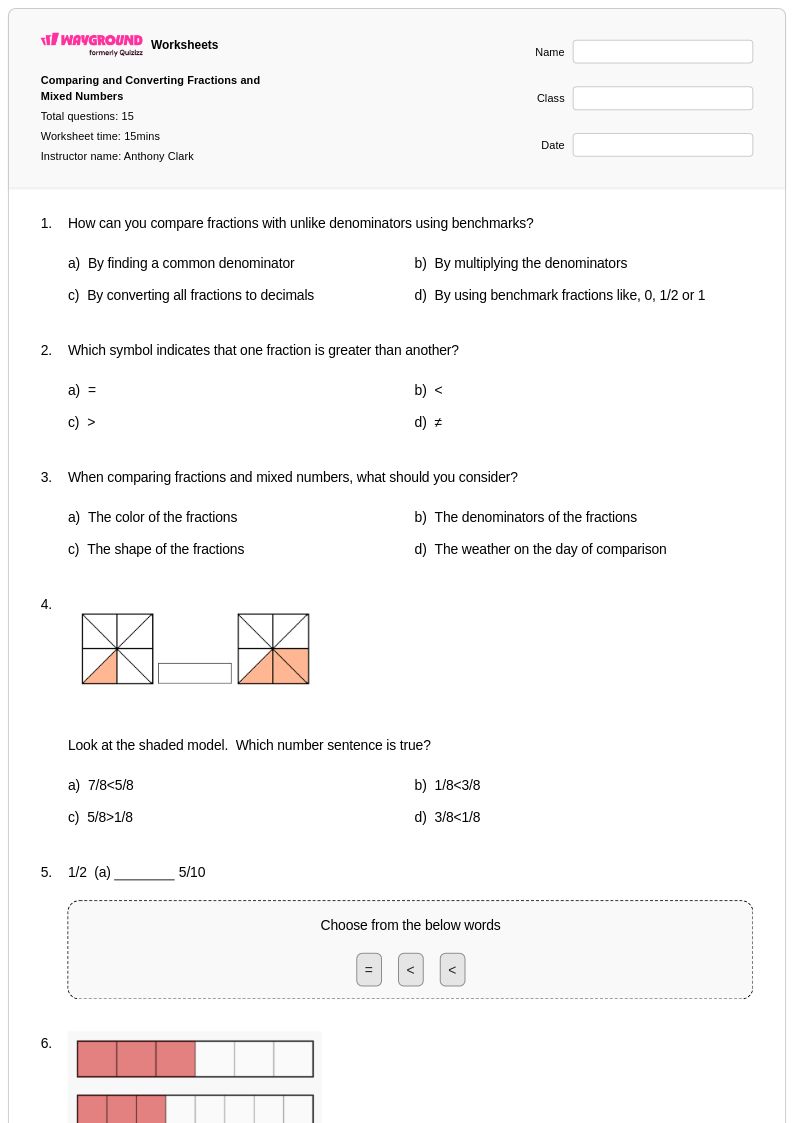
15 Q
5th - Uni
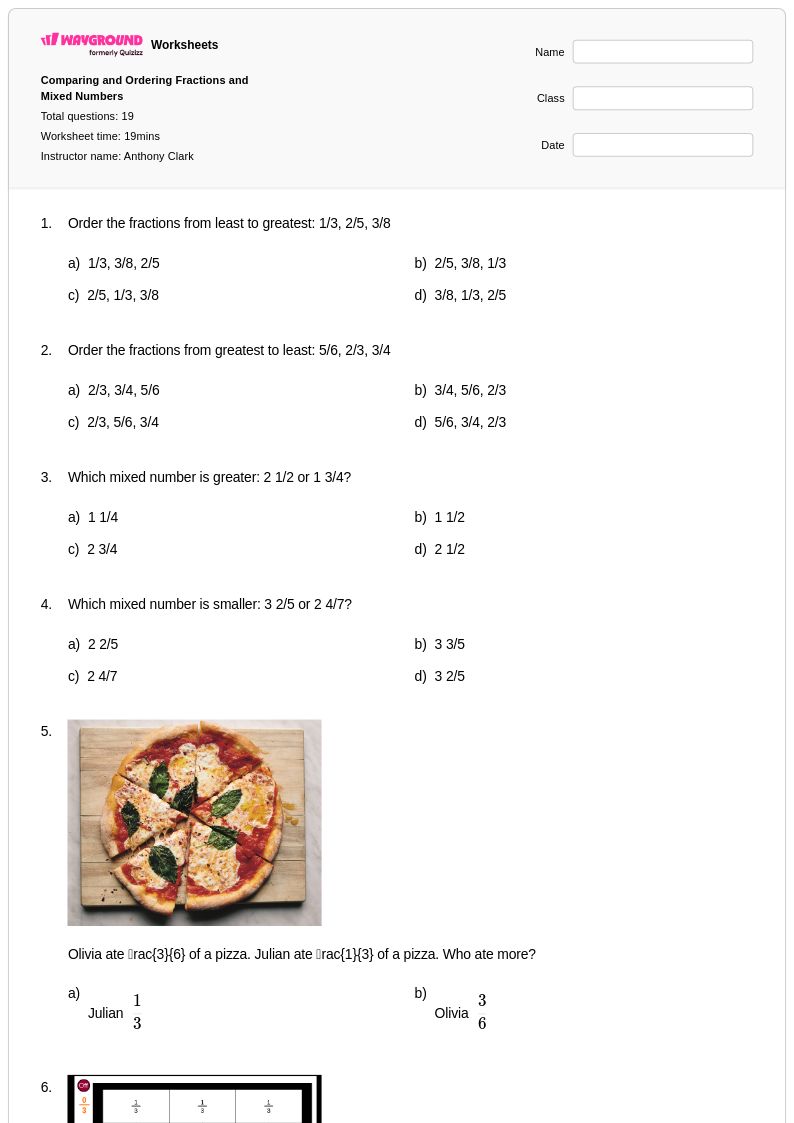
19 Q
5th - Uni
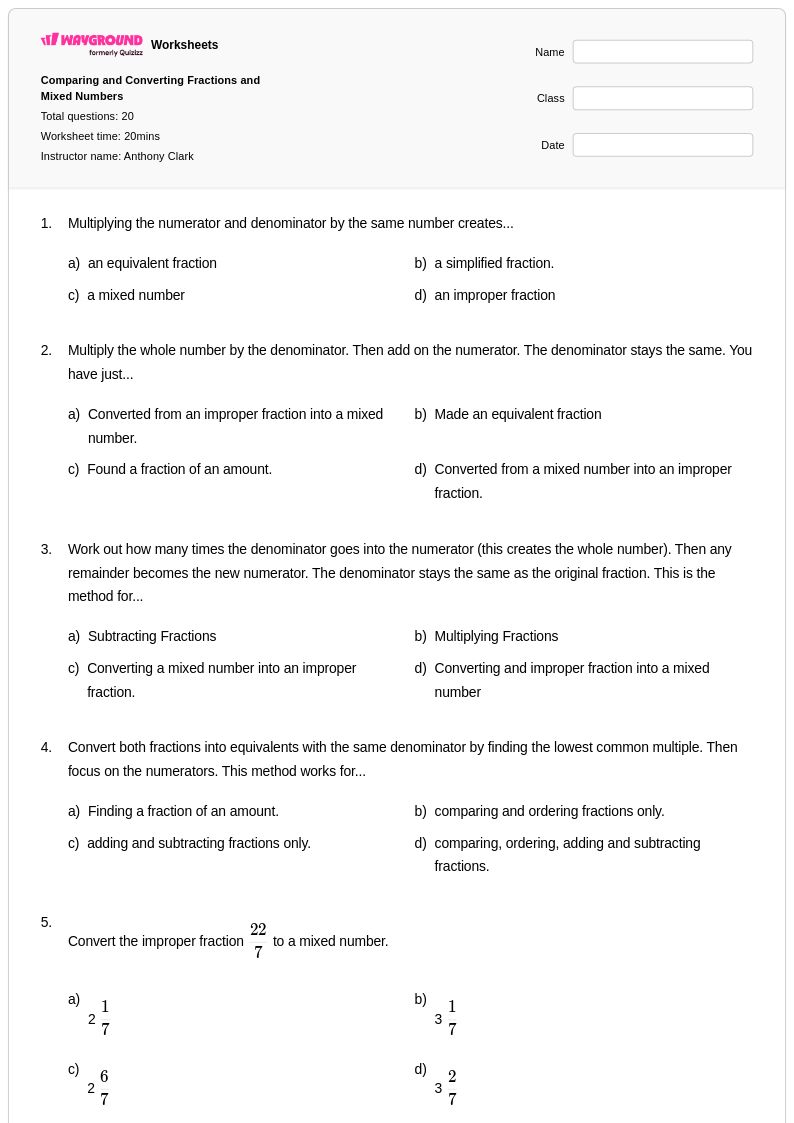
20 Q
5th - Uni
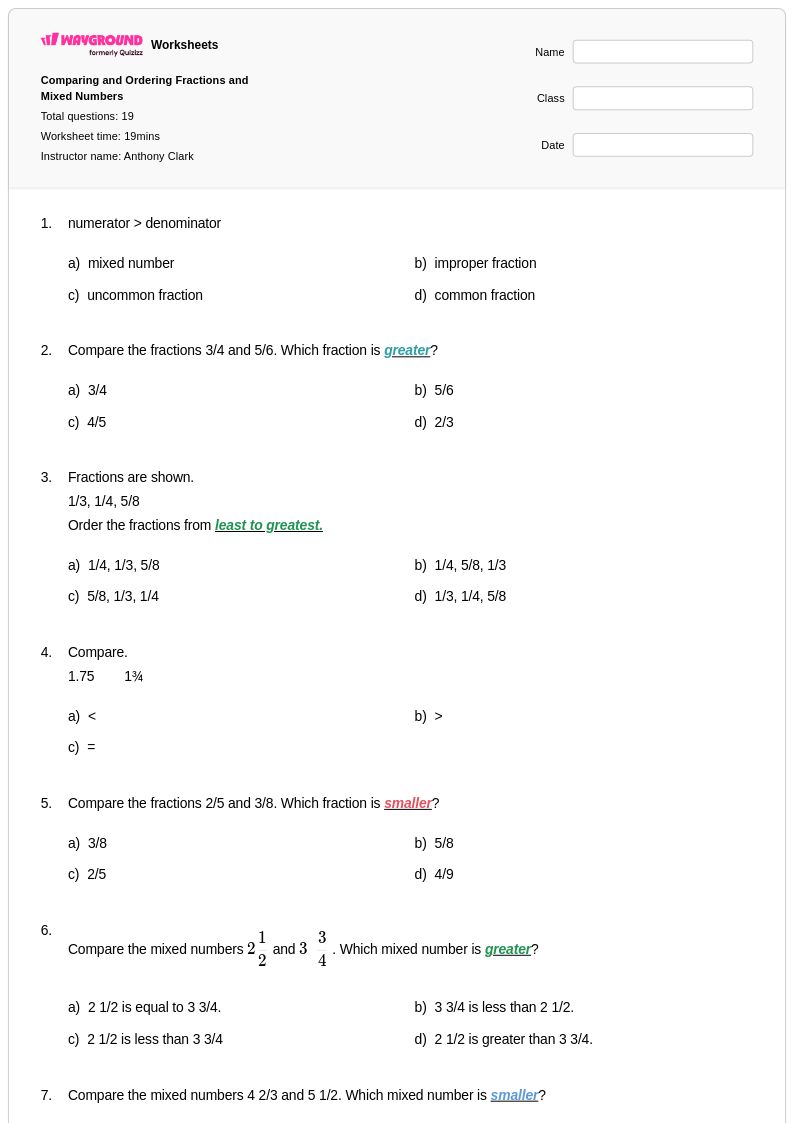
19 Q
5th - Uni
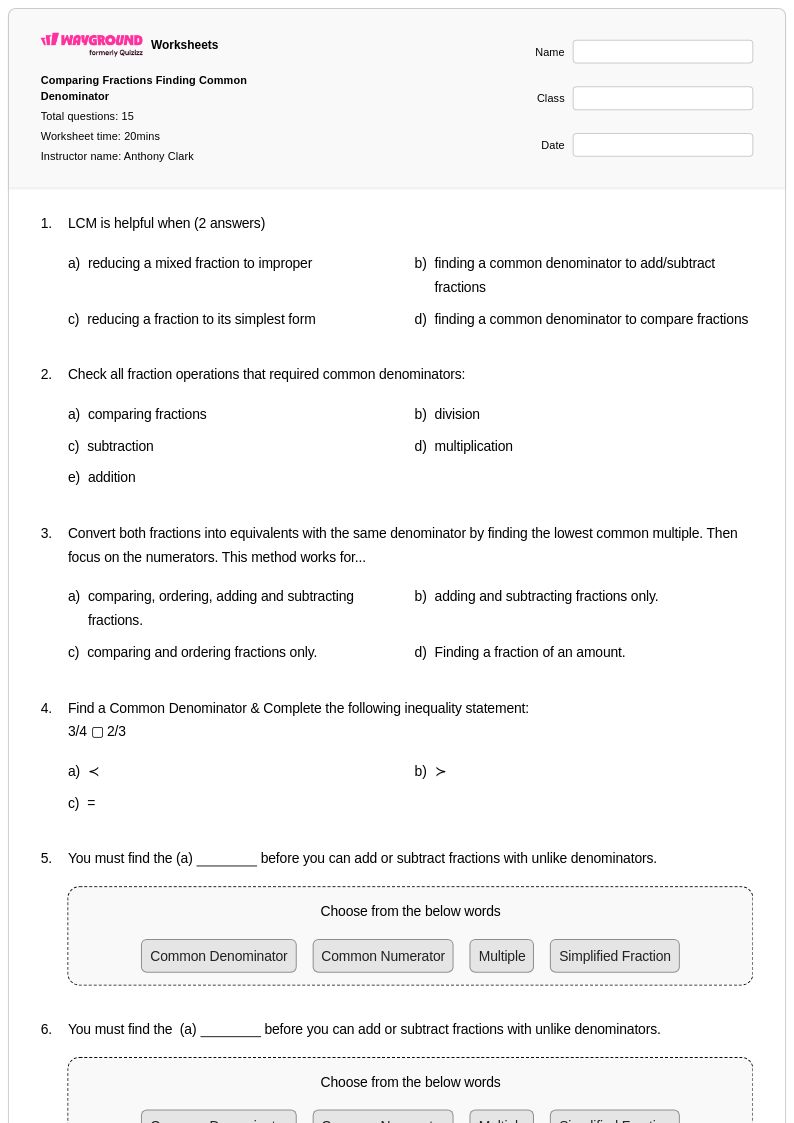
20 Q
4th - Uni

18 Q
6th - 8th
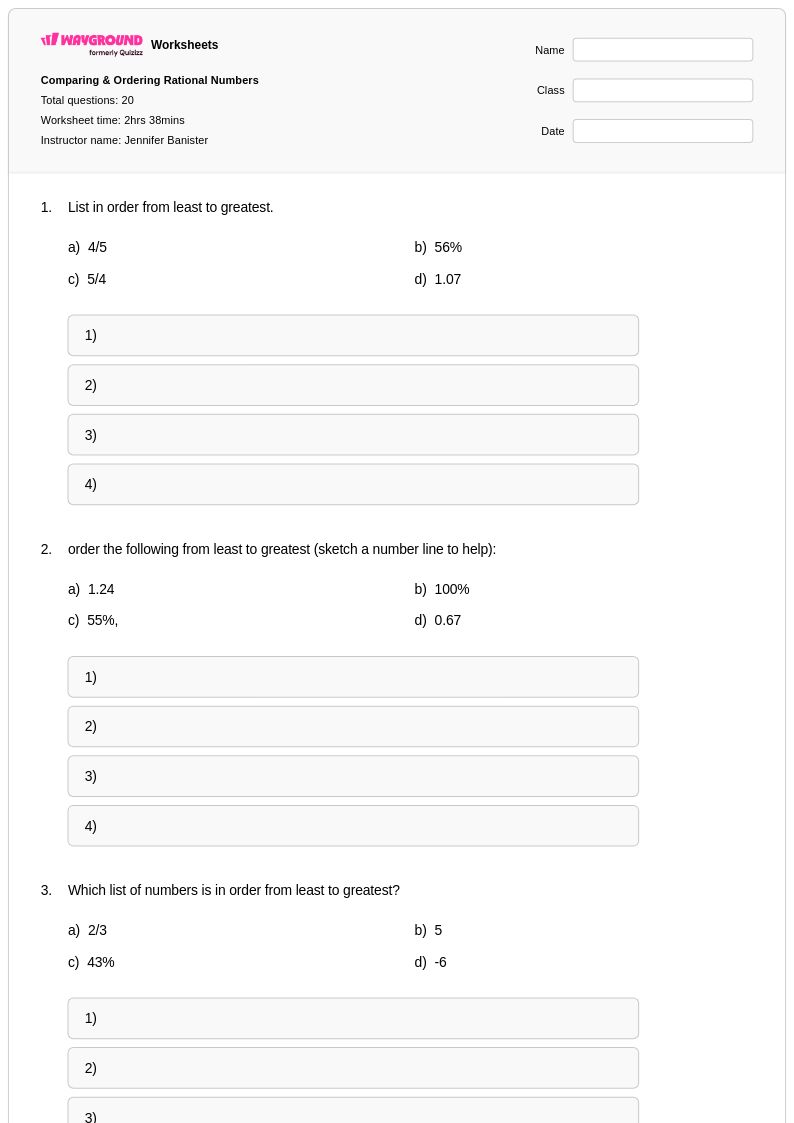
20 Q
6th - 8th
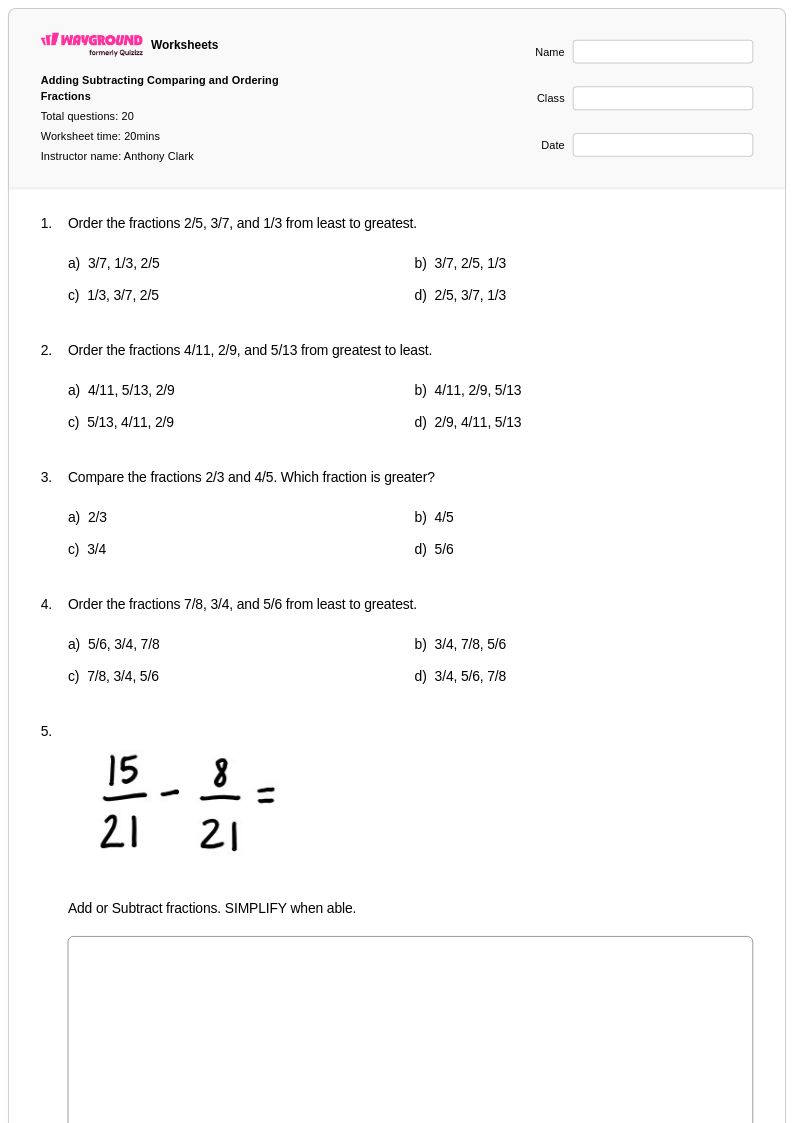
20 Q
5th - Uni
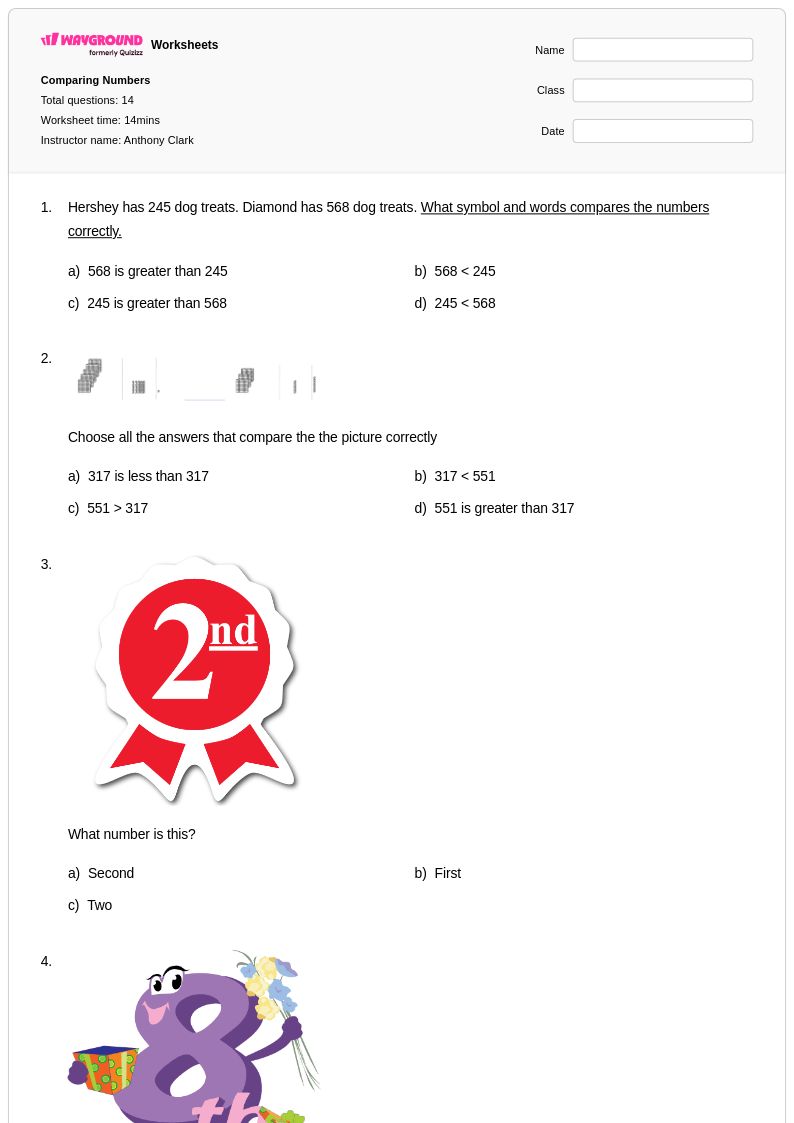
14 Q
2nd - Uni
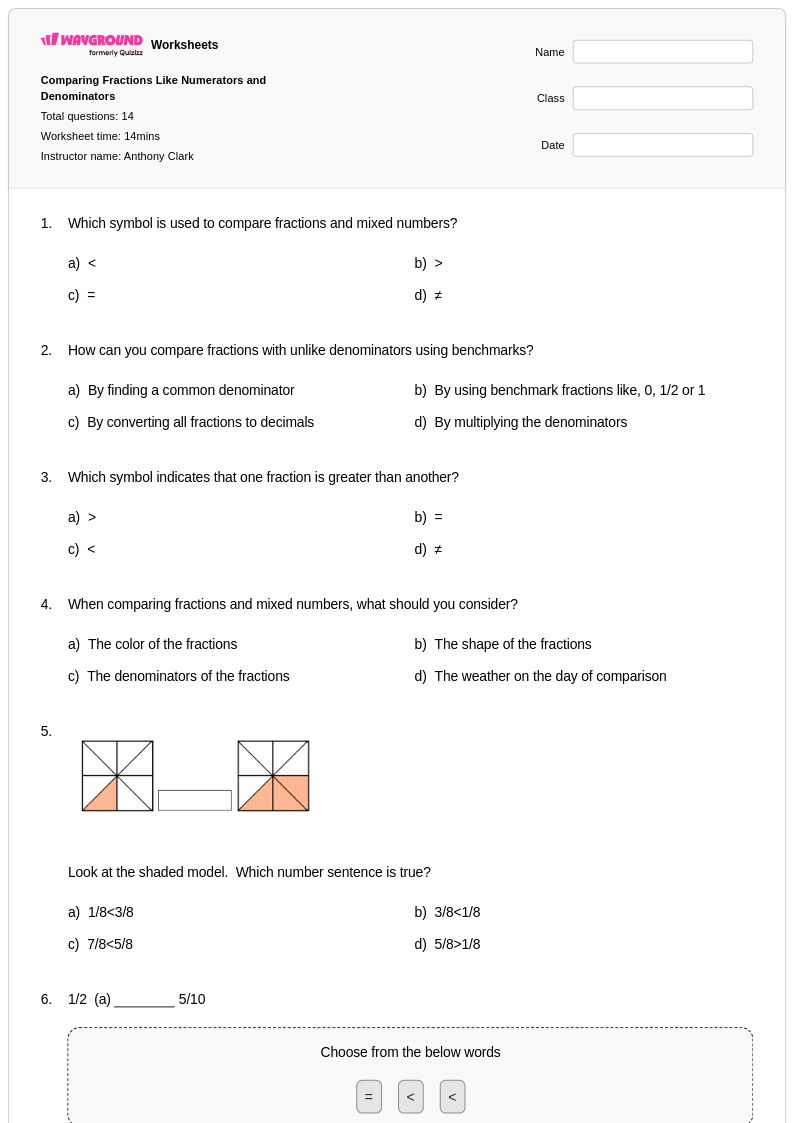
14 Q
4th - Uni
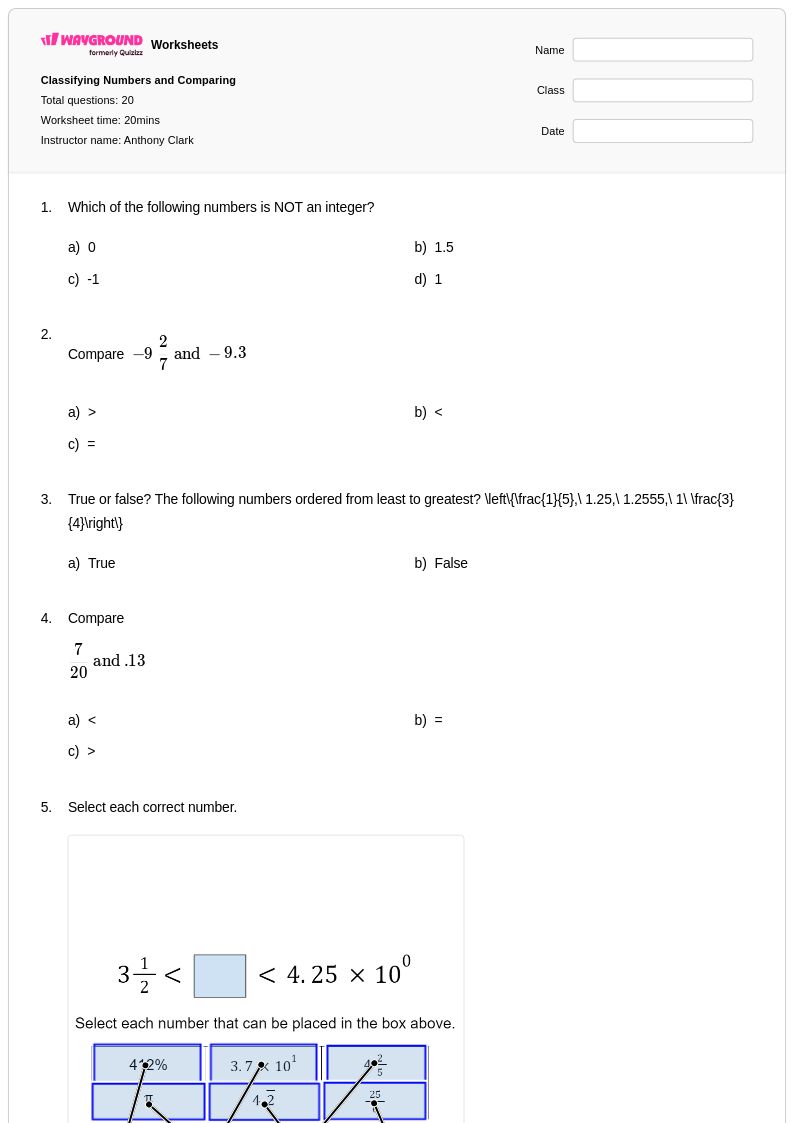
20 Q
7th - Uni
Explore Other Subject Worksheets for class 8
Explore printable Comparing Mixed Numbers worksheets for Class 8
Comparing mixed numbers represents a crucial mathematical skill for Class 8 students as they advance through more complex fraction operations and prepare for algebraic concepts. Wayground's comprehensive collection of comparing mixed numbers worksheets provides structured practice opportunities that help students master the essential techniques of converting mixed numbers to improper fractions, finding common denominators, and applying comparison strategies with confidence. These carefully designed practice problems guide students through systematic approaches to ordering mixed numbers from least to greatest, identifying equivalent values, and recognizing patterns in fractional relationships. Each worksheet includes a detailed answer key that supports independent learning and self-assessment, while the free printable pdf format ensures accessibility for both classroom instruction and home practice sessions.
Wayground's extensive library, featuring millions of teacher-created resources, offers educators powerful tools to support Class 8 fraction instruction through advanced search and filtering capabilities that quickly locate worksheets aligned with specific learning standards and curriculum requirements. The platform's differentiation features enable teachers to customize comparing mixed numbers worksheets based on individual student needs, whether providing remediation for struggling learners or enrichment challenges for advanced students. Available in both printable and digital formats, these resources seamlessly integrate into lesson planning workflows, support targeted skill practice during math centers, and provide flexible assessment options that accommodate diverse classroom environments. The robust filtering system allows educators to efficiently locate materials by difficulty level, problem type, and instructional focus, streamlining the process of creating cohesive learning experiences that build mathematical understanding progressively.
FAQs
How do I teach students to compare mixed numbers?
What exercises help students practice comparing mixed numbers?
What mistakes do students make when comparing mixed numbers?
How can I use a comparing mixed numbers worksheet in class?
How does comparing mixed numbers fit into the Common Core math progression?
How can I differentiate mixed-number comparison practice?
What grade do students learn to compare mixed numbers?