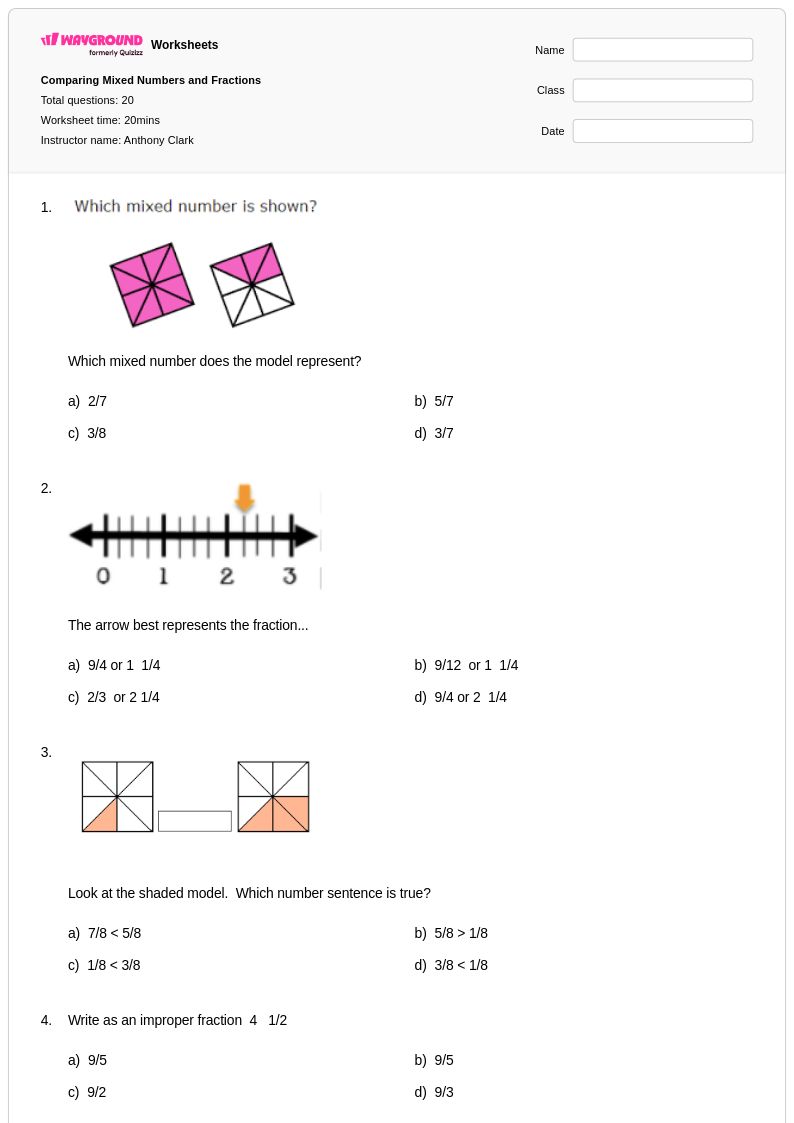
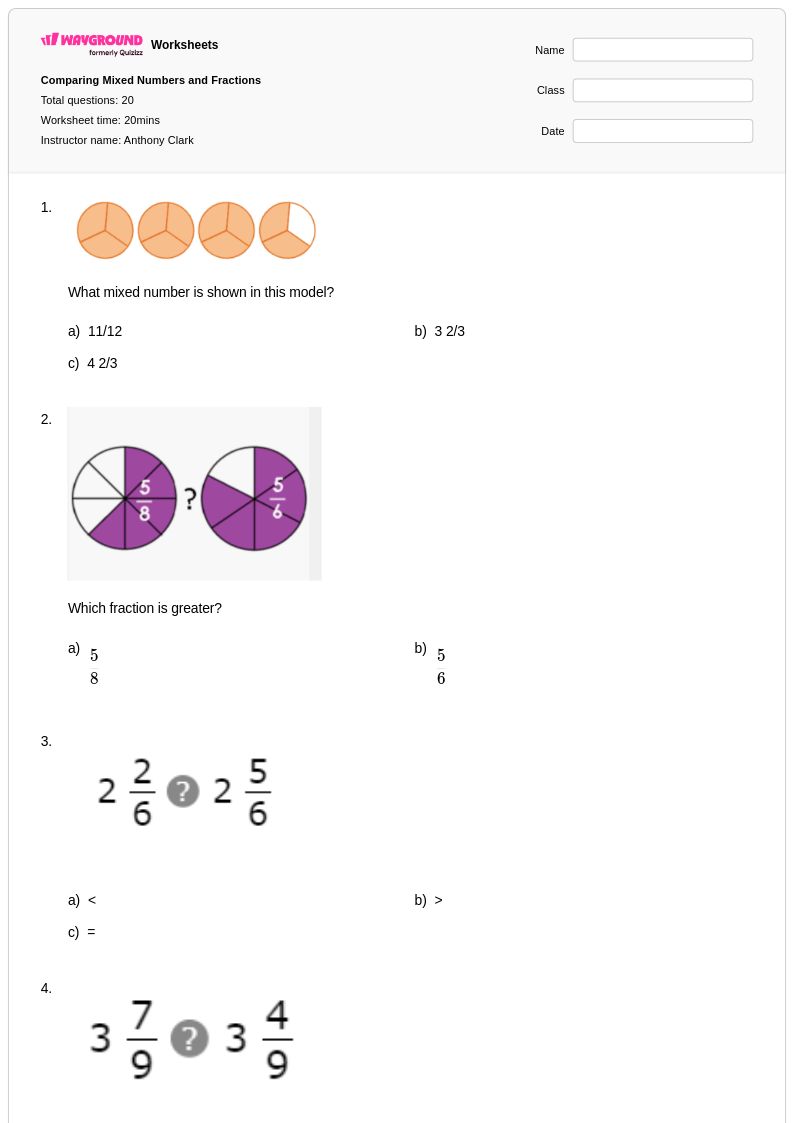
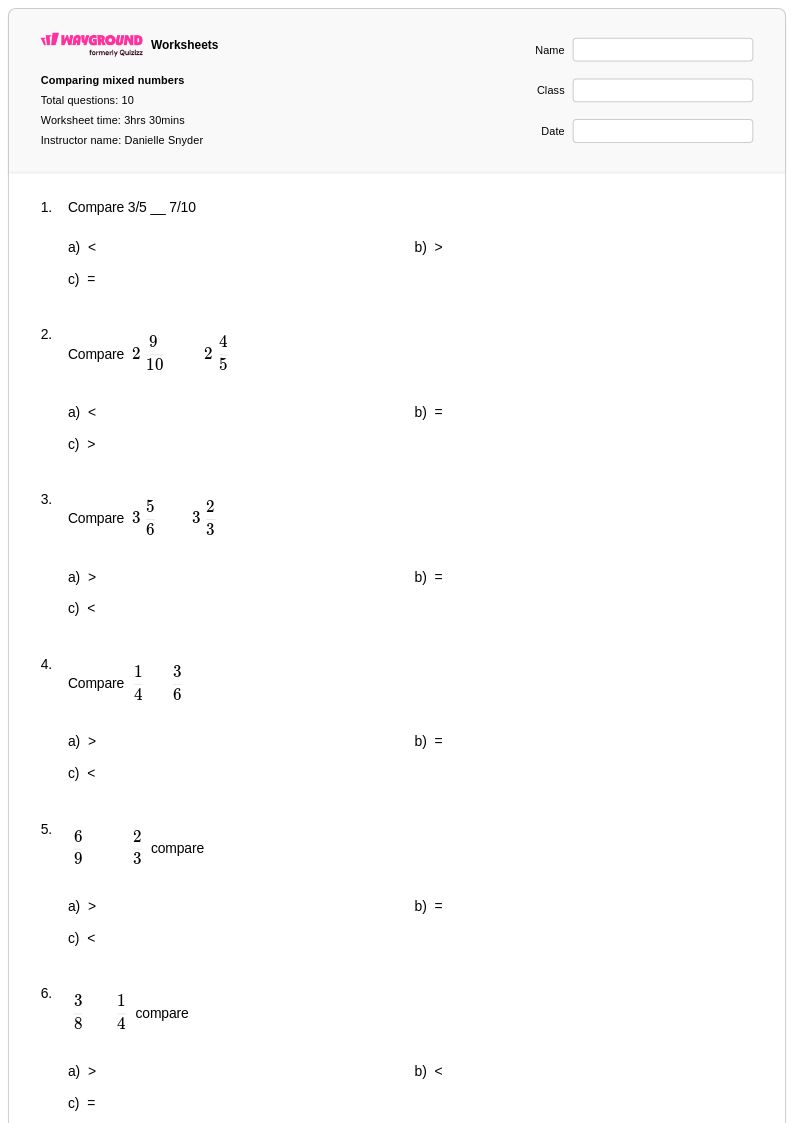
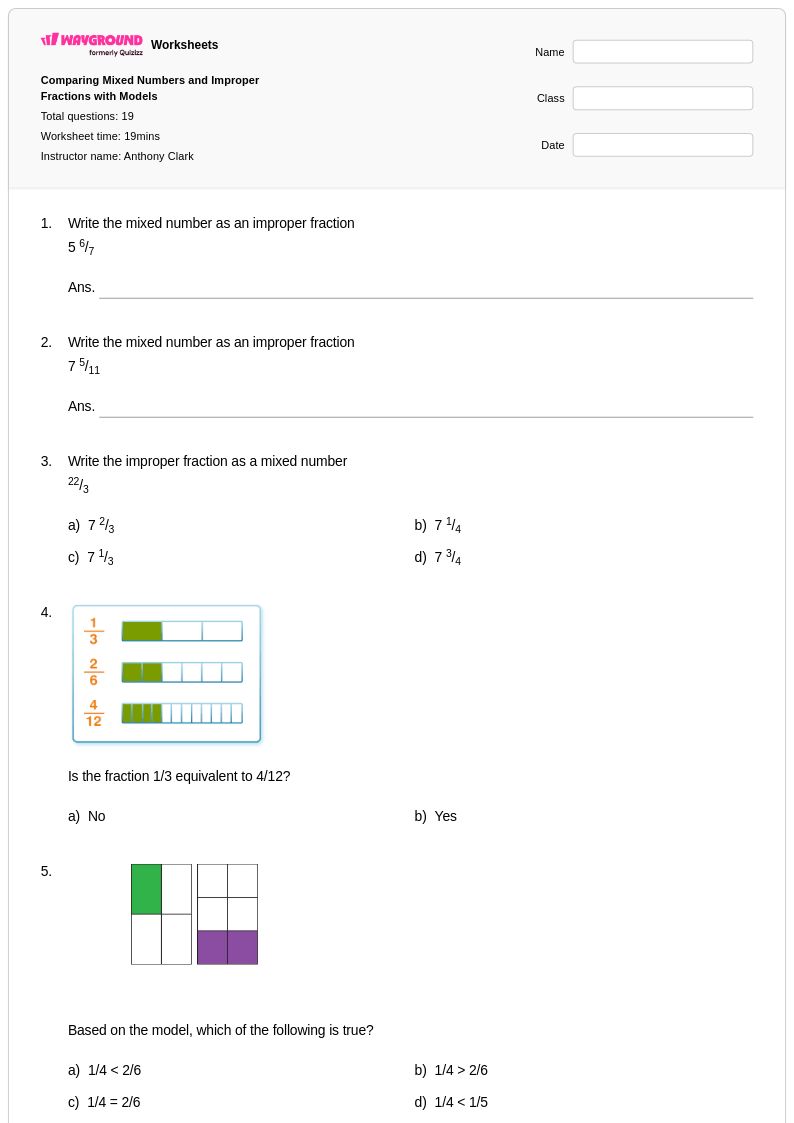
Free Printable Comparing Mixed Numbers Worksheets for Class 5
Class 5 comparing mixed numbers worksheets provide free printables with practice problems and answer keys to help students master evaluating and ordering mixed number fractions through engaging mathematical exercises.
Explore printable Comparing Mixed Numbers worksheets for Class 5
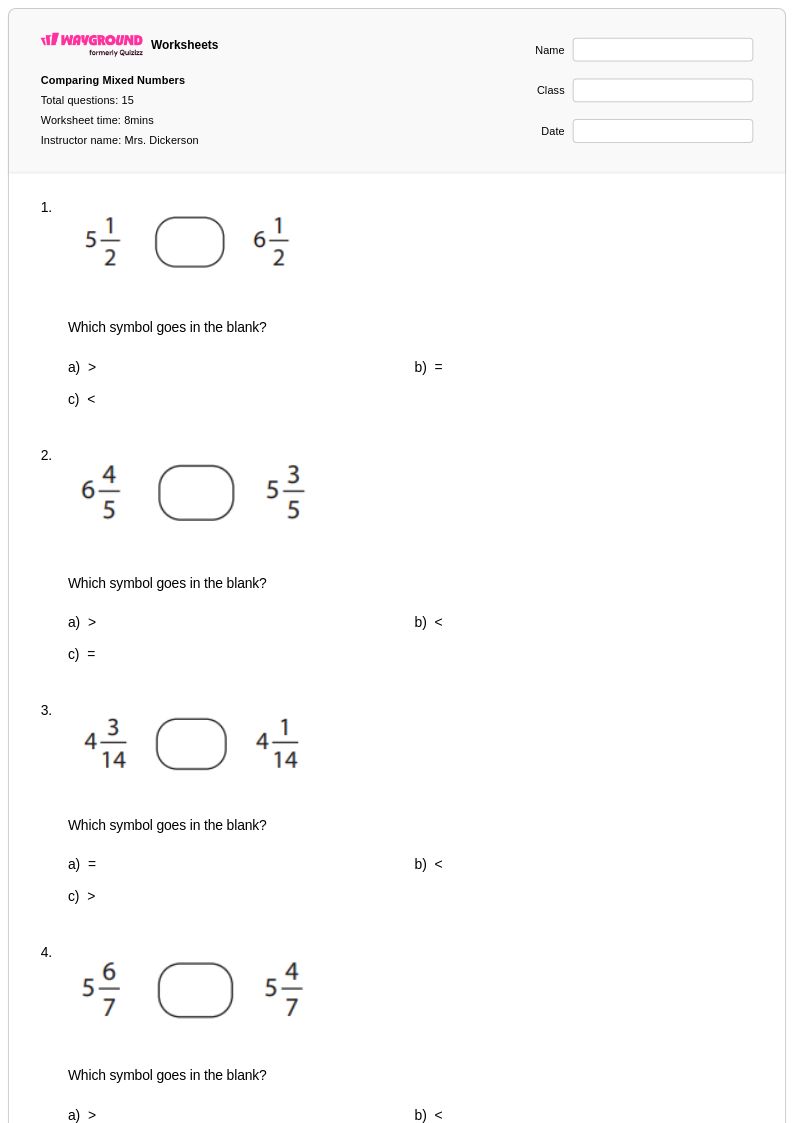
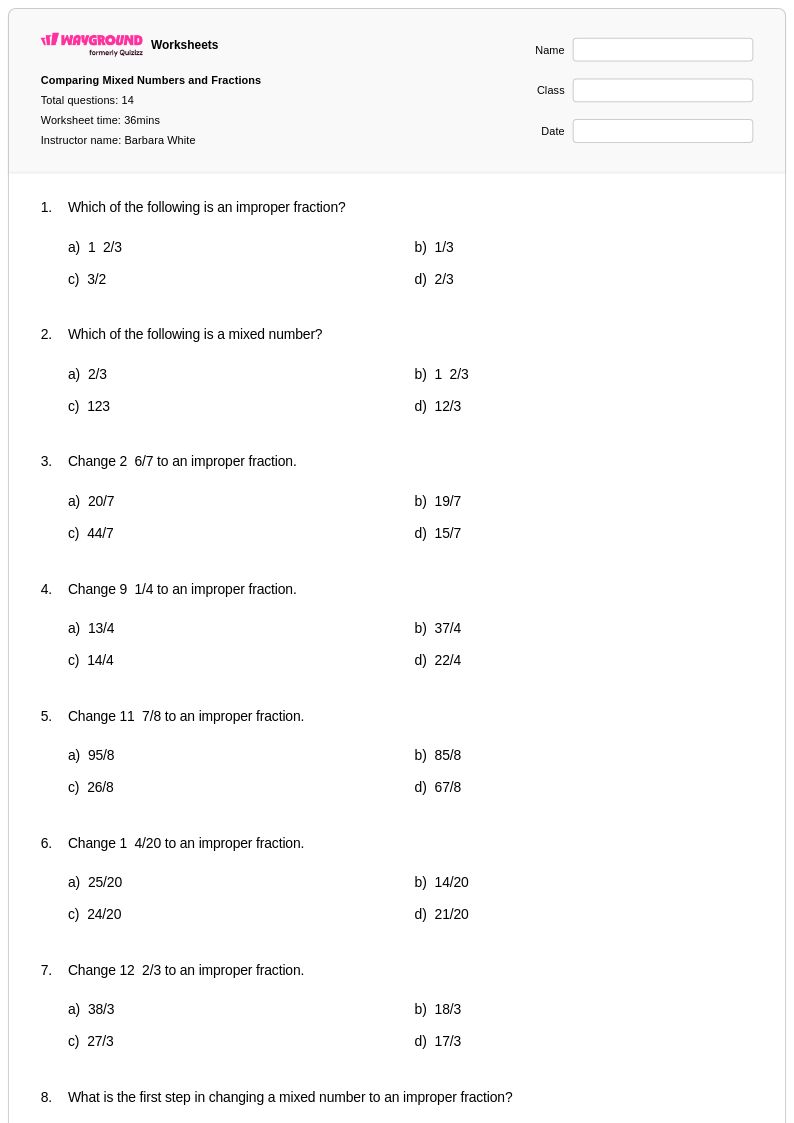
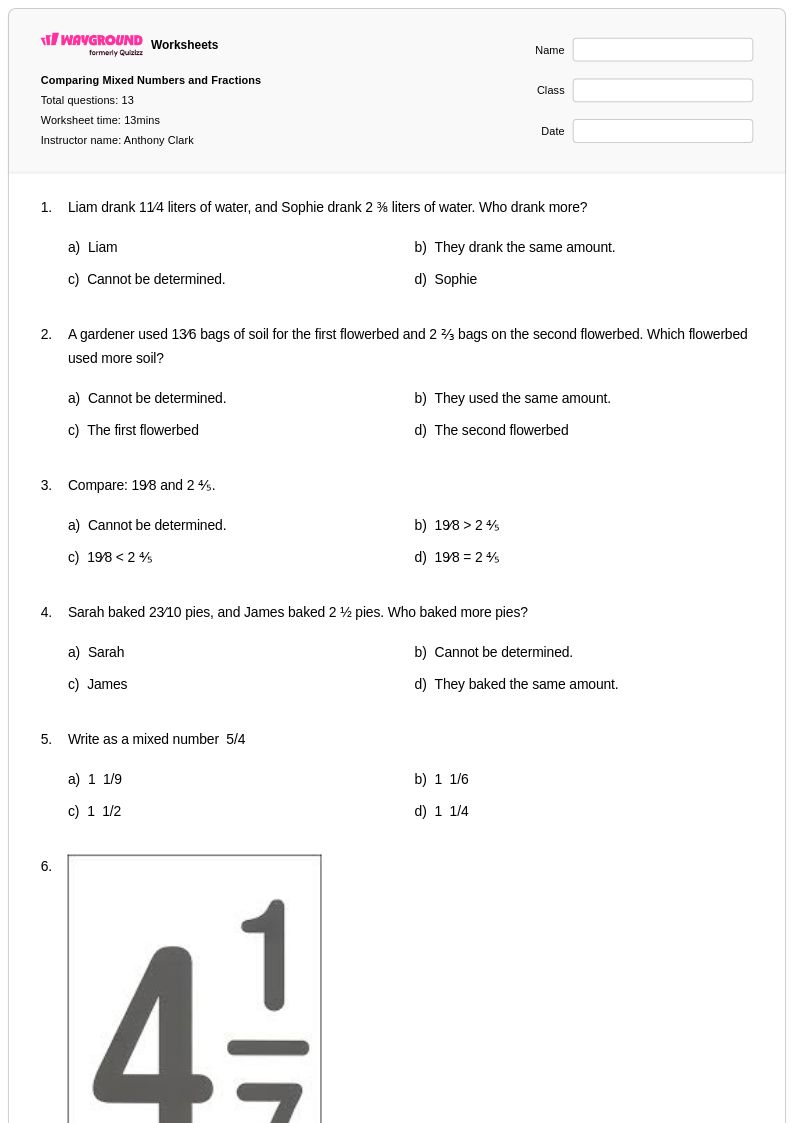
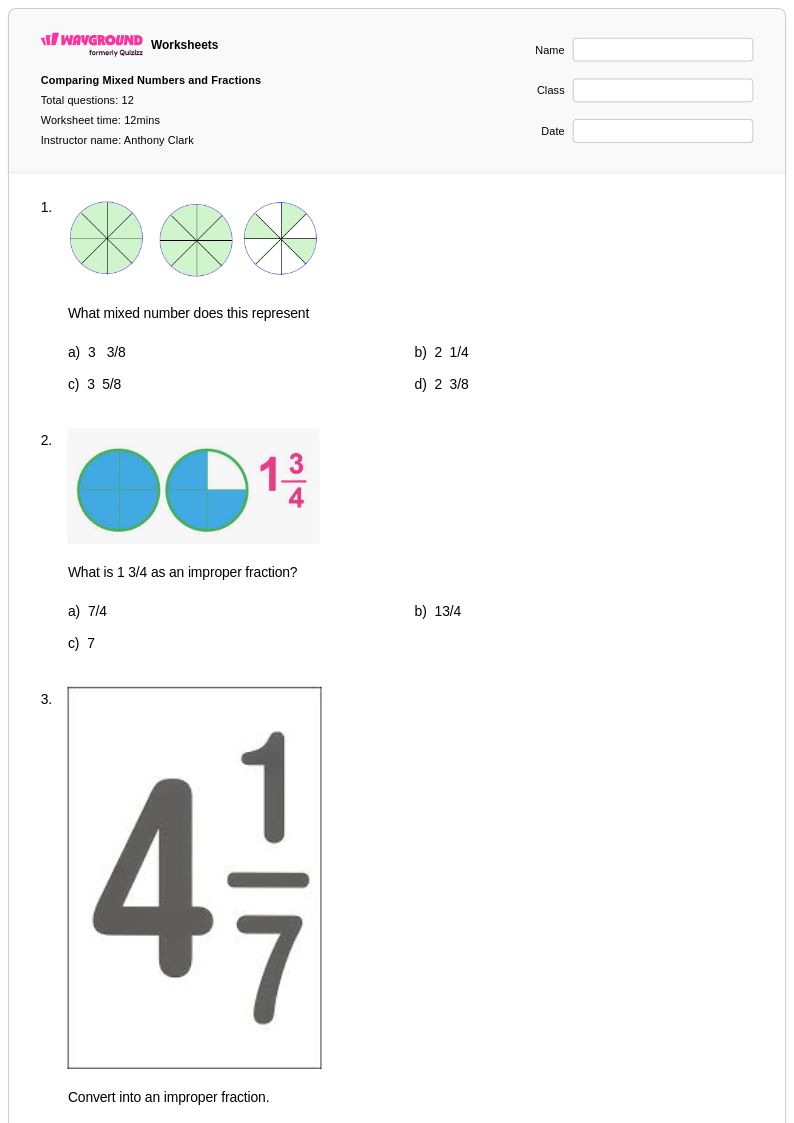
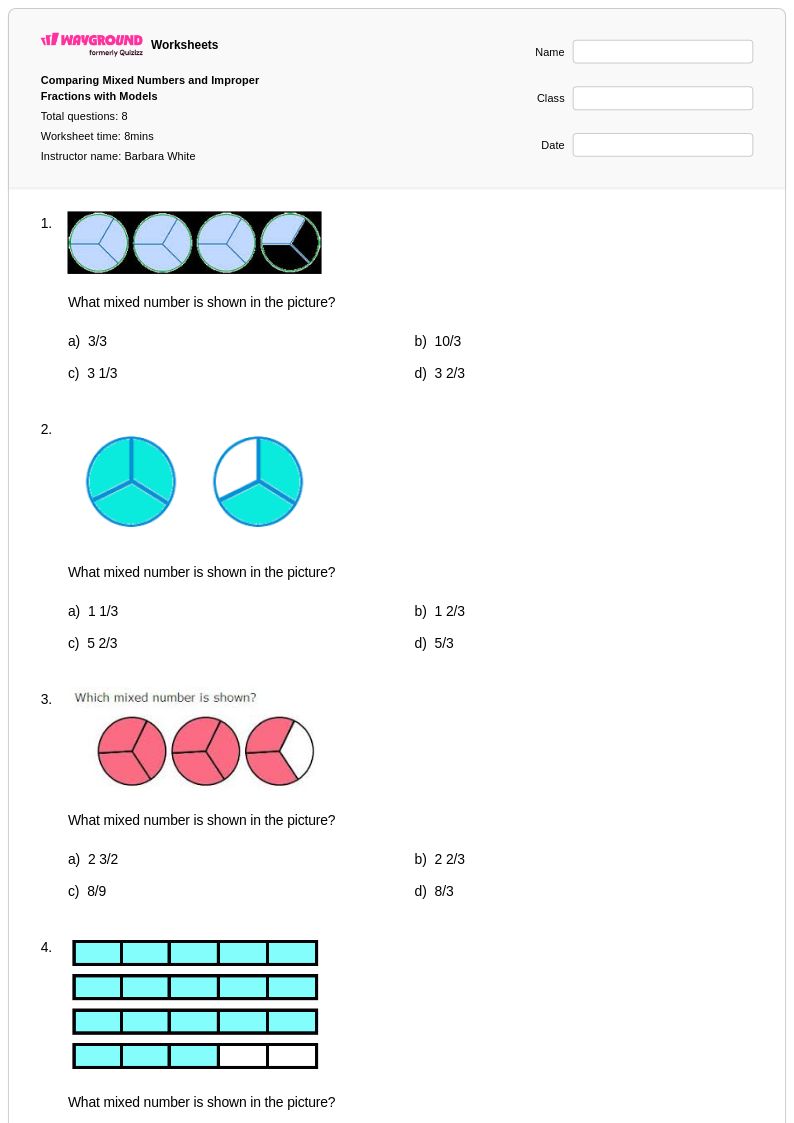
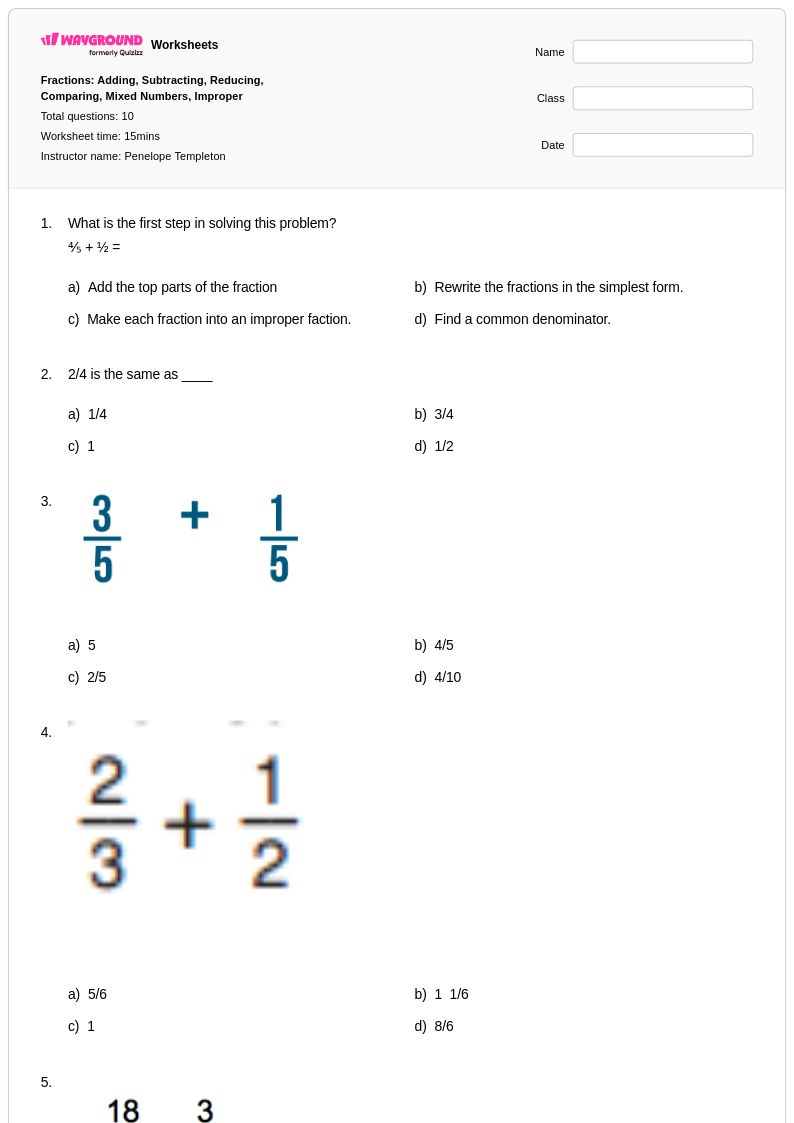
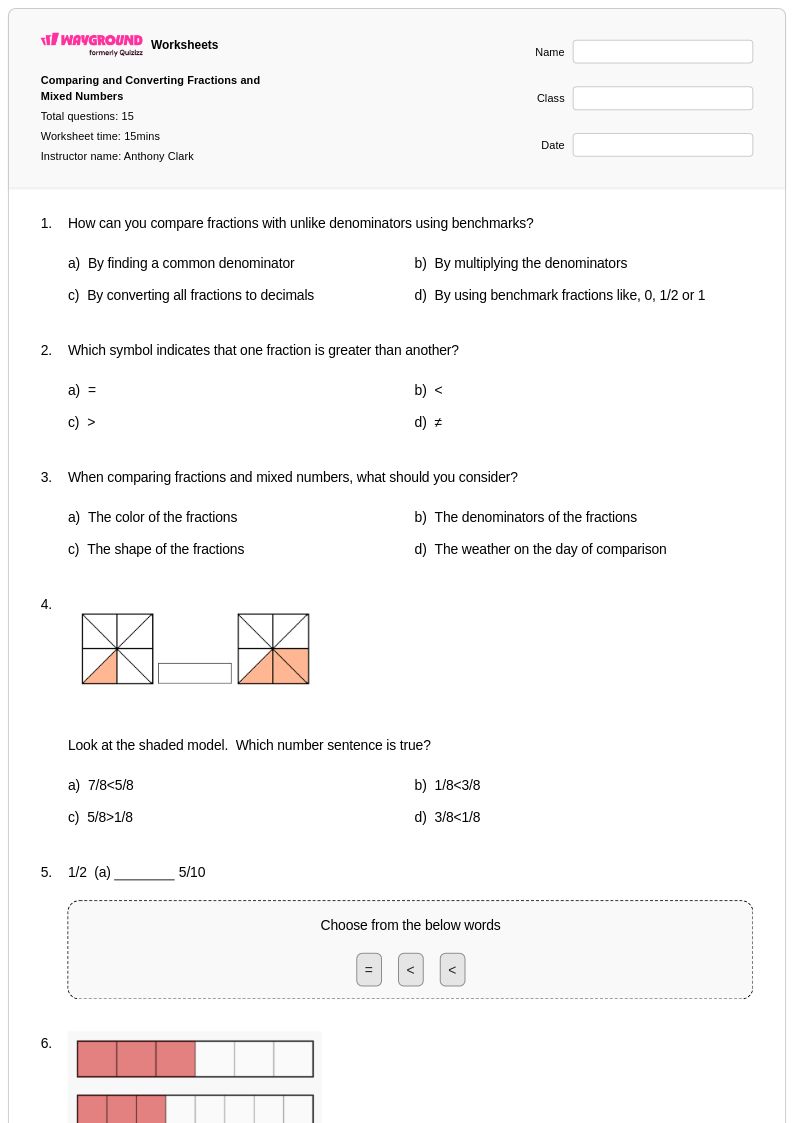
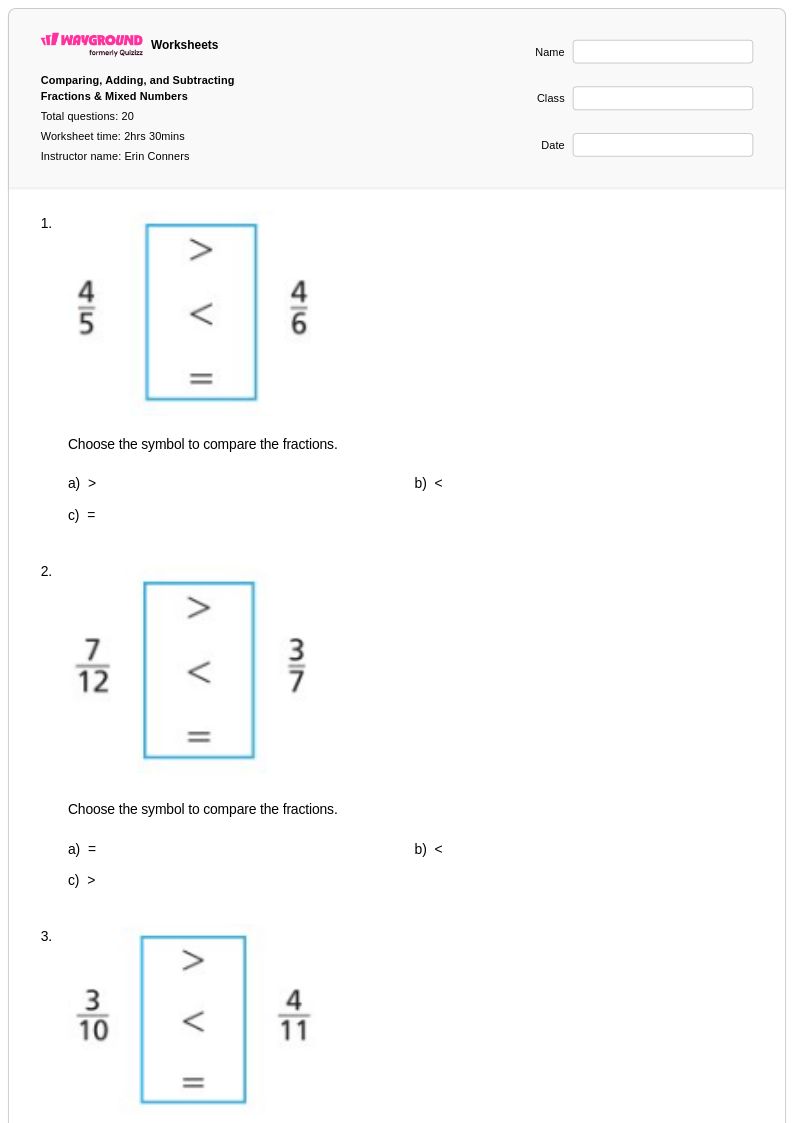
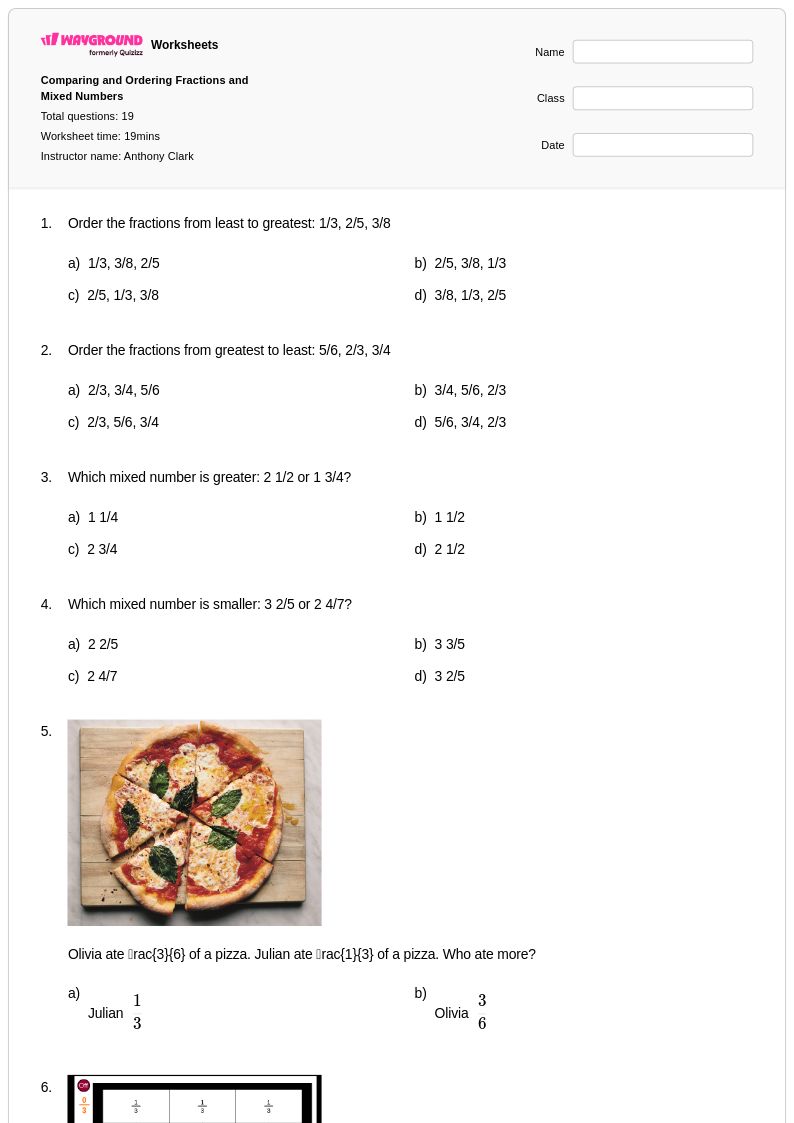
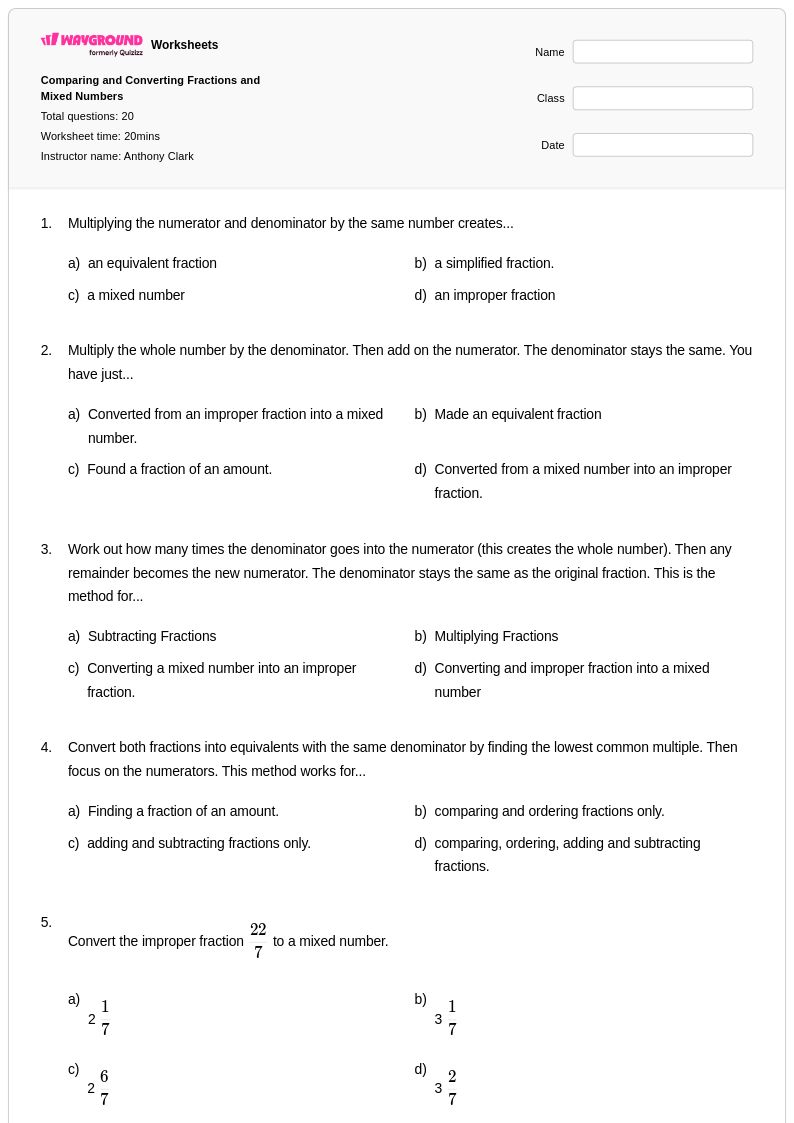
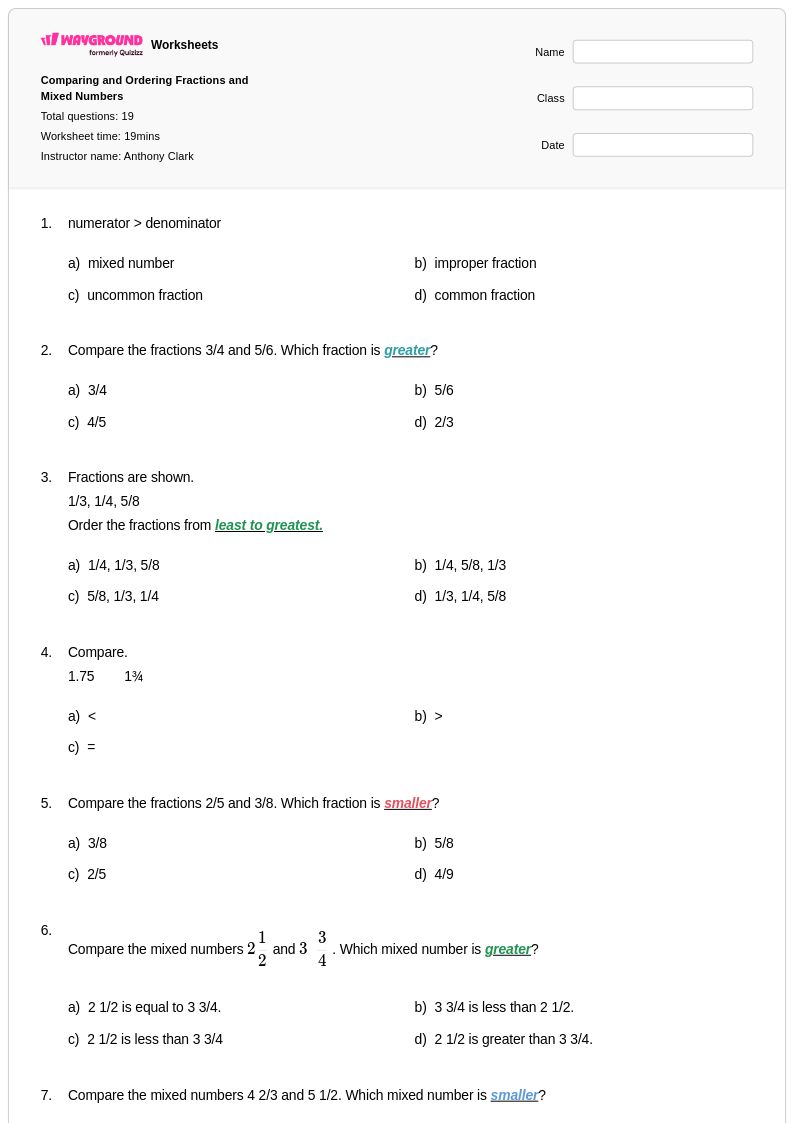
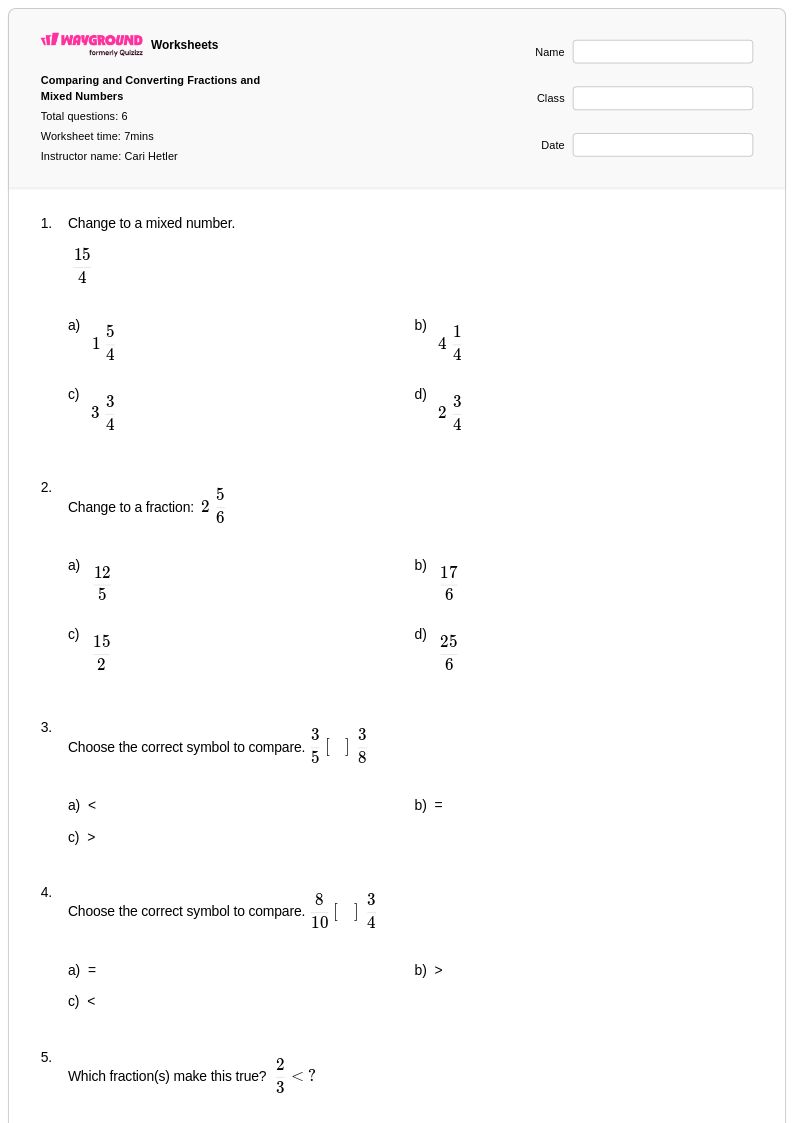
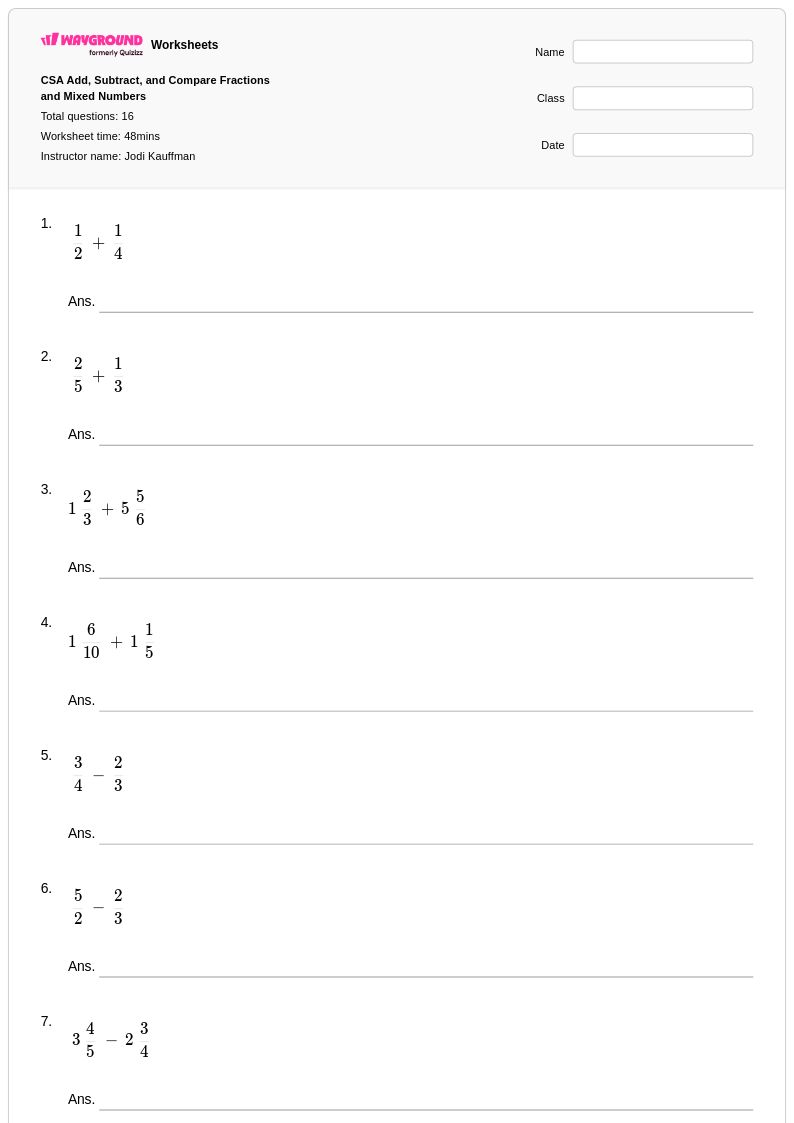
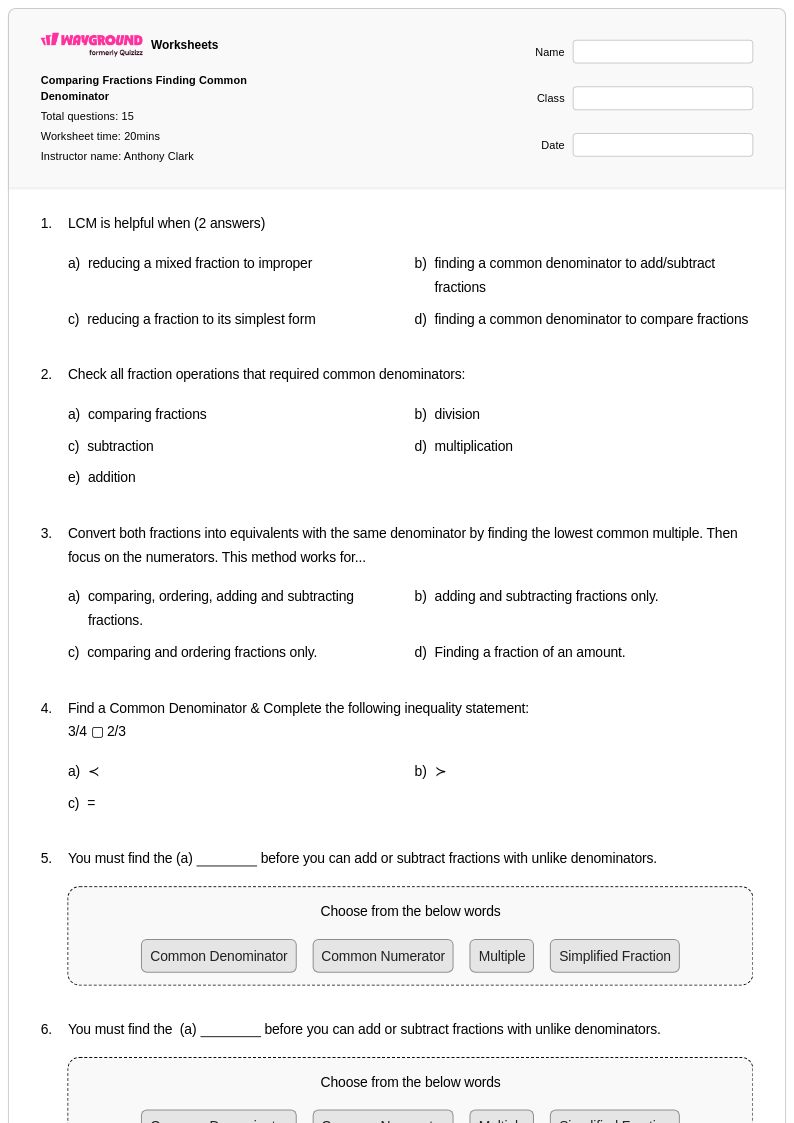
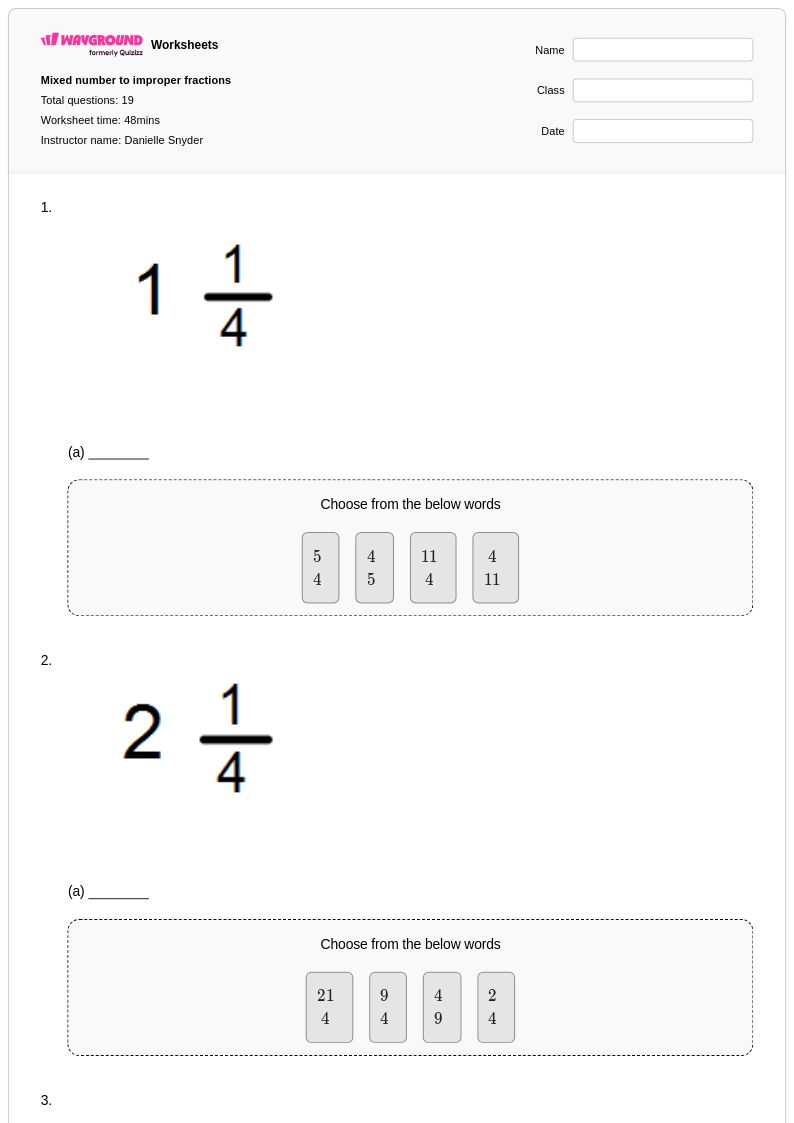
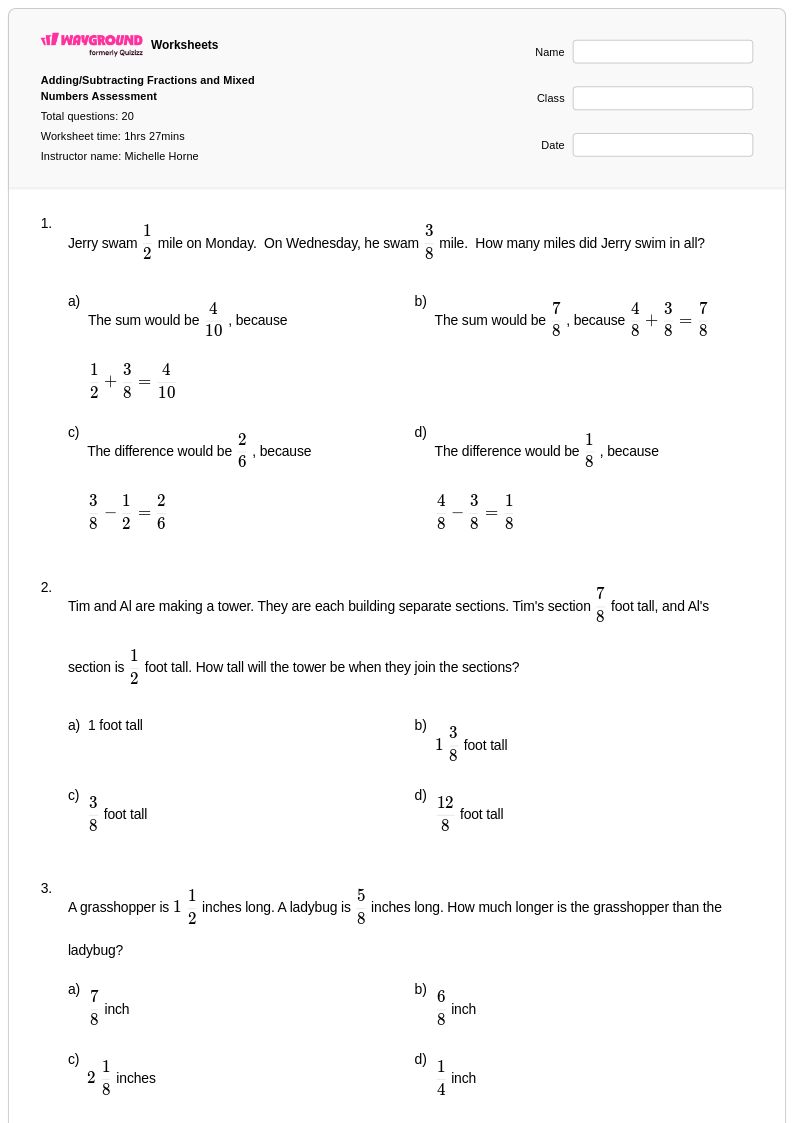
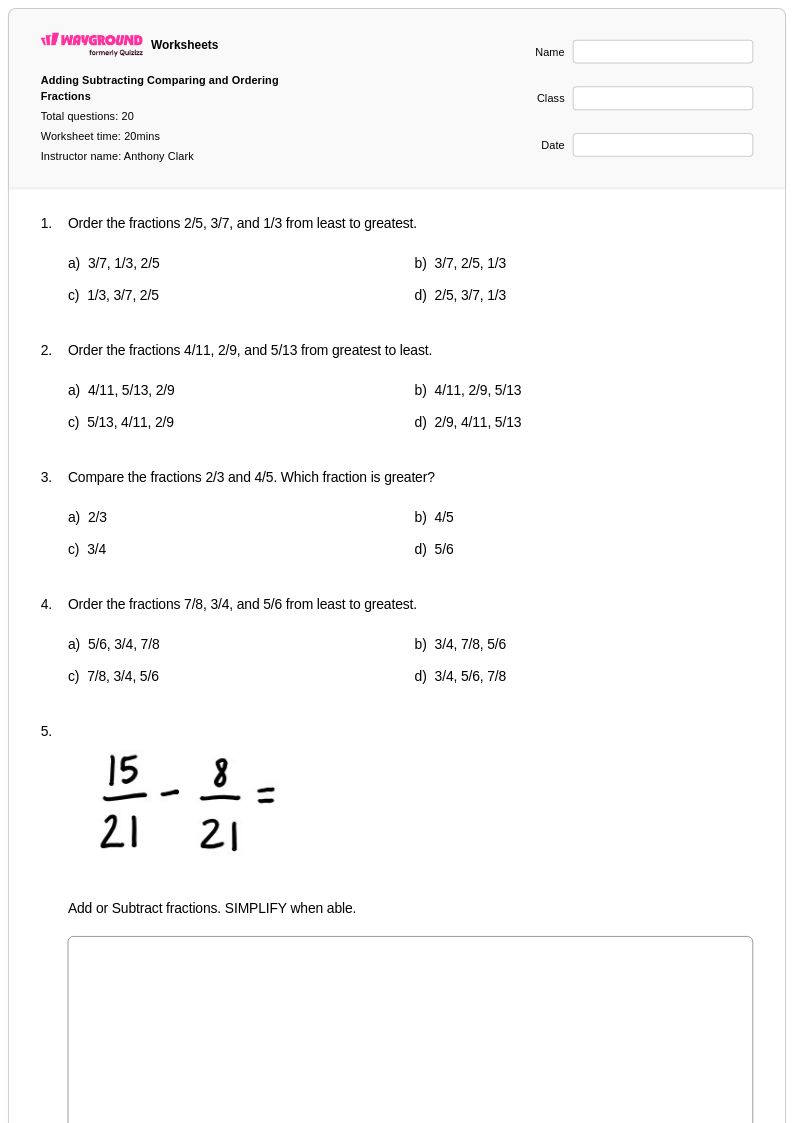
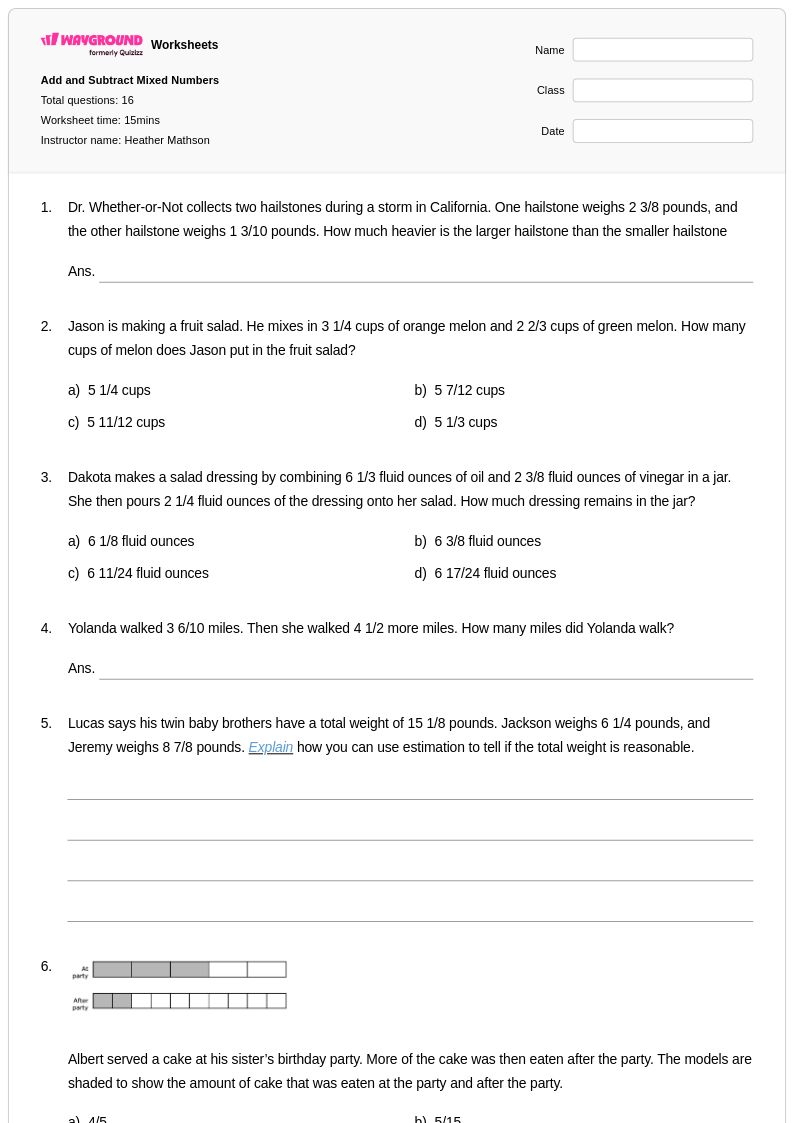
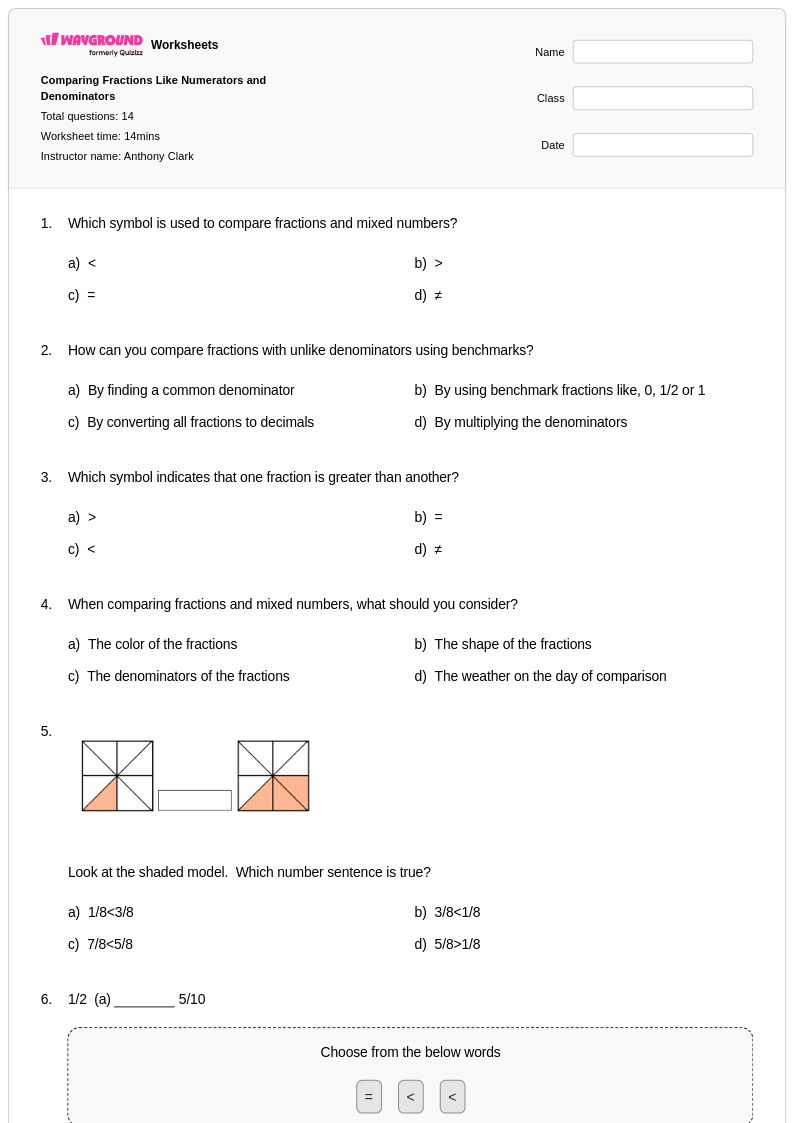
Comparing mixed numbers represents a critical milestone in Class 5 mathematics, requiring students to synthesize their understanding of whole numbers, fractions, and place value concepts. Wayground's comprehensive collection of comparing mixed numbers worksheets provides targeted practice problems that guide fifth-grade students through systematic approaches to evaluate and order these complex numerical expressions. These carefully designed printables strengthen essential skills including converting mixed numbers to improper fractions, finding common denominators, and applying comparison strategies across various contexts. Each worksheet includes a detailed answer key that supports both independent learning and guided instruction, while the free pdf format ensures accessibility for classroom and home use.
Wayground's extensive library, featuring millions of teacher-created resources, empowers educators with robust tools for delivering effective comparing mixed numbers instruction to Class 5 students. The platform's advanced search and filtering capabilities allow teachers to quickly locate worksheets aligned with specific mathematical standards and learning objectives, while built-in differentiation tools enable seamless customization for diverse student needs. Available in both printable and digital pdf formats, these resources support flexible lesson planning, targeted remediation for struggling learners, and enrichment opportunities for advanced students. Teachers can efficiently modify difficulty levels, adjust problem types, and create personalized practice sets that address individual student gaps in comparing mixed numbers, ensuring comprehensive skill development across the entire classroom.
FAQs
How do I teach fifth graders to compare mixed numbers?
Have students first inspect the whole-number parts, then compare the fractions only when the whole-number parts are equal. Encourage them to select an efficient method—benchmarks, common denominators, or conversion to improper fractions—and explain why the chosen method proves the comparison.
What exercises help Grade 5 students practice comparing mixed numbers?
Effective practice includes comparing pairs with unlike denominators, identifying equivalent mixed numbers, and ordering several values from least to greatest or greatest to least. Problems that mix comparison formats require students to decide when to find a common denominator and when conversion to an improper fraction is more efficient.
What mistakes do fifth graders make when comparing mixed numbers?
Students may compare numerators or denominators in isolation, overlook unequal whole-number parts, or use cross-multiplication without understanding what the products represent. Conversion errors are also common, particularly forgetting to multiply the whole number by the denominator before adding the numerator.
How can I use a Grade 5 comparing mixed numbers worksheet from Wayground?
Wayground worksheets are available as printable PDFs and digital formats, so teachers can host the worksheet as a digital quiz on Wayground or print it for paper-based classwork, homework, or intervention. Every worksheet includes a complete answer key, and teachers can grade physical worksheet submissions by scanning or capturing them with the Wayground for Teachers app.
How does comparing mixed numbers fit the Common Core progression in Grade 5?
Grade 5 work reinforces the Common Core focus on fraction equivalence and comparison while supporting increasingly fluent fraction operations. Students should reason about magnitude, generate equivalent forms when useful, and connect mixed numbers with improper fractions as they prepare for more advanced rational-number work.
How can I differentiate Grade 5 comparing mixed numbers practice?
Provide visual models, like denominators, or partially completed conversions for students needing scaffolds, while using unlike denominators and multi-step ordering tasks for enrichment. Wayground can also generate versions with adjusted font size or spacing, a dyslexia-friendly font, or another language, while digital accommodations include extended time, Read Aloud, reduced answer choices, and Reading Mode.
What grade do students learn to compare mixed numbers?
Students typically build the underlying fraction-comparison skills before Grade 5 and use Grade 5 to strengthen and apply them with mixed numbers. At this level, practice appropriately emphasizes unlike denominators, equivalent forms, strategic conversion, and increasingly independent reasoning.