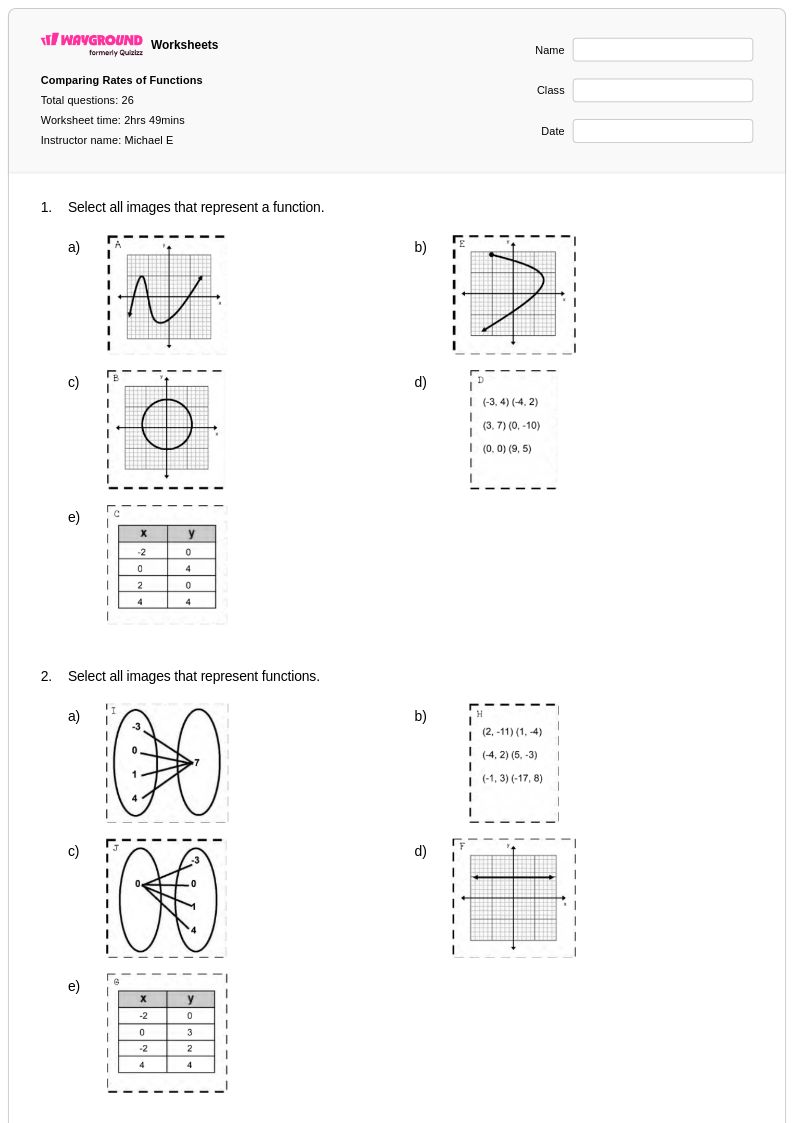
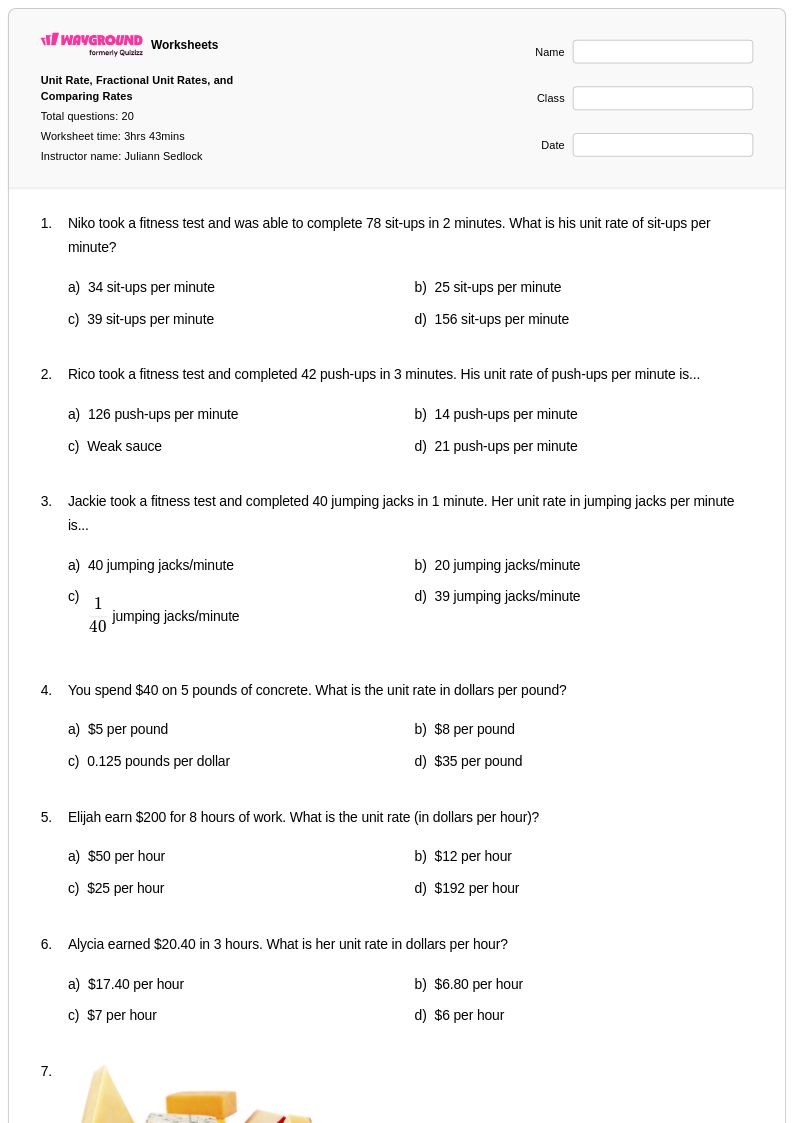
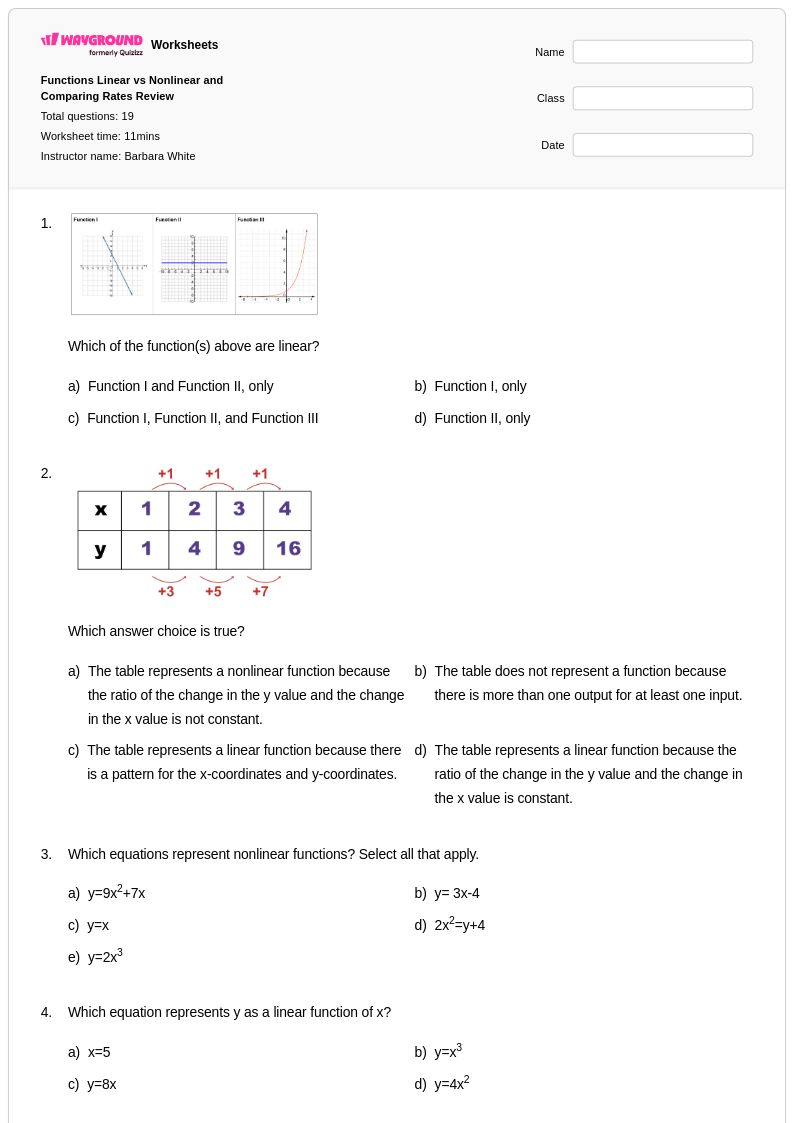
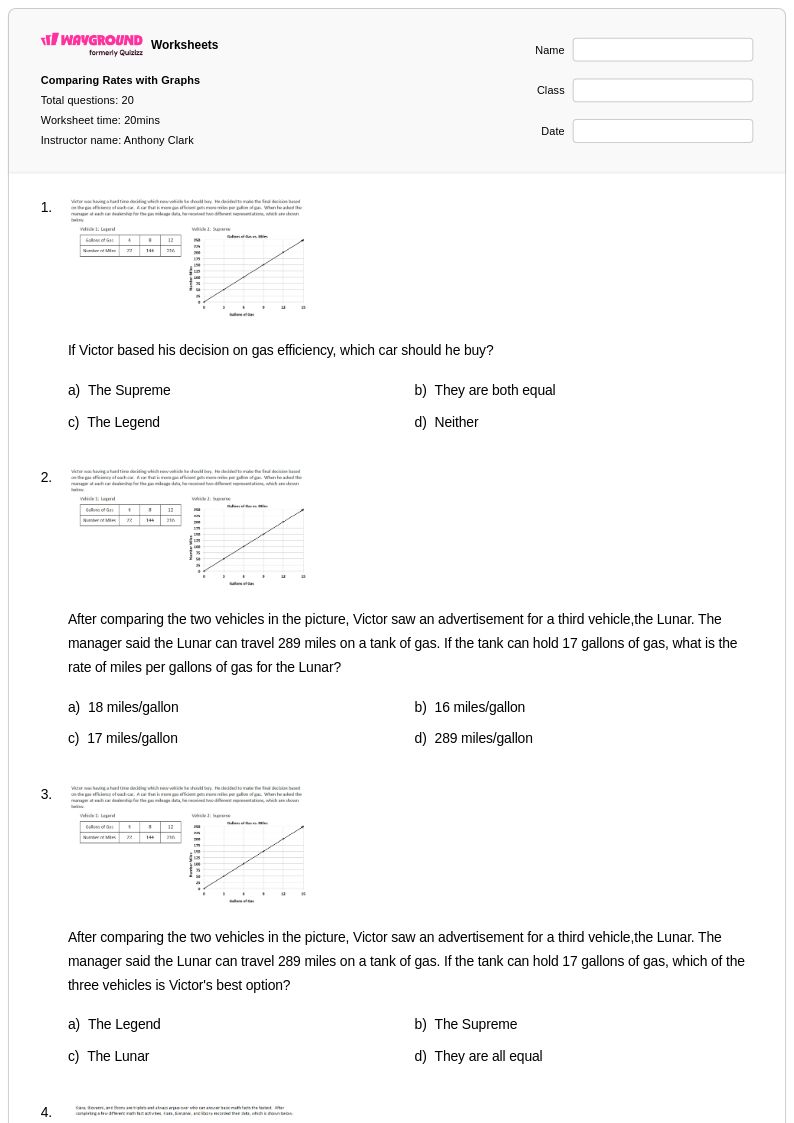
Access free comparing rates worksheets and printables from Wayground that help students master rate comparisons through engaging practice problems, complete with answer keys and downloadable PDFs for effective mathematics learning.
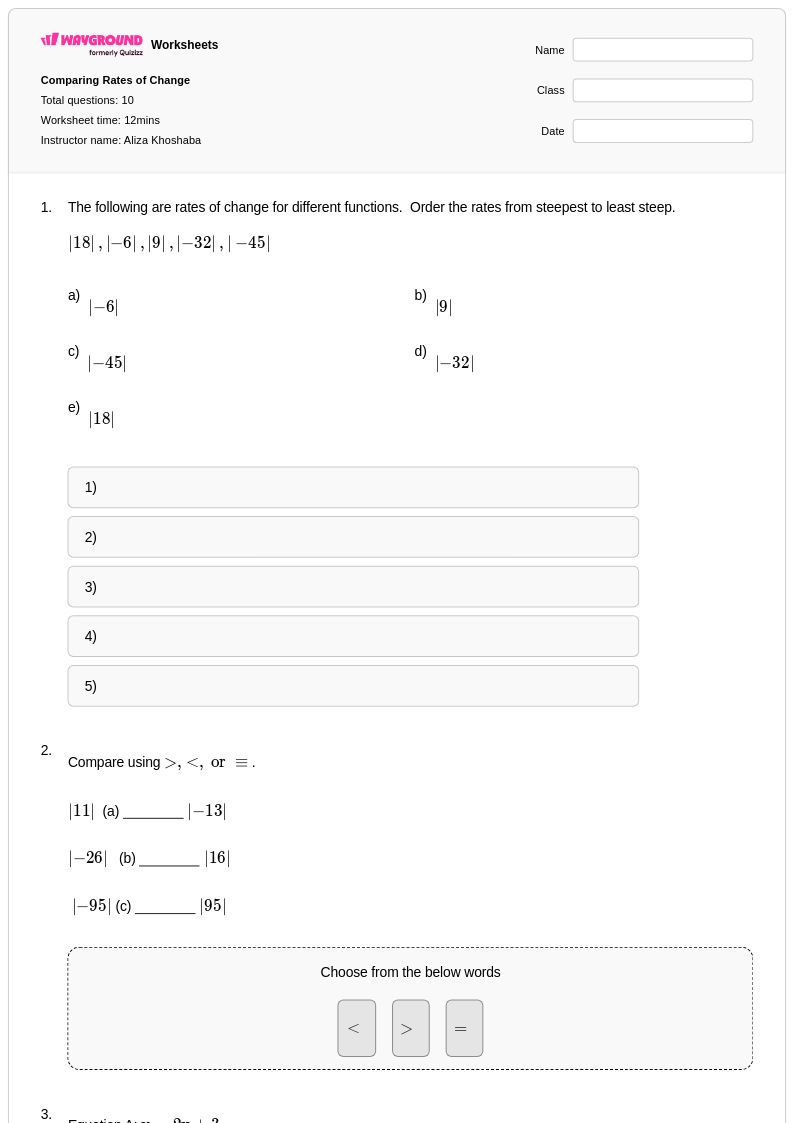
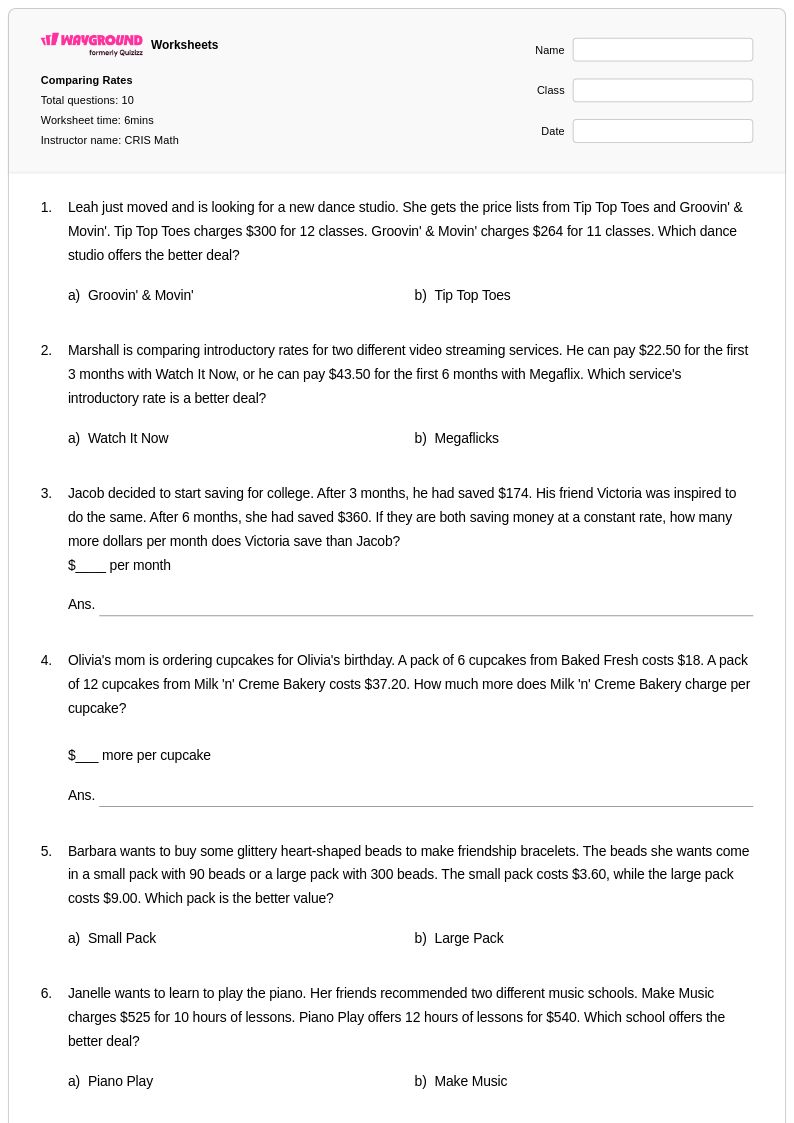
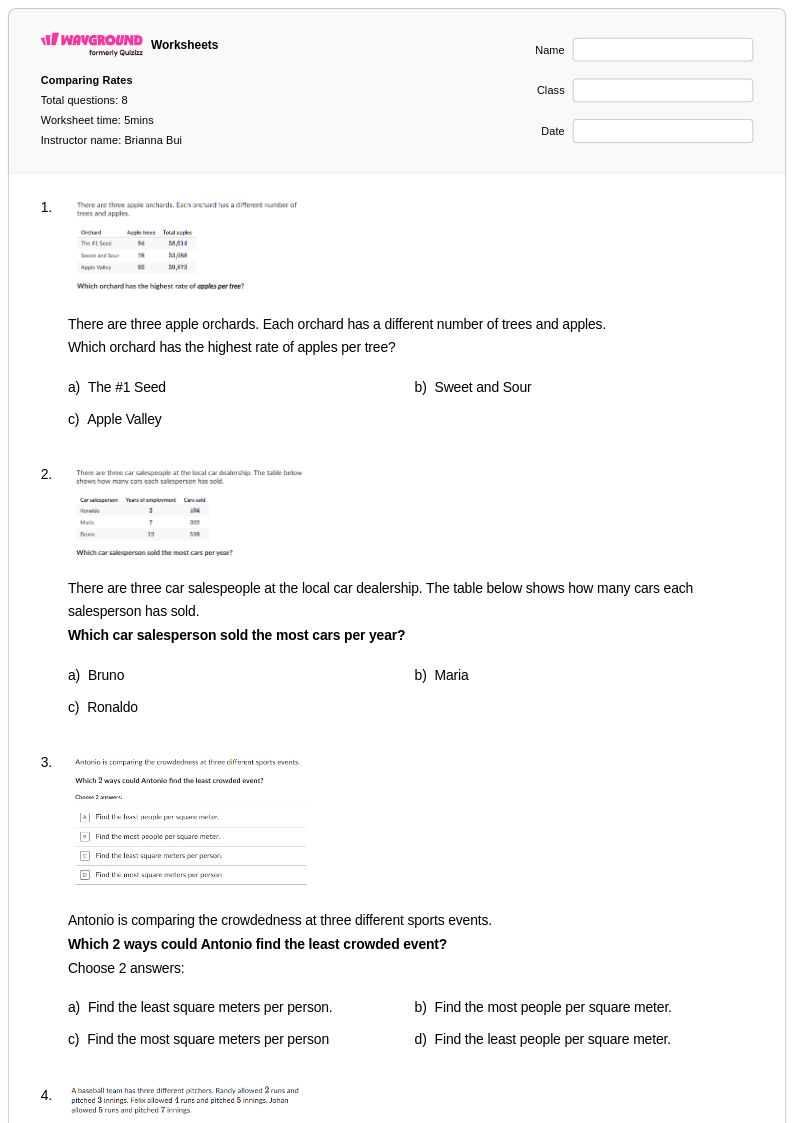
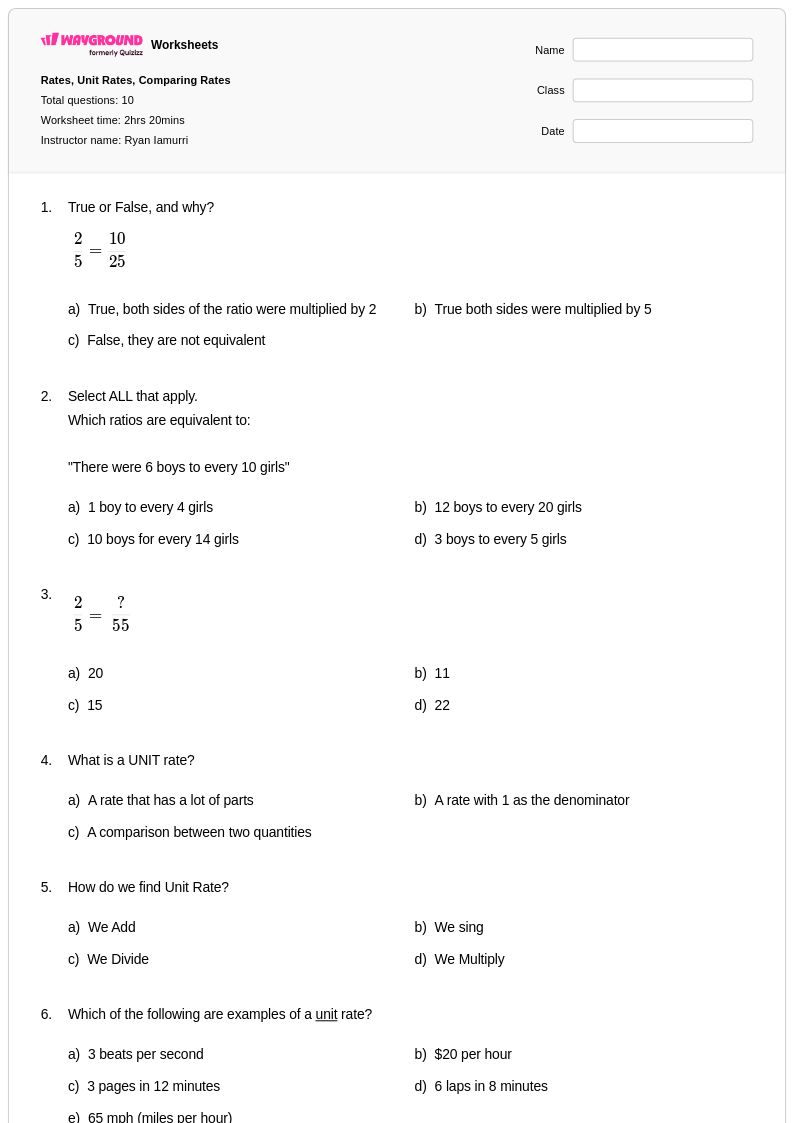
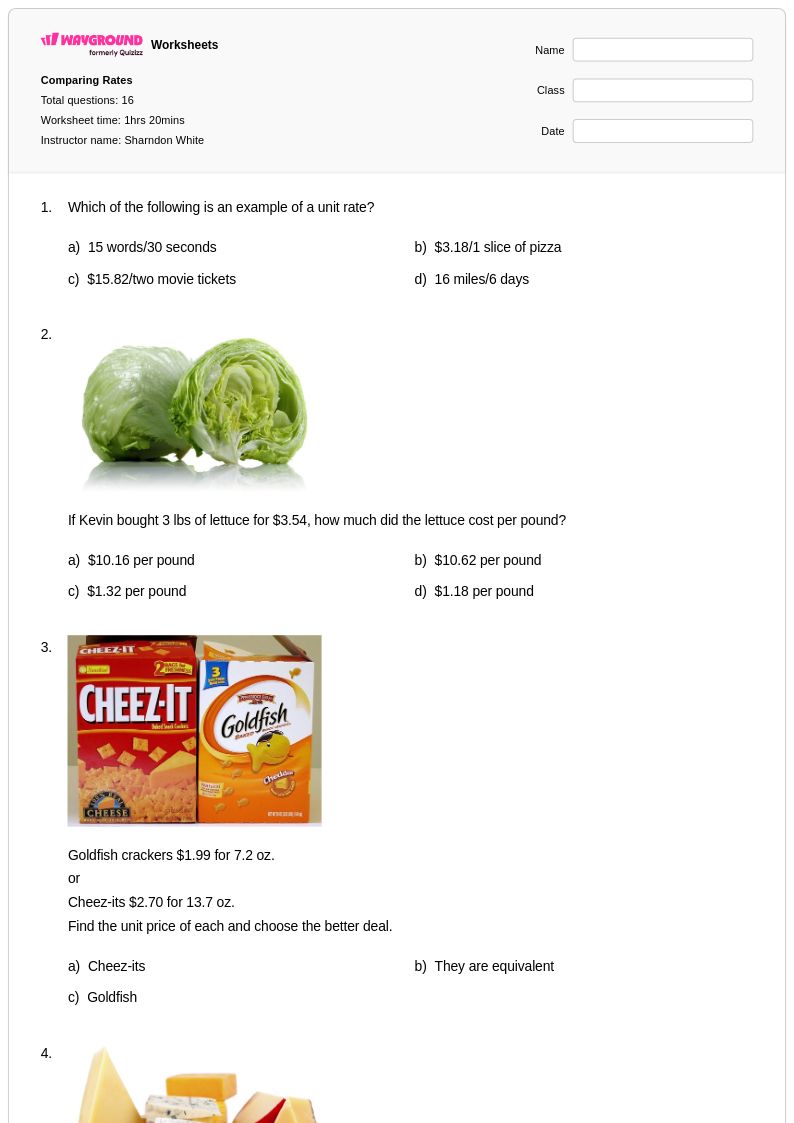
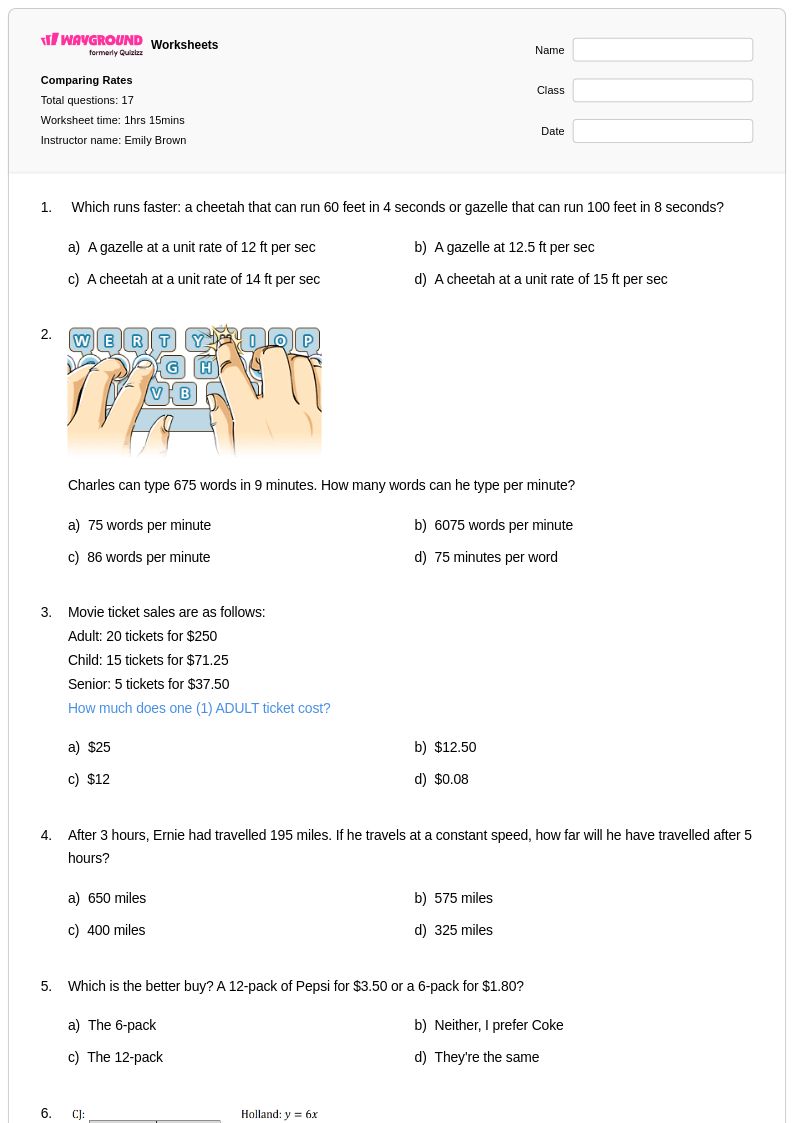
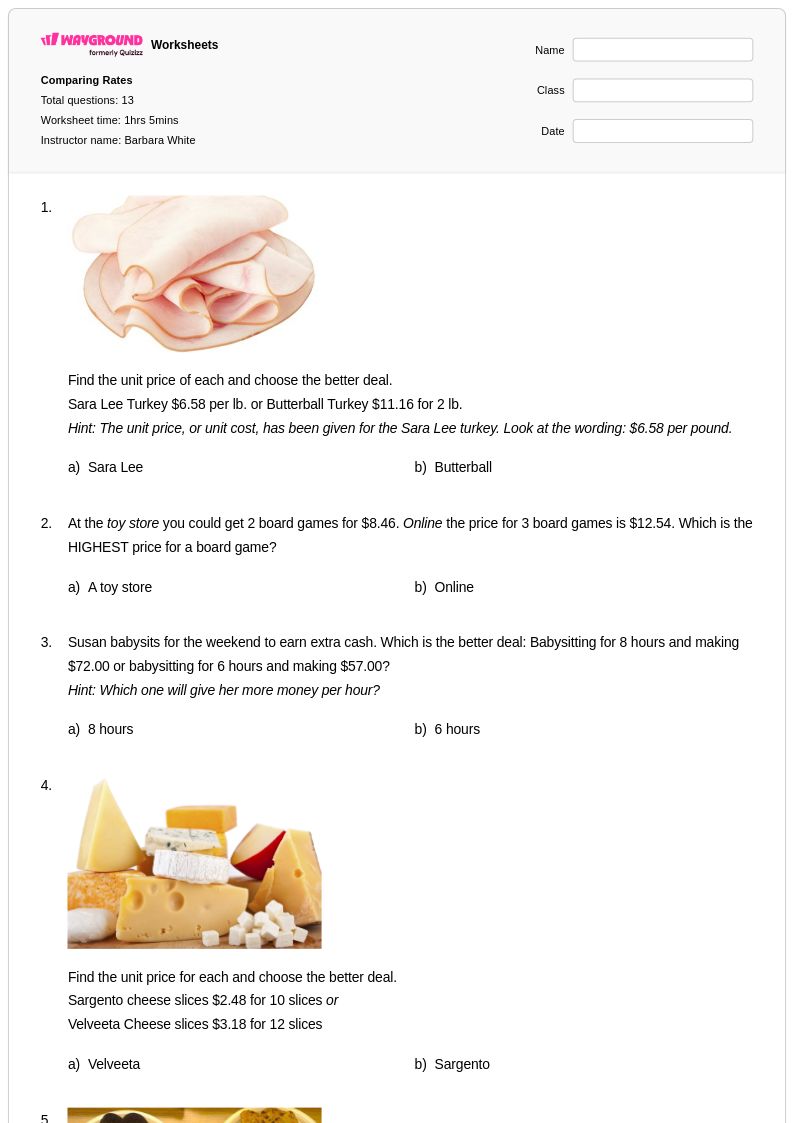
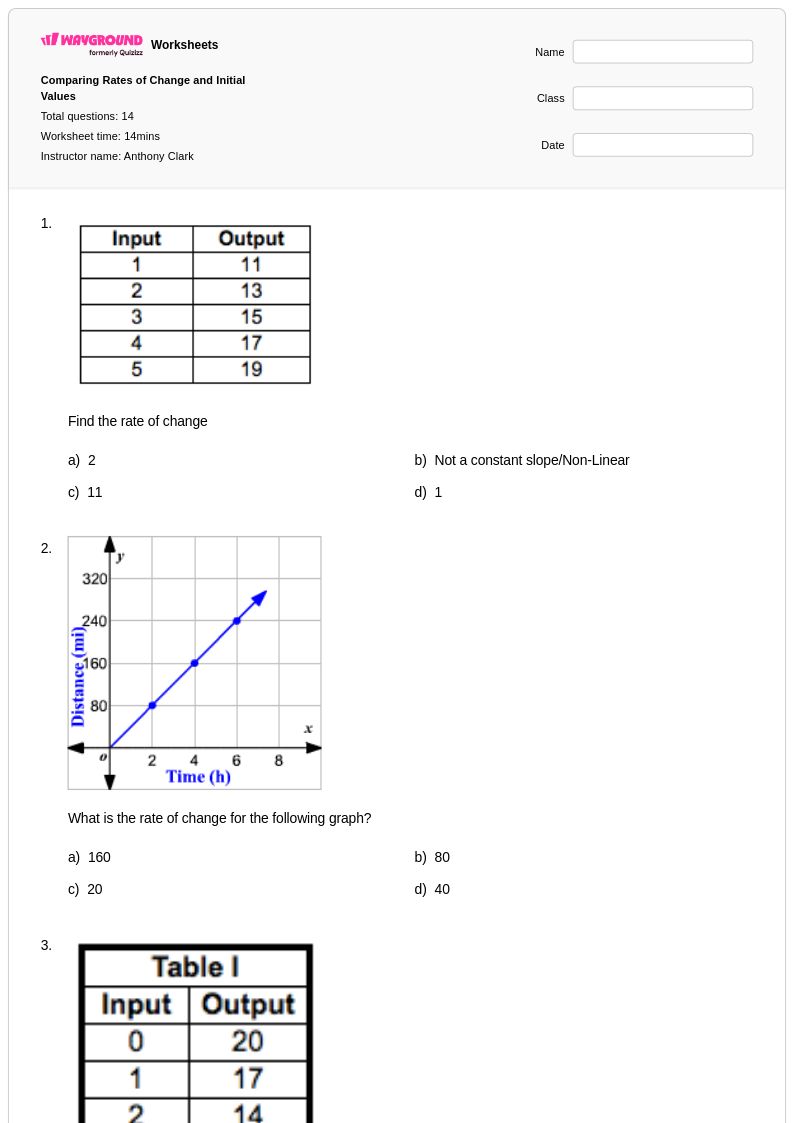
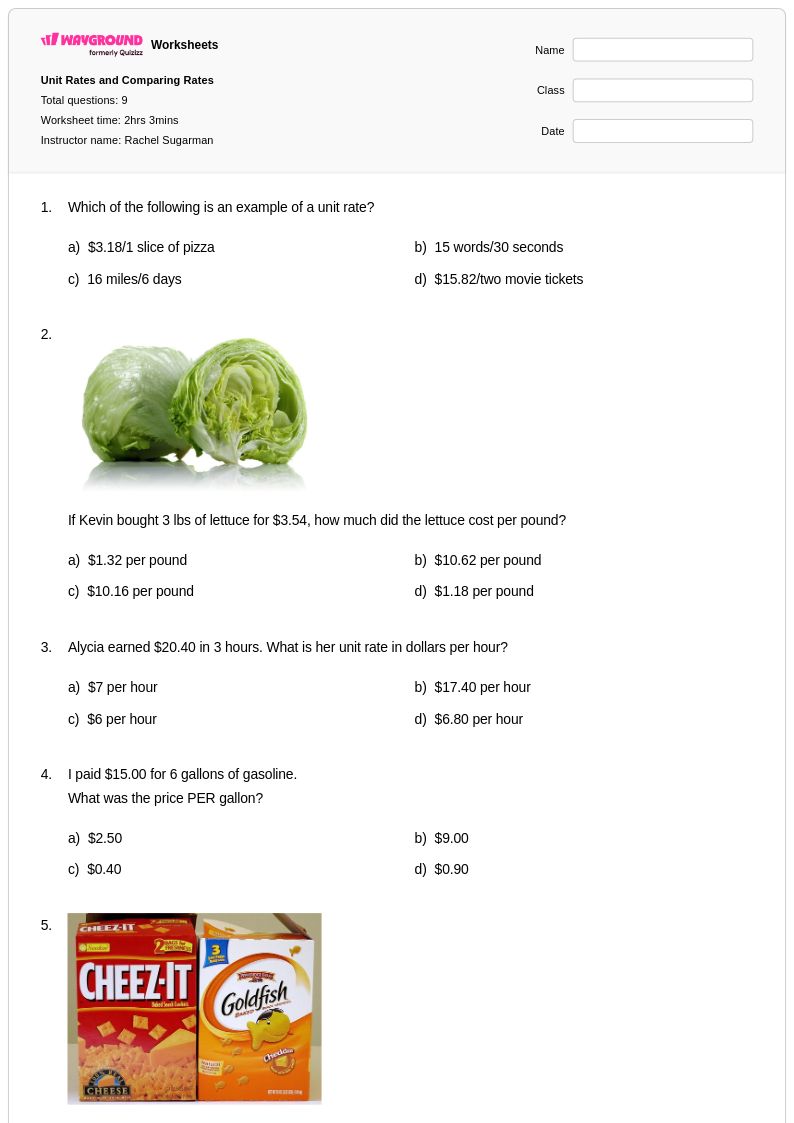
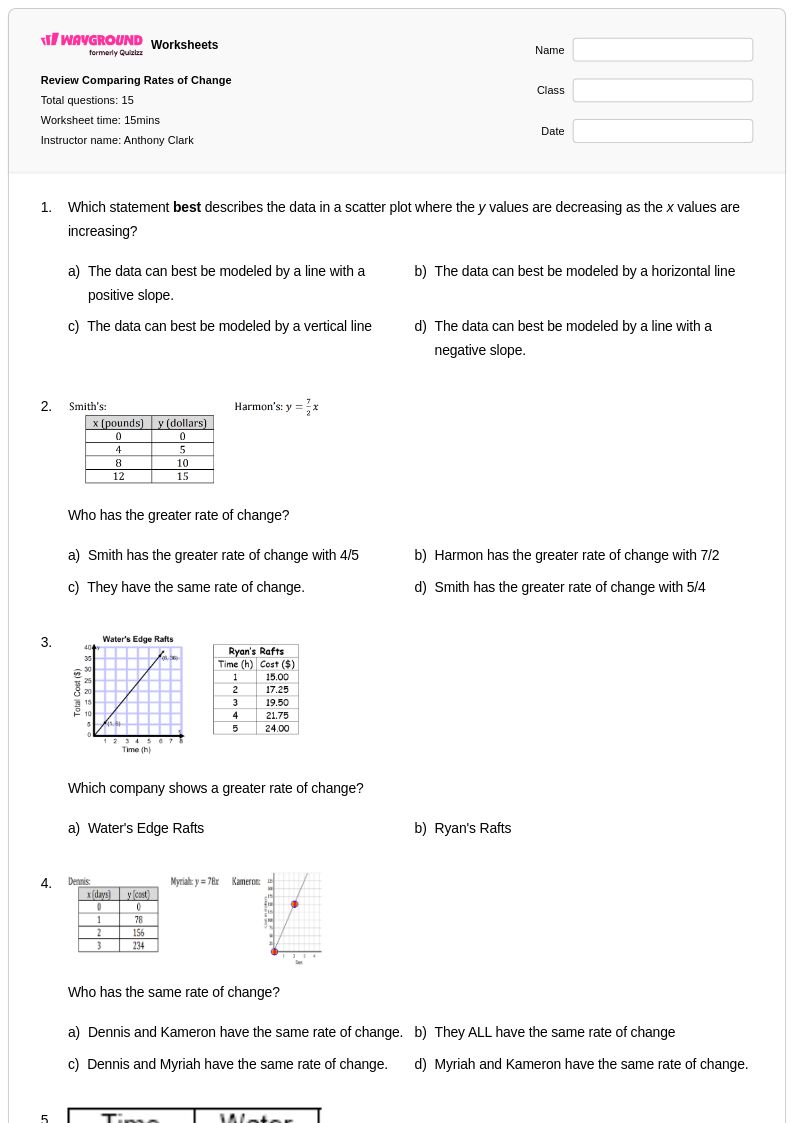
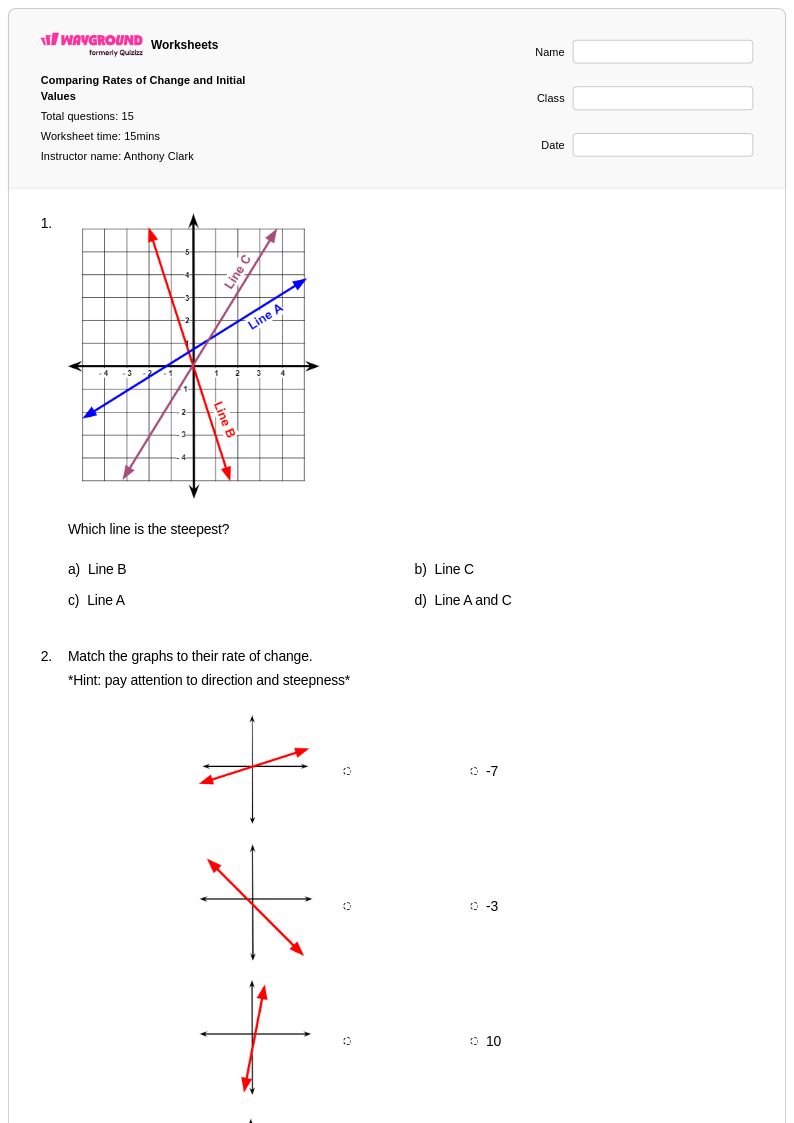
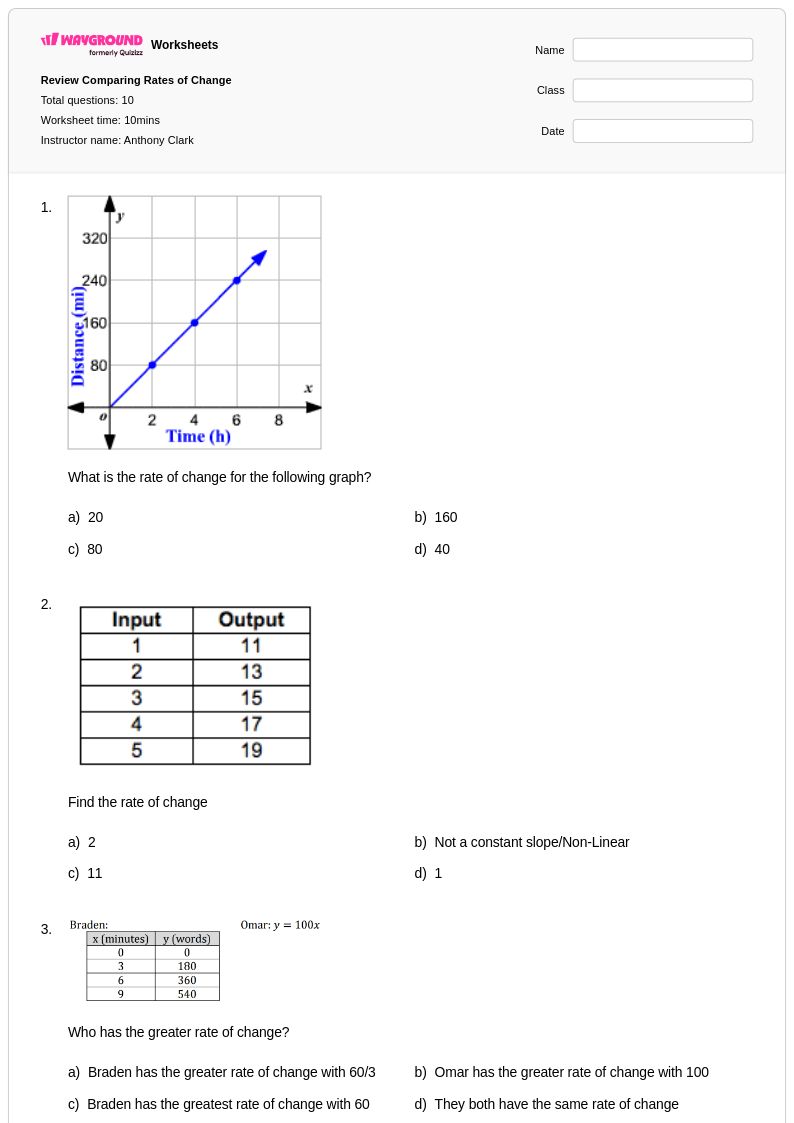
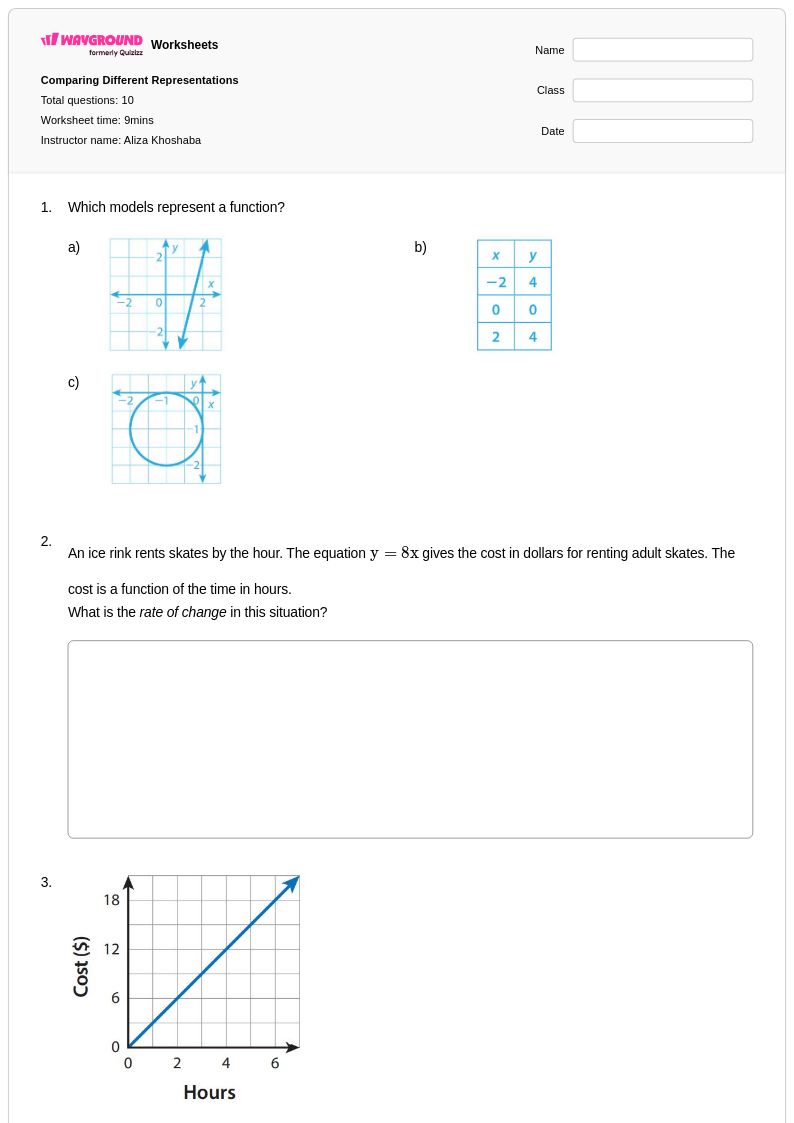
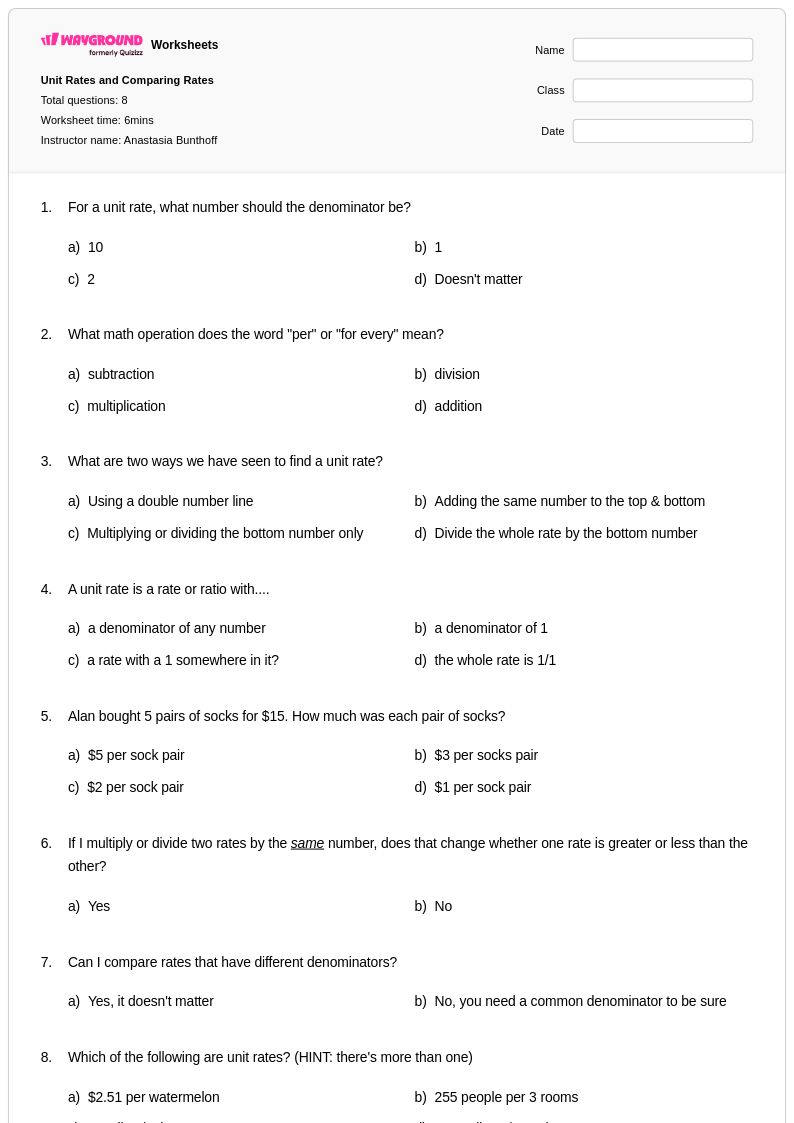
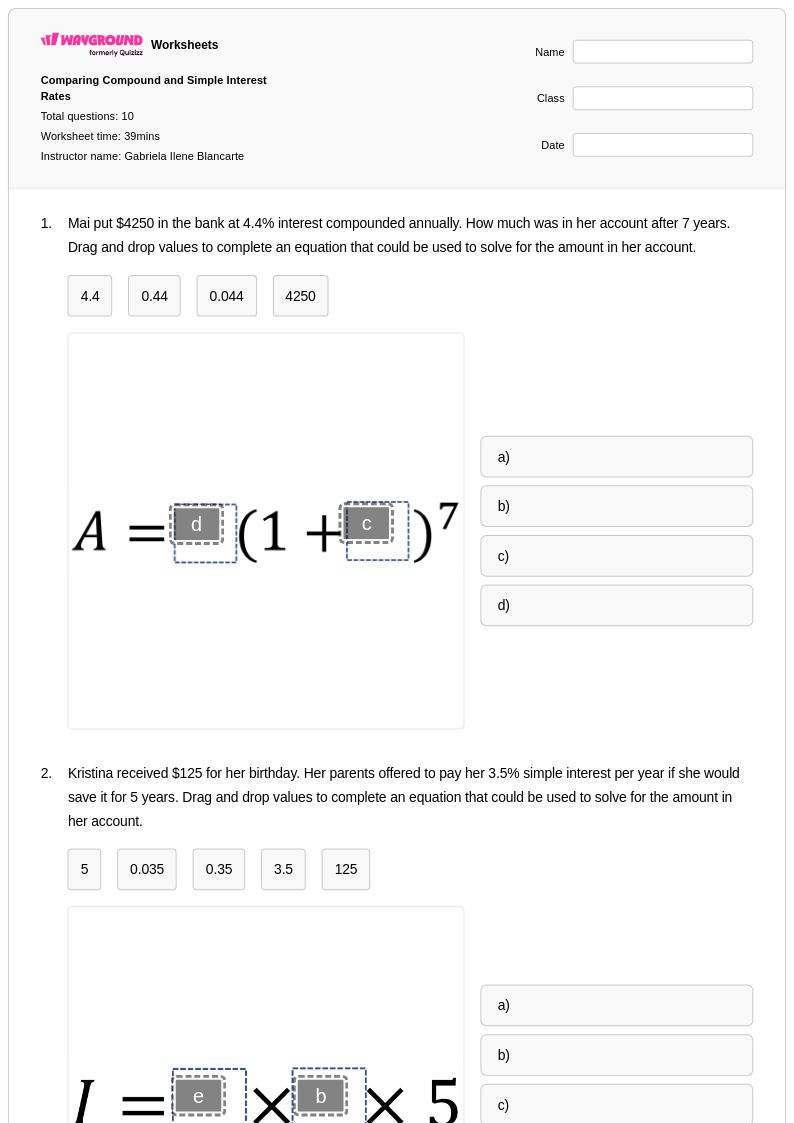
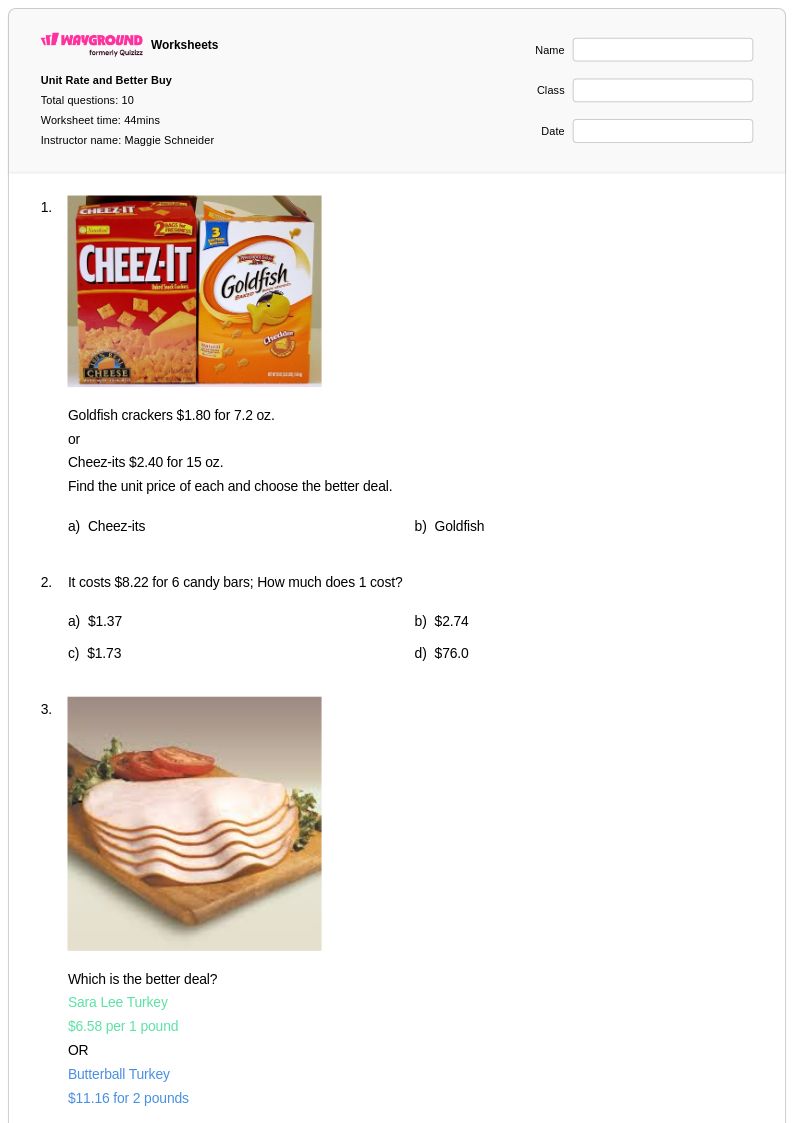
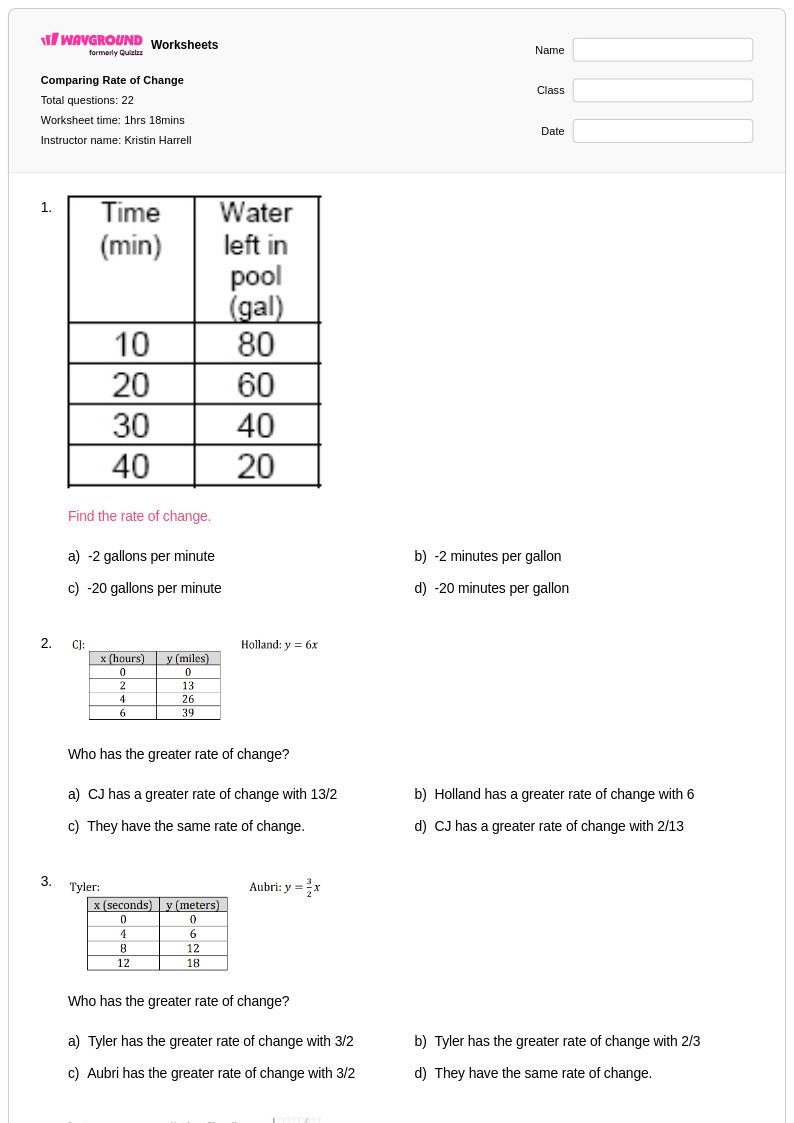
Comparing rates worksheets available through Wayground (formerly Quizizz) provide students with essential practice in analyzing and contrasting different rates to determine which represents the better value or faster pace. These comprehensive worksheets strengthen critical mathematical reasoning skills by challenging students to work with unit rates, convert between different units of measurement, and make informed comparisons across various real-world scenarios such as speed, cost per item, and efficiency measurements. Each worksheet collection includes detailed answer keys and is available as free printable resources in convenient PDF format, offering educators ready-to-use practice problems that progressively build students' confidence in rate comparison strategies and proportional reasoning.
Wayground (formerly Quizizz) empowers teachers with access to millions of teacher-created comparing rates worksheets that feature robust search and filtering capabilities, ensuring educators can quickly locate resources that align with specific curriculum standards and learning objectives. The platform's differentiation tools and flexible customization options allow teachers to modify worksheets to meet diverse student needs, whether for remediation support or enrichment challenges, while maintaining rigorous mathematical content. These comparing rates resources are available in both printable and digital formats, including downloadable PDFs, making lesson planning more efficient and enabling teachers to seamlessly integrate targeted skill practice into their instruction, homework assignments, and assessment preparation activities.
FAQs
How do I teach students to compare rates?
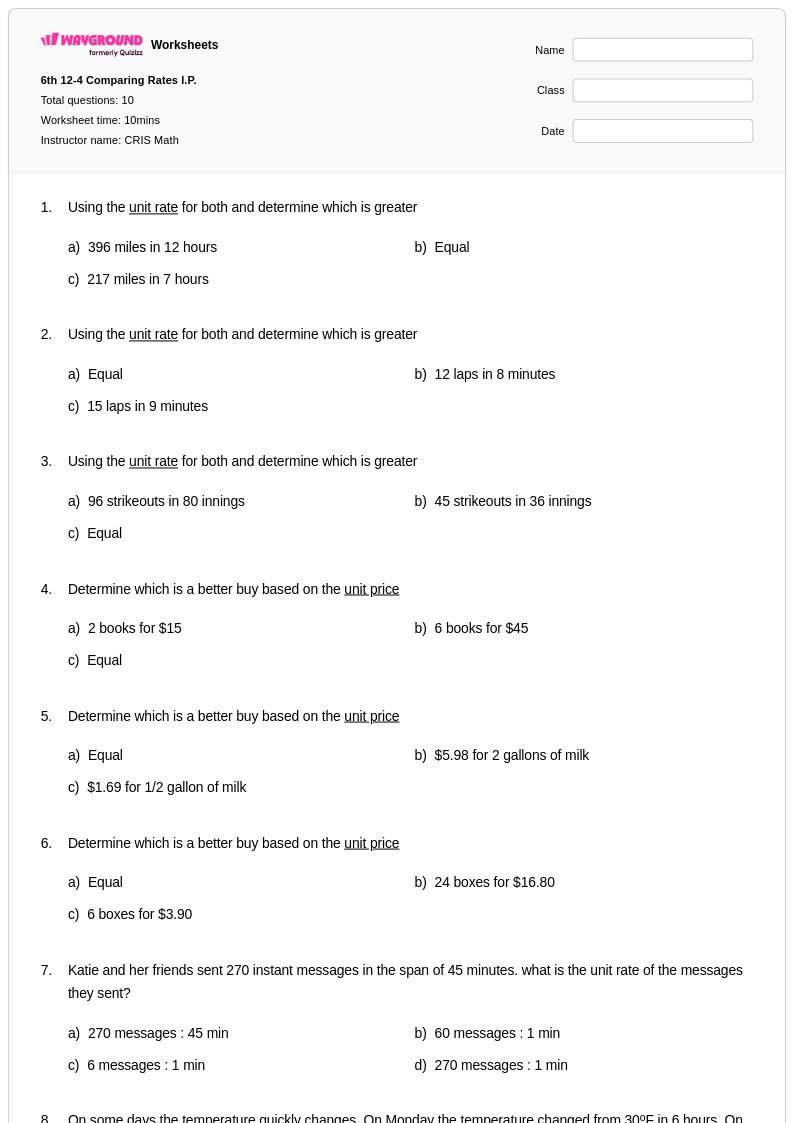
Teach students to rewrite each rate as a unit rate with compatible units before comparing the values. Model the process with practical contexts such as cost per item, speed, and efficiency, then ask students to explain what the larger or smaller unit rate means in that situation.
What exercises help students practice comparing rates?
Effective exercises include calculating unit prices, comparing speeds, converting measurement units, identifying equivalent rates, and deciding which option offers the better value. A useful progression moves from rates with matching units to comparisons that require conversion and multi-step proportional reasoning.
What mistakes do students commonly make when comparing rates?
Students often compare the original numbers without accounting for different quantities or units, divide in inconsistent orders, or assume the larger numerical rate is always preferable. Require students to label every unit rate and interpret it in context, since a lower cost per item may be better while a higher speed may be faster.
How can I use a comparing rates worksheet in class?
Wayground worksheets are available as printable PDFs and in digital formats, accommodating different teaching environments and student preferences. Teachers can host a worksheet as a digital quiz on Wayground or print and assign it on paper; every worksheet includes a complete answer key, and physical submissions can be scanned or captured for grading with the Wayground for Teachers app.
How does comparing rates fit into the Common Core math progression?
Comparing rates aligns with Common Core's emphasis on ratios, unit rates, proportional relationships, and mathematical modeling. Students progress from understanding equivalent ratios to using unit rates and unit conversions to compare real-world quantities and justify decisions.
How can I differentiate comparing rates practice for mixed-ability students?
Teachers can scaffold comparing rates worksheets with alternate versions that adjust font spacing and size, use a dyslexia-friendly font, or translate the content into another language. In digital sessions, Wayground also supports reusable student-level accommodations such as extended time, Read Aloud, reduced answer choices, and reading mode while classmates retain the default settings.