
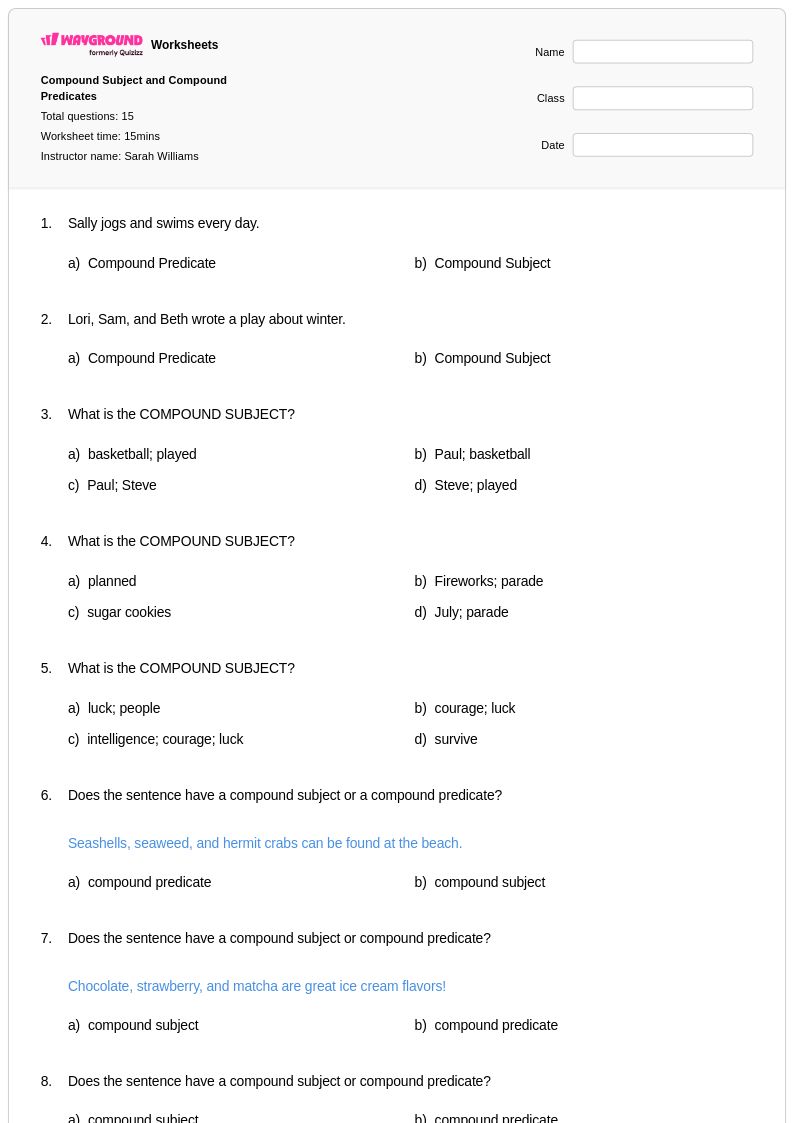
15 Q
4th - Uni
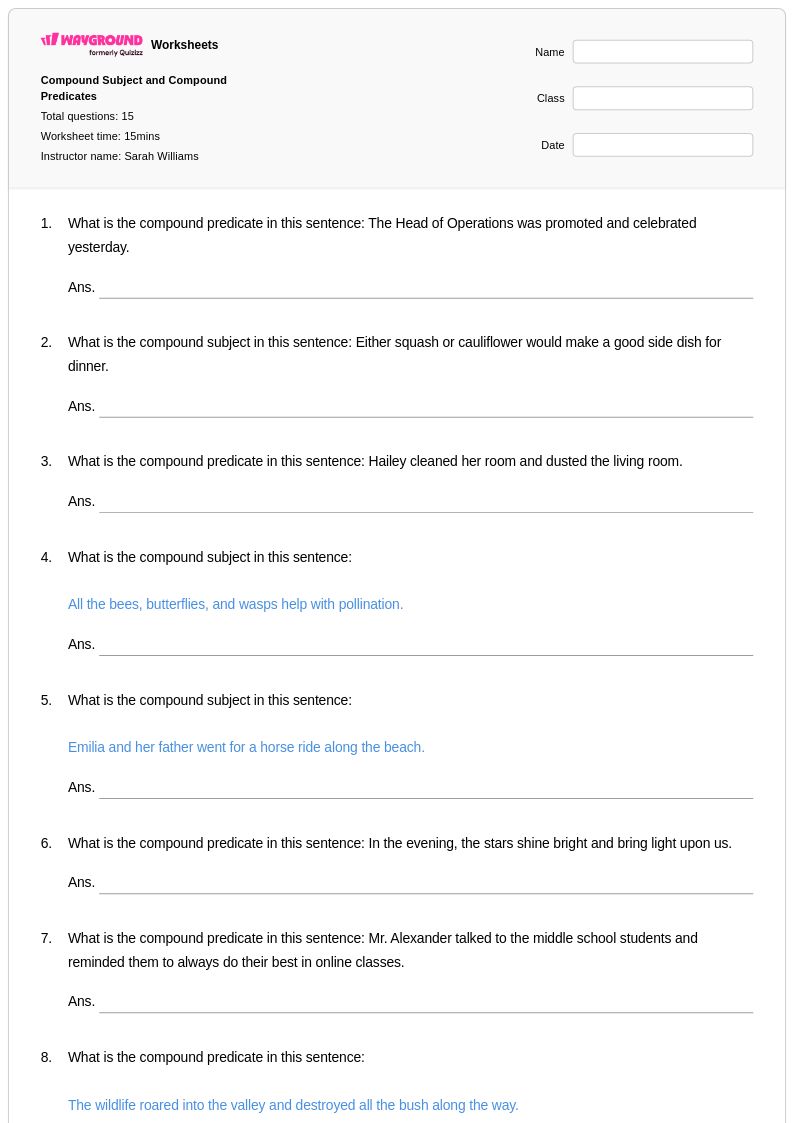
15 Q
4th - Uni
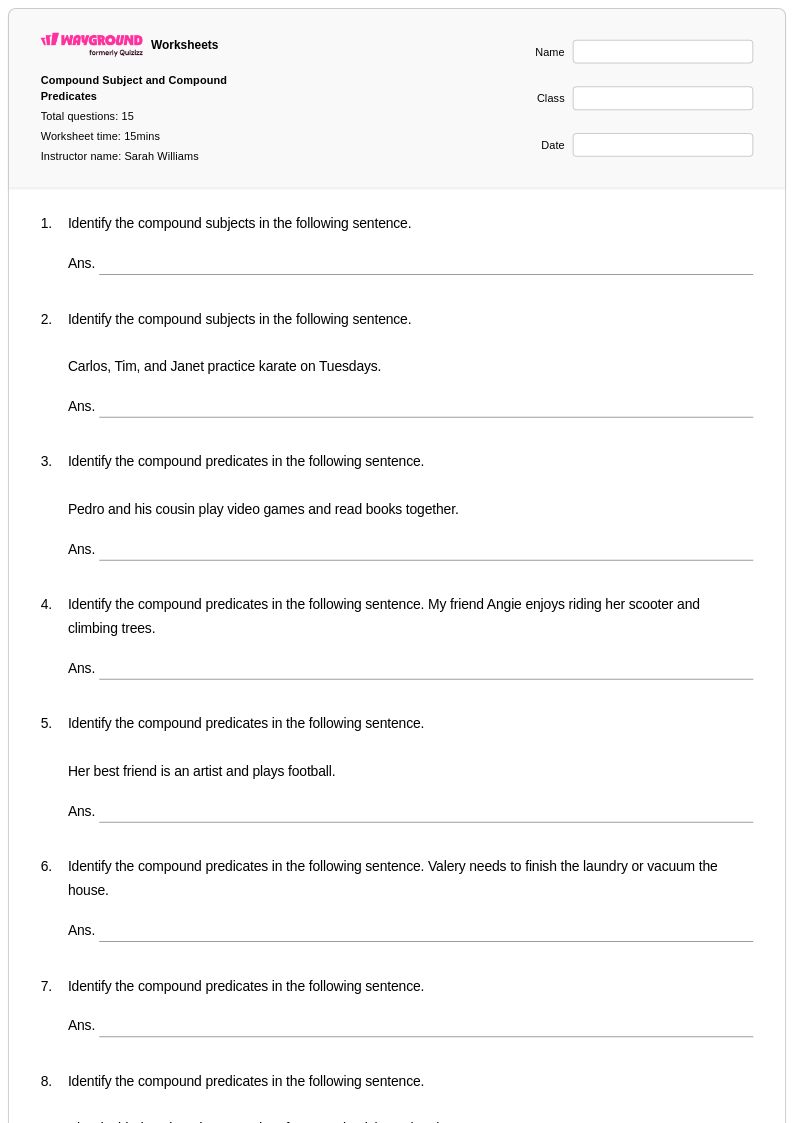
15 Q
4th - Uni
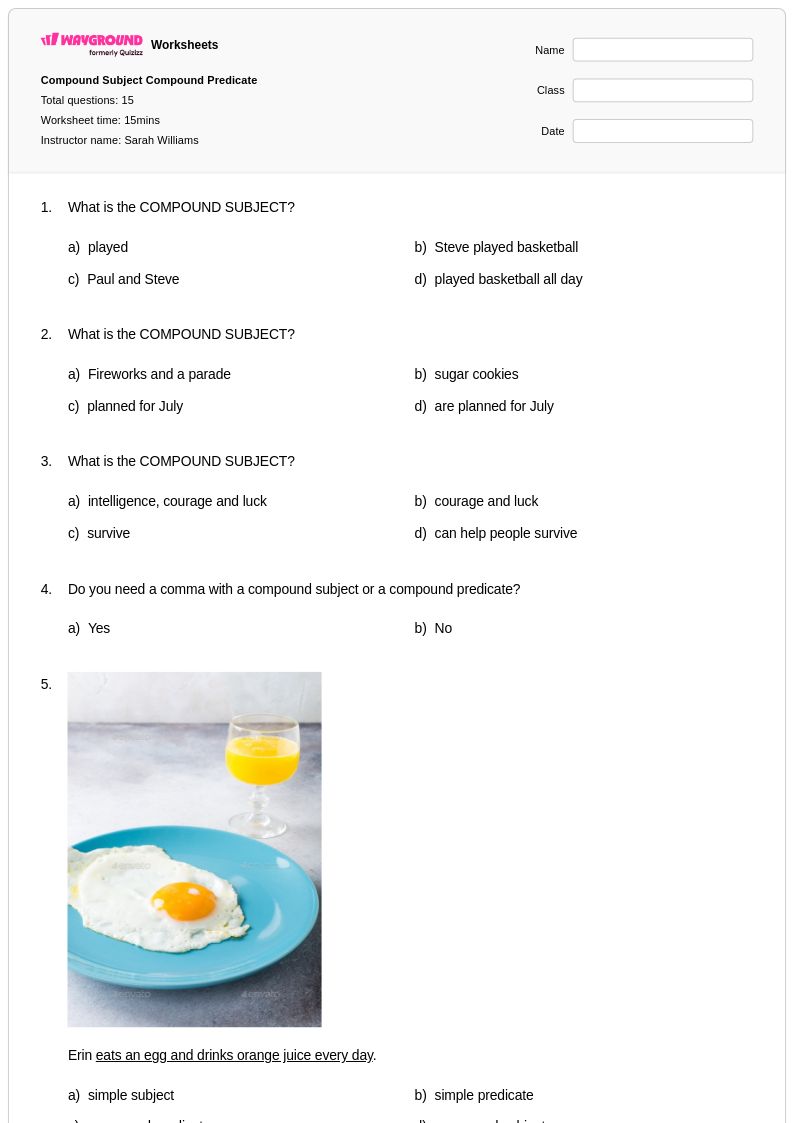
15 Q
6th - Uni
25 Q
6th - Uni
25 Q
4th - Uni
25 Q
6th - Uni
13 Q
6th - Uni
15 Q
6th - Uni
15 Q
4th - Uni
15 Q
6th - Uni
15 Q
6th - Uni
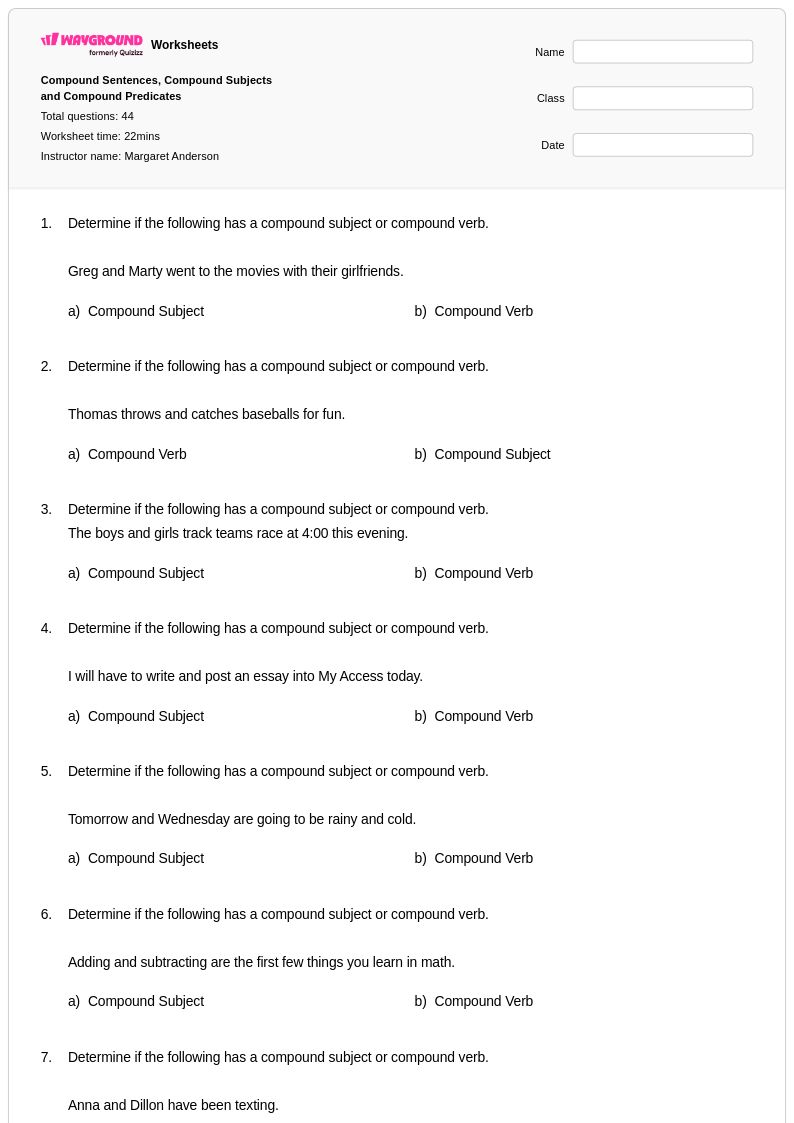
44 Q
5th - Uni
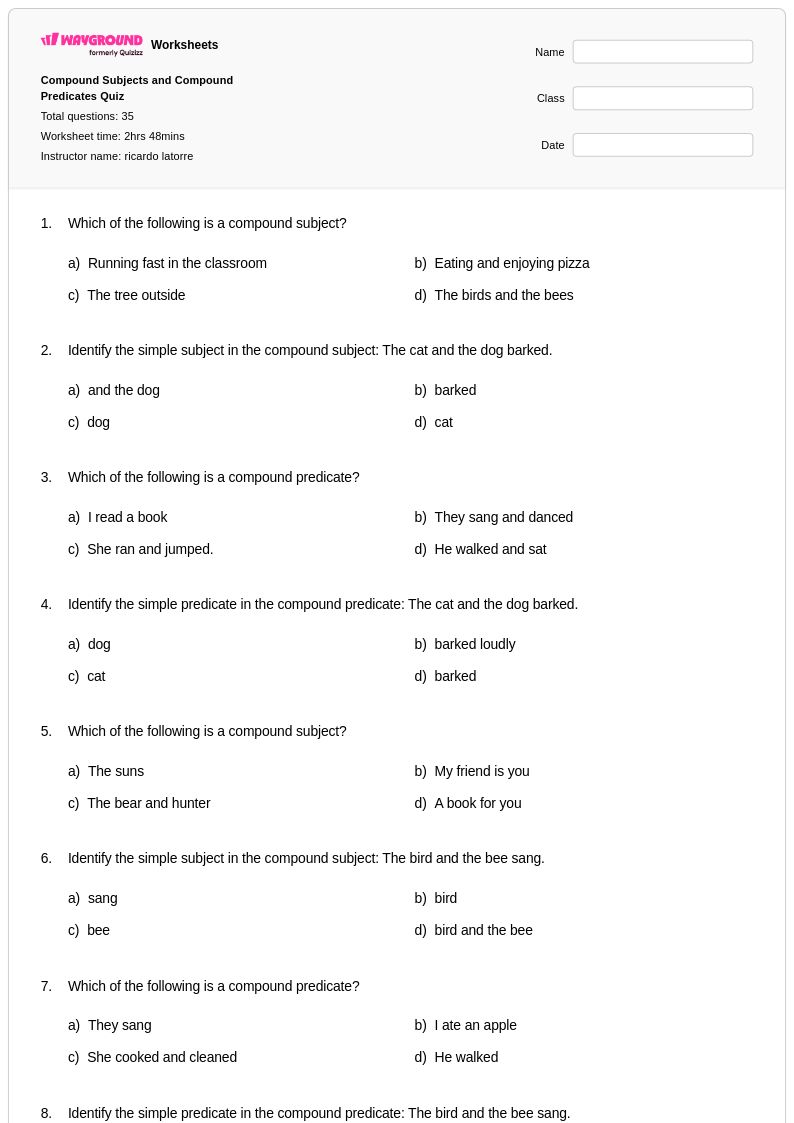
35 Q
9th - 12th
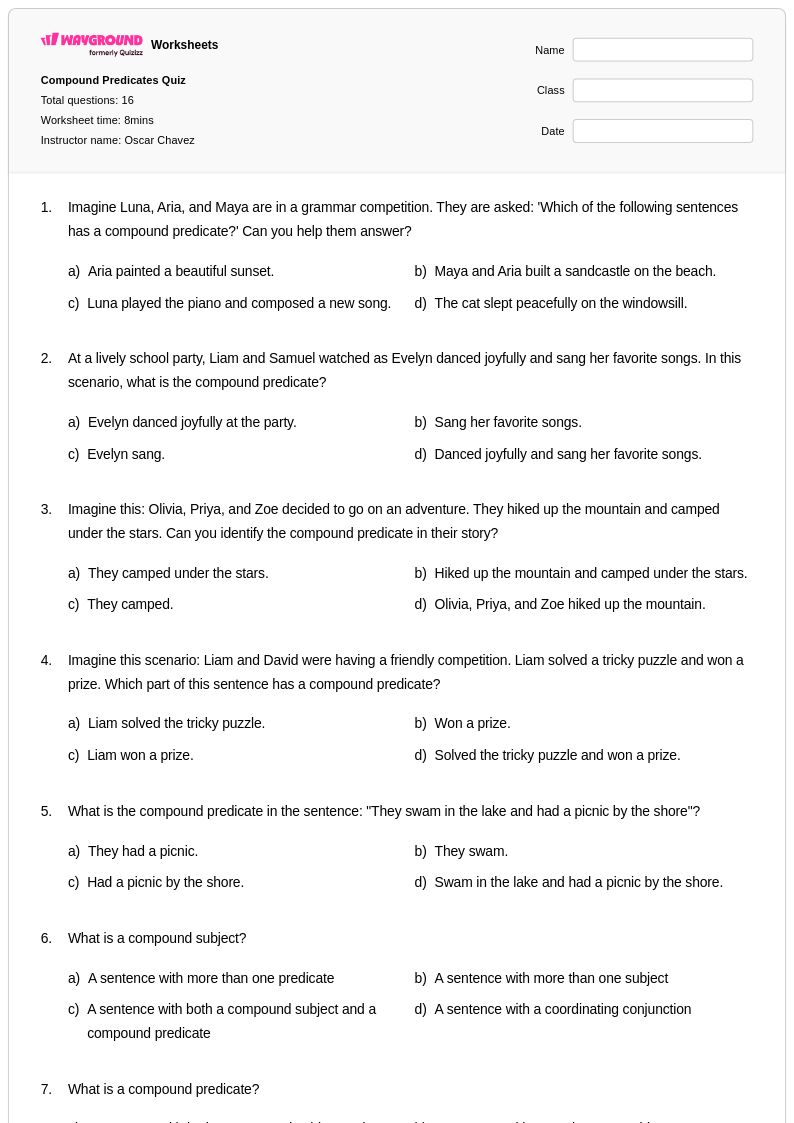
16 Q
9th - 12th
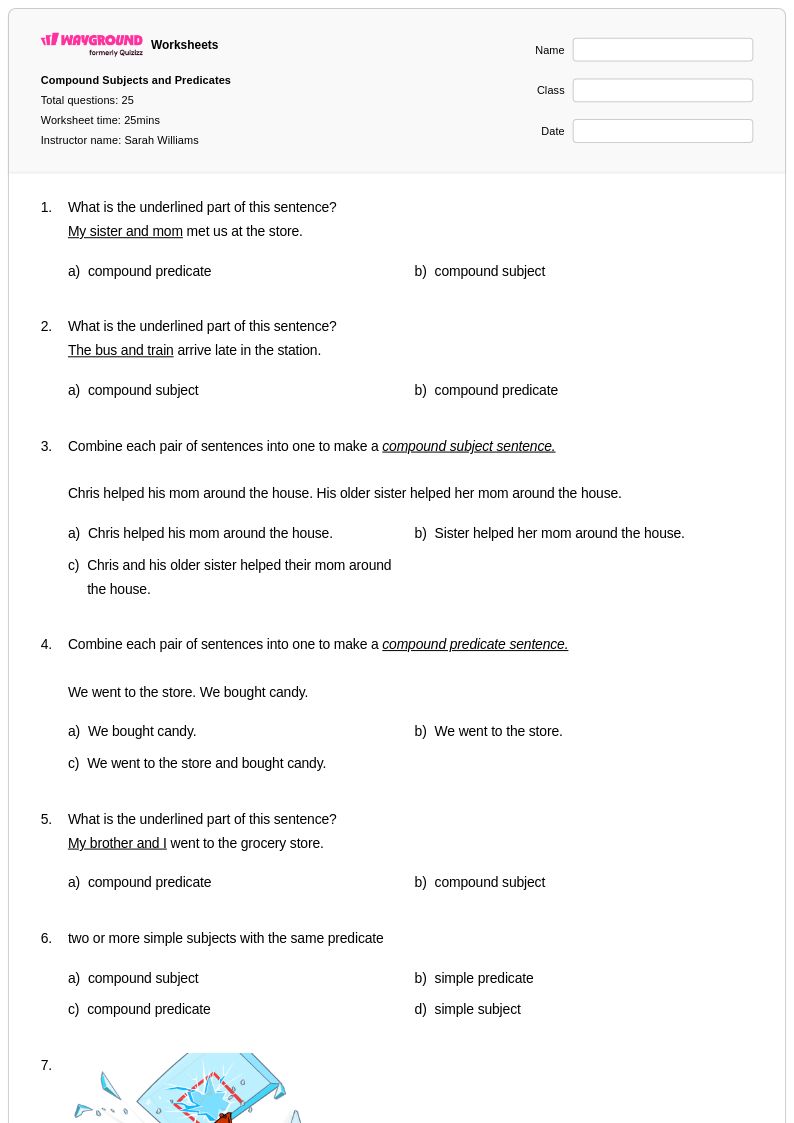
25 Q
4th - Uni
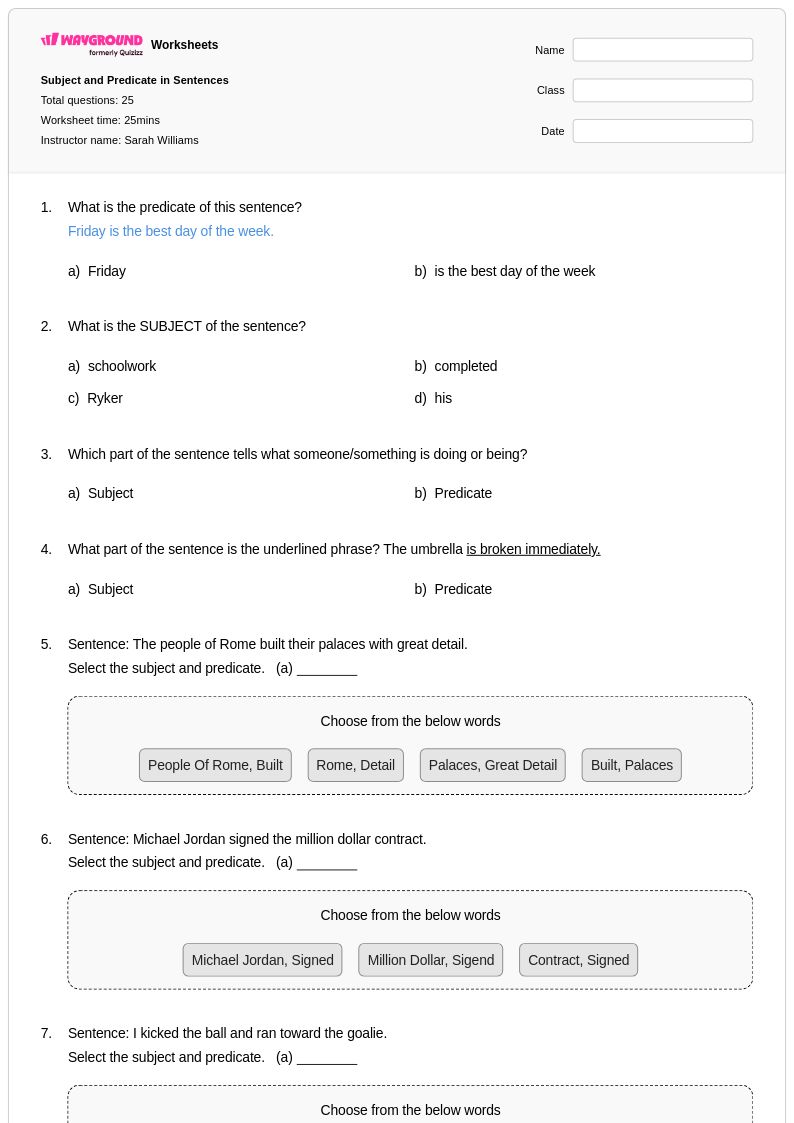
25 Q
3rd - Uni
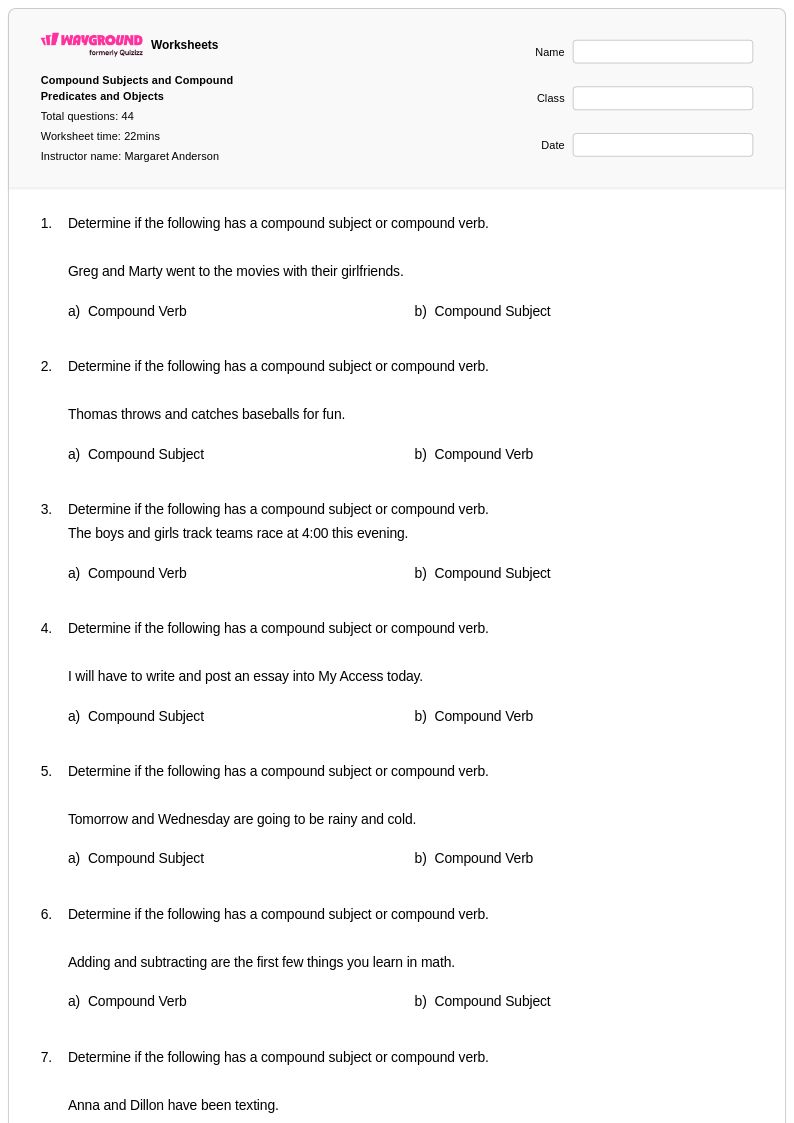
44 Q
5th - Uni
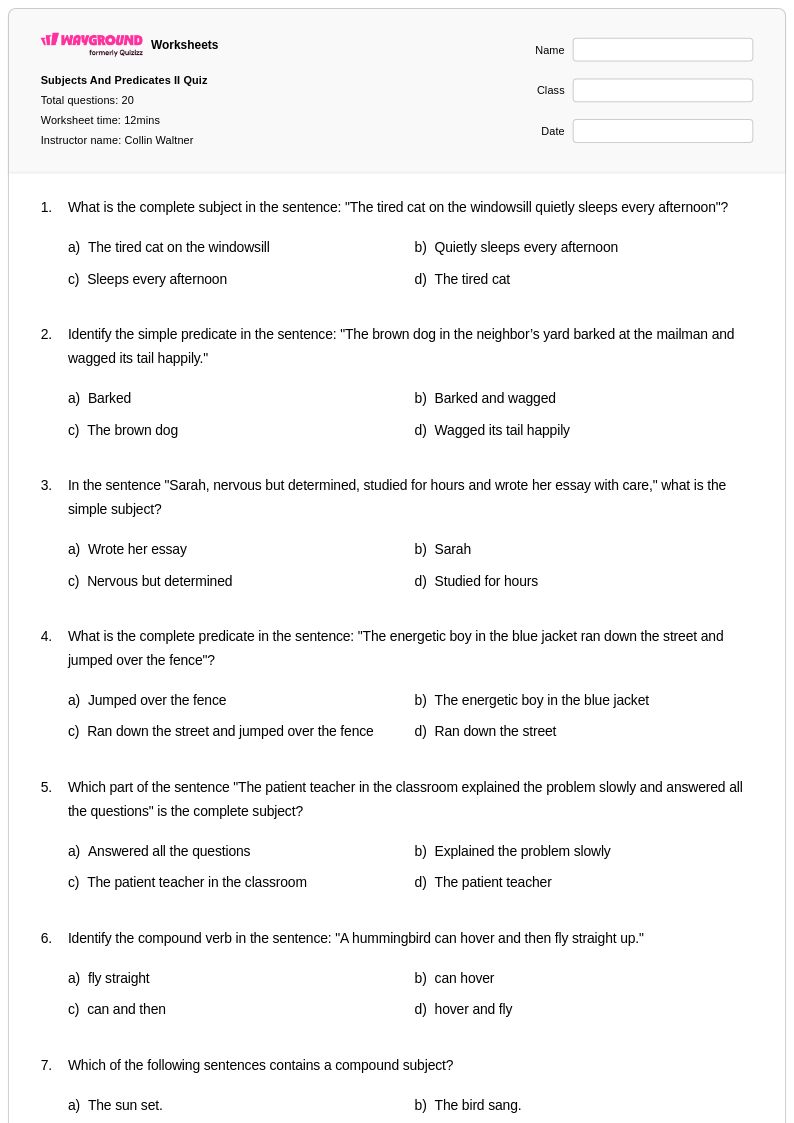
20 Q
10th - Uni
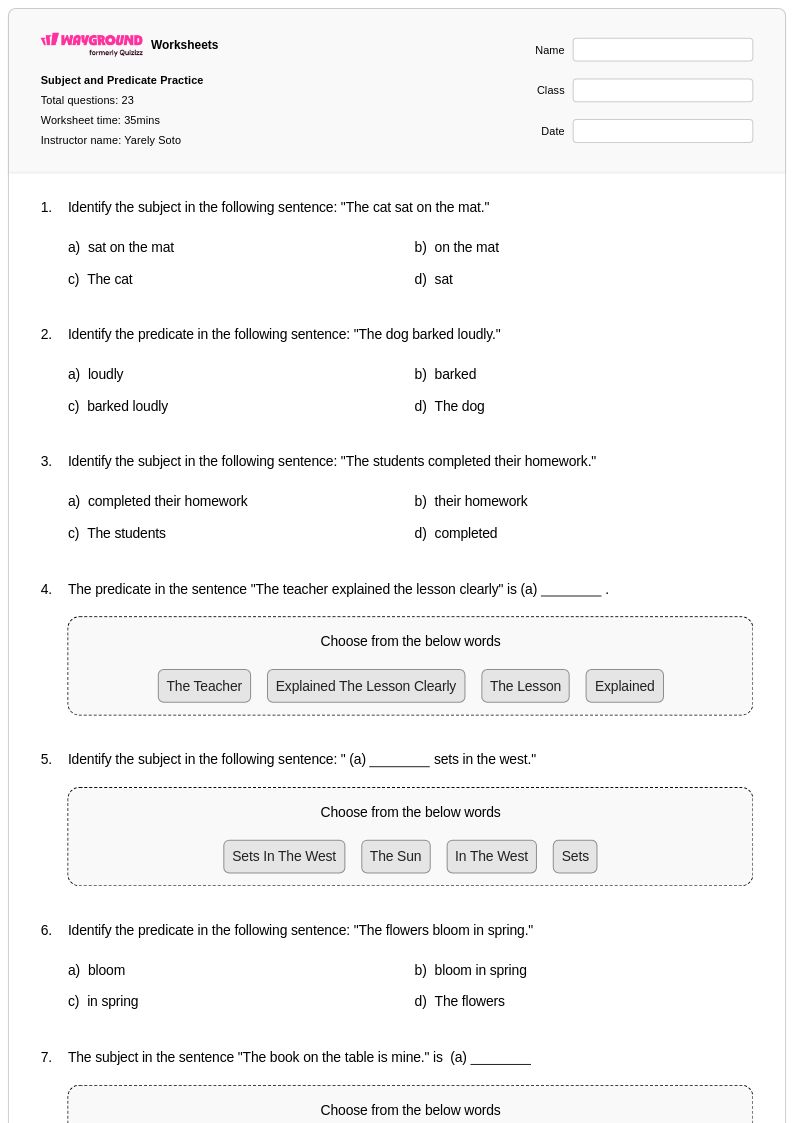
23 Q
9th - Uni
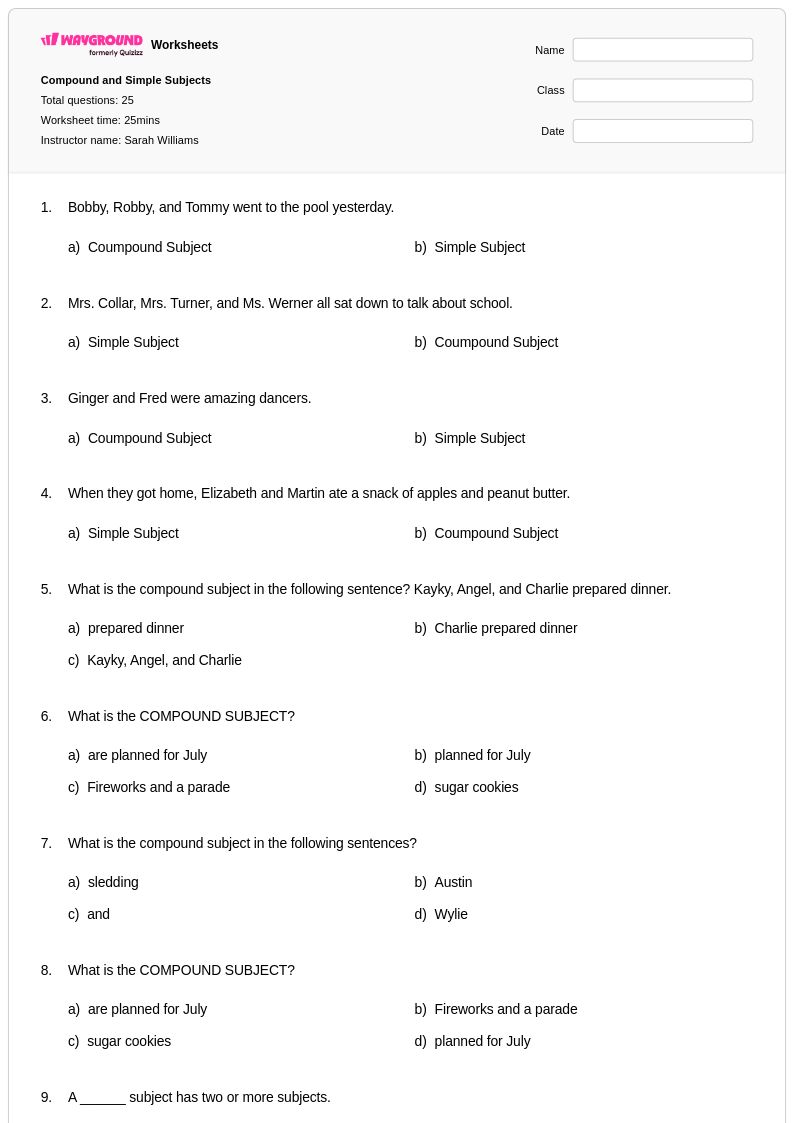
25 Q
4th - Uni
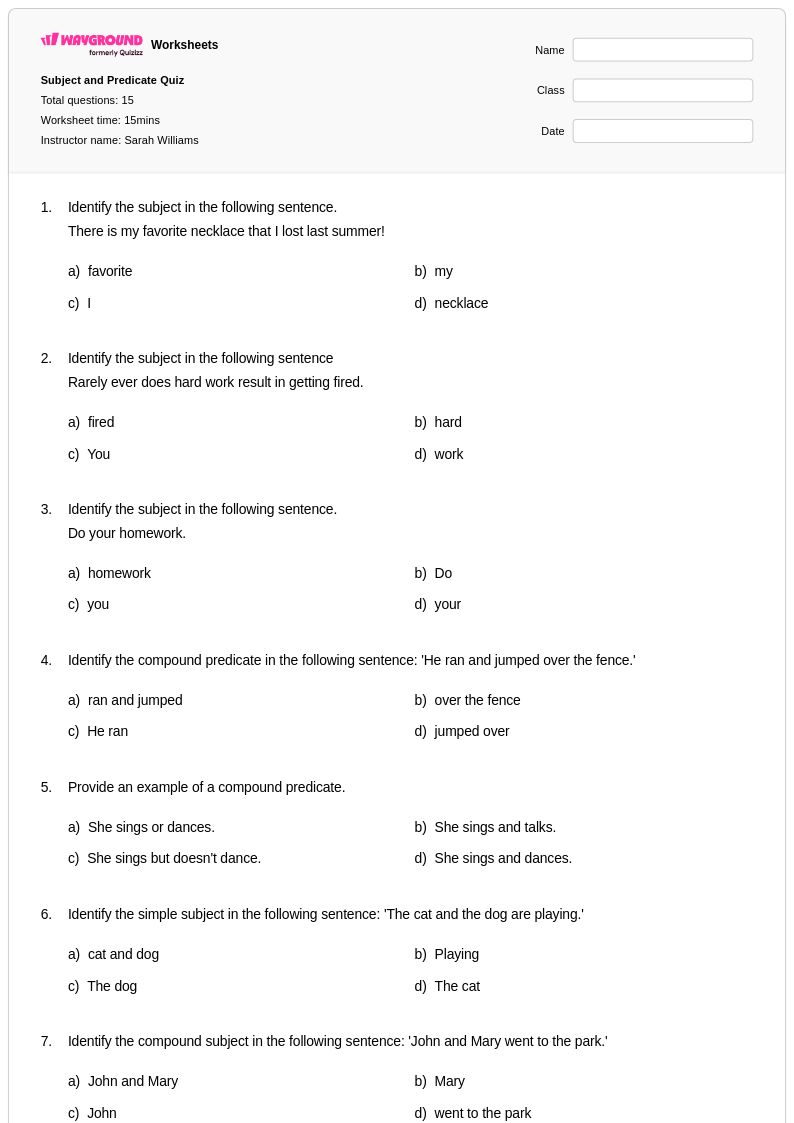
15 Q
7th - Uni
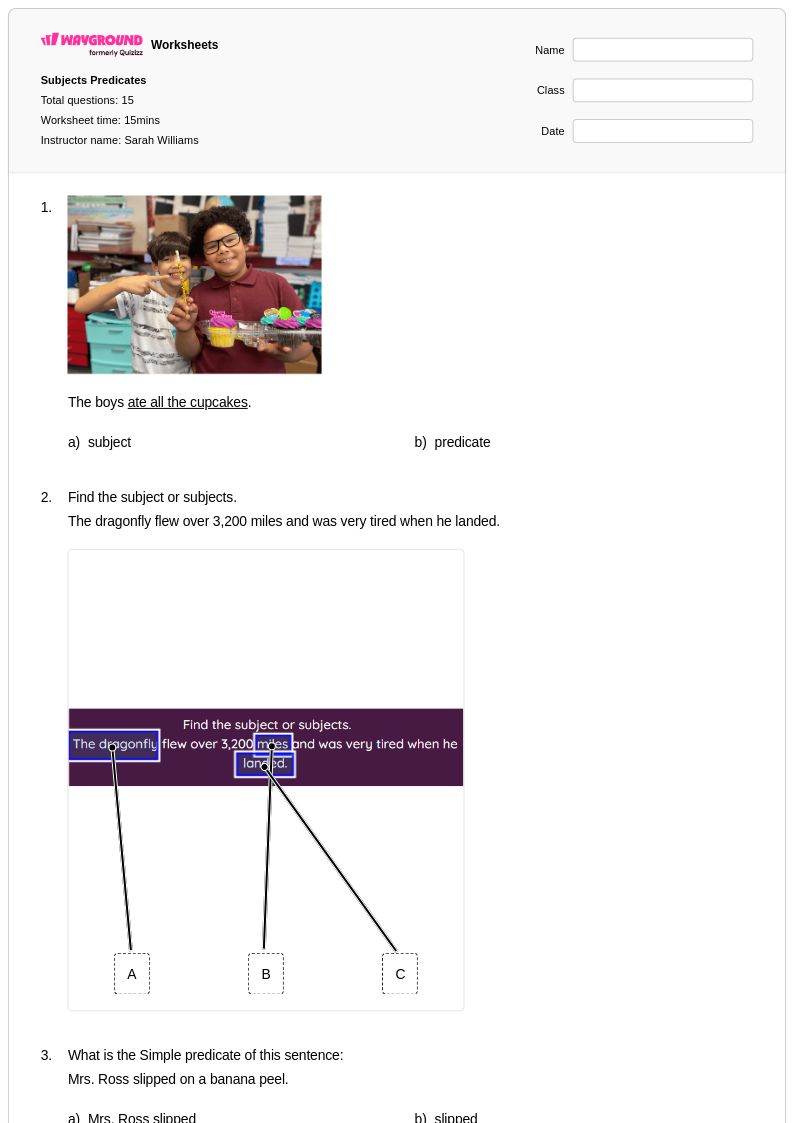
15 Q
6th - Uni
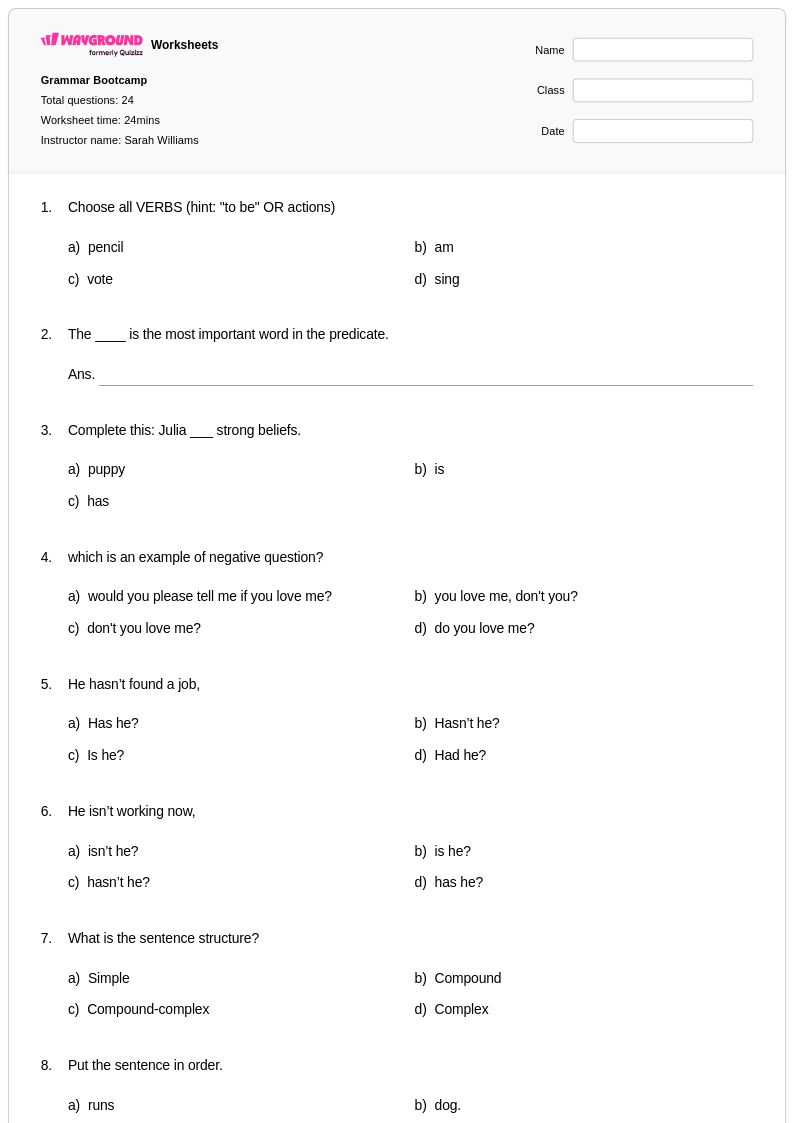
24 Q
8th - Uni
Explore Compound Predicate Worksheets by Grades
Explore Other Subject Worksheets for class 11
Explore printable Compound Predicate worksheets for Class 11
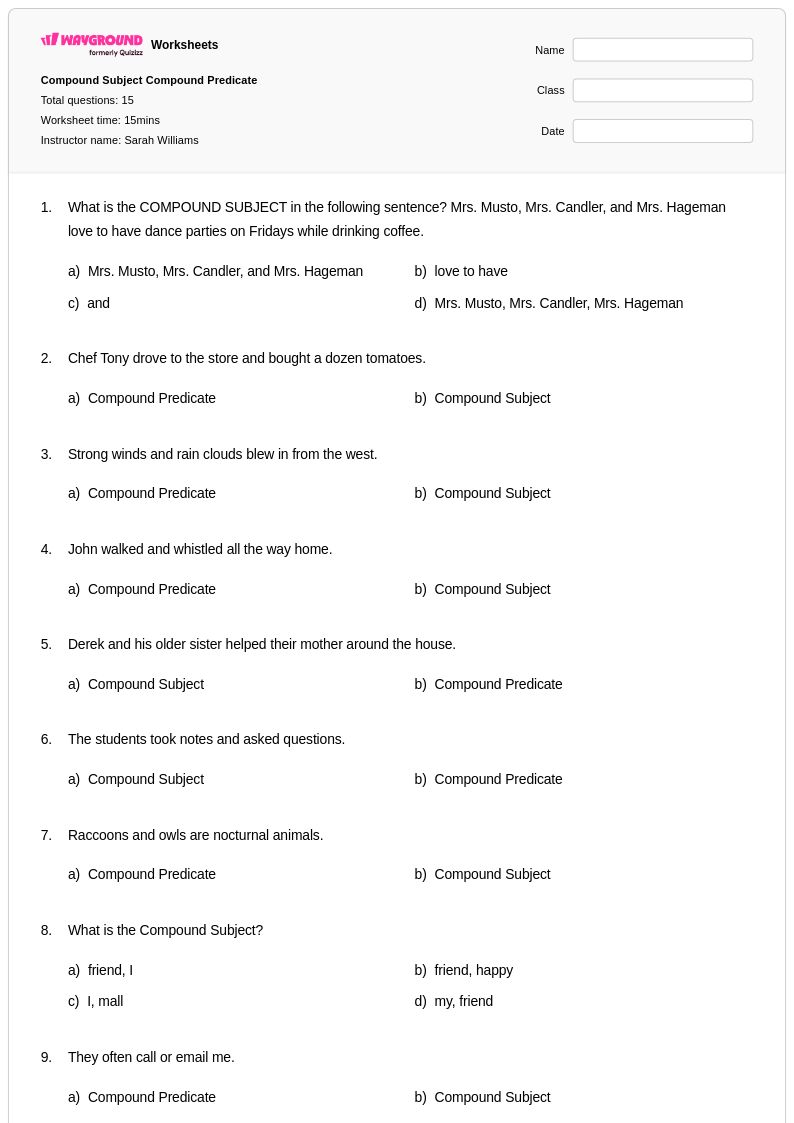
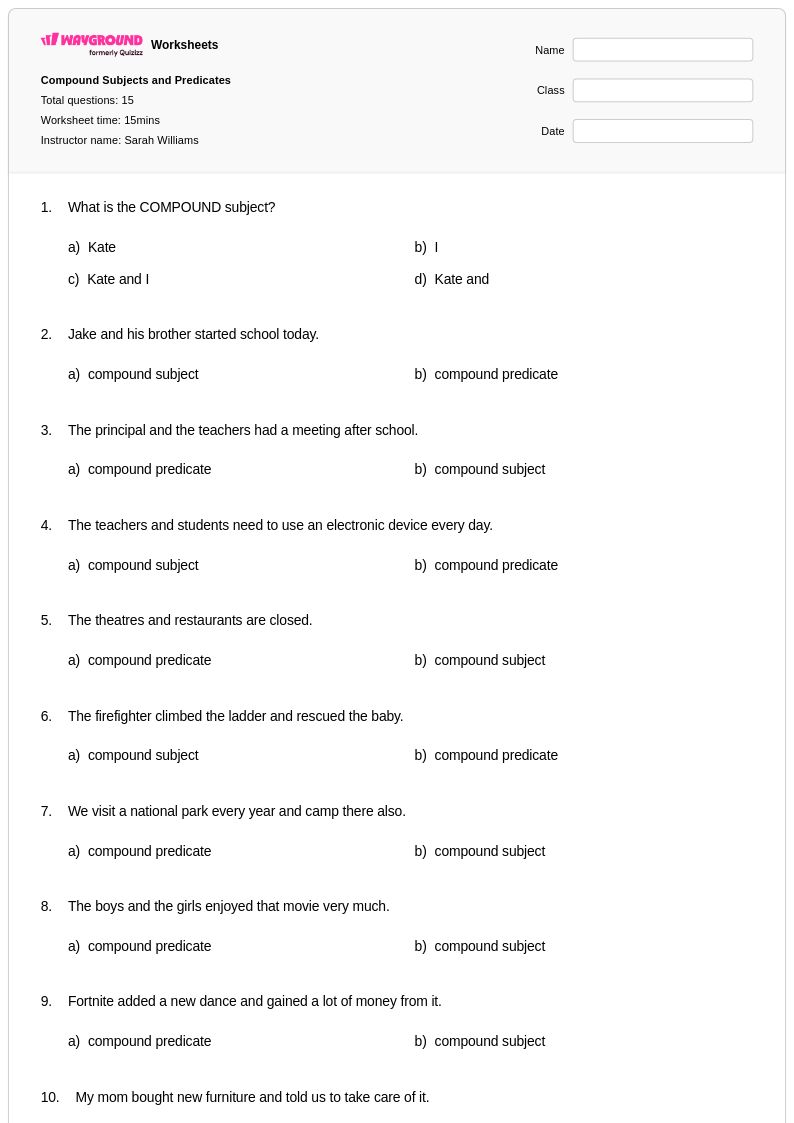
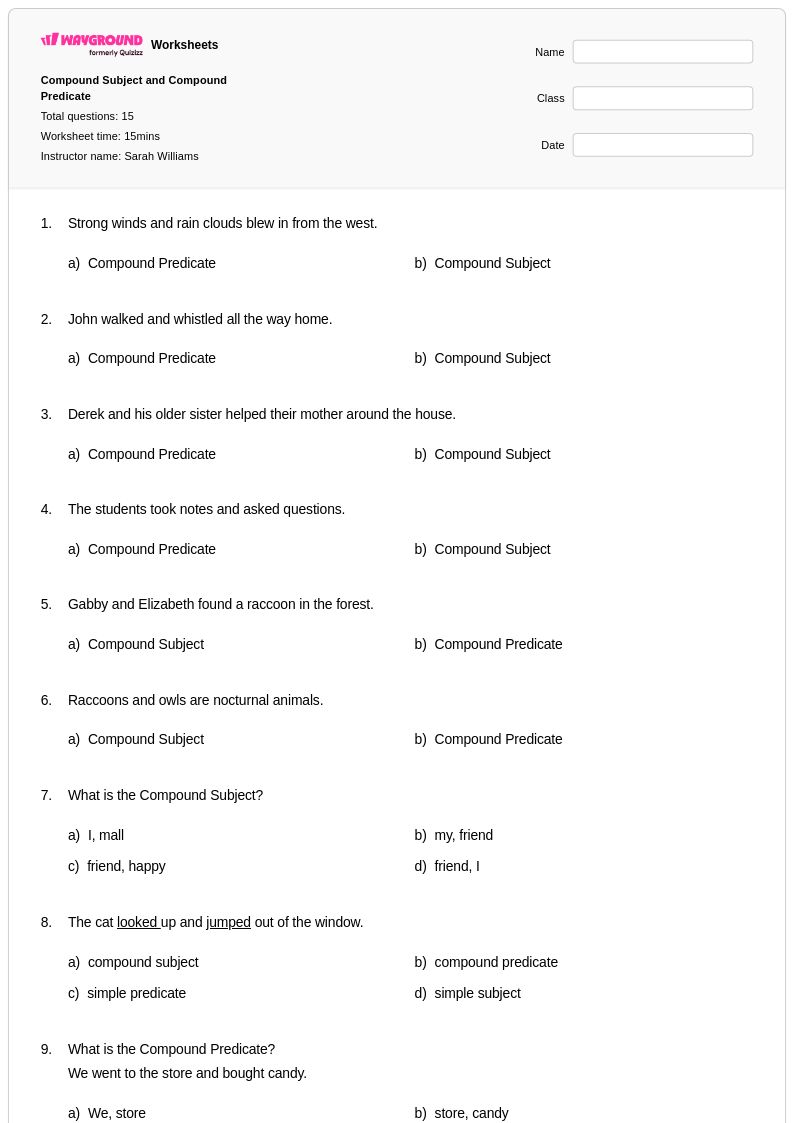
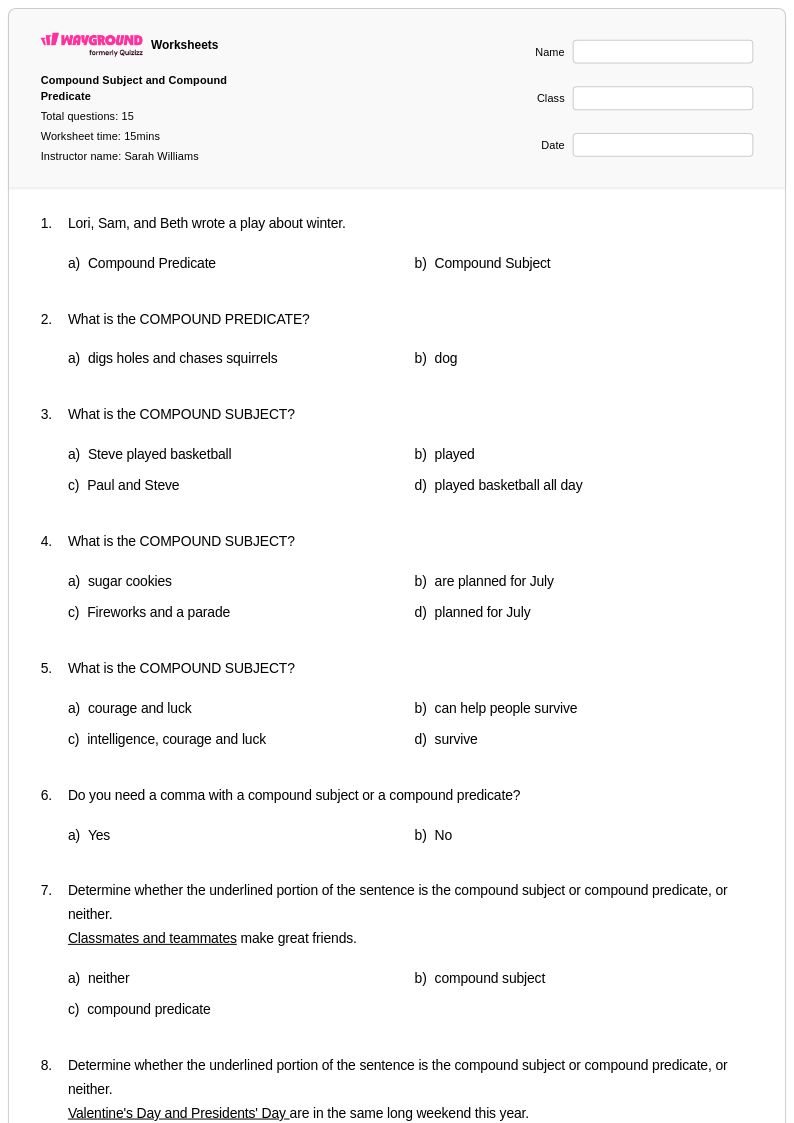
Compound predicate worksheets for Class 11 students available through Wayground (formerly Quizizz) provide comprehensive practice with this essential sentence structure concept that elevates writing sophistication and clarity. These expertly designed resources help students master the identification, construction, and effective use of compound predicates, which occur when two or more verbs or verb phrases share the same subject within a single sentence. Students develop critical skills in recognizing how compound predicates create more efficient and varied sentence patterns while avoiding redundancy in their writing. The collection includes diverse practice problems that challenge learners to distinguish between compound predicates and compound sentences, construct their own examples using coordinating conjunctions, and revise choppy writing by combining related actions. Each worksheet comes with a detailed answer key and is available as a free printable pdf, making it easy for educators to provide targeted grammar instruction and assessment.
Wayground (formerly Quizizz) empowers teachers with millions of educator-created compound predicate resources specifically curated for Class 11 English instruction, featuring robust search and filtering capabilities that allow quick access to materials aligned with curriculum standards. The platform's differentiation tools enable teachers to customize worksheets based on individual student needs, whether for remediation with struggling learners or enrichment for advanced writers ready to tackle complex sentence combinations. These flexible resources are available in both printable and digital formats, including downloadable pdfs that can be seamlessly integrated into lesson plans, homework assignments, or independent practice sessions. Teachers can efficiently plan comprehensive sentence structure units, provide targeted skill practice for students who need additional support with compound predicates, and offer varied assessment opportunities that help students demonstrate mastery of this sophisticated grammatical concept essential for college-level writing preparation.
FAQs
How do I teach compound predicates to students?
What exercises help students practice identifying compound predicates?
What mistakes do students commonly make with compound predicates?
How do I help struggling students understand the difference between compound predicates and compound sentences?
How can I use compound predicate worksheets in my classroom?
How do compound predicates improve student writing?