Free Printable Compound Predicate Worksheets for Class 4
Class 4 compound predicate worksheets from Wayground provide free printables and practice problems with answer keys to help students master identifying and constructing sentences with multiple verbs sharing the same subject.
Explore printable Compound Predicate worksheets for Class 4
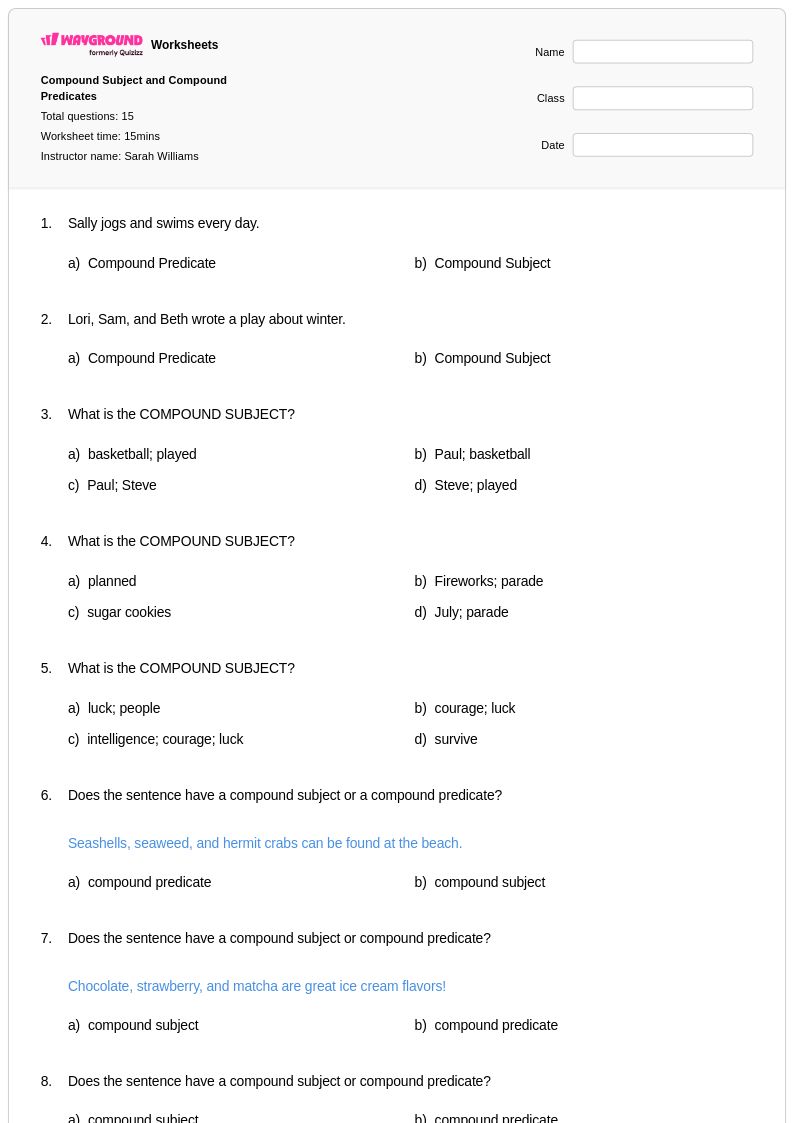
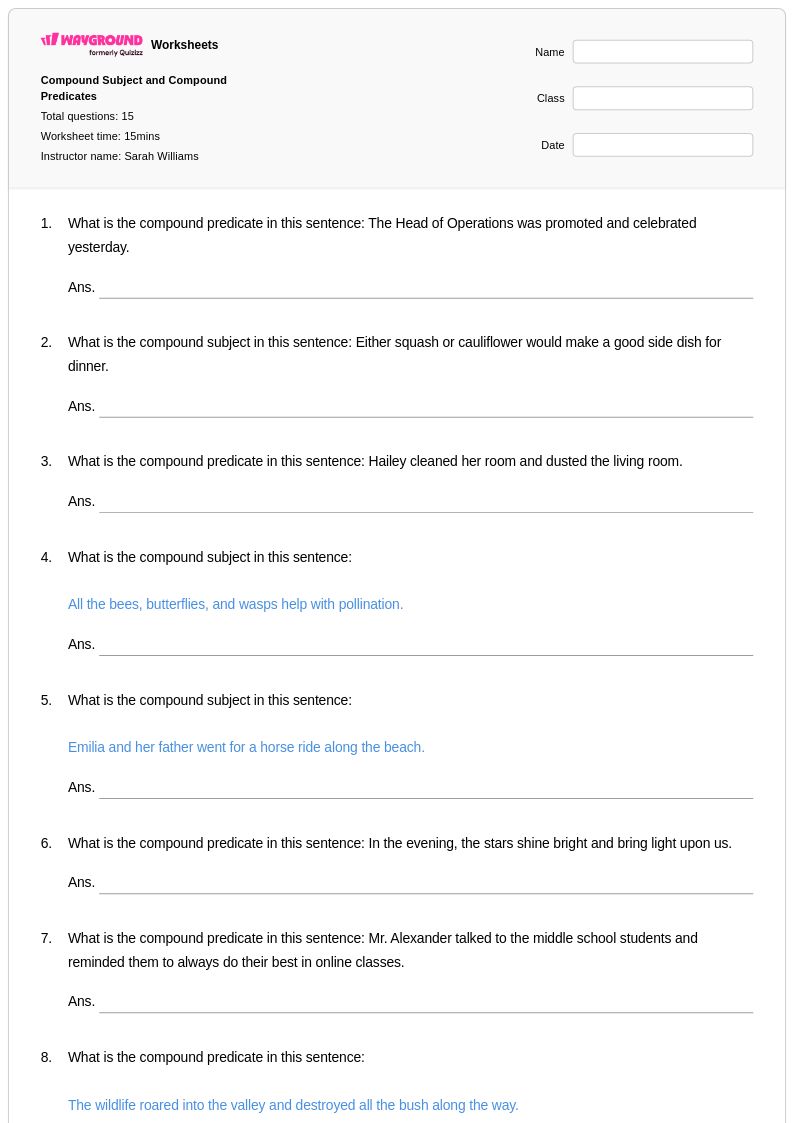
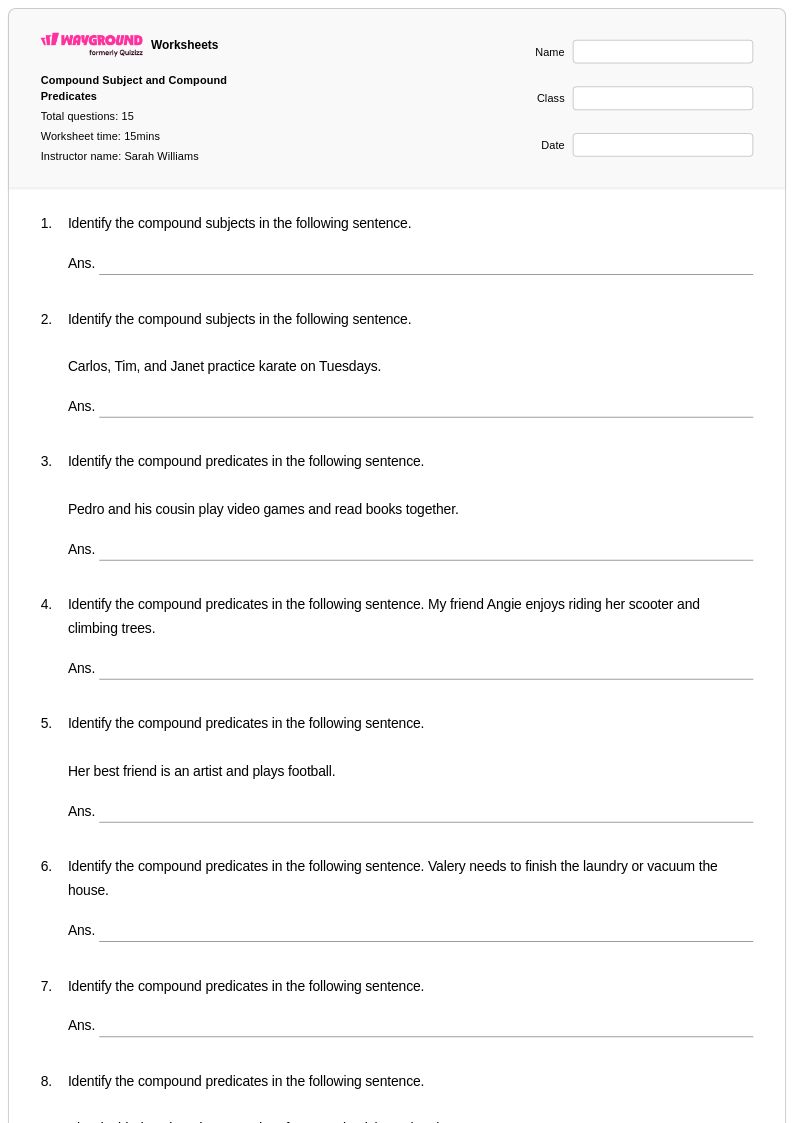
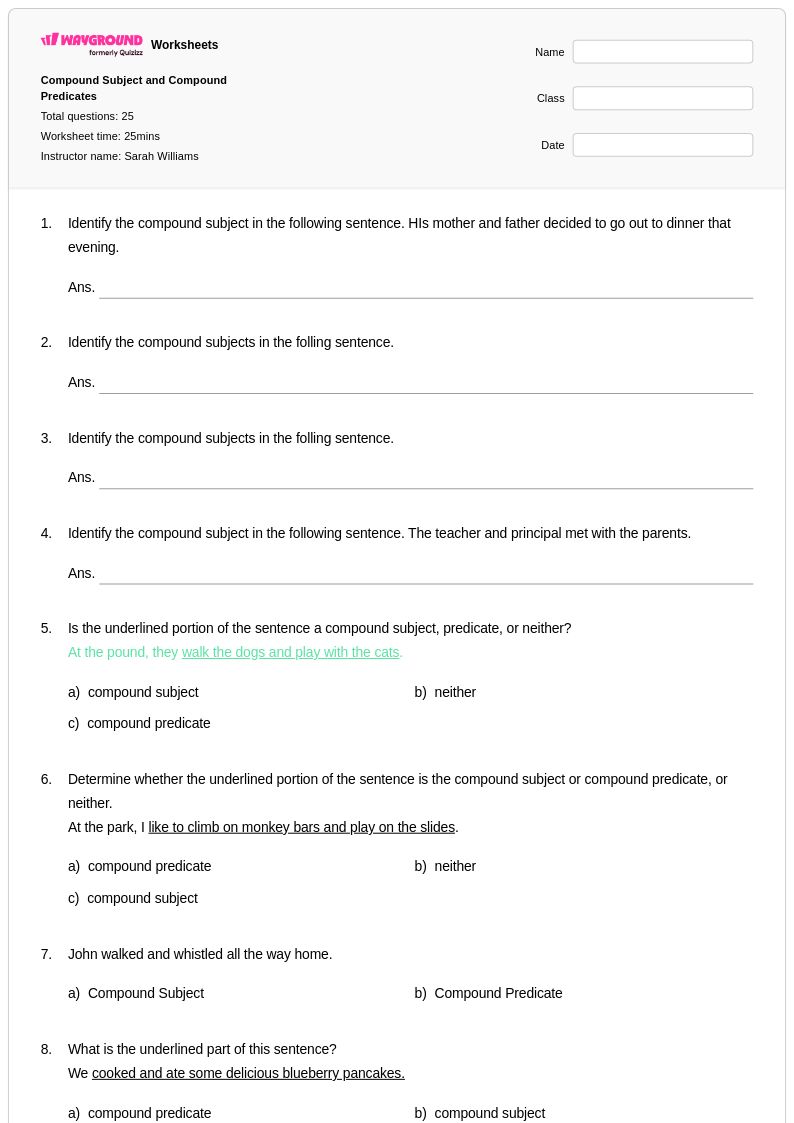
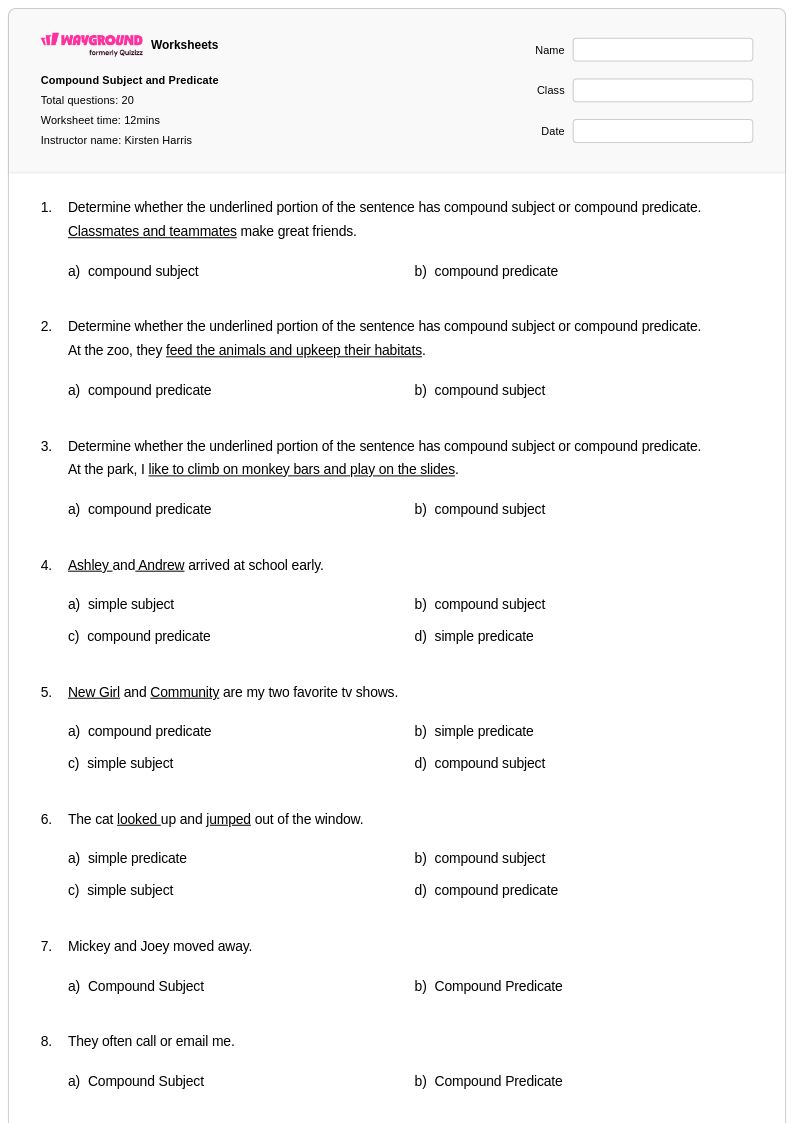
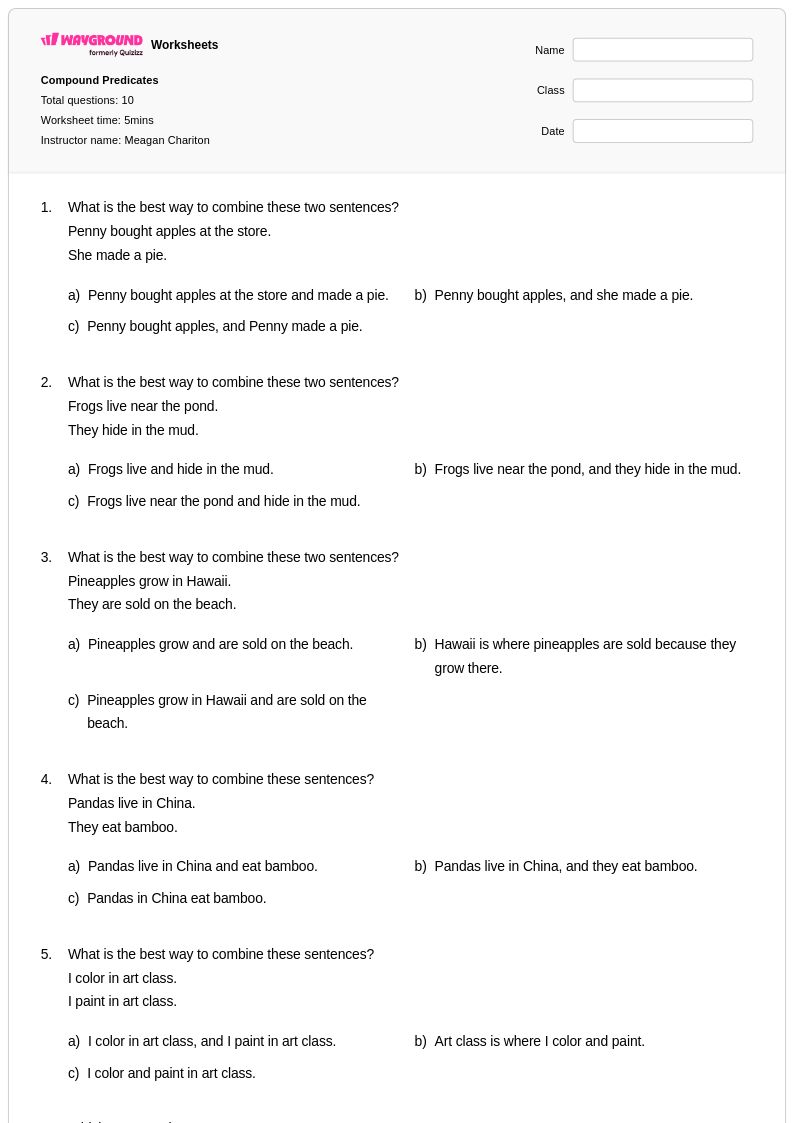
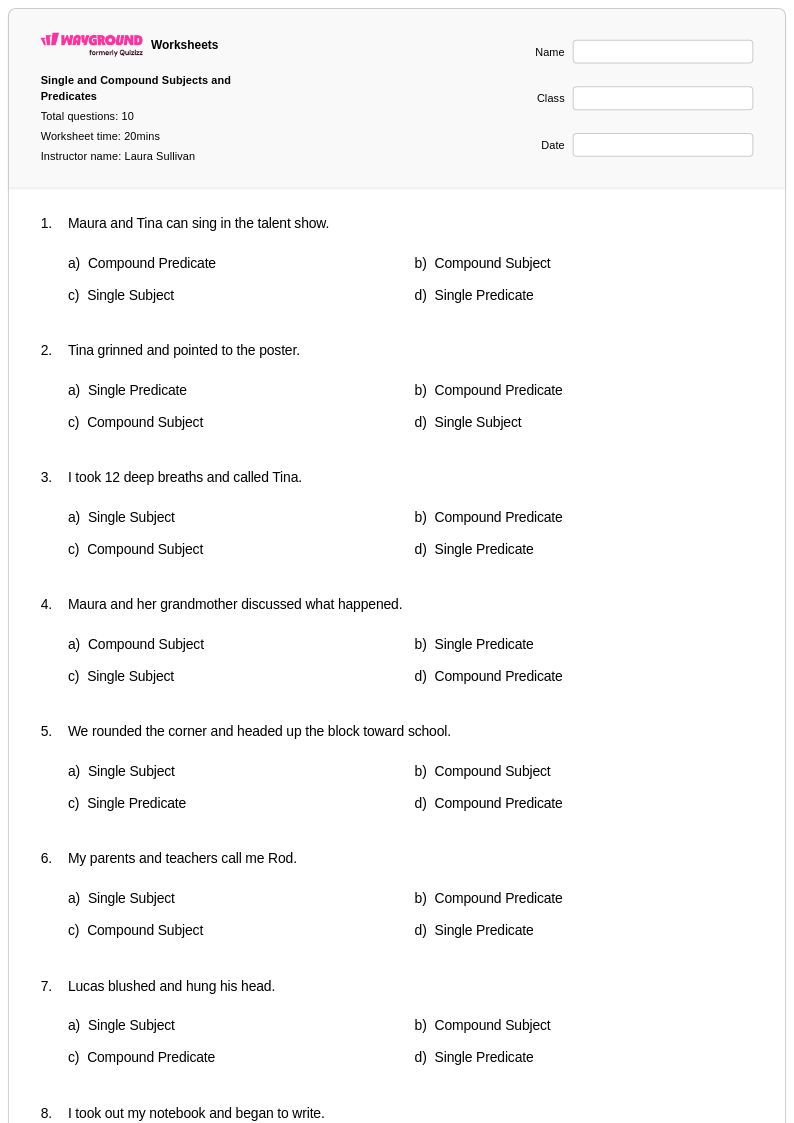
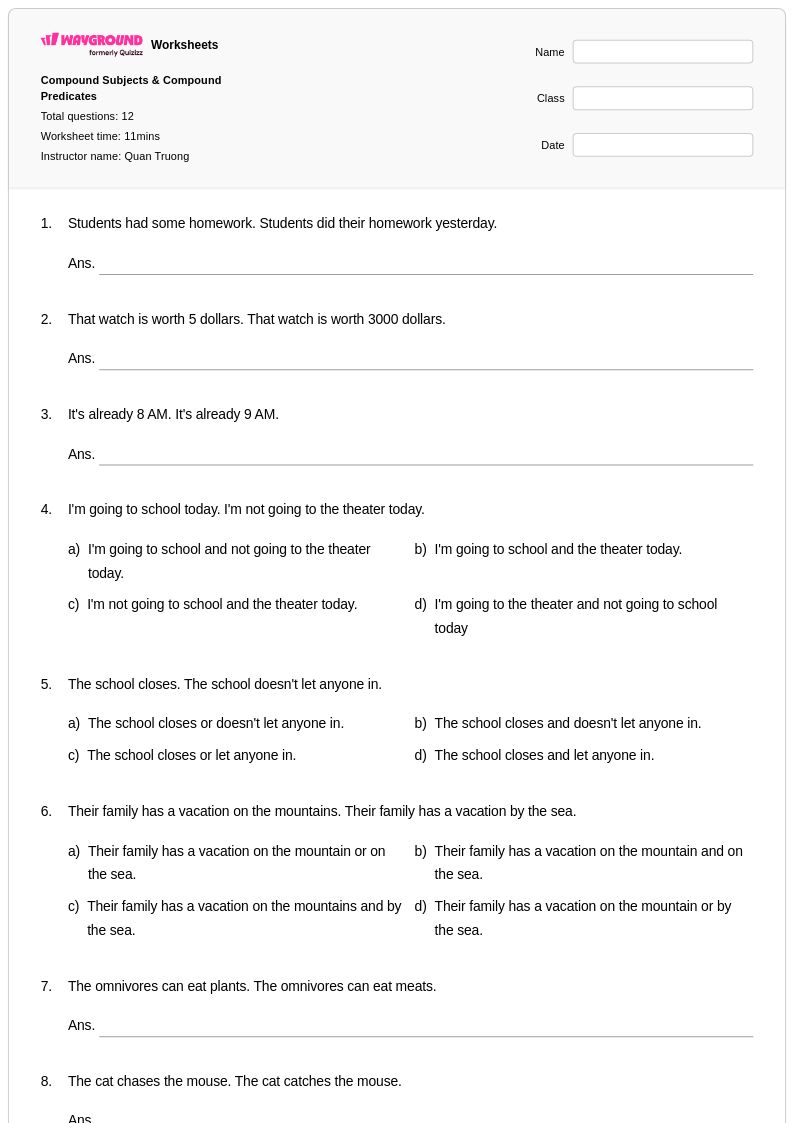
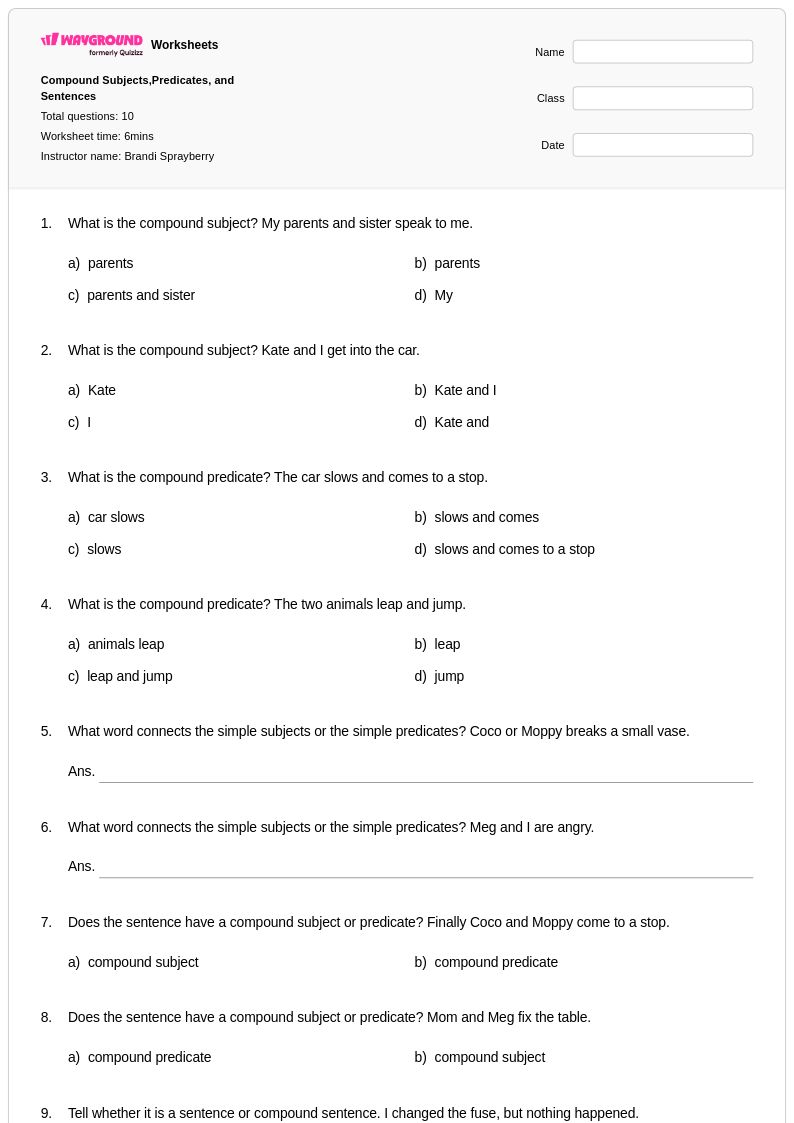
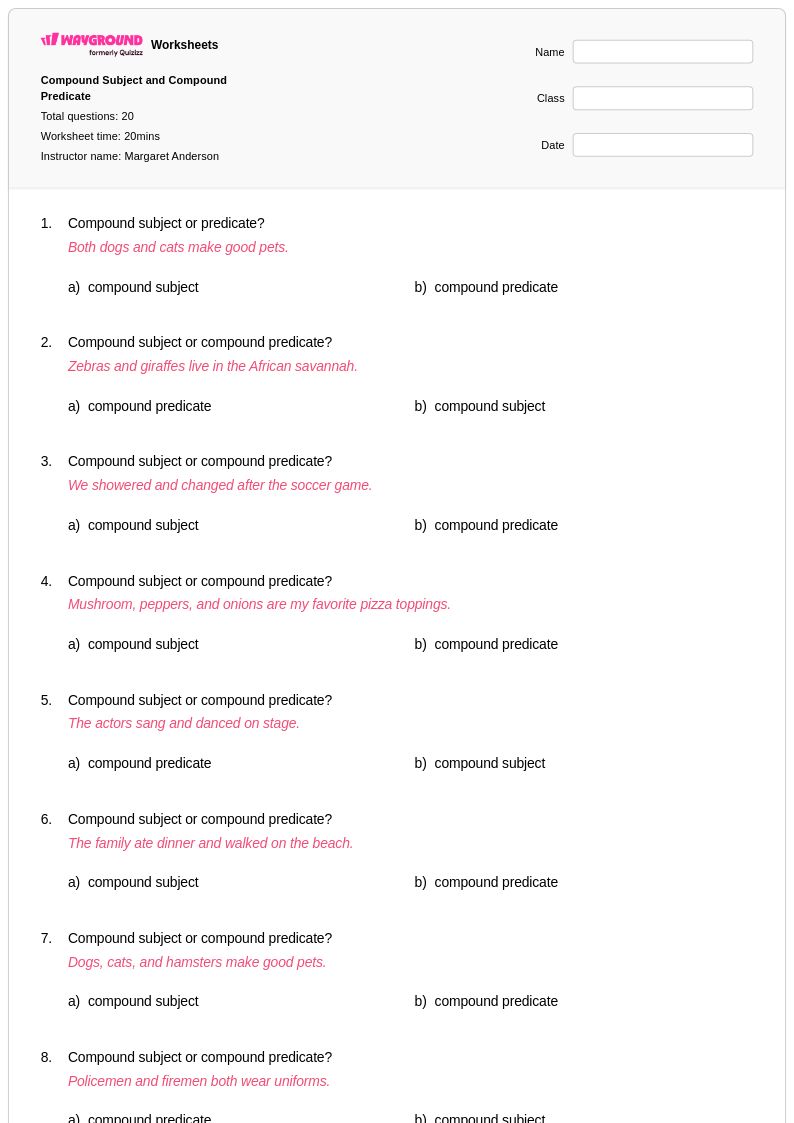
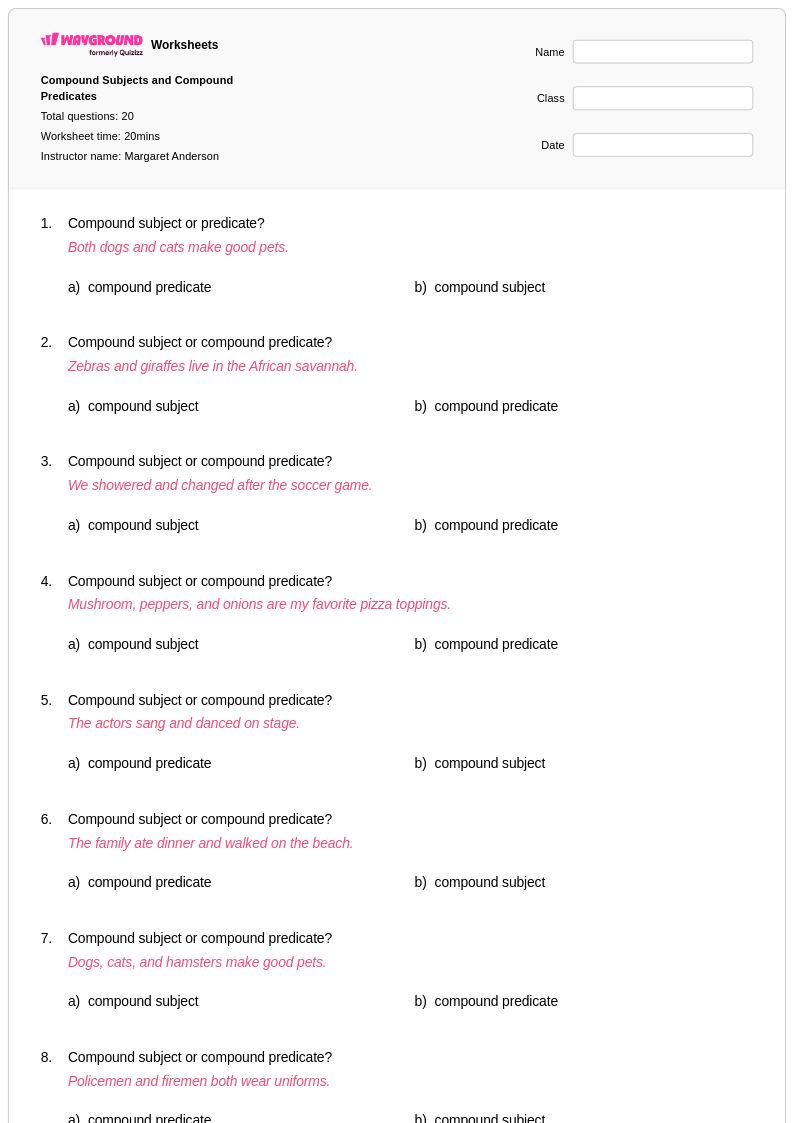
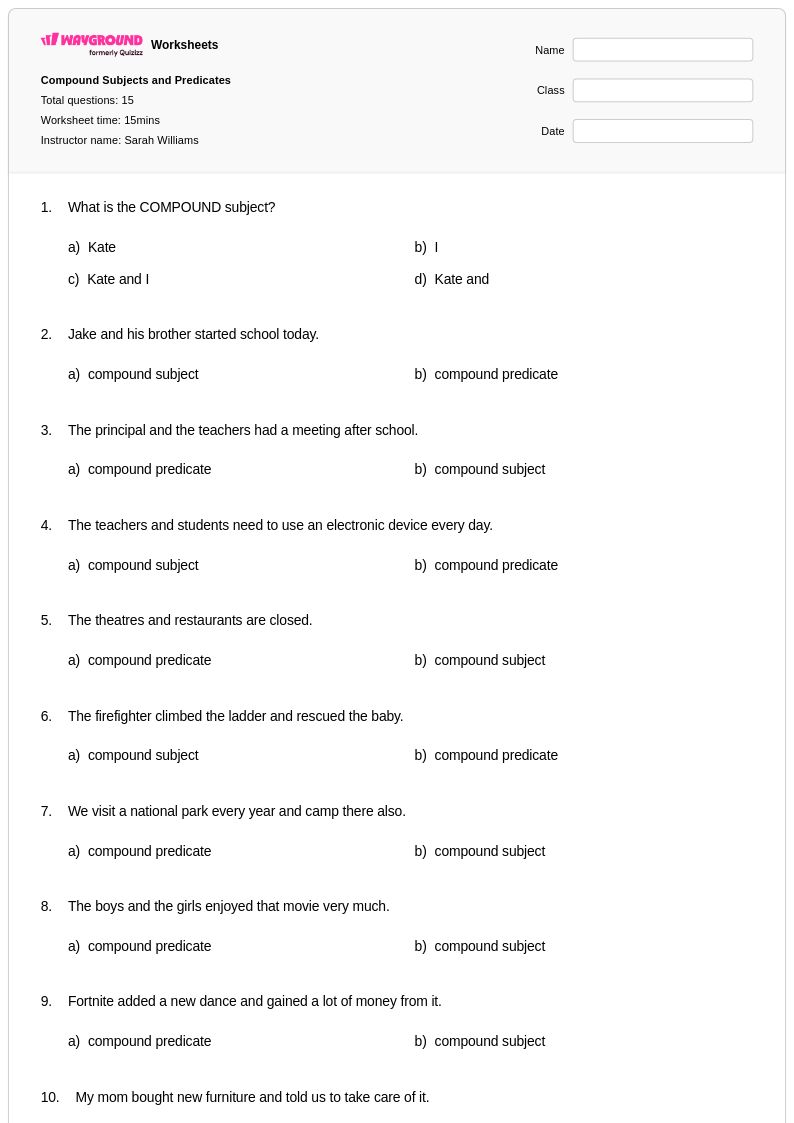
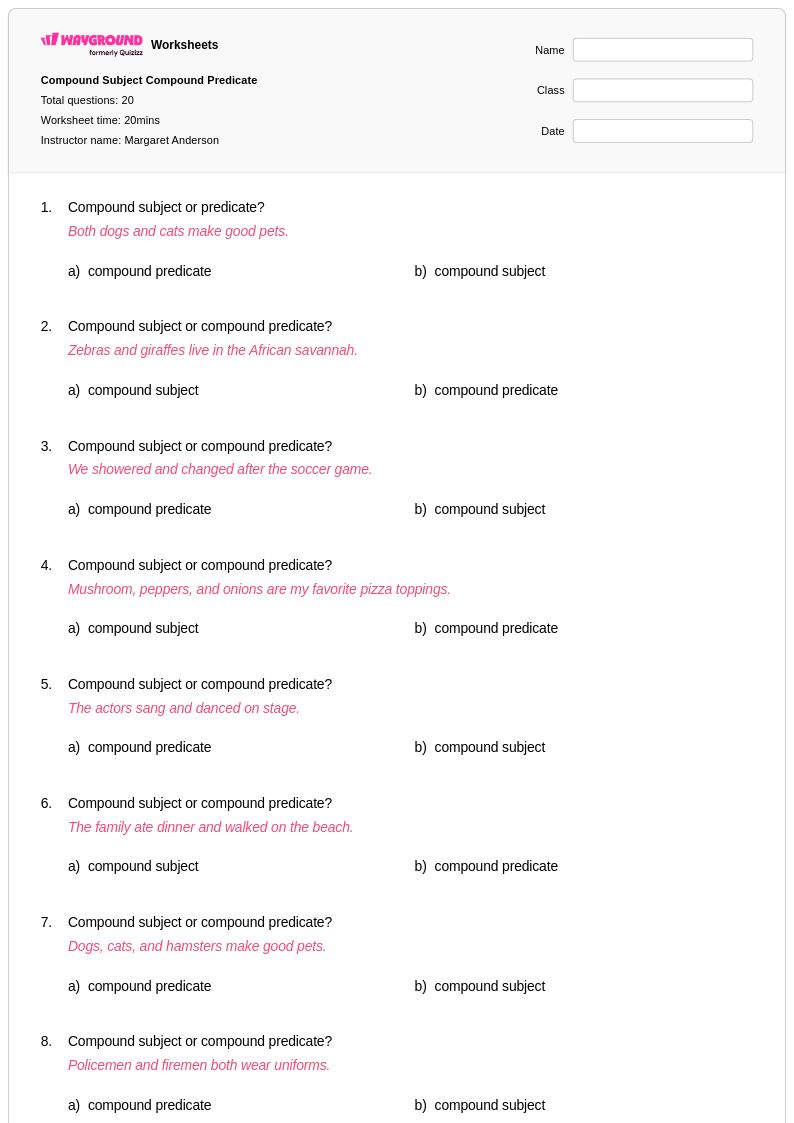
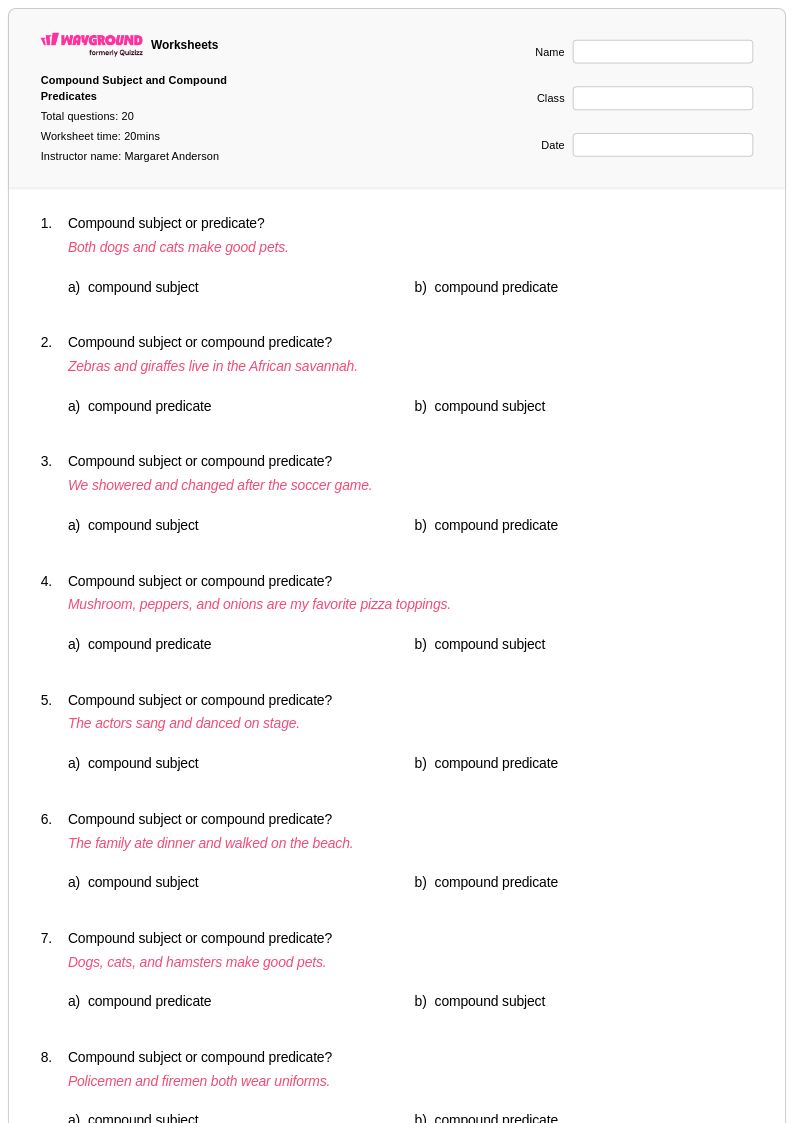
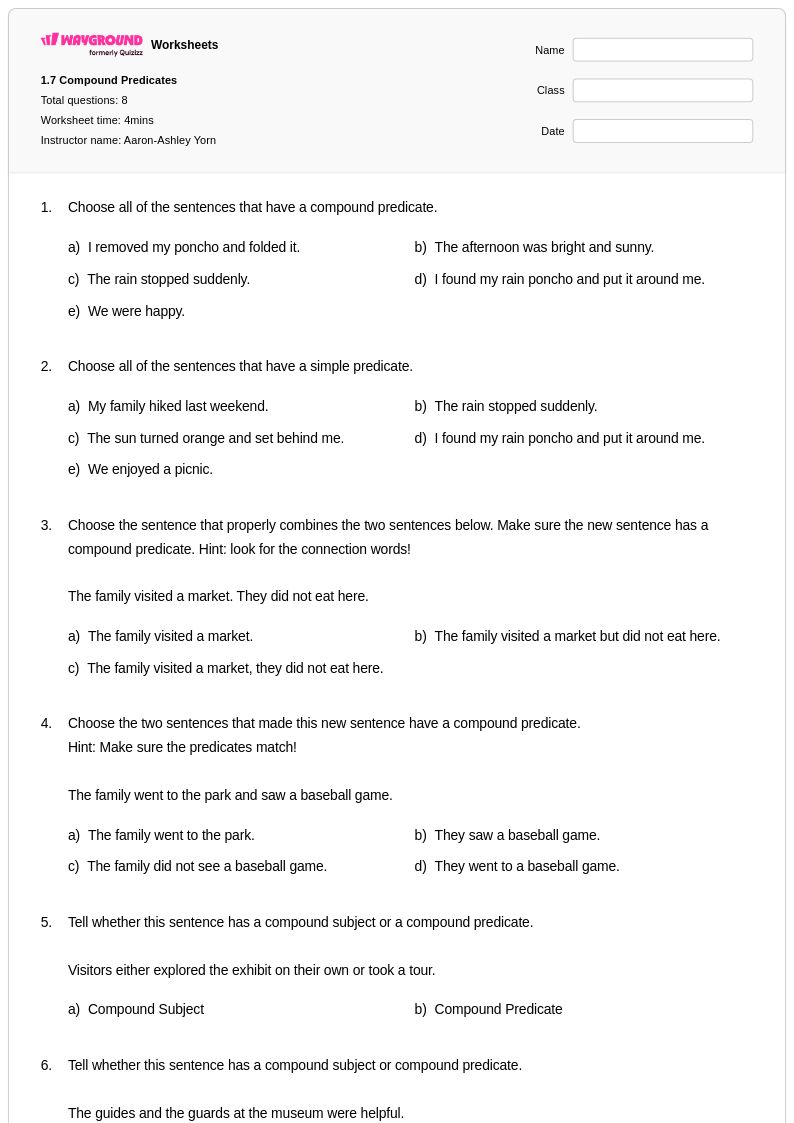
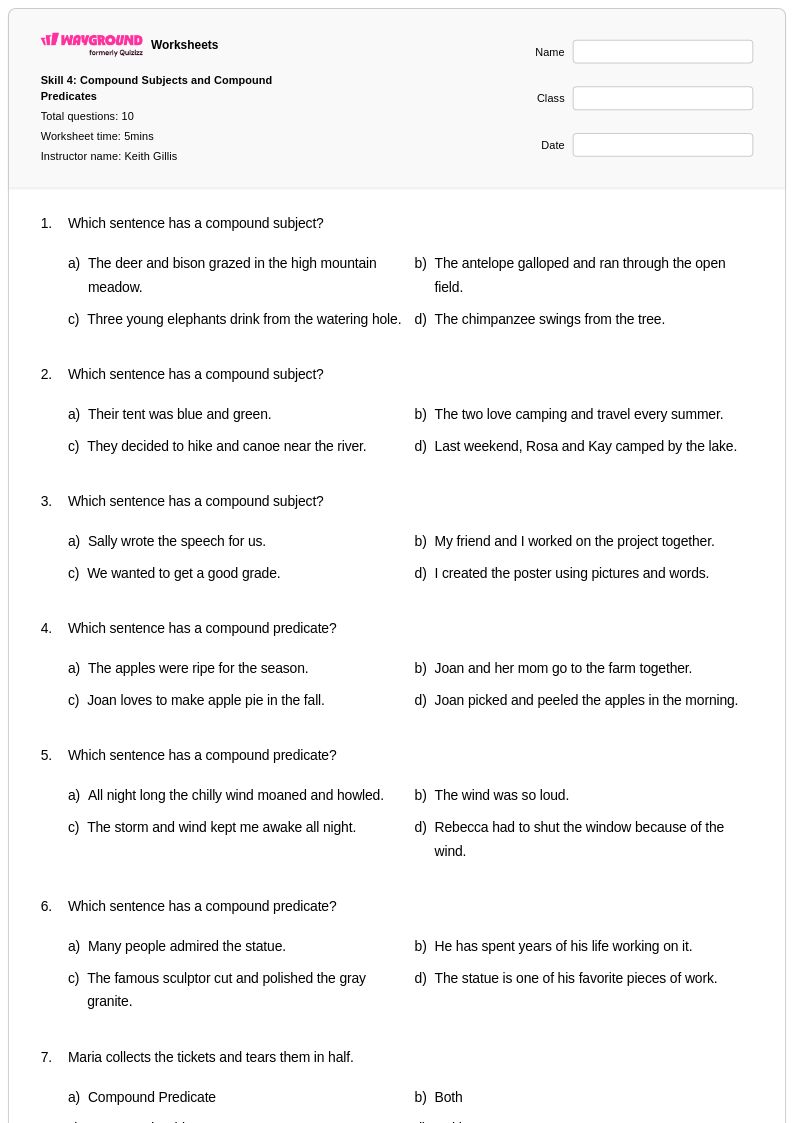
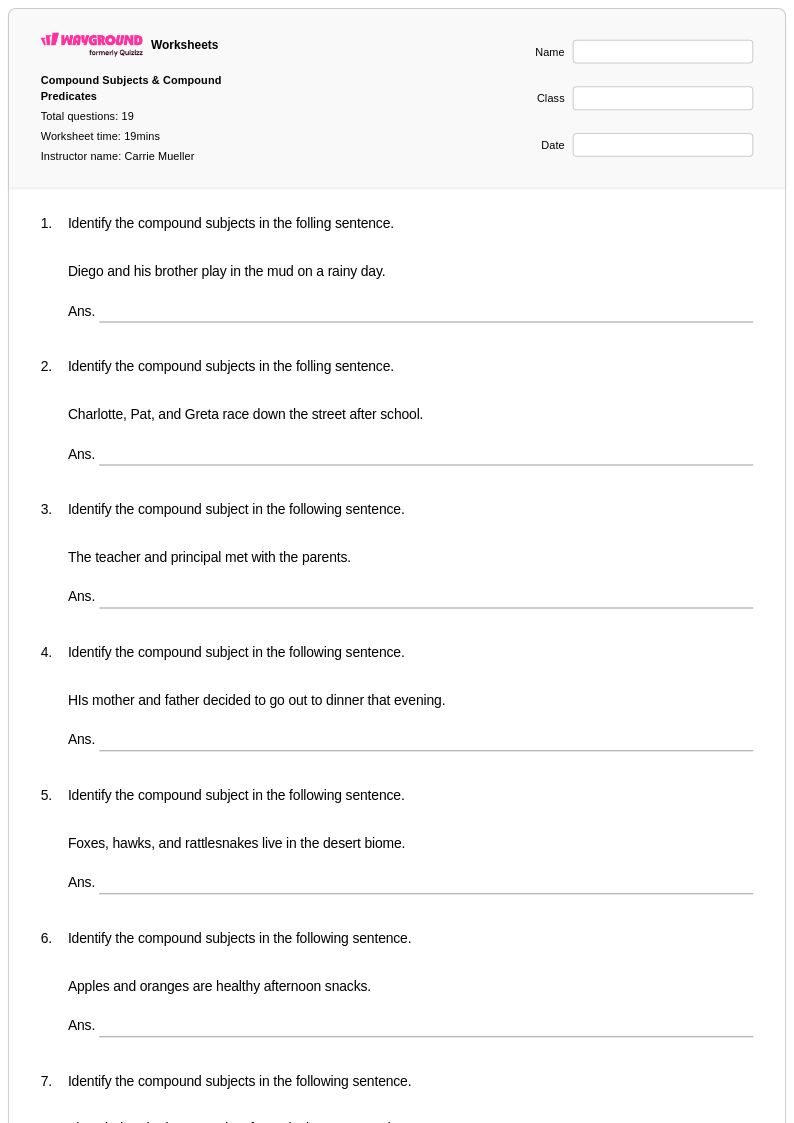
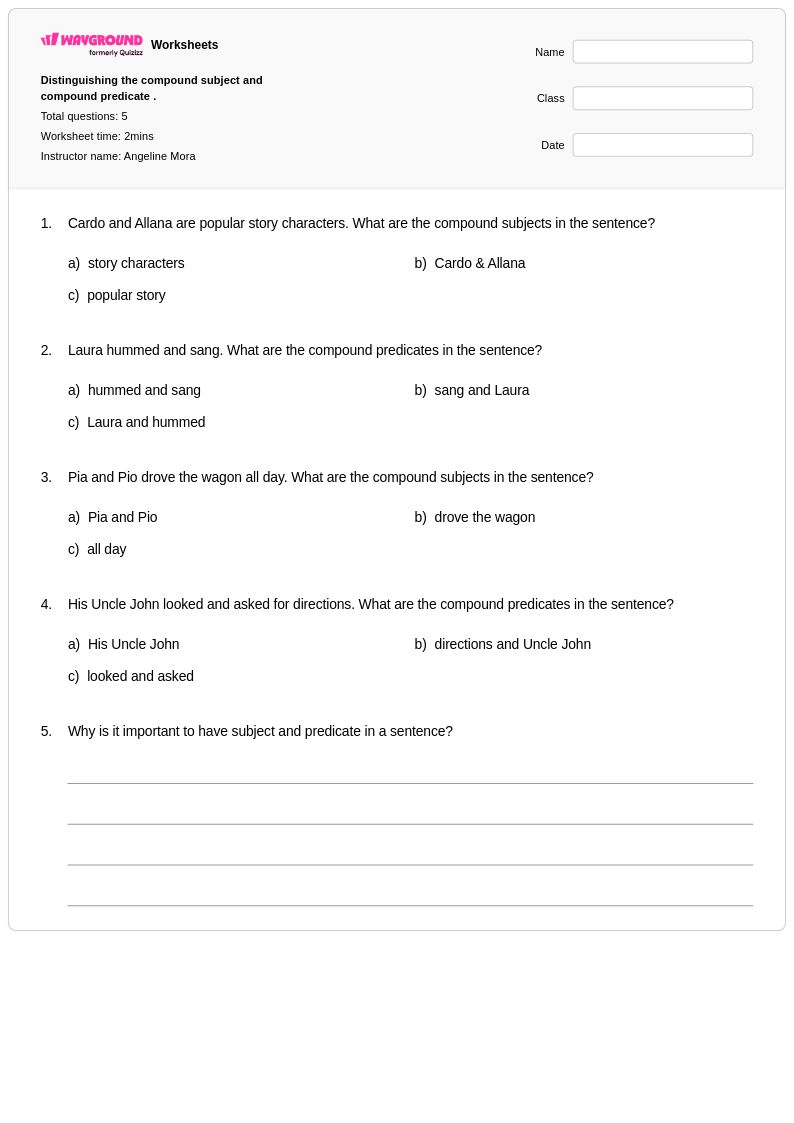
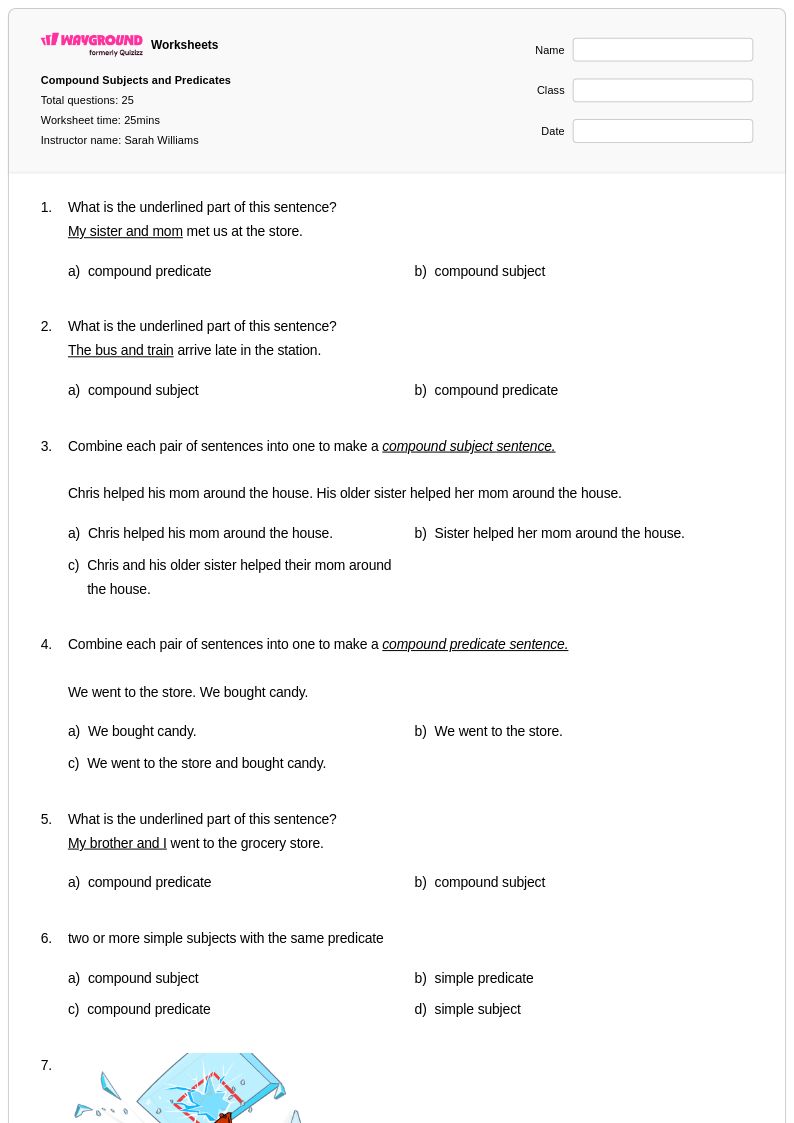
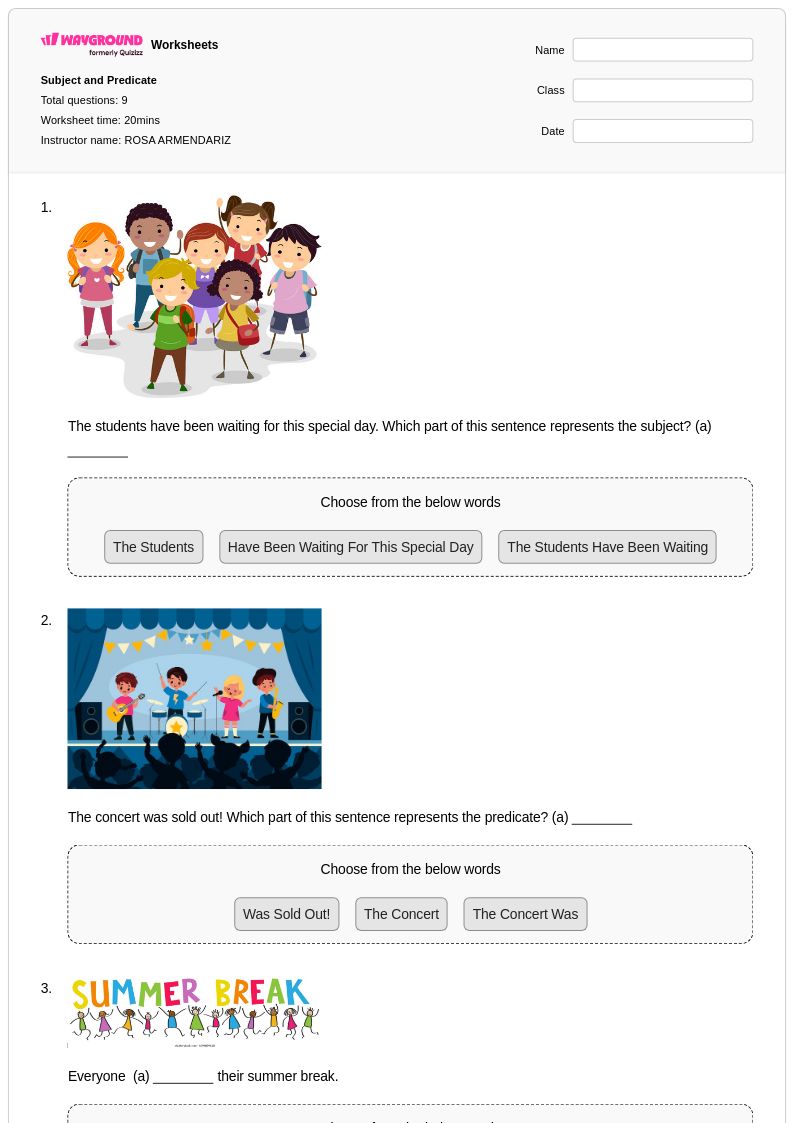
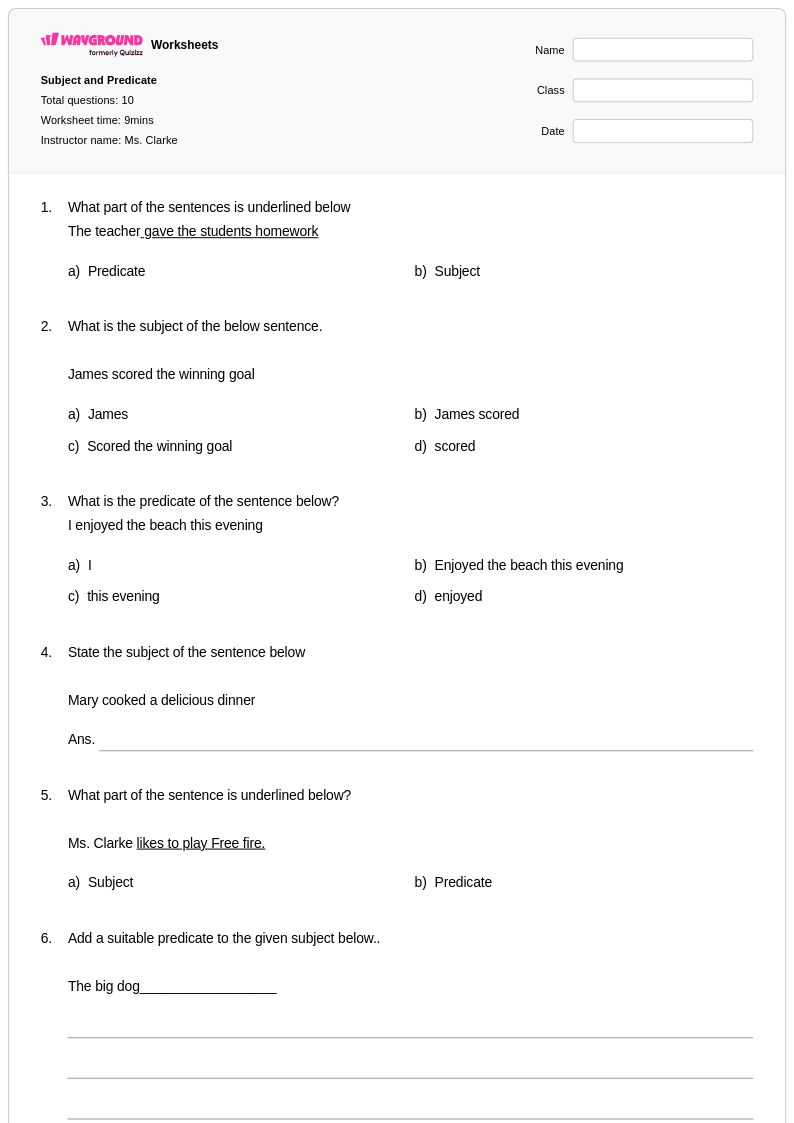
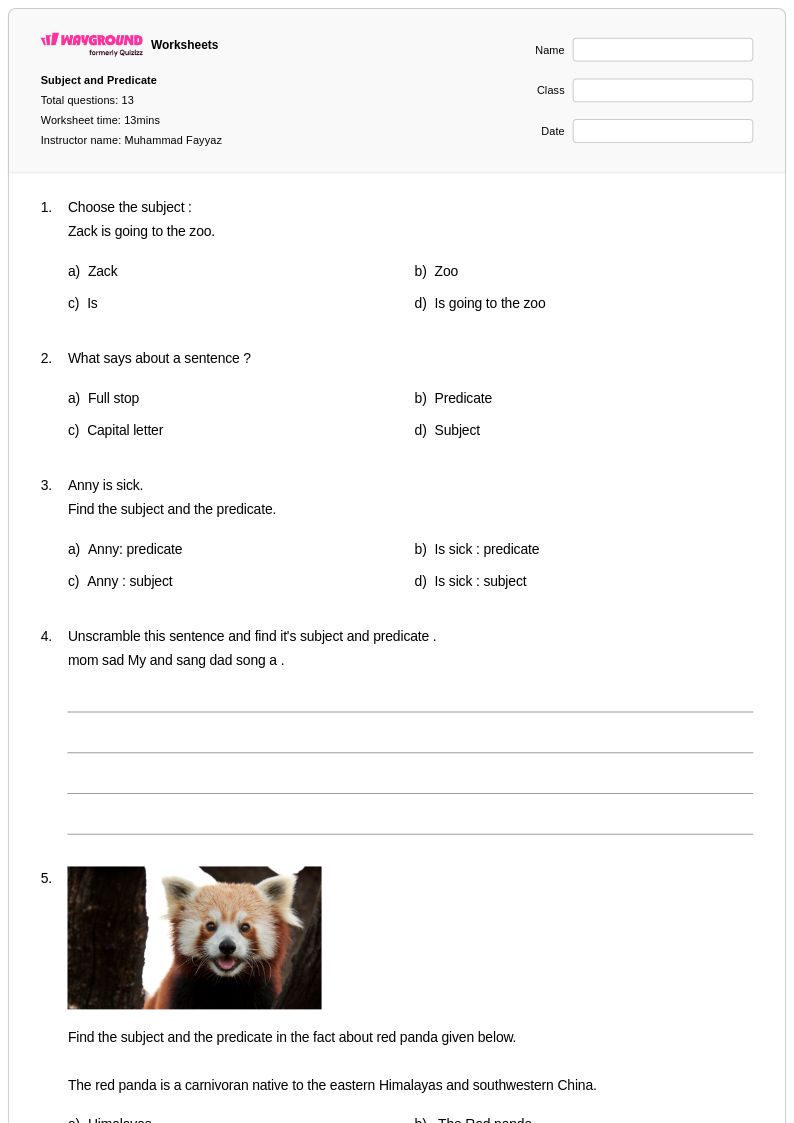
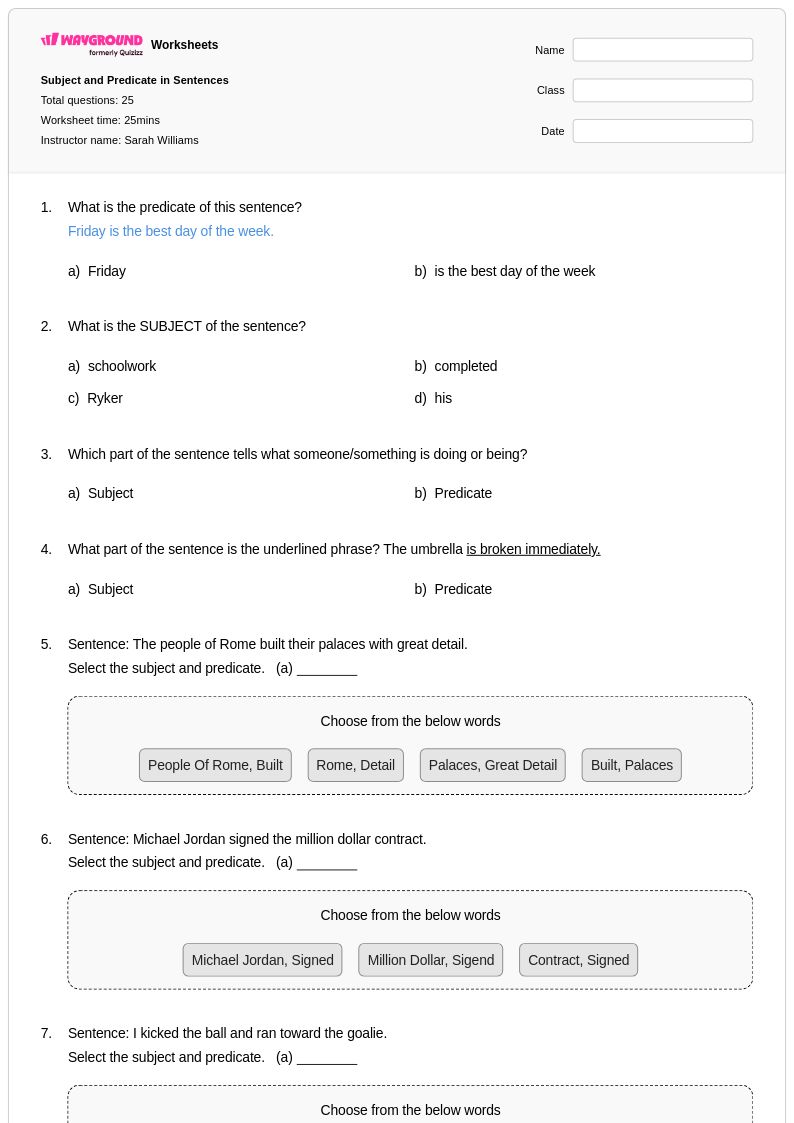
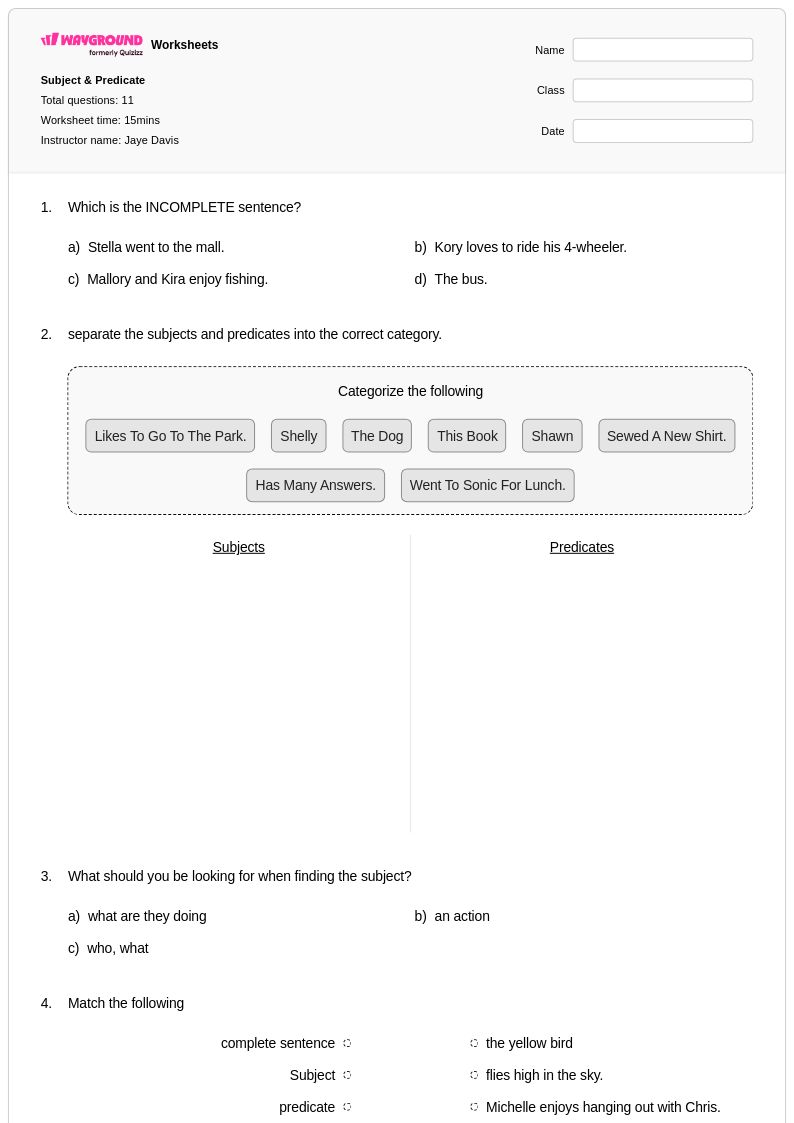
Compound predicate worksheets for Class 4 students available through Wayground (formerly Quizizz) provide targeted practice in identifying and constructing sentences with multiple verb phrases that share the same subject. These educational resources strengthen students' understanding of how compound predicates create more sophisticated sentence structures by combining two or more actions or states of being within a single sentence. The worksheets feature systematic practice problems that guide fourth-grade learners through recognizing compound predicates in existing sentences and crafting their own examples, with comprehensive answer keys that support both independent study and classroom instruction. Available as free printables in convenient pdf format, these materials help students master this essential grammar concept while building confidence in their sentence construction abilities.
Wayground (formerly Quizizz) empowers educators with an extensive collection of teacher-created compound predicate resources drawn from millions of high-quality materials specifically designed for fourth-grade English instruction. The platform's robust search and filtering capabilities enable teachers to quickly locate worksheets that align with curriculum standards and match their students' specific learning needs. These versatile materials support effective differentiation through customizable features that allow educators to modify content for remediation or enrichment purposes, while the availability of both printable and digital pdf formats provides flexibility for various classroom environments and teaching styles. Teachers can seamlessly integrate these compound predicate worksheets into lesson planning, homework assignments, and targeted skill practice sessions to ensure students develop strong foundational knowledge in sentence structure analysis and construction.
FAQs
How do I teach compound predicates to students?
Start by ensuring students have a solid grasp of simple predicates before introducing compound predicates. Model how two or more verbs or verb phrases can share the same subject, using mentor sentences from familiar texts. A reliable entry point is asking students to combine two short sentences with the same subject into one sentence using 'and' or 'but', which makes the concept concrete before moving to analysis.
What exercises help students practice identifying compound predicates?
Effective practice includes sentence-combining tasks where students merge two simple sentences into one with a compound predicate, as well as identification exercises where students underline each verb in the predicate and confirm they share the same subject. Constructing original sentences with multiple actions — such as describing what a character did across a scene — deepens understanding by moving students from recognition to production.
What mistakes do students commonly make with compound predicates?
The most frequent error is confusing compound predicates with compound sentences. Students often incorrectly add a comma before 'and' when joining two verbs with the same subject, treating it as a clause boundary rather than a shared predicate. Another common mistake is losing track of the subject mid-sentence and inadvertently shifting to a new one, which turns a compound predicate into a compound sentence.
How do I help struggling students understand the difference between compound predicates and compound sentences?
Have students identify whether both sides of the conjunction have their own subject. If only one subject is doing multiple things, it is a compound predicate; if each clause has its own subject, it is a compound sentence. Color-coding the subject and each verb phrase in different colors is a visual strategy that makes the structural difference immediately visible for students who need additional support.
How can I use compound predicate worksheets in my classroom?
Compound predicate worksheets on Wayground are available as printable PDFs for traditional classroom use and in digital formats for technology-integrated environments, giving you flexibility for independent practice, homework, or small-group instruction. You can also host them directly as a quiz on Wayground, which allows for real-time tracking of student responses. The included answer keys make it straightforward to use these materials for self-checking, peer review, or teacher-led review sessions.
How do compound predicates improve student writing?
Compound predicates help students write more efficiently by consolidating related actions into a single sentence rather than repeating the subject across multiple short sentences. This reduces redundancy and improves sentence variety, two hallmarks of more mature writing. Teaching students to use compound predicates intentionally also builds their awareness of how sentence structure affects rhythm and clarity in their own work.