Free Printable Compounds and Mixtures Worksheets for Class 5
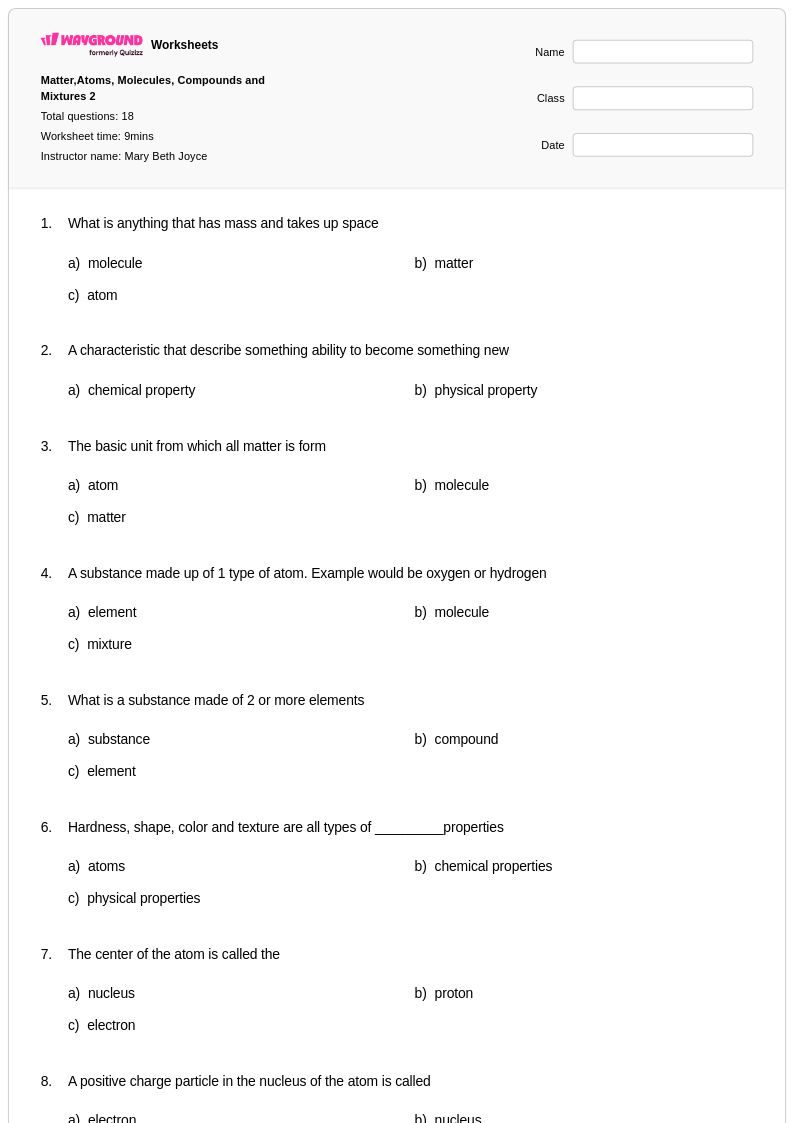
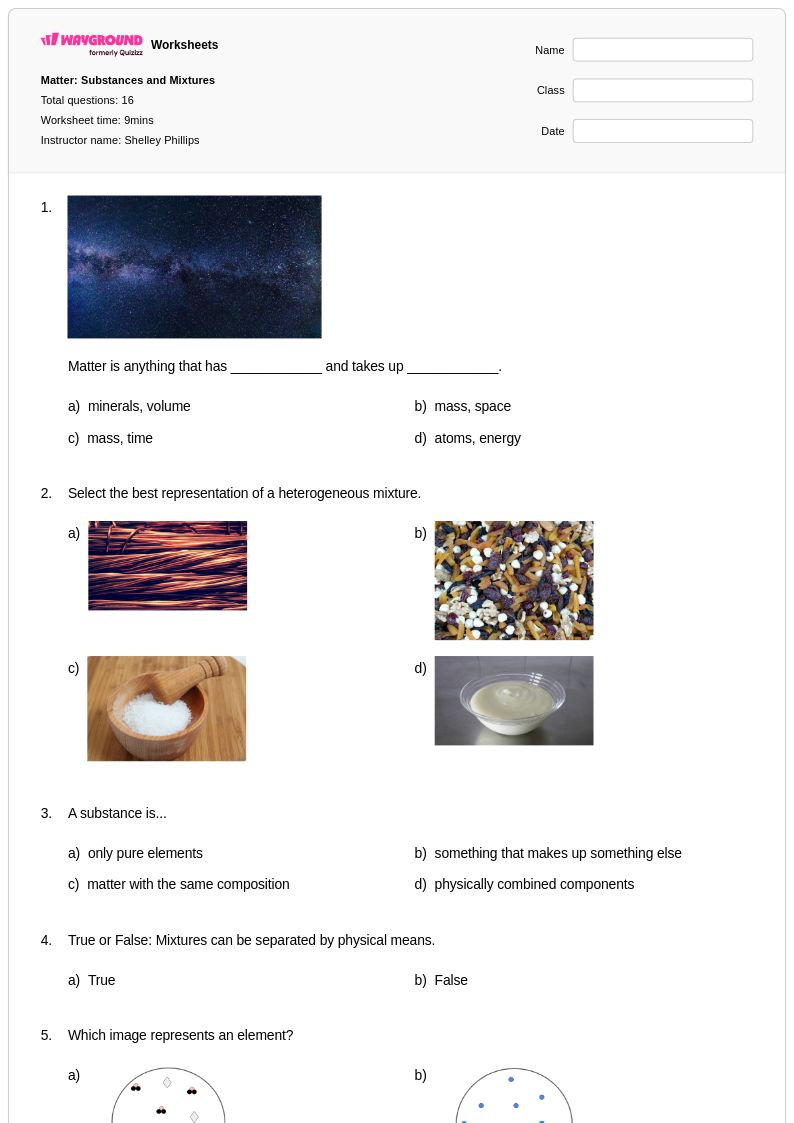
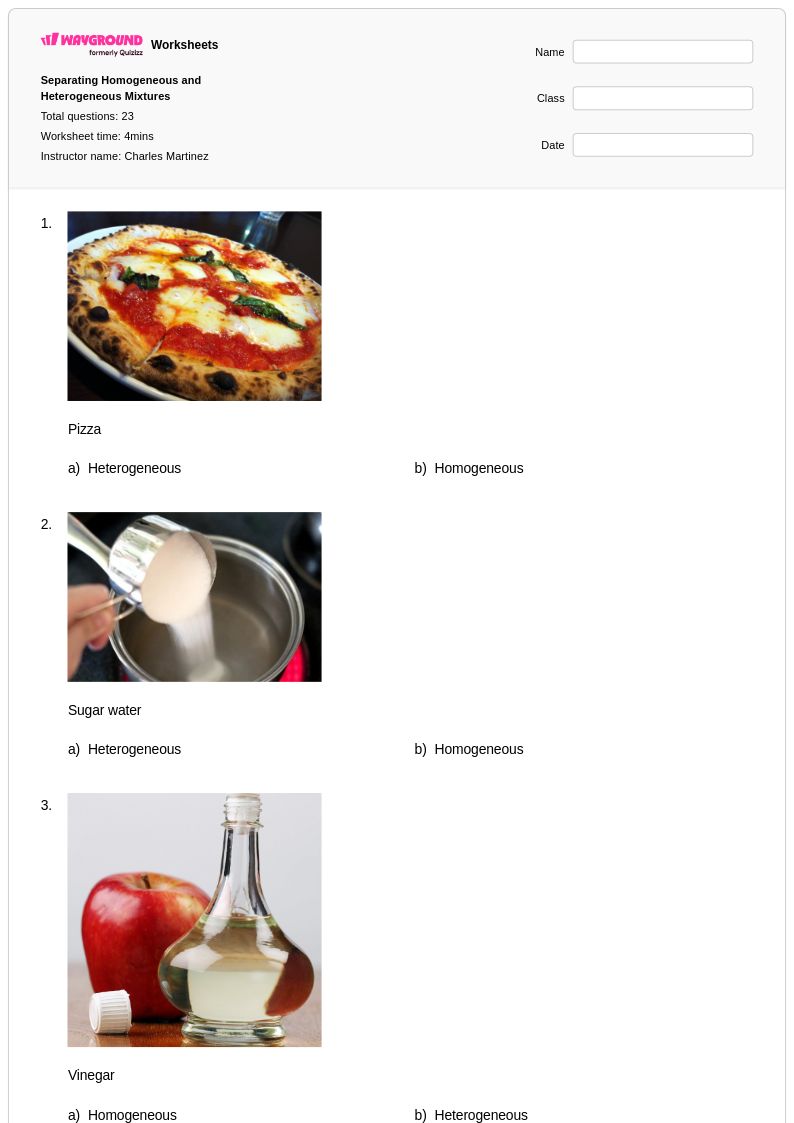
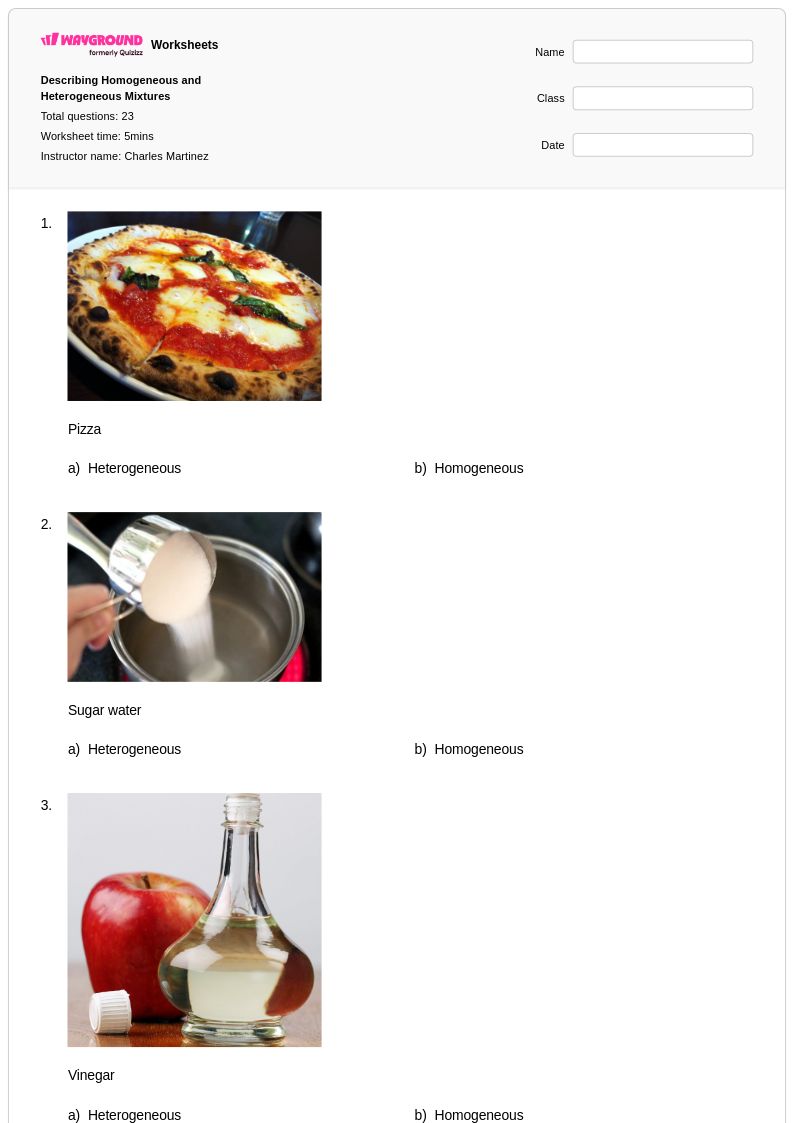
Wayground's free Class 5 compounds and mixtures worksheets provide printable PDF practice problems and answer keys to help students master identifying, separating, and understanding the differences between chemical compounds and physical mixtures.
Explore printable Compounds and Mixtures worksheets for Class 5
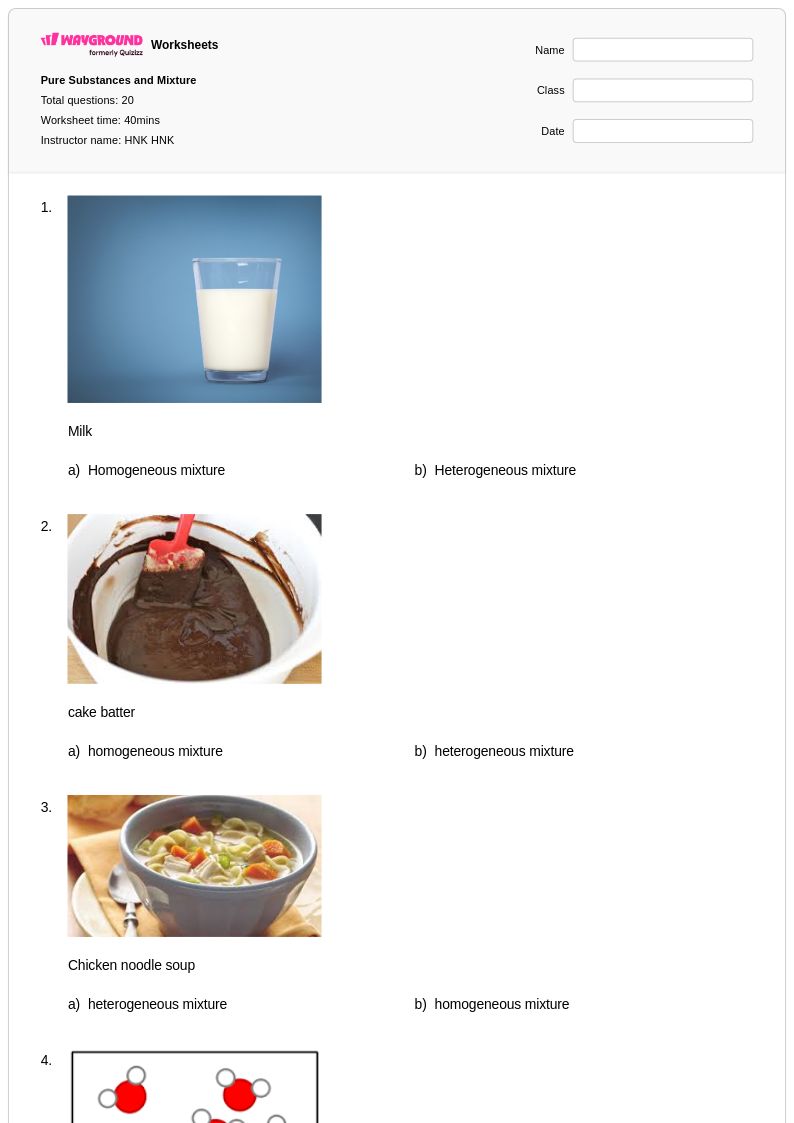
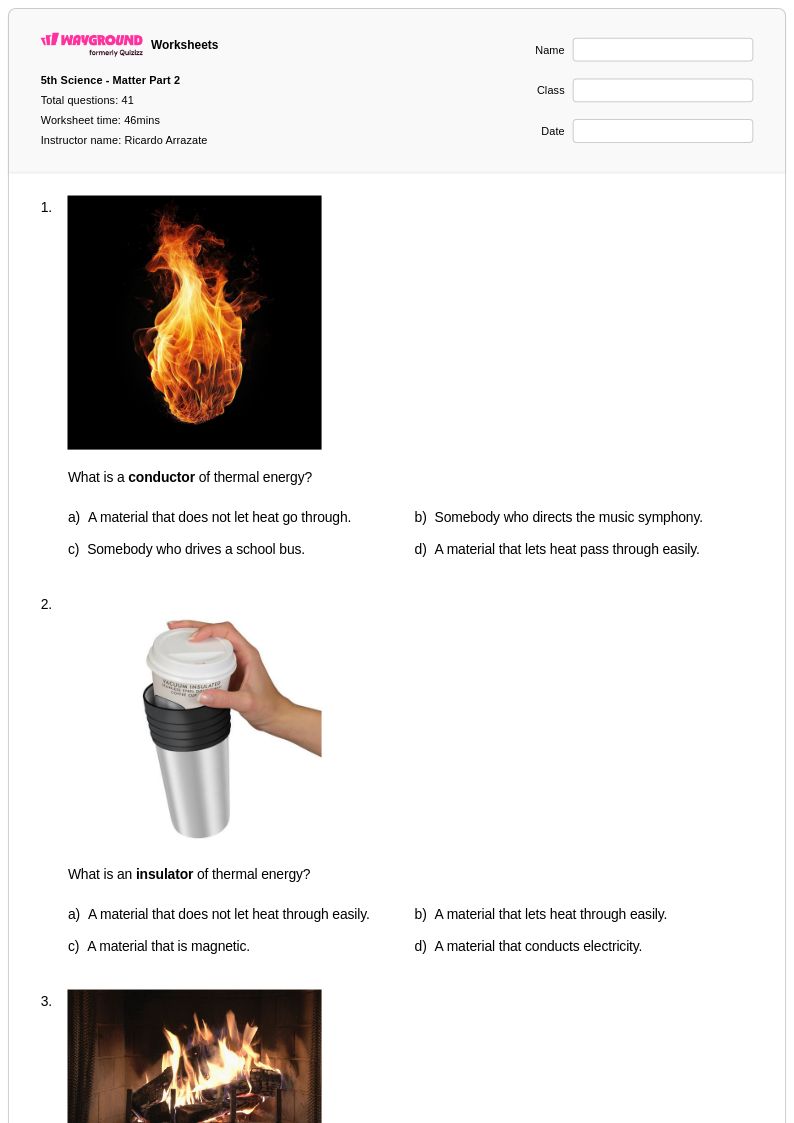
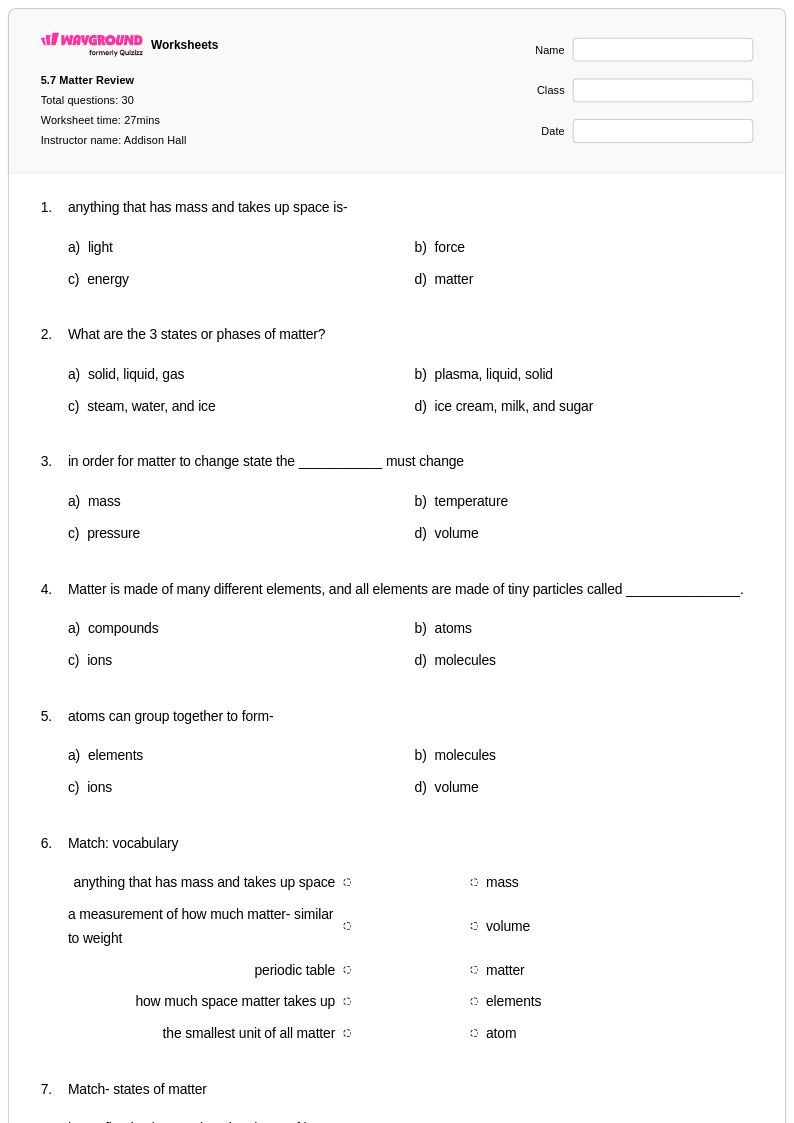
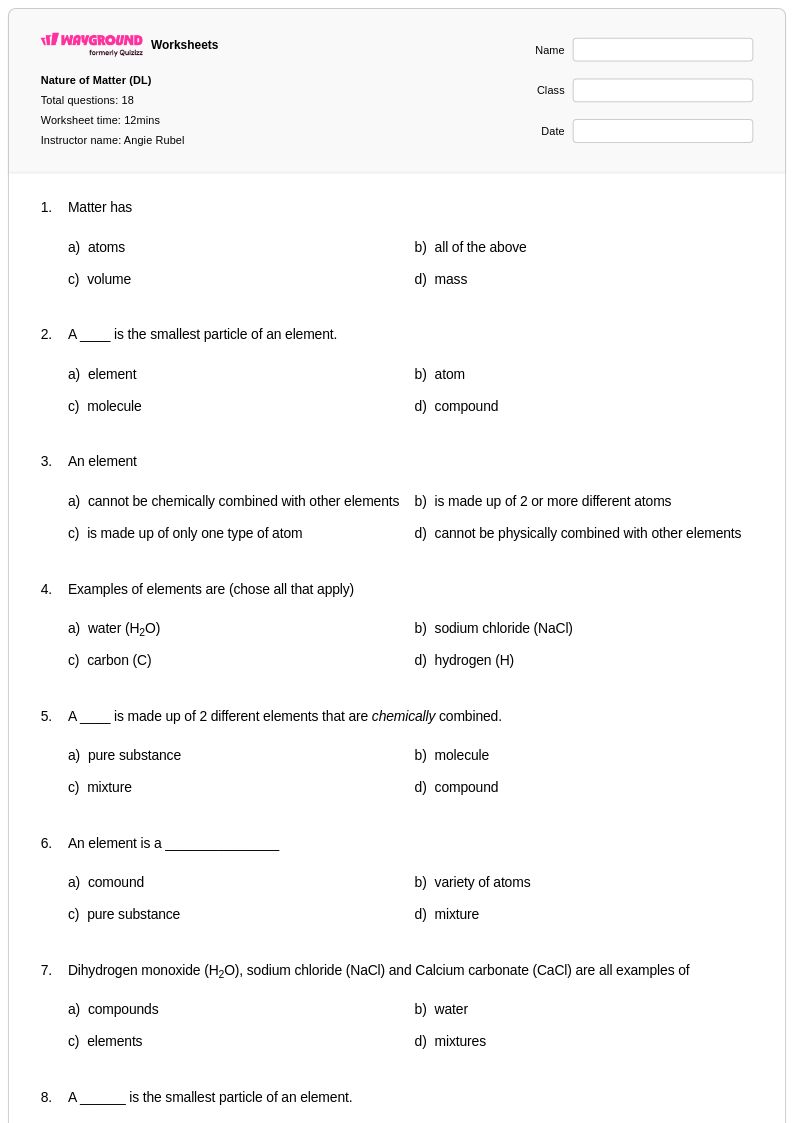
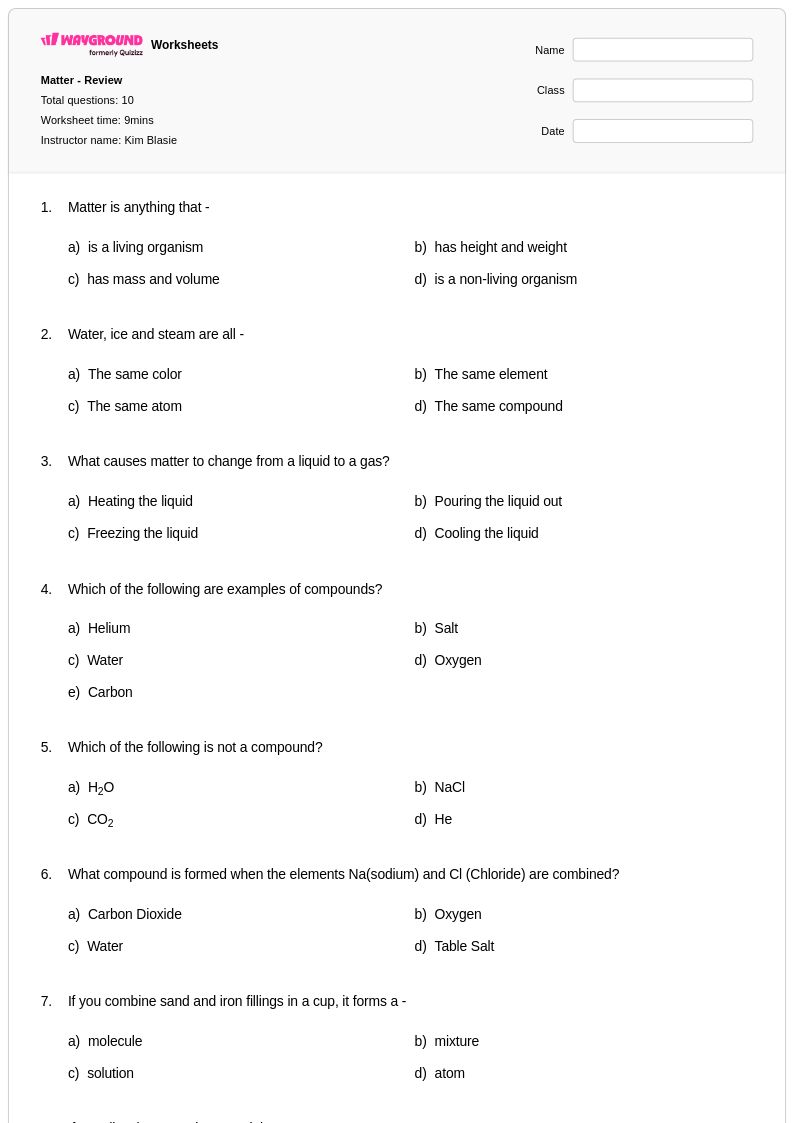
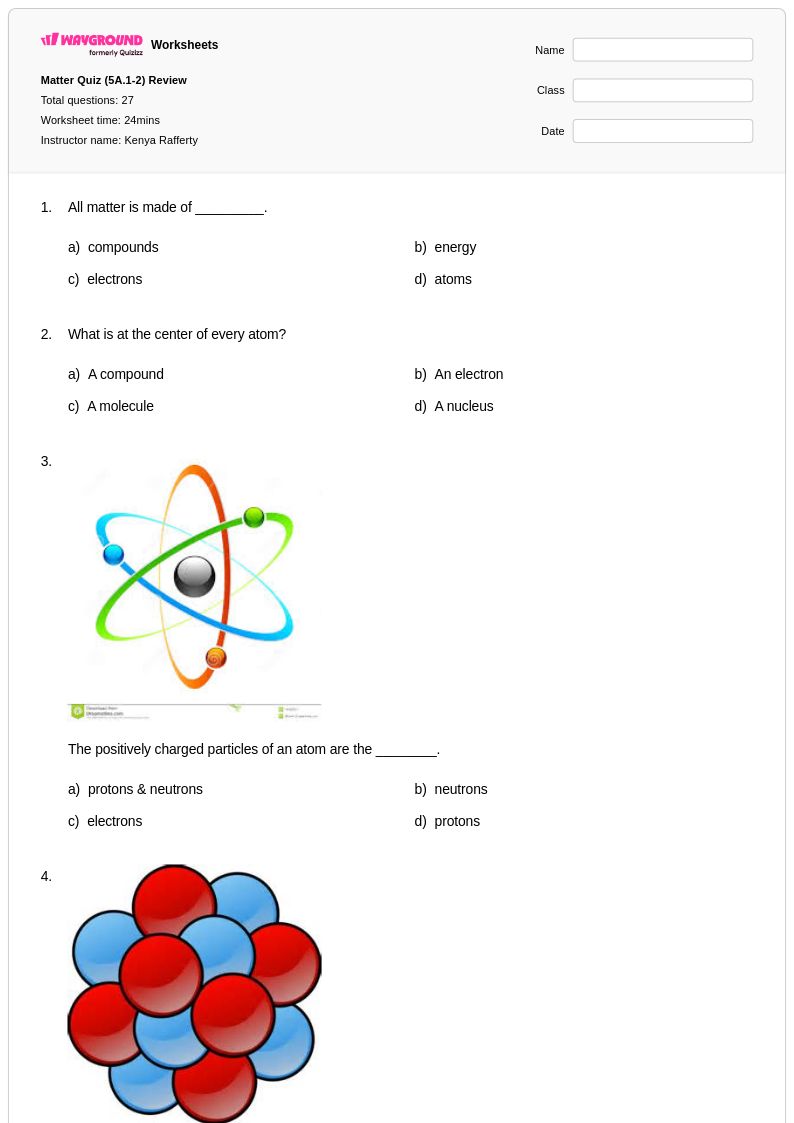
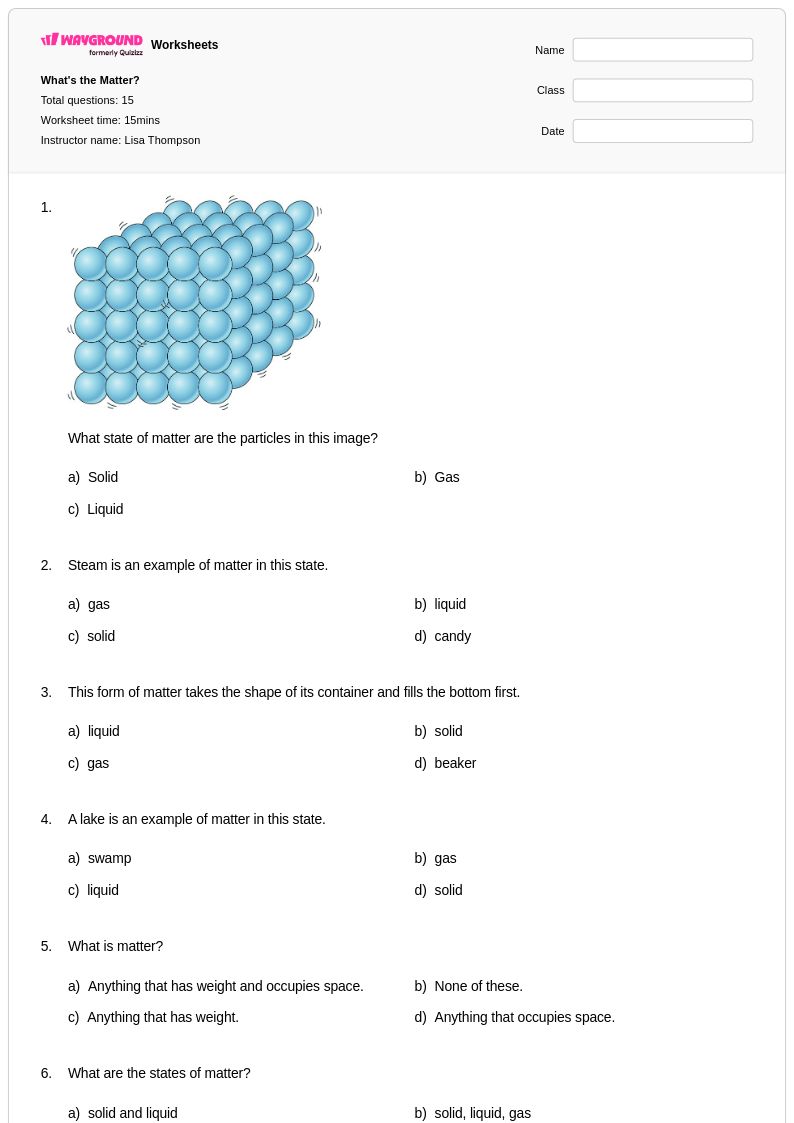
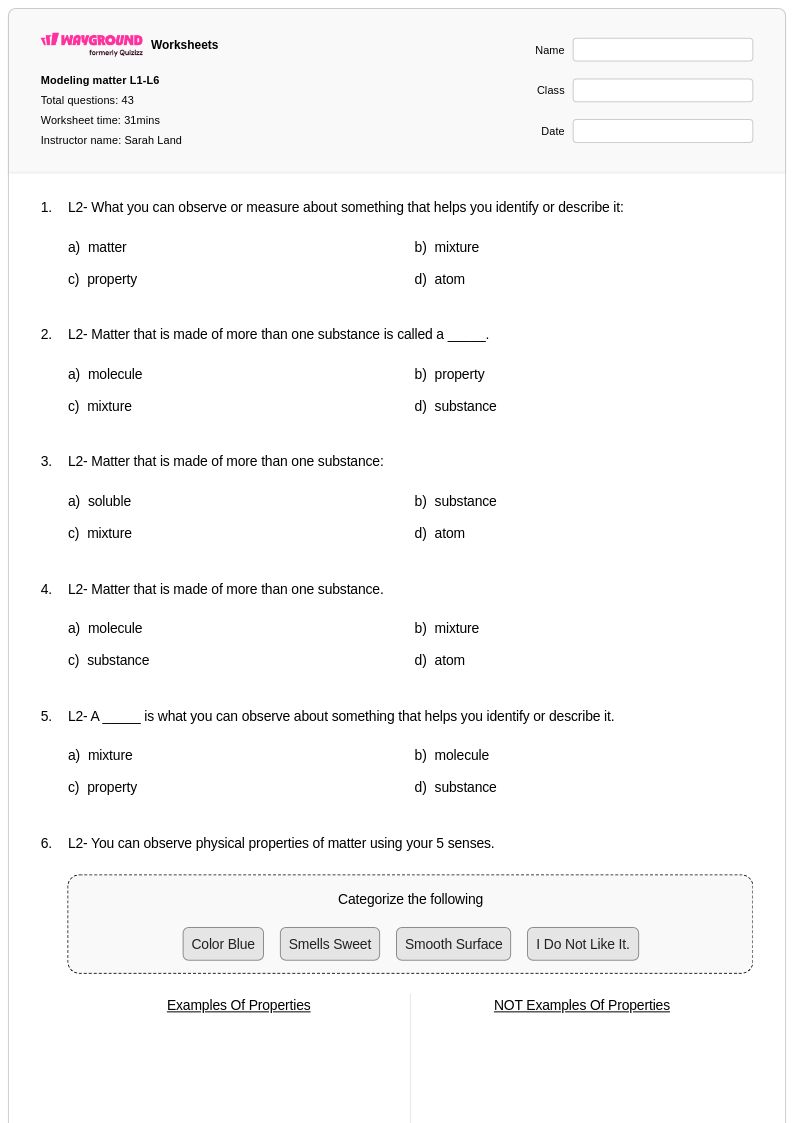
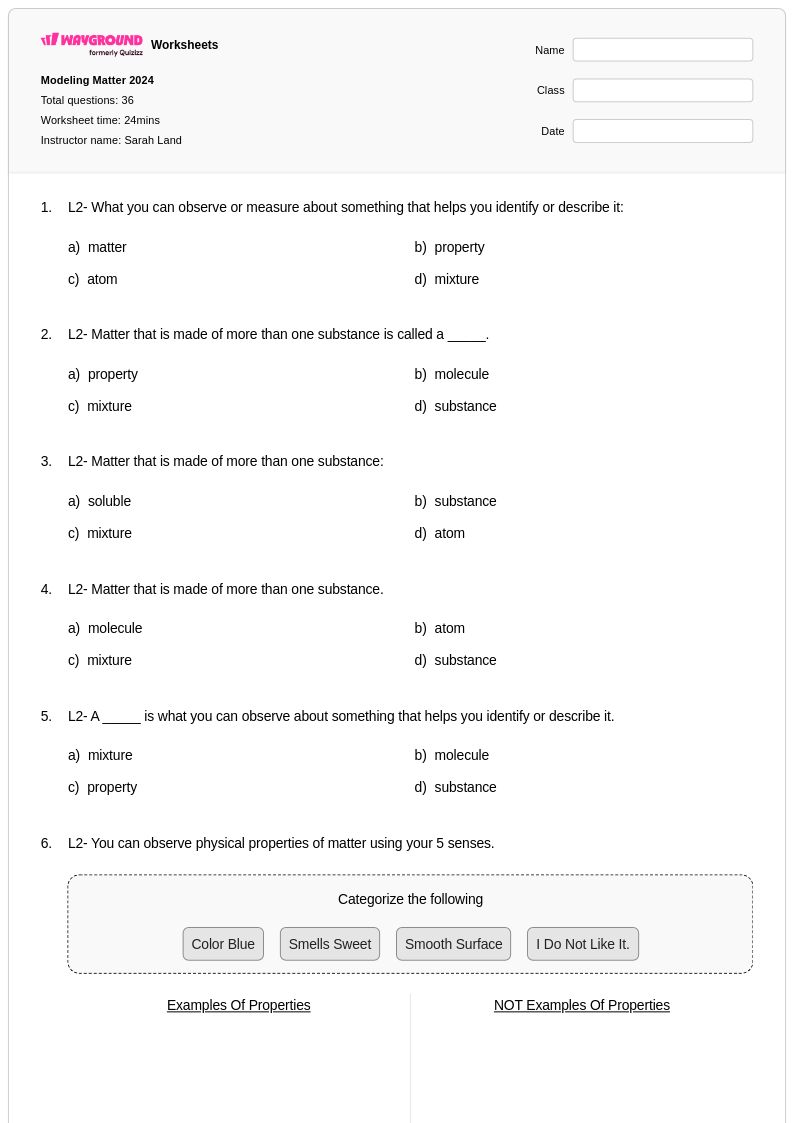
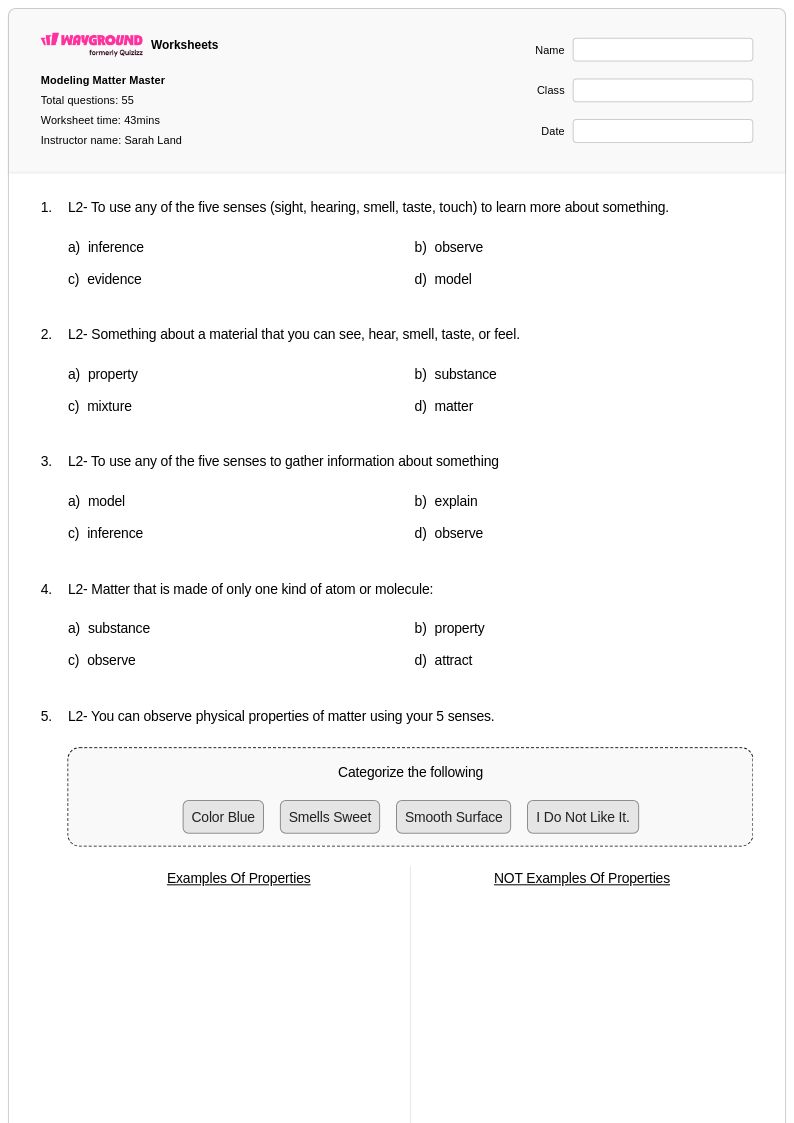
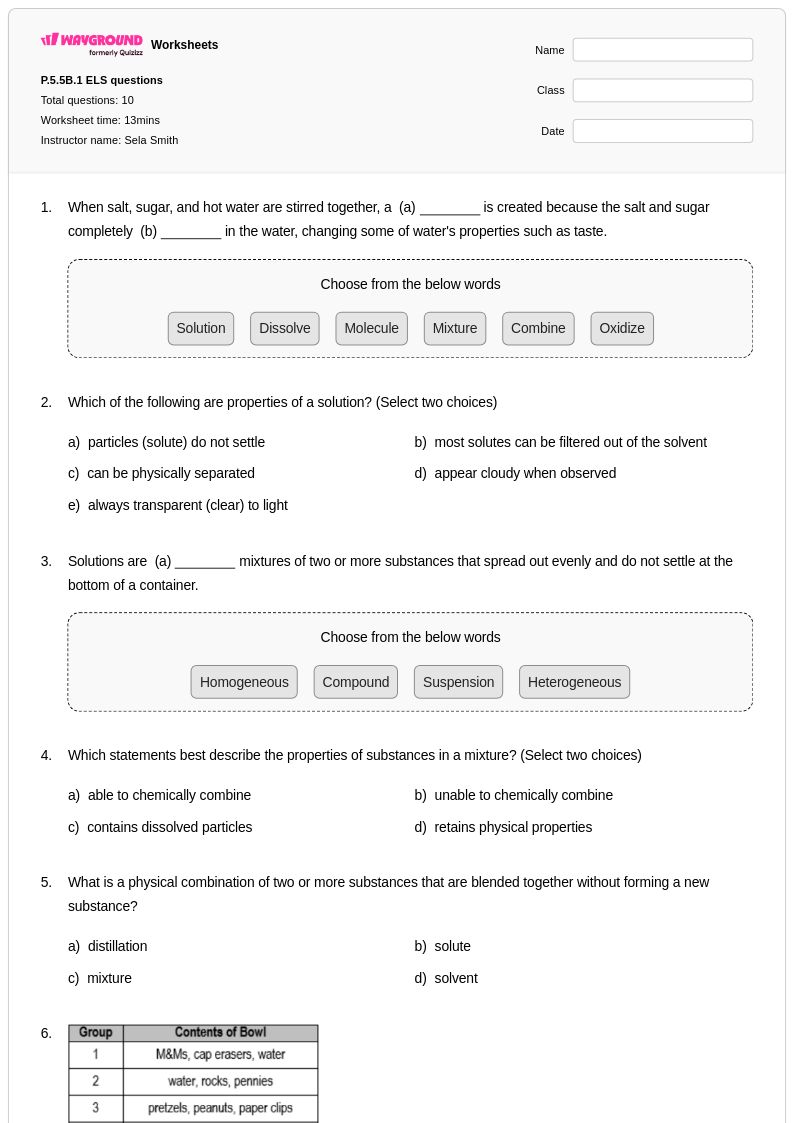
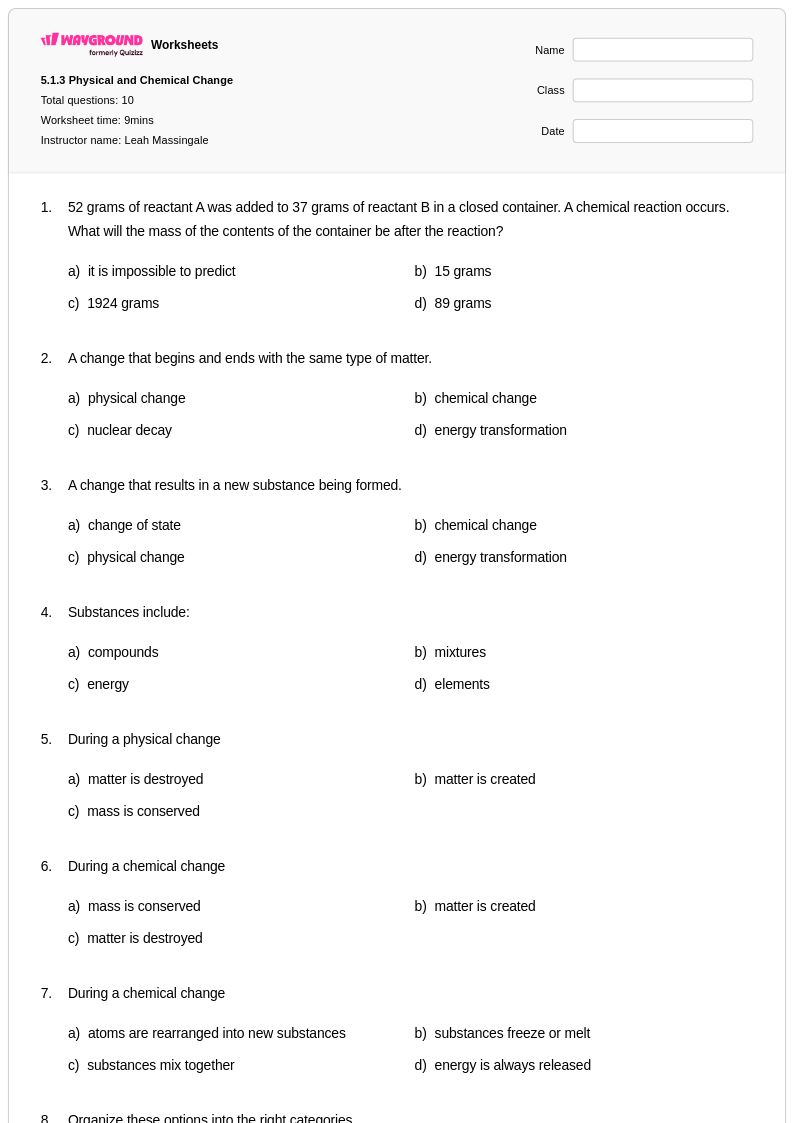
Compounds and mixtures worksheets for Class 5 students available through Wayground (formerly Quizizz) provide essential foundation-building exercises that introduce young learners to fundamental chemistry concepts. These carefully designed practice problems help students distinguish between pure substances and mixtures while exploring how different materials combine to form compounds with entirely new properties. The comprehensive worksheet collection strengthens critical thinking skills as students analyze everyday examples like salt water, chocolate chip cookies, and steel to determine whether they represent compounds or mixtures. Each printable resource includes detailed answer keys that support independent learning and self-assessment, while the free pdf format ensures easy classroom distribution and home study accessibility.
Wayground (formerly Quizizz) empowers educators with millions of teacher-created resources specifically focused on compounds and mixtures instruction, featuring robust search and filtering capabilities that help locate grade-appropriate materials aligned with science standards. The platform's differentiation tools enable teachers to customize worksheets for diverse learning needs, while flexible formatting options provide both printable and digital versions to accommodate various teaching environments. These versatile resources support comprehensive lesson planning by offering multiple difficulty levels for effective remediation and enrichment opportunities. Teachers can seamlessly integrate these materials into their chemistry curriculum to provide targeted skill practice, formative assessment opportunities, and engaging reinforcement activities that solidify student understanding of how matter combines and separates in the physical world.
FAQs
How do I teach the difference between compounds and mixtures to middle school students?
Start by grounding students in the distinction between pure substances and combinations of matter before introducing the compound-versus-mixture divide. Use concrete examples — salt water as a homogeneous mixture versus table salt (NaCl) as a compound — to illustrate how bonding characteristics determine classification. From there, practice problems that ask students to classify substances based on molecular composition help solidify the concept before moving into separation techniques.
What exercises help students practice identifying compounds and mixtures?
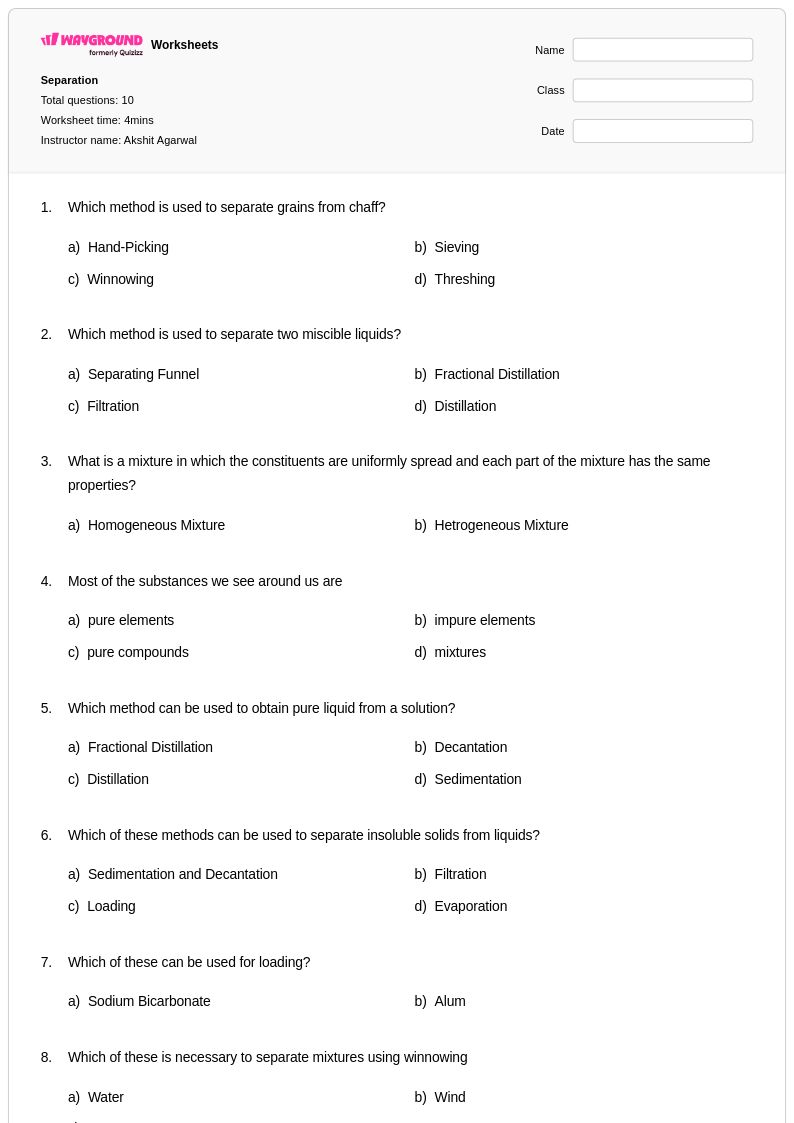
Effective practice exercises include classification tasks where students sort substances into compounds, homogeneous mixtures, or heterogeneous mixtures based on given properties or descriptions. Problems involving compound formulas reinforce the idea that compounds have fixed ratios of elements, while exercises on separation techniques — such as filtration, distillation, and evaporation — reinforce why mixtures can be physically separated but compounds cannot. Mixing both recall and application question types ensures students move beyond memorization.
What mistakes do students commonly make when classifying compounds and mixtures?
The most frequent error is confusing homogeneous mixtures with pure compounds, since both appear uniform. Students often assume that if a substance looks consistent throughout, it must be a compound rather than a solution. Another common misconception is thinking that all combinations of elements are compounds — students need repeated exposure to the idea that compounds require chemical bonding, while mixtures retain the individual properties of their components.
How do I help struggling students understand the difference between homogeneous and heterogeneous mixtures?
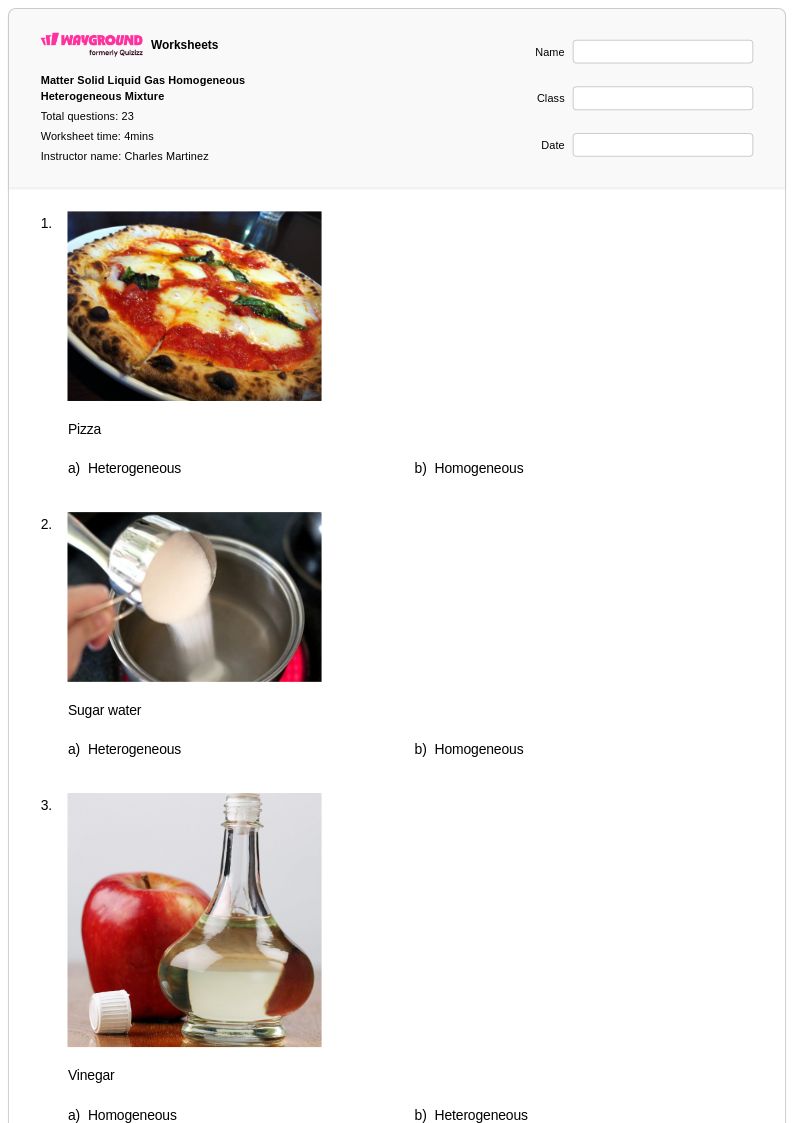
Struggling students benefit from visual and tactile anchors — comparing trail mix (heterogeneous) to lemonade (homogeneous) before introducing scientific terminology. Sentence frames and guided classification charts can reduce cognitive load while building vocabulary. On Wayground, teachers can apply reduced answer choices for individual students to focus attention on the most critical distinctions, and enable Read Aloud so that question text is accessible to students with reading challenges — both settings can be assigned without notifying other students.
How do I use Wayground's compounds and mixtures worksheets in my classroom?
Wayground's compounds and mixtures worksheets are available as printable PDFs for traditional classroom use and in digital formats for technology-integrated or remote learning environments. Teachers can also host worksheets as a live quiz on Wayground, making them suitable for formative assessment or whole-class review. The included answer keys make it straightforward to use these materials for independent practice, homework, or small-group instruction without additional preparation.
What topics are typically covered in a compounds and mixtures worksheet?
A well-structured compounds and mixtures worksheet typically covers compound formula identification, classification of substances as elements, compounds, or mixtures, properties that distinguish chemical compounds from physical mixtures, and common mixture separation techniques such as filtration, distillation, and chromatography. Some worksheets also address the difference between homogeneous and heterogeneous mixtures, giving students practice with real-world examples that reinforce each classification.