
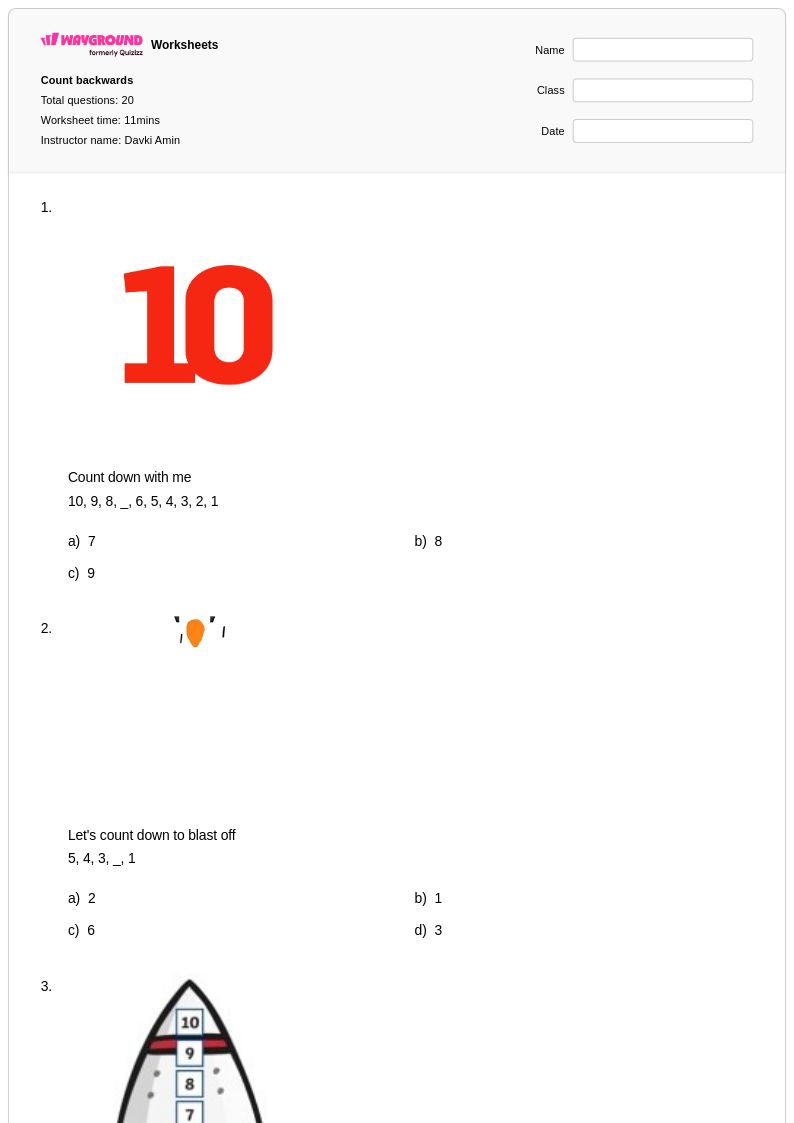
20 P
1st
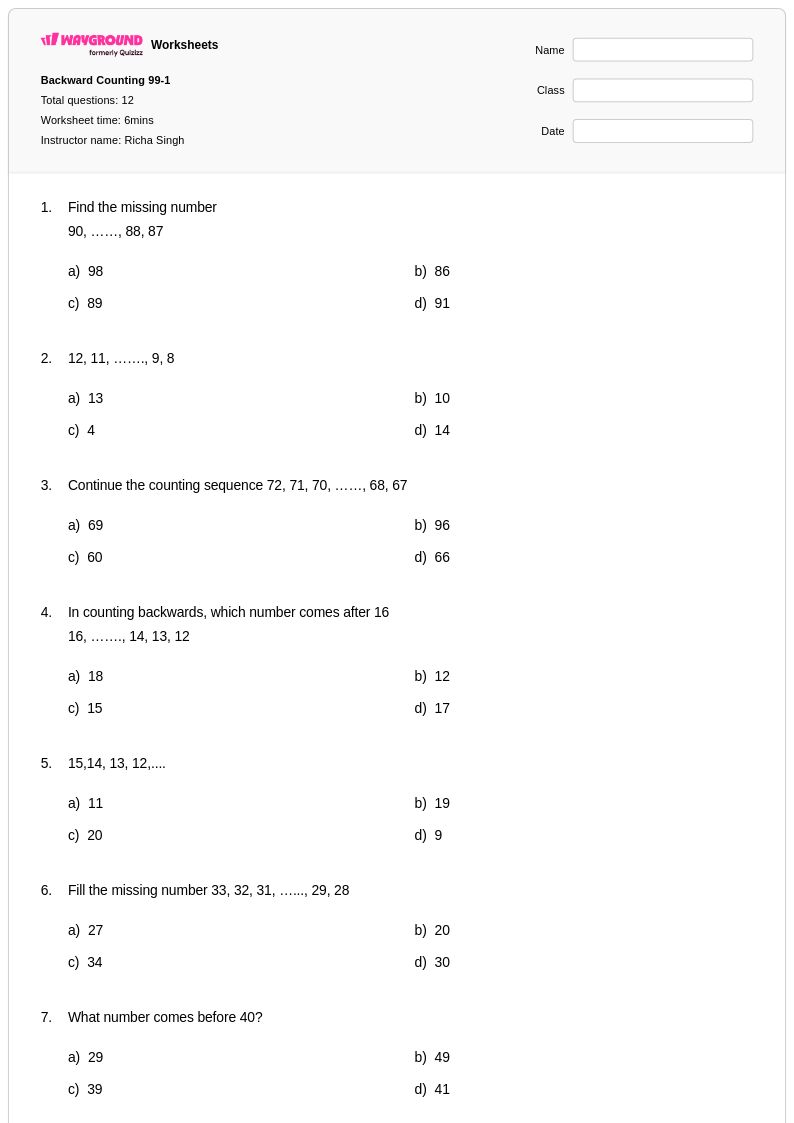
12 P
1st
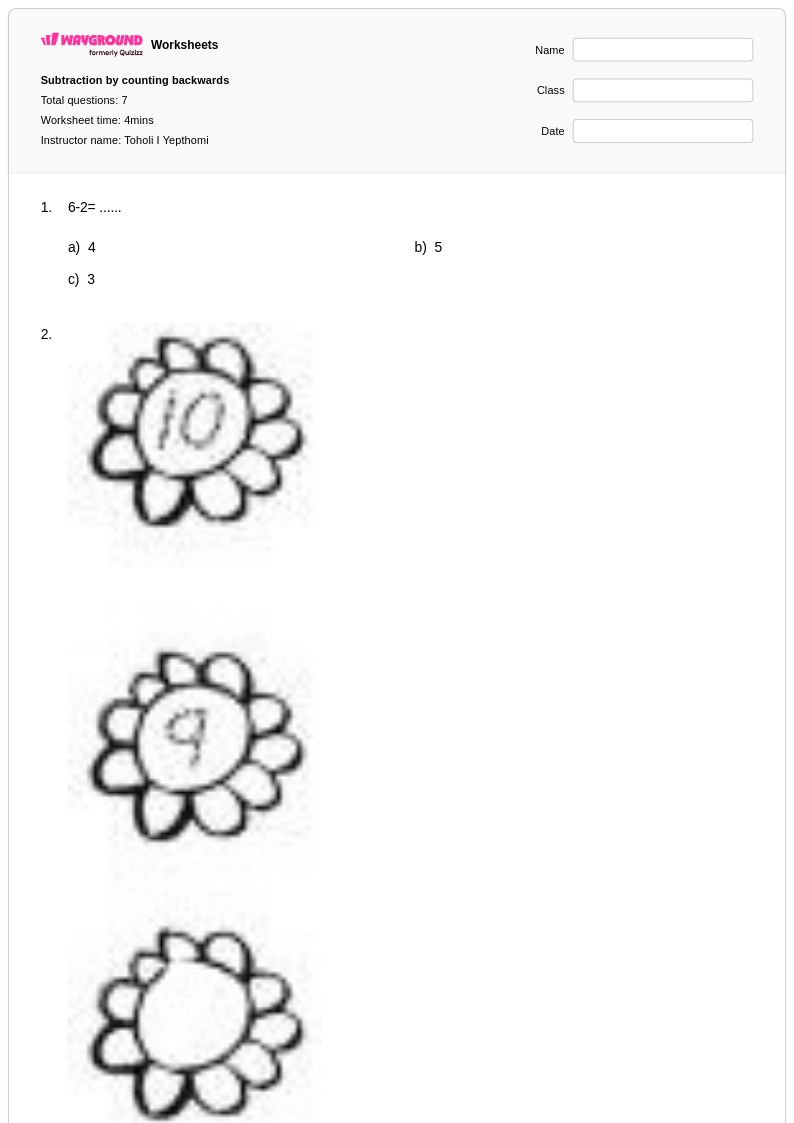
7 P
1st - 5th
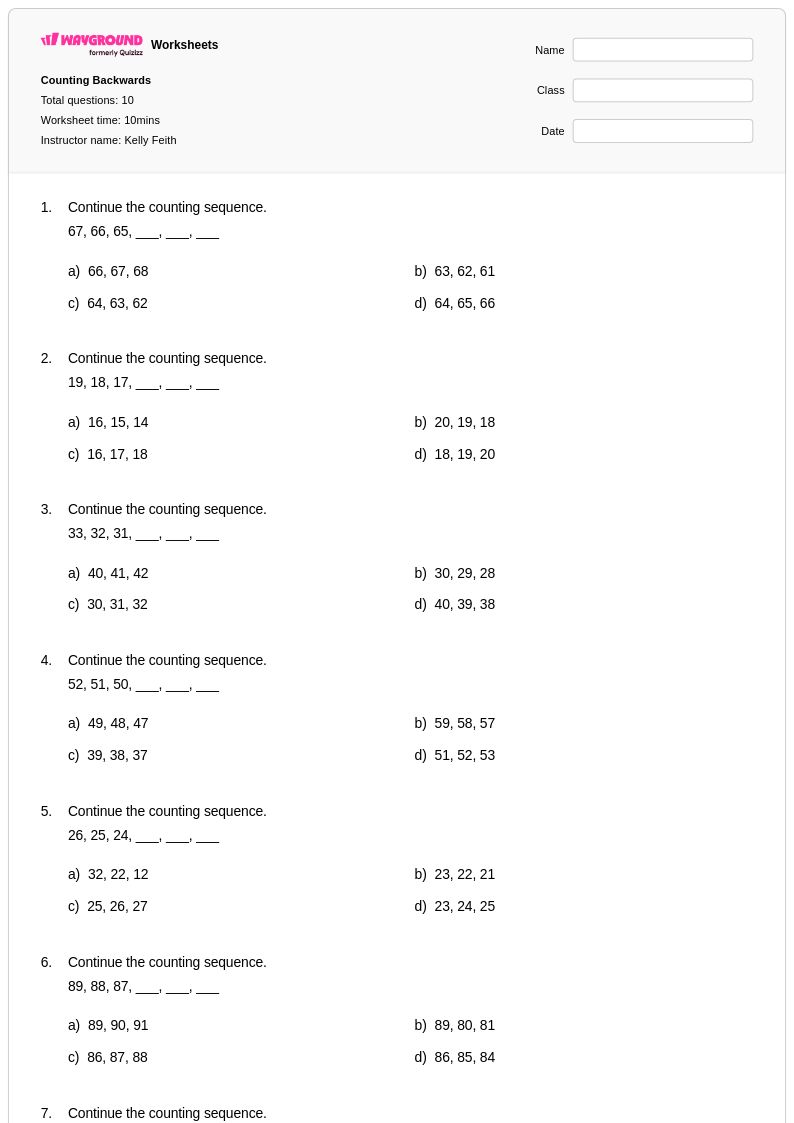
10 P
1st
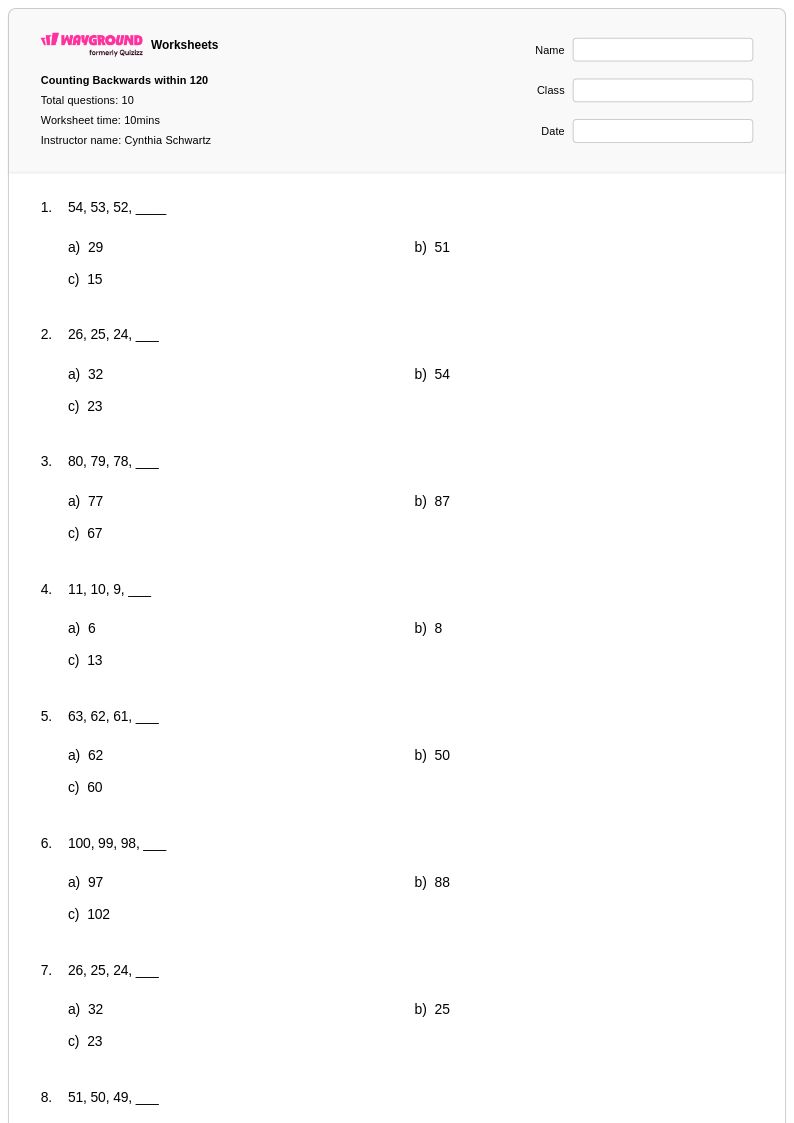
10 P
KG - 1st
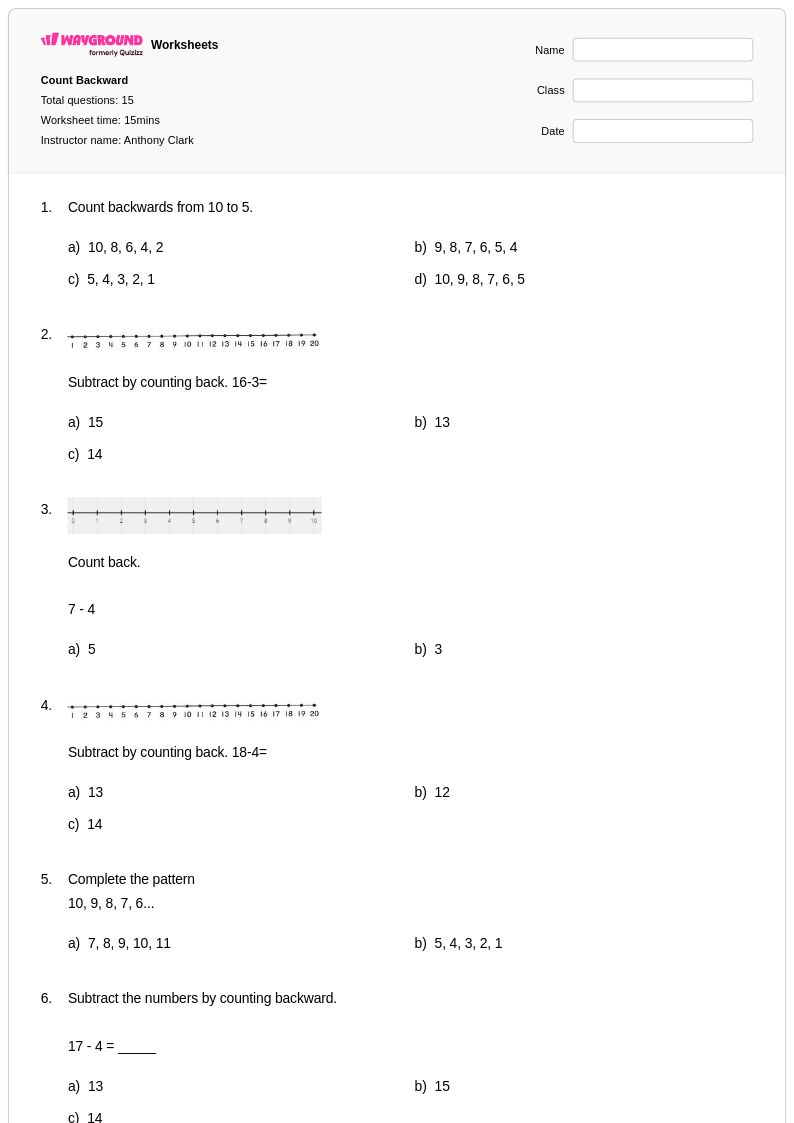
15 P
1st - Uni
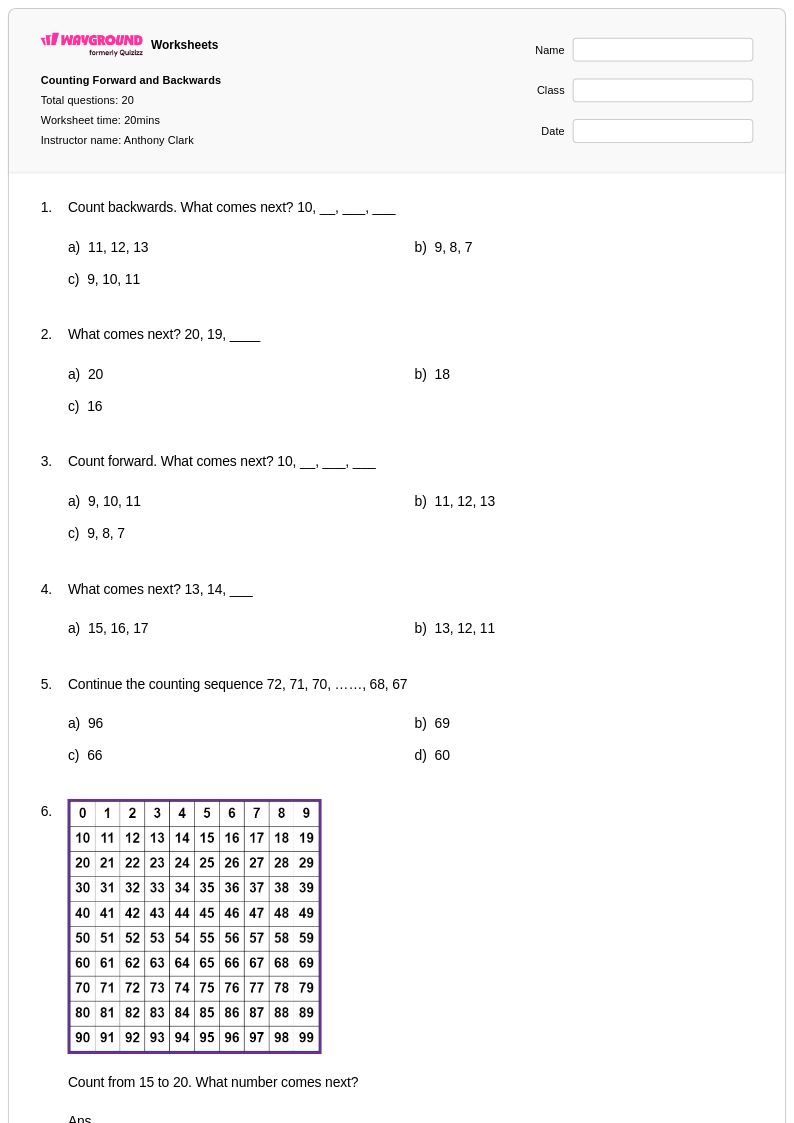
20 P
1st - Uni
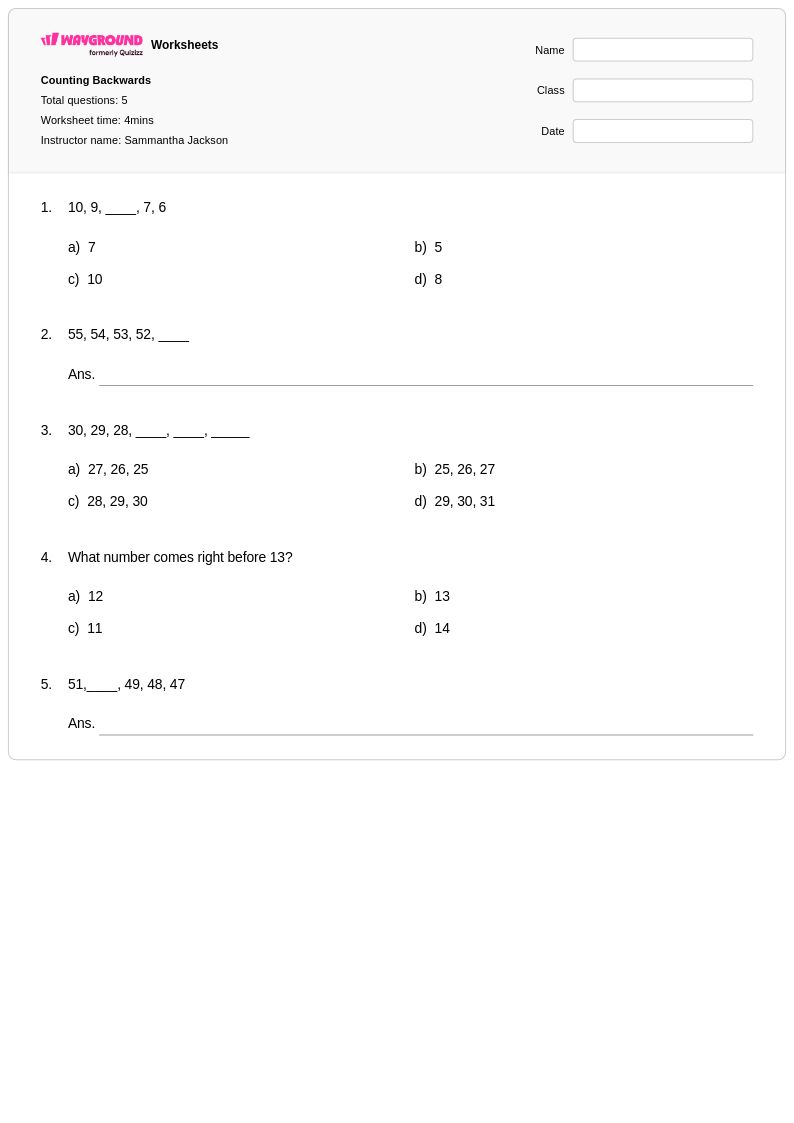
5 P
1st
5 P
1st
15 P
1st - Uni
11 P
1st - Uni
15 P
1st - Uni
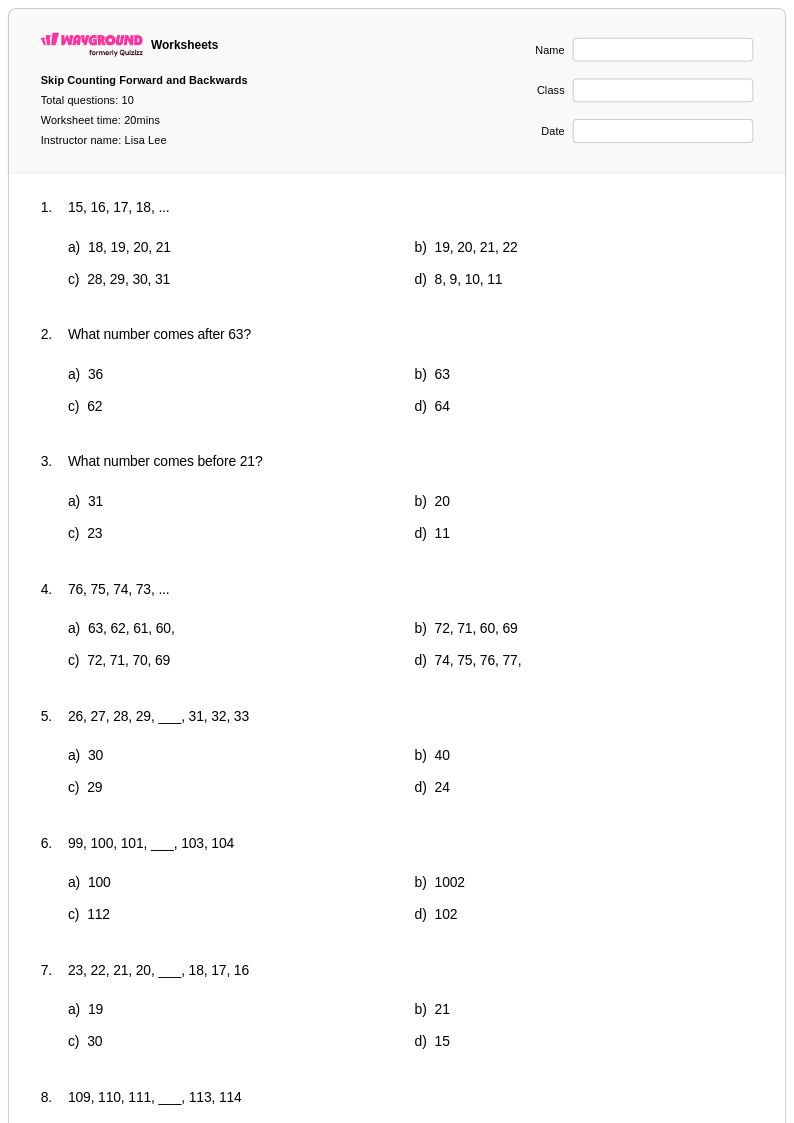
10 P
1st
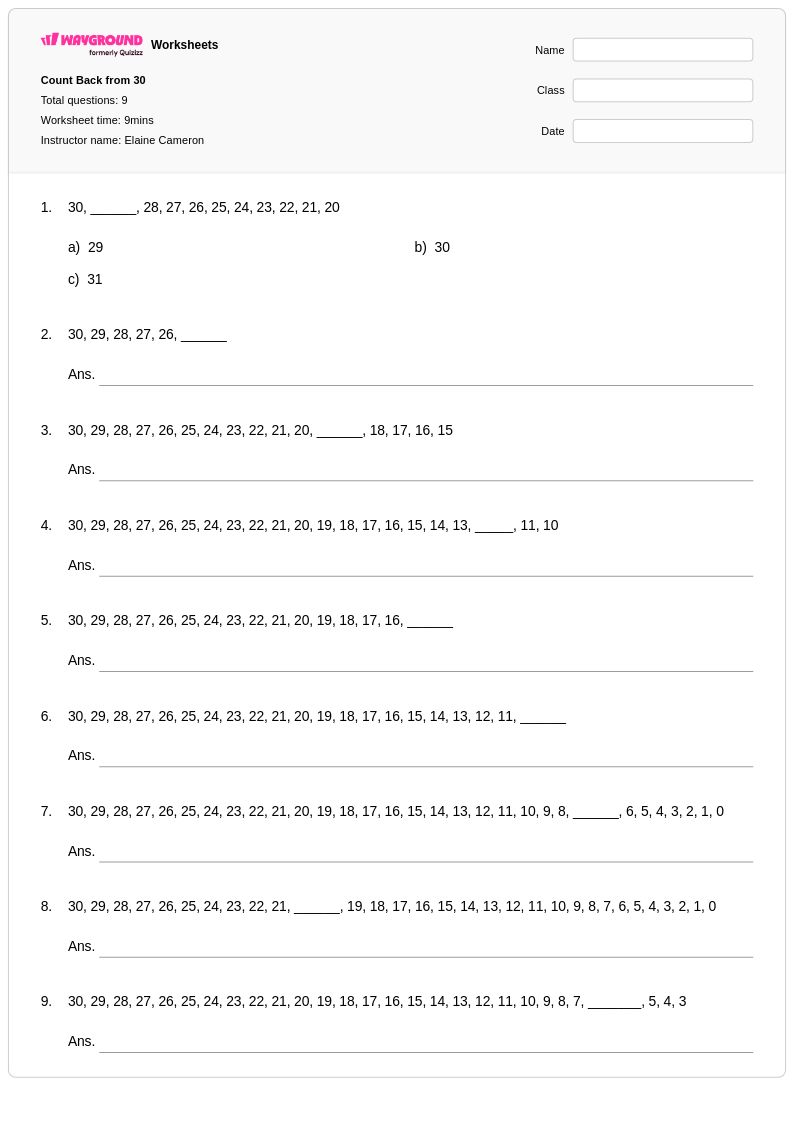
9 P
1st
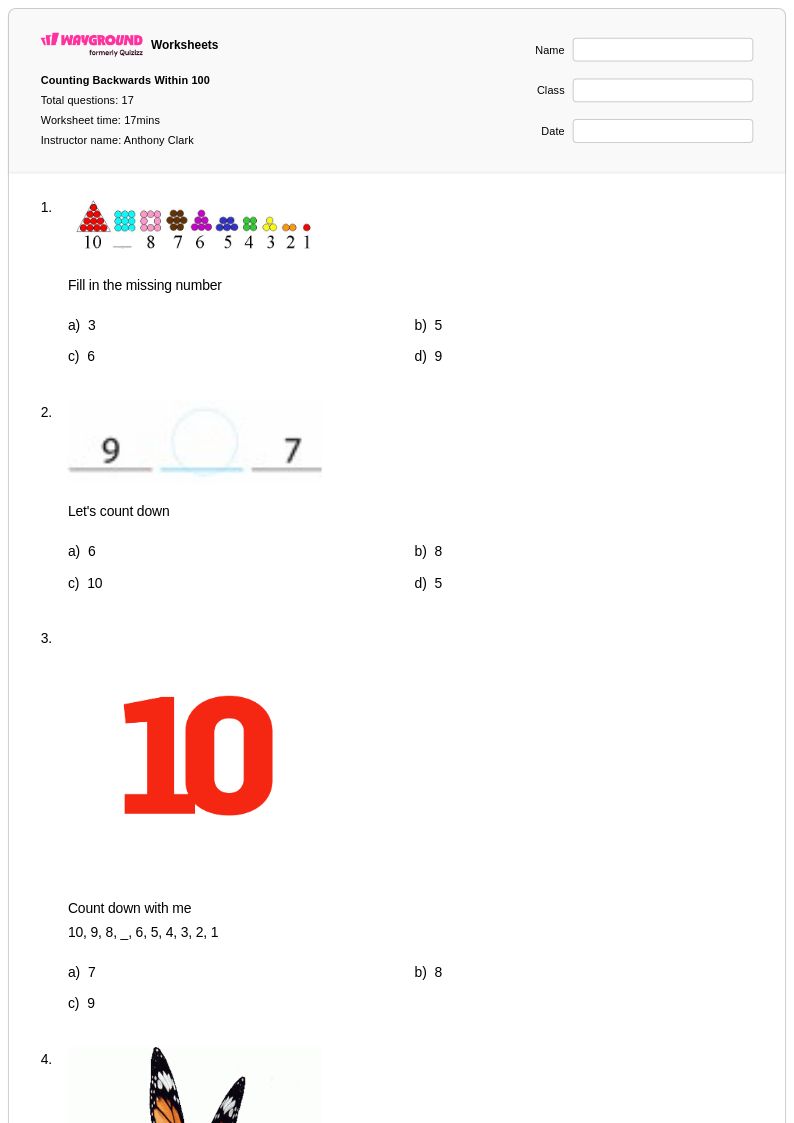
17 P
1st - Uni
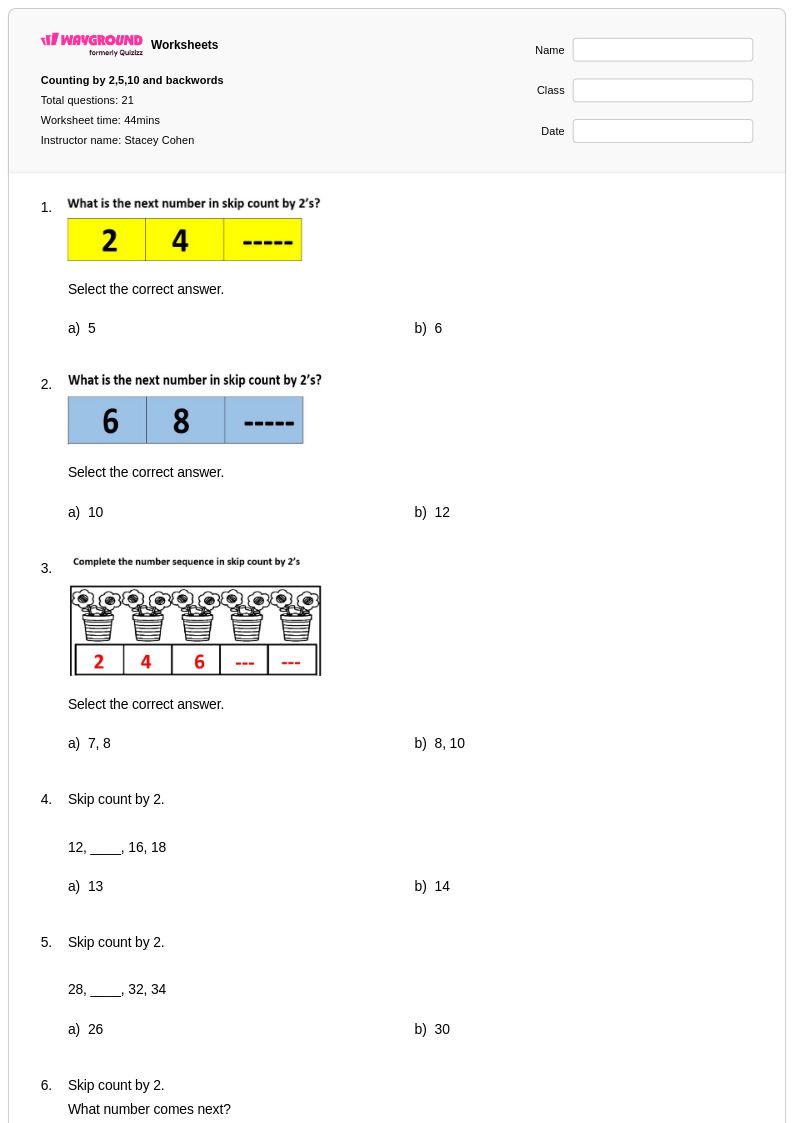
21 P
1st
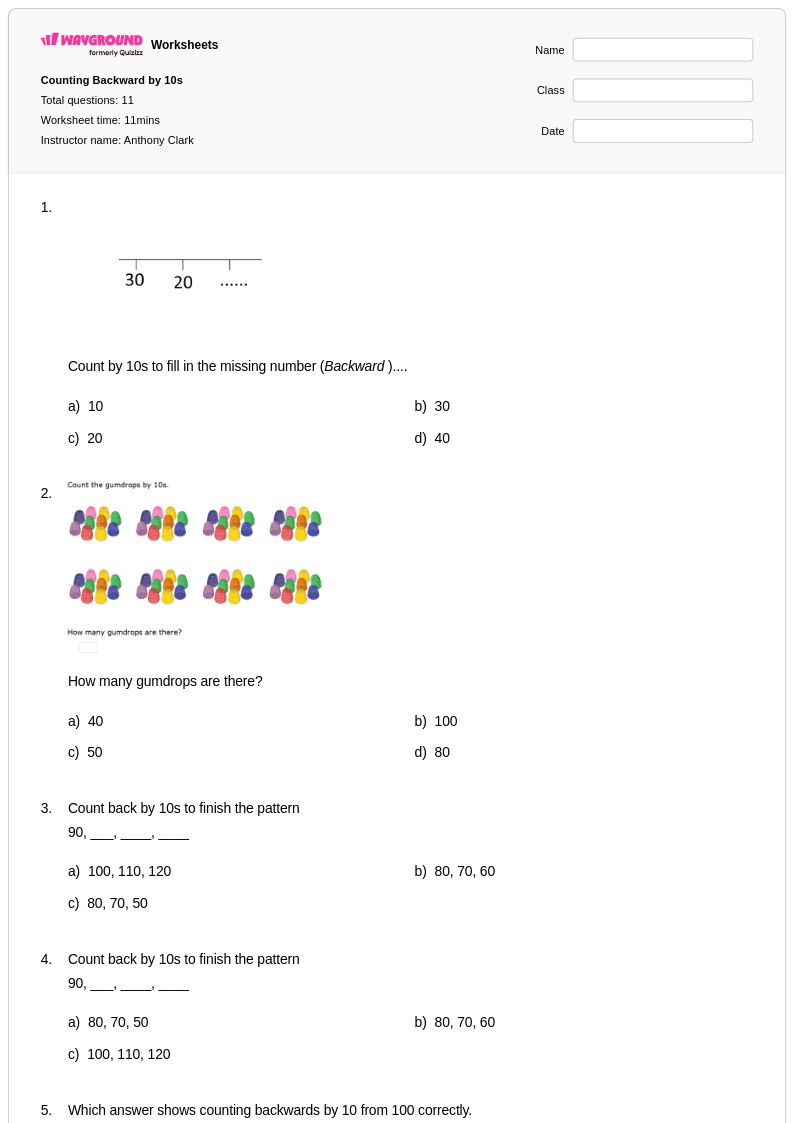
11 P
1st - Uni
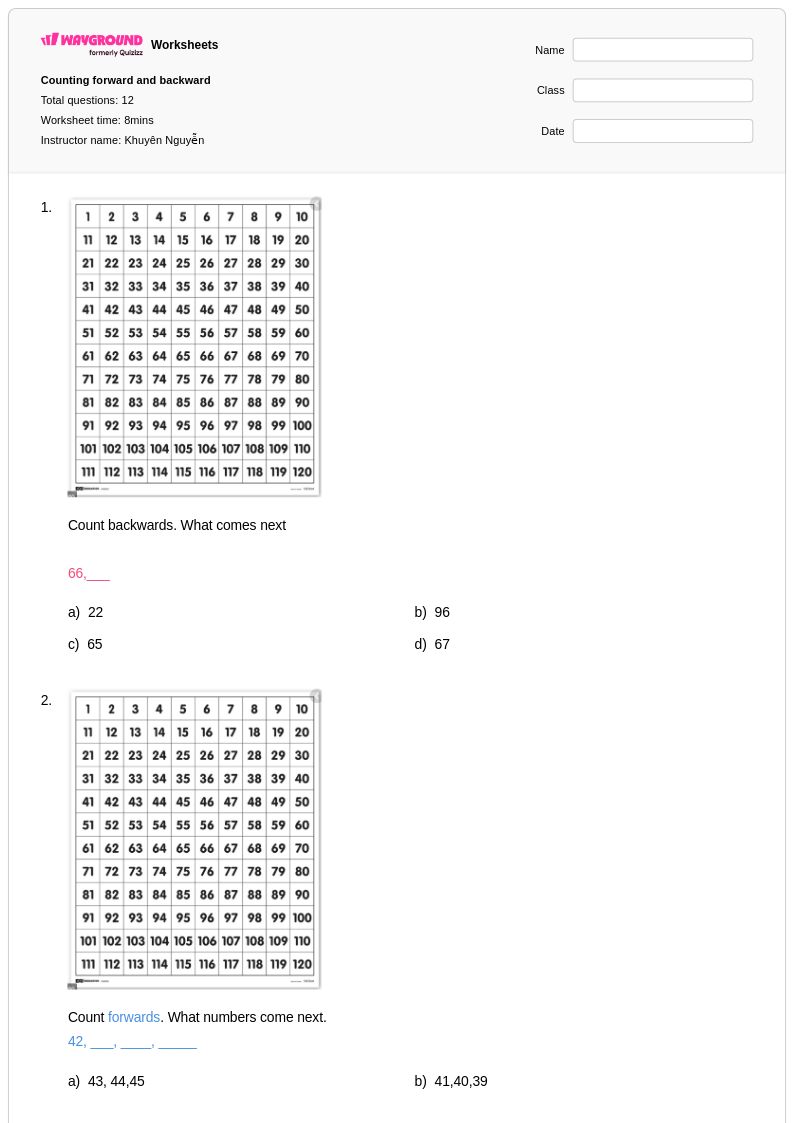
12 P
1st
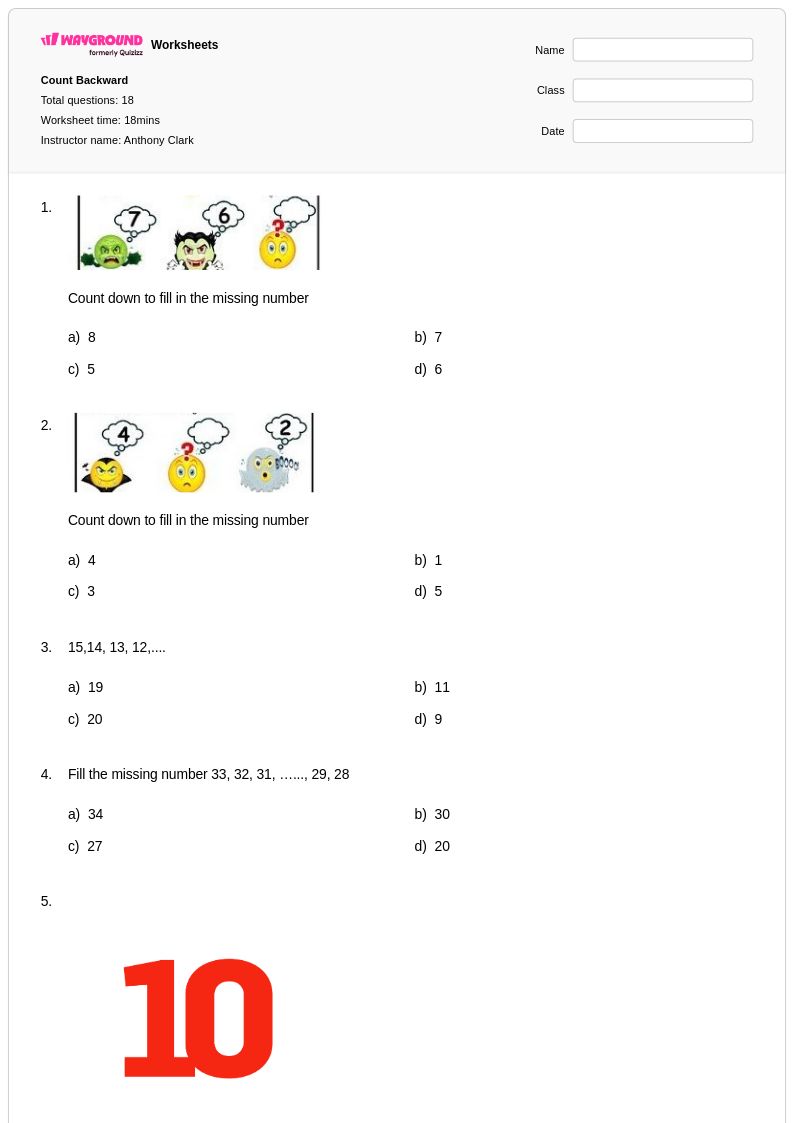
18 P
1st - Uni
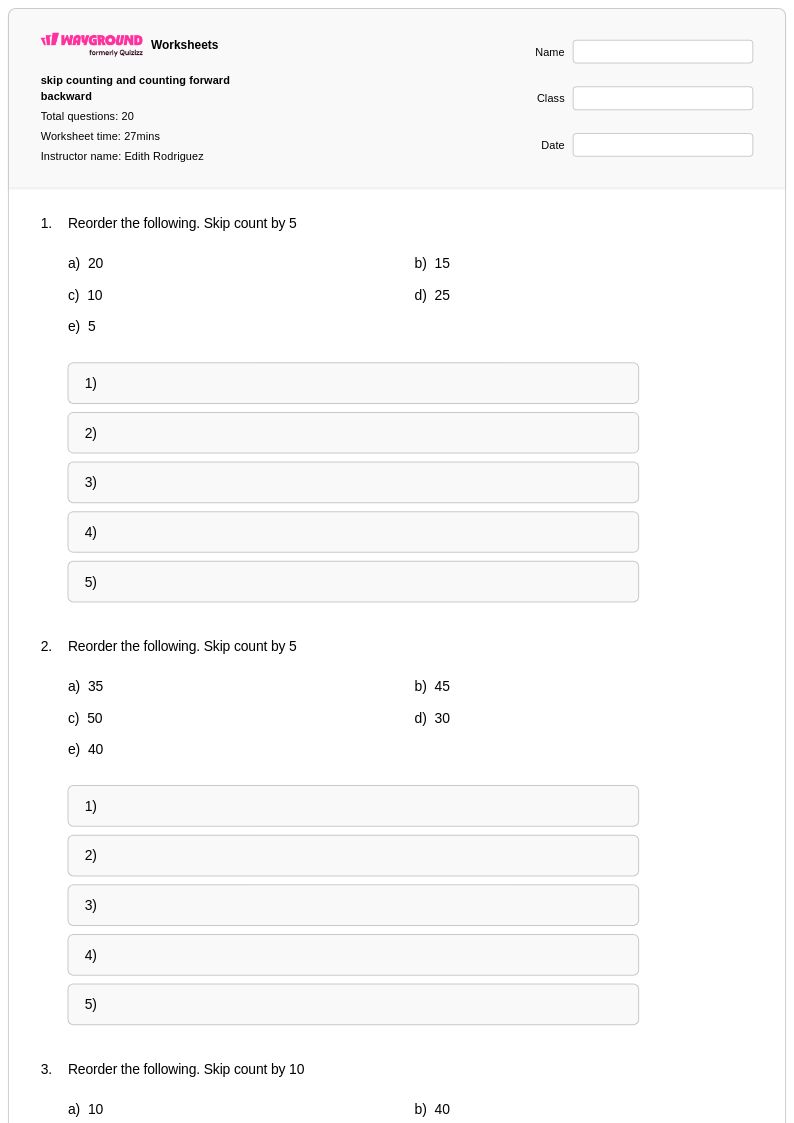
20 P
1st
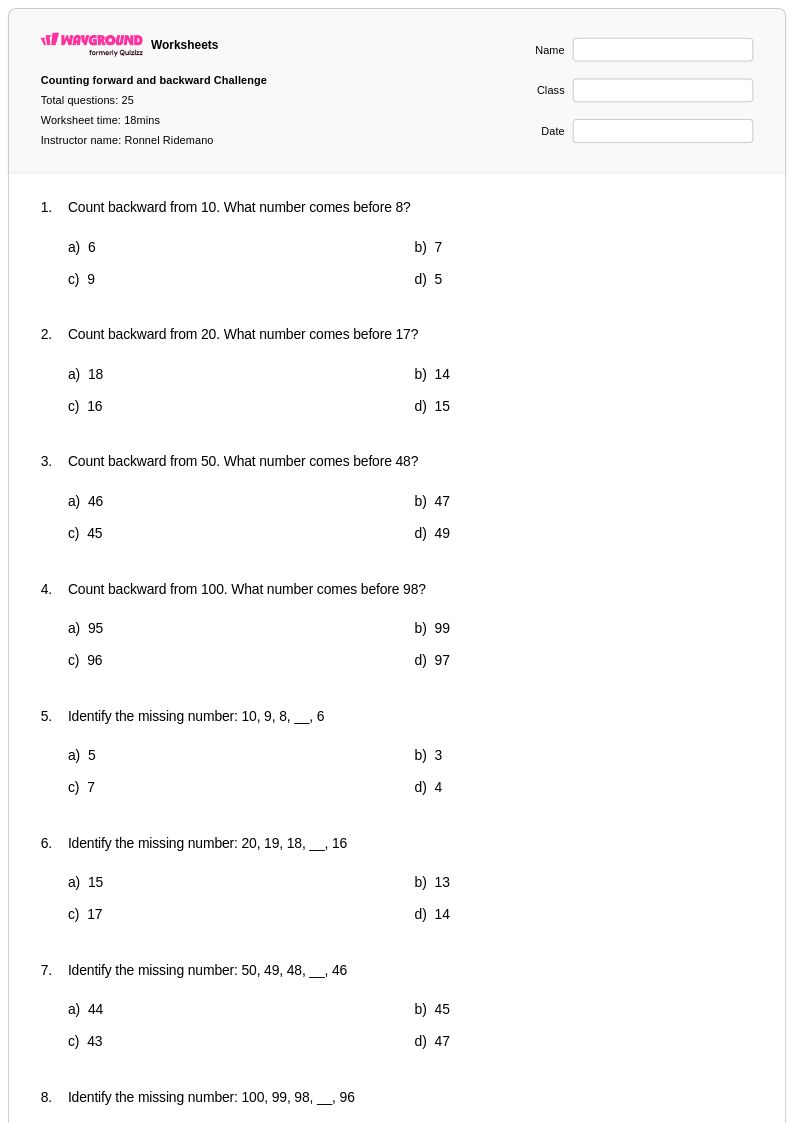
25 P
1st
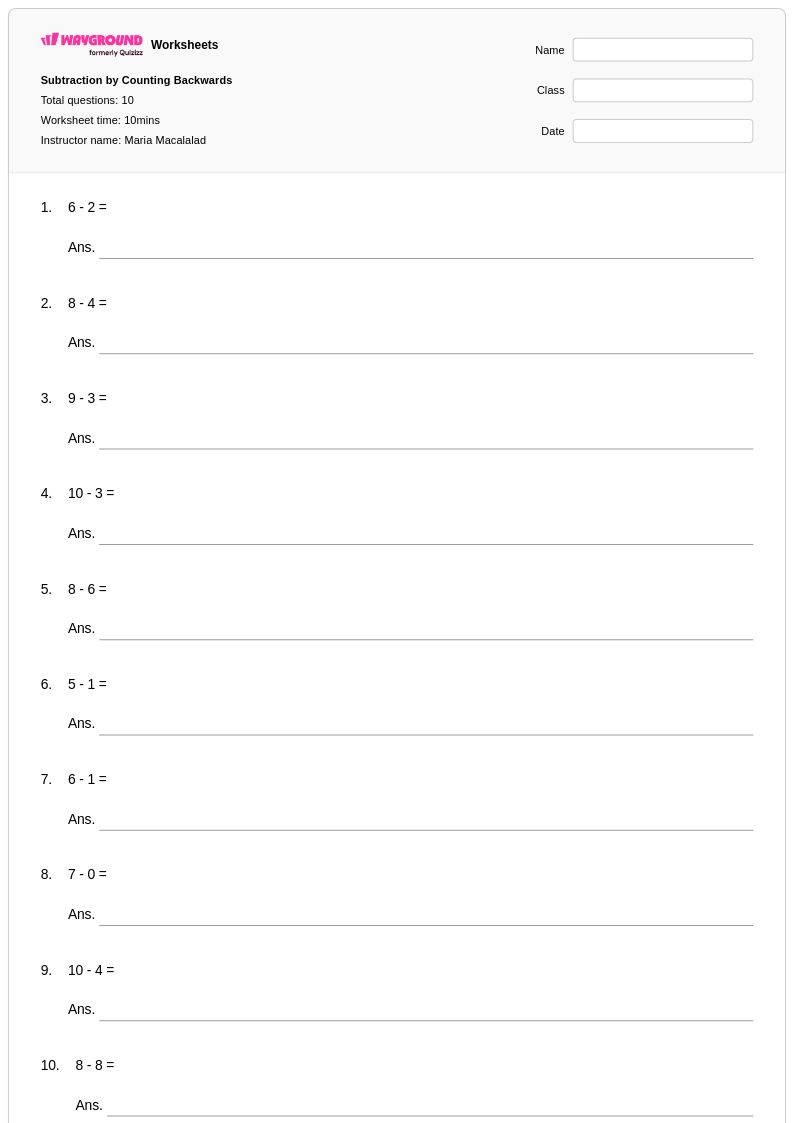
15 P
1st
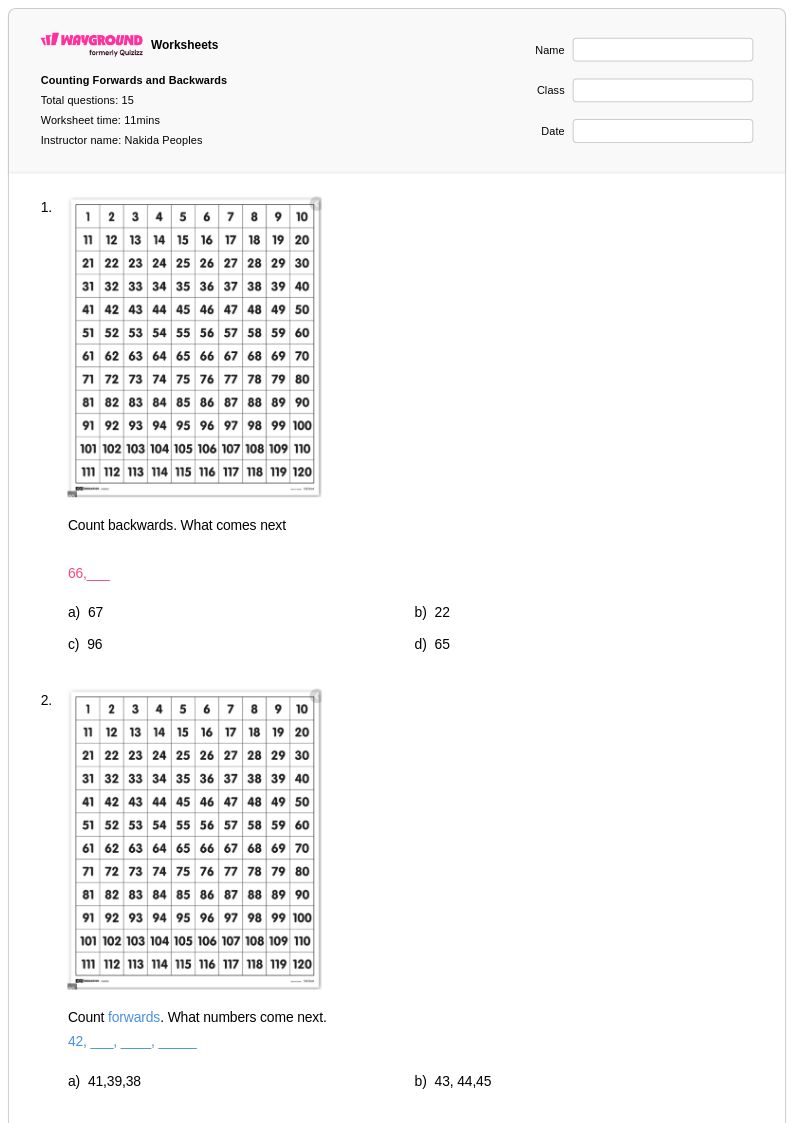
15 P
1st
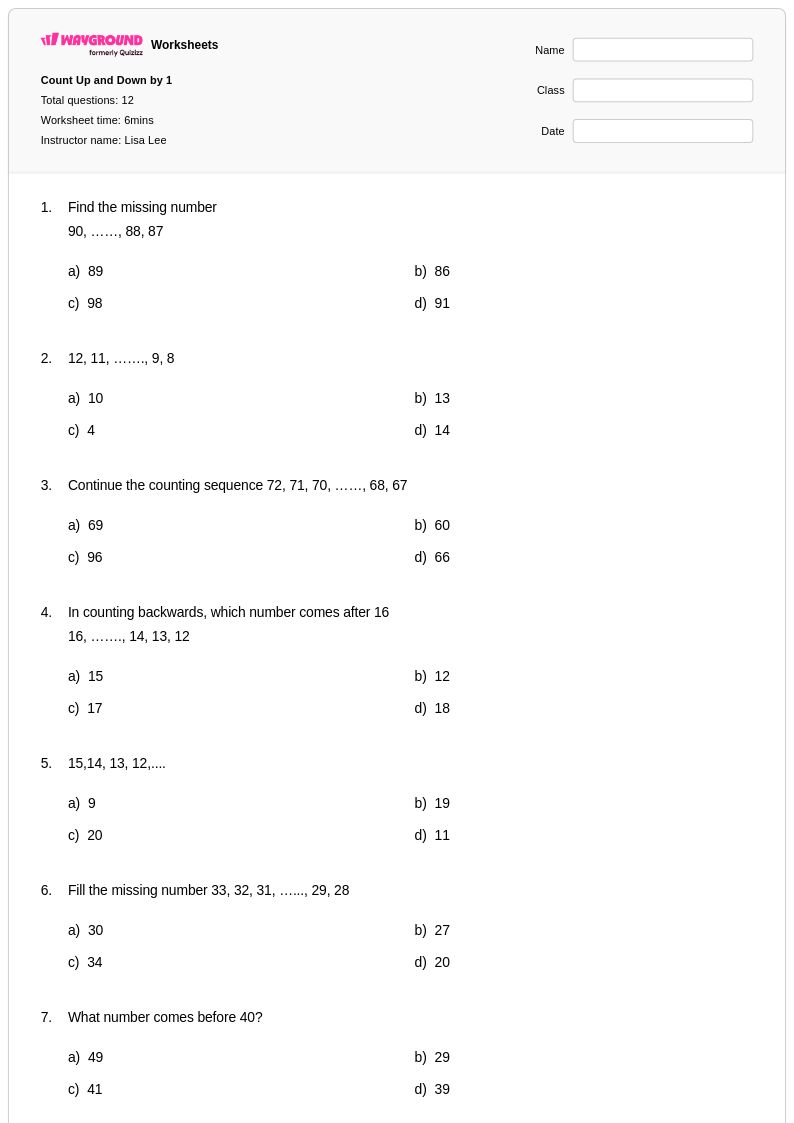
12 P
1st
Przeglądaj Counting Backwards arkusze ćwiczeń według ocen
Przeglądaj inne arkusze tematyczne dla class 1
Explore printable Counting Backwards worksheets for Class 1
Counting backwards worksheets for Class 1 students available through Wayground (formerly Quizizz) provide essential practice in reverse number sequencing, helping young learners develop crucial numerical reasoning skills. These comprehensive printables focus on strengthening students' ability to count down from various starting points, typically within ranges of 1-20 or 1-100, depending on individual readiness levels. The practice problems systematically guide first graders through backward counting patterns, reinforcing their understanding of number order and preparing them for future subtraction concepts. Each worksheet includes an answer key to support accurate assessment and self-checking, while the free pdf format ensures easy access for both classroom instruction and home practice, making these valuable resources readily available to support consistent skill development.
Wayground (formerly Quizizz) empowers educators with millions of teacher-created counting backwards resources specifically designed for Class 1 mathematics instruction. The platform's robust search and filtering capabilities allow teachers to quickly locate worksheets that align with specific curriculum standards and match their students' developmental needs. These differentiation tools enable seamless customization of practice materials, supporting both remediation for struggling learners and enrichment opportunities for advanced students. Available in both printable and digital formats including downloadable pdfs, these counting backwards worksheets integrate effortlessly into lesson planning, independent practice sessions, and targeted skill interventions, ensuring that teachers have flexible, high-quality resources to support every student's journey toward mathematical fluency and number sense mastery.
FAQs
How do I teach counting backwards to first graders?
What counting backwards exercises help Grade 1 students?
What mistakes do first graders make when counting backwards?
How can I use a Grade 1 counting backwards worksheet?
How does counting backwards support the Grade 1 Common Core math progression?
How can I differentiate Grade 1 counting backwards practice?
What range should first graders use when counting backwards?