
Recommended Topics for you
- Balancing a Checking Account
- Comparing Prices
- Comparison Shopping
- Income and Expenses
- Money Management
- Running Balance
- Saving Money
10 Q
1st
10 Q
1st - 5th
8 Q
1st - 6th
21 Q
KG - Uni
10 Q
1st
5 Q
KG - 3rd
5 Q
1st
10 Q
1st
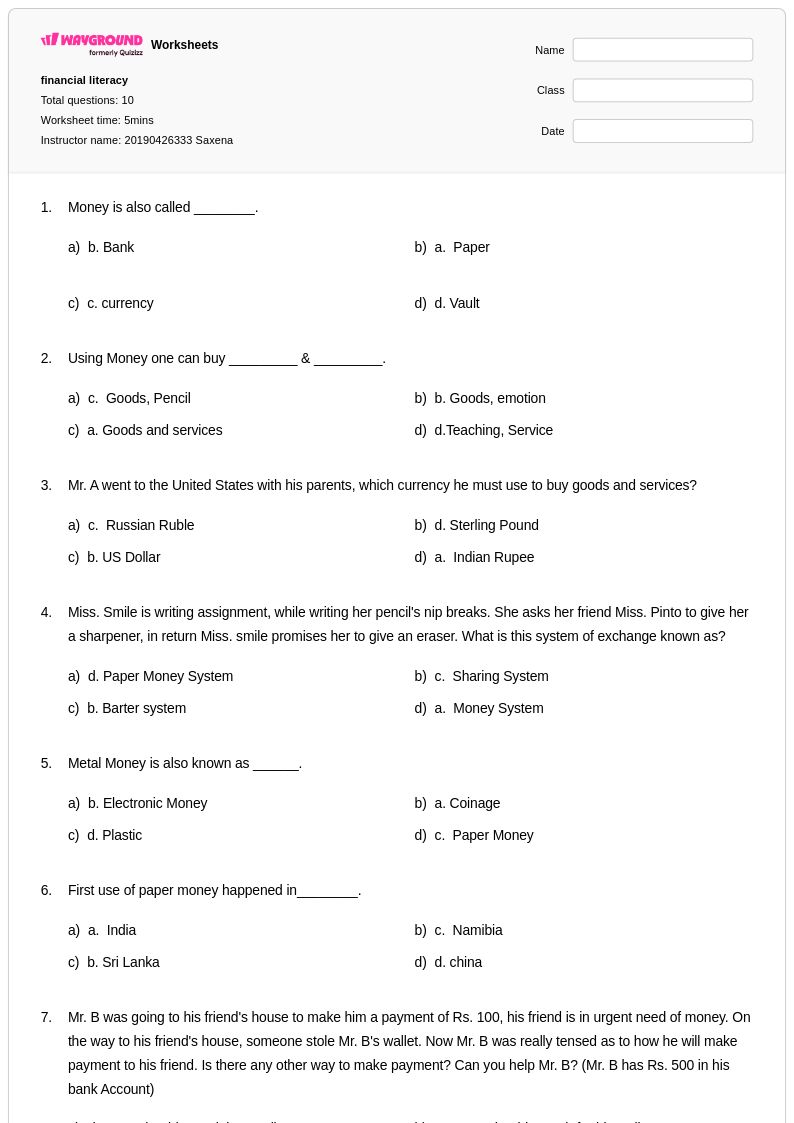
10 Q
1st - 2nd
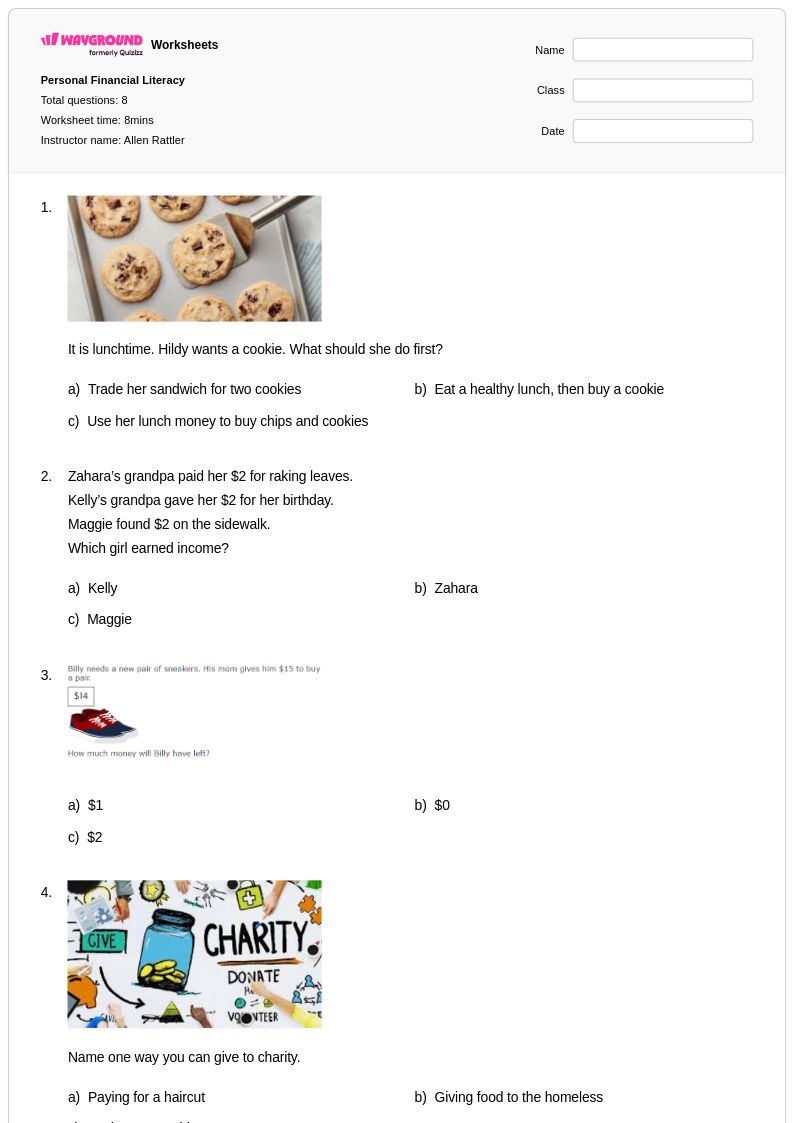
8 Q
1st
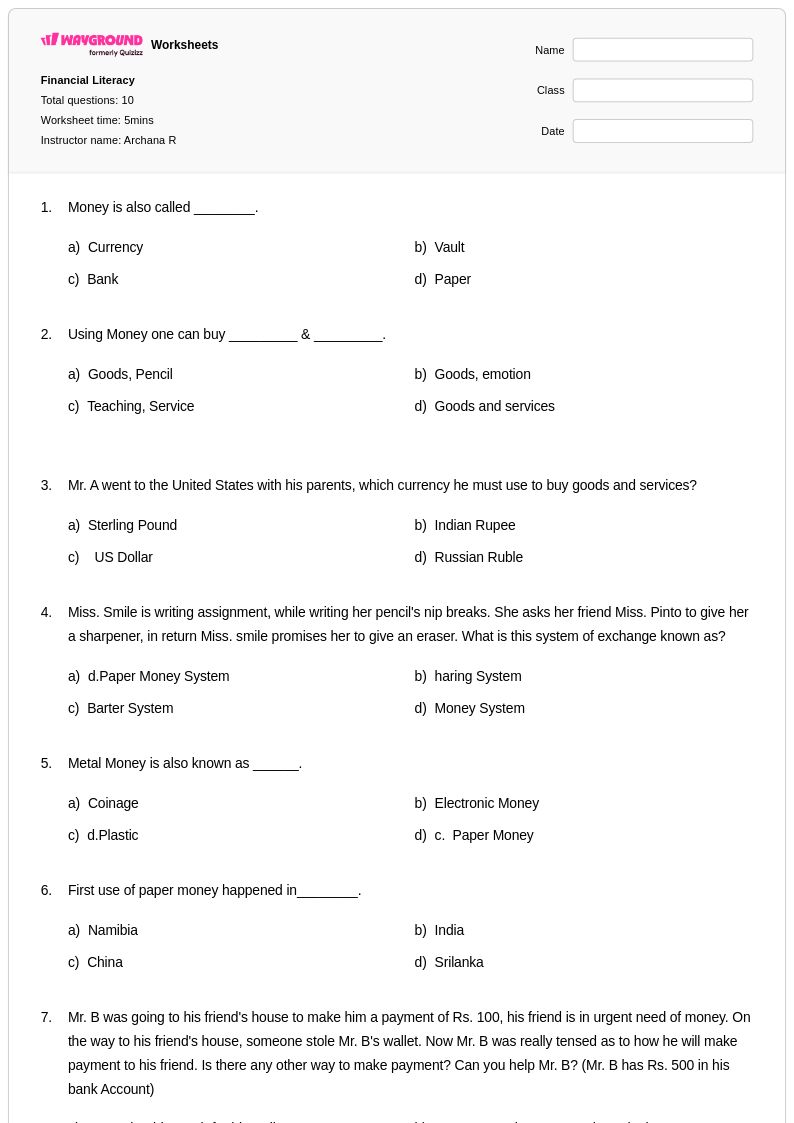
10 Q
1st - 2nd
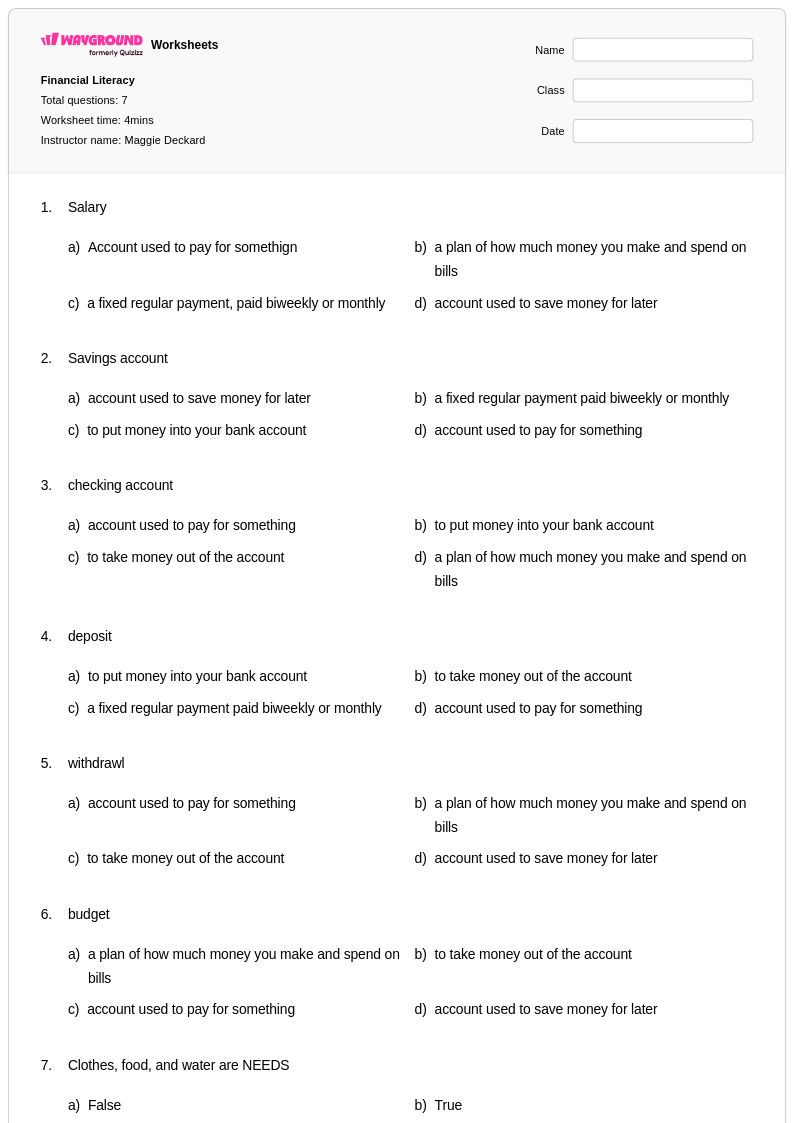
7 Q
1st - 5th
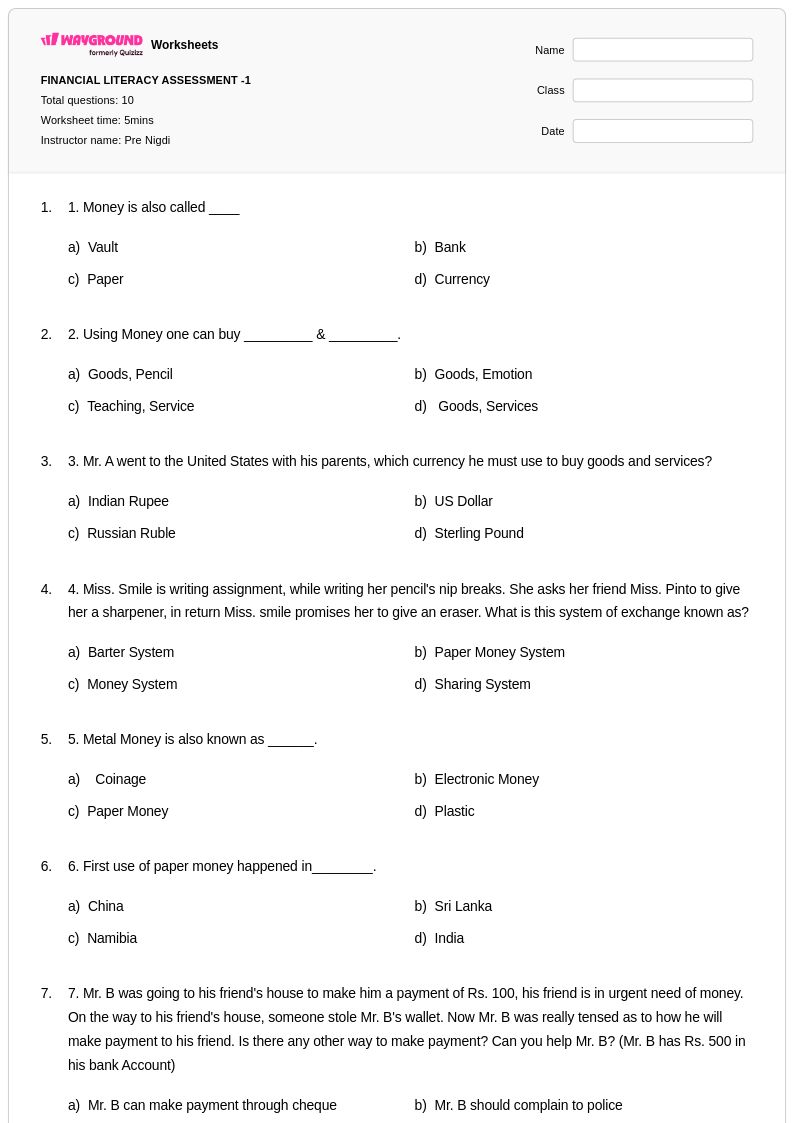
10 Q
1st - 2nd
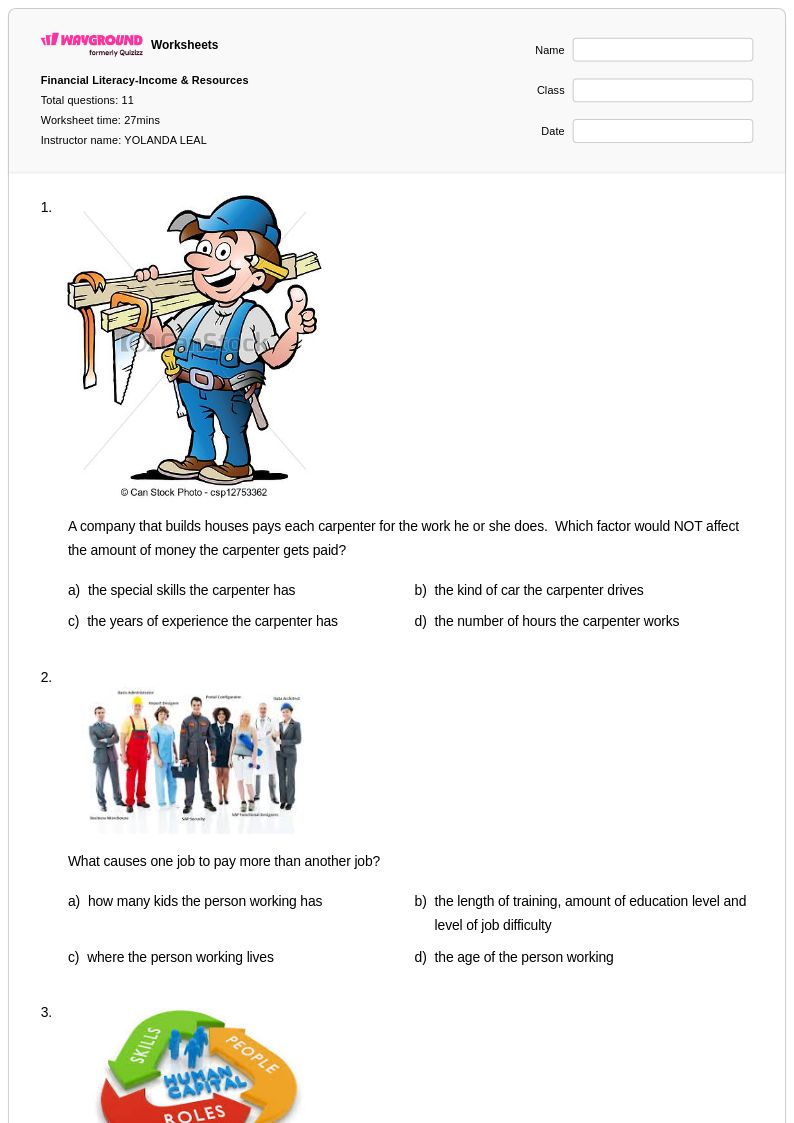
11 Q
1st - 5th
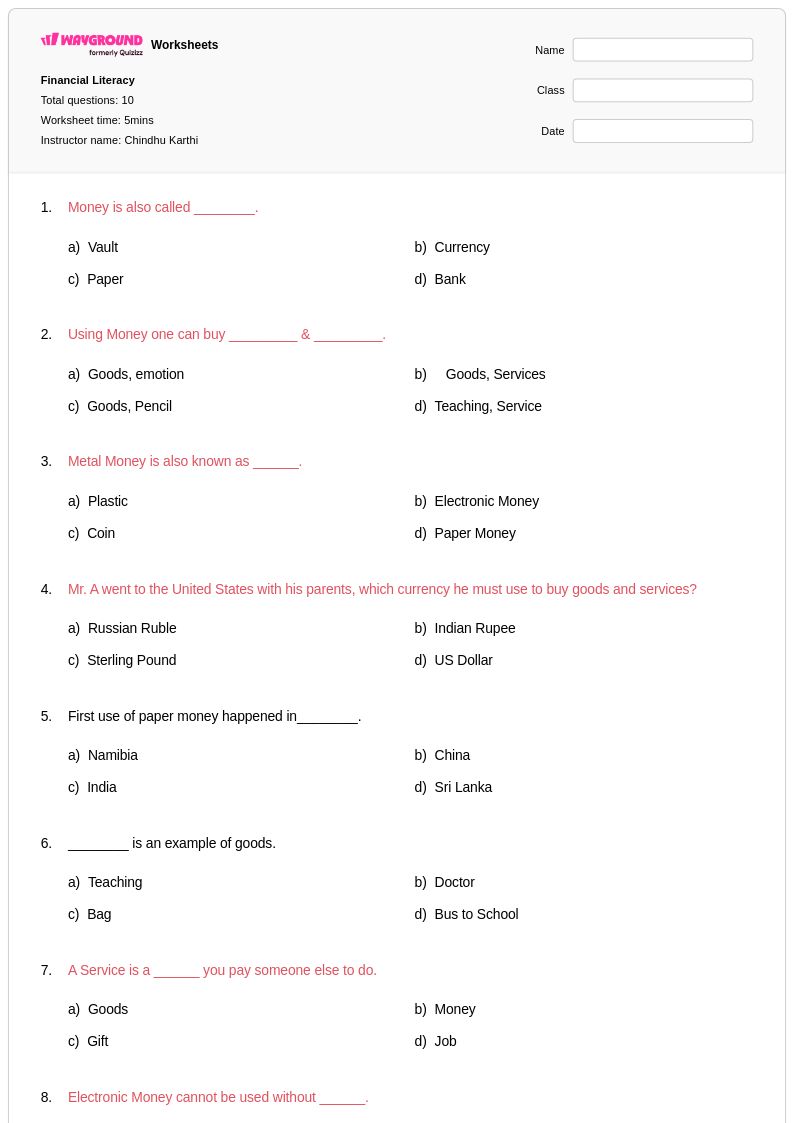
10 Q
1st - 2nd
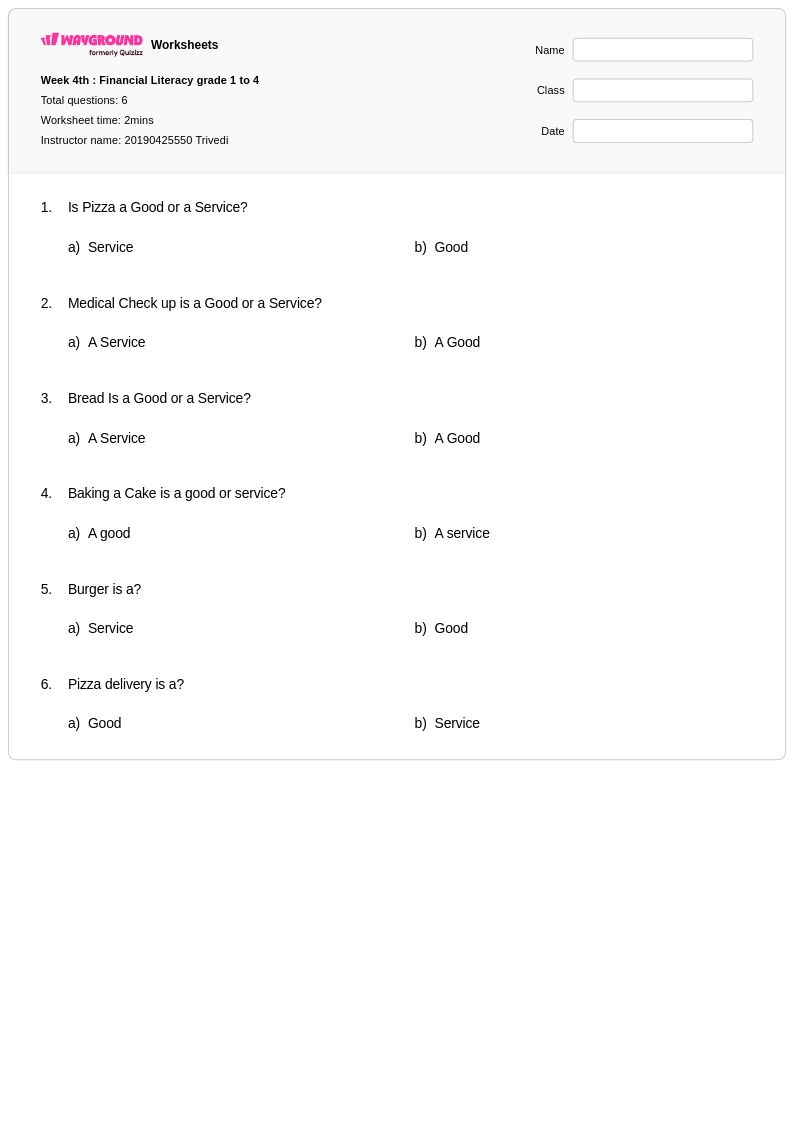
6 Q
1st - 4th
11 Q
KG - Uni
9 Q
1st - 2nd
15 Q
KG - 3rd
23 Q
1st - 5th
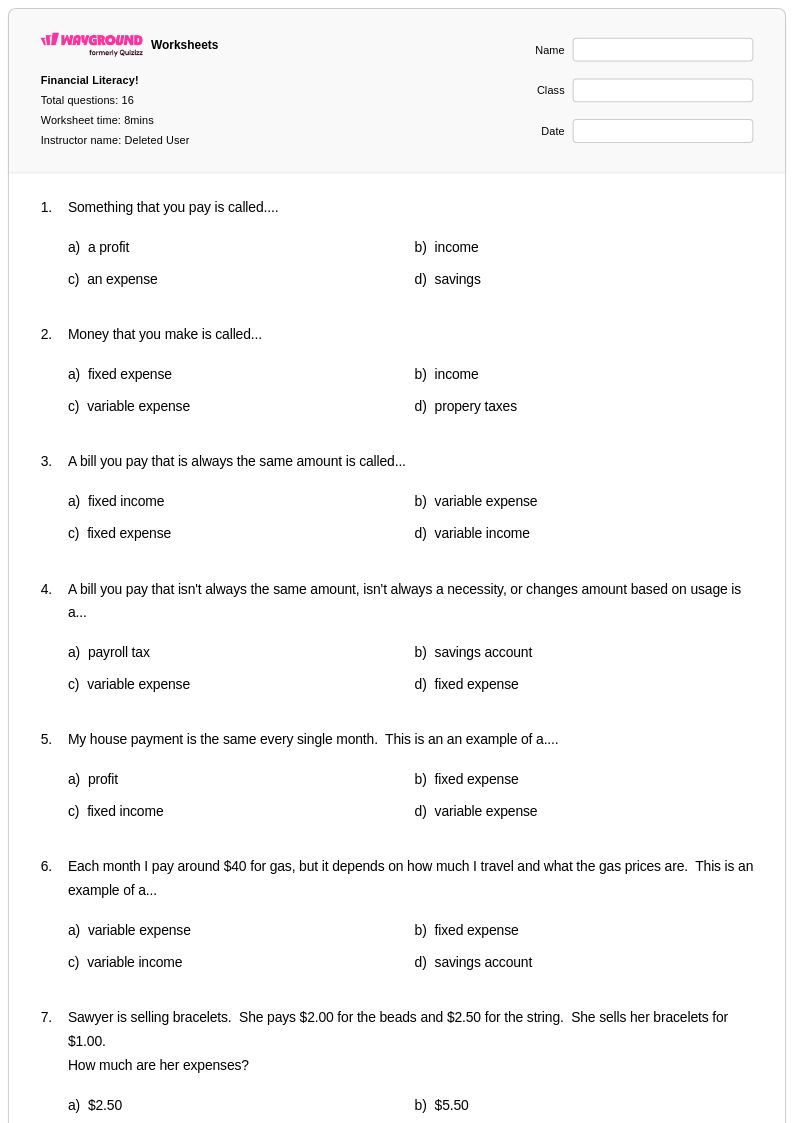
16 Q
KG - 5th
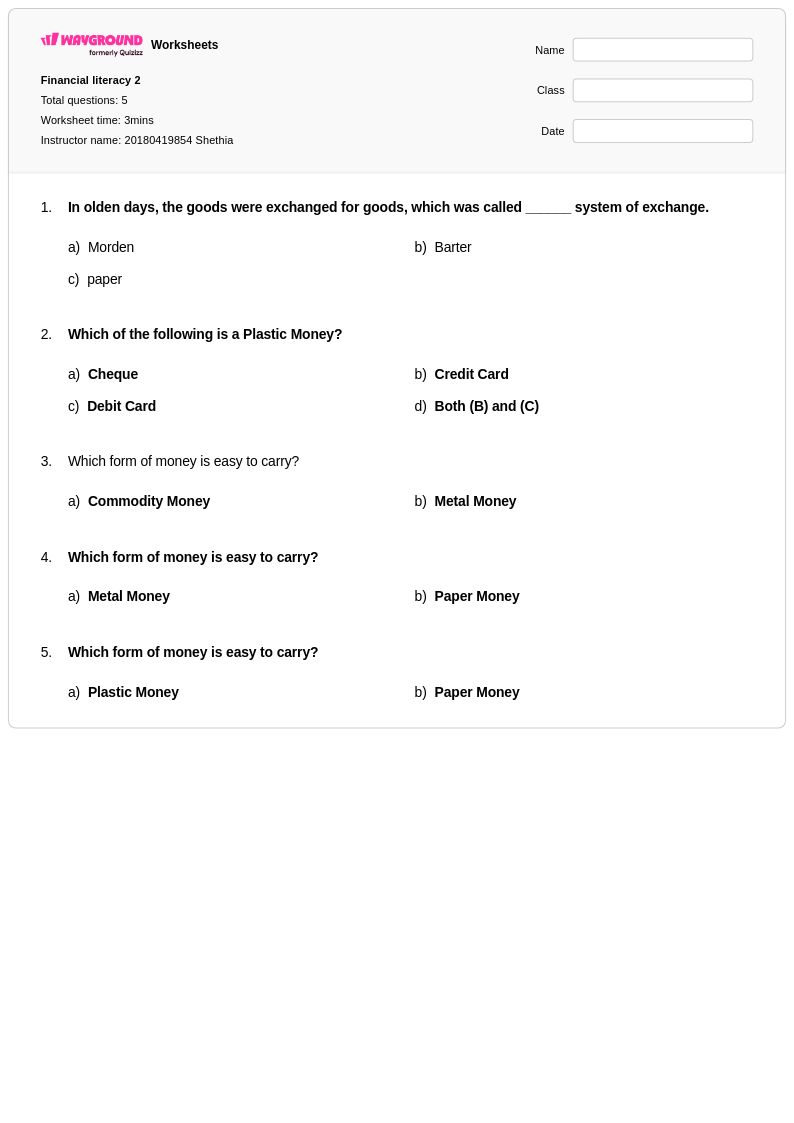
5 Q
1st
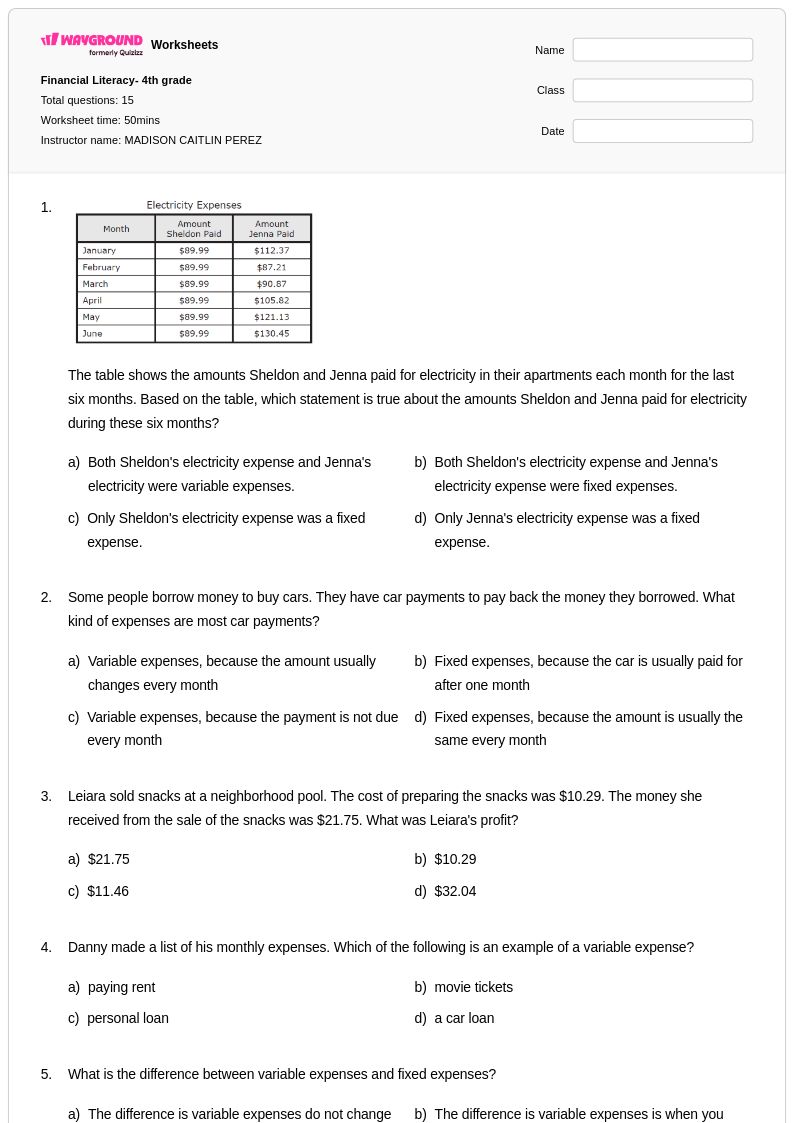
15 Q
1st
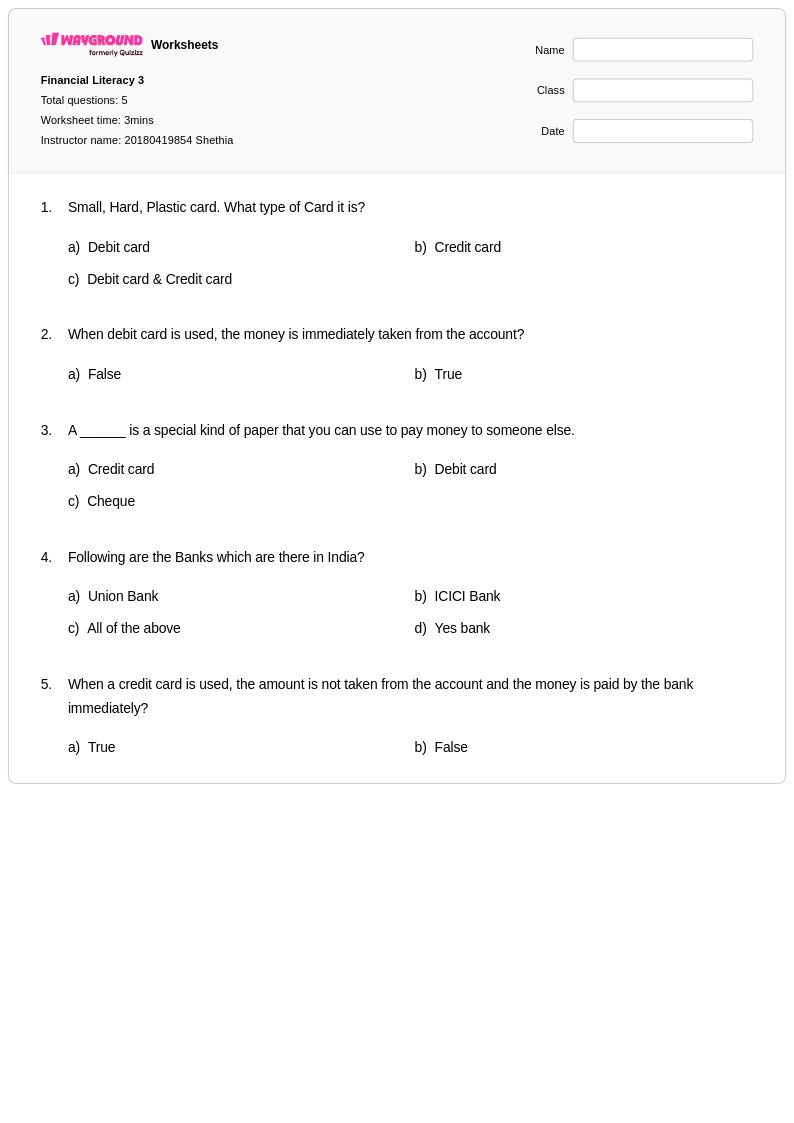
5 Q
1st
Explore Financial Literacy Worksheets by Grades
Explore Financial Literacy Worksheets for class 1 by Topic
Explore Other Subject Worksheets for class 1
Explore printable Financial Literacy worksheets for Class 1
Financial literacy worksheets for Class 1 through Wayground provide young learners with essential foundational skills for understanding money concepts and basic economic principles. These carefully designed worksheets introduce first-grade students to identifying coins and bills, understanding their values, and making simple comparisons between different denominations. The practice problems focus on real-world scenarios that help children recognize money in everyday situations, count coins, and begin to understand the concept of spending and saving. Each worksheet collection includes comprehensive answer keys and is available as free printables in convenient pdf format, making it easy for educators to implement structured financial literacy instruction that builds critical thinking skills around money management from an early age.
Wayground's extensive library contains millions of teacher-created financial literacy resources specifically tailored for Class 1 students, offering educators unprecedented access to high-quality materials that align with educational standards for early childhood financial education. The platform's robust search and filtering capabilities allow teachers to quickly locate worksheets that match their specific curriculum requirements, while differentiation tools enable customization for students with varying ability levels and learning needs. These resources are available in both printable and digital formats, including downloadable pdf versions, providing flexibility for classroom instruction, homework assignments, and individualized practice sessions. Teachers can effectively use these materials for lesson planning, targeted remediation of specific money concepts, enrichment activities for advanced learners, and ongoing skill practice that reinforces financial literacy fundamentals throughout the academic year.
FAQs
How do I teach financial literacy to first graders?
What exercises help first graders practice money skills?
What mistakes do first graders commonly make when counting money?
How can I use Wayground Grade 1 financial literacy worksheets?
How does Grade 1 financial literacy connect to Common Core math?
How can I differentiate Grade 1 financial literacy practice?
What financial literacy skills are taught in first grade?