Free Printable Crime Prevention Worksheets for Class 12
Class 12 crime prevention worksheets from Wayground help students develop essential social skills through engaging printables and practice problems that explore community safety strategies, with comprehensive answer keys and free PDF resources included.
Explore printable Crime Prevention worksheets for Class 12
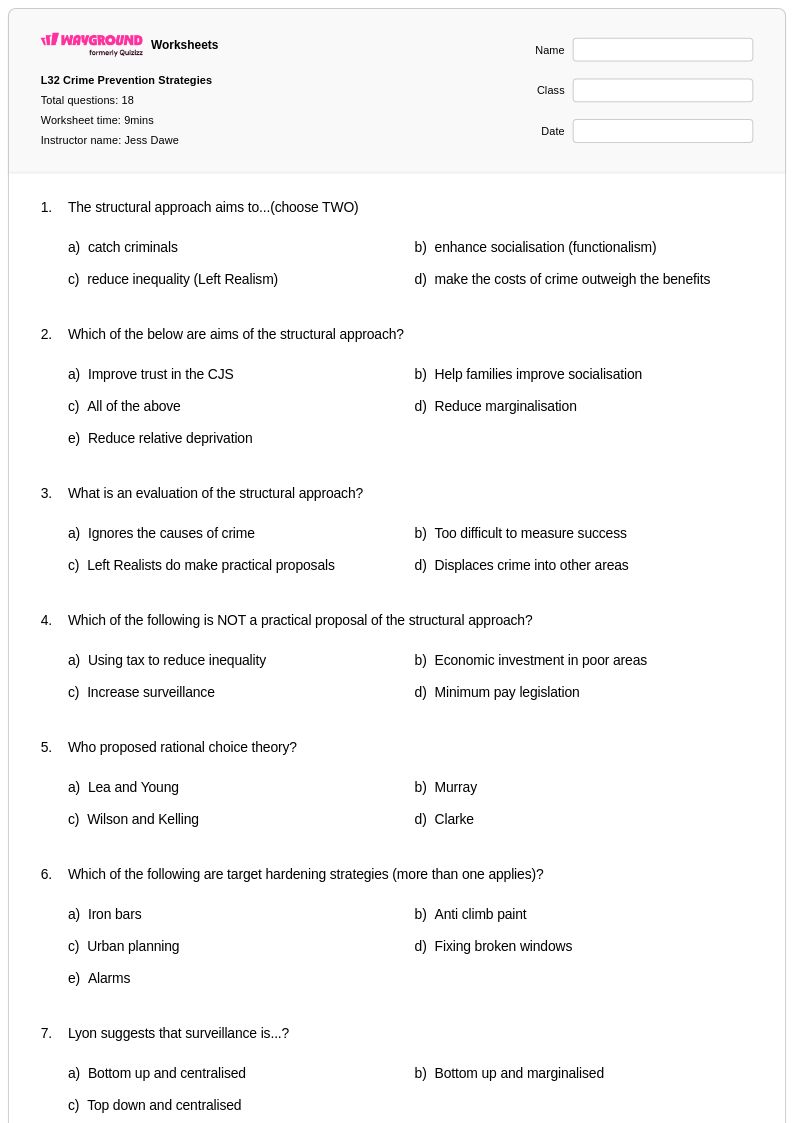
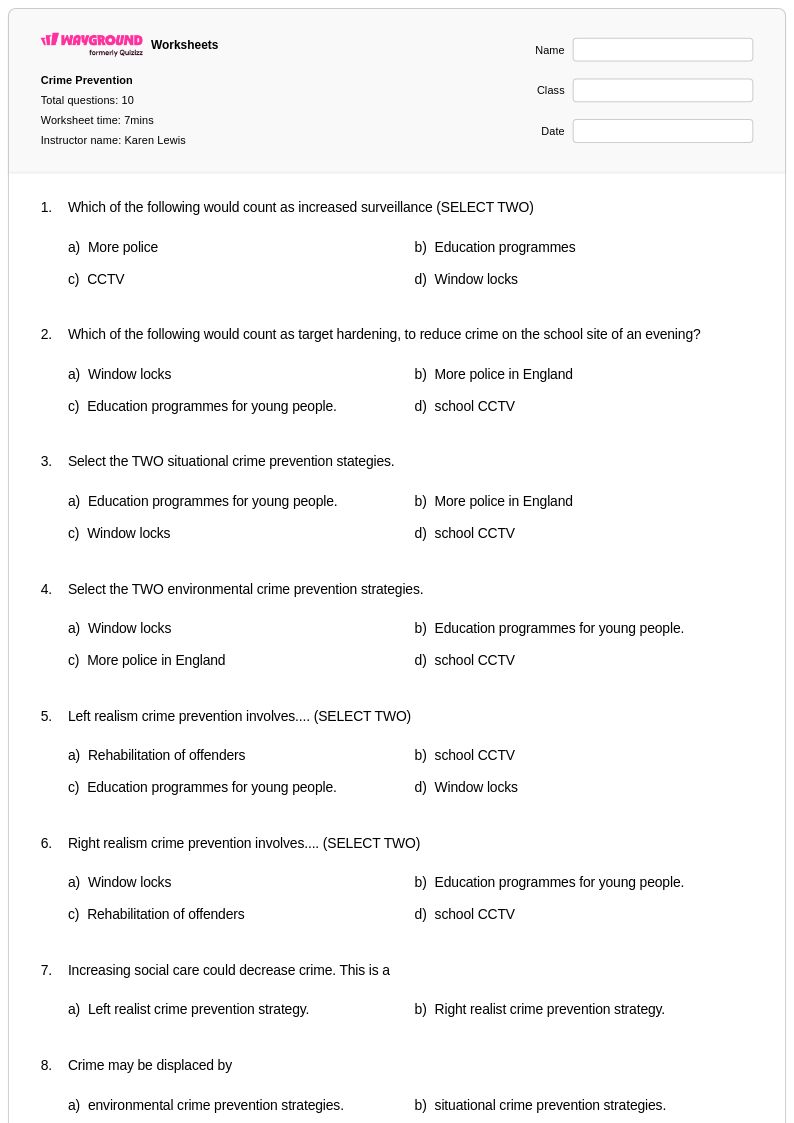
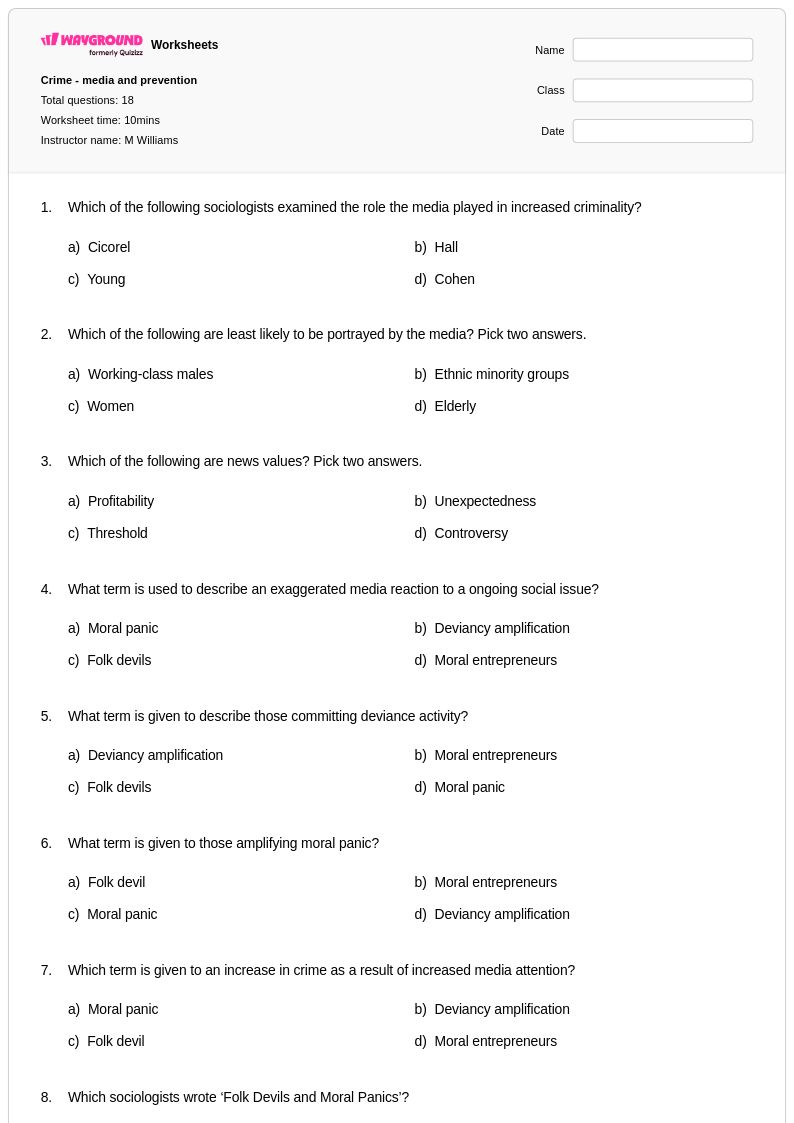
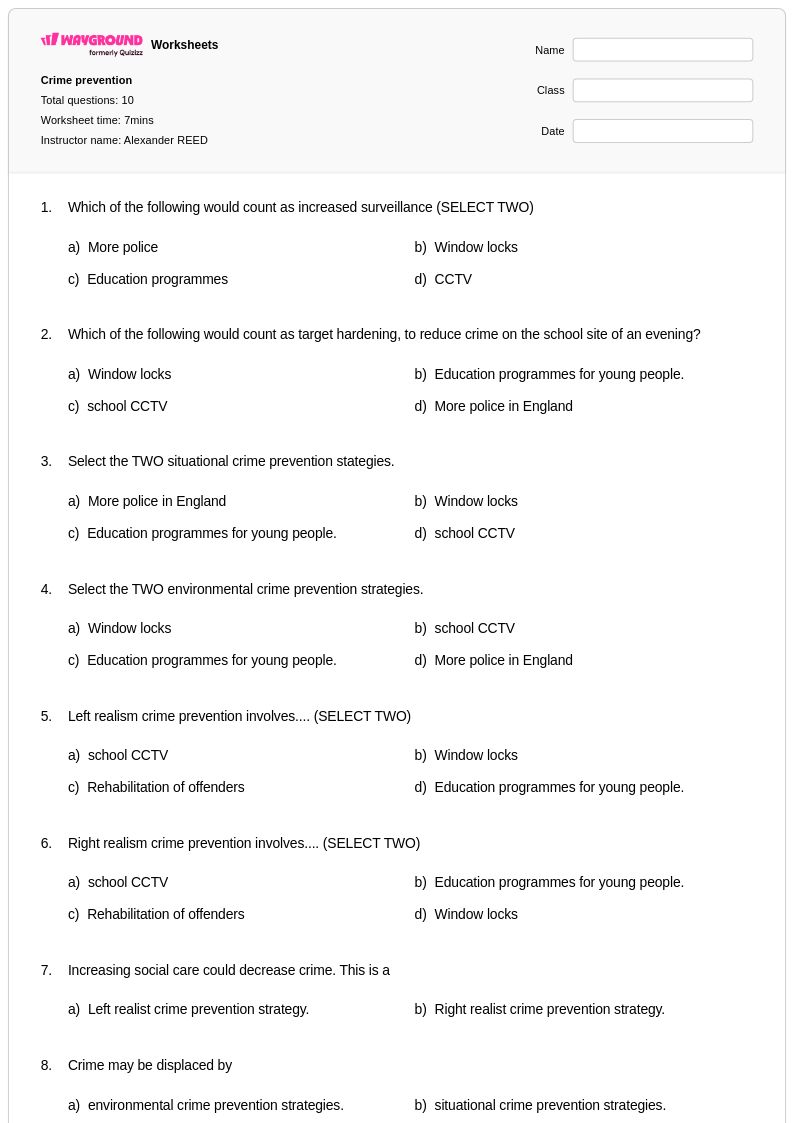
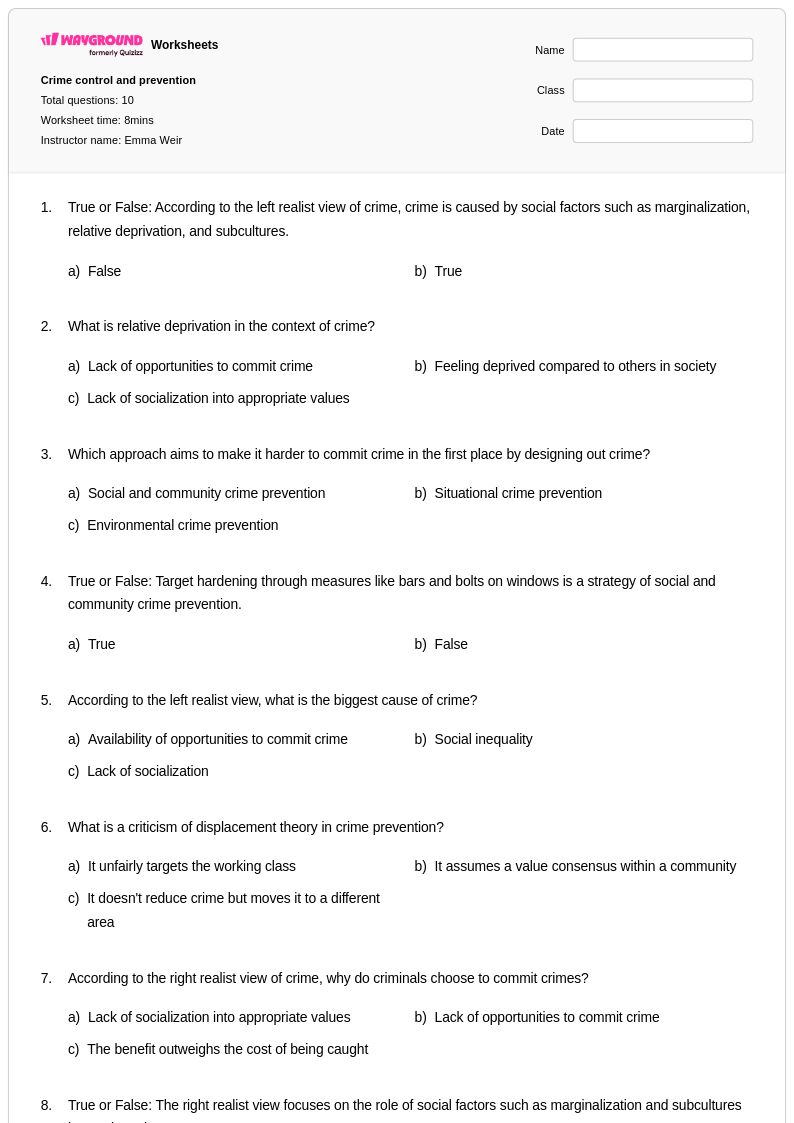
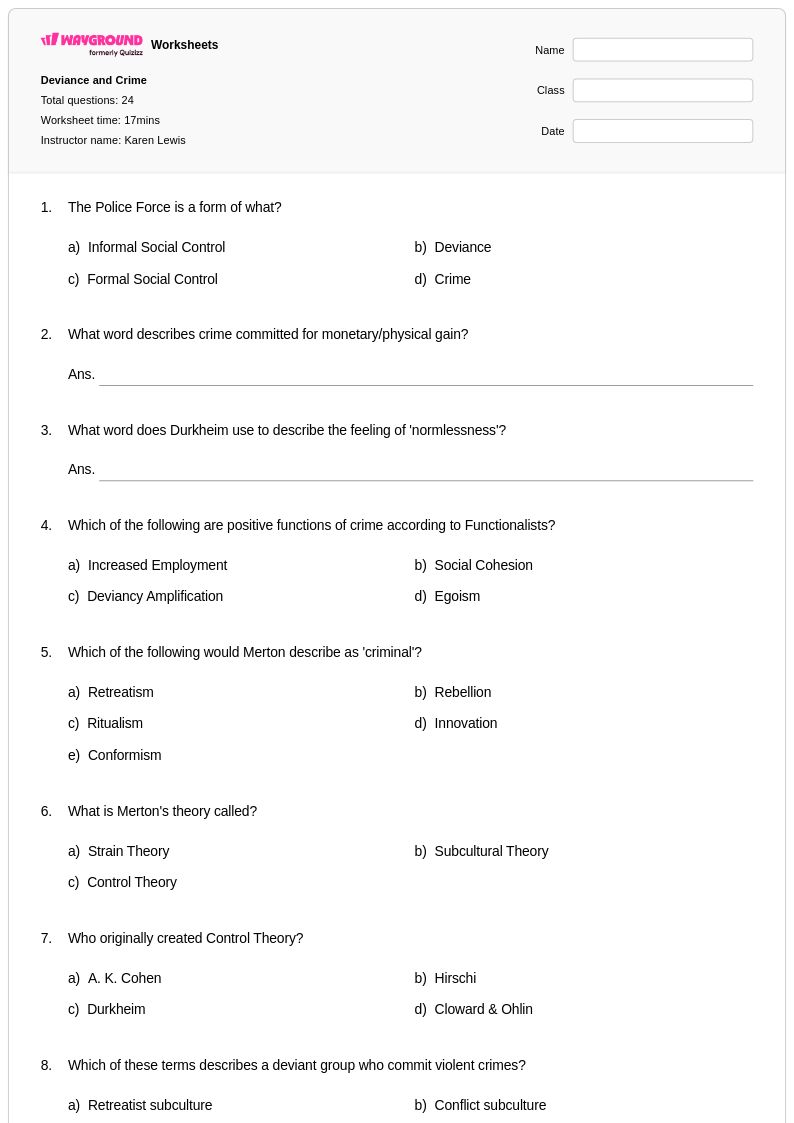
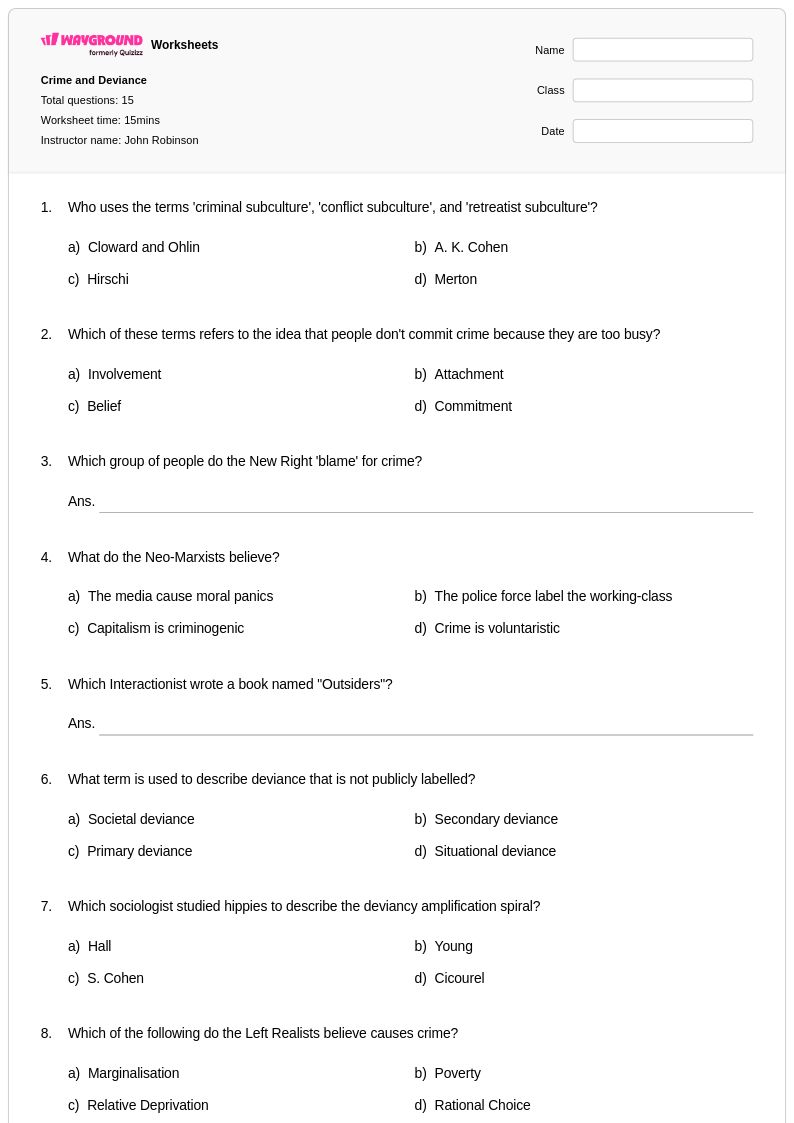
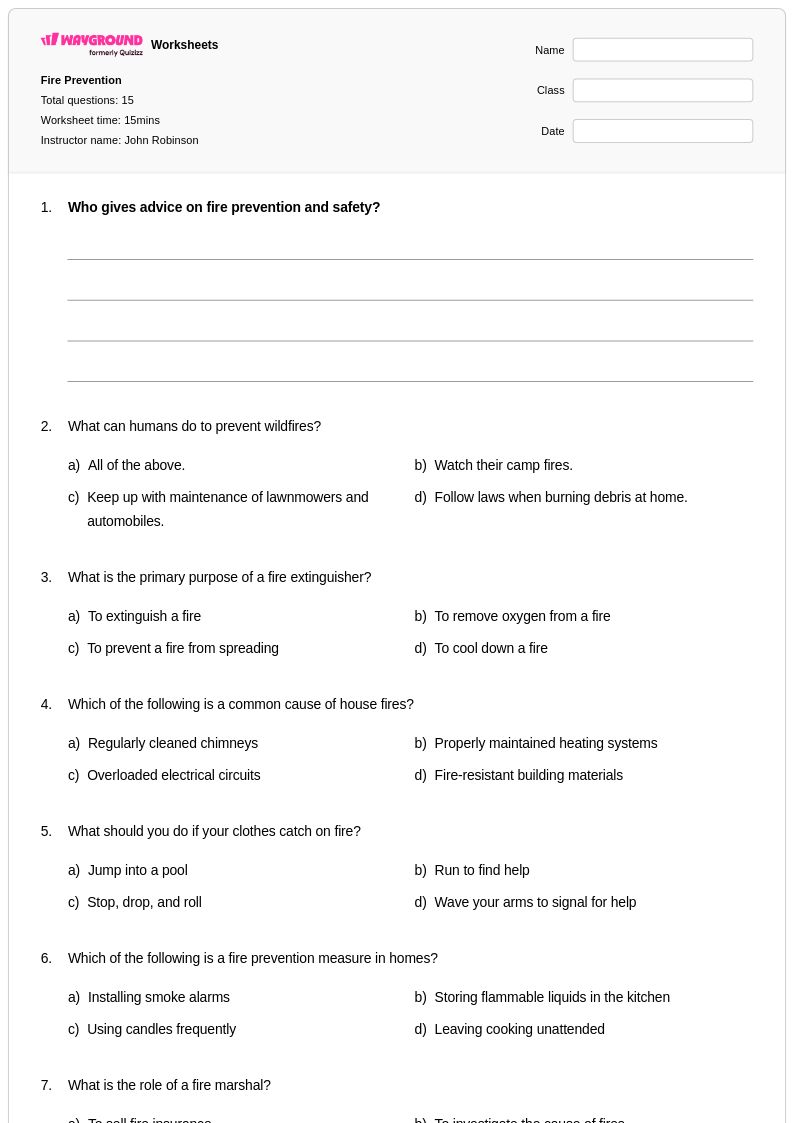
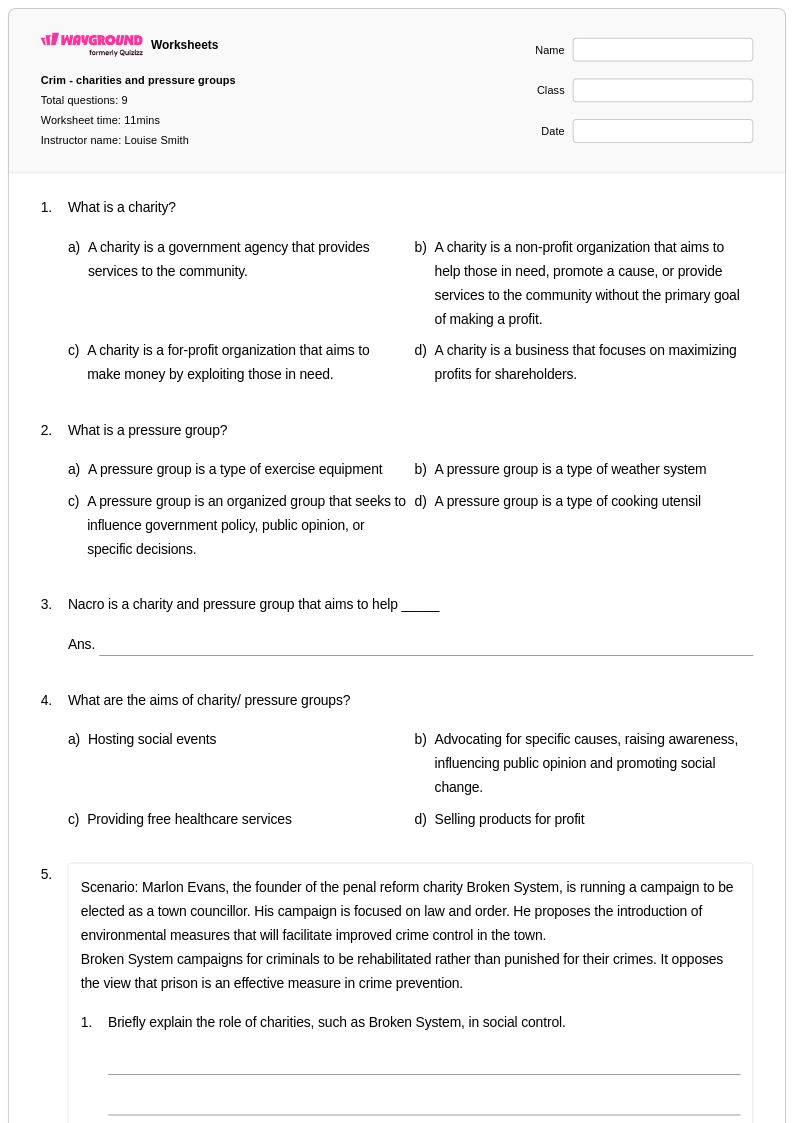
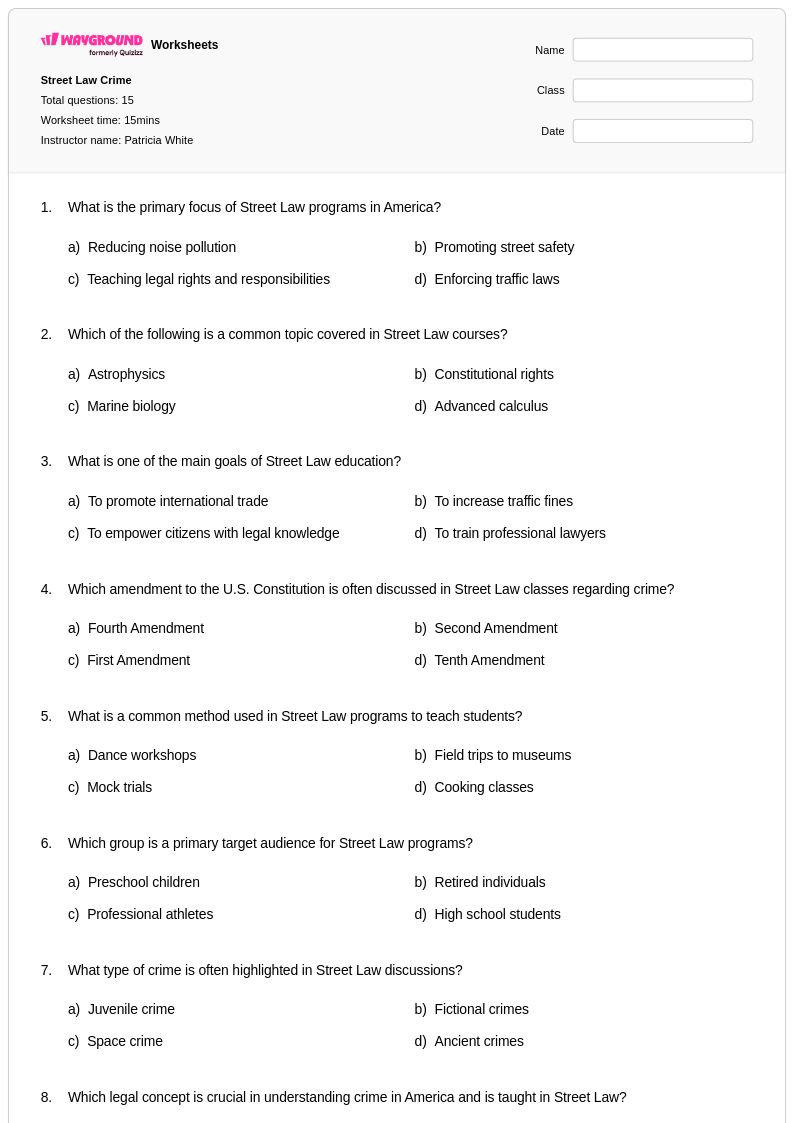
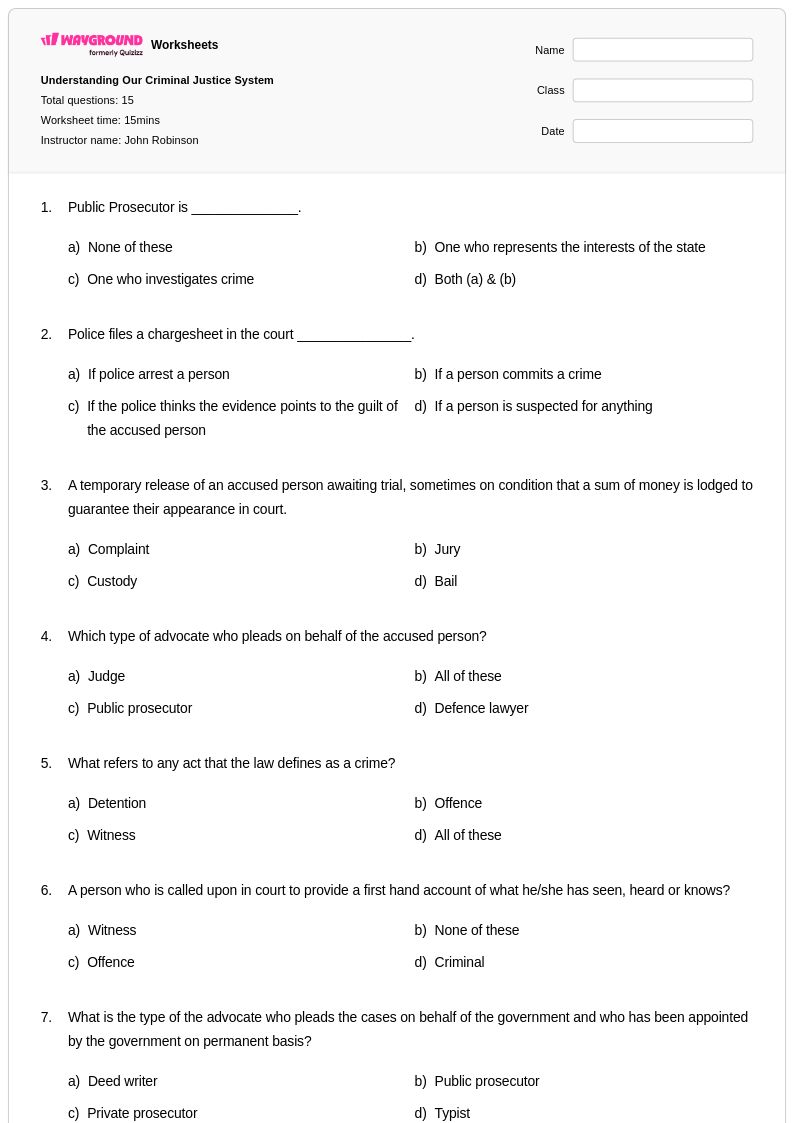
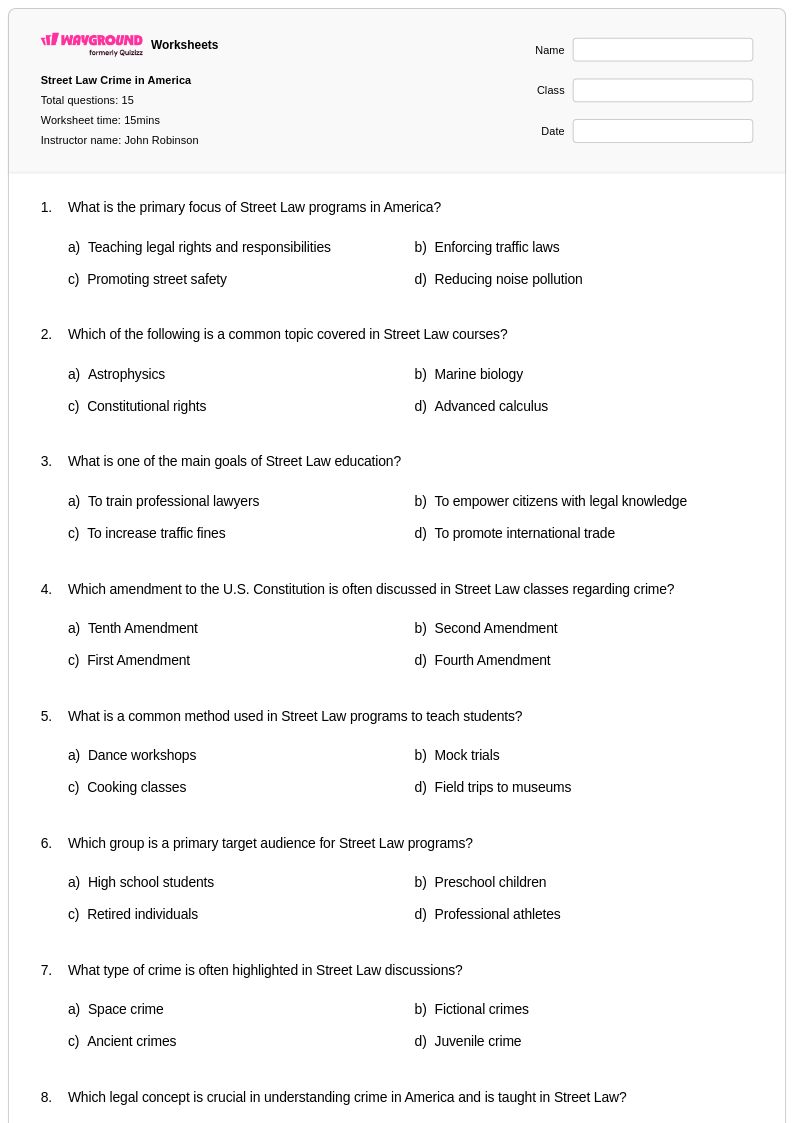
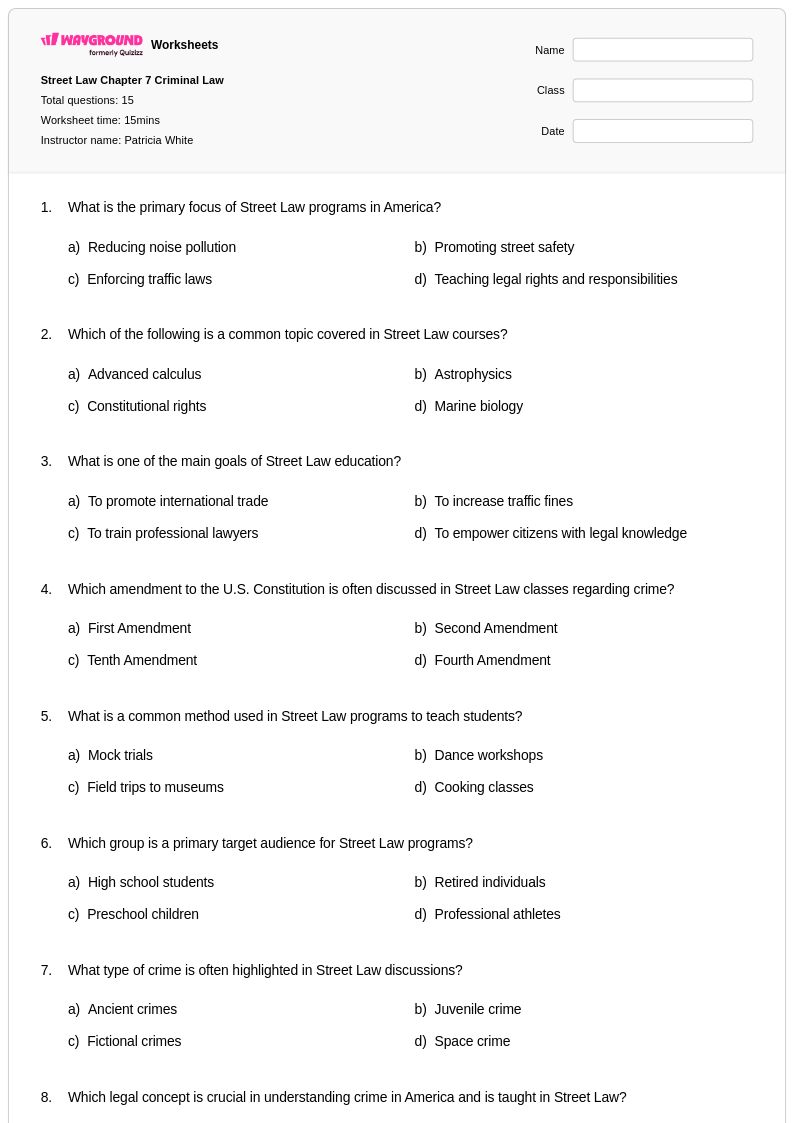
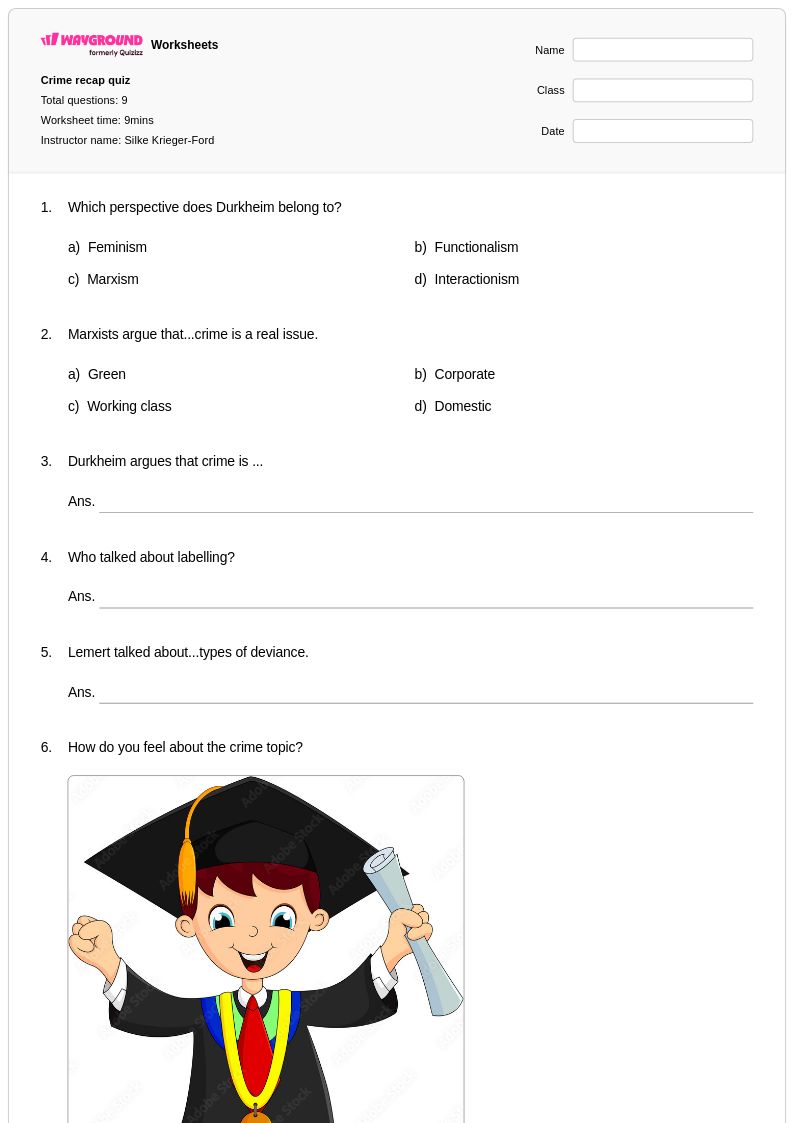
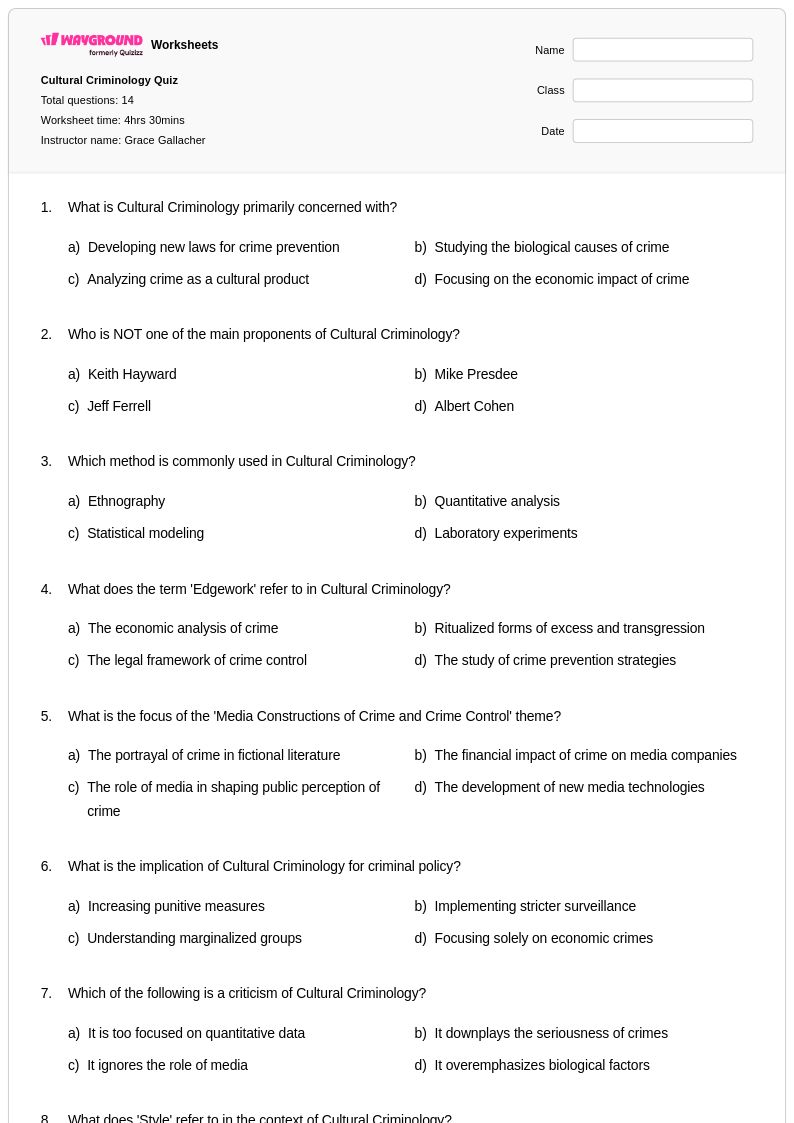
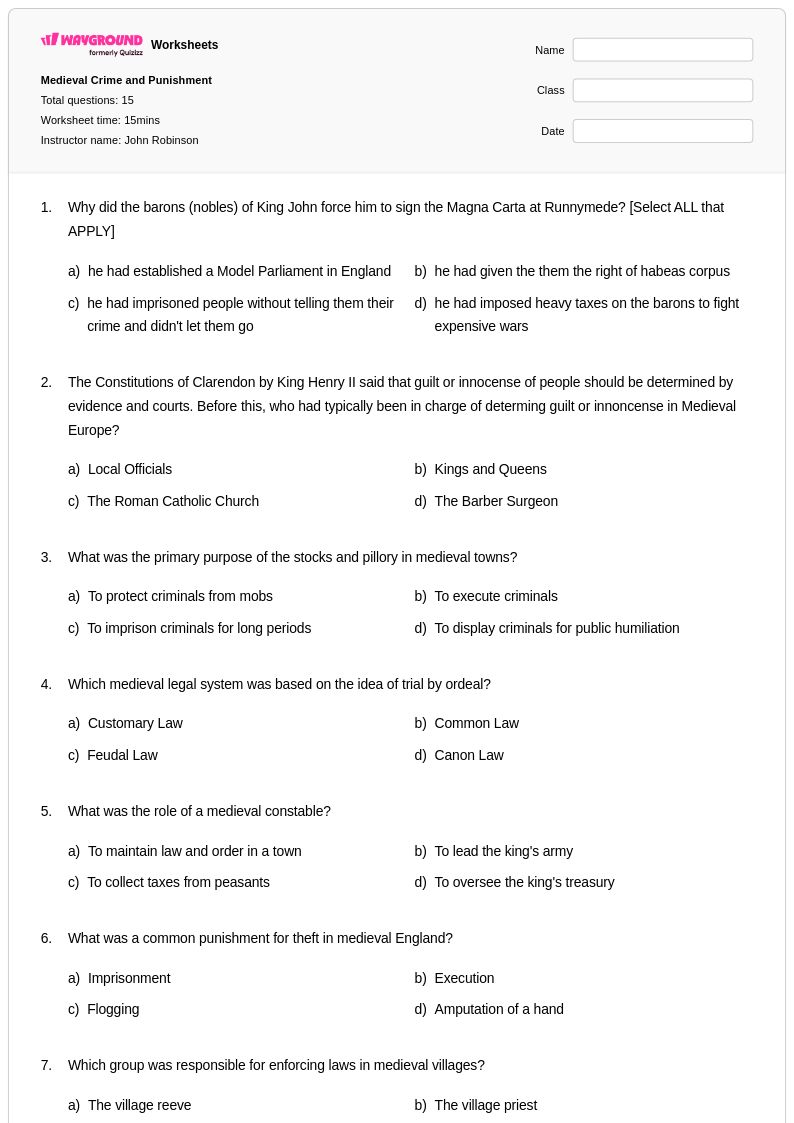
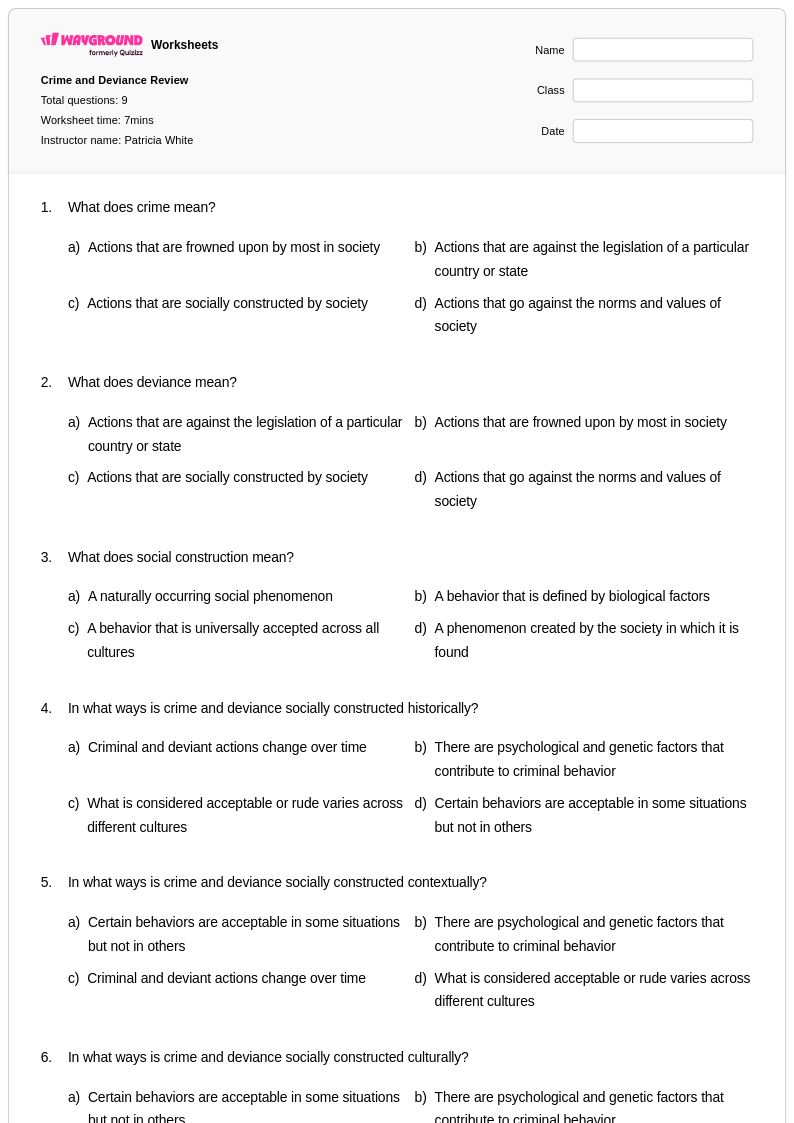
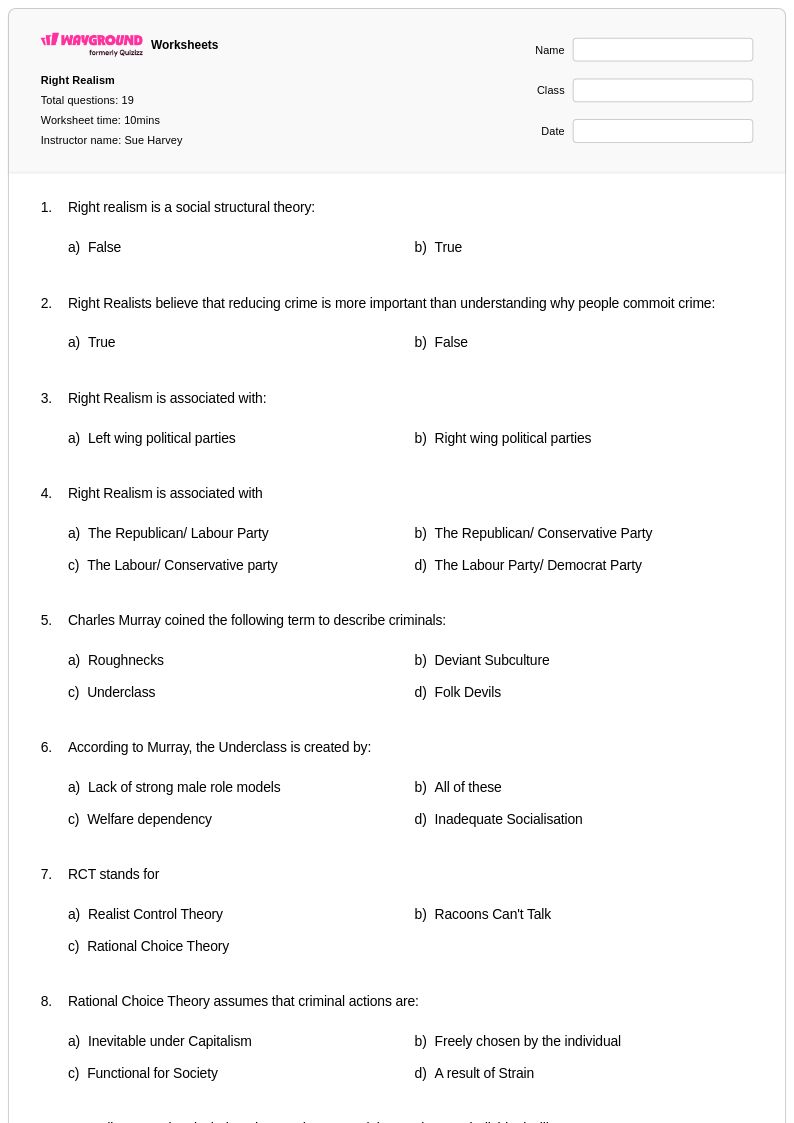
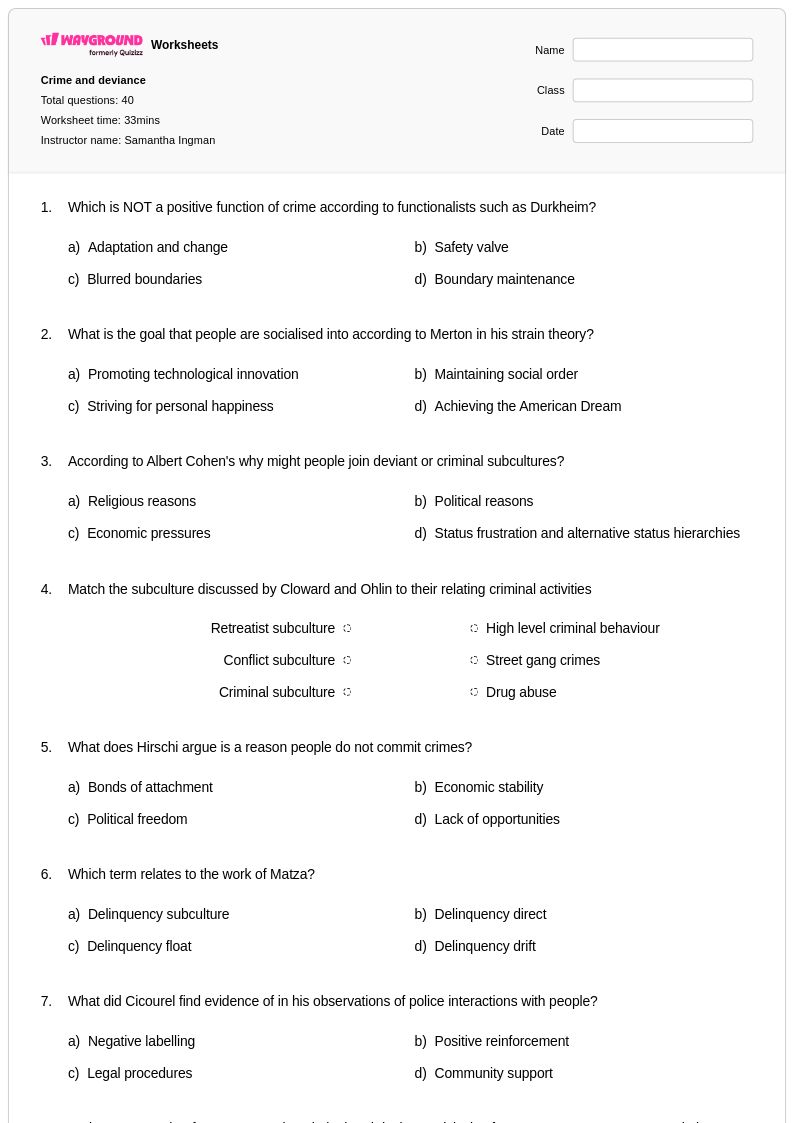
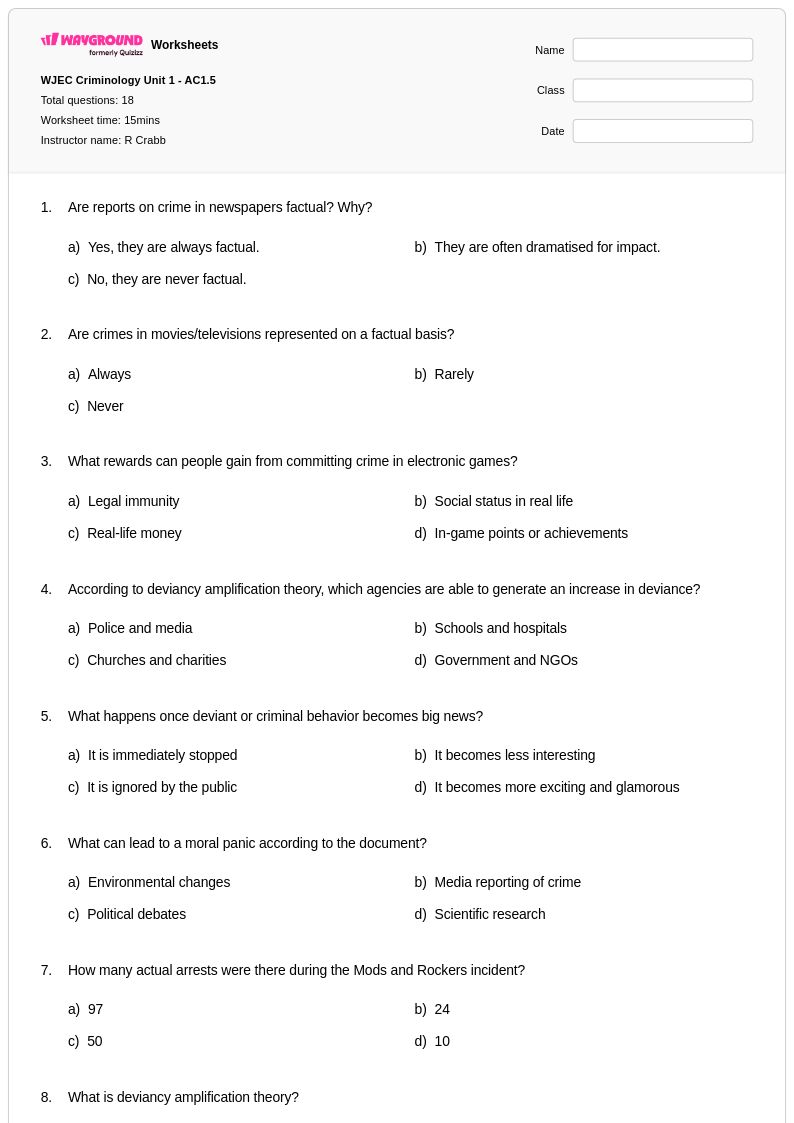
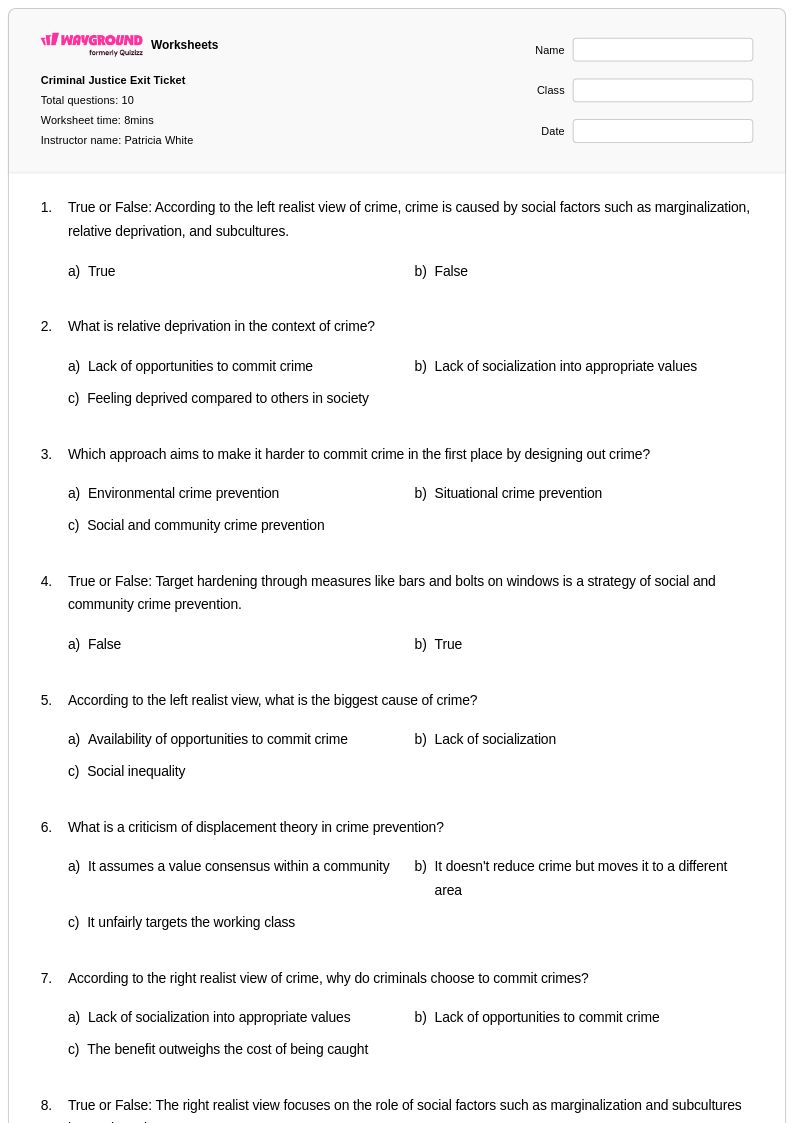
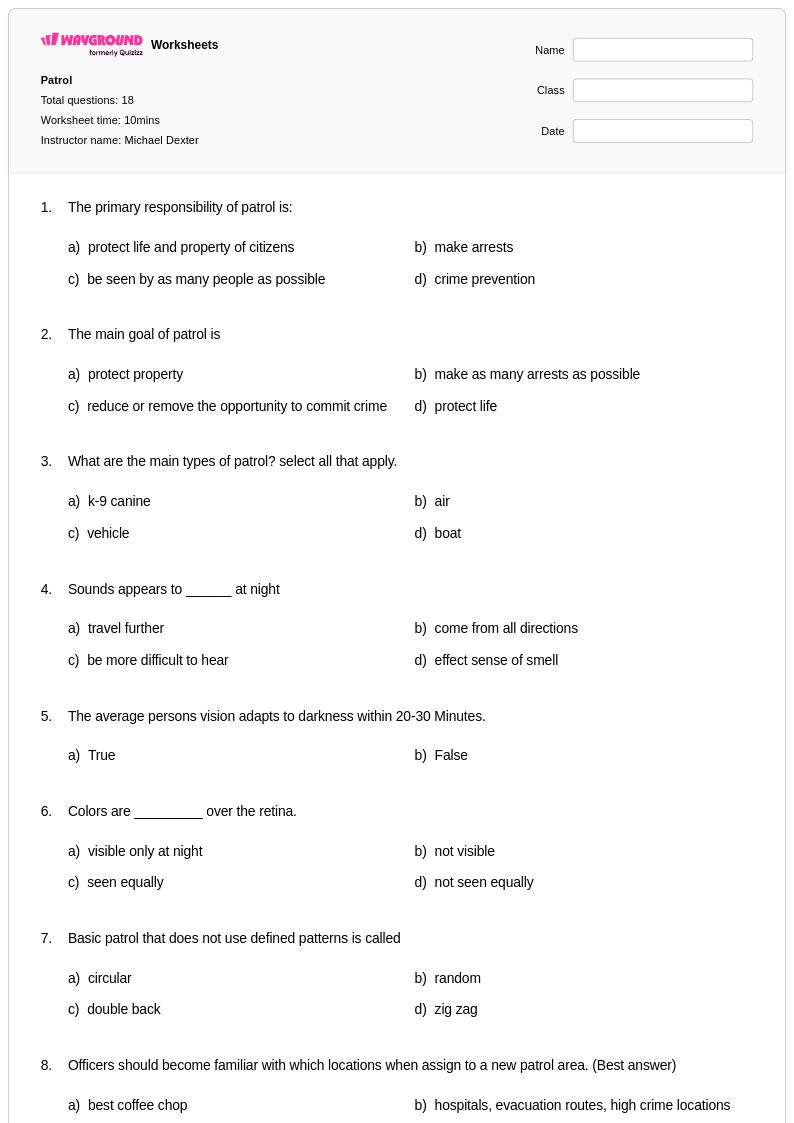
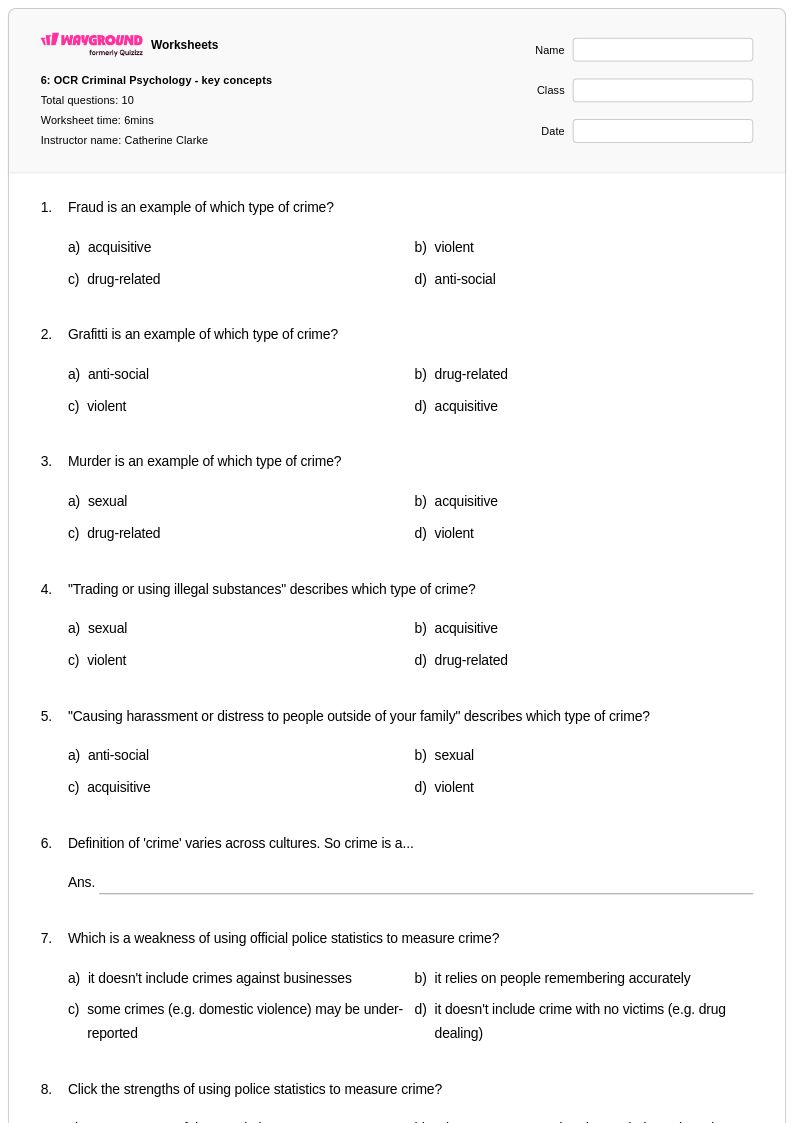
Crime prevention worksheets for Class 12 students available through Wayground (formerly Quizizz) provide comprehensive educational resources that develop critical thinking skills essential for understanding community safety and criminal justice systems. These expertly designed materials challenge high school seniors to analyze various crime prevention strategies, evaluate the effectiveness of community policing initiatives, and examine the social, economic, and environmental factors that contribute to criminal behavior. Students engage with practice problems that require them to assess real-world scenarios, develop prevention proposals, and understand the interconnected nature of law enforcement, community engagement, and social services. Each worksheet comes with a detailed answer key that supports both independent study and classroom instruction, while the free printables offer flexible implementation options for diverse learning environments.
Wayground's extensive collection of teacher-created crime prevention resources supports educators with millions of high-quality materials that align with social studies standards and Class 12 curriculum requirements. The platform's advanced search and filtering capabilities enable teachers to quickly locate worksheets that match specific learning objectives, whether focusing on juvenile crime prevention, cybersecurity awareness, or community safety programs. These differentiation tools allow instructors to customize content for varying skill levels within their classrooms, supporting both remediation for students who need additional practice and enrichment opportunities for advanced learners. Available in both printable PDF format and interactive digital versions, these resources facilitate seamless lesson planning while providing the flexibility teachers need for effective skill practice, formative assessment, and comprehensive instruction in this vital area of civic education.
FAQs
How do I teach crime prevention to students?
Teaching crime prevention effectively means grounding lessons in real-world scenarios students can relate to, such as neighborhood safety, cybercrime risks, and conflict de-escalation. Start by building awareness of warning signs and risk factors, then move into decision-making practice where students evaluate situations and choose safe responses. Connecting concepts like community responsibility and reporting procedures to students' daily lives helps make abstract safety principles concrete and memorable.
What exercises help students practice crime prevention skills?
Scenario-based practice is the most effective exercise format for crime prevention, as it requires students to analyze a situation, identify risk factors, and select appropriate responses. Worksheets that cover neighborhood watch principles, cybercrime awareness, and conflict resolution give students repeated exposure to the decision-making process in varied contexts. Practice problems with answer keys allow students to self-check their reasoning and reinforce correct safety thinking.
What misconceptions do students commonly have about crime prevention?
A common misconception is that crime prevention is solely the responsibility of law enforcement, rather than a shared community effort. Students may also underestimate digital threats, treating cybercrime as less serious than physical danger. Another frequent error is conflating conflict avoidance with conflict resolution, which can lead to passive responses in situations that require reporting or seeking help from a trusted adult.
How can I differentiate crime prevention lessons for students with different learning needs?
Differentiation in crime prevention lessons can include adjusting the complexity of scenarios, reducing answer choices for students who need additional support, or providing read-aloud access for students who struggle with text-heavy materials. On Wayground, teachers can apply individual accommodations such as extended time, read aloud, and reduced answer choices to specific students without disrupting the rest of the class. These settings are saved and reusable, making it easy to maintain consistent support across multiple lessons.
How do I use crime prevention worksheets on Wayground in my classroom?
Wayground's crime prevention worksheets are available as printable PDFs for traditional classroom use and in digital formats for technology-integrated learning environments. Teachers can also host worksheets as a live quiz on Wayground, making them suitable for whole-class instruction, independent practice, or remote learning. Each worksheet includes a complete answer key, so they work equally well for guided lessons or self-paced student work.
How does crime prevention connect to social studies standards?
Crime prevention aligns with social studies standards around civic responsibility, community safety, and informed decision-making as citizens. Topics such as neighborhood watch programs, conflict resolution, and reporting procedures support standards related to understanding social institutions and individual roles within a community. These connections make crime prevention a natural fit within broader units on civics, health, or social-emotional learning.